
 Ask ChatGPT


 The High Performance Podcast
25 Sep 2026 · 1h 3m · 32 chapters
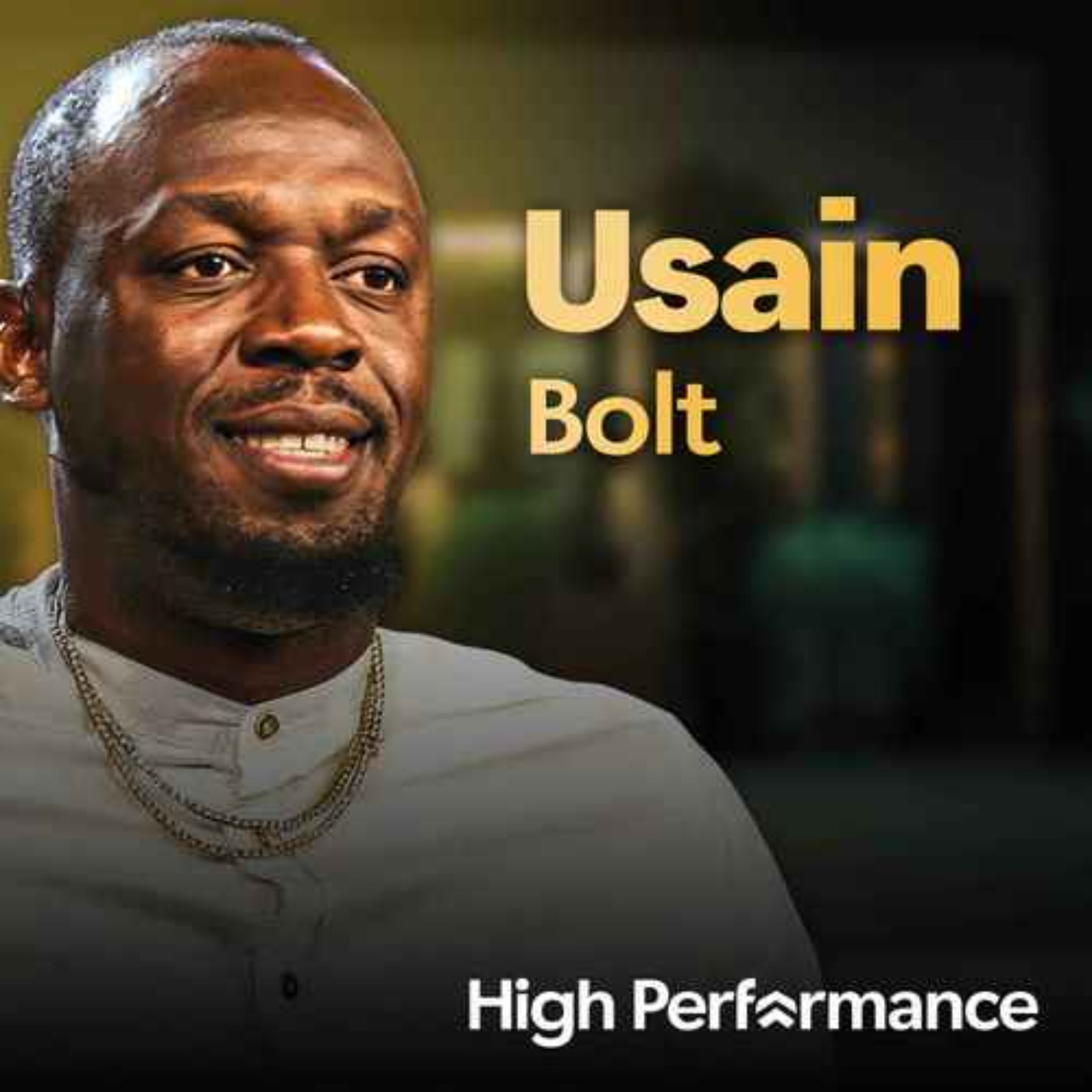
Usain Bolt’s career and mindset, framed around failure, consistency, goal-setting, injury management (including scoliosis), and how he handled fame and pressure. The episode revisits his 2004 Athens disappointment, a 2007 turning point with coach Glenn Mills, and his 2008 Beijing breakthrough, plus his approach to nerves, self-talk, and competition.
Usain Bolt is the Jamaican sprinter with eight Olympic gold medals and longstanding world records in the 100m and 200m. His coach Glenn Mills is referenced as a key influence; Bolt also credits his long-term support team (manager Ricky Sims, masseuse, and others).
“Learn how to lose before you can learn how to win.” Hard work equals consistency (never missing training days except illness). Failure is used for self-audit rather than blame. Fame brings access but reduces privacy. Bolt says he never used scoliosis as an excuse and managed it with exercises and medical support.
Athens 2004—failed to advance from the first round. Osaka 2007—coach said he wasn’t working hard enough (missed gym days). Beijing 2008—broke the world record before the Olympics and stayed relaxed, executing on race day.
Written by AI. May contain mistakes.
Understanding failure is crucial for success; learn from it.
“You have to learn how to lose before you can learn how to win.”
Usain Bolt discusses his injuries, retirement, and decision-making process.
“Just a nice, casual conversation with two and a half thousand friends.”
Bolt shares his inspiration for setting ambitious goals in athletics.
“I was still working out because I would still go to the track to see him and hang out and watch the other athletes compete and train.”
Exploring the transition from talent to hard work in Bolt's career.
“And that's when I kind of understood that you can't get to the top with just talent alone.”
Usain Bolt reflects on the evolution of his work ethic and training.
“I'm interested in that mentality to do that because I can imagine having had a linear path of being successful as a junior and going into it, that that must have come as a bit of a dent to the ego.”
Usain Bolt discusses the critical role of consistency and strength in his training.
“And I was like, you know, let me give 100%.”
Bolt reflects on his disappointing performance at the 2004 Olympics and its impact on his mindset.
“a lot of people did not know that i went to the olympics in you know for in atens and for me I was going to that season okay.”
Bolt shares insights from coach Glenn Mills on the importance of learning from losses.
“What surprised me from this conversation is that 2004, you got a kind of a proper slap across the face in Athens, right?”
Usain discusses the significance of having a supportive team and inner circle throughout his career.
“yourself when you lose and say, all right, I didn't train hard enough.”
Bolt describes the transformation in his mindset leading into the 2008 Olympics after past failures.
“Everybody's telling me, work hard, work hard and you get there.”
Usain talks about his nerves leading up to races and how he coped with pressure.
“because I remember when I celebrated when I won, people came to me and they were like, oh, you're disrespectful.”
Usain Bolt shares his experiences with nerves before races and how he learned to manage them.
“So that's something that he taught me also, like, listen, when you get to the moment, you'll be fine.”
Bolt recounts his experience winning his first Olympic gold medal and the emotions that came with it.
“And at 60, 65, I looked across and I was like, I'm winning.”
Usain discusses the sudden worldwide fame after his Olympic success and its impacts on his life.
“I'd love to know, though, from you the truth about sudden, almost overnight global fame, the hidden cost, if you like, of that.”
Bolt reflects on the pressures of fame and how he learned to manage expectations from fans and himself.
“And what's been the biggest thing that it's taken from you?”
Usain describes the transition from being an underdog to a champion with a target on his back.
“I'm very interested in how you dealt with that, but also maybe the advice that your coach gave you in this space.”
Bolt explains his intense competitive spirit and how it has motivated him throughout his career.
“My biggest thing about me, I live to compete.”
Usain discusses the psychological tactics used by competitors and his own approach to racing.
“And my biggest competitor was Justin Gatlin.”
Usain Bolt shares his approach to interacting with fans during competitions.
“This is why most people try to volunteer because they're fans and they want to be close to the action.”
Bolt discusses his mental techniques to avoid overthinking before races.
“that was going on in your head in those moments before a big race?”
Usain Bolt reflects on his mindset regarding performance and limitations.
“When I went home and that's when I was like, yeah, I did it.”
Bolt emphasizes the importance of teamwork and sacrifice in achieving success.
“You've got eight Olympic gold medals now, you say.”
Bolt shares his most memorable moment of winning in front of a home crowd.
“obviously people will talk about those eight gold medals because that's how human beings define success.”
Bolt discusses the dangers of performance-enhancing drugs and the value of hard work.
“So I feel like winning in front of my home crowd, that was one of my proudest moments and one of my biggest moments that really helped me to navigate the world and to really get better through all time.”
Usain Bolt discusses the hard work and dedication required for success in athletics.
“Well, look, the fact that you did it and you did it in the most remarkable way and you did it clean is something that that young Usain Bolt would be very proud of.”
Bolt reflects on competing against legends like Michael Johnson and his thoughts on winning.
“I asked him who would win, Michael Johnson in his prime or Usain Bolt in his prime.”
Bolt shares the three key behaviors he believes are crucial for success.
“And you have to be dedicated to anything you do.”
Usain Bolt explains the importance of learning from failure and working hard.
“because I think it's a process but enjoy the journey because learning is a part of the journey and just enjoy and it would be wonderful.”
He emphasizes the significance of dedication and a love for what you do.
“I try to give the same advice as I give to the kids because I get a lot of people texting me and telling me, like, listen, you're a motivation.”
Bolt opens up about his final race and the emotional journey surrounding it.
“If you believe this is what I want, then find a way.”
Usain Bolt selects his dream 4x100 relay team and reflects on sprinters in history.
“and it shows, it helps athletes also to see different sides of different people.”
Usain Bolt selects his dream 4x100 relay team and reflects on sprinters in history.
“and I look forward to catching up with you again soon.”

Get the gist, explore an idea or ask about something said.
 Claude
On The High Performance Podcast, what are the key points of this episode?
Searching your listeningAutomatic transcript. May contain errors.
0:02You have to learn how to lose before you can learn how to win. You have to understand that you will fail, but when you fail, what do you learn from the failure? So every time I've lost, I've said, what did I do wrong? What do I need to improve? Everybody who's a professional has talent. It's who works the hardest on their talent that will be the best. There's no way you're going to intimidate me. All that matters is that when we line up and that gun goes, you better be ready. That is the voice of the greatest sprinter of all time and the fastest man on the planet, the great Usain Bolt. This was episode 300 of High Performance and I couldn't help but cast my mind back to when Jake and I first sat outside the Team Ineos headquarters in Portsmouth back in November 2019 and we wondered whether anybody would want to listen to long conversations about how incredible people think.
0:55And this episode is number 300. That's not a figure either of us ever had in our head. When we wrote down our wish list of guests in that cafe, one name would have sat right at the top of it. And it took us five years to be able to get him. I'm talking about Usain Bolt. Not only his eight Olympic gold medals or his world records over one and 200 metres that still stand to this day, it was about speaking to the fastest human being who'd ever lived, about the journey to get there. We recorded this interview in front of 3 ,000 people live on stage in Orlando at IFS Unleashed and what you're about to hear is not the version of Usain Bolt that you may have seen before.
1:35In this one he talks about the Olympics that nobody remembers him running, Athens in 2004 when he didn't even make it out of the first round. He talks about the moment his coach told him he'd not worked hard enough and he knew intuitively it was true. And then he talks also about competing for his entire career with scoliosis and never once choosing to use it as an excuse. There's a brilliant line in here I want you to pay particular attention to. It's credited to Glenn Mills, his coach, and Usain told us it took him two years to understand what he meant. Listen to his explanation of the lessons that followed.
2:09I think it's an incredible insight into an incredible man. So, live from a stage in Orlando, I'd like to welcome to high performance, Usain Bolt.
2:23Ladies and gentlemen, please put your hands together and welcome to the stage at IFS Unleashed, Usain Bolt.
2:41Nice to see you. Take a seat. Just a nice, casual conversation with two and a half thousand friends. How are you? I'm good, I'm good. Good. It's nice to have you with us. So welcome to IFS Unleashed. Welcome to High Performance. Let's talk then about injuries and perception of you. You know, like for so many years, all of us watched you and we saw you walk out at the start of a race and thought, oh, there's Usain Bolt. He's going to win the gold medal yet again. Is it a strange position for you to be in when you're considering not even going to an Olympics because of the kind of the perception of you being on crutches or hobbling?
3:16I saw you limping very slightly as you that today? Injuries are part of sports in general. I think in any sports you go, you have to understand that if you push your body because you want to be the best, at times you might overdo it or at times competing you might get injuries. So it's a part of the sports. But I'm happy it happened to me now when I'm retired because I know a lot of footballers that have gotten this injury and it has ended their career. So for me, I'm happy that it happened at the end. And how did you make the decision to eventually walk away from the sport? For me, at the start of my career, I made an end goal where I wanted to.
4:02When I started out, I said, this is what I want to achieve. And my biggest goal was to actually win three Olympics back-to-back. That was my main goal. And that was my target. So when I actually got to that target, for me, it was like a hard road of like 10, 12 years of continuous work. So for me, it was like, yes, this is it. So I had gotten to my goal and that was it for me. So I knew at this moment, if I got where I wanted, I would have stopped. I'm very interested in this whole idea of goal setting so what was it about the three olympics that was the thing for you was it was it because you'd watched other athletes and were inspired or i think i wanted to set myself apart from from everyone because um growing up i watched michael johnson um i'm a massive fan of marmad ali and if you want i've i figured if you want to be great or you want to be a legend or you want to stand out you have to do something that no one has ever done before and for me I think Carl Lewis said one 100 meter twice already back-to-back Olympics so for me how could I set myself apart from everyone so people would say you know what he has done this and in years to come if somebody was to be greater than me they would have to actually do four Olympics and break world records so So I tried to set the bar so high that it probably would never be broken.
5:39So that was my main goal, and I got it. So cheers to me. I love it.
5:50So you achieved the incredible. But there's a great quote from Roger Federer who once said that athletes die twice. The second time is when they die for real. The first time is when they retire. and I'm wondering how after you achieved that did you mentally cope with walking away from the sport um for me mentally I was I was ready to go but I think after you retire and then you start watching the sport that's when it becomes a little bit hard but I was ready to go because I had accomplished and I had saw so many athletes that tried to rekindle their greatness after they they're retired and you're at home and you're watching and you're like itching to go back.
6:33And I must give it up to my coach. My coach actually helped me not to go back because there was once where I was like, coach, I think I should start running again. And he goes, no. He said this to me when I told him that I was going to retire. He said, listen, when you retire, that's it. We're not going to do any comeback tour. This is it. So I remember when we sat down and we were talking and he was like, no, we're not going to do this. It's painful to sit and watch, especially because the male athletes weren't dominating for Jamaica. And I sit and watch us losing and I was like itching to go back to perform for my country.
7:16So how long after you retired did you get that feeling? Two years. It was two years in and I was like, you know what, I think I can go back into the sports. And he was like, no. Did you go out on the track and do anything or did you pick up the phone to him first? I was still working out because I would still go to the track to see him and hang out and watch the other athletes compete and train. So I would be there and I would still have my track shoes on sometimes so I would still do a small workout. But he was like, no. He told me, he's like, no, I'm not going to allow you to come back because the drive that you had while you were aiming towards your goal is not the same drive.
7:56you will come back into the sports with and that will be a problem. Can we talk about drive? I think this is a really interesting thing for us to discuss because it's one thing saying to yourself, I'm going to do three Olympic Games in my career. It's a very different thing actually making it happen. Yeah, it's true. So when did you first have this understanding that maybe you didn't think like everybody else? You weren't just going to get a job, have a career. I think when I started out, it was, I didn't understand the concept of being great. You know what I mean? Because I was young. When I started out, I was 15 when I won the World Juniors.
8:32I was really young. I was really talented. So I didn't have to work as hard. It was just talent. So I was winning and winning and winning. And I remember when I got to the professional level now and I felt like it was just going to be easy. And I got onto the stage and I would go to meets and I would lose. and I was like, this is strange, this is new. You know what I mean? So it was something that took me a while to understand. And then when I started working with Coach Mills and he kind of sat me down and explained that, listen, everybody who's a professional has talent. So it's who works the hardest on their talent that will be the best.
9:12And that's when I kind of understood that you can't get to the top with just talent alone. You need work, you need sacrifice. You have to be dedicated and it took me time, but I learned along the way and I got better over time.
9:49Extra chairs are on the way. Okay. What if there's a blizzard and everyone has to sleep over? Ready to go with extra bedding and towels. From guest-ready essentials to holiday decor you can trust. Wayfair delivers. Meet Amazon Ads rising star Daryl Spencer, who set out to redefine men's self-care with his brand Crown Skin. Amazon Ads helped him grow. I walked away from big tech to build a luxury brand in a category that no one was paying attention to. With the help of Amazon Ads, I'm reaching relevant audiences and competing with the biggest names in men's grooming. We've scaled to over$500 ,000 in monthly revenue.
10:26Watch Crown Skin's story at advertising.amazon.com slash rising-stars.
10:34Support for today's episode comes from Square. You probably know Square as the thing you tap your card on at your favorite cafe, restaurant, salon, or local shop. And I love visiting my favorite cafe in Norwich that uses Square. and you know those places where everything just works, like checkouts fast, you get your receipts straight away, sometimes you can even earn loyalty points while you're there. As a customer, it just feels seamless and obviously I love the coffee as well. But for the person running that business, Square is so much more than a way to get paid. Square brings the tools you need to run and grow your business together in one system, from payments and appointments to staff, inventories, sales and customer relationships.
11:10Whether you're starting something new or looking for a better way to run the business you already have, Square gives you the tools to take payments, manage your day-to-day, and keep growing. And right now, you can get up to$200 off Square hardware at square.com slash go slash HPP. That's S-Q-U-A-R-E dot com slash G-O slash H-P-P. Run your business your way with Square. Get started today.
11:39I'm interested in that mentality to do that because I can imagine having had a linear path of being successful as a junior and going into it, that that must have come as a bit of a dent to the ego. Yeah, definitely. For me, because I was beating the seniors when I was 17. I was beating the seniors in Jamaica. I was running faster than all the seniors. I was feeling like the man. I was like, yeah, I'm the man. And it was just mainly talent. But when you travel now and then we're on the track circuit with all the Americans and people from England, everywhere in the world, And then you find yourself in fourth position.
12:16It kind of dampened your ego a little bit, but it helped. Because when you're this high and you kind of get cut down to a lower side, you kind of start asking yourself questions and trying to figure out what am I doing wrong or what I need to do. So for me, it took that and a lot of help from my coach to really get me on the right path and then slowly to the top. Can we talk then about this concept of hard work? I mean, I imagine when he first said it to you, was there a little bit of your head going, well, I'm brilliant at what I do. My idea of hard work and my coach's idea of hard work were miles apart.
12:56You know what I mean? Because moving from just being talented and working hard and then really working hard, it's totally different. Because when I started working my coach, it was in 2005, was when I really started working with him. And for me, I was like, I'm doing great. You know what I mean? But I would win some, but I would lose some. And I think in 07 was when it really dawned on me that, listen, you're not working hard enough. You need to work even harder. What happened then? It was the world championship in Osaka. And I felt like I was in great shape. I was like, yeah, I'm going to do good.
13:37I'm going to win. and I came second. And I was like, why? You know what I mean? I went to my coach. I was like, I really tried. I really worked. And he goes, no, you didn't work hard. You didn't go to the gym every day. You missed a few days. And he would tell me like, you missed a couple of days throughout the year and it adds up to a month or it adds up to six weeks. And then you really, I really sat down and really looked back and said, you know what? It's true. And I was like, you know, let me give 100%. to this cause. I really want to be the best. I really want to win. So you know what? Let me really work at this and give my all and listen to exactly what he said.
14:18And that was the next year, which is Beijing. So you can see the difference from one year just by working as hard as I needed to. So can you give us an idea then of what Coach Mills defined as hard work? So for those of us outside of the world of athleticism. For me, it's just consistency. I think consistency is everything. I think the problem with me the year before was I would train for two weeks, three weeks, but then I would want to go out and hang out with my friends, so I'd take a week off. And in my mind, that wouldn't affect, but it does because you break the pattern and you break the consistency of work.
14:59So that was, and then I didn't go to the gym to get stronger. I was very slim. you can see the difference in one year of change I was very slim no muscles so it's all about consistency and strength for me because I didn't understand that they go together and the next year when I really consistently trained and was always that training I never missed days unless I was sick and some days even when I was sick my coach would say no you'll be fine a little bit of running will help you so it's something that we we worked on throughout the year So what percentage then would you say in that 08 performance when you first crept into the world's consciousness, how much of it was down to your physical gifts and how much of it was down to the mental strength that you had?
15:46I think overall, at the start, for me, I think it was like, strength-wise, it was like 80-20. Because mentally, with me, I connect my physical strength with my mental strength. Because if I'm in good shape, I'm in no worries. I'm not worried because I know how talented I am and I know how good I am. So I know if I'm in good shape, I'm going to win. So it never bothered me mentally. I know as long as I go there and I execute, I'll be fine. So for me, it was mostly physical work that I did to catch up to the other guys and to surpass them that really mattered. So we've asked that question of a lot of athletes.
16:29Dame Kelly Holmes told us that she thought the success in her career was 80 % mental, 20 % physical. I asked the question of the great Michael Johnson, and he went, 100 % and 100%. he's a good runner but he's not great at maths right um but but but i do think we can't discount the mental side of this game as well i mean 2004 right was a problem for you yeah for those that don't know just tell us the story of of 04 i was a my first olympics if you didn't follow my career a lot of people did not know that i went to the olympics in you know for in atens and for me I was going to that season okay.
17:13And I thought I was ready as always. Because of my talent, I was like, yeah, I'm doing well because I did well at the Jamaican trials. And then you get to the Olympics and you meet up with all these guys that have been training all year round and been dedicated to their craft. And I didn't even make it out the first round. The top four would have made it to the next round. I came fifth. so I did not make it and for me that was a little bit of a wake-up call to say listen you have a long way to go because if you can't make it out the first round at the Olympics and there's three more rounds that show how far behind I was and I felt like I was really talented at the time.
17:57So the High Performance podcast exists right for absolute truth and honesty and to give people like you a platform that they don't normally have like I've not really heard you talk like this before do you do you have many public conversations like this no i sometimes you you do not talk about no one wants to talk about their failures as much um going on but i over the years i understand that that's what helped me to to get better because if you can be truthful to yourself if it's one thing i've learned if you can be truthful to yourself that's how you get better because a A lot of people like to point fingers at others and say, oh, it's because of him I didn't do so well, it's because it was her.
18:41They try to find different avenues to say, instead of looking at themself and say, you know what? This is on me. I can do better in this area and that area and to be a better person. So that's something that I think helped my career to really kickstart to know that, listen, this is all on me. I didn't do this. I needed to work hard. I felt like it was easy. So it's something that really helped me to get better throughout the years. And look, we are going to talk about the success because there was a lot of it. And it's a great thing to discuss. What surprised me from this conversation is that 2004, you got a kind of a proper slap across the face in Athens, right?
19:21True. Yet it was not until 2007 that the penny dropped that hard work needs to come into the game here. So I'm so interested in why 04 didn't do that for you. No, because I was still young. You have to understand. I was still young and I was still like saying, oh, because I got injured in the season a little bit, you know, you're telling yourself and it comes back to where you start to lie to yourself. And I was saying, you know what? I got injured early in the season. So maybe that's why I didn't make it. So I'll be fine next season. You know what I mean? And then next season comes and it's the same thing.
19:59and then you start saying, maybe it's not. And then you start saying, all right, if I do this amount of work, maybe I'll get better. Then you lose again and you're like, ah. And so you start trying to figure it out. And so it took me time, but it came together at the right time. So yeah, it worked out. And you've spoken about Glenn Mills, who's regarded as one of the greatest coaches in athletics history. Could you share with us just one of the great pieces of advice that he passed on to you? For me, I remember at the start when we started working together, he said something to me and he said, until you, when you figure this out, you will get better.
20:47And he said to me, you have to learn how to lose before you can learn how to win. and it took me two years to actually figure out exactly what he meant by that and that was one of the biggest things that confused me I was like why would I want to learn how to lose and all he meant is to you have to understand that you will fail but when you fail what do you learn from the failure and that's what it pretty much meant so when I was losing then how do I get better? What do I need to do to get better? So every time I lost, I said, what did I do wrong? What do I need to improve? And that's when over time I started understanding, oh, so when I lose, it gets me better and closer to start to win.
21:37So that was something that really stuck with me. And I tried to explain to people, listen, this is very important. If you can be truthful to yourself when you lose and say, all right, I didn't train hard enough. All right. I didn't do research. I didn't sleep well. So you know, so next time you'll do those things so you can get better and better and better and improve till you get to the top. And can I ask you about your inner circle? Because I can imagine at that time, it's easy to point the finger of blame at other people. How did you decide who was going to be a part of your inner circle to hold you to account?
22:10For me, I would tell you the truth. I was, I kind of locked out with great people. when I started out I had different masseuse and different coaches in 05 when I met Glenn Mills we kind of just clicked and understood each other it took us a while to really get smoothly but we we got along great and my manager which now is my best friend we grew up together so that was easy I got a masseuse the year the year just before 08 and my agent Ricky Sims I got when I just started track and field. These were the guys that really were in my corner throughout my whole career. So they started in the struggle and we kind of worked our way to the top.
23:00And it's always important to have a great team. You know what I mean? Somebody you can lean on when you make mistakes or when you need motivation because we had one goal and we all were working towards that one goal. So for me, that was a massive deal of having a great team because there's times when you're going to feel down or there's times when I don't want to get out of bed or there's times when I got injured and I was like oh my god I'm going through this again and you need people to pick you up and to remind you what you're working towards or the support team in every way. We'll talk about some of those sort of mental struggles and the true challenge of competing at the top level for a long period of time but we've kind of arrived here at 2008 right yeah and i would love to know what your mindset was then you've had the difficult 04 you've had a wake-up call from your coach in 07 and a few months later it feels to us like maybe a different usain bolt is taking to the track in beijing yeah definitely uh i think 08 was one of the years where it was all or nothing for me i kind of just went all in i was like you know what i've never tried this way you know i mean i've never tried working hard and dedication and just focusing on just track and field and just working so for me in 08 i did everything my coach said um and just when you say all or nothing like if that if a way to gone badly what would you have done i think i wouldn't have believed well if somebody says, if you're doing something wrong all your life and somebody said, you know what?
24:34Everybody's telling me, work hard, work hard and you get there. And you go, okay, you know what? Let me try this work hard thing. You know what I mean? And then you work hard and you didn't get it done. Then it would be an issue. So I was like, you know what? Let me do exactly what the coach says and let's see how it works out. And the moment, throughout the whole season, I was running very well. I actually broke the world record before I actually got to the Olympics. So I could see it before it actually happened. So for me, it was just excitement. I was excited to go to the Olympics because I knew I was in good shape.
25:07I was running good. I was still nervous because this was my first major thing now. And I was in great shape. You know what I mean? So for me, I was excited to go. And when I got there, it was just all excitement. So you've just said a word there that surprised me when you said I was still nervous. Because Jim Law, one of the world's leading sports psychologists, often talks about to get in the zone. Part of that is being mentally relaxed and being quite chilled out. And a lot of athletes you were competing against, they've got that very serious game face on, and yet you were going out there, smiling, responding to the crowd.
25:50That was just my personality. I think if you follow my career throughout my years, when I was 15, when I won in Jamaica, afterwards I saluted the crowd, I was vibing. Next year I won at World Youth, I was dancing, breakdancing. So it's something that I've always done throughout my career. You know what I mean? So when I got to the CDL level, it didn't change. But people were like, what are you doing? Because everybody was serious. I was like, yo, I'm just being myself. because I remember when I celebrated when I won, people came to me and they were like, oh, you're disrespectful. And I was like, how am I disrespectful?
26:29Did they say that? Yeah. What, because you over-celebrated? Yeah, because I celebrated before the line and they were like, you're disrespectful. So I went to the actual athletes and I was like, yo, I went to the ones that I knew. I was like, did you feel disrespected? And they were like, no, if we were winning by that far, we would be doing the same thing. So it was so brilliant.
26:56That is good. So can I ask you then about those opponents? Do you feel that such a comprehensive victory in that Olympic final changed the way that they saw you? I definitely think so. I think I really changed the face of track and field. If you watch track and field now, you can see the difference in what I've created by enjoying myself. You can see now everybody's expressing themselves in track and field. And it's much more fun because you see people's personality, you feel like you know them and you can enjoy the sport. So it's something that I'm happy I did because it's good for the sport to just be relaxed.
27:39And that's something that I've always explained to people. You've already done all this work throughout the year. my coach has explained that when you get to the moment, there's nothing else you can do now because you have worked, you have done all the work already. So when you get to the moment, it's all about execution. So there's nothing to worry about. It's either you're ready or you're not ready. That's just it. There's nothing you can do in this moment that's going to change. So that's something that he taught me also, like, listen, when you get to the moment, you'll be fine. Because I find it interesting when I think about what you were like before a race, to imagine there was any nerves at all.
28:17So were there nerves as you walked up to the block? I think I had to start. My first year, I think the Olympics, the first 08 Olympics, I was nervous because this was my first chance to win an Olympic gold medal or to win any medal, you know what I mean? So when I got there, I was like, I know I'm ready, but I'm still nervous. I know I'm in the best shape of my life, but is it going to come together now? So when it happened, after that... Did you tell anyone you were nervous? No, I wouldn't tell anybody that. Not even your coach? No. Why not? So I thought you and your coach were so connected. Yeah, but I know my coach.
28:56If I tell my coach, coach, you know I'm nervous, he's going to say, what's wrong with you, kid? You know what I mean? I know his mind worked, but I know I was in good shape. But I think it wasn't overly too much nerves. It was just the fact that it was my first time being in the position to actually win. You know what I mean? And Jamaica, everybody was like, oh my God, this would be our first gold medal in the 100-meter sprint. So it was a big deal. But after I won that race, I think after that, I never really got nervous again. What are your memories of that race? All my championship races, I can walk you through all the races.
29:38it goes quickly but in my mind it's very slow because the gun went I got a good start the first five step I actually slightly stumbered a little bit and then my dry phase was good at the time my my biggest competitor was my fellow um and Jamaican South of Paul and he always gets a good start and I remember looking that's one of my biggest problems running I always look across and look around. So I looked 30 meters. I was like, okay, I'm in the race. Came out my transition. I looked together at 50. I was like, I'm doing pretty well. You know what I mean? And at 60, 65, I looked across and I was like, I'm winning.
30:26You know what I mean? And I got to 80 and I looked across and I was like, oh, my God, I'm going to win. So I kind of progressed through the race, and that was when I beat my chest, and the rest is history. So when you look back on the beat in the chest, do you regret that because you feel like you could have gone even faster? No, no. I feel like, for me, it was just a win. It was just that moment. Because I had the world record, I was never worried about it. It was just a win, this gold medal. That was what really mattered at the time for me. So the emotion just came out. I didn't plan or anything.
31:05It was just emotions. You know, when you work hard and you finally get got what you wanted, it was just, I didn't know what to do. I was like, oh my God, thank you. And I was just happy. So it was something, it was just all emotion coming out at that time. And after Beijing, you know, you went from, as you've already said, most people didn't even know you competed in 2004 at the Olympics to suddenly being arguably one of the most famous people on the planet. And we talk so often about the notoriety and the success and the trappings of fame and all of those things. I'd love to know, though, from you the truth about sudden, almost overnight global fame, the hidden cost, if you like, of that.
31:43At the Olympics, we stayed in a village. So all the athletes in every sport, we stayed in a huge village. And to put it in perspective, when I started out, when I got to the village, I could go to the dining hall. I would have food, chat with my friends, we'd sit, we'd walk around the village. And the day after the 100 meters, I remember walking into the dining hall and everybody went, whoosh. And it was just, everybody wanted a picture, everybody wanted to touch you. And it was like, what's happening? You know what I mean? And it was actually my short-put guys and the distance guys who were actually my security guard and had to get me out of the dining room because I could not stay in there.
32:30And it was like, what's happening? You know what I mean? Because this is different. I'm from the country. You know what I mean? I'm from the rural area. I know everybody in Jamaica knew me, but now on a global level, it was just mind-blowing. And it was, it's fun, but it's not fun. You know what I mean? So it's different aspects that I enjoy, but at the time you don't get any peace. You can't go outside with somebody or a group of people wanting to touch you, wanting to talk to you, wanting pictures. So it was hard for me at the start but I think over the years I kind of got accustomed to it and figured out how to deal with the situation.
33:12And what's been the biggest thing that that global recognition has given you? And what's been the biggest thing that it's taken from you? I think one of the biggest things is access. I like, I get to go to all the United games. Glory, glory, United. So I get access. Not at the moment. Wow.
33:34You just ignore him, you say. Listen, he knows the football team I support. Yeah, yeah, yeah. But for me, it was access. You get to enjoy that. You get to, you can call and get to games and restaurants and all this. but your personal life and everything is in the media and you don't get to enjoy dinner as you want or just to take the kids out. Like I have kids now, you can't just go to the park or any parks. You have to be careful. So those are the things that you have to give and take. And over the years, I've understood and you kind of learn how to move around and what you can do for what you cannot do.
34:15And so I'm kind of used to it now, But at the start, it was difficult trying to figure out and maneuver. And of course, you're also suddenly then dealing with one of the biggest things, I guess, which is expectation for the first time in your career. I'm very interested in how you dealt with that, but also maybe the advice that your coach gave you in this space. I think I kind of learned this on my own. I think because I started very young and Jamaican fans are very demanding. Yeah, yeah, yeah. And let's just be clear for people here, like if you've grown up, you know, in the UK or something, athletics at school level in Jamaica, for us, it's like being a professional footballer, right?
34:57It's huge. Yeah, so for me, I started when I was really young in Jamaica, so it would be, oh yeah, and then I would do so well and it was like, boo. And then it was, again, I would win again and go, yeah, and then loss, boo, same thing. And I kind of figured out that if I do well, they're going to love me. If I don't do so well, they're not going to love me so much. So I told myself, I figured out that I had to do this for myself first. Because initially, I was always put in Jamaica first. I always said, you know what, I need to do this for Jamaica. I need to do this for Jamaica. I need to perform at a higher level.
35:36And I never talked about myself once. You know what I mean? So it was always hard for me growing up when I didn't do well and then I would get the negative energy and they were like, oh, you're not doing so well, you should retire. It was always negative and it would make me feel bad. And it took me a while to figure out, listen, I have to do this to myself first because I wanted to be great. I wanted to be the best and it took me a while to figure out. Even if I fail, I know that, listen, I did my best. I made a mistake here, I can adjust it. So over the years, that's what kind of helped me through all the tough times and also having a team that would really be there for me.
36:21But it was rough at the start dealing with Jamaican fans, it was crazy. And as well as the expectation from Jamaica, I'm interested in when you go to the next games in London in 2012, you've gone from being the hunter to being the hunted where you've got a target on your back now. What did that do for your mentality? How did you respond to that? I loved it. I am different. My biggest thing about me, I live to compete. I want to compete. I want to compete against the best all the time. I remember in 2013, I was training hard. I was working hard. And we were going to the World Championships. It was in Russia.
37:05And a few of the top athletes started dropping out. It was injuries, drug issues, and a few other different things. And the fact that everybody wasn't going to be there in the moment, kind of, I was like, I felt I didn't feel that drive again because I knew even if I won, the best in the world wasn't there. So I lived to compete. So I don't mind being chased. it was fun for me to to prove to you or prove to anybody that listen I'm the best because I'm so competitive even now that I've retired I'm still competitive I won't play again if I'm not going to lose I'm not playing you that's how competitive I am I have to be I have to be sure like you know what I can beat you then I'll do it but if I'm not sure I'm going to beat you I might say nah I'm okay I'll take a rain check so which is stronger than a desire to win or a fear of losing wow um wow for me is i think the desire to win i think you want to win so bad like with me i want to i've always wanted to win and that's what drives me my competition there's this one thing i remember in 20 in 2016 um it was my last coming up to my last Olympics.
38:32And my biggest competitor was Justin Gatlin. And throughout the year, I was struggling with motivation because I had won everything. You know what I mean? And it was at the end, and I was like, going to training, and the older you get, the harder it gets. And I was like, I was just tired, and I was, every day was work, and I got injured, and it was double the work. So for me, it was hard to motivate myself every day. And I remember watching a video that he was on a podcast at the time, and they were saying, oh, are you going to win? And he said, yeah, I'm going to win. And they were going to go on a tour around the world with gold medals.
39:18And that, for me, did it for me. It light a fire. And I was like, yeah, you're not going to win. So it kind of lit a fire. That's how competitive I was. You know what I mean? If I probably didn't see that video, it probably would have been different. But I saw that video and it helped to motivate me to say, all right, you know what? I need to get to training. I need to do this because there's no way I'm going to allow him to beat me. So that's how competitive I am. And I used to love watching, obviously the race is amazing. It's over quick. I used to love the kind of what I call peacocking before the race, the sort of who can outdo the other runner with.
39:54like can you explain what's going on in those moments as well for me it's always fun for me i i i enjoy watching justin it's fun for me to see to see him in his element yeah because he used to he does this thing where he walks back and forth like a crazy person you know he's like and he's serious and i'm i always find it so funny and amusing because that's his way of psyching himself up though but for me it was amusing so it's something that they do but for me i'm just chilled because i always knew if i was prepared there's no way you're going to beat me so i was always relaxed and ready and just ready to go and did you know that some of that behavior you were seeing was entirely for your benefit it was to try and make you yeah for sure yeah for sure but there's no way you're going to intimidate me because again i was prepared yeah um and i think that was back in the days when before just before my time these guys were always serious and that was it they tried to throw off each other I remember the first time I competed with Justin he is spit across my lane the first time I met him we were in I think it was Zagreb and we were competing and we know when you warm up and you're running out your blocks and I was walking back and he was walking towards me and he kind of spit across the lane in front of me and I laughed because I knew what he was trying to do but for me it doesn't matter all that matters is that when we line up and that gun goes you better be ready because you're not going to intimidate me by spitting across the lane so for me but that's just who he was and that's how he was wired because he was in the arrow before me where it was it was like that you know I mean you would say yo you better be ready type of energy to try to intimidate your opponent but it wouldn't work with me and I actually think your approach probably intimidated them because I remember you'd watch on the telly Justin walking up and down looking serious the next thing I see your fist bumping the kid that's holding the kid yeah I think people said that people are like you feel like I feel like you're using psychological ways and I'm like no I'm just being myself I'm genuinely just enjoying the moment you know I mean and the reason I bump the fist with the kids because I know they're fans.
42:16This is why most people try to volunteer because they're fans and they want to be close to the action. So I know you can see it on their face sometimes how nervous they are or they want to say something, you know what I mean? So I always try to interact with them because I know that moment will live with them forever and they will be exciting and it will make them feel good. So I'll try. If I can strike up a conversation, I will. Or I just give them a fist bump and they can see the happiness on their face. So it's something that I've always done, but it was never to try to psych the athletes out.
42:46It was just me being myself and just enjoying the moment because it's Olympics and it's the World Championship. This is a big moment for athletes. Today's episode is brought to you by Olympic Hospitality. The Olympic Games are coming to Los Angeles in 2028. This is a once in a generation event that you will not want to miss. And it's more than a ticket. It's a story you share with your family and friends, and the ultimate way to get closer to the action is with an Olympic hospitality package. Ticket-inclusive packages offer a range of prime seating and lounge access options, venue-dependent priority entry, food and beverage selections from LA's diverse dining scene, and elevated service and continuous support, making your day at the Olympic Games one to remember for a lifetime.
43:34Get ahead of the curve with an LA28 hospitality package. Discover more at hospitality.la28.org forward slash high performance.
44:08years. I have the Defender 130, but from the compact confidence of the Defender 90 to the versatility of the 110 through to mine, the Defender 130 with seating for up to eight, there's endless potential. You feel it in the details as well, the rugged body design, the robust materials, all working together so you can head out with confidence. And inside, ClearSight technology helps you see the world around you in a new way, while the PV Pro keeps your navigation routes and playlists flowing seamlessly as you go. And with up to 89 cubic feet of cargo space, there's room for everything you need on your journey.
44:38Explore the full Defender lineup at LandRoverUSA.com So you're not worried about hosting the whole family for the holidays? Why would I be? Wayfair had everything I needed to get the house holiday ready. What if Mike brings his cheerful dogs? My tree has tons of five-star reviews telling me how sturdy it is. But what if everyone's plus one brings a plus one? We'll see how extendable this extendable table really is. And extra chairs are on the way. Okay. What if there's a blizzard and everyone has to sleep over. Ready to go with extra bedding and towels. From guest-ready essentials to holiday decor you can trust.
45:12Wayfair delivers.
45:19So can you give us an insight into the self-talk that was going on in your head in those moments before a big race? For me, I never talk to myself. I always just try to think, if I'm not standing out in line and you see me looking, I'm trying to think about random things. Anything that can pop into my head, I try to think about it. You know what I mean? Like probably what I'm going to have for dinner or if I'm going to play a video game or something that happened in the day. I try to distract myself from the moment because if you get into your head, that's when you make a mistake. I made one mistake in 2011 when I fast started, and that was the issue.
46:01I was, because I had a bad season and I was worried. I was like, am I going to start well? Am I ready? So the moment you start being in your head and start thinking, that's when you make mistakes. So you have to try to clear your head. So for me, I try to think about random stuff and not think about the race. So at the moment when the starter says, on your marks, if you watch me, you see me take a deep breath. And then I try to clear my mind and listen. so that's it but when a lot of athletes they think about it so much like okay i need to swing my arms i need to get my first step right i need to get my start right and then you you start confusing yourself and your mind is all over the place and that's how you make mistakes what about though in 2016 because you've already told us that when you were just little you saying you said i'm going to do it across three olympics right this was now the moment that this childhood a dream was going to be realized.
47:00So how did you not get overwhelmed in that moment? No, because I have to tell myself, you know, and this is the moment, you know what I mean? I was a bit nervous then also. I guess the first one or last one because I knew this was the moment. I was like, listen, you give yourself the pep talk. Well, my coach gave me the pep talk before. Not really a big pep talk. My coach is not a pep talk person, you know what I mean? So you would just say, listen, remember to swing your arms, stay upright, all the best champ, and then send you on your waist. It's never like a long speech. It's always just quick things and just send you on.
47:38So that's something that was easy for me because I understood. And if you do it all the time, it becomes natural and a part of you. So that's something that I really enjoyed and really was something that I was dedicated to getting. I knew this was the moment. Yeah. You know what I mean? So I was ready. So what did you say to yourself in that moment, remembering that kid that wanted to do this? I was telling myself, before I went there, I was like, listen. I sat down, when we were in the car room, I was telling myself that this is the moment. That's all I kept saying to myself. This is the moment.
48:11This is the moment. You have to get it done. This is the moment. And then I just went back to being normal. Because as I said, the moment you start getting to your head, that's where the problem lies. You know what I mean? And after I won, then the joy came out and then you start feeling good and then you start celebrating. When I went home and that's when I was like, yeah, I did it. You know what I mean? And pump myself up. But you can't lose yourself in the moment until it's done. So when we say the words high performance, what does that mean to you? For me, high performance is getting to the highest level and working to get to the highest level.
48:50I think my whole life is focused on the performance and the highest performance that I can get to. And for me, that was every year. You had to always be ready and prepare mentally to get to the highest moment. And it was my whole life. I mean, my performance was pretty much my whole life. And that's my focus and that was my concentration. I remember seeing a quote of yours once that was, I don't think limits. I think that plays so nicely to high performance. Can you explain that to us? So for me, I remember it was after the 200 meters. That was when it was, I really thought about it because in 08, the world record was for Michael Johnson, was very far.
49:39I was running okay. and I remember sitting down with my roommate at the time, Maurice Smith, and we were having a conversation and he's like, are you going to go for the 200 world record? And I go, ah, that's hard to get. And he goes, yo, why not? You know what I mean? You just jogged the world record in 100 meters. Why not go for the 200 meters? And I sat down and we were going back and forth and I was like, you know what? Why not try? You know what I mean? Because I limited myself. because I said to myself, there's no way I'm going to break this 200-meter road record because I wasn't running that fast.
50:19And I was like, there's no way. But that was me limiting myself. And after that, that was when I was like, you know what? Anything is possible. Don't think limits. So from then on, I never limit myself. You know what I mean? Never said it cannot be done. You know what I mean? You have to try and try and try and figure out ways to get there. So that's where that quote comes from. You've got eight Olympic gold medals now, you say. What was the key to the longevity of this? And do you think anyone else could ever come close to doing a three-peat? It's possible. You know what I mean? I did it. As the same thing we just talked about, you can't limit yourself to anything.
50:58The moment you limit yourself and say, oh, this is untouchable, that's the moment that you have already lost. You know what I mean? So it is possible. if somebody starts at an early age and says, listen, this is my goal. I will beat the Usain Bolt records. I will do four Olympics back-to-back and work towards and be dedicated. Then it is possible. But for me, it was talent, hard work. It was sacrifice. It was tough times. It was teamwork. I had a great team around me. It was so much things together that actually made this possible because it wasn't an easy road. And I've always explained to people, listen, I think failure is a part of it.
51:46You have to fail and you have to go through tough times to be stronger, you know what I mean? Because it only makes you better and it only makes you want to work harder. So it's something that I went through. It started good, but I have scoliosis in my back, So it was an issue that always bothers me throughout my career, but something that I managed very well and it was just a tough time. But as I said, I had the right team, dedication, the hard work, the sacrifice and everything just came together with time and it really helped. And when you reflect on your career and you think about what you're most proud of, obviously people will talk about those eight gold medals because that's how human beings define success.
52:28if I'm being really honest though I think some I think someone who has scoliosis training every day competing as you did competing on the world stage and not ever from my memory ever using it as a public excuse for a race that went wrong or something that went badly so I wonder how you reflect on how you dealt with that it comes back to not lying to yourself you know I mean I think Yes, I had scoliosis, but it was never, we figured out how can we manage, what do I need to do to make sure I can compete with scoliosis. And the good thing about it, I found a doctor in Möller-Württemberg, which is from Germany, that really understood how to help me to manage.
53:12And he explained if I did my back exercise, my core exercise, and I saw him on the regular. It wasn't perfect. We still got injured every now and then, but it helped to manage what's necessary. The moment you start using something to say, oh, this is why I'm not doing that, then you're always going to be behind eight ball. I never used that. I was like, you know what? Yes, I have that, but I still can compete. I still can be the best. And I didn't put, as I said, I didn't put limits on myself. You know what I mean? So I kind of pushed through the hard times and understood that if I worked hard and I managed my scoliosis right, then I'll be fine.
53:54So if I say to you now, what are you most proud of from the incredible career that you had? What do you say? Surprisingly, one of my greatest moments that I love is it was the first time I won in front of my home crowd. I think that made such a big impact on my life. and helped me to overcome so much. When I won at 15 in Jamaica, in World Juniors, I think that in my career was so big. It might not seem big to a lot of people, but I was so nervous. That's a one time, like nerves to the point where I'm shaking. You know what I mean? I put the wrong shoe on the wrong foot because I couldn't focus.
54:38I was just so stressed. And I said to myself, if I can win in front of my home crowd, that nervous, that really set the benchmark for me, show my years to be better. So I feel like winning in front of my home crowd, that was one of my proudest moments and one of my biggest moments that really helped me to navigate the world and to really get better through all time. and you do come from a sport that has been blighted over the years by performance enhancing drugs you had the instance of nesta carter testing positive where you had to hand back your four 100 your four by 100 medal what do you say to athletes that think those kind of shortcuts are the way to win i i could i can never understand why you know i mean uh a lot of people don't want to wait their time, I think.
55:34Because I personally feel that, yo, I got a talent. God gave me a God-given talent. And I think if you work on your talent and you're really dedicated and figure out how can I get better? And I think a lot of people didn't take the time out to figure out what did I do wrong or what can I do better? you know what I mean to get to the level and because that's what I did because I struggled throughout the years to get to where I'm at but I figured it out like oh this is what I need to do this is what's going to get me better and I think a lot of times that a lot of athletes the work is so hard because it's not easy it's very intense you know what I mean and as I said it's full of injuries at times and some people just don't want to put the work in So it's tough and sometimes the mental area that really drives you to go, you know what, let me try this instead of doing the work.
56:37Well, look, the fact that you did it and you did it in the most remarkable way and you did it clean is something that that young Usain Bolt would be very proud of. Obviously, you didn't really get a chance to compete at the top level against MJ. I asked him who would win, Michael Johnson in his prime or Usain Bolt in his prime. What do you think he said? I'm sure he said him. Yeah. For sure. What do you say? I'm sure. There's no way he's going to beat me. There's no way. There's no way.
57:09I remember one of the funniest videos. I remember in 08. I don't remember who he was. I think it was BBC he was broadcasting with. And if you go on the net, you can find his video. And the reaction, they were asking him, oh, what do you think? Is he going to break the record? and he was like no I think his mechanics need some work and he needs to work on this and it take him two more years before he gets to the world record maybe and then in the same day I brought the world record so it was funny and the reaction is good and it was good it was it's one of my best videos I watch it every now and then right um you say we've reached the moment in our interview where we run through some quick fire questions.
57:54So what are the three non-negotiable behaviors, the three behaviors that you hold above all others? I think it's very simple. You know what I mean? Hard work is, you can't beat it. You know what I mean? And you have to be dedicated to anything you do. That's one thing. You can't just go in it halfway like, oh, okay, I'm going to do. You have to be fully dedicated and believe. If you don't believe that it can be done, you have already been defeated. I think that's one thing I've always respected about Justin competing with him, the belief that he had every race that he was going to win. The moment you come in and don't believe you're going to win, you have already lost.
58:43And that's one thing my coach has always taught me. never going to a race feeling oh this guy's better than me I'm going to lose the moment you say that you have already lost so those are the three things that really stood with me throughout what advice would you give to a teenage you're saying do something that you love you know what I mean I I think that's very important I think a lot of people might force their kids to do different things or force them to do the sports that they did or the job that they did but allow your kids to do what they love because I think when you do what you love you will pour your all into it and also understand that the road won't be easy you know what I mean there will be ups and downs all the time but learn from your mistakes so you can get better and move on and not make that mistake again and just enjoy the journey because I think it's a process but enjoy the journey because learning is a part of the journey and just enjoy and it would be wonderful.
59:49Very good. What's your biggest strength? What's your greatest weakness? I think my biggest strength and my biggest weakness are the same thing. I'm very competitive. I think that's one of my biggest strengths in anything because it drives me to always want to do good no matter what I set my mind to. I'm very competitive. I want to be the best. I want to do well. But it's also one of my biggest weaknesses because I tend not to focus on certain things. I just said you should enjoy the process. At times I don't enjoy the process because I'm so focused on just winning and getting there and getting everything done.
1:00:31So I think it's one and the same. What's the single best piece of advice you've ever received and why? Yeah, I explained to you guys earlier about the learning how to lose before you can learn how to win. For me, that is one of the biggest things. But also as simple as it might be, when my dad said, listen, always understand that anything you want in life, you have to work hard for it. And he did not just say that. I watched him when I was growing up, working hard, making sure he provided for my family. So for me, it's very simple, but he proved it to me that hard work and dedication, you can get it done.
1:01:19So those are the two things that really stuck with me throughout my life. And let you say that at the end of this absolutely fascinating conversation, what would you leave the people in the room here at IFS Unleashed, but also for the high-performance audience thinking about as your one golden rule, if you like, your last message for people to live their own high-performance life? No, it's the same advice. I try to give the same advice as I give to the kids because I get a lot of people texting me and telling me, like, listen, you're a motivation. Thank you for everything. So for me in life, it's the same thing that I would tell the kids.
1:01:58no matter what area of work or whatever job you do, it's about the dedication that you have and the love that you have for it and understanding that failure doesn't define who you are. It's if you give up when you fail. That's when the problem lies. So it's all about just learning and evolving and being a better version of yourself every day. How can I be better? How can I move forward? And then I think over time you will get better and you will do well. Just never give up. That's the key thing. Never give up. If you believe this is what I want, then find a way. Ask questions. Learn from people.
1:02:41So for me, that's something that is big and I tend to learn now. I'm doing music. So there's a lot for me to learn and I want to be better. So I tend to learn and ask questions. So that's something that should go on. Never give up and you'll be fine. And you know what? I love the fact that you are obviously a lifelong learner. You're looking for new challenges. I know football's a great love of yours. Because I remember seeing you face down, your final ever race, probably in tears, probably hurting deeply. And I remember before this conversation thinking, what kind of guy are we going to find?
1:03:13Is this going to be someone who's broken, reflecting on the past, wishing they could have those moments all over again? But you seem in such a good place. Yeah. For me, so my last race, I wanted to retire after the Olympics in Rio. But sponsors, fans, everybody was like, it's in London. Please come. Please come. That year, I lost one of my very close friends to a motorcycle accident in April. And it really was with me for a while. And I didn't train. I was sad and it was just drinking and just trying to get past that moment because it was just sudden. So it was hard for me. And I remember going to, because every year before I go to a championship, I go to see my doctor.
1:04:12And he said to me, do not go to the world championships. If you compete at a level, I know you're going to compete. you're going to get injured. Do not go. And I was like, I have to go because everybody bought their tickets. Everybody was there to see me. And he was like, it's going to be, I don't think it doesn't matter. You know what I mean? I'm doing this for them. This is the reason I came back because I wanted to retire. This is the reason I came back. And for me, yes, it was a tough moment, but it's still for me, I don't think it damaged what I've done before because I did for the people, but it's something that I still look and I don't regret, you know what I mean?
1:04:56Because it was a wonderful moment still and it shows, it helps athletes also to see different sides of different people. So it was good. Brilliant. And can I ask you one last question you're saying? You stand on top of the Mount Olympus of 100 meter sprinters. If you had to select your dream 4x100 team from sprinters in history, can you give us the team? Wow Justin Gatton Wow wow wow wow I think he would be the only person outside I think it would definitely be Asafa to start than Justin and Johan Blake and me at anchor so those would be the first the four persons I think would be in my I think you might win gold with that line up Easy Ladies and gentlemen please put your hands together and thank the incredible Usain Bolt
1:05:57so what stays with me from that incredible conversation is not the stories of the eight Olympic gold medals but it's the honesty that underpins them remember a 15 year old so nervous in front of his home crowd that he put his shoes on the wrong feet or a 21 year old who had to be told frankly that missing a day here and there adds up to six weeks of a season. A man who says that failure doesn't define you, but giving up when you fail does. He's saying told us that he had to learn how to lose before he could ever learn how to win. Most of us spend our lives trying to do the precise opposite of that.
1:06:29But listen, thank you for being with us for 300 episodes. Every single one of them exists because you chose to listen to the last one. If you've got a moment, a lesson or a particular guest that still resonates with you, why not tell us which it is? You can find us on social media, and I promise you, we read every single comment that you send. Thank you for being part of our Hive Performance community. We'll be back soon with another incredible conversation. But until then, remain humble, curious, and empathetic, and I look forward to catching up with you again soon.
1:07:41We'll see you next time. for an afternoon or all weekend, everyone feels right at home. Get holiday guests ready at Wayfair.com or on the Wayfair app today. Wayfair, every style, every home. 500 orders a month was manageable. 5 ,000 is madness. Embrace intelligent order fulfillment with ShipStation, the only platform combining order management, warehouse workflows, inventory, returns, and analytics in one place. What used to take five separate tools, ShipStation does in one. Automate fulfillment and rate shopping to ship up to 15 times more with up to 90 % savings. Go to ShipStation.com and use code audio to try ShipStation free for 60 days.
1:08:23I'm Jake Stouck, co-founder and CEO of Serval. We built Serval to automate the IT work that slows companies down. Onboarding, password resets, access to applications, my laptop stopped working. While employees wait for help, their real work is put on hold. IT desperately wants to automate this work and that's why they need Serval. You just tell Serval what you want to automate in plain English and it's built. No drag and drop workflows, no expensive consultants. Employees get unblocked and IT teams go from drowning in tickets to building what actually matters. With Serval, IT becomes the AI engine powering the entire company.
1:09:02This is a new way to run IT. We guarantee you'll automate 50 % of all tickets and we'll prove it to you in a free four-week pilot. Go to serval.com slash tickets. That's S-E-R-V-A-L dot com slash tickets.
We're revisiting this extraordinary conversation with one of our most-requested conversations - Usain Bolt.
Usain reveals the failures that changed the way he thought about performance, including the Olympics in Athens where he failed to make it out of the first round. He shares the moment his coach told him he simply wasn’t working hard enough, and the painful realisation that followed.
Usain opens up about the power of consistency, learning how to lose, handling pressure, competing with scoliosis, dealing with global fame, and the mindset that helped him win eight Olympic gold medals.
He also explains why he learned to “don’t think limits”, how he stayed calm before the biggest races of his life, and what high performance actually meant to him after dedicating his entire life to it.
Daniel's latest book Fed Up is out now https://www.penguin.co.uk/authors/59539/daniel-lieberman
AG1 👉 Head to http://drinkag1.com/highperformance to save £20 on your first month, plus a free welcome kit, Vitamin D3 + K2 and five travel packs
Hosted on Acast. See acast.com/privacy for more information.


