
 Ask ChatGPT


 The High Performance Podcast
13 May 2026 · 32m · 18 chapters
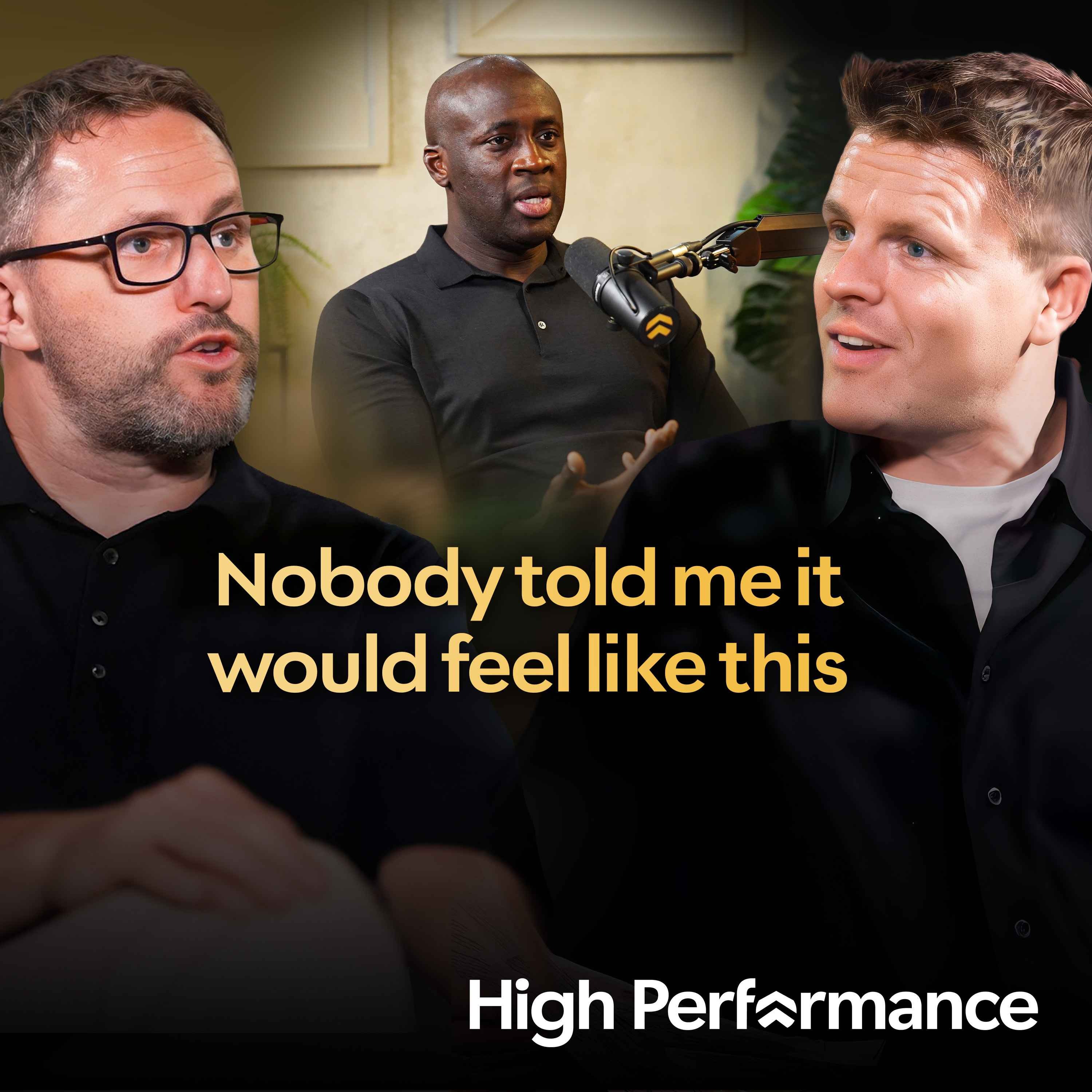
The episode explores “the day after you win”—why major achievements (gold medals, titles, career milestones) often don’t bring lasting joy, and how to avoid linking happiness to external outcomes. It argues for steadier self-worth (“live like a candle”), intrinsic motivation, and planning a meaningful “next” chapter.
Written by AI. May contain mistakes.
Exploring the emotional aftermath of winning and the societal pressures surrounding it.
“because I actually think that so much of the conversation we have on this show is about equipping yourself to get the win.”
Yaya Touré discusses his struggles and feelings of emptiness post-retirement.
“He joined us recently on High Performance and we started the conversation not by talking about the goals or the medals or the trophies or the titles.”
The hosts reflect on past interviews and the importance of addressing guests' emotions.
“Do you remember when you and I went across to Holland to interview Edwin Bandasara Ajax?”
Discussing the fleeting nature of happiness after achievements and its impact on life.
“rather than just jumping in, do you remember?”
A look into self-determination theory and how intrinsic motivation sustains happiness.
“And it was like, and most people go, yeah, yeah, I'd love that wealth.”
Hector Bellerin shares the powerful analogy of valuing oneself regardless of performance.
“recorded in this building actually, but years before this building was our studio, Hector Beyerin comparing himself to a candle.”
Ben Ainslie reflects on his Olympic wins and the fleeting joy that followed.
“that answers any question we're about to ask ourselves for the next 20 minutes on this conversation, right?”
Learn about the early days of starting the podcast and the first recording.
“But the first one we actually recorded was when we travelled down to Ben Ainslie's racing headquarters in Portsmouth.”
Discover Ben Ainslie's reflections on winning gold and the subsequent emptiness.
“And so for me that was quite a good lesson learned.”
Explore how elite athletes share their vulnerabilities publicly.
“telling us he felt empty the day after he won.”
Reflections on missed opportunities to discuss emptiness with legends like Schumacher.
“to elite performance and success until that moment when we were talking about Ben Ainsley.”
Understand the importance of planning for life after sports through examples from boxing.
“I remember I'd co-authored a couple of books on Thomas Hearns and Marvin Hagler.”
Listen to Ian Thorpe discuss his struggles with identity and media pressure post-career.
“Well, do you remember we spoke to Ian Thorpe?”
Discuss the concept of successful comebacks in sports and their implications.
“It was less about me swimming up and down a pool that it became responding to the media and things like that.”
Explore the concept of flow and how it relates to achieving peak performance.
“So first career, terrifying young heavyweight champion.”
Explore how challenges shape personal growth and character.
“It'll be about the way that you left people feeling in your company.”
Learn from Billy Munger's perspective on overcoming adversity.
“which was actually remarkably something that changed the way he saw the world and gave him a real sense of perspective.”
Understand the importance of finding happiness in the journey, not just in success.
“excited now every day i wake up for the next day and the next thing to be able to do i don't take anything for granted anymore.”

Get the gist, explore an idea or ask about something said.
 Claude
On The High Performance Podcast, what are the key points of this episode?
Searching your listeningAutomatic transcript. May contain errors.
0:00Quick question, when was the last time a display ad changed your mind? Now think about the last time a friend told you about something they loved. Different feeling, right? That's how podcast advertising works. A host who's built real trust with their audience talks about your brand in their own words, in their own voice. It doesn't interrupt the experience. It's part of it. With Acast, you can access the world's largest podcast marketplace. Choose the right shows, the right audiences, the right format. Then watch the data tell you it worked. You're not buying impressions. You're buying influence.
0:33Learn more by visiting ACAST.com slash advertise.
0:42Hi there. You're listening to High Performance with myself, Jay Comfrey and Damian Hughes. How are you? I'm good, mate. How are you? You all right? Very well. Thank you very much. So today we're going to talk about what happens the day after you win. because I actually think that so much of the conversation we have on this show is about equipping yourself to get the win. All too often, people don't talk about the day after the win, but there's actually a really uncomfortable truth here that I think we need to discuss. And this isn't just about gold medal winners or people on the top of podiums or people exiting businesses.
1:10This is an everyday conversation for average people like you and I that are just getting on with our lives, assuming that we're either going to be really happy when a certain thing happens, or even worse, telling ourselves we can't be happy until that amazing thing happens in our lives. Because so often people have told us on this show that when they do achieve incredible things, there just isn't that moment of joy, that day after tends to be lower rather than higher. And I still, you know what, I still can't really work out what's going on here after seven years of having these conversations.
1:45Jake Humphrey: Well, do you remember when we both came off the call when we spoke with Kyle Frampton, the boxer? And you immediately said there's problems there. Yeah. And I'm glad that he seems to have navigated his way through it. But he was talking about, I need to win a third world title and then my career will be complete. Then I can walk away happy. Then I'll know that I've fulfilled my mission. And we were like, you've already won two world titles. You've inspired a generation of young fighters. You've achieved everything. You don't need this to get there. We've seen it so often, haven't we? I remember when I did the interview with Alistair Brownlee and I've quoted this so often to people when he went, I have stood on the top step of the Olympic podium twice with the gold medal around my neck.
2:29He said,
2:29Jake Humphrey: and I can definitively tell you it's not worth the effort it takes to get there. So if you don't enjoy the effort, don't think that top step gold medal is going to be the payoff because it's not. And I think we hear it so often from our guests that it's certainly worthy of exploring and diving a little bit deeper into it. Well, let's hear then from Yaya Toure. He joined us recently on High Performance and we started the conversation not by talking about the goals or the medals or the trophies or the titles. We started talking about after he retired. Here he is. Sometimes we don't realise when we're in the game, for example.
3:08When you're out of it or maybe you stop it or you retire, for example, like I am now, it's coming difficult. You know, you feel like, OK, how are you going to feel my journey or my day today? you just have to wake up, just have a workout on, maybe a workout in the gym. Nothing, right? And for me personally, sometimes I feel like, I feel empty. I need to do some stuff. I need to be involved. I need to, I don't know, I need to, you know, feel myself because I've been doing those, this job for so many years, right? I think for more than 50, 60 years, I've been on high level and now doing nothing is quite really, really difficult.
3:50Did you realise this is how it would feel in retirement? I never realised that. And now I realise that a lot. And that's like, it's not a shock. I was not, to be honest, I was not that surprised. I knew it was going to come in at some point, but not like that. Because in my mind, two years or three years before I retire, I was like, okay, you know what? When I finish football, I just go maybe in Maldives or maybe in Highland diet. just to relax myself and try to enjoy it as much as I can because it was too much, right? Games after games and national team, travelling, all these things like that, it was very, very tough.
4:32But now I mean, I think, I feel like I'm not 50, I'm not 60, that's not for me, you know? I need to do something, I need to be involved again. Do you remember when you and I went across to Holland to interview Edwin Bandasara Ajax? because he was the director of football. And he came in the room and we said, how are you, Edwin? And he went, shit. And he looked really stressed and really upset for whatever reason. And you and I basically messed up and still did the interview that we'd planned we were going to do. Yeah. Didn't react to what he said. And it was only a few days or weeks later that he actually had a stroke, right?
5:08And obviously the stress and the pressure of that job was eating him up. And we had an opportunity to really explore that with him and we didn't. Yeah. Such a big learning for me.
5:17Jake Humphrey: Mate, it still haunts me that now. but I remember texting you the day after we'd done Yaya and I said to you, and I complimented you on it I went, well done on addressing what you saw in the room rather than just jumping in, do you remember? Yes, so what happened in the room was that where we record these episodes, if you're watching, hi, you'll be able to see us in the studio just next door is what we call the green room it's where we greet our guests, their partners or agents or anyone they're with can sit in there and listen to the interviews and it was when he came in, and obviously I was hosting football when he was playing for Manchester City and I was telling him how much I used to enjoy it and I said, how's retirement been for you?
5:51And he just said, really, really terrible. He said, it's been awful. I've just hated every minute of it. I have no purpose. I'm really down. I need to find what's next. And that's why we then started the conversation in that place. Because I was like, well, we can't let this moment go. And I was thinking about it quite a lot afterwards, reflecting on the fact that isn't it such a shame that he can bring all that happiness to people? He can give himself all of those great moments. but it's like as soon as you've had those moments they're gone they don't carry any residual value now there's also a value in this right because i was talking to harriet and all of our friends went away on a half term recently holidays disneyland skiing whatever we didn't and she was like oh i'm feeling a bit down because i've been on instagram and everyone's been away i said to her do you think they feel any different or do you think they're now back in their routine in fact they're probably lower because they've been on that holiday now they're back into doing the washing and doing the school run and making the snack and all the mundane stuff.
6:48But also, why don't we just imagine we also went on holiday? I know that sounds ridiculous, but once you've done it, apart from the photos on your phone, there is nothing else. You know, I've experienced people with dementia a few times in my life, right? And almost one of the most beautiful things is when they were at the stage where they were imagining they'd done things they hadn't done. but the joy of doing those things they felt yeah the experience was 100 theirs and there was a bit about this in everyday life for all of us you know let's just imagine that we've done great things let's think about the fact that we're still lucky let's not imagine that other people are in a place that we're not just because they've had an experience that we haven't had i think it's like for me it's almost at the core of what this podcast has become yeah i love that i love
7:37Jake Humphrey: I remember reading a book years ago where it said, would you swap your life with Warren Buffett's wealth? And it was like, and most people go, yeah, yeah, I'd love that wealth. But you'd now have to be 96. So to have his wealth, you have to accept that you're now 96. Do you think Warren Buffett would swap with you? 48, and most people go, of course Warren Buffett would swap with you because the most valuable thing you have is time. It's like, would you like me to give you 100 million quid? Yeah. What about if I give you 100 million, like ridiculous amounts of money, but you don't wake up tomorrow?
8:13Yeah. Right. So tomorrow is worth over 100 million. Yeah. Like you have to have that mindset every day.
8:20Jake Humphrey: Yeah, but I love that idea because that's just a simple tweak, isn't it? That's just the idea of, like when Sarah Pascal told us that lovely idea that she went from being paranoid to pronoid. She was believing everyone was out to hate her to then going, everyone's out to love me. Everyone's out to help me. Everyone's out to enjoy my material. And just that one tweak and telling the story in her own head differently allowed her to go on stage and be authentically herself. So most of our life is spent getting in our own way, tripping ourselves up. So this ability to tell a better story, and that includes the story of what happens when we cross that finish line.
8:56I just don't know, though, whether it's ever possible to really change how people feel about this. You know, we've done this show for seven years, right? We do a lot of talks to businesses or groups of people. We get asked to go and meet businesses and things. And often we will talk to them about don't be on the hedonic treadmill. Don't be on this world of delaying your happiness, thinking that one day the happiness comes. The happiness has to be in the struggle, in the fight, in the everyday. We've been saying this for seven years. We've spoken about it on the podcast loads. Yet every time we go in and say it to a new group we've never met before, suddenly heads are nodding and they're like, yeah, yeah, I get it.
9:32and then you get into this really difficult world of, well, are we saying don't achieve stuff? We're not saying don't achieve stuff, right? But what we are saying is don't do what Yaya Torre did, which is link your happiness to those achievements. Yeah, the happiest people we know
9:48Jake Humphrey: are the ones that are driven intrinsically. So this goes back to the research we've quoted numerous times on the pod from two guys called Richard Ryan and Edward Deasy. They were psychologists at Rochester University in the 70s and 80s, and they looked at a concept called the self-determination theory. So how do you keep your motivation high even when the external rewards aren't necessarily as prolific? And what they found is self-determination theory says, first of all, it's about having control or autonomy in their language. Then it's this idea of mastery, the idea of just wanting to be really good at something that matters to you.
10:24Jake Humphrey: And then it's the idea of having something that you value. So control value and mastery were the factors that mean if you can factor them into your life rather than focus on the external rewards of I'm focused on how big my bank balance is, the car I drive or the house I live in. We know that the self-determination theory gives you that fuel that burns for so much longer that gives you the chance of riding out the roller coaster that life sometimes puts you on. Can I play a clip from a serious archive episode of High Performance? Go on. recorded in this building actually, but years before this building was our studio, Hector Beyerin comparing himself to a candle.
11:06Brilliant. I don't feel like there's a way in which we should teach kids that the result or their performance is gonna be linked to their value. It's like your value as a human, I would say that analogy of like a candle, it should always be like a candle that's always burning at the same rate, right? So your value is always this. So it doesn't matter if you score a goal. It doesn't matter if you score an own goal. It doesn't matter if you lose your always win. Your value is always here. In football, it's always a completely other way around. It's like you score a whole goal, you win a trophy, boom.
11:42But then you lose and you're down here. So you're never in the middle. And everything around you, all the voices around you, your coach doesn't pick you if you don't play well. The media doesn't talk good about you, but it's not that they don't talk good about you, they talk bad. so they they dig you a hole you know and then some of people that you call friends maybe you're not playing that well but you know they don't talk to you as much and like but then when you do well again everyone is messaging you every week and oh wow great game you played everyone on instagram so the candle is constantly like this and so you're being defined by what happens on a football yeah you basically your self-esteem is like performance self-esteem it's not like uh uh you know your your value is dictated by your performance which like not healthy human being can be happy with those metrics.
12:24There he is, the former Arsenal player. Is he still at Real Betis? He scored against Real Madrid at weekend. Did he? Yeah, yeah, yeah. He did, so one of the last games of the season. I think that is one of the best quotes we've ever had on this show, actually. Live like a candle. Don't get high, don't get low. Just be steady throughout. It's almost the kind of advice that answers any question we're about to ask ourselves for the next 20 minutes on this conversation, right? Well, Hector was the one that,
12:49Jake Humphrey: You know, we often talk about how meeting our guests and we take the ideas away and apply it in my life. He was the one that sort of re-educated me on the quality of asking better questions to my children. So he tells a story, doesn't he? Do you remember when he was 14 and he came home from La Masia, Barcelona's academy, and his parents were like, oh, did you win? I was like, why is that important for you? It was a 14-year-old football match. Why don't you ask me, did I enjoy myself? Why don't you ask me, what did I learn? Why don't you ask me, how was I a good teammate? mate because surely they're better questions for to describe the experience than whether I won or lost because if I lost does it mean that it wasn't a valuable experience you know and I and when I reflected on it I thought the other questions I'll ask my kids when they either rugby or netball I was asking them did you win and he said it doesn't matter did you enjoy it what did you learn and how did you contribute to being a good teammate a far more valuable I just think this is so useful for people because I see all the time people delaying their happiness Johnny Wilkinson very early on 30 seconds he told us he was happy for when he won the Rugby World Cup but I want to go to our very first ever record was when you and I do you remember I rang you when I was driving to the Chelsea Flower Show and said do you want to do a podcast with me and then it was like right who can be the first person we record with and it wasn't the first episode we released do you remember we released Rio Ferdinand that we recorded in his rest Do you remember going up to Manchester, sitting in a loud restaurant with a couple of microphones?
14:16Yeah, yeah, Russell at the time, yeah. Trying to do an interview with Rio. But the first one we actually recorded was when we travelled down to Ben Ainslie's racing headquarters in Portsmouth. And he talked to us about winning the Olympic gold 26 years ago and how he felt afterwards. So should we go to this clip? I'd love to, because this was the moment
14:35Jake Humphrey: when I remember thinking, wow, these people are willing to share so much vulnerability that I thought we were on to something remember actually the first um olympics i won i had a silver medal in 96 and i managed to win the gold medal in 2000 and i remember getting on the airplane home and sort of sitting back thinking oh you know that's it i've done it what that's i don't need to worry about anything else again and that that feeling lasted for about 24 hours and then and then it was okay what's what's next what's next um and then to the point and actually after those olympics I sort of suffered, I guess, probably you hear about it a lot, Damien, but it's sort of post-Olympics in my case or post-event blues of you reach a milestone and then you haven't really got anything else planned and you're at a loss because for all those years you've been waking up early, getting to training, focused on one thing, and then that's it, it's over.
15:31And so for me that was quite a good lesson learned. Okay, you've always got to have a plan. So whichever the Olympics I went to after that, But I always knew straight away after, you know, what was the plan? What was I working towards? So that helped really, I think, from a career-wise and a focus to move on. So there he is, one of the most decorated sailors in Olympic history, telling us he felt empty the day after he won. I'm intrigued actually at this point how much that was a lesson for you because I came from the world of hosting television programmes, working on kids' telly and getting fired from McDonald's, right?
16:05you came from the world of being in dressing rooms, operating with elite individuals, lecturing at Manchester University about psychology, researching high-performing elite cultures for years. So did you not know this stuff already or was this a lesson for you? It was.
16:22Jake Humphrey: It was a definite lesson. I think what really surprised me, though, was that I'd had conversations like this in sort of closed, one-on-one, confidential meetings and to then hear that these elite athletes were willing to share it so publicly, to make themselves so vulnerable with the idea that hopefully it could help others. That was the bit that surprised me because I didn't think, I wasn't sure whether we as a society were ready for that level of candor. So that first time when Ben, like I remember when you asked him a question and he went, wow, I've never been asked questions like this before.
16:58Jake Humphrey: And it was making him think. And I think the fact that he hadn't prepared an answer, so therefore he was giving us the unvarnished truth. I remember thinking this is like a real privilege for us to listen to it. So hopefully there'll be people out there that recognise the value of it. You see, I had never even considered that there was an emptiness to elite performance and success until that moment when we were talking about Ben Ainsley. And I remember actually when I got the job to host the BBC's F1 coverage in 2009, a year later Michael Schumacher came out of retirement and returned to Formula 1 in 2010 and I was the first person to interview him it was on the BBC News channel and they were doing media stuff and so I got the chance to interview him and then obviously spent a couple of years with him in his return driving into circuits with him and going on trips with him and filming films with him and spending a lot of time in his company not once did I ever say to him you know when you retired the first time around how empty was it how much did you miss this and he never mentioned it and I sort of I remember then thinking man what a what a missed opportunity to speak to a seven-time Formula One legend about what actually was going on in his head in that period away from racing where you just assume well he's minted he can go anywhere he wants he can buy anything he likes he's got kids he's got a wife he's just come back for even more fun not one part of me thought Michael Schumacher has come back because there was an emptiness in his life and he's trying to fill a void.
18:27Yeah, yeah. Well, you're right.
18:29Jake Humphrey: I remember I'd co-authored a couple of books on Thomas Hearns and Marvin Hagler. So they're two of what are commonly known as the Four Kings, like a golden era of boxing history. And I went on a BBC Five Live show. It was around the anniversary of this and I was with Steve Bunce and Mark Chapman and Mike Costello and we were talking about them and at the end of the show it was ranked them in order of significance and everyone else like well Sugar Ray Leonard was the most talented others were talking about Roberto Duran was the most charismatic and I said Marvin Hagler and when they were like why would you put him there I was like because he retired and never came back that was the criteria of which I viewed him as a great because what was interesting with him was that he there was all kinds of calls for him to come back and fight and when I'd interviewed him at the time he was like I knew if I'd stayed in Boston where we'd grown up I would have come back because everyone referred to me as a champ so he decided to emigrate to Italy spoke no Italian but he decided to go and reinvent himself as a as an actor in uh in Italy because he recognized he needed to do something different with his life rather than stay in the sport that where his diminished physical gifts were going to cause him damage so i've often long admired those that know how to plan for after the final whistle goes so the fact that we've been able to speak to other more contemporary athletes now and understand that actually this isn't as easy as you'd imagine like schumacher did like we've seen so many boxers Tyson Fury has come out of his time.
20:13Jake Humphrey: Well, do you remember we spoke to Ian Thorpe? Yeah. In fact, should we just play it and have a listen to what Ian Thorpe said? Just to put this into context, if you're watching, you might not see any video at this point because Ian Thorpe did an interview on a webcam. Do you remember? And you know those like privacy things that you look through on hotel doors or on your house? What are they called? Like a... Peepoles. Like a peepole. It was like a reverse version of a peepole. So he was minuscule. I don't know what had happened. But anyway, it sounded okay, so we kept it. But there's probably going to be a photo of his face or something rather than the actual video of him, if you're watching this on Apple Podcasts.
20:49But anyway, here he is, Ian Thorpe, when he joined us on High Performance. During that period, it was the context of what swimming was for me that completely changed. It was less about me swimming up and down a pool that it became responding to the media and things like that. So for me, I was also, you know, I was paparazzi at home and it just the context of my sport changed where it never existed before. I never thought that there was an athlete in swimming that would have to go through that. And so I never prepared for it. And for me, as someone that's quite private, it became a struggle. And it was more significant than anything else that I could do in the book where I decided that's it.
21:45I'm trying to think whether there's ever been a return that was better than the first time around. I don't think there is.
21:53Jake Humphrey: Well, that's a good question. I'm going to... While you talk about something really clever that I can't even contemplate because I've got a small brain, I'm going to ask AI. Have you turned... Well, I mean, it's a really surprising one, isn't it? Because people often, if you think about why people stay in it, there's often like that longevity of just trying to eke out a few more years on a lucrative contract. Excellent feeling, Damien. AI says, this is a great question. It cuts right into identity reinvention and that rare second act that usually, that actually can surpass the first. It's really uncommon.
22:31However, Michael Jordan, first career, three NBA titles, global superstar, second career, three more NBA titles and a 72-win season. Michael Phelps, first career peak, eight goals at Beijing 2008, came back after burnout, depression and struggles, second act, five goals at Rio 2016. But this was more than medals because he was the oldest individual Olympic swimming champion in decades, but also mentally healthier, which is important. George Foreman's on here. So first career, terrifying young heavyweight champion. Second career, came back in his 40s and became world heavyweight champion at 45.
23:13But you've got a frown on your face, so you wouldn't agree with that?
23:16Jake Humphrey: No, well, if you take the Michael Jordan one, I think the interesting thing for him was that he lost his dad, didn't he? So then his dad was kidnapped and then later found dead. So he went to pursue that career in baseball because he felt he was honouring his father's legacy. And then he came back when he realised how difficult it was in another sport. So I think maybe that gave him a chance on a mental reset. The Michael Phelps one you said, it was a case of burnout and depression. I think George Foreman, he came back and at first, I feel uncomfortable because he was such a terrifying heavyweight in the 70s when he first emerged on the scene.
23:54Jake Humphrey: Like if anyone ever wants to go back and just watch a real one-sided beating, Have a look at his destruction job he does on Joe Frazier, where he just knocks him down something like eight times. He was genuinely frightening. I think when he came back a second time, he was seen more originally as a bit of a freak show. He was almost like people thought he was amusing because of his size and his weight. So although what he did was incredible, I wouldn't compare the second act to what he was like first. AI also obviously doesn't know that I host this show because it then said, if you want, I can flip this into a Room Where It Happened style monologue.
24:32The moment someone decides to come back, knowing they might ruin everything or redefine it. I say, I also host high performance, you know, chat GPT. I actually remember now talking to Eddie Jordan about the couple of wins he had in Formula One. And I remember asking him on stage once, we used to do these little Q &As. This sounds weird. We used to do Q &As in campsites. So there were certain races where everyone camps. And there was a company called Camping F1. and they used to pay us to go in and just like do an evening talk to all these campers. It was great. And I remember saying, your greatest win.
25:02And he said, getting out of Formula One with my money and my sanity. And actually, like, he wouldn't have been. So he sold that team, I think, 2005. He died in 2025, aged 76. So he was born in 1950.
25:231950? Yeah. 1959, 1950. 52. So he would only have been 55 when he sold that team, just a few years older than you. Like, what a great time to do that and to get that freedom. Yeah, yeah, definitely. So let's talk about how we can really practically help people who are living in a space where at the moment their happiness is delayed, they're telling themselves that they have to achieve, they have to earn a certain amount of money, they have to do certain things for their husband or their wife or their kids. There's a concept in psychology called flow state, right? since Mekhali. Yep. And I wonder whether we can talk about that for a bit to remind people that actually your peak performance, your high performance, your optimal state, it's not about the achievements.
26:07It's about the achievements, if that means.
26:10Jake Humphrey: Yeah, yeah, yeah. So the Sixth Mekhali stuff tells you about it, that there's those moments where everything just flows for you, but it's where the idea comes from. But it's almost about you just immerse yourself in the craft. If it's about playing music, you just love the music. It's where the keys go. you're not thinking about the applause at the end of it, you know, if you're performing in that sense. But it goes back to the DC and Ryan stuff about the self-determination theory. You've got to look at what do you want to master? What is it you love? What do you have a degree of control over?
26:43Jake Humphrey: And what do you really value? And I think if you focus on those three questions, they're far healthier questions to focus than necessarily focused on outcomes or the external validation of it. Another nice technique that people might think about doing is go back and listen to the interview we did with Glenn Hoddle. Because Glenn, I don't think he'd mind a saying, was somebody that had been caught up in reputation and identity for a large part of his career as that beautiful footballer, but then when he went into coaching. and I think that horrendous incident when he had a cardiac arrest and his life flashed before his eyes gave him the sense of reading his own eulogies when he recovered from it and casting himself forward into the future and going, what do I want people to say about me?
27:36Jake Humphrey: And it won't just be about he was a great footballer or he had this bank account. It was how he behaved, how he conducted himself and how he left other people feeling. Shane Parrish told us the same technique of imagine you're on your deathbed and you're in a coma and all your loved ones around you? What do you want them to say? These are all the things that just get us out of the immediate moment and cast us forward enough into the future to go, what's your legacy going to be? And it will not be about your achievements. It'll be about the way that you left people feeling in your company. I'd also like to remind people that life isn't going through the hard times to get to the good moments.
28:13The hard times can be the good moments. I saw this on social media the other day, which I thought was really good. It says, imagine you talk to the creator of the universe before birth and you pick the person you're going to become. So you say, I want to be the most courageous. So the creator replies, great, I'll give you monsters to terrify you so that you can conquer them. I also want to be patient. Great, then I'll make you work harder and longer so you can learn to wait. I also want to be wise. The creator says, okay, I'll give you failures that will crush your spirit so you can learn the value of judgment.
28:43But that sounds like a really tough life, you say. Can you not give me a good life? And the creator replies, just like we measure the quality of a blacksmith by the strength of his steel, I measure you by what you are at the end, not the fire and the hammer it took to make you. A good life isn't a life that's easy. A good life makes you into a good person. And that, my son, is a hard life.
29:06Jake Humphrey: You know who pops into my head when I was listening to you say that? Billy Munger. Yeah. Shall we finish with a clip from Billy? I'd love that. But here he is, the man, the young man who, in a British F3 race, sadly lost both of his legs in a serious accident, which was actually remarkably something that changed the way he saw the world and gave him a real sense of perspective. Here he is, Billy Munger on high performance. I think mentally now is where I see the real benefits from the accident itself. Explain that a bit more. so just like in terms of my mindset like i say the small things get on my nerves um sometimes but it's i think sometimes people like to get caught up in things that don't really matter and as much as i still get annoyed as much as the person next to me i think i'm able to deal with it a lot quicker i think there's always that part in the milk my sort of thinking in the back of my mind that allows me to sort of just say well why are you even bothering worry about that well before it'd be like i don't know you'd spend five ten minutes like getting upset if something's happened but now it's like it happens have a little bit of frustration and you're like what are you doing and then you kind of just forget about it and keep moving forward so i say my mindset in terms of looking forward to the next thing and the next day and i mean i'm excited now every day i wake up for the next day and the next thing to be able to do i don't take anything for granted anymore.
30:35And I think that's probably massively down to my accident and the mindset change. Oh, what a great way to end. Is there a book that people should read which kind of sums up this idea of searching for a bit more from your life than maybe we think?
30:50Jake Humphrey: Yeah. So again, the Hector Garcia book on Ikigai, we spoke to get Hector. That's a really good book to read. Another book if you're maybe more of my vintage in age, David Brooks wrote a book called The Second Mountain, which is like once you've sort of got to a stage in life where you start thinking about what else can I do? What else can I offer people? David Brooks' Second Mountain is well worthy of exploration. Great, because we speak to so many people on this show who achieve great things and as soon as they achieve that great thing, suddenly that great thing becomes a distraction from the next great thing.
31:24And it's fine to live your life doing great things. Damien and I are not sitting here saying don't achieve great things with your life. What we are saying is don't reserve the happiness until you achieve that great thing because there will always be a greater thing. Therefore, the happiness will always be delayed. And therefore, what kind of a life is it if your happiness is not something that's central to it? Thanks so much, Damien. Thank you, mate. Don't forget, you can watch as well as listen on Apple Podcasts. You can enjoy these conversations on YouTube or wherever you get your podcasts. We'll see you again soon for another episode of High Performance.
31:56Thank you.
32:26right? That's how podcast advertising works. A host who's built real trust with their audience talks about your brand in their own words, in their own voice. It doesn't interrupt the experience. It's part of it. With Acast, you can access the world's largest podcast marketplace. Choose the right shows, the right audiences, the right format. Then watch the data tell you it worked. You're not buying impressions. You're buying influence. Learn more by visiting acast.com slash advertise. Thank you.
Everyone talks about what it takes to win. Nobody talks about what comes the morning after. In this episode, Jake and Damian go deep into the HPP archive to explore one of the most uncomfortable truths in high performance: why the moment of victory so often leaves elite performers feeling empty, lost, and at a total loss for what comes next.
Featuring conversations with Yaya Touré on the strange emptiness of retirement, Ben Ainslie on the post-Olympic blues that hit 24 hours after winning gold, Ian Thorpe on walking away from a sport that stopped feeling like his own, Héctor Bellerín on why your value should burn like a candle - steady, never spiking - and Billy Monger on finding purpose after having it stripped away entirely.
Jake and Damian also get into the psychology of why we delay our happiness, what self-determination theory tells us about intrinsic motivation, and why the people who handle the end of peak achievement best are the ones who were never only defined by it.
The question isn't really 'what do you do the day after you win?' It's 'who are you when the goal is gone?'
Listen to the full episodes:
Yaya Touré https://pod.fo/e/3f55a1
Ben Ainslie https://pod.fo/e/661e6
Ian Thorpe https://pod.fo/e/d9a3a
Héctor Bellerín https://pod.fo/e/d3369
Billy Monger https://pod.fo/e/a8d2c
Hosted on Acast. See acast.com/privacy for more information.


