
 Ask ChatGPT



Trust as the “single most important currency,” especially in the AI era and user-generated content, where people can’t easily verify outputs and must rely on reputation, transparency, and consistency. The episode argues trust collapses quickly and is hard to rebuild.
Written by AI. May contain mistakes.
Exploring how trust is built and maintained in the High Performance community.
“And the biggest asset he holds and talking to these people in confidence, talking about things that people don't know yet.”
Discussion on how AI affects trust and the need for authenticity in various sectors.
“But I think we actually are in an era where trust is going to become more important because AI is becoming this invisible infrastructure.”
Introduction to Rachel Botsman's perspective on how trust breaks down into three stages.
“So what Will and I are about to do is dive into the anals and annals of high performance.”
Detailed exploration of the stages of trust breakdown: defensiveness, disengagement, and disenchantment.
“So the first stage that she speaks about is defensiveness.”
Discussion on how James Timpson built a successful business centered on trust.
“They're going to be the ones that people feel safe handing their attention and their decisions and their time and their identity to.”
Contrasting the breakdown of trust with success rooted in trust in James Timpson's philosophy.
“Yeah, I think a lot of people have come on and said things like trust is really important or these are my values.”
Learn how trust empowers employees and enhances performance.
“So James is the kind of guy, and if you listen to the full conversation, you'll hear all this.”
Understand how personal connections impact trust and leadership.
“I was just sat in a dark room, like it wasn't around family or anything, so we weren't allowed out.”
Discover Martin Lewis's powerful stance on trust and its foundations.
“If only they were going up where they were then now.”
Explore the sacrifices required to build genuine trust in relationships.
“How does that make you feel listening back to that?”
Learn about the importance of trust over likability and how it is built through actions, not image.
“Yeah, there was, I would ask the listeners to jump in the show notes.”
Understand how trust is earned through consistent small actions in daily life.
“I just need a few more things on my wall, giving me some qualifications.”
Consider key questions about personal relationships that embody genuine trust.
“And I'll tell you what, before I go, here's a question.”

Get the gist, explore an idea or ask about something said.
 Claude
On The High Performance Podcast, what are the key points of this episode?
Searching your listeningAutomatic transcript. May contain errors.
0:00Do you keep hearing podcast ads like this one, for example, but always wonder how you actually get involved with them for your own brand or organization? Well, it's easier than you think. We're Acast, and we give you the platform to do it all yourself. Browse thousands of popular podcasts, choose the shows that match your perfect audience, set your budget and launch. And if you want a hand, our podcast specialists are there to help you launch with confidence. This is podcast advertising without barriers. Get started at acast.com slash advertise.
0:38Hi there, welcome along to the latest episode of High Performance, where today we are talking about the fact that trust is the single most important currency, particularly in this world of AI, particularly in the world of user-generated content, particularly in an era of the creator economy. trust is something that is so hard to build and it's something that's so quick to lose but i am not with damien today where is damien i hear you cry um we don't care because will the producers with us a man that we've trusted since day one of creating high performance uh where is the boss man as a professor we has to go out and do more important jobs and talk to more important people than us believe it or not there's no one more important than you and me and the high performance audience.
1:21We are the people. Yeah, he's talking to leading football clubs or national football teams and advising them on cultures and high performance strategies. So we'll let him off this week. I know what he's doing. I know what he's doing. I think he's having his final meeting with the FA before this year's World Cup because people, Damien's too modest to tell you himself that he has been advising the FA for the last few years, including sitting in roundtable meetings with Thomas Tuchel and his backroom staff, helping them work out how they can create a psychologically safe space for the World Cup, how they can prepare the players in the best possible way, how they can alleviate the pressure.
2:00All those things that we don't even think about once the tournament begins and it's all about football. Well, Damien is responsible for helping them in that situation. So a really good example would be having the buddy system in the last penalty shootout where you didn't send a player on their own to take a penalty. They had a teammate with them. Damien was central to working that through with the FA. So he's too modest Will to tell us these things, isn't he? Yeah. And this episode is all about trust. And actually for Damien, trust is super important. And the biggest asset he holds and talking to these people in confidence, talking about things that people don't know yet.
2:34So actually it's his biggest strength and something that he values above anything. So it's a really important topic that we can talk about today. It's interesting, isn't it? Because it would be so easy for Damien to talk to our audience and talk to us. and share all the things, all of the things that he does in private, the things where other people are trusting him to share his knowledge of the world. But as you just said, trust for him is the single most important currency in life. And obviously we're having this conversation, Will and I, against the backdrop of the Southampton spying investigation.
3:07But we're not actually here to talk about what Southampton have done, to talk about the rights and the wrongs of that. But what we do want to share with you after over seven years and 400 episodes of High Performance is the importance of trust, because we speak about this often, Will, ourselves. Why is high performance still going? Why does it still generate the interest, the numbers, the followership that it does? We trust is arguably the most important reason, don't we? It's all trust. I think what we talked about, even from day one, is almost the audience trusting us, and us being able to give them valuable conversations that they'll learn from.
3:43Sometimes it was easier to get people who were a bit more controversial and clickbaity, but actually the trust of the audience, knowing that what they're coming to and what they're learning is people that we think are some of the most valuable people on the planet. And that stayed true from the very first moment we spoke about this podcast to now and something that we hold really, really dear in the team at HP. Yeah, you're totally right. And I think, Will, since we started this podcast, obviously AI didn't exist, or it certainly didn't exist in the form that it does now when we first started.
4:18But I think we actually are in an era where trust is going to become more important because AI is becoming this invisible infrastructure. You know, it's going to sit inside everything that happens, healthcare, finance, education, media, which is where we are now. And actually, that's going to mean that people can't always verify outputs themselves. So they're going to have to rely on reputation, transparency, consistency. They're going to try and work out whether their values are aligned with the things that they're enjoying or the people that they're spending their time with. And I think this is why trusted brands and trusted individuals are going to become more important.
4:54I was thinking about this over the weekend, knowing that we were going to have a chat. Like, you know, now, whatever happens, everyone goes, is that real or is that AI? It's like the first question, isn't it? And it kind of really matters. So Seb, I know your boy as well, won his cup final at the weekend, and your son did the same thing. And one of the parents was saying, oh, we should get some AI videos made up of famous players congratulating them. And we had a chat about it, and we're like, well, if it's AI that's made the message, even if the boys believe that it's Lionel Messi and Erling Haaland congratulating them, it literally doesn't matter, does it?
5:33Because it's AI generated, so it's fake. So it doesn't carry any currency for those kids. So actually, trusted voices matter. Authentic communities matter more than ever before. Human credibility, I think, is going to become more and more scarce. So the reason why I think this is an important conversation for you listening to this is the winners going forwards may not be the people who are the smartest with AI. They will be the people who allow AI to exist, but not to run their world. because capability is going to get attention, but trust is the thing that will get long-term adoption. So what Will and I are about to do is dive into the anals and annals of high performance.
6:19Unbelievable. We're definitely not diving into the anals, we're diving into the annals of high performance to bring you some of the most interesting conversations we've had on the topic of trust. And we thought we would start, Will, with someone called Rachel Botsman, who is not a name that immediately jumps out to people. It's not a name that trips off the tongue. I think a lot of people wouldn't necessarily know who she is or what she does. But once they hear the things that she has to say about trust, they will realise why she's a vital addition to this conversation. The way I define trust is actually quite different to many people.
6:53So a confident relationship with the unknown. So a lot of people talk about trust in terms of having full confidence or knowing the outcome or knowing what to expect. Well, actually, you don't need a lot of trust in those situations. It's when there's high uncertainty or there's a high unknown. So to discover that side of yourself, you actually need really, really deep trust. So that's Rachel Botsman when she joined us on High Performance. Don't forget, you can hear the full conversations with all of these guests if you just click the link in the description to today's episode. So Rachel is a leading expert on trust, tech, human behavior.
7:29if you haven't heard of her before i would say she's best known for her work exploring how trust is changing in the digital age which is so important for us at the moment so who can you trust is one of the books she's written uh what's mine is yours which predicted the rise of the sharing economy was also written by her she's a trust fellow and associate fellow at the university of oxford saeed business school and was named one of the top management thinkers by thinkers 50 and also you can check out her TED talk on trust as well. But the reason why I wanted you to hear that one is because Rachel speaks brilliantly about the three stages that happen when trust starts to break down.
8:08So she spoke to us about defensiveness, disengagement and disenchantment. And I think that you may well recognize some of these either at home or in the workplace or in the challenges that you're dealing with in your everyday life because I think these stages also perfectly explain in the moment that we're moving into with AI. So the first stage that she speaks about is defensiveness. So people become cautious. They question everything. They ask, is this real? Can I trust this? What's the agenda behind it? And I think we're already there, as I mentioned at the beginning with Will, you know, deep fakes, AI-generated content, misinformation.
8:42I think we're already starting to kind of protect ourselves psychologically from trust in the era of AI. But after that comes disengagement, which is dangerous. And that's when people stop participating altogether in this stuff. So you would have heard people, and I don't know whether you're in this camp, like do you watch the news still, Will? Lots of people seem to not anymore. Yeah, I do. But I'm very careful about the sites that I go on to get it. So that's one of the big things. People start to lose trust. So they tune out things like news. They stop engaging with platforms. You then have the growth of conspiracy theories around this time.
9:18And conspiracy theories only exist in an era where people aren't trustworthy. So that starts to grow. And then actually people start to lose interest in all the systems that we trusted traditionally. So they feel manipulated when maybe they're not, they're exhausted or overwhelmed by it. And they don't actually have outrage at this point. What Rachel talks about is at this point, people start to just withdraw. And you will, I'm sure, have seen this in your own lives. In the final stage that she discusses, which is, I suppose we could say the most dangerous one, is disenchantment. And this is really when people are no longer believing all of the systems and just don't think anything can be trusted.
9:56So instead of saying things like this app is flawed or that journalist was incorrect or that system didn't quite work, they say that institution made mistakes. That government is trying to control us. None of this is real anymore. And then suddenly truth is a bit blurry and authenticity is hard to recognize and then cynicism takes over and we're talking about this obviously the sadampton story is i guess the catalyst for us having this conversation but it's such an important conversation to have around the conversation around ai because i think in a world where intelligence is going to become abundant right which is exactly what we're entering trust is going to become scarce so the reason why it's important for you i think to hear this today is that the companies the creators the leaders the platforms that are most likely to win in the future are not necessarily going to be the ones with the smartest technology.
10:48I still believe this. They're going to be the ones that people feel safe handing their attention and their decisions and their time and their identity to. So trust will actually become the infrastructure. That's why I'm so proud of the fact that we are trusted by so many people on high performance. People give us their attention. And we all know that once that trust is broken, rebuilding it is far harder, actually, than building the technology in the first place. So that's Rachel Botsman. What do you think is a good next clip for us to go to, Will? You've sat and listened to every conversation we've ever recorded on this show.
11:20Oh, I think to talk about how trust is built, we've had some amazing guests who delved into this, none more so than James Timpson. Remember going to his house? Do I remember going to his house? Will, it's like turning up at Buckingham Palace. I mean, I've never seen a house quite like it. And just to paint the picture for people, um james lives in the north of england invited us to his house myself damien will finn who was recording the audio at the time um and we went to a kind of a little outhouse didn't we in his garden i say outhouse it was like as nice as most people's houses but i don't want this to become about the fact that james has been successful what i actually want this to be about will is the fact that james was successful whilst putting trust at the center of his world and i sometimes think we kind of think, well, we can either be successful and ruthless or unsuccessful and put trust at the center of our world.
12:14James shows us we can do both, doesn't he? Yeah, I think a lot of people have come on and said things like trust is really important or these are my values. Here is someone who literally put it at the center, like you said, of everything that he did and built a whole business and a culture based on it and really lived by that value. Shall we hear from him? Yeah, let's do it. It's a culture based on trust. It's about employing people who you really like, and you trust them to run the business, and they don't need all these rules in place. And it amazes me how many organizations try and control everybody and have loads of rules in place.
12:53And I can see how it starts off, but it's all for a good reason, because something goes wrong. So when something goes wrong, you've got to have a guideline to stop it going wrong again. But then a guideline becomes a rule and then then there's rules and rules and rules and rules And then you have an organization where people just turn up and just as long as you follow the rules you get paid And you can go home, but those rules stop you being innovative They stop people being themselves and that ends up costing you way more money so I'm really commercial and I know in our business the best way to make as much profit as we can is to trust people because then you don't need all this middle management in place to check and stop people doing things.
13:39So there we go. Rachel spoke about what happens when trust breaks down. And we spoke about the three stages of defensiveness, disengagement and disenchantment. But I think it's really important we also think about someone like James Timpson, who in some ways is on the total flip side of the trust coin because his entire philosophy, One of the most successful businesses in the UK was built on trust. Now, it wasn't built on control. It wasn't built on surveillance. It wasn't built on micromanagement. It was built on trust. So James is the kind of guy, and if you listen to the full conversation, you'll hear all this.
14:12He's the kind of guy that hires people that other companies overlook. He empowers his employees to make decisions without all these layers of permission. And he actually believes that people perform better when they feel trusted rather than monitored. And it all came about when he was given the opportunity to work in his family business. And because he was the heir to the Timpson business, he was kind of allowed to do what he wanted. And when he was allowed to do what he wanted, suddenly the store he was in made more money. And the people around him thought for themselves a bit more. And they made autonomous decisions.
14:43And they were the right decisions. Whereas Rachel has explained to us what happens when trust disappears. I think James is showing us what becomes possible when trust is freely given. Um, and I love the kinds of things that he does to build trust within his business. Don't you, Will? Oh yeah. Do you remember some of the things he spoke about? Yeah. I mean, the first thing he talks about upside down management. So he doesn't like to manage from the top. He likes to manage from the bottom. So he gives empowerment without bureaucracy. So shop colleagues can solve any problem on the spot, right? They can give refunds.
15:18They can do free repairs. They can give an act of kindness. If you've been into a Timpson store to get a key card or a shoe repair, and you might have told them, oh, my key broke because this happened, or I'm on the bread line, I can hardly afford to get my shoes repaired and I need them for a job interview. There's a pretty strong chance you walk out of that store not paying for what you've just had. Because there's no management approval for people to be good human beings. And I think when you break people down, most people are good human beings. So he empowers people without bureaucracy. So that means minimal hierarchy.
15:51so they don't operate with the usual high levels of control and micromanagement. James employs ex-offenders. And I think there's something really beautiful about employing people who've been in prison, who a lot of society have written off, and he's not just giving them a job, he's trusting someone that other people have said can't be trusted. That in itself is, I think, Will, such a huge act of loyalty, such an offering of self-belief, I think that's why they get so much out of these people. When they treat these colleagues like their own family, I think it makes a massive difference. Yeah, and when you trust people and want them to conform, like he's doing this on mass scale with thousands of people and showing that actually when you pile on rules, that's when people might rebel.
16:41And I actually spoke with Damien last week about a couple of these things. And I said, we're doing a talk about trust. I know you're not available. And he said, please mention the Pygmalion effect, which is when leaders communicate i trust you and i believe you're capable people will perform better um there was the self-determination theory which is one of the biggest theories in motivational psychology that says human beings are driven by three things autonomy competence and connection so if you think about what james timpson does autonomy all the staff are able to make decisions for themselves competence he makes them feel like they're capable and they're useful connection he gives them that strong sense of belonging and the fact that Timpson's cares for them means that they care for Timpson.
17:23And obviously we've spoken so often on the show about the Amy Edmondson idea of psychological safety where people can speak honestly, they can make mistakes, they can ask questions, they can take initiative. And I think so many of the things that we see James Timpson doing is what we do for our kids. And then when they become adults, we think, oh, that's not the way to work with people anymore. Now they're adults, we have to put undue pressure on them or we have to remove this freedom i think it isn't true and i think what james is teaching us is how we should be managing people and by the way we've also spoken to gary southgate on this he spoke about culture is not on the wall it's what you do every day what about when colo do you remember when colo tory came on the show will oh what did colo say oh what a guest he said um he said he was talking about his brother and he was yaya and he was saying you fight for your brother you're not fighting for your teammate you're fighting for your brother um when he was at liverpool he says that was the strength of that team um and the arsenal the arsenal invincibles he was talking about that sort of the fact that that arsenal team he was in they were more emotional and less analytical which i think is i think is amazing and you know the one that sticks out for me do you remember going and speaking to will godara ah the man who created the world's greatest restaurant 11 madison park what did he say about it oh he was talking about how like the only real competitive advantage that can exist sustainably over a long period of time comes from investing in relationships so he was he was running the most you know the most successful restaurant in the world uh and he'd written this book called unreasonable hospitality which is the bear the tv show is based on uh and he was just the idea that that investing in people in relationships was the most important thing yeah yeah yeah now there's two things we can do here we can either to talk about how quickly trust collapses um and i'd like to hear from stuart broad on that um or we can talk about whether you can rebuild trust and hear from martin lewis or should we do both let's do both both great okay okay this is stuart broad um talking about ben stokes to england cricket legends have a listen and he knocked on my door and came in my room which was you know we were allowed to do at the time but uh and he just it wasn't him coming in as a captain or anything, he just went, how are you, mate?
19:40How you doing? I was just sat in a dark room, like it wasn't around family or anything, so we weren't allowed out. And that was probably his strongest bit of leadership. He knew that he'd maybe been quite a big part in the decision of leaving me out, but he had the heart and respect to come and knock on my room, just check how I was. He didn't go, how are you bowling? How's the cricket? All that, just because how are you doing? And, you know, that's probably, he's like that with every single player. He calls you at random times just checking in how you're doing so it's just a ultimately Baz and Stokes they're just really great human beings and and that's uh led to the team just falling in love with their style of leading I think I think the really interesting thing there um Will is that when Ben came to see Stuart it wasn't about trying to justify his decision it wasn't about it wasn't about Ben it was actually about Stuart it was about checking on him it was just making sure everything was okay And I think I like the fact that it was Stuart that talked about it, not Ben.
20:41Because I think if Ben came out and said, oh, I did this really cool thing when I was the England captain and I knocked on Stuart Broad's door and I made sure he was okay, you know, after he'd been left out, that would kind of be a bit blech. It would give me the ick, right? But when it's Stuart Broad talking about Ben Stokes saying this is what he did, he had the heart to come and knock on my door and check how I was. There's two things. Number one, it was done behind closed doors. But also the fact that Stuart Broad remembers it all these years later is probably a reminder for us that it doesn't happen often enough.
21:13And I remember when I first started working with David Coulthard, he was the first guy that said to me, life is actually about personal relationships. It's not about hiding behind other people. It's not about hiding behind management. It's not about even hiding behind your decisions. It's about personal relationships, just calling that person. And I took that on board. And the number of times I've been nervous or anxious to have a chat with someone, and actually it turns out that it's fine um and it's always way worse in your head than it is in reality um i think it's i think it's good value for people so if there are people listening to this who manage other people i think be be the ben stokes you know yeah i think you know and they've had their their critics and uh uh across uh across the years but also what you do see is that all of those players in that team for what Ben has done is that he's kind of rooted it in this kind of radical trust along with like empathy and psychological safety for the players and that shines through when everyone has talked about him and his leadership and I think it's a big reason why he's still there yeah 100 % okay um final clip from I think we should check this is Martin Lewis not been voted the most trusted person in the UK?
22:28I think, I mean, he certainly was the person that most people wanted to be prime minister at one point. I mean, that tells you how trusted. Yeah, he got voted. Who would you like to see as prime minister? And Martin Lewis was nearly top of that list. I'm looking now. Martin Lewis is widely regarded as one of the most trusted people in the UK. Multiple polls and media analysis has described him over the years, particularly during the Brexit period. Polling reportedly found he was trusted by both Leave and Remain voters, which was incredibly rare. A YouGov popularity tracker consistently shows up very high approval and familiarity ratings for him.
23:04And major publications have referred to him as the most trusted man in Britain. Shall we hear from the most trusted man in Britain, Will? Yeah, and this clip in particular. I remember the passion that was behind his voice in this part in particular. So this is a really impactful moment in the show. Here he is, the money-saving expert, Martin Lewis. So I sat at an energy summit run by David Cameron when energy prices were going up. If only they were going up where they were then now. This is a fraction of what we have today. And one of the bosses of the big energy firms said, Prime Minister, we need your help.
23:51people don't trust us and therefore we're not getting the information across that we need and we need your help and we need everybody in this room to help make sure that customers trust their energy firms and David Cameron nodded and said yes yes absolutely we need to look at that and I put my hand up and I was at the end of the room I wasn't quite as big as I am now if you know what I mean I was at the end of the room put my hand up and I was ignored and I kept my hand up Then nothing came on and I got my hand up. And then eventually he turned to me and he said, yes. And I said, I just want to say, having heard the call on trust, I will do everything I possibly can to ensure that nobody trusts you because you are not trustworthy.
24:39The latest data shows 56 % of whatever it was of people who come to your call centres are given incorrect information. I will not tell people to trust you until you become trustworthy. For me, you cannot market trust. Trust only comes from being trustworthy. It only comes from a track record of doing the right thing or at least trying to do the right thing. And there is a differentiation between the two. Oh, that's good, isn't it? How does that make you feel listening back to that? What are your memories of that, though? I remember actually sitting and listening to Martin say that. And actually, I'll tell you why I was really impressed with that is because it would be really easy for Martin to turn his trust into power.
25:29Does that make sense? It would be easy for him to take what he's built and think, right. And by the way, I say that, you're fully aware that he's become extremely wealthy from the money-saving expert that he created. And I was thinking to myself, like trust only matters when it actually costs you something. You know, like it's easy to be trustworthy when there's no downside, when honesty is convenient, when actually honesty is the thing that helps you as well. When keeping your word is beneficial, when transparency gets rewarded, right? But actually the real test of trust comes when telling the truth hurts or when loyalty is expensive, right?
26:05Because what Martin is doing by standing up and saying to the powers that be in this country, like trust, you only earn trust by being trustworthy. He is definitely putting at risk his opportunity for more status, for more opportunity, probably not for more popularity, actually, but maybe even for more money, you know, because there are people that control other people's access to things. And I think that if you're Martin Lewis, you can move in these circles where actually it's easy to forget about you and I will forget about the little man, forget about helping Mrs. Goggin save money on her car insurance and don't worry about Mr.
26:44Smith making sure he doesn't get turned over by the fuel emission stuff I'm now gonna worry only about hanging out with multi-millionaires and making myself more valuable and I think that what I would say Martin stands for me is the clear difference between like performative trust and real trust because real trust has evidence yeah like you have to sacrifice staff it's and it you You know, we know, as I've said this again, and it's a shame I have to caveat it, we know that he's become wealthy from what he's done. But it's also cost him his time. It's cost him his peace. As he said to us, it almost cost him his mental health.
27:19And maybe at times it even did, you know, being so trustworthy. He found it incredibly stressful that people put so much trust in him. But I think that the reason why it works is that we know he's wealthy, but we also know he would give us the same advice even if it made him less money. I think James Timpson built trust because he gave people opportunities when people like us would think it's too risky. So actually, trust becomes really genuine. No, trust becomes really powerful when there's genuine vulnerability attached to it. And I'll say it again, in the age of AI, Will, this sort of thing becomes even more important because costly trust is a lot harder to fake.
28:01Yeah, there was, I would ask the listeners to jump in the show notes. There was an episode that Damien did as part of his Habit series, which was based on Martin Lewis and around why building trust beats being liked. And we talked a lot about, you know, how trust isn't built through image, but through action. And, you know, why empathy is a quality that makes people not just listen, but believe. And I would say that, you know, whether you're leading a team or guiding a business or simply trying to strengthen relationships, even at home, there's a powerful reminder that trust isn't just a strategy.
28:43It's something that is done in like daily actions, consistent small actions. Really good. Well, I hope you've all enjoyed that conversation about trust. Will, who needs Damien? I just need a few more things on my wall, giving me some qualifications. then yeah no don't we know you can print those off just from the internet just type into ai please give me fake qualifications uh honestly no one will ever know and then they'll trust you no one will ever know now exactly i really enjoyed that thank you so much um will you're a top man will has been here since day one he is the producer of high performance he is the man that we trust and we don't take it lightly that you trust us as well um please make sure that you um hit subscribe or you share this with someone that you might think will benefit from this conversation about trust.
29:30And please remember, trust is not something that you build around you like a wall. It's something that you earn every day with small acts by doing what maybe looks right, especially when no one's watching. And I'll tell you what, before I go, here's a question. Think of a relationship where you feel like there is real, genuine trust. What is it about that relationship that makes you feel better? When did it arrive? What would it take to destroy it? I'd love you to drop something in the comments and tell me about it. And just share with us your thoughts on trust. Thank you so much for trusting us.
30:04And we'll see you next time for another cracking episode of High Performance.
30:52We'll see you next time. marketplace. We let you browse shows, see who's listening, and book host-read sponsorships or run your own ads all from one platform. Transparent pricing, real-time data, complete control. Start advertising on podcasts by visiting acast.com slash advertise.
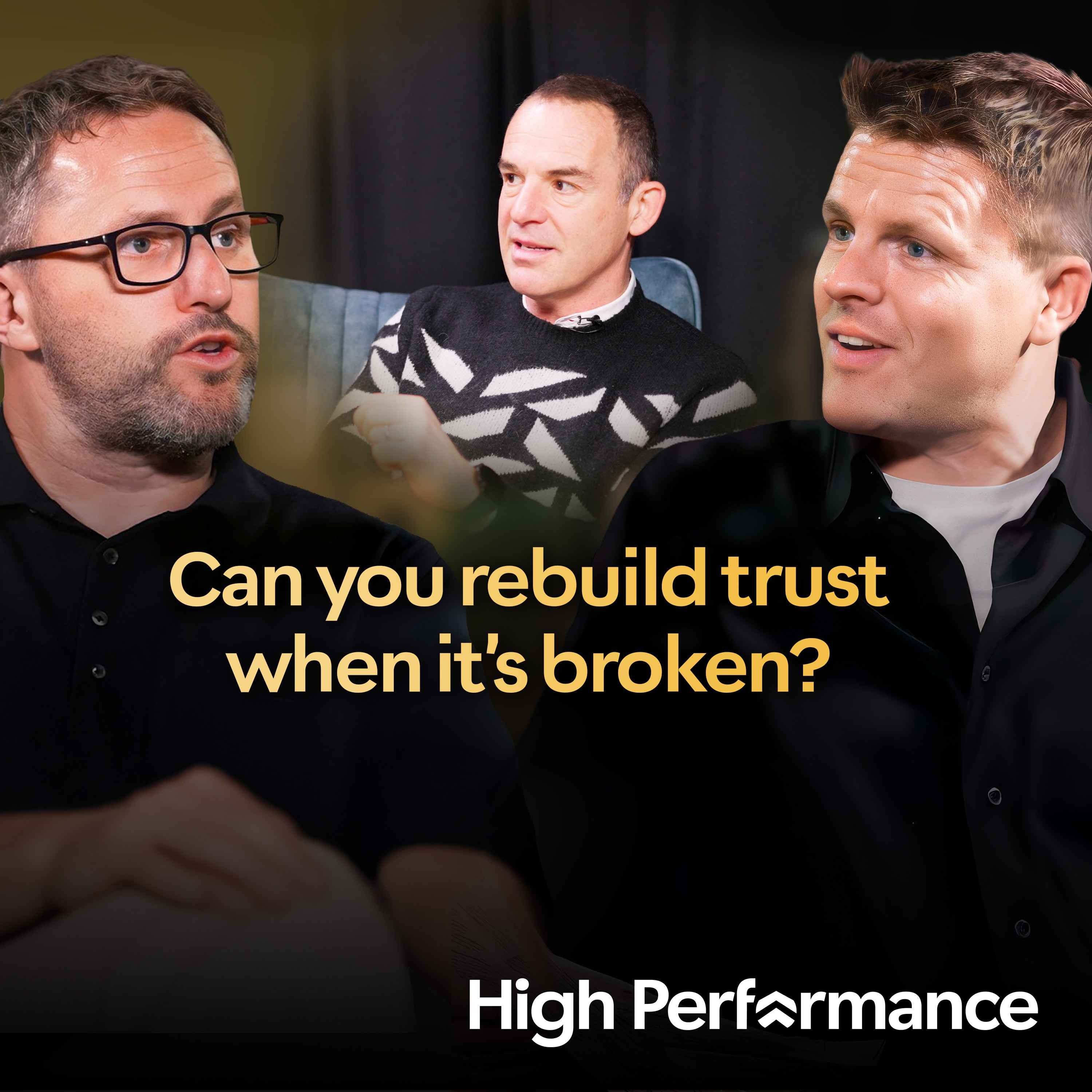
Trust is the single most important currency in sport, business, and life - and in the age of AI, it's becoming scarcer by the day. This week Jake Humphrey is joined by producer Will to dig into why.
Drawing on some of the most powerful conversations in the High Performance archive, they explore what trust really is, how it breaks down, and whether it can ever truly be rebuilt.
Featuring:
Plus: why Southampton's Spygate is just the catalyst for a much bigger conversation, what the rise of AI means for human credibility, and the difference between performative trust and the real thing.
🔗 Rachel Botsman: https://pod.fo/e/1179ff
🔗 James Timpson: https://pod.fo/e/c4dbd
🔗 Stuart Broad: https://pod.fo/e/2093a6
🔗 Martin Lewis: https://pod.fo/e/22a519
🔗 Damian's habit series — Why Building Trust Beats Being Liked: https://pod.fo/e/323b0d
Hosted on Acast. See acast.com/privacy for more information.


