
 Ask ChatGPT


 The High Performance Podcast
29 Oct 2025 · 34m
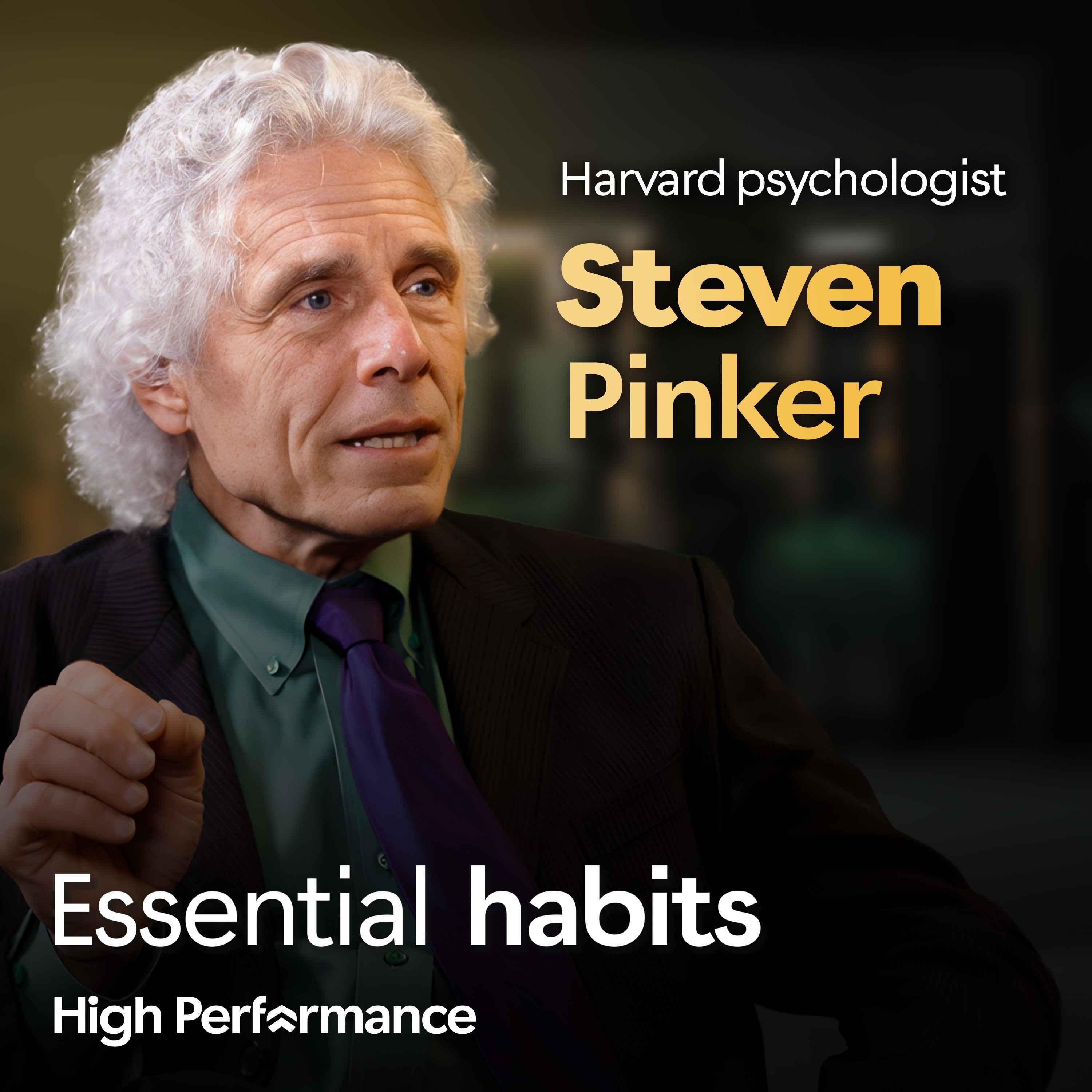
In this episode, cognitive scientist and Harvard professor Steven Pinker discusses the intricacies of communication and the importance of clarity in human interactions. Hosted by Damian Hughes, the conversation explores how effective communication can enhance relationships, foster teamwork, and facilitate high performance.
Written by AI. May contain mistakes.

Get the gist, explore an idea or ask about something said.
 Claude
On The High Performance Podcast, what are the key points of this episode?
Searching your listeningAutomatic transcript. May contain errors.
0:00Unlock it early on the High Performance App. Available now, Micah Hackinen, the Formula One world champion who mastered life at 200 miles an hour and the mindset it takes to win. Welcome to the Essential Habits of High Performance. Today, we're diving deep into the one subject that governs all human interaction and yet we barely stop to audit it, talking about communication. I'm Damien Hughes and I've spent my career advising leaders on how to create high-performing cultures. And the single biggest killer of high performance isn't a lack of talent or effort. It's often ambiguity. We waste vast amounts of energy decoding what people didn't say, rather than acting on what they did.
0:47Today, we're joined by one of the world's most brilliant minds, Dr. Steven Pinker. As a cognitive scientist from Harvard, he's explored the very foundation of how we think, how we use language, and why we often choose to be vague when we could be clearer. Stephen's work reveals that the problem isn't just about being polite, it's about a hidden, complex social currency which he calls common knowledge. The essential habit we're learning today is mastering common knowledge, understanding when to make the unspoken spoken, and critically, when not to do so. So let's start with the concept of common knowledge.
1:31Why don't we just say what we mean? Why do we rely on hints, tone, and body language instead of just being direct? Well, here's how Stephen explains it. It's well known to anyone who studies language that a lot of the time people don't say what they mean, or they don't mean what they say. That is, if you took the rules of syntax and the dictionary definitions of words and you put them together in an algorithm, the result is actually not what the guy intended. And that's one of the reasons it took so long to get computers to understand us. Because if you say to a computer, can you tell me the cheapest airfare from London to New York?
2:07It might answer, yes, I'm capable of providing that information. But in fact, that's literally what you're asking. Can you? So linguists have known this for a long time. And as someone who studied language, I knew this. But they never really addressed the larger phenomenon of all the ways we use innuendo and euphemism. But imagine that you're in a nice restaurant, Saturday night, you haven't made a reservation, and you really want to be seated. You think you might slip a 20-pound note to the maitre d' and hope that you can jump the queue. You probably wouldn't look them in the eye and say, hey, 20 bucks to let me in, or 20 pounds?
2:46I know what happens because there's an article where a food writer was given the assignment by his editor. He said, I want you to go to the most exclusive restaurants in Manhattan on a Saturday night, and I want you to try to bribe your way in and write about your experience for the magazine. Great premise for a magazine article, and it's a hilarious article. But what I found interesting, as someone who's interested in language but also in social relationships, is, again, he used innuendo. First of all, he would avoid, he'd hold out a$20 bill. Of course, it was in the US. He'd avoid looking at it.
3:23He'd look the maitre d' in the eye, holding the bill in peripheral vision. Say, I was wondering if you might have a cancellation. Or, is there some way you could shorten my weight? And by the way, it worked every time. So, maitre d's are bribable. Something else I learned. Or a veiled threat, another example of how we don't say what we mean. So I don't know if you've watched the mafia show The Sopranos. Yeah. There's one scene where a member of the family approaches a high school friend in a grocery store and says, hey, Danny, nice to see you. I hear you're on the jury of the Soprano trial. It's an important civic responsibility that we should all take part in.
4:05You've got a wife and kids. We know you'll do the right thing. So any viewer, socially savvy viewer, knows that that is a threat. But he didn't come out and say, if you vote to convict, we will harm a member of your family. That's fascinating. What he's describing there isn't a weakness or manipulation. It's about survival. Every time we open our mouths, we're not just sharing information. We're also managing relationships. Think about the last time that you gave someone feedback. You didn't just think about what was true. You thought about how it had Latin. You adjusted your tone, your phrasing, your timing.
4:43That's the invisible dance of social intelligence, and it's exhausting when it's done badly. Steven Pinker argues that our entire social world relies on this subtle dance, and at its very heart lies a single invisible force, common knowledge. Why don't people cut the crap and say what they mean? The answer that I came up with is the difference between even an obvious hint or innuendo is even if it doesn't create plausible deniability it creates plausible deniability of common knowledge now that phrase sounds academic plausible deniability of common knowledge but here's what it really means when something's said out loud it doesn't just exist between two people anymore it becomes public everyone knows that everyone else knows it and that changes how we behave.
5:34Take sport. When a manager calls out a player's attitude in front of the team, well, it's no longer a private matter. It's a statement which everyone must act upon. That's the power of common knowledge. It creates accountability. And that's exactly what Stephen means when he says it's one of the foundations of human coordination. Common knowledge is a really powerful state. It's really different from private knowledge. That is, two people know something, That's one thing. Two people know something and each knows that the other knows it. It's totally different. Why? Because common knowledge in this sense is necessary for coordination, for people being on the same page.
6:16That's why it's been studied by economists and political scientists and mathematicians and philosophers. Although for such an important concept, most people don't really have a name for it. I don't really think about it. That's why I wrote the book, When Everyone Knows That Everyone Knows. which is a kind of summary of common knowledge. But anyway, the general idea is that common knowledge is for coordination. So even something as simple as two people having a rendezvousing for coffee, it's not enough that I know that you like Starbucks. Because let's say you know that I like Pete's. So you'll go to Pete's to be considerate.
6:51Well, I'm going to Starbucks to be considerate to you. But then I might think, oh, wait, he knows that I like Pete's. So he won't go to Starbucks after all. He'll go to Pete's. And you're thinking, well, he knows that I like Starbucks. So he's not going to go to Pete's. He's going to go to Starbucks. no matter how many cycles of one expecting the expectation of the other, without common knowledge, there's no guarantee that they'll rendezvous. Now, the way we typically generate common knowledge is with just language. I think that's why our species invented language, so we could coordinate. But there are other ways.
7:21That's the key. Private knowledge is what you know. Common knowledge is what we all know that everyone else knows. And that's what makes coordination possible, whether that's teammates executing a play, or pilots following procedures, or colleagues aligning on a plan. Without it, communication becomes a guessing game. With it, action becomes effortless. And that's why language exists. It's our way of turning thought into shared understanding. But as Stephen points out, common knowledge doesn't just come from words. It's also built into our behavior. There's eye contact. You're looking at the part of the person that's looking at the part of you that's looking at the part of them.
8:04There's laughter when you're breathing and speech are interrupted at the same time as other people can hear it. So they know you're laughing. and laughter is a way to generate common knowledge of some indignity or infirmity or weakness or foible. There's blushing. You feel the heat in your cheeks from the inside at the same time as other people can see the reddening from the outside. Tears. We have a lot of nonverbal ways of generating common knowledge. Then at a big social scale, we generate common knowledge with things like ceremonies where everyone assembles, everyone knows why they're there, everyone sees everyone else seeing everyone else, and that changes a social relationship.
8:48Say a coronation, an inauguration, a wedding, a coming of age ceremony, all ways in which we coordinate, and to coordinate requires common knowledge. So in the most general sense, it's what guarantees coordination. Two or more people kind of doing something that only works if everyone does it. There's no reason to do it one way or the other as long as everyone does it the same way. So like meeting at one cafe or another or driving on the right versus driving on the left. I come from the United States. We drive on the right. Here you drive on the left. Neither system is better. But it's really important that everyone drive on the same side and that everyone know, expect that other people will drive on that side, which they only do because they expect still other people.
9:31And that's been known by the philosophers, the economists. The twist that I added as a psychologist is that our relationships are kind of coordination games. What does it mean for two people to be friends? It's not as if you sign a contract. What it means is I know that you know that we're friends and you know that I know that we're friends and that's what friendship is. Or lovers or transaction partners or someone who is higher in status and dominance and someone who's lower. All of these exist in the minds of people. as common knowledge. That's why so much of our social lives depends on either generating common knowledge by blurting things out or making eye contact, or sometimes keeping them out of common knowledge, as in innuendo, euphemism, pretending not to see the elephant in the room, politeness, genteel hypocrisy.
10:27A lot of our social skills consist of knowing what should be common knowledge and what maybe you don't want to be common knowledge. Everyone knows it, that's okay. But as soon as everyone knows that everyone knows it, it can change everything. What's beautiful about that is just how human it is. We don't just communicate through language. We do it through laughter, tears and shared ritual. Every wedding, every team huddle, every family dinner is a live demonstration of common knowledge. Everyone can see that everyone else is present and that transforms a group into a unit. And that's what turns private understanding into public action.
11:03Without it, there's chaos. But with it, people move in sync. Which brings us to our first essential habit, knowing when to make the unspoken spoken. Sometimes what we call social skills, tact, savoir faire, you know, not being too far on the spectrum, having a theory of mind, to use a bit of a jargon, all of these are appreciating the nuance of when you blurt something out. Sometimes you want not to, as in diplomatic negotiations or a romantic couple. There can't be an across-the-board rule. Sometimes I've been in a situation where I've been in academia all my life, 21 years at MIT, which is kind of nerd kingdom.
11:52So I've had a lot of socially unskilled colleagues who are very, very smart. And I've seen sometimes, you know, they know they're not very socially skilled, but they figure, oh, this is a problem I can solve. And so they come up with a rule of what they should do. Sometimes it leads to disaster. Cool, give me an example. Let me see if I can pick an example.
12:16Oh, well, with courtship, if you simply say, you know, I've been noticing you and I've decided that you're the best person that I could find. and you're the best person who would settle for me or that I would settle for. But kind of along those lines, I decided that you have these traits, and you're smart, and I'm smart, and I'm looking for a smart partner, and I'm looking for a non-smoker. If you're negotiating the terms of a romantic relationship in so many words, it's kind of like you don't understand what a romantic relationship is. Same thing with a friendship. You don't give a person a list of reasons why you should be friends.
13:00If you're doing that, you're kind of not getting it, what a friendship means. A friendship and a romance and a family relationship are things that, this is a bit of a fiction, but the thing is that relationships depend on certain fictions. The fiction for a communal, intimate, warm relationship is we feel it in our gut, in our bones, in our heart. You have to be aware of the fiction that cements the friendship and don't blurt out things, even if they're true, that threaten that kind of sacred fiction. Now, sometimes you do have to. There may be a dysfunctional couple where one is always taking advantage of the other.
13:41And in a relationship, you shouldn't be keeping score. If you're counting, then it's like a salesperson and a customer. That's just not what a friendship, that's not what a romance is. On the other hand, if in this communist cell of everyone to each according to his need, from each according to his ability, one for all, all for one, sometimes people exploit that. And the person getting the short end of the stick at some point might want to blow the whistle and say, hey, we're friends, we're lovers, we share everything. but I noticed that you've been doing 99 % of the taking and I'm doing 99 % of the giving and time to renegotiate.
14:23Sometimes you reach that point, but short of that point, you keep up the fiction that no one keeps score. There's an old Jewish joke that makes this point. A guest says to the hostess, cookies were delicious, I ate four. And the hostess says, you ate five, but who's counting? so the humor in that comes from the fact that in a warm communal relationship you're not counting but it also acknowledges the reality that you know deep in the back of our minds we you know we do a little bit of counting so we don't get exploited yeah and at some point if a relationship is dysfunctional toxic exploitative you know you do have to bring something out into the open but most of the time to keep the friendship warm and communal you don't say everything that's on your mind.
15:15That's such a useful insight. In high performance we often praise honesty, tell it straight, deliver it with no nonsense. But what Pinker reminds us is that blunt truth can also destroy trust. Social skill isn't about saying everything that you think, it's about judging when truth helps and when silence protects. Great communicators know that balance intuitively. They bring things into the open when it creates clarity and then hold it back when it might keep a relationship alive. That's emotional intelligence in action. That's when you need to make the unspoken spoken. So the skill isn't say everything, it's know what must be said and when.
16:01through exploring the best habits from high performance jake and i are proud to announce our latest book micro habits micro habits have three qualities they have to be small enough to start now simple enough to do without overthinking it and quick enough to fit into your life in micro habits we share the tried and tested habits adopted by many of the most inspirational guests we've had on the show over the years, from Gordon Ramsey to Keely Hodgkinson, Lando Norris to Emily Maitlis. We're happy to let you know that you can get a 25 % discount code during the pre-order phase before the full release of the book on the 1st of January, 2026.
16:40Check the show notes to find out more and pre-order your copy of Micro Habits today. The second essential habit is all about how we coordinate without words. through what Stephen calls focal points. These are the obvious signals that allow people to align when communication isn't possible. And they might just explain how we find order in times of chaos. This goes back to really one of the discoverers of the concept of common knowledge, a brilliant political scientist named Thomas Schelling. He won a Nobel Prize. So he noticed that in cases where there's no common knowledge, Sometimes the next best thing is what's called a focal point, sometimes even called a shelling point in his honor.
17:26And that's a solution to a problem that has nothing intrinsic to recommend it other than the fact that everyone can recognize it, and that's good enough. So let me just give you the example. A couple gets lost, going back to our rendezvous problem. Imagine their mobile phone is dead. They're wandering around London, and they've got to find each other. They didn't make any plans beforehand. again what's not going to work is he tries to figure out where she likes to go she likes to figure out where he's going to go because that will just send them in circles what they might do is meet at say Nelson's column in Trafalgar Square even if it wasn't close to where they were separated simply because if each one thinks of the problem of what's going to pop out in his mind but more important what does he think is going to pop out in my mind they might choose the most prominent location just because why meet anywhere else?
18:21There's no reason to meet there other than it's so prominent that everyone will think about it as a place to meet. And so that's called a focal point. And in a lot of human negotiations where there's no reason to settle on something, anything that stands out that's distinctive is good enough. So I'll give you an example. Let's say you're haggling over a price, let's say buying a car. And there's a range of prices where the salesman makes a profit, the customer's willing to pay, the car is worth at least that much. But where do they settle within that range? And any settlement within that range, any deal that's struck, is better than them walking away.
19:00Right. So how do they decide? I mean, they could go on forever. The salesman wants it as high as possible, the customer wants it as low as possible. So do they never make a sale? What they might do is split the difference. Now, is that inherently fair? Well, not necessarily. Maybe the salesman highballed and the customer was reasonable to begin with or vice versa. Or they'll settle on a round number. Again, is the round number the true value of the car? Well, no, but both of them see the round number. So if the salesperson says, my rock bottom, the lowest price I can go is 30 ,007 pounds and 21 pence, then the customer's always going to say, what are you talking about?
19:44We'll make it 30 ,000 even. He's kind of pleading to be relieved of seven pounds because the round number is the focal point. And so often in any kind of negotiations, something that may not be the fair or just, the only logical solution, but if it just jumps out, that could be a solution. Focal points are fascinating because they show how humans crave shared reference points. When the rules aren't clear, we instinctively look for the most obvious cue, the place, the number or symbol that we can all agree on. Think of a penalty taker who always aims for the same corner or a team that has a single word that triggers a certain play.
20:24That shared cue cuts through uncertainty. In leadership, focal points are the things that unify attention. Might be a repeated phrase, a visual anchor or a ritual that says this is how we do things here. They give order when everything else might seem chaotic. If common knowledge is the invisible network, focal points are the visible markers that make it work Now so far we've looked at communication and coordination, but Pinker goes even deeper He explains that not every interaction plays by the same rules He draws on the fascinating work of the anthropologist Alan Fisk to show that all human relationships fall into just a few types and understanding which one that you're in can change everything.
21:13Just listen to this. The three basic kinds of human relationships and knowing which you're in can help. Go on, explain. There are three kinds, at least according to an anthropologist named Alan Fisk, who's kind of surveyed the diversity across human cultures, in Africa, in Asia, in aboriginals, and so on. Basically, all human relationships fall into three types, all natural ones. There's communal sharing, and we've been talking about that. I didn't use the jargon term, but friendships, romances within a family, where the basic rule is we are fused, we are one, we share, no one keeps track, we're one flesh, we eat the same things, so you are what you eat, So we are the same things.
22:04We might dress similarly. We spend time together. All of the things that kind of give rise to a kind of mental metaphor of fusion. There's authority, completely different relationship type. That's a hierarchy. Instead of a melting pot, it's a ladder. And there's some on top. There's some lower down. The one on top, the boss, the chief, the king, the president, the leader, gets his way, although he has a, or she, has a responsibility for the well-being of those lower down. They're his children, his underlings, and their well-being is his responsibility too. So there's kind of two-way responsibilities.
22:50It's a totally different way of thinking than a friendship or a romance. And often what friends do is to make it clear that they're not in any kind of hierarchical relationship. That's why you have so much laughter, gentle teasing. You make fun of yourself. You josh your friends. What you're doing is you're saying, no one's better than anyone else because that's what a friendship is. We're not in an authority model. We're in a communal sharing model. Then the third one is transactional, quid pro quo, equal shares, flip a coin. coin, eeny, meeny, miny, moe, different ways of making sure that everything is utterly fair.
23:31And that's what, say, a customer and a salesperson do, which is fine in that context. So if you consider those are the three kinds of human relationships, a lot of what we think of as just social skill, like being a competent member of a culture, means you know which one applies. So I'll just give you some examples. So you had a nice dinner party, You enjoy the meal at the end. You thank the host and you say, here's 30 pounds to pay you for the meal. Now, that would be awkward to say the least. However, there would be an expectation that you invite them back. Not the next day, because if it was the next day, it would seem too much like quid pro quo and that's the transactional relationship.
24:17It's not the communal kind of relationship. Or conversely, if you're in a restaurant, And the owner comes and says, did you enjoy the meal? And you say, yeah, it was really great. And you walk out without paying and say, we'll have you over to our house sometime. Then again, you just kind of don't get it because that is a transactional relationship. Now, let me add one twist because this is relevant to everyday life. In a modern society, there's actually a fourth kind. It's not psychologically natural, but it's what modern societies do. And this is what FIS calls market pricing, but you could also call it rational legal.
24:55And that is where a relationship is stipulated by the rules of an institution. And you've got to follow the rules and price things out and do only what you're allowed to do. Why is that relevant? Well, in a company or in a university, you can't kind of hire your best friend because you like your best friend or your husband or your wife. We have words for that, like nepotism, like cronyism, even though that's kind of like what being a decent person in a social setting is like. You have a favor to give out. Of course you give it to your friends. You do it in a business. That's called corruption.
25:34So we've got to, in a funny way, in a modern industrial society, when relationships in the workplace, in the university, in a government, are in this fourth model, rational, legal, you've got to pretend you're not a human being anymore. You can't give out favors and perks in reward for loyalty, even though that's exactly what you do in everyday life. And so a lot of what we call corruption in developing countries is the government officials, they give stuff out to their friends or their loyalists. A lot of people are saying that's kind of what Donald Trump is doing into the American government, and that's why there's so many concerns about him breaking norms.
26:18You're not supposed to use government power to reward your friends and punish your enemies, although that's a natural human impulse. You can do that when it comes to social circles. You can't do that in an institution. So I guess another bit of advice is if you're acting in an institutional capacity, then you've got to kind of forget about all the rules about being an ordinary human being and follow the rules for that institution. You know, to make the organization work optimally, there are these rules and perquisites and responsibilities. But, you know, we're also human beings. And so I think a skilled leader can create kind of a, I don't want to say an illusion, but at least an aura or a feeling of communal sharing the first kind of relationship.
27:07as long as it doesn't interfere with the rules, as long as it doesn't mean corruption, like favoring your friends. But if you can kind of lubricate things with the feeling of warmth, friendship, family feelings, then it's good if you don't have to look up the letter of the rule every time and just cut everything exactly according to rules. You can kind of coast on some of the momentum of human cooperation. and so I think a skilled leader knows how to inject just enough of the emotion of friendship communality. I found that such a practical model. In one moment you might be a leader, in another you might be a friend and in another you might be a customer or a client.
27:53The mistake comes when we mix these roles up, when we try to run a workplace like it's a family or treat a friendship like it's a contract. High performance comes from recognising which relationship you're in and then behaving appropriately. So the essential habit of mastering common knowledge is therefore a crucial balancing act, knowing when to use explicit language for coordination and when to use ambiguous language for cooperation. Now just before we wrap up I want to zoom out for a moment because so much of what Stephen's been talking about here, communication, cooperation and understanding, well it all comes back to something a little bit deeper.
28:31It's all about how human beings choose to treat each other and that's where his wider work really connected with me. Because beyond language Stephen has spent years studying the story of human progress. How across history we've become less violent, more empathetic and more capable of collaboration. I mentioned to him that one of my favourite talks of all time is his better angels of our nature speech and I wanted to ask how that same idea of improvement plays out, not just over history, but in the way that we choose to live and lead today. So the book that I entitled The Better Angels of Our Nature lifted that phrase from Abraham Lincoln.
29:11The reason that I like it, it's a poetic way of capturing the fact that human nature is complex, it has many parts, or as Lincoln would put it, it's got some angels, it's got some devils too. It's what psychologists sometimes call modularity of mind. The mind isn't one thing. There's a lot of stuff going on in the head. We feel it when we have temptations, we resist the temptations. Part of us wants to do this, part of us wants to do that. And in the book, what I do is I present a lot of graphs plotting rates of violence over time, rates of deaths in wars and in genocides and in ordinary crimes, in rapes, in number of countries that have slavery.
29:52and every measure of violence that any historian has ever quantified, I show it on a graph. Why do I do that? Because the big surprise is, it's kind of a pleasant surprise, is the curves usually go downward. I mean, they're wiggles, they're ups and downs, but overall they tend to trend downward. Something you wouldn't appreciate if you read the news because news is about all the things that go wrong. That's kind of what news is. And so it gives you a distorted sample of what's going on and of the direction of history because unless you're counting, there are always some murders, there's always some wars.
30:25If you just read about the ones that happened yesterday, you might think, well, nothing has changed. You might even think things are getting worse because we're better and better at reporting the news because every person on earth has a cell phone. That means they're a reporter. But when you plot the curves, you see that a lot of measures have gotten better. And it's because, I don't think it's because we're different animals than we were 100 years ago, 500 years ago, 1 ,000 years ago, but because our better angels are getting the upper hand. That is, we've figured out ways of changing the incentives, changing the laws, changing the practices, changing the norms, so that when we have aggressive urges or impulses, we're more likely to stifle them, using the parts of the brain that can inhibit impulses.
31:12We're better at empowering the parts of human nature that allow us to live together, like empathy, like self-control, like problem solving. It was violence. Maybe it's a problem, just like building a bridge or curing a disease. Let's figure out what's the best way of reducing violence. And we don't always solve those problems, but sometimes we do. And over the course of history, more often than not, we have figured out how to solve them. There are sites like, my favorite is Our World in Data coming out of Oxford, where you can look up data on almost anything you can think about. are forests increasing or decreasing?
31:51Is CO2, how much is it increasing? What's happening to the suicide rate? Is it going up or down? And you can look it up for any country or for the entire world. And it's a user-friendly interface where anything you're curious about, just about, they have found the data, put it into an interface, and you can see which way the trends are going. Spending time on Our World and Data instead of a news feed, I think not only gives you a better picture, but it's actually good for your mental health because I think we all have the experience. Yours is just damn depressing. And especially if you think we're doomed.
32:28If climate doesn't kill us, then rogue AI will. There's no shortage of things to keep you up at night. But if you look at trends and you say, hey, things are bad now, but they used to be worse. I like to quote the saying, the best explanation for the good old days is a bad memory. And really, for most indicators, it really was worse in the past. And you can see that when you look at these histories. So here's your challenge this week. Pick one moment, maybe it's your next team meeting or a family dinner or a negotiation you might be preparing for, and ask yourself, what do we all know but we haven't said it out loud?
33:13Then decide, is this the moment for clarity or tact? Because as we've heard from Steven Pinker, high performance isn't about saying more. It's about saying what matters at the right time and in the right way. That's Steven Pinker's essential habit, and it's one we can all practice today. So listen, thank you for joining me here, and I'll look forward to seeing you on the next episode of The Essential Habits of High Performance.
Pre-order our brand new book Micro-Habits and use code MICROHABITS26 for 25% off before the launch on 1st January. https://hppod.co/472Og7q
What makes great communicators stand out isn’t confidence, charisma, or talent, it’s clarity.
In this episode, cognitive scientist and Harvard professor Steven Pinker joins Damian to explore the hidden psychology behind how we speak, listen, and understand one another. He explains why the real art of communication isn’t about what we say, but about how we build common knowledge, the shared understanding that allows people to think, decide, and act together.
Pinker calls it one of the most overlooked habits in high performance: the ability to step outside your own head and see the world as others do. It’s how leaders create alignment, how teams build trust, and how ideas truly land.
Together, we explore:
Whether you're leading a team, navigating a difficult conversation, or simply trying to communicate more effectively, this episode will transform how you think about language, relationships, and coordination
Steven’s new book ‘When Everyone Knows That Everyone Knows…’ is out now.
Hosted on Acast. See acast.com/privacy for more information.


