
 Ask ChatGPT



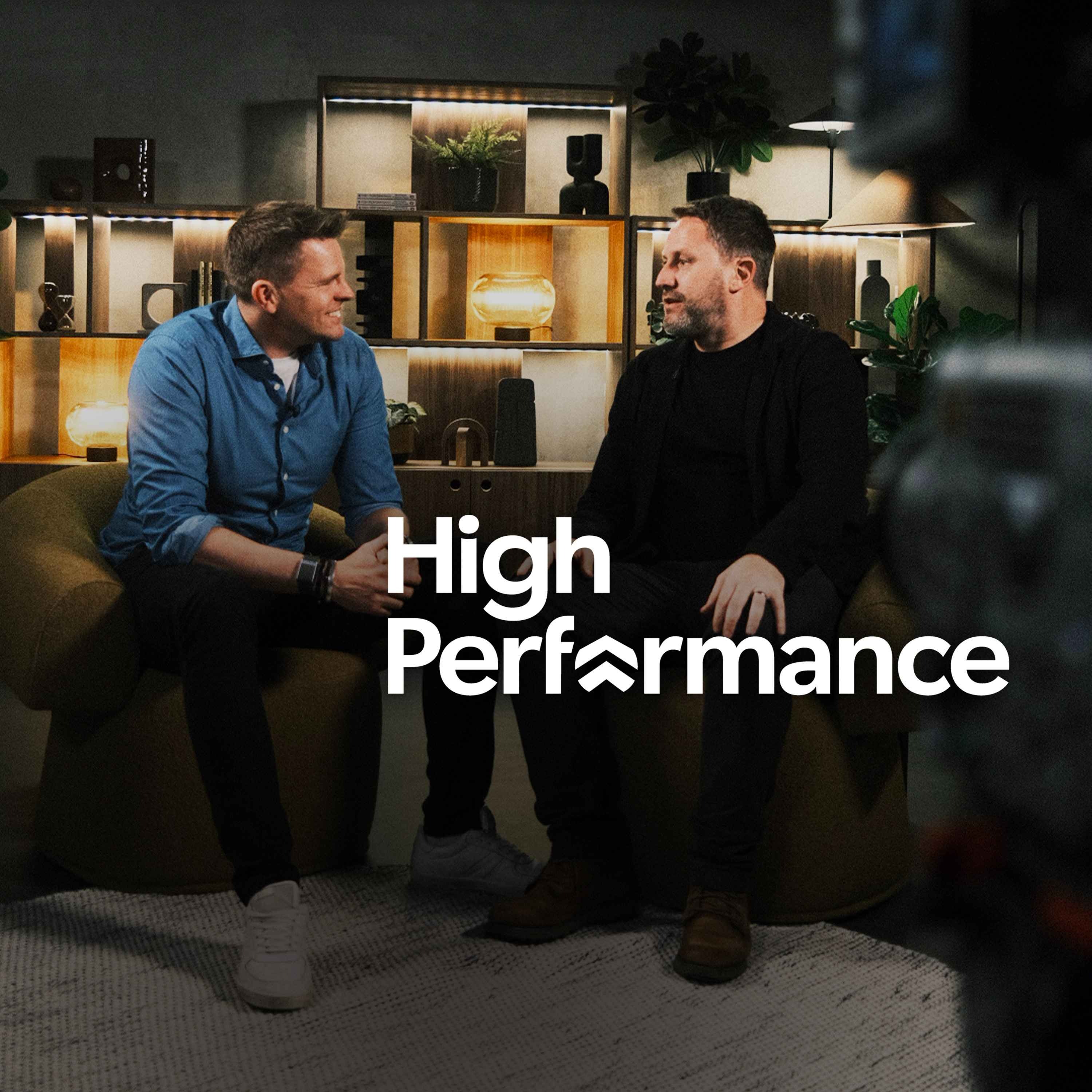
In this episode, hosts Jake Humphrey and Damian Hughes explore the critical question of identity beyond job titles and roles. They delve into the importance of self-awareness and understanding who we are when removed from societal labels, drawing insights from notable guests such as Simon Sinek, Phil Heath, Ali Abdaal, and John McAvoy. The discussion highlights ways to reconnect with one’s true self and emphasizes living with purpose.
Written by AI. May contain mistakes.

Get the gist, explore an idea or ask about something said.
 Claude
On The High Performance Podcast, what are the key points of this episode?
Searching your listeningAutomatic transcript. May contain errors.
0:28Watch it early on the High Performance App.
0:42I'm no tech genius, but I knew if I wanted my business to crush it, I needed a website now. Thankfully, Bluehost made it easy. I customized, optimized, and monetized everything exactly how I wanted with AI. In minutes, my site was up. I couldn't believe it. The search engine tools even helped me get more site visitors. Whatever your passion project is, you can set it up with Bluehost. With their 30-day money-back guarantee, what have you got to lose? Head to bluehost.com to start now. This episode is brought to you by Opera Air, the first browser with mindfulness at its core. Now, most of us spend hours every day online, but how often do we pause to take care of ourselves whilst we're doing it?
1:24And that's where Opera Air comes in. It's a lightweight, fast, secure browser built not just for productivity, but for your well-being. With Opera Air, mindfulness is built right in. You'll find free breathing exercises, guided meditations, and soundscapes with ambient sounds, lo-fi music, and binaural beats, all designed to help you focus, relax, and even spark creativity while you browse. Welcome along. You're listening to High Performance on one of our regular episodes where myself and my sparring partner, Damian Hughes, will focus on some of the things that we know you are struggling with.
1:59So many members of the High Performance community reach out and tell us about things that are causing them upset or disquiet in their personal lives. And one of the things that you speak about a lot is that you fear people judge you based on your job role or your job title. So today, we're going to hear from some previous guests who've joined us on High Performance and help you to understand how you can reframe who you are, what success looks like, and understand that you are so much more than what you do for a living. Damien, we've heard this time and time again, and I think it's really important because whatever we do for a job, at some point, all of us are pretty much going to stop doing that thing.
2:34And if we don't know who we truly are underneath, I think it leaves us in a really difficult place, actually. Oh, Jake, it sends a shiver down my spine, this one. And it reminds me of 20 odd years ago, I sort of stumbled my way into the corporate world, and I didn't know what I was doing. My mum used to say to me, what are you going to do when you get found out? and I'd say, I'll go back to coaching and I'll do the work that I love doing. Every time I kept thinking I was going to get found out, I kept getting promoted, right? But I used to pretend that it didn't matter to me. I'd say, ah, I'm not bothered about this.
3:04And then the day that I finally plucked up the courage to resign, they came and they took the company car off me. You know, I had to hand in my pass and I had to go and sort of work for myself. And I felt bereft. And I didn't know that was going to happen to me. The day they drove that company car away, I remember thinking, I hadn't realised how much I'd allowed it to define me, and I didn't even know about it. And I think that's a big lesson that I often tell people about and pass it on not to crow about it, but more to say, this happens to you incrementally. We all assume titles, roles, sort of masks, if you like, without necessarily signing up for it.
3:44So I think asking the question, who are we, when we strip all that away is invaluable for our own mental and physical well-being. As you know, Damien, I have a real issue with the fact that we've become human doings rather than human beings. And I think the reason why at a party or an event, the question is, what do you do rather than who are you? Is because I think it's a productivity metric. We immediately decide subconsciously whether that person's worth talking to, whether they're successful, whether they're interesting. We're obsessed with function, with purpose, with output. It's careerism dressed up as interest.
4:18We don't actually care. Do you know what I mean? We don't actually care what they're doing. We're interested in what their career is. Whereas actually, I think for a lot of people, who are you is a bit terrifying because I think it demands a bit of vulnerability, sometimes a contradiction, but also this willingness to maybe accept that you don't really know who you are. And for people in their teens and early 20s, sometimes that's okay. People in their 30s, 40s, 50s, if you say, who are you? and they say, well, I'm not sure. I think that's a really, really difficult place to find yourself, actually.
4:47And so therefore we lean into our jobs because it provides us with some safety. There's a brilliant book on this called The Status Game by a guy called Will Storr that really explores this topic. And what he talks about is that we're not that different from the animal kingdom. So animals look for sort of dominance and increased enhanced status when they're part of a tribe. And what they tend to do is, like dominance is either through their success or their physical manifestation of it. So think of like gorillas and things like that fighting for the dominance of a pack. But there's another way that we can establish success as well, which is through our virtues being seen as a good person.
5:24So what Will still talks about is that when we get challenged on our status, levels of cortisol that increase stress rise. And that's why if you think of it in relation to sports teams, often when you get beat in a game, one of the easy things to do is to blame the referee or to suggest the other team cheated or to suggest there was something underhand about it. Because that's an easier argument to frame than it is to lose status. You know, it means that we're not as dominant. It means that we're not as successful. So our whole lives are often dominated by this kind of quest for status. And like you say, then saying, well, I'm a company director or I'm a really successful TV presenter or whatever it is, is often a way of trying to establish status amongst groups that we want to identify with.
6:12Going along and instead not talking about our dominance or our success, but talking about our virtues. You know, I'm just a really kind person. I'm somebody that values connections. I'm a curious explorer. So talking about ourselves through our virtues rather than necessarily what we have or the roles that we do defines us then as being a human being rather than, as you've just described, a human doing. And the good news is that Damon and I think the answer to solving this problem is down to you, our wonderful high-performance audience, because it starts with you. It starts with the questions that you ask people.
6:45And the perfect person to start today's episode is the brilliant Simon Sinek, who spoke to us about the best friend test, about trying to understand from your best friend, not what they do, but who they are. Here he explains what we're talking about. Do this with a best friend. Do not do this with a spouse. Do not do this with a sibling. do not do this with a parent. It doesn't work. Best friend, somebody who loves you, who will be there for you. They'll pick up the phone at three o 'clock in the morning and you would do the same for them and ask them the simple question, why are we friends? And they're going to look at you like you're nuts because the part of the brain that controls that deep feeling of love and trust doesn't control language.
7:24It's a difficult question to answer. And so they'll say, I don't know. of course they know they just don't have the words for it and so you actually stop asking the question why and you ask the question what what specifically is it about me come on what specifically is it about me that i know that you would be there for me no matter what and they'll and they'll struggle and you can't help them and you can't let anybody else help them you have to let them go through the process and they'll start describing you i don't know you're smart you're loyal. I trust you. And you play devil's advocate. Good.
8:00That's the definition of a friend. You have that with lots of people. What specifically is it about me that I know you would be there for me no matter what? And again, they'll go through a few rounds of complaining and describing you. And eventually they'll quit and they'll start describing themselves. And this is what my friend said to me. They said, I don't know, Simon. All I know is that I can sit in a room with you. I don't even have to talk to you. And I feel inspired. And I got goosebumps. In fact, I'm getting them right now. It happens every time. Because what they did is they put the value that I have in the world into words.
8:32And I had the emotional response. And that's what'll happen. Well, there's a bit in that clip there where Simon says that when you ask people, why are you friends with me? What do I do? And he says, you have to keep persisting with that and getting beyond it. The goosebumps go up on your arm because that's where you define what you bring that ineffable quality that you bring to any situation whether it's I'm curious I'm kind I'm a decent person I'll stand by you now we're starting to get into our virtues that make us distinct and unique that's a question that I'd encourage anybody to maybe go and reach out Simon does say he didn't include it in the clip there do not ask your wife or partner this question go and ask somebody that is choosing to be with you through a friendship or some other kind of relationship like that.
9:20You know, one of the things that I've started to do is asking each other uncomfortable questions. So I had dinner with a few friends the other day and I said, God, who's up for an uncomfortable question? You know what people are like? At the beginning, they're like, yeah, I love an uncomfortable question. Go for it. I said to one of my friends, I said, okay, who are you when you're not trying to be anyone else? And they were like, and then we sort of reached this point where they admitted that they are who their partner wants them to be when they're at home. They're who their boss wants to be when they're at work.
9:50They're who their children want them to be when they're a parent. And very, very rarely did it give them an opportunity to be themselves, you know, to be the person they are when nobody's watching. And they're that person so infrequently, it turns out, that they've actually forgotten who and what that person is. And the reason why I think this is really important for people listening, and we're going to play another clip now from a guy called Ali Abdaal, who's an amazing productivity expert who gave us one of our most popular ever episodes. The reason why it matters is because one day you are left all alone.
10:21There is a moment where you take your final breath. There is a moment where you're not in the office. There is a moment where you're not surrounded by friends and family, or maybe you don't have a partner. And that's the moment where you will really find out who you were beyond the external trappings of life. So Ali Abdaal talks about it, Damien, as writing your own obituary. I think I'd like to let him explain it. Is that cool? Yeah, go on. And then I want to ask you a difficult question. Love it. Right. Here's Ali Abda. One activity I did the other day was to write out my own obituary, where there's some evidence that this is actually really helpful, because you think to yourself, what would I want my obituary to say?
10:58Actually, Shane Parrish talked about this with you guys. He said when you're 90 and you're in a coma, your family's around you, what would you want your family to be saying about you? And are you living life in alignment with what that 90 year old would want? and all of this stuff is about really like it's it's so easy for us to get so caught up in the day-to-day because it's like we're driving with the and we and all we can see is just like what's in front of us in the headlights and by doing that we can often end up in a place where we're like wait a minute how did i end up here and i've spoken to a lot of people in jobs that they don't like where they've like been doing it for a long time and then you know then i was waiting for the bonus.
11:34And now I'm like 45. And I'm like, I don't know where my life went. And that is, whenever I hear stories like that, I find it really scary. You know, we only have one life and all that. I would really like to do whatever I can to help nudge my life trajectory to a direction that I actually want it to be. And so a big part of this is figuring out, like, begin with the end in mind. Like, what would I want people to say when I'm dying? Cool. How can I reverse engineer that to maybe what my, I don't know, where I see my life going in the next five years? Again, we don't need to be wedded to these.
12:08It's just pencil sketching it out. Therefore, what do I want to be doing now? So there he is, the brilliant Ali Abdaal, of course. The full conversation with Ali, Simon, and any other guests that you hear on today's episode of High Performance, you can find in the show notes. Damien, you said you wanted to ask me a difficult question. Well, I do, because that question you asked your mate about who are you when there's no expectations on it, you know you're somebody that has stepped away from one of the most high profile jobs in tv presenting stepping away from that world where for a long time for 10 years you could define yourself as chief football presenter for bt sport and then you no longer do that so how did you describe who you were it's a really good question actually um i don't know whether it was my ego or another part of me that had a real problem for the first few months because once i'd walked away from doing that job.
13:01Do you know what I think was the hardest thing? Was that the coverage was still absolutely perfectly fine without me. In fact, some people would say it was a lot better without me. And Laura Woods did such a good job that football fans everywhere were like, yes, finally, we got rid of Humphrey. We've got Laura Woods. Woo-hoo! That's kind of hard because I think that we trick ourselves into thinking that the world needs us, right? The world needs us to do the jobs that we do. The world stops turning if we're not there making people happy. We bring a unique skill or a unique ability to the world that if we're not doing it, the world would struggle.
13:30The truth is I had to understand that not only was there not really any change, no one really even noticed me. I got so few comments from people on the first game of the new football season after I walked away saying, why aren't you on football? It was untrue. I thought that people would care. Therefore, it was really valuable for me. It's a brilliant reminder for me that what we do and the way we live is so important to other people. It doesn't matter. No one actually cares. Therefore, I think it's allowed a bit of freedom from me, actually. Like there was a period where I was kind of shy almost to say, well, I'm not doing football at the moment or I'm not on the telly at the moment.
14:07And I used to say, I'm just doing a podcast, right? Now, people ask me, what are you up to? And I say, do you know what? I found the thing I love the most. And one of the ways that I probably describe it most often, which is definitely partly true, but also I think I'm using it as a kind of, as a way of making myself feel better about not doing what I used to do, I say, I finally feel useful. I finally feel I've found a job where I feel useful. Like, am I actually that bothered about being useful? Or am I just trying to make myself feel better about the fact that I'm not doing what I used to do, which paid me loads of money and boosted my ego, made me feel great?
14:43I mean, that is me getting very honest and open and vulnerable and probably saying more than I thought I would. But I think we're always all protecting ourselves a little bit. and I certainly definitely feel like I do that and I'm probably doing that as well a bit in this answer but leaving that job was probably a good reminder that the truth is no one gave a shit about what I used to do so I might as well just do what I love and I do love doing this but then I also love doing that as well and there are things about it I really miss. But can I offer you an observation because I see what lights you up is when you stood on the side of Seb's football match watching that and I think you enjoyed that more than you would enjoy stood on the side of a Premier League football pitch waiting to introduce coverage.
15:23Yeah, but I think the hard thing is, right, there are things that we all love about everything that we do. So what I loved about doing the football wasn't actually going to the live matches. I didn't really love the travel. I didn't really love hours and hours in foreign countries waiting to do a live match. I love the unpredictability. I love the challenge on my technical skills. I loved it when things were going to go wrong. I loved it when I had to think in the moment. Now, I absolutely love sitting with you in a studio and having great conversations on high performance, but I don't love the fact that it isn't unpredictable.
15:54I don't love the fact that it isn't live. I don't love the fact that there isn't 40 or 50 people all around and they're all looking at me thinking, if you mess up your job, then everything's going to go to pot and all of our hard work has been not worth it. I don't love all that stuff because I really loved the pressure. I loved the kudos that came with doing that job. So I think that's the other thing that we have to be really honest about in life when we're trying to search for who are we outside of our work is that there are things that we love and hate about everything that we do and we probably will never find the thing that is perfect for us.
16:24Therefore, if we spend our life trying to find the perfect job that ticks every single box, I think we'll search forever. It's far better to think, despite what I do for a living, am I happy? Am I content? For me, you're totally right, being around the kids is more important than anything. So on the balance of things, I would take what I'm doing now over what I used to do every day of the week. Thank you for being honest, because I think that that's really helpful. I think when I was saying to you the example of when I stepped away from the corporate world, I found that I'd almost allowed myself to be seduced by it without knowing I'd done so.
17:01And I think that's true for so many of us. I remember once I got really ill and my wife phoned my boss, went to tell her I was in hospital and my boss's first question was, is it contagious? Do we have to shut the place down? And it took them two days to phone up and find out if I died or not. And I was really upset for a long time because I was thinking, I thought I mattered and then the reality is I didn't. You know what I mean? I was always a number, but nobody had ever lied to me about being a number. I just imbued a bit of meaning on top of it to almost seduce myself. And I think when you boil it down to whether it's me walking away from a corporate job whether it's you stepping away from BT Sport, I think sometimes we trick ourselves into thinking that all this stuff matters when the reality is it's the kids, it's the people that love us that really matter or that really see us for who we are.
17:52Yeah, but you know, they also leave in the end as well, mate. You know, I use that phrase, hold your beliefs lightly. Yeah. I think you should hold everything lightly. All of your self-worth can't be in the fact that you're there for your kids because one day you have to let them go if you love them. Therefore, it can't all be about your kids all the time. I mean, it has to also be about Geraldine. It has to also be a little bit about your job. It also has to be a bit about your friends and about the things that you like to do. But one day you might suffer an accident and be left disabled. So therefore, all your self-worth can't be in playing tennis or playing football.
18:21You know, you might lose your partner. So it can't all be about Geraldine for you or Harriet for me as well. This idea of balance, I think, is so important. Can I play a quick clip actually on this? Because Phil Heath, what was he? Mr. Olympia, like seven times or something, like the world's greatest bodybuilder. He spoke a bit about this when he referenced driving past the cemetery. So can I just play this clip quickly? Yeah, go on. Here he is. I used to drive to the gym just like everybody else, right? And I'd have two different routes. One route, just take the motorway, get off on one exit, boom.
18:54Other way through the city. The city takes a little bit of time. Cool thing about taking it through the city, I had to take this one route that I always drive by a cemetery. Now, why would I drive by a cemetery? What do you see there? You see headstones, this, that, and the other. But who else do you see? You see family members. You see friends. What are they doing? Paying respects, right? See people playing the guitar. I've seen people with balloons, flowers. I've seen people with television sets outside. People outside with newspapers just sitting there chilling. We're all going to be in that dirt at some point.
19:25So I reminded myself every time I was kind of feeling some type of way about the commitment of excellence. Drive by there. How do you want to be remembered, Phil? Because that's where you're going to be. if you don't live a good life maybe no one will even care no one will visit recognize your opportunity phil by pouring into yourself so you can pour into others and then you can be remembered now the reason why i wanted to play that is because as we know because we've had oliver burtman on the podcast we only get 4 000 weeks right so i think the most important thing we can do is explore lots of different things i think the most important thing we can do is open as many doors as possible.
20:04I think the most important thing we can do is say yes more often than we say no. And I think the most important thing that we can do is realize that no matter our age, no matter the situation we're in in life, it's still a miracle. And it should still be the most exciting thing that's happening. The reason why I mentioned that last point is because I think often people talk about the good old days. You've seen them, you know, parents or friends of your parents that constantly talk about when their kids were little, or when they were working or when they were younger. I think it's such a dangerous place to be.
20:33My only ambition for my life now, and I've thought about this quite a lot, is that right now is the most exciting time in my life. And I want to feel like that when I'm in my 80s. Because Harriet goes, how are we going to cope when the kids are gone? And I'm like, those need to be the most exciting days in our life. And she's like, how can they be without flow and sepia? How on earth can they be the most exciting days in our life? It's up to us to find that. If the most exciting thing in your life is your job, you're not going to do it forever. So you have to find a way that when you're retired, it's the most exciting part of your life.
21:02When you're 90 years old and you can hardly move and hardly walk and loads of your friends have died and you don't see your kids as much as you used to and the job that defines you, you don't do anymore. You still have to believe that that's the most exciting part of your life. Because otherwise you're writing off decades of living. Like what are you going to do? Pack your... So many people, I think they just stop living at about 50 years old when their kids leave home and they and they're like well I'm done now it's like we can't live like that Damien there's some really interesting research on this do you remember when we were away recently and we met someone who shared it about Tim Gillivich he's a professor of psychology that wrote a paper called the road not traveled and he said in the short term people regret things that they've done so you might regret a conversation you've had or it might a decision that you made but on 97 percent of occasions it's the things that you don't do that haunt you for longest so the fact that i didn't try something new the fact that i didn't get out of my comfort zone the fact that i didn't go and have that conversation or pursue a job that i wanted it's the regrets of stuff that you don't do that will haunt us far longer than stuff that we ever have done so you're absolutely right i think you're asking the right questions jake about what do i want to do where do i want to be who do i want to spend my time with how can i make this moment the most exciting of my life they're the questions that ask us that put us in the right spot that are going to stave off any long-term regrets according to Gilovich's work.
22:27Which takes us to John McAvoy, a man who used to be the most wanted man in Britain. He's now an elite athlete and he talks brilliantly actually, Damon, about exactly what you've just said about this idea that you can't waste your life. Here he is. When I went through this transition of wanting to do something different in my life and then Darren identified this talent in me, the prison officer, and then the support he helped me with and the way that he used to come in on his days off to help sit with me to do these records and he went above and beyond like what he needed to do he'd bring me in books from outside about athletes and we used to sit in the I remember I used to go down to the gym and just sit in the sports hall with him and we'd talk about life and families and we built up this powerful rapport with each other and friendship and one day when when I when I did that record I was laying down on this blue gym mat and Darren sat down beside me and he went to me you've got an ability and a talent that you can suffer.
23:20Even if you get out of prison and waste that talent, it's the biggest travesty I've ever seen as a prison officer. He said, do not waste it. And that, those words stuck with me. And then that was the motivation. From that moment inwards, everything else I went on to do, I always remember him saying about having an ability, having a talent, don't waste it. And that stuck with me to the present, to where I am right now. Well that John McAvoy interview is one of my absolute favourites meeting somebody that was a high performing criminal that ended up now becoming a high performing triathlete somebody that sat in that cell and had to look himself in the mirror and realise that when all the status and trappings of his criminal life had been stripped away from him who was he then and he didn't like the answer he gave so he went and chose a different pathway there's no regrets in terms of pursuing that new lifestyle.
24:12And I think we don't need a trauma like that. I remember John describing how it felt like when he was locked up as if he's been hit by a train. We don't need to get hit by a train to stop and reflect on some of these questions of who are we when nobody else is watching? When everything's stripped away, who do we want to be perceived as? And whether that's thinking of your eulogy, like Ali Abdel suggested, or going and asking your best mate why a number of times until you start to get the essence. and those goosebumps on your arm. These are all brilliant questions that any of us can go and explore at our own time to find out who is it that we really want to be perceived as.
24:49Can I finish with one of my favorite quotes from Marcus Aurelius? This is from Meditations. He said, you could leave life right now. Let that determine what you do, say and think. And the reason why I wanted to finish on that is not because that line is about fear necessarily, but that line's about clarity. So for the Stoics, when you remove all your status, all your possessions, or I mean, even time itself, right? What is left then is your character. So it's your choices, your virtue, your inner life, who you really are. It's not what you own, not what you've won, not what you share on social media, just you, the unshaken you that stands there.
25:26And so I think that it's a good question for us all to be thinking about at the end of this episode. You know, as this episode ends and you are either driving or out for a run or a walk or whatever, and you have a moment of silence, you could leave life right now. So let that determine what you do and say and think. And are you doing, saying and thinking the things that are going to take you in the right direction in your life? Just remember that you're so much more than what you do. So next time you're at a party and someone says, what is it you do for a living? You go, why don't we talk about who I actually am rather than what I do.
25:58Damien, thank you very much. Thanks, mate. I've enjoyed that chat. Yeah, me too. If this has resonated with you, please ping us a message. please share this episode with someone that you think needs to hear it but the most important thing you can do is give us a follow wherever you listen to or watch High Performance it makes such a difference to us don't forget you can get episodes before anybody else on the High Performance app and we'll see you very soon for another episode from High Performance
26:43When you think of skyrocketing brands like Aloe, Allbirds, or Skims, it's easy to credit their success to great products, sleek branding, and brilliant marketing. But here's the overlooked secret. The real magic lies in the engine behind the scenes, the business powering their business. For millions of brands, that engine is Shopify, making selling seamless for them and shopping effortless for us. Upgrade your business and get the same checkout Aloe Yoga uses. Sign up for your$1 per month trial period at shopify.com slash retail, all lowercase. Go to shopify.com slash retail to upgrade your selling today.
27:23Shopify.com slash retail.
Who are you when the job title drops away? This episode digs deep into the question we often avoid but desperately need to ask ourselves.
Jake and Damian dive into the importance of knowing who you are beyond your role, sharing honest and powerful insights from guests like Simon Sinek, Phil Heath, Ali Abdaal, and John McAvoy. They unpack how easy it is to confuse identity with achievement, and why that can leave us lost when the spotlight fades.
From writing your own obituary to asking a friend what truly makes you you, this episode offers simple yet profound ways to reconnect with your real self, beyond the job, the status, or the performance.
It’s a grounding reminder to live with purpose, let go of regret, and define success on your own terms.
Listen to the episodes mentioned:
Simon Sinek: https://pod.fo/e/18ee0e
Phill Heath: https://pod.fo/e/2313e6
Ali Abdaal: https://pod.fo/e/213471
John McAvoy: https://pod.fo/e/f0815
Hosted on Acast. See acast.com/privacy for more information.


