
 Ask ChatGPT


 The High Performance Podcast
1 Oct 2025 · 26m
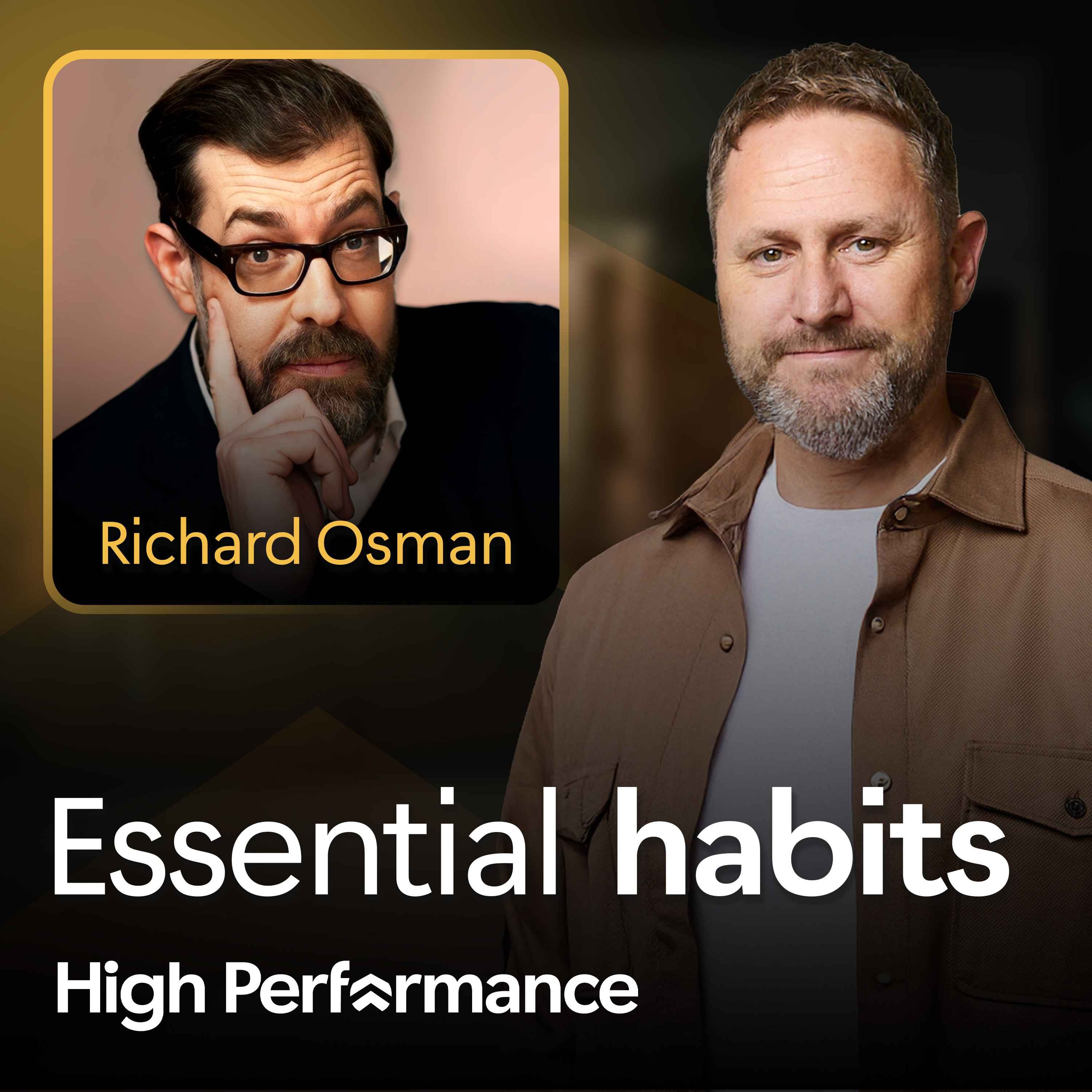
In this episode of The High Performance Podcast, hosts Jake Humphrey and Damian Hughes engage in a conversation with Richard Osman, celebrated author and television presenter, about the profound impact of generosity on health and happiness. Richard shares his philosophy of "tipping generously," emphasizing that generosity is not limited to monetary contributions but extends to kindness, attention, and empathy.
Written by AI. May contain mistakes.

Get the gist, explore an idea or ask about something said.
 Claude
On The High Performance Podcast, what are the key points of this episode?
Searching your listeningAutomatic transcript. May contain errors.
0:28Watch it early on the High Performance App. mindfulness is built right in you'll find free breathing exercises guided meditations and soundscapes with ambient sounds lo-fi music and binaural beats all designed to help you focus relax and even spark creativity while you browse
0:47always tip as much as you possibly can not don't tip more than you can afford but if you've got more money than the person serving you make sure you tip and tip well welcome back to the essential habits of high performance the show where we explore the small habits that drive success let me start with a question when was the last time you tipped and i don't just mean in a restaurant i mean when was the last time you tipped generously richard osmond the best-selling author the television host and creator of shows that we like Pointless, believes that generosity isn't just about money, it's about empathy.
1:28It's about using what you've got to make life better for someone else. And his essential habit is very simple. Tip generously. Now it sounds like a small act, but as you're going to hear on today's episode, it reveals something far deeper about how we handle difference, how we see other people, and how we can find happiness ourselves. Hey, I'm Damien Hughes and I've spent most of the last two and a half decades working with leaders in sport and business. My work has shown me this, that high performance isn't just about talent. It's about habits and generosity is one of the most underrated of these.
2:12We're learning this week with Richard Osman. At 6 '7", Richard's always stood out. when he walks into a room you tend to notice but for much of his early life that visibility didn't feel like much of a gift for much of it richard struggled with feeling different so i feel uncomfortable being tall right or being very tall being six foot seven right and there's no hiding away from it you're always on display you know i always describe myself as a reluctant lighthouse and my son is very tall he's not not as tall as me but at one point it looked like he was going to be and i said to him and it's advice i don't take i said you've got two choices when you walk in a room right it's either who's that tall guy or it's who's that tall guy who looks really uncomfortable about being tall for richard his difference was obvious his height but as he puts it everyone has something he described how many of us tend to obsess about our weaknesses while dismissing our natural strengths i always like that quote that we judge other people's highlights real and we judge our blooper reel you know we're looking at what other people are good at and we're looking at what we're bad at and you just you don't need to and learning to live with that sense of difference wasn't easy for him it took him 15 years of therapy and a lot of reflection but what he found on the other side was a tool that has shaped his creative career and his life the tool of empathy i think being different gives you empathy but by the way and you know the longer you live, everyone feels different.
3:43Empathy has been one of Osman's quiet superpowers. It shows up in his characters, like the retirees of the Thursday Murder Club, who were often overlooked and underestimated. We're aware of the lives that they've lived and the extraordinary things that have happened, and we're aware now they're being overlooked and they're made to be slightly invisible. So they're underdogs from the beginning, and I love an underdog. And you have to understand what does matter, which is friendship, and it's kindness, and it's so trite to say, and it's so kind of phrase on a tea towel, but it just happens to be true, which is that we're not here to do anything particular.
4:16So we might as well look after each other. So how do we get there ourselves? Well, Richard gave us two deceptively simple pieces of advice. Firstly, make sure other people are happy before you're happy. And secondly, always tip as much as you possibly can. Don't tip more than you can afford, but if you've got more money than the person serving you, make sure you tip and tip well. Now you might hear that and think, nice idea, but does it really matter? Well, here's the fascinating thing. Science says, yes, it does.
4:49In 2008, Harvard professor Michael Norton ran a clever experiment. He gave participants either a$5 note or a$20 note. Now some of the participants were told to go and spend it on themselves, while others had to spend it on someone else. At the end of the day, the people who had spent money on others reported feeling happier. And the amount didn't particularly matter. Giving$5 to someone else brought more joy than spending$20 on yourself. And yet, when the participants were asked to predict the results, most of them got it wrong. They assumed that spending money on themselves would automatically make them happier.
5:31And Michael Norton put it simply. He said, people's daily spending choices may be guided by flawed intuitions about the relationship between money and happiness. Now there's lots of other studies that back this up. In one, elderly people who volunteered were reported as 44 % less likely to die over a five-year period compared to those who didn't. Acts of generosity go about releasing oxytocin and endorphins into your bloodstream. so this is often referred to as the so-called helper's high. And giving is linked to reduce depression, improve mental health and even has physical benefits like lowering your blood pressure.
6:13And it tends to be universal too. In one 2013 study, it was found that giving makes people happier in 120 out of 136 countries, even in places where money might be tight. So Richard Osman's advice isn't just charming, it's backed up by robust science. But here's the real insight. Generosity isn't just about helping other people, it's also about shaping who you are. The psychologists Edward Deasy and Richard Ryan call this integrated regulation. It means that it's when your actions line up with your values and your identity. In other words, being generous isn't just something you do, It's who you are.
6:59Richard Osman put it in his own words. We're not here to do anything particular, so we might as well look after each other. And that is why tipping generously matters. It's about reminding yourself, I want to be the kind of person who lifts others up. You don't tip generously because the sign says, service charge not included. You tip because generosity is simply a part of your identity. And here's the crucial bit. When our actions align with our values, the benefits compound. Studies show how it creates more sustainable motivation, better mental health and even better physical resilience. You don't need external rewards to keep going.
7:40The act itself is rewarding because it reflects who you are. In 2012, the psychologists Frederick Philippe and Richard Kirstner tracked people over several weeks asking them to record how much their daily behaviours aligned with their values. The results were striking. On the days when people acted in line with their core values, they reported feeling higher vitality, more positive emotions and less stress. In other words, when you're living your values, you don't just feel better about yourself, but you actually function better. Because generosity isn't only about the person on the receiving end, it's also about the giver.
8:19And neuroscience backs this up too. Brain imaging studies show that generosity activates the same reward circuits as food and sex. But it goes further. In long-term studies, generosity is also linked to stronger relationships and greater life satisfaction. So when Richard Osman says, tip generously, it's not just about leaving the next few quid on the table, it's an identity cue. And over time, those small identity-affirming choices reshape how you see yourself. You're no longer someone who occasionally gives. You just become a generous person. That shift in self-story is what makes generosity such a powerful habit.
9:01Because habits tied to identity are the ones that last. You don't force yourself to do them. You just live them. And that's the deeper truth behind Richard Osman's habit this week. It's not really about money. It's about aligning what you do with who you are. and deciding who you are is someone who looks after others. So how do we practice this habit of generosity in our own lives? Why not consider one of these three small steps? First, find one place where you can tip more than usual. Not because you have to, but simply because you want to. It might be a cafe, a taxi or even tipping your colleague with a bit of genuine praise.
9:43Another idea, practice empathy every day. Take a moment to notice one person around you who maybe feels invisible or overlooked and just go and acknowledge them. Listen to them. And the third idea is measure your happiness differently. Instead of asking yourself, what did I get out of today? Ask yourself, who have I helped today? Because behind that simple phrase lies a bigger truth. The most high-performing lives tend to be the most generous ones as well. because when we lift others, we lift ourselves. Now, as ever, I'm going to be joined by our producer Will and we're going to have a listen to some more of Richard's wisdom, including where he explains how he overcame the fear in stage fright when he first hosted Pointless, why he always carries a pen and paper with him, that's a tip you'll want to listen to, and what his breakthrough moment in therapy was all about.
10:45If you're still overpaying for wireless, it's time to say yes to saying no. At Mint Mobile, their favourite word is no. No contracts, no monthly bills, no overages, no hidden fees, no BS. I made the switch because I was tired of those ridiculous bills and sneaky charges from my old provider. With Mint, I'm paying$15 a month and getting the same high-speed data, unlimited talk and text and coverage on the nation's largest 5G network. Honestly, the quality is just as good, if not better than what I had before. And the best part? You don't need a new phone. You can keep your current one, bring your number, and all your contacts.
11:20I use Mint Mobile, and you should too. Ready to say yes to saying no? Make the switch at mintmobile.com slash HPP. That's mintmobile.com slash HPP. Upfront payment of$45 required, equivalent to$15 a month. Limited time new customer offer for first three months only. Speeds may slow up a 35 gig on unlimited plan. Taxes and fees extra. See Mint Mobile for details.
11:45Damo. Jake. I thought of it. I wondered how long it would take for you to do that. I wondered how long it would take for you to do that. And it's finally happened. I did do that. That was completely muscle memory. It is muscle memory. You've done it so many times. I'll take it as a compliment. Will. Richard Osman. Maybe the tallest guest ever on the show. I don't know. I think obviously Una Meora might have rivaled him. Oh, okay, that's a blast from the past. That is a blast from the past, yeah, I forgot about him. I was really conscious about this because I'd listened as part of the prep to Richard on Desert Island Discs beforehand and he described his height as being a lighthouse for dickheads.
12:34And he said, because anyone that comments on his height, he said, I automatically just assume you're a dickhead. because his point was that somebody's looking at a point of difference and looking to make you feel self-conscious of it rather than just going with it. So when I met him, I was very conscious not to be attracted to his lighthouse for dickheads. Yeah, if you're that tall, it's hard not to notice them when they walk in the room. Well, that was the interesting thing because he apologised and I said to him, what are you apologising for? And he's like, I do that a lot. And it's almost like I apologise for my size or taking up space.
13:08and I think that's something that as we'll listen to in some of the additional clips where he talks about the therapy that he's gone through. Some of it is about having to stop apologizing and just accepting himself for who he is. I warm to a guest like this because I've come from this world. Yeah. So I used to almost do the job that, you know, he does or did and was, you know, the poster guy really. Was it? Yeah. In your industry, in the TV industry? Yeah, his creativity, his TV development, developing formats, developing shows, long before he was on camera. So had you heard of him? Oh, yeah, yeah, yeah, I've heard of him.
13:48So in a world where 99 % of all the work you do never comes to fruition, and all you're doing is rewriting, writing, doing that constantly, I find people who can do that. I could do it for a period of time, and then I had to take a break. Yeah. Because it was the monotony of like, wow, okay. You start with something in your head or you work with a team and then the end product sometimes isn't anything like that and then you've got to go back. There's so many rounds to that. And I think he just was so brilliant at it. And the idea that, yeah, you can carry around a pen and a piece of paper and just like, I don't think we'll get into this, just observe.
14:30And where does our ideas come from? I'm fascinated by people who draw ideas from things around them. yeah you know what i mean like and i and i how they do that what inspires them i find that really interesting well i found him intriguing because i i came in with the preconception that he was a workaholic and he in he shot that down right away went no no i'm not he said i'm essentially quite lazy you know he said something like i'm still doing the kind of things i did when i was 12 like i like sitting on the sofa watching snooker on the telly watching snooker yeah Jeremy's World Cup of Crisps that he did on social media and things like that.
15:07And he said, but I've got really good boundaries. I know when I do the work and then I know when to switch off. But I'd like to share the first clip because it's something that I think frightens a lot of people, which is this idea of being confronted with a blank sheet of paper. And yet for him, he describes that as his happy place. I am an introvert. For me, it's that blank piece of paper thing, which is I'm very, very, very, very happy if it's just me and a blank piece of paper and a pen because the worlds are inside my head and I can create things I want to create. And for me, my creativity comes from my introversion, I think.
15:48So it's fine being an extrovert. Again, we start to say that extroverts are weird. You think that's fine as well. It's fine to be both. We used to kind of slag off introverts and now we're slag off extroverts. You think that we're all something. so it's uh it's fine no i i like it i like spending time on my own head i like spectating rather than participating that's the thing i like which i think is very very useful for my creativity for some people's creativity being in the in the you know thicker things is important but for me creativity always comes from observing everything just having those all those bubbles of thought around your head something you just heard something you just watched someone you just met all these different things just to turn a phrase you heard just looking through a window and seeing something you didn't expect to see they're all in little bubbles and then suddenly two of those bubbles will burst into each other and that's an idea yeah it's funny how we view introverts isn't it and extroverts and how that's changed a little bit and i'm trying to think of other guests we've had who you know that quiet leaders to joss butler joss butler remember that where we had that conversation about there's a really good book by a lady called Susan Cain called Quiet.
17:02Yeah. And it's like in a world of noise, sometimes those that can just operate quietly are actually the ones that we need to pay attention to. And I think Richard's a really good example of, you know, he's very witty and engaging when he's talking to you, but actually his energy source comes from being in his own company, living inside his own head. Do you think that people feel the need to have an opinion or talk too much. I mean, something that I've definitely, you know, worked on and tried to do is just listen to people more and not say something for the sake of saying something. Yeah. Like, and I think I was guilty of doing that in the past.
17:42Well, here's a question for you. When was the last time you heard somebody say, I don't know, like, the last time anybody just went... My kids say it quite a lot, I'll be honest. But often, people have an opinion, if I was to ask you say let's talk about a political situation at the minute I bet if pushed you would have a view on it rather than just go you know actually I recognise that I know I don't know a lot so I don't know is what I want to say and that's okay not to know or have an opinion on it and be I don't know please tell me what you think that's definitely something I've learned later on in my life and it's refreshing when people have come on and had you know that honesty yeah 100 i don't know i'm not sure what do you think do you feel that you uh need to have an opinion or are you comfortable saying actually no i don't know i'm far happier not having an opinion of knowing what i don't know and being comfortable with that and like wanting to learn rather than wanting to give give a view or a perspective yeah i agree what clip do you want to listen to next the clip i want to listen to unless is probably when he made that jump between being that introverted off-camera creative into then being you know on camera this was the switch between when he you know i think it was pointless that he became you know probably most known for and the fear he had and the fear he felt doing that and how he how he attacked that the first time I really had fear was sitting in the makeup chair and hearing my first live audience.
19:24I could hear the audience out in the studio. And that's the first time I just thought, because, you know, I've sat in studios and heard a live audience a thousand times. I hadn't heard it when I had to go on and talk to them. I just said, that's not something that I had. So I definitely feared that I feared being in front of the audience. I didn't fear being in front of the cameras because I've worked in the industry for so long. You know, I sat in front of cameras in rehearsals and all sorts of things. I know when I'm sitting in a gallery, I'm looking at people who are just in front of cameras.
19:54I see how they act. So that didn't frighten me particularly. But being in front of a studio audience, that frightened me. Even to this day, I'd rather do a show that didn't have a studio audience than did have a studio audience. So what did you do to get through that fair? I shat myself. No. I mean, yeah, well, I mean, essentially, that is what I didn't physically do that but you have to you have to live with it you have to go well i mean there's two choices here either feel that fear or go home and you're not going to go home because look where you are um so i sat with it i went out there i felt slightly uncomfortable and then the next time i felt a bit more comfortable and then a bit more comfortable and then i worked at what i was doing and then i didn't fear it quite so much i mean that to me is a really good illustration of a lesson that we were taught by Dr.
20:42Bippa Grange when we spoke to her about her book Fear Less, which was around you need to see face and then replace a fear. So first of all, you just need to recognise that fear has turned up. Then you need to face it and go, what is it that is scaring me here? And it might be the live audience in Richard's case. And then you need to replace it by something more helpful to go, well, I need to pass through this stage till I eventually get comfortable. But I thought that was really fascinating because it looks like, we see the receipt now, don't we? And the receipt is of him looking a polished presenter, you know, this accomplished author, this guy that can come on a podcast and talk really, really eloquently.
21:27What we didn't see was the process that got him there, which is... I nearly shat myself. Yeah, what a line. Yeah, nearly shat myself. What do you do? well yeah i didn't quite do that but i came close yeah you know yeah and the idea of you know sometimes you just got to do and it 100 won't maybe work out exactly the way you want it first but it's the it's putting in the time putting the reps it's exactly like what we do you gotta i often find people when i speak to for ideas for podcasts and things it's like you know the sometimes the best way is just to start, right? And you will naturally get to a point and figure it out and you might look back.
22:10I mean, if we watched or listened to episode one, it might make us cringe a little bit, I think. Definitely. Definitely cringe, yeah. Yeah. We should do that. No. No, you're right. Yes, I think we should because I think, one, it gives you an idea of what was once uncomfortable, what's comfortable now, or habits or quirks that we've got into. Because I think terror sort of heightens your senses, doesn't it? So whereas there'll be some good things that have emerged from that as well that maybe we've stopped doing. And it's a good feeling. Like it's a good feeling to have. You know, it means that I want this to go well, I care.
22:55So you've got to kind of embrace that. That element of this is new to me. Me talking on this is new, but you kind of have to just lean into this. Give it a go. Well, you're very good at it, Will. Thanks, Damo. No, you are. I'm not... You are. I love these charts, you know, where we go back and we get a chance to pick over a billion episodes, but where we can both reflect on it as to what our takeaways from it were. Yeah. Me too, mate. What's the last one we should listen to with Richard? The conversation he had with us about therapy. Oh, yeah. I thought that was really sort of candid and quite revealing and reassuring.
23:35Yeah, let's listen to it. It reminded me of another guest, actually. So let's listen to this first. My very, very first thing of therapy, and I went into therapy thinking what everyone thinks is, you won't crack this, mate. You won't come across anything like this. You'll find I have problems you have not heard before or I have them in a shape you haven't quite seen before. And the truth is, we're all roughly the same. You know, we are. And, you know, therapists have seen all of it before. and you know i was justifying why i was how i was and you know the things that made me unhappy but you know this is how i am and blah blah blah and i'd explain the way you know why i behaved in the way i behaved and the therapist just said right at the end again we've heard it before how's that working out for you and you go oh what oh since you asked working it was working out really badly which is why i'm here and then you go okay i got it and like a therapist like a personal trainer which is okay i'm in your hands do whatever you need to do i will do the reps you tell me to do i'll do the exercises you tell me to do and then one day you start going to the gym without the personal trainer and you do the things that they said and then you think oh i'm actually going to try that machine as well and because you built up your core from the exercises they told you suddenly you can do something else then you get back to the personal training they introduce a few more things then next time you're in the gym you think oh i'm gonna i'm gonna have a go at That one, and that's what therapy is.
24:53It's building up those muscles which atrophy because when we hide away, which people do, we're not exercising our real muscles, are we? We're just doing this hiding mechanism. Who had that simple question? How's that working out for you? Mel Robbins. Yeah. How's cynicism working out for you? You know what? I tell that story regularly to people because I'm doing it to be self-deprecating because I'm saying that you often think you're being clever like I did when I was like, oh, you know, high-fiving yourself in the mirror. What a silly idea. And then somebody's just going, well, how soon this isn't working out generally because that pervades lots of areas of your life that made me feel like minuscule.
25:41Oh, I remember how much that you warmed to that moment and I remember that. That sticks out to me. It's one of my most memorable lines in 370 times we've done this dance. Yeah, well, Jay Comfrey likes doing the actual accent on a regular basis. How's cynicism working out for you, Damien? And like with Richard, how's that working out for you? Yeah. You know, and yeah, not that great. Well, I think it's a reminder that for so many of us, we learn survival strategies. at times of crisis that unless we're willing to go back and revisit them sometimes what might have been helpful at a certain stage of our life can then become debilitating we can overplay our hand i think about it like from my point of view that sometimes i can recognize maybe from a place of low self-esteem that i can try and be a people pleaser i can do lots of things for somebody which work for me at a certain stage of life but then at other times i think i'm exhausting myself trying to keep people happy.
26:48And unless you're willing to have somebody hold that mirror up to you, like Richard describes his therapist, doing for him, you can often just play these unhealthy habits for so long. So it's a good reminder for all of us just to go and seek a listening ear, somebody that's prepared to challenge us rather than just tolerate what we're doing. Amen. Amen to that. If today's episode has resonated with you, why not consider sharing it with someone who might need the reminder that generosity shouldn't be considered as a weakness, but rather a strength. Thanks for listening to today's episode of The Essential Habits of High Performance.
27:28I'm Damien Hughes, and until next time, tip generously, live empathetically, and keep writing your own high-performance story.
Richard Osman is known for his wit, his bestselling novels, and his sharp eye for detail. But behind it all is a simple guiding habit: tip generously.
For Richard, it’s never just about money. Growing up tall and often feeling different gave him a deep sense of empathy, and over time he realised that generosity, whether through money, time, kindness, or attention, isn’t an extra, it’s essential. It’s how we connect, build trust, and shape the kind of people we want to be.
In this episode, we explore what Richard’s philosophy of generosity can teach us about leadership, empathy, and happiness. Together, we explore:
Because high performance isn’t only about discipline and drive, it’s also about compassion, empathy, and the quiet strength of lifting others as we go.
Here is more information on the studies referenced:
Listen to the full episode with Richard Osman: https://pod.fo/e/26ea40
Hosted on Acast. See acast.com/privacy for more information.


