
 Ask ChatGPT



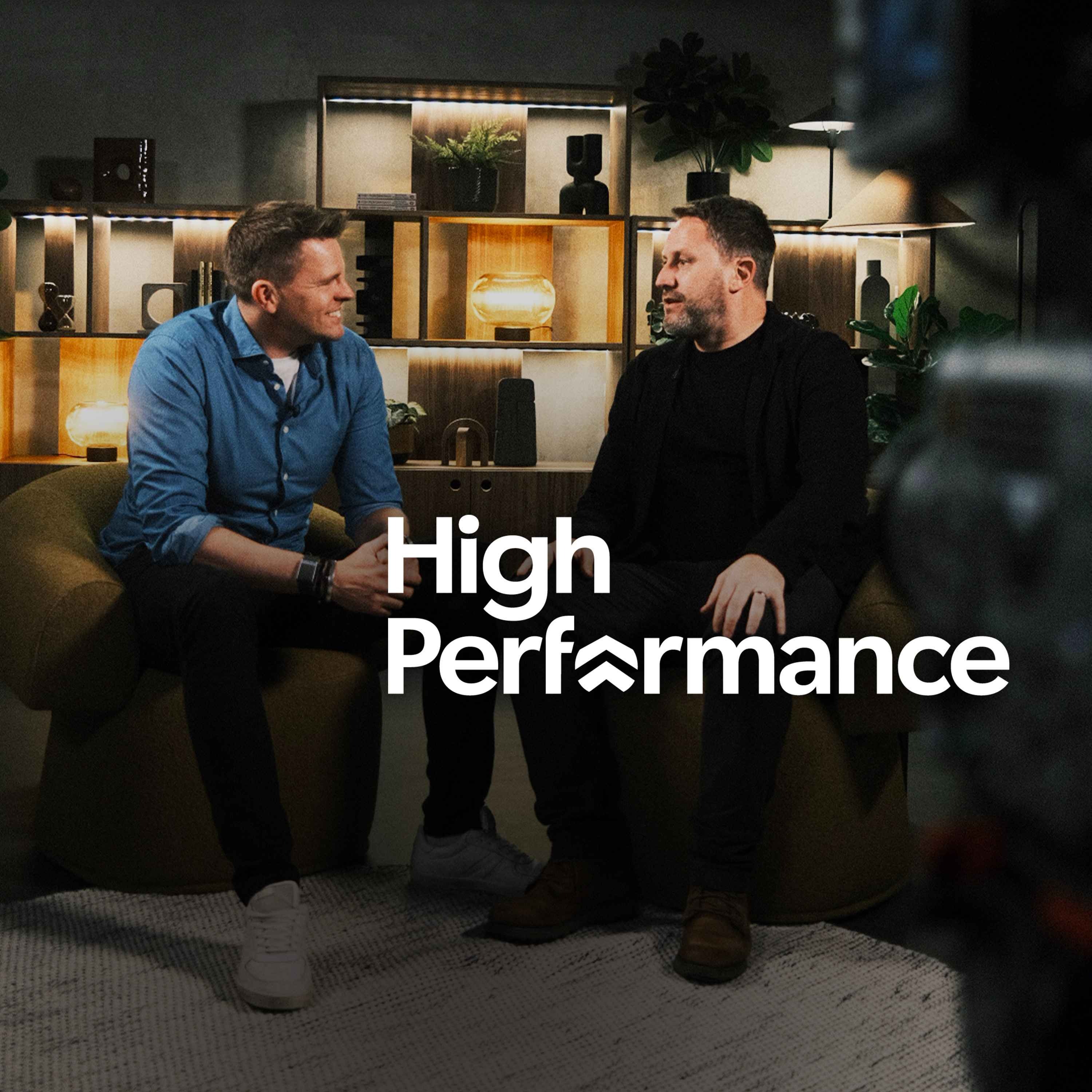
In this special episode of The High Performance Podcast, hosts Jake Humphrey and Damian Hughes welcome young listener Raffi and his mother, Mel. They discuss the strengths associated with neurodiverse conditions like autism and ADHD, emphasizing how these can foster creativity, focus, and determination—traits common among high achievers. Raffi shares his experience and questions, challenging the misconception that being different is a disadvantage.
Written by AI. May contain mistakes.

Get the gist, explore an idea or ask about something said.
 Claude
On The High Performance Podcast, what are the key points of this episode?
Searching your listeningAutomatic transcript. May contain errors.
0:28Watch it early on the High Performance App. Right when you need them. Work smarter and faster with Upwork. Go to Upwork.com now and find your freelance expert. That's U-P-W-O-R-K dot com. Post a job for free and get started today. At Capella University, learning online doesn't mean learning alone. You'll get support from people who care about your success. Like your enrollment specialist who gets to know you and the goals you'd like to achieve. You'll also get a designated academic coach who's with you throughout your entire program. Plus, career coaches are available to help you navigate your professional goals.
1:05A different future is closer than you think with Capella University. Learn more at capella.edu. This episode is brought to you by Opera Air, the first browser with mindfulness at its core. Now, most of us spend hours every day online, but how often do we pause to take care of ourselves whilst we're doing it? And that's where Opera Air comes in. It's a lightweight, fast, secure browser built not just for productivity, but for your well-being. With Opera Air, mindfulness is built right in. You'll find free breathing exercises, guided meditations and soundscapes with ambient sounds, lo-fi music and binaural beats, all designed to help you focus, relax and even spark creativity while you browse.
1:52Hi there, welcome along to another shorter episode of High Performance. And we've got something really special today, Damien. Can I share with you a message that I got on LinkedIn? Yeah, I'd love to hear. Go on. So this came in. Hi, Jake. I'm getting in touch as my 11-year-old son Rafi and I are regular High Performance listeners and fans of the show. He was recently diagnosed with anxiety and panic after being relentlessly bullied at school. And with ADHD and autism, which he's been struggling to come to terms with. he's been having therapy and recently started leaving me notes at bedtime to express how he's feeling yesterday I found a note under his pillow which was a script for an episode of High Performance he's asked me to share it with you I think he's inspired by the things that you talk about and this is a creative way for him to express how he feels oh this is amazing isn't it and how he's using his own version of High Performance to process things he's even talking about making his own podcast about his experiences as a kid the things that he's gone through.
2:50Anyway, I promised him I would send this to you and no doubt you get tons of messages. But if you have a moment to reply, it would mean the world to him. And then she's attached a load of pictures and you can see on here, he's written out his own script. So he's written, hello, welcome to another episode of High Performance. I mean, it's incredible. And I just thought, why don't we invite Rafi down to come and meet us and to be in his own episode of High Performance. You know, we frequently say, don't we, when we meet some of these high-profile guests. What a privilege it is to be in their company and for them to be so open and mumbleable.
3:24And I think we can honestly say the word privilege is the most appropriate one in this case. So should we get Rafi in and we'll let him start his career as a podcaster? Yes. Well, I replied and said we'd like to invite him in. And she said, I've never seen Rafi so happy. So should we see how he feels about coming into the studio? We can only underwhelm him from this moment on. Let's do it. Rafi, Mel, welcome to High Performance. Thank you so much for having us. It's very exciting. First of all, how does it feel to be sitting in here with us? Quite nervous and quite exciting as well. Mel? It's really surreal as someone that, we've probably listened to hundreds of episodes of your podcast, to be sitting here in these yellow chairs is a little bit bonkers, isn't it?
4:06Yeah. Well, Mel, we've just read out the beautiful message that you sent me on LinkedIn. What prompted you to reach out like that? So I think the first thing to remember is what was actually happening at that time. So Raf was, I think there was a lot going on in Rafi's world, being bullied, been diagnosed with anxiety, and then had spent a few months going through assessments for ADHD and autism. So there was a lot going on for him. And one of the things that he started trying to do to cope with some pretty massive feelings was journaling. And so every night before bed, he was writing down three great things about the day or, you know, how did he feel about the day?
4:47And then off the back of that, he started writing down some longer notes at the back of his journal for me to find. And they were more about, kind of more about how he was actually really feeling beyond what you would put in a kid's journal. And then one day I found these three sheets of paper where Rafi had basically written a script for the High Performance podcast. and I must admit I had to take myself off to the lead to have a little cry because I just was so proud of Rafi that he had taken something that, you know, we enjoy listening to podcasts as a family. He'd obviously heard things in the interviews and the discussions that he'd heard.
5:22Sorry, I'm getting emotional. That's absolutely fine. And by the way, totally understandable. Apart from you, Rafi, we're all parents here, right? So we know how your mum's feeling right now. Yeah, thank you. And something had clicked in his brain and he had found this creative outlet to use a script to express how he was feeling and in a kind of mock conversation with you. And I just thought, wow, that he'd done that. I just felt so proud of him. But I think the reason that I reached out to you was that the thing that I was most proud of was that in the script and then the conversation that Rafi and I had afterwards, the reason he'd done it was partly to process how he was feeling, But the other part was that he really wanted to help other kids.
6:07There was something in him about sharing his story and having the agency to do that, that he felt might help other kids. And I just thought, you know, even if we didn't get a reply, even if you never saw the message, the fact that, you know, the opportunity to pass that on to you guys and say, this is what your podcast has done for my son, and this is how it's helping him. And now it's making him want to tell his story and find other kids' stories that might help other people. And I just thought that was really amazing. And it is amazing, Mel. And whilst we're going to talk to Rafi in a moment, I'm interested in talking to you as a mum with a son going through a tough time like that and a diagnosis.
6:44What advice have you got to offer to any other parents that might be listening to this that can empathise? If you'll indulge me for a couple of minutes, I actually, I was thinking about this question and I was actually thinking about the journey we've been on as parents over the last couple of years, particularly with anxiety and then eventually the diagnoses and thinking, God, what do I wish I'd known two years ago? What do I wish someone had said to me that was two years down the line? I've actually written a little letter, if it's okay to read it, that's from the heart. I don't know if I'll get through it, Raph.
7:19I'll try my best. But it's basically from the heart and it's to anyone who has got a diagnosis or a parent of anyone who's got a diagnosis, this. Anyone who's kind of spotted signs in their kids and is thinking maybe I need to go through an assessment process or anyone who's at the same stage as us and it's from our hearts really and I'll just give it a go. Okay so to any parent who is walking this path we're only two months into Rafi's diagnosis though the journey to get here has been a long one. I know how overwhelming it can feel, the endless questions, the self-doubt, the worry about getting it right.
7:54But if I could share what I've learned so far, it would be this. Firstly, trust your instincts. You know your child better than anyone. They may seem fine at school or with friends, but if you sense that something's difficult for them, trust that feeling. And the sooner you take that first step to understand their needs, the sooner you can help them to thrive. The second thing is, their diagnosis changes absolutely nothing. It doesn't change who they are. But it also changes everything. So Rafi knows that his diagnosis doesn't define him, but it does help us to understand his brain better and what he finds easy, what he finds hard, and what we can do to support him.
8:32He's the same brilliant, funny, kind kid he's always been, and nothing about how much we love him has changed, but how we support him has completely changed. Arm yourself with knowledge. Read everything you can. Listen to this podcast. Listen to other people's experiences and stories and learn as much as possible about how neurodivergent brains work because knowledge is power and the more you understand the more confident you will feel in advocating for your child and supporting them in a way that truly helps them. Find the things they're brilliant at and celebrate them. One of the most important things we do with Rafi is talk about what makes him amazing.
9:08His ability to hyper focus in football like Lionel Messi makes his corner kicks absolutely incredible. His memory for football stats is unbelievable and his deep empathy means he notices things that others don't. So we make sure he knows how special these qualities are. Every child has something they excel at, something that makes them unique. Find it, nurture it and celebrate it with them. Then find your people. Connecting with others who have lived experience has been an absolute lifeline to us. I've been lucky to have friends going through similar things who could share what they were doing and how they were coping.
9:42talking to Rafi's teacher, Mrs Bennett, and his football coach, Charlie, letting them know what he's brilliant at, but also where small adjustments will make a big difference has been really invaluable. You don't have to do this alone. But choose your community wisely. There are so many online groups and resources out there. Not all of them will be the right fit. So look for well moderated, supportive, positive spaces. The right communities can offer encouragement and reassurance without overwhelming you with negativity or fear. Nearly there. Your child is extraordinary. Every child is. Rafi's brain works in a unique way and now that we understand it better we can support him in a way that makes sense for him.
10:20This journey is not about fixing anything, it's about helping him feel seen, valued and empowered to live whatever life he chooses. And finally, this will test you but you are strong. There will be many moments that challenge your patience, your parenting, your energy levels, your self-belief. So be kind to yourself. Start with compassion for your child, but also for you. Make time to replenish yourself, to step away when you need to, to sleep. You can't pour from an empty cup and your child needs you at your best. If you're at the beginning of this journey, know that you're not alone. You're doing better than you think.
10:54And most importantly, your child is lucky to have you. With understanding and encouragement, Mel and Rafi. oh man thank you that's amazing well done well done you were right thank you for sharing that was lovely that was really great of you so Rafi you're a demon corner kick taker and so much more besides would you mind before you host your own version of High Performance Rafi yeah would you mind telling us how you felt when you were able to write in the back of that book how you really felt about your life using high performance as the template? I think I started feeling a bit, like, sad. I was feeling a bit overwhelmed about everything that was happening in my life.
11:40And I think then I just decided to do it because I thought that was the right thing to do. I thought it would help me a lot because I thought it would just make me feel a lot happier. And did it? Yeah, loads. I think because I'm going to talk about this in a minute but like if you're feeling down just do something that makes you happy because otherwise you'll be down for the rest of your life and your mum has just shared some amazing advice for parents who might be in her position what advice would you share for young people similar to you who are in your position what would you like them to know try and just talk to people about your struggles like what's going on like everything is difficult and like try and interact a lot so like friends and family yeah so they know that they can help you a lot good lad and what's it what's been the kindest thing that anyone's done for you maybe my mum because she often like if i'm feeling a bit sad or i get like my brain's feeling feeling muddled she might say things like or like do you want like something something to eat or like to drink and just like she takes my mind off it perfectly just really helps me a lot brilliant well look you wanted to host your own version of high performance right yeah you're holding in your hand some paper i'm assuming they're questions am i right yeah so do you want to do it do you want to host your own version of high performance yeah okay then well this is your camera and you can uh you can do a full intro whatever you like raffi this is um Let me help you.
13:21That's your intro. This is your platform, bro. So you take it away and we're honored to be on your show. Absolutely. So my idea for a podcast is to help kids with ADHD, autism or anxiety find ways to cope better and live their best lives. When I was first diagnosed, I found it really hard to understand what it all meant. And I didn't know how to deal with some of the challenges that came with it. But then I started learning things like how to manage anxiety, how to focus better and how to be kind to myself when things have felt tough. I know there are loads of other kids out there who might be struggling too.
13:57So I'd love to have a podcast where I can talk about these things and share tips, stories and advice from people who've been through it. And I want to make it fun, not just serious all the time. So I've got important questions for you and a few fun ones too. Well done. What an intro by the way. We need to up our game here. Right then Raffi. So you've spoken to loads of people about getting through tough times. What's the best advice you've ever heard for when things feel really hard? Okay, I think we can both give you an answer on this. And I would say that nothing lasts forever. Okay, like when your mum's talking about you being bullied, I was badly bullied at school to the point where I changed schools because it was so painful and so hard.
14:41And it's weird, I'm now 46, right? So we're talking here 35, nearly 40 years ago, and I can still remember how it felt. That feeling of not fitting in, people being unkind, wondering why is it me that everyone's being horrible to, that isolation, that loneliness. And I think you think then, oh, this is going to be my whole life defined by what's happening now. And you realise that's not the case and that things move on. And I actually think that plays into the best bit of advice I can give anyone when times are difficult, which is just because something is hard for you doesn't mean it's bad for you.
15:15there's often things that are difficult in life you know we all have bad days right and it's only after those bad days you look back and go man I really learned a lot I saw how strong I was I saw how supportive people around me were I saw actually that I can cope with things that maybe I didn't think I could cope with so I think that's my biggest piece of advice yeah Damien my piece of advice is to echo what your mum said in the letter that she just read out which is about being kind to yourself we've not met anybody that has gone through life without facing a challenge, an obstacle or the tough times that you were describing.
15:49And I think when you face those moments, the first thing you need to do is give yourself a break. Just be kind to yourself, recognize that you're doing the best you can. Sometimes we all trip up, sometimes we all make mistakes. But the only way we can learn from those is when we accept ourselves first of all. And I think what I've learned as well, Rafi, is that when you're kind to yourself, you can actually start being kind to other people as well. Yeah. Because you accept that they're making mistakes as well. And then I think you create this lovely circle where you're kind to yourself, you're kind to others, they're kind to you.
16:25And that's where you surround yourself with people that want to lift you up. Yeah. Jake, I know you've talked about being bullied when you were younger. How did you get through it? And what would you say to someone going through that now? Yeah, I think my advice to someone that's going through that now is that you take it very, I don't know whether you felt the same, but you thought it was all about you. Do you remember? Yeah. And that feeling of, I must be the one that's wrong or weird or weak or strange. Yeah. And actually, only years later, Rafi, I can now look back and think that it was never about me.
16:55It was always about the bullies. It was all about other people who weren't happy and they weren't comfy in their own skin. And for some reason, the thing that made them happy was to try and take away a little bit of my happiness. that's a nice thing to know now it doesn't make it any easier at the time but that's certainly how it felt what's going on with your bullying is that stopped is it less is it the same it stopped but mainly because the previous year six were the ones that were doing it and they've left now and we've had talks with my teacher about it and she's just helped me a lot like Miss Bennett Mrs Bennett what advice did she give you maybe if they're like running you up or something to like walk away, count to 10 or something like that.
17:40Yeah. Like, or they come back or just talk to friends or something like that. Great. And you're feeling good at the moment. Yeah. I'm so happy. Yeah. So you've spoken to some amazing people who have ADHD or autism. Who has inspired you the most and why? I would say the chef, Heston Blumenthal, who's one of the most celebrated creative people in the world, Rafi. And he said that the challenge for him, and he has ADHD, actually also has a bipolar diagnosis as well now, which is that the way that his brain operated, it gave him some blows, it gave him some really dark times. But on the flip side, it also gave him the most incredible creativity, the ability to do things that other people simply can't do.
18:20And it was up to him to come to terms with the fact that you don't get one without the other. And I actually think that you should be so grateful and so blessed that you've been given this remarkable mind that can do incredible things. because if you look at the history of humankind, right, if we still did exactly what we were doing thousands of years ago, well, we wouldn't be having this conversation on a podcast because we'd be living in a cave eating raw food, right? The game changers, the people who move humankind forwards are the people who are the trailblazers. They're the people whose brains operate differently.
18:51They're the people who look at the world and it looks different to them exactly as it does for you. So you're the kind of person that can change the world for other people like us. and honestly Rafi not all of them have got a diagnosis but Damien and I talk about this a lot we think 80 % or more of the people that have sat in the chair opposite us on high performance are new or diverse in some way because they are just doing things that other people can't even imagine let alone go out and execute so you do have a superpower that is absolutely the way to look at it I'm excited to see what you're going to do with your life we'll be interviewing you on the high performance podcast if we're still going in a decade or two and you'll be back telling us what amazing things you've done.
19:32Yeah. If you could interview anyone in the world, past or present, who would it be and why? Lewis Hamilton. I'd love to interview Lewis Hamilton because I just, I love the fact that, again, he's been a trailblazer in his sport. You know, he is the first black world champion. He should have been the first man to win eight world championships and he has done it exactly as we're just discussing because his brain works differently to everybody else's. I'd say Muhammad Ali he was a heavyweight champion of the world and he was a man that just showed the courage that you're showing by coming on here you know, willing to stand up for what he believed in even though other people thought he was wrong he was willing to speak for people that were being bullied or oppressed you know, he saw that his position of power was about lifting people up and I was really lucky last year after I got to meet his daughter Leila Ali and she came and she told me a lovely story that I often think about that she used to get frustrated as a little girl when she'd go with her dad and she got to buy ice cream or something.
20:36And she said, and a simple trip would take nearly three hours because everyone would see her dad and want to have a piece of him, you know, get an autograph for a picture. And he said, and he would never leave until the last person in the line had been seen. And she said, and she used to say to him, dad, why did he do that? And he said, I want you to always think about the last person in line. how would they feel that they've been left out or they've been excluded simply because I need to go somewhere else and he said your power comes from looking after the last person in line not by taking care of the loudest of the ones who are at the front and that again is a good example what Jake was talking about you know when people are unkind to you that's about them not about you real kind people the ones that are really powerful are the ones that look after the ones that maybe are struggling a little bit yeah i love that episode with later ali it was amazing wasn't it yeah so good yeah she was lovely wasn't she the legacy of her dad yeah definitely what's the funniest mistake you've ever made and what you learned from it i remember i was when i hosted formula one for the bbc i was i was ill had food poisoning and we were leading up to the the start of a grand prix and we were in belgium and it was a big moment where i introduced the national anthem and we had about 7 or 8 million people watching at home.
21:54We were about to go live to the grid where they were going to hold the flag, play the national anthem. I'm standing there, live in Belgium on BBC One, not feeling very well. And I said, and now it's time for the national anthem of Spain. And I'm like, literally it began. And the producer went, we're in Belgium. And obviously it's live on the television. There's no reversing out of that. Yeah. And another time I made my co-host on Children's BBC, cry so much she wet herself live on television and she was wearing grey jogging bottoms and it was obvious so we suddenly had to film waist up for the rest of the afternoon I want you to follow up with Jake and ask him why did you make her cry I don't know it was because I was so funny it wasn't nasty cry by the way that's the bit that I wanted to tell just sorry what I meant to say was she laughed so much she wet herself not cried so much she wet herself she laughed so much she wet herself yeah that's a bit yeah I'll tell you what that made a couple years ago When we were doing the podcast, we were interviewing this amazing golfer called Matt Fitzpatrick.
22:55And we'd done all the preparation. And we had a question that his dad was a football manager. So I saw the question come up and I said, Matt, you know, you're obviously in the world of sport, but you grew up in it that your father was a football manager. Tell us what you learned from him. At which point he said, my dad was an accountant. with a very blank look on his face. And you know what, right? It's a reminder that we think in life there's either successful people who make no mistakes or unsuccessful people who keep making mistakes. The most successful ones, Raffi, are the ones that keep on making mistakes.
23:30That is how you grow. If you don't make a mistake, how do you know what your limits are? How do you know where you sort of reach the edge of your abilities? Well, you only know by making a mistake and going, ah, I see. I can go a bit further now. So I know to make sure I check which country I'm in and not make people laugh too much. Damien knows to make sure his research notes are correct. But I'll tell you the nicest thing about that that picks up what Jake's just said. Matt didn't respond in an unkind way. He knew that I'd made a mistake. It was an honest mistake. And immediately he was like, no, no, he explained that I'd made an error.
24:02But he didn't hold it against us. He wasn't sulking. He was happy to work with us, wasn't he? Yeah. I think so anyway. If I could give you a magic ADHD brain for a day where you could hyper-focus on anything, what would you use it for? Mate, what a brilliant question. What would you answer? I would use it to score from corner kicks every single time like you almost do. Yeah, probably. Do you curl the ball in towards the goal, do you? Yeah. What would you do, Damien, if you could hyper-focus on one thing? If I could hyper-focus on one thing I'd work out how I could read books so when we do the preparation for interviews I often try and read as much as I can about the person so if I could hyper-focus and just devour the books about them.
24:47I'd do that. Yeah, that's a good one. It's a really good one. What would I hyper focus on? I think I'd keep it similar to Damien's answer, but it would be to hyper focus on how we make every episode of High Performance as good as possible. Because, you know, we sometimes record two or three in a day and it is a very natural thing after the first one to relax a bit and the second one maybe isn't as good. Or after the first two, you're a bit tired for the third one. And sometimes we do look at each other and say, I'm feeling tired at this point. You know, we once did five episodes in a day. And I think if I had a magic brain like you do, then I would be like, right, I can, today is a switch on day.
25:24Today is a hyper focus, high performance day. So I can nail it and then I can sleep tomorrow. I think that's what I'd do. Sounds good. We're going quick fire? Yeah. If you could go back and give your 11 year old self one piece of advice, what would it be? Mine would be to enjoy the journey a little bit more. I focused too much on work over the years. I got a great opportunity in Formula One. I got a great opportunity in football. But I was so desperate to make them work and make them successful. I never enjoyed them. And that is definitely a regret of mine because you don't realise that you're not going to get those days back when you're young.
25:57So enjoying the journey as much as making the most out of the journey is definitely something that I would do. Mine would be to be kinder to myself. So I think that often when I've made mistakes and I've made lots of them, I've sort of beat myself up in the way that I talk to myself. and realise that that's not that helpful. I think learning to be kinder to yourself would be definitely my improvement. What's something you've failed at but are glad you tried? Well, I'd say my A-levels. So I did my A-levels, you know, after your GCSE, you do your A-levels. I failed all three of them. But it was the best thing that ever happened to me because I went back to school to redo them and that's when I got a chance to do some work experience in television.
26:37If I'd have passed my A-levels, I'd have gone to uni, I wouldn't be sitting here now. So if I was successful, Rafi, I wouldn't be here. Failure is why this podcast exists, why I'm where I am. So that is the thing I failed at. It was very embarrassing, but I'm absolutely delighted that it happened. I got really ill a few years ago. And part of it is because I was pushing myself too much. So I wasn't listening to my own body when I was getting poorly. I kept thinking I needed to just work harder rather than work smarter. And I ended up getting an illness called meningitis that put me into hospital for a while.
27:12And that was a real lesson for me of actually, you need to be a bit cleverer when you're tired. You need to rest. Not see it as the opposite of doing your best. It's part of doing your best is learning to take breaks. Yeah. What's one thing that always makes you smile? My children. My children and my wife, seeing them grow and develop. And that's why it's so moving for us when your mum reads out that incredible letter because we know that our kids, just like you, are doing their best. We know, just like your mum does, that life is full of challenge and we just want our kids to be okay. And that's why you've got such an amazing mum making sure that's happening.
27:51I'd say exactly the same. Yeah. What's the hardest thing you've ever had to learn? To say no. I really struggle with that. My instinct is if I can help somebody, I will do. but sometimes I'll do that at the expense of my own time or my own energy or my own loved ones so learning to say no is the hardest thing I'm not quite there yet but I am still trying to work at it and I'd say losing people I lost a friend today so it's it's a hard day for me but actually what's interesting is sitting and having a conversation like this with you is for the first time today put a real smile on my face. And I think the reason why it's important to talk about losing people is because I think often you think we and the people that we love are going to be around forever.
28:40And you never really appreciate things until you know they've gone. I have a tattoo on my wrist here. It says Memento Mori, Rafi, which I'm not saying you should get a tattoo. Your mum might be unhappy with me for advocating that. But it means, remember you're dying. And in some ways it can be, you can look at it and think, wow, what a negative way to have a conversation about remember that you're dying. But actually, Rafi, it's the best thing in the world to understand because when you know that you're not going to be here for that long, when you know, and I'm telling you this is someone that's nearly 50, and your mum and Damien would agree, life goes by like that in the blink of an eye.
29:13We were all your age what seems like two seconds ago. And if it's gone fast at this point, I think it gets even quicker towards the end. So remember you're dying means that every single day you live life to the fullest. And when you lose a friend, which will happen to you over the years, it's a reminder to enjoy those days. Mate, thank you so much for coming in. I'm so pleased that your mum decided to reach out even though she thought that maybe no one would ever see the message. We did. And now here we all are. Mel's emotional. Damien's emotional. I'm emotional. Raffi's just sitting there like whatever.
29:44This is great. I'm on high before. It's a dream. You know, you will make a great host of your own show. Maybe what we should do is give you this episode and you can release this as episode one of your own podcaster. And one of the big things that we've learned, Raffi, you've done amazing today is that so many of our guests have taken themselves out of their comfort zone like what you've done by coming here but they use that evidence to build confidence in the future and I think what you can do is use the fact that you've sat here in the chair in in this studio in London to give you the confidence that there's nothing you can't going on and achieving your own future and we're going to be excited to watch you.
30:22Well done guys. Thank you so much lots of love thank you Raffi you're the man well Damien how cool was it to chat to Raffi and Mel oh it was lovely I mean when we do these podcasts you know often we put them out in the world and you never quite realise the ripple effects that it can have and to hear that you know an 11 year old boy has been listening to it and finding some comfort from these interviews for when he's going through tough times himself whether it's the diagnosis or the bullying I don't know I just find it really quite moving what's the view of it yeah i mean mel reading out that letter to other parents and i think the lovely thing about that letter actually is that whether you have a child who's neurodiverse or not or whether you have a child who's struggling at the moment with bullying or self-esteem or other things i just thought there was great lessons in there for all parents to sort of remember that you're doing your best remember that you've got great people around you if you lean into them to trust your child to lean into your child i just think that you've said so many time since we've worked together if you want to know your child better learn to ask better questions and I think that that's really what Mel is saying to all parents there just ask better questions of your children because the more that you know them the more that you can help them yeah definitely and I almost wanted to stop as well and pay tribute there's two names that they mentioned there about Mrs Bennett the teacher and Charlie the football coach that have obviously been seminal figures in in Rafi's life and I think that's a reminder as well that there's a lot of good people out there that do want to help you know even if they're not your child but they're still in a position to make a difference and i like that because i think we can all be the equivalent of mrs bennett or charlie that you can all just take a moment to be kind to encourage to nurture somebody and sow that golden seed that hopefully blossoms one day you use that quote a few years ago that the sign of a healthy society is that you sow seeds that you never see blossom and I think you see young lads like Rafi there, you know, and hopefully that he's going to go and blossom into a fantastic young man and make a difference to so many others.
32:28Well, it was a pleasure to meet him. I can't wait to see him take a corner. It sounds like he loves his football and that was a special moment and I'm so pleased that we were able to do that. Thanks, mate. Yeah, thank you.
33:01Say what you want about AI, but it's here. And it's helping businesses get more done in a day. Wix's website builder is infused with AI so you can stay ahead. Create a beautiful, functional website just by describing your idea. Track how your site appears in AI search results. Create custom images on demand. Or launch an entire campaign in a matter of minutes. Wix gives you AI wherever you need it. Try it out for yourself at Wix.com. We're interrupting this podcast to ask you a very important question. Have you had your Hershey's? When you need to brighten up your day, put a smile on your face with the classic creamy texture and pure milk chocolate flavor of Hershey's milk chocolate.
33:43Whether you're eating it on the go, breaking off a few pieces for s'mores night, or just treating yourself to something sweet, Hershey's Milk Chocolate checks all the boxes. Shop for Hershey's Milk Chocolate now at a store near you. Found wherever candy is sold. Morning people wake up for peace and quiet. McDonald's breakfast people, we wake up for the sweet rush of getting that warm, delicious breakfast right before it ends. with McValue at McDonald's get any size pumpkin spice iced coffee for just 99 cents until 11am and try our pumpkin and cream pie they're spiced and priced so very nice price and participation may vary cannot be combined with any other offer
Jake and Damian invite a very special young listener Raffi, and his mum Mel, onto the show to talk about the power of conditions like autism and ADHD and how they can unlock creativity, focus, and drive, traits seen in so many high performers.
11 year old Raffi comes prepped with his very own high performance questions for Jake and Damian!
Together, they challenge the idea that being different is a drawback, showing instead how it can be a powerful force for change.
Hosted on Acast. See acast.com/privacy for more information.


