
 Ask ChatGPT



Normalizing fear and reframing “fearless” as unrealistic; fear is necessary for high performance and enjoyment. The episode argues you should live with fear, manage it, and use it to enter your “stretch zone” (not the comfort zone or panic zone). It highlights naming fear, resizing it, and carrying it into action rather than trying to eliminate it.
Fear appears on “big days” (public speaking, scrutiny, live TV). Example: Man United vs PSG final stakes; UFC cage has fear present. Naming fear reduces alarm; fear is a feeling not a fact. Fear fades with exposure and reflection (write fears, bin them; pre-mortems improve coping ~30%). Live broadcasting shows action reduces anxiety; Leicester/Glenn Hoddle near-death and helicopter disaster shift perspective. Rename fear as excitement; nervousness vs excitement changes karaoke performance (~53% vs ~80%). Takeaway: fear isn’t the problem—waiting for it to disappear is.
Written by AI. May contain mistakes.
Discussion on the importance of embracing fear rather than eliminating it.
“And I think that we've spoken so much on this show since we started seven years ago about normalizing fear, normalizing struggle, imposter syndrome, marginal gains, all of these things.”
Exploration of common strategies used by successful individuals to manage fear.
“So the third thing is that they read it, they talk about it and acknowledge it.”
Understanding the different zones of comfort and how to challenge oneself.
“Well, there's research on this that goes back a long way, Jake, from Lev Vygotsky that talks about there's three ways that you can view.”
Discussion on the steps to confront and manage fear, referencing insights from Dr. Pippa Grange.
Discussion on the steps to confront and manage fear, referencing insights from Dr. Pippa Grange.
“Where don't I raise my voice that I might like to?”
Learn how fear can signal opportunities for growth and excitement.
Discover strategies to confront and manage fears effectively.
“We can allow that to wash over us and get into our clear thinking a lot faster.”
Explore the balance between fear and performance under pressure.
“there is none of that fear i suppose what that what that leaves me thinking is what is the secret to going all in on fear until the fear disappears in Lewis's mind.”
Gain insights on fear and resilience from Glenn Hoddle's experiences.
“Let me play a really, really quick clip from one of my favorite guests ever, probably my favorite 30 seconds that's ever been uttered on the High Performance Podcast.”
Learn how preparing for worst-case scenarios can mitigate fear.
“Yeah, well, why don't we listen to somebody that described exactly that?”
Hear firsthand experiences dealing with sudden fear during live events.
“So I got to work like maybe 11, 12 o 'clock time in Leicester.”
Learn about a live broadcast experience that evokes fear and reminds us of life's fragility.
Explore how fear can shape our perceptions and responses in high-pressure situations.
“greatest people I've ever met nearly lost his life.”
Discuss how past experiences of fear can inform and improve future performance.
“to talk about what you've just described fear does to us because it's something like the all blacks refer to it as you be as you start to become obe which is overcome by events right And our brain just tunnels.”
Examine the relationship between taking action and managing anxiety in challenging situations.
“because two minutes after we took that ad break, the PA said back on air in three, two, and you're trying to say the right words.”
Learn how reframing fear as excitement can enhance performance and well-being.
“So this is the author of Atomic Habits talking to us about fear.”
Learn how renaming feelings of fear to excitement can enhance performance.
“and she played them the, you know, the journey, Don't Stop Believing.”
Understand that fear can signify growth and excitement in challenging situations.
“So actually, in a strange way, fear and courage live in the same place, right?”
Explore audience insights and key takeaways from the discussion on fear.
“Tell us what other topics you would love us to talk about on high performance, but please keep sharing, subscribing, rating the show.”

Get the gist, explore an idea or ask about something said.
 Claude
On The High Performance Podcast, what are the key points of this episode?
Searching your listeningAutomatic transcript. May contain errors.
0:00Before we get started, let me tell you, you can now listen to High Performance ad-free. Start your free trial now on Apple, Spotify, or head to our website so you can listen to our episodes uninterrupted.
0:13Hey, welcome along to another episode of High Performance. Today, we are talking to you about how to normalize fear. I just want to say at the start of this conversation that we often put these episodes out because of you, the High Performance community members who are messaging us, telling us that there are things in your life that you're struggling with. please keep messaging. Please keep subscribing to the show. Please keep telling us the kinds of conversations, the kind of guests, the kind of views that we can have, which would be really helpful for you. This is your show and you should be central to it.
0:42So today, fear is a central conversation, Damien. And I think that we've spoken so much on this show since we started seven years ago about normalizing fear, normalizing struggle, imposter syndrome, marginal gains, all of these things. And I think talking about fear is very common. So we've definitely I think said it's okay to say I got that wrong and I don't feel good enough but I think there's also an area that we've skirted around and it's probably the thing that sits underneath all of the the elements of fear every guest who's come and sat in the chair that we're sitting in right now Olympians managers CEOs celebrities it's that they talk about being fearless playing without fear having no fear and actually the research says that that isn't how it works like the the conversation we need to have with people is not about removing fear from your life.
1:31Fear in many ways is a necessary element to pushing the boundaries, to challenging yourself, doing not just like high achievement things, but also high enjoyment things. You know, some of the greatest things that we do in our life revolve around us embracing fear. So we need to not talk about getting rid of fear. We need to talk about living with fear. We've got a load of clips from some guests, which we're going to run through now, but I know it's also an area that you're fascinated by.
1:55Jake Humphrey: Yeah, definitely. I think when we talk about being fearless, I think there's a space in the middle of that and it's fearing less is what we can all do. And I think there's four steps that we've seen from so many of our guests, a pattern of how they can fear less. Some of it's about they actually name it, they talk about fear as a very real thing. Then they sort of get their arms around it and try and resize it in a way that feels manageable for them. Then they walk with it, they carry it with them and acknowledge its presence. And then they're the three things that are effectively what we've seen going over and over again.
2:31Jake Humphrey: So I said carry it. You said four, didn't you? So I said read it. Yeah, okay, so I'll do a third. So the third thing is that they read it, they talk about it and acknowledge it. And then the fourth one is they carry it with them. They walk with fear rather than try to walk away from it. Do you remember Tom Aspinall talking about when he went into the cage, he said, there's three people in that cage. There's me, my opponent, and the fear that I carry with me. I think we've seen a pattern that is really helpful for anyone listening to this to go, how do I manage it? Whatever our fear is, whether it's getting up and speaking, whether it's having to go and challenge somebody in the workplace, whether it's doing something that leaves us with that horrible, uncomfortable feeling, how do we do it?
3:17Jake Humphrey: well let's look at these four ways and let's look at the patterns of some of our high performers it's great and i think this idea of a ufc fighter coming to our show and telling us that fear exists in the moment he walks into a ring is a very refreshing viewpoint because i i think that we have had too many conversations about oh no i don't feel fear yeah i don't sense fear one of the things that i i love you talking about you know you and i do a lot of talks on stage to businesses or individuals or groups of people when you talk about how good you become at something is how willing you are to be bad at it for a long time.
3:47And the only way that you can do things that we're bad at is by accepting that there's going to be fear there. But it's pushing through that fear. It's understanding that for anything in life that involves us looking back and going, man, I really achieved something that day. It involves an element of fear. I often link it to sport. Like, you know, you're a Man United fan, right? If Man United beat a non-league team, nine nil in the FA Cup third round, they just trudge off the pitch, right? Because there's zero fear about facing a team of amateurs, right? When Man United go toe-to-toe with PSG in a Champions League final and they win 1-0, the celebrations are insane because the fear that existed before that game, the stakes, the pressure, the scrutiny, all of that brings a fear you have to overcome.
4:27And so I really want our audience after this conversation, the clips that we're going to play, to understand that fear is necessary. Fear is an obstacle not to be overcome, but to be lived with and carried. And by the way, we shouldn't be trying to aim for a life where eventually we go, oh, hallelujah, I've broken through having fear, and now I never need to be fearful again for the rest of my life because living a fulfilling life is living with a constant sense of fear because it's a constant sense of challenge, of excitement, of pushing the boundaries of exploration, which is key.
5:00Jake Humphrey: Well, there's research on this that goes back a long way, Jake, from Lev Vygotsky that talks about there's three ways that you can view. there's almost like your comfort zone then there's your stretch zone and then there's the panic zone and what we need to understand is so you think of like um an olympic swimmer you put an olympic swimmer in a in a baby swimming pool that's ultimately the comfort zone you put a baby in an olympic size pool that's their panic zone so for each of us we need to find out where our stretch zone is where we're going just a little bit further and that's where we know that high performance is ultimately to be found.
5:37Jake Humphrey: So it's often called the Goldilocks zone. So what we're going to do today is how do we sort of get to the edge of our comfort zone and get into that stretch zone to then push ourselves a little bit further than what we thought was possible. And is there a moment where in life we should just stop trying to find this fear or trying to find this stretch zone and just be in the comfort zone? Like, is there a value to that? Yeah, definitely. There'll always be times where sometimes we need to recharge our batteries. You want to go into a place where you know that you're safe you're secure you know that you're valued you don't have to keep pushing yourself so recognizing where we are at any one moment some places might be our comfort zone some of them might be our stretch zone very rarely do we want to find ourselves in the panic zone because not much good comes from that place I think it's so interesting I'm looking forward to this conversation well let's get into a clip from one of our previous conversations then I'm going to let you go first where would you like to start this well she's going to come up as a future guest, but she's one of my favourite past guests, is Dr.
6:36Jake Humphrey: Pippa Grange. We'll be right back after a quick word from our partners.
7:03Budgets balanced and lines moving. Call 1-800-GRAINGER, click grainger.com, or just stop by. Grainger, for the ones who get it done. This is a paid partnership with Apple Card. The coolest flex at brunch these days is not the Bloody Mary with the bottomless gold flake caviar topping. It's not whipping out your wallet to pay. It's not having a wallet at all. Jack's been an Apple Card user since 2019. That's the same year he tossed his wallet in the trash. because Apple Card holders earn 2 % daily cash back on purchases made using Apple Pay. It's the only credit card designed for the iPhone. I tap to pay with Apple Card at the grocery store, at the gas station, at restaurants.
7:40And yes, I use it at my second home, the farmer's market. Jack tapping to pay with his Apple Card with Apple Pay is his favorite thing to do. And the pleasant vibration and chime sound means I just got 2 % daily cash back on my latest purchase. Apply in the wallet app on your iPhone today. Subject to credit approval, Apple Card issued by Goldman Sachs Bank USA, Salt Lake City Branch. Terms and more at AppleCard.com.
8:28new go to shipstation.com and use code audio and get 30 days free
8:36Jake Humphrey: pippa talks about the the way of see face and replace is the first step that we can all confront our fears let's listen to her so back to your question jake like first see it first notice i'm like oh i've still got some shame about expressing myself in different ways okay what does that cost me? Where don't I raise my voice that I might like to? It's just a metaphor to share with you, but where does it really show up? So I'm confident coming onto this medium with you talking in this way. But if we were on TV and there were lots of people looking at me, I would feel less confident. I would have more potential for not good enough.
9:23Show up, oh, I can see it. So first notice where it actually is for you and what's the story under that. And then start thinking about what does it cost you? Because in your brilliant human potential, your expansive possibilities of who you are, this will get in the way. And we talk about performance as if it's this kind of narrow channel to good that looks a particular way. It's so expansive. It's so massive. You know, the human brilliance is so massive. And then once you've done that, and only then you start thinking about how will I replace that? You know, and the things I talk about with replacing, as you would have read in the book, are around, you know, sense of purpose and meaning.
10:10um most probably the most powerful part of that is relationships and um real connection community like the kind of relationships and quality that you have that allow you to turn down fear and there's a number of other sort of options in there as you know
10:29Jake Humphrey: i mean what pippa's describing there isn't just a mindset thing what we know is that fear shouts really loud when he's not given a name there's a research scientist called joseph ladue at new york university that spent his career studying the amygdala that pippa spoke about there and he argues it's the brain's threat system and the feeling of fear are two separate things so the alarm is felt in your body first that rising sense of panic or that not in your stomach but then fear is the story that your mind tells you about what that physical feeling actually means so that's why pippa's first step of saying see it first of all matters so much because the story is the second bit you can edit that you can tell yourself a different version of it if it's helpful for you but it's the simple act of naming the fear turns down the alarm system in your brain that's telling you to panic or to start worrying about the situation that you face so she says see first and then replace it last and the science backs that order exactly naming it does more than trying to talk yourself out of it and saying that i shouldn't be feeling this yeah i mean i love the idea of replacing fear because you know anxiety is definitely something that I live with and almost everyone that I know when you really scratch beneath the surface with your mates they're like yeah yeah I definitely have a fear and an anxiety and so often you know I talk to the Harriet my wife often about this because I think that the time that me and her talk the most about fear or anxiety is like when it's just the two of us together before you go out and you do the thing that you're anxious and fearful about right so whether that's a public thing or some sort of professional engagement or we just sort of fill out our comfort zone as parents and often we talk about this idea of is this a fact or a feeling like is it a fact that we should be nervous about what's in front of us or is it a feeling brilliant and so often i have to sort of remind myself that if i'm going to live in the past then i'm going to be a bit depressed if i'm going to live in the future i'm going to be a little bit anxious if i can try and live in the present then i know that i'm kind of safe in my own brain but just break that down then so like when you say is it a fact or is it a feeling?
12:33Jake Humphrey: So would you say something like, everybody in this room is going to hate us? Is that the kind of question you do? Yeah, exactly. So we have different fears, right? So one of Harriet's things is like, if we're going to travel as a family or even as a couple, she's like, what if something goes wrong? And I'm like, yeah, but what if something goes right? Like, is it a fact that something's going to go wrong or are you worrying about something that isn't even a thing? Or like when you and I are about to walk out on stage, you know one of my big fears is is this the day that we get found out you know that whole imposter syndrome thing is today the day that i stand on stage and the words don't come out i got it a lot when i was doing a lot of television you know live tv there's nowhere to hide and people often say to me is live tv like actually live like if you say something is there like 10 seconds so that someone else can like cut it and i'm like no no it's like live is live like you say fuck that's going on the telly in that very moment right with your mum sitting at home watching So I think that I used to get a real fear as well, that what if I just get things wrong because of the scrutiny?
13:33And again, I would have to remind myself, well, a couple of things really. The first one is that it's a feeling that things might go wrong. It isn't a fact. And the second thing is that I would only get these feelings, and it's the same for Harriet. I'm sure it's the same for a lot of our audience listening to this and maybe even you. Those feelings only appear on the day when you're challenging yourself. It's my only job that day is to wake up, make a cup of tea, watch slow horses on apple um and then make my lunch at home then i don't think that i'm going to have an awful lot of imposter syndrome fear or doubt right but if i'm doing something monumental then that fear like you know when you wake up in two days later you get that stomach lurching feeling yeah yeah like they come on big days like exciting days adventurous days game changing days so that's why i think pippa's conversation there about see it face it and replace it is really important like you can't just bury this shit down inside you and actually when you start to investigate fear i think it's pretty easy for most of us to get to a point where it is a feeling not a fact and we do then realize that we get these feelings more often than not when big exciting things are going to happen and we should all be doing big exciting nerve-wracking scary stuff in our lives so therefore we should i think we should be living with fear i don't think it should be abnormal i think it should be the normal every day like did i scare myself a bit today yeah
14:54Jake Humphrey: excellent good day but i'm also reminded i mean i love the definition that you're saying there of a fact and a feeling but then it reminds me of when we spoke to mo gowdar and he spoke about alice and bolt taylor's research that you can only physically experience a feeling for 90 seconds so what we often do is like so if we keep going i'm nervous i'm nervous and we keep resetting correct the 90 seconds whereas if we just allow it to wash over us and go yeah i feel nervous and this is just my emotions that are signaling to me that I now need to get ready to prepare for something that's really important.
15:28Jake Humphrey: We can allow that to wash over us and get into our clear thinking a lot faster. Who was it that had the quote, I've spent my life worrying about things going wrong, most of which have never happened? It might be a Mark Twain one. He often gets attributed to it. It's a cracking quote. And actually, we spoke to Lewis Howes, the US podcaster who hosts a School of Greatness about this kind of thing. Because I think when you host a podcast called School of Greatness, people assume that there's no problems in your life, but actually that's not the case. And I thought Lewis was an amazing guest. Should we play the clip where he talks about how he copes with fear?
15:58Yeah, that's a really good idea. So it's learning how to build the belief in self throughout the journey towards high performance. And how do you do that? I really think of it as, one, creating a fear list of all the fears that hold you back. because most of us have a list of limitations, limits, or insecurities that cause us to say, I'm not that good. So early on, I had a mentor said, you need to create a list of all your fears and you need to start knocking them off your list one by one and start with the scariest fear. Go all in on the fear until the fear disappears. And I was just like, I don't know if I could do this.
16:42I'm scared of everything. You know, I thought I was confident, but I was really scared of so many things. So what a great idea then from Lewis, create a list of all of your fears and start knocking them off your list one by one. Start with the scariest, go all in until the fear disappears. Now it slightly flies in the face of what we've just said, but I think, I think the way I like to look at this is let's say your fear is public speaking, right? You can knock it off the list until the fear I don't believe is gone, but I believe the fear is small enough that it doesn't impact your performance.
17:13Because I think that's one of the concerns that people have is like you know you say oh it's great to have fear well what if the fear stops me from performing at my absolute best yeah yeah so sort of facing the fear head on which is what lewis spoke about and really like creating a list and knocking it off your list and going all in on it until the fear disappears is is great but also we shouldn't get to a point where there is none of that fear i suppose what that what that leaves me thinking is what is the secret to going all in on fear until the fear disappears in Lewis's mind. I mean, my answer is you do the thing that scares you.
17:45Yeah. And every time you do it, the fear becomes a little bit less. This idea that you talk about it often, success leaves clues, right?
17:52Jake Humphrey: Yeah, yeah, yeah. But that's like the exposure therapy. If you're willing to then do the reflection afterwards and go, I've exposed it. So I've exposed that fear. I've exposed myself to it. So now I can take a step further tomorrow than what I did today. but there's a really interesting bit of like when louis was talking to us there was an interesting piece of research that came to mind from a psychologist called sean belloc who pioneered it years ago and i've passed this on to so many teachers where it's an exercise where they got students to spend 10 minutes before an exam just sat down writing all their fears so they almost let all their emotional brain catastrophize and they spend 10 minutes just doing it and then at the end of it they take that piece of paper and just throw it in the bin because it's almost like you've now articulated the fears that you had you've heard it and it's giving you the chance to replace it the third bit of Pippa's advice now in Chan's research what she found is the anxious students that did do this tended to do better than those that just allowed it to bubble away without finding an outlet it's really interesting and I think you know we need to talk at this point about the fact that fear is an inevitable part of our lives.
19:02Let me play a really, really quick clip from one of my favorite guests ever, probably my favorite 30 seconds that's ever been uttered on the High Performance Podcast. Here it is. My one golden rule to living a high-performance life is never fear a storm. Learn to dance in the rain. it's got me through so much shit in my life i'm so happy when people tell me be careful it's stormy out there i fucking love it so there you go gordon ramsay like i love it when people tell me it's stormy out there i mean there was a lot of swear words in that conversation with gordon but that idea of learn to walk in the storm i think is really interesting it's exactly what we've just been saying this episode by the way if you're enjoying it please leave a comment please share it with someone who you think is struggling with fear and it might be able to help them this conversation we're having is not about removing fear from our lives it's about realizing as gordon says that like it's stormy out there because the best lives live to stormy like we can't construct these high performance lives yeah which is what most people that listen to this show are after where everything's smooth and it's free of adversity like the resilience comes from walking into the storm and And, you know, Bear Grylls has told us that he's seen resilient people outperform talent to people 1 ,000 to 1.
20:29Yeah. So all of this is such great stuff. Like, get scared. Learn to live with it. Give yourself the reminder that you've managed to cope with every scary thing that's ever happened. Yeah, yeah. Build your resilient muscle. And like Gordon, you can walk forwards in the storm. And, you know, he's not the only person that has told us about, kind of, it's almost inevitable that an exciting life well lived is going to be stormy.
20:50Jake Humphrey: Yeah, well, why don't we listen to somebody that described exactly that? Glenn Hoddle because I think so much of what we talk about here is fear is about survival how can I get through the day and when we sat down with Glenn I think he's one of the few guests we've had on that's actually faced his own demise you know he's listened to eulogies being written about him and then lived to come back from it let's listen to what he says about recognizing the part that fear plays in his life. There's no such thing as death. When you actually come to realise that in your consciousness, that there is no, and this is my belief, it doesn't matter to anyone else.
21:33Everyone's got their individual beliefs. But when you actually realise there's no death, that fear, how you die, maybe you might be a bit scared of, but there is no death. We live on. And I think that's really almost been the last part of a little jigsaw that I've been putting together for many, many years with my spiritual life. And, you know, what I went through was tough. Don't you know what my family went through was tough. But coming through it now, I call it extra time. And funny enough, that's what the documentary with BT, we called it. I said I want it to be called extra time because I feel as if I'm in extra time.
22:10You know, if it goes to penalties, it goes to penalties.
22:14Jake Humphrey: so whatever you believe about what glenn experienced as he described in that clip the effect that he's describing though is well documented that we know that people have had heart attacks or similar kind of experiences tend to come out of it feeling much less afraid of dying so there's a question there which is whether the rest of us can really get there without having to do that you know so the answer is yes we've spoke about it so often before about the pre-mortems It comes from the psychologist Gary Klein, who says, whenever we're facing a challenge or a situation, just write down the worst things that you think could happen.
22:50Jake Humphrey: And on Glenn's list, having a heart attack on live TV must have been up there with the worst things that can happen. And what the research tells us is that the people that just make a little bit of time to prepare for the worst tend to be about 30 % better at coping with those difficulties when they occur. so again if there's anyone here that's thinking about it's all very well these two telling us that i need to do things that i'm afraid of again let's just make some time to do a pre-mortem work out well what is the worst that can happen and how are you going to handle that should it occur i think one of the other things that comes to my mind when we talk about this particularly when we talk about glenn is this is the kind of the element of uncertainty right that fear offers us i think so often when we are fearful it's because we kind of look back and think man i'm not sure that I've fully prepared myself for the worst case scenario here like what actually if this actually happens how do I cope and I think so often we cope way better than we ever will imagine so it was a very interesting experience for me the day when Glenn had his heart attack because I was hosting a live game on BT Sport that day and I arrived at the uh the so when you do a Premier League game you have we have the TV compound so you're not in the stadium like all of your crew so we have to take to the matches all of the vt trucks and the editing facilities and winnebago for all the talent and there's probably seven or eight massive articulated lorries full of people full of equipment full of technology to broadcast that game not just in the uk but you know the what we film goes around the world so you're creating what's called the world feed right so i got to work and i was thinking it was a half i've kickoff that day from if memory serves me right.
24:26So I got to work like maybe 11, 12 o 'clock time in Leicester. And the producer said, can I have a really quick word? We'll be right back after a quick word from our partners. This week, I fired off a task to Claude from my iPhone between meetings. It was just kind of a random brain dump. I then cracked on with the rest of my day. I went back that evening and it was done. And I'm not talking about a draft. I'm talking about an entire idea I've got for a new strand of this podcast being created while I was doing other things. I mean, it's just incredible. Claude is the AI for problem solvers. It's the collaborator that understands your entire workflow and it thinks with you, not for you.
25:08So whether you're debugging code at midnight, building a financial model or strategizing your next business move, Claude extends your thinking to tackle the problems that matter. I have so many issues that I'm dealing with on a daily basis. and what I really want is a partner that is there for me 24-7 and that's Claude Cowork. Point it at what you need and it handles the rest, building spreadsheets, drafting reports, organizing files and now it runs in the cloud so it keeps working even after you've closed your laptop. Ready to have an AI that can tackle real work? Try Claude Cowork today on any paid plan at claude.ai.performance.
25:45That's claude.ai.performance and check out Claude Pro, which includes access to all the features mentioned in today's episode, claude.ai slash performance. Hey, it's Jay Comfrey here from the High Performance Podcast. And support for this show is brought to you by Walden University. Do you ever catch yourself thinking, what if I could go after the thing I actually want and really make a difference in this life? Well, you're not alone. And that's exactly why we want to tell you about Walden University. For over 50 years, Walden has helped working adults like you get the W. with the knowledge and skills to build a future you want and create meaningful change.
26:23If you've been waiting for the right moment, maybe this is it. Head to waldenu.edu and take that first step. Walden University, set a course for change. Certified to operate by Shev.
26:48management, warehouse workflows, inventory, returns, and analytics in one place. What used to take five separate tools, ShipStation does in one. Automate fulfillment and rate shopping to ship up to 15 times more with up to 90 % savings. Go to ShipStation.com and use code AUDIO to try ShipStation free for 60 days.
27:11And I thought, I didn't know what had gone on, so I thought, I've done something wrong here. He sort of called me into this back room.
27:17Jake Humphrey: he knows i need there's fear showing up for you exactly fear was like what i was like because i'm a catastrophizer as you know so instead of going oh he just wants to talk about something i'm like oh my god what have i done it's the end of my career something's happened what have i said yeah go in the room and he tells me about glenn like having this heart attack i'm kind of caress as actually as it was i remember saying to him like how bad like is this and he said that you know the paramedics as they were leaving someone had said how one of the production team had said like how bad is this and one of the paramedics had said this is a nine out of ten and they'd wheeled glenn off and so the fear really that we had was whether glenn would survive you know and thank god he did and you know remains healthy to this day so that we that was kind of hanging over us really and i and the producer was like i just need you to know this in case the worst happens and we're live on air obviously we have to kind of deal with that so we were then live on air a few hours later and we were doing our show after the game and the producer said down my earpiece like in a really somber way jake please can you throw to the break instantly so i though so we talk about fear instantaneously i'm like i know exactly what this is like i now have to think of what to say so i then just said look we're going to just interrupt the program and take a we'll be back in a moment and then i'm thinking what do i say about glenn huddle and then the fear showed up for me because i was like i haven't prepared anything like i'm then scrabbling trying to remember how many caps has he played for england how many what years was he at Tottenham what's his greatest moment what's his legacy like what did the public think of him what can I say about England and I was kind of like I was suddenly washed away with fear because I was like you haven't prepared for this moment you fool and I really should have done but it kind of felt like that's not the sort of thing you want to prepare for saying that kind of stuff so I was waiting for the producer to say this is what we're doing and then that was the moment the producer said to me listen the helicopter carrying the Leicester City owner has just gone down outside the stadium on the same day on the same day so then i'm like that was not what i was expecting at all so you can imagine then the fear that watches over you is suddenly very different because you know that you don't know who's on the helicopter but you know that there's probably friends or family members that are still in the stadium probably watching our coverage you know our job is not to speculate or to say the wrong thing it's just to to try and find the right words and that brings a sort of a fear in itself and it was that that moment was like a really somber reminder for me and actually it's very relevant to this conversation i think that was a hot that entire day was a really clear reminder that we can spend all of our lives living with a fear about little things going wrong or feeling embarrassed in front of someone or letting ourselves down because our talents don't quite match up or not delivering on the thing that we say we're going and deliver on.
30:06And yet in that one day, one of my great friends in broadcasting and one of the greatest people I've ever met nearly lost his life. And then tragically, four people did lose their lives, you know, while we were live on air. And it's a reminder of the fragility of life. So I think actually sometimes when you're, when you're so close to those things happening, um, and you know, a lot of people listening to this and you know, you know, this from your own personal experience in the last couple of years with your dad, like I think sometimes when you're very close to tragedy i do think it puts some of these fears a little bit in perspective and it's a reminder for you like can you stop getting so caught up in your own head please yeah because like there is real shit going on and this is a fragile life and it is an amazing life and you know you can be a legendary sports person and a multi-billionaire global success story your life can still end ever so quickly with no forewarning and that i think is a is a sort of somber reminder for all of us of the fact that fear needs to be present but fear can't dominate well it's a really
31:10Jake Humphrey: powerful story and there's a couple of questions i want to ask you from it but before that i want to talk about what you've just described fear does to us because it's something like the all blacks refer to it as you be as you start to become obe which is overcome by events right And our brain just tunnels. We lose perspective. That becomes the most important thing in our lives at that moment. So what you're describing there is that, or what Glenn describes is that ability to step back and see life in its fragility and its wider perspective probably helps us to be able to get a handle on a situation we find.
31:48Jake Humphrey: I mean, there's research from King's College in London that says, just getting out and looking up at the sky, just walking amongst nature just for a couple of minutes, looking up at the sky, just seeing where you sit within the context of the universe lowers your levels of stress. So it breaks us through tunneling. The question I wanted to come back to about the Leicester city disaster that happened there was, what did you do on the back of that? So that sounds like a hugely traumatic day, nearly losing Glenn, then having to preside over that. What did you do that changed your broadcasting preparation?
32:23In the moment that I got the news or afterwards? Yeah, afterwards. I think that the, I think I'd actually been prepared for that by other things that had happened. Because actually, you know, when you're a live broadcaster, you get faced with all kinds of circumstances which create fear. Like a really good example of very early on was when I was asked by BBC Sport to be one of the reporters for the marathon. Okay. And I was like, yeah, okay. I mean, I don't know anything about the London Marathon or running or anything, but I can do this. And they said, oh, you'll be stationed at Canary Wharf and all we need you to do is just speak to some of the fun runners.
33:03Like if you see someone dressed as a giant slice of brie, stop them and ask them what they're raising money for and how they feel.
33:08Jake Humphrey: Or a lobster even. Or a lobster in honour of my CBBC days, yeah. So I'm then standing there and I get this, the marathon's been going on about an hour and a half and I've interviewed it, you know, a couple of Mario brothers and someone carrying a fridge on their back, fine. And then I get this call over my earpiece. Can you find Haile Gabri Selassie? Now, he is like one of the most legendary marathon runners ever. And I'm like, sorry, was that for me? And they're like, yeah, Haile Gabri Selassie has just stopped in the marathon somewhere near you. You need to interview him now. Suddenly, I'm like, flipping heck, I only agreed to this because I was going to interview some fun runners.
33:45and now like this is a big significant sporting story that one of the greatest runners the world's ever seen has just pulled out of the london marathon and i think i asked him something ridiculous like is it because it was too hot and he's like um ethiopia the heat in london is not the problem right but it was a kind of like it was it was a slightly embarrassing moment right but equally it was a moment of growth because you're like right you know i need to i need to prepare for these things but it kind of it teaches you that you know uh live television is somewhere
34:18Jake Humphrey: you just need to kind of take a breath and gather your thoughts yeah fast forward to when i was working on the royal wedding and i went up in a lancaster bomber which was like a real like honor to do that and i was part of the flyover that went over the top of buckingham palace with william and kate on the balcony like a significant moment it was the most watched thing i'd ever done it was on the the world feed again so i think three and a half billion people around the world watching that wedding i had loads of technical problems and it all went wrong and i like i looked like i was like travel sick or something like they played half of what i said i stopped what i was saying like it was a big significant moment and it went wrong yeah and like and i was sat on the train home afterwards and some bloke went over and went how did you get that so wrong today and i was like wow and it was a whole a whole load of technical things but also definitely partly on me as well right um fast forward all the way through to 2009 felipe massa has his near fatal accident in the hungarian grand prix and i'm live on the telly so i had all these kind of from a broadcast perspective all of these moments where fear was present but also so was the learning yeah so that actually by the time i was sitting in that studio in the king power stadium trying to kind of like there's a lot going on in your brain at that point you're kind of processing what's happened, thinking of all the possibilities, trying to absolutely say the right thing, fully aware of the sensitivities of what's going on.
35:38But there's also something interesting that there almost isn't much time for fear when you're live on the television because action takes over what's going on. And I think sometimes for people that are struggling with a fear or an anxiety about a certain thing, I have certainly learned, and this is maybe sometimes to my detriment, that like action reduces anxiety, I think. Sometimes I'm too quick with this. Like if a big thing happens in my life, I have to sort of send the email about it that moment and I rush it. And afterwards, someone's like, why did you say that though? Because it's not quite right.
36:12And I'm like, yeah, because I was so dead. I just had to deal with it in front of me. And I think sometimes taking action is like, so if someone is struggling, just take a small step towards solving the problem. You'll find that your fear and your anxiety will start to drop. and I think that was actually one of the great things that live television does. It forces you into instantaneous action. There is no delaying the inevitable because two minutes after we took that ad break, the PA said back on air in three, two, and you're trying to say the right words. So I think I'd almost been built up for that moment.
36:44Jake Humphrey: Yeah, but you said something there that I'd challenge you because, I mean, they're fascinating examples. You go, live television doesn't allow you to do it. Well, actually, I think it probably does, but the bit that you haven't said there, but I know you have done over the years, is you've gone away from a recording or a live presenting job and reflected deeply on it. Yes. And that's the bit because you can have those experiences and learn nothing from it and then have it again and still feel overwhelmed by it. Okay, yeah, well, the big learning there was basically nothing to do with television and everything to do with sort of not leaving things unsaid I think is the big learning for me on a personal level from that you know I definitely was thinking to myself man if we did lose Glenn Hoddle today I definitely haven't told him what honor it was to stand alongside such a legendary figure in broadcasting you know I'm that the Leicester City helicopter tragedy was a great reminder that you don't always get the opportunity to say goodbye to the people that you want to say goodbye to yeah so I think those those incidents have definitely left me in a place where there's never a moment that I will leave the house without, like I'll never leave the house in a bad frame from Harriet or the kids.
38:00Like there's always the makeup before the departure if you've had a row or you've had an issue at home. I think that's good learning for anyone that's sort of, you know, that's in this space.
38:11Jake Humphrey: But that thing you said there around like sometimes action beats anxiety. I think that's true. But why don't we listen to Brene Brown talk about how when she went and spoke to her coach, she got challenged for precisely that very point. I've been doing this work for 30 years. I just learned six weeks ago that something I thought was a strength and can be at times is also armor for me. So I am very well known amongst my team for being incredibly decisive. And I have studied decision-making. I studied a lot under Bob Iger and his idea of being both thoughtful and decisive, right? So my coach and I were talking about something, and she said, I want to invite you.
39:04And, you know, as soon as you hear that, you're like, fuck. Not an invitation to be self-reflective. Jesus, no. So she's like, I want to invite you to consider that sometimes your decisiveness is not smart, not strategic, in a way that you're coping with anxiety. Right. And you're making very fast decisions so you can tap out of a level of uncertainty that none of us are really wired to handle.
39:33Jake Humphrey: I mean, that was a really good example where sometimes, again, fear can show up not necessarily in the most obvious ways. it can be that sense of discomfort that Brené talks about there and action can be really good at being able to move on from it but sometimes we just need to learn to go back to that first principle of just recognize it's shown up and ask us what is it that it's trying to tell us and how do we replace it with something more effective sometimes it might be just taking that pause and living with it for a while sometimes it might be taking the action I'd like to also play clip from James Clear, because I think this is also a very valuable clip when fear does show up.
40:12So this is the author of Atomic Habits talking to us about fear. Have a listen to this. That general fear, that worry, whatever form it takes, it ends up becoming like a brake and it like stops the car. It prevents you from moving forward. And my encouragement is to say, listen, let fear be the gas pedal, not the brake. And so I have all those same fears. You know, I'm worried about what the people who know me well will think of the next project I'm going to create. So the reason why I think that's important is because, again, going right back to the very start when we heard from Pippa Grange, this idea of renaming what fear looks like.
40:53You know me, I'm a big fan of imposter syndrome. Yeah. Because all you need to do is rename imposter syndrome as I'm really excited about this. And suddenly you find that imposter syndrome is a reminder to you that you're operating in a space that's really exciting. or I think that envy is a mark on a map. So if someone has got something you want and you can't stop obsessing over the thing that they've achieved, fantastic because envy is reminding you that that's what you want. You know, there are things that you're not envy yourself. You can ignore those and not worry about them. And I think this is a really interesting point from James.
41:22Like one of our jobs is to accept fear is always going to be there and just rename it as I'm not fearful, I'm excited. Like anyone listening to this, it's got a conversation to have at work or a conversation with their kids or a big event happening or they feel a bit out of control or maybe there's like an appointment in the future that fills them with fear, please remember the reason why you're being filled with fear is because you really care about this thing and you should live a life where you really care about the outcome and stuff. I love that.
41:48Jake Humphrey: There's a billion, I sometimes talk about this with groups of, Alison Woodbrooks is a Harvard psychologist who did a really interesting experiment with taking students out on a karaoke night and she played them the, you know, the journey, Don't Stop Believing. played them that and then got them to volunteer for who was going to come up and sing it in a karaoke session in front of all the pairs and then when they divided the group into half some of the people were said how do you feel about what you've just been asked to do and somehow i feel really nervous that not in my stomach i feel nervous i'm worried about being exposed and people laughing at me but effectively they they describe themselves as nervous the other group recognized the same feeling not in my stomach but that's i feel excited about the idea of it's going to be fun it's going to be a laugh we're going to connect we'll join in and then each of the groups were asked to stand up and sing and what they found is the difference in performance levels of accuracy and confidence was the group that said they were nervous came in and rated about 53 percent the group that described themselves as excited they rated about 80 percent so there was a huge performance shift simply by doing what you're saying of just learning to rename these emotional reactions to something that's more helpful to us it's so good and one of the final clips we're going to play is the brilliant mel robbins who hosts her own incredible podcast i mean she is a genuine force of nature but she speaks about the fact that actually some of the best things or if not the best thing in her life has come from a place of fear so here's mel robbins i always feel like that.
43:26But see, I know the secret to high performance. It's not expecting to feel motivated. It's realizing that there will always be resistance. There will always be fear. There will always be a moment of anxiety, particularly in those moments when you're doing something new or you're uncertain about how it's going to go. And the secret is always just pushing through that temporary moment. And I think it's important for everybody to know that I invented the five second rule by sheer luck during one of the worst moments of my life 13 years ago it was a tuesday morning in february 2008 outside of boston massachusetts 13 years later i still have to use the five second rule five four three two one to drag my ass out of bed every morning.
44:20You know, I know that habit research suggests that anywhere from 21 days to 67 days of repeating a behavior will carve the new neural pathways in your mind and make it a subconscious habit. I think that's only true if you like doing the thing. I think that you need to know that there are going to be some things in your life that you will never like doing, that will never become second nature. And getting out of bed is one of those things for me.
44:47Jake Humphrey: mel's describing there philipa lally from ucl's research where she took 100 volunteers and asked them to build a new daily habits that might be doing sit-ups or brushing your teeth an extra time during the day or something like that and what she found is an obvious it took 66 days for that habit that was new to become automatic but the range ran from 18 up to 254 days so So that's why we should always be sceptical when people say you can change a habit in 30 days. There's no evidence to suggest it. But simple habits like drinking a glass of water
45:27Jake Humphrey: tended to be adopted far faster than, say, running 5K every day or something like that. So some things do take a longer time to feel natural. And for a few, like what Mel's just described there, getting out of bed, well, that countdown of 5, 4, 3, 2, 1 might be exactly what we need. So what we're not saying then, as we come to the end of this conversation, and it's slightly different actually to where I thought we would end up, is that we're not telling people that by listening to this, you can erase fear from your life. The message we're giving people is fear is a necessary reminder that you're doing things that you are excited by.
46:00You're in your stretch zone. You're in your stretch zone.
46:02Jake Humphrey: Yeah. And therefore, when you're in your stretch zone, you have to find courage. So actually, in a strange way, fear and courage live in the same place, right? Yeah, definitely. they're the same emotion just showing up in different guises love it um and we've had some a comment in from papa melanin who said i love this interview relating to glenn hoddle all the best together and his loved ones in my humble opinion one of in my humble opinion most individuals are nowhere near the level of comprehension that he's on they have to have risen to his levels within their self it takes continuous work and that's glenn talking about so much more than just the incident where he had his cardiac arrest, but about his general outlook on life.
46:43And I would 100 % recommend that you check out that conversation with Glenn Hoddle. It was brilliant. Please do keep your comments and your thoughts coming in to us here at High Performance. We love to hear from you. We love guest recommendations, things that you love, things that you don't like are also really important as well. So before we wrap up, if someone's listened to the conversation we've had, what's the one thing you'd like them to take away from this?
47:04Jake Humphrey: The fear isn't the problem. It's waiting for it to disappear is the real problem for most of us. and if we can recognize it and then take Pippa's advice of see it, face it and find a way of replacing it, that is where the good stuff starts to grow. I would remind people that bravery isn't the first thing that comes and I think sometimes we have the fear and think why am I not braver? I'm now fearful. Well the fear has to come before you find the bravery so once you have the fear take on some of the tools that we've spoken about today, see it, face it, replace it, rename it, live with it accept it and then suddenly you'll find that your bravery just begins to grow and actually here's a bit of a challenge for people right for the week ahead i would love i'd love them to take lewis house's idea on board and just write down like their fear list brilliant just write it down and i think that alone as you've already told us actually you've alluded to this in the conversation just writing it down will turn down the volume and then pick one thing on that list you know maybe not the scariest and just head towards it and if your heart is racing beforehand wonderful because then you get the opportunity to tell yourself i'm not fearful i'm just excited you know it's the same feeling the butterflies in the stomach are the same when we're really excited as when we're really nervous so if people can do that i think that'll be really valuable yeah and tell us about it tell us how you got on when you when you decided to take one of those lists that we're learning as much as anyone listening to this so i'd love to hear everybody thank you damien thanks mate really appreciate that please do make sure that you share this conversation with someone that you think might benefit from this conversation about fear.
48:37Tell us what other topics you would love us to talk about on high performance, but please keep sharing, subscribing, rating the show. It makes such a huge difference to us as we continue to build a community around this conversation of high performance. Stay humble, curious, and empathetic, and we'll see you next time.
49:02When you're running a growing business, the right systems can unlock your full sales potential and make fulfilling every order effortless. Switch to ShipStation before peak season so you're prepped and ready before the rush hits. ShipStation connects Shopify, Amazon, TikTok Shop, and over 200 more marketplaces with one platform that does it all. You can manage orders, sync inventory, track returns, all automatically. Everything your operation needs, all in one place. Upgrade your shipping operations to stress-proof your biggest sales days and capture every bit of potential revenue. Go to ShipStation.com and use code AUDIO and get 30 days free.
49:32This is a paid partnership with Apple Card. The coolest flex at brunch these days is not the Bloody Mary with the bottomless gold flake caviar topping. It's not whipping out your wallet to pay. It's not having a wallet at all. Jack's been an Apple Card user since 2019. That's the same year he tossed his wallet in the trash. Because Apple Card holders earn 2 % daily cash back on purchases made using Apple Pay. It's the only credit card designed for the iPhone. I tap to pay with Apple Card at the grocery store, at the gas station, at restaurants. And yes, I use it at my second home, the farmer's market.
50:02Jack tapping to pay with his Apple Card with Apple Pay is his favorite thing to do. And the pleasant vibration and chime sound means I just got 2 % daily cash back on my latest purchase. Apply in the wallet app on your iPhone today. Subject to credit approval. Apple Card issued by Goldman Sachs Bank USA, Salt Lake City Branch. Terms and more at AppleCard.com. Grainger knows if you're a procurement manager at an industrial manufacturing facility, you're balancing inventory and budget while sourcing critical supplies across the operation. Too much inventory? Costs climb. Too little? Production slows.
50:34Grainger's$2 billion in on-hand inventory helps you get what you need when you need it, so you can help keep budgets balanced and lines moving. Call 1-800-GRAINGER, click grainger.com, or just stop by. Grainger, for the ones who get it done.
50:53Thank you so much for enjoying today's episode of High Performance. Just a reminder, you can also sign up for our ad-free service at Apple, Spotify, or on the High Performance website.
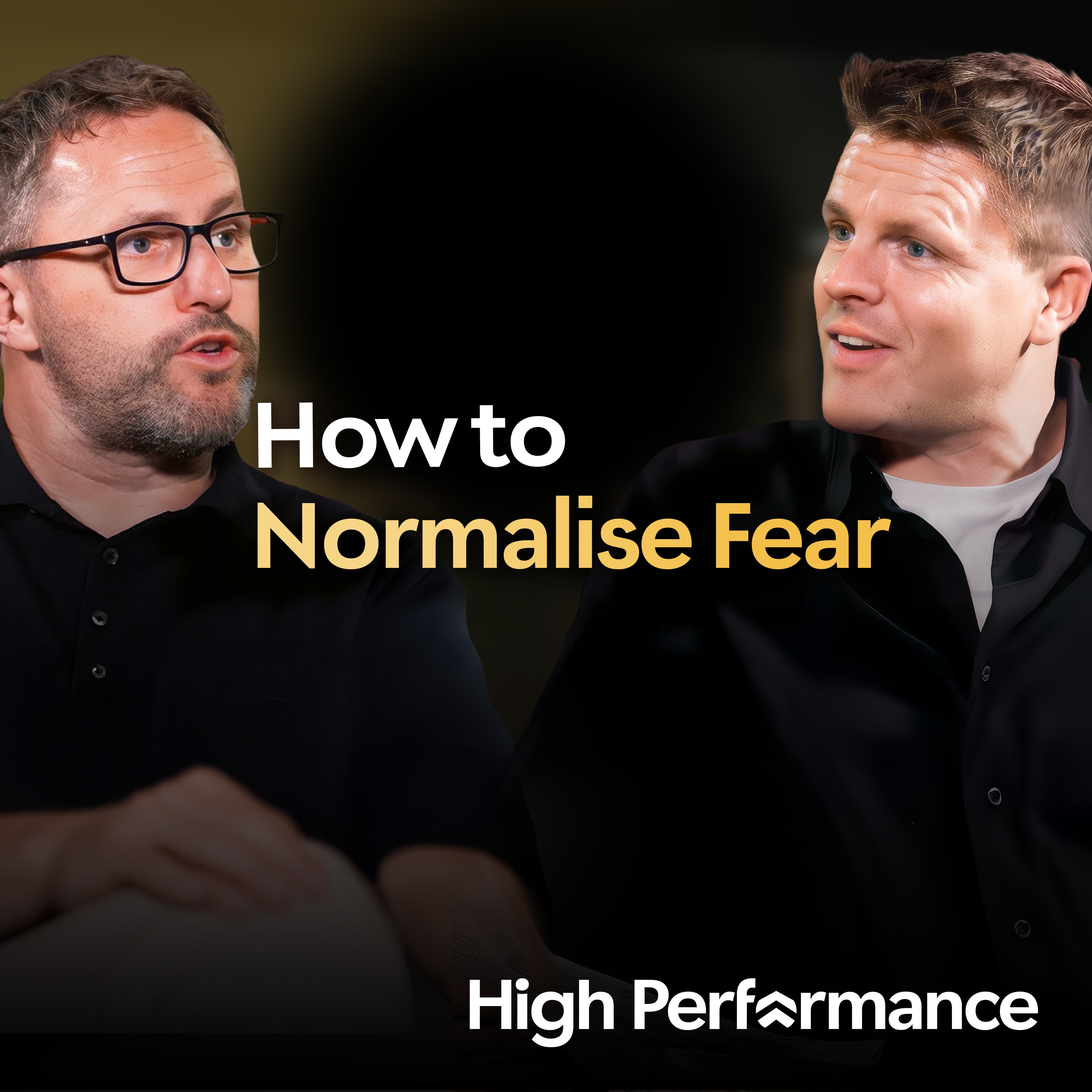
Jake and Damian take on one of the biggest myths in high performance: that the best people feel no fear.
Almost every guest who’s sat in the chair has talked about playing without fear. The research says that isn’t how it works.
Jake opens up on the day Glenn collapsed and the broadcast that followed, and on the live TV moments where fear got the better of him. Damian unpacks the comfort, stretch and panic zones, why simply naming a fear turns the volume down, and the karaoke experiment that showed calling nerves “excitement” can transform how you perform.
They finish with a challenge for the week ahead: write your own fear list, pick one thing on it and walk towards it. Because fear and courage live in the same place.
Clips featured (full episodes linked below):
Dr Pippa Grange
Lewis Howes https://pod.fo/e/26ab4e
Gordon Ramsay https://pod.fo/e/1fa614
Bear Grylls: https://pod.fo/e/2a7aa6
Glenn Hoddle https://pod.fo/e/1249b3
Brené Brown https://pod.fo/e/3ca929
James Clear https://pod.fo/e/16868c
Mel Robbins https://pod.fo/e/ed46f
AG1 👉 Grab the Autumn Wellness bundle at http://drinkag1.com/highperformance - Get a free welcome kit and shaker, a month's supply of Omega 3 capsules, a bottle of Vitamin D3K2 and five travel packs, plus an extra £10 off
Vitality 👉 We've partnered with Vitality because our philosophies align perfectly: healthy habits build high performance and can lead to a healthier, longer life. Find out more about health and life insurance with Vitality: https://highpfrmc.com/vitality-hpp-au
Hosted on Acast. See acast.com/privacy for more information.


