
 Ask ChatGPT


 The High Performance Podcast
23 Jul 2025 · 25m
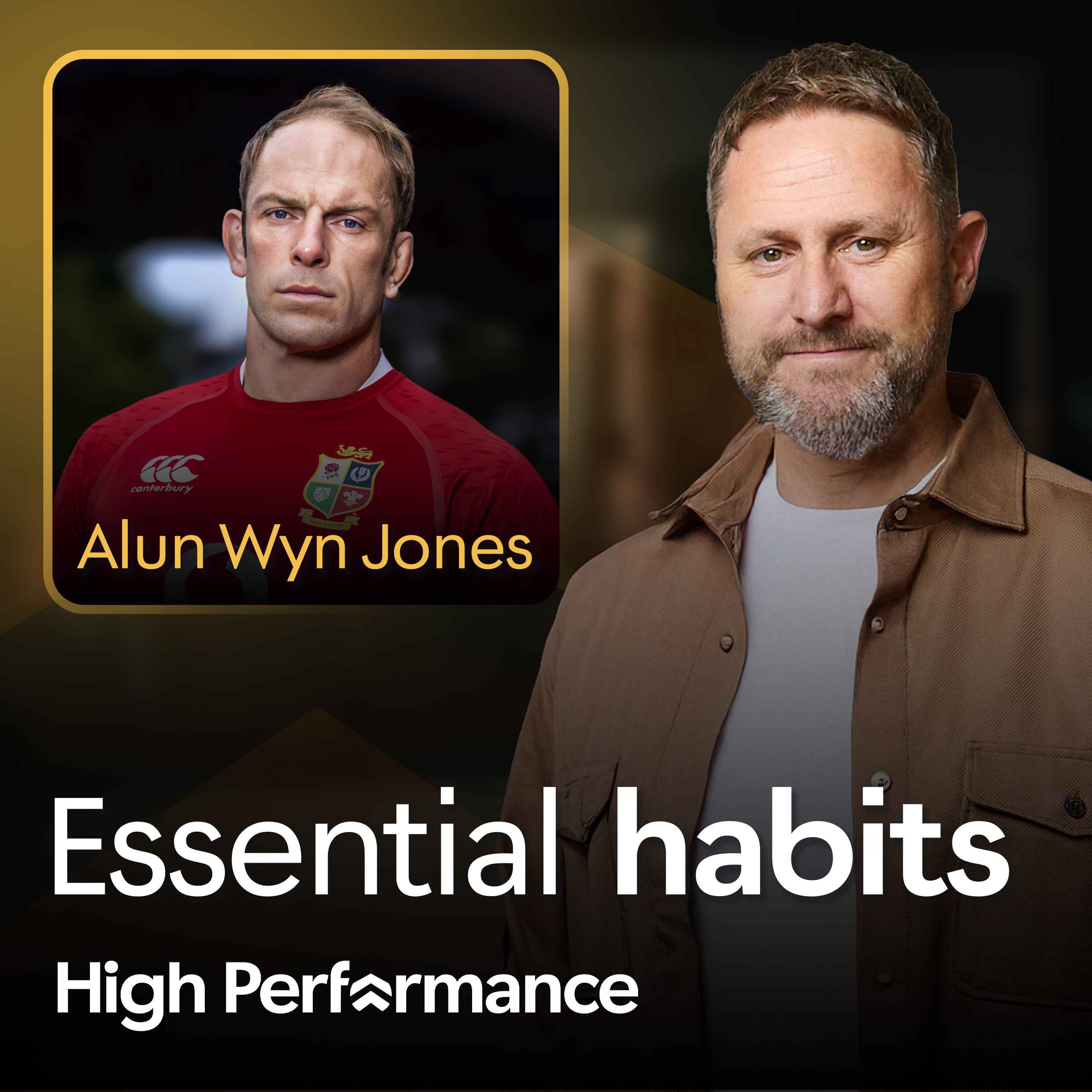
Hosts: Jake Humphrey and Damian Hughes
In this episode, the hosts converse with rugby legend Alun Wyn Jones, focusing on the psychological principle known as the "IKEA Effect," which suggests that people value things more highly when they have put effort into creating them. Alun Wyn Jones exemplifies this effect, showcasing a mindset built on hard work, ownership, and the building of culture, both on and off the rugby field.
Written by AI. May contain mistakes.

Get the gist, explore an idea or ask about something said.
 Claude
On The High Performance Podcast, what are the key points of this episode?
Searching your listeningAutomatic transcript. May contain errors.
0:28Watch it early on the High Performance App. Right when you need them. Work smarter and faster with Upwork. Go to Upwork.com now and find your freelance expert. That's U-P-W-O-R-K dot com. Post a job for free and get started today. Morning people wake up for peace and quiet. McDonald's breakfast people, we wake up for the sweet rush of getting that warm, delicious breakfast right before it ends. with McValue at McDonald's get any size pumpkin spice iced coffee for just 99 cents until 11am and try our pumpkin and cream pie they're spiced and priced so very nice price and participation may vary cannot be combined with any other offer
1:14this episode is brought to you by Opera Air the first browser with mindfulness at its core now most of us spend hours every day online but how often do we pause wants to take care of ourselves whilst we're doing it. And that's where Opera Air comes in. It's a lightweight, fast, secure browser built not just for productivity, but for your well-being. With Opera Air, mindfulness is built right in. You'll find free breathing exercises, guided meditations, and soundscapes with ambient sounds, lo-fi music, and binaural beats, all designed to help you focus, relax, and even spark creativity while you browse.
1:53I think every time, particularly as I got my first academy then pro contract and I didn't realise it again probably till very late on I'd invested in myself I'm a big believer it's meant to have and not need the need to not have Welcome back to the Essential Habits of High Performance where we explore what separates the good from the truly great Today, we're exploring something that might seem simple on the surface, but underneath, it contains enormous power. It's a bias, a quirk of the human brain. It's a psychological phenomenon known as the IKEA effect. And at the heart of it is one idea. We love what we build.
2:36Hey, I'm Damien Hughes. I've worked as a visiting professor of organizational behavior. I've advised World Cup winning coaches and business leaders, and I've co-hosted this podcast for over five years. I've also spent the last 25 years exploring how high performance works and how we can apply those lessons in our own lives. In today's episode, we're diving into the remarkable story of a rugby legend, Alan Wynne-Jones, the most capped rugby union player in history. We're combining it with a curious psychological phenomenon and then we're ending with a habit that might just change the way that you approach effort and achievement.
3:19This week's guest didn't just build their rugby career, they built a legacy. Brick by brick, cap by cap. Alan Wynne-Jones never walked away from a challenge. He was a man who his national coach Warren Gatlund once said, Heavy training sessions like a test match with him. That's the level of intensity he brings. He doesn't switch off, ever. And that is why he's been at the top for so long. 158 caps for Wales, 12 more for the British and Irish Lions, and the record of being the most capped international rugby player in history. But his numbers aren't what define him. It's his grit. It's his consistency.
4:00And, above all, it's his obsession with hard work. that's what made him great. George North would be doing running sessions and stuff and I'm like going flat out and I didn't really have good pacing like I say. I was like come on, you can only die once and obviously you can only die once in life but you can only blow up once in a training session and he looked at me one day and he's like are you dead yet? I'm like yep. And I was always the way because a test level rugby is a running game of wrestling with all the other skill elements and I was like well I've got to be able to get there to go through this knowing that we're going to have another one tomorrow day off and then we're going to do the same on Thursday Friday so I'm like well I'd rather go balls to the wall as quick as I can and try and stay on that red line and then if I fall off I know I've given everything and we go again my younger days there were a few messy sessions where breakfast would come up and those sorts of things but that was feedback He didn't demand respect he earned it from his teammates from his rivals and from a nation that came to see him not just as a player but as a symbol This was a man who built what he believed in, brick by brick, cap by cap.
5:10And that's where our story begins. He was not known for his flair or his flash, but he was revered for something arguably much rarer, his consistency, his resilience, and his quiet, relentless determination to outwork everyone in the room. He told us this. The thing about takes no talent, I'm like, well, I think working hard isn't a talent. Do you know what I mean? Well, that is a talent if your ability to work hard or to a point, because you can obviously get burnout and all those things. But actually, if you can work harder than the next person, that is a talent. That is the ultimate talent because, you know, it gives you the ability to learn or work on anything.
5:52Let that just sink in for a moment. What if hard work isn't just a trait, but it's a talent? We're going to listen now to a long section of the interview with Alan where he talks about his attitude towards hard work There are four words which made me sit up and pay particular attention See if you can spot them When I was playing school boys and like I think it was under 15s and we were doing some like running drill and I remember the coach saying if you want to get into Wales under 16s you can't be last and it was like that I was like I want to play for wheels in the 16s and like you go and then did all right in the run play for wheels in the 16s and then it was a sort of oh I can I can do this at another level and then that summer I was carrying a bit of timber I bought my own SAQ ladders not that I've had much speed agility and quickness but like dropped a load of weight that year and then started realizing that actually there's more I can do away from you know the team training sessions and the Saturday games and I started dripping in those things.
7:00You know, I think I did a summer on noodles just to try and, you know, the whole diet thing, the old, very early days of making your own isotonics with squash, salt and water, thinking I was like, I was getting there. And that's how it starts. I think every time, particularly as I got my first academy then pro contract, and I didn't realize it again, probably till very late on, I'd invested in myself, whether it was a piece of gear, whether it was, you know, yoga or whatever. I was like, well, if you put that investment, whether it's time, money, I'm a big believer it's better to have and not need the need to not have.
7:37And that, particularly my pro period of my career, served me hugely well. Did you hear those four words that resonated with me? I invested in myself. wealth. That's how Alan Wynne-Jones described the connection he felt to his Welsh rugby jersey. Not as an entitlement, but as an earned pride. And at the core of it was this principle, that when you build something, you don't walk away from it easily. When you invest in it, you tend to care more about it. And when you've poured your heart into something, you'll fight for it like it's yours. This, in short, is the IKEA effect in action. As ever, any research that we reference here will be included in the show notes for you to explore.
8:25So what is the IKEA effect? Well, the term comes from a 2011 study by three behavioral scientists that were curious about how effort changes the way we value things. They ran a clever series of experiments. In one, participants were asked to build IKEA boxes. Others folded origami or constructed Lego models. Then they were asked, how much would you pay for what you've just made? Her answers were fascinating. People consistently overvalued the things they'd built themselves. Even when the products were imperfect or just downright messy, participants rated them as more valuable than professionally made versions.
9:05But here's the interesting bit. Outside observers, those who hadn't gone through the building process, process rated the DIY items as worth far less. So why the difference? Well it's because effort breeds attachment. So when we put work into something we don't just invest our time, we invest a little piece of ourselves and that changes the way that we see it. It's not just a box, it's my box. It's not just a folded crane, it's the crane that I've stayed up all night folding at midnight swearing under my breath and determined to get right. For Alan Wynne-Jones, it wasn't just the Welsh jersey, it was his jersey that he'd sweated blood to achieve.
9:47Now psychologically, this is powerful. It explains why people are more loyal to the ideas that they help create, why founders cling to their startup businesses, even when the data says it's time to stop, or why we hang on to routines, systems or traditions. It's not because they're perfect, it's because we built them. And it's why a coach trusts the player that they've personally mentored, or why a parent treasures the child's lopsided artwork more than a gallery painting. It's why leaders who empower their teams to co-create solutions tend to get more buy-in. Ownership creates value. And that applies to you as well.
10:26Think about your goals, your habits, your craft. Are you expecting to fall in love with something before you put in the work? because the Ikea effect says it might actually work the other way around. We don't just work hard because we love something, but we come to love it because we've worked hard on it. So maybe this applies to you. Maybe it's the messy first podcast you've recorded, the first draft of your best-selling book or your clumsy morning routine on your route to getting supremely fit. It's not supposed to be perfect. It's supposed to be yours. It's built with your energy, your struggle, and your fingerprints all over it.
11:06And when you realize that, you stop chasing flawless, and you start building things that have meaning to you. Because what we build, we tend to value. And what we value, we'll protect it, we'll improve it, and we'll fight for it. That's the hidden psychology of high performance. Not perfection, but investment. And that explains an awful lot about high performers like Alan Wynne-Jones. He wasn't just showing up for the glory moments. He was building his game in those quiet hours. It was being comfortable in, you know, showing investment in itself, showing that I was trying to squeeze every last drop or find something that would prepare me better.
11:47One of my favourite sayings is, you learn the most when no one's watching. It's what you do in the shadows that defines what people will eventually see in the light. And this could be used to describe the wisdom that was shared with us by Alan Wynne-Jones. So here's your challenge for the week and three ways in which you can practice this essential habit. One, let others build with you. Involve them in the process. We know that when people help create something, they care more about it. So consider a scenario where you're working on a team project. Instead of handling everything yourself, delegate tasks.
12:23Allow team members to contribute their ideas and encourage them to take part in decision-making processes. As they build it, they'll develop a deeper attachment to the project and they'll work harder to make it a success. Second idea is, why not reflect on the effort? Remind yourself of the work that you've already put in. When it gets hard, remember the grind. The work you've already put in can be used as a fuel. For instance, if you're working on a long-term project, for example, and you hit a roadblock, first take a moment to look back at the milestones you've already reached, the lessons you've already learned and the progress you've already made.
13:02This reminder of your journey can help reignite your sense of ownership and your commitment to finishing it. A practical tip, maybe consider writing down your progress, which allows you to visually track just how far you've come. And the third habit is know when to let go. Sometimes we can all hold on just that bit too long to something simply because we built it. While the IKEA effect can help us take pride in our creations, it can sometimes blind us to our reality. The emotional attachment we feel to something that we've built, whether it's a project, an idea or even a relationship, can sometimes cloud our judgment.
13:42We might hold on to it longer than necessary just because we've invested so much effort into it. So ask yourself, is this still serving me or am I just attached to the effort? High performance isn't about perfect outcomes but it is about meaningful investment Alan Wynne-Jones didn't become the most capped player in rugby union history because he was the most gifted He became the most capped player because he built his performance like a craftsman through consistent effort, deep investment and a fierce sense of purpose So your essential habit build it like it matters because when it does so will you I'm now going to be joined by our brilliant producer, Will, who's been with us here on the podcast since the very start.
14:29We're going to have a listen to some further clips of Alan talking about the power of gratitude in his life, how he'd be happy if his legacy was to be remembered as the son of his dad, and how there's no merit in trying to be the best individual in a team sport.
14:48If you're still overpaying for wireless, it's time to say yes to saying no. At Mint Mobile, their favorite word is no. No contracts, no monthly bills, no overages, no hidden fees, no BS. I made the switch because I was tired of those ridiculous bills and sneaky charges from my old provider. With Mint, I'm paying$15 a month and getting the same high-speed data, unlimited talk and text, and the coverage on the nation's largest 5G network. Honestly, the quality is just as good, if not better, than what I had before. And the best part? You don't need a new phone. You can keep your current one, bring your number, and all your contacts.
15:23I use Mint Mobile, and you should too. Ready to say yes to saying no? Make the switch at mintmobile.com slash HPP. That's mintmobile.com slash HPP. Upfront payment of$45 required, equivalent to$15 a month. Limited time new customer offer for first three months only. Speeds may slow up a 35 gig on unlimited plan. Taxes and fees extra. See Mint Mobile for details. Why does every recipe I try need 18 ingredients, including a jar of something paste I'll never use again, but will sit in my fridge for nine months? I just want dinner in the oven fast. That's why I love Blue Apron's new one pan assemble and bake meals.
16:00They send you fresh ingredients that are already chopped. All you do is put it all together and bake. That's it. No chopping. No weird leftovers. Just delicious, easy to make meals. Get 20 % off your first two orders with code APRON20. Terms and conditions apply. Visit blueapron.com slash terms for more. The market's uncertain. Revenue's tight and hiring on hold. That's why results-driven companies are using Upwork to keep work moving. Go to upwork.com today and start hiring proven freelance talent fast. No bulky overhead. No rigid long-term contracts. Just the right expert right when you need them.
16:36Work smarter and faster with Upwork. Go to Upwork.com now and find your freelance expert. That's U-P-W-O-R-K.com. Post a job for free and get started today.
16:52Now, me and you are big rugby fans, and you've worked in it a fair amount. So, I mean, I was really excited to have Alan on because he just personifies hard work, grit. like the guy is just like a machine like a terminator like unbreakable well yeah i echo the excitement that you felt will uh i like him i like i like anyone that you know when we talk about these cultural architects this phrase from the norwegian psychologist willie raylow that says these are leaders without the title these are people that are not the most talented they're not the loudest or most gregarious these are the ones who just role model through their behaviors the standard that everybody else has to come to so I've always admired him I've worked in teams that have played against him and seeing just how relentless and just how diligent he is and just the consistency of him never changes so to get to understand a little bit about that mindset was absolutely fantastic yeah and there was a line in the podcast which um I think it's important to say I think it was, would we be having this same conversation if you were still playing rugby?
18:06And he said, no, I don't think you would. So we got him at a time where he'd finished playing and he could reflect on his journey. And I think it made for such a probably more emotional chat than I even think he was expecting. Yeah, absolutely. Again, in preparation for it, I devoured his book that he'd written, which is so searingly honest. But I think part of his career has been about being quite bottled up in many ways, not letting people know what's really going on underneath the surface. But yeah, we were really lucky to get him at a place where it's still fresh enough that he can speak about it with real colour, but it's far enough away that he can speak about it with real honesty as well.
18:54So what's the first clip we should talk about? The bit I want to talk about is that his obvious love and pride of his father, who was a renowned figure in the Swansea area, both as a solicitor, as a former rugby player, and just a real passionate man. Let's listen to him talk in more detail about his dad. Listen in particular for how he responds to the epitaph on the gravestone. It's coming up to 10 years in a bit.
19:27So it's scary then when you look back and, you know, I'll never forget him and the kids know all about who he was, what he did when they listen. And I'll, you know, continue that. And, you know, we talk about legacy and how you want to be remembered. Well, you know, I'd be happily remembered as the son of my father. On your dad's headstone, it says, in loving memory of Timothy Gilbert Jones. Yeah. And when the final whistle blows, it's not who's won and lost, but how the game was played. Yeah. How did your dad play the game? That's good research. That is, who do you know in mumbles? That is very good research.
20:03How did your dad play the game? Oh, well, of life or rugby? I've seen a lot, obviously didn't see him play, but saw a lot of photos. I think he was an eight. Yeah, he was an eight. He was quicker than me, and so he told me anyway. More skillful, better looking. but no yeah from what I understand he was a quick eight dynamic you know tells me decent skills so I definitely want to believe all that so yeah
20:39you didn't tell me this was going to be an emotional one yeah it was an emotional one and this is the bit where you know he's going at this point and there are tears coming and kind of the same for me watching it behind behind uh the camera that that line i'd want to be remembered as i'd just happily be remembered as just the son of my father i mean that was the line that i was like wow that has really got me well it's that big you know when like i've heard actors talk about this it's not seeing an actor cry it's seeing an actor try not to cry that is really powerful and this was a bit when he was fighting desperately not to let his emotions overcome him and that actually made it even more moving and more poignant to see this huge Goliath sort of letting us see the eight-year-old version of him.
21:28Yeah and I remember when we were doing the research into this podcast and you know you'd read the book and I think the advantage that we have on high performance is that we can delve into topics really well and we can give it enough time and space for people to really consider their answer uh i remember watching a simple clip he'd done online and they were talking around how his dad was there in like a viking helmet every time he played for wales and then you know the next time he went out he looked over and he wasn't there and it was a really light-hearted piece but you could see him like almost wow the emotion was there and you knew that there was such a powerful story to be told in that and uh yeah it really moved me at the time well we're both in the same boat aren't we of having lost our dads and it's often the small things that catch you whether it's uh you know like the last text message you received or it might be an old photograph that reminds you of a certain moment and for alan it's the viking helmet when you're wearing that red jersey of wales and you're running out and it's no longer there is often the bits that catch you and you know again I just want to acknowledge that I'm really grateful he was willing to share that with us and go to a place that's obviously still quite personally hard for him.
22:53The next clip I want to talk about and reference is how he gave his idea of how appreciation meant more to him than thanks. Again a really good example of Alan where words don't count as much as actions? I always say hindsight's never won a game or lost a game either. I think the gratitude piece is the one for me with my family, particularly my parents, and that's the biggest comparison I've got now, probably more so than my career because I've got my kids. But the funny thing is, I don't expect my kids to say thanks all the time or whatever or understand why a parent does what they do for them.
23:34but I think as you get older, you wish you could have as your younger self. But I'd like to think that they were as proud of me, even though I probably didn't bring them along on the journey as much as I should have or let them in at times. But I'm sure they understood. Yeah, yeah. If it was one of your children, you'd understand, right? Well, exactly, and that's my point about saying, if they don't say thanks or whatever, that's why I don't potentially have an endeared myself to a lot of people at certain times, but my appreciation and gratitude is always there. Always there. You know, people might say it's not, but it is.
24:12It is. I think appreciation is much greater than a thanks. Way more. Way more. I think thanks is a common respectful response, but if you truly appreciate someone, I think that's a lot deeper than just saying thanks. I love that, because anyone can say thank you and not mean it. It's different when people just, they know that you appreciate it. That's something that you demonstrate through gestures and actions, not just hollow words. And again, this is a man that's not giving these great Churchillian speeches. He's just fronting up at the moment's account. I remember reading a story from, I think it was Dan Bigger who played with him.
24:55And I don't think they particularly got on at moments when they played, but Dan had lost his mum and he told a story of how Alan had reached out to him and what he said and what he wrote to him spoke volumes of the person he was. Well, I was lucky enough to meet Dan recently at the Heineken Cup final and I spoke to him about this episode and that was exactly what the story that he recounted to me was that he didn't remember Alan and him sort of having loads of light-hearted laughs or the banter that you get, but he remembers that at that moment when he was at his most desolate Alan still phoned him up just to pass on his condolences and just talk to him I think what we're establishing here is this is just a bloke that is a leader through example not through words and I think let's play this last clip because I think it really personifies the whole thing how he didn't want to be the best individual but he just wanted to be part of the best team let's have a listen so tell us about your attitude to So, you know, like if you're doing 10, 50-meter runs, the guys that will sort of cruise for the first day and then the last two, they'll turn it on.
26:08Yeah. Well, the funny thing is, it depends. I think there'll be one or two of those in every team. The ultimate thing for that is sometimes you'd... I think it changed when I was younger. You wouldn't need to say anything because you know that they know. As you get a bit older, you know, the big stick or whatever. And there's ways of doing it. You don't necessarily have to be aggro or it could just be letting someone know it finished well today, you know. And that's the ultimate thing. When you go to the elite level, people know. And you don't need to say anything. As long as they know that you know, then you don't necessarily need to say anything.
26:49But how did you perceive them? Like, what was it that offended you? I wasn't offended at all. I would be more disappointed for them that they're not. and it's not about keeping up with me or doing better than me it's like do best for yourself do best for the team there comes a point for me the disappointing thing is that I never wanted to be the best player in the world or anything like that but I wanted to be in the best team you can't I don't think you can have a mindset of being the best individual in a team sport There's that famous story of Michael Jordan having a conversation with his coach Phil Jackson and Phil Jackson said would you rather be the best player or would you rather be in the best team because if you're going to be in the best team you need to start acting like a team player and that was when his career really accelerated but to circle this back this is all about being willing to do the hard yards being willing to invest in your own talent to get better because as we've seen by looking at the Ikea effect when we work hard at something we tend to fall in love with it I hope you've enjoyed listening to this episode of the essential habits of high performance if the episodes resonated with you why not share it with someone who you think is building something great and if you haven't already please subscribe wherever you get your podcast from I'm Damien Hughes and I look forward to catching up with you next time but until then build boldly and lead with the heart of Alan Wynne-Jones
28:29Thank you.
When you think of Alun Wyn Jones, you probably think of leadership, loyalty, and a rugby career built on sheer will. But behind the caps, the tackles, and the intensity, there’s a habit that mattered more than any stat: He built what he believed in, and he protected it like it was his.
In this episode, we go beyond the legend to explore the mindset that made Alun Wyn Jones not just a great player, but a builder of culture. We talk about the IKEA Effect, the psychological principle that says we value what we build, and how Alun embodied that every day, through effort, not ego.
We explore:
Whether you’re trying to lead better, show up stronger, or build something that matters, this episode is for you. Because high performance isn’t about flashy moments. It’s about building something worth fighting for.
Listen to the full episode with Alun Wyn Jones: https://pod.fo/e/2b6885
Here is more information on the studies referenced:
The IKEA Effect (Michael I. Norton, Daniel Mochon, Dan Ariely 2012)
Hosted on Acast. See acast.com/privacy for more information.


