
 Ask ChatGPT


 The High Performance Podcast
19 Dec 2025 · 48m
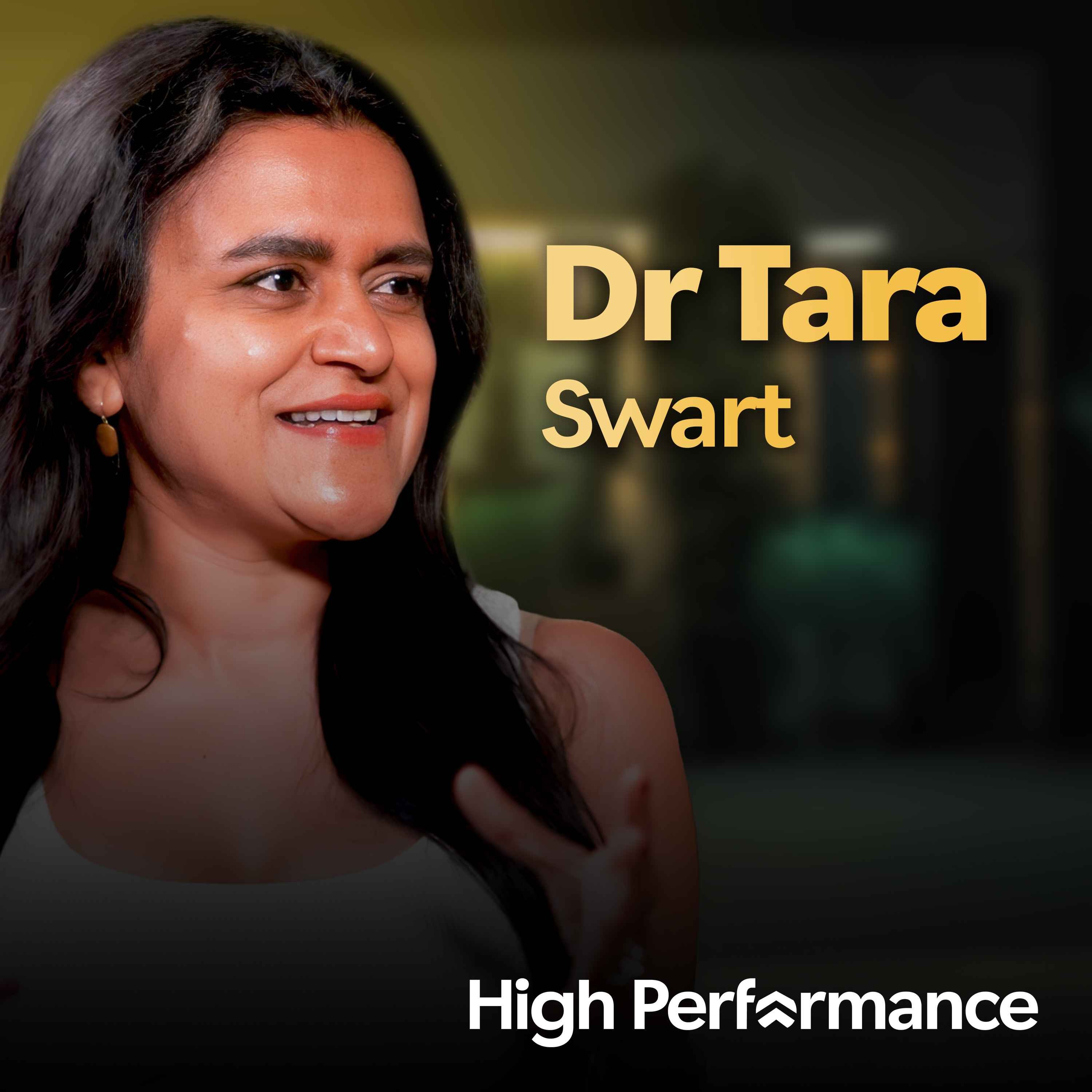
In this enlightening episode of The High Performance Podcast, host Jake Humphrey engages with leading neuroscientist Dr. Tara Swart to explore the complexities of chronic stress in modern life. Dr. Swart discusses how high-functioning individuals often feel overwhelmed, despite seemingly doing everything right, and offers practical, science-backed strategies to enhance mental well-being.
Written by AI. May contain mistakes.

Get the gist, explore an idea or ask about something said.
 Claude
On The High Performance Podcast, what are the key points of this episode?
Searching your listeningAutomatic transcript. May contain errors.
0:03All these things I'm about to say impact your mental health, your physical health and your longevity. You know, I say neuroplasticity is hope, the opportunity to improve your brain, to change the way that you think, to have lifelong learning. It's all there. Welcome to High Performance. I'm Jake Humphrey, and that is Dr. Tara Swartz, one of the world's leading neuroscientists. And today, she's revealing why you might be exhausted, overweight and stressed, despite doing everything that you think's right. we're about to explore the hidden cost of being always on why chronic stress is making you store belly fat and why scrolling at 2am is actually rewiring your neurons but here's the hope neuroplasticity means your brain can change at any age tara will share with you her 12 micro habits that can shift you away from fear to joy she'll explain why trees literally boost your immune system and explains why five minutes listening to your child could change everything Let's get straight into it and welcome to High Performance, Dr Tara Swart.
1:13I've spent my life seeing resilient people achieve more than talented people. So how do we build resilience and why is resilience such an important thing in the modern world? You know, I always like to take it back to ancient times to explain things that aren't necessarily obviously explainable now. So when we had to be resilient in a way that was geared around physical survival, like when we lived in the cave, for a start, by the age that you and I are now, we'd be dead. So we didn't have to live for as long. We had to be resilient more physically to the elements, to the predators, to the risk of disease and things like that.
1:53So then you fast forward to now, and today, compared to 100 years ago, not cave times, we would read, if we read a full newspaper from cover to cover, we would receive as much information as someone received in their entire lifetime 100 years ago. So the demands on us psychologically and emotionally, you know, and then add in this ability to be switched on 24-7, work across time zones, be constantly disturbed and disrupted in your thinking, has led to this need to be really mentally resilient. And actually what it's led to is tipping over into being chronically stressed. So we have this amazing adaptive stress response, which means that we can meet a challenge, but we do need to rest afterwards.
2:41But we're not really allowed to rest now. We're constantly stimulated. So that, I think, is the answer to your question. So I want to talk to you about this idea of always being switched on, this idea of taking everything on our shoulders. So I would say I'm resilient, right? I had a few challenges growing up, and I'm really grateful for them. I'm really grateful when things go wrong because I think it's a reminder that we need to be resilient. It helps build our resilience. But I also, if you spoke to my wife, she'd say, Jake is always like 100%, 100 % of the time. So when I actually stop for a moment, I have this permanent tension sort of in my diaphragm or in my stomach, right?
3:20Three days a week, I'll wake up at 2 o 'clock in the morning with things running through my head. And then Harriet will appear at 5 o 'clock in the morning with me on the sofa and she'll be, can you come back to bed please? Sometimes I have this real sense of overwhelm. But then I also put loads of sway by the fact that I can do this. I can deal with running these businesses and looking after these people and being a parent and being a husband. But then there is also this feeling at the back of my head like, there might be a payoff at some point for this. So can we talk about what you think that constant level of, I wouldn't even call it stress maybe I would that constant level of um of a heightened way of operating is probably doing to me I mean what I'm feeling from from you is this need to prove yourself when actually that that need isn't there anymore and that's often a sort of a legacy effect of something that we had to prove when we were younger because you can run all these businesses and be a husband and a dad because you are doing it but where I'd like you know you to get to now and I think this will resonate with a lot of people, is why am I still fighting for something that I don't actually have to prove anymore?
4:33And what would happen if I wasn't switched on all the time? If you took time either to meditate or to spend time in nature or to just be without doing anything? And another one I'm going to guess because I hear this so much is when people say, I can just about hold it together at work. But when I get home, if my kids are being really annoying or my spouse is demanding, then I can snap. Now, that means that you're only one unit away from snapping in the workplace, which is where I do a lot of my coaching with people. And an exercise that I give them is go home this evening and listen to your child for five minutes without looking at your phone and without interrupting them.
5:17And every single time I've done this, both with men and women, mostly it's men, but also, you know, I was a bit more surprised when I heard this with a woman, is that they say, oh my goodness, my child told me things they've never told me before. Which just goes to show that we are probably never paying full attention to our children, always looking at our phone whilst they're talking to us. And what a difference just a few minutes can make. So I'd love you to do that. Yeah, I will. Why are we living like this then? I guess because we can. I mean, you know, since we've had smartphones, that's probably the biggest fairly recent change, you know, where we can have information all the time.
5:59We can know what's going on all the time. We can be in touch with people all the time. And, you know, it's got a level of addictiveness built into it. And our children are also brought up with devices now. So it's kind of, it's not like only the parents have the phones and the children are clamoring to their attention, it's quite easy to lose contact with them for two or three hours because they're on their screens. So quite a few times there's been like a phone on the table or something and people say like, oh, you know, this is the root of all of our problems. And I'm just quite firm about saying the phone isn't the problem, you're the problem.
6:30And people deal with it differently. Some people put do not disturb or they put time limits on their apps and stuff. But I prefer to do it like I'm making a choice in every moment of either looking at it or not looking at it. And that's up to me and it's not the phone that's making me do it
6:52and I think we can see the benefit right of always being connected I was thinking the other day you know when Harriet says will you get off your phone I'm thinking well it's my social media channels it's my ability to communicate with the team it's my emails that are coming in all the time it's my contact with my parents and you know text my daughter and things so it's I'm using it all the time for loads of good reasons but I'd love to know what the impact is physiologically on us and mentally I guess of this constant drip feed of information all the time. So early on after the smartphones came out there was some research that showed that very quickly our memory and attention centers in our brains had shrunk so and that was like what 15 16 years ago now so now I I think what's more obvious is our attention span.
7:42So we're used to seeing things that are 15, 30, maybe 60 seconds long. So even something like watching a long movie now is quite challenging for people. And I've noticed it myself. You know, I really wanted to see Killers of the Flower Moon, but it's three and a half hours. And I had to watch it like a series. People are binging things on Netflix because that's easier. And the shorter the episodes are, the more likely it is to be binged really quickly. And if someone's got a child who is looking at YouTube shorts, which are Soak or TikTok, all short videos, is it changing the way their brain is wired and working for the rest of their lives?
8:18Yeah. I mean, because it's already changed ours, and we were adults when the smartphones came in. But very quickly, we had some changes in our brains. But their whole brain, as it's developing, is being influenced by this. So people connect it to the rise of things like ADHD and autism, as well. It's like there's a theory that that's an evolutionary response to the fact that our time spans and attention spans have changed so dramatically. Is the answer just to get our kids off these screens? I'm not an advocate of that because to survive in the modern world they are going to have to be tech savvy but I think limiting screen time and having it like you said using it for good purposes rather than sort of junk purposes if you like and I do quite regular digital detoxes.
9:03And that's very interesting because what I've always learned when I've done that is the amount of extra time and space I have if I'm not looking at my device is, it's unimaginable. If you try to imagine what it'd be like to not look at your phone for a week, you won't get to the place where that you would see if you actually did it. And I think it's quite a good reminder for us as well that the world still revolves if we're not checking our messages constantly. Exactly. And we trick ourselves into thinking we need to be doing it all the time. Because we like, you know, feeling needed and wanted and part of a tribe is really important to us.
9:39But we shouldn't be reliant on the phone to get that feeling. Have you ever been in that space where you check your emails, right, and they're up to date, then you flick across to like Instagram, and there's not much on this. Then you go across to X, and there's not much on there. And then within 30 seconds, you've gone back to the emails again, then back to Instagram, back to X or TikTok or LinkedIn or whatever. And sometimes I'm going around and I say to myself, well, I know there's nothing new on there. I can't even work out why my brain thinks that's a good use of my time. But it seems to be a hard thing not to do.
10:12It's habit. I mean, let's bring neuroplasticity in here, like quite up front, which is basically the way that neurons wire together and form pathways in your brain. And this goes on throughout adult life. It's not just in childhood. And so the two most important factors in that happening are repetition and emotional intensity. Obviously, we repeatedly use our phones, you know, like there are statistics that say that could be up to thousands of times a day. And we get a dopamine hit from, you know, a reward from a like on Instagram or, you know, good news email or a text message from your daughter.
10:51So it's both of those things at once. the reward and the repetition. And I read a lot about this constant sort of level of stress that I feel I'm, and a lot of other people are walking around with. I read often, oh, that stress is making you fat, right? I still don't understand this conversation about stress. I understand stress on the brain. Do you look at my stomach? With my hedge fund clients, who I would see monthly or less if they were in New York, they would just lift their T-shirt up when I walked into the room and say, like, Now you know how the last month's trading's been. Honestly? Yeah.
11:28Why on earth is what's going on stress-wise affecting the amount of fat we're carrying then? The way that we are wired from cave times is that if we were chronically stressed, so basically our adrenal glands, which are back here above our kidneys, they release this hormone called cortisol and that correlates 100 % with stress. So if you're releasing a lot of cortisol, you will be feeling things like fear or anger or sadness. If you are feeling stressed mentally, your adrenal glands will produce the appropriate amount of cortisol to match that. So normally in the 24-hour cycle, we release the melatonin to go to sleep when it gets dark.
12:06And that's, you know, we're not really living with the light-dark cycle as naturally as we used to. And then around dusk, we'll release the largest spike of cortisol for the 24-hour period, which is to help us wake up. And then depending on your age and your gender, there's a normal range between which it can fluctuate during the day. And so if something stressful happens it might you know go towards the top of that level and then as soon as you've resolved the issue it'll go back down to a lower level. But the way we're living now which we've already discussed means that our cortisol levels are either constantly at the top of that normal range or even have tipped over and are higher than that normal range.
12:46And so there are receptors in the brain, because the blood flows, you know, around your body and your brain, it crosses the blood-brain barrier. And these receptors monitor the levels of cortisol. And if they see that it's high all the time, or higher than it should be, the brain starts to say, what are the reasons there's a threat to my survival? And funnily enough, the first thing that still comes up, even though it's not true for most people, thankfully, in the world, is starvation. In the cave, that was the biggest threat to our survival. So to help us to survive until we could hunt down a woolly mammoth or pick enough nuts and berries to feed the tribe, the cortisol drives fat being held in your abdominal fat cells.
13:30So we have subcutaneous fat, which is all around our body, equally distributed. And then we have visceral fat, which is around our abdominal organs and a level of which protects our organs. but then if cortisol is driving fat being deposited there, that's when you see the pot bellies. You know, the kind of uneven distribution of fat and the people reporting, I need to loosen my belt even though I'm being more active and I'm eating less. Those things that normally work don't work if cortisol is opposing that action. So high levels of stress are genuinely negatively affecting brain and body? Yeah, so in the brain, when it feels that it's under-resourced, it's not going to give up resources for things like being creative, being flexible, regulating our emotions.
14:17It's going to go into what I call low power mode. So your blood supply gets brought down to the most basic survival functions that you need, which in the modern day is show up at work and look like you're doing enough that you don't get fired. And then what's also happening is those high levels of cortisol that are flowing around your blood start to become corrosive to your immune system. So it can start with things like you get more colds and flus, or you get a cold or a flu that lasts for weeks and weeks. And then at the other end of the spectrum, it can mean that you're unable to fight off heart disease and cancers.
14:50What about if we're addicted to it, to stress? We love that feeling. We're addicted to the things perhaps that we're doing that are causing us stress, but we wouldn't be addicted to the stress because when you have cortisol in your body, it doesn't feel good. You feel agitated, you feel angry, you feel afraid. Your brain dredges up all these negative memories to kind of try and keep you safe. So it's not a good feeling, but it might be that the things that you're trying to achieve, like working really hard, training really hard, traveling a lot, socializing too much, that those things, I put them on a spectrum from motivation to addiction because there's a lot of things that are good for you, like having a good job, having friends, some travel, gentle exercise, but it's when it tips over into all being cortisol inducing, that's what mental resilience is, the fact that you can bring yourself back from that.
15:43When you can't, then that's a problem and it can lead to burnout basically. Right. This reminds me of when I came to London, left the countryside, got a job on kids telly, and I don't know whether you see this a lot, but the most exciting part of my life was the most stressful part of my life. And I think we've found that actually with a lot of guests who've join us on this show and I really had a bit of a mental health breakdown I went back home went to the GP and he said explain what's going on and his answer was maybe you're not cut out for working in London in the media you should come back to the countryside and get an easier job obviously I ignored that but I imagine that's a message given to many people who feel like that that someone says well maybe this maybe that life is not for you but it's the life that we love so for people who are in this place right now where life brings all of these challenges, how can they build that mental resilience?
16:37How can they get to that place where it's exciting, it's busy, it's full on, but it's also healthy? The best way to do that is, I'll tell you what the things and the how. Great. So the things are anything that connects your mind and your body. So, you know, things we know as mindfulness techniques. So that includes writing in a journal to offload offload your emotions, making gratitude lists to, you know, push your brain from that fear state to the more loving, trusting state where you have the bonding hormone oxytocin that's good for you, yoga, meditation, gentle exercise, time in nature, and, you know, other things that we can go into details of.
17:17But the thing with those is that if you're not really doing any of those, and you say, okay, I'm going to start journaling every day and going for a, you know, one hour walk in nature three times a week, it's probably going to be difficult to fit that into your lifestyle. So I like to create 12 micro habits for a year. And this was a game changer for me going from New Year's resolutions to 12 micro habits, because I would pick three or four for the first quarter and try to embed them into my life. And then two or three of those would become habits quite easily. So then I picked the next three or four.
17:51And by doing that, by the end of the year, I would have at least eight or ten habits that were just things I didn't even think about anymore. You know, I don't always get all 12. And what are they currently? Can you share some of them that you've started this year with? Yeah, so an hour in nature, but I think I've set that one for like three days a week. Yeah. A one-hour walk every day, eating more protein and less carbohydrate, eating till I'm 80 % full. And for people who are watching or listening to this, thinking, I doubt the benefit of some positive thinking is going to make a difference to my life.
18:26It's so full on. There's so much stress. What does the science tell us this will do for them? Why should they at least give it a go? When you're under stress, then your brain tends to go into scarcity mode because you're stressed in the first place because there's some kind of perceived threat or scarcity. And to protect you, your hippocampus and your amygdala, which are the memory centres of the brain and the emotional centres of the brain, they get together and they remind you of all the times that things went wrong. So let's say you did drop a ball between all the businesses that you're running at the moment.
19:00Well, you would remember more vividly the time that you couldn't cope with the job in London. And your brain would say to you, see, you can't do this. The GP was right. You should have left London. You should have like gone to the countryside. Or let's say you snap at one of your kids. It'll bring up all memories of you like, you know, every breakup you've had every time, like, you know, your parents were strict with you and it didn't feel good. So the brain's doing that to protect you. And that means that you've got high levels of cortisol and the kinds of emotions you're experiencing are fear and sadness and disgust.
19:35So by doing all of the practices that I've mentioned, you're pushing your brain into the bonding or attachment emotions, which are love, trust, joy and excitement. And with joy and excitement, there needs to be a balance because there are some industries where there are high levels of excitement, but not much joy. And that's actually quite corrosive. And then there are industries where there are quite high levels of joy, but not enough excitement to keep you motivated. So you get a bit like, it all becomes a bit mundane. So oxytocin and cortisol are like on a seesaw. So if you express gratitude, you immediately get like a burst of oxytocin.
20:15And that means that the cortisol has to go down in relation to that. So you're moving yourself from a fear state to a trust state. So I actually start my morning as soon as I realize I'm awake before I even think of anything, like what's the time or what do I have to do today? I do my gratitude practice straight away because then it's like almost like washing your brain with like the love and the trust before the fear can creep in. The way I would put it is that we over-identify with our thoughts and our emotions. And one way to tackle that is to get a level of perspective by just stepping away one.
20:48So if it was one of your siblings or your wife that came to you with that thing, you would be able to give this good advice that it's your brain playing a trick on you. But it's quite hard to do that for yourself. You've managed to do it, but most people can't. So I often say, what would you advise if your best friend or your sibling was in this position to try and give people that perspective? and another one is this really good question which is is this a fact so you know a couple of weeks ago I was completely catastrophizing about something and as soon as I realized it I was like is this is this actually definitely going to happen yeah and of course I knew that the answer was no and then another really nice exercise for people is to sort of you know sit here and say I'm Tara, I'm the age that I am now and I'm dressed like this.
21:37Thank you. And then take seven steps forward and turn around and say, I'm now 28 and I'm going to give advice to my younger self. And so, you know, go from that place of being you with seven years more experience than you've got now. And like, you know, it's basically accessing your own intuition, but it's just a good way of not being in this, you know, whatever you've got yourself into mentally. Why is it such a big deal for us to have purpose in our lives then and the challenge of not having purpose, what it does to us? Yeah, it's a really interesting one because when we talk about all the factors that contribute to mental health and well-being and resilience, there's all the foundational ones that I've spoken a lot about before.
22:20You know, just get good quality sleep, eat healthily, don't be sedentary, kind of drink enough water. And I think, I like to think we know all that now, right? I think we're there with those messages. But the ones that have come to sort of transcend those ones are positive, meaningful social relationships. So all these things I'm about to say impact your mental health, your physical health, and your longevity. So older people who are still social live longer and get less dementia. And it also counts for younger people in terms of just your mental health. Time in nature, it literally changes your lifespan.
23:00and your health and your... How? Any trees, really, but particularly cedars, pines and cypresses, release compounds called phytoncides that trigger the release of natural killer cells in our immune systems. So it basically boosts our immunity. Yeah. Wow. Yeah. How am I 46 and didn't know that? I know. It's ridiculous, isn't it? It's quite recent research, but, you know, it's a lot of what I like about science fiction or what people consider woo-woo, Like, you know, tree-hugging hippies, right? We've all been kind of thinking that was a woo-woo thing, and now it turns out that these trees are actually secreting chemicals that interact with our immune system.
23:42I mean, it's insane. Absolutely. The other one is, one of them is having a sense of purpose that transcends yourself. So that kind of connects to loneliness, because we're not meant to live in isolation. We're not meant to, you know, only fend for ourselves. We had to exist as part of a tribe to survive. and that seems to be very wired into us. So, you know, contributing, donating, volunteering, random and planned acts of kindness, things like that. They boost our immune system as well and they put us in that oxytocin state. And then there's a newish field of research called neuroaesthetics, which is about beauty and creativity, both for holding and making.
24:23So it could be singing or listening to music. It could be dancing or watching the ballet. It could be going to an art gallery or, you know, painting something yourself. And within that, they say that nature is the palette that we've existed in, you know, for all of humanity. And therefore, we all find it calming and beautiful, you know, unless you've got like terrible allergies or something. So it's the beauty and the awe of it that's also having an effect on us mentally. and things like the reason that birdsong reduce our blood pressure and our breathing rate and our stress levels is because if there was a predator around birds wouldn't sing so the fact that they're singing means we're safe so i mean there's just so much yeah what's amazing is that so much of the things that you're you're talking about you know often people sit here and talk so much about science supplements that we can be taking or things that we can be doing whereas you're kind of saying this stuff's already there like let's look at nature and realize the value that nature holds which i feel like if you go back thousands of years they understood you know they were making they were making sounds which we're now using on apps to repair dna and things like that right but our ancestors knew this stuff and then we kind of forgot it didn't we yeah we just ignored nature for so long i know and if you think about it as cave people we wouldn't have done anything that wasn't crucial to our survival because we just simply didn't have the resources.
25:57So that makes you think then why were we drumming and chanting and singing and dancing and looking at the stars in the sky at night and walking barefoot? Because those things are actually crucial to our survival. And just like you said, we've forgotten that. And I do see a return to it. And I'm passionate about advocating for a return to it. But I think this is also great for our audience to hear this as well, because I think I know that I definitely, maybe less now, but a few years ago, would have thought of someone, I don't know, even doing Tai Chi on the beach. I would have gone, oh, come on.
26:29Now suddenly it all makes perfect sense that this is like a proper connection with nature. Yeah, and some of the things I've mentioned, like chanting and humming and stuff, might not be for everyone, but there's research now that shows that electronic music can also, you know, have a beneficial effect mentally and heal some of your, you know, physical issues. I think it's so interesting. Can we talk about actually how much our brain is plastic and how much it can change and evolve and the fact that we are in control of it in so many ways? Yeah, absolutely. So awareness and mindset are the sort of important first step to that because there's a quote in my book, The Source, that says, if you think you can or you think you can't, you're probably right.
27:10And like you, I am passionate about these people that I would say you're stuck on the wrong side of neuroplasticity. You believe those phrases, you can't teach an old dog new tricks or a leopard can't change its spots. And neuroplasticity is relatively recent, like even in my time from being at medical school and being a doctor and then doing what I do now, we didn't know about it when I was in the early half of that. If you think about your kids from zero to two, they went from being completely helpless and vulnerable and dependent on you to walking, talking, and children can learn up to five languages when they start speaking, as long as it's five different people talking to them in each language, being able to control their bladder, their bowels, have opinions, personality and everything.
27:58So there's a lot of growth in that first two years. And then obviously there's a lot of learning, you know, formal learning and growth in the brain. and then in the teenage years there's a level of pruning which just makes the brain more sophisticated for adulthood so it kind of prunes away some things that they don't really need anymore and prepares them for all sorts of stuff things like if you haven't learnt certain families of languages you will lose the ability to fluently speak those languages so if you think for example about so my 11 year old is really struggling to learn one new language if she was two years old it would have been way easier for her yeah it would have been easier but it should be quite easy at 11.
28:38She'll get there. But if, for example, the African languages that involve a certain form of tongue clicking, if you haven't learned that in the first few years of your life, let's say by the age of five, you will never actually fully be able to do it. So there are just some things if you haven't used by then, the brain will say, well, we haven't used, I'm 16, I haven't used this, we don't need it. Amazing. And then things like being pro-social and emotionally intelligent and, you know, appropriately sexual, those things become more important at that age. And this process is actually very active till we're 25, not till we're 18 and we stop growing.
29:12And then from 25 to like about 70, the ability is there, but it's not as active. So you have to stimulate it and you stimulate that through learning new things. And there is a level of being attention intense enough to actually change your brain. So it's got to be hard work. It can't be too easy. It can't be crosswords or sudoku. It's got to be a language or a musical instrument. But personally, I'm a big advocate of it just being new experiences, meeting new people, traveling to new places, eating food you've never eaten before, you know, making a recipe you've never made before. And just, you know, experiencing new things all the time.
29:50I do try to formally learn one new thing each year. But I also have traveled a lot and, you know, speak several languages. And I love meeting people of all different ages and backgrounds and things like that. And then from about 65, 70, some forms of memory, so things like the sequence in which certain events happened, become harder for people to recall. But their wisdom and judgment actually become super pathways. So the only bad part to neuroplasticity is if you constantly obsess over something negative, like if you have a breakup and you just keep thinking about everything that you brain, but the opportunity to, you know, I say neuroplasticity is hope.
30:36The opportunity to improve your brain, to change the way that you think, to have lifelong learning, it's all there. So I love this conversation about hope that you just mentioned. And it reminds me of my mum saying, you're a product of your thoughts. And I guess now that kind of makes sense. And I worry about the modern world where we can see anything, you know, like literally anything on social media. some of the darkest, most horrible things that we would never be exposed to can now be found by you or I on our phones in the next 20 seconds. And I wonder about the impact of that kind of negative imagery and pretty poisonous content that can be found at any time of what that's doing to us.
31:16Yeah, so I don't know if you're saying this based on the fact that you know that I don't watch or read the news. Was that right? No, I didn't. Yeah, no, I don't at all. When did you make that decision? I made that decision after 9-11. when I read the research that showed that people who repeatedly looked at images of the Twin Towers falling, who had no connection to New York, had no personal loss, got PTSD. So that's how powerful particularly visual imagery is. I mean, with words, I think that... So there's two areas of research that I could mention here. One called ghosts in the executive suite, but it can just be ghosts in your normal life as well, which are the things in the first seven to 14 years of your life that were really embedded into your brain by the family that you grew up with.
32:07And in terms of their values, their secrets, their, who they identified you as, like your role in the family, like were you the peacekeeper or the messenger, boundaries, and, you know, comments like, oh, you're just like your father or you know sort of stop showing off don't talk too much you know that kind of thing so those like negative comments they go into your shadow because and your shadow is the part of your personality that you reject because you know that you have to have the love of your primary caregivers to survive and if there's things they don't like about you then you hide those things away so that they'll still love you and then later when you become an adult, you've got these hidden aspects of yourself that you've rejected that you're not conscious of, but they're still driving some of the things that you're doing.
32:57So that could be related to where we started off with you saying, you know, why am I lying awake at night worrying about these things that actually I'm doing? It's so interesting when we really delve into what these things are doing to us. And this idea of watching the news or not watching the news, You know, if I listen to a radio phone-in, a topical radio phone-in, I am so much more depressed and negative about the world and genuinely think, well, we're all fucked then. I mean, it sounds like everything's a disaster. And if people are regularly absorbing that stuff, right, it doesn't come for free.
33:31Is that what you're saying? Like there is a residual effect that you might not even notice if you're allowing yourself to see and hear this negativity. Yeah, there is. I mean, what I say is that what you're feeding your brain is not just what you're eating, it's what you're exposing it to, particularly visually. So everything that we see, every interaction we have with the person, every memory that we recall is being wired deeper into our brain through neuroplasticity. Can we talk about food? Because we've spoken so much about the information going into our brains, through our eyes, through the media that we're consuming, through our thoughts.
34:07How much is food playing a part if we want to get to our own version of high performance? For high performance, there are some very specific ways that we can eat to boost that. So an interesting thing, I think, for your audience is that if you change the way that you eat, your gut microbiome will adjust to that within one to two days. So you will get an immediate benefit from changing the way that you eat. and some of the guidelines are things like 30 different varieties of plant foods per week now that sounds like a lot but if you you know includes tea coffee spices black pepper and then even if you had like say you bought a three pack of peppers and one was green and one was yellow and one was red that counts as three so I suggest that people keep a food diary and see how they're doing against that and maybe they're not doing as badly as they thought and then be more conscious of trying to bring that variety in.
35:05For neurogenesis, which is the hardest form of neuroplasticity in the brain, which is the growth of embryonic nerve cells into fully formed neurons that then connect up with the other ones that you have in your brain, happens a lot in the zero to two-year-olds, but not so much with us. And why is that so important? It's just the hardest one. Right. Because then there's also synaptic connection and myelination, which are all boosted by food. But neurogenesis is particularly boosted by dark-skinned foods. So where you can make a choice to have purple-sprouting broccoli instead of regular broccoli, or currently I'm like overeating purple asparagus because it's the season.
35:43Had to actually make myself get a bunch of white asparagus to not just be too powerful at the rate I'm going. Black beans instead of white beans. Dark chocolate instead of light chocolate. but for the dark foods, a good quality like organic coffee also counts. The brain's made up mostly of water and fat. So hydrating foods like melon and cucumber and good fat foods like avocado, olives, nuts, seeds. And then depending on your age group and your lifestyle, the right amount of protein. And obviously there are arguments about whether this can be done fully plant-based or not. From a brain point of view, I would have to say that having some animal protein in your diet is beneficial.
36:22and I know that a lot of people won't like that but I'm just going to state the facts and obviously people make their own choices so yeah I would say if you were eating like that then you're supplying your gut and your brain and they're very connected in a two-way conversation with enough hydration, enough good fats enough essential amino acids enough antioxidants and then with the dark food polyphenols which are even like you know, the next level of high performance antioxidants. So if people did that, they would notice a massive difference in their skin. And I say that because I feel like if you eat in a brain first way, you're naturally taking care of your cardiovascular system, your gastrointestinal system.
37:08The way that I would see how healthy someone's brain is, is by looking at their skin, their hair, their nails, because these are all on our extremities. And no nutrition is going to be given to that your skin is your largest organ if your brain and your gut aren't getting enough in the first place. The skin isn't just the physical boundary of our body, it's also the organ of psychological boundary transgressions. So if someone's taken advantage of you emotionally, physically, sexually, financially, that can often show up in the skin as a flare-up of eczema, dermatitis, psoriasis, a rash, poor wound healing.
37:48That's so interesting. I'm like everyone else. Look, if I start getting spots, I know something's going on. Ulcers is another one for me. I imagine that's a similar thing, right? If I get a mouth ulcer, I'm like, right, I've been overdoing it. I remember I used to be a football host and I was coming towards the end of the football season. I must have had 20 ulcers in my mouth. I was having to stop and mouthwash all the time I mean, it was pure being at the edge, basically. And I think there's a good lesson there for people not to ignore the physical signs of the mental exhaustion that they might be experiencing.
38:18A few little quick fixes for people with diet is take a good quality probiotic. You know, if you've travelled or had antibiotics, particularly, but I say, you know, no harm in adding one in just to boost your gut microbiome. Eat fermented foods. So things like sauerkraut, kimchi, kefir, kombucha. That's good for your gut microbiome. Also, if you know your cultural heritage, then eating foods that naturally occur in that country is important. So for example, I don't know yours, but I'm imagining that... So for example, if coconut trees grow in the country that your heritage is from, coconut products are super healthy for you.
39:00But if, let's say, you don't come from a country like that, then it could actually be bad for your gut microbiome to have a lot of coconut products. so for me it's quite important to incorporate like Indian spices into my cooking more than it's kind of easy for me to do living here one thing I just want to mention is is if people try and make changes and it doesn't happen how long do you give yourself as a kind of don't worry about it look you know sometimes life is hard yeah and therefore we fall off the wagon we don't do the things that we've been doing and then we're even harder on ourselves because we've failed how should we best deal with that so when you're trying to make a change there's a four-step process in practical terms which is raised awareness so basically what is it that you need to change um and then focused attention which is looking out for examples of you you know why you make certain decisions and get yourself into that situation so like an observation period.
40:02And then deliberate practice, which is doing the new behavior that you think is going to serve you better. And the fourth part isn't a step, but it's accountability, which is how are you going to hold yourself accountable? You know, that's what I do as a coach. Or do you have like a friend or a partner that can do that for you? Or, you know, I use this habit share app to like track my progress on things. All the wearables can help with that kind of stuff too. and what's going on in the actual brain is because we often think psychological work isn't physical work but now that we've had brain scanning we know that when you're changing a behavior or regulating an emotion it is actually changing neurons and wiring and pathways in your brain and that's hard physical work you often feel like you need to sleep more and eat more and an element of it is patience because there can be a period of time and this could be anything from depending on, you know, it's how hard the change is.
40:59So it could be anything from a few weeks to six, nine, 12 months. You know, think about learning a language, how long that would take you. But the neurons are growing, they're connecting with each other, they're myelinating the pathways, which make them more efficient. So it can feel like I'm doing all of this like trying, but nothing's changing and a lot of people will give up before you reach that tipping point where suddenly this pathway of your new behavior is thicker and stronger than the pathway you've been using for the rest of your life and it's and it just feels more natural so it's hard to tell people really like how long that would take because it depends what it is that you're trying to change you know we have a strong male listenership a lot of them are quite young men trying to figure out their way in the world what do you sense the biggest challenges in front of them that they should be aware of what it means to be a man has really gone through the ringer and made it very difficult for young men to know where they should stand i know that as a woman when i hear about anything from the me too movement to very recently a friend's daughter said to me that a man had like grabbed her on the beach when she was on holiday that I, you know, I have a lot of conversations with like taxi drivers and I was saying to them, you know, what I was hearing with the backlash of Me Too, I felt that I had to keep saying to my friends, male and female, that most men are good.
42:30We have to remember that. It's way too easy to start demonizing men and creating such a divide and not doing the part that we as women have to play as well to nurture what is a good man. And I said the same thing to my friend's daughter. I said, I'm so sorry that that's happened to you. I don't know a woman that that hasn't happened to, but we still need to remember that most men are good. Even in my career at MIT, which has been 10 years now, I remember when lecturing still feeling that corporately there was very much a big boys don't cry kind of culture. I would like to think that that's changed or changing.
43:09Yeah. I think for men to be able to regulate their emotions is really, really key. So that doesn't necessarily mean crying or being really angry, but it means understanding your emotions and kind of being able to keep them within a narrower range than tipping over into anything like too sad or too angry. And that goes for men and women as well. But I think it's harder for men because they're almost told not to be emotional. I do want to say to you, and I really mean this from my heart, that you just existing and doing this podcast is such amazing role modelling for these young men that I know are big admirers of your work because I think you've got the balance just right.
43:49Why do you think it's so important? One of the main ways that people can form their choices is through seeing role models that expand their view of who they can be. I love that. I rally against the modern discourse of one way or the other way. I do think you can be everything as a man. I think you can be masculine and male and kind of visceral and how men traditionally were seen, as well as be vulnerable, thoughtful, kind, caring. Sometimes you can be lads-y with your mates, but then you can be sensitive with a partner or a friend. Sometimes you can be sensitive with a friend and lads-y with a partner.
44:26You know, we must be allowed to kind of be all the things that I think men can be, rather than having to fit this traditional stereotype that society maybe wants a lot of men to fit into. Because then I think it leads to a dangerous rise of the extremes. And that's never a good thing, I don't think. No, and of all of those options that you mentioned, all of which I think are really great, I think the one being sensitive with a lad mate is important. Because women have more access to that through the female friendships. And I'd like to think that that's changing. I've seen some very good male groups and stuff like that.
45:03But that, I think, maybe is still where I'm hearing men say, oh, I can never talk about my mental health with my male friends. That, I think, it would be amazing if that could change. Shall we do some quickfire questions? Okay. The three non-negotiable behaviours that mean the most to you? Honesty, generosity, and being loving. What makes a great leader? Someone that you can trust. What's your biggest strength? What's your greatest weakness? I think my resilience is my biggest strength. Obviously, it's my work, so it's my life's work. My greatest weakness, that I can go into carer mode and do too much for others and overextend myself sometimes.
45:46What's the best piece of advice you've ever been given? There's two, but they were both about writing, but that's because that's something I find quite difficult. So one of the neuroanatomy professors, when I was writing up my PhD, said, just write something. It's the blank page that's the worst challenge. And I think that's got a bit of a metaphor for life. And then the professor who was my tutor at Oxford, I said, oh, people are saying I should write a book about neuroscience and leadership. What do you think I should do? And she said, Tara, one day you'll wake up and there will be a book that you have no choice but to write and wait until that day.
46:21so I think that speaks about like passion and purpose and motivation lovely and the final question what you'd like to leave ringing in the ears of our audience your one golden rule for living a high performance life your brain is so much more amazing than you think it is you have so much potential and you know there are tiny things that you can do that can really unleash that potential wonderful Tara I love that thank you so much thank you that was brilliant what a cool conversation the science behind why we live the way we do and more importantly how to change it but here's what i love most i think was the simplicity of the solutions like those 12 micro habits for the year not overwhelming a gratitude practice before you feet at the floor five minutes listening to your child without your phone and that final message that your brain is so much more amazing than you think it is honestly you've got so much potential more than you ever realize.
47:16Stick with us as we enter the new year. Hit subscribe, share this episode with someone that needs to hear it, and we'll see you next time here on High Performance.
World’s leading neuroscientists Dr Tara Swart explains why so many high-functioning people feel exhausted, stressed, and out of balance, even when they’re doing everything “right.” She breaks down the hidden cost of being constantly switched on, how chronic stress rewires the brain, and why late-night scrolling is quietly sabotaging your energy, focus, and health.
Dr Tara also reveals how stress can drive weight gain, particularly around the belly, and why modern lifestyles keep the brain stuck in survival mode.
From simple micro-habits that move you from fear to joy, to the science behind nature, attention, and human connection, this episode offers practical, science-backed ways to feel calmer, healthier, and more present, starting with just a few minutes a day.
Hosted on Acast. See acast.com/privacy for more information.


