
 Ask ChatGPT


 The High Performance Podcast
4 Feb 2026 · 42m · 24 chapters
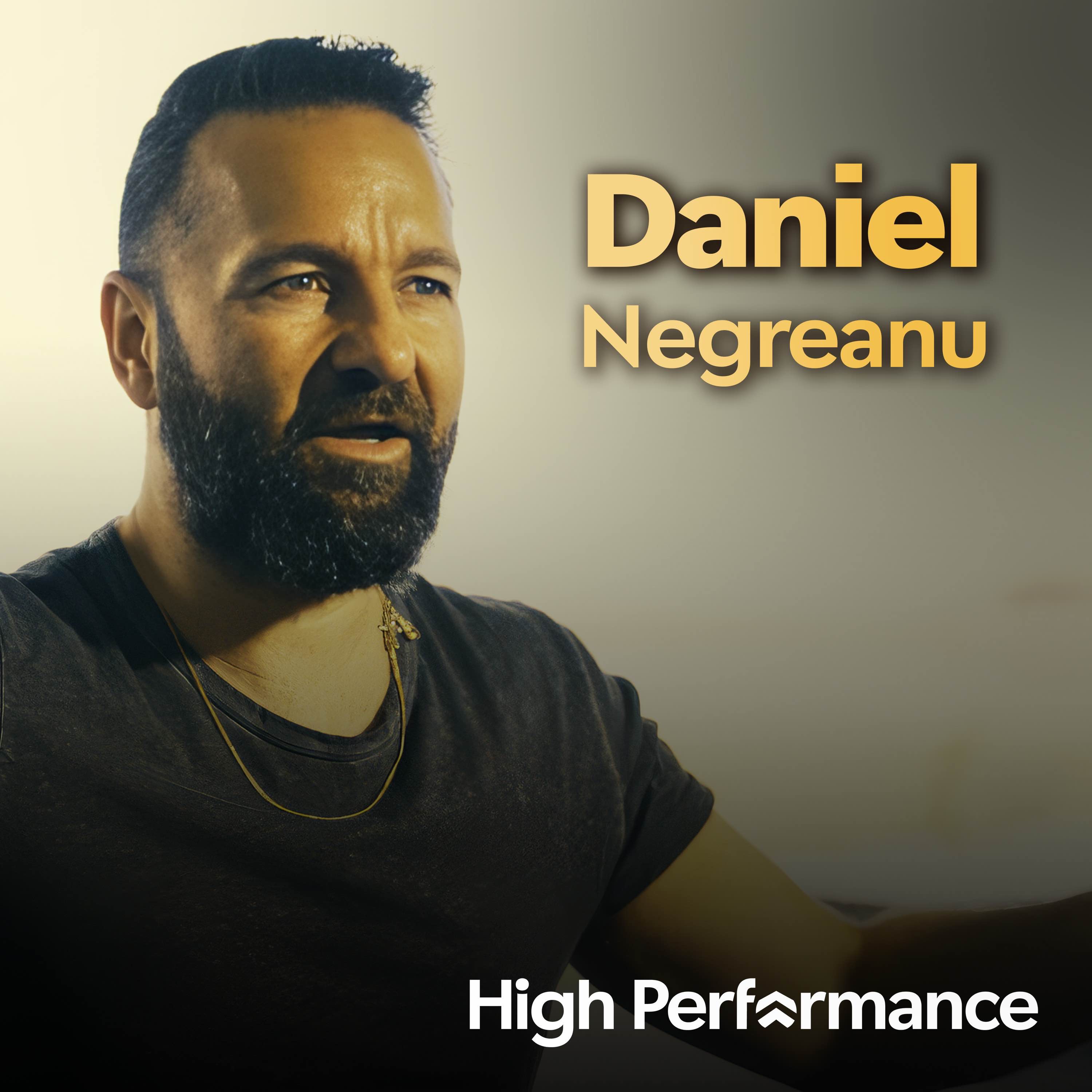
In this episode, Daniel Negreanu shares insights from his three-decade career in professional poker, focusing on decision-making under pressure, self-awareness, and the psychology of reading opponents. He discusses the importance of humility, adaptability, and the mental preparation required to excel in high-stakes environments like the World Series of Poker.
Written by AI. May contain mistakes.
Daniel discusses what high performance means in the context of poker.
“This is Daniel Negreanu on High Performance.”
Exploration of the balance between skill and luck in poker.
“But in the long run, the standard deviation eventually gets to a place where it evens out.”
Daniel outlines key strategies for being successful at poker and life.
“Let's explore that in more detail about getting a read on somebody.”
Discussion on how to read body language and tells at the poker table.
“Let's say, for example, a guy talks about how unlucky they are, right?”
Daniel explains how to adapt strategies based on opponents and situations.
“So what do you do when people are asking you the questions of, hey, how are you?”
The importance of creating a relaxed atmosphere at the poker table.
“So the poker game is always happening for me, whether I'm at the table or otherwise.”
Learn how Daniel Negreanu manages his focus and energy during poker games.
“how does that relate to being a competitive advantage to you?”
Understand the importance of physical fitness for maintaining mental acuity in poker.
“Really the best and only way to replenish the focus bank is sleep.”
Discover how Daniel prepares for the World Series of Poker and manages weight during tournaments.
“We got about a week here and then I'm going to get in the gym and go hard and just, you know, because I usually gain anywhere from eight to 10 pounds during the World Series and it's not good weight.”
Explore how Daniel approaches risk and makes decisions in high-stakes tournaments.
“I'm interested in understanding and your relationship with risk?”
Learn how adaptability is key to success in the evolving world of poker.
“because they think, oh, this will be great because I'll make a lot of money.”
Daniel shares insights on the importance of continuous learning and humility in poker.
“First and foremost, self-awareness, right?”
Learn how self-motivation and challenges fuel high performance.
“Early on in my career, when I was a young up and comer, I remember sitting with the guys who were at the top at the time.”
Discover how criticism can lead to personal growth and learning.
“So one of the things that I'm unique in is I've always been easily self-motivated.”
Understand the importance of humility in learning from others.
“I'm excited about mistakes because mistakes are an opportunity.”
Explore the dangers of underestimating opponents in poker.
“And then that sort of was an epiphany for me.”
Learn how to manage ego and capitalize on opponents' insecurities.
“Like he cannot, he doesn't, he cannot allow for his ego to ever like think that he could learn something from somebody else ever.”
Reflect on how experience shapes a player's strategy and mindset.
“the most annoying to play with and I think they're a detriment to the game are the ones that like completely cover up.”
Understand the impact of external commitments on performance.
“you know, are better than me now and stuff like that.”
Gain insights on the importance of living life outside poker.
“who's much more in the vein of Tiger Woods and Michael Jordan.”
Learn from pivotal moments that shaped a player's career.
“But that was my big shot, that if I could go back and be back in that moment, I would change the decision that I made.”
Discover the core values that define personal and professional integrity.
“And honesty, you know, just like honesty and loyalty as a friend.”
Explore lessons learned from a challenging year in poker.
“I'm like, oh yeah, what about that time when...”
Learn the nuances of reading body language in poker from Daniel Negreanu.

Get the gist, explore an idea or ask about something said.
 Claude
On The High Performance Podcast, what are the key points of this episode?
Searching your listeningAutomatic transcript. May contain errors.
0:02I find that whenever I'm doubted, you know, it brings out the best in me. Some people crumble under pressure or, you know, criticism. I'm the opposite. I like it. I'm like, OK, bring it on. You know, I kind of enjoy that. It motivates me to just be a better version of myself, you know, especially if there's any points in my career. I'm like, you know what? They're kind of right. I need to work harder. I need to be better. So I look at mistakes. I'm excited about mistakes because mistakes are an opportunity.
0:31That is the voice of Daniel Negrano, one of the greatest poker players who's ever lived. We travelled to his home in late Las Vegas, just outside of Sin City itself, to understand what it takes to master perhaps the most meritocratic game in the world. Think about it, poker doesn't demand physical gifts or privileged connections. Age is no barrier. If you can master that unique blend of skill and luck, you can compete at the highest level. Daniel's done precisely that. is a Hall of Famer with career earnings exceeding a phenomenal$50 million at the tables. But what fascinated us wasn't his success, it was how he sustained it across decades in a game that's constantly evolving, where one wrong read can cost you everything.
1:19In this conversation, we're going to explore the psychology of high-stakes decision-making, the discipline required to stay at the top, and the lessons from poker that apply far beyond the tables. This is Daniel Negreanu on High Performance.
1:39Daniel, thank you for being here on High Performance. What is High Performance to you? Well, for me, High Performance is sort of hacking what works best for you to, you know, perform at whatever it is you do at the highest level, right? And so for me, with poker, that requires sleep first and foremost. you know, sleep, which allows for focus and, you know, intensity and all those things that encompass what it means to be at your best. For people watching this that maybe are not familiar with the game of poker, how much of it is skill and how much of it is luck? Let's say you and I, we played one poker hand, right?
2:15Well, it's 50-50, right? It's going to be you or me. Well, now if we play 10, it's going to be me a little more than you. If we play 1 ,000, it's going to be me mostly. If we play 5 million, it's never going to be you, right? So it's all about sample size. Luck in the short term plays a very significant role. But in the long run, the standard deviation eventually gets to a place where it evens out. And if you are making better decisions on average, you're going to be the one that comes the way ahead. Brilliant. So let's then talk about some of those decision-making skills then, because that's what I think we want to explore in more detail.
2:47Because if you compare poker to a game of chess, I think poker is more replicable outside of the sport in terms of life, isn't it? Because chess, you're playing by a set of rules that we can all see. Poker, there's often information that we've not got access to. So what would you say are some of the key strategies then of being successful, of coming out on top more times than not? Yeah, you know, you bring up a good point about the difference between chess and poker, because in chess, there's a right answer. This is the best play. We know that. It doesn't really matter what your opponent's doing.
3:20You know, there's a search engine, Computers have solved it. There's just right and wrong answers. With poker, the answers vary. We do have advanced AI now in poker, so you can use it. But it's only effective if you assume you're going to be up against other robots. But you're not. You play against people, right? So while a robot, or while the right answer, in theory, might be for me to bluff you. I should bluff you in this spot. What if I know that you don't believe me? You think I'm full of it. So you call way too much. What if I noticed physically that before, you know, the flop came, you looked at your chips and you told me that you like something.
3:55So all these extra variables allow me to say, OK, in theory, I should do this. But I have all this extra information about who you are, what you think of me, what I think you think of me, what I think of you. All these extra things in poker, which translate to business and life and all those things. Like you think about making a business deal, you know, and someone says something. And if you can get a read, you get a sense of whether they're telling the truth or not. Oh, yeah, no, we had a great quarter. We were up this, this, and this, and this. And then he looks away, and you're like, okay, he's full of it.
4:21They're not doing so hot. You know, that's really important across all domains. So go on. Let's explore that in more detail about getting a read on somebody. What are you looking for? So when you're looking for a read at poker table, it's a little bit different than in life. But at the poker table, really what you're doing is you're paying attention and looking for anything that's outside the norm, right? And then you take the data point and say, okay, let's use gum chewing, for example. Guys chewing gum, chewing gum, chewing gum, makes a big bet, stops chewing. Okay, I want to see that hand. If he was bluffing, right, I'm going to keep watching.
4:52You know, like an hour later, he's chewing gum, chewing gum, keeps on chewing. Okay, well, this time he had it. So now I've gotten my database, a very small sample of like, this guy, maybe when he stops chewing gum, that means he's weak. That's a very like obvious example, right? But there's subtle things like posture, what your eyes do, where you look, your breathing tendencies, even the way that you put your chips in the pot. We're looking for every little angle, a little different thing. When people see the flop and they like what they see, subconsciously, they don't even know they do this.
5:20The first thing they do, they look at the chips. Because subconsciously, they say, oh, I like this. I like this. I need to bet chips. So they're preemptively looking. So when you see that, beware, because that means that they're coming. This reminds me of that famous research from a guy called Albert Morabian back in the 1960s that said, when we meet somebody, we're listening to the words, the music, and the dance. So what they tell us, what we can see looking at the chips, and then how they make us feel. So I'm interested if we can break it down into those three parts. So what is it that somebody might say that gives you a tell on them?
5:55Well, just generally speaking, what I like to do in order to get a profile on somebody is I don't even ask them about poker stuff. I'm asking, what do you do for a living? Okay, well, you're a lawyer. Okay, so he's a lawyer. What does he spend the majority of his time doing? Twisting the truth, being deceitful, lying, you know, doing whatever he can to win, scheming. So I'm thinking, all right, against this guy, I've already got a little bit of a clue. What do you do? Oh, I'm a Sunday school teacher. Maybe she's conflicted about dishonesty and bluffing. So she's going to play it straight. So, yeah, so I'm always just looking for things outside of the game to kind of create, like, different, you know, persona and player profiles.
6:29But anything someone says, oh, I'm going through a rough divorce, I know. Or people, there's another one. Let's say, for example, a guy talks about how unlucky they are, right? Now I have a very deadly weapon against them because they're already psychologically broken. So when a card comes that they think might beat them and you bet big, they'll be like, of course I lose to a flush. He always gets there when I don't have anything at all. They're so committed to the idea that they're unlucky. They see that card and they believe it. And they believe, well, of course he got there and has the best hand when in reality I've got nothing.
7:05So do you have a killer question? when you meet somebody that almost unlocks these kind of tells? Yeah, honestly, the first question that starts the conversation is, what do you do for a living? Where are you from? Just as basic as whatever, because it's not a threatening question, right? If I asked you that, you wouldn't think, oh, no, he's trying to get in my head. Just being friendly, which I am. I like to get to know you, but the more I know about you, the more I'll be able to pick you apart. So when you're playing somebody that you might have played against for a long time, do they tend to be a little bit more circumspect about what they give you?
7:38Yeah, here's the thing, right? At the highest levels, the top pros, they give far less away. It's very, very subtle, the things you'll find, right? So at the lower limits, you know, with new players and stuff, there's a lot of stuff they don't even realize that they're giving away. But again, at the highest levels, most people, especially today, you know, they've watched themselves on TV and they see the things that they do. So maybe they try to mask that, be a little bit more robotic in their movements and, you know, everything like that. So what do you do when people are asking you the questions of, hey, how are you?
8:06How's life going? How's life at home? How do you protect yourself while still giving this venera of being friendly? Yeah, I don't mind giving information away, right? I've probably uniquely have more of my hands on television or YouTube or whatever than anybody else. So my entire career has been about adjusting to what people think about me. So the more information I give you, I know what I gave you. I know what you know. And I also know how to throw a curveball. Go on, tell us about that. Sometimes people encounter me and they think, okay, he's just full of it all the time. He bluffs a lot, right?
8:36Other people might think he never bluffs at all. It's my job to figure out who's who, depending on what shows they watched, how long they've been around in poker, little subtle things they might say. You know, I'm not going to call you with this hand. Okay, that means you don't think I bluff. Great. So I'm going to exploit you in that regard. I've recently interviewed a Pulitzer Prize winning author, a guy called Charles Duhigg, that's written a book called Super Communicators on this. And one of his great techniques of opening people up is what he calls asking deep questions. Do you have any deep questions that then force them to reveal a little bit about their values or what's important to them?
9:09So the thing you have to be careful about, especially at the poker table, is it's a friendly, superficial environment. There's eight other people at the table. So if you come at somebody with something deep, right, that's going to put their guard up and be defensive. It's uncomfortable for most people to be sort of interrogated, you know, or asked some really deep questions about their family life and things like that. If the door is open, and this is how I started just with the, you know, generic questions, you know, then we will go deep just about. And really for me, you know, how have you been running in poker?
9:39Like, you know, have you been doing well? Yeah. And when people are doing well, they're going to be more confident, play better. And, you know, often they'll tell me the spiel about how horrible it's been and, you know, how unlucky they are and these sort of things. So that's about as deep as you want to go at the poker table away from the table. You know, you can find out more about people, but I just set the right environment for it. You know, somebody on the spot like that. It's not like a therapist's couch. My background is in boxing. And there's an old saying in boxing that the fight doesn't start on the night of the fight.
10:07The fight starts months before it when you meet these guys at press conferences or at the weigh-ins as it gets a little bit closer. When does the game of poker start for you then? Yeah, no, that's a great analogy with boxing. Because yeah, for me, it's similar in the terms of like, you know, like I'm doing this interview right now. I know some people are going to watch it. Some people are going to hear it. Some people are going to understand what I'm giving away. So I always have to constantly be willing to adjust, but I know what I'm giving and I know how to manipulate it, right? So the poker game is always happening for me, whether I'm at the table or otherwise.
10:38My wife, she was telling me, we were sitting there at dinner once and I was giving away information. She's like, why do you tell him all this stuff? And I said, honey, trust me, I know what I'm telling him and I'm telling him this stuff for a reason because I'm going to take advantage of him because I want to tame him. He is a lion. I don't want him coming to attack me. So I'm going to act like prey, you know, or I'm to act like somebody who, you know, doesn't want to go to war with them. So everything I tell people about my game and stuff is for the most part calculated. I was reading a book in preparation for this where it was about different names and titles that guys will often attribute to themselves.
11:13Some people see themselves as lions, some will see themselves as cheaters. How would you describe yourself then as an operator? It's funny because, you know, my outward persona is a laughing hyena because I'm always just giggly laugh. Like I don't know what's going on and stuff like that. But underneath, it's really a chameleon who's very adaptable and always like able to change based on, you know, perception, right? I think the most important skill set is self-awareness, right? Understand how people perceive you and then you can take advantage of them in that regard. But you have to know how.
11:44So there's many different gears. There's many different choices in terms of what strategies you're going to use. And for me, what's most important is what is going to be most effective against this person, right? If I teach poker, I teach poker generically, this is how you play the game. Now, when there's seven people at the table, okay, this is how I play against him, her, him, him, all different, right? So that's where the chameleon part comes in. Love that. And how do you index this? How do you capture this information? Do you go away and make notes on it? Well, I'll tell you what's, you know, there's been an invention called the iPhone, right?
12:16So what I do now is I go on my phone and I take notes. So I'll have player notes based on physical tells, even tendencies and things that I've noticed, or historically, like what I did against this player and what they did in response and how I can take advantage of it. So I keep notes in that regard. Because you know the reason for that is, sometimes, let's say I played with you in 2022. It's been a while. Let me just check. Ah, that's right. Okay, so when he bites his lip, that means this, right? And then I have that available. And people do change over time, so they're not necessarily reliable, but having that notepad is my version of, like, intense study.
12:51I've read in the past that you talk about being almost like more a lover than a fighter, which fits with that laughing hyena analogy you used. How do you want people to feel when you'd come to the table? So that's a great question. And like I look at, so the contrast to me is Phil Ivey, okay? Phil Ivey is very Tiger Woods, Michael Jordan-esque intense. He wants everybody uncomfortable, tense, and, you know, afraid, right? I go the opposite way. I want people casual. I want people laughing. I want people to put their guard down. I want them to feel safe and comfy. I'll often, let's say I'm in a hand against you and I'm making a decision.
13:28I'll often start talking to the dealer and be like, what did I do to myself? I'm so stupid. Why did I even think about it? But really, I'm looking at you the entire time while you giggle and laugh because you don't feel like I'm looking at you. I'm not one of those that's super intense and stares people down like this, like some. I want people to be disarmed, right? And then use some charm in order to beat them so that when they leave, they laugh and they giggle and they go, hey, what happened to all my chips? There's an old saying that you can always slip an idea in when somebody's laughing. What are you doing that gets them so when they lower their defenses, how does that relate to being a competitive advantage to you?
14:06Well, see, I'm very comfortable on camera. I've been on camera for most of my poker career, even before that. I know some of my opponents are not, right? So now they're in my realm, if you will. So I get to control the conversation. I get to control the energy, control the sort of meta of how the game's going, and kind of force people out of their comfort zone. And just by default, you know, that is a benefit for me. Sometimes, you know, you have a bunch of people being jovial, telling stories, drinking wine, relax, having fun. And other times, it might be an uncomfortable environment. Maybe people don't like each other, and it's very tense, and it's very dark, and it's very serious, right?
14:39Those are the environments. I find them actually more in Europe, to be honest with you. A lot of the European pairs are just like, you know, they want to play Stonewall, like not fun and engaging. So my job is to try to loosen them up. I want to set the table in such a way that benefits me, right? And the tense, you know, dark thing that doesn't work. I like it to be relaxed. And so I do my best. And again, sometimes when people are wearing headphones and not paying attention, it's a little bit more of a trying task. And sometimes I give up and say, okay, well, I can play it straight too. Yeah.
15:05Now that's a word you've, I'm interested because you've used that word three times in our chat so far, attention. Now, we know that attention is a finite resource. How do you get yourself in a place where you can give that amount of intense attention to the other people around the table, the environment, the energy? That seems to take up an awful lot of cognitive resource to then be able to play effectively. So what do you do to put yourself in the best place to do that? So I've learned over whatever, 30 years of playing poker, that it is literally impossible for you to be at 100 % the entire way through.
15:41So you have to pick and choose when it's most important to have what I call, I told my wife, I call it hyper-focus, right? And for me, if I'm sitting down at a table with a player I've never seen before, and I don't know them, hyper-focus, because I need to get an idea of what they're like and what they play like. If I'm playing at a table with people I've played, you know, 100 times and stuff like that, maybe I can sort of sit back a little bit and kind of go into autopilot and not need to be that hyper-focused. The way a tournament goes is the intensity ramps up. You start with whatever, a thousand players or something like that.
16:10As you get deeper and deeper and closer and closer, the adrenaline starts to kick in and the intensity just, you know. But I've saved up. Like I take that time in between. Once I know a table, I'll take a little bit of a break. I also know sometimes if we're playing a four or five-day event, let's say it's late, 1 a.m., we're playing for another two hours. All right, maybe I'm tired here. Let's relax. I'm just going to go on autopilot. When I say autopilot, that still means playing good poker, right? What it does mean, though, is not trying to find that, you know, maybe like that super small edge and take a really big risk.
16:40I save that for when I'm fresh, engaged, and able to do so. So then what do you do to go and replenish that focus bank? Really the best and only way to replenish the focus bank is sleep. I do think meditation helps as well, and it has varying effects for different people. Like for some people, it just doesn't do much. for me I do like a red light LED bed anytime I feel like I need to unwind I've always found video games whether it's chess or other games yeah have benefits I think there's sort of a negative connotation with the idea of like playing games and I think the opposite is likely true in some ways obviously become an obsession you know that's hurtful in your life but I think especially getting into older age you know with cognitive decline and stuff playing games is one way to keep yourself sharp.
17:26Having been in the game for 30 years, is there a moment where you think for players, they start to taper off? So historically, popular belief was that around the age of 40 is where you're at your peak and then you have declined from there. Okay. I don't know if that's true anymore. I don't know if that's just a number that people would throw out. Yeah. I definitely feel like there is an element of physical fatigue that does play a role as you get older. And that's sort of where I'm looking at for this year in terms of cutting back, like realizing that I'm not 23 anymore. I can't play for three straight days and be fresh and ready to go.
18:02So respecting, you know, the undefeated age, you know, like it's undefeated. So understanding how to best utilize the time that I have. And, you know, when I'm feeling fatigued, make sure that I'm not playing. And how much of your game then is linked to your physical fitness? Because that's something that we often maybe underestimate because we think it's a game of using your cognitive thinking skills. I think when you think historically about what a poker player looked like, you see a guy who's overweight, smoking a cigarette, having Jack Daniels and eating a donut with fried chicken or something like that.
18:37And that was kind of what poker was in the 80s and 90s. Today, fast forward several decades, at the highest levels, you see guys like eating grass-fed, organic, you know, like training, doing all the blood tests in the gym and stuff like that. So you're starting to see a shift in that regard. And I do think, especially with tournaments, they can be grueling. The World Series of Poker is seven weeks where I'm putting in 12 to 14 hours per day, right? So when you're not physically fit going into it, you know, that can lead to some, I think fatigue can play a negative role in that. So what I do typically is before the World Series for about six weeks, I get very structured in a training and exercise program and just like try to get lean because I know during the series that's going to falter and I'm not going to have time to keep up with it.
19:24And at 1 a.m. when you're tired, you don't want a broccoli carrot salad. You know, you want chocolate covered nachos with popcorn and, you know, all the nasties. You know, you don't want. And then so I just give into that during that series. I just, I allow myself the debauchery of knowing I'm going to put myself through the ringer because I know when it's over. I know I have the discipline to get back in shape. Wow. Okay. So you almost prepared that you're going to get out of shape. So you get in shape to do precisely that. Yeah. I mean, I'm about to start. We got about a week here and then I'm going to get in the gym and go hard and just, you know, because I usually gain anywhere from eight to 10 pounds during the World Series and it's not good weight.
20:03And what do you say to yourself that like when you look at yourself in the mirror during that time and you look at yourself looking more tired or haggard or you've gained weight, do you treat yourself kindly? I do because I've accepted it beforehand. This isn't something that's out of my hands. It's not out of my plan. This was all part of the program. It's an understanding of when you're tired, there's plenty of studies that prove this. When you're tired, your body craves sugar. That's what it wants. It wants it. It needs it. I give it to it. I'll give it what it needs knowing full well that, again, that's part of what I've dedicated myself to for seven weeks.
20:39And that's not the end of the plan. When that's over, I know I'm going to go back to doing a six to eight week program. Like I've sort of perfected six to eight week program of like getting to where I want to be and, you know, sort of going in and out. Describe a day for us. Yeah. So basically, I mean, in a nutshell, you know, for the six weeks or eight weeks, I'll be doing about 1800 to 1850 in terms of calories per day. I'll be doing weight training six days a week. I do like splits, three days, three days, And then one day off. And then I'll do, as far as cardio goes, just really just walking, making sure I get 10 ,000 to 15 ,000 steps every day.
21:14And rinse, repeat. And that usually has me losing about one to one and a half pounds a week. So over six weeks, you know, I'm looking at 10 to 12 pounds and I'm feeling a little stronger. And then I'm ready for the World Series. When it starts, what do you do? Do you move out of home? Do you move into a place that facilitates you being able to go and do those long, intense hours? Well, this is the first year that I'll be far away. You know, normally my house is about 17 minutes, 20 minutes. Now we're looking at a 40-minute drive because I moved out to the lake. Yeah. So I always have a break room there, like for breaks so that, you know, I can unwind and relax a little bit.
21:52But for this one, I'm going to get a room for the entirety of the series. And my plan, and I've told my wife this, is any time I have to get up and play the next morning because I'm still in an event, I'm just going to stay there. Right. Right? And have the convenience. and it makes a difference too because every hour that you can shave off, you know, travel or whatever the case may be before getting to bed is super crucial because like by far, like there's number two level of importance. There's number one. Sleep, then everything else is way down here. It is the most important part of being successful at playing poker.
22:24So now can we talk about when you get into the weeds of the World Series of when you're playing. I'm interested in understanding and your relationship with risk? Well, my relationship with risk, I mean, I'll tell you this. I never cared about money. I never did as a teenager. And my goal was just, I love the game. I love to play. You know, the goal of making money was so I could play higher and higher stakes. So I've never been obsessed with money. I've never cared that much, which frees me up in terms of risk. Yeah. Because I don't really care. You know, this sounds fun. I'm going to do it. And I'm in a place now, frankly, you know, I'm 49.
22:58In terms of like gigantic risks, I don't do that anymore. When you're 23, what's the risk? So what? You lost your$3 ,000 bankroll. Big deal. That's replenishable. The one that I have now is not all that easily replenished. So again, I don't have any sort of ego-driven ideas of having to play, go over to Macau and play for$10,$20 million or anything like that. I'm comfortable and happy with what I have. That's an interesting comment you made, though, about never caring about money. I can understand how that must feel incredibly liberating when you're up against it. But I'm interested then in when you get the invitation to a tournament or you're in a particular game even, what's the decision-making gates that you pass through before deciding that, first of all, you're going to compete?
23:44Well, first and foremost, the events I choose is based on prestige and fun. I always played video games as a kid, right? So now I am my own video game. I control the character. I choose which events I can play. I'm looking to make history, accumulate world championships and things like that. And the World Series of Poker is the pinnacle. Since 1970, it is the premier brand. It is the one, it is summer camp for poker players. So the decision is easy. Now, what I typically do is I prioritize larger buying events, which have less people, which to some degree increases your chances of success. But again, it's not directly related to the money.
24:19I'm a big believer. I'm firmly believing this. Whatever profession people choose, if they do so because they think, oh, this will be great because I'll make a lot of money. Yeah. They're so less likely to be successful than they do this because, oh my God, I love doing this. So you love doing this. You continue to do it because you love it. And as a result, a byproduct is you end up making a lot of money. Because I want to be a famous actor because you get rich. Well, you're probably not going to be very good at it, is my guess. When you talk about wanting to do the most prestigious events, is that not a dangerous place?
24:47Because your ego is creeping in there about the idea of wanting to be the world champion to establish a legacy. Here's the thing, though. the most prestigious tournaments now, that's where I belong, right? That's where my career is. In my early 20s, I played everything. You know, I was trying to build. I was trying to get to that point where I could retire, if you will. Now I just play the ones that I want to. And for me, the World Series of Poker is the most prestigious. It is the most fun, you know, and it's the seven weeks of the year that I dedicate and I, you know, I look forward to. And it's like, as soon as it's over, even though you're exhausted, it's been seven weeks, all you want to do is do it all over again.
25:23do you get people that come into you asking for you to mentor them and pay it forward i do yeah and actually there is a kid now a young kid we sort of picked out of obscurity a kid named jeremy becker who he's just playing these 200 tournaments around town and we start to notice you know he's having some success i said you know what like in the movie rocky let's give this kid a shot so then i started to put him in some tournaments and he's you know he's doing quite well and this summer i have a big bet on him i mean i bet on him against some other kid and it's going to be a fun narrative throughout the summer.
25:51Oh, that'll be good. Yeah. And like Rocky, you're now like Mickey is coaching the corner. Yeah, something like that. So what advice are you going to give him when he goes into that big tournament? The thing I think he struggles with most is dealing with bad luck, you know, mentally. But, you know, he still shows up, but it is a very stressful game to play. Like you can do everything right, make all the right decisions and you still lose, right? That's very difficult for people to deal with, especially with tournaments where you rarely win. You usually are going to lose all your chips. So just keeping them on track and keeping them, you know, upbeat and understand that, like, buddy, you're going to get through this because you're a champion, and I have faith in them.
26:27That is like Mickey, isn't it? Yeah, for sure. You're a champion, kid. Yeah, yeah. Eat lightning and spit out thunder. Yeah. When you were making your way up then, was it a different game? So when you first started it, what would you say is the big difference between turning up for the World Series today? Well, the game evolves. The game changes. Everything changes in terms with AI and solvers and a new breed of poker player. I'd say probably the biggest difference is 20, 30 years ago, if I didn't know who you were, chances are you weren't very good because where would you have practiced? Today, people play online.
27:01They play on GG Poker and they get a lot of hands in playing online poker. So sometimes I might sit with a guy I've never seen before, but he's an expert. And that's probably the biggest change is sort of like now there are some people who can get to a very high level without having to play daily against me. Yeah. Well, I think that's what's remarkable about you, Daniel, that you've adapted to those changes. And I think there's some lessons you can teach our audience around how do you adapt to an industry that's changing around you? I think two things. First and foremost, self-awareness, right?
27:36Again, I've used that before. But the reason for that is you have to be aware of like, you're good, right? But are you better than these guys right now? And if not, you have to go with number two, which is humility, which is to say, okay, you know what? I need to go back in the lab. And for myself, for example, I hired two guys to coach me on using the software because I'm not a computer and a guy. I don't even know how to turn this stuff on. So I wanted to understand what the young kids were learning. Early on in my career, when I was a young up and comer, I remember sitting with the guys who were at the top at the time.
28:05And I'm thinking to myself, I'm better than you now, but you're complacent. You're like, oh, I've reached the pinnacle. The day you think you've reached the top is the exact moment in poker where you start to be surpassed by others when you stop working.
28:24That reminds me of a quote from a book that I wrote many years ago. I wrote a book on a boxer called Marvin Hagler, who was a world super middleweight champion. And he had this great quote that he said, it's hard to get up and run when you're wearing silk pajamas. That's my favorite. I use that all the time. Oh my God. It's one of my favorite quotes. I use it all the time. So how do you get up and run when you're wearing silk pajamas? You've achieved a level of fame and prestige and wealth that means that you don't have to employ coaches. You don't have to learn new technologies. You don't have to take on all these up and coming challenges if you don't want to.
28:58So what does get you up and run? So one of the things that I'm unique in is I've always been easily self-motivated. Like I always find new challenges and I enjoy like part of what is makes life enjoyable for me is goal setting, you know, finding new ways in which I want to like prove people wrong. I kind of love haters in a way because haters fuel me for like 30 years. I keep hearing about, oh, he's washed up. He can't win no more. I'm like, oh, yeah, watch this, you know. And so that's sort of something that's always driven me. But also the other thing I do, too, is I cut back. You know, I make sure now that I'm only playing when I really feel like it, when I want to, because if I don't.
29:33Like last year, I had not a great year, partly because I was playing too much and just kind of going through the motions where I didn't care enough. So the breaks in between are super crucial. You know, I'll play seven weeks. Like I'm not going to play a hand of poker in the next six, seven weeks so that I'm just fresh and ready and can't wait to go play. Okay. You spoke of the haters, that you actually love them. Explain more on that. I find that whenever I'm doubted, you know, it brings out the best in me. Some people crumble under pressure or, you know, criticism. I'm the opposite. I like it.
30:05I'm like, okay, bring it on. You know, I kind of enjoy that. It motivates me to just be a better version of myself, you know, especially if there's any points in my career where I'm like, you know what, they're kind of right. I need to work harder. I need to be better because these guys are, you know, learning things that I haven't. And the more you see the same thing, the more apt you are to be like, make better decisions. So I look at mistakes. I'm excited about mistakes because mistakes are an opportunity. Whenever you have like a breakdown, that's an opportunity for a breakthrough where I'm like, aha, okay, so here, this is what I can do here in this spot.
30:35Ah, we figured it out. So now the next time I'm approached with a similar situation, I have like new tools that I can use that sort of plug, we call it plugging leaks, if you will. I've been doing this for 30 years, so I've developed enough wisdom to know, all right, this new thing that I'm doing has really been effective. The main driver of like learning usually comes from when things aren't going well. I find that's true of a lot of things, right? when things are going well, you're having success, there's not a lot of, it doesn't feel all that, you know, important to work on stuff because you're already there, you're doing great.
31:06When things turn for you and they're not working as well, that's when you want to like, look at the adjustments necessary. So can you take us to a moment when things weren't going well? What did you do and how did you make the adjustment? I remember, I don't know if it was 2016 or something, but there was this whole new German contingent of player that started playing. And I remember a few hands at the Pokermasters that this guy named Stefan Sondheimer, he just completely outplayed me. Like he was just playing better than me. And it was very evident to me. And they were discussing poker in a way that I'd never heard before.
31:37They were talking about combos. So what is a combo, right? And then that sort of was an epiphany for me. Like there's so much I don't know about what they're learning. And that sent me down a path of saying, all right, so I'm gonna hire some coaches. Teach me about this stuff, you know? And that's where the humility comes in. The self-awareness to say, okay, these guys played better than you. It wasn't just luck, right? Now the humility is to say, okay, teach me. So when you talk about the humility, how else does that show up? Well, I think humility, like with poker, is like, again, super important.
32:07You know, I think any time, confidence is key, right? If you don't have your confidence at poker, you're dead. But you also have to be introspective and say, okay, well, you know, you're great, but so are they. You have to have a mutual respect for that player. Because if you underestimate them, you know, you're going to make poor decisions against them. And if you just walk into every table saying, I'm the greatest, it doesn't matter what they do, I'm the best, you know, that's going to be a blinder for you because you're going to miss stuff that could potentially make you, you know, perform even better.
32:33But do you have opponents that do that? Oh, yeah. You mean that just have big egos like that? Yeah. Yeah. There's one who's been around for a very long time, very accomplished player. His name's Phil Helmuth. And he sort of goes in with this bravado about how he's the best. He's always going to be the best. Doesn't study, doesn't learn anything. You know, he's very condescending, you know, in a humorous way, as far as I'm concerned. Very condescending to his peers about how they're kids, you know, and they don't know anything. And, you know, and there's just so many things that I think he could improve upon, but he has no willingness to do that.
33:02Like he cannot, he doesn't, he cannot allow for his ego to ever like think that he could learn something from somebody else ever. I'm always interested in this because I'm the sort of person that I can imagine being psyched out a little bit by somebody like that, that's coming in and telling me how good they are. So how do you bulletproof yourself against it while also still keeping that radar switched on to realize that's a potential weakness that they're demonstrating? When people tell you how great they are and it's not other people saying it, usually they're not so great. Like when I think back to Michael Jordan and Tiger Woods and them, I never heard them say I'm the greatest.
33:38Everyone else did. So if you're coming in here, I'm the best, I'm the best. I usually just laugh because I know where that comes from. What I gather from that is you're incredibly insecure. Your arrogance comes from somewhere and it's typically insecurity, right? So I'm going to use that to my advantage. I'm going to poke you. I'm going to actually tear you down. I'm going to say, no, you're not. You're not the best. You're not even winning at this table. These guys are all better than you because now what you've done is you've challenged their ego. You've disarmed them. They're just going to come back at you and I'm just going to laugh at them, which is probably the worst response anyone in that environment wants to hear is being laughed at.
34:13Who's kryptonite for you though on the poker table? Which personality type presents you with the biggest difficulties? I'd say the ones that I find the most annoying to play with and I think they're a detriment to the game are the ones that like completely cover up. Sunglasses, hoodie, you know headphones and they're very slow and they take like 30 seconds to act. It's like it works for them and part of it does annoy me because it's taking the game out of a rhythm and like I said earlier I want to create a sort of a metagame of fun and jovial and relaxed. And when they come, they sort of ruin the vibe, you know, and they're playing their game.
34:48They're allowed to do that. But those are the, I wouldn't say kryptonites specifically, but they're the annoying little gnats and mosquitoes that, you know, you want to flick away. The Daniel that first started playing 30 years ago, how much of that player is still turning up at the table today? Everything I've learned, even from that very beginning as a teenager, sort of built how I think about poker in the game, right? Having said that, like in 2004, I won everything. I was the biggest winner. I won WPG player of the year, World Series player of the year. I was crushing everybody, right? I look at that player now.
35:19If I had to go back and play against that player, today, I would destroy that player, right? However, that player was by far levels above everybody else, right? I'm not that now. You know, there's plenty of players who, you know, are more, you know, are better than me now and stuff like that. But I'm still better because I've improved as well. I'm a big believer in making sure your goals scare you a little bit. You're not sure that you'd be able to accomplish them. And then throughout the process of goal setting, one of the things I think is important is enjoying the journey of it and understanding that the result is the result.
35:51You're not always going to get there. But if you don't get there, look back and say, all right, what worked in terms of my plan? What didn't work? Self-limiting beliefs, well, I can't do that. Well, why not? You have all these stories that you create about why you can't do certain things. And they're just stories. They're not necessarily true. And you can change your story. You can shift it. You can sort of, you know, recreate a new storyline and a new path for yourself. But first and foremost, you have to address the self-limiting beliefs, where they came from, and what they're holding you back from.
36:22Love that. Yeah. You're regarded as one of the all-time greats of poker. When you look at other sports and you've referenced Michael Jordan and Tiger Woods as two other examples, what athlete outside of poker do you compare yourself to or think you most closely resemble it's funny because the one name that comes to mind is a guy that i sort of admired as a kid too and i used to wear the same gear was andre agassi in a way yeah right like he had that potential to be great and he was number one many times but he also had stuff going on you know he was doing media he was a big you know he was involved in like promoting the game of tennis doing commercials doing ads and stuff like that.
37:05So while you're doing that, you're taking time away from your craft. I compare myself to like Phil Ivey, who's much more in the vein of Tiger Woods and Michael Jordan. They're 100 % in. You know, all that side stuff is like, it's not really a focus. You know, it's part of their life, but it's not the main focus. They have that ability to be like a killer where Agassi was more kind of, I felt like in and out of that. He wasn't always, you know, at his best. Yeah. So how would you like to be remembered when poker fans in decades to come look back on the era that you've presided over? How would you like them to remember you?
37:39What I strive to for at this point in my career is longevity. I want to be remembered as somebody who was always willing to adjust and always stood the test of time. And whatever came at him was still able to be relevant at the highest levels. Brilliant. Thank you, Daniel. Now, if you don't mind, I'd like to deal some cards for you. Each of them contains a question. So what does that say? Advice. Advice. So what advice would you give to a teenage Daniel just starting out on this journey? Well, to a teenage me, I would say, listen, make sure that you live your life. You're only going to be a teenager once and you're only going to have your early 20s once.
38:18So if this is something that you really want to do, understand it's going to be a sacrifice. You're going to have to sacrifice a lot of that stuff. But it can wait. You know, there's no rush. Live your life. enjoy you know being a kid next one one moment if you could go back to one moment of your life what would it be and why there's a poker hand that sticks with me from the year 2000 2001 was the world series of poker main event and i was the chip leader with 12 left the young up and coming punk and i played a hand that i wouldn't play the same way today and it's one of those that haunts you but at the same time you realize like everything happened for a reason and maybe i just wasn't ready in that moment.
38:58But that was my big shot, that if I could go back and be back in that moment, I would change the decision that I made. And what did happen? Well, I ended up losing a big hand that I wouldn't have played today. And I ended up coming in 11th place. So I went from being in pole position, just cruise to the final table and go there. And then I ended up flaming out. Non-negotiables. What are the three non-negotiable behaviors that you and the people around you have to buy into? Be impeccable with your word to yourself and to me. Well, mostly to me. But if you say you're going to be somewhere at 7 p.m.
39:33and you show up at 7.04, you were late, period, by definition. So I want you to acknowledge that, right? And that really matters to me, because it's a very small example of integrity. But if you don't care about that stuff, then you probably don't care about a lot of other things you say with your word. And honesty, you know, just like honesty and loyalty as a friend. Yeah. And negotiables. I don't even know that I have a third. Those two are so important. They stick out. So integrity, stick to your word and be honest. Yeah. Plus that mystery. Yeah, they're almost the same two. Okay. So two more.
40:122023. You said it was a year of lots of learning and losses. What was the biggest learning from 2023? C3. Yeah, 2023 was my worst year on record as a pro, but it was also the most exciting because a light bulb went off and it was thanks to my wife actually who figured it out in that I have FOMO, fear of missing out, right? So I would always be in the next event, you know, and then realizing now, listen, you're 49, you need rest, rest is what makes you better. I remember it was a moment where I was in Bahamas and I just played a tournament and I was going to go play the next one. And I was telling my wife, said, yeah, I'm going to go play this one, but I don't really feel like playing.
40:46And she says, you know, you never do any good when you don't feel like playing. And I'm, you know, defensive. I'm like, oh yeah, what about that time when... Wait a minute. Yeah, no, you're right. So it just dawned on me and I didn't play that next tournament. Went to rest and then I played the next day and felt fresh. And let's go for the last of our cards. All right, the golden rule. What's your one golden rule to live in a high-performance life? Well, for me, the golden rule is when everything else fails or whatever new strategies, new theories, new ideas come out, understand there's one person you should trust above all else, and that's yourself, right?
41:24I have faith in what I do. I know what I do works. So while I will try on different things here and there and try to incorporate it, at the core, I am who I am because of the strategies that I built and to trust myself above all else. Well, thank you to Daniel for that brilliant conversation. If you've enjoyed this episode, please do consider sharing it with someone who you think might benefit from hearing his insights on decision making under pressure and the mindset required to stay at the top of your game we look forward to seeing you next time on high performance
42:14you
Daniel Negreanu, one of poker's all-time greats reveals the psychology of high-stakes decision making.
Daniel has been playing professional poker for 30 years and has earned over $50 million at the tables. A Hall of Famer and seven-time World Series of Poker bracelet winner, he's widely regarded as one of the greatest players in the game's history. Known for his engaging table presence and ability to read opponents, Daniel has remained at poker's elite level across multiple generations of players.
In this conversation at his Lake Las Vegas home, Daniel breaks down the art of making decisions under pressure, the importance of self-awareness when your edge is slipping, and why humility trumps ego at the highest levels. He explains how he uses conversation to disarm opponents, why he'd rather be a "laughing hyena" than an intimidating presence like Phil Ivey or Tiger Woods, and the physical and mental preparation required to survive seven gruelling weeks at the World Series of Poker.
Daniel also reflects on his worst year on record in 2023, the advice he'd give his teenage self, and why quality now matters more than quantity. Whether you're interested in poker or just the mindset required to stay at the top of your game for three decades, this episode is packed with insights on adaptability, goal-setting, and trusting yourself when everything else fails.
Our partners on this episode:
Simba 👉 Jake believes better performance starts with better sleep. Discover Simba, start your 200-night trial today now:
https://highpfrmc.com/hpp-simba-au
Visit Seattle 👉 Start planning your perfect summer of football by searching Visit Seattle on social media, or discover more at: https://highpfrmc.com/hpp-visitseattle-au
Hosted on Acast. See acast.com/privacy for more information.


