
 Ask ChatGPT


- Podcasts
- The Modern People Leader: Forward-Thinking HR
- 330 - A career in pivots: Dean Carter on purpose, play, and taking big swings
The Modern People Leader: Forward-Thinking HR17 Sep 2026 · 1h 5m · 29 chapters
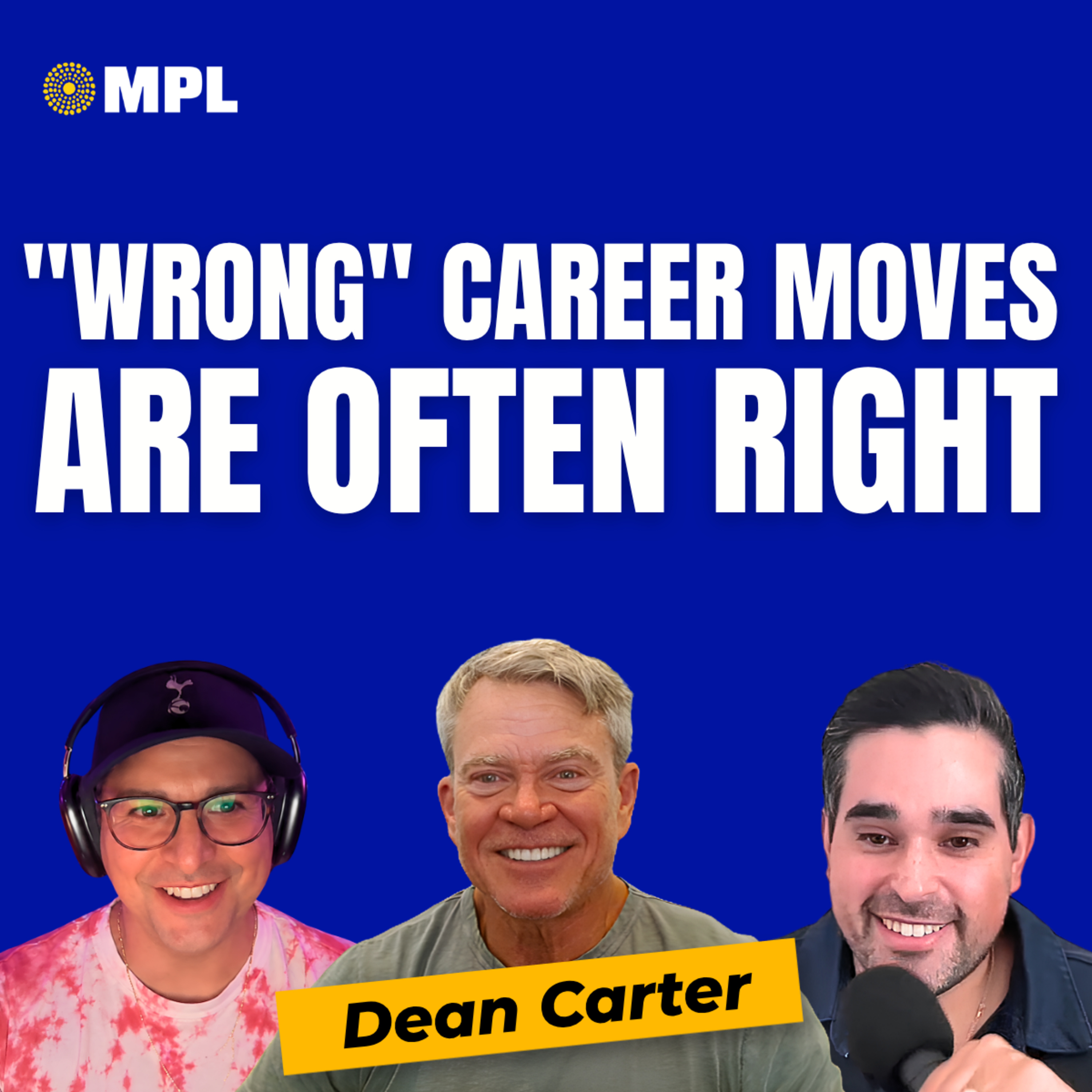
330 - A career in pivots: Dean Carter on purpose, play, and taking big swings
In short
Career “pivots” and leadership lessons about purpose, play, and taking big swings—how work can be playful, how to make high-stakes decisions, and how to build human-centered organizations amid AI and workforce change.
Guest background
Dean Carter is CEO of Instill Labs and a former HR/talent leader across major brands. He describes building HR functions at Fossil (10 years) and later joining Patagonia, where he worked with founders and leaders known for climbing/mountain culture and strong purpose.
Key claims
Work doesn’t have to feel like work; it can be playful and creativity-enhancing. Big pivots often feel like steps back, but can be the right path. The best decision-making test is: “Looking back, was it the right decision, and did I use a good process?” Once you choose, “crush it.” Not choosing (stalling) is a major risk.
Notable examples
bullied as a “smart” kid; debate scholarship to UT; early career selling diapers at nursing homes; confronting HR about anti-gay rumors in Texas; building HR at Fossil; quitting to move to Chicago to be with his daughter Grace; turning around a failing Sears/Kmart HR/talent situation via a town hall “Titanic” message; joining Patagonia after a CEO interview.
Written by AI. May contain mistakes.
Chapters
0:00
The Playful Nature of Work
Explore the idea that work can be playful and enhance creativity.
“Vaughn says the master of living is the person who you can't distinguish whether they are working or playing and neither can they.”
0:57
Welcoming Dean Carter
Dean shares his sentiments about iconic figures and their influence.
“Welcome to the Modern People Leader, Dean.”
2:00
Dolly Parton: A Multifaceted Icon
Dean dives into Dolly Parton's life and her impact on social issues.
“She was so, for a person who said, let's let you know everything about me here is fake.”
5:05
Positivity Through Personal Stories
Guests share good news stories about their families and milestones.
“On that note, we start every episode the same way.”
7:45
The Journey of Parenthood
Discussing the joys and challenges of parenting and personal development.
“that's the goal like be okay on your own and kids are you know i i've always said my there are a lot of things I've done that I'm proud of, the most proud, the best body of work that I have done are my kids.”
12:18
The Future of Work Insights
Dean and hosts discuss insights from Deloitte's Human Capital Trends report.
“And I think it's so important, essential to learn.”
14:05
Redesigning Work for the Future
Explore how organizations can adapt to the future of work with AI.
“In other words, it helps turn big future of work conversations into practical leadership questions for a world that won't sit still.”
14:44
The Journey of Big Life Pivots
Dean Carter discusses significant life pivots and their impacts.
“because the question I ask people a lot.”
15:10
Early Challenges of a Firstborn
Carter reflects on the responsibilities and challenges of being the oldest child.
“So first pivot is, I don't know this, but somehow other teachers discovered I was smart.”
16:49
Transformation Through School Changes
A pivotal school transition shapes Carter's identity and confidence.
“You know, that's actually one of the other things.”
Show all 29 chapters
19:12
Discovering Leadership in Debate
Carter shares how joining the debate club led to unexpected opportunities.
“By the way, a year after having actually that year of driving the 1975 Monte Carlo, I slid down a street on the way to back to college, going to UT from home.”
21:40
Navigating Early Career Challenges
Carter recounts his first job experiences and the challenges faced.
“So I do have a BS in speech and organizational communication.”
22:46
Coming Out and Workplace Culture
Carter discusses his experience of coming out at work and its implications.
“a decrease in pay to work for Pearl Vision.”
24:46
Finding a Role in HR
Carter's journey to finding his place in HR despite challenges.
“or I'm just going to set the whole culture to lead like Roy Wilson.”
26:00
Building an HR Department from Scratch
Carter describes the challenges and triumphs of building an HR team.
“I'm like, I'm like, what am I going to do?”
27:25
Love and Life Changes
Carter shares the pivotal moments in his personal life, including love and marriage.
“At the same time, I took the job at Fossil two years before.”
28:00
Life and Career Pivots
Dean Carter shares pivotal moments in his career and personal life, including moving for family and taking on challenging roles.
“It's a place where I might be able to find work.”
34:36
Lessons from Patagonia
Carter reflects on his transformative experience working at Patagonia, emphasizing the blend of work and play.
“And then you find out you got cancer and like all sorts of stuff.”
37:48
Overcoming Career Hesitations
Carter discusses the fear of making significant life pivots and shares insights on how to embrace change.
“You look like you were holding the microphone up.”
42:00
Embracing Big Pivots in Career Decisions
Learn how to approach significant career changes and make impactful choices.
“I'm quitting today and we're going to move ASAP.”
45:00
Making the Best of Your Choices
Understand the importance of committing fully to your chosen path.
“or grasping for something to connect with, like whether it's people in community or it's a life filled with purpose.”
47:30
Learning from Career Misses
Explore the value of failure and taking risks in career development.
“And at the time, I thought that meant that I needed to be so sure about something and have all of the proof that it was the right thing to do.”
50:00
Navigating Uncertainties of AI
Discuss how to approach the uncertainties brought by AI in our lives and careers.
“most of the time there wasn't like a big plan.”
52:50
Trusting Humanity's Resilience
Gain insights on human resilience and how to adapt to changes brought by technology.
“Or do I even know what is about to happen?”
56:00
Navigating Job Changes in the Age of AI
Explore the evolution of jobs and the importance of believing in humanity's adaptability.
57:29
Advice for HR Beginners
Learn about strategic career planning and the importance of long-term thinking.
“What I mean by that is really quick is don't think about the job next.”
58:25
Rapid Fire Questions: Fun Insights
Get to know Dean Carter through rapid-fire questions revealing his personality and preferences.
“If your team gave you a, or past teams gave you a superpower nickname, what would it be?”
59:28
Recommending Future Guests
Dean discusses potential guests who offer unique perspectives in HR.
“You know, we talked, I mentioned earlier, like part of our mission is, you know, bringing people doing amazing work in the people or adjacent space.”
1:01:12
Closing Reflections on Purpose and Play
Reflect on the importance of purpose and play in work and life.
“I think there's a lot to learn from Jennifer Manchester.”

Ask about this episode
Get the gist, explore an idea or ask about something said.
 Claude
On The Modern People Leader: Forward-Thinking HR, what are the key points of this episode?
Searching your listeningTranscript
Automatic transcript. May contain errors.
0:00Vaughn says the master of living is the person who you can't distinguish whether they are working or playing and neither can they. So that was the first idea of like work is play. And how do you make work play all the time? And work was play. You worked hard, but I did go surfing. I learned to surf. I was like in the morning, we would have a board meeting with my team and we'd go out and board and talk about open positions for recruiting. We did onboarding in forests. Just like every day was playful. And so that's what I learned from him is the concept of like work doesn't have to be work. Work can be very playful and you're more creative.
0:37You know, everything is helpful in that. And they were all just didn't take themselves seriously. We took work seriously.
0:43Dean Carter: You're listening to the Modern People Leader Podcast, where we go behind the scenes with today's top HR leaders and work experts. We talk to them about how they've gotten to where they're at, what they do every day and what they see coming next for the future of work. Hope you enjoy.
1:03Welcome to the Modern People Leader, Dean. How are you? Doing great. It's a good day. Sun's out. I'm here. I'm around. Kind of bummed about Dolly Parton, but other than that, I'm doing all right. Dang, and Tim Curry today. I had someone just like it as I was taking my lunch. Rocky Horror Picture Show, The Clue. I was so obsessed with the movie Clue when I was a kid. Oh my gosh. Yeah. Oh man. Oh man. I unusually was obsessed with Dolly Parton. Yeah. What an iconic musician, artist, just all around great person. The stories about her, it's like, man, those are the goals. Like live my life. So when, you know, when it might, my time here is, is over, like, you know, if one person says, and one of the nice things that they've said about Dolly Parton, I think that's a great life.
1:58And like the stories just seem endless. It's just over and over. She was so, for a person who said, let's let you know everything about me here is fake. Like this is all drag. I just put this on for show because what's underneath is something completely different. And I did a whole paper on her in college, did all of her research and, you know, find out what she would drove her. And she said she would go to Dolly Parton lookalike contest and take her wig off and, you know, black out one of her teeth and go. She said, I never won, I ever won a Dolly Parton lookalike contest. I would never look like myself.
2:31And then she would, I'd put the wig on and look like her and have fun giggling. But she said, I just want to know this is like a personality. I've got me, I've got depth, I've got life, I've got all these things. And this is, you know, a presentation that I have a lot of fun with. I love this external person too. And I love who I am. And this idea of like, everyone wears drag is kind of funny, her concept. You know, everyone's got their thing and their shield and who they are inside. and just like she has this way of like one of the only people i know that had a big tent like she could be in deep woods arkansas and love her and go drag show and they love her like that that doesn't happen to anybody who can be in deep woods mississippi louisiana arkansas and be absolutely beloved and you know and say hey by the way i'm going to a drag show tomorrow And they go, awesome.
3:23You know, like no one, no one, no one. Next day hanging out with Three Six Mafia, I read an article about, you know, their, their rappers. And they beat her for, I guess, an Academy Award, an Oscar on like for music, best song, I guess. And, you know, the grace and humility and just coolness that she showed by like being so gracious and losing. But like not, it wasn't even about that. it was about how amazing it was that three six mafia like here are oscar winners so that was my favorite social change like nine to five is all about you know um sexual discrimination and to be powerful at work and fight for the small person she had lots of songs about abuse at home and what to do as a woman and how to be powerful i mean she literally has a song where someone the guy doesn't make it like the girl gets back into it like she sings a song about that one of her original songs is about a guy who abused a woman and she had it with him and he didn't make it and the entire town knew it and they didn't say anything about what she did and yeah that kind of like at that time so much social commentary you listen to her music very underneath it talking about women's rights fighting for the small yeah well i guess in a given that i i i know uh because i co-founded this business with daniel that you know part of what we want to do is shed light and showcase these voices that aren't heard these perspectives that you know aren't getting the spotlight so in that sense we can dedicate this show and the work we're doing in this conversation we're about to have to Dolly.
5:04So RIP. On that note, we start every episode the same way. We have a lot of traditions in this show. The first one is what we call Good News Story. Just a way to kick things off with some positivity, things that are happening in our lives, personal work, you name it. We prefer for our guests to go first, Dean. So you're up. Good News Story. Best most recent news story is my daughter, Grace, who I love dearly. she's going to be 30 in just a few months and no in a month just like she knew she's going to be 30 and then she she's doing great she's got a great job and she just got a huge promotion with work day so she has a in the HR department so she you know where we get to talk shop a lot and uh you're in your footsteps yeah unfortunately but she decided to do the same thing and she just shows up, does her best work, is kind to everyone, and she's getting rewarded for it in a big way.
6:09And so she's working her butt off, but she just got a significant role as the senior business partner for the head of revenue for Workday, which is the most important business job at the moment for them. And they also assigned her a special project to do the executive succession planning. She's 29. And so I'm just really happy for her that she makes independent decisions. I'm here to support her but that she's makes really good choices she is beloved by people that meet her she's just kind and so anyhow that's my proud moment she's just got this big moment for job where she's you know she she bought her true first car not when we kind of hand it down to her and she bought a subaru not like a fancy car anything she goes a very practical car she bought out of Subaru.
6:58She could have bought whatever else she wanted. She could be out of Subaru. So anyway, I just, if I do anything in my life, she's Mark's biological daughter. So I met them when she was 18 months and I'm, I'm not her, you know, biological dad, but, or her father, but I sure am her dad. And in my life, I couldn't imagine creating a child more wonderful than her. So I think God was like, Hey Dean, you know, you're not going to have children of your own, but just you wait i'm gonna in your wildest imagination i can't you were gonna get this wonderful kid so anyhow that's just one more moment this week did just another thing that just say it's work but still confident for me she's gonna be okay when i'm gone that's the goal that's the goal like be okay on your own and kids are you know i i've always said my there are a lot of things I've done that I'm proud of, the most proud, the best body of work that I have done are my kids.
8:02And what's your daughter's name? Her name is Grace. Grace. So shout out to Grace and kudos on the life milestones. I'll go next. I'll go real fast. My good news today is that we are closing on our home in a week. We have been renting for a lot for, I have been renting as a single person and with my wife for a long time. And we had a baby. I have two teenage daughters and I have an eight month old boy. And you know, it's tight in our house. And I wasn't for buying because we're eventually going to move to Washington state where she's from, probably Seattle. And I was like, why aren't we buying a place in Washington?
8:48Like we should just the market's good, pretty, pretty soft everywhere. So like, let's just go like lean into the future and mama wanted to get a house and mama is a very successful woman and you know mama can do what she wants in my mind and we're going to be the proud owners of of a house and get a major upgrade in space stay in the neighborhood that we love and so that's that's my goodness that's wonderful that's exciting that's a nest that's a nest yeah yeah yeah i don't know how you guys okay i got one
9:23Dean Carter: And so my daughter is 15 months old as of last week. And I had her for the entire weekend because my wife was out of town. And so it was a lot of solo time with Lena. And I guess around this age, you start to see some of the personality develop. And for better or worse, I'm seeing a lot of the same personality traits that I have. and that's exciting in one sense but also scary she's very very stubborn she's a tourist she's got a little bit of an attitude but she's also super sweet and funny and so it's it's just so at 17 months 16 15 months oh my gosh very expressive like a lot of attitude like a lot of like dramatic like turnarounds where she goes or she'll just like give us a look Or if you tell her something, she'll go and make a face at you.
10:22Dean Carter: And so it's just so fun. I'm like, where did she get this stuff? I guess they pick up on more than we think, but it's just been so fun to see her grow these last 15 months. And I can't even, I was getting a little bit emotional hearing you talk about your 30-year-old daughter. I can't imagine the day that Lena's a professional with a career and a whole life outside of our house. And so, yeah, that's my good news. It's fun watching her. It gets better and better and better and better. Like you love the year and like, oh, I love 15 months. It's so awesome. She's so curious. And then I'll say like, I love 10.
10:59I love 10 is awesome. It's the best. How can it get any better than 10? And then like 30, you're like, oh my God. And so you're going to, they're just unimaginably, it gets better. I think something that you hit on, and I think there's a lot of like, nature and nurture i think there's a lot of nature more nature than i think as a parent you realize you're a lot more nature than nurture they're going to be who they're going to be for the most part and they start baking pretty soon and as we go into ai the things that i think are just so wonderfully uniquely human and one of them is humor like kids and babies they do they cry so kind of what's going on they're either hurt or upset or something and they can't express it but they laugh they giggle and she knows this is funny by the way she knows she knows that's funny she does isn't it she meets she meets wants to see me you laugh she was trying to make you good so what we don't teach that they can be infants tiny you don't teach them humor they just intuitively know to giggle and i just think that's a life lesson like remembering to laugh because the two things we do is laugh and cry and as children and babies that we do that before we speak, we laugh and cry.
12:13And so I think sometimes we squeeze humor and laughing out of life and work. And I think it's so important, essential to learn. Something tells me that I'm going to both laugh and cry. I've already almost cried with Daniel. Like I'm all emotional. This is going to be great. But I, you know, we, we have a lot we want to get through Dean. Sorry for cutting you off. No, please do. Because I want to get to the good stuff and you're already probably sharing some of the goodness that has been your life. I call this a Brene Brown question. Like, tell us your story, Dean. Like we want to hear it all. We want to hear your journey, the ups and downs, the twists and turns.
12:50Like you've been at iconic brands. You've done amazing work. And so like, how did that happen? And now, you know, you're the CEO of Instill Labs and doing some really cool things. So just give us a scoop. What's been the journey? What's the journey been like for you?
13:08Dean Carter: When I think about our recent humans, times, machines, conversations that we're having with CHROs, there's one theme that keeps coming up. The vision is clear. The pressure is real, but the roadmap is a little bit less clear. It's one thing to talk about the future of work. It's another to sit down with your CEO and say, here's how work, the workforce, and our organization really need to change. But I get it. There are a lot of difficult questions that you need to answer. Like, what work should we redesign? How will AI reshape roles and careers? What kind of organization do we need to move faster?
13:46Dean Carter: And these are exactly the questions explored in Deloitte's latest Human Capital Trends Report. There's some interesting findings in there. The report shows that we're no longer balancing tensions. We're at a tipping point. The report brings together insights from thousands of leaders and explores how organizations can build a human edge. It's about moving beyond simply having humans and machines to creating a system where their capabilities multiply. It looks at how companies are redesigning work for this new future, how to shift from a mindset of cost efficiency to want to value creation, and how to move from static plans to dynamic orchestration of talent and technology.
14:24Dean Carter: In other words, it helps turn big future of work conversations into practical leadership questions for a world that won't sit still. If you're thinking about how your organization evolves in the age of AI, go check it out. It's a great read. I read it a couple of times. So if you want to learn more, you can find the link in the show notes. I'm going to flip the question because the question I ask people a lot. Tell me about pivots. Like when were like big life pivots that really shaped you in this stuff? And so I'll share my journey around like big pivots. the biggest pivot was being born first like being the first of four boys is a big deal and that kind of shapes your responsibility and everything for life shapes you know your everything that i'm about to tell about this story has a lot to be doing firstborn and the responsibility that comes with firstborn and the moments and all the things and the the gift that you get at firstborn in terms of the attention and love and then also the challenge of responsibility of what i had no idea that I'd signed up for the day I was born.
15:27So first pivot is, I don't know this, but somehow other teachers discovered I was smart. And I've gotten dumber the older I get, by the way. Super smart as a kid, and I was just getting dumber and dumber all the time. I know that. I was like, so smart. I got put in special classes, and that was helpful. Helped me get out of school because I was tiny. And I hated the playground because that's where I got beat up and bullied. So that was always a terrifying place for me. So I got pulled out into these special classes, which got me a reason to get out of recess because it was always it was the last pick for every single game.
16:03I was wildly bullied. Always. They knew before I was a long time. That's called faggot, you know, in kindergarten. And so it is. And you don't know what that means. You know, you're kindergarten. Well, I don't even know what you're. You don't even know what that means. so that was you know i got strong in that because um you learn to fight with words not you fight you learn to fight differently and so you learn to you know understand power and those things in those moments so those are really powerful things so being oldest and being little and then being thought of as smart then uh so fast forward to i decided not to be smart in sixth grade and i started smoking and doing stuff and getting caught and skipping school because it wasn't cool to be smart.
16:50You know, that's actually one of the other things. So, and then my parents moved us out of the suburbs to a farm. And that was a pivotal moment. So this moment I moved from all white suburbs of Houston into a predominantly black and brown small community from 700, 800, 1 ,000 people in my class to 70. And that was, we moved from a five bedroom suburban home into a farmhouse with holes in the floor. no air conditioning, no heat. It was a very different situation. So there I could excel and do everything at this school. I was actually the smart kid. It was like a small school and it wasn't a great school.
17:30It was actually education wasn't very good, but I got to do everything. And I could be a cheerleader. I could be in the band. I could play the trombone. I could be in debate club. I could do when I play, I could literally be on the field cheerleading and grab a trombone and march in their marching band and get back in my children uniform and cheer for the
17:49Dean Carter: rest of the game like they're just like straight out of a movie like just picturing that it was i could just like do it and i could do it all you know i dated the most girl voted most beautiful in the class all four years and we were president vice president of the class from junior high to senior year we went to prom together we uh she's still a great friend she's my first person i messed around with like she's like everything like it was just like a and it was prom night by the way it was like out of like some you know thing all the time and kind of other things are going on but I the pivot moment was Kay Horton who was a bible thumping not very attractive woman that people bullied in school a lot because of her bible thumping I befriended Kay I liked her I thought she was legit and I became a really good friend of Kay's Kay and I joined the debate club So Kate told me I was joining the debate club.
18:48And we started doing debate together. And we won state debate my senior year. And we won everything. There weren't classifications in big school and middle school. It was just debate. And we didn't lose. Every debate has five judges. We didn't lose a single judge from the beginning all the way to the end. Not because of me, because of Kate. Kate, she's super smart. I totally love her tails. that changed everything because my parents didn't have money for school and I got a debate scholarship to the University of Texas no way of a made that no way and so I only went to UT we didn't do college tours then I just showed up on campus like where do I go what did I sign up for had no I'd never been to Austin in my life I just drove my 1975 Monte Carlo.
19:39By the way, a year after having actually that year of driving the 1975 Monte Carlo, I slid down a street on the way to back to college, going to UT from home. And I remember Dolly Parton was singing, here you come again on the radio. And I crashed it right into a ditch. And that 1970 Monte Carlo, I barely drove it home and it exploded when I got home. So that's my first big accident all to the tune of Dolly Parton and the theme of what we're talking about. So I went to University of Texas, massive change. And that's when I learned, well, I want to be president of the United States. So my goal was to become president of the business council, become president of the university, and then move into Texas politics because Texas governors tend to be presidents a lot and governors tend to be presidents of the universities.
20:27So I kind of saw the plan. LBJ, a lot of presidents, George Bush, a lot of people made that path. So I got to do that. And then I got into student government. I hated it. And by the way, I went to, I drank a ton of margaritas and I got a really good tan and I got a 2.6 GPA and I got, I failed out of the business school because I failed calculus twice. So I couldn't get into business school. So I couldn't be president of business school. So I'm like, damn it. How can I be president of the United States if I can't get this? Then I hated student government and I found this group called the student involvement committee and I became a cheerleader student involvement committee changed everything a ton tons of leadership tons of things and I got a job Procter and Gamble they only gave two jobs me and the president student body and I had a two six two six and I wasn't a part of the business school and they only hired people in business school and I had to my got my degree as a bachelor of science in speech, which actually on my degree says BS in speech.
21:32My parents are like, we paid all that money for you at BS in speech. We already knew that. We need no degree, no piece of paper to tell you you have a BS in speech. So I do have a BS in speech and organizational communication. And what I'm going to do with that. So I got my first job at P &G in selling diapers to nursing homes in Louisiana. I wasn't paying attention because like, you're going to be in charge of incontinent systems. I'm like, Ooh, it tech. Good. I'm like, I didn't realize the incontinent system was like controlling the run. Anyhow, I sold a lot of diapers, a shit ton of diapers.
22:10I got rookie of the year, did real well there. Hated it. My boss's name was Dick Mann, by the way. And I had to introduce him to everyone. I'm like, hi, I'm Dean Carter. And so my boss, dick man and i'm like what it was very hard to sell diapers seriously when you had to introduce your boss and by the way his boss was named nat house so i'm like dick man and nut house why the hell am i supposed to sell a shit ton of diapers for dick man nut house as my bosses that i introduce every time i'm in backwood louisiana by the way they get the joke they're like like can't get taken seriously still did well and i didn't like that and so i took a job that was a massive a decrease in pay to work for Pearl Vision.
22:52And that was also a game changer. The sodomy laws were in place in Texas at that time, which meant you didn't just get, you couldn't get a job, you get put in jail. So people are busting people's doors in to get them and grab them out of their homes and put them in jail. You definitely get fired. And so I was doing really good. I started, I was doing really well. I'd gotten promoted several times. And at some point, someone, a single person was going around and telling everyone that I was gay. And you hid that, by the way, you faked dates. You would say, I'm going out with this girl. You would change names, you know, instead of Mark, you'd say Mary.
23:28You would just like, you would code switch and you did everything to hide this. And so I, once I heard that, I decided to go to the head of HR job, Roy Wilson. I said, Roy, I think rumors are going around that I'm gay and they're absolutely true. And I know what it means. I know that you can fire me right now. I know that you can call the police and you can throw me in jail as a matter of fact right now. And I'm having a hard time thinking about it because I had two friends that were beat up at the gay bars last night and they're in the hospital. So I'm having a hard time having this conversation.
24:01And also I know that I got two friends that, you know, are dying of AIDS and I'm trying to pay attention to this conversation and no one's doing anything about it, but I'm trying to focus on work. So it's true. And if I can't work here, I'm going to find a job somewhere else doing something smaller, whatever it is. And I've got to go. I can't, I can't not tell the truth anymore. And he said, Oh, Dean, I'm so sorry. No one should be saying that you're totally safe. You're doing great here. You're doing a good job. You're doing well. Keep up the great work. I can't believe they said that. And that's a day I decided to be ahead of HR because I was going to pay it forward and I'm going to be Roy Wilson so someday someone's going to come in my office or I'm just going to set the whole culture to lead like Roy Wilson.
24:53So I'm grateful to Roy for that moment. That was a big pivot moment. Kay Horton, big pivot moment. That moment that the Student Involvement Committee and put me in that leadership program, pivot moment. all these like but everything that I wanted I didn't get but I got something so much better you know I wanted to be president but I got other things that were so much just when I learned over and over all the things that I wanted to get the pursuit of is okay but sometimes there's something better they don't get what you want because there's something better is out there so I decided to be head of HR and I interviewed with other companies because the company was sold, Pearl Vision, I was looking for.
25:40And I interviewed with Disney because I wanted to move to California and they, no, you're not really cut out for HR. I interviewed with Nestle, like you don't have an MBA, your degrees, your grades are pretty low in school. You know, you don't really cut out for HR. I interviewed with the International House of Pancakes and I could not get an entry level head of HR job because I wasn't cut out for HR. I'm like, I'm like, what am I going to do? I'm stuck in this thing. And my severance is going to run out because I let us go. Cause you got severance because the company's purchased. And I interviewed with pure one imports and Lisa LaPisca interviewed me and she gave me a hug.
26:16And she said, you're now the head of recruiting and employee relations at the corporate office. That was my book. Lisa LaPisca saw it. It wasn't on my resume. I'd never done recruiting before, but she's like, you've done recruiting all this. You sell. That's what you do. That's what this job is. You're smart. You'll figure this out. So I worked for Lisa. She moved to Fossil. She called me and said, this place is a mess. Come work with me. So I left her because she's amazing. And I knew that she had my back. Six months into the job at Fossil, she says, I had a baby. I want to stay home with my kid.
26:55Go talk to the CEO. So I went up to talk to CEO and he's like, you're the new head of HR. I'm like,
27:06oh, okay. What? I don't know. We don't even have an HR department. It's me, Lisa, a recruiter, and a payroll lady. There's no such thing as HR. We haven't even built it here yet. And this thing's okay. And so I made it up, hired a few people, stayed there for 10 years and was glorious. At the same time, I took the job at Fossil two years before. This little girl walked on a pool deck and a very handsome man behind her. And I remember turning to the person while I was in the pool and I said, I don't know who that guy is, but I am going to spend the rest of my life with him. so I stalked him for three months eventually found him you know at a dinner Mexican food place hung out with him walked him out to the corner kissed him asked him he wanted to do it again he said I've got a baby and I said I've got a baby I said why don't we watch 101 Dalvations tomorrow and I've seen him every day since and I've been with Mark this is our 28th year together and in 2000 when I started with Fossil we decided to get what married what I call our big illegal Texas wedding because it wasn't legal at that time we invited 300 people to that wedding because we wanted lots of people to see it and so there we on we invited all of our family and so all my aunts and uncles and grandparents and all Mark's family and 50 family members showed up to that wedding for a giant wedding picture of two guys illegally in Texas getting married holding grace while we said our vows that was a pivotal moment for me like Marian Mark is everything and that job with Fossil was everything starting my life with grace was everything it's my first head of HR job 2000 everything changed in 2000 for me so uh then in 2000 grace had to move with her mom to iowa and 10 years into fossil doing great company on fire still like amazing company just like rocket ship making tons of money on stock and we have a terrible christmas with grace she cries we cry because we have to she lives in iowa and we've been for the past eight years we've been kind of helicopter airplane planning parenting getting her for summers but it went enough and so I came home and told Mark and like after we put on the airplane just crying and so why are we here I'm gonna miss her life like she's going into sixth and seventh grade we're gonna miss prom we're gonna miss everything and he goes because you have an amazing job I was like that's a terrible reason to miss her life I you and I never talked about this I said, that's why we're here?
29:51And he said, yeah. I said, okay. And I quit the next day. I went into Fossil. And I just said, I got to go. I don't have a job. We're moving to Chicago. It's a place where I might be able to find work. Because I have to live with grace. Like, we got to do this. It's more important. So I looked for jobs. The only job I could find was this really company that was in a tank. It's called Sears and Kmart. Worst brand. Everyone is a terrible company. Fossil's on fire. So I took a backseat in a brand and no head of HR job was open. It's just a head of talent. So I'm like, my career's over. I'm in a terrible brand.
30:30Doesn't look good to have Sears on your resume at that time. And then I'm a head of talent. So it's clear my career's going backwards. So I just took it. I'm like, okay, it's over. But maybe when Grace graduates from high school in six years, then I'll recover my career. I'll see what happens. I'll just hang out here. a year later no six months later the head of hr and tears in camera is fired or let go and yeah and i get the job i'm like not my plan no not now i've got a big job and it's 270 000 people it's still a fortune 25 company and so dropping every day but still 24 and 25. So I did that job.
31:17And probably the pivotal moment of that job was I realized that everyone was leaving. It was a disaster. Everyone hated working there. We're going to do layoffs forever. And I just pulled the team into a town hall. And this was a pivotal moment for them and for me too. We're on the Titanic. This ship is going down fast. So we're going to be the band on this Titanic, play the best trombone, best tuba, bass, everything. And when the ship goes down, every single one of you, I promise you, will be on a ship that's much better than the one you got done on. And that began what they call the camelot moment of their career.
31:57There are 24 heads of HR that came out of that moment. We just did great HR. We won awards. We just did good HR. And we did things then that people are trying to do with AI now that they can't do. Those are my greatest friends are from that moment. We stayed in Chicago until the day Grace graduated and threw a whole other set of stories which involved a moonlight exchange of presents and gifts. For another day, where we all made promises to see into the stars to see what's happened, one of mine was to work for a great company in California that was purpose-driven and a great CEO. That turned out to be Patagonia.
32:37and when I interviewed with the CEO of Patagonia, everyone said she's going to hate you and she hates HR. And two hours into the interview, she hugged me and said, I've been looking at you for a year. That began a massive pivot. Why did people think that? Because she said, I hate HR and I think they're wonks and I don't want to hate HR. That's why I've been kicked out every single person that we've talked to for a year. I'm just trying to say, I feel like my people are forcing me to hire a head of HR. Okay, fine, I'll hire one, but I'm just not going to hire anyone. So sure, we'll talk to this guy from Sears, whatever.
33:16That'll be the last one I'll show you because it's from Sears and Kmart that, you know, we're not going to do this. And she talked to me and she's like, oh, you're actually different than everyone else I talked to. And I got the job. And that was, I didn't want to take that job. actually two other jobs on the table, Levi's and Kaiser Permanente, big, huge jobs. It made sense because now I'm taking another big job. Again, perfect career move, move into giant brands, looks great on my resume. It doesn't look great on my resume to go to this tiny little company called Patagonia. It's actually massive reversing career.
33:59Again, I've done everything I can to destroy my career over and over i've done everything i've made all the wrong decisions jobs that go backwards you know pearl vision to you know procter and gamble to pearl vision was a massive pay cut in a worse brand going to you know fossil was a thing going to sears was a disaster and then leaving sears for this tiny company was a huge career disaster all of it turned out to be right and i had just an amazing career amazing and then uh that's where i'll pause because the patagonia changed me like when you work for avon chenard and melinda chenard and you get to meet with the philosopher vincent stanley and you get to know rick ridgeway the greatest you know mountaineer on the planet and his wonderful wife jennifer ridgeway who passed way too soon you get to know the kids you go through fires when the building's on fire and everyone's homes are burning you go through covid when everyone's not working in the office you go through the best friend doug thomkins dying suddenly and you think in bronze dead in chile too you go through a sudden disappearance of the ceo when you're kind of running the company for a little bit of time right in the middle of COVID and George Floyd, it was glorious and really hard.
35:29And then you find out you got cancer and like all sorts of stuff. Like being just curious, I'm a huge, I'm a hobbyist climber in Boulder. And so I feel like I would be remiss if I didn't ask, like just drill in here a little. And what was it like working with literal pioneers of an industry, of a sport. And as I was hearing you talk, like in business, there's so many metaphors that are mountain related. Oh, we got to climb a mountain to get to this revenue goal. Like, oh, we're going to have to move mountains to do ABC. And literally your founders, your executives have actually climbed mountains and done that.
36:17And so, you know, joking aside, Like, what was that? What was it like being in the same room as these these people that were the first to do what they do in all of humankind?
36:31Dean Carter: You know, we hear all kinds of stories in the podcast and I'll never forget the story that was told about a Mexico Beach FMLA backfire. One of their employees was out on approved medical leave and then somebody spots them on Instagram. Feet up on the beach looking a little too okay for someone supposedly recovering. So cue the call from the CEO wanting to pull their leave and all of the panic that followed. But here's the thing. There's actual legal precedent that says a photo isn't proof of anything. You can't just yank somebody's protected leave because of how a vacation pic looks. You need real evidence.
37:10Dean Carter: And that's a trap a lot of HR teams fall into. Making a compliance call based on gut instinct instead of actually knowing the law. And that's exactly the gap 650 is built to close. 650 helps teams manage compliance across the full lifecycle, from handbooks and policies to agreements, legal updates, and research. And their AI-powered research center gives you a way to ask employment law questions in plain English so you can better understand what applies and where. Because compliance calls shouldn't be made on gut instinct. They should be grounded in real legal clarity. For those of you that want to learn more about 650, go to the link in the show notes and let them know we sent you.
37:47Daniel, were you going to say something to me? You look like you were holding the microphone up. Okay. Well, I hear it. It's intimidating. It is wildly intimidating because it's not just Yvonne and it's everybody. I called the little place where we ate lunch was a piece of like small grass, the grassy knoll of intimidation, because I would sit on there and they're like, Hi, Dean Carter. I moved here from Sears in Chicago so what do you do this weekend well I saved three whales I stopped a forest fire I climbed three mountains we went skiing and climbing and I surfed a big wave and Big Sur what did you do I'm like
38:27I made dinner I did a hike I recycled I got in the ocean I got a pretty good tan on the beach got a good towel Like it's just so intimidating because everyone's like amazing. Everyone's amazing. And you learn about humility. No one's bragging. No one's bragging there. Yvonne never brags about what he does. He's so humble about everything. And so is Rick Ridgeway, you know, and so is. But what you learn is, what I learned is work is, this goes back to where we started. Yvonne says the master of living is the person who you can't distinguish whether they are working or playing and neither can they so that was the first idea of like work is play and how do you make work play all the time and work was play like you you worked hard but that did go surfing and learn to surf I was like in the morning we have a board meeting with my team and we'd go out and board and talk about open positions for recruiting I we did onboarding in forests we did our it was just like every day was playful and so that's what i learned from him is the concept of like work doesn't have to be work work can be very playful and you're more creative you know everything is helpful in that and they were all just didn't take themselves seriously we took work seriously of humility and simplicity everything about patagonia is like just live a simple life be happy with the life you have be kind to the person next to you it's all those I took from it so much I can't even go I can't I'm grateful to have them as such role models that I'll never ever live up to if I get half of his wonderful wife Melinda or Rick Ridgeway the people that you don't know like Kim Stroud who founded the I owe her Raptor Center because she took care of wounded birds or other people who worked at Patagonia that, you know, Vincent Stanley and Nora Gallagher or Chipper Bro, or I can just name so many people that Val who ran the archives.
40:52I just was a student and I always will be.
40:55Dean Carter: I think it's so relatable, that feeling that you had on the, what'd you call it, the lawn of intimidation? Grassy knoll of intimidation. Yeah, yeah, grassy knoll of intimidation. Like that's so relatable. And I think everybody has felt that at some point at work. And, you know, maybe we don't all work for the lessons like that, but that's very relatable. Another thing you said that I want to come back to is around like the big pivots and how every time you made one of these pivots felt like you were taking a step back. And something that I feel emerging more and more in the conversations that I'm having with people leaders or friends or family is that they're so afraid to just like make these big life pivots from one day to the next.
41:48Dean Carter: A lot of people just don't have that, I guess, courage or I don't know what it is, but for you to see things so clearly in that moment where you're like, we're not getting to see our daughter grow up. I'm quitting today and we're going to move ASAP. Or any of the other moments where from one day to the next, you're like, I'm just going to quit or I'm going to take this lesser role. And so what advice would you give to people listening? You know, it's mostly HR leaders who listen to our podcast who have been considering this big pivot for years. And they think about it all the time. They're always talking about it with their friends, but they just can't seem to take that jump.
42:29Dean Carter: Any advice? Yeah. I don't know that I've got advice, but I can talk about experiences, which is when you really pull it back, am I doing the right thing? Am I doing the right thing? And when I look back at this decision, am I going to go, that was the right decision? Now, did I get what I thought I was going to get? You may or may not get it. But looking back, was that the right decision? And did you use really good a process to make that decision? Did you believe at that moment that was the right decision? And I think that's what you have to lean into. It was everything about practicality would say, don't take that job.
43:12Don't move to Chicago. Everything, everything. Everything was saying, don't marry Mark Story. Like he was recently divorced. He had a baby. You know, there's like, it hadn't quite come out yet. Everything about him said run. But you follow your gut. Sometimes you got to follow your gut and do the right thing. Your gut's pretty good. It's got better than you think it is. So when you know when you love someone, you just go. Maybe it's not right. You didn't have the right resume. Didn't have all the things. And maybe there's not the right company. Maybe it's the Patagonia. Maybe it's the Fossil. Maybe it's the Sears.
43:50It doesn't check all the right things. But then whatever you get into next, once you make your choice, do the very best. Like crush it. Crush it in whatever choice you make. So if I'm going to go see Grace, I'm going to go see Grace. I'm gonna show up at every single swim practice and so every swim meet I'm gonna drive four hours from Chicago to Iowa so I can watch her swim for 20 seconds and drive back home because you know what I want it isn't about the 20 seconds it's about her getting out of the water and looking up and see me there that it's not about 20 seconds of the water it's just it's the moment that she sees me there waiting that when she gets out of the water I'm there I say good job honey that good job honey is worth that is doing the right thing you know is the right thing you're and just and once you do it do it big if you're moving to Chicago to see your daughter damn well but go see your daughter don't get in there and get the job you know just embrace it and go there yeah it's a great reminder and I feel like everyone is searching or grasping for something to connect with, like whether it's people in community or it's a life filled with purpose.
45:14And a common blocker that I hear from people is like, oh, well, that's easy for you to say, Stephen, because your last job was HR podcaster and your new job is head of sales for a music, and AI music software company. All of that is true, but like, don't lose the message of like what you're seeking. And I feel like so many people are seeking something, something different. And like, what advice or like, you know, words of wisdom can you share with those that are like, sure, like, of course you can say this, Dean, because you worked at Patagonia, but literally everyone wants to work at Patagonia and only one and, you know, a thousand people or like whatever the candidate pool is, get to work at Patagonia.
46:04Like, what would you say to that kind of retort or that kind of a blocker that people are putting up for themselves? I feel like once you make your choice, you make the best of it. So that's, I don't, trying to figure that out. Not making a choice is actually a big problem. yeah like the not pursuit of and pausing for way too long i never i have very few decisions that i made that i think wow i waited too long for that one like i could have thought about the decision with grace another two years but i knew the answer already i need to get to chicago now not think about this for two years and so there's and even so i'm so serious what do i do how do i reframe this because this is a disaster in every way and it wasn't a disaster it was wonderful amazing humans in it so i my my thing is whatever you pick it's going to the right thing because you have to make it the right thing don't worry about it make a good choice that you feel good about it and lean into it and do your best at it and then you'll make it the good things i didn't there's a lot of things that happened before patagon a lot of things you know the Pearl Vision thing, the fossil thing It was serendipity And I did But there were a lot of things not Patagonia You know I've had, Patagonia is the part that people Remember because oh that's cool Seriously, the CEO Was voted worst CEO on the planet On the cover of like Time Magazine I don't know how you get worse than that So you do your best That's my thing Whatever, move forward And do your best when we first turned MPL into a proper business,
47:54Dean Carter: one of the biggest pieces of feedback that I would get from Steven, and this is maybe like a year into running this as a business, was that I needed to have more conviction whenever we were making big choices for the business. And at the time, I thought that meant that I needed to be so sure about something and have all of the proof that it was the right thing to do. But in hindsight, now I think the lesson has really seeped in and it's really about trusting your instincts. And when you make a decision, lean into it. One of the things I really admire about Steven is that when he chooses something, he leans in a thousand percent.
48:45Dean Carter: and it doesn't always work out. I mean, more often than not, it does, but you're okay with that. Like, I've noticed that about you, Stephen, like you're okay, like with events. And I've had some big misses. I've had some really big misses. Well, you have to have big misses. If you're not having big misses, you're not winning. Like, just like you have to have big misses. That means you're not swinging hard enough. If you don't have a big miss, you're not swinging hard enough. Yeah, I think about that often. and that's a part of my decision-making framework now. I'm like, what's my gut telling me?
49:19Dean Carter: And if my gut is telling me something for weeks, like if it keeps coming up and I'm like, we need to do this, I just do it and I lean in and I'm like, this is actually pretty low risk because if this doesn't work out, then at least I took a big swing. And so I think it's important for people to hear that. Most people play it safe. in life, which I get because change is hard. It's scary. You're afraid of what people are going to think. But the more people I meet like you that have done all of these amazing things and worked for the best companies and had like this totally unexpected career, most of the time there wasn't like a big plan.
50:07Dean Carter: They kind of just took a bunch of a bunch of big swings and hit on a few of them. Like Molly Graham, we had her on the podcast recently. And she introduced us to this idea of career emergence, where, and you know, she relates it back to nature, but it's exactly what I'm saying. You know, the path just emerged after making these series of decisions. And, you know, looking back, she can try to explain it, but there was no grand plan. There, everything that, um, there are lots of things that I wanted and I thought my life was pointed to, but I'd never would have gotten the thing that I have right now.
50:44I didn't, I pursued that thing. Like the pursuit of being president of the United States didn't happen because of other things, but I diverted, you know, to it, but hadn't pursued those things. I've gotten the other thing I was looking for. So in the, just because you don't get the thing that you're looking for doesn't mean that the things you're supposed to get. So that's my view. Like in the pursuit of by moving forward and banging into something going, wow, that just means that you were supposed to learn something on that journey that gets you prepared for the next thing that's around the corner.
51:17Like that's my view of it. Every opportunity that you mess up is preparing you for the next amazing thing that's around the corner. And if you hit another wall again, what are you supposed to learn to get to the next amazing thing around the corner that's my view everything i've done every every big success led to me the pursuit of something i've failed at yeah so we're getting close to needing to bring this to a close we have a couple traditions okay before we get there as we kind of reflect as i reflect on this conversation you know i think there's so much that people can take away with it i i love this episode and I think it's, you know, there's a lot of goodness in here that people, you know, want to hear and need to hear.
52:03And, you know, as we look to the future, you know, one topic that we haven't, you know, we're at minute 52 in the conversation and I'm bringing AI up. And, you know, the original plan was, I think we had some planned questions around AI, but, you know, with the uncertainty that it feels like this huge uncertainty, it feels like it's been introduced into all aspects of my life. Like, is the world okay? You know, is, you know, our economy and like the current order and system okay? Is my family okay? Because I know they're not reskilling and upskilling and doing all these things. Am I okay? Like, you know, is, am I prepared for this?
52:50Or do I even know what is about to happen? And if I look at that and is like the sphere of my consciousness, you know, I'm feeling pretty good, like in the first couple realms. But the further out I get, you know, it gets I get a little more fearful, to be honest with you. And so, you know, a lot of what we talked about is like, you know, being confronted with circumstances, you know, making decisions that the universe is bringing to you. How does this new element of AI change or influence, you know, the way that you look at your life, our lives, you know, the future, the workplace, you know, they're there.
53:35And I know that's a really big question that you have a couple of minutes to answer. But I'm just so curious, like how you have processed all of this and the people that you're close to, how y 'all are processing this. Because I just love this age advice you've given us so far. So curious to get your thoughts there. Here's my view. First of all, we're not the first time that people felt like the world was going to end. That we had challenging jobs. They weren't going to make it. Like you think about World War II, the Depression. we're not in the depression we're not like everyone's not unemployed right now and we're not in like the threat of nuclear war is not on top of us and that we're afraid you know there's a lot of there are moments in history in recent history people are still alive that remember times that are much worse than we've been through the dust bowl you can just name like tons of things that you know so we're going to be fine i believe in the i believe in the resilience of humans that we've been through really challenging moments and we're really resilient i think that and nature of human beings and we just really need to survive so i'm not really worried about it i've got a lot of friends in really senior weird places who are like talking about building bunkers and i don't i'm not gonna live in a bunker and i'm not gonna i'm not worried about if i actually don't want to be in the bunker and like the show in silos where the guy says i just want to go into a melt of goo with you i don't want to go into a silo i just want to if the bots come and they uh the microbots or whatever the things call them and they turn me into goo i want to be go good with you i don't want to live in a world like that so i'm not going to fuss over ai i'm just going to figure out at the moment like how can i live my very best life i'm going to do what i need to do and i'm going to get eaten by goo fine i know humans will live someone will be alive in the silo they'll make some babies and we're going to be fine.
55:28But I think I only worry about the things that I have control over. If I have no control over it, I just don't, I try not to worry about it. And so I don't have control over all that stuff. But I do have control over my role in AI. And so I can build an AI platform that saves people's jobs that doesn't take them. I can do that. I can do it every single day that I commit to AI that figures out how do people get better jobs and better pay through AI and not lose their jobs. that's my way that's why i love ai because i embrace it because i think i get to do have the opportunity to save people's jobs and help them get more pay and get promoted because of ai so i don't know i'm um i can't i can't think about that and i'm not going to spend tons of time on it i do with friends that are like are you saving up are you getting a bunker do you have enough money to bank should you buy gold you know i'm like no i'm a i'm a capricorn so i'm very practical so I have a plan you know for backup plan but I'm I think that you have to believe in yourself and you have to believe in humanity we're going to figure this out and uh there's a lot more jobs that don't depend on AI than once it do there's a lot more jobs that you can think about really fast all the people 100 years ago depended on farming that's how we lived or 150 years ago was farming and then all those farmers lost their jobs and they moved to tech to manufacturing so they all moved to the cities and built things so we had moved from you know what would be brown collar jobs into you know blue collar jobs then we moved from blue collar jobs to white collar jobs i can't tell you what i don't know that the brown collars thought they were going to be blue collars or blue collars that they're going to be white collars at the time but that's what happened and i don't know what color a car is going to be maybe we just won't have collars like we you know it's just me you know we'll figure this out i believe in humanity well dean i feel like we
57:28Dean Carter: could do story time with you for another hour this is so much fun but before we get you out of here we have rapid fire questions so we ask the same set of questions every guest in question one i feel like you've given a lot of really good advice and you know give shared some of your life experiences, but if you had to boil it down to like one or two pieces of advice that you'd give to somebody starting in HR, what would that be? No, you're two up. What I mean by that is really quick is don't think about the job next. Think of a job after that one. So whenever you're planning, if you think about the job next, you have one option.
58:06If you think about the job two up, then you have four options to get there in the pursuit of the up or a pursuit to the two up will bring you to something that gives you three up. So that's my advice in all careers. Think about your two up, not your one up. That gets you four up. About your two up. Love that. If your team gave you a, or past teams gave you a superpower nickname, what would it be? Oh, Energizer Bunny.
58:37Could have been given a nickname. Oh my God. You're like Energizer Bunny. So yeah, that's my nickname. My other nickname was Little Dean, but I'm fine with that too. I'm not, but I earned that because I was small. But in fact, I'll show you Little Dean. But yeah, Energizer Bounty. Love it.
58:58Dean Carter: What's a strategy or practice from another company that you'd love to steal?
59:05Really quick, Apple's design process. All day long. Whatever that is. Apple does that. Whatever their process is. I don't know the secret sauce to it, but whatever it is, all day long. Like from how the packaging, like the feeling of undoing it to like the smell, the new, like, yeah. Love that. Last question. Okay. Who should we have on the show next? You know, we talked, I mentioned earlier, like part of our mission is, you know, bringing people doing amazing work in the people or adjacent space. and who's someone that you feel deserves a platform that we should consider having on the show next?
59:50Think about that. I'm going to say someone totally unexpected, and here's why. Jennifer Manchester. So Jennifer was general counsel of Fiserv, and she got put into the and accepted the head of HR job. she and she got into it she goes this job is a lot more hard than i thought it was going to be it's not what i thought since then she's had in the past four years three ceos and a really challenging business climate and stuff so my my i think and she's just bright and she's got a real strong role with the factor my point about talking to jennifer is that she has a really interesting perspective of the job by coming in from general counsel and understanding kind of what she thought the job was and what the job really is.
1:00:44And so helping someone, people to understand what the job really is from someone who sat as a peer for a long time got into the role in like, holy smoke, and it's been through three CEOs. She's a delight. She's super smart. And she's not expected. I could talk to Mikkel from you know, she was doing really many stuff with AI. There's a bunch of people doing some cool things. but someone who's really like really doing and working to do really good HR in a really challenging environment. Who's really smart and eyes wide open. I think there's a lot to learn from Jennifer Manchester. She sounds great.
1:01:20Dean Carter: No, I appreciate the, the thoughtful response. And now we have to have her on. Okay. There's only one other person I would recommend and his name is Navin Sashradi. And he actually could be really interesting too. And I'll tell you why. it took me a moment to get to Naveen. Naveen wasn't performing great at Sears. And so I, as a matter of fact, may not have made it. I pulled him inside and said, this guy's amazing. I want him to work with me. We did some really cool stuff at Sears. Since then, he was the head of digital transformation for Disney. He is now the number two for Ralph Lauren. But he's an HR guy at heart.
1:01:55He's an HR guy who happens to be in business. He's a totally different, he's not the head of HR, but he thinks like an HR person. He thinks like a people person, but he has this mindset. He's built some of the greatest things. He's not your typical person you would think of, but he knows the job he's built for. He is the most human leader I know. Anyway, he's an oddball because he could do that job so amazingly well. And he does the head of HR job by being in a business role.
1:02:27Dean Carter: Those are the best kind of guests. In the last tradition of the show is something we call one word or phrase close. So a word or a few that are coming to mind for you as we wrap up. Wisdom. I'm going to say play. Like that was a big, having that play element is a big part of why I love this job and sometimes when I get sucked into all of the details of the business and I'm on meetings all day and doing the thing I forget about like the reason why I'm doing this in the first place and it's it's to like play and and connect with people and so um yeah I'm gonna go with purpose so much of what we've talked about today for me kind of falls under the bucket or aligns with the bucket of purpose.
1:03:25And so, man, what a great way to spend an hour, guys. Like that was awesome. Thank you so much, Dean. You've been on our list for years. I think, you know, I can't, I don't know when you left your job at Patagonia, but I, you know, we've been recording pod since 2020. So I know you were on our list. Yeah, we've been doing this for a while. And so sometimes I forget like, damn, Dean, we were like, I log in. I'm like, oh, Dean, cool. Like this is going to be fun. And I totally forget like, you know, you were a dream guest. And so here we are. And it was, it was worth every second. So thank you so much.
1:04:09Feel free to edit a lot. Oh, don't edit Daniel. No, that's bad feedback we want all of i want all of it that was great keep playing keep playing yeah keep keeping seeking your purpose those are all good things keep it up thanks so much bye guys thanks for tuning in to another episode of the modern people leader
1:04:34Dean Carter: we really really appreciate it and if you enjoyed the show please leave us a five-star rating it would mean the world to us. And connect with us on LinkedIn. We want to know what you think about the show. And you can find links to both of our profiles in the show notes. Thanks again for listening and see you on the next episode.
From the publisher
Dean Carter (Best-Selling Author, 4x CHRO, & CEO of Instill) joined us on The Modern People Leader.
We talked about the career pivots that shaped his life, what Patagonia taught him about purpose and play, and why trusting your gut, taking big swings, and doing the right thing can lead you somewhere better than the plan you originally had.
----
Sponsor Links:
🔗 Explore the 2026 Deloitte Human Capital Trends Report
MPL Links:
----
(12:30) Dean’s Career Story Through Life Pivots
(23:20) The Moment Dean Decided to Work in HR
(28:45) Choosing His Daughter Over Career and Leaving Fossil
(33:40) Choosing Patagonia Over Bigger Career Moves
(37:50) Work as Play
(39:00) Humility, Simplicity and Living the Patagonia Way
(41:40) Dean’s Advice for People Considering a Major Career Pivot
(43:20) Showing Up Fully After You Make the Choice
(46:30) Making the Best of Any Choice You Make
(48:40) Why Big Misses Mean You Are Swinging Hard Enough
(50:00) Career Emergence and How the Path Reveals Itself
(56:10) Building AI That Saves Jobs Instead of Taking Them
(58:25) Career Advice: Think Two Jobs Up, Not One Job Up
----
📬 Subscribe to our weekly newsletter to get episode recaps
💡 Follow The Modern People Leader on LinkedIn
😊 Follow Daniel Huerta on LinkedIn
😊 Follow Stephen Huerta on LinkedIn
----
Past guests on MPL include Brené Brown, Annie Dean (VP of Team Anywhere, Atlassian), Josh Bersin, Katie Burke (Chief People Officer, Harvey), Liz Fosslien, Helen Russell (Chief People Officer, HubSpot), Dave Scott (Chief People Officer, ADT), Melanie Rossenwasser (Chief People Officer, Dropbox), Crystal Boysen (Chief People Officer, Sprout Social), and many more.
More from The Modern People Leader: Forward-Thinking HR
All episodes
We use cookies.They keep VO running smoothly and help us improve it. Privacy policy