
 Ask ChatGPT


- Podcasts
- The Modern People Leader: Forward-Thinking HR
- 333 - Vercel's 2-Week Review Cycle & Flight Risk Tool: Olivia Williams (Head of HR, Vercel)
The Modern People Leader: Forward-Thinking HR26 Sep 2026 · 55m · 23 chapters
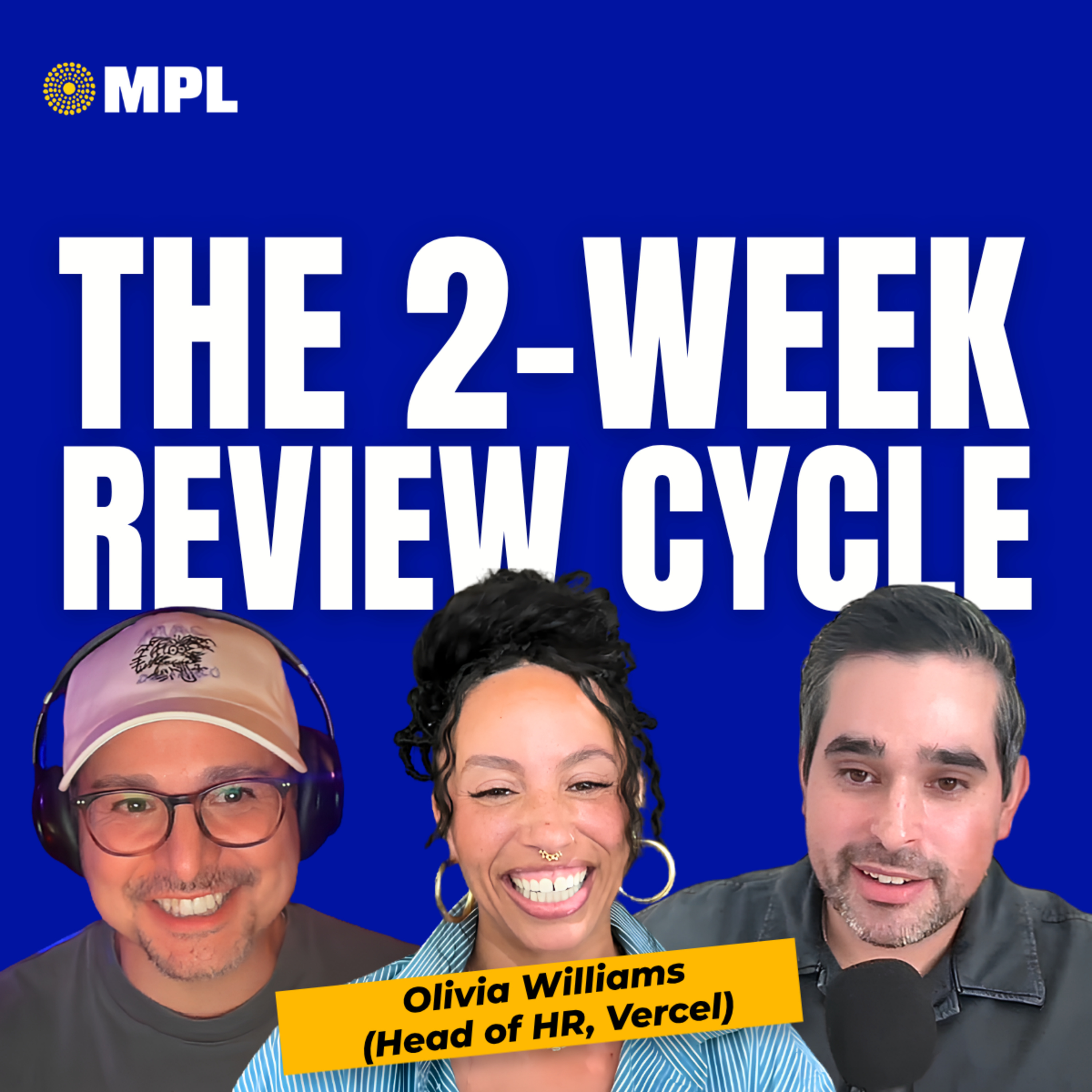
333 - Vercel's 2-Week Review Cycle & Flight Risk Tool: Olivia Williams (Head of HR, Vercel)
In short
Olivia Williams (Head of HR, Vercel) explains Vercel’s shift from a traditional 10–11 week, twice-yearly performance review process to a two-week review cycle, plus how Vercel uses internal tools for continuous feedback and “flight risk” (attrition risk) scoring.
Guest background
Olivia has had three career phases: education (English major; taught for 6–7 years while raising her daughter), then tech via recruiting (sourcer → full-cycle recruiter → series A talent function), and later startup HR leadership. At Vercel, she focuses specifically on HR/HRBP.
Key claims
The old cycle lasted ~5 months/year and most reviews were submitted on the due date; the new model gives only one day for review writing, compresses calibrations to ~4–5 business days, and reduces comp planning time. Feedback quality and sentiment improved; Vercel’s CTO praised the change publicly.
Notable examples
PerfBot monthly Slack check-ins (3 questions; 5 minutes; manager + self; 6-month record; dashboard). PerfBot 2.0 integrates with Okta/Workday and supports security. “Flight risk” uses ~15 weighted factors (including Slack activity dipping 2–3 months before leaving) and Claude-assisted analysis to produce employee health scores while protecting survey confidentiality.
Written by AI. May contain mistakes.
Chapters
0:00
Introduction to PerfBot
Learn about PerfBot, a feedback tool integrated with Slack for monthly check-ins.
“So again, PerfBot is our monthly feedback check-in tool.”
1:32
Catch-Up on Basketball and Injuries
Hosts discuss personal experiences and injuries related to basketball.
“I feel like we've been super busy the last, I don't know, like month or two where we've had three or four recordings a week.”
2:37
Good News Stories
Olivia shares her personal ritual of celebrating her birthday alone.
“It was, it was pretty nasty, but I'm back.”
3:56
Steven's Career Transition and Family Update
Steven discusses his career change to sales and shares personal family news.
“So I, I'm allowed to have these days now because she learned it.”
5:55
MPL Live San Francisco Update
Updates on the upcoming MPL Live event, including sponsor progress and planning.
“We are officially two months out or like two months and two days.”
7:04
Olivia's Career Journey
Olivia shares her unconventional career path from college to HR leadership.
“Olivia I mean you should definitely mention the Craigslist part like that part blew my mind.”
8:33
Understanding Vercel's Business Model
Discussion on Vercel's infrastructure and its role in building apps.
“I would say I'm in my third career at this point and feel like there's still one more on the horizon.”
14:00
Rethinking Review Cycles at Vercel
Learn how Vercel transformed its performance review process to maximize efficiency.
“She was like, this is interesting, you know, check it out.”
16:40
Employee Feedback on the New Cycle
Discover the overwhelmingly positive feedback from employees on the new review cycle.
“And how do I get like, how do I crush that?”
19:40
The New Two-Week Review Cycle Process
Understand the detailed schedule and workflow of the new two-week review cycle.
“How different was the process before from today?”
Show all 23 chapters
22:00
Tech Stack Behind Vercel's Review Cycle
Explore the technological tools supporting Vercel's performance review process.
“So existing tech stack, we'll talk about existing and talk about future state things.”
26:30
Building Internal Tools for HR
Learn about Vercel's journey in creating internal tools to enhance HR processes.
“Now we're just going to continue to build on that.”
28:00
Empowering Internal Solutions in HR
Learn how empowering employees to build custom tools can enhance HR processes.
“a bunch of shit you don't even need or want.”
29:50
The Importance of Play in Work Culture
Discover why fostering a playful work environment is crucial for creativity and engagement.
“So, you know, really grateful to work with people who just want to play, you know, and so like that's, and work at a company like for sell that is encouraging of that.”
31:30
Navigating Review Cycles with Custom Solutions
Understand the challenges of managing review cycles across different time zones.
“And there's not often time to just like take a creative breath.”
32:50
Demonstrating PerfBot's Functionality
Explore how PerfBot integrates into Slack for performance reviews.
“And then I have to also write my self check-in.”
35:10
Tools for Identifying High Attrition Risk
Learn how data is used to track attrition risks and improve employee retention.
“My manager is a busy woman and she hasn't completed hers, but you can see you'll be, You're able to see like I mark myself as exceeds and like does that match up with what my manager is saying about me.”
36:40
Data-Driven Strategies for Employee Engagement
Discover how to leverage data to enhance employee engagement and retention strategies.
“I think when we talked about it, you were explaining that being an AI company, you compete with the best of the best, the top companies.”
39:20
The Role of Data in HR Decision Making
Understand the balance between qualitative insights and quantitative data in HR.
“which is also an important factor, but it's also very data-backed based on, you know, what we saw from the people who left.”
42:00
The Importance of Data in HR
Learn how combining qualitative insights with quantitative data enhances HR effectiveness.
“So a couple of things I'll say about that.”
43:39
Fostering a Culture of Creativity
Discover how innovative companies encourage creativity and play among employees.
“Well, I want to be respectful of your time.”
45:09
Creating Time for Innovation
Understand the necessity of allocating time for creative projects within teams.
“So, yeah, I mean, I would just encourage them to download Claude and just like try.”
48:29
Rapid Fire Questions with Olivia Williams
Hear quick insights and advice for HR professionals from Olivia Williams.
“And so that notion of like playtime or first the agency and the freedom to play and not feel bad about it.”

Ask about this episode
Get the gist, explore an idea or ask about something said.
 Claude
On The Modern People Leader: Forward-Thinking HR, what are the key points of this episode?
Searching your listeningTranscript
Automatic transcript. May contain errors.
0:00Olivia Williams: So again, PerfBot is our monthly feedback check-in tool. It's integrated with Slack. And essentially, you just do forward slash check-in once a month, and you get a pop-up in Slack, and it asks you three questions. What did you ship this month? What are you focusing on for next month? And how would you rate yourself for the last month? Takes five minutes to complete, and then boom, it's done. So as an individual contributor, write it about myself, and then my manager also writes one about me. Um, so again, it just like creates this consistent feedback loop between manager and direct report and creates this running record of what someone has done over the last six months.
0:36Olivia Williams: And so this was also an internal build that started with chat GPT, like an app script, um, that, that Rachel and my team built, uh, it spoke to a spreadsheet and then sent some message via Slack. And like, it was pretty like kind of, um, it was thoughtfully put together, but a little clunky. We were very fortunate to hire a guy named Stan, who is our HR technologist. So when he joined, we were able to then build PerfBot 2.0, which is a much more durable build that integrates with Okta, with Workday, continues to integrate with Slack, and also meets all of our security needs as well. You're listening to the Modern People Leader podcast, where we go behind the scenes with today's top HR leaders and work experts.
1:19We talk to them about how they've gotten to where they're at, what they do every day, and what they see coming next for the future of work. Hope you enjoy.
1:32This is our first podcast of the week. I feel like we've been super busy the last, I don't know, like month or two where we've had three or four recordings a week. And so, yeah, I'm really excited for this one. Me and Olivia had a really fun catch up last time we talked. We ended up spending like 15 minutes talking about Achilles tears and torn ACLs and basketball. Sounds like a terrible catch up. Well, no, it was a good catch up. I was getting her advice because she's a former college athlete. She played basketball. And you know me, Steven, I'm a big hooper. So I immediately had to jump in and explain that I've been wanting to hoop again, but I'm very afraid.
2:14And she didn't ease my fears at all.
2:18Olivia Williams: I think I provided some great words of wisdom. I just said, make sure you stretch, you like are working on some of those lateral movements and protect your Achilles. Yeah. So Olivia said that she, she tore her Achilles doing a step back jumper like a year and a half ago. Yeah. A year and a half ago. Achilles. Yeah. It was, it was pretty nasty, but I'm back. I'm not back on the court, but at least I'm back on the track and running and lifting and all of those things. that's good good well we start every episode the same way and that's with good news stories could be something personal could be work related just whatever is coming to mind for you and we like for our guests to go first so if you have something please kick us off stories I think the good news that I'm leaning on this week I just celebrated a birthday and I allowed happy birthday thank you yes um I my the last three years I've had this this ritual of spending the actual day by myself because I just want to focus on what I want to do.
3:21Olivia Williams: I don't want to be waiting on anyone. I want to eat what I want and chill where I want and all of those things. So I had a lovely day at the spa, treated myself to a nice lunch, got some ice cream, watched some reality TV, and I was asleep by nine. And it was great. Yeah, it was like perfect. That sounds like my dream day. Yeah. Both Steven and I have toddlers. Well, I have a toddler and he has a seven, eight month, eight month old. And so, yeah, like I, I dream of having a day like you just described. Yeah. Maybe you just got to wait, wait about 20 years. My daughter's 22. So I, I'm allowed to have these days now because she learned it.
4:02Olivia Williams: Yes. Steven, do you have anything? Yeah. I'm just like, I'm my life's in transition in so many different ways. So I'm trying to like flip context. So I'm just going to share what's going on. We were just touching on this right before we hit record. So I recently changed my career and I went from HR practitioner, vendor, thought leader to sales, like full, like hard, hard transition. And our product went live this week. The product's called Playhead and it's music software production, music production software excuse me I got that backwards and it is like incredible like what this what the product can do and that's how I got involved as I like overheard like demos of the product and in sales like when you're starting from zero it is like very scary going from nothing to something Daniel and I have done it together twice now you know and I'm going through this like in a totally different context.
5:09And what I keep, what I've always shared with, with sales teams is it's like small wins. Like, you know, when there's nothing, you just need data, something to tell you, like, are you, you know, are you going the right direction or not? And at this stage in the game, if it's a no, the like sooner we can get no's the better. And I'm starting to do some, some more advanced campaigning because I'm leading the effort to build our product for audio teams. And all that to say, I'm getting some positive cues. I'm getting some no's, but I'm also getting some yeses. And that's a great place to be as a salesperson just early on.
5:48So super excited. Joaquin, my eight-month, almost nine-month-old, started crawling yesterday. So I guess I should throw that in. Shout out to Joaquin. But that's all I got. and some great news. What do I have? Okay, so MPL Live San Francisco. It's starting to ramp up. We are officially two months out or like two months and two days. And at this point, usually we don't have, like there's some progress, but we're in the very early stages with finding speakers, with finding sponsors. And I'm feeling really good about where we're at. I think we have four sponsors so far. As of today, we have another two or three that are verbals.
6:31And so I haven't even shared that news with you, Stephen, so that's good. And then we locked in our second of the three panelists that we need for the live podcast. And then we have two or three out of the six for the Future of Work Faceoff. And so it's all coming together. it feels maybe not easier than past events, but like more predictable because we have a playbook of sorts. And so, yeah, everything's coming together. And in a couple of months we'll be in the Bay Area and hopefully Olivia can join us and come hang out. But I'm excited. So Olivia, you know, I call the next question, my favorite question, I call it the Brene Brown question it like what's your story like tell us everything like we you know you are in a really cool role at Vercel and we we want to hear how you know the ups and downs the twists and turns and what got you there.
7:29Olivia I mean you should definitely mention the Craigslist part like that part blew my mind. I feel like these days Cloud and ChatGPT can get you surprisingly far in HR at work. And they're great. Until you need live people data, or you need data from performance, comps, surveys. Then suddenly you're exporting CSVs, you're explaining the company's entire history, and you're figuring out what's actually safe to share with who. And that's the gap that Shapes is closing. Shapes basically brings that AI experience directly into the HR platform, with your live people data, your org context, and your existing permissions built in.
8:06So instead of jumping between systems, people teams can build things like a flight risk dashboard, a reorg simulator, a calibration grid, or a completely custom workflow or visualization. You just describe what you need and Shapes builds it from the people data that's already there. It's kind of like Claude and your HRIS had a baby. If you want to see what this actually looks like in practice, go book a demo with Shapes. You can find a link in the show notes.
8:33Olivia Williams: Yeah, okay. I would say I'm in my third career at this point and feel like there's still one more on the horizon. So when I was in college, well, first, I had my daughter right after high school. So while I was in college, I was raising my kid. I was playing basketball so I could pay for school. And then I also worked in insurance. So very much think like cubicle life, casual Fridays. Like it was just a very like interesting, weird environment to be in as an 18, 19 year old. But that's how that's how I kind of paid my way through school. I focused on English. That was my major. And I wanted to be a teacher.
9:11Olivia Williams: So post-college, I started working in education. I did that for about six or seven years and then decided that I wanted to make a pretty like drastic kind of life change and career pivot, both for myself and my own curiosities and also to support my daughter, my family. It's hard being in the Bay Area as a single parent. So I just started looking for jobs. And Craigslist was the thing then where people were finding jobs, apartments, like misconnections, all of all. It was like the one stop shop. So I started I put together a resume as an English major. I had kind of a creative like I took some creative liberty liberties with my cover letter and put things in there like, you know, you should hire me because I won the second grade spelling bee and that I'm way more charming in person and all of these things.
9:59Olivia Williams: Ended up applying, unknowingly applying for a job at Apple. And I got the call back from the hiring manager and she was like, hey, we would love to bring you onto campus. You know, we can send a black car for you if you want. And I was like, a black car? You know, I'm like kind of young, not not like kind of in the tech world, not understanding what I was signing myself up for. And I was like, I don't need a black car like I can just drive myself. So I ended up driving out to Cupertino, interviewing in person for the job. And I got it when I joined on my first day. I, again, didn't really know what I was stepping into.
10:32Olivia Williams: But everyone I was talking to kept talking about Johnny this and Johnny that. And I was like, who is Johnny? And they're like, well, it's Johnny Ives. And I was like, what? And I looked him up and I was like, oh, like that's whose team I'm supporting. So I found this job on Craigslist as kind of a recruiting coordinator slash like researcher supporting the design team at Apple. And it was an interesting role because he was only hiring maybe one designer a year, if that. So a lot of the role was more so around kind of courting these candidates and also finding like interesting people to come and speak to the design team.
11:08Olivia Williams: Like we looked at like people who design spacesuits and wanted them to come to the design team or people who design watches. And so like just like supporting that design team with kind of some creative inspiration. So that was my first step into tech. I did that for a year while somebody was on parental leave. And then I kind of grew up in the tech space through recruiting, kind of had a traditional path of like sourcer, then full cycle recruiter, and then stepped into a series A startup to build out their talent function. And then we ended up having to fire someone. So I quickly became like the head of HR as well.
11:43Olivia Williams: And that's been kind of my path since then. I've done a couple revs of being the first hire in the people function at an early stage startup and building the kind of entire thing from scratch. Vercel is actually the first time where I've focused specifically on the HR slash HRBP function. And this is kind of a later stage, larger company than I've been at over the past 10 years or so. So that's a little bit about my journey. Love it. So many cool parts of it that I'm going to not dig into because we want to get into the good good here in a sec. You know, Daniel and I have nerded out. We love nerding out about all the cool new AI tools.
12:22And I remember when Vercel popped up on our radar, it was playing through like Lenny's newsletter and we're like, what is this one? We need to go try it. But I would imagine there's still a lot of people that may not be super familiar with your brand or what you do. And so if you're at a party, how do you explain what your core business is?
12:42Olivia Williams: Yeah. So, I mean, if you see the billboards, Vercel is agentic infrastructure. And you're probably like, what the hell is that? But I think the best way that I use to describe it is you can think about Vercel as like the AWS for AI. So we give developers and agents the tools and infrastructure that they need to build apps and to build more agents. That's a pretty great explanation. And we actually built our MPL Live landing page with V0, which is one of the Vercel products. And I've noticed like most vibe coded products, whether they're vibe coded with V0 or something else, most of them are hosted with Vercel, right?
13:24And 99 % of people would never know.
13:27Olivia Williams: Yeah, there's kind of an inevitability to our product. And because it's kind of LLM agnostic, that is also an advantage for us. And so today we want to talk about your review cycle. And I guess before we get into it, give us the story of how the team decided y 'all were going to make some pretty big changes. I think if I remember correctly, it was after seeing the LinkedIn post from Remote CPO. Am I getting it right? Yeah. So Jenny, who's our chief people officer, passed along this post to me that was a video, like a YouTube video from Remote.com, who had shifted their review cycle to being two days.
14:07Olivia Williams: She was like, this is interesting, you know, check it out. And I ended up having an offsite with my team. We watched the video and we were like, we could do something like this. But we don't want to necessarily just like directly replicate what remote.com did because different company, different culture, different ways of operating. We wanted to make sure we approached it in a way that met the needs of Vercel. So we took a hard look at our existing process, what was working and what was not working. and one of the things that we realized is that, you know, it's a 10 to 11 week long process that we were doing twice a year.
14:42Olivia Williams: So basically we were in a review cycle for about five months of the year, which is crazy. So we were either in a review cycle, we were retroing the review cycle, or we were prepping for the next one for the entire calendar year, pretty much. And that just was not sustainable. And also, you know, it is what every company does and why do we need to continue to approach things in the way that every company does it. The other thing we looked at was the data for review submissions. And what we found was that over 80 % of people were submitting their reviews, either their self-assessment or their manager reviews on the day that they were due or after.
15:15Olivia Williams: So we were giving people two to three weeks to write their reviews and they were waiting until the last day anyway. And so that became kind of the clear area where we could substantially cut down the duration of the review process and kind of force people's hands and say, you know, you wait till the last day anyway, we're just going to give you one day. So it's only on your to-do list for one day, knock it out and then we're done. So we also looked at the other components of the review cycle. Calibrations and comp planning are the other two big chunks. Calibrations are a huge lift for the HRBP team and for leaders and managers as well.
15:49Olivia Williams: But we decided to condense that down. I think we went from those being about 10, like seven to 10 days to now they're about four or five days of calibrations. And then comp planning is significantly cut down as well. So we went from about 11 weeks to a two week long process. The big change being cutting down on the amount of time that people have to actually write their reviews. I mean, it sounds so much better than a traditional process. The first thing that comes to mind, like I'm literally, I couldn't have planned this better, but this is my sticky goal, my goal and it says two week sprint flip pipeline sideways that means my pipeline is so small right now that we're tracking the tracking it vertically on a the post-it wall post-its yeah and i need a bill i need more pipeline so like if if i could work off of something like this and then get feedback, like in a much shorter cycle, right, like a two week cycle, like that would help me immensely, because right now my world is moving so fast, that, you know, if I don't have like a clear understanding, like what I'm getting, right, like accelerating that, but more importantly, for me, because I tend to zero in on like, what am I not doing well?
17:15And how do I get like, how do I crush that? And so, you know, what are, have you had a chance to get employee like sentiment on this? Like, I got to imagine people, you know, like it, like, as I was just describing. So share with us what you can around like what people have said about it so far.
17:33Olivia Williams: Yeah. So we actually are just wrapping up our second round of this, the shortened review cycle. We did the first one in February of this year, and then kicked off the second one in August. and the feedback has been overwhelmingly positive. I always joke when I have to present in all hands about performance reviews, I'm like, I'm here to talk about everyone's favorite topic, performance reviews. And like people actually comment in the chat, like, actually, I love our cycle. And no one ever says that about Perf, right? And so like the sentiment from the business has been overwhelmingly positive.
18:02Olivia Williams: We also had our CTO Malta write a really lovely and complimentary post on LinkedIn after the first cycle and basically saying, you know, during his time at Google, It felt like we were always in a review cycle. We flipped that on its head and shortened it. And he credits our team for being able to execute on that in a really masterful way. So the thing that's been really cool is a couple of things. One, to your point, people are getting feedback faster. In the previous world, the review cycle is two and a half months. And then you finally have your review conversation and you're talking about something that happened six to nine months ago.
18:36Olivia Williams: And, you know, sure, it's still useful, but at the rate and pace of like iteration and evolution of the business, it's not meeting the needs anymore. So it's really cool that people are getting feedback faster. The other thing is they really appreciate that we that we really reserve the time for them to actually focus on writing their reviews. So on the two review writing days, it's no meeting time. We have it blocked off on the calendar. People's only job is to write their reviews. So it's like company sponsored time to just focus on this thing. And so they've really appreciated that. And then the quality of the feedback hasn't suffered as a result.
19:12Olivia Williams: And we can talk a little bit about how we're like kind of building this culture of continuous feedback to ensure that we don't have recency bias and that we can still have really fruitful review conversations. But the quality hasn't suffered as a result and people feel that. So yeah, feedback has just been overwhelmingly positive about the change. And then you mentioned that you compress the calibrations from two and a half weeks to about five business days. What do these five days look like? How different was the process before from today? Yeah. So I'll map out what the two week review cycle looks like.
19:50Olivia Williams: So day one and two are the days that we have for review writing. So again, like have those blocked off on the calendar. That's people's only job. Day three, ideally, is when my team is able to get our shit together. So we're chasing down people for their final reviews. We're prepping for calibrations. We're getting all of that ready to go. And then days four, five, six and seven are calibrations. So my team, like this is like our Super Bowl. So we're, you know, because we're a global company, some of my HRBPs are having their first calibration start at 6 a.m. Pacific time. And, you know, we're going all the way until the end of the day.
20:23Olivia Williams: And it's certainly a sprint. I often tell my team like, OK, you know, this is our two week sprint. And at the end of this, I'm going to take you guys out to a nice meal and we relax. We take time off. But like we've got to really just like kind of lock arms and buckle down for this process. So the calibration days are, you know, typically for my team, just back to back meetings. But, you know, I feel very grateful for the team that I have in seat because one, we recognize the value that this process adds to the business and therefore we're willing to make the sacrifices to make it happen. And two, they just execute on it in a really like crisp and masterful way.
20:59Olivia Williams: So that's the calibration process. And then we have comp planning after that. So it's not just my team that needed to be bought into this two week sprint. We also needed the total rewards team down for comp planning being kind of on an accelerated timeline. And we needed people ops ready to upload all of these changes into the system on an accelerated timeline. And so it's certainly a team effort to make it happen. But, you know, we all recognize that it's in service of providing a it's a product, frankly, to the business that actually meets the user's needs. And you took it exactly where I wanted to go product wise.
21:34Like, what is the tech stack look like to support this? because there's no way in hell you're exporting spreadsheets from your comp system and cobbling together other data from the performance system, sending that to find like doing all that like crazy things that traditionally have had to be done in advance of a calibration if you're going to do it in such a short period of time. So I'm just like, walk us through the stack if you can.
21:59Olivia Williams: Yeah, for sure. So existing tech stack, we'll talk about existing and talk about future state things. So existing tech stack, we're using CultureAmp as our review writing tool. I'll just say that. I'll reserve my opinions about CultureAmp. So we're using that for our review writing tool. We use Pave for comp planning. That's been a really effective tool for us. And then for calibration. So Rachel Johnson on my team is just a wizard with spreadsheets and she creates this really beautiful and robust spreadsheet for us to use for our calibrations. And it's worked really effectively for the last two cycles.
22:32Olivia Williams: We do a good job of prepping a lot beforehand. So So we're well equipped for what's to come. But that's the existing tech stack. In addition to that, and I think we'll talk about this a little bit later, is like with this culture of continuous feedback, we needed a tool to be able to capture that continuous feedback for us in a really easy and seamless way that also met the business where they're at. And so we have an internal tool that we built called PerfBot so that we can do these monthly feedback check-ins that allows for review writing to be a lot easier because you have this like kind of six month record of what's been done.
23:05Olivia Williams: So that's current state of things. Future state of things. I have a weekly meeting on my calendar that is called Kill Culture Amp. And so our plan is to, we're working on an internal build so that we no longer have to use Culture Amp for our reviews. And I'm extremely optimistic about our ability to build something that's going to be better than what we're currently using. Are you able to share with us what that process looks like? Okay, so you have this goal of killing culture amp and, and thank God they're not a sponsor. Um, no, that's why I was trying to be careful with what they're not a sponsor.
23:42Um, be glad Daniel's answering. He had the mic next. Cause you don't want me to rant about my, so you have this goal. You want to kill culture amp. You want to build something internally. What does it look like? You know, being at a company like Vercel where this is like a core competency across the company where you're building all of these internal tools. Walk us through what this build process will look like or what you think it'll look like. Yeah.
24:12Olivia Williams: Well, fortunately, we've got a little bit of practice with it because we built PerfBot internally. So just a little bit about that tool and how that relates to this upcoming project. So again, PerfBot is our monthly feedback check-in tool. It's integrated with Slack. And essentially, you just do forward slash check-in once a month and you get a pop-up in Slack and it asks you three questions. What did you ship this month? What are you focusing on for next month? And how would you rate yourself for the last month? It takes five minutes to complete and then boom, it's done. So I, as an individual contributor, write it about myself.
24:46Olivia Williams: And then my manager also writes one about me. So again, it just like creates this consistent feedback loop between manager and direct report and creates this running record of what someone has done over the last six months. So I'm sure we've all been at the, like sitting at our desk, ready to write our performance review and all we can think about is last week. And so this creates this running record. We also have a dashboard that we built so that leaders can now look at the kind of performance distribution at any given time for their orgs. And so this has been really useful. One particular recent use case is our chief people officer just came back from parental leave and she was able to go into the PerfBot dashboard and see the performance of her org over the last couple of months while she was out.
25:26Olivia Williams: And so it just like gives access to important data for our leaders so that they understand the performance of their orgs. And so this was also an internal build that started with, started with chat GPT, like an app script that Rachel and my team built, spoke to a spreadsheet and then sent some message via Slack. And like, it was, it was pretty like kind of, it was thoughtfully put together, but you know, a little clunky. We were very fortunate to hire a guy named Stan, who is our HR technologist. So he sits in the PeopleOrg, and his only focus is on supporting us with really innovative internal builds.
26:01Olivia Williams: And so he has deeper technical knowledge than what we had on the team before. So when he joined, we were able to then build PerfBot 2.0, which is a much more durable build that integrates with Okta, with Workday, continues to integrate with Slack, and also meets all of our security needs as well. Because like anytime you're dealing with sensitive people data, you want to make sure that you are being thoughtful about that. So as we're approaching this build for Killing Culture AMP, we already have a great foundation with PerfBot. It's something that our employees are already interacting with. Now we're just going to continue to build on that.
26:35Olivia Williams: So the important thing was for, I think sometimes builders really want to focus on building like the flashy, cool thing. And so like Stan's inclination is like, how can we integrate AI so that it writes the reviews for people and dah, dah, dah, dah. And I'm like, yes, that's great. But first we need to like, just focus on the logistics of the review cycle. How can we make sure that it's sending the right alerts to people and that like, it understands who's the manager for whom we can like figure out the peer review things, all of those things. So we mapped out the whole kind of workflow of the review cycle for our builders to be able to understand the like must haves for this product.
27:09Olivia Williams: And so that's the stage that we're at now is like, we've kind of showed them culture and they got to see like behind the scenes, how we configure it. And they're going to build the like kind of bones of that first. And then we get to make it pretty. And then we get to like kind of incorporate some really useful AI tools into, into the product as well. Okay. Now I am going to rant. I am this more for like open discussion. I, I started vibe coding. Jeez. That was like, I don't know, a year, 15 months ago something like that and I started small and you know got more and more into it and by like a year ago I was like sas is cooked like I just don't see a world where people are purchasing a product that meets 80 percent of the use cases like okay and then they charge you for a bunch of shit you don't even need or want.
28:07And then to get maybe that gets you to 90%. And then for the last 10%, you're just having to like, you know, do backflips and cartwheels to get it over the finish line when you can like design a built for purpose internal solution. And I say that because I have in my current role, and I have, I built our own CRM, and I built it, you know, with a couple of products in mind, Clay and Pipedrive. And this thing cooks. I like, I have API. I built all the APIs. I now have built an MCP server so it can talk directly to a sales OS project I have in Claude. Like it, I don't know. I mean, how, first, like what are your thoughts on that?
29:00Obviously within the HR realm. and and like how far do you think we are from a world where like everyone's building perf box
29:11Olivia Williams: we're already there and i'm obsessed tell us more because i think people don't believe like when i tell them they look at me like i'm crazy and i'm like guys like yeah yeah so i think we're already there it's just about um empowering people to to play right like i think that we've shifted away from like play and like being able to like build stuff and like fail and like, you know, meet like friction points and get over those roadblocks. We just want that like seamless solution. And we think that the SaaS tool that meets 80 % of our needs is like the easier approach, but like play is like, that is, that is crucial to us, like kind of maintaining a level of curiosity and interest in the work that we're doing.
29:51Olivia Williams: So, you know, really grateful to work with people who just want to play, you know, and so like that's, and work at a company like for sell that is encouraging of that. So I do believe that we're already there. And when I talk to people about what we've built internally, I think it is quite inspiring for them because the initial build was built by, again, like Rachel on my team is fantastic, but she's not a technical person. What I'm seeing increasingly though, is people in that type of role, she's a program manager, are needing to build their AI muscle because that is the direction that the industry is going.
30:21Olivia Williams: And then this role of like kind of HR technologists or even having software engineers who sit on the people team is also the direction that I think people orgs are going so that they can, again, you know, kind of build these tools that meet all of the needs of the business. I think the straw that broke our back this cycle was CultureAmp does not have functionality to understand time zones. And so we have this review cycle that we're launching and people have 24 hours to write their reviews, but my 24 hours and my APAC colleagues' 24 hours need to be different culture amp did not understand that and so we had to just have like one kind of agreed upon time zone and like window for things to launch and for notifications to be sent and that then sorry for interrupting but that's what i'm saying like that's like a single prompt like you single prompt your vibe coded solution it's like here's your custom elegant 20-0 time zone and whatever you want it and so yeah so i think we're there the again it's like the encouragement for overplay, but then also just like, you know, having a little bit of space to breathe to do that.
31:24Olivia Williams: Right. And I think that it can be really hard in the people function where you have to be like very reactive to the needs of the business. And there's not often time to just like take a creative breath. So, you know, fortunate to be at a place like Vercel that doesn't accept the status quo. And it's like, what is this shitty SaaS that we're paying a lot of money for that doesn't meet all of our needs? Please build it. And so there's a lot of encouragement there. I think sometimes seeing is believing. And I remember when we talked a few weeks ago, you were like, if there's a way to share my screen, I would love I know that would require like some dummy data.
31:56And I don't we didn't catch up before this to see if you had that ready. But if you do, I mean, I would love to. Yeah, yeah.
32:03Olivia Williams: I let me see. And it's cool if you don't have a demo account. Would I be able to, I don't have dummy, a dummy data thing set up, but let me see. I can show you a little something or I can set you a recording after this. And if you want to kind of just show us a little something, it doesn't have to be the full thing, but for those of you that are watching on Spotify or watching on YouTube, and if you're not watching on YouTube or Spotify, you should be. I really do think seeing is believing and you can do some incredible stuff. So whatever you can share. it's exciting let me make sure that i share the right thing uh window there we go all right can you see my screen we can okay cool all right so we've got perf bot here in our agents and apps section of slack so we just sent out our reminder to complete the august check-ins so all i gotta do is type check-in here and then it's going to pull up all of the reviews that i need to write So I've got to write all of my manager reviews for my direct reports.
33:07Olivia Williams: And then I have to also write my self check-in. So I can say complete it. How would I rate my performance? Exceeds expectations, obviously. Amazing podcast. Where do you want to grow? No need. I'm great. And then I submit it. Boom. And so it lives here. So I can always go into this kind of chat in Slack and see all of the reviews I wrote. And then same thing when I'm writing reviews about my direct reports. But the big kind of value add with PerfBot 2.0 is the dashboard that we built, which I want to also open up for you. If you don't mind, and we'll take just a little bit of a second here. I've always just to kind of fill some some time here.
33:52I've always said that, you know, the sign of a great of a well built product is if you can just demo it literally on the fly like we're doing now. And so I love the simplicity. And I love like, I love how it's just embedded into the workflow. I'm guessing y 'all have a Slack culture. So like, that's where I'm doing. Yeah, that's where I'm doing everything and getting my info. So I'm just going to pop in here. drop it in real quick. And so do you get, how do you notify people? How am I notified that PerfBot needs my input or does it alert me?
34:27Olivia Williams: Yeah, it does alert you. So you get this, when we open up the cycle each month, you get this message here. And of course I'm like sending comms to the business as well. I trust that you can still, you're seeing my Slack right now, right? Yeah. So you get this, you get this alert here and that tells you that you need to write your check-in. On the backend, the HRBP team is able to see all of the completion rates and And leaders can see that too. So we can like kind of start chasing people down so that we make sure that we're getting what we need. I want to switch my share so that you can see the dashboard as well.
34:58Olivia Williams: This is going to have some data, but I think it'll be fine. Okay, so we can always work our magic and blur things out if we need to. So this is when I log in, this is the dashboard that I see. So you can see here the check-in summary. These are all of my self check-ins. My manager is a busy woman and she hasn't completed hers, but you can see you'll be, You're able to see like I mark myself as exceeds and like does that match up with what my manager is saying about me. So one of the things that this does is it identifies any disconnect between how I'm viewing my performance and how my manager is viewing my performance, which then allows for better review kind of outcomes because we stay more aligned through the process.
35:34Olivia Williams: And it minimizes the amount of like shock at the end of the cycle. The other thing as a manager that I'm able to see is my team dashboard. forward so I'm able to see like when they complete their check-ins um and then there and then my kind of check-ins about them also pop up here we're in a new cycle so you can't see the the data but here we go okay so um so I can see like the the completion that they had and like what they they rated themselves and what I what I rated them so this is their self-reviews and this is the the manager reviews. And then you're able to kind of click in and see the actual like kind of content of both what she wrote about herself, and then what I wrote about her.
36:17Olivia Williams: And then it matches up like her self assessment. So she says she's off track, she's very humble. And then I said, like, she's, you know, meeting expectations. So again, it like kind of points out the discrepancies between how people are viewing their performance versus how managers are viewing it. This is sick. And I feel like we could spend another five, 10 minutes looking at just the perf bot in the dashboard. But I also want to learn more about this tool that you've built to spot high risk for attrition. I think when we talked about it, you were explaining that being an AI company, you compete with the best of the best, the top companies.
36:56And because you compete with them, it's really hard to get the best talent. And it's really hard to keep the best talent. There's a lot of poaching going on. And so we live in this completely new world where it's more important than ever before to keep a very good pulse on where your talents stand and how people are feeling. And you built out this platform with 15 different factors that you're tracking all the time. And from that data, you're able to quickly spot who's at risk and who's not at risk. Hopefully I did an okay job of explaining that, but would love to hear more about that.
37:33Olivia Williams: Yeah, for sure. So a hundred percent, we're like kind of living in this different world now in terms of like the war on talent. I think Rissell does a really great job of attracting top talent. And also there are a lot of other attractive companies that want the people that we've hired. And so as we were kind of tracking turnover last year, it just, the run rate was just going up and up and up and up. And it was like, it was quite alarming. And then we were of course, like starting to. So we did a deep dive into our turnover from last year and we looked at all of our regrettable departures and all of the things that were true about them.
38:07Olivia Williams: And so that's everything from their tenure to like what team they were on, number of manager changes. We looked at their engagement survey score trends. We looked at, we're a very Slack heavy company. We looked at Slack activity, which I think is like an interesting thing because what we found with that is that people's activity tends to start to dip about two to three months before they leave. And so like looking at those trends was also like a really fascinating find for us and something that I think was very specific to Vercel because again, we're such a slack heavy company. So we looked at all of these different things and identified about 15 different factors that were true about the people who left.
38:47Olivia Williams: And then we like kind of applied weighted scores to them, leaning on Claude to do a lot of this data analysis and help us understand what areas were more statistically significant than others. And so in taking that and in looking at all of that historical data, we're now able to apply that to our existing employee base and really like understand based on what we know was true about the people who left, are these things also true about existing employees and like at what kind of level? And so we're able to now have this employee health score that's not just like, just like kind of anecdotal or qualitative based on conversations and one-on-ones, which is also an important factor, but it's also very data-backed based on, you know, what we saw from the people who left.
39:30Olivia Williams: So now on a monthly cadence, we're able to apply that methodology to our existing employee base. And it spits out for us like, okay, based on all of these things, these folks are critically at risk. These folks are at high risk. And then these are the people that are probably doing okay because very few of the things that were true about people who left are true about them. So it helps us narrow our focus onto the, instead of having to worry about the entire employee base and think about bespoke, like proactive, retentive approaches for everyone, we're able to narrow our focus. And that allows us to be a lot more creative around our approach to retention.
40:07I think we're entering a whole new era of data-driven nudging for management. And I say that because at my company, one of the things we're AI first, AI native, and we have the benefit of having built everything with the intention of growing in a very specific way. And I can't go into all the details, but I oversee audio teams. There's a very specific profile of a music producer, sound engineer, mixer that would, I guess, fall into my bucket. And we have like, we're talking a volume of thousands. So that feels relative to, you know, an employee base, like, you know, that same kind of scale right now, we'll see how this scales as we get bigger.
40:57But there is like a data management flow. And so I there's a scoring system. And so I know anyone who qualifies, and this is based on very limited user information. It's like a couple of data points that we're getting in our user onboarding. But if we think about HR as a product, and we think about our employees are our end users of the HR products, you know, and our end goal is to keep people engaged in their jobs and thriving in their careers, if or so, like having this dashboard and these nudges of like, ooh, Stephen is like, has absolutely been crushing it. And PerfBot says his scores are off the charts and he has gone silent on Slack the last couple of months.
41:45I could just see how something like that is just going to unlock a whole new level of productivity and a whole new level of designing the HR product to the end user. Does any of this make sense? Do you agree? or am I like over? A hundred percent.
42:01Olivia Williams: So a couple of things I'll say about that. I think that HR can have a reputation of being squishy, right? And there's a human aspect, there's a human aspect, obviously it's human resources, but there's a human aspect to the work that we do. So there is some squishiness, but I think that the business understands data. And so like making sure that we're able to pair both the qualitative understanding, pair our intuition about what we're seeing, pair like all of our kind of historical understanding of the functions that we're supporting with very crisp, clear, quantitative data makes it a very, very powerful function that I don't think it has historically been that way.
42:38Olivia Williams: Certainly you have data around turnover and engagement survey scores, and that's valuable, but like there's much more that we can be extracting about the employee experience to help us make sure that we're keeping people engaged and retaining them. One thing that I want to make sure that I flag about this kind of employee health score that is important for, it just, I think feels really important is I never want to come to a leader with this data and say like, this person is at risk because they scored this thing on the engagement survey, because obviously that compromises the confidentiality of the survey.
43:09Olivia Williams: Instead, we provide the information to leaders as a summary. Like these people are at high risk. You understand our methodology. It's a combination of a number of different factors. Let's focus on making sure that they're okay. Let's check in with them. Let's make sure they have a development plan. Let's do a state interview. It just helps us to focus our attention. I do think my team is the only ones that have access to the raw data. And I do think that it's important to maintain that level of confidentiality with some of this stuff for our employee base. Well, I want to be respectful of your time.
43:41I know we started a little bit late.
43:43Olivia Williams: That's okay. You guys are doing... Y 'all are out of the 100 people leaders that we've talked to in the last, I don't know, years or so, I'd say that the work you're doing at Vercel is in the top 1%. And I think a lot of that is due to the fact of being an AI native company. I mean, you're literally building the tools to enable companies to do this type of work. But yeah, it's so impressive. And it sounds like you have a company of builders. Everybody is considered to be a builder. And yes, you have technologists around the team that are helping you do this work. But for the people teams that, you know, are listening to this episode and they're like, well, you know, that's all good for you, Olivia.
44:29Like you work at Vercel, you can do this stuff. What advice would you give to them, you know, for the people leader that maybe has some head trash about really leaning into this stuff?
44:39Olivia Williams: I'd tell them to reach out to me. And like, let's just talk. Yes, yes. So I think that's one. I think, you know, kind of to your earlier point, Daniel, like seeing is believing. And I think that we do have these like mental blockers because all of us come with these these HR playbooks that have worked, you know, time and time again at the companies that we've worked at. But the game is changing. And I think to maintain relevance in the function, you have to tap into some areas that might make you feel uncomfortable or areas that you haven't tapped into in a long time. Again, this like notion of play and this notion of creativity are really top of mind for me as I think about these builds.
45:14Olivia Williams: So, yeah, I mean, I would just encourage them to download Claude and just like try. It is a very user-friendly tool like Claude or V0 or, you know, they're very user-friendly tools and you talk to them in the way that you speak to a human. And so, yeah, encouragement to just try or, you know, reach out. I love asking these questions to the guests that we've had that are working at the most innovative companies right now. What blows your mind? Have you seen anything in the build HR space that you're like, whoa, that is sick? How could we ever do that? Short answer, no. But that might just be because I'm sure there's plenty that I haven't seen.
45:59Olivia Williams: What does blow my mind is actually kind of bringing it back to basics a little bit. And that is, my mind is blown by these companies who have baked into their culture time to build and not time to like build for the goal that they have for that week, but time to just like take space away from their day to day work to actually get their hands dirty and play. So I, you know, I think like companies like Figma, I think they have like Maker Week or something like that. And they just like bake this time into their culture that allows people to step away from their day to day work to try this type of stuff.
46:33That to me is mind blowing from a culture perspective, because it means that the company values that type of work and creating that space for their employees enough such that they are willing to kind of stop stop business in a sense to to allow people to do that.
46:47Olivia Williams: And I think that is the formula for creating really innovative and cool stuff. Daniel, who did we just talk to? Someone that was like the strategy they wanted to steal. I can't remember, but what this is reminding me of is like Google, maybe 10 years ago, I feel like they used to have, they used to, I don't remember what they called it, but like every other Friday was reserved for building. like you could you could you could build something that's for google you could build something for yourself you could lean into your your side projects or or you could just like use that time to do something you really enjoy and i feel like you need this time like if you don't have at least a couple hours set aside a week to work on this stuff it's just never going to get done the work is endless and that's yeah that's real we had a people team hackathon uh which was great Because like we started with like education and teaching people how to download the tools and connect them to all of the different stuff.
47:48Olivia Williams: And then we did have time blocked off on the calendar for people to build, but it always gets filled up. There's always a candidate to talk to or a fire to put out or whatever. It still resulted in people building some really cool stuff, but you almost have to like kind of step away from the office space and like physically be somewhere else to tap into that side of your thinking. Some of my worst vibe coding has been when I've tried to, I've tried, like, could I just give it a prompt, go work for 30 minutes, come back and give it a prompt. And I'm with Daniel, I'm with both of you. Like, I need like, a work block of time that I know, like, is not going to get interrupted if I want to do, like, if I want to build something special.
48:29And so that notion of like playtime or first the agency and the freedom to play and not feel bad about it. And and then kind of the the cultural alignment that like we protect each other's time to to create, I think is huge. And so with that, we have a couple more traditions. We should probably bring it to a close because we need to get through a couple of other things. The next section, you know, the next segment is what we call rapid fire questions. Same set of questions-ish. We change it every now and then. You ready to do this?
49:04Olivia Williams: Yes. All right, cool. Rapid fire. Rapid fire. Yes. What's one piece of advice you'd give to someone in HR who's just starting their career? Get a therapist. Oh, I like that. You have to take care. We are taking care of people all day, every day. It is a support role. It's a caretaking role. You have to take care of yourself as well. So yes, find a great therapist. Great response. All right. I know you were nervous about this next question. Very, very serious question. If your team gave you a superpower nickname, what would it be? Yeah, I don't know if this is a nickname. A thing that I often say is it's going to suck and then it's going to be over.
49:43Olivia Williams: I tell this to managers before they have to fire someone or going into a difficult conversation. I tell this to my daughter. It is a thing that I say. So maybe I am like, madam, it's going to be difficult and then it will be over. it's going to suck and then it's going to be over superwoman or something. Yeah. Like the fear vanquishers. I don't know. Like something, something like that. Okay. Okay. I'm going to keep it moving. What's a strategy or practice from another company that you'd love to steal? Not the work block that we just talked about. So something else. Sorry about that. I stole your.
50:16Olivia Williams: Shoot. Okay. Let me think. I, um, I'm hiring for an HRBP on my team plug, and I've been talking to a lot of candidates. And one of the topics that I always dig into is the rating scale for performance reviews. And I want to know what people's take is on it and like what they've seen before. And I think something I would like to experiment with and adopt, like I wish I had a sandbox to do this is like no rating scale at all. I don't know which companies are doing this, but I've talked to a couple of candidates who have, and we've explored that process, but I would like to see what that does for people and if it still is a motivating thing for them.
50:53Olivia Williams: So yeah, I'd say that. What's the saying? Like great artists steal, something like that. I feel like that, I mean, the performance review cycle in two weeks came from remote. Yeah, so, okay, next question. Sorry, I feel like I'm gonna derail us. Who should we have on the show next? If there were like one or two people leaders that you really admire or maybe you're following. Yeah, I have three thoughts here. So first is a woman named Dominique. She just moved into the chief people officer role at Coinbase. She was previously the VP and then has now recently stepped into the CPO role. I was at a dinner with her a couple of weeks ago and I have met her before.
51:31Olivia Williams: And I think she's fantastic. Relatedly, I think that it is interesting to talk to the number twos at companies as a number two. I think that there's like, you know, kind of a different level of visibility into the business, a different kind of level of being hands on with the things that they're building. And so like talking to to those folks, I think is would be kind of an interesting path to go down. And then the third thought I have is actually, you know, in addition to some of the innovative stuff we're doing on the HR side of things, our people ops team is doing some really cool stuff as well in terms of internal builds.
52:02Olivia Williams: So we just transitioned to Workday, but we were very adamant about running headless Workday. So our employee base doesn't have to interact with Workday. We've done some internal builds such that we have like our own org chart tool. We have like ways that they can update their information where they never have to go into Workday. And so these are like, you know, again, as we're thinking about stuff that has always been done in the same way over and over, we're approaching things differently. And I think our people ops team is doing a fantastic job of that as well. So, and shout out to the Workday Bots that are taking care of the things that all the painful things that HR people have had to do for all these years.
52:39Gosh. Well, we did it. We did it. We made it to the end. The final, one final tradition, we call it one word or phrase close. Just a word or few as we reflect on the last hour, how we want to wrap things up. And we prefer for our guests to go first.
52:56Olivia Williams: My word would be play. Yeah. Should I expound upon that? I just think people should play a little bit more. And like, you know, that's how you build this kind of stuff. I'm going to say hyped. I feel very, very hyped after this episode. I mean, yeah. I feel like sometimes we can get stuck on the theory of how to do this stuff. And so anytime we can actually see the thing that's being built or talk about how these changes are being put into place, you know what you're struggling with like these are always the best episodes so daniel and i often talk about a great episode or like the quality of episode on the feeling we have and so hyped i liked hyped i also feel hyped but you took that i'm gonna go with better late than never because i showed up grossly late and i am so sorry and i thought for sure i was like oh man i'm gonna go down and they're she's gonna have canceled but it happened and we did it and thank Thank you for being patient.
54:01This was an amazing way to share an hour. So thank you. You're now part of the fam. So hopefully you'll come back and chat with us again. So we appreciate you. Thanks.
54:13Olivia Williams: Thank you both. All right. Bye, guys. Thanks for tuning in to another episode of the Modern People Leader. We really, really appreciate it. And if you enjoyed the show, please leave us a five star rating. It would mean the world to us. and connect with us on LinkedIn. We want to know what you think about the show and you can find links to both of our profiles in the show notes. Thanks again for listening and see you on the next episode.
From the publisher
Olivia Williams joined us on The Modern People Leader.
We talked about how Vercel shortened its performance review cycle from 11 weeks to two weeks and how they built a 15-factor flight risk tool to retain top talent.
----
Sponsor Links:
MPL Links:
----
(12:25) Why Vercel Rethought Its Performance Review Cycle
(13:35) Realizing Vercel Was Spending Five Months a Year in Review Mode
(14:05) Why Most Employees Submitted Reviews on the Last Day Anyway
(14:40) Cutting the Review Cycle From 11 Weeks to Two Weeks
(17:35) Faster Feedback and More Relevant Review Conversations
(18:55) What the Two-Week Review Cycle Looks Like
(20:50) Treating the Review Cycle Like a Product for the Business
(22:10) PerfBot and Continuous Monthly Feedback
(22:35) Why Olivia Wants to “Kill Culture Amp”
(24:05) Monthly Slack Check-Ins With Three Simple Questions
(26:00) Hiring an HR Technologist Inside the People Org
(27:15) Stephen’s Rant: Why Traditional SaaS Tools Are Cooked
(29:45) The Importance of Play, Curiosity and Building
(30:20) Why People Teams Need AI Muscle and HR Technologists
(32:30) Olivia Demos PerfBot in Slack
(37:40) Vercel’s Employee Health Score and Attrition Risk Tool
(40:40) Using Claude to Analyze 15 Employee Risk Factors
(43:20) Thinking of HR as a Product for Employees
(46:45) Advice for People Teams With Head Trash Around AI
(49:00) Why Companies Should Bake in Time to Build
----
📬 Subscribe to our weekly newsletter to get episode recaps
💡 Follow The Modern People Leader on LinkedIn
😊 Follow Daniel Huerta on LinkedIn
😊 Follow Stephen Huerta on LinkedIn
----
Past guests on MPL include Brené Brown, Annie Dean (VP of Team Anywhere, Atlassian), Josh Bersin, Katie Burke (Chief People Officer, Harvey), Liz Fosslien, Helen Russell (Chief People Officer, HubSpot), Dave Scott (Chief People Officer, ADT), Melanie Rossenwasser (Chief People Officer, Dropbox), Crystal Boysen (Chief People Officer, Sprout Social), and many more.
More from The Modern People Leader: Forward-Thinking HR
All episodes
We use cookies.They keep VO running smoothly and help us improve it. Privacy policy