
 Ask ChatGPT


- Podcasts
- The Modern People Leader: Forward-Thinking HR
- Build - Onboarding, L&D, & building in the AI era
The Modern People Leader: Forward-Thinking HR6 Oct 2026 · 57m · 21 chapters
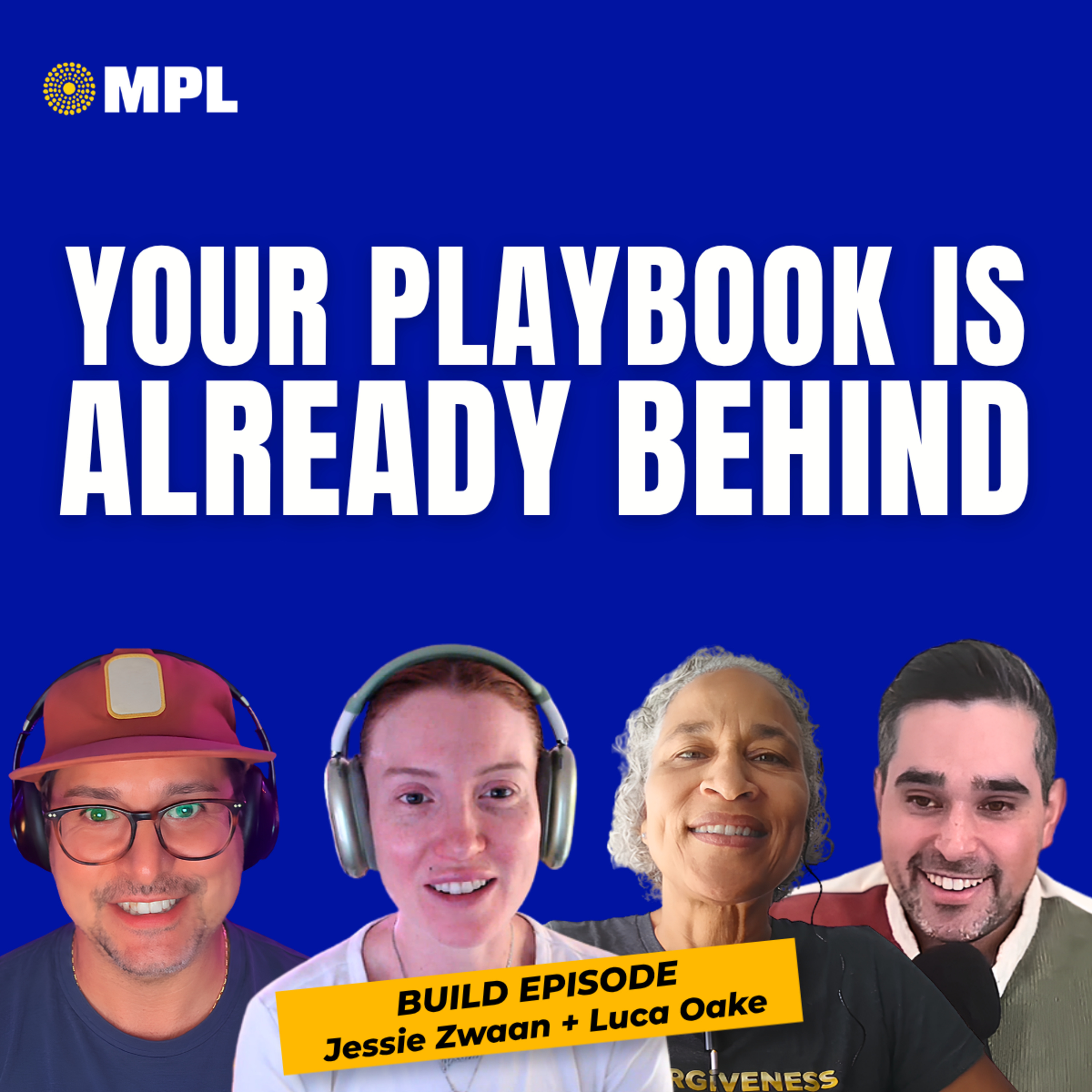
Build - Onboarding, L&D, & building in the AI era
In short
How to redesign learning and onboarding in the AI era—shifting from input-based training to outcome-focused, scalable behavior change; using AI for research, synthesis, and content production while keeping humans responsible for “deeply human” coaching and nuanced decisions; and building learning programs iteratively (MVP/V1 then V2).
Guests (backgrounds)
- Jesse (HR/People leader; previously at Uber; focuses on outcomes and scaling learning; co-leads the Talentful onboarding redesign).
- Luca (learning/education PhD focused on adult development and technology; learning experience designer; fractional/consulting-style operator; used AI to accelerate design and production).
- Stephen (host; discusses L&D skepticism and the need for behavior change).
Key claims
- Learning only counts when behavior changes; L&D must measure outcomes and scale.
- AI should handle “table stakes” (data processing, drafts), while humans provide human connection and context.
- Successful onboarding requires strategic buy-in, clear decision rights, and iterative delivery.
Notable examples
Talentful onboarding sprint: remote, multi-time-zone (London/East/West US), 5 days facilitated + 3 weeks self-managed; built with AI-assisted synthesis and Sana; reduced from a planned 4 weeks to 1 week after V1 feedback.
Written by AI. May contain mistakes.
Chapters
0:00
The Nature of Learning
Exploration of what behavior change means in the learning process.
“Learning doesn't happen until behavior changes.”
1:08
Good News Stories Segment
Hosts share personal and professional good news to celebrate successes.
“All right, here we are for another MPL Build episode.”
1:51
Personal Achievements and Technology
Discussion on launching apps and using AI in personal projects.
“some fitness technology step challenge app.”
3:40
Travel and Connections
Reflections on the impact of travel and reconnecting with old friends.
“So my first good news is my wife and I are homeowners and I have done a lot of things with AI.”
6:10
Onboarding Challenges and Solutions
Discussing the importance of scalable onboarding in businesses.
“So I am leaving the hot weather in Texas to go to a high of 65 in Spokane, Washington.”
7:42
HR Innovations with AI
Exploration of AI applications in HR and performance data integration.
“And Jesse, Luca, what's the story, you know, behind how y 'all's path crossed?”
8:58
Learning and Development Conversations
Discussion on the state of learning and development in the workplace.
“Both of us are like, you, no, you, no, you.”
14:01
The Current State of Learning and Development
Discussion on the evolution and challenges facing L&D in the workplace.
“Like I haven't talked about it in a couple years.”
15:26
AI as a Tool for Learning and Development
Exploring the integration of AI in L&D and its potential to enhance outcomes.
“But that is definitely the perspective and the position I brought to doing the work with Jesse, is that we have to be outcomes focused and whatever we do has to scale.”
17:17
Human Elements in AI-Driven Learning
The importance of human connection in professional development alongside AI tools.
“Like it just really depends on like where you need, I know that's probably not a great example because I absolutely not.”
Show all 21 chapters
19:35
Case Study: Building Effective Learning Programs
A case study on structuring a successful learning program and the pre-work involved.
“I feel like this is like the perfect case study of how to build in 2026.”
22:41
Setting Up for Success in Project Management
Effective project management strategies and the importance of organizational clarity.
“And so when I approached the conversations, that was really like my frame for everyone.”
25:15
Strategic Seeding for Change Management
Emphasizing the need for strategic alignment in organizational change initiatives.
“Jesse went on to go focus on some other things.”
28:00
Introduction to the Problem Statement and Options for Leave Management
Explore the challenges HR teams face with managing leave and the introduction of a new solution.
“She found you, Luca, the person that she thought was the right person to come in and help with this problem statement.”
29:30
The Impact of AI on HR Processes
Discover how AI accelerates data processing and decision-making in HR.
“Like every interview, every transcript, all of the previous onboardings and like everything's in writing.”
31:20
Designing Solutions with Stakeholder Collaboration
Understand the importance of stakeholder input in designing effective HR solutions.
“So here in the last, let's call it 45 days, I had this idea for MPL, had a problem statement.”
33:58
Creating an Iterative Onboarding Program
Learn how to develop an onboarding program that evolves based on feedback and real-world needs.
“Like you've kind of got like, you have to buy everything is like dollar tree instead of it coming from like a high Prada.”
39:58
Lessons Learned from Onboarding Iterations
Explore the adjustments made to the onboarding process based on practical experiences and outcomes.
“And what were some of those iterations from V1 to V2?”
42:00
Iterating on Onboarding Programs
Learn how to effectively iterate on onboarding processes for better outcomes.
“It's definitely a four-week onboarding program.”
46:22
The Need for Agile HR Practices
Understand the necessity for HR to adopt agile methodologies in a fast-paced environment.
“I'm talking about the work we're doing on the front lines at PeopleOps.”
53:28
Final Thoughts and Recommendations
Hear expert advice on building a successful HR strategy and inspiring others.
“Like, so anyhow, I'll leave that for another day.”

Ask about this episode
Get the gist, explore an idea or ask about something said.
 Claude
On The Modern People Leader: Forward-Thinking HR, what are the key points of this episode?
Searching your listeningTranscript
Automatic transcript. May contain errors.
0:00Jessica Zwaan: Learning doesn't happen until behavior changes. What behavior are we trying to change? We need outcomes and they need to scale. When I was coaching and AI came along, I realized I did not have to waste my coaching time now telling you things that AI could tell. Like, go talk to AI about that. Like, go talk to AI about how to do delegation better as a manager. Like, go talk to AI about how to manage your time better. Like, I don't need to do those things with you. But the thing that I'm going to do with you is something that I cannot do with you is I'm going to actually connect with you at a much more deeply human level and share these human experiences with you from a place of having lived a rich and varied life and bring those experiences to bear so that we connect more deeply, so that you connect with yourself more deeply, so that you connect with your teams and your work more deeply.
0:47Jessica Zwaan: You're listening to the Modern People Leader podcast, where we go behind the scenes with today's top HR leaders and work experts. We talk to them about how they've gotten to where they're at, what they do every day, and what they see coming next for the future of work. Hope you enjoy.
1:08Jessica Zwaan: All right, here we are for another MPL Build episode. These are, I feel like, always our most popular episodes. I think that has a lot to do with Jesse, and so it's fun that we're including somebody else in the conversation today. Luca, welcome to the podcast. Cool to be here. Thanks for having me. And we start every episode the same way, and that's with something called Good News Stories. So we all go around and share something, you know, could be personal, could be work-related, just whatever is coming up for you right now. And we prefer for our newest guest to go first. So kick us off. All right.
1:47Jessica Zwaan: Okay. So my good news is I am launching a step challenge app, some fitness technology step challenge app. And we just did a beta two. And one of my cousins who has health issues and doesn't move very much and doesn't really trust her body, I convinced her to join our beta two. And the week before she joined our beta two, she got 5 ,000 steps the whole week. And on the first day of the challenge, she got 12 ,000 steps. and at the end of the five days she had 48 ,000 steps and I got to talk to her and just like celebrate with her and it was it was so cool it was so cool so yeah it's like one of those moments where you're building something and you know you have this vision in your head you're just not sure where it's going and then it gets out in the wild and it does exactly what you hoped it would do and more it was really cool I need that I'm actually doing two steps challenges with like two different friends and I just like created this through chat GPT and then had it create a spreadsheet for us to track it but we need something like what you built yeah let's let's
2:53Luca Oake: let's chat after we've got something Jessie you want to go next uh yeah I mean mine's like no near as exciting as that but that's okay sometimes I was talking to you this morning I feel like I've been traveling a lot this year I've been back and forth to Europe Berlin the UK about once a month and I just today after getting back last week finally it's like got my like laundry done and like my house feels normal and I feel not like I'm I feel like sometimes a couple of days after I get back from travel I just feel like all of my nerves are being like slowly pinched with tweezers and I feel like today I'm finally like kind of coming out of that so that's good getting back to myself.
3:31Jessica Zwaan: Can I just say can I just say laundry for the win like seriously like sometimes just a good load of laundry and your life is sorted for the win.
3:39Luca Oake: Exactly it's magical. Yeah, yeah, for sure.
3:43Jessica Zwaan: I've got a lot of good news. So my first good news is my wife and I are homeowners and I have done a lot of things with AI. I've done some really cool things like I was our wedding planner for a wedding in Costa Rica after we fired our actual wedding planner and my wife, my fiance at the time was panicking. I was like, I got this, me and Chad GPT, we got this. And lo and behold, we had it. So today, well, yesterday, I officially kicked off my general contractor superpowers. Now, anyone that knows me and that's listening is probably having a good laugh right now because if you know me at all, you know I am not a handy person.
4:31Jessica Zwaan: I am not good with the handy things. What I am very good at though is project management. And when I saw the quotes that I was getting from the GCs and like the big kind of firms, and first up is a fence. I was like, my wife gave me a budget and I was like blowing our entire budget with just the fence like quote alone. And so I, it's long, I won't go into the the details, but I have a team that's actually building and I have purchased raw materials, $5 ,000 worth of wood and lumber. And so I consider that my first foray into being a general contractor, AI assisted for sure. Second piece of good news, I have recently left my job at NPL in the operations and I work at a startup also and we launched our public beta on Labor Day.
5:34Jessica Zwaan: It's an AI music production software and we have thousands of users y 'all already like boom. And of all of our users, 30 % are in Brazil and I love Brazil. And so I am now manifesting a sales trip to Brazil, given that 30 % of our users are out there. And then my last piece of good news is personal. My brother-in-law is getting married. So my wife has a twin brother, Jake. Congratulations, Jake and Mason. They're getting married on Sunday. So I am leaving the hot weather in Texas to go to a high of 65 in Spokane, Washington.
6:15Luca Oake: So a lot of good news. Great. We love.
6:20Jessica Zwaan: Where in Texas do you sit? Austin. We're both in Austin. Dana and I are both in Austin. All right. Cool. Cool. You're going to have to give us some recommendations on Brazilian artists or bands. I think I have an idea of what the genre would be. They would be using your software. And I'm into that. Get it. I'm into that stuff. Okay. My good news. So I feel like this week has been a week of reconnecting and it's going to be a week of reconnecting. So reconnected with Jesse today. I also ran into an old coworker this morning. I was like rushing out of the gym and I go to a lifetime and lifetime gyms have like work areas that you can work from now.
7:09Jessica Zwaan: And I looked to my left and it's this guy named Kenny Virgil, who me and Steven both worked with 12 years ago. It blew my mind that it was that long ago. And we ended up chatting for like 40, 50 minutes. Just like no better way of starting my day than running into an old friend. And then this weekend, I'm going to Brooklyn and I'm gonna go stay with one of my best friends. He's hosting me, my wife, and my daughter. And yeah, I'm just stoked to catch up with Ahmad and his wife, Alex. and we've got a fun weekend ahead of us.
7:45Luca Oake: Nice. Good news all around. Love it. What a good way to stop. So much good news.
7:49Jessica Zwaan: Yeah. And Jesse, Luca, what's the story, you know, behind how y 'all's path crossed? I feel like these days, Cloud and ChatGPT can get you surprisingly far in HR work and they're great until you need live people data or you need data from performance, comp, surveys, then suddenly you're exporting csvs you're explaining the company's entire history and you're figuring out like what's actually safe to share with who and that's the gap that shapes is closing shapes basically brings that ai experience directly into the hr platform with your live people data your org context and your existing permissions built in so instead of jumping between systems people teams can build things like a flight risk dashboard a reorg simulator, a calibration grid, or a completely custom workflow or visualization.
8:42Jessica Zwaan: You just describe what you need and Shapes builds it from the people data that's already there. It's kind of like Claude and your HRIS had a baby. If you want to see what this actually looks like in practice, go book a demo with Shapes. You can find a link in the show notes.
8:58Luca Oake: Both of us are like, you, no, you, no, you. Okay, well, so I met Luca. I was at Talentful, as you would have known in my previous role. And one of the kind of problem statements we had was we really wanted to work on kind of a more scalable way to onboard our team. We would have these huge spikes in onboarding. I think actually Talentful is going through one now. Shout out Talentful team. I think there, I just saw Phil, one of the founders saying they're hiring a hundred people. So Luca, our onboarding program is going to be put to good work. And it's kind of like really intense peaks of onboarding meant that we needed something that really helps kind of level people up very quickly to our ways of working so we could get them on accounts.
9:34Luca Oake: You know, we're a services business. It's very important people understand, like, our unique way of delivering our services, but also, like, what our expectations are. They don't have a three-month runway into getting, like, set up. They're getting charged very quickly, sometimes within, like, a couple of weeks. So I spoke to my good friend Ben, who lives here in New York and runs a union, which is a HR consultancy, and I said, do you know anyone that could help me out? I'm looking for a really, really knowledgeable learning experience designer that I think could like run with me at this very quickly like I don't want like a 12-month project I don't want some massive big over complicated amount of like research and content creation I want someone that really knows like what we need how to deliver it and then I can like run it similar to Stephen like as a general contractor of learning with a very very experienced person introduced to Luca and we uh we did that work together yeah yeah and it was
10:28Jessica Zwaan: interesting for me to come in. So I went off a while ago and got a PhD in education with a focus on adult development and technology. And I did that specifically to go into technology. And at the time, PhDs in education weren't thinking about going into tech, they were going into academia. So it was really interesting for me to just have all of the experience and learning and like just expertise I developed over a decade like really come to the fore with this project
10:58Luca Oake: with Jesse it was really cool it was wicked so much fun we had a great time and it was a sprint and it was actually I think the other thing as well which I know we'll probably get to in the podcast which is kind of fun about both Luca and I is like I think we are both like kind of like no bullshit no boring like useless admin meetings kind of people which I really love so like very quickly both of us were like great can we like mostly operate out of a spreadsheet and then maybe like once a week kind of like a really intense catch-up where we just like and it was a really fun working experience to have someone that also operates in that same way we would kind of like see each other's work in different time zones and like i could see what she'd been working on and i could she could see what i was working on we see the spreadsheet it was really great and then we'd jump in this call and be like cool here's the gaps and it just felt like there was something kind of ferrari-esque sometimes about the speed we're able to move It was really nice.
11:47Luca Oake: It was a fun project.
11:49Jessica Zwaan: Yeah, one of my favorite things to do is to go to the rodeo. And especially at the rodeo, you hear the phrase get her done a lot. And I just love that phrase, get her done. And that's a lot of what Jesse and I did. We got her done.
12:01Luca Oake: We got her done. Nice. Yeah.
12:04Jessica Zwaan: Although if you're at the rodeo and you're going to do it proper, the phrase is get her done. And that's the phrase.
12:10Luca Oake: These two Austin boys are like, click. Exactly.
12:13Jessica Zwaan: Exactly. Exactly. Exactly. Well, we these go by in a flash, these conversations. And I in reading our kind of prep sheet and the dossier that we put together on our guests, I got really excited. If you podcast long enough, you will like have this really interesting experience where you talk about things for a really long time. And then you don't talk about them anymore. And then it'll just suddenly like come up and the topic of lnd you know you just saying that jesse just like brought back like circa i don't know well chat gpt was here so that's like march 2023 so like mark call it spring of 2023 to like spring like a year spring of 2024 i was on a rant about how lnd was dead like cooked like the traditional function itself like I had a lot of questions how we could have ended up in a world where the solution to all of the corporate L &D problems out there was LinkedIn learning I always had like beef with that just no literally no one is developing themselves using LinkedIn learning or tools like that and I know I am like I'm being a little sensational right now But like that is very much where my head was rooted.
13:40Jessica Zwaan: Like I was already disgruntled. And then like AI comes. It's like shit. I got an expert right here in my pocket. And so we haven't talked about this in a while. So like I'm prepared to like wipe those slate clean and just like have a fresh like think about this. And like I think the first question is like where are we all? Like what is the state? Like I haven't talked about it in a couple years. I was probably wrong. but like share more. And I'm like not going to pick on anyone here. I'll let y 'all choose who wants to speak first. Like where are we in 2026 with learning and development for the workplace?
14:19Jessica Zwaan: Yeah. So look, Stephen, I started ranting about L &D way back in 2017 when I first got to Uber. You know, one of the things I was saying is first and foremost, it has to scale. And the way that we were running it didn't scale. There was all these like small cohorts and everything was hands-on and everything was real time and everything was synchronous and nothing was measured. And my second issue with L &D way back then, so this is almost 10 years ago, my second issue with L &D was that it was too focused on the input and not focused enough on the outcome. So it was always designed with the input in mind, like somebody knew something and L &D and they just thought that the most important thing that we can do right now is to tell you all the things we know.
15:06Jessica Zwaan: And I'm like, learning doesn't happen until behavior changes. What behavior are we trying to change? We need outcomes and they need to scale. We need outcomes and they need to scale. And I said this over and over and over again, and it was not popular and it did not gain traction. And I was not thought of as a visionary who was ahead of my time. I had to literally just move on to go do something else someplace else. But that is definitely the perspective and the position I brought to doing the work with Jesse, is that we have to be outcomes focused and whatever we do has to scale. And I generally work like that.
15:45Jessica Zwaan: Like that is like my sort of reason for living is I'm outcomes oriented and I want to reach as many people as possible. So, Stephen, I do think actually AI is a fantastic development for learning. I do a lot of my learning with AI. I have an AI therapist. I do a lot of my own professional and personal development with AI. I do think, like everything, it is a tool. And so for me, when I was coaching and AI came along, I realized I did not have to waste my coaching time now telling you things that AI could tell. Like, go talk to AI about that. Like go talk to AI about how to do delegation better as a manager.
16:27Jessica Zwaan: Like go talk to AI about how to manage your time better. Like I don't need to do those things with you. But the thing that I'm going to do with you is something that I cannot do with you is I'm going to actually now connect with you at a much more deeply human level and share these human experiences with you from a place of having lived a rich and varied life and bring those experiences to bear so that we connect more deeply, so that you connect with yourself more deeply so that you connect with your teams and your work more deeply. Like that's something AI cannot do. So I see a really powerful combination between conscious, self-aware, and outcomes-oriented folks in professional development space, whether you're an L &D or you're a coach or you're an advisor or you're a facilitator, and this technology that accelerates your own intelligence and also allows you to just like take all the table stakes stuff, like just let the robots do that part you do the part that's deeply human yeah I really agree with that I also
17:27Luca Oake: think like I really like the point about like AI as a tool and I think you know I wrote a series of blogs about the work that we did Luca like talking about like the kind of process and structure and kind of what others could learn from it and um obviously Sana was a huge part of that for us right like what I really liked about what we did is we didn't use we used Sana at the points that we needed it to like turn a brief into a like highly fleshed out piece of work but what we didn't do is use sana to make all of the decisions or the gpt or claude about all the decisions what people needed to learn like that came through actual interviews and discussions and knowledge about the company and like this kind of human in the loop kind of expertise and there are places in lnd and people ups where maybe the interviews and the data gathering can be done by ai and the build art's done by a human and the other way around.
18:17Luca Oake: Like it just really depends on like where you need, I know that's probably not a great example because I absolutely not.
18:22Jessica Zwaan: But I mean, I just personally struggle with that because there's just so much nuance that comes and I've been AI interviewed before and I'm just like, Oh my God, this could have been an email. This AI interview could have been an email.
18:33Luca Oake: True. Maybe I mean more like data collection, right? Like if you've got a bunch of already existing data and you want to kind of synthesize it, you don't need to do interviews. You already know it exists somewhere within like our HRS or, you know, of feedback we got for years of onboarding data, whatever it may be. I guess the point is like you get to be the person that decides like where you use the tool based on the problem you have in front of you. And if you presume that you're going to use these tools at every place in the exact same way on every challenge and every project, I think that's ultimately what kind of gets you in the trap.
19:02Luca Oake: And yeah, for L &D, there's so much opportunity, but just like anything, right? Like there's so many great personal use cases that I have that I've used, but also like, yeah, I think I really love the one that we've done here, which is we basically went and built out a series of briefs that we then fed into Sana and created really beautiful, cohesive learning experience that was like underpinned by a workflow that, you know, didn't have a huge amount of human labor put into onboarding people because again, it really had to scale for us. And that happened, the kind of work ahead of it was actually the longest part.
19:33Luca Oake: And then the actual delivery of the content, I think I did it in like 10 working days or something.
19:38Jessica Zwaan: So let's talk about that pre-work. I feel like this is like the perfect case study of how to build in 2026. I mean, you can literally build anything that you can imagine today. And that wasn't true three or four years ago, or maybe it was if you had the resources, but not like as fast as you can do it today. And so talk us through what that research phase looked like and how you structured that. Is that for me or for Jesse or? Both. Yeah. How about you start us, Luca? Well, actually, I want to start with Jesse, because what helped me a great deal was I came into the project and Jesse already had this pretty extensive brief.
20:19Jessica Zwaan: And the important thing about that brief, at least from my perspective, was it already had the CEO and leadership by it. So Jesse, can you like actually just talk about like, because that turned out to be like the wireframe that very much guided my, like I knew where I needed to go.
20:36Luca Oake: Yeah. So yeah, I think that's a good point. Like I wrote this kind of project brief we knew it was a kind of strategic imperative for us as a company and i explained we're gonna have luca come in the work that we're going to be doing over the course of these three months is going to be pretty intense and it's going to really require you to like lean in at the first initial planning stages to help us understand like what do we build out from here and once we have that from you like we can run flying just as the two of us i met with everyone before had them read the brief i was going to give to luca to be like look now you understand we've an expensive resource who's very experienced.
21:09Luca Oake: This is what I'm giving them. Do you think you can read this and agree that this can be delivered from your end? And everyone had to say yes or no, I can think things need to change or here's our questions. And once that was done, then we could actually just start introducing everybody and move quickly.
21:24Jessica Zwaan: Yeah. So you can imagine the kind of runway that creates, right? Like I've come into projects and the runway is like a gravel pit with giant potholes in it. Like no one's prepared. No one knows why a thing is happening. They don't know why they have to be involved. Now they want to litigate the thing where I'm supposed to be delivering the thing and they're litigating the thing with me. Like don't litigate it with me, bro. Go litigate it with like whoever was in charge of this. I get paid whether you show up or not. Like this is not the right time for this. So I didn't have to deal with any of that when I came into Talentful.
21:59Jessica Zwaan: Like Jesse just built this gorgeous runway with like lights and the people with the cones. Like everybody understood that this is a strategic priority. I'm expected to be involved. I'm expected to have a point of view. There were a couple of people who still showed up because, you know, people don't people. So there were a couple of people who still showed up and was like, you know, wait, I have to do a thing? Oh, wait, hold on. I don't know. Like there was a little bit of that. And then there were guardrails for how that got dealt with as well. But yeah, for the most part, it was like such a smooth runway so that I could come in and focus on what I mentioned earlier, like what are the outcomes?
22:34Jessica Zwaan: And how do we make sure that everything that we do, everything that I suggest to you, everything I design is for scale. And so when I approached the conversations, that was really like my frame for everyone. So everyone's really clear, like, okay, this needs to change things. How do I want this onboarding program to change Talentful? And then how do I make sure this works at scale? And so fast forward to today, Jesse, like, you know, do you do it exactly the same? Do you do in this kind of early alignment buy-in phase, do you think you would approach it the same way today? Or would you, given even more advancement in technology, would you do anything different?
23:20Jessica Zwaan: Just curious.
23:21Luca Oake: I mean I think that the like setting up I think now more and more like the way that the world is working is like really flexible operators inside a business permanently and really experienced experts that you can like bring in for critical projects like I just really believe in that kind of like org structure and way of working generally and there we're seeing this kind of generally happen it's a kind of like schism in the marketplace where there's like these incredible fractional and consulting leaders who are going like actually I just really love doing my work and like projects and freelance and fractional and then people who really love operating and like making things happen inside a team and I I think it's like a really great opportunity for us to capitalize on and say like okay great well in that world of working like how do we want to deliver work for our business build things so I think if you kind of also subscribe to that kind of philosophical future which I do then yeah I think that the things you need to start getting very good at is being very good at identifying a problem statement that you want to try and solve good at identifying the right person to come in and help you like what are the skill sets you need what does that person's profile look like and then exceptionally good at setting them up so that you're not wasting time and money and resources and organizational clarity and all those things because I mean to Luca's point like it's nothing more frustrating and especially if you're a company that's set up with the idea of like delivering with consultants is like part of its operating strategy as having like oh wait a second this clashes with my plan and like didn't want to talk about that and i actually know if this is the right person for the job but it's like that is just i think that first setup is just like absolutely going to be the most crucial bit because then you can just really focus on like executing with like great technology by your side and the expert that gets to tell you hey here's where i think we need to use the technology you have and here's the place where i actually think it's actually about you and i jumping on a call and talking through it or me having like just a full day's thinking time about the problem statement you've presented to me and understanding how do I make all of these messy things make sense
25:19Jessica Zwaan: I would add to that Jesse's third point about setting someone up for success and Stephen to your question like would you do it the same way I would hope the answer would be yes because Jesse's involvement in the project changed significantly during the project where Jesse was like at the forefront of the project and then Jesse was not involved in the project. Jesse went on to go focus on some other things. And I was wondering, is this a Jesse project or is this a talentful project? Like this is the moment where I'm going to find out like, you know, does this thing stand without Jesse? And like it went all the way over the finish line.
26:00Jessica Zwaan: So that set up making this a strategic priority across the company. And even though, you know, there were still like questions about, okay, well, like, wait, like, who's the final decider? Like making sure that, you know, that once Jesse was no longer as hands-on, there was, it was really clear like who had the final decisions, which actually it was the same person who always had the final decisions. It was the CEO actually. So it was like, there just was no, there were, there was no gap, there was no stutter step. And certainly it didn't fall apart. I think it was set up really well. And I would definitely recommend do it like that.
26:33Jessica Zwaan: It works. It's funny.
26:34Luca Oake: I'm actually, I'm now a customer of talentful, right? But just like I was four times before I joined, I'm back on and we've had a couple of people come to the team that have been new recruits that have been through the onboarding program. And I always sneakily, I'm like, how was your onboarding? And they're like, it was great. Wow. I feel really super organized, really interesting. I feel really enabled. That's awesome.
26:56Jessica Zwaan: Yeah, that's awesome. That's great. Yeah, that's great. Oh, and can I just say, wait, wait, I'm so sorry, Dan. Can I just say one more thing too? my favorite, super favorite thing when a company has not set things up well is when the CFO comes in in the middle of the project and says, wait a minute, why are we paying for this? I need to review. And I'm like, oh my God. So I can't encourage folks out there enough. If you have a major program or project that involves change, especially the ones that involve change, Human beings do not like to change. I don't care what we say. The reality is we vote with our behavior and we don't like change on the whole, with some exceptions.
27:37Jessica Zwaan: So if you are trying to change things in your organization, you have to make sure that it's strategically seeded throughout the organization so that it can live in all kinds of permutations and people aren't piling on at the last minute trying to take a jab at it. Make it strategically seeded across your organization. Love that. So just to recap, Jessie had this problem statement. She had a vision. She created this runway. She found you, Luca, the person that she thought was the right person to come in and help with this problem statement. You come in. You start to do some investigation, and you do these interviews, and you're looking for the outcomes and what this looks like at scale.
28:20Jessica Zwaan: And then that's where we're at so far in the conversation. And then it's like, how do we turn all of this messy data that we've collected into something real? Like, take me back to when that happened and what happened after that. For so long, HR teams have had two choices when it comes to leave. One, manage leave internally with spreadsheets, email, and disconnected systems. Or two, just completely outsource it. Tilt is now introducing a third option. Their new in-house leave management tech gives organizations the tools they need to run leave internally while simplifying admin for HR managers and employees.
28:58Jessica Zwaan: So you can do things like centralized leave administration in one platform, configure workflows and policies to match your org, give employees and managers clear visibility throughout the leave journey, and replace manual coordination. And if you still need extra help, organizations can also add access to Tilt's leave experts for guidance and ongoing support. If this sounds like something your company needs, you can learn more at hellotilt.com slash MPL. That's hellotilt.com slash MPL. Well, that is where AI definitely came into play for me, right? Like every interview, every transcript, all of the previous onboardings and like everything's in writing.
29:40Jessica Zwaan: there was so much data and information and I was able as and it's interesting too like what a fractional solo advisor consultant can do now right like I literally feel like my thinking time is I don't know 100x faster like my production time is I don't know like 50x faster like there are things that I can deliver now that I like three years ago I would like oh that's a lot of work. I'm not sure that that's going to wear me out. Like, I don't think like that anymore. So there was just a Daniel, to your question, there was just so much data now that I was able to like, cool thing about it, like having AI was I was never afraid of how much data I generated, like with like, all like, it was fine for me to interview literally every leader in the company, it was fine for me to deliver to interview line managers in the company, it was fine for me to talk to as many people as possible because all the data that came in, I was able to process that data with lightning speed and then turn it, apply my thought process to the insights that were coming out of AI and say, okay, now this is what I think you could actually do based on organizations like yours and change patterns that I see and some of the behavioral resistance that I see.
30:58Jessica Zwaan: This is what I think you're going to actually be able to accomplish. And then I was able to design a wireframe. And I think I did that like all within a month, like interviewing, I don't know, like 10, 12, 15 people processing at least 10, 12 thick, rich documents, processing all that data and designing the wireframe. And I did it in less than a month, like by myself. So with my AI intern. Yeah, with the AI intern. So here in the last, let's call it 45 days, I had this idea for MPL, had a problem statement. I then reached out to 30 chief people officers, set up these like product development interviews, conducted the product development interviews to figure out like whether this problem resonated for them and like what are the outcomes that they'd be looking to get out of a solution to this problem.
31:47Jessica Zwaan: I then created a cloud project where I uploaded the transcript from all 30 of those interviews as the context and was able to process all of the feedback within like an hour. Whereas before, like 10 years ago, that would have taken days. I don't even know if there was an automated way of going through all of that data, but I was able to quickly get a read on what needed to change, what people cared about the most, turn around like an iterated version of what I had been pitching people and like build the thing in less than a day, which is crazy to me. And Steven, I see you coming off mic. Feel free to jump in.
32:29Jessica Zwaan: No, I was just going to say, I literally interviewed a music producer, Nephew Bangs, two hours ago. Fancy, fancy. Look at this.
32:39Luca Oake: He leaves at the aisle and now he's dropping names.
32:42Jessica Zwaan: you know it's exciting though that to me that the same thing that we use in the people space like I am using literally to figure out how to create an a product for audio teams and so you know it this this method works and so you get your your wireframes or like how do you get to an MVP there so like now take us through the process on like you've got everyone on board you've taken all the inputs, you've done kind of the initial review and you iterate on a design, you probably tweak it a little bit. Like how, how did you then approach like locking this in and getting kind of that full buy-in from the end users or the stakeholders who were, you know, people that care a lot about the company and understand the culture through and through?
33:33Yeah.
33:33Jessica Zwaan: Yeah.
33:34Luca Oake: Go ahead, Luca.
33:35Jessica Zwaan: Okay. Well, I was just going to, so firstly, you know, Jesse's my, you know, at this point still, Jesse's my primary stakeholder, right? So if this thing doesn't make sense to Jesse, then it doesn't make sense. So, and I think that that's an important thing too, at least for me working fractionally, I have, I work by the RACI-DACI model. Like I'm very clear about, you know, the priority of my stakeholders, like everybody's important, but that doesn't mean everybody has the same priority, right? So I really prioritize my stakeholders and run my projects through those that priority frame so you know it really had to make sense to jesse like jesse had to be able to see that this can be built and if jesse couldn't see that then it wasn't going to work i want to stop there and like kick it over to jesse and then i have some follow-up after that
34:18Luca Oake: but jesse yeah absolutely i think there's also like one little other thing that's like the important for the bridge here is in like a kind of previous world of operating when you have like a set budget and your budget has to extend all the way through to like interviewing and data collection and course design and output and operating and everything else, you have to spread that money really thin, which is like, I think ends up kind of like damaging the outcomes, obviously, right? Like you've kind of got like, you have to buy everything is like dollar tree instead of it coming from like a high Prada.
34:48Luca Oake: And then I think what's really great is now like in this situation, I was able to say like, I feel like the operating parts are the parts that I am really good at. I don't need to like purchase someone to do that because I can kind of really run it very quickly now so I'm able to go to Prada to buy my learning experience designer which is like what a better circumstance to be in feedback we've got and then say like cool let me work with you to figure out how do I turn this wireframe into actual content but then all I need you to come back in and do is just review this content like does this match the vision that you had so I'm kind of like the operating bridge that helps Luca go from design to revision.
35:26Luca Oake: So what we ended up doing was Luca built this like big spreadsheet. So the other, I think an important part of this brief to like mention that maybe we like slipped through the cracks here is like, this is a onboarding program for not just one region, but actually is like London, East coast and West coast us all running in the same week concurrently, fully remotely with one facilitator and like guest facilitators from within the business for five days with homework with deliverables and then for three weeks after that still has self-managed learning that you still will have a deliverable offer so it's like it's actually like an extremely complex piece of work it ended up actually being a sprint to where there was like you know three taps for the different time zones with three different build-outs of the nine to five session content sessions then with the deliverables then with the this the people that are contributing then with the people that were guest speaking or being involved in helping to deliver this content and also understanding how we're going to review and assess the content so it actually was like almost like this kind of intense like cube matrix of like how these things were going to work together which was expertly designed by Luca gets given to me and says like okay now we need to turn that into the actual thing like we now have like this is our kind of idea how are we going to make this happen and the first thing I did was I said okay how about I build out another type of brief template so each of these like modules you've created I will create a brief template where we have the expert that you've interviewed or spoken to I'll build out the initial framework as much as I possibly can they then need to go into it and say this is like the learning out like prove the learning outcomes add any things they really need to be tested within that group blah blah blah blah and that just became the prompt that we then uploaded into sana so that every single one of these modules was created as a live workshop in sana that we could then slot them all into this calendar that could be created into a workflow um so that they all went immediately into people's calendars on their first day once they were offered on high bulb yeah and to jesse's point
37:33Jessica Zwaan: Yeah, this was like, think like three to five modules per day by five days by four weeks. Like this was a very healthy.
37:45Luca Oake: By three time zones.
37:47Jessica Zwaan: By three time zones. This was a very healthy, healthy onboarding. And so it was incredibly helpful. Like I think what we did was we went from like zoom out to zoom in. So we didn't initially ask. The only stakeholder who was asked to look at everything at once was Jesse and the CEO. Everybody else, their first task was to zoom in. So zoom in on this module that is related to your expertise, related to what you think really needs to be in onboarding, related to what's most important, your priority, what's most important from your perspective. just zoom in and look at this piece and make sure that this piece really does belong and make sure that this piece is designed as it should be designed once people zoomed in on their piece and they were you know bought into their piece they were bought into you know maybe there were ways that needed to change but they were fully bought into it then we zoomed people back out again and said okay now this is how your piece fits with all the other pieces and then people were able to like, oh, okay, I can now take time to look at the full picture without immediately feeling responsible for it.
38:56Jessica Zwaan: So that's why actually it was like Jesse and the CEO looking at the whole thing. And then particular folks in the business looking at the piece that was particularly relevant for them. And then folks in the business could zoom out and look at the look at the whole thing. And it wasn't like so overwhelming to now be thinking about, okay, how did these Lego pieces fit together? And I will say when we zoomed out, it actually then there were a bunch of pieces that did change. That's okay too, because I think one of the most important things that we did was we said from the very beginning, we are building this to iterate it.
39:26Jessica Zwaan: We are not building it to launch it. We are building it to iterate it. So we're going to have a V1 of this that's going to run. So we actually ran a V1 with onboarding cohort. And that changed a whole bunch of things. It changed a whole bunch of realities of how we were going to run, how Talentful was going to run onboarding and how I was going to design it for them. So yeah, I think the other thing too is just building in this notion of this is an iterating exercise. It is not a delivery exercise. We're going to iterate first. And what were some of those iterations from V1 to V2? The hugest one was it went from four weeks to one week because Talentful realized they just didn't have up front, they did not have the sustained attention that was going to be necessary to have like multiple folks from the business involved and pulling everyone back out of the jobs they were doing back into onboarding together.
40:25Jessica Zwaan: Like you just realized like it was a beautiful dream to have a four week onboarding. It really was like, it's very, very cool. but the speed at which recruiters are asked to deliver at talentful it actually was a big deal to just take them offline for a week because it had been the case that like some folks had gotten hired and immediately went to work right so at least just giving them a week was like talentful realized it was trying to take a leap but it needed first to just take a step i think there's
40:55Luca Oake: also something in this like this is a really important kind of just general point about like designing things it's like sometimes no matter how much desire this like perfect or like dream or like dogmatic outcome of something you're like man wouldn't it be incredible wouldn't it be great and cool if we did this and by the way the four-week program was not luca's idea that came from the business right like we should have four weeks this is what we're thinking we have this like ramp up time but the reality is like the like where the rubber hits the road the company is your company is just your company.
41:26Luca Oake: And if you're a company where you have like, you know, I think this is a great example of this kind of like marketplace of, you know, what's your organization actually? If you're a team of 250 marketing graduates who know nothing at all, and they're all, you know, working in a brand new advertising agency, then like, yes, maybe you actually can afford to have a much longer onboarding program. If you're a company where you're working with PhD scientists, deeply embedded in their field of excellence, do you really need to be developing an onboarding program that follows like the kind of corporate handbook handbook playbook probably not right and i think like there is an element of like kind of like awareness of the reality which you're operating at and like sometimes you get it right like i mean i wrote a whole book about it for christ's sake and sometimes you still do exactly what i did in this circumstance and i'm like yeah i wouldn't mind doing the four-week one that sounds like a really fun technical problem and in the end it worked out to be like let's actually scale it back we built it first not the full five days for each i think we ended up realizing like a pretty like maybe in that design process let's just do like a workshop and then a deliverable for weeks two three and four but i think that's a good example of like where people always ask me like people ups as a product and how i work it's like even i who wrote a book about it who's been doing this for you know a decade still sometimes do things that later on i'm like really glad we did an mvp there and didn't just go straight into like this is what we're doing forever you know
42:47Jessica Zwaan: yeah just let yourself iterate just let yourself like let yourself iterate i can't tell you the number of times that I have spoken with owner e-stakeholder and they're like, definitely four weeks. It's definitely a four-week onboarding program. And then you're like, here's the four week program. And they're like, wait a second, our salespeople are going to have to sit. Wait, it's like, what did you think a four-week program would be? Of course. I love this. And I think it It is like it's such a unique skill set for an executive to have the ability to especially in HR. Like the first of all, like we I just have to say it again.
43:33Jessica Zwaan: but the fact that HR is the one area of a business where everything has to be perfect and that is like the legacy burden that we have had to carry and continue to carry is total bullshit and I it's just crazy to me to think that like salespeople iterate marketers iterate engineers iterate product people iterate but wait what the this one group has to follow this old school waterfall kind of approach that just doesn't work. Right. And like, what a, what a blessing to not have fully baked a month long program that really at the end of the day needed, you know, the best design was a week, but for those leaders out there and Jesse, you fielded this before, and I'm going to ask you to field the question again, like what advice advice do you have for those that like for the executives, it's still kind of like not okay and is like kind of hitting back at this notion that we can iterate this in a responsible way and actually have a better outcome than if we go hard in the paint and try to like pretend that we have all the answers when we don't.
44:48Jessica Zwaan: So how do you change the mindset of these CEOs or individuals that are is like, you know, headstrong. How much compensation risk do you think is hiding in your spreadsheets right now? For a lot of people teams, comp has gotten way more complex than the system supporting it. You got merit cycles, bonuses, incentive plans, approvals, benchmarking, pay equity, transparency requirements. And somehow a lot of it is still being managed through Excel, manual uploads, or HRIS modules that weren't really built for this level of complexity. And you know, that's all fine and dandy until there are three versions of the same comp file, or one person becomes the single source of truth, or leadership asks why a pay decision was made, and the answer is harder and harder to explain.
45:38Jessica Zwaan: That's where BCom comes in. BCom is a purpose-built compensation platform for organizations managing complex pay programs, especially those teams that I was just referring to that have outgrown what spreadsheets can comfortably handle. It helps people and total rewards leaders run complex comp cycles at the speed of business, connect compensation, performance, and pay equity in one place, create clear governance with clear audit trails, and use AI responsibly with humans still in control of the decisions. If your comp strategy is getting harder and harder to manage, be calm is worth checking out you can learn more at be calm.com slash mpl that's b-e-q-o-m.com
46:21Luca Oake: slash mpl i think the good news is like the world actually has sometimes isn't it nice sometimes the world actually has moved the thing that you already have a dogmatic opinion about you know what i mean like i feel like this is sometimes how i feel about like having like certain political opinion something happens and i'm like i knew but this is the thing is like we're in a situation now where like it is not any one particular company's choice to move quickly and iterate like it is just now it is just the reality in which we are in you know we there's a lot of conversation about like doing more with less and you know having to like launch things that we don't think are quite right and taking risks and all these things and like i'm i say all of this outside of like yes the very real and present risks a lot of people are talking about with like ai safety and security i'm not talking about those things, right?
47:07Luca Oake: I'm talking about the work we're doing on the front lines at PeopleOps. I was trying to confuse those two things for a second. We don't, no matter who you are now, you don't get the luxury of choosing whether you're going to be a company that moves nice and slow and makes decisions in a kind of like corporate waterfall way, or whether you're going to be a company that moves really quickly and has the pressure of the market. Like, I just don't think that that, I think that gap is closing so quickly now. So if you're a person that chooses is to align yourself with the philosophy of like, well, I probably can just like, you know, think about it for like the next year and make my team really aligned to it.
47:39Luca Oake: And we're not going to make sure that we're going to make sure we launched the right thing at the right time. It's going to be locked into PDF and we're not going to touch it again for another four or five cycles after that. I actually just think like everyone around you will increasingly find your work like less and less viable. And I actually just don't think you'll end up having the impact you need to because people will be learning faster than the thing that you are shipping.
47:59Jessica Zwaan: Yeah. I mean, can anyone really, like stay in a leadership role who thinks like that? I don't, I mean, good luck. Like the world spins madly on. So I just don't, yeah. I mean, I encountered some leaders who I can feel the intensity of their caution. And I don't actually think it's my role to change a leader, but I will build around you. So if you're like, I will find a way around you. So if you're, you know, if you're designed for caution and that caution tends to slow and stop everything, but I'm tasked with getting the organization to a certain outcome, I will go find a way to get to that outcome that also just doesn't make you responsible, right?
48:48Jessica Zwaan: I'm not trying to stress you out. So if your caution says slow, slow, slow, but the organization needs to go much more quickly than that, then I find a way around that caution. Let that caution stay in place. You don't have to be responsible, but the organization needs to move. Yeah, agreed. Guys, I wish we could just keep this going for another 30 minutes, but we've got six minutes left. This always happens. We have a few rapid fire questions for you guys. This first one is for the both of you. What's one piece of advice that you'd give to folks in HR who want to start building but like there's something holding them back build yeah i agree i think it's just like have a go at it i mean the only other advice i can give other than that just like that kind of
49:38Luca Oake: bias to action is like find something that you're inspired by right like find a problem that tickles you and then take some time to to build but i think if you if the gap to you feeling like you're capable of actually just going out and building something is like oh i move on with admin and i feel really stressed and my job is all payroll then like separate your brain from that for a little bit and go and speak to someone else and say like what's the most exciting thing you're working on and then try and build that or something in your life like you know build your general uh build your step tracker build something and then eventually you'll see how fun it is i think and
50:14Jessica Zwaan: you'll figure out how to incorporate it next question if you're comfortable who's a company or maybe two that you believe their people teams just are really embracing a builder mindset? I'd clean that one to Jessie.
50:29Luca Oake: For me, I think like, I've been talking more to the Lovable team recently, Marianne and the team there. And I think what they're doing is just like really fun. They're obviously like, you know, that's just like so native to them, but that's been really fun to watch them. Matt and the team at Jack and Jill in the UK, they're building really fun stuff. Not the people team and Kate's just joined there, but like that whole team has this real operator builder mindset. And then the kind of final place I'm going to shout out is actually like people that are building for people builders. And that is, I think, Sana.
50:56Luca Oake: Like it's the tool we built everything on. They basically have built this like tool that helps L &D professionals go from being, I think, potentially people that are just sitting there kind of moving spreadsheets. Not spreadsheets. Google Slides docs around a booking calendar events to actually genuinely being able to build stuff really quickly. So yeah, building for yourselves, building for your org, or building for other people. They're the three-eyed shout-out.
51:22Jessica Zwaan: And this last one's for you, Luca. Are there any builders in your network or that you're following on LinkedIn that we need to have onto the show next? See, that's going to be a tough one. I'm going to have to think about that one. I'm sorry. I wish I could shout-out right now, but I'm going to think about it, Daniel.
51:39Luca Oake: It's always so hard when you do that. I feel like every time I get like a, who's the person you'd recommend? I'm like, oh, and I say someone. And then afterwards, I'm like, if the person I should have actually said heard me say not them, I would be so devastated. I always feel like I'm missing out the right person.
51:53Jessica Zwaan: Exactly. Yeah, that's the other thing, too. Yeah, I'm not going to say somebody and then not say somebody else. I'm not doing that. That's a gotcha question, Daniel. This is fake news, man. That's a gotcha question. And Jesse and Luca, a builder that I would recommend both of you connect with is Olivia Williams at Vercel. So we had her on the pod like maybe two weeks ago. She's their head of HR who reports into their CPO, Jenny, and she's a badass. We talked about all things building and she kind of blew our mind. And it makes sense. Vercel's very similar culture to a Lovable or a Replit or any of those companies.
52:29Jessica Zwaan: So that would be my recommendation. Yeah, we'll definitely get you. And I think, Daniel, to the question about who are the builders that I'd recommend and what advice would I give to people, The reason I just said simply build is because, look, I mean, I think the thing that gets in the way of a lot of people oriented work are the feelings about people oriented work. And feelings are important information and they're important data, but they're not facts. Feelings are not facts. Right. So I do think that building is also its own data point. And sometimes if you just build, it'll give you some interesting information and data that could perhaps allay or disrupt your feelings.
53:10Jessica Zwaan: I also have a personal belief that the going back, circling all the way back to the beginning, that the best L &D is building. In the current stack, in the current way that things operate, you will learn more from trying to build something yourself than asking someone, oh, what are the best practices and yada, yada, yada. Like, so anyhow, I'll leave that for another day. The last tradition we have in the show is what we call one word close. It can be a word or a few that, you know, as we reflect on the last hour we spent together, how we want to wrap things up. And we prefer for our guests to go first.
53:50Jessica Zwaan: I'm going to stay consistent, y 'all. Build. Build. I'm going to come in hot. yeah go go because before i forget i'm gonna go with get her done is i like that you just turned that into one word steven like you just literally decided that's
54:08Luca Oake: all one word get her done like get her done get her done god damn that was my one i think the one that i'm going to say is runway like i really liked that that started that is like get someone if you're gonna work with someone like have them come in like already feeling like they can fly rather than feeling like they've got to build a whole plane.
54:28Jessica Zwaan: Airport and whatnot. Yeah, an airport.
54:31Luca Oake: And shake hands on the diplomats. Get some kind of, yeah. Ticket counter.
54:35Jessica Zwaan: Thanks, Jesse. I'm going to say inspired. As I alluded to, we're building something in the background. And so to hear that we are following the right process and sequence to build makes me feel a little more confident that it's gonna work. And then I just think like the, yeah, like there's gonna be an onboarding component to what we're building. And so this was just like the most timely conversation ever. And so, yeah, I'm feeling very inspired coming out of this. Thank you so much for joining us, Luca. We'll definitely have to bring you back maybe for a solo episode if you're down. Totally down.
55:15Jessica Zwaan: Yeah, I'm here for it. Especially, yeah, especially about building for sure. And we have to make Jesse feel uncomfortable once. like we do on every podcast. Steven always calls you a genius.
55:25Luca Oake: And it makes you uncomfortable,
55:28Jessica Zwaan: but just want to say it again. You're a genius, Jesse. So thank you again for joining us.
55:31Luca Oake: Thank you very much. I really love that. It's a great way. I'm like, you know what? It's so funny. It's like, I end these episodes such a high, I feel so jazzed. And then you end with one of these things and I hang up and I'm like, I need to cut these guys out of our life. That's not what it ends.
55:43Jessica Zwaan: No, it's out of my life.
55:47Luca Oake: Jesse, they could be calling you,
55:48Jessica Zwaan: Jesse, they could be calling you an idiot savant. like at least they're using genius i would actually prefer idiot savant you know what i
55:55Luca Oake: mean especially if you see some of the things i do when this like podcast isn't recording me it's crazy um all right you three are the your angels i really adore you all and thanks for the time
56:05Jessica Zwaan: today i loved it yeah it was great thank you thank you for having me thank you bye thanks for tuning in to another episode of the modern people leader we really really appreciate it and if you enjoyed the show, please leave us a five-star rating. It would mean the world to us. And connect with us on LinkedIn. We want to know what you think about the show, and you can find links to both of our profiles in the show notes. Thanks again for listening, and see you on the next episode.
From the publisher
Luca Oake and Jessica Zwaan joined us on The Modern People Leader. We talked about building scalable L&D, why onboarding should be outcomes-focused instead of input-focused, and how AI, strong project runways, iteration, and builder mindsets can help people teams move faster.
----
Sponsor Links:
🔗 Learn more about Tilt at hellotilt.com/mpl
🔗 Learn more about Beqom at beqom.com/mpl
MPL Links:
----
(08:05) Talentful’s Need for a More Scalable Onboarding Program
(13:35) Why L&D Needs to Focus on Outcomes, Not Inputs
(14:25) Why Learning Does Not Happen Until Behavior Changes
(14:55) How AI Changes the Role of Coaches and L&D Leaders
(16:25) Jessie on Using AI as a Tool, Not the Decision-Maker
(19:15) Why Jessie’s Upfront Brief Made the Work Faster
(20:40) Building a Smooth Runway for a Consultant
(22:00) Designing for Outcomes and Scale
(23:10) Flexible Operators and Expert Consultants as the Future of Work
(25:40) Making the Project a Talentful Priority, Not a Jessie Project
(26:45) Why Change Projects Need Strategic Seeding Across the Organization
(28:20) How AI Helped Luca Process Interviews, Transcripts and Documents
(29:00) Why Fractional Consultants Can Move Faster With AI
(30:10) Designing the Onboarding Wireframe in Less Than a Month
(35:15) The Complexity of Talentful’s Onboarding Program
(38:10) Zooming In Before Zooming Out With Stakeholders
(39:35) Building to Iterate, Not Just to Launch
(40:10) The Biggest V1 to V2 Change: Four Weeks Down to One Week
(42:20) Why MVPs Matter in People Ops
(43:15) Why HR Needs Permission to Iterate
(45:50) Why Moving Quickly Is No Longer Optional
(52:35) Why Feelings Are Data, Not Facts
(53:25) Why the Best L&D Is Building
----
📬 Subscribe to our weekly newsletter to get episode recaps
💡 Follow The Modern People Leader on LinkedIn
😊 Follow Daniel Huerta on LinkedIn
😊 Follow Stephen Huerta on LinkedIn
----
Past guests on MPL include Brené Brown, Annie Dean (VP of Team Anywhere, Atlassian), Josh Bersin, Katie Burke (Chief People Officer, Harvey), Liz Fosslien, Helen Russell (Chief People Officer, HubSpot), Dave Scott (Chief People Officer, ADT), Melanie Rossenwasser (Chief People Officer, Dropbox), Crystal Boysen (Chief People Officer, Sprout Social), and many more.
More from The Modern People Leader: Forward-Thinking HR
All episodes
We use cookies.They keep VO running smoothly and help us improve it. Privacy policy