In short
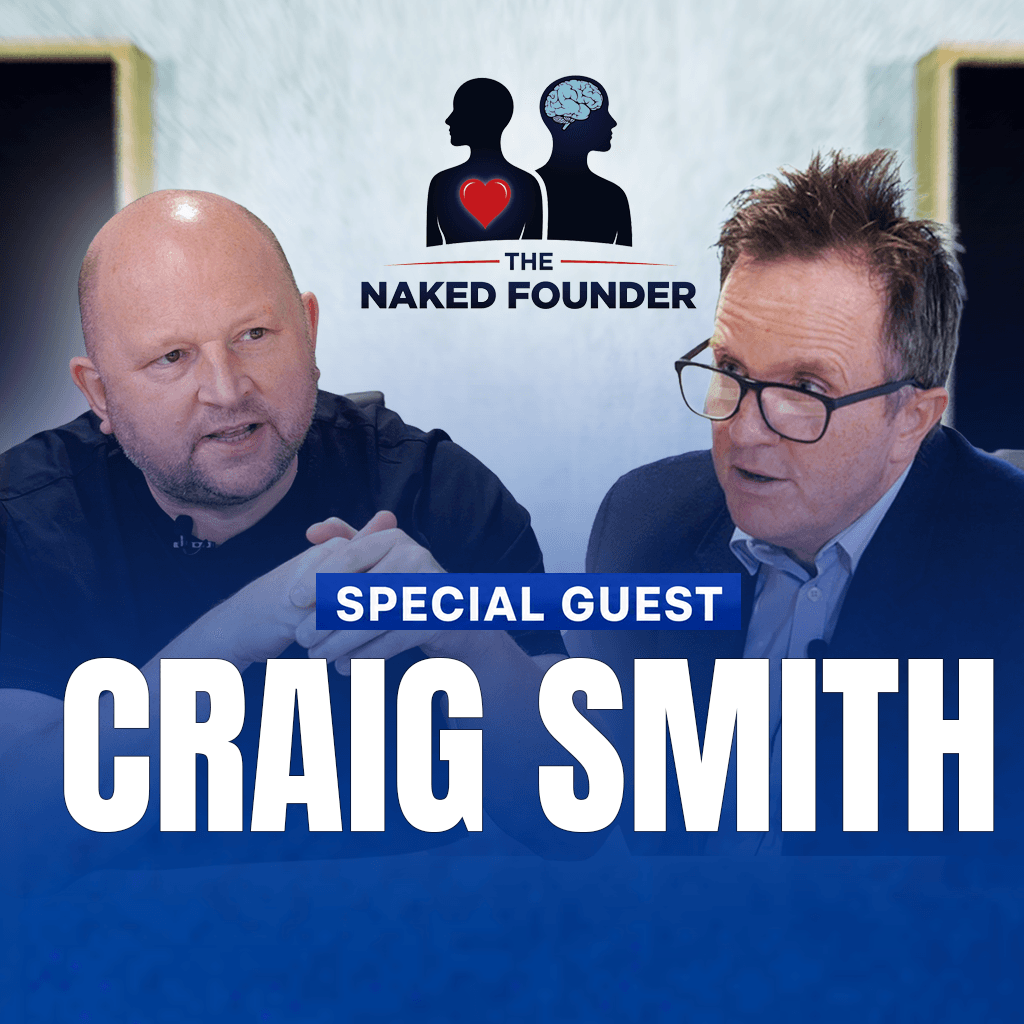
Jonathan Fitchew discusses founding and running businesses, the emotional impact of losing a co-founder, and building Apprentify (digital apprenticeships) after leaving Pareto Law. He also covers AI’s role in operations and ends with founder advice plus a chicken/LEGO “pressure valve” segment.
Guest background
Serial entrepreneur and chicken owner; founder and group CEO of Apprentify. Previously co-founded Pareto Law (1995) with Andy Sawyer; shared an office for 26 years. Pareto Law grew to ~£40m turnover and ~400 staff; acquired partly by Randstad in 2008.
Key claims
Business is “a way of life” with endless sleepless nights; co-founders must be liked; losing a co-founder is different from amicable separation; AI can automate admin while humans handle coaching and progression; prioritize sales, execute over ideas, cash is king.
Notable examples
Andy’s empty desk moment after his Jan 2021 cancer death; Pareto Law’s 80/20 sales training origin from a costly hiring mistake at RPL Telecommunications; Apprentify using AI (“Alice”) to pre-screen learners; LEGO builds (4,000-piece Ferrari Daytona) and daily organic egg collection from named chickens (Mary, Latte, Cappuccino).
Written by AI. May contain mistakes. Listen to the episode to check what was said.
Chapters
Tap a time to open that second in VOThe Entrepreneurial Journey
0:08 to 0:43
Jonathan shares the realities of founding and running a business.
“Our guest today is serial entrepreneur and chicken owner, Jonathan Fitchew, founder and group CEO of Apprentify.”
Learning from Mistakes
0:43 to 1:26
The importance of making mistakes and learning in entrepreneurship.
“I think people think it's a job that they're just in charge of, whereas actually it's a way of life and it's not for the faint hearted.”
Loss of a Co-Founder
1:26 to 2:11
Discussing the emotional impact of losing a business partner.
“about teaching entrepreneurship, really.”
Reflecting on a Partnership
2:11 to 4:00
Jonathan reflects on his long friendship and partnership with Andy.
“And within a second of walking back into that office that you shared with Andy for all those years, you saw his empty desk and you knew that was it for you and Pareto Law.”
The Formation of Pareto Law
4:00 to 5:45
Jonathan recounts the founding and philosophy behind Pareto Law.
“Was Andy a friend first and a founder second or the other way around?”
Identifying Sales Talent
5:45 to 7:40
Exploring the criteria for hiring effective salespeople.
“Well, being a risk taker, I think I think if you have an entrepreneurial streak in you, you don't sort of look at it like risk.”
Starting from Humble Beginnings
7:40 to 10:31
The early days of Pareto Law in a broom cupboard.
“So what problem are you trying to fix with Pareto Law?”
Strong Business Dynamics
10:31 to 12:55
Describing the close relationship and dynamics between Jonathan and Andy.
“broom cupboard in Salford uh as as most tv careers started in a broom cupboard yeah um that was in 1995 as I mentioned before you and Andy spent 26 years sharing that office and other offices working side by side.”
Selling to Randstad
12:55 to 14:01
Jonathan discusses the acquisition of Pareto Law by Randstad.
“2008, Pareto, partly acquired by Randstad.”
The Impact of Selling a Business
14:01 to 14:40
Explore the emotional journey of selling a business and its aftermath.
“And there was an urn out and all this sort of stuff.”
Show all 21 chapters
Coping with Personal and Professional Crises
14:41 to 16:39
Learn about balancing personal challenges with business responsibilities during a crisis.
“And, you know, people find this strange, but I wish I was one of the nine that didn't go through.”
Remembering a Business Partner
16:40 to 18:22
Understand the lasting impact of a late business partner on personal and professional life.
Launching Apprentify: A New Venture
18:23 to 20:48
Discover the inspiration and foundation behind the launch of Apprentify.
“And I met this business broker who said, well, you can buy one.”
Creativity in Business After Corporate Life
20:49 to 23:18
Examine how leaving a corporate environment can spark creativity in business.
“You clearly still add that hunger, that eye of the tiger in you when you launched Apprentify.”
The Role of AI in Modern Business
23:19 to 26:04
Analyze how AI impacts business processes and employee roles.
“So if you leave the tech side of AI, the large language models, the huge data centers, the energy required to run it all to those really specialist people and say, what does it actually create?”
Advice for Aspiring Entrepreneurs
26:05 to 28:00
Receive actionable advice for those considering starting their own business.
The Entrepreneurial Itch
28:00 to 28:45
Explore the relentless drive of serial entrepreneurs and the challenges they face.
Weekend Woes of a Founder
28:45 to 29:17
Discuss the difficulty of switching off during weekends as a founder.
Keeping Chickens: A Unique Hobby
29:17 to 30:56
Learn about the host's experience with keeping chickens as a form of relaxation.
“And every day I go in a little box of eggs because they collect up in our house.”
The Therapeutic Nature of LEGO
30:56 to 32:16
Discover how building with LEGO serves as a decompression activity for busy founders.
“Is that because whatever you do, you're a builder, literally?”
Advice to New Founders
32:16 to 33:46
Hear a heartfelt letter containing valuable advice for new entrepreneurs.
“and it's a thing now when I'm 53 now as well, And that's how our beauties, that's the beauty of a business that's evolved and developed and found new markets.”
Transcript
Automatic transcript. May contain errors.0:00Jonathan Fitchew:Welcome everyone to the latest episode of the Naked Founder podcast, a business podcast where nothing is hidden. Thank you to our sponsor, Financial, the home of money for women. Our guest today is serial entrepreneur and chicken owner, Jonathan Fitchew, founder and group CEO of Apprentify. Welcome, Jonathan. Good morning, Chris. Well, we're going to be talking about chickens later, but we always start every episode of the Naked Founder podcast with the same question. What didn't they tell you about founding a business that you wish you'd known at the start, Jonathan?
0:27Andy Sawer:Well, I guess if they told me that I was going to have endless sleepless nights, obsessed entirely about the process, never stop thinking about it, always be in the ring, you probably wouldn't do it if you knew that. I think people think it's a job that they're just in charge of, whereas actually it's a way of life and it's not for the faint hearted.
0:53Jonathan Fitchew:I think that's a really good description, actually. But if you knew everything that you knew now, would you do it all over again?
0:59Andy Sawer:I would. I don't think I don't think some of my more successful ventures would have taken as long if I'd known what I know now. OK, because because I think a lot of young people want to start a business or have an entrepreneurial idea and they don't know anything and they just get on with it. So that so they have to make the mistakes as they go. And if they're lucky enough to survive the mistakes, then they come out with their battle scars. and then they win the day. But often many of them don't. So, you know, there's a lot of talk about teaching entrepreneurship, really. And I think it's a good thing.
1:32Andy Sawer:And anything I can share, not that I'm professing to be an expert on it, anything I could share with young people, I'd love to do that.
1:39Jonathan Fitchew:Absolutely. And you're sharing your expertise today on the Naked Founder podcast. When we talk about founders and co-founders, one thing that people often don't talk about is what it's like when you lose a co-founder. We talk about it when you go your separate ways, when you don't carry on in the business together. But your story is slightly different. So before we talk about Apprentify, we're going to talk about Pareto Law. You founded it with your good friend, Andy Sawyer, in 1995. You shared an office with Andy for 26 years at Pareto Law, but Andy tragically died in January 2021 after a six-month battle with cancer.
2:10Jonathan Fitchew:Now, you said when Andy died, part of you died too. And within a second of walking back into that office that you shared with Andy for all those years, you saw his empty desk and you knew that was it for you and Pareto Law. So just tell us that moment and how it felt.
2:25Andy Sawer:Well, I mean, you probably oversimplified it a little bit because you haven't got the knowledge. But, you know, his battle was from November 19 and he'd been feeling ill for six months before that. And then he had the whole of the Covid year being treated and then sadly died in January 21. And the strange thing was I'd actually lost my love for Pareto back in 2019. So him and I had been talking and I'd said I wanted to do something new. And it might have been that that was the end of our partnership at that point, because he liked it. He loved it and he'd probably wanted to stay with it. But then he fell ill and then Covid was announced.
3:06Andy Sawer:And I just thought he's in the trenches with his illness stoically and I'm in the trenches looking after the business. So we've got to go on this journey of Covid. And it was a really interesting one because actually him and I used to go into the office. him him you know in between treatments and we just sit there the place was deserted but we we were so used to doing that we didn't want to be at home and I don't know whether we're breaking the rules or not but we went in and he need he needed a companion during his illness so so when he finally died it sort of took my handcuffs off because my job was done I'd looked after the business through COVID getting it ready for when it ended if it did ever end you never knew when you're in it.
3:47Andy Sawer:And he wasn't there to enjoy the moments with. So it was just a natural point to leave. And I just knew I didn't need to be there anymore. And I didn't want it anymore. I would have never wanted it without him anyway.
4:00Jonathan Fitchew:Was Andy a friend first and a founder second or the other way around?
4:03Andy Sawer:Yeah, we became friends. We met on a Mercury Communications sales incentive. As all good friendships normally start. In Switzerland. And we were being royally treated, I think back in the 80s, entertainment budgets for corporate life were quite extravagant. And we were in this fancy hotel, wining, dining, and he was a bon vivant. He loved the food and the drink. And he just had a very, very warming personality. He was actually interested in people. He asked questions of people, didn't matter where they were from. So he was very self-deprecating and charming. And, you know, we had a big night. And the next day I met him in the breakfast, just said hello as I was passing.
4:44Andy Sawer:He had a plate, four fried eggs, four rashes of bacon. And I thought, this man can do it. You know, this is someone who I can do business with. And then a moment later, we're on a funicular going up to the top of to the James Bond revolving restaurant of Mont Blanc, both terrified in this little tunnel on this train and had gone from men to mice overnight. And I thought I just really liked him. and I knew something was going to happen with us.
5:11Jonathan Fitchew:I don't think you can force a business with a co-founder unless you like the co-founder. It sounds really obvious. It would be a bit like being in a relationship with somebody who doesn't like the other person as well. But sometimes you just click and you think we could do something magic together. We're going to talk about Pareto Law a bit later in the podcast. I'm going to take you back a bit to when you were 23, which in your case is probably only a few years ago. You've always been an entrepreneur. And I think back then you borrowed 15 grand to buy into a business called RPL Telecommunications, which you built and sold.
5:42Jonathan Fitchew:Would you say you've always been an entrepreneur and have you always been a risk taker?
5:47Andy Sawer:Well, being a risk taker, I think I think if you have an entrepreneurial streak in you, you don't sort of look at it like risk. I mean, I don't I don't gamble, you know, I mean, I might put a fiver on the Grand National, but gambling is of no interest to me. And people always associate gambling with risk taking. So I really think it through. I always think it's going to succeed. There's a bit of optimism there, naturally, because many, many businesses don't. I mean, they talk about four out of five or nine out of two. I don't know what the stats are. So to me, I was risk taking, but it was it wasn't affecting anybody else.
6:21Andy Sawer:It was just affecting me. So, you know, as a young man, I was prepared to take that chance. And it was the opportunity cost. If I didn't buy in when I did, then I just I was just going to be an employee in that business. And I felt I had more to offer because I had ideas about growing the sales and product and all sorts of things. So I had to take the risk. And in those days, you went into a bank branch and you waited outside and you went into the office with the manager and you pitched them. And he sat there with his great suit on. Like an investor almost. Yeah, there was no telephone, no internet, no filia forming over the phone.
6:55Andy Sawer:And he actually told me off because I had my dad's RF tie on and he knew about the RF. He said, you're not entitled to be wearing that tie. I just pulled it out of my dad's cupboard. Yeah.
7:03Jonathan Fitchew:But a lot of it is about how you present yourself as well. I mean, people talk about the fact the decisions they regret are the ones they don't make, not the ones they do make as well. So what's the worst that can happen? You borrow 15 grand. That thankfully turned out to be quite a good investment as well. It was. And then Pareto Law. So you mentioned that you met Andy on this jolly. OK, you realise this was a guy that you could do business with. You liked the cut of his jib, so to speak, as well. you chose the name Pareto Law, which is named after the Italian economist Vilfredo Pareto. I've almost certainly murdered that pronunciation.
7:37Jonathan Fitchew:He works on the 80-20 principle and the idea that 80 % of a company's sales will come from 20 % of its sales team. So what problem are you trying to fix with Pareto Law?
7:47Andy Sawer:Well, his law is a general law about uneven distribution. It's sort of about 20 % of the good stuff comes out of the 100 % and people sweat the 80 % when And they should sweat the 20%. So you can apply it to anything. I was applying it to sales. And it was because I'd been bitten with an expensive mistake at RPL of taking on some so-called experienced salespeople, big car, big expenses, retained commission. They were going to be brilliant. And these two people over about six months didn't sell so much as a BT wall bracket. And I thought, God, I've spent so much money. But I wasn't that person.
8:28Andy Sawer:And I was just a grad who came out of college, did a sales training course with Rank Xerox. And I know how to do it. So why waste money on expensive mistakes? So everybody I then took on in RPL was a trainee from the university. I'd go up to the careers office and say, give me another 20 to interview. And so people can spend their entire life being bad at being experienced at something. You know, I think it's like if you get a 60-year-old taxi driver who scares the life out of you, They're clearly not very good drivers, but it's their job. So experience isn't necessarily gained by repetition. There's more to it.
9:05Andy Sawer:So I thought I want to find a way of finding the best qualities of a salesperson, which to me is a mix of ego and empathy. If they've got too much ego, they're just they'll sell you anything just to get the deal. If they've got too much empathy, then you probably won't buy off them because they're just too nice. And so you want somebody with that equal mix. And I thought I could uncover that through my experience at RPL and offer it as a business service. So everyone said to me, you're mad, you can't call your business pray to law. Everyone will think you're a law firm. I said, good, because when I ring up, they'll probably want to speak to me because they think, you know, whenever there's a lawyer on the phone back then, it must be important.
9:47Andy Sawer:So there were lots of contradictions, family and friends. Oh, you call it that stupid name. And even Andy was reticent on the name, but it was actually our biggest. It was so exciting. And what's so strange is Randstad, as soon as I left the business, they dropped the law off Pareto. Well, there's 500 companies called Pareto in the world. There was only one Pareto law.
10:07Jonathan Fitchew:Yeah. And it's about training the next generation of super, super sales staff as well. But in terms of that number situation, some people can think every member of the team, every member of your staff is the same. not true because you know a small proportion of staff will will generate a disproportionate amount of your revenue as well um so you start Pareto Law and uh you actually started in a broom cupboard in Salford uh as as most tv careers started in a broom cupboard yeah um that was in 1995 as I mentioned before you and Andy spent 26 years sharing that office and other offices working side by side.
10:45Jonathan Fitchew:I know you both had your own families, but did it feel like you were like a couple in some respects?
10:51Andy Sawer:It was incredibly intense, actually. I mean, if we went on a business trip, we shared a room. We never take two rooms. And if we only had a king-sized bed, he had the left side, I had the right. And even when Randstad acquired us, we had to go to this MD's gig at the Hilton on Park Lane and the CEO's PA rang up and said, you know, we need to book you a couple of rooms at the Hilton. And I said, no, we only want one. Well, you're not allowed one. You have to have one each. I said, well, we won't use it because we always share. Do people think you were a couple? Well, no, I don't think they thought that.
11:26Andy Sawer:I think they thought we were a bit Morecambe and Wise. And so when we got to the Hilton, we got our two room keys and we went into the room that was the one we didn't want to use and we just rolled around on the bed and messed it up a bit and then went back to our room. So that's just how we were. It was just very close. and, you know, there was a... If we were on a trip, you know, there's a comfort to... If you're married and you can hear your wife or partner or whatever, you know, just snoozling away just over there, it's quite a reassuring thing, isn't it? And I got that from our relationship.
11:57Jonathan Fitchew:Yeah. Were you Morcombe or were you wise? Well, I guess... I suppose I'd have to be Eric because Andy was a bigger, more lively character than me. Did you and Andy ever disagree, Jonathan?
12:11Andy Sawer:Yeah, frequently. but when we did it was always in private we were a total united front with anybody we dealt with didn't matter who it was and we would sulk for a couple of hours and just sort of his desk would be over there and mine would be over here and we'd just sort of a little glance now and again and him tapping away and then lunch would come and lunch was the breaker so we'd go over to the chippy and we'd order a sausage and I'd say you cut I'll choose and cut it in half and you get half each and then the friendship was back on. So it didn't last for very long at all.
12:45Jonathan Fitchew:Yeah, brought together by a Savaloi.
12:47Andy Sawer:Yeah, normally a Savaloi. Occasionally a KFC.
12:50Jonathan Fitchew:Absolutely. So everything's going great. You grew the turnover of the business, Pareto Lord, 40 million, 400 staff. 2008, Pareto, partly acquired by Randstad. And for those listeners and viewers who don't recognise or don't appreciate the scale of that business, they're a 22 and a half billion dollar global provider of hr services and the second largest staffing organization in the world so jonathan what's it like when they come knocking sound effect done by chris mcguire available for all good tv shows um and they want to buy your business well it was very flattering you know and at that time we were just growing and growing we weren't even considering selling the business so you know i guess they send these letters out through agents
13:36Andy Sawer:and they kiss a lot of frogs and, you know, they've got these businesses that interest them. And so we got involved in conversations, but it was really slow. I mean, I think I think the first approach was sort of the end of 2006. And then eventually they came to see us. And I really like this guy, Brian Wilkinson. He was a really dynamic CEO and he explained their philosophy wasn't to take away our culture and our brand and to let us grow. And there was an urn out and all this sort of stuff. And, you know, PE wasn't really around for smaller businesses then like it is now. You know, so trade sales tended to be the way to go.
14:12Andy Sawer:And we both had young families. You know, we both got married. We had young kids. And it was a sort of hedge, I think. I think it was a de-risking because we didn't have to sell it all. But the truth is we were supposed to be gone after three years after that. But of course, it was also it was also quite fortuitous because the world collapsed in April 2008. And we got our deal away on the 28th of March 2008. And we were the last business. Randstad had about 10 businesses they were buying. And we were the last one. The other nine got thrown in the bin. And, you know, people find this strange, but I wish I was one of the nine that didn't go through.
14:51Andy Sawer:I really do, because my world changed. OK, I had this big check and, you know, we were secure and the world was in recession. But I felt I felt like the air had been sucked out of me.
15:03Jonathan Fitchew:I speak to some founders who sell a business or a chunk of their business and they talk about the fact they feel like they've sold one of their children. Did you feel like that?
15:11Andy Sawer:Well, I mean, my children come to me above everything, so I didn't feel like selling selling one of the kids. but it did feel like you know you wake up in the morning after the drinks and you know you go to the cash point you put your pin number in and there's all these zeros after the number in your current account oh my god and i thought yeah but what have i done it really was that experience but you just crack on and we got involved and it was quite interesting for a while i'd never been part of one of these great big organizations and i sort of enjoyed it for a while and andy loved it because you think we had it all really they left us alone we had a great salary that we'd negotiated we got big bonuses if we hit our numbers we got dividends on the shares we had remaining but it was no longer felt like mine you know i felt like i was renting it you know it's like a
16:04Jonathan Fitchew:property i suppose other founders have used that same analogy actually where it was no longer yours and you're going into somebody else's business as well and as a founder that's that's at odds with with what your dna is um i'm going to come back to andy again and like this is the naked founder podcast so we probably go to areas that other podcasts don't go um but when andy was diagnosed with cancer and you were visiting me in hospital and at the same time you're trying to grow a business simultaneously as well just from a practical point of view seeing a guy that you clearly love battling cancer but also trying to sustain a business how did you cope with that
16:45Andy Sawer:that challenge well it was really difficult actually because of course you know he he had his first big operation just before christmas in in 2020 in 2019 but just before christmas and then of course i remember i you know we were all really hopeful that they'd done a good job of the operation and that then he would start his therapy in terms of radiation and chemotherapy and all this stuff and I had a family skiing trip and it was only on the skiing trip that COVID was announced and it was really scary because we were at the airport coming back from from Austria and all these people are coughing in the in the lounge and I thought you know I was telling my kids to hold their breath and everything so we he was in a crisis I mean existential crisis but I knew the business was about to go into that crisis so it wasn't like normal work resumes it was totally different it was navigating two two really terrible things at the same time one where I had a responsibility to the business and the other where my best friend and business partner
Read the full transcript
17:50Jonathan Fitchew:was so ill it was awful he died five years ago do you still think about Andy a lot oh every day
17:58Andy Sawer:without doubt and uh you know it's had a terrible impact on on his family and loved ones of course and you know i can't measure that for them but for me i just sit and think you know i've got his picture on the wall and of him and i with a big prater thing across it and i just think what would he think of what i'm doing now and i think he would be um really chuffed and proud and and would clearly if things had been different been on the journey i think i i sometimes say to people who've
18:29Jonathan Fitchew:lost people i always think if you keep talking about them they never really go no they're still there so okay you talked about the next big thing so andy dies you couldn't stay at pareto law you ended up going again you're only 59 years of age 2022 you launched a printify did you know when you walked out of pareto law that there was still you know work that you wanted
18:51Andy Sawer:to do you weren't finished yeah because the embryos of of Apprentify were actually put in place before Andy was ill and before I left but uh you know I was contracted to another business so it it was dealt with in another way it was my brother set it up for me if you like and he he he did all that so I'd had a I'd had an idea back in 2018 that apprenticeships were brilliant with the levy so we got a license at Pareto to do sales apprenticeships because that was our gig we didn't we weren't a generalist um but I thought digital apprenticeships were going to be the future so so Apprentify was actually formed through buying a business called Glitz and Glam and that was back in 2019 because you needed a license didn't you that's right offer a to operate and to offer
19:39Jonathan Fitchew:apprentices so you went down south didn't you to buy Glitz and Glamour yeah the the book was full
19:44Andy Sawer:the ability to put in an application for a license had closed and there was like 2 ,000 issued and the government didn't say when it was going to be done again. And I met this business broker who said, well, you can buy one. And I said, is that allowed? He said, yeah, of course it is. I said, yeah, but I don't want to do glamour. I don't want to do hair and salon stuff. I want to do digital apprenticeships. He went, that's OK. You just develop your curriculum and add it to your license. So that was going on in the background while we were both still at Pareto. So Andy wasn't as interested in it as I was, not because he wouldn't have been in time, but because he was just in the trenches doing what he loved, which was running the sales side of Pareto.
20:25Andy Sawer:And he wasn't as motivated by it. And I really was motivated because I'd sort of come to the end of being a CEO and wanted to be an entrepreneur again. They're very different things.
20:37Jonathan Fitchew:I spoke to an entrepreneur recently and he said that what he looks for in a business partner and what he looks for in an investor or an investee, a company that he invests in, is he's looking for the eye of the tiger. And if you can't see that hunger, that thirst, that, you know, and I always think of the Rocky film, that X factor, he's not interested in that person as well. You clearly still add that hunger, that eye of the tiger in you when you launched Apprentify. You mentioned earlier you wanted to teach digital skills and you bought Juice Academy in Manchester. and Prentify has grown turnover from 2022, you know, to 25 million, 250 staff.
21:13Jonathan Fitchew:Does this journey with Prentify feel different to the Pareto law journey?
21:18Andy Sawer:It's what should have happened at Pareto organically with Andy and I if we hadn't sold in 2008. I mean, it's actually unthinkable where that business could have gone. because you can imagine if you you are you i don't know you're 25 30 million quids worth of turnover in a in a 30 odd billion pound business worldwide with 38 000 employees they just want all the bits to add up around the world to get to their stock market figures and and share price so if you go to them and say i want to do this i want to do that yeah well that's going to cost a lot of money and your your budget is we want you to make x profit of x turnover and this is what we're going to rule your world by.
22:00Andy Sawer:That's how you'll be paid. That's how you're incentivized. So you don't get the ability to be creative in that environment. So of course, the second I had Apprentify and I'm out and I've got it, I could use my imagination to think, where can we go with this? And I thought, well, I want a lot of the good stuff at Pareto. So we've, for example, which I don't think has come out in the notes we've discussed before, we launched a business called Flourish, where Sarah Skelton, who used to work with us at Pareto, is the MD. And that's doing a more up-to-date version of what Pareto represented. So that's an early talent business for sales, not concentrating on graduates.
22:40Andy Sawer:Yes, of course, it does place graduates, but it also concentrates on just bright kids. They don't have to be graduates. And that business is flying. Sarah started that with me 18 months ago. It's already a four million turnover business. She's got 25, 30 staff down in London and it's flying. So that's the Pareto story there. But it's got all the other things. We've got leadership and management. We've got apprenticeships. We've got sales training. We've got digital skills. And of course, you know, the emperor's new clothes for everybody is AI. Nobody seems to know what it's about. There's a few billionaires in the world who are all claiming that turf.
23:20Andy Sawer:But actually for me, this is the biggest opportunity I've ever seen because do you know what AI is I do yeah how do you how do you define AI beyond beyond its literal translation well leave leaving the literal translation AI is just about using technology to improve processes for businesses that that it's unimaginable really and and we every business can change how it operates using these processes now look the doomsayers say well that's getting rid of a lot of people and there is some truth in that but I think when there's an industrial change in in in any world there are casualties and winners but then when it settles down and people get used to the landscape you know if I was setting up an Apprentify again and saying how do I go from naught to 25 million I would already know at day one that that's probably going to need 150 people not 250 people and that those people are going to need a different set of skills.
24:17Andy Sawer:So if you leave the tech side of AI, the large language models, the huge data centers, the energy required to run it all to those really specialist people and say, what does it actually create? Well, you know, in our netcom business, every learner has to fit, let's say, 15 ticks so that they can go on a free government funded course so you know you have human beings ringing them up saying have you got a have you got a passport have you lived in the uk for three years what's your postcode are you unemployed um have you got maths and english have you got a computer to do the course that's all done by ai now we've developed a program where alice phones everybody up asks them all these questions they're totally happy to engage with alice the ai yeah yeah in fact we've had people coming in the office looking for her yeah so you know so it shows how good the tech is doesn't it yeah now what's that meant to us well it means that our business can concentrate on the people valuable things like like the trainers the coaches the careers coaches the the progression officers who actually have real conversations with people that a computer shouldn't be having with them i recently read
25:29Jonathan Fitchew:of jack dorsey the founder of um twitter and alex he announced that he was losing 40 of his workforce a block and it was going to be going to be replaced by ai and and i've read the same look ai is going to completely and utterly transform and it's transforming the landscape but actually if you believe you've got no place in the world because of ai then you've got no place in the world because of you in the sense you've got to add value to any process yeah and if the ai does the heavy lifting you've got to add the cherry on top the bit that the ai can't do that human element as well but i'm fascinated that as a founder you're always looking you're always looking at what's on the horizon because you can never stop you can never stop um i was going to ask you about um i mean about your advice i mean this is the naked founder podcast if you had to offer advice to anyone thinking about founding a business what would your jonathan what your top
26:23Andy Sawer:tips be if they're thinking of founding a business or that you're yeah you have to think before you do so they've got an idea they've got an idea yeah okay if you've got an idea it's obviously it's nothing's obvious but it's obviously burning away at you because you're thinking about it all the time um we we use the analogy you know how does somebody write a book or compose a piece of music well you've just got to sit down and do it haven't you if you've got if you've got the ability everyone's got a book in them but if you don't actually sit down and pick up the pen it's never going to happen so so a lot of it's about action it's don't sweat the idea the idea it will evolve as you go on the discovery and it doesn't have to be a unique idea leave that to the real you know to the bill gates's of this world or whatever who who've come up with these amazing things being an entrepreneur isn't about that it's about taking something it can be somebody else's idea but it can be your twist on it your spin on it your take on it so you've got the idea you've got to evolve it it's about actually doing it you've got to do it and that's when the trouble starts because that's when your mum and dad go oh you know you shouldn't be doing this you should be a lawyer account you should be getting a proper job and your friends go that's a crap name and
27:39Jonathan Fitchew:your parents is that what your parents said to you well they knew they knew i was a maverick
27:43Andy Sawer:you know from from when i got kicked out of boarding school so that they they knew i was never going to listen to them so they weren't so bad what did you get kicked out of boarding school for um rebellionness rebellion i didn't want to be there so i had to engineer it to get kicked out
27:58Jonathan Fitchew:but it's funny because your brother retired yeah and he's very happy in retirement whereas you you know you're a serial entrepreneur so you'll found it you'll never i don't see you as somebody you're going to sit on a beach with sand between your toes yeah reading a book all the time no
28:13Andy Sawer:although look let's not be unfair my brother he founded two businesses and he probably felt that was enough for him um and two's not enough for me but uh he's still been great success with that but yeah you've got to have the itch that needs to be scratched all the time and i would say to people really think about the opposite side of what what starting a business and being a founder or entrepreneur is the other side is calm you can't going home you can't no no going home relaxing taking your sport your passion your pleasure your social time switching off on friday evening not having to switch back on till monday morning not sweating what goes on in that world of who's running the business so that's a lot of nice stuff you can do if you don't
29:05Jonathan Fitchew:do it and and that's what most people do so i find that the weekends are i i switch off almost less at the weekend yeah because i'm always thinking and i'm always i'm always wanting to do more and do better and i envy i genuinely envy people who can turn the phone off and just completely relax i can't do that um i phoned you up a while ago and you said i'm just putting the chickens out or something or putting the chickens away we've got a fox in the area and I said sorry John I thought you mentioned something about chickens and he said no I keep chickens how many chickens have you got I've only got four there was a time have you got names you give chickens names
29:44Andy Sawer:yeah we've got we've got Mary who's the white one we've got Latte who's the brown one we've got cappuccino yeah so you like coffee yeah I do actually yeah
29:55Jonathan Fitchew:I mean they just what supply you with eggs is that what they're there for
29:59Andy Sawer:well you know what we don't really eat a lot of eggs so I give them away at the office every day and people People go mad for them because they're organic, free range, happy chickens. And every day I go in a little box of eggs because they collect up in our house. People love them. How do you know a chicken's happy? If it gives you an egg every day, it's happy.
30:17Jonathan Fitchew:Do you get one egg per day per chicken? Well, you don't.
30:19Andy Sawer:I mean, you know, they say a really good layer will give you 250 a year out of 360 days because they switch down in the winter when it's cold. Why do you keep chickens? well i like i it's always my fantasy was always you know to make a load of money and have a not a farm but have lots of land around my house with sheep and donkeys and horses and animals so i've not quite done that but just to have that space where you've got a bit of nature and i love the way they interact because you know you'd think my little dog would try and kill him but he rounds them up and they know he was not going to kill them so it's just
30:56Jonathan Fitchew:fascinating to watch i find it interesting though with founders that i think you do need a a pressure valve release you know because you're busy growing a business and might be raising investment might be looking for an exit etc etc but within seconds of that you can be you know part of my friends cleaning chicken shit and stuff like that you know and that sort of it's a decompression valve is that would that be fair yeah i mean i've become a ball with
31:24Andy Sawer:lego this last few years have these really intricate models that take hours and hours and i guess that is the closest switch off because let me tell you if you just put one place in the wrong place and then you assemble the thing it doesn't work and you have to reverse engineer so what have you made out of lego i've made a 4 000 piece ferrari daytona right okay which is massive i've I've made the jumbo jet that carries the space shuttle. I've made Concorde. I've made a Porsche Cabriolet. Is that because whatever you do, you're a builder, literally? Well, you know, I'm rubbish at DIY, so everyone finds it incredulous that I can do this Lego, but there's something about it that means I can do it.
32:12Jonathan Fitchew:What's beautiful about Lego is Lego was a thing when I was a kid, and it's a thing now when I'm 53 now as well, And that's how our beauties, that's the beauty of a business that's evolved and developed and found new markets. We always end with the same question, actually, which is on the Naked Founder podcast. There's a tradition in the US where the outgoing president will write a letter to his or her successor and he or she will offer advice. What advice would you offer yourself on day one or to any other founder on day one of a business? Well, I wrote a little letter.
32:44Andy Sawer:Shall I read it out?
32:45Jonathan Fitchew:Please do.
32:46Andy Sawer:Yeah, because I thought that would be the easiest way of getting it right. if I can find it here somewhere.
32:51Jonathan Fitchew:Is it less than 10 pages or? No, it's not. It's half a page.
32:56Andy Sawer:It goes something like this. Dear Jonathan, the journey you're going on is not for the faint hearted. In fact, you're crazy. Don't do it. Relax. Get a good job. Take care of your body and mind. Leave the office behind you at the evenings and weekends. However, if you do do it, obsess over the problem you're solving. Prioritise sales and customer activity over everything else. The service or product will evolve over time. Always execute over ideas. Hire for personal traits, not experience. Don't be scared and lowball your pricing. And remember, your sales forecast will always be over-optimistic and your costs will sneak up on you and kick you hard.
33:38Andy Sawer:So cash is king, look after it. And in the land of the blind, the one-eyed man is king. You just need to be a little better than your competitors.
33:47Jonathan Fitchew:That's really good. letter actually really good lesson thanks for taking the time to write that as well i often find that writing things down is much more effective tool for learning than just having something in your mind you know just uh bumbling around up there from one side of your brain to the other massive thank you to you jonathan for coming in today um that's all for this episode of the naked founder podcast huge thank you as well to our sponsors uh financial we couldn't do it without them um and thank you to you our dear listeners if you'd like the podcast tell your friends and family and press that subscribe button my name as always is Chris McGuire
From the publisher
As the co-founders of Pareto Law, Jonathan Fitchew and Andy Sawer were inseparable.
For 26 years they shared the same office and, when away on business trips, even shared the same bed rather than book separate rooms.
One look at his best friend’s empty desk after he died in 2021 was enough to convince Fitchew that he could never work there again.
In this episode of the Naked Founder podcast, he discusses: • The grief of losing your best friend and business partner • Going again with the launch of Apprentify • Growing Apprentify to £25m turnover and 250 staff • His regrets at selling Pareto Law to Randstad • Being kicked out of school for being rebellious • Relaxing by keeping chickens and building Lego
This episode is a product of BusinessCloud. It was sponsored by ‘Financielle' - The Home of Money for Women’ and produced by Dan Brown of Renowned.
To sponsor the show, email news@businesscloud.co.uk
Chapters
00:00 Introduction: Jonathan Fitchew & Apprentify 00:28 What They Don't Tell You About Founding a Business 00:53 Would You Do It All Over Again? 01:39 Losing a Co-Founder: The Story of Andy Sawyer 02:25 Andy's Illness, COVID & Keeping the Business Alive 04:00 Friend First, Founder Second: How Andy & Jonathan Met 05:11 You Can't Force a Business Partnership 05:47 Risk Taking vs. Gambling: The Entrepreneurial Mindset 07:03 Borrowing 15 Grand & Pitching a Bank Manager 07:47 Why They Named It Pareto Law 09:52 Hiring Graduates Over Experienced Salespeople 10:07 Starting in a Broom Cupboard in Salford (1995) 10:51 Sharing a Room, Sharing a Business: Life with Andy 11:57 Did You and Andy Ever Disagree? 12:45 Pareto Law Grows to £40M & 400 Staff 13:25 When Randstad Came Knocking (2008) 15:02 Selling Part of the Business: The Air Was Sucked Out 16:06 Visiting Andy in Hospital While Running a Business 17:52 Do You Still Think About Andy? Every Single Day 18:27 Leaving Pareto Law & Going Again: Launching Apprentify 18:52 The Embryo of Apprentify Started Before Andy Died 20:38 Still Hungry: The Eye of the Tiger 21:18 How Apprentify Grew to £25M & 250 Staff 23:25 AI: The Biggest Opportunity Jonathan Has Ever Seen 25:27 AI Won't Replace You If You Add Value 26:23 Top Tips for Anyone Thinking of Starting a Business 27:51 Getting Kicked Out of Boarding School 28:13 The Itch That Always Needs Scratching 29:44 The Chickens: Mary, Latte & Cappuccino 30:57 Chickens as a Decompression Valve 31:21 Building Lego as a Switch-Off: 4,000-Piece Ferrari & Concorde 32:12 Whatever You Do, You're a Builder 32:43 Letter to His Younger Self