
 Ask ChatGPT


- Podcasts
- The Rest Is Money
- 323. Are creditors too hard on the UK?
In short
UK fiscal headroom ahead of the budget; how inflation and higher debt interest squeeze public services; whether creditors/markets are too harsh; and what the Chancellor should do (tax vs spending, bank taxes, local devolution).
Guests (and backgrounds)
Helen Miller, economist at the Institute for Fiscal Studies (IFS), focuses on public finances and welfare spending projections. Greg Jackson, founder and CEO of Octopus Energy, discusses company culture (strategy “for breakfast” idea).
Key claims
Debt interest costs exceed £100bn/year; inflation is eroding real public-service budgets and can turn “cuts” into much larger effective cuts (e.g., NHS-related pressures rising from ~£9bn to ~£24bn). Lenders care about credible near-term borrowing plans; chancellors should set contingency plans rather than “wait and see.” Bank tax rises would raise only a few billion and could discourage activity. Welfare spending growth is underestimated due to rapidly rising disability-related caseloads.
Notable examples
headroom estimates (~£20bn vs ~£14bn vs ~£12–14bn); disability living allowance nearly doubling; NEETs around a million; disability transitions to PIP; devolution via sharing income tax with mayors (with tariffs/top-ups).
Written by AI. May contain mistakes.
Chapters
0:45
Exploring Company Culture with Greg Jackson
A discussion on the importance of company culture in business success.
“to preserve yours there was a management consultant i think it's peter drucker that said culture each strategy for breakfast.”
2:36
Budget Expectations with Helen Miller
Helen Miller discusses expectations for the upcoming budget and fiscal forecasts.
“What is it that John Healy has to achieve in the forthcoming budget?”
6:41
Impact of Inflation on Public Services
Analysis of how rising inflation affects public service funding and spending.
“welfare because they've decided to publish those reviews after the budget.”
10:57
The Reality of Government Borrowing
Discussion on government borrowing, spending plans, and economic forecasts.
“inflation is going to squeeze those public service budgets.”
14:03
Chancellor's Fiscal Plans and Public Spending
Discussion on realistic fiscal planning, public spending, and debt management.
“should set out a set of plans that says, if this is the forecast, if this is the truth in a year's time, here's what I would do.”
27:03
Local Income Tax and Economic Incentives
Exploration of local income tax distribution and its implications for regions.
“I make all my money in London, but I live in Newcastle.”
28:00
Funding Fairness Across Regions
Explore how to fairly allocate funding between different regions in the UK and the mechanisms for revenue sharing.
“But how do you make it fair between different parts of the country?”
38:20
UK's Economic Performance and Borrowing
Discuss the perception of the UK's borrowing rates compared to other nations and the implications for economic policy.
“then you can plan the steps that get you moving towards that.”
42:00
Economic Perspectives on Interest Rates
Explore the implications of current interest rates and economic growth.
“We shouldn't be thinking we're going to go back to those really low rates, I don't think.”
45:34
Concerns About Budget Complexity
Discussion on the potential complications arising from budget changes.
“It's just a few small things here and there.”

Ask about this episode
Get the gist, explore an idea or ask about something said.
 Claude
On The Rest Is Money, what are the key points of this episode?
Searching your listeningTranscript
Automatic transcript. May contain errors.
0:00Just over a week from the budget, there are lots of numbers flying around about our fiscal headroom. Don't let it distract you, whatever that number, we are a country in a huge amount of debt. Our interest payments alone cost over£100 billion a year. So what should the Chancellor do? Helen Miller from the IFS is here to tell us why we have to be bold. So no more tax tweaks or rabbits out of hats.
0:33the rest is money is powered by octopus energy and you know we love chatting to entrepreneurs on the rest is money so we're joined now by octopus energy founder and ceo greg jackson greg how important is culture to a company's success and and what you do in octopus energy to preserve yours there was a management consultant i think it's peter drucker that said culture each strategy for breakfast. And what he meant really, I think, was if everybody in the company kind of shares a broad idea of where you're going, got broadly the same values about how we do it, it's much more effective than trying to plan years and years ahead what every single person can be doing every day.
1:13I'll tell you what, it's also much more interesting. No one wants to turn up to work and just work their way through relentless checkboxes. You actually want to do stuff that helps customers. Thanks again to Octopus Energy for powering the rest is money. You'll be hearing more from Greg in the rest of our shows.
1:52and availability varies 18 plus. This episode is brought to you by Palmolive. Family time isn't just the big moments. It's weeknight dinners, sitting around the table, everyone talking all at once. So when the plates are empty and the sink is full, use Palmolive Ultra. Palmolive's most powerful formula removes up to 99.9 % of grease, leaving your dishes sparkling clean. And the new convenient pump makes cleaning even easier so you can spend less time tackling dishes and more time together. Shop now at palmolive.com.
2:35Helen, great to see you. Let's just start with the big picture. What is it that John Healy has to achieve in the forthcoming budget? Well, it's always the fiscal forecasts that underlie the budget and we don't yet know what the OBR will hand him. But my expectation is that actually the OBR will show that the Chancellor is still on track to meet his fiscal rules. So what he won't have to do, I don't think, is a big fiscal repair job. That'll be good news for the Chancellor. But he's already talked about wanting to create breathing space for people. So I think he'll need to deliver something to help households with the cost of energy in winter, maybe to help businesses.
3:12What I would like him to do, although whether he would or not, we'll have to see, is talk about how he's going to deal with the fact that now inflation is higher, that he's going to really squeeze the department's budgets. So they're already pretty tight spending plans as we go forward. They're going to put a squeeze on public spending. I'd like to see him talk about how he's going to deal with that. There's a lot of that we want to talk to you about, Helen. Can we just ask you first of all about numbers around all of this? Because there's obviously lots of numbers doing the rounds in terms of what the fiscal headroom is.
3:41They feel quite wildly different. So can you tell us what your assessment is, how you got to it, so we can compare with others? Absolutely. So back in March, Rachel Reeves had about£24 billion of headroom against the main fiscal rule, which says that you need to get borrowing on day-to-day spending down so that taxes are covering day-to-day spending. We just put an analysis this week saying that we think an plausible scenario, that could be around 20 billion. So actually not that different to what it was back in March. Most people out there are saying it's probably closer to 14. Worth saying, actually, in the context of the public finances, where you're looking at the difference between two huge numbers, like you're looking at something like 1 ,490 billion and 1 ,470 billion, actually a difference of five or six isn't very big.
4:30I think what's happening is that people are taking different views about how inflation is going to work through the economy. And in particular, in our forecast, what's happening is that you get more inflation, that pushes up tax receipts, the public finances are nominal beasts, when cash is high, you get more receipts. And if that feeds through, then you start getting higher headroom. But it's still very uncertain, it's basically going to depend in large part on what the OBR, the official forecasters, think is going to happen to nominal earnings. And the more optimistic they are about that, the more tax revenue you get, the higher headroom you've got?
5:02I mean, for what it's worth, and as you say, I don't regard these judgments as absolutely critical, but my understanding is the headroom is going to fall to more like 12 or 14. And as you say, we are talking about enormous numbers. So actually the difference between you and others is not huge, but nonetheless, if he wanted to rebuild headroom, let's say to 20-ish billion. You've still got to find some money from somewhere. Before we drill down into the big issue, which I thought your report on this was really quite important, which is all about how rising inflation is effectively undermining the resources that important public services have, schools, hospitals, and the reserves, the real value of the money coming in is reduced by inflation.
6:03Would your preference be putting politics to one side, that if he's got to find, I don't know, 10 billion or something, that he did it through taxes or he did it through welfare savings? I think that's completely political choice, actually. I think what's most important is that he makes it clear and transparent what he wants to do. So if you want to find the money, you can do it through welfare. Of course, the funny thing happening here is that we expect there to be the Tim's review of disability benefits coming out after the budget. So it'd be a little bit odd to announce in the budget a big policy beforehand.
6:34And the Milburn review is after the budget as well. Both of which have, as you say, implications for welfare. So I agree with you. I think it's highly unlikely to say anything about welfare because they've decided to publish those reviews after the budget. Exactly. And of course, it's also, it's not just a tax as welfare, it's kind of the quality of the measures. There are ways you could put up tax that would be a disaster, that would drag on growth, that would be really bad. And there are ways that wouldn't be so bad. So it's not just, is it a tax or welfare? It's how are you changing work incentives and growth incentives?
7:01And the devil's in the detail for those things. One of the things that's quite striking today is out in Bangkok at the IMF meeting, John Healy has made a point of saying, our big banks are a great jewel of the British economy. Now that has been taken as a signal that after all, despite all the rumours, he's not going to increase taxes on banks. There were numerous reports that he was going to increase the surcharge on banks' profits back to where it was. Do you have a view on whether putting more taxes on banks is a good or bad thing? I think one question is why do we think banks should be taxed differently to other companies?
7:45If you think they're less mobile, you can get away with taxing them more. You can tax them more. We already do tax them more than other companies. I think worth panning out and saying, even if the government does tax them more, in the grand scheme of the public finances, we're talking about a few billion here or there. It's not the golden goose that's going to fix the NHS, for example. So, it might bring in a bit more money to help around the edges. Obviously, higher taxes discourage activity. So, you would discourage some banking activity. It might also mean that all of us have to pay more for our banking, effectively, because if the tax gets passed on through lower interest rates in our bank accounts, for example.
8:18So yeah, big picture, taxes drag on growth, that one would too. But it won't be the big answer to those pressures we were talking about. Isn't there a danger as well, just on the point about public spending, that if we don't talk about that in this budget and decisions are held off until the statement next year, the spending review, isn't that then going to spook the markets? And isn't that a danger because you won't then be able to essentially look like you're costing everything out properly. There's a few different dangers. So the market really means people who are lending money to the UK government, what they really care about is how much borrowing is happening in the next couple of years.
8:57So if what happens is in the next couple of years, actually the Chancellor doesn't really plan to borrow too much more, and they think that next couple of years is quite credible, then actually the market I think won't change very much. Actually, if Headroom comes in more along with our estimates than the average estimates, actually they could be a bit happier because actually that would mean lower borrowing than they were already expecting. I think obviously as we go forward, it's much easier to pencil in cuts than it is to actually deliver them. So if as we go forward, the government doesn't end up delivering, then yes, eventually you'll see those borrowing costs stay high because investors, because the government is trying to borrow a lot.
9:32I think importantly is that the government is going to pencil in some plans for spending. They will be in the budget. They will be what underlies the plan to bring down borrowing. So what all of us need to do is work out do we think the government has a credible plan for spending, which absolutely could include cutting some departments. There's no law of nature that says that the state has to keep growing. You could absolutely have spending restraint in coming years. But whatever that plan is, that's going to underlie the plan for reducing borrowing. If you don't believe the spending plans, you don't believe the reduction in borrowing.
10:04So I think it's not just credibility in the markets, it's for citizens and voters as well. And obviously, you can kick some decisions back to next year's spending review, but you shouldn't be kicking them all back to then. There's also the issue, as you say, though, of inflation, because yes, it will increase tax revenue and receipts if wages go up, but it'll also push up the cost of providing services, won't it? So then that will put even more pressure on, even if you cut spending, if inflation could take it above what you've cut it by. Actually, it's worth saying that this inflation effect is really big.
10:33So back again, back in the March plans that Rachel Reeves set out, we already thought that under some plausible scenarios about the NHS, because the NHS always gets a bit more money than everybody else and they're huge. You could be looking at something like 9 billion of cuts to some services by the end of the decade. Just the inflationary increase since March, just that kind of higher expectation of inflation has turned that 9 billion into 24 billion. That's a sense of the scale about how much inflation is going to squeeze those public service budgets. And of course, we have a chancellor who made very clear he wants to get defence to 3 % of GDP, said that was a national imperative that will cost 11 billion by 2030 if you also want to put that from other budgets again you quickly get up to the tens of billions of pounds so there's basically a spectrum in my mind of choices you either actually cut back some services by the tune of something like 30 35 billion by the end of the parliament um or you raise taxes by a lot or you do some combination in the middle but because of this inflationary pressure you can't do nothing because if you do nothing inflation is going to change your course for you and it's going to erode the value of those budgets.
11:37So this, I think, is really what I wanted to get your sort of hard-nosed take on. Your analysis says that because of the impact of inflation and because of the commitment to increased defense spending, even broadly to stand still as a government, they've got to find about 35 billion pounds um and i suppose i mean there have been so many examples in history of governments moving into an election period and sort of being in denial or even lying about those pressures but if you're a lender to the uk you see all of that for what it's worth i don't expect him to tell us in the budget how he's going to find that$35 billion.
12:35We don't know whether or not there'll be any kind of settlement before the end of the year in Trump's war in Iran, which is obviously driving up the oil price, driving up inflation. Were there to be towards the end of the year some kind of a stable situation, then maybe oil price will come down, maybe inflation expectations will come down. There'll be another OBR assessment in the spring, of what the outlook for public finances will be. And so their view is it's more sensible to wait and see. But given that there is just this hard-nosed reality that a Labour government is at the moment committed to essentially what looks a bit like austerity two or three years' time, do you think lenders to the UK believe that's credible?
13:26So there's a few things to unpack there. I mean, people who are lending to the UK don't take exactly what the government says as given. They probably already think actually boron will be a bit higher than they're saying. So in some ways, that's already a bit baked in. It's also absolutely right. The government doesn't have to find 35 billion tomorrow. That's true. In fact, they could never find it. They could just have spending restraint. I think what's not okay, though, is, and of course, you can say, yes, the war might end. Things might get better. And if they do, we could change our plans. They could also get worse.
13:55The OBR is going to hand the government a central forecast and you're going to have a set of plans in the budget of what you would do. So I think what we should be thinking of is like the Chancellor should set out a set of plans that says, if this is the forecast, if this is the truth in a year's time, here's what I would do. Here's the combination of tax rises and spending restraint that I would be willing to live within. I'd be willing to go to the spending review and have it be settled on this. You can also say, actually, some ambitions are going to be contingent. I will only increase defence if this happens, or I'll only do this if the economy improves.
14:26Or if the economy does improve, you could do something. But assuming that we'll just wait and hope the economy improves, well, it might, but it might not. And in the meantime, you've penciled in some plans, so why not pencil in realistic plans that you would be willing to live within that do contain information rather than just saying, well, we all know they're not really quite right. And of course, you're right. Lots of chancellors now have said they're going to cut borrowing until the time comes to actually do it. And why are we talking about this? It's not because we just like inflicting pain on ourselves.
14:52Debt has tripled since before the financial crisis. The debt servicing cost, if it were a government department, would now be the biggest government department outside of the NHS. Over 100 billion we're spending on debt interest. The reason to get borrowing down is to control those costs because we don't want to spend money on debt interest. We want to buy doctors and nurses and other stuff. So I think there is an underlying reason here to actually have sensible plans to hope for the best, plan for the worst. You can hope things are going to get better. But in the meantime, let's get some realistic plans for what you would do if the hope doesn't come through?
15:23What I do wonder, Helen, is whether we are massively underestimating how much public spending is going to go up by because of welfare. And I know we always talk about welfare as this huge part of our spending and it's going to go up and that's inevitable. But I think people are underestimating how much it's going to go up by. So, for example, if you look at some stats that have come out recently about the number of children who are receiving disability living allowance. So this is the main benefit to support kids with disabilities. It's more than doubled since the pandemic. And we are talking nearly a million kids who are, you know, whose parents or carers, whoever, who are taking this money.
16:05And that's kids who might stay on the welfare system like that. And, you know, at the same time, the number of NEETs. It's not a shock to me that we've got a million NEETs, but it suddenly seemed to be a shock to everyone else. It's like Alan Milburn's review has opened our eyes to a world we never knew existed. You only have to walk around the streets of various towns and cities in the area to see that there's a huge problem with youth unemployment and lots of young people who are going to potentially end up on the benefit system. I think we've underestimated it to date. So the piece of work we did actually a little while ago at the IFS also shows that some of these children you're talking about, Steph, who are on disability living allowance, most of them will end up on personal independence payments.
16:44As they transition into adulthood, they will switch on to the sort of adult version of disability benefits. It's really hard to estimate the growth in these populations, but they are growing very, very quickly. I think what's striking to me is that actually, if you look at who's in these populations, there is a huge range of different types of kind of conditions. So at one end of the severity spectrum, there are children who kind of frankly, in previous decades, wouldn't have survived at all. but now they are surviving horrible childhood disorders or disabilities or illnesses. And that's a great news story, right?
17:18We've got technology that allows children to survive, but now they are with disabilities that mean they need ongoing support. So it's a very severe end of children who I think we should expect to need support throughout their lives, actually, because they have learning disabilities, for example. There's a spectrum through to other people who have... Anxiety is a big one, so a lot of young people having anxiety. I think what we don't yet know there is to what extent actually with better support for those conditions, maybe talking therapies, for example, if we could get more of these young people better support, whether they could manage those conditions and not need lifelong support through disability benefits, but actually be able to be helped back into the workforce.
18:00what's really hard to know is kind of the where to draw the line between those two populations obviously there's a huge middle ground and to what extent support could help and therefore projecting forward it's really hard but anyone who says they can easily cut these benefits of course you can just reduce eligibility but i think there's a genuine underlying issue here about how people with different needs are going to need to be supported as those children grow into into adults and it's really polarizing whenever you talk about it as well it absolutely divides people about whether people should be getting the benefits or not and whether, you know, we should be teaching more about resilience and everything else.
18:34And it really divides people, doesn't it? And actually the problem with the political debate is it's now become all about ideology and actually not about people. Everyone's got their own stereotype of who this person is, right? And actually what I'm saying, all these people are in this group. There are lots of different people with very different conditions and circumstances. So everyone comes to this debate with their stereotype of who a claimant is. And actually, we need a system that acknowledges that actually people are in the system are in very different conditions and might benefit from very different kinds of support.
19:04Yeah. And what I'm worried about in this, Helen, is because of the Labour manifesto of not putting up taxes on working people, which obviously then rules out VAT and income tax and national insurance contributions from workers, that they're going to be left doing lots of little tax rises to try and get these numbers to try and convince people that we do live within our means. but that when taken as a whole is just going to be really problematic and not raise the money they hope so for example when obviously we had rachel reeves's first budget and she brought in those huge tax rises for businesses it was also in the context of you know really tough economics for businesses there it was also at the same time as business rates were changing as the minimum wage was going up as all these other things were happening that meant you know it's pushed up we've seen part of the reason why the NEATS numbers is so high is because we've lost a lot of those entry-level jobs because they've become too expensive now.
20:03You see lots of businesses closing because they can't cope with the tax burden along with the fall in sales. And so my worry is the government are going to do all these little tweaking and not think about the overall picture about what this might mean to business and business are the ones that are going to be hit hard. And there is no real strategy for growth yet. It's just all about tweaking around the edges. Well, yes, we've seen lots of chancellors. And chancellors love tweaking up budgets, sadly. I mean, I'm a broken record on saying you need a tax plan, you need a vision, you need to move towards it, don't just tweak things, and yet tweaking happens.
20:35One thing worth remembering, however, is that tax revenues have gone up a lot. By the end of the parliament, it'd be about five percentage points of GDP higher than at the start of the decade. That's about 180 billion. That's not just this government. That's also some of the previous government put in. Where's that money coming from? A lot of it's coming from income tax, actually, because every threshold under the sun is frozen. Fiscal drag is out in full force. People are being dragged into paying more and more tax. And even Rachel Rees' big tax measure was an increase in national insurance, as you just said.
21:03That did breach the tax lock in my mind. So actually, it's still our big workhorse taxes that are dragging in the big revenue. But you're absolutely right, Steph. If what the chance has to do is raise a lot of money while sticking within those tax locks, you end up having to do lots of little bits, like maybe banks and gambling and a bit of council tax. And you end up actually increasing taxes that are pretty distortionary and then dragging on growth. Of course, what the Chancellor could do is reform taxes along the way. I mean, capital gains is a great example of this. The current tax we have is not a well-designed one.
21:32If you just put up rates, you're going to discourage investment. But the tax base is a mess, like the definition of what is tax. We tax inflationary gains, for example. Why are we doing that? So again, if you did a bigger, fuller set of reforms, I think you could have a better tax system and raise some revenue. But that needs to be a really setty, meaty thing that's not just about scraping money from behind the couch, but doing something principled to improve growth prospects. I mean, it is going to be interesting to see whether John Healy has a sort of vision for how you generate growth and what kind of structure you want for the tax system.
22:05I mean, people in the Treasury tell me that it won't be a big budget in the sense of big tax rises or big spending cuts. And we've actually already sort of we've already sort of talked a bit about that, but that he will set out what will look like. And I couldn't give you any detail on this, a sort of interesting reform program. So what that'll be, I can't tell you, but this is a government that's currently talking a talk of growth. I mean, he again at the IMF has mentioned something that is quite striking. The UK economy does look more resilient than, you know, many people thought. We've had this oil shock.
22:54We've had a rise of inflation. But actually, the latest figures show the economy growing a bit faster than pretty much every forecaster was expecting. I mean, it's not amazing growth, but it is better than pretty much all of our competitors apart from the US. And actually, one of the things that's interesting is the resiliencies in the business sector, manufacturing stronger than people thought. actually quite a lot of AI-related expenditure driving the British economy. Are you surprised by how resilient the economy is showing itself to be? I'm a bit surprised, yeah. I think most economists are a bit surprised at quite how resilient the UK has been this year.
23:29And I think that partly is that there's been this slightly unexpected offsetting effect of some AI investments. Pan forward, though, I think next year will be more difficult. I think some of the effects of inflation just actually haven't worked through the system yet. The energy price cap is a good example of this. Because we have this off-gen price cap, some of the inflationary effects of that higher gas price haven't yet made it through to households or to businesses. So I think actually I wouldn't be surprised if this year we look more resilient, partly because the effects are still working through the economy.
23:57Now, of course, it depends on how long the war goes on. If the war ends this afternoon, much happier. We won't go back to normal exactly, but it'd be better than if it's still dragging on into the new year. In terms of what's going to be in the budget, One thing we do know they're going to talk about, because they've told us, not to talk the world, is devolution and their plan to do more at a local level. One thing that they'll tell us a bit more about is their plan, which actually was Rachel Reid's plan that they're going to carry forward to assign some income tax revenues to mayoral authorities.
24:28On day one, that does nothing because they'll basically reduce the grants, give them some tax revenue instead. But over time, that could have an effect. What John Healy needs to do, pretty sharpish, is decide where to sit on the spectrum between giving mayors basically stable revenue streams they can plan around or giving them revenue streams that can actually grow quite a lot relative to their neighbours and then give them incentives. But you kind of can't do both. So I think they need a bit of a theory of change about how, what do you need to give to mayors to make them reinvigorate their local areas?
24:57Alan, there's lots more we need to discuss with you, but we're going to go for a quick break.
25:05This episode is brought to you by Vanguard. Look, if you're listening to a podcast about finances, you likely already know that your money could be working harder. But we know it can feel overwhelming knowing where to get started and even dipping your toe into investing can make you feel out of your depth. It's a mindset that's pretty hard to shake without the right guidance. You might even find yourself wishing you could just get the pros to invest your money for you. Well, you can. With their managed ISA, Vanguard's experts do the hard work for you. They'll match you to an investment plan that feels right for you and they'll handle the rest.
25:44No second guessing, just smart professional management. So stop wondering how to start investing and start making your money work harder. Search Vanguard managed ISA to find out more. When investing, your capital is at risk. Tax rules apply. This episode is brought to you by Google Chrome. You think you know a browser, but Gemini and Chrome, that's new. It can help you with practically anything on the web, like restoring a vintage motorcycle from a 50-page restoration block, or finally break down that long article you've had open for weeks. Gemini and Chrome is here for it. Ready to make anything online make sense?
26:20There's no place like Chrome. Check responses set up required, compatibility and availability varies 18+. This episode is brought to you by Palmolive. Family time isn't just the big moments. It's weeknight dinners, sitting around the table, everyone talking all at once. So when the plates are empty and the sink is full, use Palmolive Ultra. Palmolive's most powerful formula removes up to 99.9 % of grease, leaving your dishes sparkling clean. And the new convenient pump makes cleaning even easier, so you can spend less time tackling dishes and more time together. Shop now at palmolive.com.
27:02Just on that, when you talk about raising, you know, tax, income tax locally, let's use me for an example. I make all my money in London, but I live in Newcastle. So is it based on where I live or how will they, you know, how will this work? Yep. So we haven't seen all the details yet, but what we expect the government will do is it'll be good news for Newcastle. It'll be based on where you live. So we think, and again, there'll be no power of local areas to set tax rates. That will all still be done at a central level. But the idea is, you know, take people in an area based on where they live, take the income tax that they're generating and give the area a share of that.
27:37And there's tons of ways you can do it. Lots of complication about also how it changes over time and all that kind of stuff. But yeah, expect it to be where people live. So local areas will have an incentive to, okay, I think it's both like get businesses to create jobs. but also just to attract people to come and live, to do the kind of things that attracts a step to live in Newcastle rather than London, for example. But how do you make it fair between different parts of the country? Because obviously, you know, tax revenues per capita in London are way higher than tax revenues per capita in the northeast.
28:13East. But you would argue in a way that the financial needs of the Northeast are, they're certainly no less than London, I would argue probably greater than London. So how do you give them the money they need from a lower tax base? So it's a great question. As you can do it, this is probably how I would do it and how my guess is the government would do it. We don't know this yet. So first of all, a lot of funding still won't come through this mechanism. There'll still be a big grant for councils. A lot of what councils do is like social care and special educational needs for kids that'll still come through a grant that is needs based effectively um there are other grants that mayors have that do like economic development stuff like transport those grants will be reduced or go away and you'll get a share of revenue um to accommodate that but basically there'll be a tariff and a top-up is the way to think about it so london if you gave london i don't know two percent of its revenue it's huge compared to some of the other places but then you say okay you get two percent we take a tariff away from you to get you back to some level and we top up somebody in Manchester or to give you a different amount.
29:18And then over time, what really matters is how those tariffs and top-ups change. The idea is that actually the baseline shouldn't matter. But if an area outcompetes its neighbours, if it does more, it has higher growth, it has more earnings, then they get a greater share. The flip side of that is if areas don't do well, if they lose people or their people wages don't grow as quickly, then they would share, they would lose over time. And again, a key choice for the government is how much to tolerate that do you at some point do you want to reset the system and say actually we've had 10 years of this now we're going to reset and start again or do you want to just say well yeah tough you know winners and losers there you go which speaks to the what does the government think the theory of changes underlying why you want to do this and how do you think it's going to get up growth in terms of empowering mayors and combined local authorities
30:08presumably and again i can't quite get my head around how this is going to work but you're saying that they can have a share of the tax revenue of their area right in terms of incentivizing initiatives that stimulate growth within that area and prosperity within that area is that is is is a share of income tax the right sort of um metric the right measure because you could argue actually if you really want to get growth going maybe it should be a share of corporation tax in the area because you want to attract businesses in um i'm just sort of interested in if you think that is you know the right thing to be giving a target to mayors uh as it were.
30:58Yeah. So there's different schools of thought here. So it's worth noting as well, a lot of mayors already have access to, they share some business rates revenues, it's a tax on business properties. And if you've already got that, actually that's going to be increased, they'll get a bigger share of that. Income tax could be seen as a complement to that. So now you've got an incentive through business rates to get some businesses and through income tax to make it a nice place for people to live. So that could be complement. But stepping back from there, I think one school of thought says that actually what matters is the stability of revenues.
31:24Over time, grant funding has been very volatile. It makes it very hard for mayors to plan. If they had a stable stream, then actually they'd know what was coming. They could get investors to invest. They could say, look, this tax revenue is going to come through. I can pay it back. That stability itself would be the avenue through which you got higher investment. Another school of thought is actually, if a mayor knows if they can attract more high earners, they can attract more businesses, their revenue will grow. That incentive effect is what gets you it there. But again, that stable revenue versus volatile revenue is a different way of thinking.
31:57And the Chancellor has to choose which one of those to go for. Do you think there's any argument for having regional tax incentives to attract people? Because obviously we've had things like we've got the free ports and the various other zones where there's tax incentives. But could we see more of that? And is that a good idea? Because whenever Robert and I've discussed it. We've talked about whether that just displaces people rather than actually leads to economic growth. It just moves money around the country rather than creating more of it. Yeah. So the current plan is that it won't be levers.
32:29It will just be revenue. Obviously, Scotland and Wales are different here. They do have ability to change tax rates, which we already have in the UK, some differences. I am always very sceptical at the idea of having regional tax release for exactly the reason you mentioned, that with a free port, if all you do is move the headquarters across a boundary, it could be good for that area, but that's not good for the UK. What the UK needs is more investment overall, more skills overall, not just moving the deck chairs around. So I'm very sceptical of just incentives that try to move things across places.
33:00Of course, worth saying there are plenty of governments out there that do have tax rates set at more local levels. It doesn't always lead to rampant tax competition. So you might want to allow local levels to, like councils or mayoral authorities, to change some part of income tax. Partly for preferences, actually. You might have some areas that want higher tax, some areas that want lower taxes. But importantly, we are currently a very centralised system. We shouldn't expect to be able to move to a very decentralised system tomorrow because we haven't got necessarily all the capacity and the mechanisms in place.
33:31So I think there would need to be a staged move, thinking simultaneously about what it is that councils do. We said that councils mostly at the moment do social care and special educational needs those are things that actually i don't think we do want great variation across the country we have a lot of variation at the moment if those are kind of needs based things you don't want those varying at a local level so you'll need to think simultaneously what is it local levels are doing what services are they achieving and then how much do you want to do through grants or tax leavers i mean certainly you know i would argue if you really want to give mayors the authority to improve.
34:09I mean, you know, they might make a mess of it, but, you know, I think Steph and I both think that having people make decisions based on, you know, knowledge of what the assets in an area are, what the deficiencies in an area are, would be better than the current centralization. And so I think, well, I certainly want to see in the medium term quite radical decentralization, devolution of powers so that there's more control over health, there's more control over education and skills and all the rest of it. But your view is if you're going to move to that kind of significant transfer of power from Westminster?
35:01What are we looking at? Five years, 10 years in order for it not to be a bit of a dog's breakfast? I think it depends on exactly which levers you're doing and how big is this big. I mean, moving to really devolving. Some of these things like social care and the NHS actually already operate kind of locally. They are at a local level. That would be a bit easier. If you want to do like welfare, for example, if you wanted to devolve disability benefits or universal credit, So just having the administrative systems to allow that to change and then to think about do the local areas have the capacity to administer those systems?
35:35I think you'd want to just be careful you don't go too quickly and overwhelm systems before they've got the capacity to actually work out how to manage a further education system or an education system. And of course, there's always that there's that tradeoff we can never get around between like local preferences and capacity and differences that are good and postcode lotteries. People love the idea of areas doing their own thing if they're doing better, but often you also get some areas you don't do so well. And then if you have to work out at what point will the central government step in and say, actually, we're not going to allow this area to fall so far behind, we're going to help them out.
36:09Yeah, because one of my concerns is about accountability and transparency and all of this too, because we've lost a lot of the organisations that would hold local councils, local authorities to account. And so there is a sense, you know, you might get these brilliant maverick mayors who do great stuff, but some areas won't have the same standard of person running it. And they might have different incentives. It might be more of a power grab or whatever than it is the needs of the area. And how do we make sure that that is not just left to run itself until, you know, suddenly we realise too late they've essentially shafted an area?
36:49And my concern is where that is. Where does that accountability lie? Is that going to be central government doing some type of like Ofsted equivalent review of them every year? Or what could it be to make sure they're doing it all right? It's partly a chicken and egg problem, isn't it? Because if you start with weak capacity, you can say, well, don't devolve anything. But if you don't devolve anything, there are fewer incentives for people to get into local politics. So in some countries where local governments are really strong, actually, they attract people who are really excited about this.
37:18Some of their testing grounds for national politics, maybe you get stronger local newspapers, for example, you get stronger institutions being built around these things. which is why I say I think if we're thinking about actually really wholesale decentralisation, you want to move at a pace where the institutions, which could be things like you're talking about, Steph, like the Ofsted Report style things or local information or data or even like tools and things that local governments themselves can use to manage their finances, plus the institutions and the scrutiny kind of grow up at the same time and you don't suddenly just dump a load of power and responsibility with councils that are just overwhelmed with what to do with it.
37:57So again, that's not a case of saying never do it. It's just a case of thinking clearly. And also about what the end goal is. So if you think eventually you do want to devolve tax rates or parameters of the tax system, well, you might want to think now about how you devolve revenue so that it's a natural stepping stone as opposed to devolving revenues in a way that then made it hard to devolve a tax rate. So again, I think you need some bigger vision of where it is you're trying to get to. then you can plan the steps that get you moving towards that. There's a couple of other questions I wanted to ask you about.
38:31One is whether you do think it is unfair the way that lenders to the UK periodically seem to punish the UK more than other borrowers. One of the things the IMF has said, and certainly on paper this is true, that the so-called consolidation of the public finances is proceeding faster in the UK than pretty much any other large developed rich economy, which basically means deficits are falling faster than elsewhere and the debt is stabilizing faster. And it is also the case that Rachel Reeves bequeathed to John Healy quite a tough target in the sense that, you know, in terms of getting to that balance on revenues matching expenditure, it's a point in time.
39:30It's now three years away, not five years away, which is quite a tough target. Right. And yet the UK is not being really rewarded very significantly for having these, some would say, more prudent plans. Now, actually, I did look at the data. And if you look at this, what's happened to bond yields, what the government has to pay to borrow since the start of the Iran war. Actually, we're not the worst. America is worse than us. France is worse than us. But there is an argument for saying we should be actually, you know, sort of rewarded more than anybody else. And that's not true. What do you think is going on?
40:10I think there's a load of things different going on in that. I think one is worth saying that people argue all the time and disagree about the extent to which the UK is paying a premium on its gilts, on its lending. Partly there are some underlying structural factors happening. So to give you one example, for a long time in the UK, we had big defined benefit pension schemes that wanted long-lived assets. They were big buyers of government debt. They are coming out of the market and that's kind of pushing up on UK rates. It's an underlying factor. It's just a structural factor. So there are not natural buyers of UK debt is what you're saying.
40:44Exactly. There used to be a really steady stream of buyers and now there are fewer. So there's that going on. As you said as well, it's also the case, if you look at this year, actually the UK is not an outlier. If anything, actually the UK, it's not the rates are coming down, but other countries are going up by more. So the gap actually, the UK does look like it's getting a bit of breathing space from the market. So I don't think there's a huge premium. We could argue about the exact number, but I don't think there's a huge premium. The other thing to say is that in those IMF figures, you're right.
41:08that Rachel Reeves does. I think she made some good changes to the framework. The rule is now three years. It's harder to game that kind of rule because three years happens sooner. It is also true that borrowing has come down quite quickly in the last year. But why is that? It's because Rachel Reeves put it up a lot in the start of the parliament and then it came down again, but after a big increase. Also, our debt is still high. We are still borrowing a lot of money. So we shouldn't give ourselves too big a pat on the back. And again, all those consolidation plans, the deficit reduction plans are predicated on the spending plan.
41:38So I think we're in a bit of a mode from the market of like, show, don't tell. Like, you know, UK is not the outlier. Actually, markets are looking at France and Germany. We should keep it that way. We should just, you know, keep our head down. But I think we shouldn't expect those rates to come down loads until really borrowing comes down. Also worth remembering that we kind of got used to a period in the 2010s where interest were very, very low. That was an unusual period of history. We shouldn't be thinking we're going to go back to those really low rates, I don't think. I think we're probably a bit high at the moment, but we shouldn't be expecting to go back to those basement rates.
42:10And also, Robert and I have talked before about how actually really low rates aren't necessarily good for the economy either, because then you get lots of businesses who are borrowing too cheaply, who are probably not productive enough and just kind of become zombie companies. And that's not good for an economy in terms of growing either. It can be a problem, because it depends on what you really care about is the difference between growth rates and interest rates. So if you've got sort of higher interest rates, but your growth is going is great, then you worry less about it. What you don't want is like high interest rates and then grindingly slow growth rates.
42:38Which is what we've had. And that's why recently it's been so problematic. Could I actually just do one final, for me anyway, geeky question? It was something we talked about in our last podcast, which is the issue of linkers. I'm so glad we're talking about these again. Go on. I knew it earlier. I mean, you know, which is, you know, government bonds, gilts, where the what investors are paid is linked to the inflation, right? Index link bonds. Now, this government or sorry, the British government over years has issued way more of these than any other government on the planet. I mean, 25 % of UK government debt is in this indexed form.
43:21And it is one of the reasons why our interest bill is so high, well over 100 billion a year at the moment. France, which in many ways is in much worse fiscal shape, this is the point we made, has actually only issued about 10 % of its debt in this form. Was it a big mistake for successive chancellors to borrow in this way? Again, I think it's one of those areas that people argue about this, right? I don't think there's a complete consensus of it. I think for a long time, I think, no, it's not obviously a mistake. I think for a long time, actually, the fact that the government was willing to give these index-linked bonds gave investors some confidence, basically, that it was like a different product, right?
44:00You know you're going to get at least a return of this much above inflation. That makes the UK more attractive to invest in those things relative to if they're not linked, and that helped the government borrow more money. Of course, if you have this stock of index linked gilts and then you have these periods of high inflation, it comes to bite you because you have to increase it. But actually, interestingly, at the moment, we did this forecast this week, the higher inflation is doing that partly, that mechanical pushing up on debt interest because of the index link bit. But the bigger effect is just the higher yields on new debt.
44:34So people will argue, I'm sure for a long time to come up, whether over the long sweep, have we been better off or worse off? Not obvious to me that we've been worse off. And the bigger pressure right now is just coming more boringly, I think, just from the interest rates at higher rates. You've got to borrow at higher rates. You've got to refinance at higher rates. Absolutely. And that's where the real damage is coming. I think so. So overall then, Helen, are you optimistic? Well, I'm an optimist. So I'm always optimistic because I think there are lots of things that the UK could be doing to make us better off.
45:03I'm also always nervous around budgets because I think budgets do something to chancellors that make them want to tweak things. So I don't think the fiscal forecast will be a disaster. I don't think the chancellors are going to have to be bumped into doing something to do some big repair job. I don't think the government needs to answer all of the spending pressures in this budget. I think you can delay some decisions. My big concern actually is I think we'll get something that is fiddly and maybe most people think that's fine. It's just a few small things here and there. and if it were just a few small things occasionally but i've now watched many budgets such accounting i've done but many many budgets um and my overwhelming sense is like stop it please please just stop uh having lots of these little things that each one of them is small but then there's a new relief here a new relief then you step back and you just think my god what's happening to the tax code so i'm nervous that you know i think there should be a first do no harm principle could you please like not do anything worse and if you can't do anything better then you know that's shame, but please just stop making the tax system more complicated and fiddly and uncertain.
46:07So, I'm optimistic about the UK and about our ability as humans to do better and to get up growth. I'm not super optimistic that I'm going to see a budget that doesn't have some of these rabbits because they always seem to appear. That's probably a good point to end things on, isn't it, Robert? Helen, it's been an absolute treat to talk to you. It's always good to have an optimist on. Yeah, that's it from us. The rest is money. Bye-bye. Goodbye.
46:37brussels clean up nicely at sweet green maple glazed roasted and edges perfectly caramelized sweet green's fall harvest is back on the menu and the season's most overlooked little green vegetable is dressed to be devoured you know what to do order on the sweet green app
46:57does checking your bank statements feel like digging through a dusty attic full of forgotten in subscriptions and old free trials? Experian can help take the pain out of canceling by handling it for you. Think of it as Operation Get Your Sanity Back. Over 200 subscriptions are cancelable. So get started in the Experian app and see how much you could save. Results will vary. Not all subscriptions eligible. Savings not guaranteed. Paid membership with connected payment account required. See Experian.com for details. Experian. Finding a doctor is hard enough. Finding the right doctor, even harder.
47:30Someone who takes your insurance, has an available appointment when you need one, and feels like someone you can actually open up to. That's where ZocDoc comes in. Download the ZocDoc app to search and compare doctors by specialty, insurance, and availability. Read real patient reviews, find the right fit for you, and book instantly. Because getting seen by the right doctor matters. ZocDoc. Ready to be seen? Download the ZocDoc app today.
From the publisher
Why are economists’ estimates of our fiscal headroom so different from each other? What does the chancellor John Healey need to do to get the markets on side? Will multiple small tax tweaks get us the money we need? Are we realistic enough about public spending? How might tax distribution change with devolution?
Robert and Steph discuss the UK’s economic credibility with Helen Miller - director of the IFS. Plus, more chat on the importance of those pesky ‘linkers’.
The Rest is Money is brought to you by Octopus Energy, Britain’s smart energy pioneer.
Email: the[email protected]
X: @TheRestIsMoney
Instagram: @TheRestIsMoney
TikTok: @RestIsMoney
Advertise with us: [email protected]
For more Goalhanger Podcasts, head to www.goalhanger.com
Video Editor: Dylan Bonham
Exec Producer: Bella Soames
General Manager: Tom Whiter
Learn more about your ad choices. Visit podcastchoices.com/adchoices
More from The Rest Is Money
All episodes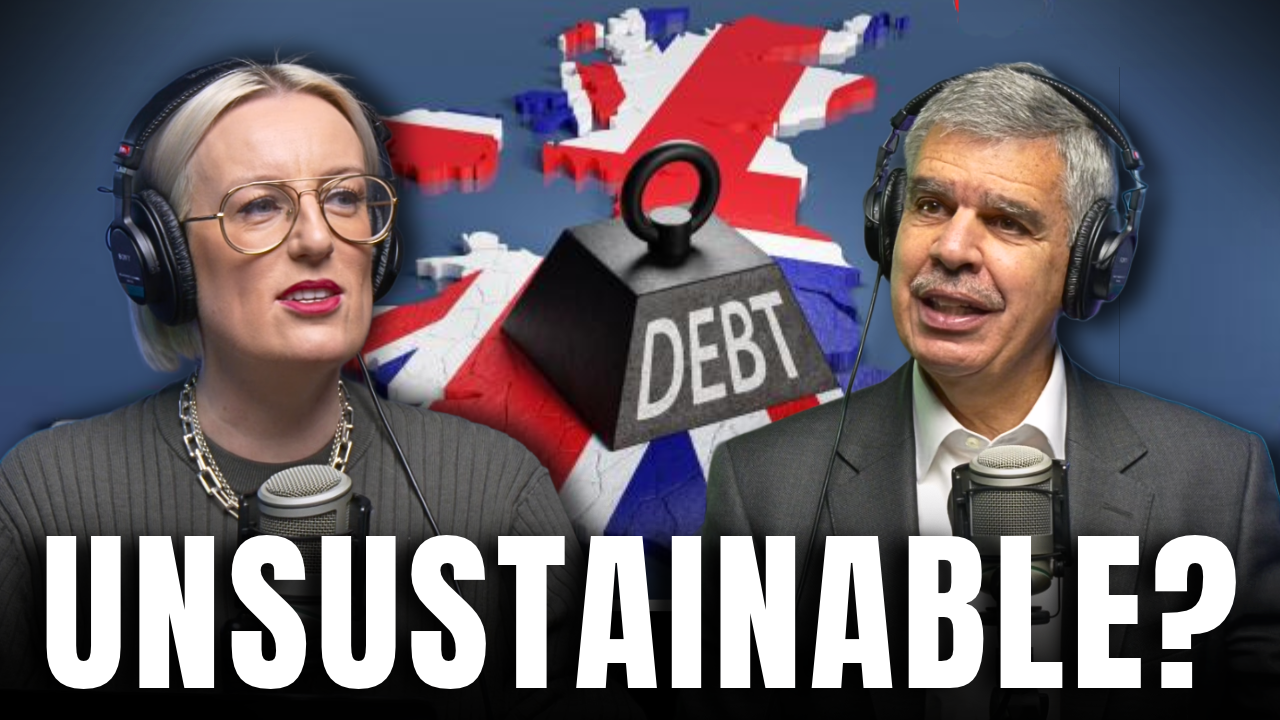
We use cookies.They keep VO running smoothly and help us improve it. Privacy policy