
 Ask ChatGPT

- Podcasts
- The Rest Is Money
- 326. A busy Budget with no growth plan
In short
The episode discusses UK Chancellor John Healey’s first budget, framed as “breathing space” with “enterprise and energy,” but criticized as lacking a clear growth strategy. Guests argue the economy faces downgraded growth (OBR), rising employment costs (minimum wage up; knock-on pay rises), and higher bureaucracy from Labour’s Employment Rights Act. They also debate the £100 “energy bung” to 20 million households as broadly distributed rather than targeted to the most struggling. Key examples include heat-pump electrification (Octopus data: 99% of homes), business rates relief threshold rising to £18,000, and tax rises: a bank surcharge to 6% for 15 months; higher taxes on landlords and savers; ISA changes and a hinted “starter ISA.”
Guest
Greg Jackson, CEO and founder of Octopus Energy.
Written by AI. May contain mistakes.
Chapters
0:00
Budget Overview and Economic Context
An overview of the recent budget's implications for the UK economy.
“We just had a bits and bobs budget from Healy, so where does that leave the UK economy?”
3:37
Reactions to John Healy's Budget
Discussion on the mixed reactions to John Healy's budget presentation.
“which he kind of summarized as breathing space, enterprise and energy.”
4:48
Concerns Over Economic Growth Strategy
Critique on the lack of a clear growth strategy in the budget.
“would have been regarded as good news, which was this 100 quid bung to 20 million households, was buried in the first third.”
7:18
Analysis of Economic Performance and Challenges
Explore the current economic performance and ongoing challenges businesses face.
“And one of the things that was very striking is this is not a government that has a well-developed, compelling theory of how to grow the economy.”
9:52
Potential Positive Developments and Regulations
Discussion on potential positive developments and the impact of regulations.
“because I think the OBR forecasts were made actually before it had a chance to properly assess where we are now.”
14:00
Impact of Budget Decisions on Growth
Exploring how recent budget proposals affect economic growth and public welfare.
“It'll bring the capital gains tax rate for those people down to 10 million.”
20:44
Impact of Budget Decisions on Growth
Exploring how recent budget proposals affect economic growth and public welfare.
“Investment Services Limited, which is authorised and regulated by the Financial Conduct Authority.”
21:50
Tax Changes and Economic Implications
Analyzing the effects of new tax rises on banks, landlords, and savers.
“Then this is a job for Indeed Sponsored Jobs.”
28:00
Concerns Over Government Debt and Spending
Explore the implications of rising government debt and welfare spending decisions.
“And in particular, the incredible fragility of global debt markets and particularly the markets for the debts of countries.”

Ask about this episode
Get the gist, explore an idea or ask about something said.
 Claude
On The Rest Is Money, what are the key points of this episode?
Searching your listeningTranscript
Automatic transcript. May contain errors.
0:00Steph McGovern: We just had a bits and bobs budget from Healy, so where does that leave the UK economy? Landlords, savers and bankers won't be happy, but Burnham is hoping that there is something there for everyone. It's a big ask when we're a global economy heading towards a debt crisis and a government facing unaffordable interest rates.
0:27Steph McGovern: we're proud to say that the rest is money is powered by octopus energy this year and back with us is the ceo and founder of octopus energy greg jackson right greg let me start with this how do we get some of the kind of old houses in britain better equipped to cope with the rising
0:43Robert Peston: cost of energy we used to have a phrase fabric first which meant the first thing we need to do is improve british homes to have better energy efficiency but a lot of the low-hanging fruit has been largely done. Now, there are still some homes which are shockingly poor condition and they need upgrading. But for a lot of the rest, it's now more about how do we use energy? The more we can electrify our heating, the more we can reduce our dependency on global hydrocarbons, the global gas market. So things like heat pumps are now, certainly our data says it can be cheaper for, with our heat pumps, 99 % of homes.
1:20Robert Peston: So electrification of heating is going to be one of the next big things.
1:24Steph McGovern: Thanks to Octopus Energy for powering the show this year. More from Greg soon.
1:29Robert Peston: Hi, this is Gary Lineker from Goalhangers. The rest is football. This episode is brought to you by Wise. It's only when you start moving money between currencies that you really think about the exchange rate, the fee and what might be hidden away in the small print. Whether you're living abroad, paying someone overseas or just trying to manage your money across borders, you want a fair exchange rate, an easy transfer and no surprises along the way. Wise keeps things simple. Wise is a smart way to move the currencies you need around the globe. It works in more than 160 countries and with over 40 currencies.
2:05Robert Peston: Most transfers arrive instantly. Wise uses the mid-market exchange rate, like the one you see on Google, with no markups or hidden fees. So when money needs to move, you can see the rate, know the fee and get on with it. Join millions saving billions on hidden fees by downloading the Wise app today. Be smart, get wise, T's and C's apply. For adults with Crohn's disease or ulcerative colitis symptoms, every choice matters. Tremphaya offers self-injection or intravenous infusion from the start. Tremphaya is administered as injections under the skin or infusions through a vein every four weeks, followed by injections under the skin every four or eight weeks.
2:48Robert Peston: If your doctor decides that you can self-inject Tremphaya, proper training is required. Tremphaya is a prescription medicine used to treat adults with moderately to severely active Crohn's disease and adults with moderately to severely active ulcerative colitis. Serious allergic reactions, increased risk of infections or lower ability to fight them, and liver problems may occur. Before treatment, get checked for infections and tuberculosis. Tell your doctor if you have an infection, flu-like symptoms, or need a vaccine. Explore what's possible. Ask your doctor about Trimphia today. Call 1-800-526-7736 to learn more or visit trimphiaradio.com.
3:36Steph McGovern: So we've just had John Healy's first budget, which he kind of summarized as breathing space, enterprise and energy. But we've got a different summary of it, haven't we, Robert?
3:49Robert Peston: You know, somebody sat through it. I want that hour of my life back again. That was the... Literally, I mean, how many budgets do you reckon I've sat through? 40 or something over the years?
4:00Steph McGovern: Probably double me, and I've done 20.
4:02Robert Peston: Yeah, I mean, it would be... Actually, it's probably more than 40, because there were years when, of course, Charles has had two budgets. Anyway, astonishing numbers of budgets. That was the most tedious that I've ever sat through. there was this moment where John Healy cracked what I think he thought was a joke at the Tories' expense, where he said, well, at least that proves they're still awake up when they were jeering. And I was thinking to myself, actually, I'm not sure that's a joke about them, John. Anyway, and I just want to write my brains if I've ever seen a budget like this. There is normally something sort of exciting, if not a massive rabbit out of the hat, something at the end, which is a bit different to gee up the troops.
4:40Robert Peston: I mean, it just sort of ended. It just sort of fizzled out. And the one sort of announcement that was, from the point of view of the government, would have been regarded as good news, which was this 100 quid bung to 20 million households, was buried in the first third. And again, if you were doing what John Ely thought you would be doing, which was falling asleep, you would have missed it. I suppose the big question is whether dull and relatively uneventful, because it was also a fairly uneventful budget, is ultimately a good budget. So tell me your initial thoughts.
5:20Steph McGovern: So I think the thing for me is, once again, there is not a strategy for growth. And that's the absolute key here. You know, the OBR, once again, confirming that next year, they've downgraded our growth. And at the same time, you know, businesses are finding things really tough. So, for example, for me, with a couple of businesses I've got, one of our big things is employment costs. And it was confirmed again in this budget that the minimum wage is going to go up. And I understand people want to be paid properly, but that's another 3.9 % on top of the cumulative big rises we've had in the minimum wage over the last few years.
6:00Steph McGovern: So for example, if you look at my slime business, Goo Topia, our employment costs have gone up since we first opened back in 2022 by 40%. You know, so someone working 35 hours a week for us now costs roughly seven and a half thousand pounds more to pay them than when we opened in 2022. too. And we're a business that pays a bit more than the minimum wage. And obviously, the more experienced the pay goes up. And when minimum wage goes up, it knocks every other pay scale up in the process within the business hierarchy. So it's a massive deal every time it goes up. And I get the point that people need to be paid properly and all of that jazz, but it needs to be taken into context of everything else going up around you, whether it's business rates, whether it's national insurance contributions, whether it's the cost of all your products, the cost of your rent, and all of that in context means that it's really tough.
6:59Steph McGovern: The fact that we're seeing employment costs go up so much, but at the same time, no plan to grow the economy so that businesses can have more customers and grow their businesses to be able to afford the people they're employing, I just think is a real missed opportunity there. Where's the growth? That's the way to solve most of the economic problems we have, surely.
7:21Robert Peston: No, you're absolutely right. And one of the things that was very striking is this is not a government that has a well-developed, compelling theory of how to grow the economy. I mean, Andy Burnham thinks that devolving more financial powers to mayors and to combined authorities and the Chancellor set up some of the roadmap today to giving mayors and combined authorities more money to invest in growth, creating projects within their regions. So they're going to over time get control of all of business rates and then they're going to get a percentage of income tax revenues in their regions. And, you know, Andy Burnham is right that over time, this could lead to really productive investments all over the country and could lead to places outside London, catching up with London to an extent, and that would be good for the economy as a whole.
8:23Robert Peston: But, you know, we are some way from actually that kind of fairly radical devolution being implemented. It's going to do nothing for growth in the short term. And useful as it is, it's not enough. Now, the positive side of things, and I just want to make a slight counter-argument is, yes, of course, costs have been increased for many businesses. You know, we've talked, you know, ad nauseum about the harm to business confidence that the increase in employers' national insurance caused, which Rachel Reeves implemented. But it is the case that in the first six months of the year, the British economy was probably the joint fastest growing economy out of all the G7 rich economies.
9:17Robert Peston: They keep saying they're the fastest. In fact, as and when we get up to date American figures, it will probably be more or less the same as America. And that is quite remarkable, right? That is remarkable. Now, it's not the same level of growth that we enjoyed before the financial crash of 2007-8. You know, So it's probably half that sort of one and a half ish percent. Actually, it may be nudging to two percent. But the economy is definitely growing faster than many expected, including the OBR. And there may actually be more momentum in the economy than the OBR expects for next year, because I think the OBR forecasts were made actually before it had a chance to properly assess where we are now.
10:03Robert Peston: Now, that's just to be said, you can't take the growth for granted. You know, Trump's war in Iran is heaping enormous costs through surging energy prices and high interest rates on businesses, on individuals. It's going to be a very challenging, it might be months, depending on how long this bloody war goes on for, you know, longer than that. But the positive thing I would therefore say about this particular budget is it didn't seem to me that Healy did any active harm to the slightly better momentum we've got in the economy. And look, given the history of many chancellors, that is a good thing, right?
10:44Robert Peston: You might argue he could do more that's good, but at least he hasn't done active harm.
10:50Steph McGovern: No, but it is, but it feels like it's still going to get worse though, because yes, okay, you know, I'm for devolution and I can't wait to see the difference that makes. But in the meantime, as you say, we've got all the global impact of the geopolitics and how much that's going to push up inflation. We've also had confirmation this week from the OBR that the Labour's Employment Rights Act is going to have a negative impact on the economy. It's, you know, making it more bureaucratic. It's pushing up the cost of employing people. At the same time, there's been research out saying that the government's connect to work program, which is all about getting more people on long-term sick back into the workplace, isn't working.
11:32Steph McGovern: So I appreciate there was nothing in it which was like harmful in that respect, but there's nothing in it that's making me go, yes, get in. That's going to really help businesses. Okay, maybe the business rate relief, I'll give them that one because that increase in the threshold from 12 grand to 18 grand does make a tangible difference to small businesses.
11:54Robert Peston: Does that help your business?
11:55Steph McGovern: Yeah, it does. So that helps my fitness business in Newcastle because, so it's based on the value that, you know, your rateable value, which is basically your annual rent. So if your annual rent is now less than£18 ,000 a year, you do not have to pay business rates. And that is, that will make a huge difference to, for example, the fitness business up north. It doesn't impact the slime because we're bigger than that and we pay bigger rents than that. But I can see how that is a genuine thing that will make a difference. But on the whole, for me, it's just the bureaucracy and the cost around employing people and getting people back into work.
12:33Steph McGovern: And that is the big thing that we still haven't heard enough about.
12:36Robert Peston: I mean, I also have been sounding a bit like an Eeyore. And so I want to at least challenge, you know, one of the things you've just said about, you know, regulatory burdens. They are recreating. There was an initiative actually that Brown and Blair created called the Better Regulation Executive, which actually did do a decent job of looking at regulations and essentially trying to eliminate those that would be too big a burden on the private sector or in the economy in general. The Tories, for reasons that I never quite understood, closed it down. They are bringing it back. I think that's potentially, I mean, some people go, oh, God, another quango is going to cost money.
13:22Robert Peston: But actually, if you actually have experts looking at regulations in a way that means that the really tedious, burdensome stuff gets eliminated, that would be a good thing. We've talked at length about what a great ecosystem we have in this country for particularly high tech businesses, AI related businesses, biosciences, you know, businesses. You know, they are spending a serious amount of money. It'll be 260 million pounds in 2027-8 on a new rate of capital gains tax for founders of these businesses. It'll bring the capital gains tax rate for those people down to 10 million. I mean, that I think, you know, there will be people listening to this podcast who don't like the idea of people who've made a personal fortune getting a lower capital gains tax rate.
14:15Robert Peston: But if they are creating a business that generates lots of tax revenues, if they are creating a business that creates jobs, you want as many of those businesses as you can get. That is undoubtedly a business friendly innovation.
14:28Steph McGovern: Yes. And I also was pleased to hear about the scale up program for female founders as well, because I think, again, from what I've seen, particularly obviously in the northeast where I live, there's so many great businesses and great businesswomen. But getting that scale up has been really tricky. so loads of great women starting businesses but not getting the support to to get them to that next level so I was definitely pleased to hear about that but it feels don't you think like loads of tidbits like it was described wasn't it as everyday fixes which is you know when I heard that everyday fixes I was thinking that just sounds like a slogan some handyman called Barry has on the side of his van it doesn't sound like you know big things that are inspiring and making And you think, yeah, this country's got it going on.
15:13Robert Peston: So there's an interesting sort of political judgment that Burnham, I assume, has made, which is he would rather do lots of little things that have an impact for, you know, vast numbers of people. I mean, you know, obviously the extreme version of all of this is bringing down the tariff on imported gherkins, which obviously, if you're a gherkin lover like me, is an absolute joy. But I don't think it's going to add massively to the growth rate of this country or indeed is going to probably improve my welfare a bit. But, you know, I don't know how much the welfare of others is really going to increase.
16:00Robert Peston: But, you know, he does appear to think that the way to be popular is to do things that appeal to the maximum number of people, of which the most interesting example to me was he's giving£100 million energy bung to 20 million households. When bills are going up January by at the moment, it looks at least 27 percent. That's a that's a huge increase in people's bills to, you know, heat their homes, cook and all the rest of it. I mean, that's a massive squeeze on people's living standards. And it is interesting to me that he's chosen to maximise the number of people to get a small amount of money rather than maximise the amount of money going to a smaller number of people who are really struggling.
16:55Robert Peston: I wonder what you made of that. You know, many of the people who get 100 quid won't really need it, truthfully.
17:00Steph McGovern: Yeah, I know it's an interesting thing because you and I were talking before this record, weren't we, about how many people are going on the website now to work out which band they're in. Because, you know, if you think about up north where I am, it's interesting because there are lots of big houses which are not, in terms of expense, they're not that expensive. And there'll be people living in them who don't necessarily have big incomes, but will probably not fall into this bracket. Similarly, there'll be people in central London with small flats worth millions who might fall into it. And so you wonder again, is this the best way to work out how to spread the money?
17:41Steph McGovern: I don't, but it's tricky, isn't it? Because people get annoyed if it's means tested in a way that rules out people on low incomes, but don't quite hit the threshold of being poor enough. And so you get into all of that. So I don't know what the, maybe this is a good way to do it. I don't know.
17:57Robert Peston: Using council tax bans A to D is a really crude way of doing it. And it is astonishing to me that, you know, with DWP and HMRC data, they weren't capable of distributing the money in a way that really helped. I mean, they're spending more than£2 billion on it, which is not a massive sum of money. If you remember the Jeremy Hunt, well, the sort of Liz Truss, Rishi Sunak, Jeremy Hunt plan, you know, when energy prices spiked in the aftermath of Putin's invasion of Ukraine, that cost£25 billion, right? That was way more than 10 times more than he's spending now, right? And so if you're spending that much less, my own instinct is you should be allocating it in a way that really helps those who need it most.
18:54Robert Peston: I think it's a very characteristic Andy Burnham judgment because he likes to be liked by everybody. But whether in a social justice sense, it is the best way of doing it. I'm not so I'm not so sure.
19:06Steph McGovern: Yeah, it'll also be interesting to see how Northern Ireland, Scotland and Wales distribute the money, because that was kind of like a throwaway line saying this is going to be£100 off your council tax for households in England. But what's going to happen there? You can just decide yourselves how you do it. So it'll be interesting to see whether they find a better way to distribute that.
19:28Robert Peston: We need to go to a break. And when we get back, we should get on to what in some senses is the elephant, to use that cliche, in the room, which is why hasn't the Chancellor done more to get the debt, the huge debts of the government under control on a faster timescale?
19:47Steph McGovern: All of that after the break.
19:53Steph McGovern: this episode is brought to you by money supermarket now i love investing but it can be quite scary starting out because you've got to get your head around the jargon then there's all the graphs and different numbers that are thrown at you well fortunately for you lot money supermarket are starting an investment revolution and making investment genuinely easy with just a pound you can invest in ready-made funds and hand-picked ones so you can easily build up a mix that's right for you without all the super high platform fees. And the best part, you can manage these investments and compare and save on their super simple app.
20:33Steph McGovern: Told you it was easy. Download the Money Supermarket app and start investing today. Better Off begins with Money Supermarket. When investing, your capital is at risk. MoneySupermarket.com Investments Limited is an appointed representative of P1 Investment Services Limited, which is authorised and regulated by the Financial Conduct Authority.
20:55Robert Peston: Shaq here. What's it like to buy a car from Carvana 100 % online and get it delivered to your door? Let me tell you. Your car is here, Mr. Shaq. Thank you, Mr. Carvana guy. Can't wait to take it for a spin. Only the best for you, Mr. Shaq. Hey, have you always been so big, tall and handsome? Not always. I was 6 '10 once. Seven days delivered or returned it, Mr. Shaq. Not that I would. You never do. No, I never do. So buy your car today on Carvana. Delivery fees may apply. See our seven-day return policy at Carvana.com. This episode is brought to you by Indeed. You're ready to level up your business, but the pressure to find the right person to make that happen is intense.
21:34Robert Peston: Indeed-sponsored jobs can help carry the load. It boosts your job post to help it reach quality talent fast. Cut through the chaos with Indeed Sponsored Jobs. Get a$75 sponsored job credit at Indeed.com slash podcast. Terms and conditions apply. Hiring now? Then this is a job for Indeed Sponsored Jobs.
22:01Steph McGovern: Should we also talk about some of the tax rises we saw? Because, for example, the banking surcharge is one you and I have discussed. So this is this 3 % additional charge now on banks, this bank surcharge. So it'll go up to 6%. You know, there were lots of talk beforehand about whether it'll go back up to 8%. But we know now it's going to be 6 % from January for 15 months. So one of the things you and I discussed was the cyclical nature of banks' profits or their surplus profits. and this is a way you think this is a daft idea to have it temporarily.
22:41Robert Peston: Well, what's interesting to me is the Chancellor took your advice and completely ignored my advice. I mean, I made the point, which I have to say I think he accepted. Funny enough, I interviewed him a week ago and I said to him, are the banks making excess surplus profits? He refused to answer the question. And the reason he refused to ask the question is because, as you and I discussed in the last episode, banks' profits go up and they go down again. And it's very hard to prove that at this point in the cycle, these are what's called, you know, these are genuinely excess profits. And, you know, so my view was if he really wanted to be seen as business friendly, actually, if he can't make a credible economic case that these are essentially windfall profits, then it's a bad signal for the Treasury to send that it really understands the way the economy works if they're going to levy this tax.
23:40Robert Peston: And by the way, you know, if you only levy it for 15 months, you know, you raise a relatively small amount of money, a billion-ish kind of money. It doesn't really have a massive impact on the public finances. What it helps to pay for is the bung we just talked about. You know, when it comes to the hundred quid bung to help us pay for energy bills. But, you know, in the broader scheme of things, it doesn't really strengthen the public finances. And in the end, therefore, the best that the Chancellor could sort of come up with to justify it, and this was only implicit, he didn't actually say this.
24:22Robert Peston: He kept saying how amazing the banks are and what a great job they do because he doesn't want to be seen as anti-bank. But broadly, the reason for doing it is they've got a load of money at the moment. So I'll have some of it, which I don't know. I just it goes back to your original point. He doesn't have an economic theory, just as he doesn't really have a growth theory. And he may acquire these and he may turn out one day to be a great chancellor. But we're not seeing it. We're not seeing it today. And I wonder what you also thought. There were two other quite significant tax rises, I thought.
24:56Robert Peston: And do you remember last year when Rachel Reeves was toying with the idea, cutting national insurance for people who pay it and then but putting up income tax? Right. Do you remember that? That was a way of raising six or six or eight billion. What's interesting and one of the things that would have achieved was forcing landlords and savers to pay a bit more income tax. These are people who don't pay national insurance. And interestingly, he hasn't done the income tax national insurance switcheroo, but he has put up tax on. on he's done half of it he's put up the tax on savers and those who rent out properties by two percentage points which raises I think collectively about a billion pounds a year what what did you
25:55Steph McGovern: make of of that yeah because that's on top of it going up two percent this year already um so yes I mean it's interesting because what you're seeing already from that is people saying landlords are just going to put up rent so from the property perspective if they're paying another two percent tax, they're just going to put up rents and that's going to hit some of the hardest in our economy who pay rent. And we have seen some landlords pull out of the market because of things that the rent is right at come in. Whether this will then make more pull out, I don't know. But yeah, that tax going up is one that I know the landlords are mourning about.
26:31Steph McGovern: But more importantly, the one on savers is tough, isn't it? In a time when you're trying to encourage people to be prudent and to save and then you whack more tax on. But I guess they try to mitigate this by in keeping the allowance for the cash ISA at£20 ,000 a year. So, you know, Rachel Reeves was obviously going to reduce that to 12K a year. So that's going to stay at£20 ,000 a year. But what does that mean for the stocks and shares ISAs? That's the thing. You and I have talked loads about getting more people to invest. People really don't like risking their money. They think stocks and shares is a dangerous way to invest money on the whole.
27:12Steph McGovern: You and I both know, if you look at historically how it performs, it massively outperforms cash savings. So is this going to stop people who might have put more money into stocks and shares, ISAs? I was interested here, although there was no detail, John Healy also said he's going to look into a starter ISA for first-time investors. He didn't say any more than that. And I know he's going to go away and talk to the industry, but I will be interested to see that because obviously we've had things like the lifetime ISA that was brought in. And so what's this one? That's going to be interesting. And what's he going to class as a starter, a first-time investor?
27:52Steph McGovern: Again, all of this detail to come, but maybe that might help against everyone just putting it into cash ices.
27:59Robert Peston: What I need to do is obviously connect this budget to the big issues that we've been talking about in recent episodes. And in particular, the incredible fragility of global debt markets and particularly the markets for the debts of countries. We did a whole episode on whether France may go bust. We've repeatedly talked about how when investors are worried about very unstable conditions of the global economy, they very often punish the UK government by selling UK government debt. And I guess to go back to where we started, your big concern was no growth plan. My big concern with this budget is that all the important decisions on getting the public finances into better health, better shape have been deferred.
29:05Robert Peston: So, you know, we've talked a lot about the importance of getting rising welfare spending under control. But there are two reports that the government, that Andy Burnham has chosen to publish after the budget that are central to that question of whether the government will get welfare spending under control. They are the Alan Milburn report into how you get more young people into work, addressing this problem of more than a million young people who are not in education, employment or training, many of whom are at home claiming various forms of incapacity and disability benefits. And then there is the Stephen Timms report into the very sharp rises over the next few years that are expected in the more general welfare payments to people of all ages for disability and incapacity.
30:05Robert Peston: And then we've got another report into another huge bill, which is Louise Casey's report into how to fund social care properly. Now, all of these are coming after the budget. They will all inform a very important review of government spending for the next three years that will come in the summer. But let's say France were to blow up, you know, before these reports are published and before these these savings are identified. I'm afraid the British, you know, the British government at that point is very, very vulnerable because, you know, in a world where, you know, investors decide to dump French debt and potentially Italian debt, they will dump our debt.
30:51Robert Peston: And the and the interest rate paid by the government will go up even more. I just want to read you one little bit of the OBR report, which shows you not only, you know, that there is a crisis element, which is, you know, where we were in a sort of Liz Truss style crisis, where it became impossible to potentially impossible for the government to borrow, which is something that Liz Truss got very close to with a reckless mini budget. But actually, simply retaining the ability to invest in the way that we need in our public services requires the government's interest bill to come down. And I'm just going to read you what is happening, according to the OBR, to the amount of interest that the government is paying.
31:41Robert Peston: It says here debt interest spending as a share of GDP is forecast to rise from 3.9 percent of GDP in 2026 to 27 to reach 4.2 percent of GDP in 2031 to 2. This would be above previous highs reached in the 60s and 80s and more than double the average of the 10 years prior to the pandemic. And, you know, what's important to recognize is in a world where actually investors lost confidence even more in the British government's ability to essentially manage the debt, that interest rate would be higher still. That 4.2 % of GDP is£160 billion just on debt interest in 2031, too. I mean, think how much that could fund, you know, how much good that could do if it's funding the health service or, you know, or cutting taxes or whatever you want to think about.
32:45Robert Peston: These are huge, huge sums of money. And this is why it's particularly scary. Right. Right. Although interest rates have gone up very significantly compared to the more or less zero that we had until inflation rose as a result of Putin's invasion or partly as a result. That wasn't the whole story. It was also partly to do with all the monetary creation during Covid. But nonetheless, you know, we are in this new era of inflation. Nonetheless, the average interest rates are about four percent. They are still way below actually interest rates that we experienced for very, very, very long periods of the post-war period.
33:32Robert Peston: OK, an interest rate prior to the financial crash of something like 7 percent was not unusual. Right. We're at 4 percent. Right. If inflation rises globally and interest rates go up to levels, the kind of levels we experienced before the financial crisis, you know, that interest bill of£160 billion could double to more than£300 billion. It is not a nice to do to get the debt under control. It is essential.
34:02Steph McGovern: So what we need is growth. Well, we need a mixture of growth. So we get more money coming in. We need a mixture. We do need growth. To bring down our borrowing. Yeah. I know. But well, listen, we should probably wrap things up. We've got Paul Johnson on our next episode, obviously former director of the IFS who have been watching this intently. So we will make sure we grill him about all of this in the next episode. But for now, thank you very much for listening to us. That's it from us on The Rest is Money. Bye-bye.
34:28Robert Peston: Goodbye.
34:40Robert Peston: Brussels clean up nicely at Sweetgreen. Maple glazed, roasted, and edges perfectly caramelized. Sweetgreen's fall harvest is back on the menu, and the season's most overlooked little green vegetable is dressed to be devoured. You know what to do. Order on the Sweetgreen app.
From the publisher
Tax rises for savers, landlords and bankers, so who wins?
Is council tax banding a fair way to dish out help? Where is Healey’s economic vision? Why has he done so little to protect us from a debt crisis?
Will government borrowing become unaffordable? Robert and Steph unpick John Healey’s first budget and discuss whether being boring is good.
The Rest is Money is brought to you by Octopus Energy, Britain’s smart energy pioneer.
Email: the[email protected]
X: @TheRestIsMoney
Instagram: @TheRestIsMoney
TikTok: @RestIsMoney
Advertise with us: [email protected]
For more Goalhanger Podcasts, head to www.goalhanger.com
Video Editor: Dylan Bonham
Producer: Lizzie Wood
General Manager: Tom Whiter
Executive Producer: Chris Sawyer
Learn more about your ad choices. Visit podcastchoices.com/adchoices
More from The Rest Is Money
All episodes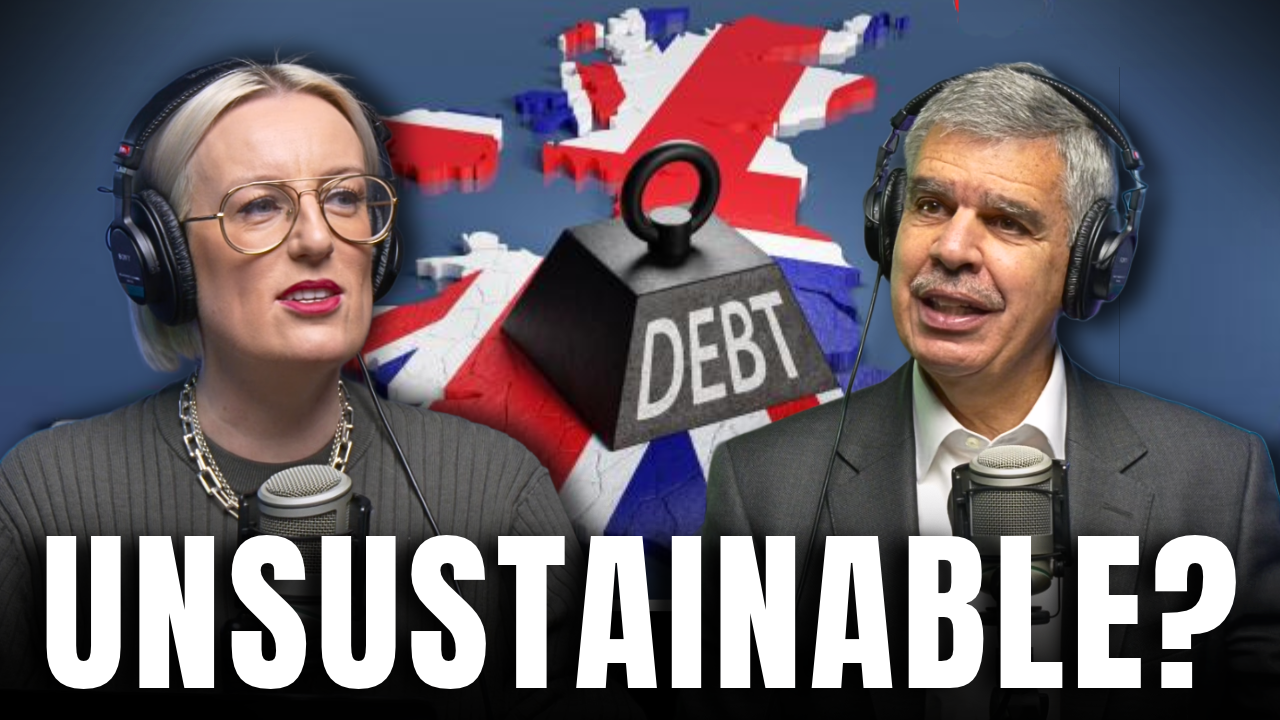
We use cookies.They keep VO running smoothly and help us improve it. Privacy policy