

- Podcasts
- The Rest Is Money
- 327. We got 98 measures but growth ain't one - Paul Johnson's Budget analysis
The Rest Is Money2 Nov 2026 · 39m
327. We got 98 measures but growth ain't one - Paul Johnson's Budget analysis

 Add vo to ChatGPT or Claude to ask about everything you hear
vo listened to this episode to put together the overview and transcript, so there may be the odd mistake.
In short
A critique of the UK budget (98 measures, no clear growth strategy), focusing on “fiddling,” poor targeting of cash support, tax quirks for pensioners and side hustles, and the big structural change of assigning tax revenues to mayoral authorities. It also covers OBR concerns about debt interest costs, interest-rate vulnerability, housing underbuilding, and the new “founders relief” capital gains tax regime.
Guests
Paul Johnson, former Director of the Institute for Fiscal Studies; now Provost of Queen’s College, Oxford. Hosts include John Healy, Robert (unnamed), and Greg Jackson (returns for wind power discussion).
Key claims
The budget dodges defense funding, late-parliament spending, and growth strategy; many measures are temporary in name only. Debt interest is projected to rise sharply and is highly sensitive to interest rates. Housing completions are falling due to policy/regulatory costs. Founders relief is narrowly targeted and may incentivize gaming criteria.
Notable examples
100-pound council tax payment based on 1990s property bands; pensioner allowance withdrawal creating ~50% marginal tax; side-hustle tax-free allowance raised (1k to 3k). Mayor tax devolution (partial basic-rate assignment) to fund local priorities like transport. OBR forecasts: debt interest $124bn this year to $160bn by 2030. Housing completions “falling” due to regulation/taxes.
Transcript
0:00Steph McGovern: John Healy's budget failed to address the big challenges this country faces, but there were more costing measures in it, 98 in total, than any other budget.
0:12Robert Peston: Some of them will have been terrible, some of them mediocre, but some of them will actually have been worthwhile. And we need to sort out the good, the bad and the ugly. And there's literally nobody better to help us do that than the former director of the Institute for Fiscal Studies, Paul Johnson, who's now the Provost of Queen's College, Oxford.
0:35Steph McGovern: This year on The Rest Is Money, we're proud to be partnered with Octopus Energy. Greg Jackson is back again to answer another question. So I want to start with something that keeps coming up, Greg. Is the UK still a world leader in wind power then? And if so, how do we stay ahead? And so the UK was a leader in offshore wind for quite a while. Actually, China's blasted through that. I don't know whether people know.
0:58Robert Peston: I mean, I heard a major American politician saying China builds wind farms and sells them to the rest of the world, but don't use themselves. That's just not true. They're currently building more renewables than the entire rest of the world put together. And what it means is that they have been much more insulated from what's going on in Hormuz than anyone expected. By the way, we've all benefited because it's meant that China is not pushing up the oil price the way it used to.
1:24Steph McGovern: And that's partly because their shift to renewables. It's also because they've got a more electrified economy with electric cars. We've actually got quite a lot to learn. Thanks to Octopus Energy for powering the show this year. More from Greg soon. Hi, this is Gary Lineker from Goalhangers.
1:39Robert Peston: The rest is football. This episode is brought to you by Wise. It's only when you start moving money between currencies that you really think about the exchange rate, the fee, and what might be hidden away in the small print. Whether you're living abroad, paying someone overseas, or just trying to manage your money across borders, you want a fair exchange rate, an easy transfer and no surprises along the way. Wise keeps things simple. Wise is a smart way to move the currencies you need around the globe. It works in more than 160 countries and with over 40 currencies. Most transfers arrive instantly.
2:15Robert Peston: Wise uses the mid market exchange rate, like the one you see on Google, with no markups or hidden fees. So when money needs to move, you can see the rate, know the fee and get on with it. Join millions saving billions on hidden fees by downloading the Wise app today. Be smart, get wise, T's and C's apply.
2:34Steph McGovern: For adults with Crohn's disease or ulcerative colitis symptoms, every choice matters. Tremphaya offers self-injection or intravenous infusion from the start. Tremphaya is administered as injections under the skin or infusions through a vein every four weeks, followed by injections under the skin every four or eight weeks. If your doctor decides that you can self-inject Tremphaya, proper training is required. Tremphaya is a prescription medicine used to treat adults with moderately to severely active Crohn's disease and adults with moderately to severely active ulcerative colitis. Serious allergic reactions, increased risk of infections or lower ability to fight them, and liver problems may occur.
3:15Steph McGovern: Before treatment, get checked for infections and tuberculosis. Tell your doctor if you have an infection, flu-like symptoms, or need a vaccine. Explore what's possible. Ask your doctor about Tremphia today. Call 1-800-526-7736 to learn more or visit TremphiaRadio.com.
3:45Steph McGovern: Paul, lovely to have you back on the show. It feels like you're one of us now. I don't know if that's good or bad news for you, but thanks for coming back. It's great fun, thank you. Robert and I have discussed between us our thoughts on the budget, talking about how there's still no plan for growth, how it was a bit boring. It was pitched though, wasn't it? As a budget for working people built on fiscal discipline. But come on, give us, what are your overall thoughts on it, Paul?
4:09Robert Peston: And try not to say breathing space as many times as the Chancellor did. I promise I won't say it at all. It was a pretty boring budget, quite honestly. It had quite a lot in it. And I think the two or three reflections, I mean, one is that it ducks all the big issues. It ducks the question about how they're going to fund their defence plans. It ducks the question of what they're going to do about spending in the last couple of years of this parliament. And it certainly ducks any idea of what their strategy for growth might be. and they sort of filled that space by having, I think, a record number.
4:48I mean, at one level, it was the smallest budget in years in the sense that the total impact was very small. But nonetheless, they managed to pack in a record number of measures, 98 measures on the scorecard, many of which are supposedly temporary, although I suspect a lot of them won't be temporary, and many of which look like sort of inveterate fiddling aimed at particular groups that may end up just being more costly than they're worth. So I think all the big decisions kicked down the road. As you say, no sense of how they want to get growth or what their strategy is over the longer term and an awful lot of complicated fiddling.
5:34Robert Peston: I was quite struck. Dan Needle, who, like you, we regard as a friend of the show, he was actually on my TV show last night and he made a point about the way that they have protected pensioners on low incomes from paying income tax if they're totally dependent on the state pension. And he pointed out that the way that they've done it means that if you are a pensioner that has an income just a tiny bit above the state pension, the withdrawal rate, the effective tax rate, is really high. What they're doing is essentially saying that a third of that additional allowance will be withdrawn for every extra pound that you have over a certain amount.
6:31So, you're creating a marginal tax rate of about 50%. It's very similar to the 60 % tax rate that operates over the area, but you're 100 and 125 ,000 pounds where the personal allowance would be withdrawn from everyone. Actually, if you go back in time, we used to have something like this for pensioners, but a rather higher income because pensioners did used to have a higher personal allowance than non-pensioners. And that personal allowance used to get withdrawn back in the day, something in the 20 ,000s. So, that was a much higher level of income. So, we have been there before, but it is a kind of, you know, when you come to look at it, it will look very odd.
7:13Your first sort of tranche of income will be taxed at something like 50%. What's very odd, again, if you look at that scorecard, they claim that this additional allowance will disappear after 2030. It's not in the scorecard after 2030. The standard personal allowance is expected at some point to start rising again. But the whole thing is crazy. There is a long, long list of things which cost money in the short run, which they claim they're going to get rid of in the long run, including the usual, you know, honest, honest, honest, we're going to increase fuel duties next year. Having kicked it back from September to January, now kicked it from January to July.
7:53You know, who believes, who believes we're going to have a big hike in fuel duty next July? I mean, but I mean, of course, all the fiscal numbers are based on these sorts of fictions.
8:01Steph McGovern: One of the things that Robert and I were talking about was this£100 payment. So£100 basically off your council tax if you're in bands A to D. and whether that is a fair way to do that, does it hit the right people? And I was quite interested to see it's 20 million households apparently and the North East mayor has come out quite strongly saying that's 92 % of homes in the North East, which I was quite staggered to hear, to be honest. Yeah, because these are based on values back in the early 1990s and house values obviously in the North and the North East are much lower than they are in London and the southeast.
8:42And so, you know, something like 80 % of households are in A to D, but in some parts of the country, it's the huge majority in A to D. In other parts, I mean, I haven't looked at the numbers, but in London and the southeast are we a much smaller fraction. At one level, it's not a great way of targeting money. I mean, it goes to, I mean, obviously 80 % of the population, not the poorest third or something like that. quite a lot of very well-off people will live in households in Band D. And you'll miss some poorer people as well who live in London, but who's got a high tax ban policy. I think the most depressing thing about it is, you know, we were here four years ago in 2022, and the government threw money at everybody because they had no better way of doing it.
9:28And I remember saying at the time. Surely now it's worth spending a billion pounds getting the data set right so that next time this happens, you can target it to people who need it. And four years on, we're basing it on property values in 1991.
9:46Robert Peston: But this is sort of staggering because I remember genuinely when Keir Starmer, do you remember when Keir Starmer was prime minister? I know it feels like an absolute eternity ago, but actually it was genuinely only a few months ago. Rema talked to both Downing Street and the Treasury about this problem, and they promised they were doing an enormous amount of work to come up with an improved so-called data set so that they could distribute money in a way that was fairer. Why do you think they have failed? I don't honestly know. I mean, partly it is quite difficult, but it's not difficult technically, I don't think, because what you need to do is connect information that you've got on people's energy bills with information from HMRC and EWP on their incomes.
10:38Now, there may be all sorts of privacy and regulatory barriers, but technically that is something that ought to be possible. But having worked with government data, I mean, those regulatory barriers and the capacity within government to do this is often very, very, very difficult to navigate. But as I say, I mean, the consequences we're spending, I can't remember the cost of this, but it's in the billions, on a really quite poorly targeted set of money. Now, at one level, you know, one thing I should make clear is we cannot and should not try and compensate everybody every time something happens to their energy bills.
11:21And I think people have slightly got used to the idea that that might be government's role. But if we are going to do something, then we do need to make sure it is as well targeted as possible, rather than giving you 100 quid to 80 % of the households in the country.
11:34Steph McGovern: And on top of that, the thing is, it's hardly going to make a dent really in how much energy bills are going to go up by. So, is anyone even going to notice when it comes to it? It feels like it's just a bit of a waste. Well, for people on really quite low incomes, that's worth having. I mean, if you look at the cash amount that everyone gets, it's pretty much the same irrespective of your income. But as a fraction of your income, it's more people towards the bottom. But it is only, you're right. So I think on average, I mean, if you take all of the things they're doing together, including taking the VAT and so on, I think it's about a third, they account for about a third of the increase in the price.
12:13But as I say, in the end, I don't think it is government's job to protect everyone every time anything like this happens. So I think it would have been a mistake to try and compensate everybody 100%. No, that's certainly true.
12:26Robert Peston: But my own view is, you know, rather than giving 100 quid to 20 million households, it would have been much better to give 400 quid to 5 million really poor households. I completely agree. I completely agree. I mean, a lot of this is wasted on, you know, I mean, I won't get it because my house is not in A to D. But I mean, there'll be plenty of people in here as comfortably off as I am who will get it. Can I make one other technical point? As I understand it, with the warm homes discount, everybody who's of pensioner age gets it. And then HMRC claws it back from people on higher incomes. That's the methodology.
13:10Robert Peston: But if they can claw it back from people on higher incomes, why on earth do they have a mechanism? Why don't they just pay it to people on low incomes? I mean, the waste involved in clawing it back is ridiculous. Again, it will be down to the joining up of government systems. I mean, there's still a long way to go to get all of that working properly.
13:34Steph McGovern: And can I just confess, I am in cancel tax band D. Hooray!
13:40Robert Peston: Congratulations, Steph.
13:42Steph McGovern: He does definitely not need it, is getting it. But that is ridiculous and that just proves the point, doesn't it, of what we were saying. Should we look at some of the other things then that came out in all of this? Is there anything, Paul, that really kind of stood out to you as being something, yes, this is a really good idea. Okay, it might be a small thing, but it feels like a really good one. Well, the big thing, actually, and I think the thing, if there's one thing that this budget will be remembered for, it will be the tax devolution or at least the assignment. Beginning to set out how they're actually going to start assigning tax revenues to mayoral authorities.
14:17authorities i confess i haven't read the whole of the document that went alongside but broadly speaking a part of basic rate taxes that are raised in some areas will be assigned to the mayors alongside um some of the business rates now that doesn't give the mayors the right to change rates but it does mean that and there's a kind of change in the fiscal constitution in a way because historically all of the money comes into whitehall and then they decide who gets it going forward, some of this money will belong to those mayoral authorities. And this might turn out to be the step towards quite big changes over the next, even bigger changes over the next 5, 10, 15 years.
14:57And one thing it will require, and this may sound nerdy, but I think it might be quite important, is because your revenue as a mayoral authority will depend on revenues, income taxes, and so on over the next several years, you're going to have to build the sort of economic forecasting and data infrastructure at regional levels. So I think that's going to change. I think that has the potential to change the economic discourse in a way which is bigger than relatively minor incentives that will provide local areas to grow a bit faster and the additional certainty to some degree it gives over their revenue.
15:33So I think if this budget is remembered for anything in five years' time, that's the only thing i think that it'll be remembered for and if you're um in the center and this is a
15:47Robert Peston: dynamic process of rewarding as i understand it the way they they are thinking of it um burnham and healy is this is a way of rewarding mayors who use this money for investments that generate growth and prosperity in their areas.
16:11Robert Peston: But actually doing it in a dynamic way so that there are genuine incentives, I don't think it's technically that easy. I just wondered if you'd given any thought to this. Yeah, I mean, they've got some details on that. So there will be some guardrails at the bottom so people don't lose too much. If your economy does really badly because the local steelworks closed down for no reason of yours, then there will be some protection. You won't just get a huge drop in your income. And there will be some sort of taxing, as it were, of people who do really, really well. But there will be – they are designing it in a way which gives you fairly significant incentives to do well.
16:56What's interesting, though, is that they've decided only to give you part of the basic rate of revenue of tax. So why does that matter? That gives you quite a big incentive to increase numbers of people in work and get more people on average sorts of incomes. It doesn't give you an incentive to sort of increase the really high paid jobs. But on the other hand, it makes it easier to make this work. Because obviously in London, lots and lots of people are higher rate taxpayers and in Tees Valley, many, many fewer. So it makes the whole system a bit easier. But it does blunt the incentive to get those really high-paying jobs into your area.
17:37Robert Peston: And if you were on the basis of economic evidence, presumably you would assume that certainly initially at least, you know, the vast majority of this income would go on transport since that appears to be the most direct link between transport and sort of productivity and prosperity and all that. This doesn't mean any additional money in the short run. This is just assigning revenue. This is replacing other revenue streams. So in the short run, we won't see any difference. Now, it might be that because there's more certainty associated with this in the sense that you have a right to this income rather than just waiting to see what government doles out at the next spending review, it might be that you can use that, assuming Treasury allows you to borrow in order to invest in transport with the hope that that will be good for your local economy.
18:36But I think it's important to be clear that in the short run, this doesn't mean more money for these authorities. But I think you're right in the sense that if I were a mayoral authority looking at ways of improving growth, transport infrastructure would be pretty close to the top of my priority list.
18:53Steph McGovern: And that's what would make a tangible difference to people, you know, someone living in an area where it is dire, that's what would help people to get to jobs, to get to colleges and everything else. Yeah. And we know that there's been massive underinvestment across this country. I think I'm writing, say, Leeds is the biggest city in Europe with no mass transport system or something like that. I mean, you know, we have very poor, very poor infrastructure in many cities. Paul, one of the things we talk a lot about is about investment in the UK and about how we support our businesses, particularly our successful businesses that we set up here, particularly in the tech area, you know, AI companies, whatever, that become these huge businesses and how we often lose them to the States.
19:37Steph McGovern: but also how there can be quite tough tax on entrepreneurs through their lives in terms of capital gains or whatever. And there was some news on that, which I'm interested to know your thoughts on, on this kind of entrepreneurs, this founders relief, basically. So UK founders who build big enough companies could just pay 10 % capital gains tax on up to 10 million pounds worth of their exit gains when they sell a business. There's been some debate about whether this is good or not. Paul, what do you think?
20:09Robert Peston: And can I just on that, because it's related, they funded it penny for penny by abolishing or rather reducing the attractiveness of, I think it's called business asset disposal relief. Bad relief. Yeah, bad relief. Exactly. Basically, when you saw that switcheroo, because they're both supposed to reward enterprise, did you think that makes sense? Not really, to be honest. This new founders relief is very, very narrowly drawn. So, as you say, I can't remember the details, but you have to have a turnover of£10 million, I think 15 employees and a whole series of other things that you have to meet.
20:51So, it's very narrowly drawn. The HMRC, I think, think this will benefit 600 people a year. So, we're talking about a very small number of people, though they'll make a lot of money out of it. It'll worth a lot to them. One of the things that worries me is that this kind of gives you an incentive to maybe take on projects that are money-making to get your turnover to 10 million or hire two additional people to get your employees to 15 just in order to take advantage of this huge tax benefit. I mean, it's a huge, it's a colossal tax benefit for the people who get it. And we know that when there are colossal tax benefits, which are true to people who meet these 25 different sort of particular criteria, they will do a lot of work to meet those 25 particular criteria because it would be worth literally a million pounds to them or potentially worth a lot of money to people.
21:44So it worries me from that point of view. There's very little evidence that it makes a big, you know, will this really, you know, if I'm founding a business, how much am I going to be incentivized by the possibility that in five years' time I might have exactly this set of circumstances You're much like to be incentivized by things which give you help at the beginning rather than if I do well, then I get an even bigger bang for my buck than I might otherwise have done. So I'm a little bit skeptical about it.
22:13Robert Peston: But there was some stuff. And I think, you know, one doesn't want to be relentlessly negative about this budget. But there was in this both help for really young entrepreneurs. And you made the point yesterday, Steph, that you really like the support for female entrepreneurs. There were some good things here. I slightly think, and maybe the reason yesterday when I was truthfully pretty negative about this budget, feeling that it didn't really deal with the really big structural problems that this country faces, that I slightly ignored some, I think, potentially significant issues. and things that it does.
22:57Robert Peston: And I have to say, I think the money allocated for reducing homelessness is a very, very good thing. And it's both a good thing in terms of the kind of country we want to live in. Actually, economically, you can get people actually off the streets. It's the first step, frankly, towards actually helping these people to be productive and rebuild their lives. So I don't think one should be too churlish. I mean, I do regard that as really genuinely important. If you can effectively deal with homelessness for a few hundred million pounds, then clearly that is a good thing to do, among all of the other choices you could make in terms of what are good things to do.
23:37But, of course, most of the Prime Minister's other big sort of headline ambitions around social care or Europe or defence or the triple log, whatever, all of this is pushed forward into the next parliament. So, what I think this project did lack and actually what I think this government now lacks really is a sort of narrative for the next two and a half years of this parliament. I mean, sort of, you know, was this a reset for a new government? Was this a sort of new statement of a growth strategy? Was this a sort of new economic vision? No, it wasn't at all. And given how big the – I'm getting into the politics now, but given how big the prime minister has been on new visions, new resets, looking to the future, this was a budget which left all of the big stuff for some other moment.
24:33Steph McGovern: Can I just say, in addition to, sorry, what Robert was saying on the good news front, because it's something I didn't pick up on straight away, but I've seen a lot of people talking about that could make a difference to kind of work in people's lives. Is this allowance for how much you can make before you have to pay tax on your side hustles? So, you know, there's a lot of people who sell stuff on Vinted, on eBay, who are making extra income from that. And I saw a lot of people excited about the fact that that's gone from a grand to three grand before you pay tax on it. And I know that in the grand scheme of life, it doesn't sound like that much, but for working people who are just trying to get by and do these extra things to make money, that sounded like there was more excitement about that than there was about necessarily the hundred quid payment that they were also getting because they live in an A to B, sorry, A to D council tax banded house.
25:27Steph McGovern: And so it's interesting from that perspective, that does play to the kind of enterprise side of things as well as people who are doing things in addition to their full-time jobs to try and make extra money. And simplifies it as well. I mean, one of the things, I mean, it's not just the payment, it's the kind of the hassle associated with all of that.
25:44Robert Peston: Okay, so we've talked about the good and the bad, but actually, I want to talk a bit about the ugly. Let's do that after the break.
25:54Steph McGovern: This episode is brought to you by Workday, the AI platform for HR, finance and IT. Now, unless you've been living under a rock, you would have heard a lot of chat about AI and its relationship to business, both on this podcast and everywhere else on the internet. Now, the thing is, you would have also heard about AI getting things wrong, leaving you guessing whether it's done something right or not. Guessing is for game shows, not your business, especially when your margin for error is zero. Workday is the enterprise AI platform with a difference because it has a deep understanding of your organization's context and guardrails.
26:32Steph McGovern: So every AI action is permission aware, giving you accuracy 24-7 and the ability to not just get work done, but get it done right. From HR to finance and IT, Workday's AI makes it safer to go faster. It's a new Workday. Search Workday to learn more. Shaq here. What's it like to buy a car from Carvana 100 % online and get it delivered to your door? Let me tell you. Your car is here, Mr. Shaq. Thank you, Mr. Carvana guy. Can't wait to take it for a spin. Only the best for you, Mr. Shaq. Hey, have you always been so big, tall, and handsome? Not always. I was 6 '10 once. Seven days to love it or return it, Mr.
27:14Steph McGovern: Shaq. Not that I would. You never do. No, I never do. So buy your car today on Carvana. Delivery fees may apply. See our seven-day return policy at caravano.com. Progressive's Accident Response can contact emergency services if you're in a major accident. The only thing worse than someone you love being in an accident is not being able to help them. So Progressive is here to help when you can't. So get peace of mind knowing your loved ones are protected with Progressive's Accident Response. Learn more at Progressive.com. Progressive Casualty Insurance Company and Affiliates. Limited availability in California.
27:47Steph McGovern: Driver is responsible for emergency and towing charges not covered by the policy. Coverage subject to policy terms and conditions.
27:59Robert Peston: One of the things I was really struck by was the way that the Office of Budget Responsibility, I shouldn't really be surprised by this given his job, his mandate, But it did go out of its way to point out in various different places in its report, one, that the public sector government debt in the UK has risen more and faster than in other comparable countries. For all that the IMF may say, they're pleased with consolidation in the coming few years. Of course, there are plenty of people, particularly in the markets, who aren't wholly persuaded that that consolidation is real. But we might come back to that.
28:46Robert Peston: But equally, I mean, I'm not often shocked, but I was genuinely upset to see the forecasts for interest that the government is paying,$124 billion this year, rising on the OBR's forecast to$160 billion in 2030. But equally, the OBI is very clear about this, a 1 % swing in either direction in interest rates, which is frankly not an unusual thing to happen, has, again, a very, very significant impact on that up and down. We are really vulnerable in this country to movements and interest rates in a way that I find deeply upsetting. Well, I mean, it is upsetting. I mean, several things in what you said.
29:45I mean, yes, we have had a particularly big increase in our debt. I know that reflects actually partly a reason why one might be skeptical about the consolidation going forward. Because if you look at all of the forecasts, I mean, some great stuff that I can't remember if it's the IFS or the OBR have done. It's the IFS. I mean, if you look at the expected debt levels that the OBR forecasts every time, they go up and then they come down in years four and five. If you do what actually happens is the debt just carries on rising because governments just continually kick the can down the road. And that's one reason why I think, you know, actually the IMF was really quite generous to the government.
30:27So, yes, there's a great consolidation plan. Well, at one level, that's what the numbers say. But as we might come on to, the numbers are dependent on whacking great public spending cuts in election year. Well, you know, I'm sceptical. It's also dependent on all of these so-called temporary giveaways being temporary. Well, you know, again, I'm sceptical. So I think I suspect there's less credibility to this consolidation plan than appears. But you're really I mean, I really agree with you about what you said about the interest rates. I mean, this is now a huge part of government spending, the spending on debt interest.
31:04And I've said it before. So debt interest spending is really very high. It's more than we spend on any public service other than the NHS. It's way more than we spend on defence or education or anything like that. But as you say, Robert, it's also highly unpredictable. And it's entirely outside of our control. So if interest rates go up as they have over this year, suddenly we have a bill of tens of billions. Now, if we were looking at this government saying, look, I'm going to – the additional spending on the interest will be enough to fund what they want to do on defense. I mean, that's the scale of just the additional amount we're spending on that will be more than enough to pay for the defense.
31:47So, you know, and equally, you know, if interest rates go down, then we are left with, you know, significantly more room for manoeuvre. We really are in hocks of the market.
31:58Steph McGovern: You know, we needed a budget which didn't worry the bond markets any more than they already are with us. And, you know, there wasn't really any reaction. But as you say, there's so much happening globally that's out of our control. What can the government do? They've done their bit in a way by doing a budget that didn't shake the markets. Okay, it's missing a growth plan. And, you know, there's a lot of fiddling around the edges. But what can they do to kind of try and protect us in this debt crisis we're heading towards? Yeah, well, I'm not sure they did their bit. I mean, in a sense, they kind of did next to nothing.
32:35And therefore, they had next to their effect on the bond markets. You know, what they need to do, I mean, it's very easy to say and very hard to do, is first of all show some clarity about what they want to do on spending. Are they actually going to do anything to, for example, reduce spending on working age welfare? Are they going to tackle the disability benefit increases? What is their plan on defense spending? Are they going to fund that through continuing to cut other things? And actually, one of the things they've done this time is funding the additional money over the next couple of years by top slicing a whole bunch of other budgets.
33:14Or are they going to do that through raising taxes? We're going to see the outcome of a whole series of reviews quite soon. The Milburn review on the new unemployment, the Tim's review on disability benefits. Eventually, we'll see the Casey review on social care. So there's lots of opportunities there for making changes. But in the end, I think at some point they're going to have to say, this is what we're actually going to do on spending. This is actually a set of serious policies we're going to put in place to boost growth. One of the most depressing things in the OBR document was, I don't know if you've seen this, what they're saying about housing completions.
33:57The housing completions are falling, falling, falling, falling, falling. and there's a paragraph in there which says something like, basically this is due to government policy, which have layered cost upon regulation upon cost onto that building industry with the result that they've just stopped building because it's come too expensive. Now, this is a set of policies that government is completely in control of and they have made it more expensive to build. They have set a whole series of regulations over it. They've increased taxes on it. And surprise, surprise, people have stopped building. Now, you know, if you looked at one thing, it looked like in 2024, the Labour government was absolutely committed to.
34:41It was a really big increase in house building. They have not done the things they need to do in order to make that happen.
34:48Steph McGovern: Yeah, well, it's interesting that Burnham's big plan for council houses has also gone quiet, hasn't it? It's, you know, this original Labour plan for 1.5 million homes by the end of the parliament is not going to happen. and now even Burnham's big announcement at the start of him coming in was all about council houses and that feels like it's kind of just disappeared too. The really important thing about housing is that we just need more housing and actually not necessarily council housing and in fact if the result of focusing on council housing is that we have less in total then I think that's a mistake.
35:20The most important thing is to get as many as possible whatever sector they're in.
35:24Robert Peston: You know look as we discussed yesterday and I mean even the Chancellor seemed to fear a A few people probably nodded off during his speech yesterday. And you might have, I don't know, sort of just accidentally rested your eyes for a couple of minutes when he was actually saying there was going to be another one and a half billion for council and social housing.
35:42Steph McGovern: I was on a flight and the stream cut off. I watched 40 minutes of it on a flight. And could you imagine how strange I look to everyone around me?
35:51Robert Peston: Can I just ask you something about history, Paul? Because you may remember this better than me. I'm not as old as either of it. No, but that's another reason why you might remember it better than me, Paul, to be perfectly honest. But anyway, one of the reasons why the government's interest bill is so sensitive to interest movements, one of the reasons it's so high is because we issued as a proportion of our national debt, way more index linked bonds, bonds where the interest rate rises directly with changes in actually the old measure of inflation, RPI. We issued way more of these than other comparable countries.
36:32Robert Peston: So, 25 % of our debt stock is these index-linked bonds compared to half that in France, where everybody thinks France is bust, right? I mean, if you look at now the structure of the UK with an energy market very susceptible to energy market prices, and therefore, as an economy, we are definitely more inflation-prone than some other economies, as it were, plus the fact we've got all these index-linked bonds. This does put us in a very vulnerable position. It was the government in a very vulnerable position. I suppose what I'm really driving at is, should we be really angry with, I don't know, George Osborne, for example, who issued a ton of these index-linked bonds?
37:16That's an interesting question. And I probably take a different view to many on this. I don't think it was a mistake for a series of reasons. First of all, I mean, these are really the only instruments that are available that really properly allow you to hedge against inflation. So actually, I think at one level, the government is providing a public good there, in particular, in the context of the situation of our defined benefit pension schemes, who are required pretty much to match their liabilities against their assets. And they have to pay usually inflation-linked pensions to pensioners in there.
37:57And they bought these things. And they bought them pretty – I mean, they were willing to pay a lot of money for them. So, they looked like a good deal to the government at the time. And they provide a real degree of insurance within the system. And the other thing actually is they give you – I mean, they ought at least to act as an additional incentive on governments to do what they need to do to keep inflation down. Now, obviously, some of this is not necessarily in their power. But I think those incentives can work. So, it hasn't worked out well for the government because it happens that inflation has turned out higher than expected.
38:37but equally that's also what's allowed a lot of pension funds for example to ride that out I remember at the time thinking it was a good thing and I'm not willing to change my mind on
38:48Steph McGovern: that quite yet right lads we should probably wrap things up there and Paul no doubt we'll be asking you to come back soon again to talk about whatever else is going on in the world but thank you very much as ever Paul lovely to see you bye bye goodbye
39:15Steph McGovern: Progressive's Accident Response can contact emergency services if you're in a major accident. The only thing worse than someone you love being in an accident is not being able to help them. So Progressive is here to help when you can't. So get peace of mind knowing your loved ones are protected with Progressive's Accident Response. Learn more at Progressive.com. Progressive Casualty Insurance Company and affiliates. Limited availability in California. Driver is responsible for emergency and towing charges not covered by the policy. Coverage subject to policy terms and conditions. Fall has never looked or tasted this good.
39:48Steph McGovern: Sweet Greens Fall Harvest Menu is back with seasonal favorites dressed to impress and made to be devoured. Warm roasted sweet potatoes, crisp apples, maple glazed Brussels, and crave worthy flavors in the autumn harvest bowl, maple glazed salmon plate, and roasted bacon Brussels side. The season's most desirable menu has returned to Sweetgreen, featuring fall's best dressed. Make your move. Order on the Sweetgreen app. Ryan Reynolds here from Mint Mobile
40:16Robert Peston: with a message for everyone paying big wireless way too much. Please, for the love of everything good in this world, stop. With Mint, you can get premium wireless for just$15 a month. Of course, if you enjoy overpaying, no judgments, but that's weird. Okay, one judgment. Anyway, give it a try at mintmobile.com slash switch.
From the publisher
Why is the government so rubbish at working out who needs help and who doesn't? Will the switcheroo of taxes for entrepreneurs help enterprise? What's wrong with Burnham's housing plan? Why are interest rates so lethal for the government?
With more costed or "scored" measures in this budget than any other, former IFS boss Paul Johnson tells Steph and Robert what hits the mark and what doesn't. Plus Robert is back on his 'linkers' hobby horse.
The Rest is Money is brought to you by Octopus Energy, Britain’s smart energy pioneer.
Email: therestismoney@goalhanger.com
X: @TheRestIsMoney
Instagram: @TheRestIsMoney
TikTok: @RestIsMoney
Advertise with us: Partnerships@goalhanger.com
For more Goalhanger Podcasts, head to www.goalhanger.com
Video Editor: Dylan Bonham
Producer: Lizzie Wood
General Manager: Tom Whiter
Learn more about your ad choices. Visit podcastchoices.com/adchoices
More from The Rest Is Money
All episodes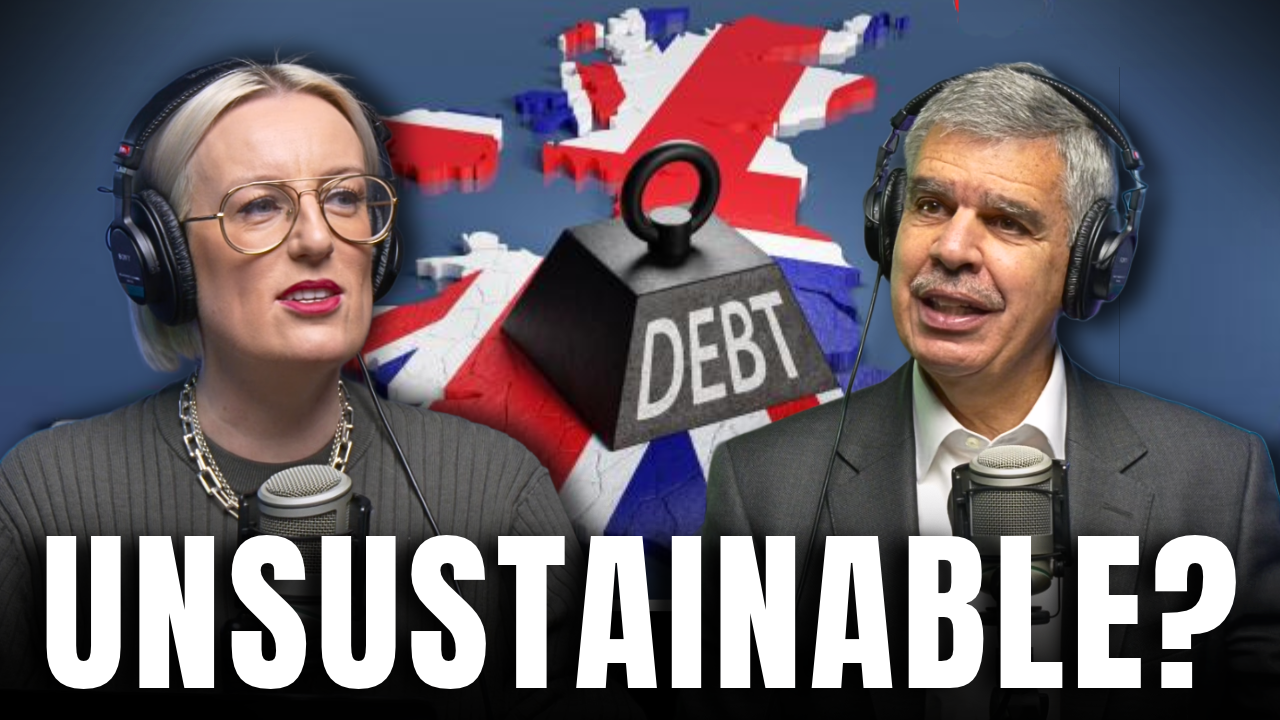
We use cookies.They keep vo running smoothly and help us improve it. Privacy policy
Scan the code with your iPhone camera
Listen in the app.
- Play everything vo finds for you
- vo remembers everything you hear
Go to the App StoreFree on iPhone