In short
Rosh Hashanah renewal and spiritual resilience amid recent American turmoil, including the assassination of Charlie Kirk; religion’s role in resisting instant political reaction; Jewish safety and hope; community-building and non-politicized worship.
Guest
Rabbi David Wolpe, prominent American rabbi (Newsweek’s “Most influential rabbi in America”), has taught widely worldwide; Sinai Temple (Colby DeRay) is mentioned as his pulpit.
Key claims
Rosh Hashanah teaches empowerment—changing ourselves can change the world. Media demands instantaneous reaction; religious spaces slow people down to listen and think. Public grief has driven renewed church/temple attendance. America needs gratitude, humility, and openness to listen across disagreement. Jews should be defended as part of America’s “tapestry.” Israel’s vulnerability is explained as survival against a genocidal cult near its border.
Notable examples
Wolpe cites Charlie Kirk’s rare willingness to speak to people he disagreed with; a Harvard anecdote about Pol Pot supporters later becoming hedge-fund managers; Deuteronomy’s wilderness-to-promised-land arc as a model for imperfect progress.
Written by AI. May contain mistakes. Listen to the episode to check what was said.
Chapters
Tap a time to open that second in VORosh Hashanah and Renewal
0:00 to 1:04
Discussion on Rosh Hashanah's theme of renewal and empowerment.
“I've tried a lot of seafood over the years, guys, and truly it's been hit or miss.”
Rosh Hashanah and Renewal
2:55 to 4:05
Discussion on Rosh Hashanah's theme of renewal and empowerment.
“and tonight begins Rosh Hashanah, which of course is the Jewish New Year rolling into Yom Kippur next week, the Day of Atonement.”
Reflections on Charlie Kirk
4:05 to 6:10
Rabbi Wolpe shares insights on the legacy and impact of Charlie Kirk.
“It's clear, given everything that has happened, especially in the last, what, week and a half, I guess it is, seems like forever, that the world has serious problems and that we have a lot of work to do.”
The Role of Religion in a Crisis
6:10 to 7:57
Exploration of how religion serves as a foundation during difficult times.
“Because I know that years ago when we started chatting, you would tell me a little bit about how politics had infiltrated the Sinai Temple that you were part of.”
Judaism and Personal Responsibility
7:57 to 9:38
Discussion on the importance of personal engagement with faith and community.
“Do you find that for most people, not the most devoutly religious people, but for most people, that religion in essence becomes like an insurance policy.”
Gratitude and Antisemitism
9:38 to 11:44
Rabbi Wolpe emphasizes gratitude while calling out antisemitism.
“So as Jews, as most Jews show up to temple for the high holidays, that's like a pretty, a pretty consistent thing.”
Reflections on Historical Context
11:44 to 13:10
Discussion on historical challenges faced by Jews and their significance today.
“And this country really needs each other.”
Understanding Israel's Challenges
13:10 to 14:00
Rabbi Wolpe discusses Israel's unique challenges and geopolitical context.
“We're almost to the backdrop, just a couple of weeks away to the backdrop of the second anniversary of October 7th.”
Understanding Israel's Struggles
14:00 to 16:48
Explore the unique challenges Israel faces compared to America.
“to say that in some sense it isn't baked in.”
The Importance of Community
16:48 to 18:58
Learn how community ties can help individuals and nations thrive.
“So to the spiritual side of this, and I'm actually going to have Charlie Kirk's pastor on soon, and I'm going to ask him this question too.”
Show all 13 chapters
Spiritual Perspectives on Modern Divisions
18:58 to 21:34
Discuss the spiritual approach to overcoming societal and political divides.
“Or usually what I hear is it's too woke.”
Lessons from Biblical Stories
21:34 to 24:39
Discover how biblical narratives relate to current societal challenges.
“Now we're going to do a little biblical, a deep dive on the Bible here.”
Navigating towards Hope
24:39 to 25:52
Understand the importance of direction and aspiration amidst challenges.
“I hope they're going to get a little calmer and wiser, and they're going to recognize that actually this is an unprecedented system in the history of humanity, and we are a great force for good.”
Transcript
Automatic transcript. May contain errors.0:00I've tried a lot of seafood over the years, guys, and truly it's been hit or miss. You know, sometimes it looks great, but then you cook it and it just doesn't have that flavor or freshness you expect. So finding something reliable has made a huge difference. Wild Alaskan Company really changed that for me. It's the best way to receive high-quality, wild-caught seafood delivered right to your door on your schedule. The first box I got was super easy to use. Everything comes individually portioned and vacuum sealed, so there's no guesswork. I cooked that wild Alaskan sockeye salmon just in a pan with a little olive oil, salt, and pepper, and it turned out fantastic.
0:34Clean flavor, great texture, and didn't feel like frozen fish at all. I've also tried the wild Pacific cod, which I love. It's light and flaky and really easy to work in when you need a quick dinner. What stood out is that the fish is quick frozen right after it's caught in Alaska, so it locks in that freshness along with the nutrients like omega-3s, and it's clean. no GMOs, no antibiotics, no additives, and it supports sustainable fishing and Alaskan fishermen. They're so confident in the quality that there's 100 % satisfaction, money-back guarantee, so there's no risk in trying it. Go to wildalaskan.com slash Rubin for$35 off your first order of premium wild-caught seafood.
1:09That's wildalaskan.com slash Rubin for$35 off your first order. Cozy season is ahead, and you'll be spending way more time inside. Is your home ready? Don't worry. With Wayfair, you can upgrade your space without breaking the bank. Score up to 70 % off during their Labor Day clearance on furniture, area rugs, mattresses, and more. Plus, surprise flash deals you can't miss. Whether it's one room or the whole house, Wayfair has pieces for every style and budget. Shop Wayfair's Labor Day clearance now through September 7th at Wayfair.com. Wayfair, every style, every home.
1:51All right. As Jews all over the world are about to roll into year 5786, that's a lot of years, it is my pleasure and honor to welcome back to the show Rabbi David Wolpe, a man who, as I was once, you've been on the show many times, but I was looking at your resume here. Most influential rabbi in America by Newsweek. You've taught at a zillion places in this country and in other countries, you're bouncing around the world. It's a pretty extensive list for a rabbi. I feel like most rabbis, it just says rabbi maybe worked at a lock store years before, but it's a pretty heavy resume you got here. I run around a lot.
2:28What can I tell you? I mean, some people enjoy it and some don't. I'm one of those rare people who likes planes. I think of them as sort of flying reading rooms. So I get more done on planes than almost anywhere else. Oh, well, then I'm in good company because planes basically are the only place I can get any reading done these days. Well, it's a pleasure to see you. It's been a couple of years since you've been on the show. I thought it would be particularly nice to have you on because we're airing this on Monday afternoon and tonight begins Rosh Hashanah, which of course is the Jewish New Year rolling into Yom Kippur next week, the Day of Atonement.
3:02And I thought relative to all of the things going on in the world, obviously an incredibly difficult time to the backdrop of the assassination of my friend and really American hero, Charlie Kirk, whether you agreed with him or not, I thought this would be a good time to chat. So what do you want to do first? I'll leave it to you, Rabbi. People don't give rabbis instructions. Do you want to do Rosh Hashanah first or do you want to do Charlie and the state of America first? I'll say a word about Rosh Hashanah. Maybe that will slide us into... The idea of Rosh Hashanah in part is renewal. And so I think it is a deep Jewish belief that the way the world is need not be the way the world will be in a month or a year, and that we really do have the potential to change ourselves, and by changing ourselves, change the world around us.
3:50So I think that message, actually, of empowerment is a really important message right now, because no matter where you are on the political spectrum, nobody says, the world is exactly the way I want it to be. It's clear, given everything that has happened, especially in the last, what, week and a half, I guess it is, seems like forever, that the world has serious problems and that we have a lot of work to do. What are you sensing on the spiritual side as it relates to what happened to Charlie? Charlie obviously spoke about his Christian faith at great length. He talked about the importance of Judeo-Christian values as it pertained to the United States of America.
4:32We're seeing all sorts of vigils for him. It looks like church and temple attendance is going up. It's an unbelievably tragic thing that maybe, maybe from a religious perspective, there's a silver lining to. The one thing that I think is, I mean, look, there are always, we never know what the repercussions of any major public event is, even a tragic and awful public event. But there is, when you talk about religious values, there is a return to the sense, I think, that whether religious people demonstrate them or not has nothing to do with whether they're religious values, like we're as fallible as everybody else, but a sense of gratitude and humility and openness is exactly what we are missing.
5:22And I have to say, look, I didn't know Charlie Kirk. I heard him speak once. But to stand in front of people that you disagree with and say, tell me what you think is so rare in our culture that that alone is a really powerful example and lesson. And it shows both a sense of humility and also a sense of confidence that you actually can listen to another side and it won't destroy you to be able to be open. As somebody who gets messages from people who are often unwilling to listen, I think that that's an incredible model that America needs very badly. What do you make of that from the perspective of a clergyman?
6:15Because I know that years ago when we started chatting, you would tell me a little bit about how politics had infiltrated the Sinai Temple that you were part of. But it wasn't just Sinai. It was all sorts of things. We see this with churches everywhere that that politics have so have become so derisive and so insidious that the place that is supposed to be the force field against it, against against the now, basically, has become so infected with all that. And what do you think? Do you think there's enough strength in religious institutions to fight that? So I'm going to start with something that you said, which is, I think, really key, and I don't want it to be passed over.
6:55You said the now. Part of what we suffer from is that we all live by the second hand, not by the calendar. You have to react immediately. I was saying to a friend of mine the other day, you know, when we were growing up, the way that you reacted to someone's argument was you wrote a letter and you had a week to think about it and they had a week to think about it. And tempers cooled and you didn't do things instantaneously. And now we have no reaction time. And one of the strengths of religion is you actually sit there in a church, in a synagogue. You are not, at least in theory, I hope this is true, you're not posting.
7:33You're listening and thinking, and that space is really good for human beings. We are not built to react instantaneously, but all of our media now requires instantaneous reaction. So I think that the institutions have it in them to resist this, but whether people will be able to sort of take a breath and have more space in their lives is a little bit of an open question. Do you find that for most people, not the most devoutly religious people, but for most people, that religion in essence becomes like an insurance policy. So it's like they go about their day and they can be nominally religious or sort of believe, or it's part of their life in some sense, but nothing major.
8:24And then something terrible happens. And then the insurance policy kicks in and they come back home. So we seem to be in a moment right now where people are going back to church, going back to temple. I also obviously want to discuss a little bit what's going on with the Jews in general right now, who seem to be under sort of endless assault. But that probably is somewhat of a frustrating position to put a rabbi or a priest in because it's like, yeah, we're still here, man. You need us again, something like that. it's true it's i mean in some sense for a lot of people it's true it's on like you don't you know you don't go to your doctor unless you're sick um and you don't go to your church or synagogue unless there's a crisis um but there are also people who see it um the way people see daily exercise that is this is what keeps your soul in condition and and it's really hard to be um as prepared as you could be, unless you actually have given your soul the space day after day to think about things that are bigger than you or greater than you, and to see the world through the eyes of a certain sense of transcendence, of the ability, as I said at the beginning, to be better than you are and to make the world better than you are.
9:36All of this is wrapped up in this package that if you're involved with it all the time, I got to believe it makes you better. So as Jews, as most Jews show up to temple for the high holidays, that's like a pretty, a pretty consistent thing. Jews do two things. It's like the high holidays and Passover, of course. And, and at this weird moment we're at where you're basically saying, Hey, you have some skin in the game. You might be able to change some of this stuff. What is it that you would want to hear from the pulpit from other rabbis that are going to encourage people? What is it that you want them to hear right now to the backdrop of everything we're talking about?
10:13So the other night I was speaking at a Catholic university. And one of the things I said to them was, the idea that you would gather to hear a rabbi speak at a Catholic university for most of history was unthinkable. And we have to be enormously grateful for this country and put that first because, you know, there are many, many, many people out there who really wish Jews well. And we are so much better as Jews at identifying our enemies than we are at embracing our friends. And the first thing we should know is we are really not alone. And I think sometimes in our fear, we tend to overlook how much better our position is than our ancestors.
11:02I remember when I was in December of 2023, right after October 7th, I was at this conference in Florida near you and they had 4 ,000 Jewish teens and they all asked us what gives us hope. And what I said was what gives me hope is I imagine myself talking to my great, great, great, great grandfather. And I say to him, there are anti-Semites at Harvard. And he goes, there are Jews at Harvard. Because for him, the idea that we would even be there. So the first thing I would say is, again, it goes to gratitude. Yes, we have problems, but don't make them erase the good things and the beautiful things in life.
11:43The second is that you have to be willing to call out antisemitism wherever it is. I don't care about the team right left center like hate is hate and so wherever you see that manifest itself you have to be willing to say this is a real problem and uh and and i i make that appeal to all americans not just to jews because um you know as uh as uh franklin said a long time ago we all hang together, we all hang separately. And this country really needs each other. One of the points I've tried to consistently make on the show since October 7th is that if you don't, you don't have to care about the Jews more than you care about anyone else.
12:30Obviously, obviously. Exactly. If you think that if they get rid of the Jews in America, or certainly in that pesky Israel, that somehow the world will be better, it's just the appetizer, man. So it's in your own self-interest, actually, to have a little bit of a defense of the Jews. I was going to say, medieval Spain didn't get, or not medieval, but Spain in the 15th century got worse. Russia got worse when it lost its Jews. Germany got worse when it lost its Jews. I mean, it's not something that makes a country better to push out minorities, especially minorities, who tend to be both patriotic and gifted.
13:09So what do you make of the last two years, then. We're almost to the backdrop, just a couple of weeks away to the backdrop of the second anniversary of October 7th. You know, Israel basically had four days of grace to even, while they were still literally finding bodies. But even on day one, even really on October 8th, there were already people basically saying they got three days to deal with this. Otherwise we know what's going to happen. And of course we know what's happened and it has happened at scale. Is this just baked into the code of, of the story of the Jews in some sense, like what all the holidays are, you know, some bad stuff happened.
13:46We survive. That's God or thanks to God and belief. And let's move on. Um, I know I'm giving, that's like the most bumper sticker version that I could possibly, except that usually ends with let's eat, but otherwise. So I, I mean, I would hate to think that it is baked in, although it would be hard historically to say that in some sense it isn't baked in. But I also do think, especially in America, a lot of people cannot imagine empathetically what it is to be surrounded by enemies. I mean, we have Canada, Mexico, and two oceans. Whatever problems we have with our neighbors, they're not the kind of problems that a country like Israel has with its neighbors.
14:29And so for Americans, it's like, why does this have to be? And the answer is that there is a genocidal cult on the border of Israel. And when I say the border, I'm talking about like, you know, look a couple streets away. That's what we mean by the border in a country like Israel. And you cannot survive that way. and it's i understand that for americans that's difficult to grasp but uh but boy for israelis it is not hard to understand right so i and i and i'm sympathetic to the argument when people say okay i don't care about israel i'm actually sympathetic to that argument you're an american you have every right to care about america and that's it if you so choose i'm not sympathetic to the argument of i don't care about the jews who are who are american in the way that you just described that this is a patriotic gifted people who are so woven into the fabric of America, you throw them aside and you're basically throwing away the tapestry of America.
15:27Well, that's certainly the case. I mean, there is no, there is no, um, America without like a salad of minorities that composes, there is no prototypical American. The prototypical American is somebody who believes in the ideals of this country and is, uh, you know, a citizen of this country who's willing to defend it. I mean, that's what we have classically seen as American. It didn't matter what your other ideas or religious beliefs or so on. And that was a really, it was and is a really beautiful binding cord for all of us. And the only reason as Americans that we should care about foreign conflicts is to the extent to which they uphold our ideals or violate our ideals.
16:17And I would say that it is pretty clear that a country that wants to destroy another country and kill all its people, that's a country that sooner or later is going to pose enormous threats way beyond its borders, as we have seen. So we should care what we should do about it. Obviously, that's a policy question, and we can have a million debates about that. Right. I'd much rather stick with the spiritual than the political. So would I. All right. So let's do that. Enough of the political side of this. So to the spiritual side of this, and I'm actually going to have Charlie Kirk's pastor on soon, and I'm going to ask him this question too.
16:57But from a Jewish perspective, what would you say to the purely secular person who maybe is waking up a little bit now, who's almost ready to open up the door and go, Rabbi, what the hell's going on here? What do you think are the ways that you can encourage people to come back through those doors? The first thing I would say is that everybody has to recognize that the fact that America believes deeply in individualism doesn't mean that the world stops at the border of yourself. And actually, it is ultimately even in your interest to go beyond yourself, because a world in which everybody cares only for themselves as a world that will not sustain itself.
17:43So if you actually look in the eyes of your neighbor and you understand that their fate is bound up with your fate and that we are in this together, you'll start to open up to the possibility that community, which we have largely lost, I mean, COVID hurt it, but also lots of other things, that community is essential for living a decent life. And there are no communities cross-generation where young sit with old, where they sing together, where you know that your children and grandchildren and great-grandchildren will be able to be part of those communities other than religious communities. Whatever club you belong to, whatever neighborhood you're in, it may be gone tomorrow or the next day or the next year.
18:31But I know that if I have great, great, great, great grandchildren and they want to seek out a synagogue, just as great, great, great, great grandparents and they sought it out, we'll be able to be there together. Do you think that because of the political nature of things, that that's partly what stops people from going back? I've heard that from a lot of people and from Jews and Christians, almost everybody. It's like, you know, I kind of was going to go back. I can't find the right place because it's too political. Or usually what I hear is it's too woke. And I certainly hear that about temples and I absolutely hear it about churches as well.
19:06Look, as you know, I have, I mean, I've been a long crusader for you don't preach politics from the pulpit. And the reason is that I want everybody to be able to worship in the same synagogue. And also like, because I have, I had a politically divided synagogue, I always used to tell them, don't start the conversation with politics. I know that's the only thing we have in common. And everybody has an opinion about politics. But if you start with what are your kids, what time do your kids go to bed? What do you like for dinner? What do you like to watch on TV? And you get to know the other person as a person.
19:40Then you might discover that even if they disagree with you politically, there's another soul there that you can actually connect to. And so for me, yeah, the dominance of politics is not a healthy sign of a thriving country. In some ways, I feel like the less politics mattered, the healthier we would be. So if you were giving a sermon. I am. Oh, so will you be giving a sermon this year? I will be giving a sermon, yes. Where will that be? At Sinai Temple on Colby DeRay. Oh, okay. So you're going back to your— They wheel out the old guy every now and then to say, like, he still cares about us. So, yes.
20:19Well, all right. It's like old-timers day. They're bringing you back in. All right. Very impressive. So they're bringing you back in. You're going to give a sermon. I mean, I know you probably don't want to give away too much. I also am not entirely sure. I'm very much like I think about it almost up to the last minute. But I will tell you at least something that I am thinking about, which is when Joseph is, when his father tells him to go find his brothers, he runs across this stranger in Genesis. And the stranger says, what are you looking for? and he says, I'm seeking my brethren. And when I read that line recently in the Torah, it really struck me that I think there is this deep hunger in America to seek one another as sisters and brothers.
21:07And so much gets in the way, like political opinion or what you just saw on the internet or what somebody posted. But the yearning for human connection, human to human, to come together in God's presence as just children of God, not as Democrats or Republicans, but as children of God. That, I think, is not only powerful, but ultimately, I hope, could be our salvation. Now I'll give you a tough one. Now we're going to do a little biblical, a deep dive on the Bible here. Can you think of a biblical parable, maybe, that is comparable to sort of where it feels like we're at in the country right now, where there's just so many forces that are oppositional and people absolutely have the yearning you're talking about.
21:56But in some sense, it seems to me that people can't envision what the better thing would be, that we can't really figure out. Like, I can remember, OK, 1995, it was pretty damn good. Like, it was pretty simple and straightforward and we were pretty good together and all those things. But now it sort of feels like it's hard to envision what it would be like if we could get past this. Is there some sort of biblical story that maybe give us an indication of what that road would look like? I actually think the entire arc of the Bible in some ways is like that, because all of the Bible is about Israel getting to the promised land.
22:31But when you finish the Bible in Deuteronomy, they're not there. They're still in the desert. And so the recognition that things will never be perfect is really important to anybody who believes either as Christians that there's a second coming or as Jews that there will be a first, but whatever it is, it's not here yet. So we accept the imperfection. But the key to this was that despite revolts, despite even revolts against Moses, against leaders, they're still somehow they managed to make it across the wilderness, at least to the borders of the promised land. And this sense of, you know, we are all children of the wilderness, but we have a destination and we have a community.
23:18That I think is what has pulled America through many, many, many really difficult divisions in our history. I mean, this is after all, a country that had a civil war, a country that had streets blowing up in the sixties. It's not like we haven't had divisions before. But at a certain point, we said, you know what, this is an enterprise that we actually all have a stake in. And if we discount a huge part of who we are, we're not even going to make it to the border. So I really, I have a lot of faith in the healing potential of the United States. And I remember I told someone the other day that one of the most encouraging things I heard at Harvard was I heard Fareed Zakaria say that when he was in college, his friends were writing editorials in favor of Pol Pot, who, for those of you who don't remember, was a communist genocidal dictator who killed millions of people.
24:16He said, and now all those people run hedge funds. So I'm thinking like— So the arc bends towards capitalism? Is that what you're talking about? The Ark Benz for growing up. I think that there's a lot of anger among the youth who missed a lot of their youth through COVID and riots and all sorts of unrest, but they're going to get older. I hope they're going to get a little calmer and wiser, and they're going to recognize that actually this is an unprecedented system in the history of humanity, and we are a great force for good. and can be an even greater force for good if we don't let pettiness and instantaneous reactivity and also the desire to destroy our opponents as opposed to listen to them carry us away.
25:10So in some sense, the argument would be sort of a Jordan Peterson-esque type thing, which is that at least if you're aiming towards the promised land, it doesn't mean you're always going to get there and then, oh, wow, we can kind of, we did it, we're good to go, then the game just sort of starts again, or it's just the next journey on that. That actually is very hopeful because it does, well, it gets to what your grandfather said about Harvard, I suppose. What I would say, I'd put it this way. It's like people at sea navigate by the stars, not because they expect to reach them, but because that tells them the direction they need to go.
25:45And I think America, we've got 50 stars on that flag. I think we need to navigate by the stars, not because we're going to reach a perfect place, but because it'll help us head in the right direction. Well, Rabbi, you have handed me some insight that I can bring to the table tonight at Rosh Hashanah. Happy 5786 to you. And you got to come. I know you're going back to L.A. to give a sermon, but a little more time in the free state of Florida. I would love that. And Shana Tova, happy and healthy and sweet new year. Shana Tova.
From the publisher
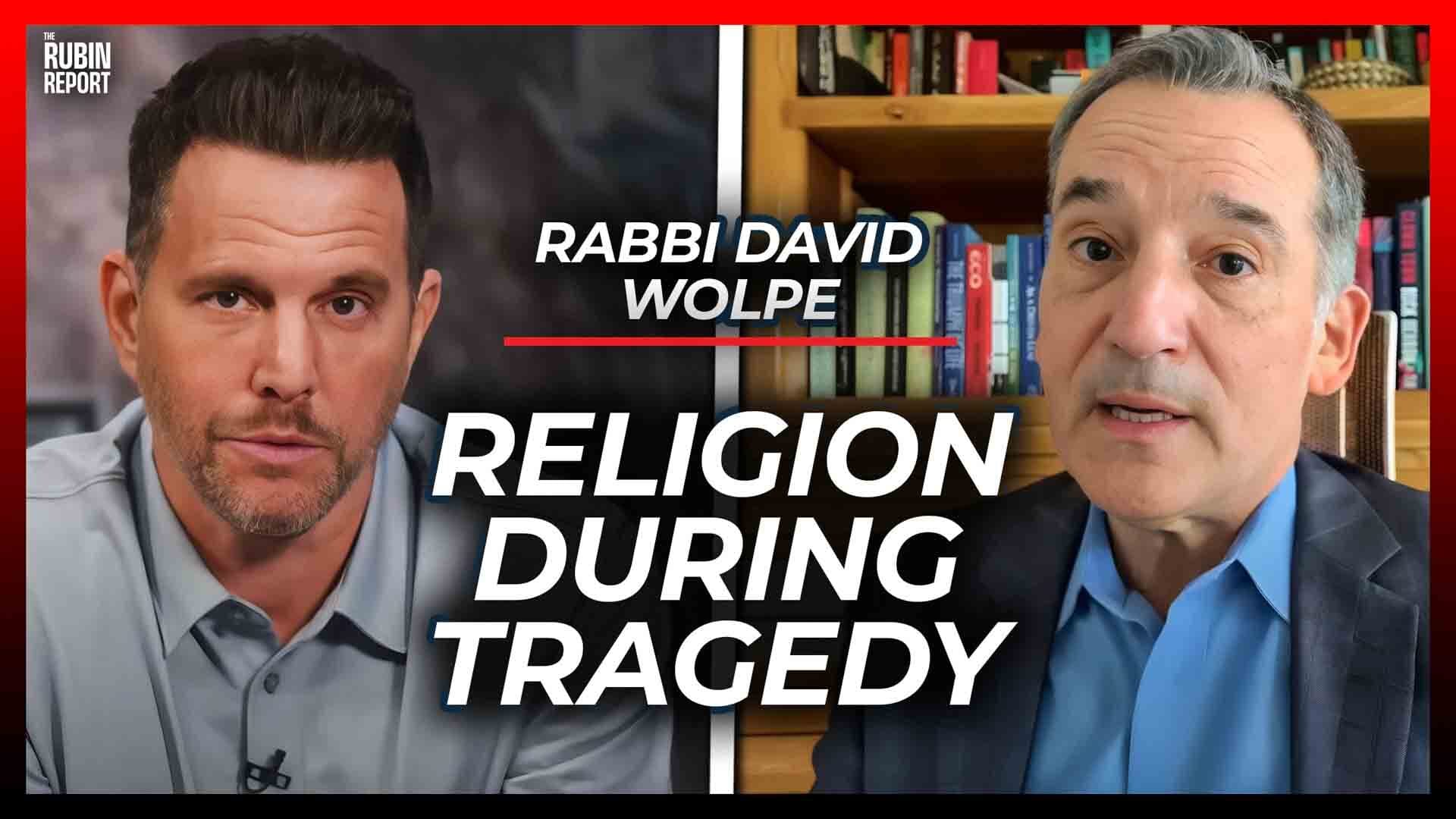
Dave Rubin of "The Rubin Report" talks to Rabbi David Wolpe about the meaning of Rosh Hashanah as a time of renewal and empowerment; the potential for both personal and societal change; the tragic assassination of Charlie Kirk and the role of Judeo-Christian values in preserving gratitude, humility, and openness; the dangers of politics overtaking religious spaces; the importance of community, spiritual growth, and intergenerational connection; the resilience of the Jewish people and the fight against antisemitism; and the hopeful pursuit of a better future through biblical wisdom and American ideals; and much more.
Check out the NEW RUBIN REPORT MERCH here:
Subscribe to Dave's Newsletter: https://shorturl.at/tygfO Buy tickets to see Dave Rubin Live here: https://daverubin.com/events/
October 18 - Melbourne, Australia - TBA
October 21 - Sydney, Australia - TBA
October 27 - Brisbane, Australia - TBA
