In short
Juan Salaman, an ex-hostage and former IDF soldier, describes his captivity by Hamas after being kidnapped from the Nova Music Festival, then discusses Israel’s post–Oct 7 reality through visits to hostage families in Tel Aviv, combat sites in southern Israel, and a rare guided tour of Jerusalem’s Holy Sepulchre. He also argues Israel’s future hinges on hostage release and regional deterrence, especially after Iran-related escalation.
Guests/backgrounds
Maran (hostage for 50+ days; says her legs were broken; survived with “a capful” of water/day and was forced to cook for captors). Juan Salaman (41; held captive 54 days; later recounts an IDF rescue mission where he lost a finger tip and was shot multiple times; his teammate David died). “Yadin” (IDF rescuer he interviews; details not fully separate in transcript).
Key claims
Hamas used hostages as leverage, including holding dead bodies; Israel’s resilience is tied to moving on without self-pity; post-war prospects improve if hostages are released.
Notable examples
Hostage Square daily rallies; Nova Festival site; a comedy club underground bomb shelter during rocket alerts; Holy Sepulchre key/lock ceremony and station-by-station tour; Western Wall to Church of the Holy Sepulchre walk.
Written by AI. May contain mistakes. Listen to the episode to check what was said.
Chapters
Tap a time to open that second in VOJuan's Captivity Experience
0:45 to 2:30
Juan shares his harrowing experience of being held captive for 54 days.
“You know, at one point, I had to entertain them for over 13 hours.”
Reflections on War and Peace
2:30 to 5:20
Discussion on the emotional impact of war and the resilience of the people.
“This was probably the most impactful trip to me even before I got there, probably for a few reasons.”
The Impact of October 7th
5:20 to 9:45
Juan reflects on his trips to Israel and the devastating aftermath of October 7th.
“So you hear it outside until the big sirens, and everyone on their phone gets an alert.”
Life Amidst Chaos
9:45 to 13:00
A stark contrast between daily life and the ongoing threats faced by Israelis.
“You know, at one point I had to entertain them for over 13 hours.”
Hostage Square and Emotional Stories
13:00 to 14:00
Describing the emotional atmosphere at Hostage Square and interactions with survivors.
“The leaders of our team, three guys, we managed to kill that terrorist.”
Rescue Mission and Personal Injuries
14:00 to 15:19
Learn about the harrowing rescue mission and the injuries sustained by the hostages.
“Are you communicating with anyone at this point?”
The Complexity of War and Hostages
15:19 to 17:26
Explore the complex dynamics of the ongoing war and the situation of hostages in Israel.
“David is married and he has a son, seven month old son back then.”
Life in Israel Amidst Conflict
17:26 to 21:44
Understand the resilience and spirit of life in Israel in the face of ongoing conflict.
“And when I talk to him about going to these college campuses and seeing the reaction, you know, what could possibly be more just than a nation saving its citizens?”
Natural Beauty and Architecture of Israel
21:44 to 22:25
Discover the natural beauty and historical architecture that define Israel.
“You've traveled quite a bit in your lifetime.”
Exploring the Old City of Jerusalem
22:25 to 23:36
Take a virtual tour through the Old City of Jerusalem and its significant sites.
“All right, so we just entered the walls of the old city of Jerusalem.”
Show all 21 chapters
The Church of the Holy Sepulchre
23:36 to 26:29
Learn about the Church of the Holy Sepulchre and its importance in Christianity.
“And what you'll see here is Orthodox Jews walking right next to women in full Muslim garb and, you know, large coexistence.”
Opening the Church and Historic Traditions
26:29 to 28:10
Witness the tradition of opening the Church of the Holy Sepulchre and its historical significance.
“and we're gonna join them this is the holy key of the holy church wow this is the original case This is since 1187.”
Inside the Tomb: Easter Preparations
28:10 to 29:20
Learn about the rituals and preparations for Easter inside the tomb.
Stations of the Cross: A Guided Tour
29:20 to 33:40
Explore the significance of the Stations of the Cross and their locations.
“at 12 o 'clock we go inside the tomb with a bishop from the Greek Orthodox and bishop from the Armenian Orthodox to make sure there is no lights inside.”
Reflections on the Old City
33:40 to 35:20
Reflect on the meaningfulness of visiting the Old City in the context of current events.
“And this definitely was the most meaningful, I think relative to everything that's happening in the country and in the world right now and the politics and all that.”
Jerusalem: Heart of Israel
35:20 to 36:40
Discuss the significance of Jerusalem in modern Israel and its historical architecture.
“But what I love about it is, first off, everything has to be built in Jerusalem stone.”
Culinary Delights: Exploring Local Foods
36:40 to 38:40
Join the hosts as they explore local cuisine, including street food and traditional dishes.
“I could also eat some street food if we see something good.”
Fishing Stories and Local Encounters
38:40 to 42:00
Listen to anecdotes about fishing and interactions with locals in Israel.
“for all the people that like diversity, one of the most diverse cities actually in the entire world.”
Reflections on Engaging with Ordinary People
42:00 to 43:30
Gain insights on the value of connecting with everyday individuals versus politicians.
“I'm getting fact-checked on the Canaris.”
Experiencing Live Shows in Israel
43:30 to 46:22
Learn about the unique dynamics of live comedy shows held in Tel Aviv and Jerusalem.
“What was like the vibe from Tel Aviv to Jerusalem?”
The Future of Israel Post-Conflict
46:22 to 49:18
Explore perspectives on what the future may hold for Israel following conflict.
“And the Jerusalem show, I was going for like, oh, I'm here with you right now.”
Transcript
Automatic transcript. May contain errors.0:07What's incredible about the Holy Land is that it is the Holy Land. It is the center, in some sense, of the modern world. All of our history is built around the stories of the Bible, and you are literally walking in the steps that Jesus walked when you are in Jerusalem. To me, what it looks like, especially when I'm here, and that's why I'm feeling it so strongly right now, it feels like what it's done is basically taken all of you and this entire country and taken coal, and it just keeps grinding it and grinding it, you know, condensing it and condensing it, and it's left a diamond here. I met with an incredible young lady whose name is Maran.
0:39My name is Juan Serena, and I'm 41 years old. Being held captive for 54 days. You know, at one point, I had to entertain them for over 13 hours. I had to play with them cards, make them happy, make them laugh, you know, and I'm hungry. I think one of the real through lines is they have very little pity for themselves. They don't walk around in pity. They just don't. It's like some bad s*** happened and then they move on. It's really incredible. When you talk to people who actually are just living it. Yeah, that might have been my most enjoyable conversation so far. What does the country and region look like post-war?
1:17Well, that's the million-dollar question. What does this place look like post-war? Well, first off, I think we're getting there.
1:27How many times have you been to Israel? So this was actually my sixth trip to Israel. I was first there in 1997. When I was 21, I was there again in 99. My sister married an Israeli in the old city of Yaffa in 2012 or so. And then this was my third time in the last three years, actually. We had started, we had gone there three years ago to do a documentary about a strong country that was fighting for its life and doing it well. We had shot that documentary. We were about to put it up. And then October 7th happened. So we didn't put up that documentary. I went back once a few months after October 7th.
2:10And then this was my sixth trip about two years, almost two years post-October 7th. So it's been, I would say those six trips have been wildly, wildly different, which probably makes a lot of sense if you understand the history of the land. How were you feeling going to this trip, having been to it for multiple times? What was different about this one than the previous ones that you were on? This was probably the most impactful trip to me even before I got there, probably for a few reasons. I mean, the first time I went, I knew that Israel is an important place and an important history and all of those things.
2:44But I was a 21-year-old kid. And then, as I said, I went back a few years after that. And, you know, another time I went for my sister's wedding. So that was a celebration. And then when we went for that first documentary, I was taking my whole team for the first time. So it was kind of fun. And, again, it was before October 7th. So it was just kind of like a good time to be there and travel the country and everything else. Then the time after October 7th, because it was still so raw and there were so many hostages still there, and there are still hostages now as we're taping this right now, almost two years later.
3:14But it was really like it was focused on, wow, like this unbelievably, unimaginably horrific, barbaric thing had happened. And that kind of encapsulated the whole trip. I'm at Kibbutz Kafaras in southern Israel. This is one of the communities that was hit the hardest on October 7th. All right, we're at the site of the Nova Music Festival. I mean, this is truly horrific beyond imagination. Today's been an extremely emotional day. We started the morning by watching the 47-minute video compilation that Israel has put together of the October 7th events. And for all of you that have seen some of these videos, and everyone has at this point, we've shown some on the show.
3:58Whatever you've seen, it's worse. We managed to have some good times, too, and that's part of the magic of the country. But that really was the feeling. This time was a little bit different because we're post-October 7th, obviously. The country's moving on, and yet there's at least 20 hostages that are still there. There is a war going on in Gaza. They were being hit with rockets from Yemen, and they basically took Hezbollah out in Lebanon. But there was the looming threat of Iran, and I guess ironically or luckily or whatever you want to say, Maybe it had something to do with the guy up above.
4:30We ended up leaving three days before the Iran war broke out. I actually had kind of wanted to stay for a few extra days and I would have been stuck there like everybody else. And that in some sense, once it started, I was like, wow, maybe I should have stayed just to have seen that as kind of horrific as it is. But what you see there, especially at a time when rockets are falling, because there were a couple of rockets that fell, even though it was before the Iran situation, while we were there, what you see is this unbelievable dichotomy between life and death constantly. And in some sense, that's the energy of the country.
5:03So, you know, right before we did my show in Tel Aviv, you know, we have a couple hundred people at a comedy club and I'm in the green room and I didn't even hear it. But a rocket alarm went off. Wait, was there an actual siren, like you heard a siren, or it was just the alerts? I didn't hear a siren. Yeah, they said there was a siren. The local guy said that there was a mist or whatever, and I think he said he announced it. So you hear it outside until the big sirens, and everyone on their phone gets an alert. I was in the green room. I didn't even have my phone on me. I didn't even know what happened.
5:31Just as I walk out on stage, someone says, well, you know, this is kind of funny because everyone is here. And it turned out that the comedy club itself was underground and was a bomb shelter. And that was a great way to start the show. Not the first time I've ever started a show with a bomb threat. But then you see that sense of life. Like a bomb alert, people kind of freak out or they don't because they're kind of used to it. And then like a minute later, they're at a comedy club laughing or they're at a club dancing or they're doing whatever else they do. And that tension between, you know, the unspeakable horrors of life and then the desire to just put that aside and live, that's an incredible tightrope to be walking.
6:13And the whole country is walking on that all the time. And in some sense, that strikes me as the secret of their success. Do you want to tell me a little bit about your story first? Do you want to wait till we get inside? Do you want to use this hour and then we will go out and I'll tell you the story below. Do you want to see the side of the family? Okay. You know that in two hours, this whole square is so packed with people. And then the families are starting to speak. It's usually after Shabbat is like when it really is busy. This is the main rally. Yeah. So in here, you should stop filming.
6:50Okay. And...
6:57This was my second time going to Hostage Square, which is where the hostages, where their families and their friends and loved ones, where they meet up literally every single day since October 7th. And then on Saturday nights after Shabbat, that's when they usually have like the big weekly rally. But there are people there 24 hours a day every day now for almost two years. and some of the survivors who have gotten out of Gaza show up. You know, you've got family members who lost their children or their husbands or wives or whatever it might be. You have people who still have hostages that are there.
7:33It's just this extraordinary, like, emotional mix and you really, really can feel it. Like, you know, there's people in tears, crying and upset, and then there's people laughing, sharing stories about loved ones. Like there's all this incredible mix of things happening. It's a very small space, the square itself. Tel Aviv's a pretty small city, actually, and Israel's a tiny country. But I met with an incredible young lady whose name is Maran. My name is Juan Salaman, and I'm 41 years old currently. And I was kidnapped from the Nova Festival, being held captive for 54 days. And she was a hostage for 50 some odd days.
8:16she, I mean, when you hear the stories and to stand with her for, I don't know, we stood for maybe an hour or so and walked around a bit, to stand there, you know, you could see the pain in her eyes and holding back tears, which eventually came out a little bit at the end, even though she's told the story a million times and talking about her legs being broken. The terrorist was right behind me, holding an iron pipe, like about to beat me up in my head. and I didn't have no other point. I had to jump from a high place and I jumped and I hit my leg and he jumped after me. He was about to beat me up and he took an iron pipe down and he said, okay, enough.
8:56But then he took things from my pockets and he told me to go on the mountain and I didn't realize I had two broken legs at that point. And it's like you don't feel the pain. It's mind over body. a fight or flight. It's mine. If it's not mine, that you're not surviving this situation. Shots being fired and getting one capful of water a day. Capful, not a bottle. A capful of water a day to survive while they were, the Hamas guys, were making her cook food for them. Do you know how much water I had in those days? 20 milliliters of salty water. But she told me that that's the budget for the next two days.
9:38So I need to calculate the water that I drink. So I told the other hostage, trying to, you know, showing her, you know, I'm strong. We will survive this situation. Don't worry. We will drink one cap. One cap. You know, at one point I had to entertain them for over 13 hours. I had to play with them cards, make them happy, make them laugh, you know, and I'm hungry. And trying to, telling the story of trying to be strong for the other girl that was in the room with her and lice and getting bitten by bugs and all of them being beaten and all of these things to the backdrop of seeing her friends be shot at the Nova Festival and everything else.
10:19And then there she is telling her story. I mean, man, that'll put your shit behind you pretty quickly when you realize what the real bad stuff is out there that exists. And it is real and it does really exist. And I think a lot of people in some sense in the Western world were so comforted by so many modern things, we don't realize that there really are bad people out there. There really are bad ideas that want to upend all of this and end all of this. So to be there was, there almost aren't words for it, actually. You feel like you're sort of, it's like you're between the mortal world and heaven, something like that, because there's something much deeper than just what goes on in a human way on a day-to-day basis.
11:08And those people, they just want their family members home. I mean, it's as simple as that. And the fact that Hamas is even holding dead bodies as leverage, like, they know that the Israelis, because the Israelis care about life, they want even the dead bodies back, and that they're using that as leverage is just an unimaginable evil. But that's what they're up against every day, and they're not quitting, I can tell you that.
11:44I mean, first of all, we saw entire houses that were burnt. I've been there. It's just unbelievable. I remember walking, so I went there afterwards to see it again, and I remember seeing the houses now that are burnt down to the ground. I remember them burning with bodies burnt either inside or people tried to run away and you could see that they I guess lost it like their consciousness and just died on the way out and families that were in their safe rooms with their father executed and left in their safe room and in like houses that nobody's left like entire families that were butchered tortured and and killed I have horrible pictures on my phone that we took so that we'll have evidence afterwards and photos that I'm not allowed to publish.
12:31Like I don't mind showing you, but I'm not allowed to publish them because the IDF doesn't let us publish. Just horrific things until about 7 p.m. We were on our way to a mass hostage situation. I was leading my team. I was in the front of my team. I'm running towards a house in front of me to clear hostages from inside. We get shot from the right side where I lose the tip of my finger, which is why it's just like cut off there. Just a bullet goes through the top part. The leaders of our team, three guys, we managed to kill that terrorist. We continue back towards the house. I get to like the first step and the terrorist just takes his gun out of the window right on top of me and shoots an entire magazine at both me and my number two guy, David.
13:18We both get hit, fall to the floor. we both crawl into cover and get back into fighting mode. Like I remember we'd crawl into cover and turn around, guns ahead of us. I guess my conclusion was that they'd do what I would do, is go after your enemy. So they would probably come out and try to finish the job, and I wanted to be prepared. They didn't come out because, I mean, their advantage was that they're in that house, bunkered up, guns out, and nobody can get close. And there was a full hour that we were under that house, me and David, with terrorists surrounding us completely, shooting all over around us, a little bit coming towards us, but mostly coming at my team, which was still in the house that we came from.
14:01Yeah. Are you communicating with anyone at this point? Yeah, I have my radio. Yeah. At this point, I don't know where my left arm is. Wow. So I tell them on my radio that I lost my left arm and that I have a bullet in my chest. That's what I knew. David knew he had a bullet in his stomach, chest, left arm, and back. So that was what we told them. They tried to come to us. Three other soldiers were injured on the rescue mission. It failed. Again, they got bombarded by terrorists coming at them from all sides. These are about nine soldiers left healthy with, I'd say, around at this point, 60, 70, 80 terrorists just coming at them from all sides.
14:40And so for an hour, we're communicating, we're talking until they managed to get a tank into that house to cover fire them. four guys from my team crawled under that house four beasts crawl under my house got to me and david managed to pull us out as other soldiers conquered the house on top of us like they did it simultaneously yeah it was unbelievable so they went in they went under they pulled us out they went in the house there were about 15 terrorists in that house on top of us and they managed to pull me and david out give us medical treatment and send us off to the hospital on the away to the hospital, David died from blood loss.
15:24David is married and he has a son, seven month old son back then. Now he's a little over two. And he was hit by 10 bullets altogether. You were in the ambulance with him? I was in the helicopter. Yeah, we flew together. I was hit by four bullets. So three in my arm, shoulder and chest, a bullet here and two bullets in my chest plate that saved my life that stopped. and then yeah and then from there on to the hospital and I woke up found out basically everything that's going on. So that chat with Yadin was absolutely incredible you know it the crazy part about this is that everyone here has some kind of story like that his story happens to be a story of rescuing people and you know I think he said shot seven times I actually at the end when I was giving him a hug I felt his bicep I mean he literally has no bicep he has said it was all this nerve damage and a bunch of other stuff but I asked him what's the most challenging part now for his life going forward and he says it's just that he can't be out there with his brothers fighting and saving people I mean it's really it's really just beyond imagination I mean that to the backdrop of chatting yesterday with some of the hostages or former hostages thankfully but maybe Joey can pan and just look out the window for a second.
16:41And you really can just see life goes on here. It's crazy. There's a war happening. Like it's not that many miles down south. This is a tiny country the size of New Jersey. And there's a war and there's 20 people being hidden on top of, I think there's about 58 probably dead bodies that they're keeping hostage, which is also completely psychotic. And it could all, as Yedin said, it could all end right now. It could end while we are in this bus right now. If they would just release those people, the war will be over. So the people that are accusing Israel of genocide and all of these things that are a complete lie, they could end it.
17:16It's the only case in human history of people who are quote-unquote being genocided, who have the power to stop the war, not stopping the war. And that's why it's tough to fight a death cult. And when I talk to him about going to these college campuses and seeing the reaction, you know, what could possibly be more just than a nation saving its citizens? Everyone, end the war, end the war. Okay, so leave 20 people there. Leave their ability to do it again. Leave their ability to shoot rockets into your country. Leave 20 people. I mean, imagine if you took the scale of, you know, the size of these countries and the populations, it would be like America leaving thousands of citizens in Mexico and just being like, all right, the war's over.
18:03we'll just leave you there. That means the war is over, as if that means that something good has come of the ending of all of this. All they have to do is release the hostages, but they're obviously not going to do that, and the war will go on until they do, and there'll be a lot of death and destruction, and it's up to them. But when you see heroes like this, and then to the backdrop of life going on here, it's really incredible, and that's, you know, one of the incredible things about Israel, especially when we get to Jerusalem, will see is that you know you can dig down and see history and then they build up and you see the future so you see this incredible historical place that's on the forefront of technology so you see the you see like the past and the future at the exact same time and it's like a slightly different version here in Tel Aviv because you see this unbelievably robust city with joy and endless partying and incredible food and music and culture and all of those things and then it's to the backdrop of probably virtually every guy that's over 18 on this beach was probably fighting in the war and how many survivors are out here or family members or everything else.
19:07So it's really extraordinary. And we're going to go to the Carmel market now and eat some meat. So that's good too. The last trip that we did post-October 7th, even though we were able to kind of go out at night, and as everyone in Israel says, Tel Aviv is a bubble, so there still is nightlife and all that stuff. It was still so raw at the time. And there really was a feeling still of like, oh, is this country going to continue? And are they going to win this war and all of that? Now that we went back this time, which was, you know, only about a year later. And again, it was before the just a few days before the Iran war.
19:40There was a real feeling like, oh, they beat Hezbollah. They're beating Hamas. Eventually they will get the hostages back. There was also a feeling, even though it wasn't like talked about that much, that like the Iran thing was going to be solved one way or another. Like, it was like, you know, there was a feeling of, oh, we will get through this. Where the last time I was there, there was a feeling of like, oh, are we at the end of the road here? Killed for absolutely nothing. But that's what Hamas wants. Dead people, destruction. If this was a place that was made for life, it's not supposed to be this way.
20:11I think we're quite literally millions and millions of people all over the world have woken up to over the past few months is that evil is real. Not everyone thinks as we think. Not everyone believes the same things that we believe in. But then you go out, whether it's in Tel Aviv or Jerusalem or any of the other cities, and there's an unbelievable nightlife. The food scene is incredible. We ate some of the best food that I've ever eaten in my entire life. And there's also a feeling that, like, everyone's in on it together. Meaning, like, you go out and every single waiter or bartender that we talked to became our friend over the meal.
20:49Like we did shots with everybody. Like if I ordered shots for my team, they were like, I'll have a shot with you. And that happened time and time again. And then they would chat with us and tell us, you know, every meal that we went to, I didn't even order off a menu. I would just say, hey, whatever you think is the best. And they were so proud to bring the food there and share a rock is their is their basically their national drink. And and there's just this strange it's I guess in some sense, it's not strange. It seems like it's strange. Wait a minute. They're trying to kill you all the time.
21:18You should be hiding and afraid and everything else. We're so afraid in our modern lives of everything. Everyone's afraid. And COVID, we're afraid of going out and someone might sneeze on you and all these things. And here they are. They have real people trying to kill them all the time. And basically, they're like, fuck that. We're going to live. And that's why, you know, every year they come out with this poll all over the world of the happiest countries. And Israel is always in the top 10 despite all of the crazy things that happened. So it was particularly, I guess, it was particularly moving to be there post-October 7th and see that the sense of hope is probably greater than ever.
21:56You've traveled quite a bit in your lifetime. You've traveled to a lot of different countries. Can you talk about Israel's natural beauty and actually the architecture for someone who's never been there? What's it like to be there? What does it look like to someone who's never been? What's incredible about the Holy Land is that it is the Holy Land. It is the center, in some sense, of the modern world. All of our history is built around the stories of the Bible, and you are literally walking in the steps that Jesus walked when you are in Jerusalem. And we walked from the holiest site in Judaism, which is the Western Wall, to the holiest site in Christianity, which is the Church of the Holy Sepulchre, and you walk through the quarters, and these are the very same stones that our civilization was built upon.
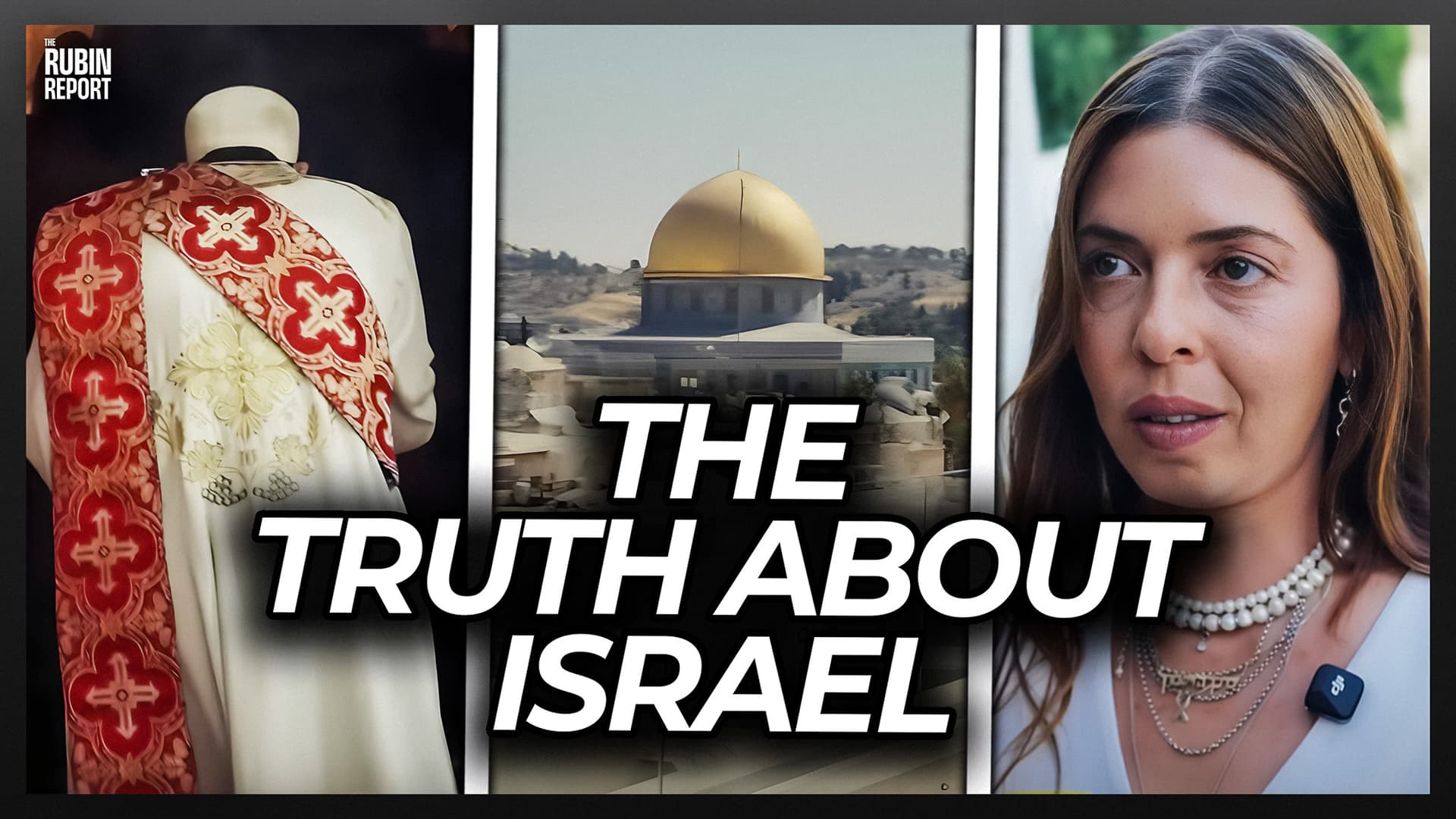
22:39All right, so we just entered the walls of the old city of Jerusalem. I mean, this is one of the most, possibly the most historically and religiously important places on planet Earth. We enter the Jaffa Gate over here, and we're going towards the Western Wall, which of course is the holiest site in Judaism. It's actually the retaining wall of the original Jewish temple, which has been destroyed twice. and then the Dome of the Rock was built on top of it so Jews technically can't even pray really really like once a year a few people can at their holiest site they so Jews pray at the at the wall beneath it because I mean it's just an annoying truth the Muslims don't want the Jews praying up there that's just how it is but their Church of the Holy Sepulchre is here just within minutes of the Western Wall so we're gonna take a walk and we'll shoot something walking from the holiest site in Christianity to the holiest site in Judaism.
23:36And what you'll see here is Orthodox Jews walking right next to women in full Muslim garb and, you know, large coexistence. And yes, there is the Muslim quarter and the Armenian quarter and the Jewish quarter, and everyone coexists and no one's forced to stay in their quarter, although probably not as safe for a public person or certain people wearing certain things, depending on what quarter you're in. But it's an absolutely beautiful day here and we're gonna go shoot the show right in front of the Western Wall and we'll go from there. Alright.
24:15Now that is a view ladies and gentlemen. Look at that.
24:28This literally might be the most important piece of real estate in the entire world, what you're seeing right here.
24:54Man, this is like reverse doom scrolling. We spend all our days scrolling that thing. This is whatever the 180 absolute reverse of that is. That's what this is.
Read the full transcript
25:23All right, so we just got to the Church of the Holy Sepulchre, which of course is the holiest site in Judaism. The tomb of Jesus is in there. And interestingly, one of the things about the church that's interesting is people think of the Middle East and they think of like it's this eternal battle between the Jews and the Muslims and the Christians and all this stuff. But actually there's just an endless amount of denominations of all of these religions and figuring out how secularists and religious people can live together and all of those things. So the church is actually, it's managed by several different Christian denominations.
25:53The Greek Orthodox Church manages where the actual tomb is, which is inside. Then there's the Armenian Church and several other denominations all sort of working together, I'm sure have some competing interests. And of course, it's all secured by the state of Israel to make sure that anyone that wants to worship here or visit can come here. And I've been here many times actually, and they're constantly doing work and you can see the scaffolding and facade is always changing but they do stuff unbelievably slow here as to not change the original natural architecture and uh we're gonna head on in and i'm sure there's people from literally all over the world praying in there and we're gonna join them this is the holy key of the holy church wow this is the original case This is since 1187.
26:45This is 850 years in the hand of our family. I think I'm supposed to hand you the key. This is incredible. Hi, I'm Dave. Nice to meet you. Nice to meet you. Thank you for coming. That's my Jessica. Unbelievable.
27:01Great. Let's show you how we opened the church and we closed the church. This is the holy gate of the holy church. Now we have two locks. This is, I will show you how we open. This we put the key from upstairs.
27:21And now the church opens. How do you get that? From the ladder. I will let you see the ladder. And how we close?
27:39Now the cloches, the church cross.
28:10so
28:37do
29:20at 12 o 'clock we go inside the tomb with a bishop from the Greek Orthodox and bishop from the Armenian Orthodox to make sure there is no lights inside. and after that the Greek Orthodox closed the main door of the tomb with the holy wax. After that I came and I took my stamp. What do they mean? They mean now everything is ready for the holy fire and we can now begin to celebrate the Easter. After that the bishops of the Greek Orthodox they take me to the house of the patriarch and we come together with the patriarch and he go inside and come out with the holy file. Do they do that on Greek Easter or on...
30:04In the Greek Easter, yeah.
30:25The prayer came here and made praying and he came out with the holy fire.
30:35We can make a wish.
30:55I'm on a dinosaur.
31:18This is the place where Jesus is staying or they take him to be.
31:31Here we have three stations of Jesus, number 10, number 11, number 12. I can show you. Station number 10, where they take off the clothes of Jesus. Here we can see it also from outside. This is in the hand of the Catholic. This is number 11. They put Jesus on the cross. Yes. And this is also in the hand of the Catholic. This is in the hand of the Greek Orthodox. This is the place where they put these things and they die.
32:30We want you to go home and to remember us. This is from our family. You can smell the tomb perfume. This is now. This is the oil from inside the poly tomb. And inside this is a small stone from the tomb. And this is a piece of wax. This year this is. And this is, you know, you visit inside the tomb. Upstairs there is a lighthouse. This is from the lighthouse. Wow. Wow, what an honor. This is to remember us always. Thank you. You're welcome. What an incredible honor. Thank you so much. You're welcome. Thank you so much. You're welcome. What's your name? I'm Datsy.
33:35Nice to meet you. Nice to meet you. Thank you. Bye. Bye-bye.
33:41Alright, so we're just wrapping up our tour of the Old City and I have to say I've been here, I've been to Israel I think seven times, but I've probably been here into the Old City maybe a dozen times or even a few more than that. And this definitely was the most meaningful, I think relative to everything that's happening in the country and in the world right now and the politics and all that. But also to get that tour of the Church of the Holy Sepulcher. I've never had such an intimate tour. Other times that I've been there, it's been very crowded or you have to kind of move through quickly. But to go to each station to learn a little bit more about each church, to hear about the coexistence.
34:18You have a Muslim that is the guardian, in essence, of the door of the church that then has several denominations in it inside the country of Israel, which is Jewish. It actually shows you that this stuff can work if people are willing to come together. So it was quite moving. So we're basically through the old city right now, right behind us over here. Here we can turn for just a second. That's the Jaffa Gate. And interestingly, I think I know most of the story here. the way the Jaffa Gate is built, there's a reason that you walk through it and then it ends just a few feet before because back in the day they didn't want people invading where they could just ram through all of their horses.
34:58They wanted them to have to turn so that they couldn't just invade that quickly and that's why it's an interesting gate. Normally a gate you would just have the awning and you would walk straight through but you'll see a quick turn here. So it's really been it's been another great day here in Jerusalem. a city that feels like it's kind of between two worlds, but definitely gives you a lot of hope for the human spirit when you see it the way we just got to. It's absolutely incredible. You go to a place like Jerusalem, and I actually, you know, most people think of Tel Aviv as sort of the center of Israel because it's the modern center and it's the tech center, and that is their biggest city technically, but Jerusalem, which is their capital, is really the, well, it's the heart of the country because that is the religious heart.
35:42But what I love about it is, first off, everything has to be built in Jerusalem stone. So it looks beautiful. Stylistically, it looks beautiful. If it's a new hotel or a new restaurant, it has to be built out of Jerusalem stone. So it's gorgeous. And then when you see that they can build high rises going up this way, but then the same time they're digging down and they're unearthing thousands of years of history, like in the city of David. So they're literally digging. And the more they dig, they can dig, you know, a couple feet down and they can figure out, boy, that was from 100 years before the last layer that we looked at.
36:15And then we can keep going below that. And now they've literally uncovered the city of David, which was the path that undoubtedly Jesus walked as he would have walked to the temple thousands of years ago. It's incredible. It's incredible to see. So you see all of that. And then, you know, you can go to a place like Tel Aviv where you see the sort of like hustle and bustle of a modern city.
36:41I could also eat some street food if we see something good.
36:52All right, I am going to eat some bread in the Holy Land. All right, sorry carnivore people. I mean, look at this. Look at this. Look at this. Look at this. Look at that. The smell. They even have challah. I can't believe it. Yeah, the smell, it's just, there's so many smells here, like there's, oh my god. Wow, incredible. I'm pretty sure they have Lucky Charms here without red dye like we have in America. Maha. But we should get shwarma, we should get shwarma. Shwarma and a pita. Shwarma. Okay. Shwarma. You want to do schnitzel? Let's do schnitzel. So, you're closed? What, I go to the one guy who's closed?
37:34All right, schnitzel or schwarma? Oh, was there a shawarma guy there? That's a shawarma over there. There's shawarma. Shawarma. That's where we're gonna eat shawarma. Shawarma. Cameraman, you want the shawarma? Okay, you get shawarma. Shawarma for everybody. Shawarma, shawarma, shawarma, shawarma. Hi. Uh, we have four shawarmas. We are now in the Middle East, my friend. Shawarma with a little falafel, some tahini and everything else. Okay.
38:07That's good. We're actually heading up north right now. We're almost at the Sea of Galilee, which obviously, if you're a believer, is a very important place. That's where Jesus walked on water. It's also just an important piece of the geography here in Israel. And then later to Jerusalem and our shows in Jerusalem tomorrow night. and we will do all the historical stuff, all the religious stuff, walk around. We'll be in one of the most diverse, for all the people that like diversity, one of the most diverse cities actually in the entire world. And then we'll see what else happens. And we'll have some hummus.
38:48All right. From the sun. Yeah. Rock of the court is it. Are you going to go in the water? Do we go in this water? Well, I guess we walk on it. Everyone tries to walk on it and sees what happens. Hey, I'm Dave. How are you doing? Hi, I'm Ido. Nice to meet you. Nice to meet you. Hi, Joe. Nice to meet you. Hi, Joe. I'm Ido. Nice to meet you. Be careful about your head from there. It's tough to catch him too, right? My whole life. My whole life. Yeah. Only once I saw a catfish eating a dead fish. Other dead fish. Yeah. Like, you know, once. Yeah. And they say that there are scavengers and they eat dead fish.
39:30They eat live fish. They eat live fish. And he is the one that has the greatest value for casting. This is the fish that you would catch first, probably.
39:52Alright, now we see if we're getting dinner tonight. You know, it's one thing to, first off, look how cool this is. It's one thing to cast with something like this, but can you imagine if you get some huge fish and you got to reel that thing in with this thing? That's not going to be anything else. I'd say there's a 50-50 chance we're going to catch a fish, but there's only a 10 % chance of that. How do you know if you've hit bottom? So you need to pull a little bit and then let go. Once you're letting go, this is when the fish is biting. So you pull, you mimic a form of swimming, and then you let go.
40:33When you let go and pull again, this is where you feed the fish.
40:41I sense a carpaccio in our future. Oh, wait. It's biting for sure.
40:55He's biting. He's a fish. Yeah, there's a fish. Throw the line on the floor. Throw the line on the floor? You want to go? What's the best way to do it? Tell me. Well, no, I can't do that. So you just wrap? That's it? Unless you just put it in the middle. In this case, you lose some line. So basically, I mean, it's a small one if we got anything. but he's definitely by i mean just just collect the line yeah collect the line so i'm just just pull and throw on the floor what do you mean throw on the floor just pull the line just looks wrong oh i got you simple as wait let's see
41:37try to bring him in one time yeah yeah yeah throw again yeah but i'm not sure if he's having stuff It got away. We definitely had something though, but it got away. Sorry buddy, looks like another lamb schnitzel for you. Lamb schnitzel. It doesn't work. We don't make a schnitzel for lamb. Yeah, I meant to say lamb shawarma. I got a fact checker here. Veal, veal, turkey, turkey. Turkey or veal schnitzel. Okay, okay. Wow. I'm getting fact-checked on the Canaris. Dave Rubin. It was nice to meet you. Thank you guys. Thank you. Nice meeting you. Really appreciate it. Nice meeting you all also. My pleasure.
42:24Take care. Thank you. It's nice talking to regular people. I mean, that's what, you know, I talk to a lot of politicians and some of them actually are great and really have vision. And, you know, when I sat with Orban the other day, it was like, it was nice to talk to somebody about philosophy and religion and what like underpins the political part of it. And I did that with BB in DC a few months ago. And I've done that with other politicians over the years. But when you talk to people who like who actually are just living it and being and truly part of it, and they can speak freer because politicians, even the even the most outspoken politician usually has some piece that they're not telling you or they're negotiating something or they don't want this hurt or that hurt, or they don't want to offend this person because they're working on something.
43:06But when you see someone that is just a good human being, just trying to live a good life that knows the history, knows the connection for whatever land that they live in, it's really an incredible thing. That was, yeah, that might have been my most enjoyable conversation so far. So you mentioned the overall energy in Israel. What's it like having been able to interact with the people there in Israel? What was like the vibe from Tel Aviv to Jerusalem? Yeah, so, you know, we did two shows in, two live shows, one in Tel Aviv and one in Jerusalem. Tel Aviv show was in more of like an old school kind of underground comedy club, felt a little dirtier and gringier and grungier and all that.
43:45We had the bomb threat right before we started. And it was, and I kind of made it a free for all. All right, we're developing a new type of comedy here. This is basically what you're yelling while you're probably watching me, right? Like you're yelling at your phone, say that, talk about that thing. Okay, all right, we're doing, this is true multimedia something. That was the first show that we did. And I kind of wanted to feel out the crowd. And one thing that I thought was really, really interesting was that most European crowds, and I would include Israel in this, even though it's not European, obviously, but most foreign crowds, non-American crowds, even if you go to Canada, they're very, they watch a show and they just kind of sit back like this.
44:21So you don't get a lot of interaction. They'll laugh when it's appropriate and all that, but they're not going to yell out. They don't like to draw attention to themselves. They don't heckle, none of that. I like a lot of that interaction. And I've done many shows in Israel before. And that show, the whole crowd was like, they were like in that room with me. Like they wanted to ask questions. They wanted to tell me things. It was a free fall. I mean, we had people arguing with each other all in good nature, but just all happening at once. And it was really, it was really, really special. And again, maybe it was just because a bomb just had gone off and everybody was, you know, a little heightened because of that.
44:54But probably not because they're dealing with that all the time. Then we went to Jerusalem and it was more of a proper theater. And in a proper theater, people usually are a little bit more the traditional way of just kind of sitting and watching a theater show, almost like you're watching not a live human being in front of you, but just something that's happening right in front of you. And what I really wanted, and I treated that show very differently because I wanted that show to feel like I was telling the story or showing them. I was telling the story of why I was there, but also showing them that they're not alone.
45:24To me, what it looks like, especially when I'm here, and that's why I'm feeling it so strongly right now, it feels like what it's done is basically taken all of you and this entire country and taken coal, and it just keeps grinding it and grinding it and, you know, condensing it and condensing it, and it's left a diamond here. I mean, I think one of the real through lines is they have very little pity for themselves. They don't walk around in pity. They just don't. It's like some bad shit happened, and then they move on. It's really incredible. But I wanted to show them that they aren't alone because, you know, they see the same things that we all see on social media.
45:57They see, you know, the frog people saying horrible things and people that used to be sane political pundits now saying awful things. They see the conspiracy theories. And, you know, it's people that have a history of their ancestors being, you know, hunted and hounded and pogromed and holocausted across the world. So they see that now and they feel like they're alone. And I wanted them to understand that they weren't. So I think I treated both shows very differently. The Tel Aviv one, I was just kind of going for kind of raw craziness. And the Jerusalem show, I was going for like, oh, I'm here with you right now.
46:29How can I help? And by the way, I got a lot of good answers on how I could help. Some of them had to do with just telling the story as honestly as possible. What does the country and region look like post-war? Well, that's the million-dollar question. What does this place look like post-war? Well, first off, I think we're getting there. I really do. I mean, I think the Iran thing, everybody, it was the subtle thing that everybody was kind of talking about. You know, everyone talks about we got to get the hostages out and resolve that thing. But then to the backdrop of, oh, but Iran, which was funding Hamas and funding Hezbollah and really is the head of the octopus.
47:06They were going to have to take that out. Well, now that Iran has basically been taken out and it was a 12 day war. This morning, we're getting a look at some of the damage done over the weekend. Aerial images you see there showing impact on the surface. We're getting breaking news. President Trump posting on Truth Social moments ago that the U.S. completed an attack on three nuclear sites in Iran. The defense minister is acknowledging that Israel has carried out what he calls a preemptive strike against Iran. What I think it has now signaled to the Middle East is something that's very much in line with what Donald Trump has tried to do this entire time, which is that if you want to be successful, if you want to be free and have trade with other nations and put away some ancient hatreds and all of those things, you have an incredibly bright future.
47:51And you see the Gulf states that are largely doing that, particularly the UAE. They're on board all that. You see the Abraham Accords. It looks like Saudi Arabia is going to sign on. Maybe Syria, although that's a little complex because they're in the midst of their own kind of civil war. But basically, if all of these countries would just set aside some of the old hatreds and say, hey, the Jews got this tiny little plot of land. And by the way, they're basically the superpower now. They destroyed, you know, the entire military structure of Iran, a country that's 50 times bigger than it. And they did it in less than two weeks.
48:23It's like, man, just let them live there and then be part of the trade and the new world and then let America come in and help make deals and all of those things. And then take that slice of land that is Gaza that is literally just, you know, a couple miles south, in essence, of Tel Aviv. It's the same beach. It's the same body of water, the Mediterranean. It could be as beautiful as any other coastal place in all of the Mediterranean. Put aside some of that ancient hatred and just start building a functional society. Boy, it could be the golden age of the Middle East. And I really, really think that that's possible.
48:57It's not to say it's going to be easy. It's not to say there aren't going to be starts and stops to that and everything else. But I think this right now, because of peace through strength and resilience of those people, I think this is the best opportunity, perhaps in the history of the entire Middle East, to have something that truly would be close to being called peace.
From the publisher
Dave Rubin of "The Rubin Report" talks to former hostage, Moran Stella Yanai about her harrowing experience as a hostage of Hamas; discusses his experiences and observations on his visit to Israel; the conflict with Iran and the potential for peace in the Middle East; the reality of daily life in Israel during a period of war; the country's vibrant culture and the determination of its people to live fully despite the challenges they face; and the historical and cultural significance of the Holy Land. Dave also gets a special tour of some of the holiest sites in Jerusalem, like the Church of the Holy Sepulchre and the tomb of Jesus.
