In short
Michael Shermer discusses how to find truth amid politicized science, conspiracy “just asking questions,” algorithmic misinformation, and AI-generated media. He argues for Bayesian thinking (assign probabilities, avoid 0/100%), using multiple independent sources, and treating “truth” as provisional but rationally justified.
Guest backgrounds
Michael Shermer is founder of Skeptic Magazine and author/researcher (book: Truth, What It Is, How to Find It, and Why It Still Matters). He’s known for debunking conspiracy theories and promoting rational inquiry.
Key claims
COVID-era policy lacked Bayesian caution; institutions and experts were politicized. Conspiracy promoters often have agendas (political/anti-Semitic/anti-religious or anti-Israel), not genuine curiosity. “Just asking questions” can be a rhetorical tactic. AI and video deepfakes raise verification needs; fact-checking sites and LLMs can help.
Notable examples
Great Barrington Declaration; school closures debates; “Somali fraud” daycare case; 1619 Project historical disputes; Auschwitz crematory “how many” questioning; UAP/UFO shift from UFO to UAP; War of the Worlds radio panic; Grok/Tesla voice fact-checking; “make them dance” AI video prank.
Written by AI. May contain mistakes. Listen to the episode to check what was said.
Chapters
Tap a time to open that second in VOThe Role of Policymakers in Crisis
0:00 to 1:28
Discussing how policymakers approach decisions during crises.
“If you're a policymaker, you're a politician, and you're sitting there in front of the microphones with all the media, and they go, okay, what should we do on Monday?”
Michael Shermer's Journey as an Author
2:15 to 3:14
Michael shares his journey as an author and discusses his writing process.
“back so I'm going to ask you the question that I ask you every time we start a show because every time we start a show you have a new book I ask you the same question which is how many books have you written?”
Exploring the Concept of Truth
3:14 to 4:59
Discussion on the state of truth and its significance in society.
“and writing articles for Skeptic, mostly editing articles.”
Trust in Institutions and Pandemic Responses
4:59 to 6:41
Michael addresses trust in institutions post-COVID and the challenges faced.
“And one reason to write the book is to say let's get back to trust in our institutions and our experts and science and rationality and so on.”
The Impact of Political Climate on Trust
6:41 to 7:09
Exploring how political context affects trust in public health decisions.
“And now with the paper trail, it looks like they knew that they didn't need to keep the schools closed, not to mention businesses and so on.”
Independent Journalism and Its Challenges
7:09 to 11:44
Discussion on the rise of independent journalism and its implications for truth.
“I think there's several factors because they wouldn't act that way with other propositions.”
Navigating Information in the Digital Age
12:00 to 14:00
Michael discusses challenges in discerning truth amidst information overload.
“So, well, truth is defined—I define truth as something confirmed to such an extent it would be rational to offer our provisional assent.”
Navigating Truth in a Digital Age
14:00 to 16:42
Explore methods to identify truth amidst misinformation and evolving technology.
“So how how do you think in a modern world with this technology we can get out of this?”
The Intersection of Science and Religion
16:42 to 19:08
Discuss the relationship between science and religious beliefs in understanding truth.
“you know, obviously there's a sort of religious version of truth and a secular way to attain truth.”
Shifting Perspectives on Belief
19:08 to 21:53
Learn about the evolution of perspectives towards religious beliefs among atheists.
“No, you're missing the point of the story by asking if it really happened.”
Show all 22 chapters
Cultural Christianity and Its Relevance
21:53 to 23:28
Understand the concept of cultural Christianity and its impact on society.
“And Ayaan Hirsi Ali, our friend, you know, she found Jesus.”
The Challenge of Defining Truth
23:28 to 26:04
Examine the difficulties in defining truth in the modern socio-political landscape.
“think religions have figured out some deeper emotional pragmatic truths about what people need, what society needs.”
Debunking Conspiracy Theories
26:04 to 28:01
Delve into the ongoing battle against conspiracy theories and historical revisionism.
“Now, I do encounter in my practice some women who identify as men.”
Debunking Historical Revisionism
28:01 to 29:33
Discussion on modern figures like Tucker Carlson and Candace Owens in relation to historical revisionism and misinformation.
“around the bend on all this stuff, you know, just asking questions.”
The Perversion of Questions
29:34 to 30:59
Exploring how the phrase 'just asking questions' has been misappropriated in discussions around sensitive topics.
“You know, and here's how we know all the things he said are wrong.”
Understanding Cognitive Biases
31:00 to 33:16
Analyzing cognitive biases that lead people to believe in conspiracies and the psychology behind gullibility.
“They're not just curious because they can just pick up a textbook and read it.”
Media Representation and Reality
33:17 to 35:10
Discussing how media coverage can distort perceptions of reality and the importance of base rates in understanding news.
“But what we don't know is how many women did he try this out on?”
The Trust in AI and Media
35:11 to 36:44
Examining the implications of AI-generated video content and trust in media institutions.
“So there's more angles and more analyses.”
Shifting Views on UFOs
36:45 to 39:40
Exploring the evolution of public perception regarding UFOs and the credibility of recent UAP investigations.
“And then somebody took a picture of us just sitting on stage.”
The Search for Extraterrestrial Life
39:41 to 42:00
Discussing the cultural and psychological implications of believing in extraterrestrial life and advanced beings.
“does threatening to kill Jews constitute hate speech on your campus?”
The UFO Phenomenon and Skepticism
42:00 to 46:06
Explore the historical context of UFO sightings and skepticism surrounding them.
“Once you discount all the, you know, the 95 % that are explained as balloons and birds and things like that, that even the ufologists admit are mostly just prosaic explanations.”
Plausible Deniability in Government
46:06 to 46:33
Discuss the concept of plausible deniability and its implications in government secrecy.
“I mean, there is something like a deep state.”
Transcript
Automatic transcript. May contain errors.0:00If you're a policymaker, you're a politician, and you're sitting there in front of the microphones with all the media, and they go, okay, what should we do on Monday? Do we open the schools or keep them closed? They're not looking for, well, I'd say a 60%. The policymakers, politicians feel the need to say, this is what we absolutely must do. So never sign a zero or 100 % to anything because we're fallible. Who knows? You can read biblical stories and religious literature and find some deeper truths in them. So instead of just saying these are just myths, fake stories, taking a more respectful approach that Democrats are now, they're all a bunch of atheists, seculars, you know, cat ladies, no babies, and we're going to be overrun by Islam.
0:36And even if I'm not a Christian, at least the Christians, you know, understand what Islam is up to. And they even know what a woman is, right? So we have now independent journalists. So that's good. I think many sources checking out stories is good. But I don't trust any one of them either. I think you really need to sample multiple independent journals. What Candace Owens and Tucker Carlson, Daryl Cooper are up to, I don't know. I don't know what's worse. They know it's bull**** and they're doing it for clicks and that's the financial model of their podcast. Or they don't know and they've never read much.
1:06How concerned are you that truth will just be lost because we will be inundated with so much counter information constantly that nobody will be able to pill for anything true out of anything?
1:27All right, I'm Dave Rubin, and joining me today is the founder of Skeptic Magazine and the author of the new book, Truth, What It Is, How to Find It, and Why It Still Matters. My old friend and Rubin Report returning guest, probably top five Rubin Report guests of all time, at least in appearances, Michael Shermer. How are you, my friend? Nice to see you, Dave. Yeah, we go all the way back to where you had a studio from, who was the, Roseanne Barr's studio. I it's a little known fact that I used to borrow Roseanne Barr's studio outside the airport in Los Angeles was that the that was the first time we ever sat down in person so that was about 2017 but I had had you on the show probably fall of 2015 you were one of the first guests of the show and we go way back so I'm going to ask you the question that I ask you every time we start a show because every time we start a show you have a new book I ask you the same question which is how many books have you written?
2:25And let's see if you even know. Okay. I think this is number 14. I think. Well, see, back in the eighties, I did have a couple of cycling books. I don't count those. You know, how to train and that kind of stuff. And my experience is doing Race Across America as a professional cyclist. But I don't count those. I don't count until Why People Believe Weird Things, my first book in 1997. So what do you consider yourself? If someone said, what is on Michael Shermer's business card? I mean, obviously author, and you've run Skeptic Magazine for years and everything else, and you're an incredible, incredible debater, and we've done some live events together over the years.
3:04But what do you consider yourself really? Like, what would be the tagline under your name? Well, probably writer, editor, researcher. Yeah, I mean, that's the base, basically. So, you know, I'm constantly editing and writing articles for Skeptic, mostly editing articles. And then I'm always working on another book. Like, you know, whenever I'm done, usually what happens is I cut material because the publisher says it's way too long. And I'm like, oh, no, but I love this material. Like, save it for the next book. Like, oh, the next book. Okay. I'm trying to think. The first book of yours that I read, it was when I interviewed the first.
3:37So what book would have come out around 2015? And it was thick. I mean, it was. What was it? Oh, The Moral Arc. Ah, The Moral Arc. Yes, yes, yes, yes. So you've been doing this for a long time. First off, I love the title. And when I, you know, just to say truth in the title, how do you even get the title? How could that not have been taken before? Well, one of my Scientific American columns that sort of introduced this topic was called What is Truth Anyway? And then, you know, Pinker's book, Rationality, I thought, yeah, a one-word title. And I've noticed many authors are going to one-word titles now, almost like restaurants are now all one-word titles, names.
4:14So I think that's the trend. And so I thought, well, rationality, yeah, I'm into that, but I want to be different. So truth, you know, sort of the shortened version of what is truth anyway. And that is one of the chapter titles. What is truth anyway? And one of the things that I love about you, and then we'll dive into the book and we'll do some current events and all that, is that you're a great creditor to the people that you get ideas from. I mean, you even did it right there with Pinker. And it's something that I've really tried to incorporate in the show. You know, I know so many people that kind of try to steal ideas or pretend everything popped out of thin air or they came up with it that morning.
4:48And I remember when I sat down, we did the first time you mentioned all of these people and it and it's an homage to them. And it's and it's an honorable thing to do. So let's dive in, Shermer. Truth. Thank you. What is the state of truth in 2026? I suspect not great. Not great. No. I mean, it's not catastrophic. And one reason to write the book is to say let's get back to trust in our institutions and our experts and science and rationality and so on. It's really come under assault because of, I think, mainly because of COVID and the whole pandemic and the inability of professional scientists and public policymakers and politicians to be more Bayesian in how they make suggestions.
5:32But by Bayesian, I mean you assign a probability of something being true with a small t between 1 and 99 percent. So never assign a zero or 100 percent to anything because we're fallible. Who knows? You never know. You could be wrong. So, you know, do masks work or don't they? Does the vaccine stop the spread, slow the spread? What does it do? And so on. And instead of saying, you know, at the moment, we think we should close the schools and have social distancing and wear masks, you know, but we're really and actually not sure. So we're going to recommend this now. And then maybe in a week or two, we'll change our minds.
6:09But they don't say that. They go, OK, here's what the science has settled. Here's what we know. And then, you know, a month later, never mind. Now we're going to go with this. You know, and now we know that by the fall of 2020, let's say everything started shut down in March of 2020. By the fall, it was clear, you know, this is Jay Bhattacharya's Great Barrington Declaration. You know, we really don't need to keep the schools closed anymore. I mean, this virus mainly affects older people, people with pre-existing conditions, obesity, and so on. These kids are going to be fine. You know, but they didn't do that.
6:41And now with the paper trail, it looks like they knew that they didn't need to keep the schools closed, not to mention businesses and so on. I'm in Santa Barbara. They closed the beach day, the beach. I mean, it's sunny and warm and breezy. And it's like, really? I got to sit in my house where it's not warm and sunny and breezy? So what do you think that, where does that come from? Is that hubris on the part of the scientists or does that tell you a little bit more about just what the nature of power is and that when these people were given a certain power over other people, they simply just didn't want to give it up?
7:19I think there's several factors because they wouldn't act that way with other propositions. They'd be more Bayesian and careful and couch their recommendations more cautiously. I think because it was a pandemic and we didn't know, they wanted to err on the precautionary principle just in case. What if it turns out it's more like Ebola or AIDS or something, just super deadly? It didn't turn out to be that way, but they didn't know for sure at the time. But then also, it now looks like the timing, although probably people won't admit to this, but when, you know, they were, it looked like, for example, the teachers' unions were thinking of reopening the schools in the fall of 2020.
7:54And then I think in June or July, Trump said, I want the schools open in the fall. And then immediately the teachers' unions were like, oh, no, in that case. Now, you know, I think really Trump derangement syndrome is, it's a thing. I've seen many of my friends and colleagues, they just cannot think clearly when that word comes into the conversation. And I think there's some of that. And then also, you know, if you're a policymaker, you're a politician, and you're sitting there in front of the microphones with all the media, and they go, okay, what should we do on Monday? Do we open the schools or keep them closed?
8:28And, you know, they're not looking for, well, I'd say a 60%. You know, I think the policymakers, politicians feel the need to say this is what we absolutely must do and we're going to do that. And they wouldn't do that for other things. But I think it's that because, you know, just the circumstances. It's interesting because you said get back to trusting our institutions. And I think so many people have so soured on our institutions that I don't know how many can be gotten back to. You know, obviously what what Bobby Kennedy is doing at HHS and then bringing in Bhattacharya and some of these other people, there's some new faith, I would say, from where I sit.
9:07But I know that there's a lot of people on the other side that now trust those institutions even less. Yeah. Yeah. OK, so it's a very politicized in those circumstances. Jay Bhattacharya, I know him fairly well. And, you know, he's a really good guy and he's not a fringe epidemiologist. epidemiologist. For God's sakes, he's got two PhDs. He's at Stanford University, PhD in economics, PhD in epidemiology. You know, how can you call this guy a fringe? You know, and so that's discouraging on that side. He has made changes within the system. So I think the system still works pretty well. You know, the inside peer review, open peer commentary, and so on.
9:43Talk to your colleagues. But when I say get back, I mean, I guess maybe you're right. Maybe we'll never get back to, you know, Walter Cronkite, this is the way it is. Or 60 Minutes. You know, I've watched 60 Minutes for 40 years every Sunday night. And I don't trust any of them anymore without some fact checking. And I think I'm encouraged that Barry Weiss is, you know, kind of trying to revamp things at CBS, I think, I hope. Well, suddenly, suddenly Variety is doing a hit piece on her, which to me, I was like, oh, that means she must be doing something good, because now Variety is going after her.
10:17Yeah, you know, the new anchor there. This is how it works. You've got to shake things up and start anew. But, you know, no, we'll never go back to the Walter Cronkite because we have now independent journalists. So that's good. I think many sources checking this out, checking out stories is good. But I don't trust any one of them either. I think you really need to sample multiple independent journalists. So how concerned are you that in a world that now offers independent journalists and anyone can open a YouTube channel and, you know, in essence, you can put a desk down and put on a nice jacket and do what I do.
10:56Anyone can do these things. Hopefully they don't do it. I guess if I do it, OK, hopefully not as well as me. But like, but in that world where we all can do this, how concerned are you that truth? And I would like you to define truth, by the way. But how concerned are you that truth will just be lost because we will be inundated with so much counter information constantly that nobody will be able to pill for anything true out of anything? Yeah, I do worry about that. Remember Steve Bannon's line about throwing, just throw shit at the system. I'm Hannah. I've lost 75 pounds in 20 months with GLP-1s, plus diet and exercise.
11:34On Rowe, I've gone from struggling to run a mile to running farther every day. You can access FDA-approved GLP-1s online. Get the support you need to reach your weight loss goals. Go to row.co.weight to see if you qualify. I'm a paid Rowe partner. 20 % average weight loss in one year in non-diabetics with obesity or overweight with a weight-related medical condition versus 3.1 % in placebo arm. Rx only. To stay informed about serious side effects, go to row.co.safety. And people won't know what to believe, and then we'll tell them what the truth is. Yeah. That's not a good solution either. So, well, truth is defined—I define truth as something confirmed to such an extent it would be rational to offer our provisional assent.
12:14That is to say, truth of the small t, provisional, I could change my mind tomorrow. In Bayesian language, my priors, what I know now about something, lead me to a certain level of credence or confidence that it's true, 80 % or 60 % or whatever. But I may change my mind. I mean, so Bayesian reasoning is all about assessing new evidence and when you should change your mind when the evidence changes. And that's an ongoing process that I think, you know, if more of us could adopt that, that would be helpful to evaluate these particular claims. But I worry about like, you know, like the, Just say the Somali fraud cases in Minneapolis.
12:57Apparently this has been known for Minnesota. Been known for a long time. Okay. So why is it that that kid, that 23-year-old Shirley, what's his name? Yeah, Nick Shirley. Nick Shirley. Nick Shirley. You know, how come it took him to make this a national story? And then when I posted it, you know, people said, oh, we've known about this for years. Like, well, then that's not a good defense. I mean, why didn't you do something about it? Right. How come it takes this kid to do that? So do I trust him? You know, not really, because he's just going door to door. I don't know what he's looking at. I don't know what's actually in that building.
13:30I don't know what he left out. How many places did he go to? And it was a perfectly fine daycare center. We don't know. But I do think something like that is a good trigger. Like, yeah, OK, let's get some more journalists in there. Let's get some more investigators and open up an investigation. The politicians go in and so on, or police even, you know, something that it would trigger that. And, you know, that's just crazy that that's the, you know, environment we live in for journalism now. It's a 23 year old on YouTube. No, he, this kid, I'd met him once or twice before this, and literally with this thing in his pocket, he did more journalism in a day than I think you could argue CNN has done in two decades almost.
14:14so so all right if we have some of individuals that are out there that are looking for the truth on the quest for truth and we have institutions that are rattled at the moment we're in an algorithmic warfare there's ai coming and everything else i mean one of the things that people say to me all the time if i go to the supermarket people say the same thing to me all the time uh dave you're they always say dave you're the only person i trust which i always think is hilarious because it's like man that we're in we're in deep doo-doo if i'm if i'm it You know, I'm trying, but like that it can't be.
14:45So how how do you think in a modern world with this technology we can get out of this? Well, I do think that some of the fact checking sites are good, like PolitiFact and Snopes, Skeptic.com. Also now the new LLMs. So I use Grok and Gemini, but there's others. And I even check multiple ones. I'll just ask a question. How many people actually died from the COVID over and above? Here's the 27 articles that they scraped from the internet, and they're all pretty much the same. So I thought, okay, well, maybe the LLM programs work pretty well. It's not perfect, but at least it's a good fact-checking site there.
15:24One problem is that who has time to do all this for everything? Right, right. I mean, there's like 20 different things that happen in a day. I don't know what I'm looking at. What should I believe? I don't know. Well, I think we're all going to have our own digital assistant that's just basically going to live with us. You know, right now it's our phone, but I think there's going to be something that's just going to be an automatic fact-checking device kind of built into our system. I do that in my car now. I have a Tesla, so I just push the little button and say, you know, hey, what's, hey, Grock, what's the, and then I get an answer.
15:53And then she, it's a female voice, has this conversation, and it's kind of playful. It's actually kind of fun. Except that I keep, so I have a Tesla too. And I, every now and again, she just starts speaking out of nowhere. Like I've somehow accidentally triggered it. And I go, and I go, and I go, are you listening to me right now? She goes, I won't listen if you don't want me to. And I was like, okay, stop listening. And then a minute later I go, are you listening? And she goes, yeah. And I'm like, what? What? One of my longtime buddies was in town and I was driving him around Santa Barbara. And so we started having fun with that.
16:25And then we stopped. And then, you know, he and I are talking about personal stuff that goes back decades, girls and politics and all this stuff. And all of a sudden the voice comes on. Is there anything else? We're like, what? You didn't just hear all that, did you? Well, that's the thing. We're all just so deep in it. So putting aside the technological part, you know, obviously there's a sort of religious version of truth and a secular way to attain truth. You're obviously on the secular side of that. This is something we've discussed many, many times. And one of my favorite episodes of the show that I ever did was sitting down to debate God with you and our friend Dennis Prager.
17:05How do you approach the secular worldview of truth? Do you find it in conflict or in maybe some level companionship with a religious worldview? And how do you constantly grapple with that? Yeah, so I've had some change of heart on some of that relationship with science and religion. In this book, I'm trying out some new things. So science, you know, just standard, as I said, Bayesian reasoning and rationality and the scientific method and, you know, testing hypotheses and the randomized controlled trials and, you know, determining causality from correlation and what you got to do to do that. So I have chapters on that.
17:43But then, to what extent does that apply to some of these bigger, more metaphysical type questions? Does God exist? Why is there something rather than nothing? What was there before the Big Bang? What is consciousness? What about free will? And so, like, let's just take religion. So instead of just saying, these are just myths, false, fake stories, they're not true, it's all bullshit, just don't believe it. I've given up on that. I don't think that works. And I've taken a more respectful approach that, you know, biblical stories, let's say, or any kind of religious literature, is a form of great literature.
18:17And that, just like in great literature, Dostoevsky or Jane Austen or J.R.R. Tolkien's, you know, is there really a Middle Earth that J.R.R. Tolkien writes about? in The Lord of the Rings. What are you talking about? He just made this up. It's a story. Not according to my director, Connor. He loves those little guys with the hairy feet. Where are they? Oh, they're in New Zealand. You know, but to even ask that question is ridiculous. Of course, these are made-up stories, but they carry deeper truths, you know, sort of mythological truths or psychological truths, a little bit along the lines of what Jordan Peterson talks about or who's the great mythologist.
18:58From back in the 80s. Anyway, so that whole thing, I think, says you can read biblical stories and religious literature and find some deeper truths in them. So was Jonah really swallowed by a great fish or a whale and lived three days in there? No, you're missing the point of the story by asking if it really happened. It's a story, an allegory that has other meanings. In this case, the three days is very similar to the three days Jesus in the tomb. So even that, I would say, let's not take that literally. I mean, there was probably somebody, a carpenter from Nazareth named Jesus. He probably was crucified.
19:34The Romans did this routinely. And he really was dead. But was he risen from the dead? You know, the evidence is not very good for that. But I think just to ask that, you're missing the point of the story, which has to do with redemption and starting over, being born again, forgiveness, you know, overthrowing your oppressors, in this case the Romans, and so on. And I think I can then engage with religious people in a more respectful, open way and learn something. What do these stories have to do with? Sorry, what caused your shift there? Because, you know, when I first met you, that was sort of at the ascendancy.
20:10Maybe it was the end of the ascendancy of the new atheist movement. and there was a real feeling like what I think a certain set of people liked about it was that it was a little more kind of aggressive atheism and sort of anti-religion. And what some people didn't like was that it was too anti-religious. What caused, you mentioned there was a shift in you here that you're looking at a new way. What was that? Really just engaging with believers and theists and just getting to know them and asking, what is it you believe? Why? Why do you believe these things. And it often had to do with deep personal reasons and deeper truths that they get out of these stories and these accounts and their beliefs that are not meant to be taken literally in a scientific sense.
20:57I'll give you a story where Richard Dawkins and I were on stage with Ken Miller, the great biologist who debunked all the intelligent design creationist arguments. But at the end of his book, he says, you know, I'm a Catholic and I accept Jesus as my Savior, Right. So, you know, Dawkins is sharpening the knives up there on the stage. OK, Ken, you know, and let's say we found a piece of the true cross and on a piece of the true cross is a little bit of flesh. And that's Jesus's flesh. We extract the DNA from that and then we'll find out if he was really, truly born of a virgin or not. You know, and Ken just stops him and says, Richard, I'm not claiming this is true in some scientific sense, like we're going to test the DNA.
21:34I'm a Catholic. This is what we believe. And Richard's like, oh, oh, OK. What do we do with it? Nothing. Okay, so, you know, and then I've gotten to know people like Charles Murray, who's recently found God, and others. Jonathan Rauch has a new respect for religion. And Ross Douthat from the New York Times has, you know, written a book about belief. And Ayaan Hirsi Ali, our friend, you know, she found Jesus. She found God. Okay, so I know the back story there. People find in religion really deep, important truths for them personally. It's a kind of pragmatic truth. And as long as they're not trying to convince me or convert other people, then it doesn't really matter.
22:17It's a different kind of truth than an empirical truth. What has that taught you about the story of powers? Sorry, the power of stories? Because it's interesting. Sort of what you're saying is, okay, there's empirical evidence that can lead us to scientific here and now truth. But in some sense, it needs the memification to scale. And maybe that's why, you know, an atheist movement, which at its best can't really scale because there's not enough imagination to capture people. And that's just part of the human experience. Yeah, there have been attempts over the years to build a, you know, like secular churches in every city.
22:57And there are these secular humanists, organizations that have wedding ceremonies and funerals and coming of age and whatever. you know and they've never really caught on and you know I've been to some of these you know these Sunday morning gatherings where people give testimonies about how they lost God they lost their religion or they they sing hymns to Newton and Darwin you know and it's like ah come on I mean I don't really the coffee is probably decent after I feel like there's probably some good atheist baristas so that you know yes that's right bullet bullet coffee yeah yeah yeah but I so I do think religions have figured out some deeper emotional pragmatic truths about what people need, what society needs.
23:43Whether or not they're literally true is beside the point that, you know, there's this recent movement now of, you know, cultural Christianity. You know, Dawkins himself said, well, I guess I'm a cultural Christian. You know, this is in part in response to the whole Islamic influence in the West now and immigration into Europe. And so people are going, hey, you know what? Those Christians, they had some pretty good ideas. At least they got incorporated with the establishment of Western democracies and free market capitalism and so on. They found ways to make Christianity work really well with that, whereas Islam has never gone through an Enlightenment and come out the other side as a more rational worldview.
24:25So I think by that, People are saying, I know, maybe it's, you know, this story is not true, but, you know, there's value in some of their principles. It's like, OK, all right, I can respect that. Right. And to me, putting aside my own beliefs for a second, that seems like enough of a reason to argue for a loosely, let's say, Christian Western world, because Dawkins himself has basically said he's thrilled to live in a Christian country because he knows that the purely secular version of it, there's no chance in hell they're going to stand up to radical Islam. And actually, ironically, the Christian West may not stand up to it either, which that's a whole other topic, I suppose.
Read the full transcript
25:07Yes, I'm also worried about that in terms of like Democrats are now portrayed as they're all a bunch of atheist, seculars, you know, cat ladies, no babies. And we're going to be overrun by Islam. And even if I'm not a Christian, at least the Christians, you know, understand what Islam is up to. And they even know what a woman is, right? So I've actually had theists go, yeah, that Shermer guy, he's an atheist. But at least he knows what a woman is. It's like, yeah, I do. OK, so, you know, there's certain kinds of truths there that I think some cultures are really better than others. And liberals have a hard time saying that.
25:45And I'm worried that they're not going to come around. I thought after the last election, things would change. But I don't know. I mean, you still had that gynecologist last week who could not answer Josh Hawley's question. Can men get pregnant? I mean, it's so simple. You know, here's here was my answer to that. Senator. No, of course, men cannot get pregnant. Now, I do encounter in my practice some women who identify as men. Right. You know, I want to be taller and I want to go on to get along. So I just go, yeah, OK. But is he literally is she literally a man? No, she's still a woman. So, yeah, she can get pregnant.
26:18And it shows you how their ideology then gets put above truth because she basically the next thing out of her mouth when she couldn't answer the question was, well, I want you know, I wanted to know if you were asking me for political purposes. But that's separate. That's completely separate than what the truth is. Let me ask you something else. So you, for years and years, you have been debunking conspiracy theories, whether it's 9-11 stuff, Holocaust stuff, aliens. We can do a long list of the stuff that you've really been on the forefront and done work on the ground and gone to places to get firsthand evidence and everything.
26:53You know, one of the things that I'm seeing right now that you see online, I don't know how much of it's bubbled into the real world, is there seems to also be an upending of our history, particularly, I would say, starting in World War II. There now is just a group of people online that are just trying to rewrite everything. Churchill was the architect of evil during World War II, and Hitler was kind of a good guy. Like, just all of this stuff. again i mean it's sort of connected to what we discussed earlier but in an age of information where we're going to be slammed with everything like how are we gonna how are we gonna preserve a true past i have a chapter in the book on historical truths how do we know what happened in the past well we we can know you know you can actually test different hypotheses look what the evidence points to look for a convergence of evidence to one conclusion over another look at what the consensus of what professional historians say about this like in response to the 1619 Project, you know, a group of historians, all liberals, you know, almost progressive liberals going, hey, wait a minute, this is not what actually happened.
27:56We have to stand up against this. We have to stand for truth. Okay, so there's that. Now, when I wrote the chapter, this was before, you know, the Daryl Cooper going on, Tucker Carlson and Candace Owens going around the bend on all this stuff, you know, just asking questions. You know, when I heard all this, I thought, okay, I've heard all of this. This is David Irving from the late 80s and early 90s that we debunked back then. And then I wrote that book, Denying History, about here's their arguments, here's why they're wrong, here's what David Irvine is actually up to. What Candace Owens and Tucker Carlson, Daryl Cooper are up to, I don't know.
28:29I suspect, I don't know what's worse. They know it's bullshit and they're doing it for clicks and that's the financial model of their podcast or they don't know and they've never read much. I mean, none of them are, they're not historians at all. And, you know, I could just pick up my book. They go, oh, OK, never mind. This is I was wrong about that because I have all those arguments right there. So I don't know what what's worse there. And, you know, it's it has contaminated the the environment. I mean, there's people apparently millions of people watch their shows astonishingly. You know, Daryl Cooper, you know, he's called the America's greatest historian working today by Tucker Carlson.
29:07It's like no one's even heard of him. He's not a historian. He's not. He's nothing. It's like, you know, how that happens, I don't know. But that's the landscape we live in. I guess what, you know, my free speech puritanism, in essence, says, no, I don't want the government to come in and ban Tucker Carlson. Of course, of course. They can say whatever they want. Yeah. But I can come on your show and go, you know what? What they're saying is a bunch of bullshit. And here's why. You know, Hitler was the bad guy. Churchill was not the bad guy. You know, and here's how we know all the things he said are wrong.
29:42What do you think about the way they've used the phrase just asking questions? Because you as a skeptic, everything I know about you is to tell people ask questions. And I mean, you've several times you mentioned test hypotheses and all these things. So the idea of asking questions is obviously positive. They've somehow perverted it, though, to mean something else in some sense, that there is no reality first. And if there's no reality, first of all, congratulations, you will be swimming in a pool of questions the rest of your life. That's right. Yeah, of course, asking questions is good. But what are they really up to?
30:17Are they really just asking questions? We actually call that jacking off. They're just jacking off. You know, they already have an agenda. The questions are all moving in a particular direction. You know, how many people could have really been incinerated in the crematory at Auschwitz-Birkenau crema 2 per 24 hour period to get to those numbers? I'm not saying they didn't do it. I'm just wondering, how is it possible? Okay, they're not historians looking to understand what happened in the Holocaust. They're asking this for a particular reason. Usually when you dig down, there's some anti-Semitism there, there's some anti-Israel there, and it has nothing to do with the Holocaust.
30:54So you don't have to dig very deep for that. Creationists did the same thing. How do you explain the origin of DNA or the bacteria flagellum or the eye or whatever? They're not just curious because they can just pick up a textbook and read it. They're asking because they want to move the conversation in a different direction. Therefore, the biblical story is true and so on. So it's a religious agenda. In the case of Candace Owens and Tucker, probably a political, some kind of political ideology agenda. What do you make of sort of the psychological makeup of the people who can be swayed by these things?
31:28I've sort of in the last two years, as we've seen kind of more of this just asking questions, craziness and conspiracy theories that never go anywhere and stay tuned for tomorrow's exciting episode, which never gets to the conclusion. one of the things that I've sort of started to think is, well, there's just a certain type of person that is willing or not willing, that is in some sense preconditioned to that kind of thinking. And another type of person just somehow inherently has some defenses against that. There may be a religious reason for some of this. I don't know exactly. But what do you make of that?
32:02Well, there is a theory in cognitive psychology called default to truth. That is to say, most of us, most of the time, just default to believing what we're told, because who has time to fact-check everything? That's true in some cases, but if it's something important, people actually are reasonably rational and cautious and skeptical, or else everybody would join cults, for example. Cults is a good example. We can name them, you know, Scientology or Heaven's Gate or Jim Jones or whatever. And people pointed, I go, look how gullible and stupid people are to join those things and just believe whatever they're told.
32:39But what we don't have, this is called base rate neglect and Bayesian reasoning. What's the base rate? How many people, you know, join the group and never sent Scientology their second mortgage or never, you know, committed suicide or whatever? Most of them don't. You know, my other example is that Netflix doc on the Tinder Swindler and how this guy got away by getting these women to fall in love with him. And then, you know, months down the line, he's on this business trip in Switzerland and he needs her to wire him$50 ,000 before Monday to close the$200 million deal. That's the moment of truth.
33:13And, you know, they found four women that did it. And, you know, they're like, we feel like idiots. But what we don't know is how many women did he try this out on? And they told him to go, fuck off. Right? And or how many never even got to the second date? You know, and so it could be, you know, it's, you know, one out of 100 fall for cults, not not one out of 10. So do you think that's also why so do you think that's why so many people can be blackpilled so easily that that the default setting is we only hear of sort of the negative outcomes of things in some sense? Right. We didn't hear about the hundred women that said no to him.
33:46I'm not going to send you the 50 ,000. So because you don't hear about it, it artificially inflates the bad cases. And then most of us are walking around going, man, horrible stuff is happening all the time, no matter how out of whack that is with your own reality. Yeah, nobody covers schools that were not shot up today. Right. Right. Or, you know, how many ICE activities go unprotested? Who knows? Nobody covers those. You know, and again, you have to have that base rate. You know, the outrage of the ICE agents are pulling some grandpa out of his house half-dressed or whatever. Okay, that looks pretty bad.
34:23But how many of the bad hombres, you know, that they got that are sexual offenders, how come people don't film those? Or if they do, why don't they post those? So even video, you know, oh, it's on video. I can see it with my own eyes. Well, not really because what's the angle? What are the other videos we're not seeing? You know, every news network has only a limited amount of time. So they're going to show some videos but not others. I noticed a lot of them, all of them do this, Fox News, CNN, they all do it, where they'll just put some clip on, just keep cycling through as the host is talking.
34:55And kind of the impact is like, wow, look at how many cars were on the sidewalk or whatever. No, that's the same car. They're just running the tape over and over and over. And so even that's deceptive. So when the whole Rene Good incident happened, I thought, okay, I better not comment here for at least 24 hours because I know there's going to be more videos. So there's more angles and more analyses. And, you know, I didn't know who this guy Tim Pool was. And he posted one that was pretty interesting about how the tire was pointed left. And then it spun as she tried to back up. Then it pointed right.
35:30And I'm like, oh, OK. So I post that. Actually, it wasn't even a post from him. It was somebody else who posted his video. And people went apeshit against me, like, don't you know who he is? You know, he's a Russian agent. And he got paid by the Russians. like, what has that got to do with the tires? I'm just looking at the tires. I just, what's wrong with his argument? Oh, you can't trust him. Okay, so this is the genetic fallacy. You can't, you know, discount somebody's argument because of who they are or where they came from or what the origin of the story. Just what is the, what does it show?
36:02That's all I want to know. Anyway, so that was astonishing. Well, that sort of brings me to the next part of this, which is, you know, we kind of discuss the text version of the truth when it comes to AI, meaning, you know, will you get honest answers as it pertains to history or medical advice or whatever. But, you know, the next frontier of this, of course, is video. And we are getting pretty damn close, maybe by the time I finish this sentence, to the point where AI video will be completely inseparable from real video. So what are we going to do about that, my friend? Oh, yeah. If I could find this video of me and Steven Pinker last September.
36:40Remember, he was in town in L.A. on his book tour. And so we did a public event together. And then somebody took a picture of us just sitting on stage. And then she said, let's see if I can find it here, make them dance. So the video has us just getting up and dancing. I may not be able to find it here. Yeah, well, you can send it to me after and we'll throw it in B-roll. No, I got it. I got it. I got it. So, all right. So, okay. So here's the photo. Okay, we're just sitting there. All right. And then she puts it into Grok and says, make them dance. Yep. Oh, look, Shermer's got the moves. I mean, you know, I have to point out to people, this never happened.
37:24You know, we did not get up on stage and dance. I've seen Pinker dance because, you know, he danced when Trump lost the election. Oh, yes. Lost the election, and it's not very impressive. I know. I know. I know. So, yeah, if somebody sends me a UFO video, oh, look, Shermer, you've been asking for a clear, focused video, high definition. There it is. Well, I don't know if I could trust that anymore. I do worry about that too, Dave, politically. What if somebody makes a video of Putin saying, we're going to launch the missiles in an hour, you know, and then Trump goes, oh my God, look at the video.
37:54Maybe there's like digital watermarks they can put in videos that somebody can look at and go, hey, hang on, that's fake. Right. But the amount of people who can be fake, you know, it always reminds me, I know you know the story, but when War of the Worlds came out on radio. What year was that? 1929 or something. And people literally thought that aliens were invading New Jersey and a one woman jumped out of her window and died. So now we're doing that on steroids a hundred years later. Yes. Yeah. Well, because if you trust the institutions and then they show you something, again, that's a reasonable default to truth because you have a history of trusting.
38:29It's Walter Cronkite. And so that's famously when he against the Vietnam War, you know, Nixon's like, uh-oh, because everybody trusts this guy. And anyway, so, yeah, so if we get back to that, you know, I'm also worried about universities, the academy, they have a history of, you know, being a reliable institution and source of knowledge of what we should believe about the real world, about the physical world, biological world, social world, and so on. But again, since COVID and also the, you know, The whole trans thing, the woke stuff, and then the political orientation. When I was in college, it was maybe 60-40.
39:10A Democrat-Republican by the 80s is maybe 70-30. By the 90s, it's like 80-20, and now it's like 99-1. And there's just no possible way, first, that students are getting a balanced take on anything. and then, two, whatever they recommend for policymakers, here's our findings, here's our recommendations, here's our white papers, here's what you should trust. Why would anybody trust them? I mean, again, they can't even answer the question, you know, what is a woman? Or in the case of the Harvard and MIT and Penn professors, you know, does threatening to kill Jews constitute hate speech on your campus?
39:50Well, it depends. Okay. The moment people hear this is like, OK, why would I believe these guys when they tell me climate change is going to do this or that vaccines are going to do that? I don't trust them. And that's a big problem. Let's let's finish up with something that is huge in a certain corner of the Internet that I've touched on a little bit. But you just referenced right there, which is UFOs and life outside of our universe. You know, if you I've gone down some of the Instagram rabbit holes and followed some of these accounts. and I've had some interesting conversations and, you know, Rogan does a ton of this stuff with UFOs.
40:24There are, I would say, probably more people than ever that right now believe that aliens have been here, that the government's been working with them. I mean, there's 10 versions of all of that. We're using their technology now and that's sort of how we got into modernity was redoing some of the stuff that crashed here. Like, there's a gajillion of these. Where are you at with all of that stuff? And then, wait, I'll hold the second question. Where are you at with all that? Well, there was a phase transition between from UFOs to UAPs in 2017 when the New York Times ran that front page story about the Pentagon secret program to investigate what these things are because they're flying over military bases and U .S.
41:06airspace and so on. OK, now they weren't saying that we think it's aliens. They were just going, hey, you know, this is our job to keep track of this stuff. So let's look into it. But it's really taken off since then. And even the linguistic transition from UFO, which was always tinfoil hat wearing kooks, to UAP, ooh, that sounds, you know, what is that? Unidentified aerial phenomena. Then it morphed into unidentified anomalous phenomena, even more technical. And then you have people like Navy pilots like Graves and Grush and Senator Reid. These are not fringers, right? These are, Marco Rubio is on there going, yeah, we're going to look into this.
41:47There's something weird happening here. Okay, so that tells me mostly it's probably something like drones or DARPA projects, if it's anything. Once you discount all the, you know, the 95 % that are explained as balloons and birds and things like that, that even the ufologists admit are mostly just prosaic explanations. But if it's anything, it could be something like a DARPA project. Remember, I mean, there were reports in the, I think it was the early 70s, of commercial airline pilots, you know, saying, oh, my God, dude, what is that up there? You know, and it was the SR-71 Blackbird. It's going, you know, like 4 ,000 miles an hour at 90 ,000 feet.
42:28And you're at 30 ,000 feet going 600 miles an hour going, holy shit. You know, turns out it's SR-71 Blackbird, right? The U-2 spy plane, also the same thing. You know, so it could be something like that if it's anything. I do think the impulse to know it has a deeper—this is what I talk about at the end of the book—a deeper religious kind of impulse, the idea that we're not alone, that there's something out there that's far more advanced and intelligent and moral than us. They know we're here, and they're going to come and rescue us. Because that's the underlying current with the UAP people is they have this technology.
43:03They can do all this stuff that we can't do. That means free energy. We don't have to have oil anymore. You know, energy too cheap to meter. It's going to save civilization, the whole thing. And so I was encouraged by Elon saying, you know, I would totally be into this. This would be great. I would adopt this for my cars. I looked into it. I just can't find anything. So I think there's probably they're not here. I think they're probably out there somewhere in the cosmos. But I think they've just haven't come here. And what would it take? I mean, what would it take that could happen tomorrow that you'd be like, you know what?
43:36But they are here. I mean, you know, if there was a report and the government was like, yes, we actually an alien craft did crash here. We had it at Area 51. The bodies have been being embalmed over there. I mean, what what would you need to say? OK, now we've got something concrete. Well, so my answer to that is the the Chinese Bible. And remember from the spring of 23, it just floated right over the United States. You know, everybody's like, what the hell is that? Well, within hours, we got high definition photographs of it, video. They scrambled jets up there. The jet is right there. It's right, you know, just 100 meters away.
44:12And then, you know, it's reported by all the media, the president, the secretary of defense, the Pentagon. Everybody goes, yeah, that's what happened. Here it is. We shot it down here. Here we are shooting it down. There it is. The debris is in the ocean. We have this stuff. We know exactly that would do it because that would be true disclosure. But what we get instead from all these people is, well, we have all that. It's just like that. Okay, can we see it? No, it's classified. And I'll lose my job or whatever. I'll have to tell you in some other skiff, one of these super private meetings. And even Marco Rubio, you know, he's quoted in that film, Age of Disclosure, as if he's saying, I know there's something.
44:52But afterwards, he said, you know, after they interviewed him, he went on Hannity. And he said, you know, do you really think this? He goes, well, they kind of cut it in a way that made it look like I was more confident than I actually am. I really don't know. And I would like to know. OK, so part of their answer is, well, even the president doesn't need to know. So the presidents don't know. But so if it's something along those lines, if Marco Rubio, I do trust him. He seems like a stand-up guy. If he said, all right, I looked into it. I went to Area 51 or Wright-Patterson or whatever. I went to the warehouse where they told me it was.
45:25I did see it. And it's whatever. And then he says what it is. You know, I think that would up my prior. That would change my priors and up my credence into being much more confident that, yeah, okay, there must be something there. But ultimately, you know, we all have to be able to see it, just like the Chinese Bible. And I have that$1 ,000 bet with Avi Loeb from Harvard, you know, that by December 31st, 2030, disclosure will not happen. So if it does, he wins. And I hope he wins because this would be super cool. Yeah, right. That would be pretty cool. Although, Michael, let's not forget that President Bill Pullman in Independence Day did not know about the aliens because of plausible deniability.
46:03So, you know, you just never know with these things. And that is possible. I mean, there is something like a deep state. I mean, there are there are things the CIA does that the president doesn't know about. And it's better he doesn't so that he can deny it. So I didn't know anything about it. You know, arms for hostages. No. Oh, well, maybe Reagan did know about that anyway. But yeah. So, of course, nobody can know everything. So it's possible. But at some point, we got to see it. Come on. Show us. the book is truth what it is how to find it and why it still matters michael schirmer when you write your 872nd book you can come right on back good to see you my okay dave all right
From the publisher
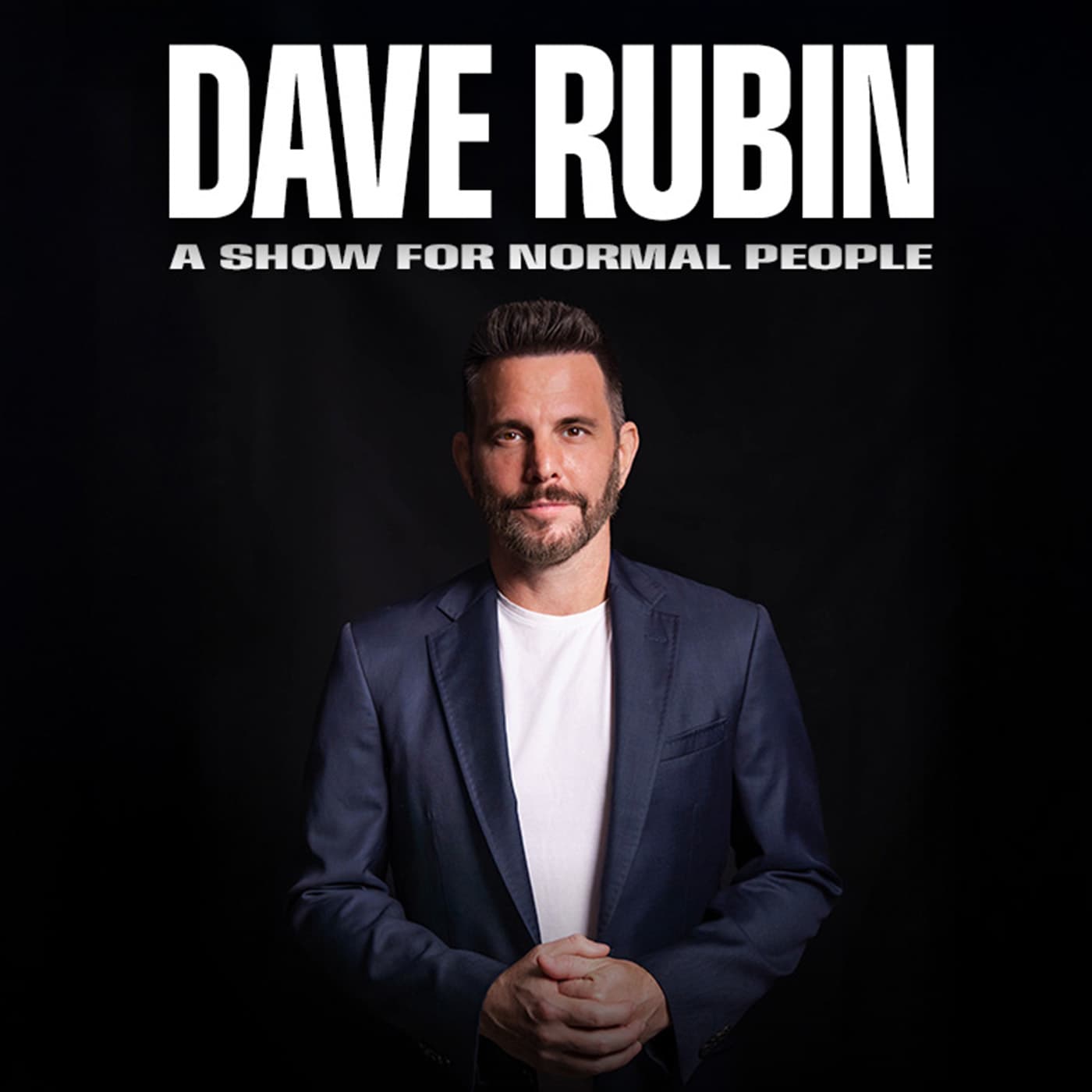
Dave Rubin of "The Rubin Report" talks to Michael Shermer author of "Truth: What It Is, How to Find It, and Why It Still Matters" about his new book on truth, science, and skepticism; the erosion of trust in institutions after COVID; the politicization of science; how to think critically in an age of misinformation, social media, and information overload; how you can sort out truth from lies using evidence-based Bayesian reasoning; the relationship between science, religion, and meaning; the rise of conspiracy theory pushers like Candace Owens and Tucker Carlson; his concerns over AI, deepfakes, and conspiracy theories; and his take on the most recent revelations with UFOs, UAPs, and historical revisionism, and much more.
