In short
Patricia Heaton discusses Hollywood’s “secret conservative club” (Friends of Abe), the decline of old-school network sitcoms after streaming, and her outspoken pro-life, pro-Israel views—especially after Oct. 7 and the rise of anti-Semitism.
Guest backgrounds
Patricia Heaton is a veteran sitcom actress (Everybody Loves Raymond; also The Middle), cookbook author, and Christian conservative activist. She says she moved from Los Angeles to Nashville with her family and co-founded October 7th Coalition (O7C) with Elizabeth, a Christian married to a Jewish man.
Key claims
Streaming and industry strikes/pandemic emptied lots and reduced network-era comedy culture. Younger writers may avoid characters they see as “homophobic,” and comedy has shifted toward single-camera irony. Heaton argues Hollywood political silence is selective (citing Boko Haram vs. Gaza). She claims anti-Semitism is resurfacing on the right, and that Israel’s existence is non-negotiable.
Notable examples
Raymond’s reunion; a Rwanda World Vision anecdote about marriage relatability; her Bush/Quail lapel-pin incident on Room for Two; Friends of Abe dinners hosted with Gary Sinise, John Voight, Kelsey Grammer, and Ben Shapiro; O7C formed after Hamas body-cam posts on Oct. 7.
Written by AI. May contain mistakes. Listen to the episode to check what was said.
Chapters
Tap a time to open that second in VOReflecting on Hollywood's Changes
0:00 to 1:04
Patricia discusses the evolution of sitcoms and the impact of streaming.
“I've tried a lot of seafood over the years, guys, and truly it's been hit or miss.”
Reflecting on Hollywood's Changes
4:00 to 6:40
Patricia discusses the evolution of sitcoms and the impact of streaming.
“I came here, but it is great to see you.”
The Legacy of 'Everybody Loves Raymond'
6:40 to 10:00
Exploring the unique chemistry and writing behind the iconic sitcom.
“He lives on a farm and he said, oh, I have to go to a wedding of someone my wife works with and I don't want to go.”
Comedy's Future and Cultural Shifts
10:00 to 13:20
Patricia shares insights on the future of comedy amidst cultural changes.
“and that a lot of the writers grew up with that kind of thing, and so that was kind of in their DNA and that you don't have it as much anymore.”
Reflections on the Golden Era of Television
14:00 to 15:15
Discover the nostalgic views on the past prosperity of the television industry.
“It was the three plus Fox was sort of there.”
Leaving L.A.: A Personal Decision
15:15 to 16:19
Learn about the personal reasons for leaving Los Angeles and industry changes.
“And it's partly it wasn't directly, at least for me, because Hollywood was kind of changing.”
The Changing Landscape of Hollywood
16:19 to 17:21
Understand the impacts of the pandemic and strikes on Hollywood's production sites.
“And, you know, we really haven't looked back.”
Navigating Political Views in Hollywood
17:21 to 20:40
Explore how conservative beliefs are managed within a liberal Hollywood environment.
“which is around the corner from Warner Brothers.”
Conservative Representation in Media
20:40 to 22:48
Examine the challenges faced by conservative voices in the entertainment industry.
“I'm not going to say anything I'm just going to wear it to work.”
Friendship Beyond Political Divides
22:48 to 24:34
Learn how personal relationships in Hollywood can transcend political opinions.
“And then another writer came down, a guy and was like, I heard about your button.”
Show all 21 chapters
Art versus Artist: A Modern Dilemma
24:34 to 28:00
Discuss the challenges of separating an artist's work from their personal beliefs.
“to make it work in this really, really, really difficult business.”
The Nature of Comedy: A Comedic Perspective
28:00 to 29:21
Discussing the distinctions between comedic and dramatic actors, focusing on notable figures.
“Like, there's so many people that—Eddie Murphy, Chris Rock, they're just funny.”
The Impact of Current Events on Personal Beliefs
29:21 to 31:40
Patricia shares her spiritual awakening and activism following the Israel-Hamas conflict.
“And I noticed that in the trailer, and I'm like, it's not going to be good.”
Activism in Hollywood: A Personal Journey
31:40 to 34:26
Patricia describes her motivations and the creation of the October 7th Coalition for supporting Israel.
“This was just a shared common knowledge amongst all Americans, right?”
Faith, Career, and Speaking Out on Israel
34:26 to 36:38
Discussing the intersection of faith and career choices in relation to pro-Israel activism.
“There's maybe, I think, And part of it is because MAGA, well, not anymore, but on the right, it's been mostly pro-Israel and particularly Trump has been very good.”
Friends of Abe: A Conservative Network in Hollywood
36:38 to 41:05
Exploring the origins and functions of the Friends of Abe, a conservative group in the entertainment industry.
“So when I look at that, I'm like, you know what?”
The Resurgence of Anti-Semitism and Its Effects
41:05 to 42:00
Discussing the current rise in anti-Semitism on both sides of the political spectrum and its implications.
“Yeah, I think more because we have to battle stuff within our own party.”
The Spiritual Battle of Beliefs
42:00 to 44:48
Explore the unsettling rise of anti-Israel sentiments among conservatives and its implications.
“And so, again, we find that this Jew hatred, that's what it is, it's Jew hatred, is resurfacing, but now on the right, which a couple people had predicted, like I think James Lindsay had talked about it.”
Reflections on Hollywood and Current Projects
44:48 to 45:51
Patricia Heaton discusses her ongoing projects and the changing landscape of Hollywood.
“I'm not saying I am a particularly good person, but I don't see how you can see this in any other way than black and white, than black and white.”
The Joys and Challenges of Acting
45:51 to 48:25
Heaton shares her experiences in acting, including the differences between live and single-camera productions.
“It's the Wild West again in show business.”
Personal Connections and Reflections on Truth
48:25 to 50:13
The conversation touches on personal connections in the acting world and the importance of fighting for truth.
“I remember when I first went on the middle and they said, okay, I was in the makeup trail.”
Transcript
Automatic transcript. May contain errors.0:00I've tried a lot of seafood over the years, guys, and truly it's been hit or miss. You know, sometimes it looks great, but then you cook it and it just doesn't have that flavor or freshness you expect. So finding something reliable has made a huge difference. Wild Alaskan Company really changed that for me. It's the best way to receive high-quality, wild-caught seafood delivered right to your door on your schedule. The first box I got was super easy to use. Everything comes individually portioned and vacuum sealed, so there's no guesswork. I cooked that wild Alaskan sockeye salmon just in a pan with a little olive oil, salt, and pepper, and it turned out fantastic.
0:34Clean flavor, great texture, and didn't feel like frozen fish at all. I've also tried the wild Pacific cod, which I love. It's light and flaky and really easy to work in when you need a quick dinner. What stood out is that the fish is quick frozen right after it's caught in Alaska, so it locks in that freshness along with the nutrients like omega-3s, and it's clean. no GMOs, no antibiotics, no additives, and it supports sustainable fishing and Alaskan fishermen. They're so confident in the quality that there's 100 % satisfaction, money-back guarantee, so there's no risk in trying it. Go to wildalaskan.com slash Rubin for$35 off your first order of premium wild-caught seafood.
1:09That's wildalaskan.com slash Rubin for$35 off your first order. Cozy season is ahead, and you'll be spending way more time inside. Is your home ready? Don't worry. With Wayfair, you can upgrade your space without breaking the bank. Score up to 70 % off during their Labor Day clearance on furniture, area rugs, mattresses, and more. Plus, surprise flash deals you can't miss. Whether it's one room or the whole house, Wayfair has pieces for every style and budget. Shop Wayfair's Labor Day clearance now through September 7th at Wayfair.com. Wayfair, every style, every home. I never imagined I would have this kind of career.
1:46That was the heyday. You had Seinfeld, you had Friends. So there was all these great comedies, and we got to be a part of that. That is probably not coming back now since the advent of streaming, which blew up the whole system. Where we shot The Middle, which is on Warner Ranch, which is around the corner from Warner Brothers. And it used to house, like, the Walton House and the Lethal Weapon House. And the Friends Fountain was all there, and that was all raised to the ground. and they built a ton of sound stages. And then pandemic happened and the strike cellar all happened. And on the Paramount lot, there's just a bunch of empty sound stages there now.
2:22A really veteran comedy writer said he was in a writer's room where a bunch of the writers were in their 20s. And they had a character that was like a Marine and he didn't like to hug anybody. He didn't want guys hugging him. He would like tense up. And one of the young writers said, well, that's really homophobic. We can't write that. And so there's a certain wokeness, I think, in some young people. That you're Catholic? Pro-life? You're pro-Israel? How much of that were you talking about sort of publicly way back when versus now you're extremely outspoken, obviously? The thing that I think a lot of people outside of Hollywood have a misconception about, even though actors, myself included, will state our political opinions, when you're working, you're just trying to make a show successful.
3:04And that you should be conscious that there might be somebody who has a different opinion. You know, you have Tilda Swinton and you have Mark Ruffalo and you have Benedict Cumberbatch and all these folks who live a very privileged life. Because the same people who were standing up in Hollywood against what Israel was doing in Gaza stayed silent when Boko Haram in Nigeria were murdering Christians.
3:37All right, Patricia Heaton, you're not getting a proper intro read off the teleprompter because I can describe you as legendary actress, cookbook author, activist, Twitter fighter a little bit lately. but mostly you are like an old friend to me somehow, even though we've only known each other for a couple of years. It burned very hot in L.A. before we both escaped. You went to Nashville. I came here, but it is great to see you. Well, and now that I have all your old outdoor patio furniture, we're forever connected. I'm forever in your debt. You literally, we were moving. I had all this extra stuff.
4:13You were like, my kids will take it. I kind of thought you were kidding. You all showed up five minutes later, and the Heaton children are enjoying my Home Depot furniture. Correct, yes. And it's all still there. It's all still there. It's really great to see you. We became good friends very quickly in L.A. and then we both fled, as I said. There's so many things I want to talk to you about in limited time. Let's do a little bit about just comedy and acting and all that first before we get into all the political stuff. You guys just did the reunion show for Raymond. How did that feel to you? I mean, I know it's like the most cliche question I can ask in some sense, but to get back there with everybody or at least whoever was still around.
4:54Obviously, you guys have lost some people over the years. And just be part of that, again, such a legendary thing. Well, they reconstructed this set. Yeah. And it was sort of a Twilight Zone vibe because it felt so deeply familiar. Spent nine and a half years on that set. Over 200 episodes, right? And so it was like, it's like a weird kind of like, we're here, but we're not really here. But it was so great. You know, we all had kids while we were on the show. There was the show, and then there was all our lives that were happening. And all the crew came back. And so that just shows you kind of what a family this was.
5:37I remember every crew member's name. I don't remember my kids' birthdays, and I remember every crew member's name. and to see everybody again. It was very, you know, very formative years. And you just realize what a rare thing it is to have that kind of chemistry among the actors with that level of writing. And because it's on a network, you're limited to the things you can say. You can't curse. There's certain things you can't show. And so I feel like either it's going to get really dumbed down because of that, or it gets really elevated because the writers have to work extra hard. And that's what happened on Everybody Loves Raymond under the leadership of Phil Rosenthal.
6:23And the other thing that made it ring so true is because every story was from Ray's life, Phil's life, or the writers' lives. Phil has famously said, go home and fight with your spouse and then come back and tell us about it and we'll do an episode. So that's why it's so universally acclaimed, you know, and I remember I was doing some charity work for this organization, World Vision, and I was in Rwanda, and the fellow, the Rwandan that worked for World Vision there and I were in a car driving around, and we were just talking about his weekend plans, and this is in rural Rwanda. He lives on a farm and he said, oh, I have to go to a wedding of someone my wife works with and I don't want to go.
7:15I just want to stay on the farm. And I thought, even in Rwanda, marriages are exactly the same as they are in the United States when it comes down to relationships and husbands and wives and their differences. And that's why Raymond works because the show even is relatable in Rwanda. How much of it do you think was also just the special timing, sort of culturally, even technologically, obviously things have now shifted, the online thing and everything else, that that type of sitcom could really work then? It almost seems like, I mean, I guess some people would say Big Bang Theory, but Raymond seems like, what year did it go off there?
7:54It started when Sam was three. I think it started in, oh, I was pregnant with Joe the first season. 97. It started in 97. Nine years. So nine years into 2006. That seems like probably the last great old school sitcom. Now, you did the middle after that, which was also great. But middle was like a single camera. But it was single camera. It was a different thing. But as a multi. Yeah. What do you make of that? Because it's so special for people of a certain age, those sitcoms. Yes. I don't know. I mean, because after that, Everybody Hates Chris was on it. And that was a really funny, funny, funny show at the same level.
8:33But it was single camera. The middle was single camera. And all comedy kind of moved into single camera at that time. And so getting back to that kind of writing, it requires a certain kind of energy. Like I say that single camera comedy is like Brie and Chablis and multi-camera is like beer and broth. There's a Midwestern vibe to it. There's a theatricalness to it where the punchlines have to punch. Yeah. And so that you get this laugh out loud quality to it. And I believe that that takes people who grew up with that. And I think a lot of kids today and younger writers maybe didn't grow up with that.
9:22And they grew up with comedies that had more subtle humor, more ironic humor. Yeah. And so I think that's what we're seeing. and... Do you think it can come back? I think there's a way. I don't know exactly what it is. I just know because when I still watch, when I watch Raymond, when I watch Seinfeld, when I watch Golden Girls, I mean, you know, the laundry list of shows that I love, like, it still works. So there's got to be a way it can translate. It's about the translation. Yes. And I wonder if there's something about like a Midwest sensibility, a Jewish sensibility. I think you still had like a Borscht Belt humor that stand-up comedians still had a little bit, and that a lot of the writers grew up with that kind of thing, and so that was kind of in their DNA and that you don't have it as much anymore.
10:16So how you get back to that, I'm not 100 % sure. I know a really veteran comedy writer said he was in a writer's room where a bunch of the writers were in their 20s. and they had a character that was like a Marine, and he didn't like to hug anybody. He didn't want guys hugging him. He would, like, tense up, and they were writing this character, and one of the young writers said, well, that's really homophobic. We can't write that, and they said, listen, how does a character change and evolve unless they start in some place? So why not just have him start there. And we see by the end, maybe grudgingly, but by the end, he accepts a hug.
11:01Like you can't have that ending unless you have that beginning. So there's a certain wokeness, I think, in some young people, although there might be even a backlash against that now in this era that we're in. I remember you telling me a couple of years ago that you were in a writer's room for a show that I think maybe never aired, where you basically felt they had to hire this diverse cast of writers and they were basically fighting the entire time over what was offensive. Right. Yes. That's obvious, but it's crazy. Right. That's yeah. Cause the, you know, the first thing I heard was like where they came from or what ethnicity they were or what sexuality they identified as, as opposed, and I kept thinking, yeah, but can they write comedy?
11:41You're like, great, you're a lesbian. Right. Exactly. You know, so, so I think it can come back, but, um, and I'm trying, we're taking stuff out and pitching it. So we'll see. Do you think some of it's also just economics that like, you know, the old things can be so cheap now on an iPhone and with little, you know, what do they call black magics or whatever, that getting a studio to sit there and you got to feed those people and do how many takes would you guys usually do? Well, Raymond was very efficient. It was like two takes. Phil didn't like to keep the audience too long and have them get tired out.
12:14But in the world of producing half-hour comedies, sitcom is pretty cheap. And it's even cheaper now because they don't pay anything. And they're not producing 22 and 24 episodes. They're doing 10. Right. Does that seem crazy? Yes. I mean, you know. Long seasons, but. I'm telling you, Dave, I and my Dave, I, as you know, we have many Daves in our lives. Yes, we do. We're both married to Dave. Yes. It's true. And so we realized, like we were thinking about this during the pandemic that, I mean, I used to like literally kiss the ground every day I stepped out of my car on the Warner Brothers lot because both were shot in the middle and Raymond were at Warner Brothers.
12:56I never imagined I would have this kind of career. But I look back. So I was always grateful. But I look back on it now and I'm like, that was the heyday. You had Seinfeld. You had Friends. Even going back to a show like Wings when my first son was born in 93. I watched Wings was so funny. So there was all these great comedies, and we got to be a part of that. And whenever you would go, either at ABC or CBS, to, you know, one of these Television Critics Association events, you know, and all the casts would show up and you were like, we're all on shows. Isn't this cool? You'd see your friends from other shows.
13:45And we realized that is probably not coming back now since the advent of streaming, which blew up the whole system. Even when HBO came onto the scene, you still had the major networks. It was the three plus Fox was sort of there. And then you had HBO. And that was kind of it. It's not that anymore. And I realized, my goodness, we got to do that. Like, I look, I always was grateful, but I look back on it and I thought, we really didn't realize that we were in this golden era of television. One of the last great things that I did in L.A. was my last birthday there. You guys came out to dinner with us with Bob Saget and his wife, Kelly.
14:27And here I am sitting with two of, like, the legends that I grew up watching. And Bob was talking about how, you know, they had rebooted or they had, you know, basically brought back Full House. Full House. house on Netflix, but he was going on and on about in the old days, what we got paid to do this. And he's like, now I just sit there and we don't get residuals. I know it's kind of crimey river in some sense for whatever. But just to describe what that was like and the upfronts, they'd fly the whole cast out and you're in this fabulous hotel on Central Park West. And I remember for one of my birthdays, I got out, you know, a weekend at the Montage in Laguna and you'd get, I mean, just the money was flowing then, you know, and it ain't anymore.
15:12And it ain't anymore. Well, let's actually let's talk about L.A. for a little bit because we did both flee. And it's partly it wasn't directly, at least for me, because Hollywood was kind of changing. It was all the other decay that was happening around COVID and everything else. But you guys left right after us and you were more deeply connected to that world than I was. Yeah. Yeah. We had filmed a movie called Unexpected, which is available on Amazon Prime for anybody who'd like to see it with Anna Camp and Joe Mazzello. A true professional. Yeah. But we filmed it in Oklahoma and then we were filming something somewhere else and it was outside of L.A.
15:51And we just thought that the taxes are high, the crime is high, the homelessness is high. And we're not working in L.A. as much as we're working outside of L.A. So why don't we leave? Let's just leave our boys. We'll abandon our children. By that time, we're pretty much on their own. And they'd have my furniture. And they have your furniture. And so we just said, let's go to Nashville because we were familiar with it. We had friends there. And, you know, we really haven't looked back. And when I go back now, I think, does it feel different to me because I'm not working here anymore? Or has it really changed?
16:33And I think there is a little bit of a sadness about it that I think is real. And it's not just because of my experience. And we have just got an email from a writer saying, you got out at the right time. And a lot of the writers I know from Raymond and the Middle have left. They went back to their hometowns with their families. I did a couple episodes of Frasier last summer with Kelsey Grammer and on the Paramount lot, and it was only Frasier and Kathy Bates' Matlock that were on the lot. And now there's, I think now Matlock is the only one on that lot. Wow. Yes. So those sound stages are just empty?
17:18And where we shot the middle, which is on Warner Ranch, which is around the corner from Warner Brothers. And it used to house like the Walton house and the Lethal Weapon house and the Bewitched house and the Friends Fountain was all there. And that was all raised to the ground. And they built a ton of sound stages. And then the pandemic happened and the strike cellar all happened. And there's just a bunch of empty sound stages there now. God. I know. They could do a zombie movie. They could. Yeah. That would probably be it. Let's talk a little bit about your beliefs in general, because you're also a little bit of an outsider in a Hollywood perspective in that you're Catholic, you talk about it.
17:59Pro-life. You're pro-life, you're conservative, you're pro-Israel. I mean, there's a bunch of stuff here that doesn't quite fit in the system. I mean, how much of that were you talking about sort of publicly way back when versus now you're extremely outspoken, obviously. I was pretty outspoken back then. I think I remember when I was interviewing for Linda Bloodworth Thomason to do a part on a spinoff from Designing Women called Women of the House, where Delta Burke's character, her husband in Designing Women had been a congressman or a senator, and then he dies. And so she takes over his seat.
18:37Did it do a season? It's just a season and a half or something like that. It was me, Delta, Terry Garr, the wonderful Terry Garr, and Valerie Mahaffey. And I sat down with her and I said, I just want you to know I'm pro-life. So I don't, because the show is slightly political. And I said, so I don't see myself really doing any pro-choice character, you know, unless there's another pro-life character on the show that makes an equal argument. And she said, there's nothing funny about abortion. We're not going to do that on this show. And I'm like, okay. But so I was clear about those things. And I think people knew, okay, I don't know if I ever told you this story, but my very first show with Linda Lavin was called Room for Two.
19:34And we played mother and daughter where I produced a morning show. And she ends up having an opinion thing, like an Andy Rooney thing on my morning show, much to my character's chagrin. Right. And so that was during the time where Clinton was running against Bush. And everybody was for Clinton and she was doing a lot of work for Clinton and whatever. And it's really because of the pro-life thing that I was like, okay, I'm voting for Bush. It's not like I had a big commitment to Republican ideals necessarily. But when the Democrats put abortion in their platform, that is a game changer. If it's not in the platform and there are some Democrats who are pro-life and some who are pro-choice, then you could still be a Democrat.
20:14But when it's in the platform, then as a Catholic, you're out or I'm out. And so I never said anything. But it was just getting to the point where they were just saying terrible things about Republicans just freely because they assume that everybody thinks like they do. Right. And I'm new here in town. So that was my first sitcom. So I see a friend of mine outside of work had a little bush quail button, right? I said, give me that button. Give me the button. I'm going to wear it to work. I'm not going to say anything I'm just going to wear it to work. So I put it on my jacket lapel. And I was like, I had my handbag over it.
20:53I'm like, I don't know if I really should be doing this. And finally, we sat down for the table read. It was the first day of the week. And the director saw it. who's, by the way, these are all wonderful people who are all my friends. And he said, are you wearing a Bush quail button? And I'm like, yeah. And he goes, I mean, we got to get started on this table read, but could you tell me what, can you tell us why in like a minute? And I didn't really have an answer. I was like, well, I said, I'm pro-life and blah, blah, blah. And I tried to make up something. Well, Clinton doesn't have any experience in international affairs, which I was just pulling out my bum.
21:28You know. You should have said, well, Dan Quail is really smart. Yes, he's a good speller. But so, and there was like, everyone was staring at me. And there was another guest actor who had been on the previous week who I had completely hit it off with, who was staring daggers at me after I said this. And he said, I can't believe it, but I am just hating you right now. And I said, well, and we had had long, deep conversations prior to that. And I said, well, it's probably because you hate your dad and your dad's voting for Bush. And then God bless Linda Lavin, who passed away last year, who was my dear friend for life.
22:13And she said, it doesn't matter because Clinton's going to win. Now let's do the table read. And that was just a beautiful way to handle it. But afterwards, after we finished the table read, the script supervisor, who's also a liberal, came over to me. She goes, you're the bravest person I've ever met. And then Linda's assistant, who is a gay woman, married, probably not married at the time, but had a partner with a kid. She comes down from Linda's office and said, my partner and I don't agree with most of your views, but we absolutely defend your right to say it and have your views. And I was like, OK, refreshing.
22:50And then another writer came down, a guy and was like, I heard about your button. This thing spread like wildfire through the show. But, you know, I wasn't meaning to share my political opinions, but I just wanted people to be aware that not everybody shares your political view and that you should be conscious that there might be somebody who has a different opinion. So when you're walking around freely like crapping on every person that has a different political opinion, it might be your friend standing right there that you're talking about and you don't know it. Just like for my pro-life views, I don't ever talk about that in a makeup trailer or on the set because many, many people have had abortions.
23:39And it's a sensitive subject. And I would never want to introduce that, especially into the workplace. Right. And the thing that I think a lot of people outside of Hollywood have a misconception about, even though actors, myself included, will state our political opinions, when you're working, you're just trying to make a show successful, right? And you're going in there and you want to be nice to the crew. You want to know your lines, hit your marks, not complain about anything, show up. That's really what it's about on a day-to-day basis. We're all people who have families that we're trying to support.
24:15And so we want the show to be the best it can be. And that's really the focus. So even though I have political opinions and a lot of my dear, dear friends have very differing opinions, we're really united, first of all, in just friendship and admiration and respect for each other, but also the fact that we're just trying to make it work in this really, really, really difficult business. Well, you're also not awful about it. And what I mean by that is there are so many actors now, like, you're probably friends with him, so you don't have to nod either way. I'll try to read your eyes. But like De Niro, he's done so many incredible things.
24:50I just watched Godfather 2 again the other day, and it's like so amazing to see him so young. And I know we have a slight disagreement on the one they did for Netflix. I really didn't like it. You loved it, The Irishman. Irishman. Yeah. I just, it doesn't matter. But like, I now am starting to have trouble separating the art from the artist. And I, and I hate that. And it's, I, when I find that I watch something where I don't recognize anybody, I find it the most authentic in a way. Because we know too much about these people. Yeah. And that, you know, I probably, I, I admire actors who have chosen really to just keep it separate.
25:25It's a real discipline because you're pressured to really be out there publicly, not necessarily for your opinions, but to have social media and to push projects and create this image and all this stuff outside of your work. So there's pressure for you to do that as far as selling a show and being a good player, a good employee for whoever's producing a show. And, you know, I'm just such an opinionated person and sometimes I just cannot not say anything. So that's my own fault. And there's probably people who don't want to watch me because they don't like my opinions. And that's the price. Yeah.
26:07And I do admire those folks who just you don't know anything about what they believe and they just do their job. I do admire that. And I think there's freedom in that. But I say like I would say, especially in the Israel Palestine space, like Mark Ruffalo, is very opposite, right? I still watch him. I know. I don't. Well, I also don't think he's a good actor. Oh, well, Task was really good that was just on. And we just rewatched You Can Count on Me, which is one of his very first movies with Laura Linney. It's so good. So I still, I don't know. I don't have a problem watching him. And I think...
26:47Have you chatted? I've never spoken to him. So you're incredibly pro-Israel. I'm very, very vocal about it. Yeah. Again, you're Catholic, not Jewish. Yes. You can support Israel and not be Jewish. Yeah. So have you had any interactions with him? Because you guys are on like—because he's like—it's not that just he's like sort of pro—it's not even Palestine because it doesn't make sense. But he's not even that he's pro-Gazan, let's say, or something. He's like hardcore Israel hate. Yes. I don't know him at all, and I've never spoken to him, so I haven't. And I'm trying to think if I've had, I don't think I've had any interactions except with, no, I haven't had any interactions with people who are on the other side.
Read the full transcript
27:27There are a lot of like big movie people who, you know, you have Tilda Swinton and you have Mark Ruffalo and you have Benedict Cumberbatch and all these folks who live a very privileged life. He should apologize for that new war of the roses. Oh, you know what? I just kind of looked at the trailer and I'm like, can I can I? You're going to be better than Michael Douglas and Kathleen Turner. Well, here's the thing. Not everybody is funny. And just because you have funny lines doesn't mean you're going to be funny. Like, you know, Will Ferrell funny. You just have to look at him. Kristen Wiig, very funny.
28:08Amy Poehler, very funny. Like, there's so many people that—Eddie Murphy, Chris Rock, they're just funny. And that's what it—you have to have that as a comedic actor. I think all comedic actors can do drama, but not all, you know, dramatic actors can do comedy. In fact, most cannot, because they're just not funny people. It's like watching a Rodney movie. The movies usually weren't that incredible, but you're ready to laugh the entire time. You know, back to school, you're laughing. Sometimes you're not even sure what he's saying. You're right. But you're right. Benedict, he's not funny. I mean, the movie was profound.
28:45I didn't see it because it looked like. And the woman who played the crown. Oh, Olivia Colman. Yeah. Like, she's obviously a good actress. Wonderful. But she's not funny. So you have these two people desperately trying to be funny. You're like. Well, I think there's a thing. Putting aside the Israel stuff. Yes. But I think there's a thing with some British actors who they just, they quip. Yes. They quip. Yes. And that's considered comedy, but that's not really—comedy isn't just—quips in a British accent. An ironic thing, ironic thing. Yes. And droll things. That's not comedy, right? That's what the whole movie was.
29:18It's all droll quips. Quip, quip, quip, quip, quip. And you're just like, bleh. Yeah. Yeah. And I noticed that in the trailer, and I'm like, it's not going to be good. Versus seeing Michael Douglas, like, sweating. Yes. In the sauna, and then the hatred when she's locking it up. Yes, yeah. But, okay, so as it pertains to the Israel section, You've become an unbelievable supporter for Israel, which is tough to do as someone in the industry you're in. But where did that even come from, from you originally? Well, I'm going to get all spiritual on you now. So, you know, we had— It's the season. It's the season.
29:49It's Christmas and Hanukkah coming up. And so we had this long, crazy pandemic. Then we had a writer's strike. Then we had an actor's strike. So we're having a couple of years now where I'm not really working. And I'm not a leisure-oriented person. I like to work. I can only enjoy a vacation if I'm coming off of a job or I know I'm going to a job. So here I am, moved to Nashville, love it there. But I just, every day, if I don't have something to do, I can doom scroll for eight hours like nobody's business. And that's not healthy. So I was just like praying, like, Lord, you've got to give me something to do.
30:30I would hope it's another TV show, but if not, just give me something. Like for two years, I'm praying this. Like literally, that's the prayer. And then October 7th happened, and I'm watching on my social media Hamas posting body cam footage of what they're doing. And it's so horrifying. And I was like, what the hell? And I thought there's going to be uprising on the streets in support of Israel, and especially in Nashville. because there's three churches on every corner and they've all gone to Israel and they all love Israel. So we're going to see a support of Israel in Nashville. And it's just like, where is everybody?
31:08Where is everybody? And then two days later, so by October 9th, everyone was calling Israel the bad guy and all the colleges were full of people shouting free Palestine from the river to the sea with posters and flags. What, like in 24 hours, they suddenly had all this stuff ready? Exactly. That was very suspicious. That's a whole other part of the story. Right? There's going to be a lot of books coming out in the next 10 years about what's going on, because none of this stuff stays hidden for long. And so I was like, I grew up, my dad served in World War II. We grew up reading about Anne Frank.
31:47We all knew the Holocaust had happened. This was just a shared common knowledge amongst all Americans, right? And so I thought, does nobody remember all this stuff? And it was supposed to be never again. And now here we are. And I just started, I think the first post I had said, if, if this is on Instagram, if, did you ever have the thought, if you were a German during World War II. Do you hope you would be the good German who hid their Jewish neighbor? Well, today you have that opportunity. Reach out to your Jewish friends, support, I listed a bunch of organizations, support these organizations if you can.
32:26And then I did text and call a bunch of Jewish friends, and I said, how are you doing? And they said, we're not doing good, and you're the only person that's asked. And so I thought, I know a lot of my friends support Jewish people and support Israel, but I think they don't know what to say. And they feel awkward, and they've never had these conversations with their Jewish friends. And so along with my partner Elizabeth, who's Christian married to a Jewish man, we created this organization called October 7th Coalition, O7C, to activate Christians to be visibly and vocally supportive of the Jewish people of Israel's right to exist and to fight anti-Semitism.
33:03And we were just starting in Nashville. But the minute people saw that someone like me, who is not Jewish and who had a platform, was speaking out, we started getting calls from a lot of different places saying, can you come here and can you come there and can you speak for us and can you do this? And so I just felt like it was something I was called to do. And I think an experience I had when I first moved to Los Angeles was really pivotal for me. I was in a gym on a treadmill and there was a very elderly woman next to me on her treadmill. And when I looked over at her, she had numbers tattooed on her wrist.
33:41And I was so, it was like a gut punch because we've read about this all our lives. We've heard I'd never met anyone who experienced it. And I didn't talk to her, but I was like, oh, it was like, it's right there. It's right there. And so that always quickened me to what Jewish people went through. And I've just had so many Jewish friends. And I just, you know, I mean, I'm in an industry where Jewish people are super successful. And so there's many Jewish people around me. And so that's kind of what started it all. A lot of them, unfortunately, have traded it in for the leftist stuff. So you get the nonsense at the Emmys.
34:20It's mysterious that that has happened. Fame does weird things. Yeah. I'm not sure why that is. There's maybe, I think, And part of it is because MAGA, well, not anymore, but on the right, it's been mostly pro-Israel and particularly Trump has been very good. So people who hate Trump feel like if they support, even if they're Jewish, if they come out in support of Israel, that they're connecting themselves to Trump. And that is like the third rail for a lot of people. It's the third rail. People just don't want to have any association with him whatsoever. You know, I keep saying that that Trump derangement syndrome actually will be studied as a mental disorder.
35:01Yeah, I think you're right. Because if you view this man's belief system as the center of your universe, if you make a decision because he believes in the opposite or vice versa, then it actually is a mental condition. Correct. And I think it will be stuck as one thing. Because you'll go against your own, you know, self - Preservation. Preservation. Yeah, that's absolutely right. And I think also being in Hollywood for years where if you're pro-life, they take your woman card away, right? So I've always been a little bit on the outside of it. And so I'm used to it. So almost that is sort of a preparation for me to be okay about being open about the Israel issue, because I've always been someone who's not gone with the main flow in Hollywood.
35:54Do you think that's closed any doors? I mean, you would think if this was Hollywood 50 years ago, it could have opened doors, right? Hollywood had a lot of Jews. Now it seems like it's gone the other way. Do you think it's closed some doors? You know, the weird thing about that, how would I know? Yeah. You don't know. And for me as a Christian, I believe God is ultimately in charge. Then it doesn't matter if somebody closes a door because God can open any door he wants to for me. And so, and my whole career has been because of his graciousness to me. I came to L.A. in like 89, no agent, no manager, no car, one commercial on a reel.
36:32and I end up with two huge hit sitcoms, a star on the walk of fame, three Emmys. That's God. That was totally God. So when I look at that, I'm like, you know what? He did that because I didn't have anything going for me. So he can do anything. So even in this time, I'm just called to speak up for what's right. And it's very clear in scripture for Christians that we, Christianity doesn't exist without Judaism. Jesus was Jewish. This whole thing, our whole faith system is grafted into Judaic roots. So, and God tells us in the Old Testament, we have to bless Israel. And so, and this doesn't mean that you agree with what the current government there is doing.
37:17Nothing against people who have an issue with political decisions being made over there. Listen, there are family members of hostages who didn't agree with what they were doing. So it's not that. We can see that really this is about anti-Semitism because the same people who were standing up in Hollywood against what Israel was doing in Gaza stayed silent when Boko Haram in Nigeria were murdering Christians. Not a peep. So it's clear that it's about Jews and not about the actual violence that's going on. Yeah. God, there's a lot there. Were you a member of Friends of Abe? Boko Haram? No. Now tell me about your time with Boko Haram.
38:03Yeah. Were you in Friends of Abe? Oh, yeah. So Friends of Abe... Listen, the first meeting was at our house. Oh, well, then please tell me about it. Because people don't believe this is a real thing. Yes. I once had a very strange Uber ride with someone who said that he was in Friends of Abe. And for some reason, in my head, I heard that as Friends of Dorothy. And the conversation went completely sideways. Yeah, you were both going. Yeah, people can Google both of those if they want. But at least on the Friends of Abe. So Friends of Abe was basically a secret sort of conservative group. Yes. Popped up in Hollywood.
38:35Yes. To hide all of you scary people. Right. But at least make sure you could have a meal together. Correct. So Gary Sinise was like, hey, come to dinner with me. And he was talking about getting people together. And he had a dinner at a restaurant. And then John Voight called me. He said, I hear you're a certain way. I was like, what are you talking about? That could have been a friend of Dorothy. It could have been. But eventually, Gary said, hey, would you mind hosting a few conservatives? Some of them are libertarians, some are Republican, you know, independents. It's quite a mixed group, actually.
39:07And would you mind, you know, could we host it at your house? I think it's going to be like 20 people. 130 people later with the caterers and my friend Dan Sullivan, who is now the senator from Alaska. At that time, he was Condi Rice's secretary. He came and spoke. And it was Kelsey Grammer and John Voight and Gary Sinise and a whole bunch of—I think Ben Shapiro was there. A whole bunch of people. And all it was was fellowship. It's just we weren't funding campaigns. We weren't trying to start anything. We just wasn't propaganda. We were feeding the system. It was just like you could talk freely at any of these meetings.
39:45And it was called Friends of Abe. after like Friends of Dorothy, which was code for being gay. So Friends of Abe, which is Abraham Lincoln, who was the first Republican president, right? Was that right? First Republican? Yeah. Or he was a Republican. I think he was the first Republican. Yeah. Okay. He left the wigs. Right. Yeah. So it was called that, so that you knew if you were a friend of Abe, you were probably a conservative, right? So, and it just, we just started having these gatherings once a month. there would be a lunch. And if you found out somebody was conservative, you could invite them to this lunch and sponsor them.
40:20And then you could join. And I think you were just joining a thing to hang out with people. As I said, there was nothing that we were doing except hanging out and having a place to talk. And I think it ended up being 3 ,000 people by the time it sort of ended because we all knew each other now. We didn't need an organization to connect us because there were there were only a couple thousand in Hollywood and we all eventually met. Right. And if you remember now, I'm fully remembering this. We did discuss this because David and I were going to start it again at our house. Because then it went away.
40:54Yes. I think Jeremy Boring was also involved at that point. Jeremy Boring, that's right. Went on to do Daily Wire. Yeah. And then, ironically, it feels like it's probably needed again now. Like it maybe needed a little break and could use a little... Yeah, I think more because we have to battle stuff within our own party. because how weird since Charlie Kirk was assassinated, there was initially almost a spiritual thing that happened where people who had never really even thought about this stuff were posting on social media that like, I'm feeling called to go to church. There was a lot of that.
41:29And that they were saying, I don't even know this guy and something's really wrong with our country if this is happening, that you can't just talk on a campus without being shot. So for a minute, there was a movement of like, This is going to bring us together. And then from the right, there was this big uprising of anti-Semitism that came out. And they were using Charlie Kirk as an excuse, saying he was being pressured by Israel and he—all this kind of rumors and stuff. And people we know who are feeding that, other pundits are feeding that for whatever reason, whether they're being paid by a foreign entity or they're just crazy.
42:09A little or both.
42:38And so, again, we find that this Jew hatred, that's what it is, it's Jew hatred, is resurfacing, but now on the right, which a couple people had predicted, like I think James Lindsay had talked about it. And so, that is, I think there's a spiritual aspect to that, that there's a spiritual war going on in this world.
43:04and young people who are ignorant are being infected. It's almost like a zombie apocalypse. Like people will pop up who you couldn't ever imagine questioning Israel's right to exist on the right. I'm just like, oh, not you. Are you kidding? You too? Like it's a little bit scary. I just feel like our group is getting like smaller because this infection is happening to everybody. And I think that's what if we redid something like Friends of Abe, it would be to address that. And we'd have some of the good guys on our side. What I keep thinking lately as this is happening and I've watched some of my friends who I don't even need to name drop, but public people that have kind of gone off the deep end.
43:47I keep thinking, actually, if anything, this is just refining the rest of us. It's not fun. It's not fun in its own way. And it's not it's like pretty terrible, actually, when you see someone go the other way. Yes. And kind of abandon everything you think that you knew about them. You thought they believed, yeah. But then it's doing something good to the rest of us. And I'm sure there's a biblical analogy. Yes, for sure. And I think you see who will sell their soul for money, because I think it's coming down to money and cliques. Yeah. And, you know, in the New Testament it says, What does it profiteth a man to gain the whole world and lose his soul?
44:24And I think we're seeing that happening. that people want, they have agreed for attention, for money, for clicks, for subscribers, and they're willing to sell their soul for that. That's what I think is happening. And listen, like you said, we're being refined and God doesn't need a lot of people. He needs the right people. And we're just finding out who the right people are. That might sound arrogant to say that I'm saying we're the right people. I'm not saying I am a particularly good person, but I don't see how you can see this in any other way than black and white, than black and white. As I said, you can criticize the current government in Israel, but the right for Israel to exist, there's no question.
45:06Look at a map. Look at the number of Jews in the world, which is this big. You can't even find Israel on a map. It's so small. They literally can't put a letter on it. They can't. That's how small it is. They have to put it in the Mediterranean Sea. Correct. And there's, what, 55 countries that are Muslim countries. Why do you insist that Israel be destroyed? You just must hate Jews. Yeah. It ain't rocket science at the end of the day. What else are you working on these days? At the last second, I was like, wait, how do we, because you have to get back to West Palm. You're a busy person doing all sorts of things.
45:40We have to send you back up there. And I was like, all right, well, how do we, that was a professional segue right there. Well, we've got some projects that we're pitching and movies we're raising money for. It's the Wild West again in show business. And so, and I mean, often my Dave and I just think, how many more years do we want to be pushing this boulder up the hill? You know, because it just takes a really long time. Is it as fun for you on set as it was back in the day? It's fun. I love meeting new people. And as an actor, you're always learning. There's always something you can add to your craft when you're observing how other people work.
46:19And I still have, I feel like, a long way to go as an actor. Like, I watch other people and go, oh, I have to learn how to be able to do it that way or have that relaxed attitude or whatever. and so that's the cool thing about it but it is I don't have the same intense desire and passion for it you know if I as I said like I'm a I'm a not a leisure person I like to work so I have to have something to do it doesn't have to be acting and I really enjoy acting I'm more inclined now to do an ensemble thing so I so it's not all resting on my shoulders but um uh so I still love it. And if the right, and it has to be the right thing, because it is still work.
46:58It's hard work. And it would feel about the live audience versus doing things without it. Because I know some, you know, you find there's all these stories of like old stage actors that hated the live audience. And then there were people that grew up in television that loved it, or there'd be every version of that. They both have their advantages and disadvantages. So on, on Raymond, you know, you rehearse for four days, they shoot the fifth day with a live audience. It's wonderful to get that experience and immediate experience and response from the audience. And there's an heightened energy that you need as if you're doing a play to do multi-camera.
47:35And so that's wonderful. But that taping day takes so much energy, where when you do a single cam like the middle, you can make a bunch of mistakes and they'll just shoot you again. And you can try it different ways and kind of play with it. Right. You don't have to feel bad for the crowd. that only got one. Yeah, you're not keeping anybody for long and having to keep buying them pizza and having a comedian tell them jokes while that, you know, but you're there for 12 to 14 hours. So the, so the leisure time you get in a single camera, you pay for in that your day is two or three times as long.
48:09So it, and you don't get to see it pieced together until it goes on the air because they shoot it all out of order. So you don't get that satisfaction of watching it like a play from beginning to end. So they're just very different animals. And I'm just so blessed that I was able to do both so I could sort of hone those skills. I remember when I first went on the middle and they said, okay, I was in the makeup trail. They said, come on out for rehearsal. We rehearsed the blocking and then they sent us back in. I'm like, that's it? There's all the rehearsal we get? So you had to like come in with it already fully developed in yourself.
48:46And that was really scary to me. I think for the first two years, I just thought, I don't know what I'm doing. I just don't know what I'm doing. And eventually you kind of get into it. But every year that when the first week coming back to Raymond or the first week coming back to the middle, I always thought, I don't know how to do this. I don't remember how to do this. Like fear. And then you do it and then you're like, okay, I think I remember now. Yeah. All right. Last one. Yeah. Wait, I want to see if I can segue this properly. I was going to try to tie this to how we met originally. So I can't, this is going to be another butchered set, which for a sitcom person is particularly bad.
49:24But we met because you DM'd me after I did a show in LA. It was one of the last shows that I did with Jordan and you were in the audience at the Orpheum. And I remember getting the DM and I was like, my God, first of all, I can't believe that you care about any of this stuff. Like that you're reaching out to me. It was also at the early time of Twitter. Now everyone knows everyone. Correct. So it was like, that was sort of special. Yeah. But it reminds me now of something that, to try to get this all into one bucket here, there's a video of Jordan on Rogan where he says, if you think what happened to the left was bad, wait till you see the reaction for the people on the right.
49:59And that's sort of what you were referencing before about what's going on. So to tie all of these things together that we've done, acting, people meeting each other, fleeing places, going to places, fighting for truth, all of that. it's right before Christmas. Give me the closing scene here. Like a positive? You want a positive word? I don't know. You're the guest. You want to end this on? No, it always ends on a laugh, lady. Or apocalyptic. You're a sitcom person. It always ends either on a laugh or every, what, eighth episode would end on a laugh. Yeah. I mean, look, Christmas is about God coming into the world as a little baby.
50:38I mean, the good news is he came into the world because he loves us so much. The bad news is he came into the world because we are in deep doo-doo, right? But I'll just leave you with this. This is my motto in life. Jesus said, in this world you will have trouble, but be of good cheer because I have overcome the world. So we know there's going to be trouble, but at the end of the day, at the end of the millennium, at the end of time, it's all good. The war's been fought and it's been won by love. And we are inserting canned.
51:23Directed by. It was a pleasure. Yes. Great. Thank you so much for having me. If you're tired of the mainstream media circus and want more honest conversations, go check out our media playlist. And if you want to watch full interviews on a wide variety of topics, watch our full episode playlist all right over here. And to get notified of all future videos, be sure to subscribe and click the notification bell.
From the publisher
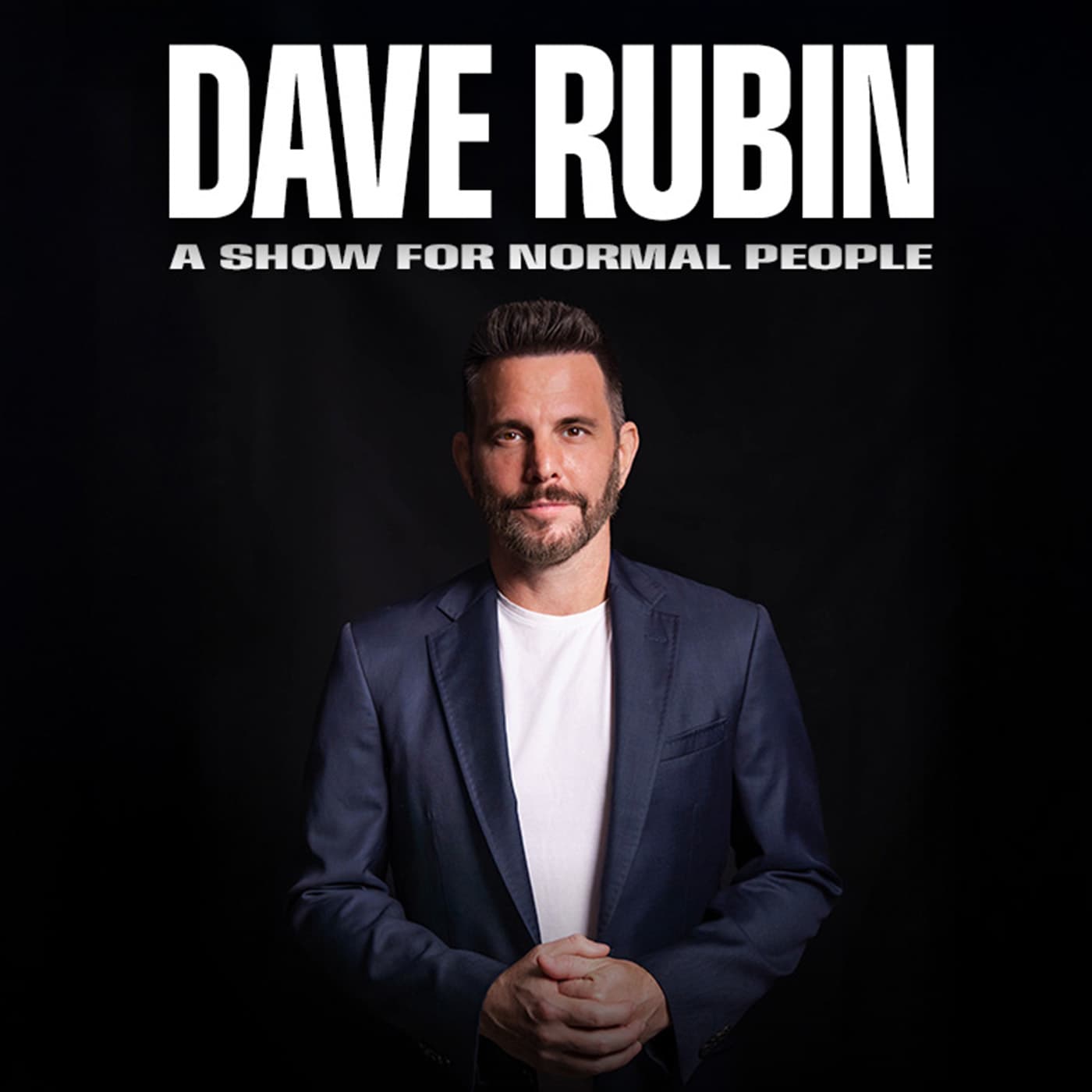
Dave Rubin of "The Rubin Report" talks to Patricia Heaton about her iconic TV career on Everybody Loves Raymond and The Middle; what it was like to be a conservative in liberal Hollywood and host "Friends of Abe" meetings at her house for secret Hollywood Republicans; her first hand experience seeing wokeness ruin the jokes in the comedy writer's room; if Hollywood as we have always known it is truly over; the shift from classic multi-cam sitcoms to today's streaming-driven landscape; the resistance she's faced being a pro-life conservative in Hollywood; rising antisemitism and her work supporting Israel through the October 7th Coalition; and much more.
