In short
Eric Metaxas argues Americans have forgotten the religious, moral, and “virtuous” story behind the founding, and warns that ignorance could weaken the country ahead of the 250th anniversary. He contrasts “cynical and decadent” British elites with Christian American revolutionaries who saw rights as God-given and framed independence as a covenantal return to self-government.
Guests
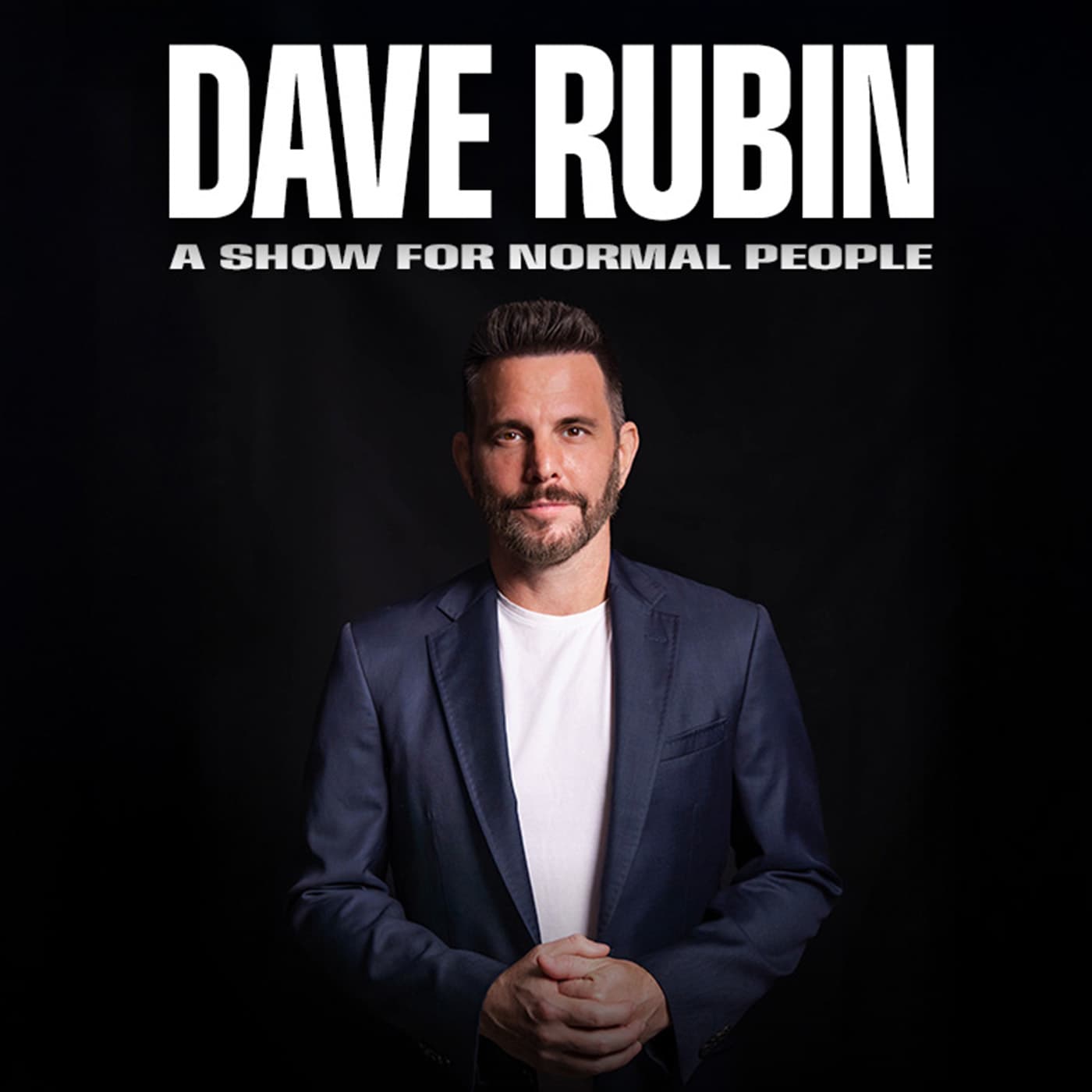
Eric Metaxas (author; wrote Revolution: the birth of the greatest nation in the history of the world). Host: Dave Rubin.
Key claims
Founding documents require a moral/religious population to work; the Declaration didn’t create independence (it ratified it); the revolution was driven by faith and virtue, not money; modern left narratives (e.g., PBS-style portrayals) undermine pride and understanding.
Notable examples
Nathan Hale’s gallows quote; Henry Knox hauling 120,000 pounds of cannon from Ticonderoga to Boston; John Adams defending British soldiers after the Boston Massacre; Adams’ role in independence and Jefferson as language “poet/stenographer”; Samuel Adams saying God was restored as sovereign; James Otis Jr. arguing against writs of assistance.
Written by AI. May contain mistakes. Listen to the episode to check what was said.
Chapters
Tap a time to open that second in VOPride and Responsibility as Americans
0:00 to 1:04
Discuss the pride and debt Americans owe to their heritage and freedoms.
“I've tried a lot of seafood over the years, guys, and truly it's been hit or miss.”
Pride and Responsibility as Americans
3:39 to 4:54
Discuss the pride and debt Americans owe to their heritage and freedoms.
“Was something wrong with your internet connection?”
The Narrative of America's Greatness
4:54 to 7:57
Explore the narrative surrounding America's founding and its significance.
“We should live in some other country where you think, well, we have some freedoms, but we don't, you know, we don't, what we have in this country is utterly unprecedented.”
Stories of Sacrifice from the Revolution
7:57 to 9:04
Learn about the sacrifices made by key figures in the American Revolution.
“If we don't bring life to them and understand them and live them out, they don't do anything on their own.”
Heroic Figures in American History
9:04 to 14:01
Delve into the stories of Nathan Hale, Henry Knox, and John Adams.
“So I said all these names, I got to get it all in here because these are stories.”
The Integrity of John Adams
14:01 to 14:59
Learn about John Adams' principled actions during pivotal moments in history.
“And so he's at the center of this, and he's just tremendously principled.”
The Declaration of Independence's Misconceptions
15:00 to 17:00
Explore the role of the Declaration of Independence and its true significance.
“is he where's who uh the guy who printed the birth certificate i want it's amazing i want to see it You say, excuse me, I think you're missing it.”
Virtue vs. Cynicism in Revolutionary Leaders
17:01 to 18:17
Discover the contrasting virtues of American revolutionaries versus British elites.
“These are great stories, amazing stories.”
The Covenant with God in Governance
18:18 to 20:44
Understand how the revolutionary leaders viewed their relationship with divine governance.
“and the American elites who were the men behind the revolution were just the opposite.”
The Current Political Climate in America
20:45 to 23:18
Examine the divide in modern American politics and its historical roots.
“And then the wickedness of the British, the barbarity of the British astonished me.”
Show all 12 chapters
The Call to Action in Preserving Freedom
23:19 to 27:58
Learn about the importance of civic engagement and understanding history.
“I think because it's our 250th, there is a resurgence of interest in talking about all that stuff.”
Celebrating America's Independence
28:01 to 28:48
Learn about the significance of America's founding and its unique revolution.
“Thomas Paine talks about the birthday of a new world, the independence.”
Transcript
Automatic transcript. May contain errors.0:00I've tried a lot of seafood over the years, guys, and truly it's been hit or miss. You know, sometimes it looks great, but then you cook it and it just doesn't have that flavor or freshness you expect. So finding something reliable has made a huge difference. Wild Alaskan Company really changed that for me. It's the best way to receive high-quality, wild-caught seafood delivered right to your door on your schedule. The first box I got was super easy to use. Everything comes individually portioned and vacuum sealed, so there's no guesswork. I cooked that wild Alaskan sockeye salmon just in a pan with a little olive oil, salt, and pepper, and it turned out fantastic.
0:34Clean flavor, great texture, and didn't feel like frozen fish at all. I've also tried the wild Pacific cod, which I love. It's light and flaky and really easy to work in when you need a quick dinner. What stood out is that the fish is quick frozen right after it's caught in Alaska, so it locks in that freshness along with the nutrients like omega-3s. And it's clean, no GMOs, no antibiotics, no additives. And it supports sustainable fishing and Alaskan fishermen. They're so confident in the quality that there's 100 % satisfaction, money-back guarantee, so there's no risk in trying it. Go to wildalaskan.com slash Ruben for$35 off your first order of premium wild-caught seafood.
1:09That's wildalaskan.com slash Ruben for$35 off your first order. If your business runs on five different apps, 12 browser tabs, and one spreadsheet that everyone's afraid to touch, It's probably time for Odoo. Odoo is an all-in-one business management software that connects every part of your business into one powerful, easy-to-use platform. So instead of wasting time switching between disconnected systems, your entire business works together in real time. Your team moves faster, your data stays accurate, and you can actually focus on growing your business. Let one unified system run your entire business.
1:48From the first opportunity to the final payment, everything works together in one place. Whether you're a small business or managing a large operation, Odoo gives you the flexible platform built to grow with you. Try today for free at odoo.com. That's O-D-O-O dot com. I did see stuff that I had never known before. And at the heart of it is it's it's it's I mean, a culture war is sort of putting it mildly. But the British elites were as cynical and decadent as I could ever imagine. and the American elites who were the men behind the revolution were just the opposite. Most of them were profoundly virtuous people, people dedicated to virtue, talking about virtue.
2:36It's like John Adams talking about how, you know, after the Boston massacre, we need to defend the rights of the British soldiers. This needs to be a, I know what the mob wants. The mob wants mob justice. They should be hanging, you know, from a gibbet on the Boston Common today. We're going to do this the right way. We're going to trust God. And they were very explicitly Christian. I mean, I was stunned actually by the faith of most of these folks, very explicit in their faith that we want to honor God and how we do this because they had this classic Old Testament view, covenantal view, you know, this puritanical view that comes from the Old Testament that if we honor God, he will honor us.
3:21I'm Dave Rubin and joining me today is host of Socrates in the City, as well as the author of the new book out this week, Revolution, the birth of the greatest nation in the history of the world. A guy who has not been on the Rubin Report in quite some time, Eric Metaxas. What happened, man? It's been years. Was something wrong with your internet connection? I don't know what happened here. I have no idea, but very happy to see you. Thanks for having me. It's good to see you again. Yeah, it has been too long. I got the copy of the book over here, and it's basically the theme of what I've been trying to push for this last year as we roll into this 250th anniversary, that we should be proud of this thing, damn proud of this thing.
4:08And it's great. And these flawed people who created it were probably a hell of a lot better than us. What do you think of all that? Well, as expected, I heartily agree. We should be, you know, not only should we be bursting with pride, almost literally, to get to be Americans, but we should also be kind of ashamed. We don't really deserve to be Americans. This is an honor. People around the world would do almost anything for this honor that most of us take for granted. So we have a responsibility, a debt, to appreciate this gift we've been given. Genuinely, we have a debt. And knowing the story, celebrating the story, teaching our kids about the story, we need to take this seriously.
4:56We don't deserve this. We should live in some other country where you think, well, we have some freedoms, but we don't, you know, we don't, what we have in this country is utterly unprecedented. And I honestly think that most of us are simply unaware that it's unprecedented. What a wild, crazy idea it is that we would have the kinds of liberties that we do and what people have suffered so that we could have these liberties. So, you know, we have, we have work to do in a sense. If we, if we live here, if we get to live here, we've got a job to do. Do you think that the, um, lack of appreciation or understanding or however you want to put that is kind of baked into the beauty of America because we became so successful, because the founders did it so properly and our foundational documents are so freeing that we would only end up 249 years later in this bizarre situation that we find ourselves in as victims of our own success in some sense?
5:52Well, listen, that's human nature. That's human nature. I mean, you know, if you go back to the Old Testament, you see this, the waxing and the waning, you know, that people, they take the blessing for granted and then you know they depart from the lord and then the lord says okay have you have it your way and then everything turns miserable miserable and then then they turn back you know that's kind of human nature it doesn't make it okay we should be ashamed of ourselves when we take for granted the gifts that we've been given we we have an opportunity a responsibility uh to celebrate them to know what they are and to teach them and i think honestly Dave, that where we are now, part of it is intentional.
6:34In other words, you have a lot of people on the left that they've developed a narrative that says, no, America is not so great. All you need to do is watch Ken Burns' PBS version of the American Revolution, which I heartily recommend you don't, because you will come away from it feeling like, eh. It would be like a version of Rocky, a remake of Rocky, but you kind of get both sides. You're not really rooting for, you know, Rocky because he's flawed. It's so stupid because sometimes you need to have a hero, the flawed hero, and you're rooting for him. The story of America coming into being is an outrageous, epic tale.
7:13It's a story of stories. And if you're not rooting for America to come into being, you don't get it. And people on the left have not gotten it. And they've pushed forth this narrative of, you know, we're flawed and this and that. It's like, okay, what's the alternative? Marxist communism, you want to live in North Korea? Do you understand what it would be like to live in China, Saudi Arabia or any country? We have a responsibility to understand this stuff. And I think that I will be I would say clearly, you know, I quote John Adams in my book where he says that our Constitution was made only for a moral and religious population.
7:50In other words, our founding documents can't really do much by themselves. We, the people, kind of have to appreciate it, have to understand what it is that our job is, because these are just dead pieces of paper. If we don't bring life to them and understand them and live them out, they don't do anything on their own. And that actually is – I mean I wrote that in my previous – one of my previous books called If You Can Keep It. And the revolution book is just the narrative of how it all happened and the sacrifices people made, which are frankly staggering, staggering sacrifices. So we owe them a debt.
8:25Yeah. So let's talk about that a little bit because I know you and I could sit here all day long and talk about, okay, the freedoms we have and we could go through the Bill of Rights and all of that stuff. But I think maybe it would be better served time-wise to talk about some of the people and some of the stories, some of the things these guys had to go through to accomplish that. Because that, I think, as we roll into the 250, that's what people need to hear more of, of the incredible sacrifice. Maybe that's what will get us going again. I think that's a big part of it. And again, I think it's why, through the generations, we have taught our kids these stories.
9:01We need to know these stories. I mean, I wanted my book to be definitive. So I said all these names, I got to get it all in here because these are stories. You can't leave that out or that out. The story of Nathan Hale, one of the great patriots killed by the British at age 21. He was one of the most fine, intelligent, moral, Christian young men who loved his nation and was willing to die for his nation. His famous words on the gallows, my only regret is that I have but one life to give for my country. You know, that's kind of thing you want to you want to tell your kids like you see that we want to be like that.
9:40That's that's a heroic figure, a beautiful figure in Ken Burns's PBS thing, which I won't bring up again. They gave 10 seconds, 10 seconds, sort of a mention of Nathan Hale. I thought this is one of the great stories of the revolution. the story of Henry Knox. I mean, I remember being in fifth grade and my, I mentioned him, I get tears in my eyes when I think about my fifth, the teacher, Mr. McDevitt, who taught us American history in fifth grade. And he told us the story of Henry Knox being sent by Washington. This is while the American forces are still in Boston, surrounding the British who are trapped on the peninsula right at the beginning of the war.
10:21And George Washington sends this 25-year-old, this hulking figure to Ticonderoga, 300 miles away with oxen and horses and sleds in the snow to go across the Berkshire Mountains to get 120 ,000 pounds of cannon from this fort, which we had taken the year before, to bring them 300 miles back across the frozen rivers and over the icy, frozen Berkshire Mountains, 300 miles with sleds and oxen and horses back to Boston. It's one of the epic stories in military history. It's like Hannibal and the elephants. It's one of these crazy stories. And it's true. And I remember just as a kid, like thinking, wow, wow, you know, 50 years pass.
11:09And now I'm writing a book on the revolution. I'm thinking, I got to tell the story of Henry Knox. That's crazy. So that's in my book. There are all these stories that are just you think these were people that actually believed in what they were doing they they were not like working for a buck they were actually heroic figures who sacrificed I mean so tremendously I mean I in Washington at the top of the list oh my goodness oh my goodness John Adams comes out as other than Washington the hero of the story what what he's very underrated He should be 10 times more famous than Jefferson on so many levels.
11:45So he's a figure throughout the book. But there's so many. Can you dive into that a little bit more? Can you dive into that a little bit more? Because people always ask me, my favorite founder, and just because I've been to Monticello so many times, I usually default to Jefferson. And there's many amazing things that he did, obviously. But then you do hear this idea that Adams is sort of the underdog in all of this. No, Adams is, I mean, it's not close. It's not close. Adams is, first of all, there's a whole chapter in my book early on, or actually even before that, Adams later on refers to what he remembers from 1761 as the opening scene of the revolution.
12:27He was a 25-year-old single man lawyer in a Boston courtroom watching a figure who I write about in the book. We should also know who he is. He's a big deal. James Otis Jr. was arguing in a court against this idea of the British writs of assistance. It was basically a kind of a power grab that the British did. This is before the Stamp Act, before things really kick off with, you know, at the end of the – a couple years later, the end of the French and Indian War. Even before that, Adams sees that our rights, our God-given rights are being challenged. And we have this figure in the courtroom, James Otis Jr., arguing for our rights as British citizens.
13:06Our rights come from God against the grasping, power-hungry British government, really. So it's this moment. And Adams, I noticed through the 60s already, in 1765, he writes this sublime essay. I mean, when I encountered it, I thought, how have I never heard this? How do kids not know about this? And it's barely written about. So I deal with it in a whole chapter. He understood everything long before most of the others were even thinking about it. I mean, it's a fascinating thing, this essay, which I devote to a chapter. And he is there, of course, in Boston. It all begins in Boston. Why? Because these are the descendants of Boston Puritans.
13:48These are strongly Christian people that they really believe in these principles. They really believe our rights come from God. They really believe we are meant to govern ourselves. They really believe this. So it's not about the money. It's not about, well, we don't want to pay taxes. And so he's at the center of this, and he's just tremendously principled. In 1760, when we have the Boston Massacre, he, out of pure principle, defends the British soldiers. Even though he's on the side of the American colonies, he defends the British. He's a man of tremendous integrity. And I kind of track him.
14:23I didn't do this intentionally. It just ends up tracking him because then he goes to the Continental Congress and he writes these glorious letters to Abigail back and forth. It's just beautiful. It's a portrait of a beautiful marriage and his faith. And all the way through, and then he is the man in 1783 who is in Paris with Franklin signing the Treaty of Paris. it's all over we won you know after 20 years of this stuff so he he's magnificent but what i find the funniest maybe this is worth saying because you bring up jefferson everybody kind of raves about the declaration of independence and it's kind of like raving about the birth certificate the mother has been in labor for 24 hours and you run into the room and you're like where is he where is he where's who uh the guy who printed the birth certificate i want it's amazing i want to see it You say, excuse me, I think you're missing it.
15:16The mother is over there. We just needed this technically, this birth certificate to kind of ratify what just happened. But it's just it's just this paper that kind of ratifies what we already did. This is not like the birth certificate didn't make anything happen. The Declaration of Independence made nothing happen. Declaration had been declared two days before they even approved the document. and so who made independence happen? John Adams basically is the architect politically and otherwise of independence and I tell that story and Samuel Adams and others, they made independence happen. The Declaration of Independence is just like, well, we've got to say something about it and who can we get?
15:52And Adams insists we need to get Jefferson because he has a felicity of language and he'll come up with some beautiful phrases, which he does, a couple of which turn boilerplate legalese into poetry that sings and that speaks to us through the centuries. So it's not to denigrate Jefferson as a mere stenographer or typist, but there's not an original thought in the Declaration from Jefferson. All these ideas had been, you know, percolating among everyone involved for years and years. And then finally he said, well, we've got to put it in an official document. So it's fascinating when you know the details and when you know they signed the document, you know, not on July 4th, but on August 2nd, 1776.
16:33It's all this kind of cool stuff that, you know, when you know the actual story, it sort of makes it come to life, I guess I would say. Did you learn anything that you kind of didn't want to learn or didn't want to know about some of these guys or how some of these things happened as you were doing the research? I wouldn't know. I wouldn't say so, but I learned many things that I didn't know. And I mean, I mean, when I set out to write this book two years ago, I thought I just want to tell this epic story and include all the stories. So the story of Lexington and Concord, you know, the story of the Battle of Bunker Hill, the story of the Battle of Brooklyn and the escape across the East River and the retreat through the New Jersey to the Delaware and the crossing of the Delaware and Saratoga.
17:14These are great stories, amazing stories. So I just want to tell the stories because I think Americans need to know our story. We need to know this is not extra credit. everybody needs to know this stuff we're on the hook we're responsible in 18 in in 1960 if you stuck a microphone in anybody's face in uh main street america everybody knew all this stuff so in in our lifetime dave this stuff is sort of evaporated and most people they're they're sort of unfamiliar so i said i just want to tell the story but every time i told somebody i'm writing about the revolution they say what's your angle i said i don't have an angle i just want to write a definitive story of the revolution.
17:51This is not the Howard Zinn version. This is the actual version of the story of America, right? So in the course of it, to answer finally your question, I did see stuff that I had never known before. And at the heart of it is, I mean, a culture war is sort of putting it mildly, but the British elites were as cynical and decadent as I could ever imagine. and the American elites who were the men behind the revolution were just the opposite. Most of them were profoundly virtuous people, people dedicated to virtue, talking about virtue. It's like John Adams talking about how, you know, after the Boston massacre, we need to defend the rights of the British soldiers.
18:36This needs to be a, I know what the mob wants. The mob wants mob justice. They should be hanging, you know, from a gibbet on the Boston Common today. We're going to do this the right way. We're going to trust God. And they were very explicitly Christian. I mean, I was stunned actually by the faith of most of these folks, very explicit in their faith that we want to honor God and how we do this because they had this classic Old Testament view, covenantal view, you know, this puritanical view that comes from the Old Testament that if we honor God, he will honor us. It's a covenant. We're going to make a covenant with God.
19:09And even in, I mentioned August 2nd, 1776, the day before they signed the Declaration of Independence, Samuel Adams, who's really the father of the revolution, I mean, he's the guy all through the 1760s, even before, he gives a speech to Congress. So he's a member of Congress speaking to Congress from the steps of Independence Hall outside. And he says the phrase he says is, we have this day restored the sovereign, capital S. In other words, we've gotten rid of one king, an earthly king, a tyrant, and we've restored God as our sovereign. Now, we don't do this officially. We all know that we believe in liberty and religious liberty.
19:52So nobody's going to be forced to go to church or to believe this stuff. But in case anybody wants to know what we think we're doing, that's what we're doing. We're going back to the Sinai covenant. 3 ,000 years earlier, the last time people actually governed themselves, looked to God and said, okay, if we obey God's rules, we can govern ourselves. We don't need a strong man, a big government to tell us what to do. So this is the narrative. And everyone understood this, including Jefferson and Franklin thought of as the least religious founders. They understood that's the narrative, that we are like reprising – we're escaping Pharaoh and Egypt and bondage and we're going to be free under God to have our liberties.
20:33And I didn't really understand this. And again, I did so much research that it's everywhere. It's not just like some version of it. It's sort of everywhere. But the goodness of most of the American leaders, their dedication to wanting to be good and to fight in a way that honors God, not to stoop to what the British did. And then the wickedness of the British, the barbarity of the British astonished me. I mean, people would – Americans would surrender. They would bayonet them to death. I mean it was a level of barbarism like the Japanese or the Nazis in World War II. I didn't know that and I didn't know about the almost, not only were they not serious about God in the way that most of the colonial leaders were, but they were very mocking of it.
21:17This very sneering and mocking of the faith of the Americans. So none of that was really something that I was familiar with. Let me ask you to put that kind of lens on where America is at now as we're a month away basically from our 250th anniversary. it seems to me we have one party that is broadly pro-America and you can agree or disagree with them but they kind of like the founding and they like the documents and things you know borderline and they kind of like our history that sort of thing and then you have another party that in essence has really rejected it all oh yeah how do we if you think that's a fair prescription How do we move forward as we roll into our 250th anniversary?
22:02What do you think the founders would say about a major political party that doesn't seem to be proud of our history, that doesn't seem to care about any of the things that you just said, and seemingly is gaining momentum and strength? I don't know that they're gaining momentum or strength. I would say they're losing momentum or strength. And I would say that, and I've said it many times. Well, I'd love to hear why. I hope you're right. I really hope you're right. I think we're in the third existential crisis of history. The first is the revolution, the second is the Civil War. We're in the third now.
22:32We have to win. We have to win politically. It's just like saying, well, what do we do in 1776? What if the other side wins? If the other side wins, it's over. If the slave states win, it's over. This is serious. This is a serious spiritual war, political war. It is serious and it's existential. And I think part of it, I mean, really why I wrote the book is like we need to know the story. If you don't even know the story, it is out of ignorance that we've been allowed to drift to this point, to think that we can have our liberties or we can have something wonderful without understanding where it comes from and without understanding what the men who gave this to us at tremendous cost, what they thought about where it comes from in the narrative.
23:22So it's very important. We've neglected that for a long time. I think because it's our 250th, there is a resurgence of interest in talking about all that stuff. I think that that is central, that we've got to know our history because the more you know of the history, the less people can lie to you about what it was. You know, you can give pushback when you know the actual facts of it. I mean, so that to me is pretty central. But yes, I think that, you know, you have to – first of all, you have to understand the math. You cannot have America, the America that we have had, unless enough people in America get what that is and get that we have to sacrifice to keep that.
24:02And that's part of the warp and the woof of our whole culture. If you're not comfortable with that, it just goes away by itself. You don't have to push it hard. It just goes away. But there are some people pushing hard. And I think that the secular leftists – I mean think about it. I mentioned it in 1960. In 1960, pretty much everybody was on the same page. We love America. You know, we've got maybe differences on tax policy or something that has changed so dramatically that the left is now nakedly Marxist, aggressively anti-American, aggressively against the founding and all of these basics. That is not something that can really coexist.
24:40I mean, you can have people in America who think that. But if you don't have enough people who know that that's wrong, what we have goes away. So I would say the same thing that I would say to George Washington in 1776 that your job is to keep fighting, keep praying, keep doing the right thing, and we'll see how it goes. But you can't sit around and do nothing because if you do nothing, you will be enslaved basically. The forces on the other side are not looking to coexist. They're looking to take away your rights, whatever those rights are. And so that's very real. And I think it's kind of funny because I do feel like there's always been this coterie of – I live in New York City, Manhattan.
25:28Manhattan leftists, Hollywood leftists, they think the whole world should think the way they do, and they've got big megaphones thanks to the way – in a way, the media landscape has changed. You know, people who don't agree with that have voices. You know, we're talking right now openly about this. And so I think a lot of Americans are kind of waking up and I do have hope, but we have to fight. And I don't mean, you know, fight with muskets or guns, I hope, but we do have to fight. We do have to take seriously our role in what it means to keep the republic. And as I say, at the center, that is knowing the story, knowing the history, and then thinking, OK, what is my job now?
26:09But we all have a little job, whatever that is, and we need to do that job. Otherwise, it goes away. Well, timing is everything. And I think releasing this thing right before July 4th is absolutely perfect. And I'm not kidding. On my show, almost every day, I talk about the resurgence of patriotism I think we're about to have. And hopefully that rolls us into a successful midterm. So actually, that's how we'll end this. Do you think that we will get enough people on board this crazy train of revolutionary freedom and all of those things so that we don't have a bloodbath in November and we can at least continue this thing for another, say, I don't know, two and a half years?
26:48Yeah. Well, Dave, listen, that is the hope. And I do think we will. But I think, as I say, we have to fight. People have to get serious about being involved, about voting. I know, you know, great groups of people that don't vote or think like, yeah, you know, the pendulum swings back and forth. You tell that to a Jew in a boxcar going to Auschwitz. The pendulum swings back and forth. Everything's fine. Everything is not fine. Every one of us has a job to do, to live self-sacrificially. I write about heroes like Dietrich Bonhoeffer. If you're not living like that, you're part of the problem. And there are many people perfectly willing to be complicit with evil.
Read the full transcript
27:27There were people in the revolution who said, you know what? I don't want to take sides and I don't even know who's going to win. So I'm just going to sit on the fence. That's not the way to live your life. And so I know that the folks that listen to your program get that. We've all got a part to do. And I say to everybody, just ask God to lead you to do what little thing is your job to do and do it with joy. And the results are in God's hands. The book is the birth of the greatest nation in the history of the world. It is out now. Can I say happy birthday to America, Eric Metaxas? Is that an appropriate way to end it?
28:09There's a whole chapter. Thomas Paine talks about the birthday of a new world, the independence. What happened was a new way of being in the history of the world. It wasn't just another nation or whatever. And the book is not titled The American Revolution. It's revolution because there has never been anything like it. And I don't say that. There's no hyperbole. I make the case. There's never been anything like it. And once you understand that, you really can't help but rejoice. And so, yes, I hope that we are, Americans are really excited to celebrate this huge milestone. It's a big deal. From your mouth to God's ears.
28:45Link down below. Thanks, Eric. Thank you. On June 11th, the Rubin Report will be live at the Fillmore Miami Beach with Florida Governor Ron DeSantis, Adam Carolla, Jillian Michaels, and little old me. Seats are limited and going fast. So if you've been watching the show and want to experience it live, scan the QR code right over here and grab your ticket. I'll see you there.
From the publisher
Dave Rubin of "The Rubin Report" talks to Eric Metaxas about his new book "Revolution: The Birth of the Greatest Nation in the History of the World" and why the American Revolution created an unprecedented system of liberty, self-government, and constitutional rights rooted in faith and personal responsibility; the forgotten heroism of America's Founding Fathers including George Washington, John Adams, Samuel Adams, Nathan Hale, and Henry Knox; why patriotism, Christianity, and understanding American history are essential ahead of America's 250th anniversary; how the left, Marxism, and anti-American narratives have reshaped education and culture; and why preserving freedom, the Constitution, and the American experiment requires civic engagement, sacrifice, and moral courage, and much more.
