In short
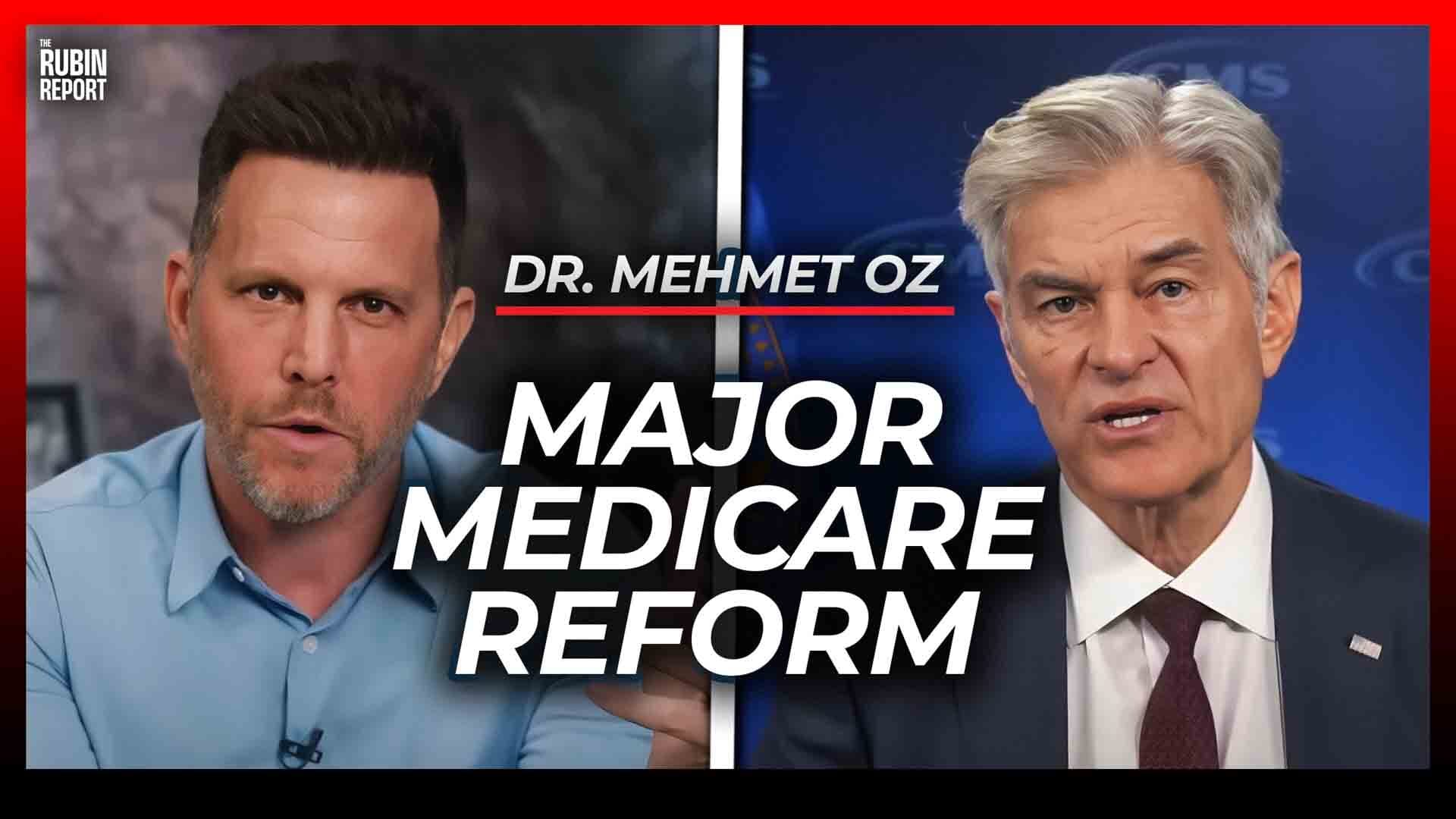
Dr. Mehmet Oz, now administrator for CMS (Centers for Medicare and Medicaid Services), argues the U.S. healthcare system is failing on quality and coordination, driving high costs and preventable harm, and should be fixed through prevention, cross-agency data sharing, and simplifying insurance prior authorization. He also discusses Medicare/Medicaid misconceptions, Medicaid work requirements, and mental health/loneliness as major drivers of poor health.
Guests
Dr. Mehmet Oz (heart surgeon; TV host; CMS administrator). Interviewer: Professor Rubin (host).
Key claims
U.S. spends 2–3+ times more per capita yet lags in life expectancy; medical error is the 3rd leading cause of death; “bad quality care” is the most expensive waste. Prior authorization was meant to protect patients but became “weaponized.” CMS and partners (NIH, FDA, Secretary Bobby Kennedy) should break government silos using shared data. Medicaid work requirements can be monitored via smartphone pilots.
Notable examples
credit-card-style rules engine for prior authorization; autism data access via CMS to NIH/CDC/FDA; Medicaid smartphone pilots (91% have smartphones; 5–7 minutes to verify earnings); Medicaid work requirement framed like Clinton-era welfare reform.
Written by AI. May contain mistakes. Listen to the episode to check what was said.
Chapters
Tap a time to open that second in VODr. Oz's Journey to CMS
0:45 to 4:24
Dr. Oz discusses his transition from heart surgery to leading CMS, tackling healthcare challenges.
“Medicare and Medicaid Services, my friend Mehmet Oz.”
Addressing Healthcare Challenges
4:24 to 7:28
Dr. Oz explains the complexities of the U.S. healthcare system and the need for quality care.
“And the number three cause of death in America is a medical error.”
Overcoming Systemic Barriers
8:56 to 14:00
Dr. Oz shares insights on collaboration in government to improve healthcare outcomes.
“So to that point, how much of what you're doing is kind of clearing out the brush of the broken system before you and the people that came in before you?”
The Flaws in Healthcare Billing
14:00 to 19:19
Dr. Oz discusses the unethical practices in healthcare billing and prior authorization processes.
“If I go right to a specialist who's paid to operate on me, guess what they're going to do?”
Understanding Medicare and Medicaid
19:28 to 22:40
Exploring the benefits and common misconceptions surrounding Medicare and Medicaid.
“What would you say is the biggest misconception about Medicare and Medicaid?”
The Importance of Health as an Investment
22:40 to 28:00
Dr. Oz emphasizes the need to view health expenses as an investment in the economy and personal well-being.
“It was just supposed to be, but it's become that you never have to work.”
The Loneliness Crisis in Healthcare
28:00 to 29:22
Explore the impact of loneliness on health access and personal well-being.
“And the number one problem they really have is loneliness.”
Balancing Personal Health and Family Responsibilities
30:33 to 33:26
Discuss the importance of self-care for better parenting and health.
“Is that the tricky part for you, that on the food side, it's kind of direct what the answer is?”
Reflections on the Senate Race
33:26 to 34:03
Reflect on the outcomes of the Senate race and ongoing initiatives.
“Well, Doc, I can't believe I'm going to say this, but in retrospect, I think the Senate race turned out just fine because you're doing what you're supposed to be doing.”
Transcript
Automatic transcript. May contain errors.0:00Cozy season is ahead and you'll be spending way more time inside. Is your home ready? Don't worry.
0:06Dr. Mehmet Oz:With Wayfair, you can upgrade your space without breaking the bank. Score up to 70 % off during their Labor Day clearance on furniture, area rugs, mattresses, and more. Plus, surprise flash deals you can't miss. Whether it's one room or the whole house, Wayfair has pieces for every style and budget. Shop Wayfair's Labor Day clearance now through September 7th at Wayfair.com. Wayfair, every style, every home.
0:37Joining me is legendary television and real life doctor turned administrator for the Centers for Medicare and Medicaid Services, my friend Mehmet Oz. Doc, how are you?
0:49Dr. Mehmet Oz:Professor Rubin, good to see you. How have you been? I'm doing all right. I have to say you look well. So obviously there, whatever you people are doing over there? Are you testing things on yourself? What's going on? Well, mostly I have to say it's because I have just started the best job of my life and I've had some pretty good jobs. I love heart surgery. It's very fulfilling. Hosting the show was a blast, as you know, because you're hosting one. But the beautiful thing about CMS is CMS stands for Centers for Medicare and Medicaid Services. So basically we paid the bills for the social safety net around healthcare issues.
1:23Dr. Mehmet Oz:And when you're doing that, you're working with really smart people, mission aligned. Everyone wants to be in this space, whether they forget it, sometimes they do or not. They came into this field because they think they can make healthcare better for America. And they realized the scale of the challenge. And so when you get up in the morning, you work your tail off with people that really care deeply about these issues. I get to learn a lot about why the system is not functioning better. And most importantly, I get to fix the biggest problems. So I want to get into some of the problems and some of the solutions, but in some sense, relative to what you just said there, do you feel like this was the obvious next step in your career that eventually if the government would have gotten something a little bit right to say, get Donald Trump to be president and then bring in a guy like Bobby Kennedy to start focusing on health, that you would have ended up exactly where you are right now?
2:12Dr. Mehmet Oz:Well, let me quote my campaign manager. And when I called him to tell him that We had obviously talked a lot about this possibility in the past. And I said, this is President, Secretary Kennedy just offered me to run CMS. He said, it's just like we drew it up. Now, he said that facetiously because you can never drop anything like this. But if I had to envision my life at this age, after having learned the things that I have and overcome the challenges and the failures that I've experienced, this is exactly the kind of position you'd want someone like me in. I think it's a great job for somebody who's been a heart surgeon already.
2:51Dr. Mehmet Oz:So you've actually been in the trenches practicing medicine. I've talked publicly on national television for years about the things that I thought mattered the most that should be on folks' radar screen. But at some point, you actually have to get into the government to address some of the longstanding challenges. And if it was easy to do, it would have happened already. I mean, unlike many debates that we have in healthcare, there's a bipartisan belief that it's a moral obligation of government, as Hubert Humphrey said, to take care of those living in the dawn of life, which is the children, those in the twilight of life, the elderly, but also those living in the shadows.
3:28Dr. Mehmet Oz:That's actually in marble as you walk into our government building where Secretary Kennedy and I spend our time. And I remind everyone of that because you can believe anything you want. You may have a different way of getting to these issues, but we have to deal with these problems. And if they were easier to codify, if they were simple, straightforward financial remedies, there aren't. And we know that because even the most precious programs we have, and these are special, we've had massive increases in expenses. And these expenses take a toll on the nation. You know, every time we have healthcare expenses increasing three to 4 % faster than the economy, you're putting a drag on the economy.
4:06Dr. Mehmet Oz:You have to examine why that's happening, especially when, despite that investment, despite the fact, David, that we have twice as much money spent per capita on people in America for healthcare, at minimum, I mean, usually it's three to four times more than any other country. We're still falling behind other countries in our life expectancy. And the number three cause of death in America is a medical error. so my approach has been as a clinician starting off with quality the most expensive thing we do in america in our health care is give bad quality care if because when you give a bad operation to somebody you pay somebody to do a bad job so they're not very you know competent you then pay someone good at the job to fix the bad job which is expensive and you have to fix the complications with and long term issues so you have many reasons why you wasted everyone's money and you've hurt someone in the meantime so let's get it right the first time be better at the quality we offer And I think that's the actual salvation of the U.S.
4:58Dr. Mehmet Oz:health care system. We're so innovative, so courageous and are willing to take chances to find better ways that we will be able to discover paths to better quality care, including prevention of illness, which is Secretary Kennedy's primary goal that will actually reduce dramatically our expenses. That's actually exactly what I wanted to ask you next. How much do you guys or do you at all work in conjunction with each other? And I'm talking about you and Secretary Kennedy, because he's focused, obviously, on getting the food dyes out, getting us eating better, getting the air and the water quality better, all of those things, which then obviously those things, when they're not right, lead to the problems that you're addressing.
5:36Are you guys like do you have a weekly meeting where you're like, if you can fix this, then 20 years from now, we'll be able to fix this? Or is it just sort of, oh, we'll see where it goes, and then I'll deal with it after?
5:48Dr. Mehmet Oz:Secretary Kennedy is like a brother. As you know, we spend time together. We've talked about this publicly many times, vacation together. It's not just me, by the way. Jay Bartasharia, who runs NIH, Marty McAree, running FDA. We spend a ton of time together. I was with Secretary Kennedy today for an hour. Then I spoke to Jay for a while based on that meeting. And the reason I bring this up, it's not just because it's a fun, happy-go-lucky group. Bobby's called us renegades because we were all basically canceled during COVID for different reasons. But we weathered that storm and we weren't daunted by it.
6:19Dr. Mehmet Oz:So nothing's going to stop us. And we talk continually because that's how you break the barriers down. One of the most harmful things in the government, especially if it's big government, federal government, is the silos. So if I want to figure out, and this just takes autism as an example. If the secretary says we need to find out what's causing autism because the president is anxious, angry, and frustrated that we haven't gotten better answers in America before his time as president even. It's just been going on for years. We've been realizing it, but we haven't answered it. So he wants an answer.
6:48Dr. Mehmet Oz:Secretary Kennedy wants an answer. So how do you do that? Well, one way is to go to where the data is. Where's the data? It's at CMS because I'm taking care of the patients, right? I'm paying the bills so I know what happens. But I'm not a researcher. Jay Bhattacharya at NIH, he's a researcher. Well, I have to give him access to the data. Historically, that wasn't easy to do. And so you give the NIH researchers access to the data. You let them share it with the CDC, who is supposed to be giving policy advice on what to do with different causes of toxins in the environment, et cetera. And then you get the FDA involved because they're looking for new solutions to these problems.
7:21Dr. Mehmet Oz:Now you actually have people joining at the hip, getting this job done, and you're actually moving in the same direction. And the brute force of that can break down barriers that allow us to get things done that couldn't be done in prior administrations. And I got to say, what really helps this process is we actually like each other. But it matters. Think about this. If you're going after something and someone says something that you don't understand, which happens, by the way, I don't get upset about it. I say, well, geez, you know, he must have had a good reason for saying that. Let me find out.
7:50Dr. Mehmet Oz:And guess what? When I call up, there is a good reason usually. And if there's not, they say, I should have told you about this. And we move on. There's bigger fish to fry than the internecine battles that so often hinder government agencies from flowing seamlessly towards the future. As I've gotten older, I've realized that staying healthy isn't just about living longer. It's about feeling good while you do it. And for me, nutrition plays a huge part in that. That's why I've started using Balance of Nature. It's an easy way to get the nutrients from 31 different fruits and vegetables without having to prep, cook, or clean.
8:21These are real, whole foods, gently dried to preserve their nutrients and packed into capsules. No fillers, no junk, just good, clean produce. They also haven't raised prices in 10 years, and they're keeping it that way. They also include a fiber and spice supplement that rounds it all out. It's a supplement designed to support energy, digestion, and overall wellness. Right now, you can make a fresh Star 2 and receive 35 % off your first order and a free bottle of fiber and spice when you become a preferred customer. Just head on over to balanceofnature.com and use code Rubin. Again, that's balanceofnature.com slash Rubin.
8:56So to that point, how much of what you're doing is kind of clearing out the brush of the broken system before you and the people that came in before you? I hope you don't mind, you know, a few months before, after Trump had been elected, but before he was sworn in, you hosted a small event at your house with Bobby Kennedy and Jordan Peterson and a few other people. And I was lucky enough to be there. And one of the things that Bobby said was that he had never been around so many people, had his phone ringing so much from literal millionaires, billionaires, tech innovators, medical specialists saying, hey, I just want to work for the government for free.
9:32I just want to do what I can to help, which you're sort of alluding to here. But how much of what you do is that you've still got to just break through the broken system that exists in the first place.
9:42Dr. Mehmet Oz:So that evening that you mentioned was one of several that we had. and thank you for coming because you spoke beautifully at it. But if you remember, Sly Stallone walked in. Thank you. I will never forget. I told you, I don't get starstruck. That is the only time in my life, I think. So Sly walks in because he cares about America. And, you know, as he would often say about himself, his talent is in acting and screenwriting and telling stories. He doesn't like the story we're telling ourselves. And the issues we've had in the past is that we have not overcome our biggest obstacle, which is nihilism.
10:17Dr. Mehmet Oz:And it's not so much the brush and the failures and the obstacles of past administrations is that we many times don't believe we can get it done. And what you realize when you come into government is you actually have remarkable resources to get things done. You've got to be persistent. You got to fight every single day, which is why I caution everybody in the Maha movement. Don't think we're going to fix this overnight. But in fairness, this battle will be waged for the rest of our lives. And we're going to have to fight every single day. in and outside of government to get it done. I say this because I want people to have reasonable expectations, but we will prevail.
10:50Dr. Mehmet Oz:This administration is already dramatically shifting the way things are done to make it easier for the right things to happen. But we have to fight for the right things every single day. And I am confident that, and you've got a lot of people who have been waiting for this moment inside of government and outside. They may say that very clearly because a lot of people are thinking, oh, federal workers, they're just paying the bills, they're collecting their hourly wage and moving on. It's not true. These folks have, they feel for the first time unbridled. They wanted to do these things. They came to government to make the changes we're talking about in this administration.
11:25Dr. Mehmet Oz:President Trump, with his flurry of executive orders and very clear, powerful personality on these topics, says, go out and fight the battle. You know, you got air cover, go make a difference. Now, folks on the outside, historically, sat around and thought, geez, government's not doing their job. I have all the answers. But, But, you know, if you're not in the game, don't complain about it from the outside. This government says you have a generational opportunity to come help. And there are people that Secretary Kennedy's mentioned that both of us have witnessed. I mean, people who made tens, hundreds of millions of dollars on health care programs, who gave it all up to come into government.
12:00Dr. Mehmet Oz:And my argument is if you made$100 million off of Medicare, you could save the American taxpayer billions of dollars. Because you know where the game's played. You know where the bodies are buried. And we've got wonderful people who did just that. And that actually gives us confidence because now you can have the smartest people in the private sector working with folks who understand how government functions. And together you come up with some very innovative ideas and stuff gets done. Just follow the flurry of releases of information from government and the media attention. These are not small time items like seismic shifts in the way that we want to pay doctors and hospital systems and the way we want to work with insurance companies.
12:38Dr. Mehmet Oz:who volunteered with a little bit of urging from us, volunteered to deal with prior authorization, which is the single most detested part of the process of getting healthcare these days. You know, and you've got the average doctor spending 12 hours a week trying to answer questions for insurance companies, none of which, by the way, seems to benefit the patient. They came together on their own because they saw us coming down the pike and they said, oh, hold on, Tiger. Before you start taking draconian actions against us, let us fix our own shop. We know we shouldn't do this. We don't like the way it's working.
13:10Dr. Mehmet Oz:And guess what? God bless these guys. We'll see if they follow through on it. But they've given us the deadline at the end of this year to deal with a problem that was going to take years for us to address. Those are the kinds of chase changes at the pace we want that we're used to seeing in the private sector. Now let's apply it to the public sector. What was their argument originally for having to go to your primary care physician if you had a specialist problem, so you had a growth on your arm? What was the original argument? Or was it just, ah, this is what the insurance companies want us to do, and clearly that's part of the game, and that's what we're going to do?
13:43What was the doctor's argument? I mean, was there an argument? Oh, there's an argument.
13:47Dr. Mehmet Oz:And this is what I've learned also. In any maladaptive situation, there was originally an adaptive reason for it. This is true in family dynamics, personality disorders. It's also true in government, right? So here was the problem. If I go right to a specialist who's paid to operate on me, guess what they're going to do? And they would operate massively more than they needed to. 20 % more oftentimes than was required. They prescribed medications because they were the ones that were being advertised on television, not because they were the best ones for you. They put on skin grafts, for example, skin substitutes for ulcers that maybe didn't need it, or they use a lot more than they needed, or they use the most expensive brand because they get paid 6 % of the cost of the product.
14:29Dr. Mehmet Oz:So all of a sudden you see businesses that used to be doing hundreds of millions of dollars do tens of billions of dollars. And that's because there was no mechanism of controlling this. So prior authorization initially came in just to say, hold on, Tiger, can we just make sure that they really need this? It was done to protect the whole system, including the patient. But over time, it got weaponized. Insurance companies, not all of them, but some definitely stalled on purpose thinking you'll go away. If I make it hard enough for you, the doctor won't do it. That's the use of these tactics that is unethical, should be criminal, and it's certainly maladaptive.
15:01Dr. Mehmet Oz:But the industry knows that. And once they're being caught, remember, there was a horrible murder last year of an industry executive by an assassin who used that excuse to murder this poor man. And a lot of Americans celebrated that assassin, which is reprehensible. And so you see these things happening after a while and then she says, okay, this is not working for anybody anymore. So let me just take this as an example, David, because the audience will get this. So the way it works with prior authorization is you've got, let's say 15 ,000 different things that could happen to a patient, right?
15:32Dr. Mehmet Oz:And I'm going to pick 3 ,000 things that are the most important problems that I'm going to try to ask extra questions about called prior authorization. Well, insurance company next to me, my neighbor insurance company, they have the same belief, but they don't ask the same 3 ,000 procedures. They ask a different 3 ,000 procedures and so on and so forth. So the poor doctor is sitting there thinking every patient I see has a different reason why an insurance company blocks it, even though there are different insurance companies with different rules. Our argument is it ought to be like a credit card.
15:59Dr. Mehmet Oz:When I put my credit card in to get money, I don't have to wait two weeks to find that if the bank has money. Tell me immediately. Now, how did that happen? All the banks got together behind the scenes and they agreed they have to have a rules engine, a system to decide whether Dr. Oz is money in the bank or not. It doesn't matter which bank I'm getting money from, what vendor I'm going to, what country I'm in, just the same rules. That can be done quickly and it allows the credit card to be immediately adjudicated so the vendor knows whoever I'm buying shoes from knows that minute that I have money in the bank and it's done.
16:31Dr. Mehmet Oz:Everyone's happy. We want the same thing to happen with prior authorization. Reduce the number of rules, focus on the ones that make the most sense, get rid of all the issues you're complaining about that don't really matter that much, just to make it simpler, and then tell the doctor and the patient immediately in the moment, whether it's okay or not. Well, they have the ability to do that. And they're committing to do that change. And I think if it works, we'll see, we're going to audit it. And they're going to publicize it when they do it. And we're watching Secretary Kennedy and I did a big press conference just to make sure everyone was clear what the rules were.
17:03Dr. Mehmet Oz:But if this works, it's a fantastic example of government using the power to convene, to bring people together and say, we want you to be meek. Now, David, you know what the word meek means, right? Because in the Bible, it speaks about meek inheriting the earth. When I was a kid, I always thought meek meant weak. I bet you there's some listeners now who believe what I used to believe. It turns out that's not the word meek's meaning. Meek means that you're a strong, powerful person with a sharp sword, and you decide on your own to sheathe that sword, put that sword away and not use it because you got something big to do with your friends.
17:39Dr. Mehmet Oz:And so all of the other competitors and people would normally slice your head off, put their swords away. You sit in the room and you figure out the answer. That's what the insurance industry has done. We have similar discussions now with many other sectors of the U.S. health economy. All of them know we got a broken system and we've told the same thing to all of them, which is you have a nimble way of doing this because you know your business. Figure it out. Because if you don't, we're coming in there with a sledgehammer and acting on behalf of the president and Secretary Kennedy. We're going to make change happen.
18:10Dr. Mehmet Oz:But wouldn't you want to do it on your own? Right. I love the element of this, that in some sense, a lot of them did want to do the right thing or did want to do it in a better way, but the conditions weren't there to do that. And it seems like you guys are just setting a better set of rules and not lopping their head off with the sword, but saying, hey, come to the table. So rent is way up and it feels like everything costs more these days. When money's tight and options are limited, kickoff gives you a simple, affordable way to build real credit without getting buried in high interest credit card debt.
18:38No credit check, no interest, just five bucks a month. And yes, it works. Building credit used to feel overwhelming, guys. Between confusing terms, unpredictable interest, and fear of doing it wrong, I avoided it. But I found kickoff and it changed everything. Sign up took just minutes on my phone. It was clean, easy to understand. And best of all, there was no hit on my credit for joining. One feature I love, rent reporting. You're already paying rent, so why not have it count towards your credit history? Kickoff makes sure those payments work for you, not just your landlord. In fact, users with credit scores under 600 saw their scores jump by an average of 84 points in the first year just by making on-time payments.
19:14Plans start at just$5 a month with no hidden fees, zero interest, and no credit check to get started. Just head to getkickoff.com slash Rubin. That's K-I-K-O-F-F dot com slash Rubin. It's simple, it's affordable, and it works. What would you say is the biggest misconception about Medicare and Medicaid? We hear Medicare, Medicaid all the time. Obviously, the big, beautiful bill and cuts to this and illegals getting this. I mean, if you just said, what is the bumper sticker thing that people are confused by or are the real benefits that we don't understand? Let's try it both ways.
19:49Dr. Mehmet Oz:Medicare and Medicaid were created 60 years ago this week. 60 years ago, there was this dream, this vision that you could provide a social safety net for folks who were being left out of the healthcare system. As I touched on earlier, it's especially prevalent in young kids. 53 % are born to either they're in poverty or near poverty. So they get covered by Medicaid or CHIP, which is the children's health insurance. You have older folks who lived a long life, but maybe for whatever reason, didn't accumulate much in savings. They get left out. We have to provide older folks with health care they need it.
20:24Dr. Mehmet Oz:And you don't want people dying destitute because you couldn't do a hernia operation on them. And then you have folks who, for one reason or another, are living in those shadows that Hubert Humphrey spoke about. That's who we were trying to protect. Over the decades, there has been slippage. There has been, on purpose or by accident, rules made and changed and expectations that altered and that didn't actually allow the programs to work the way they're supposed to. So you asked me for the big takeaway. One of the big takeaways are don't think about health expenses as an expense, but think about them as an investment.
Read the full transcript
21:00Dr. Mehmet Oz:If we use these dollars correctly, we will return Americans to their optimal health. It's a hand up we're giving people, not a hand out. If they're healthy, they'll work better, longer, and all that translates to remarkable growth of our economy. I'll give you a number. Take the average 61-year-old today, which is the, by the way, average retirement age. So the average person born in 1964 is retiring this year. Remember, Medicare doesn't start until 65. So they're retiring early. If you get that age group, just that one year to work three more years to age 64, just that one age, everyone is 64, born in 64 is going to work another three years.
21:37Dr. Mehmet Oz:That's worth$1 trillion to the US economy. Think about that. Basically, we can close our debt by just getting people to work a little longer. And if they're healthy, they might want to do that. That's the opportunity that health care offers us. I'll give you one concrete example, the work requirement that there was so much fighting over. Yeah, yeah. Now, when Medicaid was created, it never dawned on anybody's mind, never crossed their mind that they would be offering free health insurance to people who are able-bodied but not working. Years later, as part of the Affordable Care Act under President Obama, there was a decision made to allow able-bodied members of the American population to join Medicaid.
22:19Dr. Mehmet Oz:It was supposed to be transient. You get on it, you get off it. Now it's become basically a trap where you have generational unemployment. That's easy because you get health insurance for not doing anything. No one asks you to do anything. No one even asks you if you made money. You just sit there and collect the health insurance. And it was basically, it was basically you're in between jobs in essence. It was just supposed to be, but it's become that you never have to work. Now the guy next to you, the department next to you is flipping burgers all day long, making $20 ,000 a year, exhausted, right?
22:52Dr. Mehmet Oz:But you get the same life that he does. This department level,$16 ,000. There's no real difference by, by the way, that level. So why bother working? So what we said was you need to engage your community. You have agency over your future. You may not know that, but that's your God-given power is to make a difference in the world. You were not put on the planet to watch 6.1 hours of television or leisure time, which is the data, by the way, for able-bodied people on Medicaid who weren't working. So what we said was, and this shouldn't be controversial, is we want you to go get an education, go volunteer somewhere, go get a job, or at least help take care of kids.
23:28Dr. Mehmet Oz:I mean, do something. And guess what? Most Americans, when given that option, will take the deal. They'll go out and try to change the world. That's why I believe that the benefit of a work requirement will get more people into the workforce and get people to start to change their life for the better. When Clinton, President Clinton, had welfare reform, the last major effort of this nature was in the late 90s in his administration. It worked. People actually started getting more jobs. And so we want to do the same kind of adjustment, take out the fraud, waste and abuse and get people back in the job place because we have twice as many jobs as Americans willing to do them right now.
24:08Dr. Mehmet Oz:So this to me is an example of a strong willed president taking on a massive challenge, doing the right thing for the American people. Bobby Kennedy was 100 percent supportive. We fought night and day through Congress. And I got to applaud the Republican congressmen and senators. they made brave moves knowing there are going to be people taking cheap shots at them, but knowing also that they were put in Washington to make those brave choices. Did you hear any sane counter arguments to that? The sane counter argument offered by some is you can't pull it off. You're not going to be able to tell if somebody is actually trying to get a job or not.
24:45Dr. Mehmet Oz:And in response, I'll say, this is more about whether you believe America could be competent again. And we have already doing two pilots. 91 % of patients on Medicaid have smartphones. These two pilots use smartphones. All you do is tell us where you work. That's it. Underneath that, it tells you what kind of payroll provider you have. You'll allow us to ask. And within five to seven minutes, we have every bit of information that you might think of about how much money you earned last year. And here's the better part. If we build it right, maybe we can also point you with new job opportunities based on your skillset.
25:18Dr. Mehmet Oz:So we can actually be supporting employment agencies within states. This is a kind of bold measure that instead of sitting around whining about how the system is going bankrupt, remember, we spent 50 % more on Medicaid in the last five years, 50 % more. We were sinking the system. You get people who are able-bodied off their couches, off the video games, into the workforce. You're helping everybody. And now the system can actually stretch enough to take care of the people for whom Medicaid was originally designed, the young, the old and the infirmed. What do you think is the biggest change you want to see in Americans' health?
25:53And that's a little more of Bobby's department, but obviously you're dealing with the repercussions of that. But as a doctor, I mean, what's the thing that you want to see us do writ large that would actually change our longevity and our ability to be walking when we're 87 instead of in a wheelchair and all that?
26:11Dr. Mehmet Oz:David, you always ask the important question. So let me give you two answers, if it's okay, because your answer, the question that you asked. I get one per interview. I get one right. Per interview. Get it out of the way. As you probably know, having hosted shows for many years, I was always told, and I think it's good advice, that every interview is about one question, one fundamental question. Everything else basically leads up to it. I think this is a fundamental question in this interview because ultimately to make healthcare affordable for the American people, the American people have to be healthier.
26:42Dr. Mehmet Oz:It's a partnership. It's a shared responsibility. So the predictable answer is lose weight because obesity, and remember we're twice as heavy as Europe, 10 times heavier than Japan. And so a lot of our healthcare expenses, the diabetes, hypertension, the heart disease, the brain disease, the kidney failure, it's driven the impotence for the Viagra lovers out there. Much of it's driven by obesity. So, and there are things that work. Another paper came out showing that processed foods are a major driver beyond anything else we've talked about. Eat real food, food that comes out of the ground looking the way it was harvested, that food you can live with.
27:18Dr. Mehmet Oz:And we are looking aggressively, and Secretary Kennedy's driven this, for making sure that SNAP programs, which are food stamps, that they are selectively supportive of healthier foods, that we don't serve children in schools junk food and train them and their palates, addict their palates to the kinds of junk food, sugary material that doesn't have any nutritional benefit and cons them into thinking that's real food. So that's the obesity answer. But I'll tell you that the real challenge that I think we're going to have to as a people get our arms around is the mental health issue. And I'm not talking about a little bit of, you know, I get depressed when bad things happen to me.
27:53Dr. Mehmet Oz:You know, that's part of life and the mental resilience to get through that. There is a deep-seated disconnect that makes people feel unmoored, atomized, separate. And the number one problem they really have is loneliness. And when you're a lonely person trying to get health access or be healthy, it's hard because you don't have a backup system. There's no one nudging you along, giving you confidence, forgiving your trespasses. There's no reason for you to think that you're connected and we are hardwired to be in community. And so when you feel on the outside, getting you on the inside to get the care you need, to take the medications you should manage, or stop eating that junk food.
28:32Dr. Mehmet Oz:You know, if you don't have any friends in life, the only tool you have to use is the one at the end of your arm, which is called a fork. And so you start using that. And that's a pathology that we have to address head on. Those two issues are related. If you look at people who are really overweight, there's often underlying emotional element that's not being addressed. We can get that problem systemically addressed. And maybe AI will help with this by connecting the people in ways that, you know, that doesn't replace human connection, obviously. That's, you know, that's precious and God-given and important.
29:05Dr. Mehmet Oz:But there might be times when we can be next to you and nudge you and say, you know what, call your sister. Don't be such a smut, a putz. Don't go make a phone call. I know she did XYZ wrong, but she's your sister. You know, make up and life's too short. And those kinds of interactions might be helping in the future. Guys, let's be honest. Most coffee gives you that quick little jolt and then what? A crash, jitters, that mid-morning brain fog. And before you know it, you're already pouring a second or third cup just to make it to lunchtime. But what if your coffee did more than just wake you up?
29:36What if it actually did something good for your body? Something real, something lasting? Meet Rejuvenate Coffee. This isn't your average cup of joe. It starts with premium, real Aribaka beans. So yes, it tastes incredible. But what makes it special is what's inside a powerful compound called C-A-A-K-G. Now, I know that sounds technical, but stick with me. C-A-A-K-G is backed by real science. It's been shown to support cellular energy, a healthy metabolism, and even healthy aging. Yeah, you heard that right. Your coffee could actually help you feel better, not just today, but 10 years from now.
30:10This isn't a gimmick. It's not a trend. It's a smart decision for people who take their health seriously and who want to feel focused, strong, and dialed in every single day. So if you care about how you feel, not just this morning but long-term, Rejuvenate Coffee is for you. Head on over to 1775coffee.com slash Ruben and order a bag of Rejuvenate Coffee today. Fuel your body. Protect your future. Rejuvenate. Is that the tricky part for you, that on the food side, it's kind of direct what the answer is? As you said, eat foods and fruits and vegetables that come from the earth. It's pretty clear on the psychological side or depressing depression side, the government coming in and saying, call your sister feels like a whole other thing.
30:51And you're right. AI will probably play some element. But there's there's just a strange role of government issue there that feels different than, OK, we'll create the condition. So the potatoes are actually potatoes. Yeah.
31:02Dr. Mehmet Oz:Well, this is one of the realities of helping administer a program like CMS. A very expensive part of care is people who are having trouble getting out of their own way. Life's difficult as it is. They don't have transportation. They don't have the finances. They can't take time off from work. They're barely holding on to a job. And we're telling them, prioritize your health. And they are prioritizing their kids' health. And that's why we have a role to play here. You know, I'll just crutch on my medical background. I would never operate on a patient who came to the office without a loved one unless I got to speak to the person that I argued would be there for them after the surgery.
31:43Dr. Mehmet Oz:I'd say it, by the way, many different ways. But ultimately, I'd say, listen, when you get through this heart operation, which is a life and death operation, I need to celebrate with somebody. It's like, who am I going to call and high five with to make sure that everyone knows you survived? And if they say, I don't have anybody in the world. oh, no one cares about me. Well, that's a problem because someone does care about you and that you do matter. And if you don't believe that's the case, then I'm not going to take you to the operating room because we're going to do this together. This is like a pro-am tournament.
32:11Dr. Mehmet Oz:I get to operate every single day, but you're only going through heart surgery hopefully once. I can't have you functioning at half speed. And oftentimes it's having that really deep discussion, which again, as a doctor, remember the word doctor means doctor, a teacher, right? But it also means physician, physics, science, but mostly it means medicine, which is about healing and community and connection. So if I'm going to be that last part, the artsy part of it, I've got to get you to believe in things that maybe you haven't thought about. I'll give you an example. People will literally kill themselves for their kids.
32:43Dr. Mehmet Oz:They'll give up everything. They won't take care of their body, their mind, any part of their world to sacrifice it for their kids. And I have many times been forced to tell folks, patients, remember, your kids are not going to treat themselves the way you treat them. They're going to treat themselves the way you treat yourself. So you take care of your kids, they're going to take care of their kids, but they're not going to care for themselves. So you better foster yourself. Your kids are going to model themselves after what you do for yourself. That doesn't mean to leave your kids unguarded and unprotected.
33:16Dr. Mehmet Oz:You're obviously not going to do that. But every once in a while, make sure everyone knows that you're there for yourself and you're there for them. And it's feasible to do both those things at once. Well, Doc, I can't believe I'm going to say this, but in retrospect, I think the Senate race turned out just fine because you're doing what you're supposed to be doing. And John Fetterman's the last sane Democrat. So it all worked out. And I'm thrilled that you're doing this. You know, that event that you had at your house, I left there feeling like, wow, we really could turn this stuff around. And you were let you add your your board there and you were really asking everybody the exact questions that now you're answering right now.
33:53So I'm just thrilled for everything you're doing. It's amazing. And I got to shake Sly Stallone's hand. That's as good as it gets. God bless you. Take care of yourself. Good to see you, Doc. Bye-bye.
From the publisher
Dave Rubin of "The Rubin Report" talks to Dr. Mehmet Oz about fixing America's broken healthcare system; why Medicare's enrollment age must be changed; cutting costs while improving quality care; reducing medical errors and reforming prior authorization; promoting healthcare innovation with CMS and Secretary Robert F. Kennedy Jr.; making Medicaid more sustainable through work requirements; tackling obesity and mental health as national priorities; shifting how we see healthcare spending—as an investment in well-being and the economy; and restoring personal responsibility and community health; and much more.
Today's Sponsors: Balance of Nature - Make sure you are getting all the positive effects from a wide variety of fruits and vegetables. Rubin Report viewers get 35% off their first order plus a FREE Fiber & Spice supplement when you use Code RUBIN. Go to: http://balanceofnature.com/
Kikoff - Use Kikoff to build your credit fast. With affordable plans starting at just $5/mo, no hidden fees, and zero interest. It's simple: you make on-time payments, credit bureaus see good behavior, and your credit can grow—fast. Get your first month 80% off the normal price. Go to: https://getkikoff.com/rubin
1775 Coffee - 1775's Rejuvenate Coffee real Arabica beans infused with CA-AKG, a compound shown to support cellular energy, metabolism, and even healthy aging. Rubin Report viewers get 15% off their order. Go to: https://1775coffee.com/RUBIN and use code RUBIN
