
 Ask ChatGPT


In short
The 1985–86 New Zealand “rebel tour” to apartheid South Africa and how the Cavaliers (an unofficial All Blacks–style team) helped drive rugby’s eventual isolation of the Springboks, alongside themes of racism, revolt, politics, and reconciliation.
Guests/backgrounds
No named guests appear as interviewees in the transcript; it features hosts Will Kelleher, Elgan Alderman, Alex Lowe, plus historian/journalist Jamie Wall (Auckland-based rugby writer/historian, currently in Cape Town). Player/historical cuttings include Darnie Craven (South African rugby administrator) and Schulte Berger (Cape Town lock; father of later Springbok Schulte Berger).
Key claims
1985 tour was stopped legally; 1986 tour proceeded “in all but name and jersey.” Cavaliers were paid despite rugby’s amateur era; New Zealand refused to count matches officially and largely didn’t broadcast them.
Notable examples
Berger describes discovering signed agreements and private-plane logistics via Andy Dalton/Hayden; Cavaliers wore Adidas kits with Yellow Pages sponsorship; Sky NZTV refused to broadcast, but videotapes were flown in via Hong Kong; South Africa counted results; famous match moments include Nass’s cross kick and Warwick Taylor try, plus a pivotal third test at Loftus Versfeld.
Written by AI. May contain mistakes.
Chapters
0:00
The Rebel Tour of 1985
Explore the events surrounding the cancelled 1985 All Blacks tour and its significance.
“You're probably multitasking right now, right?”
3:11
The Rebel Tour of 1985
Explore the events surrounding the cancelled 1985 All Blacks tour and its significance.
“which after a rebel tour finally paused in the 1980s.”
4:24
The Cavaliers and Their Impact
Learn about the controversial Cavaliers tour and its implications for rugby.
“and they'll be flying two days later to South Africa.”
6:18
Memories of the 1986 Series
Players recall the emotional impact of the 1986 series and its significance.
“I says he's the first guy to get the Springboks money.”
7:44
Reflections on the Tour and Its Aftermath
Discussion on the long-term effects of the Cavaliers tour on rugby and its players.
“And a lot of the guys were coming to the end of their careers.”
14:00
The Legacy of the Cavaliers and New Zealand Rugby
Explore the controversial history of the Cavaliers and the impact on New Zealand rugby.
“That it was kind of like every man's got his price, I guess.”
18:00
Political Change and Rugby's Future
Discuss the political struggles surrounding rugby and its influence on future events.
“And so their support for the players over there drained away.”

Ask about this episode
Get the gist, explore an idea or ask about something said.
 Claude
On The Ruck, what are the key points of this episode?
Searching your listeningTranscript
Automatic transcript. May contain errors.
0:00Schalk Burger Sr: You're probably multitasking right now, right? Commuting, working out, crossing things off your list. Worth asking when check-in on yourself landed on it. Grow makes the booking part fast. The rest is between you and a therapist who actually gets it. Grow connects you with thousands of high-quality, licensed therapists across the U.S., offering both virtual and in-person sessions, nights and weekends. There are no subscriptions, no long-term commitments. You just pay per session. Grow helps you find therapy on your time. The therapist you want takes your insurance on Grow. Grow accepts over 125 insurance plans.
0:38Schalk Burger Sr: Sessions average$21 with insurance and some pay as little as$0 depending on their plan. Visit growtherapy.com slash start now today to get started. That's growtherapy.com slash start now. Growtherapy.com slash start now. Availability and coverage vary by state and insurance plan. In a world where AI is changing every role in every industry, knowing who actually has deep expertise matters more than ever. Upwork connects you with the highly skilled freelance professionals with proven track records, so you can hire with confidence. Upwork gives your business fast access to highly skilled specialists with deep expertise, so you can fill critical skill gaps, launch projects faster, and scale support up or down without committing to full-time headcount.
1:26Schalk Burger Sr: With Business Plus, you can access the top 1 % of talent on Upwork. AI-powered shortlisting delivers a curated shortlist of top freelancers matched to your goals in under six hours. No endless searching required. Thousands of growing businesses already trust Upwork to hire highly skilled freelance professionals for everything from one-off projects to ongoing support. It's free to sign up, and posting a job is easy. Visit Upwork.com right now and post your job for free. That is Upwork.com to connect with top talent ready to help your business grow. That's U-P-W-O-R-K dot com. Upwork.com.
2:15Schalk Burger Sr: Welcome back to Rugby's Greatest Rivals, a special series from The Ruck, the journalist's rugby podcast from The Times and Sunday Times. The Springboks and All Blacks share an epic rugby rivalry. The All Blacks will play four tests against the Springboks over the coming weeks as part of an eight-game schedule. The event has been branded rugby's greatest rivalry. But why is it so? The story is about more than rugby. It's the bitter history of racism and revolt, of politics and protest.
2:43David Kirk: But it is also about the long walk to freedom, isolation and reconciliation,
2:51Schalk Burger Sr: So with insights from players and historians and cuttings from the Times and Sunday Times, we tell the full story in this exclusive series from The Ruck. We're your hosts, Will Kelleher, Elgan Alderman and Alex Lowe. And this is Rugby's Greatest Rivals.
3:10Schalk Burger Sr: We're tracking the rugby rivalry between South Africa and New Zealand, which after a rebel tour finally paused in the 1980s.
3:22Schalk Burger Sr: Darnie Craven, now an administrator of South African rugby, said grown men had cried openly when the 1985 All Blacks tour was cancelled. The Swedish government offered a million dollar guarantee for a legal case seeking to prohibit the series taking place. It was a success and the All Blacks did not travel to South Africa in 1985. They did in 1986 in all but name and jersey. Not only were the New Zealanders rebelling, but they were doing so for huge sums of money in the amateur era. Schulte Berger, a lock from Cape Town whose son of the same name later won 86 Springbok caps, was part of a rest-of-the-world team who played two matches in 1986.
4:00Schalk Burger Sr: While sharing a room with All Black's Andy Dalton and Andy Hayden in Cardiff, Berger soon realised a rebel plot was afoot.
4:07David Kirk: Lying in my bed, what happened was Andy Dalton came in. And then Andy Dalton was chatting to Andy Hayden, and he said, the guys were signed in New Zealand. I said, what do you mean they've signed? He said, they all signed the agreement. He said, how are they getting them out? He said, we're taking private planes up, and then we're flying them from there into Hong Kong, and they'll be flying two days later to South Africa. So I thought, shucks. And then Andy Dalton said, but whatever I did, and I was lying on my bed around the corner there in the Angel Hotel, right up in the top. and he said, no, you'll snore now.
4:41David Kirk: I'll sleep, so I gave a few snores. So then they said, oh, let's just go and have a beer. This is fantastic news. So as they went out, I went and got, it was sticking out the side of his briefcase and I took it around and sat on the toilet and here I read the old blacks are coming to South Africa. So I ran downstairs and I went and copied it and then I went and sat on the toilet, locked myself in and read the whole story, saw what they were being paid and everything. and so I was the first guy of all the guys there. So that's when I started, when I got back to South Africa, I started negotiating for money.
5:17Schalk Burger Sr: The Rebels are now known as the Cavaliers, a group of New Zealanders who played 12 matches in South Africa and lost 3-1 to the Springboks, again. Bar a handful of absentees such as David Kirk and John Kirwin, the squad didn't differ markedly from what would have been on offer in 1985. The Cavaliers wore black jerseys provided by Adidas with yellow stripes to mark their sponsors, the South African Yellow Pages. The box, when they found out about this, wanted in too.
5:43David Kirk: They wanted to drop me before the first test, while we had already got together the Wednesday. When they came down, a doctor later, and they had a meeting with me, and they said I'm going to stop negotiating for money. They put the Toyota for the first time on the chest of a spoonbock. We had to practice in these jerseys. I took some elastoplast, and I put it over that. I said, well, I'm not going to be a sponsor, wear sponsors, whatever, a logo if I'm not going to be paid. So I was the first guy, and we eventually got paid. And everybody talks about other guys at Front Shopping. I says he's the first guy to get the Springboks money.
6:21David Kirk: That was long before, nine years before that, in 86. Dr. Leighton, Mr. Pickard came and gave us the checks before the final test. Otherwise, we said we're not going to play. Doc Craven wanted to declare me a professional at that stage, but he would have lost the whole team because what I'd done at that stage, I had a friend of mine who was an attorney, Chris Forer, who I played a Curry Cup final against, and we contracted the team into everybody except Nas Wurta because he was the captain and he said, no, we can't do it. So I didn't contract him. We left him to one side and we got all the extra tickets, all the tickets that we sold extra and everything.
7:01David Kirk: I did all the money stuff. So we put that all into Kitty and got that distributed. We distributed after cost and stuff, we distributed about 7 ,500 Rand each, which, you know, when you're getting nothing for playing provincial rugby is quite a lot of money. And it wasn't so much, but I mean, you know, it was worth something. And it was the principle more than anything else. you know they were getting about a hundred thousand rand you know at that stage and the rand is worth more than much more than it was than it is now yeah so just feel like and currencies
7:38Schalk Burger Sr: change but for modern context a hundred thousand rand for the cavaliers is about four and a half
7:44David Kirk: thousand pounds quite a lot of money i would reckon at that stage it could have been twelve and a half thousand pounds and gave it to my wife we were getting a little bit more money than the other guys at that stage and uh we were being paid in 86 we were only getting about 450 500 random match and went up to 750 eventually but that was per match yeah did you with all of this
8:13Schalk Burger Sr: like i guess it's all part of it but payments aside maybe on the more political side of it you must have known that for the New Zealanders it was an incredibly controversial thing to do to come as sort of non-branded New Zealand team not the All Blacks being paid to go quite a lot of them have never spoken about it since for 40 years because of the way it went down in New
8:35David Kirk: Zealand like it was it was a hell of a thing for them to do no it wasn't really they wanted to do it you know why because at that stage no New Zealand team had beaten South Africa and South there we go. And a lot of the guys were coming to the end of their careers. And they just felt, stuff all the politicians. They said, no, let's go and let's stuff the politicians. Why can't we go and play against them? And that was Andy Hayden's point of view, and they all agreed. So guess what they did during those four tests? Sky, their New Zealand NZTV, refused to broadcast it. So guess what Andy Hayden did?
9:12David Kirk: He got a company in Hong Kong to transcript this onto videotapes. Meandland mornings, it was all flown in to New Zealand, and the guys were at newsstands and stuff, buying these tapes, not going to work on Monday. He made a packet of money just out of the videotapes. The highlights of the games? Yeah. The guys by Monday could see it. Obviously, they listened to it on various radio stations and shortwave and stuff like that. And then guys got together at rugby clubs and all kinds of things. And they had barbecues and they watched the tape and watched the test on a Monday and a Tuesday. And those tapes were passed around through families and everything.
9:55David Kirk: And Andy made a hell of a lot of money through that. While New Zealand never counted the four tests as official matches and omits results from historic accounts. The Springboks did. For white South Africans, it was a salve, the return of international rugby and a distraction from internal strife and anti-apartheid rebellion. Well, I just remember South Africa was, you know, we were so starved of any international sport and so forth. And the matches were sold out in advance and everything. The first test, I think, will always be remembered by the cross kick by Nass and the scramble to touch down the ball.
10:33David Kirk: It was a horrific wet game in Newlands, which in those days was a cabbage patch. You know, they had any grass on it. The second test, obviously, will always be remembered of Nass kicking into Warwick Taylor and him scoring the try and us losing the test. So the third test became a very, very important test. Of course, we had to win that to win the series. And I think it's some of the best rugby ever played some of the best tries ever scored was in that test at Loftus Fastwell. So now we're 2-1 up, and their baggage master was a guy with the name of John Holmes, the Cavaliers, and I phoned him, I said, is there anything that you can let me know about them?
11:14David Kirk: And he said, they're busy practicing the Haka. We all knew that they're going to do the Haka on the field. So we forwards decided the only way we can take all that whatever they've hyped themselves up with as Harker is from the kickoff. So at all costs, we must get the kick. And then we'll run and we'll just flatten anybody not even close to the ball. Let's get all that thrust out of them. And just after that, there was a scrum. And that's where Ghat Small knocked out Gary Knight. You know, he was a Commonwealth wrestler. And what was quite interesting after that match, walking off, There was big sheets that had all our faces on, and this guy came running up with his kids with a big Coke pen.
11:59David Kirk: He said, Gert, he said to me, please sign here. That's the best shot ever I've seen in my life. And I duly was not going to tell him I'm Scott Berger. So I went and signed Gert's smile over this photo just to carry the accolade away. But no, you know, it's off the field. You know, we were good friends also. You know, they were a hell of a bunch of nice guys, wonderful guys. It was good for us, you know. Those guys came here with their passports that thick of all the countries they'd been to. Most of us, the only country we went to, we didn't need a passport, and that was N 'Golo, because we had to go and fight a war there.
12:35David Kirk: So, you know, it was special. In New Zealand, the decision the Cavaliers made to tour still irks many. It's definitely a shameful incident, but I don't think the average New Zealander feels ashamed about it because in the end, the Cavaliers were effectively shunned by not only the anti-tour movement, but kind of the rugby community as well. I'm Jamie Wall. I'm a rugby journalist, writer and historian based in Auckland, New Zealand, and I'm currently in Cape Town. And then, of course, you had the opposition to the tour by David Kirk and John Kerwin, and it gave everyone sort of outside of the hardcore rugby community the ability to go well look if these guys even these guys don't want to know that it's wrong and they don't want to do it surely you the rest of you know I think looking back on it now I mean the fact that the players got paid and for a lot of them that was the main motivation for going is well known and there is some sort of sympathy in that regard, because of course rugby was amateur at the time.
13:44David Kirk: And this was like life-changing money for these guys. What they've rumoured to have received from this was enough to buy a couple of houses here in New Zealand at the time. And so I guess if there's any sort of sympathy there for the Cavaliers, it's over that. That it was kind of like every man's got his price, I guess. so if you sort of took the moral argument about you know South Africa out of it then people kind of understood but then at the same time it's also something that's been just really brushed under the carpet in New Zealand you know the games were not televised they weren't covered by the media you'd be hard pressed to find anyone who wasn't really alive at the time who hadn't been born at the time to even know anything about it because it's just something that wasn't official therefore as far as New Zealand rugby is concerned, it never happened.
14:38Schalk Burger Sr: The interesting bit for me here, Jamie, is possibly some of this incident kind of jars with the general view of New Zealand from outsiders that basically they're as grubby as everyone else. Like this is something that happened to the grey, all blacks kind of thing. And it's interesting too that on that shame point, we should tell our listeners that for this series, we've tried to contact quite a few of the Cavaliers and none of them want to talk about it 40 years on.
15:07David Kirk: Yeah, and I remember when you first did hit me up about doing this, that's the first thing I probably said to you is good luck getting anyone to talk about it. I mean, there are some guys who were involved in that team who have some serious reputations that would take a massive dent if it was brought up now. I mean, you're talking about guys like Grant Fox, you know, Sir Wayne Smith, Sir Buckshot, guys who've been knighted, you know, guys who went on to win the World Cup who are held in such massively high regard. And you're right, the All Blacks are seen as this kind of otherworldly force and just so much better than everybody else.
15:43David Kirk: But when it really came down to it, the All Black jersey didn't mean as much as getting a big chunk of change in the back pocket. And that's the bit that hurts New Zealanders the most, I think.
15:56Schalk Burger Sr: Kirk's decision not to tour made him a revered figure in New Zealand. He went on to captain the All Blacks to their first World Cup victory in 1987 and is now the chairman of the New Zealand Rugby Union.
16:06David Kirk: It was a very hard decision for me. I didn't go as known, but I did feel a lot of loyalty to the players and I had a lot of pressure put on me by other players because there was a real feeling amongst the team that if the 30 who had been selected to go in 1985 were the 30 who went this time, then it would just look like it was the cancelled tour the players who were just picking up and going on the cancelled tour it would diminish the thought of it being a rebel tour it was actually the All Blacks who had been selected and those were the 30 that were invited to travel so no one wanted anyone to drop out basically because that diminished the impact of the same 30 going so I did, there was a lot of pressure from other players to go, and I never and to this day, I don't have any I don't feel any rancour or any criticism of actually of the players that toured it was their choice, they toured those players did not tour for money or for anything else even though there was just generally, money was distributed but they toured there to win a Test Series in South Africa.
17:25David Kirk: All of them went there to be the best they could be on the field to beat South Africa and South Africa. And you know, I respected them for that. That was their decision. They weren't interested in politics. They went to South Africa to play rugby and to win. There was an initial feeling, certainly by the players, that once they went to South Africa, the public would light up and say, yay, we've got an all-black team, or nearly an all-black team in South Africa, and we've got to win the series and they'd all watch it and it'll be televised and there's no broadcast of any of the games and there were just a lot of people a lot of rugby people that thought that the sneaking away in the night and that you know whatever else might be attached to the the playing in in South Africa was just the wrong thing to do just not the way we do things yeah and wasn't an all-black team and it wasn't a black team it couldn't be called an all-black team it wasn't sanctioned by a New Zealand rugby so it was just a representative team and And that's where they came up with the name Cavaliers.
18:24David Kirk: And so their support for the players over there drained away. And over the first few weeks, support just drained away. And people thought, no, what are they doing? They shouldn't be there.
18:35Schalk Burger Sr: The 1986 Cavaliers may be one of rugby's most pilloried squads, but in two ways they helped change the sport forever. Without their rebellion, would rugby have finally shunned South Africa? Correct.
18:46David Kirk: It was definitely the one thing that cemented the fact that something had to change for the Springboks to ever be able to play rugby again. And given that there was obviously a World Cup coming up that was going to completely change Test Rugby, that if they wanted to be a part of that, they would need to change their political system. I'm not saying that's why they did it, but it was obvious that if the Springboks were ever going to take part in a World Cup, things would need to change because the World Cup itself wouldn't have ever happened if they did. Because by then, the protest movement around the world was so strong against apartheid.
19:31David Kirk: I mean, you had, you know, American music industry putting out songs like against it, you know. And, you know, it was such a massive kind of narrative throughout all pop culture that, you know, there's this kind of thing that really annoys me when Springbok fans always say, oh, well, the first two World Cups don't count because we weren't in them. And so therefore, and we would have won them because it was such a good team. It's like, no, the Springboks would never have won those tournaments because if they'd showed up, the World Cup would have had to be called off because there were so many protests.
20:05David Kirk: if there's one positive to have come out of this, it did set the ball rolling on what was going to happen off the back of a World Cup that happened in South Africa in 1995, which the game turned professional, is that it opened a box that the lid couldn't be put back on. And there's a lot of stuff that happened in between those events in terms of money, but it just set it on a course to the game that we have today. So, the Springboks were not invited to the 1987 or 1991 World Cups. Rugby's greatest rivalry at last succumbs to political pressure as finally, after decades of rancour, riots and racism, South Africa were isolated.
20:51Schalk Burger Sr: But change was about to sweep a new rainbow nation. Next time on Rugby's Greatest Rivals. He was the superstar. He was the first rugby superstar.
21:01David Kirk: We had to put special things around him to protect him because everyone wanted a bit of Jonah. Madiba flew in on his helicopter and came and spoke to us. Wonderful. Absolutely incredible.
21:12Schalk Burger Sr: And he threw the sign up at the window and it said, Uli is going to kill you.
21:17David Kirk: But it took every inch of your mental and physical being to achieve what we did.
21:39Schalk Burger Sr: this has been rugby's greatest rivals from the ruck devised by alex low will kelleher and elgin alderman it was edited and produced by alfie reynolds with contributions from jamie wall david whisson hope federico and rob wallace
22:13Schalk Burger Sr: Quick question. When was the last time a display ad changed your mind? Now think about the last time a friend told you about something they loved. Different feeling, right? That's how podcast advertising works. A host who's built real trust with their audience talks about your brand in their own words, in their own voice. It doesn't interrupt the experience. It's part of it. With Acast, you can access the world's largest podcast marketplace. Choose the right shows, the right audiences, the right format. Then watch the data tell you it worked. You're not buying impressions. You're buying influence.
22:47Schalk Burger Sr: Learn more by visiting acast.com slash advertise.
From the publisher
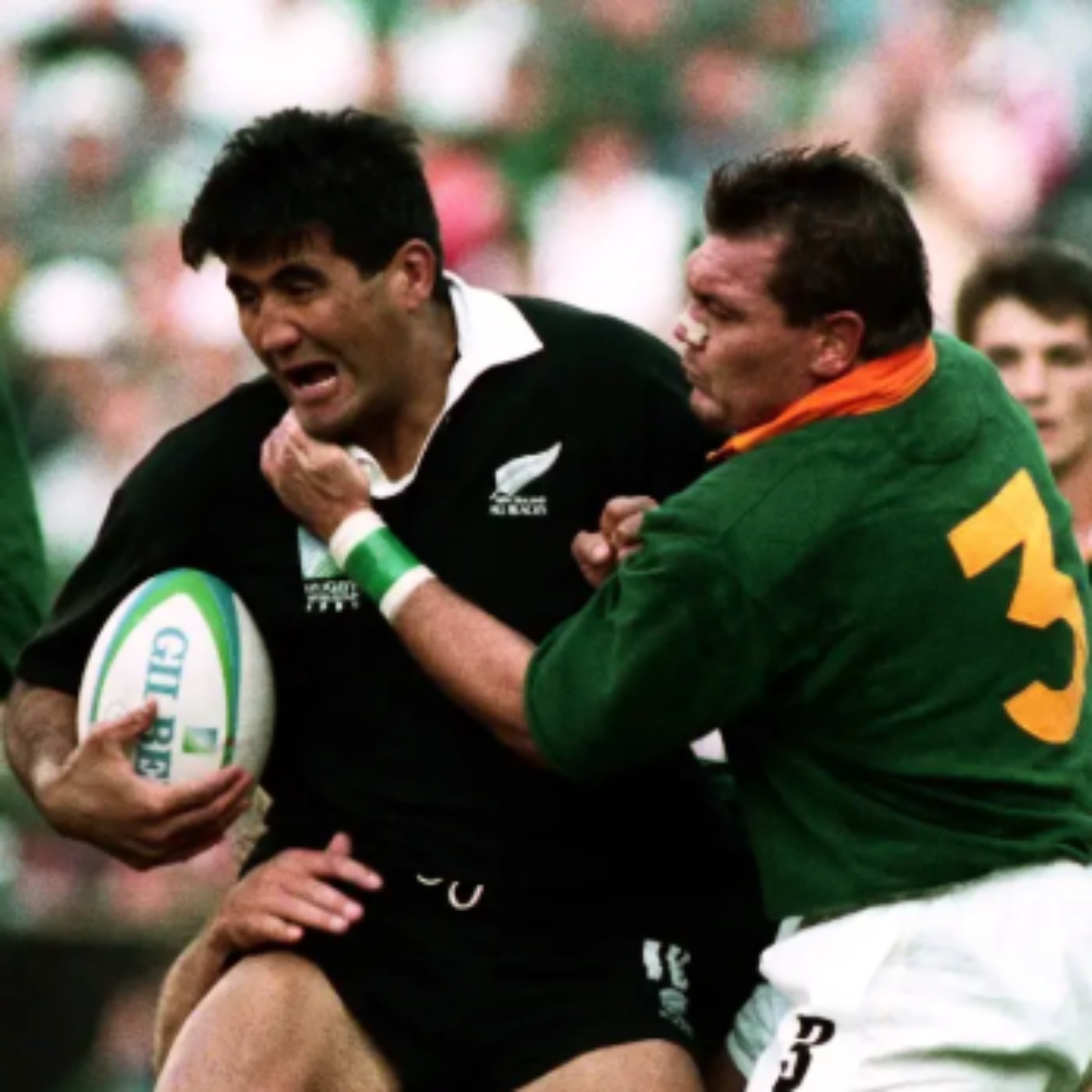
In episode 4 of our special series on the fierce rivalry between rugby’s superpowers, we focus on the most controversial rugby tour in history: the 1986 New Zealand Cavaliers.
Despite the global boycott, a group of rebel Kiwi players agree to tour South Africa. Former Springbok Schalk Burger Sr describes how he found out about the deal before any of his teammates - and why it opened a door to the players being paid.
The chair of New Zealand Rugby and former World Cup-winning All Black captain David Kirk also explains his decision not to tour, and the fierce reaction amongst the NZ public when the tour went ahead.
This podcast was produced and edited by Alfie Reynolds, with help from Hope Federico, Rob Wallace, Jamie Wall and David Whisson.
Read more: Rugby’s Greatest Rivals: Springboks v All Blacks
Photo: Getty Images
Hosted on Acast. See acast.com/privacy for more information.
More from The Ruck
All episodesWe use cookies.They keep VO running smoothly and help us improve it. Privacy policy