
 Ask ChatGPT

 The Ruck
20 Aug 2026 · 26m · 12 chapters
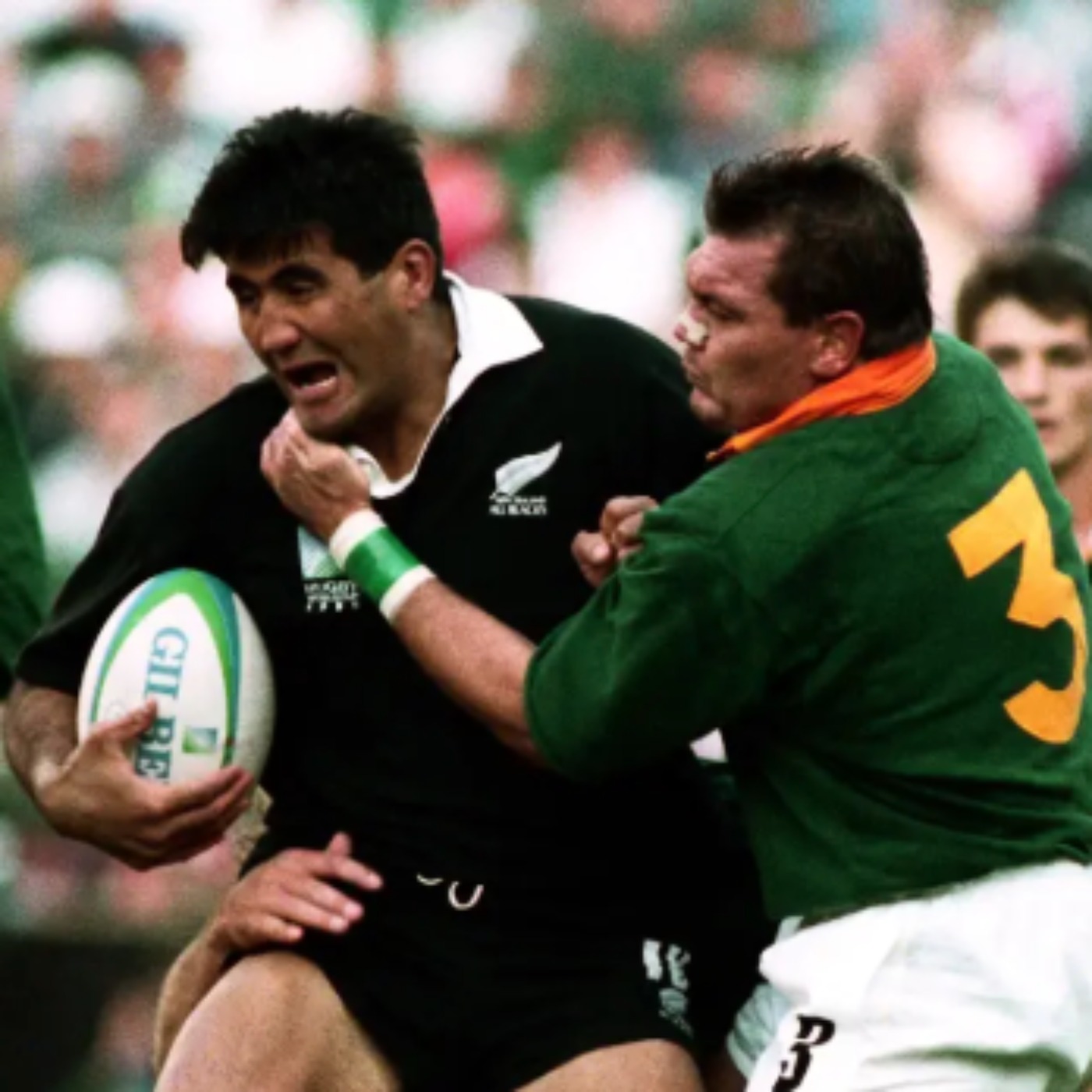
Rugby’s Greatest Rivals| Episode 6: The Incomparables and a rivalry reimagined
In short
Rugby’s Greatest Rivals Episode 6 recounts the All Blacks vs Springboks rivalry through the 1996 “Incomparables” tour, framed as more than sport—linked to South Africa’s racism, politics, and reconciliation—then surveys how the rivalry evolved in the professional era.
Guest backgrounds
Jamie Wall, Auckland-based rugby journalist/writer/historian (currently in Cape Town). Ian Jones, former All Blacks second row. Sean Fitzpatrick, All Blacks captain. Josh Kronfeld, former All Blacks player. (Also referenced: John Hart, Jonah Lomu, Zinzan/Sean Fitzpatrick, John Preston, Mark Alexander, Razzy Erasmus.)
Key claims
1996 All Blacks are “Incomparables” because they beat South Africa in South Africa in a test series. John Hart’s professionalism and preparation (including a pre-tour “recce”) helped. Springbok bitterness and internal politics affected their 1996 campaign. Jonah Lomu’s injury kept him out of the tests.
Notable examples
1996 Tri-Nations dominance; Loftus Versfeld series-clinching win (33-26); Pretoria comeback (Kruger/van der Westhuizen tries, then John Preston 56m penalty, Zinzan Brook drop goal); midweek “ruck machine” beach challenge; neutral referees; later rivalry results like 57-0 and 57-15, and Erasmus-era resurgence.
Written by AI. May contain mistakes.
Chapters
0:57
Background on the Rivalry
Exploration of the historical and political context of the Springboks and All Blacks rivalry.
“South Africa are the reigning world champions from 1995, but the All Blacks are coming for them in the professional era.”
2:26
The Incomparables of 1996
Discussion on why the 1996 All Blacks team is considered one of the greatest.
“And yet, despite all those achievements, the 1996 team are considered by many to be the greatest of the great.”
3:38
John Hart's Leadership
Insight into John Hart's strategies and innovations as the All Blacks head coach.
“John Hart was the new All Blacks head coach, succeeding Laurie Maines, who had resigned after the World Cup.”
6:32
The Bitter 1996 Springbok Experience
Reflections from the Springboks on their struggles during the 1996 series.
“Didier Monet, the French referee, took charge of the first two tests of the official tour series, and Derek Bevan, the Welshman, had the third.”
8:00
Challenges and Triumphs Without Lomu
Discussion on the challenges faced by the All Blacks without star player Jonah Lomu.
“It was not a happy time for South African rugby, to be quite honest.”
10:00
The Pressure of the Final Tests
Recap of the intense final moments of the series and key players' contributions.
“He was accepting of that, and that gave Glenn Osborne his chance.”
14:00
The Pressure of the Final Minutes
Listeners will learn about the intense pressure faced by the All Blacks during a crucial match and the pivotal moments that defined their victory.
“and then Preston grabbed the ball and said, no, I'll take it.”
18:01
Historical Context of the Rivalry
Explore the history of the All Blacks and Springboks rivalry, including key matches and shifts in dominance over the years.
“After the Incomparable's historic victory, rugby's greatest rivalry was dead level.”
20:15
Rugby's Political Landscape
Understand the political complexities of the rivalry between South Africa and New Zealand and its impact on the sport.
“The biggest games in the world is between the All Blacks and Springboks.”
22:01
Financial Aspects of Rugby Tours
Learn about the financial implications of rugby tours and the economic models that support rugby in New Zealand and South Africa.
“We can see how we can make sure that future generations don't have to go through that again.”
Show all 12 chapters
22:38
The All Blacks' Brand Power
Examine how the All Blacks leverage their brand power in international markets and the significance of their tours in the US.
“And so they're essentially just trying to put it, insert it, something else in between these to make somewhere near that kind of money.”
24:25
Enduring Rivalry
Discuss the lasting intensity of the rivalry between South Africa and New Zealand, even in the professional era of rugby.
“Tell that to Scotland or Wales fans every time they play England.”

Ask about this episode
Get the gist, explore an idea or ask about something said.
 Claude
On The Ruck, what are the key points of this episode?
Searching your listeningTranscript
Automatic transcript. May contain errors.
0:15This is Rugby's Greatest Rivals, a Ruck podcast production. The Springboks and All Blacks share an epic rugby rivalry. The All Blacks will play four tests against the Springboks over the coming weeks as part of an eight-game schedule. the event has been branded rugby's greatest rivalry. But why is it so? The story is about more than rugby. It's the bitter history of racism and revolt, of politics and protest. But it is also about the long walk to freedom, isolation and reconciliation, Mandela, Khaleesi, and how rugby has been at the forefront of a new South Africa. So with insights from players and historians and cuttings from The Times and Sunday Times, we tell the full story in this exclusive series from The Ruck.
0:56We're your hosts, Will Kelleher, Elgan Alderman and Alex Lowe. And this is Rugby's Greatest Rivals.
1:20South Africa are the reigning world champions from 1995, but the All Blacks are coming for them in the professional era. Rugby union turned professional after the 1995 World Cup. South Africa, New Zealand and Australia launched the Tri-Nations and Super Rugby was expanded into a 12-team competition. And if New Zealand were a good team in 1995, they were better in 1996. Maybe the greatest ever. New Zealand took the first edition of the Tri-Nations, winning all four matches, to lift a hilariously large trophy. Yeah, Sansar had ordered the trophy to be 82 centimetres high and 64 centimetres wide, but the American manufacturers built it in inches, and Sean Fitzpatrick had barely lift the thing.
2:01But he and the All Blacks had bigger prizes in their sights. Old school tours were still on the table. After beating the Springboks 29-18 at Newlands to seal the Tri-Nations, the All Blacks stayed in the country with a mission, to finally win a series on South African soil. The All Blacks have won the World Cup three times. Their back-to-back triumphs in 2011 and 2015 bookended the most dominant run by any men's team in history. New Zealand lost just three times in 54 tests. And yet, despite all those achievements, the 1996 team are considered by many to be the greatest of the great. They are known as the Incomparables.
2:38Why? They achieve what no other All Blacks team had managed. They beat South Africa in South Africa in a test series. It's a nice problem to have, you know, debating which is the greatest All Black team of all time. I'm Jamie Wall. I'm a rugby journalist, writer and historian based in Auckland, New Zealand, and I'm currently in Cape Town. This is a really iconic team because, of course, you know, it had been so long since the All Blacks head towards South Africa. And up until very recently, it felt like this was the last chance they'd ever get to do it. And so to take that chance, this isn't like a World Cup where you get another go in four years.
3:16This may never have happened ever again because of what the professionalism was going to do to rugby. We all kind of knew that tours weren't going to happen anymore, not like this anyway. And so to be able to take that chance and win that series is such an iconic moment in New Zealand sporting history. I mean, for me, it's the greatest thing the All Blacks have ever accomplished. It's bigger than a World Cup. just you know historically you know the fact that the Springboks at the time were world champions they were playing them at home and it and the series was won in such dramatic fashion at Loftus Versfeld it's yeah it's it's something that gives me just chills just just talking about it and to anyone who's our age talking about it they have the same kind of reaction to watching that footage hearing that commentary and then talking about that team yeah just absolute legends.
4:08John Hart was the new All Blacks head coach, succeeding Laurie Maines, who had resigned after the World Cup. Hart went about making the All Blacks truly professional by bashing the back-of-the-bus drinking culture. He opened the closed-off New Zealand players to the media, and, in an innovative move, he undertook a pre-Tor Recce of South Africa. After all, Hart had been given one task when he took on the All Blacks job. When I got appointed, obviously it was the first year of professionalism and I was told in no uncertain fashion that the target for me was to win the series in South Africa. And so I did a lot of planning and I was very fortunate having a great manager, Mike Banks, who was on the board of New Zealand Rugby.
4:49And we put together a whole program and a concept of how we would win in South Africa. And a lot of it was probably groundbreaking. for instance we asked to for the two of us to go to South Africa four months before the tour to go through every hotel go through every ground go through transport just understand look at the training gear the equipment that we'd be have available to us so we understood what was in front of us funny when you look back I mean today that's traditional then it was out of it and the union said to us well only one of us can go they wouldn't pay for two so Mike and I agreed that we'd pay for the other so how's that for professionalism?
5:34Hart chose 36 players for his quest as he knew he'd not be able to play the test side in the midweek matches against Berlin, Eastern Province, Western Transvaal and Griequeland West there'd be eight games in four weeks of the tour which started one week after the All Blacks had played four tests in six weeks in the Tri-Nations but Hart had to convince the tight-fisted New Zealand Rugby Union to bring a van and a bus to carry all the players around South Africa. On the tour, he bonded the group by convincing them that they were together as a 36, despite the midweek test team split, with games of tennis and mini-team challenges.
6:08One of those challenges was to ask the players to build a ruck or scrum machine from scratch on the beach at Plettenberg Bay. When Sean Fitzpatrick and Zinzan Brooks' team managed to construct theirs in 25 minutes, Hart was mightily impressed until he found out the truth. Fitzpatrick had snuck into Hart's room the night before, discovered the next day's task, and woken his team at 6am to build the machines before breakfast. These Kiwis will do anything to win. Another key innovation in Hart's mind? Neutral referees. Didier Monet, the French referee, took charge of the first two tests of the official tour series, and Derek Bevan, the Welshman, had the third.
6:45I think we got a fair go. The midweek games were local referees. They were part of a campaign, in my view, to make sure we didn't win, so they were trying to derail our tour. We had some great experiences in the midweek, particularly probably in the last game, I think it was, we were 18-16 down, we scored on full-time, 18-16, and the goal kick is right on the sideline. I think it was John Preston taking the kick and all of a sudden couldn't find his kicking tee. We looked everywhere. And then someone saw the line umpire with it behind his back, standing behind the post. He kicked it. So we ended up drawing the game, but we were a bit lucky.
7:30The 1996 Springboks look upon the series with bitterness. Politics, as ever in South Africa, took over the rugby. 96 was different because Kitch Christie had been ill and fought cancer his whole life and he was too ill to coach and he retired and Andre Markroff became the coach. This is Joel Stransky in Belito, South Africa. Andre Marcroft wanted nothing to do with the 95 team he had I think a dislike and a I'm not sure disrespect but there's no doubt he broke that team up intentionally he got rid of Francois he got rid of a few of us as well and got found out in years after that that he made racial comments still and which came as no surprise we didn't play great I don't think we had great self-belief the All Blacks were hugely determined we were going through this in-house fight about money, about the evolution into professionals, about contracts, about management.
8:29It was not a happy time for South African rugby, to be quite honest. And I think Francois would probably reiterate even more the fact that Marcroft wanted to break that team up, that he wanted to stamp his own approval on it, that he wanted other players to come through who didn't have the World Cup arrogance or belief or whatever you want to call it. Whatever the state of the Springboks, the All Blacks had an historic fight on their hands and they went into battle without Jonah Lomu, whose fitness restricted him to playing midweek games only. He was injured. We didn't know he had his kidney problem then.
9:02He had strained his knee quite badly in New Zealand and was struggling. And when we got to South Africa, he came off the game and he played in the game in Brisbane on the way up, but then his knee got worse and it was the really toughest thing we had to do. We couldn't pick him because he just wasn't free. His leg, his knee wasn't good enough. We did take him on the bench for one of the games later, but he wasn't up to playing. And that was tragic all round because he was the superstar. He was the first rugby superstar. And when he was in South Africa on our tour, he was just revered. And we had to put special things around him to protect him because everyone wanted a bit of Jonah.
9:54And, you know, unfortunately he wasn't fit to play and couldn't play. He was accepting of that, and that gave Glenn Osborne his chance. And I just admired Jonah so much for the way he handled himself and handled that. He still knew he had a responsibility, and he gave us everything he could. And how I would have loved to have put him on the field in South Africa, but his knee was a problem. In fact, we went for a scan. This shows you the problems. We went for a scan in a hospital, supposedly private, and Jane Dent got a call from the media before we had the result of a scan to tell us what, so Jonah's knee's no good.
10:39So someone in the hospital had given something to a media guy before we even knew what the result of a scan was. So, yeah, it was a very sad tour for me in that regard, but Jonah showed his class right through it and still represented himself in the All Blacks superbly. Even without Lomu, the All Blacks were remarkable. Christian Cullen, in his first year of Test Rugby, was a sensation at full-back. Frank Bunce and Walter Little cemented themselves as one of the great centre partnerships the game had seen. And then there was the New Zealand pack. Eight All-Black forwards started and played every minute of all ten tests in 1996.
11:24Craig Dowd, Sean Fitzpatrick, Ollo Brown, Ian Jones, Robin Brook, Michael Jones, Josh Cromfield and Zinzan Brook. No one else got a look in. One thing All-Bucks are good at is circling the wagons. It's us versus them. And when it's us versus them, you can do anything. A test match in Saravaga will never be the 80 minutes that we see on TV. It's a test of your character Sunday through to Saturday, and that's what you have to manage. And when you handle that well, the All Blacks know we can win over there. That was Ian Jones. Josh Kronfeld recalls how some of the black population, who had traditionally supported New Zealand, had begun to switch allegiance to the Springboks after the 1995 World Cup win.
12:07Apartheid had just been abolished. So they had just returned to the fold of sporting, international sport. And to us, apartheid was very apparent. It was still black community over here, white community over there. And the difference from 1995 to 1996, there was a small change from there. We used to have a massive following with the black community and that had dwindled. They'd been pulled back into the fold. And so that's the power of sport and, I guess, politics in South America. Those like Kronfeld, who'd lost the 1995 World Cup final, were well-fuelled. Did Hart need to play on that? Not a lot because I think it was something they wanted to put behind them and we were on a new era.
12:57and it was a new era in terms of professionalism and dry nations and all the things that were happening. But I knew very much that that was a real, for Sean Fitzpatrick, that loss was a real tough loss. And I mean, he nearly retired after 95 and I had to talk him into playing again in 96 and taking us to Africa because he was shattered by that loss. So I know how much it would mean to some of those guys and I think that was something that was burning within them as well. A 23-19 victory in Durban set up the All Blacks shot at history, win at Loftus-Wersfeld at altitude in Pretoria and they take the series.
13:40The All Blacks were comfortably 24-11 up when the box hit back with tries from Ruben Kruger and Joost van der Westhaisen in a space of two minutes to cut the score to 24-23. Unheralded substitute John Preston sealed the deal. And he comes on in Pretoria, and we get this penalty, 55 yards out from the post, and I see the team debating, and then Preston grabbed the ball and said, no, I'll take it. And 56 yards, 56 metres, straight between the post. Then another one later, shorter, but just as powerful. But more importantly, he played in probably the most pressurised 20 minutes I've ever seen an all-black team come under.
14:22The pressure that we were under, particularly the last seven or eight minutes, where we were virtually, we were seven points ahead. We knew that if they scored, it was a draw, and we'd go to a decider at Johannesburg. For him to play like a champion in that situation showed some great credibility about the whole depth of the squad. and that was, he, you know, I call him the cleaner, you know, now his name's the cleaner because he came on and cleaned up. Zinzan Brook's audacious drop goal pushed New Zealand seven points ahead in the final throws. The All Blacks are still finding the energy despite the situation.
15:05Look at this by Zinzan, is that going to be over? He's kicked it over and look at that by Zinzan. Absolutely unbelievable. But the All Blacks had to go to the deepest depths to extricate their precious victory. Unbelievable. One of the most ferocious attacks I've ever seen withheld, actually, because they had big men. They wanted it so badly. They wanted to win that series so badly. And winning in Pretoria was so important to them. And, man, their big men, you know, Mark Andrews' company, just continued to batter at us. I'm sure when I look back there should have been a few more penalties against us I'm sure we got offside occasionally not on the goal line you know we came off early or whatever I know we probably but you know then they spun the ball and they cut it back and we smashed them down and just kept tackling and tackling and I think the epitome to me is watching that final whistle Justin Marshall pleading for the referee to blow it up because we had stopped them and had trapped the ball so the ball was not playable so in that moment it normally would be a scrum and I can see Justin pleading with the referee and he finally blows it up and then to watch those guys on the ground and to see the ecstasy in them although at a time of absolute physical devastation it was pretty special.
16:32Ironists and New Zealand have created history. 33 points to 26. South Africa tried in vain. It was a last-ditch effort by them, and one must admire their courage. But then, full marks to the All Blacks. It's a great All Black team. And I remember the feeling of just being mentally exhausted, just absolutely washed out. Had almost no emotion to celebrate. Here's the former All Blacks second row, Ian Jones. I knew exactly what we'd done, exactly what we'd achieved, but it took every inch of your mental and physical being to achieve what we did. And I'd never been more exhausted in the black jersey than being in Loftus-Versfield that afternoon.
17:15To go there and to beat our greatest rival on their home ground, to play four Saturdays in a row against the world champions. It's exactly what these guys are going into now. They're playing the double world champions. All Blacks captain, Sean Fitzpatrick. And the way we did it too, John Hart and the management were phenomenal in terms of the preparation. The Saturday team and the Wednesday team were just so in line with each other in terms of making sure we did everything we could to win the series. Don Clark, one of our great all-black fullbacks, was in the tunnel. He lives in South Africa at the time.
17:50And he hugged me in the tunnel and he said thank you as he was crying, saying thank you so much for doing something that no other all-black team has ever done before. I can die a happy man, which sort of sums it up pretty well. After the Incomparable's historic victory, rugby's greatest rivalry was dead level. They had only one away series triumph for peace, South Africa in 1937 and New Zealand in 1996, and they were tied on 22 test wins with three draws. The scarcity of the amateur era gave way to the abundance of professionalism. In the 30 years since then, there have been 63 meetings between the sides, with the All Blacks gaining the upper hand in the series.
18:30Among that number are a collection of seismic encounters, some of the best games of rugby ever played, plus some ritual humiliations dished out by both sides. South Africa's 28-0 defeat at Carisbrook in 1999 was their heaviest ever. A fallow period in the early noughties included a 52-16 defeat at Loftus-Wersfeld. More recently, they suffered successive stuffings by the All Blacks, 57-15 at Kings Park, and even worse, 57-0 in Albany. Ellis Park has often been the venue of great fixtures. New Zealand's 35-32 win in 1997, the Springboks by 46-40 in 2000, and the All Blacks' 38-27 victory in 2013, after which Nigel Owens, the Welsh referee, said, that was the greatest game of rugby I have ever had the privilege to referee.
19:21There was a three-match season in 2009 after South Africa had beaten the British and Irish Lions in which the Springboks emerged victorious on every occasion, an unprecedented feat in the modern era. The arrival of Razzy Erasmus as the Springbok head coach has made the rivalry fierce once more. Erasmus said that he would have resigned if South Africa had lost to New Zealand at Wellington in September 2018. Somehow they won 36-34, Erasmus stayed and he's still there as a double World Cup winner. Subsequent victories 35-7 at Twickenham in 2023 before the World Cup and then 43-10 in Wellington last year have broken and rebroken the record for heaviest defeats by the All Blacks.
20:02They remain the most powerful brands in the game. While the British and Irish Lions appear once every four years, the All Blacks and Springboks provide a consistent test to every other nation in the world. This is Mark Alexander, the current president of the South African Rugby Union. The biggest games in the world is between the All Blacks and Springboks. One is just have to look at the last World Cups. We won four, they won three, Australia won two, one in the northern hemisphere. There's no other greater rivalry than that. You know, just look at the history of rugby and you can see the big events in our game was between the All Blacks and South Africa.
20:39And we just seem to be the best out of each other. and we wanted to go back to an old-time tour ever so often to bring back that old thing. And I know a lot of people were not happy that we did it and unfortunately we have to be selfish at times. You must remember the flower bomb tour, what New Zealanders did for us. In 1981, they all stood with us. The New Zealanders stood toe-to-toe with us for many, many years. And yeah, look, we understand that the Maori couldn't travel at that point in time. But we've come to terms with that ourselves in the Maori, and we've reconciled with each other. But this tour is more than just a game.
21:21We've got history with each other. Where we are today, a free, democratic, structured country, where we don't have racial discrimination, was through organizations like rugby. That 91 tour, that's when the pressure really started coming on to the regime at the time. It was the pressure through rugby. The one thing about life is if you keep on looking back, you can do nothing about the past, but you can do a hell of a lot about the future. And that's the attitude we have adopted as people of colour in South Africa. We look at the future, not looking at the past. Because there's a bugger all you can do about the past, but there's a hell of a lot you can do about the future.
21:58And that's where our focus is on the future. We can see how we can make sure that future generations don't have to go through that again. Yeah, it's obviously been done with financial completely front of mind in all of this. But at the same time, it is something that is worth putting out there. This has been the most anticipated thing the All Blacks have done outside of the World Cup for a long time, since the last Lions tour, I suppose. Rugby's economic model is so dependent, well, down here anyway, is so dependent on Lions tours. Every 12 years, I mean, that basically bankrolls the New Zealand rugby for the next decade.
22:38And so they're essentially just trying to put it, insert it, something else in between these to make somewhere near that kind of money. And so it makes sense from both a financial and just a rugby point of view. And a nice way of summing it up came from someone I was talking to the other day who's been involved in the negotiations and said, we've both been accused of greed, but greed is defined of wanting more of something you have. We both have debt. We both want less of it. which is about right isn't it yeah it is it is like they need to make more money they need to figure out ways of making more money you know it's why the all blacks play so many games overseas um it's just to simply get it on tv at a decent time for you guys to watch you know it's it's why they play the why they go on tours up north every single year to you know fill up your guys stadiums so it's kind of nice to see that they've come to a solution that involves them actually doing stuff here in our own countries rather than have to go off overseas.
23:43And then in saying that, you know, one of these tests has to be played in America just to make it so that they make as much money as they want to out of this. The main thing about this, the key indicator is that fourth test over in Baltimore that a lot of people are sort of not really even regarding as part of the series. But the fact that the All Blacks are such a draw in the US and you look at all the times that they've played over there. They've played twice in Chicago, or three times in Chicago, and filled it up every time. And they played Fiji in San Diego and filled that one up as well. And they're such a bankable team over there in terms of ticket revenue.
24:19That's why the Springboks are taking a game there to leverage off that brand power that the All Blacks have over there. It's easy to scoff at this tour being branded rugby's greatest rivalry. Tell that to Scotland or Wales fans every time they play England. But there is no rivalry as politically complex as South Africa versus New Zealand. No two countries in the world who define themselves more deeply by rugby, by winning at rugby, and by how they perform against the other. Two nations at the pinnacle of the game for more than 100 years. Is it our greatest rival? I think so, without question. I thought in 1995 when the game went professional, that we'd lose a bit of that edge.
24:57You know, playing South Africa four times a year, we'd lose that bit. My God, it's as strong as ever.
25:10This has been Rugby's Greatest Rivals from the Ruck, devised by Alex Lowe, Will Kelleher and Elgin Alderman. It was edited and produced by Alfie Reynolds with contributions from Jamie Wall, David Whisson, Hope Federico and Rob Wallace.
25:38Thank you.
From the publisher
In episode 6 of our special series on the fierce rivalry between rugby’s superpowers, the sport is hurtling into the professional era.
South Africa are world champions after 1995 but New Zealand are on the verge of one of their greatest moments. We hear from John Hart, who led the All Blacks on their 1996 tour of South Africa, as well as former players Sean Fitzpatrick, Ian Jones and Josh Kronfeld.
Was theirs the greatest New Zealand side of all time? Plus, former Springbok Joel Stransky describes the team’s struggle to replicate the dizzying heights of ‘95.
This podcast was produced and edited by Alfie Reynolds, with help from Hope Federico, Rob Wallace, Jamie Wall and David Whisson.
Read more: Rugby’s Greatest Rivals: Springboks v All Blacks
Clips: DSPN Rugby (John Hart interview)
Photo: Getty Images
Hosted on Acast. See acast.com/privacy for more information.
More from The Ruck
All episodesWe use cookies.They keep VO running smoothly and help us improve it. Privacy policy