
 Ask ChatGPT


 The State of It
24 Feb 2026 · 32m · 12 chapters
Written by AI. May contain mistakes.
Discussion on the arrest of Lord Mandelson and its potential ramifications for the Labour Party and Keir Starmer.
“in the corridors of power, the sum knowledge of everything that we do, our lunches, breakfasts and dinners with the people that matter in Westminster.”
Analyzing how political judgments and decisions are scrutinized in light of Mandelson's arrest and its impact on Starmer's leadership.
“But Keir Starmer made Peter Mandelson his guy.”
Exploring the challenges of parliamentary criticism towards royal conduct, particularly in light of Prince Andrew's situation.
“commons nothing critical and the reason for that is there's an antiquated parliamentary rule book which states that MPs cannot criticise the conduct of a member of the royal family.”
Discussion on the need for transparency in political appointments and governance practices, especially regarding Mandelson and Andrew.
“I think more broadly, transparency matters, right?”
Discussing the implications of the release of Mandelson files and the government's lack of transparency.
“And today we may get the first step in releasing what are going to be called the Andrew files.”
Providing context and insights into the upcoming Gorton and Denton by-election and its dynamics.
“that Ed Davey, whose party is bringing this motion to release the Andrew Files, as a business minister in 2011, was gushing about the then Prince Andrew's role.”
Exploring Keir Starmer's strategic choices in campaigning for the by-election and the risks involved.
“And constituency polling, there's not been much of it.”
Examining how the fragmentation of the Labour vote affects party dynamics and electoral outcomes.
“Is it curtains for Keir if it's a slender defeat and if he shows that he was able to mobilise a fair amount of the vote, that it's not that the party has completely collapsed?”
Analyzing the Green Party's growing impact on the Labour Party's traditional voter base in Gorton.
“Real voters, voters we thought we had in the bank, are now voting for the Greens.”
Discussing the upcoming spring forecast and its implications for the government's economic narrative.
“the future of progressive politics, is Nigel Farage going to be prime minister, is probably one of the most politically significant parliamentary by-elections of this century, I think.”
Explore the improving yet complex state of the economy affecting political strategies.
“But Rachel Reeves thinks there is plenty of evidence, particularly on borrowing costs, that her plan is working.”
Discuss the implications of economic changes on political dynamics and leadership shifts.
“One of Nigel Farage's two totemic issues is reduced to literally zero.”

Get the gist, explore an idea or ask about something said.
 Claude
On The State of It, what are the key points of this episode?
Searching your listeningAutomatic transcript. May contain errors.
0:00Patrick Maguire: It's Labour versus reform. Only Labour can beat reform in this constituency. Only Labour can beat them out. This is a battle for the soul of our nation. It's the reform party versus the Green Party. The Labour Party's talking about the Labour Party. The Green Party's talking about Gaza. I'm talking about Gorton and Denton. Don't let mad Zach hypnotise you into voting green. They want to legalise all drugs, crack cocaine and heroin. Here's Starmer, looks like a robot. Look, I get it. We all hate party broadcasts. We just want to watch Corrie or whatever's on next.
0:40Steven Swinford: Welcome to The State of It, the political podcast from The Times and The Sunday Times that promises to bring you inside the room where it's happened, in the corridors of power, the sum knowledge of everything that we do, our lunches, breakfasts and dinners with the people that matter in Westminster. I'm Stephen Swimford. I'm Patrick Maguire. And I'm Gabriel Pogrand. And look, it is a pretty explosive week in British politics. We are going to be talking about the arrest of Lord Mandelson, what that means. We're going to be talking about the Gorton and Denton by-election. We'll get the result in the early hours of Friday morning and just how dirty that contest has become.
1:16Steven Swinford: And then we're going to talk about next week where we're going to be seeing the spring forecast. But let us start with a simple statement from the Metropolitan Police, which dropped yesterday afternoon, shortly after 5pm. Officers have arrested a 72-year-old man on suspicion of misconduct in public office. And that is how the news broke yesterday that Lord Mandelson had been arrested, delightfully low-key. It's the way the mayor always does it. They don't name them. and some weird antiquated tradition, but we know who that 72-year-old man. And that is a politically explosive moment.
1:52Patrick Maguire: Yeah, and the arrest was anything but low-key, seeing Lord Mandelson, stony-faced, being led out of his Regent's Park home by two plainclothes detectives quite the moment. And this just sets in train a legal process that is directly linked to the heart of the Labour Party, to decisions the Prime Minister has made, not least the decision to appoint Peter Mandelson as Britain's ambassador to the US. It just means this is going to run and run and run because we know that complex police investigations take a very long time. And so much of this legal ground is untested. It's a common law offence. So there'll be lots of expensive lawyers on every side making complicated legal arguments, combing through all this evidence, it's going to take a very long time.
2:47Patrick Maguire: And Keir Starmer does not have time to waste. Let's also dwell on one dimension of this, which is that because of the departures of Morgan McSweeney as chief of staff and Tim Allen as director of communications, a lot of the people who might have been the subject of the most unsparing scrutiny have exited stage left. And, you know, to be fair, it was McSweeney who made the case for Mandelson's appointment. McSweeney himself acknowledged that in his valedictory statement. But you do get the impression now that Starmer himself is going to become the kind of personification of all that people say has gone wrong with politics.
3:29Patrick Maguire: And any time the process zigs or zags in one direction, Starmer's own judgment is going to be subject to scrutiny once again.
3:37Steven Swinford: We should say Lord Mandelson denies any criminal wrongdoing, and he is very clear that he did not act in any way to get financial gain. But this is a juggernaut, and it's going to run and run. And you've got almost two parallel investigations by two police forces. You have an Andrew investigation, which is looking into the same offence for Andrew. And you've got Mandelson, and it is all going to have a kind of large cast list of senior Labour figures. So the message that voters are going to be getting is, no, I'm concerned about the cost of living. I want NHS waiting lists to go down. But the dominant story is going to be Mandelson, is going to be Andrew, and questions around Starmer's decision to appoint him in the first place.
4:17Steven Swinford: Yeah.
4:17Patrick Maguire: As you said, the problem for Keir Starmer is that he made this about this government. There is a world in which this is a historical curiosity.
4:30Steven Swinford: Yes.
4:30Patrick Maguire: But Keir Starmer made Peter Mandelson his guy. And whatever happens is now accountable for whatever happens to Peter Mandelson. But I think Gabriel said something perceptive a minute or two ago, which is, regardless of what happens here, disregard the criminal and possibly judicial process. The mere fact of the words Peter Mandelson, Keir Starmer and Jeffrey Epstein appearing in sentences about British and global politics and all these allegations in recent weeks. the Matthew Doyle story that Gabriel revealed in December also the Labour Together stuff we've been talking about on this podcast last week that is all combining for a group of Labour MPs who had basically their right to exist or their right to sort of speak with any sort of moral clarity or superiority or authority beaten out of them in the Keir Starmer years right I'm talking about the sort of left of the Labour Party, they were told again and again and again, shut up, you're the problem, you're morally compromised, either by being accused of anti-Semitism, by tolerating it, or by tolerating the guys who allegedly tolerated it.
5:44Patrick Maguire: Now the tables have turned. When I was sat in the Commons yesterday, it was really striking watching who was getting up to give the government a kicking over Mandelson from the Labour benches. And it was, candidly, the sort of people Labour officials six months ago, a year ago, would have said, they're the cranks, they're irrelevant, We don't have to worry about them anymore. But you've got people like John McDonnell, John Trickett, all these sort of people who are very close to Jeremy Corbyn getting up and speaking with a degree of moral authority and urgency. And people say, look, they're the usual suspects.
6:14Patrick Maguire: It doesn't matter. but I think there's a growing awareness at the top of the Labour Party in the faction that was ruining everything that there needs to be a symbolic breach with what went before because of all this stuff, right? This week we learned that Number 10 are getting backbench MPs into Number 10 now for regular policy discussions. You know, Keir Stommer writing to MPs saying, listen guys, you know, it's all about you now. You know, I'm taking more orders from you. You know, publicly disavowing what happened before and that is the sort of uncontrollable political consequence of all of this.
6:46Patrick Maguire: Keir Starmer and his team in number 10 are now, thanks to Peter Mandelson, thanks to Morgan Sweeney, thanks to everything that's happened, thanks to Keir Starmer's own decisions, he is having to symbolically and practically in terms of who gets to be in the room with him and who tells him what to do, he's having to signal this is a new era, guys, and that's another intersection between this scandal and politics and how the government will do anything and what it says to the public.
7:12Steven Swinford: Can I put this really bluntly, and Gabriel, I'm going to turn it over to you in a second. because the Doyle story is your story. But we have a situation here where the Prime Minister has appointed two friends of sex offenders to high office. So Lord Mandelson, he knew he'd been a friend of Epstein's and he appointed him as the US ambassador. Matthew Doyle, who Patrick mentioned there, his former director of communications, supported and indeed campaigned for a guy called Sean Morton and continued to do so after he had been charged with sex offences, believing his innocence. and he elevated him to the Lords.
7:46Steven Swinford: So you've got two particular issues here that there is a severe problem around Starmer's judgment.
7:52Patrick Maguire: That's right. The story, as it were, whether it is Doyle or Mandelson or Labour together has become Starmer's own judgment and also is about his detachment from the stuff of politics. And, you know, there are a lot of people who've outlined the sort of through line in relation to these scandals is that Starmer's often just conspicuous by his absence. He had a very abbreviated piece of due diligence, which he appeared to ignore in relation to Mandelson. In relation to Doyle, we never got down to the bottom of what questions, if any, Starmer asked. And of course, a couple of Mondays ago, he said he had no idea about this Labour Together investigation.
8:31Patrick Maguire: So it's just an awkward time for Starmer in that decisions have been made on his behalf, which he has to acknowledge he didn't adequately shape at the time. none of which is what he wants to be talking about with a by-election in about 72 hours' time. Well, yeah, and everything now is going to be seen through the prism of this really protracted process, be it the parliamentary process on disclosure or the various criminal investigations that are going on. But it just means you've got this thing hanging over you. Whatever you do, there's always the but. You know, the prime minister has done something today, but we don't know what's going to come out of the Met.
9:11Patrick Maguire: Today, we don't know what the cabinet office is going to have to release. There are just unexploded bombs everywhere. And, you know, the government is now living with a chronic condition that it picked up in its early adulthood, right? It's like it's, you know, it was smoking 100 a day, 100 slimline Mandelsons a day back in its, you know, Blairite era. And here we are. It's now got a hacking cough.
9:38Steven Swinford: can i um i'll just shift it slightly to just talk about parliament and i want to raise the question of is parliament fit for purpose when it comes to the royals so obviously this has been the dominant story andrew his arrest but if you look in hansard which is the record of everything that's said in parliament i had a look at it yesterday i think andrew has been mentioned eight times in the commons nothing critical and the reason for that is there's an antiquated parliamentary rule book which states that MPs cannot criticise the conduct of a member of the royal family. It's there in black and white.
10:12Steven Swinford: And weirdly, everyone has just gone along with that. So you've had a parallel universe where outside Westminster, there is this huge thwonking story on our podcast, on Times Radio, in the Times, wherever you get your news, you're reading about it. In the Commons Chamber, which is a legally privileged space where people should be able to say things they can't say on the outside for fear of being sued, you're supposed to be able to say that. It's not mentioned at all. And it's been a really weird, a murder. We're sitting here today, and I think that dam is about to break today. We're going to get a load of MPs given the green light to do so this afternoon by the Speaker, Lindsay Hoyle.
10:46Steven Swinford: But that is only on a very specific basis, which is that Andrew is no longer a royal, therefore it's open season. And what people can't do is talk about, what did Buckingham Palace know? What did the King know? What did the princesses Beatrice and Eugenie know? There is a fundamental lack of scrutiny and transparency, and that extends all the way back to when Andrew was appointed as a trade envoy and people tried to have a debate at the time and they couldn't. And I put it to you that suggests that there is something fundamentally wrong with the way Parliament is operating.
11:19Patrick Maguire: I think it's more fundamental than Parliament. I think what's interesting, and I defer to Gabriel on this actually, as one of the few people who's done serious reporting on the King, What his charities get up to? Who the people who make decisions around the king are? But Andrew is like a safety valve for the constitution. You listen to people like Zach Polanski, right, who said the other day, I'm a Republican, I've got no time for the monarchy, but we've got more important things to deal with. Jeremy Corbyn, sort of derided as an extremist and a throttling at the mouth Marxist by most of Westminster.
11:56Patrick Maguire: when he was asked about the monarchy as Labour leader it was much the same there's a sort of big appetite not to sort of make this any bigger than Andrew so I think it's your point about MPs sort of being inexplicably compliant with the rules Steve I think it's entirely consistent with the idea that the constitution is too big it's too difficult the last thing we want to do particularly with the government right is to say tell you what we need now is a big debate about the monarchy people think oh god i don't want to touch that it's really messy and if we pull at that thread we don't know where it's going to lead us i think that you're right steve to note that in these moments the general response from parliament is we just don't go there i think there is a sense that the royals are either a kind of benign national soap opera um or alternatively they do such a great job that it's not fair to subject them to unsparing scrutiny but it may be that in time we reflect on the kind of mandelson uh and andrew controversies as a yet another moment possibly post expenses where maybe our fraying confidence in the people the system has been eroded even more and i do think that especially in the royals you do have these moments where i think people talk about the golden triangle the the king's private secretary uh the cabinet secretary and the prime minister's principal private secretary where they kind of get together and talk about things of constitutional import and then decide on what needs to be done you can clearly tell in this instance that the palace and number 10 are in lockstep in terms of what's going to be done in legislative terms to take andrew outside the line of succession but i'm not sure that way of doing things is necessarily um going to last we should just
13:37Steven Swinford: make sure andrew denies any wrongdoing and is obviously you know contesting all of the claims against him. I think more broadly, transparency matters, right? And I think it's easy to make an argument that if there had been greater transparency in 2001, when Andrew was appointed as a trade envoy, if there had been greater scrutiny and debate of that decision, he may not become the trade envoy. People would have pointed out the issues over conduct, etc. And that might not have happened. So that's number one. And obviously, Mandelson was a decision that was kind of rushed, forced through a kind of record-breaking pace almost without the full DV vetting having been done and clearly without appropriate questions have been answered and if there have been more transparency about that process and more scrutiny I'm not sure that would have happened either so look what I would say is we are now going to get that transparency so these Mandelson files we've talked about before they are epic we are talking about tens of thousands of files relating to Lord Mandelson that's a good thing we'll see what he was doing what the government was doing I think they are they're kind of turning somersaults in the cabinet office over has got a huge team of a dozen people so dealing with it.
14:43Steven Swinford: And today we may get the first step in releasing what are going to be called the Andrew files. So the Lib Dems are trying to force the government to release files pertaining to the appointment of Andrew. And that again opens up new Labour. The suggestion that Mandelson pushed for the appointment of Andrew as a trade envoy, the suggestion that the King was opposed to it himself at the time, which has been reported on. So who knows where this goes, but either way, I think the transparency we're about to get, It may not be a good thing for the government.
15:11Patrick Maguire: Yeah, absolutely. Although we should point out, again, in the interest of transparency, that Ed Davey, whose party is bringing this motion to release the Andrew Files, as a business minister in 2011, was gushing about the then Prince Andrew's role. Excellent job. Did an excellent job. It was fantastic value for money. He paid for his own flights. Not massages. Yeah, we pay for those, allegedly.
15:34Steven Swinford: Let us head to the interval. and after the interval we will be coming back and we will talk about the Gorton and Denton by-election and we will be talking about the spring forecast and why that matters. Right, we're going to talk about the Gorton and Denton by-election. The voters go to the polls on Thursday, we get the result in the early hours of Friday morning and it is a vicious contest. So Keir Starmer says this is a straight contest between Labour and reform. It's a two-way thing, you know, we are the only people that can stop reform. That's the narrative they want to posit it. But this is about as three-way as you can imagine.
16:06Steven Swinford: It is between Labour, reform and the Greens. And that is why everything is so unpredictable with this.
16:13Patrick Maguire: Yeah. And the comparison reformer certainly drawing to a by-election to the Scottish Parliament last year in a place called Hamilton, where basically everybody wrote off the Labour Party and they remarkably won it. But it It was a narrow victory. There was about 1 ,500, 2 ,000 votes between the three major parties. And basically anybody who's not a salaried employee of this government or the Labour Party is saying much the same thing, that it is genuinely unpredictable. And you have three big blocks of voters, and nobody knows who is going to switch from the Green Bloc to the Labour Bloc or vice versa, and how many people are in the Reform Bloc.
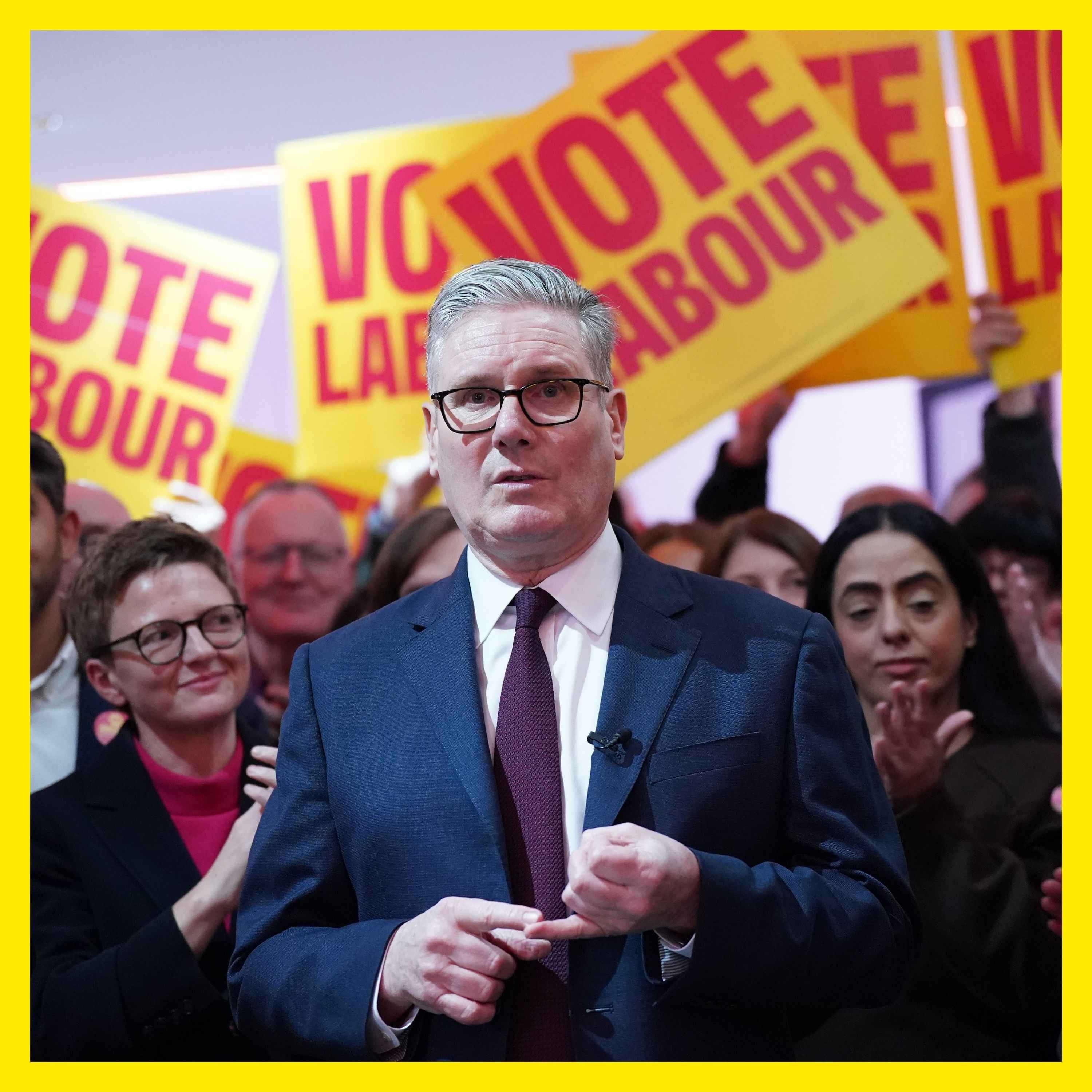
16:59Patrick Maguire: and that's the fundamental dynamic here. And constituency polling, there's not been much of it. It's notoriously difficult. It snapshots. It doesn't capture these movements towards the end of the campaign. And that's the context we've got to see Labour's remarkable decision. Keir Starmer ended up in a room full of activists in Gorton and Denton on Tuesday, on Monday of this week, one of the first times as a Labour leader, or rather a Labour prime minister's campaigner of our election, I think since Tony Blair did it, in the in the fag end of the major years and that is not necessarily a we're definitely going to win although Labour people are very bullish all of this sort of reverse expectation management is about signaling to those people who might vote green those wavering don't knows in the campaign listen this is between us and reform the prime minister's here you know we we are the coming force here you know you voted Labour last time vote Labour again trying to squeeze the greens out of a conversation.
17:59Patrick Maguire: But the reality is not that simple. This is part of the air war.
18:03Steven Swinford: And it wasn't a given that Kirsten would be there. So on the trip back from China, we asked him repeatedly, would you go to Gorton? Then he said, you know, the national campaigning will be announced in the normal way. And he wouldn't do it. And privately, people were raising the not unjustified concern that because he is such an unpopular prime minister, he could do more harm than good if he visited such a tight by-election. Now, clearly, he has now kind of put his colours to the mast. And that means that there is significant political risk here, that Gorton and Denton was already a big challenge and a big problem.
18:37Steven Swinford: But Starmer is now invested personally in it. He has been to the seat. He is owning this win or defeat, come what may. And if they lose, that could hasten his demise ahead of the May elections, so that that could be a problem for him. And if he wins, well, he emerges strengthened. We could hear talk of reshuffle. all sorts of calibrations change. So it is a hell of a moment.
19:00Patrick Maguire: That's right. I think what it also reveals is the underlying fact of the fragmentation of our politics. I think from Starmer's perspective, in the context of the unknowability, I do wonder either a slender defeat would make a dramatic difference to the sort of existing holding pattern, which is he'll get until May. What's your sense in terms of in the event that reform pip him to the post or even the Greens? Is it curtains for Keir if it's a slender defeat and if he shows that he was able to mobilise a fair amount of the vote, that it's not that the party has completely collapsed? Or even that, yes, it has collapsed, but we're now in a world where a slender share of the vote is actually enough to win?
19:47Steven Swinford: I think it's stalemate. I think the stalemate we've talked about in previous weeks that, OK, people are worried about Keir Starmer's leadership, They're worried the party could be heading for a giant iceberg ahead of them. But at the same time, they're not really able to do anything about it because the rival candidates aren't ready to go. Now, they might be come after May, but I suspect that come what may, after Denton, Starmer survives, I think. And I think that was our diagnosis the other week. Yeah. But after May, I don't know. And that's a much broader question. I think the reason I was slightly punchy and strong in calling out this idea that it's a two-horse race is because of what people have been saying to us privately, Patrick, and you've had this and I've had this as well.
20:29Steven Swinford: But if you talk to members of the cabinet, they're not talking to you about reform. They're talking to you about the Greens.
20:34Patrick Maguire: No, they're talking about the Greens and the Green campaign in Gorton. I say Gorton rather than Gorton and Denson because it is Gorton specifically, the sort of inner city bit of the constituency rather than the white working class, a slightly more sort of suburban post-industrial bit in Denton. But what a cabinet minister said to me last week, a senior cabinet minister said to me last week, you know, the Greens are whipping up hatred in relation to Muslim voters. They liken the campaign they're running to respect. You know, they say it's pure George Galloway raising the salience of Gaza is what this cabinet Minister accused the Greens of doing.
21:14Patrick Maguire: And they said, you know, we're being hammered among Muslim communities, the Labour Party, by the Greens. They're running campaign adverts in Urdu and other minority languages spoken in the various Muslim communities. You know, if you speak to reform sources, they also attest that Labour's support among sections of the Muslim community, because there's no one Muslim community. But among many voters who are Muslim, Labour are losing support because the Greens, and the Greens will quite openly say, yeah, we're holding Labour to account for its support for the Israeli government in Gaza. But, you know, cabinet ministers who've been have been really, really struck by this.
21:52Patrick Maguire: And these are the stakes for the Labour Party, because the reform bit of its electoral coalition, you know, sort of this whole thing is Labour, can Labour organise its way out of a collapsing electoral coalition? That's the SA question for this by-election. And to be fair, at the start of this process, we were basically saying this could be a Kefili-style blowout where you have reform and another progressive party and Labour in a really distant, humiliating third in one of its traditional strongholds. That doesn't appear to be happening. Credit to Lucy Powell and all the other people running Labour's campaign.
22:23Patrick Maguire: But if the Greens win, again, that changes the whole psychological climate of progressive politics because those cabinet ministers have been up and have seen what's happening, seen the Green campaign, they've seen the boards in the white middle class areas among young graduates, and And they've seen Muslim voters imbibing all of this campaign material from the Greens and really angry about Gaza and finding political expression through the Green Party, which is scrambling the heads of people in the Labour Party who basically think them as tofu munching, sandal wearing do-gooders. Right now, they think this is George Galloway's respect reincarnate.
22:57Patrick Maguire: So then if the Greens win, one for the Labour Party, that's a sort of, well, what the hell do we do now? Because we thought we had a sort of reform-shaped problem over here. The green-shaped problem is real. It's not a polling mirage. It's not Zach Polanski getting a million views on X. Real voters, voters we thought we had in the bank, are now voting for the Greens. And for voters as well, it is proof that you don't have to vote for the Labour Party to beat reform. And those two things are really, really powerful. So it could change the psychological climate of progressive politics. I mean, you talked about the psychology, Patrick.
23:34Patrick Maguire: I mean, I think it is just worth saying that through happenstance, there are just so many significant Labour figures sat around the Cabinet table who face a version of this own predicament in their own constituencies. I mean, Wes Streeting, in his proactively published correspondence with Mandelson, said that he thought he would lose his Ilford North seat. shabana mahoud came within a if not a whisker then um it was fought to a very competitive it's a campaign it's a campaign by the tiktok lawyer ahmed yaqoub and i think you know starmer has to present this as a contest between labor and reform but the question to which the answer matters so much not just here but elsewhere is well are the people who need to swing behind labor actually open to that narrative?
24:26Patrick Maguire: Or is there a position that because of Gaza, because of the government's track record, Labour might as well be reformed. They're equally bad and the Greens are the only people who provide an outlet for that protest vote. But have we witnessed a generational change and how has that imprinted itself on the electoral map? That is one of the big questions to which we'll get an answer in a few days' time. And if reform manages this, you know, we shouldn't rule it out. You know, any one of these three parties could win. Having a conversation with a senior figure of Nigel Farage's team just this morning, who said they've worked out that it's 440th on reform's list of target seats.
25:08Patrick Maguire: You know, if reform can come from nowhere to win one of Labour's safest seats, which is what this was at the last election it will be proof that if the left is split if the progressive block of the british electorate is split and if it is a three-way split it shows you that question as to how do you beat reform which will be the essay question for progressives at the next election has not been resolved it will show you if this persists reform can win anywhere the tories under first past the post in swathes of the country despite what everybody's saying about Kemi's brilliant PMQs, et cetera, et cetera.
25:45Patrick Maguire: All fine. Good for Kemi. Brilliant parliamentary opposition. But when you put this to voters, they'll just vote for reform. And reform can win anywhere as a result of those two dynamics. So that would be seismic as well. And it's why it's such a, whatever way you try and slice it, purely party political, the Labour leadership, the future of progressive politics, is Nigel Farage going to be prime minister, is probably one of the most politically significant parliamentary by-elections of this century, I think.
26:15Steven Swinford: And look, in the interests of balance, we'll run through all of the candidates in the seats. We've got Nick Buckley of Advance UK, Charlotte Cadden of the Conservative Party, Dan Clark of the Libertarian Party, Matt Goodwin of Reform UK, Sebastian Moore of the Social Democratic Party, Joseph Amar of Rejoin EU, Jackie Piercy of the Liberal Democrats, Hannah Spencer of the Green Party, Angelica Stogia of the Labour Party, Hugo Wills of the Communist League, and last but not least, Sir Oinkalot of the Monster Raving Loony Party. So a pretty contested field there. Right, finally, we wanted to just move on to events next Tuesday, where we would traditionally have had a budget, but it's been downgraded to something called a spring forecast.
27:02Steven Swinford: And I think Rachel Reeves is looking forward to it. She feels there's a lot of positive economic news that she wants to tell. What we're going to get is rather than a fully fledged budget with lots of tax and spending policies, we are just going to get the official forecast from the Office for Budget Responsibility, which will tell us about the health of the economy more broadly and where it's going. And I think in the Treasury, they are hoping that this will be proof that one, the plan is working and two, that it won't be that newsworthy. I'm not sure they're right on that second point.
27:33Patrick Maguire: No, but they are notably and perhaps surprisingly pretty chipper in Team Reeves. They talk about a hat trick of good economic news, that they had borrowing costs falling, record tax receipts. And what was the third goal in the hat trick, Steve? Retail sales. Yeah, retail sales as well. And, you know, obviously you can then say, what about the labour market? You know, unemployment rising for the fifth consecutive month. Growth isn't great. But Rachel Reeves thinks there is plenty of evidence, particularly on borrowing costs, that her plan is working. She's saying, trust me, it's working. It's been bumpy.
28:10Patrick Maguire: It's been painful. But the vital signs of the economy are improving. And that is why they want to de-dramatise this spring statement. You won't see a big Rachel Reeves media round or anything like it. It'll just be get up in the Commons, read out the numbers, sit back down. That's it. Nothing to see here. it's all working.
28:30Steven Swinford: What we are still getting and I'd love to do the but here because the but is great we're still getting the Office for Budget Responsibilities forecasts and assessment of the state of the economy and that is going to be a problem for the government because while there are signs of green shoots and things getting better there are still a lot of problems with the economy and I would point to three things that we'll be looking out for. One tax so the reason the economy is in a healthier shape is partly because taxes have gone up by so much. Number two unemployment figures. There are suggestions that that could get worse in future.
29:02Steven Swinford: We'll see where the numbers lie. And then number three, living standards are going to remain pretty stagnant over the course of this parliament. And for a government that is predicating everything on the cost of living, that's a problem. There's also another really complex and interesting story in there on migration, and it's just politically sensitive. So because of the policies that were introduced by both the Conservatives initially and Labour has continued, which have limited the right of people to bring dependents to the UK and also crack down on legal migration in other forms, net migration is collapsing.
29:37Steven Swinford: And it could be below 100 ,000 in coming years. Who knows, it could go to net zero migration as some people are billing it. So politically, you'd argue this is great news for Keir Starmer. It takes legal migration off the table. One of Nigel Farage's two totemic issues is reduced to literally zero. That will be one of the arguments. But the problem for Rachel Reeves is it's money. Migration is scored by the Office of Budget Responsibility at bringing in revenue. So if you have less migration, there is a fiscal consequence to that. And that is the kind of tension always over migration figures in government.
30:15Patrick Maguire: I just think it bears saying out loud that Rachel Reeves' disappearing act since the budget has been unlike anything i can recall from an occupant of number 11. yeah and and the hope is having proven in a low-key way an understated way the plan is working citation needed but that'll be the message rachel reeves can then start to make a political argument about the sort of economy she wants to build and that the labor party the labor government is trying to build and in the background of all of this you have looming electoral danger particularly in may and kia starmer's final play the last thing he does before he reaches for the whiskey the revolver is get out the white board that was once owned by sue gray and saying i'm doing a reshuffle the first name coming off that board is that of the chancellor and who's going there west streeting shabana mood ed milliband That'll be the question in the back of everybody's mind.
31:18Patrick Maguire: It is one of the first things you end up discussing if you see a minister or a special advisor at the minute. It's when's he going to do a reshuffle and who's going to be chancellor?
31:27Steven Swinford: We'll try to find some answers to those questions in coming weeks. But look, we will be back on Friday with a special bonus edition in the wake of the Gorton and Denton by-election. So we look forward to talking to you then. But for now, that's it from us, I think. Gabriel, could you push the enormous red button?
31:42Patrick Maguire: Thank you so much to Molly Guinness and you and Daughtry for, am I allowed to say another terrific episode? I think it was great. So thanks guys. It felt, it certainly felt. It felt good.
Three separate scandals have raised serious questions over Keir Starmer's judgement. It's empowered Labour MPs who were once written off as cranks. And with many files still to come out, the questions will keep on coming.
Meanwhile, the PM is selling the idea that the Gorton and Denton by-election is a two-horse race between Reform UK and Labour, but will voters believe him when the Green Party is campaigning hard on Gaza? Also, is parliament fit for purpose on the subject of the royal family?
Steven Swinford, political editor, The Times
Patrick Maguire, chief political commentator, The Times
Gabriel Pogrund, Whitehall editor, The Sunday Times
Producer: Euan Dawtrey
Executive producer: Molly Guinness
Picture credit: Getty Images
Audio credit: Sky News
Email us: [email protected]
This podcast was brought to you thanks to subscribers of The Times and The Sunday Times. To enjoy unlimited digital access to all our journalism subscribe here.
Hosted on Acast. See acast.com/privacy for more information.


