
 Ask ChatGPT



A live political discussion on the UK budget and Labour’s next political priorities, plus a cabinet row over artificial intelligence and upcoming welfare reforms (Milburn Review).
Stephen Swinford (political editor, The Times) and Patrick Maguire (chief political commentator, The Times).
The budget is “steady as she goes,” funded mainly by a “banker’s tax” and reduced “fiscal headroom” from Rachel Reeves (~£23bn to ~£15bn), with big decisions deferred to later (defence next year; welfare after the budget). Cabinet is divided on AI due to energy/data-center constraints and fears about job losses. Welfare reform may shift 16–24 NEETs away from benefits toward employment support, requiring upfront investment and reducing reliance on benefits.
AI energy limits (data centers struggling for electricity; Microsoft suspending plans). Welfare waste claims: substance-misuse claimants receiving backdated PIP cash; two million people not checked for benefit eligibility for years.
Written by AI. May contain mistakes.
Learn about the small, transformative moments in therapy that often go unnoticed.
“Therapy's biggest impact doesn't show up in some dramatic breakthrough.”
Julia Samuel introduces her podcast, focusing on resilience and human connection.
“Availability and coverage vary by state and insurance plan.”
Discussion about expectations for an upcoming budget and its implications.
“And look, what we want to take you inside today, we're going to talk about the budget.”
Analysis of the Labour Party's approach to the budget and political dynamics.
“And that, they think, is enough to do what they want to do.”
Exploration of how the budget could affect political narratives and decisions.
“and current priorities with very little money to play with.”
Discussion on major economic issues that will follow the budget announcement.
“it will all be about re-industrialisation.”
Examination of public expectations and trust in politicians regarding the budget.
“And that, we'll see politically how that plays out.”
Discussion on the current standing and challenges faced by the Reform Party.
“maybe this is the budget that sort of confirms that.”
Discussing the current state and challenges of the Reform UK party.
“So all of these people that are writing them off as an electoral force, you can't do that at this stage.”
Analyzing Labour's potential strategy in response to the rise of Reform UK.
“There is an area where their vote intersects and that's one of the political challenges.”
Exploring the division within Labour regarding artificial intelligence and its implications.
Discussing the impact of industrial energy costs on AI policies and the economy.
“members are losing jobs in call centres, in factories, etc, etc.”
An in-depth discussion on proposed welfare reforms and their implications.
“How do we truly navigate life's hardest moments?”

Get the gist, explore an idea or ask about something said.
 Claude
On The State of It, what are the key points of this episode?
Searching your listeningAutomatic transcript. May contain errors.
0:00Therapy's biggest impact doesn't show up in some dramatic breakthrough. It shows up in the smallest moments. You bite your tongue instead of escalating. You put your phone down instead of firing off that text. You say what you actually mean instead of what would hurt someone else the most. Nobody applauds those moments, but they quietly change your life. That's what growing feels like. And that's exactly what Grow Therapy is here for. Grow is therapy that works, covered by insurance. Sessions average$21 with insurance, and some pay as little as$0, depending on their plan. There are no subscriptions, no long-term commitments.
0:37You just pay per session. Grow connects you with thousands of high-quality, licensed therapists across the U.S., offering both virtual and in-person sessions, nights and weekends. You can search by what matters, like insurance, specialty, identity, or availability. And you can book a therapy session in minutes and begin in as little as two days, not the national 48-day average. See if you could pay as little as$0 for therapy in seconds at growtherapy.com slash ACAST. That's growtherapy.com slash ACAST. growtherapy.com slash ACAST. Availability and coverage vary by state and insurance plan. How do we truly navigate life's hardest moments?
1:21I'm Julia Samuel, psychotherapist and best-selling author. In my podcast Therapy Works, I open the therapy room for candid, insightful conversations with people known and unknown. Discover what my guests have learnt and failed to learn about resilience and human connection. Listen to Therapy Works today, wherever you get your podcasts.
1:50We are overexposed and we put a foot wrong here. The bomb vigilantes are ready to basically slit this government's throat. Welcome to this live edition of our podcast, The State of It, from The Times and The Sunday Times. I'm Stephen Swinford, the political editor of The Times. And I'm Patrick Maguire, chief political commentator for The Times. And look, what we want to take you inside today, we're going to talk about the budget. Everyone knows it's going to be quite painful. so how big are they planning to go and how are they feeling about it and will it be as bad as everyone thinks it will be open question but we've got some more detail for you of what's going on in that and then for the second half we want to take you inside government to talk about uh there was a big row last week in cabinet over artificial intelligence how hard should we be going how far should we be going on that they've got a big announcement coming next week and finally after about 15 years approving new oil and gas drilling in the North Sea for the first time in a very long time.
2:46But let's kick off on the budget. On the face of it, they're looking, it's not the most inspiring budget. They want a steady as she goes budget, a fiscal event that doesn't upset people. We know where the money's coming from now, most of it. They are going for a banker's tax. So they're going to raid the banks and much of the money comes from that. And then the rest of it is being kind of swallowed up from a very nice inheritance they had from Rachel Reeves in terms of the fiscal headroom. So they're taking money that she left behind, about 23 billion, and taking that down to about 15 billion.
3:16And that, they think, is enough to do what they want to do. Yeah. And it's interesting imagining the budget that we're seeing taking shape. Imagine if that had been presented by Rachel Reeves. So she would have announced a big tanks on bank profits in order to cut taxes on small businesses. As we've read in the Times in recent weeks, she would be refusing to give extra in-year funding to the NHS to deal with inflationary pressures and pay for a new pay deal to avert a nursing strike. She would be diverting green energy projects and the money used for them to defence, etc, etc. I mean, if Rachel Reeves had announced the budget John Healey is about to announce, it would have variously been panned by Labour MPs as a small number of them would have said the tax on banks was a bad idea.
4:07but a much larger number of them would have said that she'd lurched to the right. It was a really damaging and corrosive departure from Labour's priorities, particularly on the environment. And so John Healy, I think, and I wrote this in The Times on Friday, might actually be about to do something bold politically in terms of what he prioritises and how many departures he makes from Labour's received wisdom and current priorities with very little money to play with. I think he probably needs to because a lot of his colleagues, there is already some backbiting in the cabinet. So people don't think that John Healy is doing enough, basically.
4:47They were underwhelmed by his conference speech in cabinet. And that briefing at such an early stage in the government, we were quite surprised by it. It was some quite aggressive. You had someone calling him a dutch, basically. Yeah, look, there is certainly, I think there is certainly a bit of buyer's remorse among senior cabinet ministers that they didn't pick Siobhan Mahmood or Ed Miliband, who obviously give you divergent ideological approaches. But there is a consistency in how they approach the job practically. I mean, John Healy is sort of slightly baffling people, particularly that meandering conference speech you mentioned, Steve.
5:24But yeah, words like dud, out of the loop is another critique. This idea that actually the economic thinking is being done, such as it is by Andy Burnham and Louise Haig. But ultimately, the Chancellor holds the pen on this entire process. So it will be interesting to see, well, and crucial to see, whether he can reconcile or whether he can sort of spin all of this, not as a series of tactical choices, but try and mount an argument about political economy. And if you speak to, you know, Team Healy and to the Chancellor himself, it will all be about re-industrialisation. It will be about, you know, the streets of the pit towns of the Rother Valley, where he is the local MP, not in Rother Valley itself, but in the Rother Valley more broadly.
6:17And, you know, you had that at a conference sort of harking on endlessly about the miner's lamp in his office. And the risk is, it seems like a series of disjointed series of nostalgic anecdotes rather than a sort of coherent argument about the British economy in the 21st century. Look, we know roughly the narrative that they want to spell. So they want to say this is about family businesses and high streets. They are going to raise business rates for family businesses so that they are taken out of business rates entirely. That's the plan. So that is a kind of tax cut for them. And then on the other hand, there's going to be a tax raid on the online giants, which is there's a political logic to that.
6:55You can see why they want to do that. Crucially, it doesn't cost that much money to do that. And it pays for itself. That's the kind of thinking. More broadly, what's interesting about this administration, I have been reporting on politics for a very long time now. And budgets are always big events. They are the big political event of the year. Everything gears up to them. That isn't the case with this budget. If you talk to people in number 10, they're not actually that excited or even that interested in the budget. They're excited about the 10-year plan, which is coming later this year, when Andy Burnham will do his whole vision thing and stand up in front of a big audience and kind of give that.
7:30They're less interested in that. They see this budget as something to get through and get past. And that, we'll see politically how that plays out. It could end up being a mistake because this is one of the few moments as a government you get to actually change things. But what they've done instead is they've taken all the big, difficult things, the really almost intractable issues. So welfare, the Milburn Review, which is by a former Labour cabinet minister called Alan Milburn, has been shunted off into the distance. That is coming after the budget. We think that Burnham's going to make an intervention this week to tell everyone, well, actually, I am still getting scripts with welfare.
8:04But that at the moment is coming after the budget. And then defence spending, the kind of really big one, is for next year. So when I look at the bigger fiscal picture, what we have is this slimline event here, which doesn't have many big decisions. But next autumn, because they've got to do defence spending then, because they're going to have to invest huge amounts of money in employment support to try to change the welfare system, that is when things are going to change. And that's when you're probably going to get the very big decisions on tax and spend, including tax rises. But politically, they've decided that they don't want to do those decisions today.
8:39They want to do them next year. And I'm not entirely sure of the wisdom of that, given that next year is obviously closer to the election. I mean, if you read some people, we may even be past the election at that point. But we don't think we're getting an early election at this stage for what it's worth. No, no, I agree. But the logic of it does sort of become irresistible when you confront the number, when you imagine confronting the number of knotty, seismic, generation-defining issues you've just mentioned, Steve. And I'm not entirely sure the Labour Party is equipped to do that within a budget cycle and maybe not actually within the scaffolding of Andy Burnham's 10-year plan.
9:20We'll see. Yeah, it is clear. And, you know, especially speaking to some of the other departments who are tangling with the Treasury right now. It is clear, I think, that the Treasury's aim is to basically get through this, make the sums add up and try and tell a good political story. Right. They're not really trying to reinvent the wheel. I mean, they would probably say actually we're trying to, we are in fact trying to give high streets a new settlement and the tradesmen and the self-employed beautician and to, you know, right the historic wrong of Labour always lumping these people with a disproportionate tax and regulatory burden.
9:57I mean, you know, who knows? There is a reason reform have also alighted on that crucial constituency of voters, always the locomotive force of populism. I mean, you'd be forgiven for not having noticed reform's economic messaging of late, but they have done something very deliberate, which is basically zero in on exactly the sort of people John Healy is talking about. on tax, on the personal allowance, on VAT thresholds, on tax, on overtime, abolishing that, on opposing very, very aggressively the Tory cuts to inheritance tax. So there is a sort of, both Labour and reform are focusing exclusively on the sort of, the squeeze middle, the aspirational, low middle class, skilled manual labour, etc.
10:42And that's a constitution the Tories have nothing to say to. so maybe this is look fiscally it is sort of nothing to see here it is a story of continuity it is the chancellor obeying by the rules but maybe you know it is the um it is the moment where this idea that there are two elections happening in this country at the next election i.e you have labor and reform um in what you might call deep england in the north and the midlands and you have Labour versus the Tories in the home county well Libdowns versus the Tories in the home county southeast but in commuter England in the southeast you have Labour versus the Tories maybe this is the budget that sort of confirms that.
11:24The one thing that might play in their favour slightly Patrick from what we've seen so we get you go after do polling for us and we ask them ask them questions on the budget people's expectations for this budget are unbelievably low so three percent of people that were polled said that they thought it would make them better off That's just 3%. So people don't expect very much from this budget. But by the same token, Andy Burnham actually does relatively well on economic competence. This is, you know, a self-confessed socialist who has said some pretty big things about what he wants to do with the economy.
11:5529 % of voters or thereabouts trust him on the economy. That's higher than Kemi Badenoch and that's higher than Nigel Farage. So that is where the political logic of we can do the steady issue of his budget, get through it, and then more difficult decisions. Manana will take the next year comes from, I think. Yeah. And it's the interesting thing. There are two ways to it, because there are two schools of thought or rather emotion, I'd say, at the top of government right now. The first is that one, which is everything's sort of hunky dory. I mean, at Chequers last week, the cabinet were presented a big presentation on polling by a woman called Michelle Knappshant, who's one of the PM's political advisors, survivor from Keir Starmer's regime.
12:35Anyway, and there was a slide on one side of it. It said before Labour conference, these are the parties who are most trusted on whatever issue. And it was a real sort of patchwork of colour. The Greens were running on climate, reform were running on crime and immigration and justice. You know, the Tories are winning on the economy and Labour were basically only winning on the NHS. After Labour conference, Labour's polling and external polling, you know, it was a sea of red with a little turquoise island in the middle. Unsurprisingly, that was on immigration. And if you were the cabinet ministers watching, I think, fell into two groups.
13:13The first were the ones who said, this is great, historic opportunity. Let's crack on. we've got a leader who can string two consecutive sentences together at least in public now they seem to like him let's press the advantage and even if even if this budget isn't amazing we'll be able to talk ourselves out of it and look we have the goodwill the other parties don't the second group are the people who sort of look at that and think you know we are definitely going to mess this up somehow you know it's there i wrote my column it's sort of redolent of the lyric by James you know if I hadn't seen such riches I could live with being poor and I think that's what a lot of cabinet ministers a lot of ministers and cabinet ministers are looking at now thinking god this is great but I psychologically really struggling with the idea that Andy or John or whoever is inevitably going to mess this up at some point we should just talk briefly about reform before we move on to other things so look the reform have come down from their heights no no doubt the polling doesn't lie that is correct that they were somewhere between 28 and 30 routinely points in the polls and they're now kind of around 22 sometimes lower but but kind of you know and there are suggestions the toys may be able to take them that's all fine it is very early to be writing reform off as a force the thing that we see when we look at the polls is actually there are a huge cohort of voters who wake up unidentified with reform now these are reform voters they are not kind of like switchers from the toys who have dabbled they wake up they think reform, they vote reform, they back Nigel Farage, and they're not going away.
14:45So all of these people that are writing them off as an electoral force, you can't do that at this stage. They've still got millions of people that support them. From what we've seen, one of the biggest factors in their demise in the polls, and the problem they've got, is restore. And we see from people that voted reform at the last election, as many as 15 % in some of the polling we've seen are going to restore. So they want a harder alternative on the right. But that's not to say that reform cannot win those voters back. And it's also not to say that there isn't this huge tranche of voters. So yes, Nigel Farage has problems.
15:22Yes, Reform UK have significant issues, and they're struggling to convey their central message on migration because of the noise around those other issues. But at the same time, they are still a significant political force. Yeah, look, and I think the key, I think that slide I was talking about that was shown to the cabinet last week speaks volumes, right? Reform is still by far the most trusted party on the question of migration. And I think something Westminster forgets is if you go, if you leave London and you go and you head back to the places that were once so in vogue in British politics, you know, deep England, the coalfield towns, the sort of seats that, you know, Labour and the Tories were either, you know, marshals in 2005 or 2010 or safe labour seats or wherever you know exactly this sort of place i'm talking about um you walk into any pub or any shop or any uh any kitchen table immigration is the thing people are talking about and the really striking thing about kemi bay knocks conference speech in particular was there was no mention there was basically no mention of immigration at all immigration you know at tory conference last year on the letters it said stronger borders stronger economy stronger country now it just says stronger economy stronger country right so So I think, and just to return briefly to what I was talking about, the economic messaging before, I think reform have almost sort of, one way to look at it, and this is definitely post-op reasoning, but in a sense, they are sort of liberated by their poll lead shrinking in terms of politics they need to pursue.
16:47Which is, you know, yeah, back when they were polling at 30 and thinking, how do we get to 35? The question was, how do we present Nigel Farage as a prospective prime minister? All of a sudden, he's thinking, how do we convince the FT that we aren't going to abolish the OBR? Now, actually, particularly on economics, and we'll see if they can maintain this discipline more broadly, they have a clearer sense of where their voters are, who they are, and what exactly their map is. and it's still probably at this stage a slightly bigger map than the Tory map and a more geographically diverse map but I'd say it is that sort of 2019 that 2019 Tory voter that they are going after and yeah, we'll see if they can we'll see if one, they have the space and they are listened to on that economic messaging and also whether and I say this is also a big question You mentioned Restore, Steve.
17:49Does the rise of Restore pull them into a place where they are less and less appealing to the softer half of that 20 % to 25 % that they call their own because they are trying to outbid Restore on questions of migration? Let's see. the other aspect of it is when you talk to people in number 10 and people in senior people in labor what they actually want they want uh the tories to succeed it's a very strange thing but they want a battle with the tories because they know that if the tories are successful that that isn't attacking their but the tories are fishing in completely different waters they're fishing in the southeast they're fishing for votes among libtems among wealthy people what they don't want to do is for on the right right of politics for to see reform succeed because if reform succeeds that is a direct challenge for them in red wall areas.
18:38There is an area where their vote intersects and that's one of the political challenges. So you've got this very strange situation where you've got both the main parties, I think, would quite like a return to the politics of old. They would like a return to the two-party system and the challenge that they've got is obviously reform is still very much in the room. Yeah, look, I think if they do think that in number 10, they're completely mad. I mean, it doesn't redound to Labour Party's credit, but I think, I mean, clearly the Labour Party's best option, even allowing Franny Burnham's talents and the residency has with, you know, the progressive block of voters, wherever they may be, the Labour Party's best hope of winning another election is clearly uniting an anti-reform front.
19:24And that will, by the way, that isn't just sort of add half the green vote, add half the Lib Dem vote to the Labour vote and hunky-dory. if you look at the polling on a constituency by constituency basis, you know, they're sort of given a straight choice between Labour and reform one in five Tory voters said about Labour you know, it's clearly for Andy Burnham to be an acceptable you know everybody's the most acceptable anti-reform candidate even for Tories if for whatever reason Nigel Farage disappears and the Tories are back, you have an unreconstructed Labour leader who is willing to talk left in a way that, with the exception of Corbyn, very, very few have done for the best part of half the century against a Tory leader who wants to have a pretty straightforward, very familiar fight on the economy at a time when I'd say popular consent for what the state does and the state's spending priorities is more thread better than ever and i think history would show us that there is often a pretty predictable answer to a labour leader that invites that debate and without reform there as the drag on the tory ticket the spoiler on immigration or the bogeyman for progressives i think andy burnham's job is much harder so they labour people should be careful what they wish for we talked about artificial intelligence so this came up at cabinet last week and there was discussion around it sunday telegraph has got an interesting story today uh talking about how ed miller band is opposing greater investment artificial intelligence because of concern about the huge amounts of energy ai data centers need i think microsoft may have announced it's suspending plans for a data center because it can't get enough electricity for it today that that's that's just been announced today so this issue it is fair to say it divides cabinet right that there are almost some kind of ai evangelists who see the opportunities who think that we should be taking them and grabbing them with both hands and on the other hand you've got people that are asking a very simple question which who is this for and i say that because there was over the summer a piece in the ft and it had an anonymous quote from someone who was talking about driverless cars and it was like okay great driverless cars in london who is this for whose purpose is this serving it's not black cab drivers it's not people working in london it's ultimately silicon valley and big companies over there and why I'm drawing that to your attention you may see that as a Luddite perspective you may not but there is actually a debate that Labour hasn't even really begun to have yet about jobs and artificial intelligence and about is this going to be a great enabler of employment or is it going to put jobs at risk and those we were told at Cabana those kind of this debate was starting to kind of come out in Cabana I mean they don't know what they're grappling with at this stage but certainly you can see some of the dividing lines coming out early on yeah and look i think that but it's worth saying this is this is an age-old debate this sort of divide is age-old not just in the labour party but in the in the in the british and more specifically english left that any time there has been a major technological advance think of uh you know there's a reason in that famous opening sentence to um you know the making of the english working class that E.P.
22:42Thompson mentions the Luddites, right? You've also got the Captain Swing riots in agrarian England in the early 19th century because the left's, the big instinct on the left is to rail a, you know, technological process, technological progress or advance is always, you know, more often than not, bad for the poorest worker. And that briefing from an ally of Andy Burnham to the FT over the summer talking about job losses for drivers, drivers uh taxi drivers delivery drivers the sort of you know one of the few reliable sources of income in in the towns of makerfield and beyond and i think is you know you can draw a straight line between that on the other side of that particularly in the labor party in the 20th century you always have the revisionists the new labor lot who always wanted to own progress to own the future you know it's the sort of um you know despite the ganex raincoat and hp source and and the pipe that was the original version of harold wilson right white heat etc etc That was very much the new Labour mood.
23:43Where does Andy Burnham fall on AI? Because it's a really interesting question. And I don't think that the cabinet last Tuesday really revealed much as to where the prime minister stands. It revealed there's that age old device done in the cabinet. I mean, you had Kanishka Narayan, the AI minister, presenting a paper on AI and some cabinet ministers like Alex Norris, the Justice Secretary, who have found that AI has been helpful to them in public service, public service reform, sort of sailing in behind him. But you also had lots of people asking these classic philosophical questions, questions of regulation, questions about the economics, questions about the energy.
24:24I don't think the Labour Party has even begun to have a serious conversation about this or thought about it properly because actually you get to the heart as ever of what the Labour Party is who it's for and how you change that at a time when the labour market is changing beyond recognition and these changes to the labour market are more profound really than anything we saw in the 50s or earlier than that because as Gary Smith or any other union leader will tell you you know, unions are losing sort of thousands of jobs a month to AI, right? Thousands of their members are losing jobs in call centres, in factories, etc, etc.
25:00And, you know, the Labour Party's sort of asleep at the wheel on this, I think. And, you know, it's a big call for Andy Burnham to make. Well, if we look back at Keir Starmer, when he embraced AI, and I'm sure we all remember that state visit from Donald Trump when they came over. And he came over with Jensen Twang, he came over with all the tech giants, and they unveiled this extraordinary, I think it was it was certainly a multi-billion package maybe more it's a huge package of investment from ai companies when we look back at it over a few months later none of that investment had actually happened they were promising different developments and sites now obviously that was bound up with trump turning on starmer and subsequently you know going from being his best mate to being you know treating him with total contempt but a lot of the promised ai investment didn't actually happen so that is one of the questions that I'm told is being discussed among ministers how much of this is genuinely destined for Britain and if it is destined for Britain how much of it can we actually cope with given the grid that very simple thing of needing enough electricity to power these AI data centers so that's one of the questions that they're asking yeah exactly and yeah we come back to the to the oil and gas question at that point because it's you know it's I think and this is another problem I think for the Labour Party or something they're missing is that always the energy discussion is couched in cost of living terms, it's couched in domestic energy price cap, when really I think the bigger problem that everything is downstream of, as you say, is industrial energy costs.
26:31And if Andy Burnham wants to re-industrialise, whatever that means, or he wants to pursue a more Starmright idea of, and this would be a cause close to Andy Burnham's heart big soap factory in Warrington Keir Starmer one of his last speeches at the old Lever Brother soap factory in Warrington saying oh it doesn't matter that this was uh this used to employ 100 000 people or whatever now it's a data center I mean never mind the fact that'll that'll you know employ about 20 people um there is there is a there was a um a sort of we wouldn't call it industrial strategy but there was a there was an AI policy being pursued by Keir Starmer's government But without an industrial energy policy or supply side policy, it'll be gone.
27:15So and, you know, the cost of living government, any cost of living government has to think about these big issues as well. And you get the sense that this government has not had the time, space or inclination to do so yet.
27:29Therapy's biggest impact doesn't show up in some dramatic breakthrough. It shows up in the smallest moments. You bite your tongue instead of escalating. You put your phone down instead of firing off that text. You say what you actually mean instead of what would hurt someone else the most. Nobody applauds those moments, but they quietly change your life. That's what growing feels like. And that's exactly what Grow Therapy is here for. Grow is therapy that works, covered by insurance. Sessions average$21 with insurance and some pay as little as$0 depending on their plan. There are no subscriptions, no long-term commitments.
28:06you just pay per session. Grow connects you with thousands of high-quality licensed therapists across the U.S., offering both virtual and in-person sessions, nights and weekends. You can search by what matters, like insurance, specialty, identity, or availability. And you can book a therapy session in minutes and begin in as little as two days, not the national 48-day average. See if you could pay as little as$0 for therapy in seconds at growtherapy.com slash ACAST. That's growtherapy.com slash ACAST. growtherapy.com slash ACAST. Availability and coverage vary by state and insurance plan. How do we truly navigate life's hardest moments?
28:51I'm Julia Samuel, psychotherapist and bestselling author. In my podcast, Therapy Works, I open the therapy room for candid, insightful conversations with people known and unknown. Discover what my guests have learnt and failed to learn about resilience and human connection. Listen to Therapy Works today, wherever you get your podcasts.
29:22We want to give you an insight into where we're going on welfare. So we get the Milburn Review, which is coming after the budget. But one of the big things in the Milburn Review, from everything that we're hearing, is that for young people who are aged 16 to 24 and not in employment, education or training, the NEETs, this is people whose lives are effectively at this point being consigned to a life on benefits. It starts there. They're going nowhere. And the system kind of traps them and they become trapped on that system. Milburn, we think, is going to recommend moving away from them being able to claim benefits at all during that period, possibly.
29:59We're not sure on the shake of this, but he is going to basically say young people shouldn't be getting benefits. They should be getting employment support and it should be money and it will require a lot of investment up front. But rather than the default being you get your benefits, you take your money goodbye and the system just consigns you to nothingness, everything should be channeled through employment support. And there's a stat in his interim review, which is very telling, that for every£25 that is spent on benefits,£1 is spent on employment support. That cannot be right. And that is obviously morally wrong.
30:35Burnham, we're told, feels this very strongly. And he wants to use a lot of his political capital to do this. But he will need to use all his political strength to do that. Because actually, if you try to get through a solution like that past Labour MPs, it's a hard sell. It's basically barring young people from claiming benefits. And the carrot is obviously you give them employment and support instead. But for a lot of people and a lot of Labour MPs in their constituencies, when we look at, you know, the number of needs, the proportion of needs or the proportion of disability claimants, very high numbers of their constituents are in those categories.
31:10So it's a really difficult argument to win and one that is actually, if they get it right, it would be a more significant political legacy than most prime ministers could do. But as we've seen with Keir Starmer, it can go very, very wrong very quickly. Yes. And the big variable here is the extent to which the Labour Party realises that this is its sort of last chance saloon. You know, that if they if they don't fix this, a government of the right will come and take a sledgehammer to what is left of the post-war welfare settlement. And basically nobody will be getting their incapacity benefits.
31:45so um if they profess to care about the vulnerable and the sick and the poor and the needy i think they're going to have to do this now it's also a test of um that milburn burnham mcfadden argument on uh opportunities for young people and look it's also going to be a test of whether they understand the the world this has created where you know it's actually there's a perverse incentive to get yourself on pip because it's you know because the alternatives i.e trying to find a job or even having a job in Swayze, the country, are much, much worse. So this is probably the biggest challenge that this Labour government will face.
32:25And it will be the biggest test of Andy Burnham's political abilities and skills as a party manager and communicator. But, yeah, we'll see because it's also, you know, they get a step wrong and water this down, as they ended up being last time. I remember after Keir Starmer's welfare rebellion, it went from five billion cuts to somehow the rebels had engineered the package of welfare cuts as a 1.5 billion increase in welfare spending. So we've seen what happens when the PLP go feral. It helps that lots of the people who led that rebellion are now very senior figures in Andy Burnham's government.
33:03But what will they say if the Parliamentary Labour Party pull the same trick? We don't know. Will they willingly swallow it this time because they're being led by Andy Burnham? And there's an argument beyond, sorry, we don't have any money. And if you don't vote for this, you're a bedwetter and a freak and you need to get a grip. I don't know. I think the way they're going to try to sell it is what Andy Burnham says, we need to reduce the benefits bill, but he is opposed to crude cuts. Now, what does he mean by that? Well, actually, we're not quite clear. And one of the things that strikes me looking at the early Melbourne proposals we have is I think what's going to come out of this, it will need a lot of upfront investment.
33:43So for the next five years or so, it will need more spent on employment support and therefore the broader system before you start to get some benefit. So what you're asking Labour MPs to vote for and support is additional spending effectively on the system to repair it and re-engineer it. And that's the way that they'll sell it. Whereas the way Keir Starmer sold it was, let's change the criteria for personal independence payments. You get a certain number of points. If you're disabled enough, you get higher level of payments. Well, we'll kind of tweak them so that, I don't know, if you can't dress yourself, you might get fewer points, that kind of stuff.
34:19and it got very quickly into a really ugly row in the Labour Party over descriptors of disability, which is not where the party wanted to be. But for what it's worth, all the impression we get is that Burnham wants to have this fight. And if you want to see why any prime minister should have this fight, read the Times, because we did a welfare inquiry and it had some unbelievable examples of waste. One of them, for example, was that people can claim PIP disability benefits for substance misuse issues. In other words, drug addicts. Right. That's a specific category. And it takes time to claim it.
34:58Right. And to qualify for it. You have to go through lots of assessments. So what was happening was that people were getting their claim and getting it. And then it would be backdated. So you had drug addicts getting tens of thousands of pounds of cash payments in one go. and the addicts we spoke to some of the people that had been through this and they said yeah I blew it all on drugs I went on a massive bender and obviously that is not helping anyone but the system is full of kind of perverse things like that the other big finding was that two million people are not being checked at all on the benefits so their conditions may have improved they may not need the benefits but no one's checking no one's assessing it and some people are waiting 18 years for checks on their benefits from some of the data that we pulled so So the system is very clearly broken.
35:45And I think it will take some brave politics, but there is a prize for any prime minister who's willing to grip that. Yeah, I think so. And, you know, I think the biggest prize the Labour Party could have, could win for itself, is the end of its reputation as the welfare party, right? Because what do reform and the Tories, you know, there's much there's much divergence now in their um in their economic messaging but what's consistent is that labor the welfare party and um for for the voters the labor party is um trying again to win and talk around to its cause that is that is that is electoral kryptonite so they can if they can fix this um or even go half the half the way to fixing it or you know get a package of welfare reform through you know be hugely politically significant i think it is and also what was fascinating is for opposition parties it's kind of a gift so if you look at the reform prospectus or the tory prospectus whether it's reform increasing income tax thresholds or the tories with their pledge to effectively abolish inheritance tax for properties or take properties out of inheritance tax entirely both of all of their flagship policies are being flagged by putative cuts to welfare.
37:06So they've set them out, they say how they do them, but they are enormous, the cuts to welfare they're suggesting. So it is giving all of these tax-cutting fodder to the opposition, basically, the longer this problem goes, because they'll just say, well, you're spending ever more on welfare. We will spend that on cutting taxes. I think that probably brings us to, unless I've got any prescriptions, but it probably brings us to an end today. So we just wanted to say to all of you for coming and listening to us and listening to the podcast, thank you so much. We really appreciate it. And just please keep listening.
37:36Please keep in touch.
37:45How do we truly navigate life's hardest moments? I'm Julia Samuel, psychotherapist and bestselling author. In my podcast, Therapy Works, I open the therapy room for candid, insightful conversations with people known and unknown. Discover what my guests have learned and failed to learn about resilience and human connection. Listen to Therapy Works today, wherever you get your podcasts.
In this live recording of The State of It, Patrick and Steve assess the state of play ahead of budget day.
John Healey is preparing a steady-as-she-goes budget, but with the big decisions on welfare, defence and tax rises pushed into next year, is Labour ducking the difficult choices?
Meanwhile, AI evangelists want Britain to seize the opportunities, while Ed Miliband is pushing back on environmental grounds. Cue an almighty cabinet row.
Reform UK’s poll lead has narrowed as Restore eats into its support. But is Westminster writing off Nigel Farage too soon? Reform remains the most trusted party on immigration and is sharpening its economic pitch to working-class voters.
Finally, Andy Burnham faces one of Labour’s biggest challenges: reforming the welfare system.
Recorded in Westminster as part of The Battle of Ideas festival.
Steven Swinford, political editor, The Times
Patrick Maguire, chief political commentator, The Times
Producers: Euan Dawtrey, Harry Kitson
Executive producer: Molly Guinness
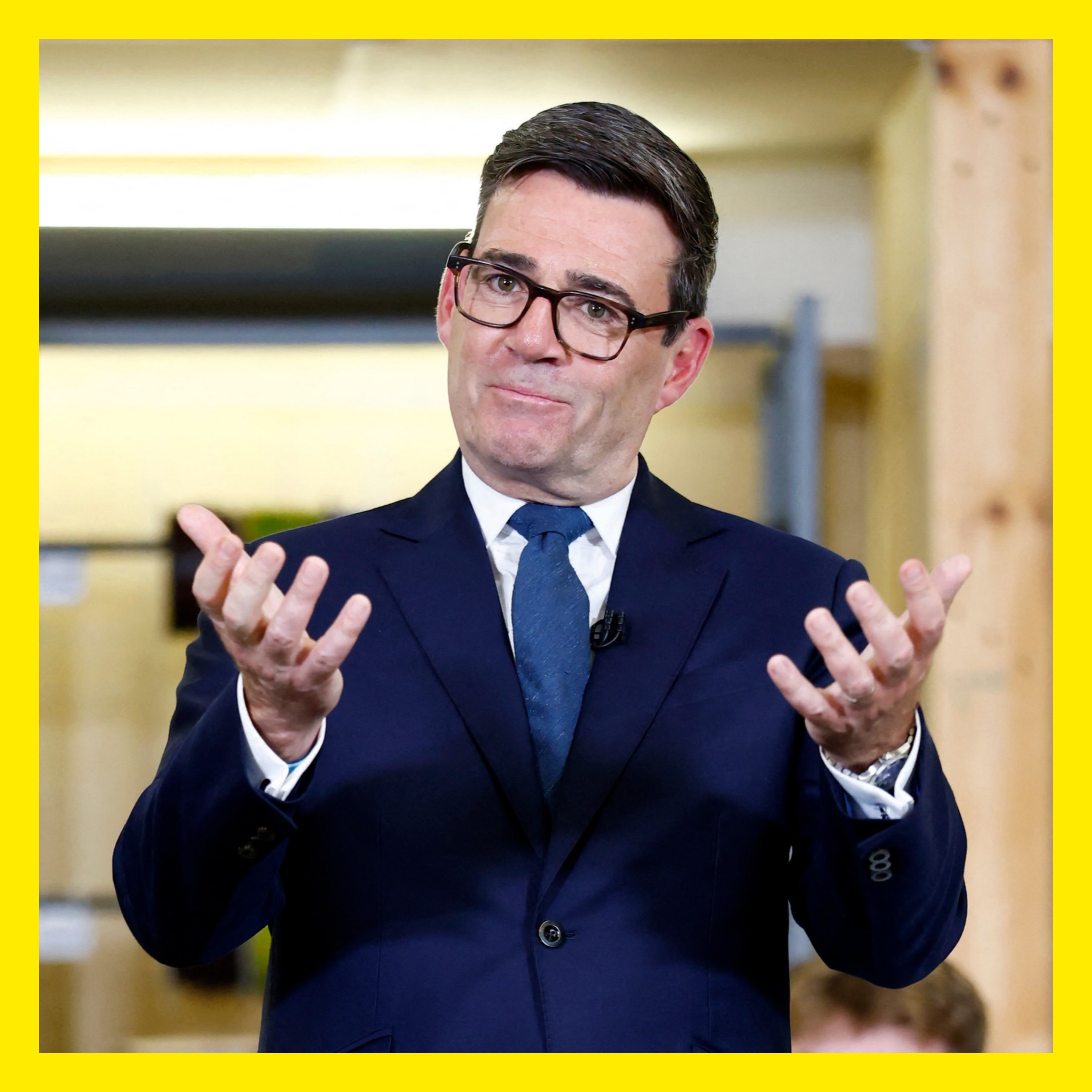
Picture: Getty Images
00:00 - "The bond vigilantes are ready to split our throats"
00:09 - Inside Healey’s budget: Bank taxes & disappearing headroom
02:04 - "He’s a dud": Cabinet backbiting over the Chancellor
04:34 - The budget trap: Delaying big tax rises until next year
07:02 - Courting the squeezed middle: Business rates vs Reform UK
08:53 - Shock YouGov polling: Only 3% expect to be better off
11:24 - Is Reform UK finished, or are the pundits wrong?
15:45 - The bizarre reason Number 10 secretly wants a Tory comeback
18:12 - Cabinet AI civil war: Silicon Valley vs British jobs
22:30 - The UK grid crisis: Can we even power AI data centres?
24:51 - The Milburn Review: Plans to ban benefits for under-25s
29:19 - Broken PIP system: Backdated lump sums and 18-year assessment delays
32:15 - Can Labour ever shake the "welfare party" label?
This podcast was brought to you thanks to subscribers of The Times and The Sunday Times. To enjoy unlimited digital access to all our journalism subscribe here.
Hosted on Acast. See acast.com/privacy for more information.


