 Ask ChatGPT
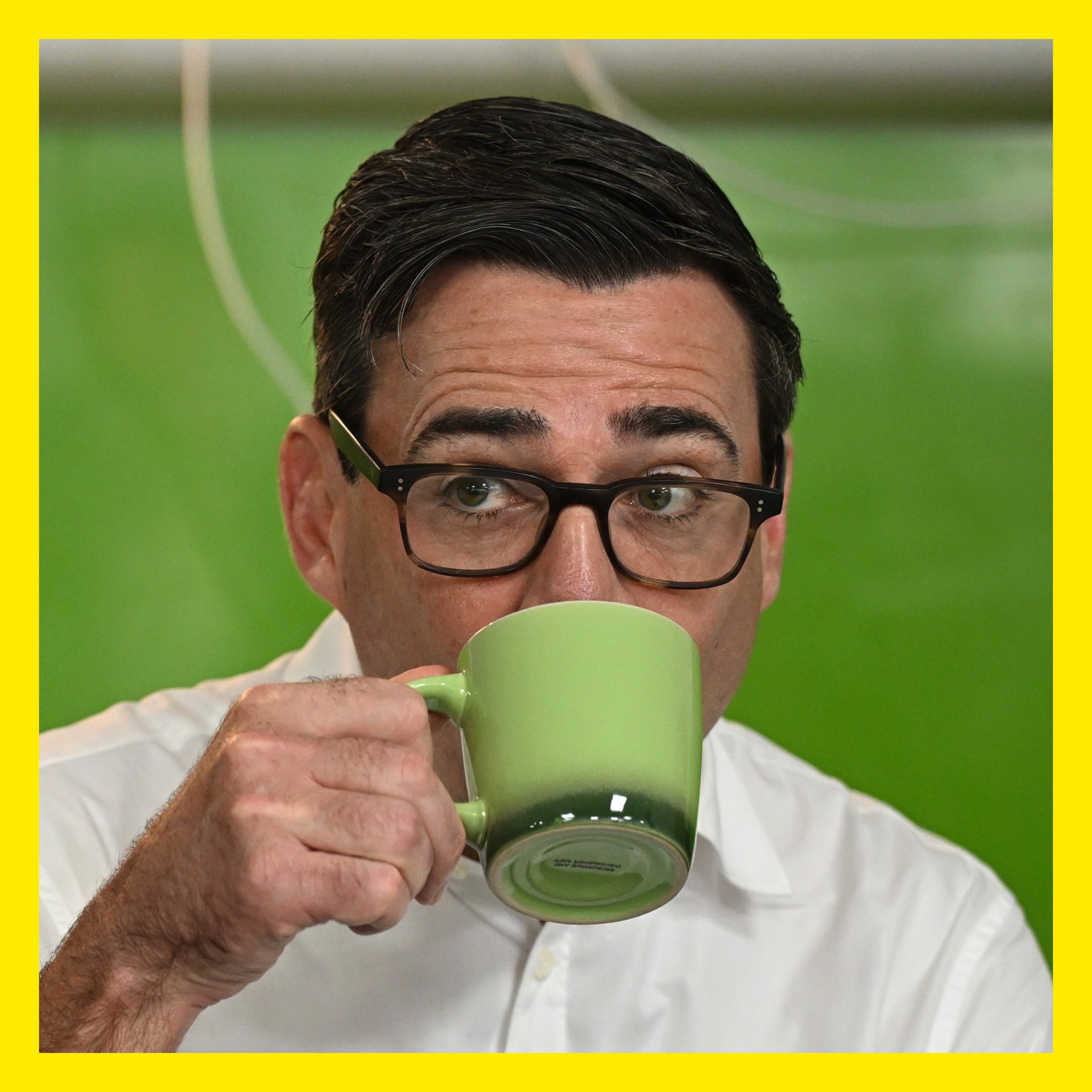


The State of It podcast discusses Andy Burnham’s major Labour Party conference speech as Prime Minister, framing it as an early “manifesto” for a future election. It focuses on three pledges: ending the pensions “triple lock,” creating free personal care at end of life, reopening debate on closer EU ties, and pursuing electoral reform toward proportional representation.
Stephen Swinford (political editor, The Times) and Ben Reilly-Smith (political editor, The Sunday Times). Both are journalists covering UK politics and Labour conference reactions.
Burnham is reshaping the electoral landscape; the triple lock will become a “double lock” with a reduced earnings link, saving about £15bn/year by 2040. The care plan will require tax rises (likely income tax or National Insurance) and is a political gamble.
Burnham’s emotional references to his father Roy’s Alzheimer’s; comparisons to past dementia-care debates (2010 “death tax,” 2017 Theresa May). Europe: Burnham signals multiple options after an EU summit, including possible rejoining. Electoral reform: a commission to replace first-past-the-post with proportional voting, potentially enabling coalitions.
Written by AI. May contain mistakes.
Discussion on Burnham’s manifesto and its implications for the Labour Party.
“I'm Stephen Swinford, the political editor of The Times.”
Analysis of Burnham's proposals on social care and the pension triple lock.
“I want a big fight about spending 10, 15, 20 billion, who knows how much on social care a year and how we're going to fund it.”
Debate on the implications of changing the pension system and its political risks.
“Should we run through those three big areas?”
Examination of Burnham's approach to EU relations and the shifting political landscape.
“She had the ring ripped from her finger.”
Exploration of Burnham's push for electoral reform and its potential consequences.
“I just wonder whether it might end up looking like something like what Tony Blair outlined in his big provocative essay as Keir Starmer was wobbling.”
Discussion on potential changes in voting systems and their implications.
“going to have coalitions rather than majority rule.”
Evaluation of the themes and messages in Burnham's recent speech.
“There's a podcast out there with fans waiting to be your next customer.”
Highlighting Burnham's political style and the challenges ahead.
“But actually, there is a really big problem today that is not yet being addressed.”
Speculation on future political announcements and reactions.
“But look, next week we're back from Tory conference.”

Get the gist, explore an idea or ask about something said.
 Claude
On The State of It, what are the key points of this episode?
Searching your listeningAutomatic transcript. May contain errors.
0:00Hi, I'm Danny Fortson from the Times Tech Podcast, which is currently sponsored by ServiceNow. ServiceNow describes itself as an AI control tower for business reinvention, connecting systems, data, and AI so workflows more smoothly across organizations. The platform integrates with different clouds, models, and data sources, bringing them together in one place. To learn more about how ServiceNow puts AI to work for people, visit servicenow.com. Quick question. When was the last time a display ad changed your mind? Now think about the last time a friend told you about something they loved. Different feeling, right?
0:38That's how podcast advertising works. A host who's built real trust with their audience talks about your brand in their own words, in their own voice. It doesn't interrupt the experience. It's part of it. With Acast, you can access the world's largest podcast marketplace. Choose the right shows, the right audiences, the right format. Then watch the data tell you it worked. You're not buying impressions. You're buying influence. Learn more by visiting ACAST.com slash advertise.
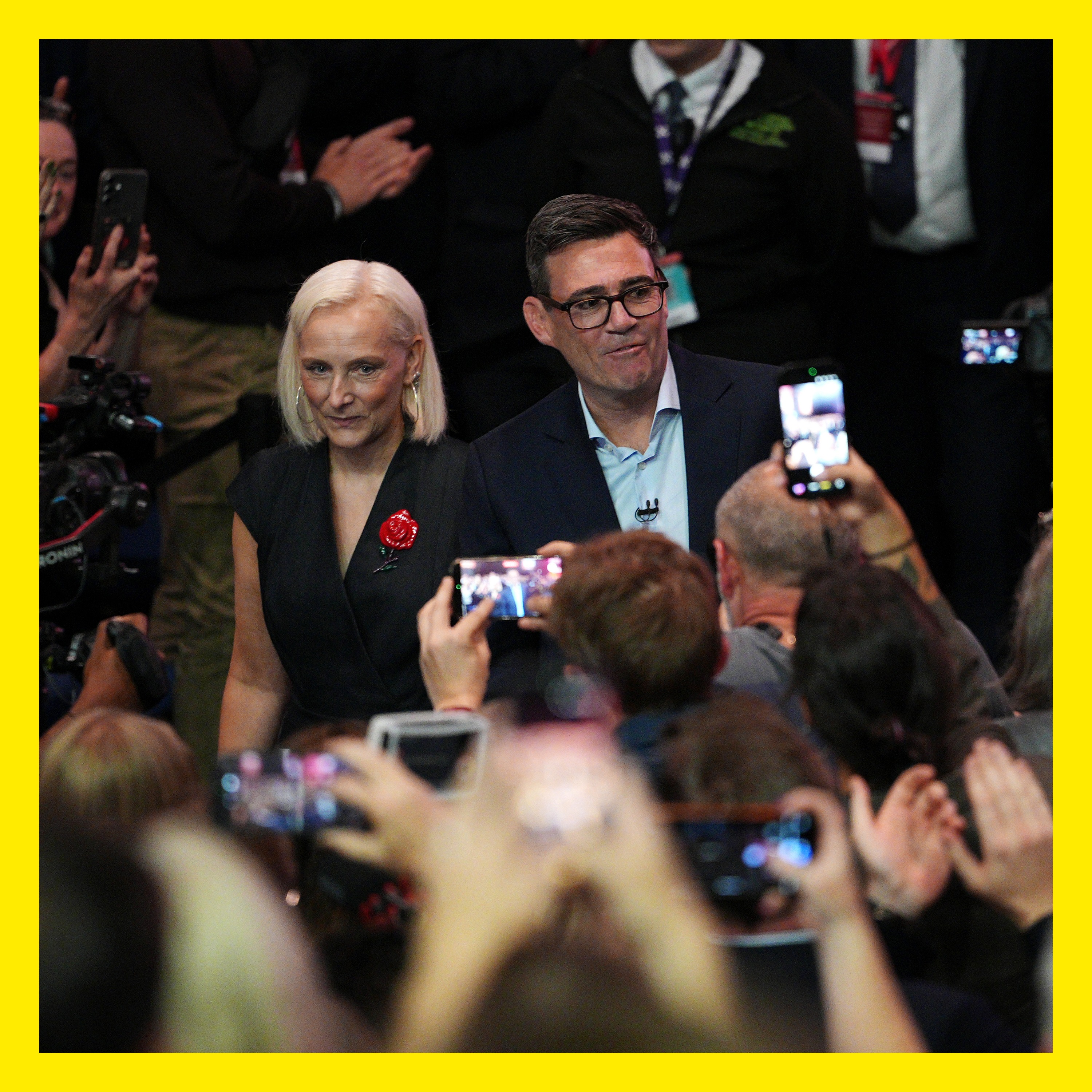
1:09I think it's one of the most consequential conference speeches I've seen in my political career. It's talk of a better tomorrow, but actually there is a really big problem today that is not yet being addressed. We will hope again. Thank you, conference. Welcome to The State of It, the political podcast from The Times and The Sunday Times. I'm Stephen Swinford, the political editor of The Times. I'm Ben Reilly-Smith, the political editor of The Sunday Times. And look, we're coming to you at Labour Party conference moments after Andy Burnham's big conference speech, his first as Prime Minister. And what he's done, Ben, from what we can see here, is start to set out the manifesto for the Burnham Manifesto of 2029 that he's going to take to the country.
1:53And he's done that in three kind of very broad areas. he's done it on social care, he's done it on electoral form, and he's started to go there on Europe and a possible path to rejoining the EU. Yeah, I think it's one of the most consequential conference speeches I've seen in my political career in terms of reshaping the electoral landscape. I wanted to say the most consequential, and then somebody said, what about Theresa May after Brexit when she set out those red lines? That probably had a more immediate impact. But on these whole swathed areas, he's, as you say, firing the starting gun on the election campaign whenever it comes.
2:27Could still be three years. But he's essentially saying, I want a big fight about spending 10, 15, 20 billion, who knows how much on social care a year and how we're going to fund it. Changes to the triple lock. I want a big fight about whether we should seriously take a step back towards the EU. We were having the hovel with number 10 after the speech. They weren't ruling out the possibility that one of the options they're going to talk about is rejoining. I think there's an open question mark about what the options are going to be, but he is once a big fight about Europe again. Labour spent the last five years trying to not have a conversation at all for the last five years about Europe.
3:04And then on electoral reform, he's essentially saying what we know his position is. I don't believe in the first part of the post system that has governed elections for over a century. I want something more proportional. And he set up a commission to look at that. I mean, those are huge areas of debate. And now it's up to the Tories and reform to work out where they're going to position themselves on those topics. And look, we'll just put viewers in the picture of what it's like reporting on one of these things. So you get the PM's speech, there's a big response in the conference hall, you hear it in the press room over there, and then the number 10 people come along, and they came along today with a senior minister to try to explain the policies to us.
3:39and you get this extraordinary donut of journalists. So you get about 50 to 100 lobby journalists crammed around the number 10 spokesperson who's trying to read from their lines and not deviate from the lines whilst you're getting 360 degree questions. So we will give you the best of what we understand, what we've learned. Should we run through those three big areas? Do you want to do social care and triple lock? Let's start with the triple lock. So the big change today and the headlines of this will be the triple lock as we know it is no more. Now, I will be brief on the technical details. Currently, pensioners get a really good deal.
4:18The state pension goes up in line with 2.5 % inflation or wages, whichever is highest. Now, what the government is doing, and they deny they're doing this, but it is the effect of what they're doing. They are moving to a double lock. So they are going to increase the state pension in line with inflation or 2.5%. And that third element, as it currently exists, wages won't exist anymore. They are instead introducing something called an earnings link. So that essentially they'll top it up a bit in years where wages are higher than inflation or 2.5%, but not by as much as people would otherwise have got.
4:52So they're claiming the wages link remains, but it's a very different wages link. It's a lot smaller. And as Burnham put it, there are significant savings from this approach. And this is money pensioners would have otherwise got. they are getting 15 billion pounds a year by 2040. So that is a pretty chunky hit. And that is going to take a lot of the headlines. Now, Burnham, in his speech, acknowledged that this is a choice and he may pay for this. There could be political pain for him, as he admitted. He said, I am ripping off the plaster. I think I need to do this. I need to set out that choice.
5:24And I am owning this. But voters don't like it when you take money away from them. The grand bargain, the big bet he is making is, look, I will offer you personal care free at the point of use in your old age in exchange for sacrificing the triple lot as it currently is. And that is the big argument he's going to try to make now. That's the sell. So that's the big other bit of this equation. As he said, as we know, he floated it over the weekend. He floated it back in the summer. I want to create a national care service where elderly people will get free at the point of use personal care at the end of their life.
5:59That is a very bold thing to be proposing, a very expensive thing to be proposing. And he talks about it on the stage in very emotional terms. He obviously talks about his father, Roy, who passed away recently, and he had Alzheimer's. I mean, it felt to me like, you know, we've been here in 2010 when actually Andy Burnham was health secretary floated. It got dubbed the death tax. Been here in 2017 with Theresa May's dementia care, quote unquote. quote felt to me like he wants to give himself a run-up of a year two years whenever the election comes to have the argument and he's a very good emoter i think i think it's possibly in the balance that he could persuade the country that this is a step that needs to be taken the big question is how are you going to pay for it and ultimately i don't think uh the pensions triple lock change is going to be nearly enough money to pay for it you know so it will be a form of taxation, presumably.
6:53We don't know the details yet. Baron S. Louis Casey is going to come up with it next year. You still think it's a massive electoral gamble. The question is, can he sell it? And can he sell the painful bit of the money that has to be raised? Exactly as you say, Ben, it's the quiet bit that he hasn't said. So he said that everyone will have to pay in to get something out in this system in their retirement. The quiet bit, he's not saying, but there will need to be a lot more money. So he is going to go into this election, not just promising to end the triple lock, but also promising to hike either and it will have to be one of the two income tax or national insurance you're not going to raise the kind of money you need for this system without that and that is a really hard sell to voters you are saying i will raise your taxes and i will take away money from pensioners in exchange for the golden prize of fixing the care system he believes it there was a really emotive passage in speech when he talked about his grand kitty and how he watched her go through the care system.
7:49She had the ring ripped from her finger. The engagement ring stolen. The engagement ring stolen. Phenomenal. But that is one hell of a gamble to make. And they're not saying that bit on the general taxation point of this. Remember, those are the two things here. It's not just a triple lock. It's tax rises too. And that is a very hard sell, even if you are a good emoter and a good speaker. Yes. Should we go on to another second area that he talked about today? Europe. Yeah. Let's do Europe. from Keir Starmer's accession to Labour leadership in 2020 to pretty much all the way through until the final months when he lent in heavily.
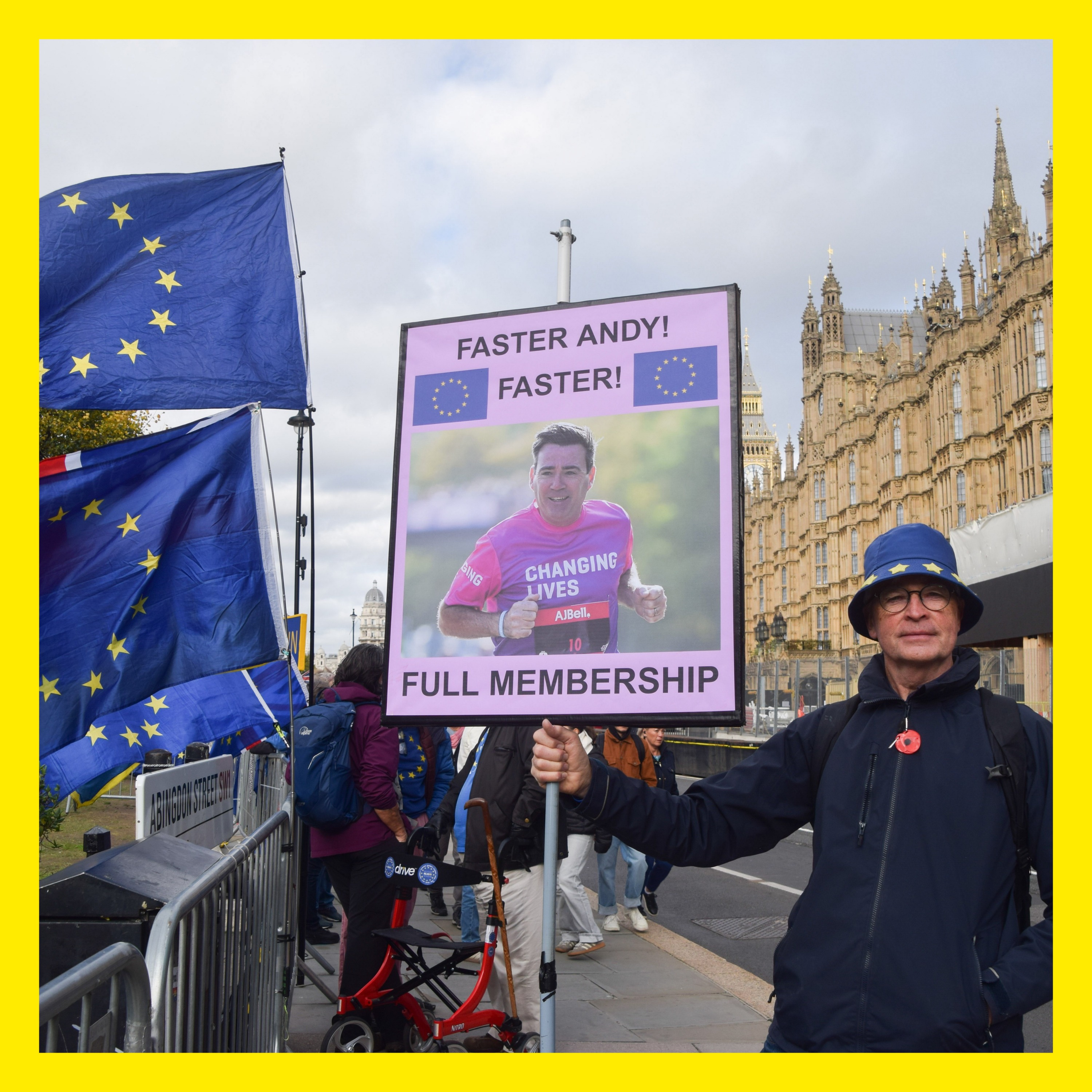
8:25He has been trying to not talk about Europe. So they won the 2024 election by totally shutting down the perception that Labour was trying to unpick Brexit. They had these very firm hard lines. No, we're not going to rejoin. No, we're not going to go into the single market. No, we're not going to go into customs union. In the two years since, we've had this reset them these tiny steps towards the EU. Okay, we will come to some kind of deal on agri-foods. Okay, maybe we'll let a few thousand young people come in and we'll do the same with Europe. Andy Burnham has just opened up the entire Pandora's box.
8:59He stood up in conference and said, when we have this next summit with the EU at some point by the end of the year, I want to spell out a number of different options for moving much closer to the EU. He didn't say explicitly what those options were. Our discussion with Number 10, they weren't ruling out the possibility that rejoining could be an option. Maybe going into the single market could be an option. Maybe turbocharging some version of the Swiss deal. But he is actively saying, let's have the debate again 10 years after the referendum about getting seriously closer. Now, he's not going to rip up the manifesto because it's all about the next manifesto, the next election.
9:37but in terms of the tide beginning to sweep back in on getting closer to the EU it's a big moment and in terms of the election framing it's a big moment because the Tories and reform are going to have to work out are we going to be the not an inch further towards the EU party clearly Nigel Farage and reform will be. Kemi Baden always indicated she would be but as George Osborne the former Tory Chancellor very pro-EU Tory Chancellor always says you can end up with a position where the Tories are the anti-business party because the business community may well want to be moving quicker, reducing some of those trade barriers.
10:15So again, the political landscape has suddenly shifted into this new space. By the end of the year, we could be talking about really significant steps back towards the EU. I mean, does that feel like a risk or a potential reward to you, Steve? Again, it's a big risk. I mean, at the moment, we're in a situation, we've discussed it on this podcast before where the EU is threatening to kind of hammer us with this made in Europe scheme that will lock British car companies out of doing it is getting worse it's not getting better and of course the great unsaid in all of this as we know and Ben you wrote a book on this but covering the Brexit years like there is another partner here it's all very well us saying let's say Andy Burnham decides he wants to rejoin the EU or Customs Union or closer alignment with single markets whatever it is that there's these other guys at the other end of the table called the EU, the European Commission, and they will negotiate hard, and there's no guarantee that they will want us back in.
11:06So at the moment, he's created a space where he can be all things to all people in the EU. But one of the things that I would suspect is, and it's ultimately, they've said it's on the ballot for the next election, right? He will pick a choice, but that's the big outstanding question. What will this actually look like, and will it live up to the expectations of progressive left voters who favour overwhelmingly close relations with the EU. We shall see. Yeah, in a sense, he has still punted it because he said, look, there'll be some options. I won't say what those options are, but he's further starting on a big debate on Europe.
11:38I just wonder whether it might end up looking like something like what Tony Blair outlined in his big provocative essay as Keir Starmer was wobbling. He said, look, we should have essentially a let's start again negotiation with the EU where everything is on the table and you're not thinking about the past structures that we've left, single market membership, customs union membership, full membership. You know, the EU is changing. Our relationships are changing. Could you carve out some new totally bespoke area? Could look something like Switzerland. We now have a world in which Canada is getting offered associate EU membership, whatever that is.
12:17So maybe, you know, and obviously the defence and security picture, where we're so integral to Europe security is fragmenting the significance of that in or out line slightly. So maybe it won't be one of those obvious options that we've spent the past 10 years talking about. Obviously, what the EU always says is you can't cherry pick and you've got to pick one of these options, but it could be quite fluid. Who knows where that's going to end up? Right. Last one, electoral reform, which is the other kind of big pledge here. He's setting up a national commission to look at options for electoral reform, which feels slightly long-grasped again, but something he clearly feels passionately about.
12:52The first-past-the-post system that we have in this country is not representative. It means that lots of people's votes don't count. What is not clear to me at this stage is whether that would actually benefit Labour by the time of the next election. It's a huge... I mean, I don't think you can underestimate how radical a change that is for how we determine who governs in our country. Without wishing to bore all our listeners with the details, first-past-the-post basically means there are 600 mini races in the country. There's not one nationwide race when it comes to the election. So you could come second in 300 places.
13:27As reform did. As reform did. And get zero seats in those 300 places. It doesn't give any benefit to coming second. You've got to win the race in all these individual places. The strength has always been argued that it creates clear, strong majorities. Because as we saw, as we saw the last election, people wanted to punish Tories. They worked how the push of Tories, they were swept away. So Labour got 34 % of the vote, just one in three people voted for them. And they have this huge majority that Kistama has not used particularly effectively. Moving to a more proportional system creates a world where it's much more likely we're going to have coalitions rather than majority rule.
14:04And, you know, we've had that very rarely in this country. We see Lib Dems and Tories in 2010 to 2016. But it's rare. I mean, coalitions will become the norm if you enter that form of voting system. Actually, Andy Burnham has been very public previously saying he doesn't want first pass the post. He wants something more proportional. He said in the hall that he wants to fight the next election on electoral reform. I mean, it would be a huge change and it would end the standard majority rule expectation after every election in this country. So, I mean, that's a huge thing. And again, you'd expect the Tories to oppose it.
14:42You'd expect reform to oppose it. So if he wins on a manifesto in two years' time, the way we have done politics in the last century plus changes, electoral politics changes totally. Hi, I'm Danny Fortson from the Times Tech Podcast, which is currently sponsored by ServiceNow. ServiceNow describes itself as an AI control tower for business reinvention, connecting systems, data, and AI so workflows more smoothly across organizations. The platform integrates with different clouds, models, and data sources, bringing them together in one place. To learn more about how ServiceNow puts AI to work for people, visit servicenow.com.
15:23Here's a tip for you. There's a podcast out there with fans waiting to be your next customer. They tune in every week. They trust the host. And that host wants to talk about brands like yours in their own words to their audience. The problem is you just haven't been introduced yet. We're Acast, where that introduction happens. As the world's largest podcast marketplace, we let you browse shows, see who's listening, and book host-read sponsorships or run your own ads all from one platform. Transparent pricing, real-time data, complete control. Start advertising on podcasts by visiting acast.com slash advertise.
16:05Right, let's stand back and just like overall assessments of the speech. So I think when you stand back, this is not just a speech for tomorrow. This is a speech for five to 10 years time. This is a speech for the distant future after the next election. The challenge I think he's got, it's gone down brilliantly here. Labour dealers love it. And if I was him, I'm not surprised he's focused on the future because the present is really hard. It's about to get harder. We've got this really difficult budget on October the 28th, where they're scrambling to find 10 to 15 billion tax rises on the horizon.
16:37You've got energy bills going through the roof in winter. None of these things have been mentioned today or discussed at any length. There are very few policies that are relevant to today. And I think that is the risk here, that he's having a loud, noisy debate about the triple lock, about the EU, about all fine issues to debate. But people have got cost of living problems right now. And my concern looking at it is that this is not addressing those issues right now. And that's the problem. It's talk of a better tomorrow. But actually, there is a really big problem today that is not yet being addressed.
17:11Yeah, I'm going to talk briefly about four things that really jumped out to me. Some of them aren't wildly original. The first one, he is so comfortable in his skin as a politician and a public speaker. Compare how at ease Andy Burnham appeared there. wasn't behind the podium, very fluid compared to those Keir Starmer moments where he was reading every word from a script. Don't want to be critical of Starmer too much, but it is miles away how good a communicator he was. He's arguably the best explainer in British politics since Tony Blair. He does seem to have that charisma. And I felt that came across.
17:43You wonder if that comes across to the country as well. The second one is he's channeling this outsider energy. A lot of the things he was talking about you know so often in politics in the last five years you've had to be the outsider trying to change the status quo that's where the energy in power is that's why trump did well that's why farage seemed to have struck a chord and burnham is saying i'm not going to do politics as usual i'm not gonna honesty was the theme throughout the speech i'll tell you honestly what i think is wrong with the country so he's trying to channel that outsider energy i thought in quite effective way the second one we've all talked about it and it's obvious from the slogan the optimism hope again it's easy to roll your eyes and say as we have been doing look the budget's gonna be really hard is they're really hoping that in politics if you can embrace the positivity uh especially at a time when not just Farage but Kemi Badenot can be quite negative and critical um that that can be quite a powerful thing and then the fourth thing this is a subtle thing all through the summer it was framed as Andy Burnham the Manchester mayor the northwest guy coming to London there was actually very little of the northwest Manchester identity stuff I felt in that whole speech it felt like a pivot to trying to be a national leader with a national message there was a brief mention of Manchester when we were talking about devolution but he's trying to shed or scale back that simple I'm the Manchester guy coming down to clean up London to this wider appeal of I'm the outside force coming to change politics.
19:13Yeah. So a big speech, big on emotion, big on personality. Will it be enough? The hard sell starts now and it is a hard sell. We'll see how he gets on with it. But look, next week we're back from Tory conference. We'll be at Tory conference. Fascinating. And yeah, I mean, it is. A lot of it is going to be how Kenny reacts to this. Doing our jobs. It's an extraordinary time. This is a tectonic moment in British politics. everything is to play for among all the main parties. So no doubt they will have some pretty big announcements on tax and putative tax cuts to come. So we'll see what it's like from there and how Kemi's getting on.
19:47Fascinating. What are they going to do on Europe? What are they going to do on the triple lock? What are they going to do on social care? I'm sure they'll be critical on electoral reform. But how does Baden-Ock start to reposition, given what Burnham did today? Yeah. All right. Until next time. Thank you very much.
20:08Hi, I'm Danny Fortson from the Times Tech Podcast, which is currently sponsored by ServiceNow. ServiceNow describes itself as an AI control tower for business reinvention, connecting systems, data, and AI so workflows more smoothly across organizations. The platform integrates with different clouds, models, and data sources, bringing them together in one place. To learn more about how ServiceNow puts AI to work for people, visit servicenow.com.
21:01Browse thousands of the world's leading podcasts, book host reads or run your own ads, and track every conversion in real time. Same skills you already have, brand new results. Acast. Acast.com slash advertise.
The Labour Party is jubilant. Andy Burnham has fired the starting gun for the next general election with one of the most consequential conference speeches in recent memory. He used it to set out a series of major proposals, including an end to the triple lock, the abolition of first-past-the-post and closer ties with Europe.
At the heart of his national project is a care service free at the point of use. Burnham has set out a vision that promises to put Britain on a different road. But can he persuade the country to buy into it?
Steven Swinford, political editor, The Times
Ben Riley-Smith, political editor, The Sunday Times
Producers: Euan Dawtrey, Harry Kitson
Executive producer: Molly Guinness
Pictures: Getty Images
This podcast was brought to you thanks to subscribers of The Times and The Sunday Times. To enjoy unlimited digital access to all our journalism subscribe here.
Hosted on Acast. See acast.com/privacy for more information.