
 Ask ChatGPT



Andy Burnham’s first week as UK Prime Minister—“maximum vibes” via rapid, election-campaign-style announcements—plus the reshuffle fallout and what’s coming next week (NEETS, defence, and a major social care speech).
Stephen Swinford (political editor, The Times), Laura Spirit (deputy political editor, The Sunday Times), Patrick Maguire (chief political commentator, The Times).
Burnham runs an “active premiership” (more directive than Keir Starmer’s “passive” approach). Week-one policies are partly unfunded or reliant on savings not yet realized. Reshuffle leaves “2024 intake” MPs angry about missed expectations; Burnham hopes unity by September. Next week’s social care push is personal (his father in an Alzheimer’s care home) and will require difficult funding choices; defence spending is pledged at 3.5% by 2035, with 3% by 2030 not yet committed.
VAT cut on electricity bills (unfunded pending digital ID savings); £2 bus fare cap; business rates cut on pubs; Trump congratulation call on day one; Burnham’s past “death tax” clash over social care with David Cameron; Mark Carney call mentioned as potentially crucial for defence financing.
Written by AI. May contain mistakes.
Discussing the activities and challenges of Andy Burnham's first week in power.
“The Cologuard test is non-invasive, requires no special prep or time off, and you start screening right from your home.”
Discussing the activities and challenges of Andy Burnham's first week in power.
“Welcome to The States Fit, the political podcast from The Times and The Sunday Times.”
Discussing the activities and challenges of Andy Burnham's first week in power.
“into what this has been like from Andy Burnham, going from campaigning in a by-election to number 10.”
Analyzing the significant policy announcements made by Andy Burnham.
“But I think we've learned some things along the way about what works, what doesn't work, what needs to improve, where there isn't enough grip, and most importantly, about people.”
Exploring the communication strategies and political agency under Burnham.
“because there were a load of unanswered questions at the beginning of the week about a lot of these policies.”
Insights on the cabinet reshuffle and its implications for new MPs.
“Time to think, time to plan, time to grit, time to gain to those bigger questions.”
Discussing the expectations and feelings of the 2024 intake MPs.
“and the prime minister had in his hands a little card that had written on it their name with the title and some bullet points about their role to talk about.”
Discussion on the tensions within Andy Burnham's team regarding job expectations and appointments.
“people who are on the Burnham train, they felt like they were on the Burnham train early.”
Discussion on the tensions within Andy Burnham's team regarding job expectations and appointments.
“And when we come back, we're going to talk about next week.”
Discussion on the tensions within Andy Burnham's team regarding job expectations and appointments.
“We built Serval to automate the IT work that slows companies down.”
Insight into what Andy Burnham plans for the upcoming week, particularly regarding social care.
“This week on the Business Podcast, we have a new Prime Minister, Andy Burnham.”
Discussion around the challenges and implications of defence spending under Burnham's leadership.
“Obviously, you've mentioned that he feels very bruised about the way in which other parties turned on him the last time these reforms were attempted.”
Explore the implications of defense spending decisions on Keir Starmer's premiership and the government's fiscal challenges.
“because he felt that is a signal of intent.”

Get the gist, explore an idea or ask about something said.
 Claude
On The State of It, what are the key points of this episode?
Searching your listeningAutomatic transcript. May contain errors.
0:00This message is brought to you by Cologuard. If you recorded songs off the radio for a mixtape, it might be time to screen for colon cancer. The Cologuard test is non-invasive, requires no special prep or time off, and you start screening right from your home. It's just three simple steps. Set up, sample, and ship. If you're 45 or older and at average risk, ask your doctor about the Cologuard test. Available by prescription only. Learn more or request a prescription at Cologuard.com slash podcast. I'm Jake Stouck, co-founder and CEO of Serval. We built Serval to automate the IT work that slows companies down.
0:37Onboarding, password resets, access to applications, my laptop stopped working. While employees wait for help, their real work is put on hold. IT desperately wants to automate this work and that's why they need Serval. You just tell Serval what you wanna automate in plain English and it's built. No drag and drop workflows, no expensive consultants. Employees get unblocked and IT teams go from drowning in tickets to building what actually matters. With Serval, IT becomes the AI engine powering the entire company. This is a new way to run IT. We guarantee you'll automate 50 % of all tickets and we'll prove it to you in a free four-week pilot.
1:18Go to serval.com slash tickets. That's S-E-R-V-A-L dot com slash tickets.
1:33Welcome to The States Fit, the political podcast from The Times and The Sunday Times. I'm Stephen Swinford, the political editor at The Times. I'm Laura Spirit, the deputy political editor at The Sunday Times. I'm Patrick Maguire, chief political commentator for The Times. And this week, we want to talk to you about two things. We want to talk to you about this kind of frenetic, pretty chaotic first week that Burnham's had as he's trying to get stuff off with a bang, with a kind of rolling load of announcements that we've had. And then secondly, we want to talk about where we're going next week, because from what we're picking up, there are some pretty big moments coming on social care, on NEATS and on defence.
2:11And it's going to have a very different feel to Andy Burnham's first week in power. But let's kick off this week. And I'm going to just start on a tiny little insight into what this has been like from Andy Burnham, going from campaigning in a by-election to number 10. So on his first day, all of the political editors got invited into the Rose Garden. He walked through the door, he spoke to staff, did a lovely address, and then he came out into the garden and we had a chat with him. And it was actually an incredibly brief chat. The chat lasted for, I think, all of six minutes. And this caused a lot of consternation because people wanted more time and he hasn't had a lot of scrutiny.
2:48It lasted just six minutes and then he was whisked off. and we didn't know why he was whisked off for what it was for. What I'm told is because Donald Trump was on the line calling to congratulate him. And so he had to go on to this call and they exchanged a lot of niceties about their mothers. He talked about how his mum was in the crowd in number 10, how proud she was and how proud he was to have her there as well. And then Donald Trump obviously talks about his mum and the ancestral links to Scotland. And it was actually a very good, warm conversation. But it also highlights, I think, the breakneck pace of everything that we've seen this week, because they are trying to kind of build this on the fly.
3:26And that is pretty hardcore. Yeah, it is. And I think if you speak to people inside number 10, there is a feeling that, you know, this is, as you'd expect, a complete step change. And one thing Andy Burnham said to me when I saw him last Sunday was, I'm relaxed. I know what I want to do. I've got a plan for this first week. we've spoken to the treasury there are no points of tension in the system now if you speak to people inside government and as the late queen so famously said recollections at the end of this week may vary but what i think is look if you're in number 10 at the end of this week and i was just speaking to someone senior in government before we came on this podcast i think the feeling is yes it's been tricky.
4:14Yes, the internal workings haven't been smooth. There've been a lot of late nights, a lot of emotions running high. But if you look at the political objectives Andy Burnham set for himself at the start of this week, with a few bumps in the road, they've had a good, solid campaigning week. But I think we've learned some things along the way about what works, what doesn't work, what needs to improve, where there isn't enough grip, and most importantly, about people. But I think what is clear that this is, as I've written at Lane today in the Times, I'm sure we'll discuss this in a minute, this is a machine.
4:55Burnham's team already knew this, but the machinery of government and officialdom is getting to know that actually, unlike Keir Starmer, this is a Prime Minister who will say, I want this, I don't like this, why do the papers say this, we've got to stop this. And instead of a Prime Minister, the phrase a senior official once used to me was, Keir Starmer was a passive premiership, this is an active premiership, with all the knock-on implications and complications for the system that that implies, I think. Yeah, I think, you know, speaking to some people around Burnham, there's a sense of confidence that actually on one of the most important points, which is showing a divergence from those early weeks of Starmer, that they've succeeded.
5:34It was certainly one of their key objectives to make sure they sounded positive, that the communications are strong. I think they feel they've done that. But they've got through the reshuffle now. It's done. I think there are some scars. And I think it remains to be seen whether the kind of unease that I'm picking up is something that festers or whether or not it's something they're able to kind of manage over the coming weeks and months. I think if we start, let's just break it down into a couple of things. why don't we start on the policies that we've seen this week so he told patrick andy burn did interview with patrick at the on sunday and he said he wants this to be basically a cost of living government and you've seen three significant announcements around that and the three actually have one thread in common so first of all you had a uh the cut on vat on electricity bills second of all two pound bus fare cap with andy next to a big bus and then third of all you had most recently the business rates cut on pubs all of them had issues and questions around the funding and this is what I was told was causing a lot of difficulty that plans that were drawn up during access talks for these big announcements for a first big first week and actually two of those policies are still unfunded the VAT cut on electricity bills is unfunded it's from putative savings from shelving the digital id scheme but those savings have not been realized yet and on the business rates is for the outcome of consultation, possibly from vape shops and kind of different tax measures.
6:56But these were things I remember the business rates one he announced during the make feel by election campaign. It was great. He was down the pub. It was a kind of big thing. And we're going to tax Amazon warehouses, all these big warehouse that's gone because actually they've looked at the funding and decided that isn't the way to do it and wouldn't work. So that is one of the issues that we've had with Andy Burnham this week that he is announcing things. And then in that huddle I mentioned earlier with the political editors. He had some very big things on social care, started kind of wandering into the personal allowance threshold on income tax, really expensive things.
7:30And all of these, that's just going to be an ongoing question about are your plans funded or not? And I think that is probably somewhere in coming weeks they're going to need to sharpen up their game because there were a load of unanswered questions at the beginning of the week about a lot of these policies. They are still unanswered at the end of the week. Yeah, the political intent, as he said to me, last week was and is i'm not going to be able to fix everything overnight yeah i haven't there's no pretense that you know i'll announce these things and tomorrow everyone will feel great it is about it is demonstrative politics you know and the phrase that doing the rounds in number 10 right the mantra for communicating all of this is andy get stuff done that's the motto andy get stuff done.
8:14That's what they want the public to think. And this week's announcements are largely just that. They are announcements because with the exception of the VAT cut, which will come into force from October, a lot of this stuff is from the next financial year, April 2027. But the point about funding is an important one, right? Because they're in this space where week one, it's all about creating, as Laura said, a vibe, a sense of direction, a sense of empathy with the public. But I've been hearing much the same as you, Steve. I had a conversation with someone at the top of government earlier this week who made the same point about access talks, that these ideas have come up in access talks.
8:53And from officialdom came the message, I'm not entirely sure that's going to work. There was some suggestion I picked up that digital ID was actually meant to fund the bus fares as well, which indeed wasn't what we heard in the end. You know, Heidi Alexander, the Transport Secretary, actually went on the morning round and said, we're still working the details of this out. But what matters to Burnham is that he's come out, he's said it, and the whole point is a government that shows a degree of agency in the face of events. You know, it's the opposite of the early Starmer approach. You know, I remember a couple of months ago, just before the May local elections, there was a paper by, or a sub-stack rather.
9:34It was described to me at first as a paper and then it emerged. It was just James Kanagasorium, the pollster's substat, but it was about high agency politicians, right? Who are the politicians that succeed in getting people to sort of stop scrolling, to sort of stop basically surrendering to the idea that everything is terrible? It's the people who are dynamic, who narrate their motivations, who set themselves a clear objective. And even if they're just delivering little increments of things, like Zoran Mandani, right, hasn't confiscated the wealth of loads of billionaires, actually, if you compare what he's done in New York so far to what he promised to do, it's quite small.
10:08But what he's saying is, this is the issue. I know you care about it. Okay, I've done a little bit. And it's very much that approach Andy Burnham is doing, right? It's high agency politics. It's what number 10 people were discussing about the problem with Keir Starmer two, three months ago, right? It wasn't a particularly high agency or high energy government. And while, yes, there'll be lots of awkward conversations about money, particularly as we approach the budget, I think on these issues, you know, okay, an official tells you, Treasury officials tell you, look, this digital ID thing is not going to work as an answer to the funding for every policy you want to announce this week.
10:47Darren Jones pops up in the morning and says, this is unfunded. You know, Darren Jones emerges as the person in September who'll be leading a sort of fiscal responsibility caucus on the back benches of the Labour, of the PLP. But, you know, this was all about politics. This was all about campaigning and political narrative this week. And that's not to say this is a big problem. And Andy Burnham's words, as we've learned in the huddle, as we've learned over the personal allowance, etc, etc, aren't capable of causing problems. I think those downside risks to his team felt smaller than they will later this week.
11:26And as someone has just said to me, they've been lucky with the timing. It's summer now. Time to think, time to plan, time to grit, time to gain to those bigger questions. This was a, for the Labour Party and for the public, a palate cleanser and a vibe check, as it were. I mean, and also before they came in, they had a grid of two weeks and I think they kind of just knew they needed to get through these two weeks before they had that big machine in place as they do now which could look at everything else that came after so i certainly think in that respect it's fair to say that they have got through it and i think patrick's mamdani comparison is very interesting because it's it's also it's that and it's also what mamdani has done on a number of occasions but particularly over the involvement of uh private companies in his housing policies is actually to say yeah i've come in and i've looked at this and i've changed my mind and to feel confident in being able to do that.
12:18And I'm not necessarily saying that that's what Andy Beldham did on the personal hours this week at all, but there was a confidence in the way that he was communicating when he effectively said openly, I might change my mind on things and I'm going to do communication differently. So look, that's where we are on policy this week. But we should talk about the reshuffle because there is still a bit of an end of that. I just wanted to start with a tiny anecdote. I bumped into a cabinet minister this morning on the way here and it was just what it was like when they were appointed. And so they said, I got it, you know, I didn't know what I was going to get.
12:48And this is a senior cabinet minister. They got a senior job. So look, John Healy, by the way, the chancellor, didn't know what he was going to get. Nobody knew what they were getting. So you walk down Downing Street and then you get in and you go into the cabinet room where they hold cabinet, which is a big room with a flunking big table. And what is apparent is there were just like four people in there. There was Andy Burnham. There was Antonio Romeo. there was chief staff, James Purnell, and the PPS was there, Andy Burnham's PPS, and that was it. And they still at this point didn't know what they were getting.
13:19And then you look down and the prime minister had in his hands a little card that had written on it their name with the title and some bullet points about their role to talk about. And that was the first that they all knew. So that is an extraordinary, just to give listeners a feel into what it was like, It has been very, very surreal. But this is a reshuffle that will have a long tail. We won't realisticate what we did on Monday with a lot of the Starmerites being out joint in the pub and a lot of anger around there. But both of you separately are picking up that the 2024 intake are not happy.
13:55Yes. So as I wrote in my column this morning that there are natural supporters of Andy Burnham, people who are on the Burnham train, they felt like they were on the Burnham train early. They may have resigned from government payroll jobs. They will certainly have a president in Makerfield, etc., etc., who feel like they were led to believe that they'd be appointed to ministerial roles. We still haven't got the list of parliamentary private secretaries, which may soothe some nerves. But this was a government in which 2024 intake MPs, in a couple of cases, look at Lucy Rugby, although she's been around Labour politics for a long time, had been in the cabinet.
14:35right we're doing minister of state jobs right Keir Starmer appointed you know a couple of them to state jobs a couple of them to junior ministerial roles in the first days of his government right so this is a sort of intake he's very impatient they want it they think they'll get jobs and people who didn't get jobs in the last regime wanted to get jobs in this one as I write in my column you know there are people who feel let down and screwed over to that I think uh Burnham allies people involved in making these decisions would say a couple of things uh you know one is bluntly you can't there are not 403 jobs right people are going to be disappointed what whips would tell you in some cases is that they sort of looked askance at some of the early promotions and certainly the promotions that have happened over the past two years in thinking this sort of creates really artificial expectations for people at the people in that intake right we've they've lost the feeling that you'd have to grind on the back benches then become a PPS, then maybe if you were lucky in a couple of years, become Minister of State.
15:34So it's about sort of the sense of resetting that natural order of things. But the third thing, Andy Burnham said this in Cabinet on Tuesday, there is a hope that, okay, once people have sort of got over their feelings of personal loss, bereavement, resentment, they'll come back in September. And as Andy Burnham said to the Cabinet on Tuesday, you know, you are all expected to engage properly with colleagues and deeply with colleagues. They are part of the team and they've got to feel like they're part of the team. Indeed, he said that to number 10 staff on Monday as well. It's like we need to pull together as one team and change the culture.
16:10So the hope is that once MPs experience that, including the people who've lost out, that things will calm down, things will bed in, they'll enjoy themselves, they'll feel valued. But I think, Laura, because feelings and tensions are running so high this week across the party, it's an interesting question as to whether they can get over this. Yeah, I mean, I think one of the problems that some of these snubbed MPs feel is that actually over recent weeks, there's been much made from somewhere around Burnham of this belief that Andy is said to have that there's great untapped potential in the 2024 intake, that he would be coming down to London.
16:46He wanted to meet all of them. That was one of the first things he'd be doing. He felt that some of them had been neglected. And I think that had created an expectation, albeit clearly misplaced. And certainly, you know, those around Burnham would say we were never we were never offering jobs to these people. And there was definitely, you know, a sense, I think, of idealism from them that was that was was well, it was now definitely wrong that they would be getting a job. And so the interesting question will be, given that they have pledged a lot of their time in many cases to Burnham. And I think, you know, Patrick, you and I will know of some of those who won't be happy with a PPS job.
17:21I don't think I will do the trick, is just whether or not they are angry enough to be converted into full blown antagonists and join the ranks of perhaps Darren Jones and others come the autumn, or whether or not they will actually just just come around the table as a result of the efforts that you've you've just revealed from from Andy Burnham and others this week to make sure that the parliamentary party is brought together. And I think add to that is the extra question mark over what the whipping operation is going to look like, which, of course, we've had a great deal about reform in that case and making space for a wider degree of views in the parliamentary Labour Party.
17:54How that looks in circumstances where you have a number of them who are feeling pretty bruised, I think is an interesting question, particularly when, as we'll come on to, there's some very difficult, knotty policy questions coming down the road. OK, let's head to the interval. And when we come back, we're going to talk about next week. I'm going to give you a scoop about what Andy Burnham is going to be focusing on, where he wants to take things. This message is brought to you by Cologuard. If you recorded songs off the radio for a mixtape, it might be time to screen for colon cancer. The Cologuard test is non-invasive, requires no special prep or time off, and you start screening right from your home.
18:29It's just three simple steps, set up, sample, and ship. If you're 45 or older and at average risk, ask your doctor about the Cologuard test. Available by prescription only. Learn more or request a prescription at Cologuard.com slash podcast. I'm Jake Stouck, co-founder and CEO of Serval. We built Serval to automate the IT work that slows companies down. Onboarding, password resets, access to applications, my laptop stopped working. While employees wait for help, their real work is put on hold. IT desperately wants to automate this work, and that's why they need Serval. You just tell Serval what you want to automate in plain English, and it's built.
19:10No drag-and-drop workflows, no expensive consultants. Employees get unblocked, and IT teams go from drowning in tickets to building what actually matters. With Serval, IT becomes the AI engine powering the entire company. This is a new way to run IT. We guarantee you'll automate 50 % of all tickets and we'll prove it to you in a free four-week pilot. Go to serval.com slash tickets. That's S-E-R-V-A-L dot com slash tickets.
19:46This week on the Business Podcast, we have a new Prime Minister, Andy Burnham. There's already been a flood of mooted new policies with big consequences for business. The UK is very unique in the fact that we pay two forms of income tax. So let's see how brave they want to be. Join me, Hannah Previtt. And me, Dominic O 'Connell, for weekly conversations from the world of business and entrepreneurship. Follow us wherever you get your podcasts or find our channel on YouTube by searching Times Business.
20:18Welcome back to The State's Fit. So look, we want to talk about what Andy Burnham is going to do next week. and it is going to look and feel very different to this week. So frankly, this week felt weirdly like an election campaign. It was a leader making lots of announcements. And indeed, there are going to be thousands of pieces written about are we heading to an early election? I'm told not. And I hope for my well-being generally that we are not heading towards an early election. So where are we going next week? What I was told is he's going to be kind of taking a more slightly statesman-like role.
20:49So rather than seeing him out and about in front of buses, you're going to see him delivering a couple of interventions. There'll be an intervention around NEETS of some form. We're not clear what that is yet. Some kind of intervention around defence. But the centre of the week is going to be a big speech about the issue closest to his heart, which is social care. Now, Andy Burnham has pledged to fix social care for once and for all. And he's got history on this. He feels burned by what happened before. So just to kind of give a very quick historical summary, he tried to fix social care when he was health secretary and indeed held secret talks with Andrew Lansley his Tory opposite number to try to reach some kind of agreement and instead it ended up with David Cameron at the dispatch box calling it a death tax and the Tories made that the centre of their 2010 election campaign which ultimately saw them get into power albeit in a coalition but he's got unfinished business and Patrick can you kick us off on this a bit because it is personal and the most powerful bit in your interview with him was about his dad.
21:54Yeah and I think you know this is an issue Andy Burnham's cared about for a very long time but if you speak to Andy Burnham about this issue for you know for longer than two minutes inevitably his dad Roy comes up who's in a care home he's suffering from Alzheimer's. As you say Steve I I asked him when I saw him last Sunday, his becoming prime minister, because we all subsequently saw him giving a very long and emotional embrace to his mum, Eileen, on Downing Street. And I said, you know, have you had the opportunity to tell your dad you're becoming prime minister? And he said, you know, very candidly and very directly, no, like he doesn't know.
22:37And I remember speaking to him at the Stubbshire Cross Club in Ashland in Makerfield about how he and his brothers often have to intervene and stop the staff at their dad's care home calling 999 because they don't want him to end up in hospital. And so he's seen up close. He's always understood this policy area, but he's seen very, very closely now the utter dysfunctionality of this system. And I wrote in my piece when I listened to him tell this story and he told it in a very matter of fact, very direct way. I think he knows as well as anyone, as many people listening will know, that most families in the UK now have a story like this or a set of stories like this or, you know, of a degree of separation from, you know, a very expensive, very dysfunctional experience of the care system.
23:28So, you know, he's long had religion on this. He's got a personal story to tell. And as you say, there is a sense of unfinished business about it. And I think I was really struck when you came back from that Pollard's huddle in the Rose Garden, Steve. and it was the thing that stood out for me from your report that and all the reporting of it it's like he wanted to be free at the point of use right so he is still invested in the policy he was advancing as health secretary and shadow health secretary right which is for a fully integrated national care service that's very very expensive but the other striking thing i heard him say was i am prepared to use some of my political capital to get this through right there is an awareness.
24:11I'd say almost a quiet confidence in his part. And you picked this up. I was just, when I was speaking to one of his aides before I came on this call, you picked this up as well. I think there is a sense from him that he's willing to have these difficult conversations. No doubt there will be people inside the machine saying, this is too hard. The reason why, as you keep saying, people have been kicking this can down the road for 30 years is because it's hard it's expensive it's politically unpalatable but what one of his team said to me before i came on the call is that he is very prepared to say i don't think that's right or no i want to do this and that is a big adjustment to our politics and i think when we hear him grasp the nettle on social care um it'll be a real test of that part of his temperament the core part of his temperament and his desire to lead and push things through with his personal authority because there will doubtless be a backlash there will doubtless be people trying to tax the costings to bits doubtless people telling him no you can't do this and you know even with a universal death duty the policy that's raised its head before there'll be lots of winners in terms of in terms of the policy but there'll be lots of losers financially too so it's a big big test of everything we know about Andy Burnham the politician I mean the cost is staggering of this proposal and this is where one of the things we're going to see we're going to see what Andy Burnham wants to do and his rhetoric and that's actually going to meet the fiscal reality if you want an NHS principal version of adult social care that costs 18 billion pounds and like obviously you can't do that and at the same time hit 3.5 percent on defense by 2035 well you could if you did massive cuts to the NHS so so there will be compromises and one of the things the speech the way Burnham does speeches apparently is he writes them all himself doesn't like other people writing them and things often get decided at the last minute so this speech is still in the offing but I'm not sure we will end up with what he talked about in the Rose Garden so he talked about this free at the point of use an NHS principle to adult social care but I just think the costs are so extraordinary I suspect what we see next week is a slightly different model but they're working on it as we speak so yeah and there's obviously a big question as to whether or not they try very hard to get other parties on board with it which I think we're suspecting they will yeah um when I I spoke to Kemi Baden-Ock last week about this question of whether or not, you know, on social care, for example, she might be willing to work with Andy Burnham.
26:32Obviously, you've mentioned that he feels very bruised about the way in which other parties turned on him the last time these reforms were attempted. She essentially said she was open-minded to it, but she wasn't going to write him a blank check. And I think in the early days we've seen maybe a slightly more combative Kemi Baden-Ock than perhaps you might have expected her to be in the early days of Burnham. So I think it's quite difficult at the moment to see her embracing that with open arms and without being quite sceptical. But I think clearly there is a wider recognition in the public or this is what, you know, those around Burnham will say that this does need major reform.
27:05And if he pitches it in the right way, it might well put the other parties in a slightly difficult position. And it's not just social care that is this thorny issue. We mentioned defence funding briefly, but Andy Burnham has signed up to 3.5 percent of spending on defence by 2035. What he hasn't signed up to is what John Healy wanted before he entered number 11, which was 3 % by 2030. Now, currently, we're going to hit 2.7 % of GDP. So that is a big whack of money. And that's on top of they've got this 15 billion commitment, which is mostly unfunded. They've got to find 5 billion of that at least at the budget.
27:40So they need tons more money for defence. And what was conspicuous this week is at both lobby and during one of West Street in the new Defence Secretary's press conferences is he wasn't willing, they aren't willing to go there on 3 % by 2030 yet. They are saying that having John Healy as the Chancellor, the former Defence Secretary who resigned over this issue because he felt that is a signal of intent. But I think the question is, what is the intent and how much is the intent? And can they find the money? Because don't forget, this issue effectively ripped up Keir Starmer's premiership. It was one of the...
28:16There were many things, when the books are written, There were many things that obviously destroyed his premiership, but defence spending, we talked about it earlier this week, it is this fiscal bomb underneath this government and we don't really know what they want to do on it yet. Yeah, I mean, I think there's a couple of things there. One is that one of the reasons why it was so damaging to Keir Starmer isn't just because people thought we needed to fund defence. It was because it became a representation of him being terribly and basically catastrophically indecisive at key moments and was not able to rally the top team around a given answer.
28:46And that is one of the reasons why it was so important. But I think the 2035 question is quite an important one because it is notable what you're saying, Steve, given that when John Healy was appointed in that surprise appointment earlier this week as chancellor, everybody just reflexively said this 100 % means that we'll do 3 % by 2030. That's just now baked in. They're going to have to find all that extra money. Actually, when you speak to people, there's a level of just inserting a question mark over exactly what that might look like. It's like a penny on income tax, right? It's a lot of money.
29:17It's a big unfunded pledge at the moment if you were to go there. And that's one of the issues they face, Patrick. Yeah. And I wonder whether when we look back on the first couple of weeks of this government and certainly the John Healy surprise, which everybody in there is really proud of keeping under wraps, as we discussed, that's a significant thing. And we've been talking about calls. I wonder whether one of the most significant conversations that happened this week was the wall Andy Burnham had with Mark Carney. Because we know, and we discussed this the other day, Rachel Reeves was never willing to join forces with Mark Carney on the international defence ban he's trying to set up.
30:00I wonder, and given we know John Healy at the MOD was interested in creative solutions to defence borrowing, and yes, the markets are sceptical. You need to speak to Paul Johnson later, the IFS, to hear this. We remember the Mark Carney readout at this point from Burnham's call only for the invitation to roll out the blue carpet and watch their beloved Evidison together. but I wonder whether that might turn out to be one of the key relationships in determining the fate fiscally of Andy Burnham's government as much as anything else because a robust international solution to defence financing may well give him the space to do everything he wants domestically, but we'll see.
30:42As we keep saying, really expensive, really tricky, and given everything that's happening in the Gulf this week, liable to have a massive surcharge added to that bill to say nothing of the domestic impacts on energy, et cetera, et cetera. So a bit like Keir Starmer, so much of the domestic space at home he has for his policies depends on what's going on abroad. But I think there's a degree of self-confidence, creativity, at least at this stage, maybe it'd be ground down by events to try and think about things differently and more creatively at least. I think that is bang on because one of the things that strikes me about this week is their lovely set piece announcements, right?
31:28People like control and politicians particularly enjoy a set piece announcement. But in the meantime, I was just looking this morning at petrol prices. They are going up again. We are now in the 14th day of US offensive against Iran and people I'm talking to in government are getting pretty worried again about what is going to happen to energy bills, again what is going to happen to the price of petrol people filling up their cars to go away on some holidays in the UK and elsewhere and that's the point I guess that it is all very well having set peace plans but when you've got someone like Donald Trump just just doing unilateral things on the global stage they have huge repercussions for the cost of living and the very issues you're trying to address and that's what how he responds to these is going to be critical yeah and I mean that's just the inherent risk of the cost of living being the key thing that you focus on.
32:16It's like, it's just, it's unavoidably difficult. You can't not focus on it as one of your first priorities because we know, and there's been polling that UCL and More In Common have done for the Sunday Times on this, that it is the issue that voters expect action on much sooner than any other key issue that they care about. And yet it is also one of those issues that really you have to be quite open about the limited capacity you have for addressing it, really, when it comes down to it. Like there are so many other things that affect how voters feel and do financially. And the government ultimately cannot control all of that.
32:45So it is a massive risk, but it's also basically an unavoidable one. They couldn't really have done this week successfully if they hadn't have done announcements that were aimed to give people, in Andy Byrne's words, breathing space on the cost of living. So this is at once the cost of living government. It's also the government that's going to address defence spending. And it's also the government's going to resolve social care. So these are pretty big, chunky things. And youth worklessness. All of it. All of it. Sorry, yeah, I missed out mass unemployment of needs nearly, you know, one million plus.
33:11okay on that note we are going to call it a day for this podcast thank you very very much for listening everyone Ewan has the red button to himself this week and it is with no small amount of appreciation gratitude and humility on my part I know both of your parts that I thank you and Daughtry for everything he does for us this message is brought to you by Colgaard if you recorded songs off the radio for a mixtape it might be time to screen for colon cancer. The Cologuard test is non-invasive, requires no special prep or time off, and you start screening right from your home. It's just three simple steps, set up, sample, and ship.
33:53If you're 45 or older and at average risk, ask your doctor about the Cologuard test, available by prescription only. Learn more or request a prescription at Cologuard.com slash podcast. I'm Jake Stouck, co-founder and CEO of Serval. We built Serval to automate the IT work that slows companies down. Onboarding, password resets, access to applications, my laptop stopped working. While employees wait for help, their real work is put on hold. IT desperately wants to automate this work, and that's why they need Serval. You just tell Serval what you want to automate in plain English, and it's built.
34:30No drag-and-drop workflows, no expensive consultants. Employees get unblocked and IT teams go from drowning in tickets to building what actually matters. With Serval, IT becomes the AI engine powering the entire company. This is a new way to run IT. We guarantee you'll automate 50 % of all tickets and we'll prove it to you in a free four-week pilot. Go to serval.com slash tickets. That's S-E-R-V-A-L dot com slash tickets.
35:04Thank you.
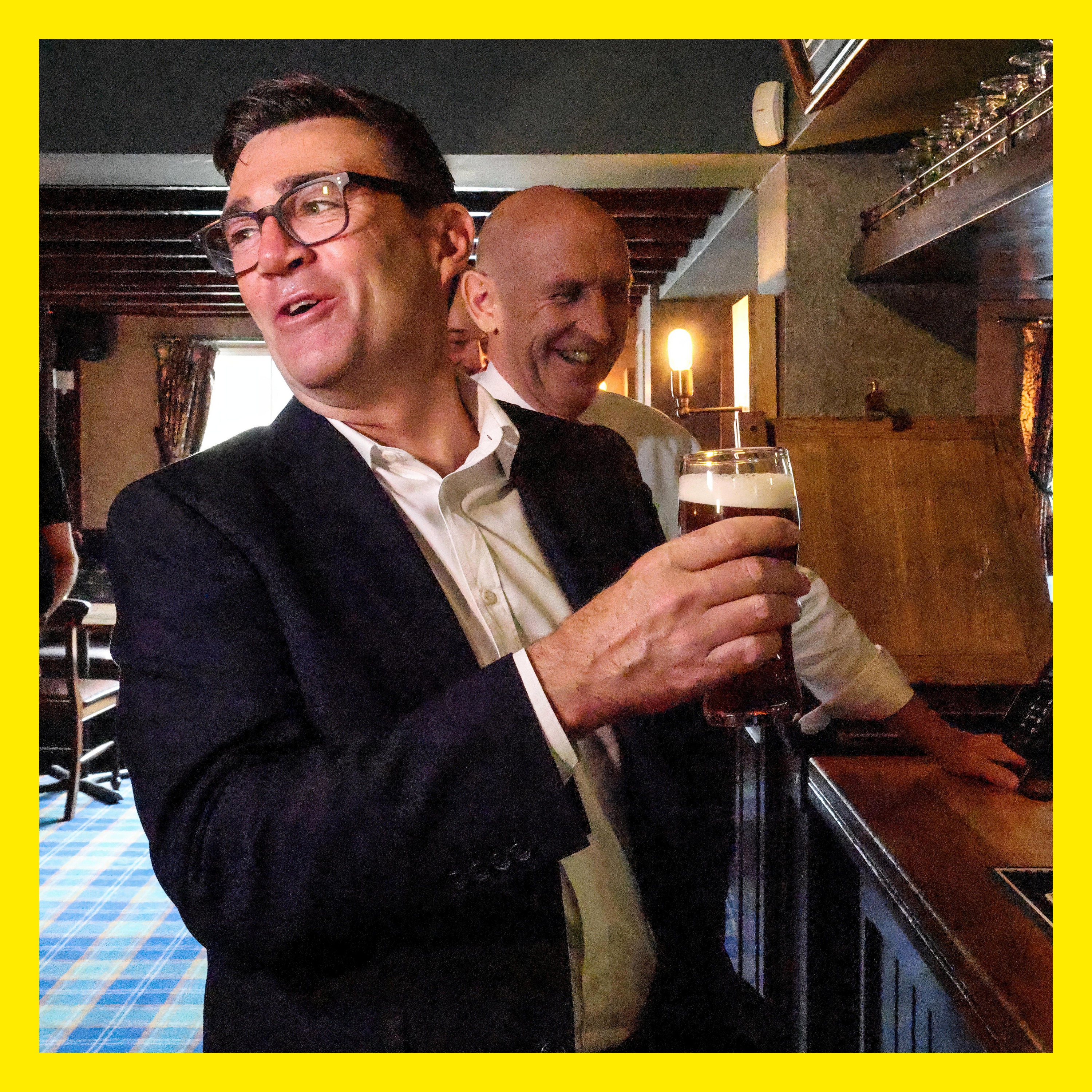
Andy Burnham's first week as Prime Minister has been all about creating good vibes. He's pledged to end rough sleeping, cut VAT on energy bills, cap bus fares at £2, and save Britain's pubs. The obvious question is: how is he going to pay for it all?
Steve takes us inside Burnham's call with Donald Trump, where everything was surprisingly cordial and the pair ended up talking about their mums.
But next week, the easy announcements give way to the hard choices. Burnham is expected to unveil major interventions on social care and unemployment. Can he deliver reform while also tackling the cost of living, boosting defence spending and keeping the public finances under control?
Steven Swinford, political editor, The Times
Lara Spirit, deputy political editor, The Sunday Times
Patrick Maguire, chief political commentator, The Times
Producers: Euan Dawtrey
Picture: Getty Images
This podcast was brought to you thanks to subscribers of The Times and The Sunday Times. To enjoy unlimited digital access to all our journalism subscribe here.
Hosted on Acast. See acast.com/privacy for more information.


