 Ask ChatGPT



Labour welfare reform and migration policy. The episode focuses on Andy Burnham’s plan to shift welfare spending toward employment support first, with benefit cuts later, following an Alan Milburn review on young people not in education, employment or training (NEET). It also discusses Shabana Mahmood’s plan to extend the path to indefinite leave to remain (ILR) for people arriving since 2021 from 5 to 10 years, and the internal Labour backlash.
Stephen Swinford (Times political editor), Patrick Maguire (Times chief political commentator), Ben Riley-Smith (Sunday Times political editor). No external guests.
Milburn’s core proposal would bar 16–24-year-olds from claiming Universal Credit cash benefits, replacing it with employment support; this is “welfare reform” rather than “welfare cuts.” Reform may initially raise spending (employment support vs benefits), delaying harder entitlement cuts. On ILR, critics argue it’s morally wrong and “shifts the goalposts,” especially due to retrospective effects; possible carve-outs for social care workers are debated.
NEET “lost generation” framing; “check and forget” cash-benefit culture; employment support vs benefits ratio cited as £1 to £25; ILR retrospective concerns for care workers; bond markets as a constraint.
Written by AI. May contain mistakes.
Discussion on welfare spending trends and upcoming budget implications.
“I'm Patrick Maguire, Chief Political Commentator for The Times.”
Examining Alan Milburn's review for NEET youth and its implications for benefits.
“I think that's eminently fair to say, Steve.”
Exploring the radical proposals for welfare reform targeting young people.
“And that significant advantage he has is that he is not Sir Keir Starmer.”
Analyzing the political challenges Burnham faces and his strategic approaches.
“Let's see the final details of the package.”
Discussing the long-term implications of Burnham's plan and reactions from the bond markets.
“And it's not just a ratchet of light touch entitlement for more and more and more people.”
Explore the potential implications of Labour's welfare reforms and their political support.
“You know, Labour MPs have looked over the precipice and genuinely were concerned about the possibility of the reform Nigel Farage government.”
Discuss the challenges Shabana Mahmood faces regarding her plans for residency claims.
“and when we'll get back from the interval we're going to be talking about migration and specifically Shabana Mahmood's plans to make it harder for people to claim permanent residence in the UK.”
Analyze the implications of the indefinite leave to remain policy and its political ramifications.
“Welcome back to The State of It, the political podcast from The Times and The Sunday Times.”
Investigate how the indefinite residency policy affects the care worker sector and immigration.
“So that alone is a signal that he is not willing to rip up and abandon all attempts to try and reform in this area.”
Examine the strategies Andy Burnham might use to navigate welfare and migration debates.
“It's not quite a rearguard action because the Prime Minister is pretty clear where he wants to go in terms of some kind of carve out or exemption.”
Discusses the Prime Minister's approach to welfare reform and immigration issues in the UK.
“and it's going to be fascinating to see the degree to which the Prime Minister is willing to go up against his backbench and say, look, we need to tackle welfare reform.”

Get the gist, explore an idea or ask about something said.
 Claude
On The State of It, what are the key points of this episode?
Searching your listeningAutomatic transcript. May contain errors.
0:00Therapy's biggest impact doesn't show up in some dramatic breakthrough. It shows up in the smallest moments. You bite your tongue instead of escalating. You put your phone down instead of firing off that text. You say what you actually mean instead of what would hurt someone else the most. Nobody applauds those moments, but they quietly change your life. That's what growing feels like. And that's exactly what Grow Therapy is here for. Grow is therapy that works, covered by insurance. Sessions average$21 with insurance, and some pay as little as$0, depending on their plan. There are no subscriptions, no long-term commitments.
0:37You just pay per session. Grow connects you with thousands of high-quality, licensed therapists across the U.S., offering both virtual and in-person sessions, nights and weekends. You can search by what matters, like insurance, specialty, identity, or availability. And you can book a therapy session in minutes and begin in as little as two days, not the national 48-day average. See if you could pay as little as$0 for therapy in seconds at growtherapy.com slash ACAST. That's growtherapy.com slash ACAST. growtherapy.com slash ACAST. Availability and coverage vary by state and insurance plan. Andy Burnham has a radical plan for welfare reform, but can he persuade Labour MPs to back it?
1:26One thing that's going to help him is that it looks to us very much like welfare spending could actually rise initially, that they could chuck billions more pounds at employment support and the difficult decisions coming further down the line on which benefits to cut. And it's not just Labour MPs Andy Burnham needs to worry about. Budget next week, it's the bond markets as well. Welcome to The State of It, the political podcast from The Times and The Sunday Times. I'm Stephen Swinford, the political editor of The Times. I'm Patrick Maguire, Chief Political Commentator for The Times. And I'm Ben Riley-Smith, the Political Editor of The Sunday Times.
2:01This week, we want to deal with the big issues. So obviously, we have the budget in a week's time. But actually, from everything that we see and we know about this budget, they are ducking a lot of the big decisions. This is going to be a steady-as-she-goes fiscal event, where there'll be some modest tax rises to pay for some modest cost-of-living packages. And we have talked about that a lot. But the thing that we really want to talk about this week is welfare and some of the challenges that are coming on welfare. So we'll get to a situation with after the budget next week, we head straight towards a review by Alan Milburn, a former Labour health secretary who's done this big review into NEAT.
2:37So young people who are not in education, employment or training. That is a million young people that are basically dependent on benefits and they are being consigned to a life on benefits is how he sees it. this lost generation and he is going to come out with some really radical solutions to this in his recommendations and the question is can Andy Burnham sell those to both himself but also a broader Labour cabinet because I'll just start on one of the core recommendations he's going to suggest that young people between the age of 16 to 24 should not be able to claim benefits effectively the main benefit, universal credit.
3:16So no universal credit, they get employment support instead, and the benefits therefore become a backstop and a safety net instead of the kind of first point of call, an end to the check and forget culture, as our colleague Fraser Nelson calls it. I actually think that is very radical, and I think it's going to be a really hard sell for Andy Burnham. Yeah, it's extremely radical. I think that's eminently fair to say, Steve. And if you look at the history of the welfare settlement, to carve out young adults from the same level of entitlement as others, obviously these ebbs and flows, but to basically ban them from claiming cash benefits in most circumstances is very radical.
4:03And there are two things we should keep an eye on. One is the extent to which Andy Burnham embraces what Alan Milburn says as an off-the-peg policy solution. is that the letter of the government policy immediately or is it a conversation starter for Andy Burnham to to kick around if it is the former and I suspect it will be then the onus is immediately on the prime minister to try and sell it to a parliamentary Labour Party that does not like big cash cuts to welfare and make no mistake that will be the result of denying cash benefits to that age group, even if there will be obviously some investment in the alternatives.
4:47Can Andy Burnham mount an argument in some of the language you've heard already, the idea that it's a moral catastrophe that a generation is consigned to the scrap heap on welfare, on the dole queue, on incapacity benefit, whatever? Or do Labour MPs leap immediately to the sub-stories, to the big numbers. Are they willing to be led on this issue? And can Andy Burnham lead them? And if Alan Milburn's proposal is as radical as we're led to believe, and he's dropped lots and lots of heavy hints and basically said, look, this is going to be a paradigm shift in terms of how we think about welfare spending, particularly for the young.
5:25Is Andy Burnham willing to say, actually, I'm against endless consultations. I'm against reviews. I'm against the politics of sort of scratching your chin and saying this is too difficult you know he said that to me a couple of months ago is he willing to drive it through and spend his political capital to use one of his favorite phrases and if he is this could be one of the defining decisions this government has made actually and it would have huge fiscal consequences be far more consequential if except in full as anything uh john healy is able to do at the budget ben coming to you he has one significant advantage.
6:03And that significant advantage he has is that he is not Sir Keir Starmer. So he's not going to sound to the same problem. But that is a really significant factor here that he is actually popular with his MPs and with his party. Well, he's got the backing of Labour MPs overwhelmingly, and he is a great communicator. So on those two points, he's clearly in a better place than Starmer. I think Burnham and his ministers are doing two things really well and cleverly in terms of welfare reform. The first one is they're getting out there and selling it, that classic phrase, rolling the pitch, that we always hear.
6:35I would say every three or four days, you are getting a front page story on Alan Milburn, who's leading all this work, showing a bit of ankle, talking about some of the policy changes he might do, and laying out the big picture arguments. So Milburn is doing a hell of a lot of heavy lifting publicly to make the argument. Andy Burnham himself is also doing that on the front page of the Times with an op-ed, spelling out the argument. And I know people in DWP are cheered that they see Labour MPs, including some Labour MPs who were fighting the rebellion to kill off the last welfare cuts package that Kirsten did, echoing some of their big picture arguments, which, as Andy Byrne wrote in The Times, this is a moral case to save these young people from a life of dependency as well as an economic case.
7:21So I think they're making success there. Let's see the final details of the package. I think the other area is where Keir Starman and Rachel Reeves tripped up was, again, Andy Burnham uses this phrase, crude cuts. If you just say, as they did say, in the personal independence payments, there's a point system. And why don't we make it a bit harder to get the points you need to get these disability payments? Then it's very clear who's losing out and how they're losing out immediately. but what Andy Burnham and Pat McFadden and the rest of the team seem to be doing is actually coming up with new systems so Stephen Timms who's been doing the pit review seems to be proposing actually replacing the whole way that you work out if you get these payments and coming up with the whole new different system so it's actually much harder there to compare like for Lichen to work out who's losing out and equally Stephen if you agree with us but it seems like what Alan Melbourne is coming towards is a new system for those people aged 16 to 24, not just, look, okay, you can get universal credit payments, but they're slightly less or it's going to be slightly harder, actually saying, look, why don't I do a more fundamental shift of the system?
8:33That makes it much trickier for your critic to say, okay, this group of people is very clearly losing out. So I think reforming and coming up with new systems is quite a clever way to try and tackle the problem. I think the key in all of this is in the subtle linguistic distinction we're all making, if only unconsciously. When we're talking about what Andy Burnham is doing right now, we're talking about welfare reform. When we talk about what Keir Starmer tried and failed to do, we talk about welfare cuts. And that is the key and operative difference. Only after the rebellion started in 2025 did Keir Starmer and Rachel Reeves and Liz Kendall try inelegantly and after the fact to construct an argument as to why it amounted to something more than let's save five billion.
9:23To quote your median Labour MP on the backs of some of the most vulnerable people in society. I mean, discuss, but that's how it was broadly seen across the parliamentary Labour Party. And it's in that phrase, welfare reform, and all the big systemic changes Ben was just talking about, where the political key to unlock all of this is for the Labour Party. Because if you'd spoken to people like Louise Haig when she was leading that rebellion, she would have said, look, I'm not against cutting the welfare budget. We need to cut the welfare budget. But you can't just keep a dysfunctional system in place.
9:59I mean, look at the Times Welfare Inquiry last week. I think there is broad consensus across the political spectrum, or at least the mainstream of it, that the system as it currently exists is not serving anyone, still less the exchequer, but also not the recipients of these welfare payments. If the system isn't working, you've got to do more than merely cut it for accountancy reasons, which is essentially what the last Labour government was doing. What you have to do in this instance really is properly remake it so it is fully reformed and better serving claimants and the exchequer. And it's not just a ratchet of light touch entitlement for more and more and more people.
10:46What we're not really hearing, by the way, when we read those stories that Ben refers to, Alan Milburn's stories in The Times, talking about this, pros, or that, they are not couched in, Alan Milburn wants to do this to save 2 billion or 5 billion or 10 billion by 2030 or 2040 or 2050. It is all about the kids, the people who are out of work, etc, etc. And that's the key difference. And that's the big political test. And look, Patrick, one of the perverse things about this when you look at it is actually my understanding is from everything that Milburn is recommending is that there is going to be a big increase in spending on the welfare system, particularly on employment support.
11:30So at the moment, we're in a situation where for every£1 that is spent on employment support,£25 is spent on benefits. That is an insane ratio that clearly can't exist. But in the short term, what they're going to do is funnel billions of pounds more money into employment support. And I can see Labour MPs backing that. I can see Labour MPs voting for that. But I think the real challenging thing is, it's the question of, OK, you say you want to cut the benefits bill. you say you want to cut the welfare bill, when are you actually going to do that? We could very well be in a situation where we get to the next election and actually all of the easier stuff, the carrot, if you like, of greater spending on employment support has gone on, but actually the more difficult stuff of cutting the benefits bill and reducing people's entitlements, that is mananaed into the distance.
12:21Now, Burnham insists he doesn't want to do that, but I know from talking to Alan Milburn, I know that the broad thrust of the plan is upfront investment for a five, ten year horizon of welfare reform. And what that means is the difficult decisions will come later. Well, yeah, and this is a big stress test for Burnhamism, as we might call it, because so much of Andy Burnham's political diagnosis and prescription is that the state is too weak. the state lacks the capacity and the resourcing to deal with very expensive problems at source. He would say the same of public ownership of utilities. He would say the reason our electricity is so expensive, you know, you can't get connections to the grid.
13:07Businesses are suffering. Thus, we're in hot to the bond markets. We're overexposed. Everything's really expensive. The government wants to do is because the state doesn't have control over it because it's been hollowed out, privatised, etc., etc. This is another example of that. Yes, there will be a big capital outlay in the initial term in the same way that it will cost money to do whatever he wants to do to Thames Water or whatever. But the prize over a 5, 10, 15, 20 year horizon is the state having control over these big issues that are spiraling out of control and not being on the hook to pay money to Capita or whoever.
13:45That's the test. One, do Labour MPs see it in that? sense, I suspect actually, if you're talking about employment support, they do. But two, and this is a big, the big budget imponderable at the moment, do the bond markets look at that and think, yeah, you know what, I have faith that this is the first step in a process that ultimately, the corollary of it, all this talk of employment support, all this language about morality, actually the upshot of it in the long term is a lower welfare bill, or will the Labour Party bank this bit and when it comes to start cutting say absolutely not that will there be lots of special pleading i mean that's the that is the immediate to medium term secondary question about how this is seen not just in westminster but in the city and by the bomb vigilantes and that uh that crucial audience too so ben give us your view can he do this can he pull this off my instinct is he probably can because he has so much more political capital than kia star and rachel Reeves did when they did it last.
14:46You know, Labour MPs have looked over the precipice and genuinely were concerned about the possibility of the reform Nigel Farage government. And part of that was the hammer blow that they dealt their own Prime Minister when they ripped apart this£5 billion of welfare carts, rather than reforms, as Patrick rightly says, last year. Are they really going to go through that whole process again? Aware of the big picture politics of this, they are much more firmly lined up behind Annie Birdman and his project right now. So much support did he have in the parliamentary Labour Party that not a single rival candidate ended up putting their head above the parapet and saying, look, I'm going to take you on for the leadership because it was so clear that he was going to win so comprehensively with MPs and likely with members if it went to a proper race.
15:34So the PLP is really pretty square behind him. So that combination of the support he has in the PLP and learning the lessons from last time instinctively means I think they will get it through even though it will be tricky. Right, let's head for the interval and when we'll get back from the interval we're going to be talking about migration and specifically Shabana Mahmood's plans to make it harder for people to claim permanent residence in the UK. Is she about to have to do a massive U-turn on those? So we'll talk through that. Therapy's biggest impact doesn't show up in some dramatic breakthrough.
16:07It shows up in the smallest moments. You bite your tongue instead of escalating. You put your phone down instead of firing off that text. You say what you actually mean instead of what would hurt someone else the most. Nobody applauds those moments, but they quietly change your life. That's what growing feels like. And that's exactly what Grow Therapy is here for. Grow is therapy that works, covered by insurance. Sessions average$21 with insurance and some pay as little as$0 depending on their plan. There are no subscriptions, no long-term commitments. You just pay per session. Grow connects you with thousands of high-quality, licensed therapists across the U.S., offering both virtual and in-person sessions, nights and weekends.
16:51You can search by what matters, like insurance, specialty, identity, or availability. And you can book a therapy session in minutes and begin in as little as two days, not the national 48-day average. See if you could pay as little as$0 for therapy in seconds at growtherapy.com slash ACAST. That's growtherapy.com slash ACAST. growtherapy.com slash ACAST. Availability and coverage vary by state and insurance plan.
17:26Welcome back to The State of It, the political podcast from The Times and The Sunday Times. We want to talk to you about indefinite leave to remain. So this is for the Boris wave. It's for people that came here since 2021 and their entitlement to claim indefinite leave to remain. Shabana Mahmood had a plan to deal with this. She was going to extend the length of time it took to gain permanent residency from five years to 10 years. But there are a lot of people sitting around the cabinet table, including, we think, potentially the prime minister, who do not like aspects of this plan. And the question is whether this plan can actually survive or if people like Angela Rayner, the housing secretary, or indeed Miata Fan Buller, the net zero and energy secretary, they have both been very public in their criticisms of this.
18:15They think it's morally wrong. They think it's shifting the goalposts and they think it will damage attempts to integrate people. So what we have is effectively a public pile on against the Home Secretary, against Shabana Mahmood and this plan. she's fighting a rear guard action to save it or trying to do so but it is far from straightforward yes and recall the first vote the prime minister back in that brief period where he was merely the new honorable member the new right honorable member i should say he's a privy councillor then and now for makerfield was he going to vote for shibana mood's ilr reforms uh when they first when they went through the Commons earlier this year.
19:02I mean, he did vote for the immigration and asylum bill. He was willing to go through the lobbies with her. But when you speak to Team Burnham about migration, he always goes out of his way to do one thing, doesn't he? He praises the contribution of immigrant care workers, i.e. the very people whose futures, whose right to permanent settlement, indefinitely to remain is up for debate here. You know, in his big speech on social care, that's the, you know, he went out of his way, you know, to praise the contribution of immigrant care workers. He returned to that again and again, and he feels it very keenly and very personally.
19:40You know, he'd say, these are the people that cared for my dad and we don't value them enough as a society. You know, other allies, as Shabana Mahmood are adamant, the prime minister is on side, you know, again, didn't have to take the side of the woman who he would later retain his Home Secretary when he returned as a lone ranger to the Commons in June. But the crucial question is, where does he draw the line? You know, the health and social care visa route is the one identified as the big problem because so many people took advantage of it, so many people brought dependents, etc., etc. And if that's the one group of people Andy Burnham is willing to make a special exception for, the initial point of that policy is shibana moud saw it i.e you know we need to pull the brake on all of these people having definite leave to remain with all the welfare entitlements and the like that entails we may well end up with a sort of piecemeal halfway house dare i say kia starmer ish solution that sort of gestures towards a problem without properly confronting it and that is that is ultimately the decision that will determine everything else i mean ben from what you're picking up, do you think Andy Burnham's going to fold on this?
20:54Do you think he's going to do this carve out for foreign care workers from this new policy? Well, I think it's worth saying a couple of things right from the first time, as Patrick alluded to, Andy Burnham made the decision to keep Shabana Mahmood in the Home Office, well aware that she was midway through this review on what to do with the Boris wave and indefinite leave to remain, you know, similar as he did with Pat McFadden because he was determined to push through welfare reform. So that alone is a signal that he is not willing to rip up and abandon all attempts to try and reform in this area.
21:25Second thing I'd say is, listen to what Shabarnam Mimouda herself has said publicly at Labour conference she stressed the need for the deal to be fair. That was widely interpreted as meaning that she's going to wrote back a little on what she was looking at doing a couple of months earlier. Because that was the perennial critique, wasn't it from people like Angela Rayner that it was that the changes were un-British and thus unfair because of the retrospective element right these were people who were you know like like Boris Johnson's immigration regime or not these are people who'd come legally who had been promised indefinitely to remain after five years and for a Labour government to shift the goalposts pretty dramatically was considered unfair so I thought I agree Ben I thought that was a really telling choice of word from Shibana Mou because it's another way of saying un-British.
22:14And very different to the rhetoric she was using a year ago when it was the whole Morgan McSweeney take on reform strategy and she was talking up the tough rhetoric on immigration. So that word was really notable. And then just on the two public criticisms that we've had, I think it's worth adding in a bit of nuance. One was Angela Rayner to you, Steve. But cleverly, you asked her about comments she'd made on the backbench when she was outside government criticising the policy. And she stood by them, but that wasn't issuing a new unprecedented attack. She was saying, yeah, look, I do still stand by my words, even though I'm now bound by collective responsibility.
22:51And Miata Fanbola, again, the criticism this week emerged from the phrasing that she'd used in a message on her website to constituents, where she did appear to be saying, you need to be fair to these people who've joined in and definitely to remain. But I think I read in the papers today that she's rewriting the particular wording blog post so this is not two people out there absolutely slamming the government unprompted so maybe if you're being generous to both of them you could argue that behind the scenes they're pushing for changes but but they're not in kind of total or all-out war so my instinct and and talking to people my understanding is that the critical bit is the retrospective nature of this so does it apply to those people who came in 21, 22, especially social care workers, the Home Secretary still believes in some form in the principle of retrospection.
23:41They've got legal advice that shows that that applies in lots of different areas of asylum rules. And she seems unwilling to totally abandon that point. So yes, there may be carve out for social care workers. And Patrick's absolutely right, just how often the Prime Minister talks about that group of people. In this conference speech, he literally did that kind of look down the camera i see you i hear you i'm gonna make sure you get better pain conditions um as social care workers so the tussle is is she gonna entirely abandon the retrospective element or is she gonna try and keep some of it uh while making some of these concessions there's a really interesting point about unintended consequences here which i've heard argued from both the home office side and also the health side that if you retain the current system you get this wave of people who after five years get permanent residency so we're talking tens of thousands hundreds of thousands of care workers who suddenly don't have to work in the care system anymore so they can go do something else they can go do whatever they want whatever economically productive thing they want to do fine and that is their entitlement as as people with permanent residency of the uk that creates a problem for the care system which is reliant on these workers because suddenly you have a potential exodus of tens of thousands hundreds of thousands of care workers so that is one of the things i'm told that's factoring into this debate that actually yes there is an argument about fairness yes there's an argument about is this morally the right thing to do but on the counterpoint there's also a concern that you could leave the care sector high and dry ironically needing more workers because they can't get the British workers to do these jobs that is one of the points and one of the concerns when Andy Burnham talks about giving care workers a better deal he's doing that because it is hard to attract British workers to some of the most difficult jobs on our society caring for our loved ones caring for people in old age so that's one of the just just to give you a kind of feel behind the scenes of some of the discussions in Whitehall over this it's not simple and I don't think that Shabana, as you said, Patrick, has given up the ghost yet on this.
25:46It's not quite a rearguard action because the Prime Minister is pretty clear where he wants to go in terms of some kind of carve out or exemption. But certainly there are significant practical issues as well. No, exactly. And Shabana Mahmood would not have stayed on in that job, was she not confident the Prime Minister would back her as far as was politically possible. And the other, you know, we spent a lot of time on welfare talking about the appetite of the parliamentary labour party to swallow harsh medicine and run through its pain threshold this is another example we are about to learn on both of these issues and migration is a similar one the extent to which these disagreements on policy and particularly values right it's values that are at the heart of the welfare debate and also the immigration debate because they spoke to The discontent under Starmer spoke to a sense that the Labour Party had taken leave of those values.
26:46Indeed, that the leadership of the Labour Party enjoyed or revelled in sort of affronting or disrespecting those values. Can a leader who is seen to embody them, for better or worse, as Andy Burnham is by many of his colleagues, can he sort of build a permission structure, in the words of our Sunday Times colleague Josh Glancy, or engineer a situation where he has enough credit in the bank to say, listen, guys, let's get real. Look at what's happening on the continent. Either we do this or Nigel Farage and Rupert Lowe or indeed Kemi Baden-Ock do something nastier. And that is the sort of political argument I think Andy Burnham can make, whether Labour MPs are willing to hear it, is the perennial and as yet unanswered question.
27:35To develop that a step further, both of these topics, welfare and immigration, is a space where the public are in a much tougher position than Labour MPs. So, so much of Andy Burnham's apprenticeship thus far has been trying to gee up and cheer Labour MPs. They were cheering when he went further, talking up, getting closer to the European Union. They're cheering when he's talking about a national care service. This is where he's delivering the tough medicine. and it's going to be fascinating to see the degree to which the Prime Minister is willing to go up against his backbench and say, look, we need to tackle welfare reform.
28:10We need to tackle immigration. I know the public are probably with me on it and you need to be with me on it too. By the way, Ben, you mentioned Europe. I mean, this is hugely material to this. The Prime Minister is working up a list of options. we know the europeans even given the state of migration europe now are pretty prescriptive on the four freedoms of capital goods services and people being indivisible so i mean you at once you have we're huffing and puffing and shibana is huffing and puffing and angela and miata and all of these people are furrowing their brows saying what oh indefinitely to remain for this number of people is the the Labour Party is sort of waltzing back into a place where it's willing to argue for oh well let's have unlimited migration from the EU that's before we get to questions like EU budget contributions which dwarf in some respects any of the savings we're talking about here be that from ILR welfare entitlements or the welfare savings we were talking about earlier again you know there are lots of tactical questions we're talking about or the big policy issues afflicting this dysfunctional state be that welfare be that my migration we tend to talk about them as sort of tactical considerations for the for the government but the biggest strategic call andy burn has made so far i on europe threatens to blow them wide open again anyway and that's before you think about well how is the uh the youth mobility scheme that will inevitably be agreed soon how will that play in uh in makerfield what does that mean for the makerfield test so you know maybe the government get through this and shibana mamood's dreams are fulfilled but then we're into a whole another debate over migration and government spending and open-ended spending commitments over the eu and i'm not entirely sure the labor party's even begun to think about that yet.
30:11Excellent. Right, on that note, I think that brings this week's episode to a close. We'd just like to say a massive thank you to our producers. We have the Triumvirate today. We have... We have Harry Kitson. We have Molly Guinness. And we have Ewan Daughtry. The Crucial Three. That's a Merseyside supergroup. Andy Burnham may remember. Julian Cope, Pete Wiley, and Ian McCulloch. Both went on to great things in their respective fields but for one summer in the late 1970s they were a band in i think it was Ian McCulloch's bedroom and who knows where the three of these will end up but we just know it's going to be a great place
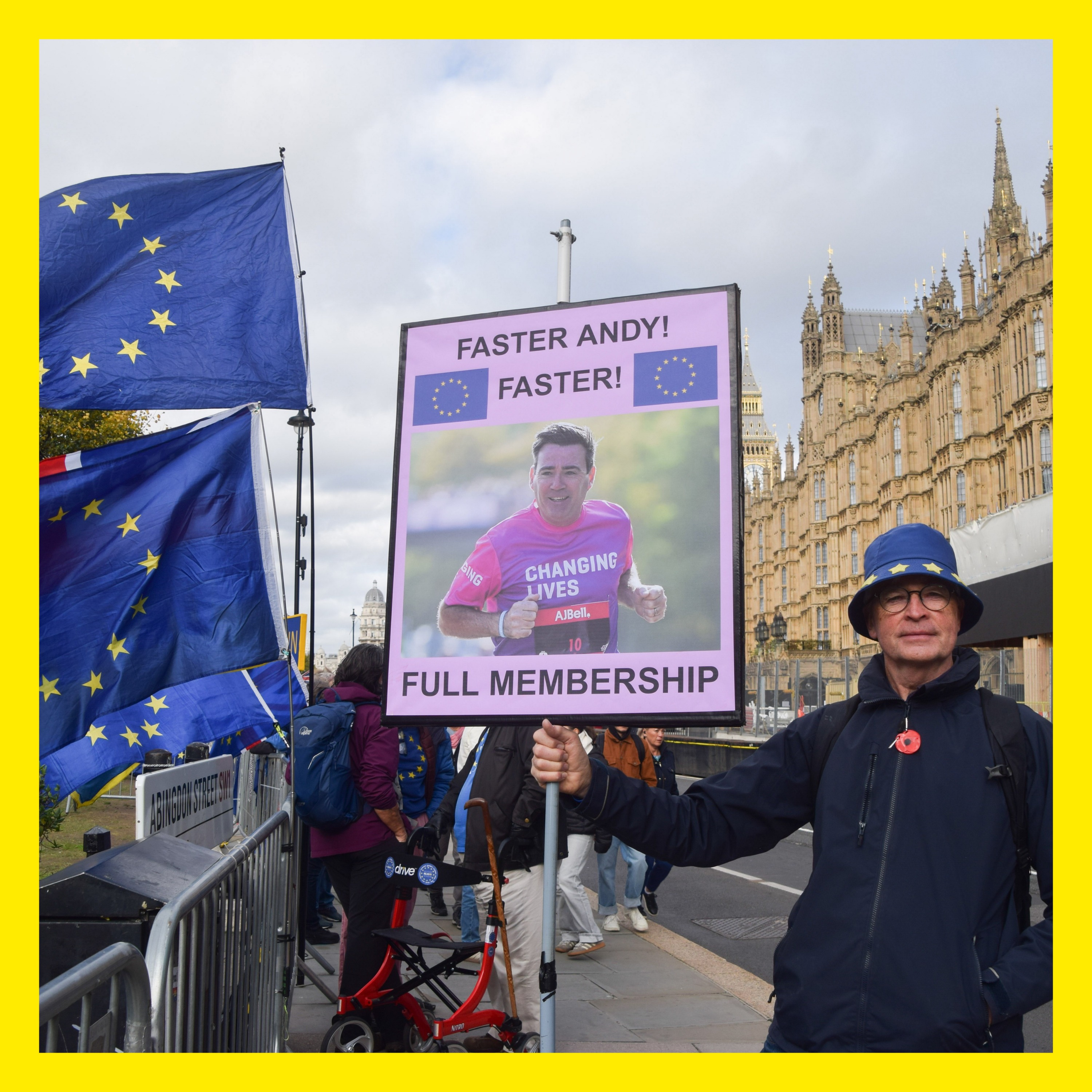
Andy Burnham's welfare reforms are likely to start with more, not less, spending. In his review into Neets, young people not in education, employment or training, Alan Milburn will propose restricting access to universal credit for 16 to 24-year-olds, and spending money instead on employment support. The prime minister will tell MPs the government needs to spend first, cut later to bring about meaningful welfare reform. That may please Labour MPs but will the bond markets keep the faith?
Meanwhile, the home secretary, Shabana Mahmood, is facing opposition within Labour over plans to double the wait for indefinite leave to remain from five to 10 years. Will Burnham back her reforms, or carve out an exception for migrant care workers?
Steven Swinford, political editor, The Times
Ben Riley-Smith, political editor, The Sunday Times
Patrick Maguire, chief political commentator, The Times
Producers: Euan Dawtrey, Harry Kitson
Executive producer: Molly Guinness
Pictures: Getty Images
This podcast was brought to you thanks to subscribers of The Times and The Sunday Times. To enjoy unlimited digital access to all our journalism subscribe here.
Hosted on Acast. See acast.com/privacy for more information.