Ask ChatGPT

 The State of It
24 Mar 2026 · 31m · 12 chapters
In this episode of "The State of It," hosted by political heavyweights from The Times and The Sunday Times, the discussion revolves around several pressing topics in British politics, including:
Written by AI. May contain mistakes.
Explore the current political landscape including Iran and Keir Starmer's responses.
“Welcome to The State of It, the political podcast from The Times and The Sunday Times that promises to take you inside the room where it's happening and tell you what is actually going on in government.”
Discuss Keir Starmer's approach to the ongoing conflict and its implications.
“where we have to kick off, which is Iran.”
Analyze how prolonged conflict affects the British economy and energy prices.
“That was Lucy Powell as a Manchester City fan who's been through thick and thin with Man City.”
Investigate the political ramifications of proposed changes in defense funding.
“in energy bills, in petrol prices, and at the supermarkets.”
Engage in the discussion about the fairness and effectiveness of economic support measures.
“symbolic cut to the aid budget has more of an immediate political consequence, for better or worse, than the way in which MPs consider long-term questions of defence expenditure.”
Discusses the current challenges facing the Labour Party and its leadership under Keir Starmer.
“In fairness to Ed Miliband, he has a different analysis about clean power will give us the national resilience and self-reliance that people say oil and gas will.”
Examines the strategic importance of the Strait of Hormuz and the UK’s military position.
“and when we come back, we're going to talk about the Labour leadership.”
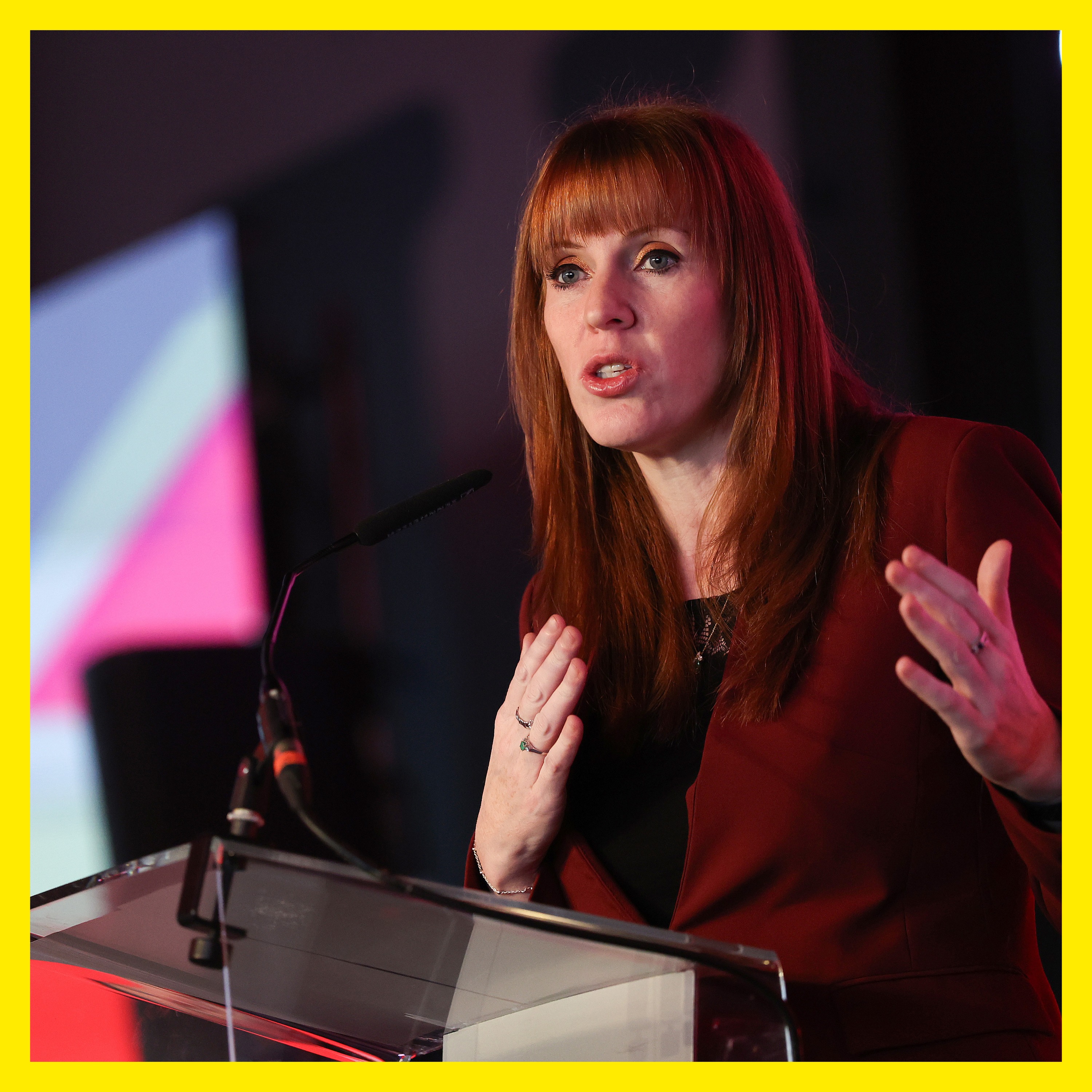
Explores Angela Rayner's growing influence and potential leadership aspirations within the Labour Party.
“position to mount a challenge and they are talking bullishly about her going over the top herself Yeah, indeed.”
Analyzes the controversies surrounding Angela Rayner and her financial dealings amidst political challenges.
“allies and and the rest of the cabinet and the leadership of the soft left such as it exists because they let's take each of those groups in turn the the rest of the cabinet look at what Angela Rayner is doing.”
Learn about the circumstances surrounding the theft of a high-profile phone and its implications.
“But so a lot of people are saying that can't be true.”
Discover the ongoing investigation of the Mandelson files and their potential public release.
“They'll say those messages should be there, but there will be gaps in the Mandelson file.”
Explore how the release of sensitive information could affect upcoming elections.
“I'm sure they've said all sorts of embarrassing things.”

Get the gist, explore an idea or ask about something said.
 Claude
On The State of It, what are the key points of this episode?
Searching your listeningAutomatic transcript. May contain errors.
0:00Patrick Maguire: Craving the coffee flavor you love, but without the caffeine? Cachava's got you covered with their newest coffee flavor. This all-in-one nutrition shake delivers bold, authentic flavor, crafted from premium decaffeinated Brazilian beans. With 25 grams of protein, 6 grams of fiber, greens, and so much more. Treat yourself to the flavor and nutrition your body craves. Go to cachava.com and use code SMOOTHY. New customers get 15 % off their first order. That's K-A-C-H-A-V-A dot com, code SMOOTHY. Let's be completely honest. Are you happy with your job? The fact is, a huge number of people can't say yes to that.
0:37Patrick Maguire: Too many of us are stuck in a job we've outgrown or one we never really wanted in the first place. But we stick it out and we give reasons like, what if the next move is worse? And I've put years into this place. And maybe the most common one. Isn't everyone miserable at work? But there's a difference between reasons for staying and excuses for not leaving. It's time to get unstuck. It's time for strawberry.me. They match you with a certified career coach who helps you get from where you are to where you want to be, either at your existing job or by helping you find a new one. Your coach helps clarify your goals, creates a plan, and keeps you accountable along the way.
1:13Patrick Maguire: Go to strawberry.me slash career and get 50 % off your first coaching session. That's strawberry.me slash career.
1:27Patrick Maguire: So the discussions took place yesterday. They want very much to make a deal. Otherwise, we just keep bombing our little hearts out. We mustn't fall in to the sort of false comfort of thinking that there will necessarily be a quick and early end to this. We have to plan on the basis there may not be. A lot of what is said or done is undoubtedly said and done to put pressure on me. I have no doubt about that. I understand exactly what is going on, but I'm not going to be wavering on this. I'm the British Prime Minister and my job is to be absolutely focused on what's in the British national interest.
2:05Patrick Maguire: You are at peace. Well, we are actually at war.
2:13Gabriel Pogrund: Welcome to The State of It, the political podcast from The Times and The Sunday Times that promises to take you inside the room where it's happening and tell you what is actually going on in government. I'm Stephen Swinford, political editor of the Times. I'm Gabriel Pogrand, Whitehall editor of the Sunday Times. And I'm Patrick Maguire, chief political commentator for the Times. So this week, we're going to bring you another scoop-packed episode. We're going to be talking about Iran, why Number 10 is really pleased with itself, Sir Keir Starmer's Hugh Grant moment, but why there is a massive sting in the tail coming on the cost of living.
2:43Gabriel Pogrund: We are going to be talking to you about Angela Rayner and how her allies think she could actually go over the top amount of challenge against Keir Starmer. And then lastly, we are going to take you on another scoop inside the story of what happened when Morgan McSweeney's phone was stolen, one of the most powerful people in the country, and what actually happened there. But let's kick off with where we have to kick off, which is Iran. And number 10 thinks that Keir Starmer is having a good war, being blunt. So yesterday, he appeared before the Liaison Committee, which is a group of senior MPs.
3:16Gabriel Pogrund: This is kind of your boss level of backbenchers. These chair the select committees, and he's grilled by them. And during that, he was basically saying that, look, I know what Donald Trump's trying to do with all these jibes. I know what he's trying to do, but I will not give in. I will not change my position. And this was about an hour and a half into this liaison committee. And actually, I completely missed it, as did most political journalists, because it had gone on for so long. But then people around Starmer started sending it to us and they were kind of like pretty clear that they thought this was a kind of Hugh Grant standing up to Donald Trump moment, that he was asserting his ground, that he would put Britain's national interest ahead of the jibes and the pressure coming from Donald Trump.
3:58Gabriel Pogrund: So let's kick off there. Do we think Starmer's having a good war?
4:03Patrick Maguire: Insofar as it's possible for anybody to have a good war, full stop, or a good international energy crisis. I think we've discussed on this podcast before that if you look at Starmer's personal polling, admittedly from a low base, it's on the uptick. You hear from inside number 10 more self-confidence than I think we have at any point since the ructions over Mandelson at the start of this year. And what was it? Vidya Alexsen, the acting chief of staff to Keir Starmer, told a group of party luminaries, cabinet ministers, donors, the multimillionaire Gary Lubner's, one of his periodic gatherings the other night, that number 10 was the best run it's ever been.
4:48Patrick Maguire: Now, whether that's true or not, certainly Keir Starmer has a political answer to this very, very difficult diplomatic dimension to all of this. We'll obviously get onto the economics in a minute but clearly people feel that this is going as well as it could go in terms of this specific political dimension of it so yeah i think kia starmer for once has a an answer that uh he gives with fluency sincerity and uh self-assurance and people like what they're hearing at least some of them do i don't want to bastardize gary lovner's footballing metaphor but unless i'm mistaken i I think on the night that City happened to be playing Real Madrid in their second Champions League tie, he said that Labour was the equivalent of, was it 3-0 down after the first leg, but with all to play for.
5:41Patrick Maguire: That was Lucy Powell as a Manchester City fan who's been through thick and thin with Man City. Well, forgive me, Lucy Powell. But I think the reason why Starman thinks he can equalise the scoreline is because at the moment, the circumstances do play into the kind of politics which suit him. namely the politics of international law and procedural choices where there is a legal dimension. I think that the fly in the ointment are the two big questions he faces at the moment. One is, how does he address the cost of living? And then, what of the question of defence? And I think the permanent secretary of the Ministry of Defence has acknowledged that the reason we don't have any detail on the question of how the government intends to fund the armed forces is because there is hitherto no agreement in government on that question.
6:29Gabriel Pogrund: The key question in all of this is how long does the conflict go on for? Now, a fortnight ago, we were told that the central assumption in government is that it was going to last for six weeks. That is now seen as the best case scenario. And it is worth just bringing that out for a second, because obviously you've got Donald Trump, every other day seems to say the conflict is going to draw to an end, we're getting close to a negotiated solution. That is not the view in number 10, and it is certainly not Starmer's view. He is concerned that this conflict, and he's planning on the basis, that this conflict will go for much longer than that.
6:59Gabriel Pogrund: And the longer it goes on for, the more pain there is for households in energy bills, in petrol prices, and at the supermarkets. So understandably, they are drawing up plans for a bailout. And they've been talking about that privately on energy bills. But what does it look like? They don't want to take the big bazooka approach. So if we just rewind back, Liz Truss, during her brief and very ill-fated premiership, the biggest thing that she did, apart from the mini budget, was announcing a huge package of support for every household in the country, which combined with what Rishi Sunak subsequently did, cost 40 billion.
7:35Gabriel Pogrund: And Rachel Reeves thinks that was wrong.
7:37Patrick Maguire: Yeah, but there's also an object lesson in the trust thing. What people forget about the trust bailout package was for the duration of her leadership bid, she said, not going to go there. I'm not going to borrow loads of money to do that. My thing is all about tax cuts, et cetera, et cetera. But then political pressure was such, she had to do it. The first thing she had to do. I think there's an object lesson there. It's very easy in the abstract for the government to say, we're not going to do this. These are our first principles. And yet they will take an incremental first step. But do we really think in October, whoever is the Labour prime minister, if this is still going on, if Keir Starmer is right, and there's no reason to say he isn't on current evidence, we're really going to say, you know, if there is a nationwide clamour fraction, they're not going to do it.
8:21Patrick Maguire: which is significant because everything else is downstream that the government is talking about doing or might do. You know, just two examples come into my head, right? You know, the Treasury looking at mitigation for student loans. Actually, if you're looking, staring down the barrel of all of this and you've got to find billions of pounds from somewhere, what does the government's agenda look like in six to eight months time? It's very, very tricky. I just wanted to mention a bit of insight from the events of last week. about a week ago there was a sort of behind the scenes plant had been hatched within downing street to further salami slice the aid budget it's meant to be 0.7 percent of gross national income it's already gone from 0.5 under starmer to 0.3 and there was this attempt to further sandpaper it down to 0.2 % and use the proceeds in order to fund defence.
9:16Starmer has said that he wants to find a way of turning around the state of our armed forces and such was the seriousness with which this idea was being considered that Rachel Reeves earlier in the week notified the foreign office not to proceed with their own planned announcement on the allocation of international aid. I think this is one of those super interesting moments where it looks like Starmer is saying to the parliamentary Labour Party and to the voices of international aid and Labour being a moral force in the world, I'm afraid we just don't have the cash to do that right now. Once this then circulated within Whitehall, I'm told there are numerous representations from ministers and senior MPs.
9:57And at the 11th hour, the FCA was given a green light to proceed with their original plans based on that 0.3%. So I think, to the extent that questions of arithmetic and gross national income ever illustrate a sexy political point, I think what this shows is the way in which the politics of the government continue to be influenced by Starmer's post-Mandelson and post-Mitsweenie predicament, which is a world in which he cannot afford to isolate people who deem themselves to be the torchbearers of Labour's moral and progressive traditions. And a further symbolic cut to the aid budget has more of an immediate political consequence, for better or worse, than the way in which MPs consider long-term questions of defence expenditure.
10:44Gabriel Pogrund: So looking at the energy bailout package, we should talk about what they're actually going to do. So first of all, Rachel Reeves is philosophically opposed to a universal bailout. And she argues privately and when she's in talks with MPs that what happened, what Liz Truss did with the 40 billion bailout was unfair because the bulk of that money went to richer households which have bigger houses and higher energy costs. So actually it wasn't targeted at all. It benefited the richest and yes it helped the poor as well but they want a targeted solution. So what they are looking at is something called the Warms Homes Discount.
11:16Gabriel Pogrund: Now that is money, it's 150 quid off your electricity bill. And the way that works is it targets people that are on pension credit. It targets people on benefits. And that is the kind of bulk of that. And they're looking at adding a kind of household income to that. But the problem with that is what you alluded to earlier, Patrick, that it's going to create winners and it's going to create losers. And this government always struggles when it's in a situation where there's a cliff edge and there are suddenly loads of people that don't get money off their engine.
11:44Patrick Maguire: And particularly when that interacts with questions of welfare entitlement, right that is that that is the sort of live wire this government has tried to touch before and it was interesting pat mfadden gave a gave a long considered speech last week indeed rare rare speech by cabinet minister he wrote it himself that basically tried to shift the language away from that towards the dignity of work right not just talking about uh you know a culture of entitlement a culture of sort of rights and responsibilities but obviously that's the cleanest mechanism rachel reeves can you know through existing welfare mechanisms but if you You juxtapose it, say, with Nigel Farage, you know, saying, I'm going to pay the energy bills for your entire street, which reforms, they squeeze and talking about petrol and men in white bands.
12:27Patrick Maguire: The political divining line is very, very stark. I think we all know there is in the back of everybody's minds on Whitehall, a sense that we may at some point need to go further. And indeed, they haven't necessarily ruled that out in principle. If, you know, things persist as long as Keir Starmer says they're going to persist. Yeah.
12:44Gabriel Pogrund: So we've also got a piece today from a guy called Paul Ovenden. who used to be a senior advisor to Keir Starmer. And he is making the case against a universal bailout in very forthright terms, Patrick.
12:56Patrick Maguire: Yeah, he is. And it's also, you know, it comes back to your point about international aid as well, Gabriel. Paul Ovenden, you know, one of the standard bearers for Morgan McSweeney's style of politics. He was Labour's head of strategy. He's written a piece about how this is a moment, a bit like Suez, that forces, should force Britain and its government and the state to confront truths that no longer hold, right? This is the passing of an old era. And he cites examples such as the triple lock, welfare spending, stuff like that. He says Britain needs to take a long, hard look at what it can and can't do and what it needs to do.
13:38Patrick Maguire: Defence spending is one. How are we going to pay for defence spending? But comparing what the Treasury is saying to the centre of gravity among Labour MPs, you know it's it's really hard to reconcile those positions and isn't it interesting by the way that people like paul overton people like john bue who was uh in starmer's number 10 at the start close to people like morgan mc sweeney you know very well respected among the people who used to run number 10 john bue saying very similar things about the future of britain about whether the welfare state is sustainable but these people are no longer in government right and the direction of government is being driven by people who are saying let's not have tough conversations right Ed Miliband at PLP last night.
14:16Patrick Maguire: In fairness to Ed Miliband, he has a different analysis about clean power will give us the national resilience and self-reliance that people say oil and gas will. But what we don't hear from Ed Miliband is what we've heard from Mark Carney, which is, okay, we can't do oil and gas. We can't be dependent on America. Let's pivot towards China. Let's buy a load of clean tech from China. We're not in that space either. So instead, this isn't Ed Miliband issue. He at least has an argument and analysis. Instead, we are in a position where you have people say let's have difficult conversations the parliamentary labour party says no we like this instead but everything is just sort of stuck and that makes it harder for Keir Starmer when he does make a principal decision him and Rachel Reeves on okay not everybody can have this this is where we draw the line there is not a culture of having those conversations and you know thrashing these things out so you know who knows how this will land they
15:09Gabriel Pogrund: they're not good at drawing lines they never have been right and that that is the biggest challenge when there are difficult political choices the paul ovendon piece says that the governing establishment basically and labour mps particularly are detached from reality and i think the prime minister is is in a weak position and we'll struggle to have those conversations so look we'll end up the the other thing we need to talk about briefly is what we are willing to do in the Strait of Hormuz. So all of this centres around this narrow waterway, which is critical to trade. And at the moment, we've obviously done very little to assist.
15:42Gabriel Pogrund: Starmer said, I don't want to get dragged into the war. We've offered the US use of our bases for defensive airstrikes. That's about it. We are told that if there is a ceasefire, which could be agreed, we won't be sending naval vessels into the Strait of Hormuz. At best, we are going to be sending kind of mind-sweeping drones to help, but do not expect British naval assets to be escorting commercial vessels through the strait for two reasons. One, it's really dangerous and they are worried about that. And two, we just don't have the resources. We don't have the naval assets. The HMS Dragon has finally made it there.
16:16Gabriel Pogrund: But until last night, we have had no Royal Naval presence in the region for the first time in 50 years. So it might be politically convenient for Keir Starmer for us to be entirely absent from this conflict, but it's actually born of necessity because we didn't have the assets out there, which is quite an extraordinary position to be in at a time of massive turmoil. But look, we'll head to the interval, and when we come back, we're going to talk about the Labour leadership. Obviously, Starmer thinks he's bolstered by this conflict, but there is a hell of a check on that coming in the form of the elections, and Angela Rayner in particular is gearing up.
16:55Patrick Maguire: You've seen the signs and you know hoping it gets better isn't a plan. Symmetria Recovery offers real medical care for addiction with fast relief from withdrawal and therapy that supports lasting change. No judgment, just help. Most major insurance plans are accepted and they can start quickly. Symmetria Recovery. You make the call, we'll help with the rest. Call 800-844-5151 or visit SymmetriaRecovery.com.
17:48Patrick Maguire: between reasons for staying and excuses for not leaving. It's time to get unstuck. It's time for strawberry.me. They match you with a certified career coach who helps you get from where you are to where you want to be, either at your existing job or by helping you find a new one. Your coach helps clarify your goals, creates a plan, and keeps you accountable along the way. Go to strawberry.me slash career and get 50 % off your first coaching session. That's strawberry.me slash career.
18:45Patrick Maguire: drive measurable CX outcomes. Move from AI pilot to enterprise grade CX with Parloa. Visit parloa.com.
18:56Gabriel Pogrund: Welcome back to The State of It, the politics podcast from The Times and The Sunday Times. We've got a brilliant scoop for you about what happened when the phone of Morgan McSweeney, the Prime Minister's former chief of staff, was stolen as he left a restaurant. We're going to give you the inside track on, as we understand, what actually happened that night. First of all, We are going to talk about the Labour leadership. We're going to talk about Angela Rayner. And when you talk to people around her, they are becoming increasingly bullish. She made a major intervention last week in the basement of a pub in Whitehall, which they feel was very positive for her.
19:32Gabriel Pogrund: It made the case that we're running out of time and that we need to change things. And she went for Shabana Mahmood's migration policy very aggressively. She's making a lot of money. She's made more than 100 grand, as we discussed last week on the podcast. and increasingly some people around her think that yeah she would go over the top if if the elections are bad enough in may she'd be willing to go there and actually lead it and until now as we've said on this podcast patrick you had a scoop on it at the time her position has been i'd only do it to stop west street but increasingly west street looks much less likely to be in a position to mount a challenge and they are talking bullishly about her going over the top herself Yeah, indeed.
20:11Patrick Maguire: And it is striking hearing that not being knocked down by more people close to Angela Rayner than not, because there's always been a divide in Angela Rayner's camp between those who are more gung ho and those who are more strategic. Those who are motivated by, if you pardon my French, let's show these bastards. I can't even think of anything adequately profane to express the level of contempt and vengefulness some people in Angela Rayner's camp have towards Keir Starmer and his people. And there's another camp that say, look, you know, let's box clever. Let's consolidate our position.
20:45Gabriel Pogrund: I mean, the other, so there are two other aspects that we need to talk about with Angela Rayner. One is money. and she is making a lot of money, 100 grand plus, which we talked about on the podcast last week. She's capitalising on her state as a potential prime minister by taking money from the city. She took money from BNP Parabas, which is a French bank, to do a call with city investors. She took money from the Management Consultants Association to do a dinner for them. She's doing one for estate agents, which is coming up, I think, in June. And then there's her memoirs, which are obviously a piece of positioning which she's been paid a thwacking advance on.
21:20Gabriel Pogrund: So she's got money and she needs that money because she's finishing up HMRC's investigation into her tax affairs, which she is contesting, by the way. She is fighting and doesn't think that she needs or done anything wrong and needs to pay. But nonetheless, she could have to pay a fine. So we'll see where we get with that. But either way, Gabriel, this stuff is actually, it's always quite murky because there are potential conflicts of interest here. It's true. I mean, I suppose, you know, we often talk about the disjuncture between what the Labour Party thinks and what the country thinks. So the luxury of Angela Rayna's position at the moment is that questions about what the country happens to think can wait for the time being.
21:56She has two audiences at this time. The PLP, Labour MPs among whom she is popular, but that would be an oversimplification. But let us just say she has a great number of admirers. And unlike Andy Burnham, has the benefit of being on the soft left and in Parliament. and also she has I think what many people would deem improbably convivial relationships with many of Labour's money men and women. I think one of the kind of most fascinating sliding doors moments in the history of this kind of contemporary Labour Party period is that in 2019 Trevor Chin the former chairman of the RAC who bankrolled not just Labour Together but Keir Starmer encourage Angela Rayner to run herself.
22:42So there's always been a perception among the party that she'd be a great candidate. You're right, Steve, by the way, to raise the fact that she does have, there are some big question marks about the kind of probity of the situation. But I will say, you know, having spoken to people in her inner circle, there is absolutely no contrition. They certainly don't think they've done anything wrong. And they are probably right to say that if she is going to run, she obviously has to preempt a potentially large penalty and liability from HMRC. But it is a kind of extraordinary situation. It's sort of a race against the clock, albeit a clock which may toll at a moment she's not ready for.
23:26Because she doesn't know when HMRC is going to turn around and she doesn't know how it's going to respond to her position. So, I mean, it's just an insane game of 40 chess where you've got the PLP, the donor class, HMRC, property conferences bmp paribat all um sort of if not at the mercy of angela rayner then she has to find a very delicate way through um a very difficult moment with some potentially improbable
23:51Patrick Maguire: allies and and the rest of the cabinet and the leadership of the soft left such as it exists because they let's take each of those groups in turn the the rest of the cabinet look at what Angela Rayner is doing. And there are lots of people in the cabinet who fancy a crack at this themselves, who frankly look at the rest of the field and some of their colleagues and say, Jesus, what? You, really? You are going to be the next prime minister? What? That can't possibly. And that's not just an Angela Rayner thing. You know, people look at everybody and everybody has their own person who they look at and say, sorry, what?
24:26Patrick Maguire: No, absolutely not. John Healy gets to run if Ed Miliband gets to run. Yeah, well, John Healy is a good example, right? If you look at John Healy and you are one of his contemporaries, you go, what, John, sorry, John Healy? John, I like John, but John is not the answer. If John's the answer, I'm the answer. And that is a dynamic that's unfolding. And you can tell which person in the cabinet thinks that by the number of people who have, for no real reason at all, given extended interviews to left-leaning periodicals of late. Right. John Healy went to the Arctic Circle with the new statesman. Yvette Cooper had Charlotte Edwards from The Guardian into the Foreign Office.
25:08Patrick Maguire: You know, I'm sure Ed Miliband will have a lengthy profile written of him in the coming days and weeks. But what links all of those people, right? John Healy, Ed Miliband, Yvette Cooper, right? They're all from a generation before Angela Rayner, right? They're in Parliament 10, 15, 20 years before Angela Rayner. And I think this is the generation of Labour people who are slightly underplayed in all of this. Oh, sorry, Lisa Nandy has given a few. We need to talk about this.
25:34Gabriel Pogrund: She is massively underpriced. Yes. So she's done a series of very, very punchy interventions, which arguably were clear breaches of collective responsibility, but because Keir Starmer cannot enforce collective responsibility. I mean, she said, she told The Guardian, it's a shit show. The whole thing's a shit show.
25:51Patrick Maguire: She tells The Guardian it's a shit show. As you revealed last week, Steve, she's in political cabinet. and as we, you know, we all know this isn't a particularly leaky cabinet, but it was really, really striking that, and we should say, I'm sure we both had this conversation, Steve, Team Nandy absolutely insistent they didn't want this out there, respect the sanctity of cabinet, that Lisa Nandy saying, let's rip up the fiscal rules, is briefed out a cabinet by somebody. To throw Lisa under the bus is fiscally irresponsible in the week that Angela Rayner is in the boardroom of the city saying, I am Mrs.
26:27Patrick Maguire: Fiscal Responsibility, right? And it's really, really striking, one, that that intervention is made because it's a ballsy intervention to make in this fiscal context. And then, you know, how it gets out there, it getting out there is also a mark of the sort of fibrility of this political moment. And then yesterday, just this week, she gives an interview to the House magazine, the magazine that everybody in Westminster reads, the official magazine of Parliament, saying, for no real reason at all, Andy Burnham should be allowed to run for parliament, right? There is no vacancy. The only reason you say that is to draw attention to the leadership.
27:03Patrick Maguire: And by the way, it's interesting to still be talking about Andy Burnham in the week that Angela Rayner is supposedly their ass apparent of the soft letter.
27:10Gabriel Pogrund: She used Rayner's language. She said the same language, Labour's running out of time. Very similar words from Lisa Nandy.
27:16Patrick Maguire: Yeah, and Lisa Nandy correctly, by the way, insurits that she is unsackable under this current leadership because they've tried several times, extravagantly and extensively briefing their intention to sat Lisa Nandy ahead of multiple rituals. She was never sat. Lisa Nandy, since Morgan McSweeney's departure, has sort of pitched herself as the sort of moral conscience and sayer of the unsayable. And it's working for her.
27:37Gabriel Pogrund: Let's talk about the Maddelson files. And in particular, we want to take you inside Morgan McSweeney and what happened with his phone. So you may not have heard this, but there was a story around at the weekend that Morgan McSweeney's phone had been stolen. So Morgan McSweeney was Starmer's former chief of staff. He's one of the most important people in the country. And that means the whole tranche of WhatsApp messages are missing and will never be recovered. The phone was stolen in about October. But so a lot of people are saying that can't be true. Definitely categorically is not true. It's very convenient.
28:09Gabriel Pogrund: It's very all very Rebecca Vardy. Oh, I've lost my phone in the sea. Very unfortunate. I've got a bit of an insight into what happened. and I will just relay it to listeners and they can take their own opinion. So this is what I was told, that he'd been for dinner. This was in October. And he was walking along, looking at his phone, catching up on messages. And someone came by, I think it was on a bike, and they grabbed the phone out of his hand and pegged it. Was it Peter Mandelson? Could well be, but I'm not sure he'd be that quick. He gave chase, obviously didn't manage to get the phone, didn't manage to get the phone at all.
28:42Gabriel Pogrund: So he called the police. and the police gave him a crime reference number and the police were too busy to actually go investigate and find out what happened to this phone now this phone matters i would say more than any other phone in government if you want the skeletons if you want everything morgan mcsweeney was the second most powerful man in the country at that point he's got them it's got the messages to mandelson the messages to cabinet ministers the messages to starmer it should have been an object of national security. I am told that police did not come around to talk to him, did not conduct any investigation.
29:15Gabriel Pogrund: They just gave him a crime reference number. Off you go. So he then went to number 10 and told them the phone was missing. I think they probably have some abilities to remotely detonate mobile devices and wipe all information. But either way, the phone is gone. The WhatsApp messages are gone. And that means that the Mandelson files are going to be missing a kind of big gap of stuff but i just thought it was one of those great levelers that it's not just our listeners that police don't investigate when they get their phones next it's actually the second most powerful man in the country as well or the first depending on how you saw things at that time but yeah steve sorry forgive me if i missed something but did did you say if it was a government device or a it was a government device it was his work phone that he used for work messages a lot of people in government have two devices they have one that's a personal device and they have one that they use for conversations with you know you know i actually have a similar arrangement myself it's it's how it works but but this was his work device and he was given a new device the following day with the same number and so kind of continued from there you've had your phone nicked yeah there's no way of getting those messages back unless the spooks have some extraordinary way of hacking into whatsapp's end-to-end encryption at their you know that's the challenge that they've got there so they couldn't retrieve those messages and people will rightly criticise that.
30:34Gabriel Pogrund: They'll say those messages should be there, but there will be gaps in the Mandelson file. And the other thing that's happened this week is the Intelligence and Security Committee, which is this body of MPs and peers, which is looking through it. They're basically vetting the messages for potential security issues. They have received this big tranche of thousands of Mandelson messages and they're going through them. And they are actually interested in releasing them. They take the view. So the cabinet office will tell them, we think you shouldn't release this on the grounds that it could embarrass us and be damaging to national relationships they are kind of taking a well just because it's embarrassing it should be out there so over this easter period we've got coming up they're going to be combing through these messages and deciding which ones are suitable for public digestion but it's a big thing coming down the tracks and a problem for starmer yeah and by the way regardless of how
31:23Patrick Maguire: extensive the Mandelson leaks are, I think, you know, there will still be more questions than answers. The nature of Peter Mandelson's communications with people will never know what he said on the phone to Morgan McSweeney or whoever else. I was struck recently, Steve, because you and I had a conversation a while ago about how group chats have been exempted from the initial request. I mean, my understanding is now actually they've got the group chats, that the cabinet office have gone back to people and said, if you're in a group chat with Peter mandelton you've got to give us that as well now that will be really revealing it's just going to be a fascinating x-ray of the labor party uh in a specific time and place and it's going to tell us an awful lot about keir starmer the way power works in westminster and i i think we can be clear the outcome is not going to be pretty for anyone involved i think this phone story is a good illustration of this dynamic where Starmer is just in a vice because every single twist and turn of this story now assumes you know serious public interest and is its own potential world of unforeseen consequences so you can totally see a world in which uh conservatives demand more transparency on what the metropolitan police did or did not do to investigate the theft of that device and everything becomes a test of institutions and if you approach it in bad faith everything becomes yet another example um you know every data point is another example of the extent to which this government's benefiting from a cover-up or a conspiracy and um yeah there is no obvious end in in sight even the disclosure of the text will probably be its own beginning rather than
33:01Gabriel Pogrund: the full stop at the end of this sentence there is a timing issue here these mandelson files are a pandora's box there are thousands of them i don't know where they're going to go i don't know what people have said. I'm sure they've said all sorts of embarrassing things. That box is being opened in April. It is being opened weeks before these big elections. And once again, we're going to be dominated by headlines about friendships with paedophiles, embarrassing disclosures, all that kind of stuff, all in the run into polling day. So the timing could not be worse for the government, I think is one of the challenges.
33:34Gabriel Pogrund: I think that brings this week's episode of space. On that cheery note. On that cheery, jolly note.
33:39Patrick Maguire: Well, the power will probably have run out by then anyway, so we won't be able to retrieve anyone's WhatsApps.
33:44Gabriel Pogrund: Well, look, thank you for listening. We will be back again next week. Gabriel, please pay tribute to our incredible producers. Well, thank you, Molly Guinness. And big thanks this week to our extra ripped producer, Ewan Daughtry, who will soon be gracing the pages of the Times Magazine with a piece on his current high octane fitness regime. So we'll give you a plug for that when it's out. Can't wait. Until next week.
34:13Patrick Maguire: Craving the coffee flavor you love, but without the caffeine? Cachava's got you covered with their newest coffee flavor. This all-in-one nutrition shake delivers bold, authentic flavor crafted from premium decaffeinated Brazilian beans with 25 grams of protein, 6 grams of fiber, greens, and so much more. Treat yourself to the flavor and nutrition your body craves. Go to cachava.com and use code SMOOTHY. New customers get 15 % off their first order. That's K-A-C-H-A-V-A dot com code SMOOTHY. AI pilots are easy, but scaling AI across enterprise customer experience is where most organizations fail.
34:51Patrick Maguire: Parloa's agentic CX platform helps enterprises move from experimentation to production. With the AI agent management platform for Enterprise CX, companies can design, test, and orchestrate production-grade AI agents across customer service operations. The result, AI agents that turn customer conversations into lasting loyalty. Learn more at parloa.com.
Steven Swinford, political editor, The Times
Patrick Maguire, chief political commentator, The Times
Gabriel Pogrund, Whitehall editor, The Sunday Times
Producers: Euan Dawtrey, Harry Kitson
Executive producer: Molly Guinness
Picture credit: Getty Images
Email us: [email protected]
This podcast was brought to you thanks to subscribers of The Times and The Sunday Times. To enjoy unlimited digital access to all our journalism subscribe here.
Hosted on Acast. See acast.com/privacy for more information.