Ask ChatGPT



UK Parliament vote kills assisted dying legislation “until 2030 or beyond”; episode also covers Andy Burnham’s leftward political strategy (welfare and Israel-related trade ban) and the delayed Jackdaw North Sea drilling decision as an electoral tactic.
Stephen Swinford (political editor, The Times) and Ben Reilly-Smith (political editor, The Sunday Times). Both discuss Commons/Lords dynamics and Labour electoral strategy; no other guests appear.
The bill lost by about 30-odd votes; support dropped ~34 votes. Burnham is lukewarm/neutral; Starmer’s support and Lords amendments/“death by a thousand motions” contributed. Burnham’s welfare stance targets Green/Lib Dem defectors; “welfare party” framing may intensify. Jackdaw delay (to Oct 12) may be timed to a North London by-election involving Green leader Zach Polanski.
emotional campaigner protests; MPs voting patterns; welfare/housing benefit cuts debate; Gaza comments; Jackdaw drilling delay tied to electoral optics.
Written by AI. May contain mistakes.
Explore the recent vote against assisted dying and its implications for MPs and supporters.
“I'm Ben Reilly-Smith, the political editor of The Sunday Times.”
Discuss the intense emotions and personal stories that shaped the assisted dying debate.
“think of a world in which in the coming years we're going to come close to legalising it again.”
Examine the factors that contributed to the decline in support for assisted dying legislation.
“Even though it was kind of being supported in a hands-off way, he would have been the prime minister who'd overseen it.”
Learn about the potential focus on improving social care and palliative care after the vote.
“And when he was director of public prosecutions, there were lots of indications that he was very concerned about this issue.”
Analyze Andy Burnham's recent political moves and how they reflect his strategy.
Discussion on Andy Burnham's recent political strategies, controversial statements, and their electoral implications.
“We wanted to talk about, in a change of tone, significant change of tone, Andy Burnham's strategy, what we've seen this week.”

Get the gist, explore an idea or ask about something said.
 Claude
On The State of It, what are the key points of this episode?
Searching your listeningAutomatic transcript. May contain errors.
0:00Thumbtack presents Uncertainty Strikes I was surrounded. The aisle and the options were closing in. There were paint rollers, satin and matte finish, angle brushes and natural bristles. There were too many choices. What if I never got my living room painted? What if I couldn't figure out what type of paint to use? What if I just used Thumbtack? I can hire a top rated pro that knows everything about interior paint, easily compare prices and read reviews. Thumbtack knows homes. Download the app today. Here's a tip for you. There's a podcast out there with fans waiting to be your next customer. They tune in every week.
0:37They trust the host. And that host wants to talk about brands like yours in their own words to their audience. The problem is you just haven't been introduced yet. We're Acast, where that introduction happens. As the world's largest podcast marketplace, we let you browse shows, see who's listening, and book host-read sponsorships or run your own ads all from one platform. Transparent pricing, real-time data, complete control. Start advertising on podcasts by visiting acast.com slash advertise.
1:12We've come to you minutes after a really historic moment here in the Commons. Assisted dying is dead until 2030 or beyond. The no's have it. The no's have it. Welcome to The State of It, the political podcast from The Times and The Sunday Times. I'm Stephen Swinford, the political editor of The Times. I'm Ben Reilly-Smith, the political editor of The Sunday Times. And I'm going to be sitting very close to Ben for this entire podcast, which will make him extremely uncomfortable. And I'm totally fine with that. We've come to you minutes after a really historic moment here in The Commons. We have just seen the end of assisted dying.
1:51So the legislation to push through assisted dying has been voted down by MPs by quite a significant margin. what was it in the end Ben? I think it was about 30 odd votes was it? 30 odd votes in it and that means that this is dead. Assisted dying is dead until 2030 or beyond. As an issue it is now off the table. It is a huge blow to the many MPs who backed this and it looks looking at the figures Ben like support for it has just kind of dropped off a cliff while the no vote held steady. They lost I think about four or five votes on the first time this was voted through the the uh those in support those backing this that has collapsed by something you know 30 40 votes yeah I think actually the vote was won around 20 votes but you're right the really startling thing is the number of people who supported this bill the private members bill when it went through the commons previously and the number who supported it this time and there's been a drop of around 34 votes.
2:51So clearly a number of people have thought either they're not going to turn up and vote, or they're going to vote for the other side. And the big question is why that has happened. Now, we know there's been one big change, which is the Prime Minister, Andy Burnham, is at best lukewarm about legalising assisted dying. He was asked about it in the summer and he said, look, I think we should sort palliative care, end of life care before we think about legalising assisted dying. Keir Starmer was, although he didn't actively campaign, was widely known to be supportive of the bill. So maybe a lot of Labour MPs took that as an indication that, look, number 10 wasn't gung-ho behind this and acted accordingly, or possibly over the debate that's been playing out, especially in the Lords, a lot of concerns about the specifics of this bill.
3:41And remember, it was a private member's bill, so it didn't have the government behind it and all the preparation and legal drafting that that entails. It was a backbencher drafting it with support. So critics pointed to a lot of questions about the exact specifics of how the proposals to legalised assisted dying would work. Maybe that was enough to put off a couple of dozen people and swing it either way. But fundamentally, it is over. The private members bill is done. We have a prime minister who is not going to go out of his way, it seems, to try and restart the debate. who knows after the next general election if you'll have a Labour majority and it's Labour MPs largely who are supported this move a bit more than those on the right.
4:24I mean that you cannot think of a world in which in the coming years we're going to come close to legalising it again. They'll never say this publicly. So publicly, number 10's position is we are neutral on this, but I know that there will be people over there in that building who will be breathing a sigh of relief, not because they had a particular opinion one way or another about this legislation. What they were concerned with is exactly what happened in Keir Starmer's premiership. It just dominated and took an enormous amount of energy, of bandwidth. It was very bitter. You got loads of cabinet ministers, blue on blue, effectively attacking each other.
5:02Red on red, sorry. Red on red, sorry. Obviously red on red. And it was just very messy. And that is for a prime minister who wants to focus relentlessly on his own agenda, on the things he thinks that matter. And we're going to come to that later in the podcast. That is something there will be relief about. Yeah, I think one thing to say is you can't underestimate the emotion, the intensity of the emotion in this debate. I remember watching the first Commons debate when this bill first came through and was passed on both sides. I mean, people were close to tears. There are horrific case studies of people either feeling pressurised near the end of their life, especially if they have a disability and worried they're doing a duty to their family by taking their own life, which is a horrible situation.
5:47Or on the other side, people who want to end their life in a terminally ill but don't have the means to and so go about it in incredibly horrible, rudimentary ways. And you actually saw that playing out today, that emotion, because up here on the screen, we see the result. And just out there on Parliament Square, you have these two sets of campaigners who have been vocally protesting all day. And on Sky News, they immediately went to the people who are in favour of legalising assisted dying. I mean, they were close to tears. This is something a lot of those people care passionately about. No loved ones affected by it.
6:19And they have hoped this was the moment when it would finally change. but it's not going to happen. And you're right going on to the kind of legacy stuff. One of Keir Starmer's biggest legacies in office, if he had lasted all term and got this through, was going to be assisted dying. Even though it was kind of being supported in a hands-off way, he would have been the prime minister who'd overseen it. And these big social change moments, if you like, David Cameron often points to same-sex marriage as one of the achievements of his premiership. they often last and become kind of defining pieces of legislation.
6:53But we now know that's not going to happen. I think it's worth reflecting briefly on what you saw out there, but also the tone in the chamber. So we are pretty, I'm not going to say we're hard-bitten, but we've been doing these jobs for a long time. It's easy to get quite cynical. And actually, that debate today was the best of the Commons. And I thought that the last time it happened as well. You got politicians very earnestly setting out their either forthright positions for or against it. There were some extraordinary stories on both sides. Lots of passion, lots of emotion, but it never spilt over into acrimony.
7:29It never went into finger pointing. It was respectful. It was considered. And oddly, that is when the Commons is at its best. It is sadly very rare that that happens in the Commons because it's such a tribal place. the parties kill each other that's the tradition but when there is no whip when it's a mass force of conscience on an issue like this you genuinely get a much better quality of debate and i really felt that today it was a good debate what is your hunch about why it didn't get through and why that chunk of labour mps didn't turn out and support it in the same way they did last time i think i think it's exactly what you said is because burnham is clearly very lukewarm when borderline opposed although he says he's neutral um and also just experienced that this for people who were on waving on moderate side that the debate was so bitter last time there were so many concerns about different aspects of the legislation that people opted probably just to go back to their constituencies on a friday afternoon rather than actually engaged with the vote and the first time it wasn't like that and the first time this vote was around there was a lot of hope there was a big push.
8:36It was all new and you had a PM back. It was a different world. We had a different Prime Minister, a landslide majority. He'd been so vocal in the past in favour of it. And this time around, we didn't have any of that. What we had was quite a lot of bitterness because ultimately this was killed in the Lords. I was going to say that's the irony today. For a year, we've been talking about the Lords and how they were going to chew up the legislation and slow it and possibly kill it. It's the Commons that's turned on this issue. It's MPs, fundamentally Labour MPs, that have decided in not enough numbers do they want to legalise this thing.
9:12Yeah, and so the Lords killed it with death by a thousand motions, amendments, you know, interventions in the Lords. It was as close to filibustering as we can get in the UK. And the opposition there was really clear and really strong. So it would have needed what they technically call to concurrent votes in concurrent sessions to get this through so they could effectively ram it through using a device called the Parliament Act and this means it's over they can't do that so they could table it again but it then goes to the laws we're then tangled in the weeds so it is it is over and that is quite a moment but like I say for Andy Burnham I don't think he'll be particularly concerned about that because a lot of people made the point when Starmer was prioritising that and this is they they didn't have a particular dog in the fight but they were like why on earth when we are tanking in the polls when voters are really worrying about how to pay their bills uh when you know like there are so many big tectonic issues out there that are failing in britain why are we why are we putting so much political effort and attention on on assisted dying is this really the priority right now now obviously there was a big rump of mps there that do think that this is the right issue to be discussing now, but more of them don't now.
10:28And that's it. That's democracy, folks. Yeah. You're also going to get this slightly knotty but interesting debate for people like us about what is the best route and vehicle and way to deliver long-term substantial change on something like assisted dying, because supporters did this private members bill route, which is incredibly boring for people who don't care about parliament, but fundamentally it's not the government bringing the bill. It is one backbencher who comes very high up in a lottery and gets the chance to bring forward their own legislation. And they spent two years trying to go down that route.
10:58And possibly there's an argument that Keir Starmer and supporters around him should have convinced him to get the government to put forward their own bill, because fundamentally, they've tried this slightly strange route where a single backbencher takes it forward. And it hasn't worked. And it's going to be one of those what if moments if Keir really believed it. And when he was director of public prosecutions, there were lots of indications that he was very concerned about this issue. Maybe he should have tried to get a promise into the manifesto and then promised to bring a government bill. And then maybe the weight of the government's authority with that huge Labour majority could have got it through.
11:34But it didn't go down that route and it hasn't worked. I guess we should touch briefly on where do we go from here. So assisted dying is over. But I imagine that Andy Burnham will be using this once again to talk about social care, which is an issue he is very close to his heart. He talked about his father being in a care home and not being aware because he has dementia that he was becoming prime minister. So he has vowed to reform social care funding. How he does that, how he pays for that, what that system looks like, we don't know. And we won't know probably till next year at some point. But I imagine he will try to use this to redouble his broader point that social care in this country is not good enough and palliative care in this country is not good enough.
12:15And we therefore need to do more to help people in later life. Yeah, I noticed the Times editorial today talked about if they came out against the bill, but they said if one good thing has come from this debate is the focus on end of life care, palliative care, what a poor state that is in and how important it would be to improve it. And there was certainly political consensus across the debate about the need to improve that. So maybe that is where some of the energy go next. But again, it all comes down to money and probably going to come on to talk about economics and the constraints on finances.
12:49And, you know, you can't do everything all at once. Right. Let's head to the interval. When we come back, we're going to talk about what Andy Boehm is doing politically. He basically is going left in a bid to win the next election. And we can talk about how we've seen that in three big moments this week and how that's going to push through into conference and research and everything that comes after that.
13:14Thumbtack presents Tile Trouble. Every single time I use my sink, I make eye contact with the uneven grout on my kitchen backsplash. The crooked corners eye me, and I'm haunted by more tiling questions than I thought possible. What kind of pro can fix a backsplash? Can I replace one cracked tile, or should I replace them all? What? What if I just use Thumbtack? I can hire top-rated pros, read reviews, and compare prices with a tap. All on the app. Thumbtack knows homes. Download the app today.
14:11is podcast advertising without barriers. Get started at acast.com slash advertise.
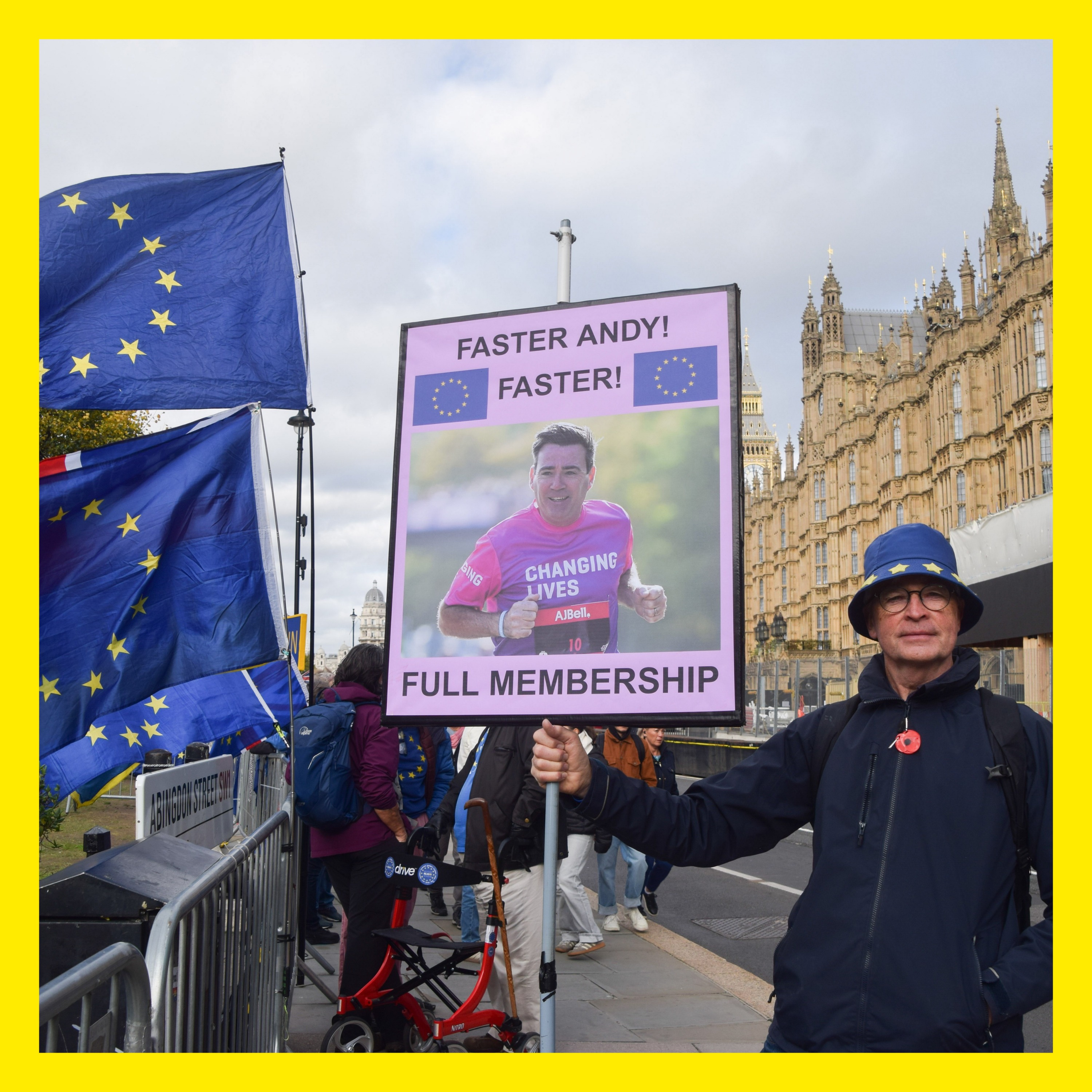
14:23Welcome back to The State of It, the political podcast from The Times and The Sunday Times. We wanted to talk about, in a change of tone, significant change of tone, Andy Burnham's strategy, what we've seen this week. So this week, there is a common thread running through what he's doing. He stood up in the commons, and he's announced a trade ban on Israeli settlers. And he's also stood up in the Commons and made some quite controversial comments on welfare. What was the particular phrase he used? He said, we're not going to prioritise national security at the sake of undermining social security.
14:55And then the debate has whipped up about exactly what he meant by those words. The Tories framed it as him clearly saying, I'm not going to cut welfare spending to fund defence spending. number 10 tried to argue there was a slightly more sympathetic reading of it which is fundamentally social security the ability you know the welfare state this net being there to catch you if you um fall on hard times he believes in the importance of that and the tories crude cuts the housing benefit would force more people uh onto the streets because they did point out in the same premises questions andy burnham talked about the wish to control the welfare bill.
15:35But anyway, it has seen Burnham's party dubbed the welfare party by the Tories. And you can see electorally, that's quite an interesting attack that I think we're going to see lots more of. Yeah. So these are like, it is a very, it's not a subtle strategy, this, right? So whereas in Keir Starmer, we had someone who attempted to face two directions at once, he attempted to appeal to voters that have gone to reform and voters that have gone to the Greens and Lib Dems, Burnham's approach is very simple. He is trying to appeal to the huge tranche of voters that Keir Starmer lost to the Greens and the Liberal Democrats.
16:05That is where the bulk of Labour's collapse in its vote when you talk to the pollsters. That's what they say. And it's overt, right? So we have two contentious policies, or one contentious policy and one contentious statement here. Both are designed to target those voters and bring back people who voted Green, voted Liberal Democrat into the Labour fold. And there is some evidence that that might well work. These policies are both popular. If you look at Starmer, the things that undermined him very early on, one, his position on Gaza killed him with the Labour left. People just left for the Greens.
16:40I was so disgusted by his comments on an LBC interview in which he suggested that Israel was entitled to shut off water and power to Gaza during the invasion, that that cost him hugely at that point in time. And then secondly, obviously the welfare rebellion collapsed his premiership. It was the moment when it was felt he was doing cuts for cuts sake so some sympathetic words from Andy Burnham on welfare it's a deliberate fight and it's a fight also that weirdly suits both Labour and the Tories Andy Burnham gets to appeal to voters on the left and say look I do care about welfare and the Tories say this guy is putting you know welfare over defence and that is a fight that both are delighted to have in this point in time yeah and on the right in in recent modern political history they've had success as framing Labour as the party of handouts uh you know George Osborne did it very effectively in 2015 remember he did a speech where he talked about being on the side of the people who draw their curtains in the morning and go out to work and they look up at the uh house the other side of the street and the curtains are drawn because somebody's sleeping in because they know they're getting a state handout so the kind of benefits scroungers is the very aggressive tabloid ease way that the right sometimes puts it but but sometimes politically that electorally there's been success from the right as questioning the scale of welfare handouts and it feels with the degree to which the welfare bill is soaring um uh certainly the tories believe um that's a that's a effective framing i think it was the last um budget that kemi they not talked about a budget for Benefit Street.
18:16And you saw the conservatism reform tripping over each other to outdo themselves on a number of welfare cuts in the last couple of weeks. I guess we should, to be fair to the government, what they would say is the Israeli sanctions move has a lot of conviction behind it in terms of this kind of belief in the two-state solution and it being totally eroded by what Netanyahu's been doing. And diso on welfare, I think there's a chunk of Annie Burnham's kind of conviction being in Manchester, because I remember hearing this from people around him even before he became PM, that he doesn't think just kind of rudimentarily hacking at the benefits, the benefits is the effective way to reform it.
19:08So I think he deliberately used the P &Qs bit to have a go at. Kemi Baden-Ock's position on that. I think she's supposed$4 billion in housing benefit cuts. But clearly there is a big chunk of politics involved in this and it will probably inevitably restart that whole debate of will he, won't he go for an early election, whether it's in the autumn or whether it's in the spring. It's quite an interesting mind game you can do, which is if they were going for an early election, what would you be doing? Will you be recorrecting your position on Gaza to make clear to that chunk of there's voters who've abandoned Labour that there's somebody new in charge and he's listening to them a lot more.
19:49I'd also be punting all the big decisions down the line. Defend spending. What are the other ones that have gone down the line? Welfare is down the line. Social care. It all sounds very manifesto friendly products. Now, just to be clear, we have no intelligence that they are planning an early election. If you talk to people in number 10 they are categoric there is no plan for a local election we're not doing that but enough MPs are talking about that idea now because they see that there's a political logic to it that if you look at his actions and how he's behaving all of the difficult decisions are being deferred and actually what they're doing is a lot of kind of election ready type stuff while reform is fractured and the right is fractured more broadly and they see that as a smart move so I mean yeah who knows it's a mugs game predicting elections it's a bit of a nightmare journalistically because you always say you can't disprove a negative if the answer is no they're not doing an early election you keep on searching for people to say yes and no matter people saying no means it's going to be a no but also we have been hoodwinked very deliberately in the past i remember theresa may uh 2017 everybody around her was categoric from her the prime minister down to everybody around her saying there's not going to be an early election rishi was and they pulled the rug rishi was the same so you have to treat the denials with a pinch of salt because if you're going for an early election you would be saying no if you weren't going for an early election they would be saying no so it's it's a hard one to ascertain um from the outside but but certainly these things are being done partly to get Labour into a position where they're more electorally um viable we should talk to the third thing this week that's really interesting and talks to what we're talking about about Andy Burnham going left and that is Jackdaw so Jackdaw is a gas field off the coast of Aberdeen and we were told categorically by people who were in a position to know in the park government that the decision was coming next week I think it was next Tuesday and there was a whole orchestration to it I was told about the trip plans of Andy Burnham going up to Aberdeen he's going to coincide it with opening up this big with GB Energy their HQ there and they were going to announce this drilling in the North Sea now that is no longer going to happen that is now being delayed until after recess.
22:01So everyone goes to conference, you have this brief, weird period of recess down here, and that means that this won't be announced, Jack Dorr, until October the 12th. Now, why on earth would that be delayed, Ben? What could the possible benefit of delaying a decision about new drilling in the oil seabed? Well, if you were a cynic, you would note that there is a huge pro-election happening for Keir Starmer's old seat in North London, where the dynamic is Labour under Andy Burnham versus the Greens and specifically the Green leader, Zach Polanski, who today was confirmed as their candidate. And what an electoral gift it would be to Polanski if for three weeks he could say, Labour is starting drilling again in the North Sea.
22:46They've just signed off this jackdaw site. Here's the evidence, yeah. Yeah, and that's quite an unhelpful thing. if you look you would imagine at the electoral dynamics in that constituency and most people probably are not supportive of extra drilling although Labour say it's continuing a kind of existing licence but yeah you can see that and get the havoc on that. I imagine Jack will still be saying that by the way he still will be saying they're about to approve it he's his line today I think the green line is they're running scared right yeah and it does accentuate it as an issue but probably not as much if you go up to Aberdeen and announce it in the middle of a very closely fought by-election campaign and why that by-election matters, by the way, because it is amazing, the whole violence of Angles by election, it's because it is a litmus test for what Burnham is trying to do.
23:30If his whole shtick is, I can win over the Green voters, I can win over the Lib Dem voters, then this is the test of that. Can he? And then on the other side, it's a litmus test for Zach Polanski. He was riding high in the polls, now riding lower in the polls. Is he a genuine populist support, and can he become an MP? He's taken the first step of actually standing, and now it's a test of his personal popularity and are the greens still an electoral force question yeah i mean it's either way it's a fascinating result if polanski loses uh you know the bubble of support that's begun to die down a bit it is is proved to be a um a fallacy to some degree and there's whole questions about it kind of turning that initial bubble of protest support into actual seats uh if polanski wins then the kind of arch rival of labor on the left is now in the Commons and there'll be all these questions about Burnham's Manchesterism and whether there'll be a reaction in the South East and London and whether his appeal translates to the South in the way it seems to have done in the North East and North West if Burnham wins for his nascent project like the Makerfield test the big test that he could do it and if he didn't win this then that would be a huge setback I think they've had that seat since 1983 so Labour losing a seat in its quarter heartland of London to the Green leader would be very, very damaging, for sure.
24:54OK, right. I think on that note, we'll call it a day. Quite a lot of drama today, a lot of stuff happening in Parliament. It's been an absolute pleasure to have you with us. We'd just like to pay a massive tribute to our producer, Harry. Harry over there in the corner. Thank you, Harry, as ever. And this is us in the Sunday Times of Parliamentary Office. Thank you for watching and listening.
25:22While every other channel is fighting for your customer's attention, podcasts are where they've already given it. No one accidentally listens to a podcast for 45 minutes. They choose to be here. They trust the voice in their ears. And when that voice talks about your brand, it doesn't sound like advertising. It sounds like a recommendation from a friend. Acast gives you that trust at scale. Digital precision, post-read authenticity, and performance data that proves it worked. Don't fight for attention. Buy it with Acast. Learn more by visiting acast.com slash advertise.
MPs have voted against the assisted dying bill. The legislation was defeated by a margin of 16 votes, with 286 MPs in favour and 270 against, after 314 MPs backed the plan last year. It's a huge moment in the House of Commons.
Plus, Andy Burnham is turning left, trying to appeal to the voters that Keir Starmer lost to the Greens and the Liberal Democrats. Will it work? And are the odds of an early election narrowing?
Steven Swinford, political editor, The Times
Ben Riley-Smith, political editor, The Sunday Times
Producer: Harry Kitson
Executive producer: Molly Guinness
Picture: Getty Images
Audio: Parliament TV
This podcast was brought to you thanks to subscribers of The Times and The Sunday Times. To enjoy unlimited digital access to all our journalism subscribe here.
Hosted on Acast. See acast.com/privacy for more information.