 Ask ChatGPT
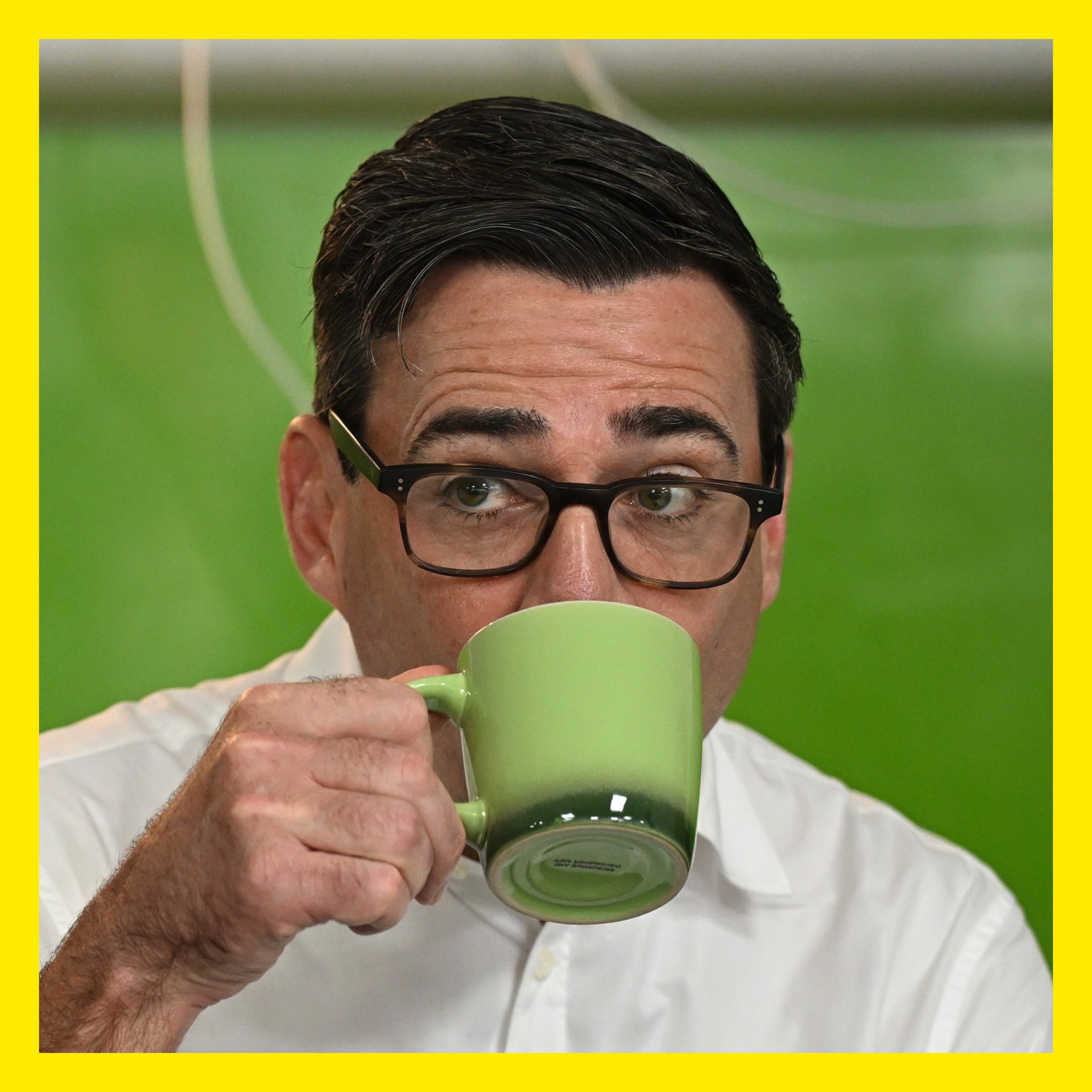

This bonus episode of "The State of It" features Caroline Wheeler and Steven Swinford reporting from the Prime Minister's plane as they approach Beijing for a significant visit. The discussion revolves around the dynamics of traveling with the Prime Minister, the press interactions, and the sensitive balance of business interests with political concerns in China.
Written by AI. May contain mistakes.
Discussion about the Prime Minister's unique press conference experience held near the toilet.
“And a couple of journalists were actually in the toilet trying to talk to the Prime Minister.”
Exploration of how journalists coordinate their stories and timing while on a flight.
“It's actually quite a noisy flight as you can probably hear so it's pretty difficult.”
Discussion of security protocols and concerns about potential hacking during the trip.
“No one is going to run ahead of an embargo because it's gear that is there for everyone.”
Analysis of the Prime Minister’s demeanor on the flight and his key messages regarding upcoming events.
“They don't want there to be any diplomatic incidences, particularly when they're trying to bring the Chinese on board.”
Discussion on the positive economic messages the Prime Minister is sending regarding China.
“Now whether that works is another question, but that was the one moment that stood out for me.”
Understanding the importance of cultural sensitivities during diplomatic visits to China.
“We've just seen the Great Wall of China not far below us.”
Critique of the lack of discussion on human rights issues during the Prime Minister's visit.
“Yeah, I think part of that, Steve, is because we're here.”
Discussion on China's human rights abuses and the implications for UK-China relations.
“The Prime Minister calls it British pragmatism.”
Exploration of the business opportunities and challenges in China, especially in renewable energy.
Reflections on the cultural and infrastructural changes observed in Beijing since the 1990s.
Insights into the unique experience of traveling with the Prime Minister and the privileges involved.
“I mean it's high-rise buildings everywhere.”
Details of the logistical arrangements for a dinner with the Prime Minister in Beijing.

Get the gist, explore an idea or ask about something said.
 Claude
On The State of It, what are the key points of this episode?
Searching your listeningAutomatic transcript. May contain errors.
0:00Welcome to this special edition of The State of It, the political podcast from The Times and The Sunday Times, coming to you from Beijing. I'm Stephen Swinford, the political editor of the Times. I'm Caroline Wheeler, the political editor of the Sunday Times. We are in the Prime Minister's plane about 10 minutes from landing in Beijing on the Prime Minister's first visit to China. And we'll keep you up to date with all the goings on on the plane, including a rather impromptu press conference that the Prime Minister held from close to the toilet in economy. We're now post-huddle. Steve, what's your big takeaway from the Prime Minister's huddle?
0:40Was it just the conversation he kept having with the toilet? It was one of the more extraordinary things. So just to explain to listeners, there was no space. And a couple of journalists were actually in the toilet trying to talk to the Prime Minister. And at one point, the Prime Minister himself kind of semi-moved into the toilet while addressing them. And so you had this utterly surreal situation where the PM was, there was no room to move at all. you could barely hear what he was saying we've all gone through the tapes now we've worked out the various lines and stories which we'll do over the kind of coming days but it was one of the more surreal huddles we've ever done Would you say the Prime Minister got bogged down in any of those questions?
1:21That is a disgrace that is a borderline resigning comment but we'll let it go there was plenty of interesting stuff there, I'm just trying to think what we're going to look at tomorrow morning He said some really interesting things on Chagos. Basically, he's arguing for it and saying, well, Trump's security, people said it's fine, therefore it's fine. So we'll be doing the story on that. He was interested generally on China and the cost of living and how this is all about putting money in people's pockets. The really hilarious thing about this was that we were all standing there. It was probably about, what, 25 members of the media and actually none of us could hear a word he said.
1:59so even though all the kind of journalists right across the kind of British media landscape was there at the end of this huddle everybody kind of looked at each other in a kind of vacant way and sort of said what's the top line because nobody had heard what he'd said and we were just all relying on the fact that somebody who was standing closer to him had actually got a phone close enough to him to actually pick up some of the recording because we are on a flight. It's actually quite a noisy flight as you can probably hear so it's pretty difficult. And then you've all just sat there and worked out what stories are going to go in, when there's going to be some stories that are going to break as we land.
2:36There's going to be others that are breaking during the course of the day. Just, Steve, just tell me about that. So as a Sunday journalist, I mean, I'm doing a slightly different job, looking at kind of longer term perspective, trying to think about what we'll be reporting for Sunday for our long read and our news stories, still working on some stuff that's happening back in the UK. But how do you kind of divvy it all up? And what's your kind of consideration? because the timings of this flight are quite tricky in that we're going to land in the UK at like seven o 'clock in the morning so that's going to be like peak time for you but actually the rest of the day for us is going to be pretty much done by the time we get there because it's going to be like nearly six o 'clock in the evening by the time we arrive in Beijing so it's going to be time for a quick bilateral um there's going to be dinner and there's going to be bed for us again So how are you working it out so that we actually have news that's going to fall at the right time for the newspaper?
3:31So we've staggered several stories across the day. There are some that will go as soon as we land, some that will go midday UK time and some into the evening. But it's also interesting, it's probably worth talking about the lobby briefly. So myself and Caroline, we are both part of the lobby. And at the same time, we are individual journalists who are trying to get as many scripts as we can. And that's our bread and butter. That's what both of us get a massive kick out of. But by the same token, this is the lobby in action. And it relies on a group of people asking Prime Minister questions and then coming together and agreeing, we'll do it in this way.
4:07We're doing it in this way. No one is going to run ahead of an embargo because it's gear that is there for everyone. So in circumstances like this, where everyone is talking to Prime Minister, that is actually quite useful, both, one, in coordinating the questions so those people don't just shout at him when he gets here. And then in two, they're divvying it up afterwards because it has to be done in a fair and equitable manner. And, you know, it's a delicate ecosystem. Everyone has to be happy. And I think this is actually an example of when the lobby can work very well. But Caroline's absolutely right.
4:41Both of us are thinking at the back of our heads, where can we add value? What can we get off this trip that no one else will have? And that is always a challenge. I mean, the other thing that's really interesting, that we haven't talked about is the burner phones everybody has a burner phone everyone has a burner laptop and the even the prime minister and you know we were just talking to to one uh senior delegate on on this trip and they were saying they haven't even taken their apple watch because the security services have advised against them they've advised against things like sticking your phone to charge in a usb slot as opposed to in a plug that goes into a wall because that is susceptible too.
5:22So the level of concern about potential hacking is very, very clear and one of the most interesting stories on this trip. So we were just talking about one of the stories that I wrote many moons ago when I was working for a different organisation at the time, which was some of the security advice that was given to a former Prime Minister, Theresa May. And the advice they were given was that the Prime Minister should not get undressed without being under the bedclothes because there's so much concern about spying. And, I mean, there have been some really serious security breaches in the past. I seem to remember a trip which Gordon Brown was on, where there was a honey trap and a delegate got kind of snared in a really, really quite serious honey trap, but it became a sort of political embarrassment.
6:06So these are the kind of things that the government are really trying to avoid happening. They don't want there to be any diplomatic incidences, particularly when they're trying to bring the Chinese on board. they want to do as many trade negotiations as they can but it's a delicate tightrope isn't it yeah it really is a delicate tightrope but it's just so avert what the Chinese are doing it's so indiscriminate the way it's been described to us is they just take everything they hoover up everything they get and then they have huge teams of people just go through any information they get and what they're ultimately looking for is what the Russia you know They are looking for things that will embarrass people.
6:47Now they're unlikely to find that on mine and Caroline's phones because they are predominantly, you know, pictures of our children, those kind of things. But they're looking for ways in that could help at a later date. And that's what you're dealing with. A system that by reflex just hoovers up information. Yeah, absolutely. So we're now about three hours into the flight, four hours into the flight. We've still got another about seven hours to go. So we're going to try and get some sleep. How did you think the Prime Minister was, though? Because I haven't done one of these tricks with Keir Starmer before.
7:18I've done a lot of travel with a lot of other Prime Ministers, but not him. How did he seem to you, given the week that he's had with the Burnham thing? Did he seem relaxed? Did he seem a bit tetchy? I mean, there was obviously a lot he couldn't talk about ahead of the visit. So he was really defensive for the most part because he didn't want to get into stuff. But the only thing he did get into quite hard was the by-election. And he was saying this is a contest between us and Nigel Farage. And he was saying that the reform candidate, who's today been announced as Matthew Goodwin, will bring kind of toxic hatred and division into Manchester.
7:55And that's the interesting bit. that's the bit where he actually came alive and you could feel some, albeit standing next to a toilet, you could feel some proper passion. And that's their argument that they're clearly gonna run, that this guy bringing hate and division and Labour is kind of gonna try to unite things. Now whether that works is another question, but that was the one moment that stood out for me. but the PM I think was of relatively good form but I've seen him much more open I've seen him when we went to Washington for the big Trump visit where he was kind of going into getting troops in Ukraine on the ground so when he's got a case to prosecute when he's got a point to make he really gets into it today he was quite defensive he was five it was uh you know we'll see how he is in coming days I think the other thing is worth flagging on this plane there's some amazing business week nonetheless.
8:51Yeah I was talking to the managing director of the Philharmonic Orchestra I was also talking to an incredible content creator who's trying to break into the kind of far east markets and try and uver up some of the amazing animation that they do in China and Japan for our audience in the UK because apparently it's becoming incredibly popular. Who have you met? Well you were talking earlier when you were about the problems of bicycles guy. yeah that's the other thing because I mean the last time I came to China the only way of travel was on a bicycle and we're actually here with a British bicycle manufacturer yeah there is business to be done with this plane is full of people doing business what we've noticed is that the people are here on cultural trips tend to be at the back of the plane and economy with us and the big wigs from you know your farmer giants etc are all up the front with the PM and GB News yeah I'm with GB News I didn't say that my god alright Chris no good we love you Chris it's no slight on you we're just slightly jealous but we'll shut up now yeah alright well look we'll catch up when we're close into China probably on the cusp of landing we've still got a long way to go yeah we have alright well I'm going to get some sleep now what are you going to do are you going to work I've got to work I've got about 10 stories to write at this rate alright well night Steve have a good evening
10:14finally can i say sit back uh enjoy the rest of the flight uh i'll be bringing the plane in from here thank you though it's a real moment where the prime minister has just addressed the delegation from the flight deck uh we're about 20 minutes from landing in beijing and he just came on the loud speaker and said good morning, this is the Prime Minister talking to you from the flight deck, wishing us all a fantastic flight but also telling us that one of the attendants, who's been looking after us really well all night, it's his 60th birthday so he wanted to personally congratulate him and thank him for his work with us this evening, said that he'd volunteered to work on his birthday so just another sort of slightly surreal moment on this trip to Beijing as we prepare to land.
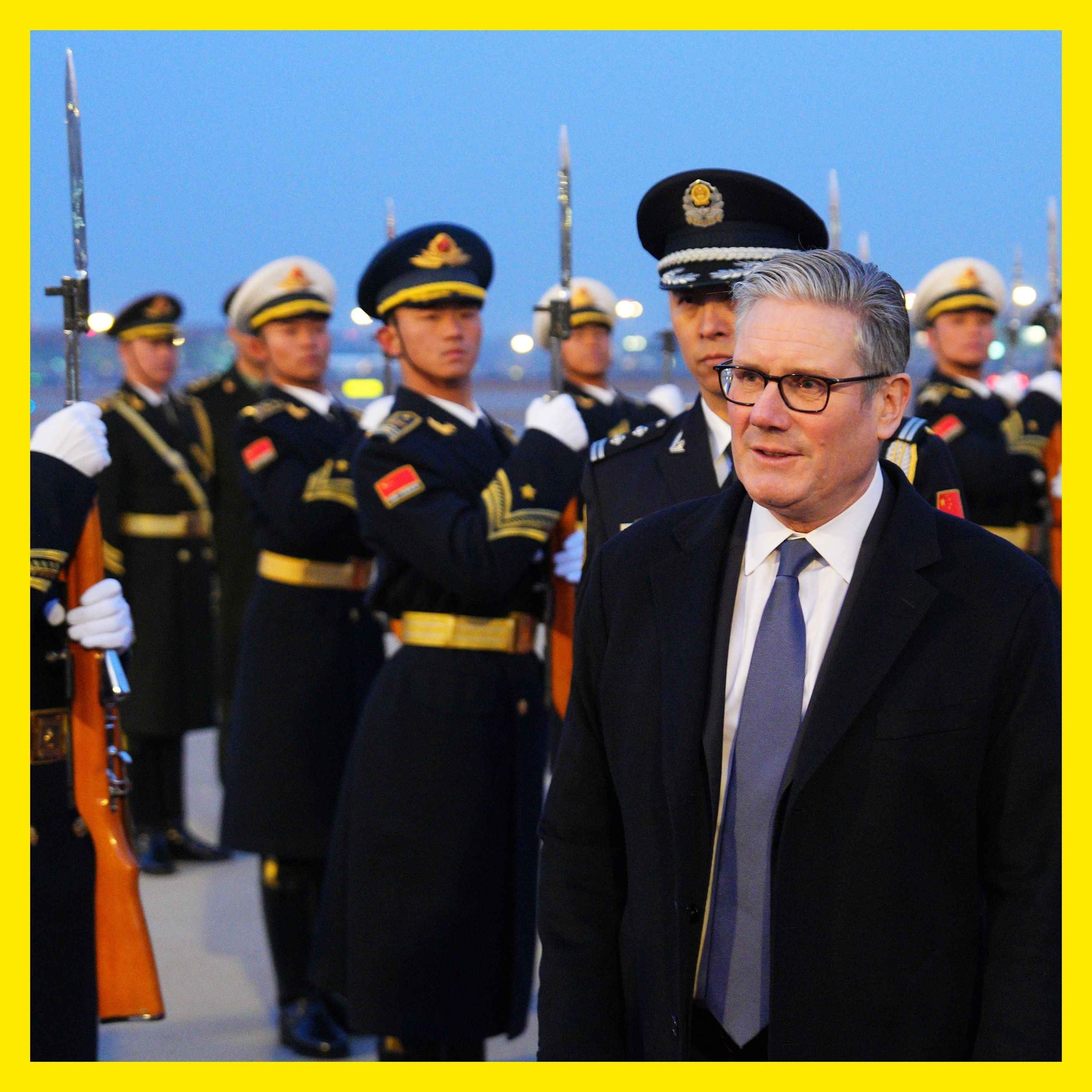
11:07We've just seen the Great Wall of China not far below us. We've just gone past it, which means we're not very far away at all. The Great Wall of China, the sum of it, you can see about an hour to two hours outside of Beijing by car I've been when I was much younger. So yeah, it's getting real now. We're not far away. We're going to be on the tarmac for some considerable period of time while they prepare a guard of honour, sadly not just for me and Steve, but for the Prime Minister himself. And it's going to be five o 'clock in the evening, so it's going to be a bit weird. We're going to land and then we are going to go to bed after dinner.
11:44So we're not going to be awake for much of the day today, although I suspect it will be pretty hard to sleep, given our exciting surroundings. But yeah, we'll tell you more when we get there. we've just been at a business reception with the prime minister where he has greeted the 50 business leaders that have come with him on this trip and his message is overwhelmingly positive he's extolling the economic virtues of closer ties with china the opportunities for business out there and i'm not hearing caroline many negative messages it's all about the upside Yeah, I think part of that, Steve, is because we're here.
12:23We've arrived sort of late into the evening. I think that's partly because I'm told the Prime Minister doesn't like sleeping on planes. So he often arranges visits so that we arrive late in the afternoon so that he doesn't have to sleep on the plane and get a good night's sleep. But the main sort of kickoff of the events is tomorrow when he will meet Xi Jinping. and I think there is a real reticence to say very much before that meeting because this is a country with cultural sensitivities. I think it's fair to say it's nervous of our Western view of the world. We don't want any diplomatic incidents to derail a very important meeting tomorrow.
13:00So the Prime Minister is being quite, I think, quiet, reserved about any need to talk about human rights abuses, for example. That could be something which could be quite controversial. He doesn't want to preempt any sort of discussions that might happen tomorrow or have any sort of negative comments in the media, I think, so that it all goes a bit more smoothly. So the real message is a kind of macroeconomic one, really, rather than anything particularly individualistic. But I've just had a fascinating conversation with Greg Jackson, who is here for Octopus. he's talking about how we can't ignore China because actually you know far from being a country that has been through stealing our secrets and involved in industrial espionage which you know he admits there's still a bit of that that goes on but that actually they're far more advanced than we are and we can't afford to be on the back foot when it comes to this kind of technological advancement so that's the big takeaway uh from me from Beijing this evening and we're going to go and get some food now but what what are you expecting for tomorrow Steve?
14:01I think it'll be more of the same. I mean, this is rail politic in action. The Prime Minister calls it British pragmatism. But what that pragmatism seems to involve is not actually mentioning any of the elephants in the room, the huge industrial scale espionage that China is carrying out on Britain on a daily basis, trawling thousands of people, millions of people every day. Nor does it mention any of the kind of human rights abuses that we see here in China. That's, I think, one of the concerns that there will be about this trip, that it is all opportunity. And obviously, obviously, Starmer is right, you have to engage with China.
14:34China does matter from an economic point of view. But you also have to stand up to it on points of human rights. And I think he will try to do that gently behind closed doors. And while this is happening, there's still a guy called Jimmy Lai, who has been locked up in Hong Kong. He's a great democracy campaigner here. And obviously, that doesn't end well for anyone in China. So that's the elephant in the room that nobody's really talking about, because everyone's here to talk about business upsides. And there's other elephants in the room as well. For example, if we want to advance our renewables infrastructure, particularly around solar panels, about 75 % of that entire word solar panels are made in China, in the Xinjiang region, which is where the Uyghurs are.
15:14there's a big question mark over the human rights abuses there but also we have a big well fairly big group of MPs in the UK who are sanctioned by China most of them members of IPAC the inter-parliamentary alliance against China and they have been now sanctioned for many many years and that's one of the things that may well come up in the discussions but you know it's a really fascinating time to be here because it is an incredible tightrope that the Prime Minister's got to walk um but just let's describe where we are now we're just on a bus uh we're just outside the hotel where the business delegates are staying this is actually a staple really of what happens on these trips you get kind of bussed around from place to place there's a cultural program for journalists as well as a sort of business program um we will be doing some of that they'll take us on a couple of visits uh probably tomorrow and the next day to places like the forbidden city to Tiananmen Square to the Temple of Heaven but it's an incredible city it feels like you could be absolutely anywhere in the world you could be in New York you could be in Tokyo lots of huge high-rises lots of neon lights lots and lots of cars which I find really interesting because I haven't been here for the best part of 30 years I know Steve you've been here before as well and the last time I was here back in 1993 basically everybody rode bicycles having a car or getting a taxi was an incredible luxury that most people couldn't afford I remember vividly coming to China that year and it was the first time McDonald's had opened in the city it was the first kind of vestiges of capitalism arriving in Beijing it's definitely not like that now it's very clear that capitalism has arrived in a big way here I mean Steve what are your reflections on what it's like.
17:04I mean it's high-rise buildings everywhere. I came in my 20s to China and a couple of times subsequent. When I came in my 20s one of my main memories was the smog. The smog was so thick that you could barely see properly as you walk down the streets because there was huge amounts of pollution and industrial stuff happening in the centre. That isn't here anymore. Exactly as Caroline says you could be in any big city in the world. And the other thing I wanted to reflect on very briefly is what it's like to travel with the Prime Minister because what it gives you is a very unique experience of what his life is like.
17:37It is a frictionless existence so to get here I think I took the Piccadilly line after you know the usual like mess of London transport to get here. When you are traveling with the Prime Minister everything just goes there are no barriers you're bused straight from A to B all the time and it's a strange like lifestyle it's the kind of lifestyle you imagine that billionaires might have and I think a lot of prime ministers when you talk to them after it one of the things that they miss about that is this this sense of purpose and this weird frictionless travel that you don't have to wait in airport queues or sit on the easy jet you know everything happens for you and everyone is operating around you and we get caught in a very small way in the slipstream of that as journalists I mean just to put that into context the moment we're sat on a bus going to a restaurant and they've actually closed all the roads and they had closed all the roads for us to come here from the airport we could see traffic jams all around us with cars stacked up obviously not going very fast and I was sat next to somebody from the embassy on the way into the city who said they had to do that because it would have literally taken us hours to do a sort of 40 minute journey had they not done that and I quite like it don't you I could definitely get used to it but there's always this juddering jolt when you get home you get back to Heathrow and suddenly you're waiting you know 15 minutes for the next Piccadilly line train to take you back into London you're like oh yeah okay back to reality but for now look we're heading into Beijing for the evening and I think that we may have the PM drop in over dinner at some point so we'll have to keep you posted on that
Bonus episode.
Join Caroline and Steve on the plane with the prime minister. Why did he end speaking to journalists from a loo? What's it like to travel with a PM? And how can Starmer balance concerns about espionage and human rights with the UK's business interests?
Steven Swinford, political editor, The Times
Caroline Wheeler, political editor, The Sunday Times
Producer: Euan Dawtrey
Executive producer: Molly Guinness
Picture credit: Getty Images
Email us: [email protected]
This podcast was brought to you thanks to subscribers of The Times and The Sunday Times. To enjoy unlimited digital access to all our journalism subscribe here.
Hosted on Acast. See acast.com/privacy for more information.