
 Ask ChatGPT



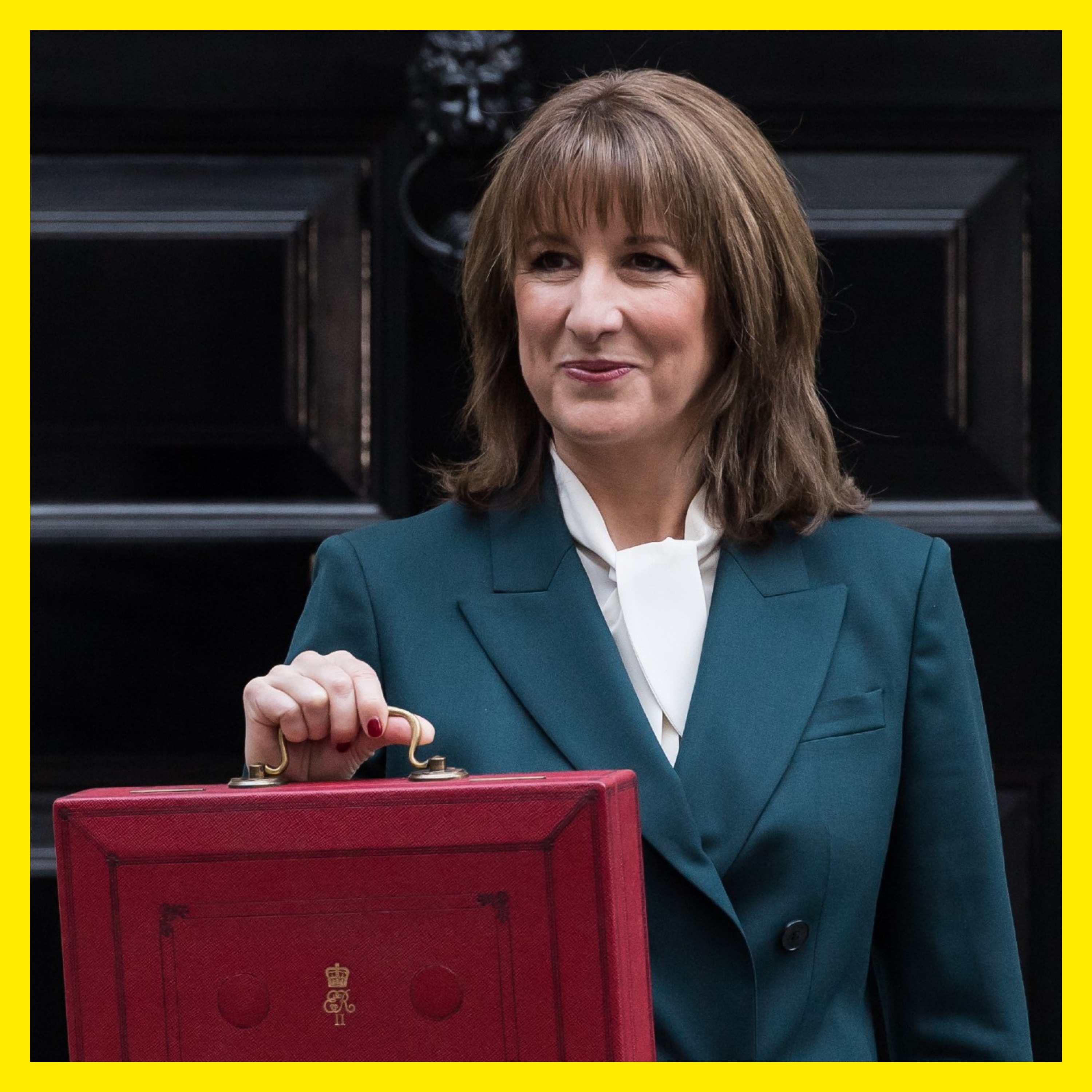
In this bonus episode of The State of It, recorded live in Westminster, political heavyweights from The Times engage in a deep analysis of Rachel Reeves’s recent budget announcement. The discussion revolves around the implications for the Labour Party and the broader economic context, questioning whether the budget lacks economic substance and could be politically detrimental for Labour.
Written by AI. May contain mistakes.

Get the gist, explore an idea or ask about something said.
 Claude
On The State of It, what are the key points of this episode?
Searching your listeningAutomatic transcript. May contain errors.
0:00Welcome to a special bonus budget episode of The State of It, the political podcast from The Times and the Sunday Times. Now look, to make sense of the budget, we've sat down in Westminster at a ticketed event for around 200 people and we have gone through the economic and political repercussions. It's me, Stephen Swinford, the political editor at the Times, Fraser Nelson, one of our main columnists, Patrick Maguire, our chief political commentator and Maureen Kahn, our economics editor. I mean, I'm the economics editor so I have to think about economics and there was no economics in this budget.
0:36This is a budget about financial markets and it was a budget to understand fiscal policy and it was very much a budget about dealing with Labour's internal politics. Maybe just before we get to the bank, I mean, there's three constituencies this fiscal event was for. Steve's talked about the parliamentary Labour Party. The other one was definitely the bond markets. And then there's the voters. And I think sequentially, the chancellor's job was the two parts of those, the two constituencies that would give their immediate response is the bond markets and her backbenchers. and both of those have probably given her a cautious thumbs up.
1:05And the question about the voters is a longer term question and one that they're going to have to build on on top of this. So I think immediate reaction from the bond market, these are real people. I spent my day actually getting WhatsApp messages and most of them were reasonably effusive about her performance in the chamber, more so than I've ever heard before from people whose job it is to make money on gilts. They were very impressed by her performance and there is a bullish case to be made for the UK, which I can make if we want to do that. But the bullish case is effectively that the UK is going to be running the most aggressive fiscal consolidation of any major economy in the world over the next couple of years.
1:38That's because in the US, they're expanding their budget deficits and their debt. That's because in countries like Germany, they're actually having to do more spending. In countries like France, they don't even have governments that are committed to this kind of stuff. So in that sense, the UK does stand out in a world where you want to hold a country's debt. And that country seems to be serious about fiscal consolidation. Whether that consolidation happens or not, we don't know. And then there's the other part of how do you make the economy grow? And yes, the government has a big role over it.
2:02But the short term, sort of the money in your pocket is really determined by an institution that wasn't mentioned at the budget, and that's the Bank of England. Now, Rachel Rees has done everything that she thinks she could do yesterday to convince the bank who've been very reluctant over cutting interest rates that they should now start cutting interest rates. Why? Because she probably lopped off half a percentage point of inflation of people's bills. And if that is not enough to prod the central bank into cutting interest rates, then I think we have a massive problem between the fiscal authority in this country and the monetary authority in this country.
2:31And last year's budget failed because it was contingent on a situation where the bank was cutting interest rates every month. That did not happen. And all of the fiscal arithmetic of that budget basically went out of the water by the start of 2025. Now she's telling them in her own way, because we're not allowed to really have politicians tell central bankers what to do, that the path is clear to get people's mortgage rates down, to get the cost of investment down, to bring down the cost of living and to support the labour market. And that is what's going to determine what 2026 looks like and what the 2026 budget will look like.
3:03So now I think, you know, we've got a couple of weeks, December the 18th, the bank is going to meet, we get their first initial verdict. I think will be a very important moment, one that has probably been under-examined right now, but that's the institution that's going to make Rachel Reeves' short-term life much easier. Patrick, where do you think things go now then? Look, I think the politics of this budget are quite simple in that they're pretty disastrous for the Labour Party for a number of reasons. I think the first is having promised to govern as a changed Labour Party. Indeed, on election night, that's exactly what Keir Starmer said, we campaign as a changed Labour Party and will govern as a changed Labour Party.
3:42The speed with which not only the parliamentary Labour Party, which we were told had been handpicked to behave in exactly the way Keir Starmer and Morgan McSweeney as Chief of Staff wanted them to behave. The speed with which they've reverted to type is quite astonishing. They're behaving in a straight up and down, mushy middle, left liberal Labour Party way, which we've been told have been deprogrammed out of them. But also the way Keir Starmer and Rachel Reads have, for want of better options and for want of serious thinking about the sort of political economy they want to build. I think Maureen's absolutely right.
4:20There's no economics in this budget because there's no economics in this government. There's no theory of political economy in this government. It's all about lurching from one fiscal event to the next. For all of those reasons, you've got a Labour Party that's doing conventional Labour things. But I almost hesitate to call them conventional Labour things because it's just a sort of unimaginative tax and spend, higher taxes, higher welfare, punishing the squeeze middle budget, which totally belies everything they said before the election. And I don't think you can overstate the political significance of that.
5:04And the raw politics of this, I mean, Labour MPs were hollering and cheering. You know, Cabinet Minister told me they struggled not to weep on the front bench when Rachel Rees announced the lifting of the two-child cap, which was a policy they suspended seven MPs from the Parliamentary Labour Party last year when they dared say they wanted that policy. It's a policy Keir Starmer said to the BBC in 2023 that under no circumstances could they afford. It's a policy Morgan McSweeney spent a lot of time opposing and making a sort of almost a test of the government's ideological soundness and a barometer of how much it had changed.
5:43But most MPs were cheering, but a few of them weren't, and several cabinet ministers are not weeping, or if they're weeping, they're weeping out of despair, because they know that actually what's the hardest possible sell to the Labour Party's actual coalition, as Steve was saying, it is your taxes would increase to fund welfare. Now, that belies some of the nuances and complexity in who gets it. As Gordon Brown keeps pointing out, something like 60%, 70 % of people who benefit from the lifting of their cap on the two-child limit are in work. But ultimately, the raw politics are as simple as that.
6:21And there's a reason George Osborne drew that dividing line. And basically, Keir Starmer and Rachel Reeves are betting they're good enough at politics to overturn something that has been a popular policy with the public. for a long time, for good or ill. And I just think from the position of acute weakness they're in, they are not going to win that argument. And I think Labour MPs are happy now, but once they get back to their constituencies over the weekend, as wiser heads in government keep telling them, they're going to have a very, very rude collision with electoral reality. You know, Rachel Reeves is betting something is going to turn up.
6:55She's betting that growth will turn up from somewhere, so maybe she doesn't have to do any of these painful things in the last year of the Parliament. but ultimately the one thing that's not going to turn up is an electorate that has completely changed its mind on this stuff and it's just a really really bold thing for the Labour Party to do in the position of weakness it's currently in. Tony Blair had a synonym for bold he said when people talk about doing bold things in politics they mean bold and stupid and as much as Labour people sincerely believe that there is a moral argument for doing this and there is of course of moral argument and a strong moral argument that you shouldn't punish children for the circumstances of their birth.
7:33And when you count the argument in those terms, voters are likelier, but not overwhelmingly likely to be sympathetic, if not supportive of, some gesture in this direction. What Patrick's described there is quite extraordinary. A prime minister who's had to pretty much abandon the agenda on which he stood to be, well, the prime minister is saying, I would never do this. He's had to do it. He's got this landslide majority. So why is a prime minister with a landslide majority behaving like he's Theresa May in a minority government getting beaten up by his party left, right and centre? What has happened?
8:07It all goes back to the first year of this government. And I'm sure we all remember it pretty well. But that first decision to withdraw winter fuel payments from millions of people, you only get one chance to make a first impression in life. I think that generally is true. And that first impression we all remember the rose garden speech he stood there and he said there's going to be pain to come and it's going to it's going to hurt and then lo there was pain there was an extraordinarily painful budget with kind of 40 billion pounds worth of tax rises and after that budget rachel reeves made another stratospheric political misjudgment she gave a speech at the cbi conference said that's it we're not coming back for more this is a once in a parliament budget and you know what it turned out it wasn't a once in a parliament budget and people don't forget that.
8:53So I think that is why he's in such a weak position, because this collapse in the polls is so extraordinary and so unprecedented. There's an additional layer, which is, even in the time I've been covering politics, the polling has changed everything. And particularly these mega polls that we get, which are called MRPs. And what they do is in glorious technicolour for every seat in the country, they tell MPs on any given day when they're conducted, you're going to lose your seat you're going to lose your seat here by this much and this person and that panics MPs and it makes them pulse the left it makes them do things the government doesn't expect it means the government loses votes on welfare because people get really really worried and that has kind of made all the politics on hyperspeed for us for the last kind of few years.
9:41Brilliant. But maybe you guys can help me with this because the question that I've been asking myself for the last 18 months is does Keir Starmer care about economic policy does he have any interest in economics and does he have any vision for political economy that's not the one that Rachel Reeves gives him and she changes her mind quite often too the answer to literally all of your questions is no right um so so that that actually goes a lot to I think explain why we might have been in this situation with uh my colleague Gabriel Pogren our colleague Gabriel Pogren for the Sunday Times, I wrote a book about Keir Starmer, which is available in all good bookshops.
10:17Great Christmas present for politically engaged people. It's called Get In. And one of my favourite anecdotes from the book that we were told by several people in the course of writing it was, sometime I think in 2021, Keir Starmer was still in office somehow. There was a talk of challenges to his leadership in 2021 he looks safe but it's clear that the Labour Party lacks something fundamental you know he's not Corbyn but what is he and this prompts Ed Miliband and Charlie Faulkner and they went around to his house in North London and what they did was described to us as economics lessons. They went round to basically say, what do you think about anything?
11:06Like, where do you sit in the Labour Party tradition? Like, do you think this should be your priority? What do you think of the future British industry or the sort of country you want to build? And every person who's had one of those conversations with Keir Starmer, and lots of people have tried, have basically come out of it saying he's not interested. Now, to be fair to Keir Starmer, he's come into Labour politics through a particular time and place. He came through the human rights bar. What animates him, his version of progressivism is built around not a vision of the economy and what it should look like and how it should be organised, but the idea of codified rights.
11:44You know, it's that sort of Doughty Street, Charter 88 sort of generation of progressive activists who actually broadly came into sort of political consciousness, particularly Keir Starmer sort of taking shape as a radical barrister, basically at the end of history, where big economic questions were settled, which means he's always deferred to other people on economics, particularly Rachel Reeves. And in opposition, Rachel Reeves did have a theory of political economy. It was called Securonomics. It was about responding to a sort of post-globalisation age. Yes, a lot of it had been nicked variously from Janet Yellen, who was Joe Biden's Treasury Secretary, and lots of it was written by Miliband, but it existed.
12:24It was a theory of how the British economy should be organised and oriented in a changing world. David Lammy had a thing called progressive realism, which was sort of how you organise Britain's foreign policy to achieve all of that. All of that went out the window pretty quickly when they went into government. And we've just been left with, as I said earlier, a government that bounces from fiscal event to fiscal event and is taxing and spending, you know, stagnant GDP with, you know, the baleful political results we're seeing. And I think, so why did she drop Securonomics? Because it was clear that even by the time Rachel Reeves had become a cheerleader for Securonomics, Biden was going to lose on this precise agenda.
13:00It was not going to fail the first big political test and it lost. And as soon as it lost, they dropped it like a hot potato. So it wasn't an ideological commitment. I think it was opportunistic to put your camp in with Janet Yellen. Of course, why wouldn't you? And I think in a parallel universe, Keir Starmer's lack of interest in economics could have perfectly survived reality in an age where all of the big economic questions were settled. We are genuinely living in a time where all of those questions are now up in the air. Everything that we believed about the virtues of market economics is falling apart in front of our very eyes.
13:28And people on the left and the right are both coming up with answers, which is about reducing the role of the market and increasing the role of the worker. That's happening in every major developed economy, mostly the United States, where Donald Trump is doing a version of national capitalism. He's taking stakes in American companies. He's stealing their profits. He's imposing tariffs. I mean, we're ripping up all of the sort of, you know, nice, settled version of what economic truths were. And in that kind of environment, Keir Starmer just looks completely adrift. And so does his chancellor. So, you know, we've always been a bit allergic to politicians who have ideology, especially economic ideology is kind of a bit scary.
14:01But if there was any time to try and find a way in which you want to position yourself in a world of massive ideological flux, if this government doesn't do it, the reality is that people outside this government in various other parties are doing it. And I think that's the problem that they have. And either they bring those people in and given the nature of the people that have been brought in, I don't think that message has landed. The types of people that are advising Keir Starmer on economics are very much made in Keir Starmer's image. They're financial diplomats. They're people who worked in Bretton Woods institutions like the World Bank and the IMF.
14:28And they are also struggling to deal with this reality. So I think there's a whole deep sense of denial about what's happening in the rest of the world. I mean, I spend most of my time not really thinking about the UK, but thinking about the role of China in the world economy. And then I'll go speak to somebody in the Treasury. How much bandwidth do you give to the issue of China's oversupply and its overcapacity and how it's de-industrialising parts of Europe? Very, very little. And it's quite worrying, actually, that this government is not thinking about these bigger strategic questions. Because so much oxygen is sucked out of this six-month cycle of constantly worrying about how much fiscal headroom we have.
14:58So, Steve, if economics is not going to be a strong suit for this government, then where else do voters look? I mean, what Marine says here that, you know, to paraphrase Blair, the kaleidoscope has been shaken, the pieces are in flux. It's all up for grabs. What sort of economy we want? The consensus we thought we had at the end of history has been changed. And who knows what's going to replace it? Does Nigel Farage have anything resembling an economic story? and do the Conservatives have much of a narrative? Do they even deserve that poll lead they've got on the economy? So Nigel Farage is trying to develop an economic policy and he started by ripping up that extraordinary manifesto they had before the last election, which had an amazing array of tax cuts.
15:43I think it was like 100 billion plus worth of tax cuts. That is now gone. That is now dead. That's been burned and put somewhere in the corner in face of kind of some broad migration-orientated economic policies. So they're saying we'd cut foreign aid spending, we will cut benefit spending on migrants. And they're using that to say you don't have to raise taxes, which puts him in a better position. But it is still a massive weak spot for Nigel Farage and Reform UK. And the other thing that is always worth bearing in mind with Farage and Reform UK is I cannot remember a time when so much of British politics was effectively on the shoulders of one man.
16:23So they have this consistent lead in the polls. They've had it in over 100 polls now since April, 120 plus. And that is largely because of him. There is very little voter recognition for anyone other than Nigel Farage. And when you talk to Tory MPs, they make a point, and it's not an invalid point. Look, if something happens with Nigel Farage, if there's a scandal involving him that takes him, something takes him off the chessboard, he's gone. the whole picture changes because Richard Tice is I'm sure in his own world he's obviously a big figure in reform but to voters they don't know who he is they don't know who he is they know who Nigel Farage is and they are backing Nigel Farage so that is a loss of the problem and look for Kemi Badenoch undeniably her performances have improved we saw it at the dispatch box she's got better she's got sharper but I think the question I would have is is it not all a little bit too late and that's a genuine question because again her first year in charge was characterized by this extraordinary approach which was we're going to do the policy development over there we're going to do five-year arc and just like cameron did when he was in opposition we're going to take our time make the changes internally and then we'll develop policies and the problem is that david cameron didn't have an existential threat he didn't have a nigel Farage over his shoulder.
17:42It was two-party politics. This is the wild west of politics. Everything is shaken. Everything has changed. And the rules have to go out the window with that too. Now, she's changed course. She's developing policies left, right and centre. She's got much more aggressive and pointed. But it is a question still that is not cutting to win the polls. And again, after May, there are two really big decisions to be taken. Obviously, what does Labour do about Keir Starmer? Do they move against him or do they not? and the same question will face Kemi Vajnok. I don't know what you think, Fraser, because you've spent a lot of time looking at Nigel Farage and the reform phenomenon closely, but having done a bit of that myself, I would actually be prepared to say that reform are getting closer to a theory of political economy or an idea of how the British economy and how the British state should look.
18:32I wouldn't pretend it's a fully fleshed out theory all that Nigel Farage is a latter-day economic titan. But I'd say, speaking to key people in reform, I am struck with their willingness to engage seriously in some of the questions you were talking about, Marie, which is, what does Britain look like in a world that is dominated by the rise of China? They're looking at what Trump is doing, taking stakes in intel and the like, and thinking about the role the British state could play in protecting British interests and critical industry. You know, when I speak to Nigel Farage about this stuff, or when I've spoken to him about this stuff, he uses words like re-industrialisation.
19:15And yes, you know, there have been headline-grabbing pledges to ramp up carbon extraction, reopen the South Wales coal field, but it's also talking about a massive rollout of new nuclear, the state taking a small stake in these things in the same way they could take small stakes in British tech. And also, you know, the frequency with which they talk about things that sort of politicians of the old order, and Keir Starmer is looking increasingly like a politician of the old order, sort of come very late to or don't engage with at all, like crypto. They're asking interesting questions about the relationship between the bank and the government.
19:51So I just sort of think it's perceived as their weak spot, but I think there's a lot of interesting thinking going on, almost undetected because migration dominates their discussion so much. And the other thing that Farage has actually is a very clear offer, and Kerry Bainock's developing one as well, to a constituency in the electorate, the Labour Party, by a combination of cultural ignorance, I think. and, well, I think it is mainly cultural ignorance on your median Labour MP, they are speaking to the constituency of voters that if you look at any populist revolution at any point in 20th century history are always crucial and that's the downwardly mobile, low middle class, the petty bourgeois, whatever you want to call them, the small shop owners, the tradesmen, those sorts of people.
20:36They're the people who are being clobbered by a lot of the decisions Rachel Reeves has taken, taxes on dividends, the taxes have hit small business like the hiking employees, national insurance, lots of things that Labour MPs would imagine only hit a sort of comedy spiv. And it's actually hitting people who are the backbone of small town economies everywhere. And Nigel Farage is speaking directly to those people, and the Labour Party is demonising them. And that's something new Labour never did. And I think we're about to learn why there was a reason they didn't do that. Marine, quite often, as media conservatives now, they will say that what we need is a good proper crash to reset the terms of debate, right?
21:17In other words, you know, the 1976 IMF bailout where the Callaghan government spent too much money, there was a bond strike, and then the IMF came in saying, right, British government, we order you to do X, Y and Z, and then all of a sudden they do. Now, is one of these in sight, because when we look at the UK bond yields, which is how risky guess were seen to be the outside world. We've got the highest bond yields of a G7. I'm trying to work out how much of a chance is there of a kind of proper crash, as it were, a bond market crash that would force the government to embark in a course of cuts.
21:53Next to zero right now. There will be something happening in the financial markets. It'll probably be about stock market and it will be related to AI and we'll be collateral damage. But I've heard Nigel Farage talk about the fact that we're on the precipice of a fiscal crisis and we will need an IMF bailout. We are not on the precipice of a fiscal crisis. Even if we were, the IMF does not even have the money in the world that it could generate to bail us out as a three trillion pound economy. In the 1970s, we didn't have a financial crisis. We had a sterling crisis. It was a crisis of the exchange rate.
22:25And effectively, that bailout money was designed to stem a crisis in the currency which happened. And we didn't use most of that money. I think we should be very careful, especially in my industry, of willing on an idea of a sovereign debt crisis in this country. Because the reality is, is that we think, and I think we mistakenly think that these guys called the bond market have some secret knowledge and some wisdom about what's really happening in this country that we don't. And that's not true. What does somebody who holds a guilt want? They want their money back and they want a decent rate of return.
22:55Right now, you can buy a 30-year guilt and you can get five and a half percent return, You can match your pension very easily with a 30-year gilt. That's why gilts are rallying, because that is a great level of return. You only get those types of returns on stock markets. I think we reached a peak hysteria a couple of weeks ago with the noise around an IMF bailout. I mentioned other countries like France. I mentioned the United States. There are lots of countries who are basically in exactly the same position. Even Japan, a country with a 200 % debt to GDP pile, is now developing right-wing politics and a version of Liz Trust.
23:26us, they are much more likely to have a bond crisis before we ever are. However, financial instability is a real risk. And I think the financial instability question right now is what is happening with the mania of AI stocks in the United States? And how much does a country like the UK, how much exposure do we have to a crash, which inevitably will happen? And actually, could it be an opportunity? If there is a big washing out of correction in the US stock market, lots of money will have to go elsewhere. Guess what? It's probably going to come to the UK. It's probably going to end up somewhere in UK stocks, UK housing, UK bonds.
23:53It's also going going to come to Europe. People will find places to put their money. And then we'll all look a little bit ridiculous talking about the fact that one of the press is a fiscal crisis. So yeah, I'm sort of very much on the other side of that debate. I think Liz Trust maybe did something, it definitely did something in newsrooms where all of a sudden we got such great content looking at bond yields that now we're just constantly fixated on them. And the reality is, is that Liz Trust, the Liz Trust moment was so unique, because she did absolutely everything you could do to get it wrong.
24:23And she did it all within a span of 48 hours. As I mentioned, the UK is one of the few countries, is increasingly vanishingly rare, has a government with still a majority, an election maybe not four years away, that is committed to fiscal discipline, that will do reasonably aggressive amounts of fiscal consolidation, and it has an independent central bank. I don't know how long it's going to last, but as long as we have those, this kind of washing out moment, this liquidation is not going to happen in the financial markets. It's not in the UK bond markets, it may happen somewhere else. So Steve, Marine says we shouldn't expect a meteor to hit the bond markets.
24:55Will one hit Keir Starmer? Can you see a successful putsch against Keir Starmer? And if so, could they really have West Streeting to replace him, given that West Streeting's got a majority of, what, 500 odd, and is probably going to lose his seat at the next election? Look, I'll start by saying almost everyone you talk to in the Labour Party is unhappy. And that goes from the backbenchers to the ministers to the cabinet ministers. And they will talk to them and they will often be a common thread through all the conversations, which goes something like this. We can't go on like this. A lot of them will say Keir Starmer cannot lead us into the next election.
25:32And then they will say after May, that's when the moment will come. But Keir Starmer does have a trump card. And that trump card is the Labour rules. And those rules require, not like the Tories, in-belt regicide rules, which are extraordinary and trigger leadership contests left, right and centre. They require 80 MPs, not just to express no confidence in Starmer, but to coalesce around an alternative. And if that is the one thing in Keir Starmer's favour, it may actually end up saving him, because there is a lot of division in Labour. Patrick, you've done a lot on this, but it's one of the things that may help him right yeah and i think right now you'd be feeling quite good if you're a keir starmer about the medium-term prospects for your leadership because you have given labor mps the big totemic thing they wanted but for some reason which was the lifting of the two-child cap they feel good about themselves they feel the government has a moral purpose and we're about to embark on a bold experiment where the plp get the sort of economic and fiscal policy, rather the fiscal policy they want, and they can see whether it survives contacts with the voters.
26:43I'm not entirely sure they're reconciled to the consequences of what they've just done. Do I think Keir Starmer survives past May? Probably not. But the point about the alternative is a crucial one. Because, and this is what number 10 sources were telling me at the start of the week that ended with West Streeting running rings around Downey Street, their message to the parliamentary Labour Party was be careful what you wish for if you are a middle of their own MP looking to get rid of Keir Starmer for someone more articulate because there is no one clear alternative even the cabinet couldn't agree could not agree if we sat them in this room now and said who should which one of you should do it they'd all have different answers and about half of them would fancy a crack at it themselves you know we're even seeing names like Al Karns who was elected for the first time last year the Mail on Sunday did a big piece on him on Sunday, saying he's the person Labour MPs want to be the next leader of the Labour Party.
27:41I think there might only be one. His name might be Al Kahn's, but there you go. But that just goes to show everyone thinks they want to crack at it. It probably won't be a coronation. You look at people like Siobhan Mahmood and Wes Streeting, who could probably get 80 people, but are they popular among the broader PLP? Are they popular in the membership? Siobhan Mahmood certainly isn't anymore. And I just think, the leftmost candidate in a leadership election decided by the Labour membership would inevitably win. So it's that lack of a clear alternative and a clear diagnosis of what the Labour Party is doing wrong, because you speak to various people, you know, there's a small group of people who say it's capitulating to the soft left, soft left say it's not soft left enough.
28:26There is no clear diagnosis, no clear prescription, no clear successor. but Keir Stommer's unpopularity might just smash through those contradictions at some point and the results in May will I think wake a lot of these people up to the fact that without action there might not be a Labour Party to save in 2029.
The dust has settled on Rachel Reeves’s budget. What does it really mean for the country? Is there any real economics behind it? And is it politically fatal for Labour? Tune in to our bonus episode recorded live in Westminster.
Steven Swinford, political editor, The Times
Patrick Maguire, chief political commentator, The Times
Fraser Nelson, columnist, The Times
Mehreen Khan, economics editor, The Times
Producer: Euan Dawtrey
Executive producer: Molly Guinness
Picture credit: Getty Images
Email us: [email protected]
This podcast was brought to you thanks to subscribers of The Times and The Sunday Times. To enjoy unlimited digital access to all our journalism subscribe here.
Hosted on Acast. See acast.com/privacy for more information.


