 Ask ChatGPT
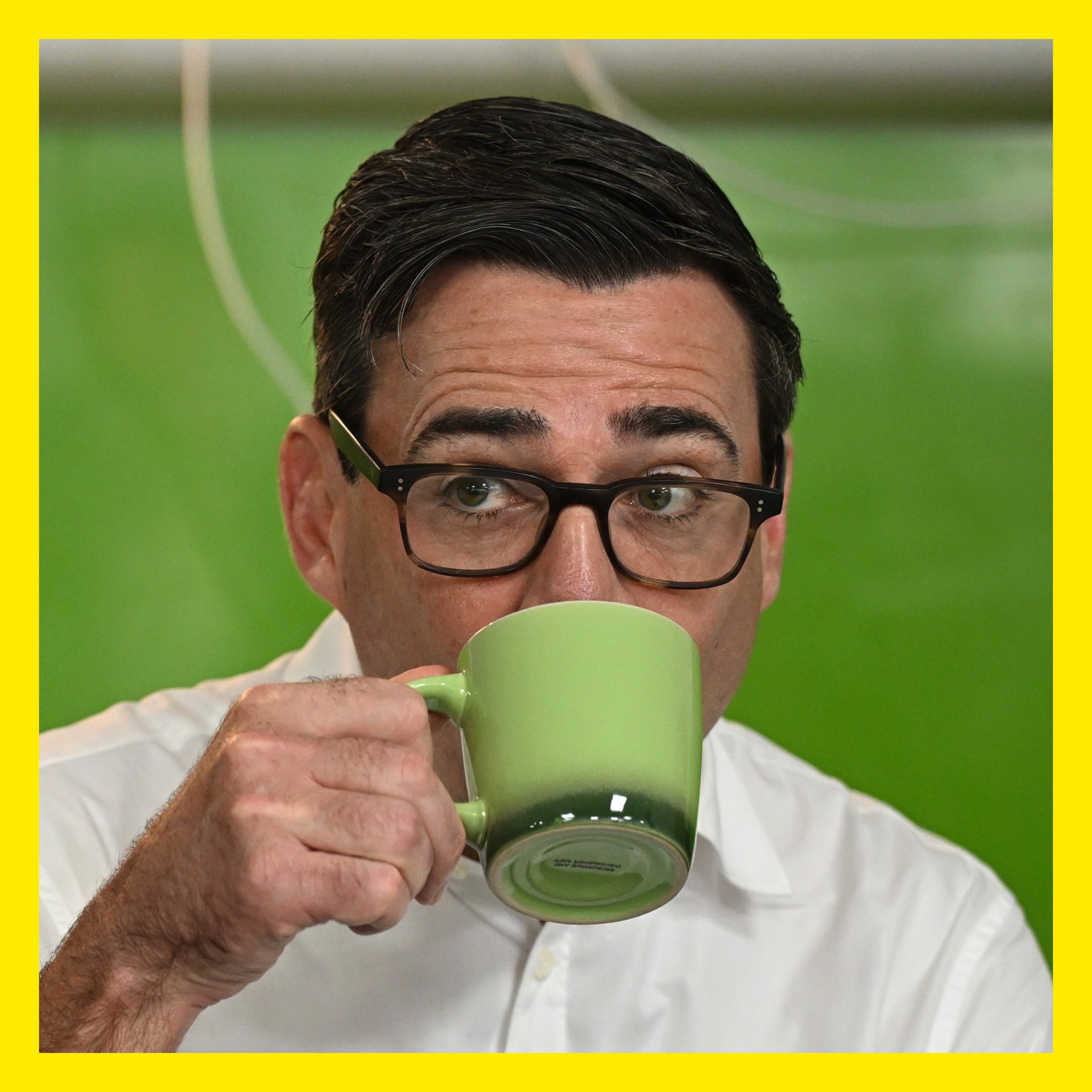


Andy Burnham’s push to reopen Brexit and possible EU rejoining options; cabinet unease and electoral strategy; then the upcoming budget aimed at “the high street” and small businesses.
Stephen Swinford (Times political editor), Ben Riley-Smith (Sunday Times political editor), Patrick McGuire (Times chief political commentator), Laura Spirit (Sunday Times deputy political editor).
Burnham is “re-litigating” Brexit to energize progressive voters and dominate the agenda; Starmer previously avoided “the B word” after 2019. Cabinet ministers worry about refighting Brexit and about what the UK would actually rejoin (free movement, customs union trade-offs, etc.). Russia-interference comments were described as a “U-turn” after loose wording. Budget messaging will target “white van man,” self-employed tradespeople and beauticians, likely via business rates/tax relief and possible online-sales tax; critics argue it will still be a tax-raising “triple whammy” risk.
Makerfield “test” for leave-voting seats; Russia interference headlines and Commons clarification; prior tax rises under Rachel Reeves; business concerns from John Lewis and M&S about online-tax impacts.
Written by AI. May contain mistakes.
Discussion on Andy Burnham's renewed focus on Brexit.
“I'm Stephen Swinford, the political editor of The Times.”
Analyzing Burnham's motivations behind revisiting Brexit discussions.
“So we all sat through, I think it was three hours of Andy Burnham in the Commons yesterday, which his main point was that it was a dereliction of duty for him not to pursue closer alignment with the EU.”
Contextualizing Burnham's position on Brexit with his past views.
“And yes, tactically, there are reasons for that.”
Exploring Labour's shifting political stance regarding Brexit since 2019.
“politically is, you know, getting progressives excited, Lib Dem voters, Green voters, et cetera, et cetera.”
Examining current public sentiments regarding Brexit and Labour's strategy.
“I think the interesting thing is you've not really see this battle rhetorically in public about Brexit playing out because Labour Party has tried to not talk about it since 2019.”
Discussing the complexities surrounding the idea of rejoining the EU.
“So I think at this moment, you know, it makes sense for all the reasons that you all have said, but I don't think it is without serious risk.”
Highlighting the economic questions left unaddressed in Burnham's strategy.
“I think the next phase of this, like loose Brexit conversation debate is going to be a lot trickier for the Prime Minister.”
Debating the relevance of the Makefield test in current political strategy.
“the question is what the hell do you do about defence spending?”
Explore the implications of the Make-a-Field test on political strategy and identity.
“But, you know, again, like the Labour Party sort of lurching headlong into a world in which it starts arguments that historically it loses.”
Understand the rapid changes in political messaging seen in Andy Burnham's recent statements.
“Can I just touch very briefly on the anatomy of a U-turn because we should do it, on the Russia stuff.”
Discuss the impact of authenticity on political leaders and public perception.
“Andy Burnham has clearly made a decision, probably feels quite instinctive to him, that he is more willing to talk loosely when he's on podcasts or in public.”
Analyze the strategic considerations behind the upcoming budget as it relates to local businesses.
“And when we come back for the interval, we're going to talk about the budget and what they want to do with this budget and how it looks and feels.”
Examine the complexities of the economic messaging surrounding taxation and support for local businesses.
“And what's fascinating is you've got both the Labour Party and reform now talking pretty squarely to to white van man, to the small shopkeeper, to, you know, the self-employed freelancer, etc.”
Discussion on the anticipated Labour budget and its impact on taxes and business.
“And they don't want this third Labour budget to be a huge tax raiser.”
Exploration of how EU discussions may influence the upcoming budget and business perspectives.
“And you can have all the headlines you want about high street versus digital, etc.”

Get the gist, explore an idea or ask about something said.
 Claude
On The State of It, what are the key points of this episode?
Searching your listeningAutomatic transcript. May contain errors.
0:00There are people close to Andy Burnham who do think the idea of spending the next few years talking about rejoining the European Union is a big mistake. The Labour Party's sort of lurching headlong into a world in which it starts arguments that historically it loses. Welcome to this week's edition of The State of It, the political podcast from The Times and The Sunday Times. I'm Stephen Swinford, the political editor of The Times. I'm Ben Riley-Smith, the political editor of The Sunday Times. I'm Patrick McGuire, chief political commentator for The Times. I'm Laura Spirit, Deputy Police Creditor of the Sunday Times.
0:31This week, we are going to be talking about the return of Brexit. Brexit wars are back and there is some significant cabinet unrest going on beneath the surface as Andy Burnham tries to re-litigate and re-prosecute the old Brexit arguments. That's first. And then second, we're going to be talking about the budget, how John Healy wants to make this a budget for the high street and what that looks and feels like and where we might end up on some of the tax and spend policies. But let's start on Brexit wars. So we all sat through, I think it was three hours of Andy Burnham in the Commons yesterday, which his main point was that it was a dereliction of duty for him not to pursue closer alignment with the EU.
1:10And at this point in time, the way Andy Burnham is framing this debate, all things are possible. It could be another referendum. It could be rejoining automatically in the manifesto. It could be joining the customs union. It could just simply be an SPS deal and some other bits around the edges on November the 20th when we've got this summit. out. Why is he doing this? Let's just start with that, because obviously it wasn't on the political agenda. He wants it on the political agenda. Is it a simple, I don't know, start with St. Patrick. Is this just about like going to unite the progressive Labour left?
1:40Is that what he's trying to do? Well, look, if that's your tactical objective, and I use the word tactical deliberately rather than strategic, then it's a pretty sensible one. There were lots of people in and around Keir Starmer's operation, who, as his premiership stuttered towards its inevitable and inauspicious end, was saying what Keir Starmer needs to do tomorrow to save himself after the local elections is come out and say, let's put ourselves back on a path to rejoining. He didn't do that. Andy Burnham is leaning into what Keir Starmer didn't. And yes, tactically, there are reasons for that.
2:16I think, though, as with a lot of what Andy Burnham says, you're better off tracing it back to before his premiership, even before his mayoralty. Andy Burnham has long believed that the referendum result was a mistake, even though historically he was one of the more Eurosceptic in relative terms, new Labour ministers. There was a very revealing interview he gave a year after his loss in the Labour leadership election, where he basically said, if I was Labour leader, we could have won that referendum, not least because I've got a Dutch wife and I'm a living success story in terms of European integration.
2:54And only last year, remember, at Labour conference, one of the things he did say when he was doing his come and get me plea tour was that he wanted to see the UK rejoin the EU in his lifetime. So I think this is a long held position of Andy Burnham's. I think, you know, this is long how he's wanted to do it. And the upshot of it politically is, you know, getting progressives excited, Lib Dem voters, Green voters, et cetera, et cetera. But as with a lot of the stuff he's talking about, it's been this up for a long time. Well, without wishing to copy, Patrick, I think you're absolutely right. There's the principle and there's the politics.
3:32The principle is he believes in getting closer to the EU, I think genuinely is trying to mull over what that best looks like. But for the first time in a long time with the Labour Party, you've got the principle and the politics lining up. So without wishing to go into the deep history, 2019 Labour ran a second referendum Brexit position, got hammered. That allowed Boris Johnson to peel off all these Labour sporting voters in the red wall. So that meant Keir Starmer, who had pretty much orchestrated that second referendum push, realised to win power, we just need to totally close down Brexit. So pretty much 2019 to 2024 was do not say the B word.
4:07They had mild stuff in the manifesto, Labour manifesto saying we'll have a bit of a reset. Essentially, they didn't want to talk about Brexit at all in that campaign, despite instinctively everybody in the Labour family, most people in the Labour family wanted to get that closer. Now you have the politics changing, you know, remove Brexit in the European Union. If you were told there's a poll and 55 % of people say yes, they want to do this thing and 30 % of people say no, they don't. And if you look at Labour, the Lib Dems and the Greens, it's like 70 % of people want to say yes. You'd be like, well, politically, clearly, you want to go down that route.
4:40That is the position with the question, do you want to rejoin the EU or not? So because of this baggage of the last 10 years, we think, oh, this is a huge landmine to step on. But fundamentally, when you look at the polls, it makes pretty sensible politics just to go for it. I think the interesting thing is you've not really see this battle rhetorically in public about Brexit playing out because Labour Party has tried to not talk about it since 2019. But what happened in the Commons yesterday, you know, it was a bit of a phony war because fundamentally all sides agree. Yes, it looks like Russia tried to interfere a bit, but no, it didn't have a substantive impact on the result.
5:18Possibly Andy Burnham is a little bit loose in his rhetoric in rested politics and reined it in a little bit in the Commons on Monday. But the substantial differences weren't huge. But you saw the Brexit supporting papers immediately jump on it, put it on their front pages. you saw Kemi Baden-Ock and Nigel Farage immediately lean in really heavily. I guess the most interesting electoral question is, is it a trap for the Tories to have this position? Alex Burkhart told us for the Sunday Times last weekend, two weekends ago, that they're going to reverse any measure Labour takes towards Europe. So is it a mistake for Burnham to go so hard reopening this question?
5:58And is it a mistake for the Tories to promise they'll rip up anything he does? What do you think, Lara? A massive mistake? Well, I mean, reform. When you speak to Nigel Farage, I mean, I remember asking him this question. He's very up for this fight. He was delighted. He did that interview with you. Completely delighted. He's so familiar with this particular issue and I think would welcome it. I think it's quite interesting, like listening to Ben talking about the politics. I mean, all of us will have had conversations with people around Keir Starmer in recent weeks about this posture from Andy Burnham who find it completely infuriating and think it is total window dressing because the reset itself is not going to be substantially changed, probably, from what it would look like under Keir Starmer.
6:37Starmer himself had moved into this position. I think the reasons that Starmer moved into the position are perhaps slightly different insofar as it was in part because Rachel Rees had identified a number of economic opportunities from the reset and that that was seen as very helpful. But I think this idea that Andy Burnham is much more pro-European than a number of those people around the Starmer cabinet were, is just not necessarily true. I mean, if you look at those people that left the cabinet, they are some of the most pro-European people in government. And actually, when you listen to Andy Burnham on the Makerfield campaign trail, it was about the Makerfield test.
7:09It was about how he was capable of winning a leave voting constituency. And I think that led to some of us to think, oh, well, actually, you know, this will be quite a different politics. So I think there will be something of attention there because there are people close to Andy Burnham who do think the idea of spending the next few years talking about rejoining the European Union is a big mistake. and I think the extent to which that plays out behind the scenes will be really interesting to see. So I think at this moment, you know, it makes sense for all the reasons that you all have said, but I don't think it is without serious risk.
7:38Steve, talk about that you think there's cabinet riffs on this. Definitely. So I'm sure you heard similar things at Labour conference, but some ministers were like, okay, he's gone big on this, he's gone big on every front. I really don't want to be refighting the Brexit wars again. So people were raising concerns about that. We did another interview. Our colleague Constance did an interview with Johnny Reynolds on Saturday's paper. And he, again, was just pointing out, well, actually, things are changing in Europe. They've got elections in France. You've got elections in Germany. And what he's alluding to is obviously the rise of the right.
8:08So it's one thing to say we'd quite like to go back in. There's another question of, well, what are you going back into? And will they have you? And is that whole project more broadly fracturing? But I guess the benefit is that it does mean it's the distraction point, that they're not talking about the cost of living. They're not talking about the really difficult, difficult things coming down. And it lets Burnham do a positive agenda. I think the next phase of this, like loose Brexit conversation debate is going to be a lot trickier for the Prime Minister. Because there's one thing to say, look, we need to get closer to the EU.
8:39That seems to chime with public opinion. But then when you drill down into the options, the other possible options, single market, okay, so presumably you're returning to free movement again. We can all see where the polls have been on immigration on small boats. Imagine if you're telling the country, right, we're going to have totally uncontrolled immigration in terms of the entire EU population. Customs Union writes, you're going to rip up every single trade deal you've done with all the other countries since you've left the EU, which will be pretty difficult. Or is it, as my instinct is, that it will be something like what Stam was doing, turbocharged, you know, a version of Switzerland.
9:14Right, why don't we have many more bilateral deals to try and align on all these different industries to reduce regulation? That's only when you begin to look at all the specific other places you could land and the downsides that the public debate will then get going. The big question for me is, what is the strategy here? Because you can make a very compelling tactical argument for all of this loose Brexit chat, as you put it, Ben. And I think the prime minister's habit of just saying what he thinks, I think it would maybe be too flattering to call that a strategy. because what it does in the short term and what he keeps doing is he's dominating the national conversation, right?
9:56Everybody dances to his tune. Happened on the triple lock. Now it's happened on Brexit. You know, Nigel Farage, as you say, Lara, up for the fight, but he's still talking about something Andy Burnham has invited him to talk about. And Labour people will probably say, well, actually, you know, let's remind people Farage is Mr Brexit and people don't like Brexit anymore. But anyway, strategically, you sort of think, what is going on, right? At conference, the business secretary is saying joining a customs union would be mental. Then the prime minister writes his own conference speech, says nothing's off the table on Europe.
10:29Then nothing happens until he goes on a pretty low key visit to Berlin. And there's no massive announcement out of that on a renegotiation or anything. What was said in the Commons yesterday was ultimately pretty thin. So you're in a sort of position where the government's agenda again and again is thrown up in the air by the prime minister and he gets everybody talking. But on the big questions, you know, on the other things the prime minister has told us he cares about, re-industrialisation, industrial policy, AI, there's no real serious engagement with what any of this means for not for anything beyond electoral politics, for the economy Andy Burnham has said he's trying to build, for questions of state aid.
11:15All of these things have not really been engaged with. I feel like right now it's quite a superficial conversation. Do you think it's an early election thing? I know it's slightly boring to endlessly bang on about whether they're going early or not. But one possible argument is they're pump priming their poll lead, because if you talk about EU enough on that left side of the political spectrum, it's going to push them up. But then he is doing this big, you know, we are going to get more substance in this big options speech that he's going to do in November or December. Well, look, I mean, that detail will have to come at that point because there are, you know, all the paths we've set out constrain and create the room available to Andy Burnham to build the economy he talks about building.
11:56And that we assume, indeed, that we know is why he's in politics. He's ultimately, he's not ultimately in politics to, you know, win elections for the Labour Party in clever ways. You know, let's take him at face value. He wants to remake fundamentally the British economy. I mean, this is a pretty fundamental part of the extent to which and the direction in which you're able to do that. So, as you say, it would sort of make sense if we are in the precursor to a general election campaign. But ultimately, you know, if he wins an election saying let's rejoin the EU, then the Labour Party has to come up with a kind of statist politics that works for the EU.
12:32All of the difficult stuff is postponed, right? So we know we think the spending of you is now next autumn. That means the big questions, if you're looking at the economy, the question is what the hell do you do about defence spending? How do you get to 3 %? When do you get there? That is a massive defining question that he is not really engaging with and has actually been kicked down the track. Welfare reform, two massive tectonic reviews coming out after the budget. We haven't really seen much of what Andy Burnham actually wants to do with the country now. What we've seen is what he wants to do with the country in five years' time after the next election.
13:05But there are huge questions on his in-trade today, and we don't know the answers. I don't know still how committed he is to welfare reform. He says, I want to reform welfare, I want to cut the benefits bill, but I don't want crude cuts. What does that mean? So all of these decisions are going to come into focus. But at the moment, we're just having this manana debate about Brexit tomorrow after the election, which is a challenge, I think. Yeah, and ultimately, let us not forget. I mean, a couple of weeks ago, about a month ago, I was picking up suggestions that some people in the Cabinet Office in the round number 10 had gone cool on the idea of a youth mobility scheme with the EU because it failed the make-a-feel test, right?
13:41Because ultimately you would then be making it an argument for higher migration. So it's sort of, you know, you cock a sceptical eyebrow at the idea that now actually the debate at the very top of government, i.e. in the Prime Minister's head, has moved on to let's talk about rejoining the EU. Maybe it is that hardy perennial of Andy Burnhamism in power, which is to talk a big game. But, you know, again, like the Labour Party sort of lurching headlong into a world in which it starts arguments that historically it loses. Can I ask Laura that this make-a-field test, you cover the make-a-field by-election a lot.
14:19I'm still not clear whether this government is genuinely led by the quote-unquote make-a-field test because you wouldn't reopen rejoining the EU for the make-a-field constituency. So I'm kind of unclear whether that is fading by every month as an actual test they're living on. You don't hear so much about the make-a-field test anymore. I think it's also important to say that there's obviously been very significant changes in the people around Andy Burnham since that make-a-field election, not because the people that were around him that were very core are any less powerful than they were before, but just because when you become the prime minister and you move into government, there are a number of other very significant people who now have your ear.
14:58And so, you know, he's got a whole policy unit in number 10. There are so many other centres of power that will have done a lot of research on these questions. I mean, remember that a lot of people in government, I know there was a big thing made of the fact that there'd be all of these spads that would be kind of, you know, pushed out after a certain amount of time. But actually, there's been quite a lot of continuity and there was quite a lot of work done before Andy Burnham became prime minister, particularly on the European question, which, of course, Andy Burnham will have had sight of and been thinking of.
15:26So I think I mean, I do think the Makerfield test as a rhetorical device is a very interesting and useful one. And you can understand why he made that kind of pledge. but I don't I think that he may also make you could also make the case does it necessarily fail the make field test if a constituency the voted leave before looks at a broader reset that may not be rejoined let's say but could just include you know a much much closer economic relationship in circumstances where Andy Burnham can say well look the economic benefits that you were promised on Brexit weren't necessarily delivered I don't think you would necessarily say that that completely fails it but I do think there are people around Andy Burnham who believe that it does.
16:05And that's why I think, you know, Steve's point on cabinet divisions is a really interesting one. And I don't think that that argument has necessarily been won inside government. Well, I want to know what Andy Burnham thinks about this and the Makerfield test. Because in Andy Burnham's maiden speech in 2001, he was in a debate on Europe, and he said, you know, there is a factory in my constituency which substantially overlapped with what is now Makerfield that has just closed and relocated to the Czech Republic. So, you know, don't tell me Europe is all good. During the second referendum campaign.
16:35He was sort of widely considered to be AWOL by more pro-EU voices in Labour because he was sensitive to what people in seats like his then and now think. So, you know, maybe he would say actually the alternative turned out to be worse. But in a constituency that has basically lost all of its industry, I mean, it had a glass factory that closed just before Josh Simon's resigned as the MP, you sort of wonder what's the argument you're making beyond the sort of, you know, pull the lever, GDP goes up by 2%, everybody's happy and is going on a foreign holiday a year, I don't know. I mean, but what other levers does he have?
17:15I think it's the reason why people so often reach for this EU lever and why I think it's right to be sceptical of why they're doing this now. Because I think people did feel when Rachel Reeves did that, that that was the kind of blunt mechanism that she wanted to use and people just basically assumed, okay, closer integration with Europe, that's fine. We'll have a better economic result because of it. I mean, I think, I can't remember if you wrote this, Patrick, but there was definitely, there were people around Andy Burnham, I remember when the Makerfield constituency came up and this big gambit was revealed, who said, this is so brilliant because it forces Andy Burnham to be a different politician to the one that he would have been if he'd run in Gorton and Denton, for example.
17:53Like, he has to now be a different politician. and it's quite fascinating to see that perhaps he doesn't have to be a completely different politician or that may be where they end up is that actually the make-a-field test is just done away with and he ends up in a kind of conventional progressive mould. But, I mean, I don't know, it's too early to tell. Can I just touch very briefly on the anatomy of a U-turn because we should do it, on the Russia stuff. So I just wanted to put listeners and viewers in what happened yesterday. So over the weekend, Andy Burnham comes out and suggests that Russia interfered in the Brexit vote.
18:25He said he wants to put it on the record and he was told it when he came into office. Cue loads of headlines. The Observer kind of ran it big. Big story. Right. We get to lobby, which is where all of us hacks go into number nine. And we spend all my colleagues that went to it spent half an hour, the best part of half an hour asking the number 10 spokesman. Does Andy Burnham think that the Brexit vote was legitimate? And they just won't say. And it goes on and on. and then somewhere someone sends a message to the spokesman and eventually clarifies, yes, he does actually think it's legitimate. So fine, we got there.
18:59And then in the Commons, he said, well, actually, I was talking about attempted interference, but it was unsuccessful. So we had this kind of full Technicolor U-turn in the space of 24 hours in terms of, you know, and obviously all of the tabloids rule over that, Burnham in retreat, all of that kind of stuff. But that is what happens. A couple of loose words on a podcast. and suddenly you're in a whole new cycle of a day where your position has gone up and then down in the course of a day. Welcome to modern politics. I think spinning off that slightly more widely, we do have this fascinating thing.
19:31Andy Burnham has clearly made a decision, probably feels quite instinctive to him, that he is more willing to talk loosely when he's on podcasts or in public. Well, there's that thing about, you know, the most valued quality in politics right now is authenticity and the people who feel like they're talking in their natural voice, speaking freely. this era of the kind of new Labour soundbites that the public is just so aware of and it just, that they react allergically to. Andy Burnham has clearly decided, look, it kind of helped me when I was mayor of Greater Manchester and I will try and speak more freely and be myself in these.
20:04That was a long form interview. I think it's more now along with the rest of the politics. Is that a good thing politically? Because most people see he's great for journalists. I think it also helps him because he, you know, his superpowers, he comes across as relatable and more like somebody who you might know in normal life for most voters, I think, compared to most political leaders? Or is it a downside because you endlessly get these things where Lucy says, oh, yeah, maybe I want to help the waspy women. I know we can't do that. It's too expensive. You know, this Russian interference bit. So you get these points when he says something and Number 10 has to tidy it up slightly.
20:39I would argue probably for him the authenticity thing is more powerful as a positive than the kind of tidying up that happens 48 hours after these. He has seemed frustrated about it before. I remember Patrick when he mooted in that interview with you on the eve of becoming prime minister, raising the threshold. That he wanted to, that he wanted to, that's the one thing you'd heard on the doorsteps in Makerfield. And it turned out that wasn't, that wasn't actually a policy pledge. But yeah, you know, he, you know, he, he, yeah. So he said, oh, the personal allowance is too low. That's what people in Makerfield tell me.
21:09And I think not unreasonably lobby colleagues when they saw him the next day in the Downing Street Rose Garden were like, hey, what about the, what about this personal allowance thing, PM? and then he sort of leant into it and then number 10 were forced to clarify no no no we're not doing this and then later he was like I've been misquoted well he said something about he said something to the effect of like it's important to kind of just share my thoughts honestly about these things and that is I don't know if he necessarily thought there was bad faith but I think he was sort of trying to he was sort of trying to make a case that actually he wanted to be a politician that was able to think out loud it's a net positive look I'm here for it As a journalist, I've lived through Theresa May's premiership.
21:49I've lived through Keir Starmer's premiership. But does it help him with the electorate? Yes, it does. As you say, Ben, it's the Prime Minister, and Laura's point as well, a fully functioning human being who thinks independently. Oh, no, this is such a lobby brain where I'm looking at it in a way, as you say, oh, no. I don't think people are following you. Number 10 are going to have to mop up. It's like, obviously, for us, that's a big deal. And I'm not saying it doesn't matter because all of these are revealing of like big strategic calls the government is making in the fine print of policy.
22:19But in terms of how people like look at and interact with the prime minister, that maybe in time would be annoying, but it's like the prime minister is on the TV all the time telling you what he thinks, flooding the zone, as they say. And that is obviously manifestly better than the recent alternatives, which is they're on telly being mad or they're on telly unable to string a sentence together or they're on telly looking harried and being slapped about by their opponents and their own party. Right, let's head for the interval. And when we come back for the interval, we're going to talk about the budget and what they want to do with this budget and how it looks and feels.
22:55Welcome back to The State of It, the political podcast from The Times and The Sunday Times. Let's talk about the budget. And we're going to need to talk about John Healy, the Chancellor. What does he want this budget to look and feel like? The answer to that actually lies in his constituency. It lies in Rotherham, which is obviously a town close to his heart. He wants this to be a budget for the high street. He wants it to be about family businesses, as it was put to me the other day, the white van man, self-employed white van man, and beauticians. That's who the target market for this budget is.
23:25The two genders. Two genders. And that is being played against the big online behemoths, the people that aren't subject to the same tax, the same regulations as the high street retailers. And that is where they are positioning themselves. That's what the kind of message they want to come out of this and all of the policies they hope or they want to see viewed through that prism. We don't know what that looks like yet, but presumably they are looking at some kind of tax track down on the online giants. We don't know what form that is, but we're looking into that. And then secondly, they want to give money back to high streets, which we're guessing is probably through business rates.
24:01But when you think about that prism and you think about Andy Burnham and John Healey, that suddenly makes a lot of sense as to why that would be their vision. Yeah, exactly. Because it is, as Andy Burnham would say, a place-based politics. And it is also that demographic, the tradesman, the self-employed worker, the small to medium-sized business person. In fact, they got a very broad deal under Rachel Reeves and they are also reforms, key demographic. If you look at the sort of economic messaging of the parties and reforms is often overlooked. You have the Tories focusing on, broadly speaking, the wealthy or very high earners in urban areas who might not necessarily feel particularly rich because of the tax regime, particularly the 100 grand.
24:45And what's fascinating is you've got both the Labour Party and reform now talking pretty squarely to to white van man, to the small shopkeeper, to, you know, the self-employed freelancer, etc. All the people who are traditionally the locomotive force of populism since time immemorial, the petty bourgeois. And that is it's a really, really interesting political choice. it's a bold political choice given how cheesed off these people are with the Labour Party but it's also giving John Healy space I think and let's see how this goes to tell a pretty confounding political story right clearly if the narrative is this is a budget for white band man it's a budget for your local beautician or hairdresser he's going to be talking about the regulatory burden.
25:34He's going to be talking about the tax burden and possibly cutting those two things. So there's a world in which John Healy gets up and says, you know, actually, it's a pro-growth story, but it's not like the pro-growth story Rachel Reeves is necessarily telling, which was a bit sort of a bit abstract, right? It was about planning. It was about loosening the regulatory regime in the city. It is, if you are a tradie, I'm going to cut you, you're going to pay less VAT or whatever. So it's, oh, I'm going to increase the VAT threshold, right, just to pluck some ideas out of thin air. Politically, that's interesting ground, not least because, as a senior reform source was saying to me the other day, the gap between welfare and the wealthy is where they think there's opportunity.
26:22In the very sort of places John Healy and Andy Burnham have in their minds when they're drawing up this budget, you know they think the Tories are for the wealthy, labour for welfare it's interesting labour are zeroing in on that territory as well because it is a sort of, it is the no man's land of the economic debate right now and there is going to be a big battle to own it It's quite a nuanced discussion, I always think with budgets if you want to know what's happening look who's shouting the loudest and on Saturday you had the bosses of John Lewis and M &S writing in the Times and the Daily Mail respectively warning about some tax move in this space.
26:59I think the problem is, it sounds very romantic and easy, the picture that Healy and you are painting, which is you've got these big online retailers who are all foreign-owned, Sheen or whatever, coming in, stealing all our products, and you've got the high street that's dying. So if you tax the former and help out the latter, that's the way to do it. But John Lewis has a massive online shopping element. Next as well, yeah. Yeah, so they were all arguing, well, hang on, And if you whack online, you're hitting people on the high street because all our high street stores are going to be impacted because we're all one business.
27:31So it's much more tricky to act on it than it seems. I mean, it seems to me at a very top-line level, this budget, they want to somehow maintain and protect that rosy optimism that Andy Byrne has managed to project and get through this challenging budget. So I think they're desperate for it not to be what Robert Jenrick, the Reform Economics spokesman was calling it a triple whammy. You know, Rachel Reid whacked up tax for the first budget, said she wasn't going to do it again, whacked up tax for the second budget. And they don't want this third Labour budget to be a huge tax raiser. So Rachel Reid's first one was$42 billion increase in tax.
28:09The second one was$26 billion. I mean, we were talking to people in the city, reading the runes who thought they might go for$3 to$10 billion. So I think they want the message out there to be, this isn't another huge raid in terms of tax. And then, as we wrote at the weekend, I think these four areas are giveaways. Business costs, which is going to be framed in the high street stuff. Energy costs. We've seen discussion about whether they're going to increase the warm homes discount to help out the neediest families. I think there's not going to be a vast universal intervention like this trust because it's so expensive.
28:42Fuel costs and, at the very least, delaying fuel duty. And then this question of the needs, It's those million young people who aren't in education or training and how they help them. So we're beginning to see the outlines of what it is two weeks out. I remember at Reform Conference on Business Day, bumping into a few people who were talking about the fact that actually a lot of these online retailers had sent people to Reform Conference because they were so worried about this. Richard Tice on Business Day had been speaking about this. I mean, I think in the reform manifesto from the last election, there was discussion of a delivery tax of some kind or online sales tax of some kind.
29:23This is something that Tyson now seems pretty open minded about. I think they're consulting on it. And look, this is the narrative they would like, but we should just stand back. Ultimately, it is going to be another tax raising budget taking the tax burden to yet more, yet higher levels, even more than the kind of post-war record that we were previously on calls for. Another historic high. Another historic high. And you can have all the headlines you want about high street versus digital, etc. But actually, there are going to be people saying this will damage growth. Andy Burnham's mate, Jim O 'Neill particularly, is going to be savage about that.
29:56Former Goldman Sachs guy just say, he said it's stupid. And Ben, you were talking about, you were musing aloud earlier on the question of whether the EU chat is about, you know, priming the pump ahead of an early election. I mean, the other way to look at it is it's a way to take the edge off some of the nasty stuff that's coming in the budget. because you can at least say, again, to businesses big and small, well, look, if we're back in the single market, exporting is going to be easier, importing is going to be easier,
30:26frictionless trade, et cetera, et cetera. You wonder whether actually the timing of that is, should we be looking at the event we know is coming, the budget, rather than one that may not in terms of an early election? I think that brings us to an end. so thank you again everyone for listening who wants to do the massive red button this week for the producers our amazing producers all three of them I'll do it yeah for once Ewan Daughtry the prodigal son of this podcast has returned from his long holiday so thank you firstly to Ewan secondly to Harry Kitson and lastly but not leastly to Molly Guinness for making everything happen here here and look we've got some exciting news we're taking the state of it live at the Battle of Ideas Festival.
31:14We'll be at Church House in Victoria from 1.45 to 3.15pm this Sunday, this Sunday coming. And we'll be taking questions in a live question and answer session too. We've got a special discount for listeners. Use the code STATE26 when booking to get 20 % off your tickets. We would love to see you there.
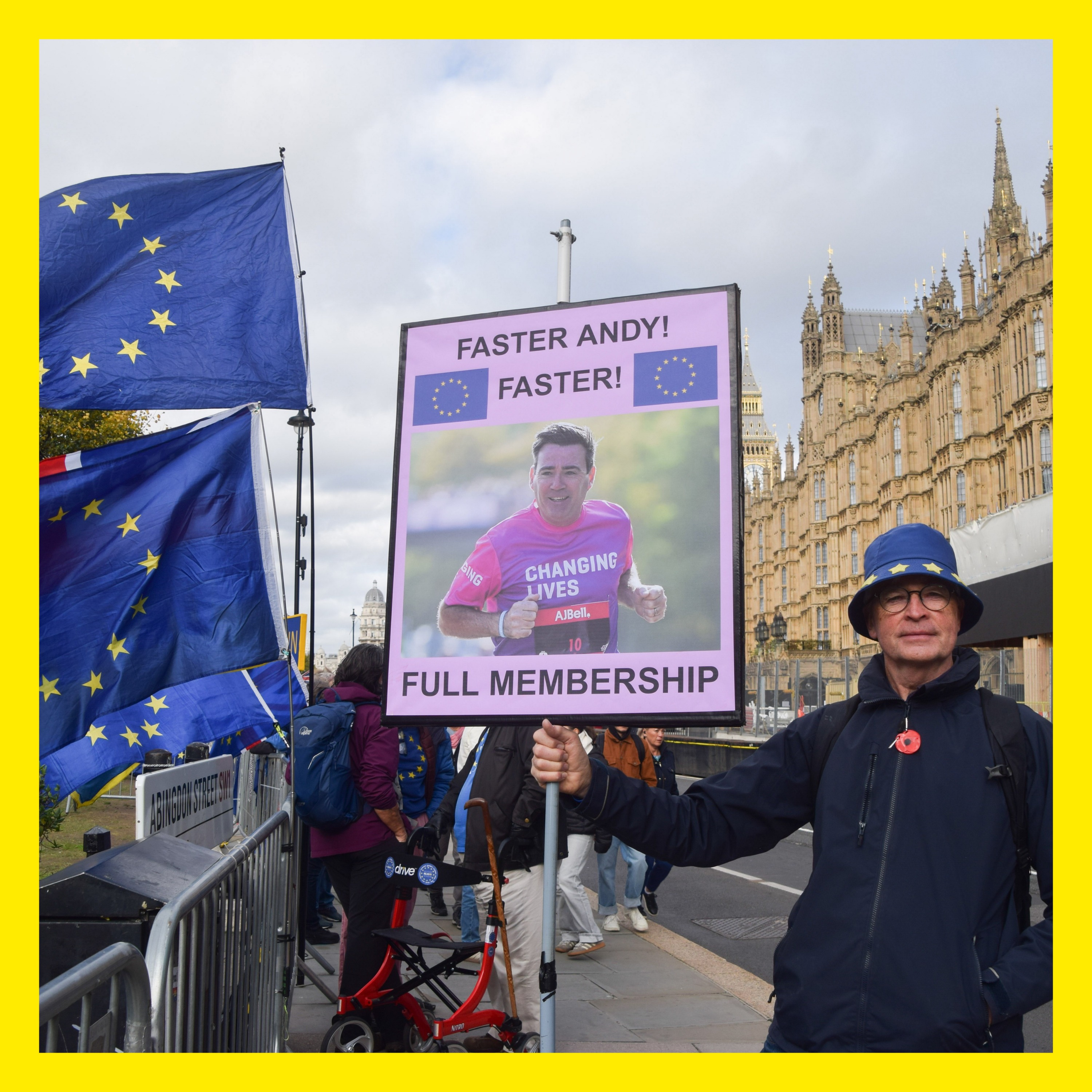
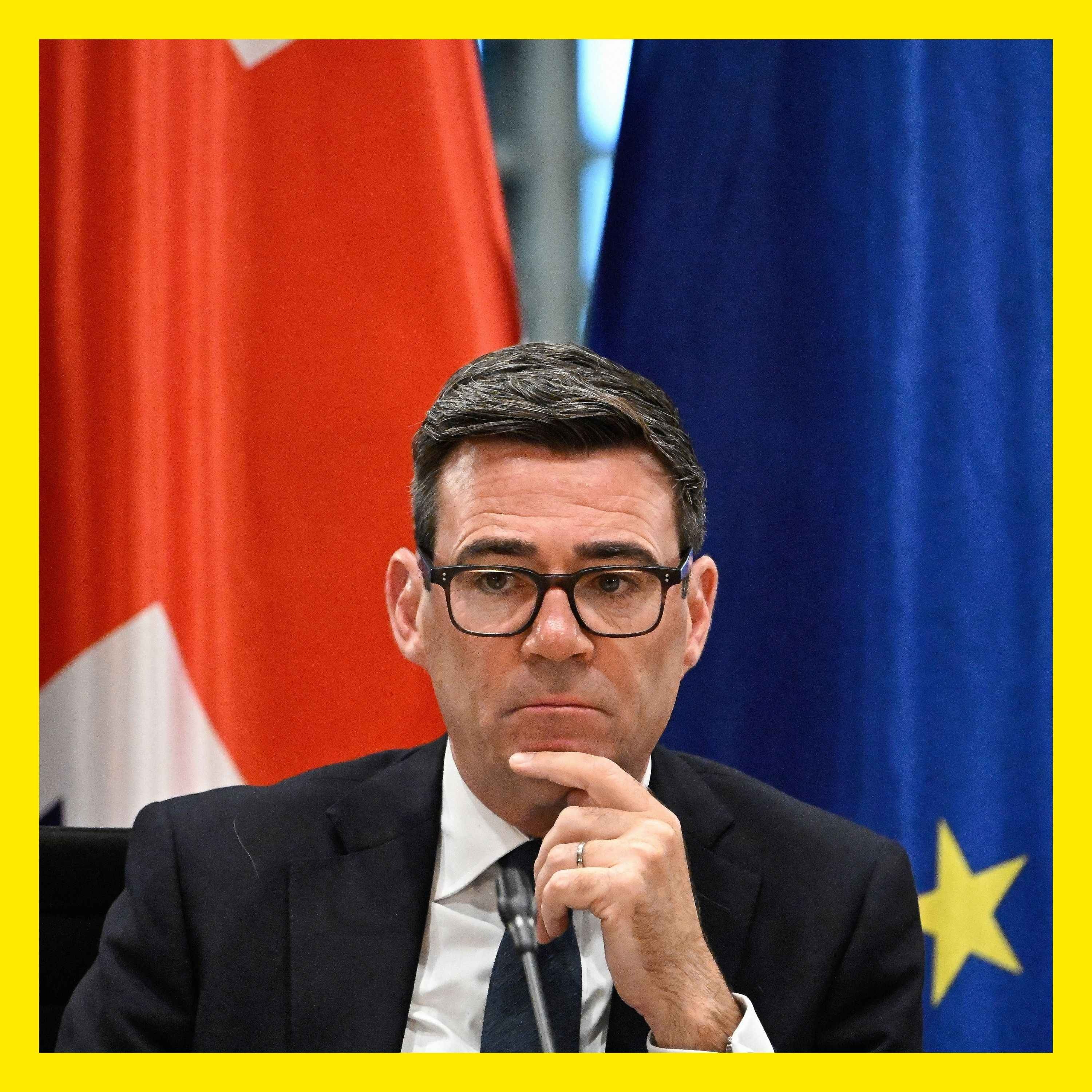
Andy Burnham has pulled the lever marked ‘Brexit’, threatening to reignite the wars of yesteryear. The soft left are delighted, but there’s unease in his cabinet. Is this a route back to a referendum, or just a meagre SPS (Sanitary and Phytosanitary) deal? Or is Burnham already firing the opening shots of his election campaign — at the expense of the leave-voting areas he promised to win over? Has he already failed the Makerfield test?
It’s budget season, and speculation is mounting over what’s inside John Healey’s red box. This is billed as a budget for the high street: for the white van man and the beauticians of Rotherham, funded by a crackdown on online retail giants. But with John Lewis sounding the alarm, how far will the chancellor go?
Steven Swinford, political editor, The Times
Ben Riley-Smith, political editor, The Sunday Times
Lara Spirit, deputy political editor, The Sunday Times
Patrick Maguire, chief political commentator, The Times
Producers: Euan Dawtrey, Harry Kitson
Executive producer: Molly Guinness
Picture: Getty Images
00:00 - The Brexit Wars Return
02:51 - Why Andy Burnham Wants Closer EU Ties
05:25 - Nigel Farage Delighted & Secret Cabinet Rifts
08:04 - The Real Cost: Free Movement & Single Market Traps
10:50 - Is Labour Priming The Polls For An Early Election?
13:46 - Has Burnham Abandoned The 'Makerfield Test'?
17:46 - The Russia Claim: Anatomy Of A 24-Hour U-Turn
20:06 - "Authenticity" Or Chaos? Burnham's Loose Talk
22:25 - The Budget: John Healey Targets 'White Van Man'
26:11 - High Street vs Online Giants: Retailers Strike Back
28:56 - Historic Tax Hikes: Distracting From The Pain
This podcast was brought to you thanks to subscribers of The Times and The Sunday Times. To enjoy unlimited digital access to all our journalism subscribe here.
Hosted on Acast. See acast.com/privacy for more information.