
 Ask ChatGPT



In this episode of The State of It, the hosts delve into the current political landscape in the UK, focusing on Prime Minister Keir Starmer's leadership challenges, the upcoming budget, and the implications of proposed welfare reforms. The conversation also touches on the future of the BBC amid external pressures, such as Donald Trump's threats.
Written by AI. May contain mistakes.

Get the gist, explore an idea or ask about something said.
 Claude
On The State of It, what are the key points of this episode?
Searching your listeningAutomatic transcript. May contain errors.
0:00My name is John Stenton, I've been running a butcher shop in Hammersmith for 43 years. England is a business we buy and we sell from all over the world my job is to train people for the future of England at the moment I can't afford to take staff on full time I need to employ people and I can't afford to employ them if they keep putting the prices up on all these different things the taxes here and the taxes there we'll see what the budget does my name is Adam Rogers I run Adam and Potty hairdress in Hammersmith in West London. We've been here for nine years and what we are starting to notice is the fact that a lot of regular clients, a lot of wealthy clients are not coming in as often because they're struggling like the rest of us.
0:45They don't have the spare cash and we just hope that Rachel Reeves does something really positive to help the small businesses when she does the budget. Hello my name is Ali, I have supermarket at Hammersmith. I have same number of the customers what they're spending less. So if they put a tax up, it's going to be a hard time for everybody. Welcome to The State of It, the political podcast from The Times and The Sunday Times. We are today going to be talking obviously about the budget, which has huge implications for all the people that you just heard from, for everyone, for all of us and the politics around that.
1:24We're going to be talking about Sir Keir Starmer's leadership and the increasing existential challenge she faces and we have a scoop for you on how Starmer intends to deal with that and we're also going to be responding to some questions from our readers who have been emailing in on the state of it at the times.co.uk and before we get to any of that we're going to be talking about the future of the BBC which is in Donald Trump's sights will it survive and is it actually as bad as it seems I'm Stephen Swinford political editor at the Times I'm Patrick Maguire Chief Political Commentator at the Times.
1:59I'm Gabriel Pogrand, Sunday Times Whitehall editor. And I'm Caroline Wheeler, Political Editor of the Sunday Times. And Chairman of the Parliamentary Press Gallery as of last week. Congratulations! Thank you, thank you. It basically just means that I wear the chains of office as opposed to actually do anything. But basically it's just an administrator's role. No, you're like the ambassador of parliamentary journalists to the commons authorities. It's a big deal. You're like the queen of the lobby. Thank you, I'll take that. Yeah, well, congratulations, Caroline. Let us kick off on the BBC. Now, if you look at the headlines this week, the BBC is in almighty trouble.
2:34I think to lose one top boss is unfortunate. To lose two is obviously something much worse has happened. There are accusations of bias. Donald Trump has come out with a threat to sue the BBC for$1 billion. Whether that's practical or not remains to be seen. But we want to make a different case to you this morning. We want to argue that actually the BBC is not in a bad position as it seems. And that is because it has a Labour government. And we are about to enter a period where they will be discussing the future of the licence fee. It's called the Charter Review period. And Labour likes the BBC.
3:10It likes the licence fee. And broadly, it champions the BBC, even if it has issues with some of its coverage. And Caroline, you've got a flavour for us of what that's going to look and feel like. Yes, so I interviewed Lisa Nandy, the Culture, Media and Sports Secretary at the Labour Party conference. I did that for Times Radio and we got some really interesting comments from her about the sort of future direction of travel. You know, there's been a multitude of different crises that have gripped this organisation. But at the same time, we do have a Culture Secretary and a government that is on the side of the BBC and understands the threat that it is under, in that it sees that if it doesn't shore up the BBC, and these charter renewals usually last for a decade, they often have mid-break points around five years, there is a real sort of understanding that there is an existential crisis facing the BBC as well, which could come from an incoming reform government.
4:03So when I was talking to Lisa Nandy about the future of the BBC, yes, she said they wanted more hands on the tiller, they wanted more accountability there but at the same time she was fairly clear to me that the funding model that they were looking at was a kind of hybrid model I think that this government is not going to let the BBC be defunded which is what some are on the right are calling for at this moment of crisis. I remember a while ago Caroline maybe last year Lisa Nandy said to you she was interested in the idea of mutualising the BBC i.e we'd all become shareholders of the BBC and And I mean, this is my favourite bit of the plan that we'd maybe all get a vote on director general, which seems to me to be a recipe for making Nigel Farage or Jeremy Corbyn director general of the BBC, depending on.
4:47Boaty but boatface. Yeah, exactly. Well, exactly. It's the boaty but boatface model of public administration. Has she now dropped that? My understanding is, yes, that's gone by the wayside. You'll also remember that there was some thinking about whether or not we could move the BBC onto general taxation. It seems that that has also fallen by the wayside. I mean, what you can see at the moment is the debate around the BBC has become incredibly polarised again, with the discussion around whether or not the seeing off of Tim Davy and, of course, Deborah Ternes was a kind of political coup that had been orchestrated by the Conservative Party.
5:21And in particular, by a man that we're all familiar with, an individual called Robbie Gibb, who at one point ran the Downing Street communications department. But I think the conversations I was having around this, particularly over the weekend, was that those in government didn't think that it was necessarily a sort of coup by the Tories. Neither did they think that the BBC itself was faultless. It's going to ratchet up, right? But there is an argument that this attack by Trump actually helps the BBC. It's worth remembering that on most polls that we see, Donald Trump is not very popular in Britain.
5:54So Donald Trump going for the jugger of the BBC and crucially demanding compensation, which ultimately will have to be paid by licence fee payers. I'm not sure how well that will wash. And that could galvanise some support for the BBC, I would have thought. Yeah, Donald Trump coming for Strictly. I think there's only one winner in. Did the OBR forecast that? A billion pound knock to public finances to settle with the dollar? Yeah, the two child cap is going back on to pay Donald Trump's damages. But no, the politics of this are all fascinating. everybody in Westminster is obsessed with the BBC you know when reform do a speech I've had many of these conversations with Nigel Farage's people right what they're most interested in it's what is the headline on this speech on the BBC website every party if they feel shortchanged by the BBC website editor end up in a big argument with the BBC because they think that is the one thing everybody is going to see every party will be looking at this very closely and obsessing over how do we turn this crisis to our advantage.
6:48I'm going to make a terrible segue but I'm going to do it anyway I'm going to talk about coups to the left of me and coups to the right of me we want to move on something we touched on last week which is Keir Starmer's leadership which has gone from being a kind of fringe-ish conversation around Westminster to pretty much a dominant conversation cabinet ministers ministers everyone is speculating does he have to go is this sustainable is he becoming more of a liability than he is an asset and if so when would he go and this obviously has not you know Starmer is not deaf to this and I I think, Patrick, you've got some gear for us this week, a scoop on what is happening around Starmer and what he makes of these bids, these very vocal bids to kind of get rid of him.
7:29Yeah, but what's interesting is you can imagine the Prime Minister saying, noises off, fantasy politics, which is one of his favourite phrases, as Gabriel and I found out when we were writing our book on Keir Starmer, you know, reshuffles, you come to him with that sort of thing. He'll say, fantasy politics, I'm not interested in your fantasy politics with a line he often used in opposition, but he doesn't think this leadership speculation is fantasy politics. Yesterday I spent speaking to four people who were very close to him and the first person actually brought this up proactively and they put it very starkly.
7:58Keir knows he is already fighting a leadership election and he knows that after the budget or at least after the local elections in May, one or more members of his cabinet and certainly backbench MPs are going to call for his head. Now he's already trying to pre-empt that by doing something he's never done before and hasn't been that comfortable with. He's got a new political director, Amy Richards, who's doing a very good job from a low bar of getting him in front of MPs, right? She is shoving him in front of every MP. As one cabinet minister said to me recently, I even see Keir Starmer having lunch in the members' dining room on a Monday now.
8:36He's never done that, right? He is always, with every spare moment now, with his new team, meeting MPs, having groups of them into number 10. Morgan McSweeney is also having groups of them into number 10. They're listening to MPs or at least being seen to listen. And he knows he needs to do that because of the imminent challenge to his leadership. He knows it's a question of when, not if. Now, what will he do when that happens? Now, I'm told Keir Starmer will basically say, come and have a go if you think you're hard enough. He will say to any cabinet minister who comes out after the budget or after local elections, who comes to see him and says, Prime Minister, this is really bad.
9:11I think you need to resign. he'll say well I'm sorry I disagree because what do you think that would do to the markets what do you think that would do to our relationships with our international allies and if you really really want to open this leadership question what you should do is find 80 MPs to nominate you and you and I and by the way whoever from our left who wants to run because you better believe the soft left are going to put up a candidate as well we can all fight a leadership election now do you really want that at a time when our economic situation is so finely poised when the world is in such disarray when we've forged this relationship with president trump that is an incredibly delicate thing look at what he's now threatening the bbc with right do you really want to spend three months talking to the labor party and especially if it comes after the budget what number 10 can then say is do you really want to spend a million quid of the party's money and three months of its time before elections that will decide our future and are standing among the public on talking to ourselves now partly the problem with that line is if you say to the Labour Party would you like to talk to yourself and not to the country most Labour MPs will say I'd absolutely love that but I mean to sort of quote a let me get my phone out and read to you what one of these people very close to Keir Starmer said to me because I think they put the logic of it very well you know they said Keir is utterly committed to renewing the country.
10:40He always said this would be a long and tough journey but not one that could be completed in a year so I'm certain that he would fight any challenge. He won't stand by and watch everything that's been achieved in the last five years be put at risk. A challenge would be hugely irresponsible. It would destabilise the party, the economy and our place in the world. Those advocating need to think long and hard about how the voters would react to us spending months talking to ourselves when the country is crying out for change. Now Now, if you're a cabinet minister listening to this and you're thinking, when should I go over the top?
11:12Knowing that Keir Starmer will at least in the first instance put up a bit of a fight raises the stakes substantially. Because it reminds you that this isn't Hartlepool for number 10. This isn't the moment where Keir Starmer goes, fair enough, I'm done. The prime minister thinks, I won an election less than 18 months ago. I'm the guy. We've got a plan. Yes, it's difficult. so I'm not if West Streeting, Siobhan Mahmood, Ed Miliband you know insert any other cabinet minister here because they'll all want a crack at it you know if any cabinet minister knocks on my door and says Keir it's time to go he is not in the mindset where he's going to say fair enough and that will raise the stakes for anyone who's thinking about being the first mover in this particular race.
11:52I think what's so fascinating about the phony war that we're in at the moment is that if you think about for instance the departure of David Cameron when he left that gave way to a paradigmatically different approach to government you know Theresa May took aim at the kind of cosmopolitanism and lusciousness of Cameroonism but also was there to give effect to Brexit I think what's so different about this instance is that the two runners and riders that appear to be in pole position are Wes Streeting and Shabana Mahmood who are two people who are if not co-conveners or architects this project they're certainly the beneficiaries of it and i think i posed this question last week which was well you know if they were to go over the top announce their desire to replace him would it be solely on the basis that cosmetically aesthetically interpersonally they were better than starmer more capable of bending mps their will more capable of shaping public perceptions and talking like an ordinary human being or would it be that they represented something substantively different politically?
13:03Well, what Keir Starmer's allies say is that that is precisely the problem, right? Firstly, if someone's going to challenge Keir Starmer after the budget, hang on, you just voted for this budget. So what is your critique beyond I'm not Keir Starmer? Two, because that is essentially the rationale for getting rid of Keir Starmer right now. Until one of these contenders tells us what their vision is it will just be i am not kia starmer and i am running from somewhere on the right of the parliamentary labour party to that kia starmer's allies say you do know guys that you will trigger a leadership race where there will be a candidate to your left and over the course that leadership election one or all of you will probably offer up the fiscal rules you'll probably say let's have a much closer relationship with the eu or rejoin it you'll say let's attack Donald Trump.
13:53Like, be careful what you wish for is the message from some of Keir Starmer's allies. You're going to open a Pandora's box and none of you have any idea where this is going to end up. I think the other thing to say, Patrick, on your great scoop is that we do hear this from every single under-pressure Prime Minister. I'm going to fight on to win. I've heard that so many times. Well, as Mrs Thatcher said before, she didn't do that. She didn't. But if you think about all the other previous Prime Ministers that we've seen walk out of the door we have seen them face leadership challenges and yes the machinations of the Labour Party are very different to the Conservative Party but if you think about Boris Johnson if you think about Theresa May there were leadership challenges to those individuals and they survived them because they said they weren't going to get out of the way they were going to fight they were going to challenge them and yes that moment of deep peril came and went but not for long they they both only survived only a couple of months because the blood was on the walls there the signal was there that there was there was discontent within the party that they didn't have the confidence of their backbench MPs and it quickly fell apart I mean equally I mean I was I was talking about this over the weekend I was slightly nervous because I could hear the chatter around the leadership growing over the weekend and I did phone one cabinet minister and said you know there've been times where the Sunday Times has falsely reported that a coup is underway when it hasn't been it's easy to do you can get carried away I'm worried that a coup is underway and I don't know about it is that true and said cabinet minister said no I don't think that you're right I don't think it's going to come from the cabinet I think it's going to come from the backbenchers and I think there is a little bit of a problem there because the person is going to have to tip this over is going to be the individual that thinks that they probably have the best shot of of becoming the next leader of this party and of the country but look the genie is out the bottle and the conversation is happening and i think once you're in arguably what is the macho phrase of the premiership that boris johnson did as well we're not going anywhere i will fight on but once the language shifts once we start writing about plots coups you have all this fabulous old language that we all used to describe this stuff mutinies it's all kind of vaguely martial language the genie's out the bottle and it just becomes as you suggest overwhelming eventually but look we're going to head to a brief interval now and when we come back we're going to talk about the budget which plays into all of this and in particular how Starmer and Reeves are hoping to use that budget as difficult as it is to try to save themselves we're back and we're going to talk about the budget briefly before talking about how and where on earth we get stories from in Westminster so Rachel Reeves has given a pretty strong hint that She is now going to abolish the two-child cap entirely.
16:42And I can tell you, as a matter of fact, that a week ago, that was not the position. Well, can I tell you what she did over the weekend, Steve, before she gave that interview? Yeah. She spent some time with a man called Gordon Brown, with James Gordon Brown, the former Prime Minister and Chancellor, and the man who has been pushing this Labour government harder than anybody else on doing that. So it's no surprise that she emerged from one of her chats with Gordon Brown and decided to sound as conciliatory towards his headline calls than she ever had before. I hope she doesn't disappoint him now because the reaction will be volcanic.
17:17But privately, they are really pissed off with Gordon Brown in the Treasury. Gordon Brown has been floating around this figure that they can raise£3 billion from gambling levies. People in the Treasury tell me that the modelling behind that is completely off. It doesn't raise anything like that amount of money. and Gordon's getting his sums wrong. I mean, the briefings are pretty vitriolic about the former Prime Minister, but obviously I guess the optics of a former Labour Prime Minister coming out and condemning you for not scrapping the two child caps is far worse. If she'd said no, the great clunking fist would have been hammering down on Rachel Reeves' head and on the deaths of every producer in Milbank in Westminster.
17:56So you don't want Gordon Brown on the airwaves saying you've let him and starving children down, basically. But this isn't what she wanted to do at all. And I've lost count of the number of briefings that I've been in with very senior Treasury officials who have talked about this and said the only constituent that want this are Labour MPs. There is no votes in this at all. Focus group after focus group after focus group, poll after poll after poll has shown that this is not something that the British public support. they think that people should be responsible they think that just as somebody that's on a higher wage should think about whether they can afford a second or indeed a third or fourth child that people that are on benefit shouldn't cede that responsibility to the state when weighing up those kind of decisions and you know the briefings that i have have been completely and utterly clear that this is not where she wanted to go at all and so the only conclusion that you can come to talking about the kind of leadership challenges that this government faces is that they have done this for one reason only which is to buy off some of those on the soft left who have been talking about this moaning about it describing it as a as an evil or cruel tax and who wants something done about it in the very very slim chance that this will save them at the end of the day i think the best yardstick for interpreting where this government is vis-a-vis the parliamentary labour party is what their position is on welfare i spoke last week about the fact there are three demographics that reeves has in her mind at the moment you know bond markets the plp and the public and i think it's fascinating that her language she laid out in her speech only last week was we're going to fortify the nhs we're going to make tough decisions on tax in order to protect the existing capital settlement for the health service and then we're going to do some things on a cost of living but child poverty was nowhere and steve's right they weren't just dismissive about gordon brown's proposal for how to fund a lifting of the cap they were openly dismissive of the goal in and of itself politically also our time when they're hiking up taxes how do you justify increasing welfare spending when they've themselves said that it needs to fall yeah and i got you know the the politics and your point about the sort of the raw politics of it which is this is a government that's going to increase income taxes, personal taxes on work, notwithstanding the national insurance, which they may or may not do, right?
20:28It's going to increase people's income tax. And at the same time, Labour MPs will celebrate the lifting of the two-child cap. Now, just the raw politics of that in the sort of seats Morgan McSweeney and others spent so much time obsessing over. I mean, an MP in one of them texted me immediately after the Chancellor spoke on the BBC yesterday and said, we once again looked like the party of migrants and benefits claimants. Now, there'll be people listening saying, well, hang on, is that a Labour MP? But, you know, that is the strand of the old Labour right, which is over-representing those red wall seats.
21:03We'll look at that and despair. Now, their problem is it is the soft left who represent the sort of the medium view in the PLP and you can't ignore the numbers. So Keir Starmer is having to move towards them. but there's a substantial minority of MPs who are looking at that now and thinking well we may as well give up and go home because the politics of this Rachel Reeves breaking a promise and then increasing tax and the rest of my colleagues screaming and shouting and you know doing cart wheels because we've lifted the two-child cap they think the politics of that is basically unsellable to the voters so we talk about how they're going to do that and the sell Patrick because you've got a bit of gear on this as well but the sell is they've dropped this manifesto idea of protecting working people from tax rises that just seems to have disappeared and now all of the tax measures that we've been reporting on all have this kind of bit where they protect lower paid workers and they're going to jack up the minimum wage as well but the people that suffer are those with the broadest shoulders or actually people on pretty middle incomes around 50k that that territory as well so the new pitch seems to be we will protect the lowest paid workers yeah exactly we know we are putting income tax up but if you are a working person who is not paid particularly well for your work say you earn under 50 grand ish you'll get a national insurance cut that people on higher incomes won't get we're going to do something quite big on energy bills is the message from number 10 and number 11 and also we're going to have an offer on child poverty as well so that will be the sort of way they try and finesse the impact of breaking the promise and the impact of increasing the basic rate of income tax, the first chancellor and prime minister to do that in 50 years.
22:42And will it work? I speak to other people in the Labour Party in and around Number 10 who are just already traumatised by, you know, pre-emptively traumatised by the impact of breaking the tax promise. You know, people use words like endgame. People, you know, look at the polling, opinion polling from over the weekend. One of the most interesting findings from that polling, I thought, was people were polled saying, has Rachel Reeves, if she increased income tax, is she doing that because the circumstances have genuinely changed or because she intended to do it all along? And 50 % of people said she intended to do it all along.
23:20Now, that is not a great backdrop if you're the Chancellor, if people don't trust you and think, well, you have this secret plan to do it and you lied. And I think there is a maybe a little bit of naivety at how badly people are going to react to the Chancellor getting up and saying, I am raising your income tax. I find it one of those sort of weird forms of Westminster communication where you say things without saying anything. Well, she's now been saying things without saying anything for a fortnight or a few weeks. But that's nothing on, as Patrick just outlined, the number of times when in black and white, in writing, they have conveyed their position on tax.
23:56I think that, you know, the kind of conventional tools for floating ideas, flying kites, seeing how the public reacts, they're not going to suffice when you actually think about the scale of the deviation from their own fiscal and manifesto position. And it's sort of weird because if you think about the election that we've just had, the whole point was to take tax off the table because they didn't want to be presented as the party of high taxation because that they thought was going to be so bad for them, even with a Conservative Party that was on its laurels and was very much on the back foot, that they felt that they had to make a tax commitment to neutralise the tax issue.
24:33but now by doing this no one's going to forget this the next election is going to be back to those adverts with those big glaring red eyes you know this is the Labour Party that's going to put your taxes up and you know particularly the Conservative Party but also Nigel Farage is not going to let the electorate forget that you know the whole pervading message of this government is going to be you can never trust a single word that they ever tell you ever again because they break their promises and there's now a multitude of examples where that's the case. I think part of the problem here as well is yeah as you said however you slice and dice it Starmer is deeply unpopular and the tale of income tax increase can be very long.
25:14I mean I remember ahead of our first episode in Liverpool I was walking around city centre I asked people what they thought about the state of it what they thought about the government multiple people said about of Starmer isn't he the guy that took away the winter fuel payments from the old people that was their core recollection of this administration and i think you know part of the problem for starmer is because he's never had a great love affair with any faction really with the labour party it's not a great spiritual bond it's a transactional one if after the may elections his party looks and says well your core offer to us was that you were a winner you don't have a deep factional uh identity you don't have a great political identity you've sort of disavowed many of your own positions among than positions in the manifesto that doesn't mean victory for us then what what what is the point that i think not after the budget but after may is when we'll start to really focus our minds on what comes next i wanted to finish on a brief conversation about uh we've had an email in from one of our listeners so bertie and bertie's question is basically how do you get your stories where do they come from what are contacts like and how do you grade your sources who's good who's bad i'll kick it off often the most important people in westminster they are not the cabinet ministers they are not the prime minister they are tiny people they're not public figures but they know stuff and they know lots of stuff and i broadly grade them in two ways i think there are when you're doing a story people might tell you something and then you bounce it off a couple of other people get it confirmed that's your standard way but i wanted to talk about a particular type of source which i've encountered about four times in my career which i would i would say are the golden sources and i've had these across governments but they are the people you turn up for a lunch and they will just start showing you on their phone highly confidential information or documents about secret discussions in government they are gold because they are it is primary evidence that they are giving you i remember once meeting someone in the corner of speaker's yard and they'd literally this was in the days when it was still being discussed they'd given me the entire of the online harms bill literally printed it out in a massive stack of paper which i then had to take back to the office so there are certain people that know everything no one knows who they They are golden sources.
27:24And that is obviously what we all try to find in Westminster. Well, I mean, I think listeners might be interested in a little insight into the Steve Swinford style of reporting as someone who shares an office with Steve. Steve will have his AirPods in all day, every day. And occasionally you'll look up and you think, ah, yes, Steve, this is... Steve will ask a question that you think you know the answer to. And actually you realise Steve is in the tunnel. He is on his 98th phone call of the hour. he's ringing the same cabinet minister for the sixth time having rang the rest of the cabinet trying to you know just hammer the details out your carpet bombing at Westminster Steve you are to you know Westminster and the cabinet and every political party well I don't know what Henry Kissinger was to Vietnam basically and I think Gabriel and I you know spend a lot of time interviewing people discussing with people together and I don't know what you think Gabriel I think certainly in the Labour Party, in a party that is as weird as the Labour Party and that it's basically like a massive extended dysfunctional family, often the most useful people are not the people who work directly for people or the ministers themselves.
28:34it is the Labour equivalent of their siblings or their cousins or their next door neighbours right the people who the cabinet ministers and others you know go for a pint with their actual friends who are inevitably also incredibly senior people in the Labour Party who can speak from a position of authority and often with their friends knowledge but with a degree of deniability right you're not getting a briefing from a spat it's you know oh I was with that person yesterday and this is what they think and often they don't realize they're doing it and this goes for every political party right it's often people's genuine friends who have more insight but they're the hardest people to crack absolutely i mean um harry york our much beloved deputy political editor has spoken to me before about the incredible industry of steve and how he's sort of inspired by the relentlessness and the industry and intensity i think there's something slightly different about how political journalism works on a sunday paper where you're trying to do things that might be possibly a bit adjacent to the news agenda or semi-detached and i think one of my this is a story i did many years ago but for me at least is a template i ought to adhere to more often which is trying to find stories that nobody would naturally light upon i think one of my first things i did at the paper was i contacted about 30 charities a small charity called quaker social action ended up telling me about the scale of funeral poverty and in particular the scandal of parents who were bereaved but who couldn't afford fees for putting on a funeral for their own child and ended up spending quite a lot of time crisscrossing london going to early morning public health funerals which is another story but caroline ended up giving me a lot of love and support and connected me with caroline harris of mp now very close to the prime minister but at the time kind of back bencher who his own son had died who had experience in this area area and ended up kind of converting what was quite a good human interest story into a political campaign that culminated in Theresa May creating a big pot of cash for parents in this dire predicament but it's quite a good example of sometimes you know there's a sort of news agenda but if you have the the breadth and the time that we are afforded on a Sunday you'll sort of have to think slightly creatively about what are the things that we could actually insert into the day-to-day in SW1.
30:50Well my experience of that Steve is the biggest menace alive for a Sunday journalist and I spend quite a lot of my time thinking about all the stories like where Steve will go with this particular story so I can avoid it and go into a slightly different direction because there is nothing worse and it happens more often than I would care to admit that we've been working on a story you're nailed on for a splash and Steve breaks it on a Friday night. Refresh the app on a Friday night. I think you've been very kind in your description of Steve. One cabinet minister actually described it to me as harassment that Steve wages the harassment campaign and basically is constantly on the phone.
31:30But I mean, the way I approach it is I literally approach every person that I meet as a potential story. It may be that they have one for you now. It may be that they might have one for you in a week's time. It may be that you have to wait years for that story to come to fruition. But it generally does. And it's been really worthwhile in my career, just nurturing those contacts. And just very lastly on this we just just talk about motives very briefly so the motives for people giving stories sometimes it's because they're involved sometimes it's because they're angry about how people are being treated sometimes it's political but often you just get to this stage where people just talk they just are interested in politics and there is this kind of spider web of gossip that connects everyone in Westminster it's not because they've got a they want to bring down the government or they want this type of Brexit or whatever it is it's just people have a kind of fundamental social desire to talk to other people and people are probably not very good at keeping secrets in the grand scheme but look we want your questions so please email in again that email address again the state of it at the times.co.uk we'll be back next week where no doubt we're in the kind of end game for the budget so that'll be featuring very strongly but thank you everyone for listening and Gabriel could you do our customary thank you to our brilliant producers this is becoming my constitutional responsibility it's very well i'd love to big up uh molly and ewan our terrific producers molly goodness you and thank you for making us look good every week
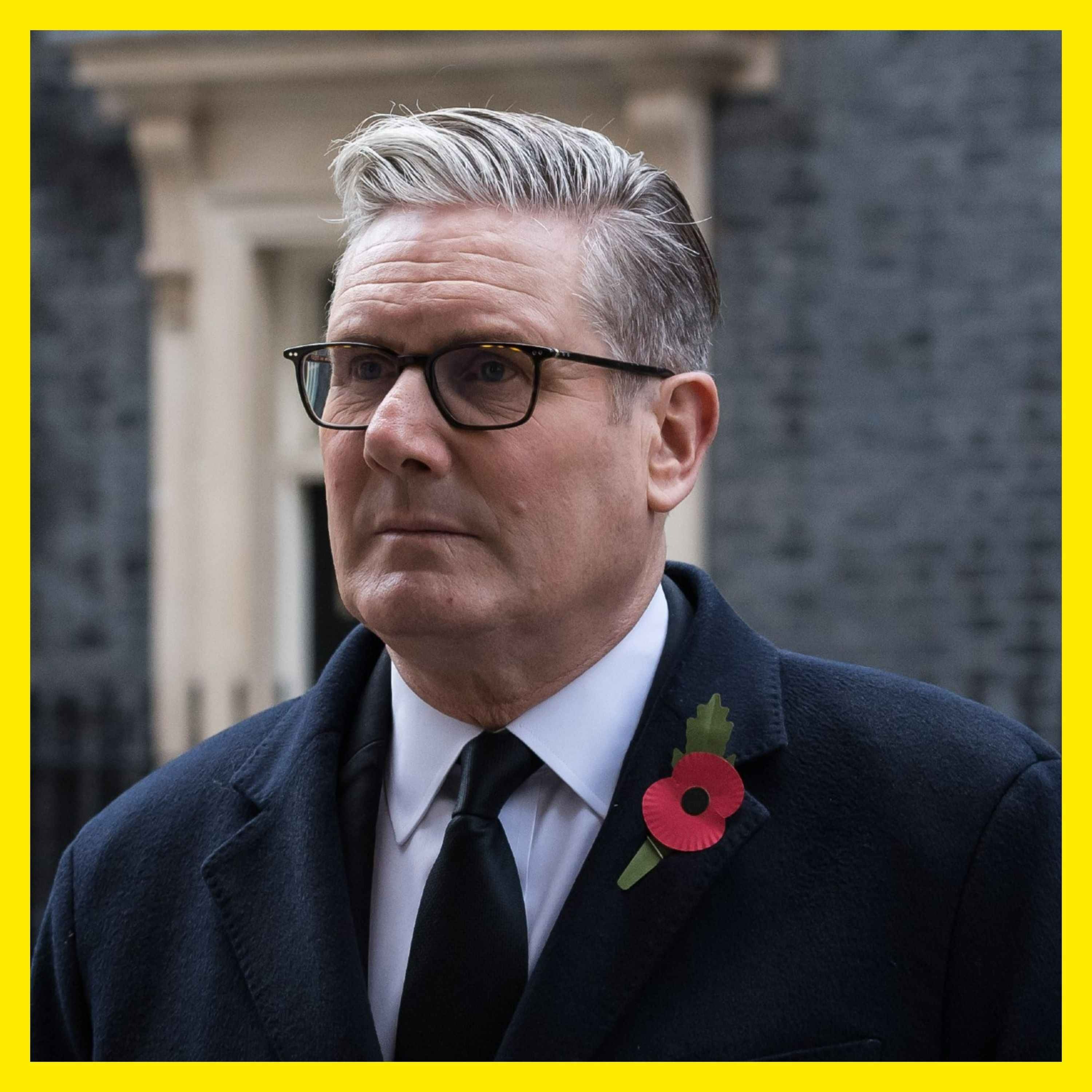
We reveal how the prime minister intends to fight a leadership challenge that he now sees as inevitable. Meanwhile the chancellor plans to scrap the two-child benefit cap to appease some Labour MPs, even though there are no votes in it. And why are phrases like 'carpet bombing' and 'harassment' being applied to Steve's reporting style?
Steven Swinford, political editor, The Times
Caroline Wheeler, political editor, The Sunday Times
Patrick Maguire, chief political commentator, The Times
Gabriel Pogrund, Whitehall editor, The Sunday Times
Producer: Euan Dawtrey
Executive producer: Molly Guinness
Picture credit: Getty Images
Email us: [email protected]
This podcast was brought to you thanks to subscribers of The Times and The Sunday Times. To enjoy unlimited digital access to all our journalism subscribe here.
Hosted on Acast. See acast.com/privacy for more information.


