
 Ask ChatGPT



This episode delves into the complexities of Keir Starmer's foreign policy regarding Iran and its implications for the Labour Party's electoral viability amid shifts in public sentiment. The hosts, Steven Swinford and Patrick Maguire, explore how recent decisions in foreign policy might affect Starmer's standing with various voter bases, particularly in light of the Green Party's rising prominence.
Written by AI. May contain mistakes.
Discussion on Starmer's balancing act regarding Iran and US relations.
“And this week, I mean, there is obviously one massive story and that is Iran.”
Examination of the legality and implications of military decisions regarding Iran.
“You hear that a lot from Labour MPs who are not exactly enamoured with his performance on other things.”
Analysis of the UK's involvement in Middle Eastern conflicts and the implications.
“Then he's come out and given a slightly tortured, if logically sound explanation of why the UK is now involved, that it's on a defensive basis.”
Understanding the economic impacts of Starmer's foreign policy decisions.
“the process by which he does and the reason why he doesn't in the first place is very revealing of how the Prime Minister thinks I think.”
Starmer's references to the Iraq War and their significance for current politics.
“government, as Liz Truss found, going to have to bail out consumers again on energy prices.”
Exploration of how Starmer communicates his policies to different voter groups.
“So these two kind of big practical issues they're trying to do.”
Discuss the complexities of Starmer's responses to the ongoing conflict and its implications for Labour's strategy.
“Again, it's sort of Labour slightly talking out both sides of its mouth.”
Analyze the implications of the Greens' victory in the Gorton and Denton by-election and its impact on Labour's traditional voter base.
“which saw the Greens, well it was actually one of Labour's worst by-election defeats in its history.”
Examine recent polling trends revealing the changing political landscape and the rise of the Greens and Reform.
“say our people are getting overexcited because of one by-election it is yet another data point that tells us the Labour Party is in an existential crisis.”
Explore the shifting voter preferences and strategies within the reform movement.
“Clearly, something is happening to reformers vote, even if you allow for the fact that Yougov always has them low.”
Understand the internal conflicts within Labour over migration policy and public perception.
“And are the Greens about to seize that mantle from reform?”
Discuss the general public's desire for stricter migration rules and Labour's alignment with those views.
“Keir Starmer at PLP last night, the Parliamentary Labour Party, so that's when he speaks to Labour MPs in the Commons just after 6pm.”
Examine the potential for a backlash within the Labour Party regarding migration proposals.
“is that I don't think the Labour Party at large, the median Labour Party MP, is necessarily willing to hear that message right now.”

Get the gist, explore an idea or ask about something said.
 Claude
On The State of It, what are the key points of this episode?
Searching your listeningAutomatic transcript. May contain errors.
0:00Steven Swinford: Performance comes down to controlling what you can. For tennis pro, Jessica Pagula, that means starting with the air around her. She can't control her opponent or the match, but she can control her rest and recovery. That's why she's trusted Blue Air for five years and counting. Blue Signature air purifiers are engineered to perform and designed to impress, with seven stages of advanced filtration, up to ten times more odor removal, and customizable colors and accessories. Shop blueair.com and use code signature30 to save. You know what's wild? Most people are still overpaying for car insurance just because it's a pain to switch.
0:35Steven Swinford: That's why there's Jerry. Jerry's the only app that compares rates from over 50 insurers in minutes and helps you switch fast with no spam calls or hidden fees. Drivers who save with Jerry could save over$1 ,300 a year. Before you renew your car insurance policy, do yourself a favor. Download the Jerry app or head to jerry.ai slash ACAST.
1:00The United States has requested permission to use British bases for that specific and limited defensive purpose. We have taken the decision to accept this request.
1:18Steven Swinford: This government does not believe in regime change from the skies. I will not commit our military personnel to unlawful action. That is not what they would expect and deserve. Welcome to The State of It, the political podcast from The Times and The Sunday Times with me, Stephen Swinford. And me, Patrick McGuire. And this week, I mean, there is obviously one massive story and that is Iran. And what we're going to do is take you inside the discussions in Number 10, inside the kind of approach that Starmer's taking and show you where we're going. And we're also going to be talking about the aftermath of the by-election in Gorton and Denton.
1:58Steven Swinford: And we have an extraordinary poll this morning from The Times and YouGov, which shows that the Greens have now leapfrogged both Labour and the Conservatives into second, which is quite something. But look, let's start on Iran. And let's start with the basic point that Starmer has picked a side. And it is not the same side in this case as Donald Trump. So ever since he became prime minister, Patrick Starmer has been doing this kind of delicate balancing act of trying not to criticise Trump, trying not to criticise the US administration. But yesterday in the Commons felt like a genuine moment. He went there.
2:31Steven Swinford: He said we cannot have regime change from the skies. He said that the initial action against Iran by the US and Israel was one, illegal, and two, that there was no thought through objective. And I kind of, everyone was kind of sitting there and it was really surprising actually, because up until that point, Starmer had been doing his loyally best not to commit news. But I think they felt yesterday they had no choice but to go there and explain why they've adopted the position they have.
2:59Patrick Maguire: Yeah, indeed. And look, the theory of Keir Starmer's foreign relations, foreign policy, which has, you know, it's a bit of a meme in Westminster to say, it's almost become a cliche to say, well, Keir Starmer's rubbish at home, but on the world stage, she's brilliant, etc, etc. You hear that a lot from Labour MPs who are not exactly enamoured with his performance on other things. And at the core of that was always the Jonathan Powell theory, Jonathan Powell being his national security adviser, a main foreign policy wonk, that there's no point being a British government that's not close to the Americans.
3:34Patrick Maguire: And this is always a temptation for parties of the left and governments of the left, of course, that you can grandstand, you can oppose what the American government is doing. But in real terms, in practical terms, Jonathan Powell would say the security apparatus of this country is so integrated with the US security apparatus that there's no choice. It's a false binary. So you may as well stay close to the White House and try and wield a degree of influence on what the Americans are going to do because they're going to do it anyway, regardless of whether the UK is involved or not. So you should try and influence them.
4:07Patrick Maguire: But over the past couple of weeks, we saw it first with Chagos and the US change of policy and change of tone on that. What all comes back to the conflict we're seeing now because they withdrew, Trump withdrew his support from the Chagos deal after the prime minister with Richard Hermer, the attorney general behind him said, no, you're not using our bases for an offensive action. and so the UK didn't support it. And it is not just a breach with the US, but it's a breach with the approach that's defined Starmer's premiership to date. So we're in sort of quite untested territory and politically, you know, there are lots of political angles we can look at this from.
4:45Patrick Maguire: But even if the position the Prime Minister set out in the Commons yesterday, you know, no plan, no clear objective, a range of other things is from what we've seen almost certainly true and not unreasonable, he's ended up in the classic Starmer position, which is taking a position that even if it makes sense in his own terms, manages to alienate everybody, every possible audience domestically. You know, he waited. He wasn't with the US to start with. Then he's come out and given a slightly tortured, if logically sound explanation of why the UK is now involved, that it's on a defensive basis. So he's ended up involved in the war he didn't do at the start.
5:25Patrick Maguire: and whatever credit you might have got from whatever audience has completely dissipated.
5:30Steven Swinford: Let's divide it into the two sections as Starmer does. So the first was the initial decision that was taken about a week and a half ago after advice from Lord Hermer, the Attorney General, about the US offensive in Iran. And the UK didn't join that because it essentially decided that it was illegal because there was no clear grounds for collective self-defence. It wasn't like Iran was firing nuclear weapons anytime soon at us. And sure enough, as you say, Patrick, that proved to broadly be correct. When Trump announced it, he was announcing it on the basis of regime change. And if you look at the US administration over the last kind of 48 hours, they are all over the place on why they're doing this.
6:09Steven Swinford: There is no clear, coherent narrative as to why they went in there other than that the opportunity was there. And, you know, Trump consistently and others seem to be suggesting they want regime change. And that is not a legal grounds for an act of aggression. So on that basis, that's why they took that decision. But then we come to the second decision, and that was this weekend, and it was incredibly chaotic. So the US came back to us, we think it was on Saturday, and said, well, look, OK, you may not have supported the initial strikes, but will you support us now and allow us to use Diego Garcia and RAF Fairford, they are two joint bases, to mount airstrikes against silos and depots in Iran.
6:46Steven Swinford: So we're not asking you to do the actual bombing, but we would like to use those bases. and that took the best part of 48 hours of quite chaotic Downing Street discussions, debates and delineation before they got there and granted that permission.
7:00Patrick Maguire: And during which time, and this is part of Keir Starmer's explanation for why he eventually said yes and why UK aircraft are now involved, is during that time there are British nationals in Dubai across the Gulf and a UK airbase in Cyprus that are being hit by those Iranian missiles. so you know the UK is inevitably dragged in given the massive presence of British nationals and military installations in the region and so Keir Starmer ends up backing it anyway but the process by which he does and the reason why he doesn't in the first place is very revealing of how the Prime Minister thinks I think.
7:38Steven Swinford: And one of the things that happened at the weekend was the Gulf nations I was told were pretty livid like privately there were a lot of communications between Starmer and the Gulf nations and he said in his statement they asked for help until they did some pretty blunt terms because they were pointing out you've got 300 ,000 Brits out here that are in the line of fire you need to do everything you can to stop these missiles and eventually they get there on Sunday but obviously there was a delay and that caused a lot of frustration yeah and not just 300 ,000
8:05Patrick Maguire: British nationals in the Gulf by the way Rachel Reeves is very excited about the prospect of a trade deal with the Gulf nations led by Saudi Arabia also including the UAE Bahrain Qatar Qatar and Oman. But look, the region's got other things on its plate, but they're not countries the British government wants to alienate for a range of reasons, economic, defence, and a whole, the relationship is very deep and very productive for the UK, and they're trying to push it further. So if you're the Chancellor looking at this, you're thinking, God, one, what's happening with that trade deal? I mean, I suppose the trade deal is probably on ice now anyway.
8:39Patrick Maguire: And two, the second order political ramifications of this are very, very quickly going to be hitting Keir Starmer. It's not just going to be about the optics of whether he's embarrassed Trump or whether Trump's embarrassed by him. You know, Trump had probably his most explicit pop at Starmer personally ever in an interview with our colleague Harry Cole from The Sun, in which he said how disappointed he was with Starmer, repeated his sort of pro-former criticisms of the UK as woke Ireland, among other things. But it was very much, you know, he felt let down by Starmer. And that's one thing, you know, to say, how does Keir Starmer prosecute his foreign policy?
9:15Patrick Maguire: What is the foreign policy, how closely to Trump really? Are our intelligence services and military going to be frozen out of future action? What does that mean for the UK? But the second thing is, if we are perceived to be playing less than an enthusiastic or comradely role in the defence of the Gulf nations in particular, and so much of our economic strategy as a government and our well-being as a country is based on you know those nations being secure economically viable etc etc what does that mean for the treasury i mean the trade deal is quite small look at what's happened to the oil price what's looking to the gas price you know very very soon we're going to be in territory where it's not what does this mean for kia starr's foreign policy it will be what does it mean for the public finances for inflation and is the uk government, as Liz Truss found, going to have to bail out consumers again on energy prices.
10:10Patrick Maguire: It's a nightmare.
10:11Steven Swinford: There are two immediate things that Keir Starmer will be having to look at and think about right now. So the first is that the new legal advice over the weekend means that there is now a basis on the basis of self-defense for striking missile silos in Iran. But in the kind of, the way Starmer's done it, it is a passive exercise. The US is conducting those sorties. The US is doing that bombing. We're not involved in that. And given that British sovereign assets, the RAF Akrotiri base and others, and British citizens are under fire, there is a clear legal justification for the UK to actually play a direct role in bombing sites in Iran that are launching drones and launching missiles in a very limited capacity, in the same way that we're allowing the US to do, but that would be legally allowed now, right?
10:57Steven Swinford: There is clear grounds for that. The question is, will he do that? There's a lot of pressure for him to do that and to actually take a more active role. he doesn't seem to be willing to do so but i expect that question to kind of grow and grow and then there's a very basic logistical question of what on earth do you do about the tens of thousands of people in the gulf countries who are effectively stranded there now there are some signs that we're going to get some airspace reopening a bit today but it's very touch and go and obviously we're seeing all the time more drone attacks out there so there have been some this is what whitehall loves to do best contingency planning in the extreme there was a particularly bonkers idea which I think has now died a quiet death to bus 100 ,000 plus people from the UAE all the way to Saudi Arabia.
11:42Steven Swinford: Now it doesn't need me to probably point out that's not the best idea to have a convoy, an enormous convoy going across what is effectively a war zone wouldn't end well. So I suspect people will just have to stay put for a prolonged period until such a time as the airspace reopens but that is also a real concern for the government. So these two kind of big practical issues they're trying to do. And then there's the juggernaut, as you say, Patrick, down the line of the economic impact. We're doing this, recording this just before the spring forecast, as it's called, where Rachel Reeves will stand up and talk about green shoots and how things are getting better and the plan is working.
12:16Patrick Maguire: And how inflation is coming down closer and closer to the Bank of England's 2 % target. But if you look at what's happened to oil and natural gas in particular, it's not going to stay close to 2 % for long if this carries on.
12:26Steven Swinford: I mean, the government had hoped this would be an irrelevant statement, trying to de-dramatise the Treasury, for actual reasons. She's been submarine for a long time. But it is arguably completely irrelevant because the OBR's book, which is the Forecaster, the Office of Budget Responsibility, adjudicates or referees on the state of the economy. It went to print before all this happened.
12:46Patrick Maguire: Yeah, you sort of wonder whether it's like Rishi Sunaki in early February 2020 doing a budget, his first budget as Chancellor, and it was just before COVID kicked off properly. So it was sort of quite an expansive, exciting budget. And there was sort of like a couple of lines in there about, of course, we'll give the NHS a bit of extra money to deal with this virus we've heard from China. And then within sort of 10 to 20 days, the entire world economic order and the government's fiscal plans have been upended. So you wonder whether we're about to see the last statement from the sort of old fiscal reality Rachel Reeves was living in.
13:21Steven Swinford: We should talk about the politics, Patrick. We should talk about the politics of Iran and how this is playing out. So what was really notable in the Commons yesterday and over the weekend was Keir Starmer repeatedly referencing the Iraq war. We have learned the lessons from the Iraq war. We will not back a conflict where there is no legal basis or a thought through plan. And that had a couple of audiences in mind. One was Labour MPs who were very worried about this. And two is the so-called progressive voters, many of whom voted green in the Gorton and Denton by-election. This is partly for them.
13:54Steven Swinford: It's saying, I won't drag you into a conflict. And there are suggestions that that voter base is collapsing for Labour at the moment. So his messaging on this really needed to be quite strong.
14:03Patrick Maguire: Yeah, indeed. Again, it's sort of Labour slightly talking out both sides of its mouth. You know, there have been several Labour figures have attacked, you know, seemingly baselessly, the Green leader Mohin Ali for attending, in their words, you know, mourning the Ayatollah, which the Green Party very vehemently denied that their deputy leader was doing that. While at the same time, Labour saying, look, we've learned lessons from Iraq. This isn't like Iraq. Because that is obviously Tony Blair's original sin in the eyes of progressive voters. Led, among other things, to a massive Lib Dem surge, to George Galloway's respect.
14:36Patrick Maguire: A little bit later on, arguably to the election of Jeremy Corbyn as the ultimate reaction to the sort of sins of new Labour. So it's very much a mistake Keir Starmer doesn't want to repeat. I mean, a sort of senior Labour strategist, who in the past has worked quite closely with Keir Starmer, messaged me yesterday and said, you know, it's good to see Keir is doubling down his mission to be Labour's least popular prime minister ever by joining a war in the Middle East, which, you know, worked so well for Tony Blair in terms of his standing among the Labour movement. But it is really, really tricky because over the weekend, obviously, we saw as the Labour Party reacted, as Keir Starmer reacted to the Green victory in Gorton and Denton, there were all these attacks on the Greens as extreme, as, you know, loving crack cocaine, et cetera, et cetera.
15:21Patrick Maguire: I'm sure we'll talk about all of that in more detail in a moment. But it's hard to do that while at the same time trying to sort of soft pedal your involvement in a war you were always going to get involved in anyway for all the reasons we've just described, i.e., you know, British nationals in the Gulf, the closeness of the relationship with the US, the security imperative with the RAF based in Cyprus, all of that stuff, it's quite hard to sustain a sort of cuddly progressive exterior when you also have those security obligations that have made these security decisions and also are trying to attack the Greens as an unserious party of government.
16:01Patrick Maguire: I mean, it just doesn't really hang together.
16:03Steven Swinford: One thing I'm picking up from some people who are close to Starmer is a new version of the argument of why he should be prime minister. And they are saying that in uncertain times, you need someone who can be a leader on the international stage why would you change horses in midstream so to speak why in a time of global crisis and conflict would you think about moving them on now starmer appears to be safe until the local elections and the the broader elections in scotland and wales in may but nonetheless that argument is getting advanced again and people are using effectively a geopolitical crisis to justify him staying on that that definitely is
16:38Patrick Maguire: an argument we're starting to hear again yeah and uh reminds you somewhat doesn't it of uh boris johnson in january february 2022 you know christian wakeford had defected from the tories to the labour party david davis is getting up at pmq saying in the name of god go and then a couple of weeks later putin invades ukraine and boris johnson is safe for a few months for the very same reason so the crisis that makes everybody sort of stand back from the precipice but in a way the crisis will over time expose his political shakiness because so much of it intersects with the domestic in a way that sort of raises further questions about Labour's standing among progressive voters and strategy to win them back.
17:22Patrick Maguire: You know it's a stay of execution as ever but I'm not entirely sure it's a really fail-safe basis to rebuild your premiership from.
17:30Steven Swinford: Well look we're going to head to the interval now and when we come back we're going to talk about the aftermath after the Gorton and Denton by-election, which was won resoundingly by the Greens. And we're going to talk about this extraordinary poll this morning, which has seen the Greens jump into second place. So more on that when we come back.
18:04Patrick Maguire: of expertise you just can't fake. Ready to talk with an expert? Visit bill.com slash proven to get started and grab a$250 gift card as a thank you. Terms and conditions apply. See offer page for details.
18:17Steven Swinford: Youth mental health is a complex challenge that requires comprehensive solutions. We must strengthen afterschool programs. We must make digital literacy tools available in our schools. We must work with mental health professionals to support children and we We must empower mentors, educators, and parents to keep kids happy. Learn more about our commitment to finding lasting solutions at empowerourfuturecoalition.com slash solutions. Paid for by the Coalition to Empower Our Future. We optimize hydration, movement, supplements, and sleep. But most people completely ignore the air they're breathing.
18:54Steven Swinford: And when your air is off, your body feels it first. The Blue Signature air purifiers by Blue Air quietly remove airborne pollutants, odours, smoke and allergens, supporting deeper sleep, better recovery and clearer focus. It's the most customisable air purifier you can get with exclusive accessories designed to fit your space and your style. Visit BlueAir.com and use code Signature30 to elevate your wellness routine. Welcome back. We are going to talk now about the aftermath of the Gorton and Denton by-election. which saw the Greens, well it was actually one of Labour's worst by-election defeats in its history.
19:32Steven Swinford: Hannah Spencer, the Greens candidate, won by a significant margin in the end and she did so on a campaign that was predicated on two things. One, she is a plumber, a plasterer and she was supporting the working classes and making a very Labour argument in doing so. And two, the issue of Gaza came up again and again. And as we said previously on this podcast, Labour MPs were pointing out all these leaflets saying you've got to punish Labour over this. And indeed, that is what has happened.
20:00Patrick Maguire: And look, whichever way you want to slice it, it's not very good for the Labour Party. The Greens are proving that they are capable of winning first-past-the-post elections in places that aren't Brighton, Bristol or well-heeled rural parts of the country where you have lots of socially conscious middle-class tourists, right? This is a new kind of Green victory. It is a new formula for Green victory, which is to say you win over a big chunk of a large Muslim community and certainly the younger members of it. So they've done that and they've also won over what is now Labour's core vote or what was Labour's core vote, which is the dispossessed graduates, the professional middle classes.
20:48Patrick Maguire: the Greens have made inroads into every chunk of Labour's electoral base and in the process they have proven that they are no longer a wasted vote and they can win which is a huge psychological thing for the Labour Party to be contending with particularly if we look at how that might play out nationally as a result of this publicity. The Yuga poll that was published by the Times this morning, I think makes that point very well, Steve.
21:18Steven Swinford: And one of the things that struck us when you listened to Hannah Spencer's victory speech at that by-election, it was a Labour speech. You could close your eyes and be listening to a Labour MP. Lots of people made that point.
21:30Patrick Maguire: By the way, it doesn't mention the environment or green issues with a big or small g at all. It's all about, and actually, it could have been, if you close your eyes and listen to it, a speech by a Reform UK politician as well, because it was all about people work hard and they're screwed over by the system, you know, and it was, and it was put, it wasn't in sort of activist language. It was in, it was very demotic. It was everyday idiomatic language, you know, used to, we used to go, go to work and work hard and you come home and you can get a nice house and a car and a holiday, but you can't anymore.
22:05Patrick Maguire: And that's because we're being screwed over. By the billionaires. By the billionaires. Yeah, yeah, yeah. it's the language of left populism on economics spoken by someone who sets you know some people may dispute this but sounds at least fairly normal we're speaking a normal language is clearly a very likable candidate and in the process won 40 percent of the vote it was a blowout for the greens this wasn't the sort of tight three-way marginal we were all expecting it was a green landslide so to speak and i think that has been psychologically a difficult thing for people to contend with. And it shows you that even with the Labour machine firing in all cylinders, even with the Labour Party uncharacteristically united, you had Lucy Powell getting Keir Starmer down, you had Keir Starmer meeting Andy Burnham, you had Andy Burnham campaigning for the candidate who was taking his place after Keir Starmer blocked him.
22:59Patrick Maguire: You had the kitchen sink thrown at it, loads of socials and attack ads from the Labour Party, clearly loads of money, thousands of activists and what did it get them third place behind the greens and reform and i think it shows you how serious the labour party's electoral position is in one of its 40 what was one of its 40 safest seats in the country this is a seat they'd held since 1931 i know people will say our people are getting overexcited because of one by-election it is yet another data point that tells us the Labour Party is in an existential crisis.
23:34Steven Swinford: And I think there are questions about Keir Starmer's approach to this. So on the day of the by-election result, he came out and once again branded the Greens as extremists. He got out his line about them kind of legalising cracked ends in playgrounds, however he phrases that. But there is this, and that is concerning ministers. They are worried that it's just too reductive, that progressive voters do not believe this stuff at this stage in time. Of course they do. And because it doesn't sound real with what the ministers were...
24:02Patrick Maguire: If they were inclined to believe it, they wouldn't be voting for the Greens in such large numbers. Yeah. And it's quite hard to pin that on someone like Hannah Spencer. And it's like this stuff that came out during the election campaign about she'd written on Mumsnet that she thought there were too many vape shops and takeaways laundering money in Gorton and that she thought Gorton was a bit of a dump. It's like, well, sort of all you're doing is sort of exposing that she's like a normal person, guys. Like, you know, calm down. and I just don't think what you can you can necessarily pin that on someone like on a candidate like this as as sort of divisive as she is in in some quarters and at the same time you can't then do this thing where you're trying to triangulate to win back green voters on be on foreign policy or anything else it's like I was saying earlier if the if the backdrop is this sort of straight from, you know, the sort of 90s attack on anybody to the left of Ed Miliband as a sort of throthing at the mouth Marxist extremist.
24:58Patrick Maguire: You're defending your own voters, right? Well, yeah, exactly. And what was Morgan McSweeney's number one insight about the 2005 to 2020-19 period of Labour history? It was the voter is not wrong. And Keir Starmer used to repeat this early in his leadership. You know, if you lose an election in a democracy, you can't then say to the voters, well, you've made a terrible mistake. What we heard from Keir Starmer is what sort of people like Morgan Sweeney used to accuse the Corbynites of doing, which is you haven't thought hard enough. You've been misled. You're wrong to like these people. Rather than asking yourself, as Mort McSweeney and others always sort of implore the Labour Party to do, and this was Keir Starmer's big strategy in 2019, 2021 and onwards, was not to say the voters have made a mistake or the voters are stupid.
25:49Patrick Maguire: It was, OK, we may disagree with who they voted for, but what did they see in them that we weren't offering them, particularly on the question of values? And I agree with you, Steve. And I think the cabinet ministers are right to be raising this as an issue. the green attack from the Labour Party is yet another two fingers up to their electoral base. And to do that after they have already voted green, I don't know, it risks turning them into green voters. And that is the issue.
26:18Steven Swinford: So let's talk about that YouGov poll, which dropped at 6am this morning. Now, it's one poll and things can change and things do change, but it does show a wider trend that's happening. It has reform on 23%. It has the Greens leapfrogging Labour now on 21%. And it has the Tories and Labour joint on 16%. And that is Labour's lowest polling on record. So there's a couple of things that we can pick out from that. The Greens are clearly a force now, whatever you say, whether that is an aberration as a one off that they've gone second.
26:49Patrick Maguire: Yeah, it's the first time, by the way, that the Greens and reform are the two top parties in that poll.
26:53Steven Swinford: What's that great stat about the fact that they command 2 % of MPs?
26:58Patrick Maguire: And 44 % of the vote. So, you know, Parliament was already unrepresentative of the new political order because the Tories of the opposition reform are so marginalised. But soon we'll be saying the same about the Greens, by the way. And yes, attritionally, be through defections or through by-elections, Parliament sort of writes itself over time. But it's a very artificial setup we have in Parliament now. It's sort of the world as it exists for one day in July 2024. not the parties of the here and now.
27:24Steven Swinford: That's the surreal thing about it. We've got the Tories saying we're the party of the opposition and you're looking at Reform's vote share and Reform is saying, well, no, actually, we are very much the party of the opposition and we're not the party of the opposition, we are the party of the next party of government, sorry. So you should be giving us the coverage. So what it definitely shows is this fracturing of British politics that has taken place in a most extraordinary way since I've been covering politics where you've got five parties in contention now. Six, if you take the S &P as well.
27:51Patrick Maguire: Well, yeah, indeed, indeed. Or seven. We can't forget Plaid as well. We've got seven party politics unfolding. I should just say a couple of things briefly about reform. Yes, it's probably about 150 consecutive polls they've led in now. Clearly, something is happening to reformers vote, even if you allow for the fact that Yougov always has them low. They have come down a little bit from the peak we saw in the autumn, but they're still in front. There's still daylight between them and the Tories, right? But something is clearly happening there. I'm picking up just the faintest bit of discontent among some sections of what you might call the reform old guard.
28:27Patrick Maguire: That, look, the anti-system vote is there for the taking. The Greens are making inroads into it. While there is a clear strategy and reform to win over the Tory vote, to totally cannibalise the Tory vote before the 7th of May, it comes with an opportunity cost which is if you're presenting yourself to people as we're the Tories but new but and better growing a different electoral coalition from the Tories a distinctly reformite coalition that could have been that's something more than right-wing politics it could have been a sort of catch-all populist thing having so many former Tories on board with such high profiles makes it harder can growing a bigger electoral coalition than the Tories could and a different electoral coalition, is that still possible?
29:19Patrick Maguire: Reform now have competitors in that space. Because anecdotally, there were lots of reports of voting, Gorton and Denton, choosing, switching between or weighing up the Greens and reform, right? There was clearly an appetite for something different. And it's not necessarily just voters on the right want reform, voters on the left want the Greens. That's clearly a big part of it. But also, who is the anti-system party? And are the Greens about to seize that mantle from reform? And the second thing, just to bear in mind, as the Greens come into second, if we see this borne out, and this is something I've had another discussion I've had with people in reform who've said hopefully, you know, there will be a market for this becoming the Stop the Greens party.
29:59Patrick Maguire: I think there are two camps in reform. One, we look at the Greens' eyes and say, well, we're clearly doing something wrong because there are lots of people who would have voted for Hannah Spencer who aren't parody lefties. They're just people who think politics doesn't work. And then Hannah Spencer saw someone charismatic and dynamic who was a good community campaigner. Or on the other hand, you look at the rise of the Greens and say, well, that's brilliant for us because in a first-past-the-post system, that's the Tory squeeze message. If you vote for the Tories, Harding-Gorton won, only a couple of hundred people did.
30:30Patrick Maguire: But in lots of the countries, you can say, don't vote Tory because the Greens might come through the middle. You've got to vote for the strongest party of the right, which is us. So it's interesting strategic play for the future of reform there.
30:41Steven Swinford: And lastly on this, there is clearly a battle for the soul of the Labour Party. Now, where does Labour go from here? So on Thursday, Shabana Mahmood, the Home Secretary, is doing a big speech where she's going to be making the case for controlling migration. And she's got two big announcements. We saw one on Monday, which was the ending of permanent status for refugees. So they have a temporary status from Monday onwards when they come to this country, which is regularly reviewed. And two, there is this hugely contentious policy on indefinite leave to remain. So doubling the amount of time to 10 years it takes to qualify for indefinite leave to remain and with that citizenship.
31:18Steven Swinford: She argues that this is what Labour should be doing, that it needs to control its borders and it needs to, if it's going to win the kind of trust of voters, to win that argument from a progressive space. Keir Starmer at PLP last night, the Parliamentary Labour Party, so that's when he speaks to Labour MPs in the Commons just after 6pm. and he was pressed on migration repeatedly during that meeting and he was again trying to make the progressive case for controlling migration. But then on the other side of that debate, you've got people like Lucy Powell, the deputy leader, who at the weekend used an interview to warn against the rhetoric around migration and say that it is alienating Muslim voters.
31:56Steven Swinford: And that has to come to a head. We've got a piece this morning from a former Starmer advisor, Patrick.
32:01Patrick Maguire: Yeah, Paul Ovenden, who was, until September, by Keir Starmer as Director of Strategy, very close ally of Morgan McSweeney. And Paul Ovenden's argument is basically that the Labour Party cannot afford to be self-indulgent because what it refers to as Labour values are out of step with what most voters think. And he didn't quite say this. Well, he doesn't use a specific example, but something I've heard a lot from Labour MPs, the sort of Labour MP would agree with Paul Ovenden, is literally every voter group in the country, regardless if you voted for Hannah Spencer in Gorton or you voted for Sarah Pochi in the Reform MP in Runcorn the year before, you want stricter migration rules than are in place now on legal migration.
32:42Patrick Maguire: You may have different vibes, but a clear majority of voters in this country want stronger migration restrictions. And to listen to the Labour Party, Paul Ovenden argues, it's almost sort of on another planet. And the problem for Paul Ovenden, though, I think, is that I don't think the Labour Party at large, the median Labour Party MP, is necessarily willing to hear that message right now. I think we could well see a major rebellion on, in this political context, on Shabana Mahmood's proposals or a big backlash to the speech she makes on Thursday. I think we may well, and it's linked to the foreign policy as well.
33:26Patrick Maguire: There is clearly a groundswell of opinion that sees Shabana Mahmood as part of the problem. and her policy is part of the problem. And that group only needs to be 80 strong for it to pose serious questions for the future of the policy. So it's definitely something to keep an eye on.
33:44Steven Swinford: Yeah, definitely. Okay, well, I think that just about brings us to an end this week, and we'll be back again next week. But thank you for being with us.
33:50Patrick Maguire: Yes, thank you as ever to Molly Guinness and you and Daughtry for making this fit for human listening. So thank you.
33:59Steven Swinford: And we'll be back next week. Thank you for listening.
34:31Steven Swinford: Paid for by the coalition to empower our future.
34:34Patrick Maguire: With almost half a million customers and over a trillion dollars of secure payments, Bill isn't new to intelligent finance. It's the proven way to simplify bill pay and maximize cash flow. Want to learn more? Visit bill.com slash proven for a special offer.
We take you inside the Iran discussions in Number 10. What do they reveal about Keir Starmer's thinking and about Labour's electoral predicament?
And as polling suggests that two parties with 2% of MPs command 44% of the vote, does Labour have a coherent argument to coax voters away from the Green Party and Reform UK?
Steven Swinford, political editor, The Times
Patrick Maguire, chief political commentator, The Times
Producer: Euan Dawtrey
Executive producer: Molly Guinness
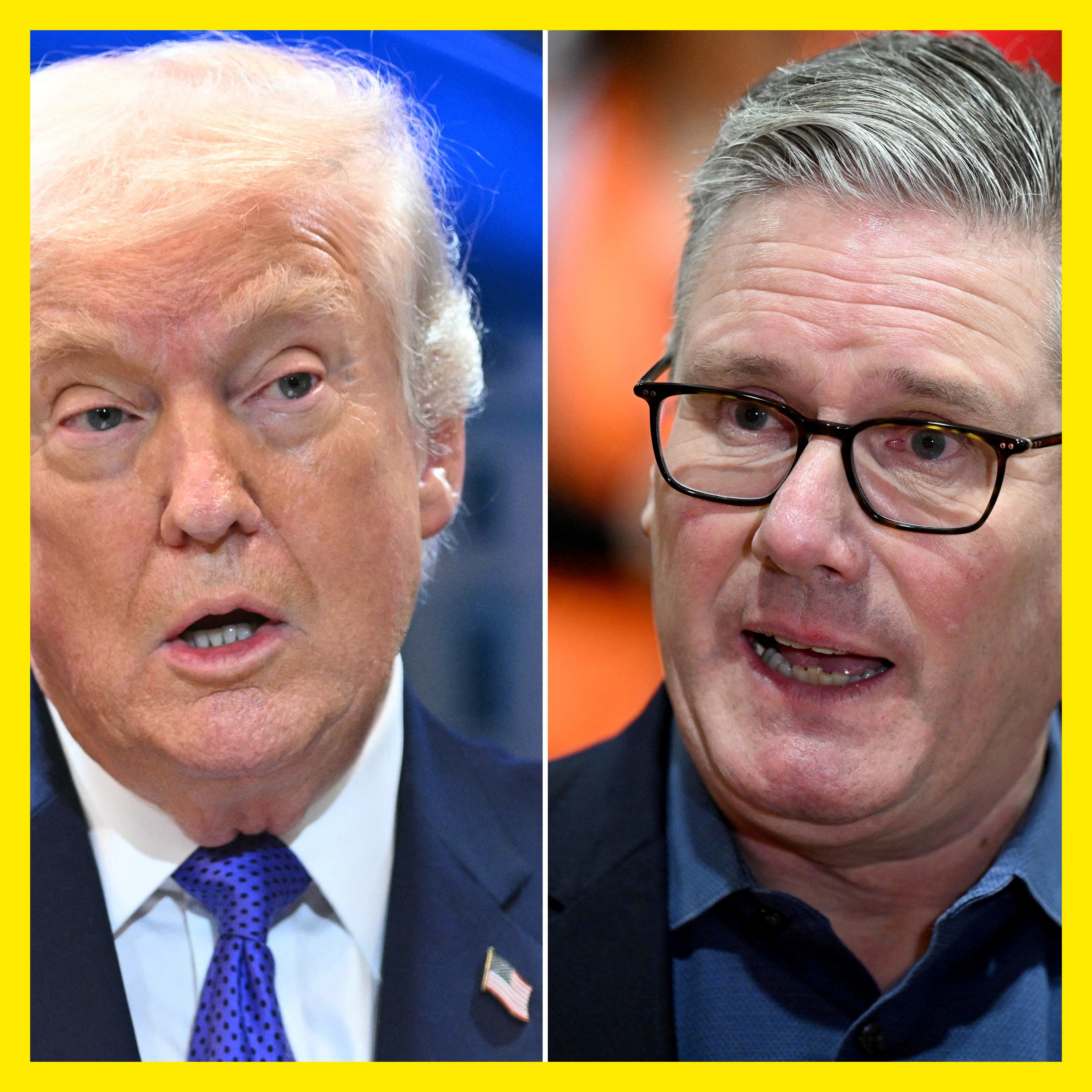
Picture credit: Getty Images
Email us: [email protected]
This podcast was brought to you thanks to subscribers of The Times and The Sunday Times. To enjoy unlimited digital access to all our journalism subscribe here.
Hosted on Acast. See acast.com/privacy for more information.


