Ask ChatGPT



The episode features insights from political editors and commentators from The Times and The Sunday Times as they delve into the intricacies of British politics, focusing on the latest developments, particularly surrounding the impending budget and political leadership within the Labour Party.
Written by AI. May contain mistakes.

Get the gist, explore an idea or ask about something said.
 Claude
On The State of It, what are the key points of this episode?
Searching your listeningAutomatic transcript. May contain errors.
0:28Give me a beer and a taste of beer, I'm happy. on our pints and we're looking at Prime Minister's questions. The budget is on the 26th of November and we will lay out our plans. Or more accurately like most members of the Great British Republic, we're not really paying much attention to PMQs. But they're talking about, oh, the Turkish fighter deal, aren't they? And also the Prime Minister's refusal to rule out tax increases, which does mark an evolution of his language at the dispatch spot. Well, well, well, Mr Speaker. What a fascinating answer. Of course there's going to be tax cuts. There have to.
1:00Have you seen the economy? You could have tax cuts, but Labour have committed to so much public spending, they cannot. When they tried to cut the increase in spending, they lost a massive revolt on their own back benches. I have to say the Reform Party would be an absolute disaster. What's your name? Ruben. Ruben. Ruben, what do you make of Nigel Farage? He's not Gwaine's boss, but he used to be. for Raja I would say bold, fearless, Keir Starmer, stale, unexciting and robotic. This is not, you're not required to give this under penalty of perjury but did you pay for Ruben to come? Are you sure about it?
1:39100%. Am I around? Absolutely, let's do it.
1:46Well, pints and Prime Minister's questions sure beats work for a living but we've got our noses back to the grindstone this week for an amazing episode of The State of It and Mummy and Daddy are back. I'm Gabriel Pogren. I'm Patsy Maguire. I'm Caroline Wheeler and I'm Stephen Swinford. So with this week's edition all roads lead to the budget now that is the dominant conversation in Westminster. We come fresh from a pretty unusual Rachel Reeves press conference this morning we'll talk about that and we'll bring you some scoops on what could be in the budget and some of the decisions Rachel Reeves is making and then we will come on to Keir Starmer and his leadership and some of the increasing concerns that MPs are expressing behind closed doors about the whole direction of the Starmer projects and essentially will he survive.
2:34So let's kick off with the budget. We had Rachel Reeves do a pretty unusual press conference in the Treasury this morning. It was unusual because we're three weeks out from a budget and chances normally have a kind of total murder but instead we had Rachel Reeves come with a very particular message for all of our listeners which is essentially all of your taxes are going up everyone is going to be here she said in this kind of Lord Kitchener style address we all need to do our bit and to essentially pay more tax to shore up the public finances and it feels pretty much like she's going to rip off the plaster and go for income tax which I think last week we suggested would be electoral suicide.
3:14Yeah, we did. And she'd be the first chancellor to raise the basic rate of income tax since Dennis Healy in 1975. So it would be a massive, massive deal for the chancellor to do this, particularly because she spent the whole election campaign saying she wouldn't touch it. After the budget last year, of course, she said, don't worry, guys, the last thing I'm going to do next year is come back for more taxes. And now that's the one thing she's making clear she's going to do be it income tax or something else i think she characterized the last budget as a once in the parliament type event and i suppose what's so striking about the language today to which you refer steve is the fact that she is laying the ground for sweeping tax rises i mean we should say that you know what she didn't say was as conspicuous as what she did say the reason it was such a idiosyncratic piece of oratory was that we were told she would say something and she didn't actually paint a picture of what the budget would say in its substance.
4:16But I think where the Treasury has found itself now is a kind of awkward position where having made all these pronouncements about who Labour's losers are going to be, they've realised that jacking up the higher or additional rates of income tax just isn't going to get them where they need to go. We are now seeing that very narrow landing strip that Reeves is going to attempt to alight on in a couple of weeks time. What I found striking about today's speech was twofold, really. One was this new narrative about contribution, that everybody has to make a contribution, which, as Steve says, is very much about we're all in it together again.
4:53A national effort. and again I think it's this pitch rolling there's a real understanding now that not enough of this pitch rolling was done before the last budget that got them into a whole heap of trouble particularly around winter fuel allowance and obviously prior to the spring statement when we dealt with those welfare cuts which is what ended them up in the the situation with their backbenchers so I think there's a real sense this time that they've got to lay some of that foundation a while out from the budget if if as it seems to look like they're going to do what many of us thought was unthinkable only a couple of weeks ago which is to actually break that manifesto commitment and actually do some kind of blanket tax raising change look i'll take you inside the treasury for a minute but one of the things just briefly on that is i always find it just utterly surreal the whole process around a budget that why she stood up today if you're going to raise taxes just say you're going to raise taxes you don't have to say explicitly which one but instead we get involved in this weird Delphic game of semantics which we sit here and have to decode I've done countless budgets I'm of the opinion just get it out there start saying it why do we do everything on the day why is there an obsession with rabbits in the budget the headlines are going to be about tax so if you're going to roll the pitch start rolling it more explicitly I think there is a case for that but look what I wanted to talk to you about was that after this speech in the treasury she has gone back to her office and she is sitting with what are called the major measures on her desk so they are the major tax spend and growth policies and that's an early deadline isn't it that's an early then so that is the deadline for that is the next couple of days so she finishes those so the budget is essentially broadly going to be set in the next couple of days they will be sent to the office for budget responsibility we've talked about it before it's the fiscal watchdog this tiny body that basically marks the government homework says this will have that effect this will raise that much money that your growth policy will do that and it comes back next monday and it basically passes judgment on all of her plans and then we are in the end game essentially what it means is that the broad outlines of the budget are coming today she is putting pen to paper and that is why we've had this speech today so until this moment all things are possible and there are lots of things on the table after this moment after those numbers go to the OBR much much less room for manoeuvre and the kind of centre of the budget gets much more settled that's where we are.
7:18Isn't that one of the reasons why she's not being as explicit as maybe we would like or maybe we wouldn't like it because we'd have less to write about our jobs would be much simpler and maybe the podcast would be much shorter but you know you mentioned the OBR Steve as we mentioned the OBR every week as is tradition there is actually quite a lot that's gone right for her in the past couple of weeks. The markets like what they're hearing. They had a great time in Washington at the IMF. I wrote in the Times a couple of weeks ago that here in Westminster, Reeves can't move for people telling her she's doing a bad job.
7:50She was fated by the Canadian finance minister saying, you know, I know you guys over there hate the fiscal rules, but we love them so much we've just copied them. The managing director of the IMF was saying what a great job she was doing. The markets are responding positively to what she's saying on tax and spending restraint. The Resolution Foundation this morning saying the size of the black hole is only 14 billion. So it may well be, look, it's not going to be good, but it might be a sort of slightly lighter shade of bad than we were expecting. So she can't sound too gloomy. I mean, she's sounding very gloomy, but she has to strike a difficult balance between keeping the markets reasonably happy which they have been relative to past performance and also not spooking the public and damaging what is left of confidence in business and among consumers by saying your tax is going to go up if she has to appear on the 26th november and say actually it's not quite as bad as we thought but you know maybe that's wishful thinking should we talk about some of the things that we think are in the budget then so we talked about income tax but it may not be a straightforward income tax hike.
8:57It may be what is being referred to by that think tank you refer to, the Resolution Foundation, as kind of two up, two down. So a 2p hike in income tax, which hits all people with income, including pensioners, and a 2p cut in national insurance for certainly some workers on lower earnings is one of the things that's being talked about in the Treasury. Yeah, and we spoke about that a couple of weeks ago. The politics of that are not good, but they're better. It's closer to the letter and spirit of the Labour Manifesto, i.e. we're not going to raise taxes on working people. Now, of course, working people pay income tax, but Reeves could get up and say, look, I'm cutting the tax that is specifically levied on workers.
9:33National insurance is going down. So if you have a job and most of your income is from a job, then you probably are slightly better off. But again, it's a very, very difficult argument to make from a position of weakness. Then you've got extending income tax thresholds. Now that will hit everyone. Currently, They are frozen until 2028. And there's a process called fiscal drag, whereby as people earn more money, more of their income gets taxed and they get dragged into higher rates of taxation. So that will continue. And then there's the kind of wealth taxes, the mansion tax, jacking up council tax for the kind of upper echelons of property values from 1991.
10:10that looks to be on the cards and they also look to be going after kind of doctors lawyers and other high earners with a tax-free unlimited liability partnerships which we spoke about the other week so these are all around the edges there is another discussion that we picked up in the treasury which i think i would gently say they would have to be incredibly brave to go for but that discussion is a time-old discussion about what do you do about fuel duty so under the tories there was a temporary cut in fuel duty a 5p cut that was introduced and this cost the government loads of money it cost like 4 billion and it's one of those temporary cuts which has become an almost permanent rolling feature of the tax system it gets renewed every march it comes in again and everyone kind of keeps this fiction that it's a temporary measure well actually is it there is a conversation in the treasury about possibly unwinding this now arguing that fuel prices are lower than they were when this came in and maybe it's time to come the massive caveat i would put on that is it's a cost of living thing and it'll hurt people in their pockets do you really want to have a war on motorists but I think the very fact they're having that discussion shows you how disparate things are well even having the discussion about council tax is another one which is really difficult and certainly when I've talked to very senior members of the treasury they're very queasy about both of them because they know that for example our sister pay for the sun will have a field day over fuel duty they always do it's it's very much seen as a tax on the white van man And similarly, as we know, with any changes to sort of council tax, home taxes, the kind of spectre of the poll tax kind of comes roaring in and people are very nervous.
11:42But look, she's clearly very limited in her options. One of the ones that we know that she will do something on is a gambling tax. But people that I've been talking to in the Treasury are actually saying that the figures around the gambling tax, it's been put as a levy that could raise as much as 3.2 billion, a really wide of the mark. and actually are not going to raise anywhere near that amount, particularly now they seem to have ruled out, including within that horse racing. But also some nervousness there as well, that any sort of tax could impact on pubs, for example, with the slot machines that actually in some instances prop up ailing pubs.
12:20And of course, bingo halls, which are very popular in some of those red wall seats, could also be impacted by that. And let's not forget as well that Flutter, which is a big betting site, is actually based in the Chancellor's constituency herself. So again, that's not an easy source of revenue for her. But of course, there are things that she wants to pay for as well. Let's not forget about that. It's not all about taking in revenue. And the big, big number that she'll be looking at very carefully is those billions that she would have to spend offsetting the two childcare cap if she were to go there.
12:55And now that's something that both Lucy Powell and of course, Bridget Philipson, who were in that deputy leadership race, both basically spoke very vocally about wanting to cut it. And of course, it was pretty powerful coming, particularly from Bridget, because she sits on that child poverty task force. And the fact that... She heads it, doesn't she? Yeah, she basically heads it. And she's described the two childcare cap as being despicable, as being cruel. And so it really does put quite a lot of pressure on Rachel Reeves alongside all those backbenchers that want to see that axed to do something about it.
13:31But whenever I speak to people in the Treasury, they're very nervous again about completely axing it. Because do you just say, carte blanche, you can pay for it for every single child that you have. And one senior figure said, what if somebody had 10 children, that would be£40 ,000 worth of benefits that are going. So there are definitely still very much live discussions about how far you go down that route. I mean, the sense that I get, and I don't know what you're hearing, Steve, is that they absolutely are not going to go for the full fat option. They see that as being really unaffordable. They can't afford it.
14:07The gambling tax doesn't raise enough money, so they won't do it. And that is a political problem, because all of these MPs on the left and people like Bridget Phillips are very vocal in saying you have to do this. And Lucy Powell has already used her brief start as deputy leader to kind of go for Starmer on this and go for the kind of values argument. There will be a backlash if she doesn't do this. And how they make that argument is going to be critical. Yeah, I think when you think about the politics of this budget, I mean, there are essentially three, I hesitate to use the word stakeholder because that makes me sound like a junior Treasury minister.
14:38So I say three audiences that she has to bring on side. She's got the Parliamentary Labour Party. She's got the public and she's got the markets. and what they all need to hear are not one and the same. I spoke to a friend of hers last week who said that her own thinking had evolved. If you take, wind your mind back to last year, her language was that she discovered this black hole and her hands had been tied. She essentially said she had no choice other than to give effect to the reforms that she did on Winterfuel only till you turn on them. And this person said that her language and thinking has evolved from I have no choices to these are my choices.
15:15her own sense it seems is that the public are more reconciled to the idea of tax rises than one might think i think what she wants to do is well the way she actually embarked upon the process of writing the budget was at the very outset she said she didn't want to see the spreadsheet she's sometimes pilloried for being spreadsheet rachel in essence and she said well let me get my core priorities set in stone first and in terms of what those are she's talking a lot now about the nhs she's saying she's going to build a castle around that caroline's alluded to the fact that she's desperate to do something on cost of living and bills and i think that she will attempt to do something on child poverty as you outline but not the whole hog and that is sort of her attempt to square the circle and say well this is infused with labor values we're also hearing about the possibility of a bigger surcharge on large banks so they're going to say we have to the extent that we can go on after the people that you expect a Labour government to go after.
16:15We have to the extent that we can, even if not in the full fact way you might like, address the issue of child poverty. But here are the tough decisions. That is a sort of rhetorical political journey that she's hoping to take her party on. I think, by the way, she does think that her party is possibly the least signed up to this mission. I think the markets she regards as being sort of, if not safe as houses and pretty much behind her. I think she regards the public as being ambivalent, but it's Labour MPs who seem to be the trickiest constituency for her. If that's her reading, I would say she's got it almost 180 degrees wrong, because I'd say, actually, what's the easiest thing you can sell to Labour MPs?
16:54It's we're going to raise taxes to fund the stuff you like. And why did Lucy Powell get on the ballot for deputy leadership in the first place because this government spent ages not raising taxes because it did spending cuts to the winter fuel allowance and to welfare instead indeed couldn't do the welfare cuts because MPs were so angry it's true that if you say to the markets look we're going to raise taxes the markets will say okay good because your sums add up I think to return to what you said about fuel duty Steve the public may not know yet what is going to happen they may not have read the Labour manifesto but we had a long conversation with someone who was involved in the politics in drawing up the politics of the and selling the last budget fairly recently Gabriel and they were telling us about you know the run-ups the last budget people were so fatalistic about it they were reacting really strongly negatively even before it happened because they heard so much about potential tax rises, they thought they'd already happened.
17:55But the idea that the public, if, for instance, their fuel duty goes up by 5p, and as was the case in Tony Blair's first term, you know, when did William Hague briefly lead in the polls? It was during the fuel protest. It was when there were tankers not delivering fuel. It was the politics of fuel are always really fraught, especially making people pay more for it. So the idea that the public are going to say, yeah you know what fair enough tax my commute to a greater extent than you have been uh is the least tricky part of all of this for rachel reeves is i think naive if that if her thinking is the plp are tricky to square no i think you know if you say we're going to raise taxes and wealthy people are paying more a critical mass of them the sort of people who nominate lucy power will say great tax the rich that's what we're in politics to do i think the public could react very very strongly negatively against this well we're going to have a brief interval shortly um if you want to hear more we've got an event coming up the times and sunday times the day after the budget patrick i fraser nelson at the times and others will be sitting down marine khan our economics editor to talk about the budget what's in it what the politics and what does it mean for rachel reese and kia starmer crucially the question of does kia starmer survive which is quite timely because that's what we're going to be discussing after the interval and you can get tickets at the times dot co dot uk slash events we'd like to just move on to the issue of keir starmer and the kind of existential crisis facing his own leadership now last night keir starmer went to address the plp as it's called the parliamentary labor party and this is something that as journalists we've all done for many years you go down to this committee corridor which is one of the longest corridors in i've ever seen and outside committee room 13 i think it was last night all the journalists huddle while the prime minister is inside addressing labour MPs and the labour MPs can ask him anything and we are all kind of straining at the door trying to hear what is said and then you'll hear the banging of the tables hear the banging of the tables and afterwards you get a parade of cabinet ministers coming out whether it's Tory or Labour and they all tell you how brilliant the prime minister was and that's what happened last night they said he was terrific he had the room behind him it was all great but after that you get the kind of MPs emerging and they talk to you in the corridors as they've done for centuries MPs in the corridors and they say it wasn't quite like that so last night's event the PM was asked 24 questions and the atmosphere in the room was I think it's accurate to describe as pretty grumpy he got some really difficult questions over the budget over ECHR over Farage and reform and people are not happy and one person said to us I said to my colleague, Aubrey Allegretti, my great colleague, this guy just doesn't have a clue.
20:47It was a kind of robotic, standard Starmer speech, low energy, and I don't know where we're going. And that's the question, where are we going? I had a similar bit of correspondence yesterday from an MP. They couldn't believe how dependent Starmer was on his notes. We were in this moment in our political life where you feel you need fire and passion and clarity and argument. and Starmer, this person told me, was weirdly beholden to, I'm not sure if it was a piece of paper or an iPad, but the material in front of him. We are in this weird holding pattern now in Westminster where the notion of Starmer not being along for this world has become far more widespread than it was even a month ago.
21:25I think just the combination of this summer of misfortune, of resignations, of scandal, of ambiguity about the budget has just deepened the existing sense within the parliamentary Labour Party that he doesn't have what it takes to arrest the ascent of reform. Or the Greens now as well. Or indeed the Greens. That's definitely, I mean, especially for Labour MPs who are much more mindful of what's going on on the wider left. I mean, there is a sense of the walls are closing in on the party demographically and electorally. And we are on this holding pattern now ahead of the locals in May, that the notion there might be a challenge or the notion the Labour Party will have to think seriously about whether that is what it wants.
22:01It has a sort of unstoppable force at the moment. I picked up something about that too, is that even the whips now are talking about May, which is pretty unusual to actually get whips talking about a potential leadership challenge. They're pretty much there to stop them from happening. but somebody Labour MP told me the other day that one of the whips has been talking to them and said that they thought that they could hold back a leadership challenge if Sir Keir Starmer managed to keep the sort of percentage of voting to 27 % at the local elections which at the moment is looking like a pretty tall order when they're looking at sort of 18-19 % of the vote.
22:38If not him who I guess is the question. Patrick do you want to have a shot? Well look I think, sorry for the hospital pass a friend of the podcast or at least a listener to the podcast i know we're treating the health secretary is attracting attention with the way he is the way he's speaking right now which is he is speaking very assertively about progressive values about standing up to nigel farage and reform and he is looking left which is a shrewd move if like West Streeting, you are considered by colleagues to have impeccable Blairite chops, as he does. But, you know, he has a point to prove.
23:18You know, listen to his conference speech. There's a moment where he, after paying tribute to Angela Rayner, basically says, and our friends in the GMB and Unison, let's give them all a round of applause because I'm so proud we've got a unionised health sector and people sticking up for workers. So West Streeting is playing what you call in the trade a cute game. Obviously, Siobhan Mahmood, she very pointedly did not deny that she had leadership ambitions. It's very well regarded by much of the PLP. Is she ready? That's a question some people are asking. Home office is the graveyard of ministerial ambitions, usually.
23:53I think that's another phrase Siobhan Mahmood used to me. Those would be the two people people are speaking about most. Obviously, Angela Rayner we would have spoken about, but it's probably not feasible that she comes back. other dark horses you know Louise Haig the former transport secretary again a significant figure on the soft left of the Labour Party and like where Streeting you know is firmly rooted there lots of people speak of her as ambitious left the cabinet in very and angry she's angry yeah indeed was um one of the people number 10 had to go cap in hand to to quell the welfare revolt so you know it's clear that she has deep roots in the bit of the PLP that you would need to get 80 MPs and answer the ballot but look it's sort of wide open and for that reason it's it's difficult you know it's very rare you hear someone say the answer is this person yeah and that is that is the problem for the Labour Party in Parliament because if they had an easy answer to this question we'd probably see it settled soon it probably would have been settled by now I remember one Friday night in September just before Labour conference I got a phone call from a senior Labour official sort of person who's in and out at number 10 a lot and so i took this call and they we had this amazing discursive conversation they said look can i imagine a world in which if things continue at their current rate that we get a letter from front benches this side of christmas after the budget saying it's time for a change of leadership that's the mechanism that forced tony blair of course to say this is when i'm going when tom watson did that as a junior minister in in 2006 they said can i see that happening i mean look people are so angry it maybe could but the problem is you don't pull the trigger unless you know what's going to happen in the days hours weeks afterwards and i don't think anybody does that's the problem i spoke to one minister earlier who was saying that they thought i suppose as in as in comedy that in politics timing is everything and the timing of the leadership contest whenever that does come to pass is going to be decisive If you think about Wes Streeting's brief, his job is to reduce the waiting list.
25:58If he does that, he's got a very straightforward story he can tell to the Parliamentary Labour Party and to the Labour membership at large, which is I've future-proofed our beloved NHS, Labour's great creation. Don't think of me just as a Blairite. I've restored and put on a long-term footing the one thing that every progressive politician can agree about. I think Shabana Mahmood's predicament is slightly more complicated in that at the moment, in terms of her language and the letter of her policy, she's taking the Labour Party and this government to places that it doesn't ordinarily go. language about indefinitely to remain on small boats she's doing things that labor politicians don't do that's why by the way she has um so many advocates within within the party who respect her for being able to tell a story that starmer himself for instance can't tell and has on the occasions he's sought to do so he's end up disavowing his own words and yeah that does require her to sort of lean into languages and ideas that don't ordinarily endear one to the Labour Party.
27:03Whereas if you have this contest later on in the Parliament, in the event that she has materially changed the situation on small boats, her cell becomes radically different, which is, I'm the person that removed migration from the body politic. I dealt with it. I'm the farage buster in chief. Whereas at the moment, I think her cell is slightly different. And I do also hear that question about, well, is she ready? I mean, I think that her own story, and certainly the story told by many of her allies, is that her path to the top was forestalled by Starmer, who didn't appreciate the role that she played in saving the party from Corbyn.
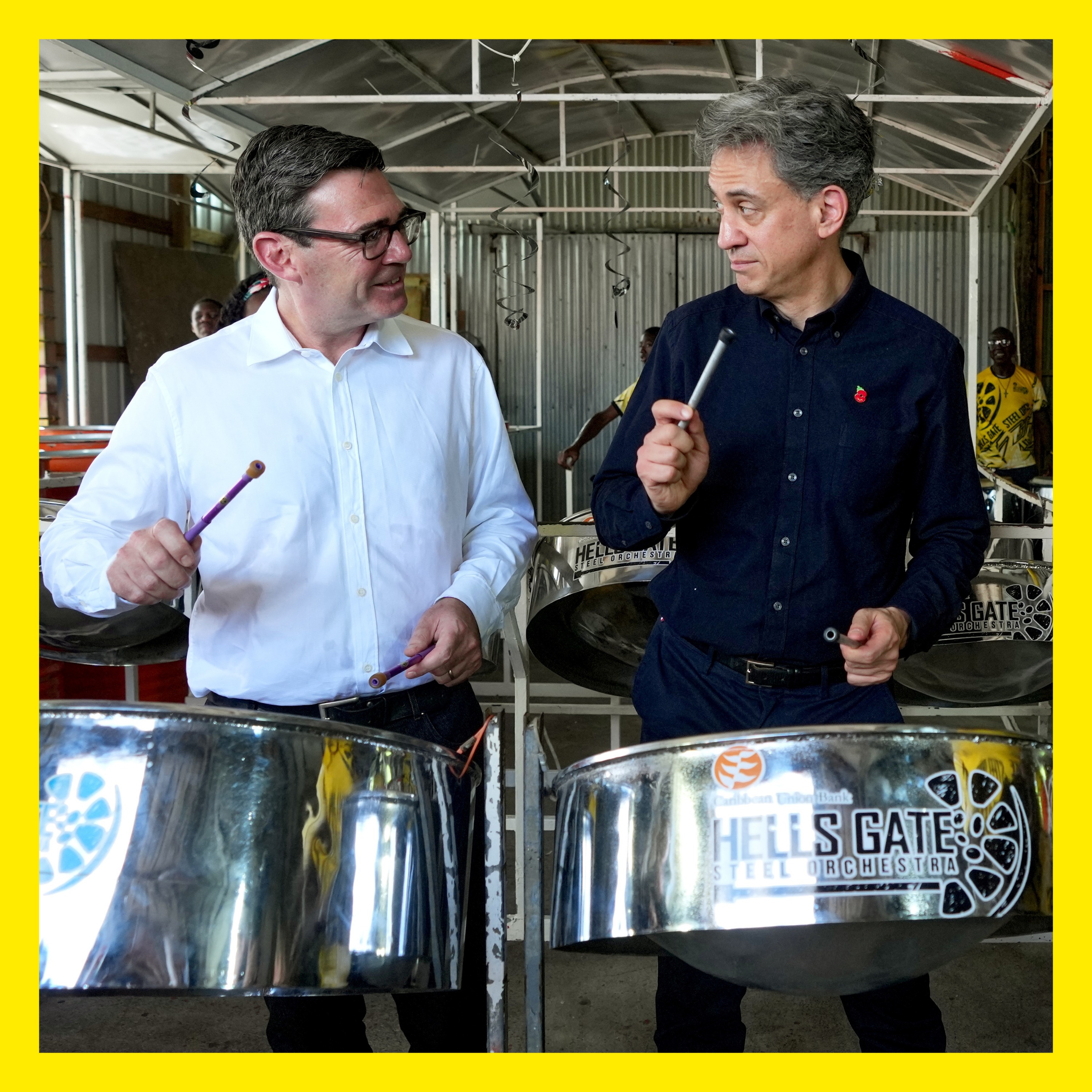
27:38She was belatedly brought in as shadow justice secretary. But I think there was a perception for many people that her talents weren't amply recognised. But it has meant that her introduction to the party in the public was more belated than that of Streeting, who does have the vibes and energy of being slightly more ready-made a candidate. And that is what he'll need to be if there is an early contest after the locals. The only issue with both of those two candidates and I think we're probably all agreed that both Shabana Mahmood and West Streeting look the most likely to throw their hats into a ring partly because what Shabana said to Patrick not so long ago but they're not creatures of the soft left and if you don't have an Andy Burnham figure there isn't a kind of obvious soft left candidate apart from one person we haven't talked about and whisper it because I can scarcely believe it myself, there is still mutterings about Ed Miliband coming back.
28:34And, you know, what I was told by a pretty senior Labour insider was that he has been buoyed by the deputy leadership contest and seeing the result for Lucy Powell, who obviously is seen to be much more on the left than Bridget Philipson was. And so, I mean, it's possible that he may also see this as an opportunistic moment to return to the fore. And let's not forget that polling amongst Labour members, his name often comes up top. One possible underestimated quality is Keir Starmer's character, which I just wanted to touch on briefly. He is pretty tough. There are, if I look at successive Tory prime ministers under extreme pressure when their leadership, things get really ugly.
29:18You get Boris Johnson sitting there, the cabinet falling around him, and he's obsessing over the snake Michael Gove and the betrayal and it gets very emotional and they lash out I'm not getting those readings about Starmer he seems pretty level he seems you know just going through it and it is that kind of terminator quality of just somehow being able to resist this enormous pressure that he's under which could actually hold him in good stead for what is to come. But isn't it also the fact that MPs actually quite like Starmer on a kind of personal basis? I mean, he's not somebody that, you know, is seen to be particularly divisive.
29:58You know, the number of people that I've had a conversation with, often, Patrick, quite often late on a Friday night where they've said, you know, on the one hand, we've got to get rid of this individual because he's going to lose us the next election. But on the other hand, they're saying, but I really do quite like him on a personal level. You know, he's a decent guy, he's got good values. But at the same time, they think he's pretty useless at politics. Yeah, I remember Andrew Adonis, the Labour peer, the morning after Hartlepool by-election got in touch with me and said, I've written a piece about Keir Starmer for the Times.
30:26And there was a line in it. He basically said, Keir Starmer is never going to win an election and he's a complete clown. There was a line in it that said, you know, we've learned that Keir Starmer is a perfectly decent man and a good human rights lawyer, but he lacks the skills and political antennae to operate the highest level. and I think actually that's basically what most MPs would say perfectly nice guy if you can get in front of him which he's got a new political secretary Amy Richards who's trying very hard to get him in front of people and you know that's endearing him to people to an extent as a man but where are the political antenna and that's where the flip side of the terminator characterization I think Steve is that's all very well and good if you're going to be vindicated by events I don't think you can look at the polling and look at the budget and say oh it's all great because Keir Starmer is going to grit his teeth and Keira Morgan are going to be proved right again I mean do you want Keir Starmer to be you know looking into the middle of the middle distance and striding silently towards oblivion I don't necessarily think you do you know Labour won 11 % of the vote in Caerphilly you know 11 % of the vote in the South Wales valleys in a seat it's held for the entirety of its existence i mean that that's not good i mean that's not something you want a leader to be oblivious to it's all very well and good saying oh kia starmer doesn't respond to pressure kia starmer doesn't feel the pressure he's like actually now would be quite a good time to start feeling the pressure and start recognizing the pressure the labor party is under so yeah perfectly decent guy you know rubbery resilience is the phrase andrew marr once used i mean that's fine but ultimately it's pretty bad and you know it requires someone to wake up and show the passion and not as you said gable be looking down at piece of paper every other words for what you're meant to say when the labor party is in an existential crisis and i don't think it's putting it too strong you'd say it is when you think about the challenge that starmer faces i think his biggest asset is the lack of clarity about not who could replace him but what would replace him intellectually and politically you know whether it's wes or shabana they will very quickly be asked well what is it in terms of macroeconomic policy fiscal policy social policy what's the big distinction between you and the government of which you are until the present day part of and um i suppose what i wonder is whether the plp on mass is of the view that even if his replacement wasn't substantively different from him in terms of the politics and policy whether just having somebody else would naturally be an improvement because of the fact that he is mud in the eyes the public his polling numbers are so subterranean and because he's not a political animal so doesn't simply doesn't feel the pressure in the way that he ought to i spoke to an mp yesterday and asked we're talking a bit more about the politics ahead of the budget and what labor mps have been on the receiving end of and this person said well i'm sure there'll be lots of charming engagement the problem is is that stanford's not very charming and he doesn't do very much engagement um and you know mps are emotional beings and i think a lot of them would say yeah it would be better to have somebody who stylistically aesthetically was anything other than starma even if the underlying sort of new laborish politics remain more or less the same yeah not being hated by the public is a good start it is a good start well it's probably going to get much harder before or if it gets better so that brings us to the end of this week's podcast we'll be back obviously next week when discussions around the budget will be entering the end game in the run-up to november the 26th and look we want to hear from you so if you want to email us get in touch with questions about the budget politicians their characters their flaws anything you want email us at the state of it at the times.co.uk lastly and most importantly thanks to our wonderful producers molly guinness and you and daughtry
Before the election, Rachel Reeves said she wasn't going to raise taxes on working people. Well, guess what? It looks like that's exactly what she's about to do. We reveal the measures the treasury is considering. And even the Labour whips are talking about a spring leadership challenge. Could a former leader make a comeback? And is Keir Starmer's Terminator demeanour helping or hindering him?
Steven Swinford, political editor, The Times
Caroline Wheeler, political editor, The Sunday Times
Patrick Maguire, chief political commentator, The Times
Gabriel Pogrund, Whitehall editor, The Sunday Times
Producer: Euan Dawtrey
Executive producer: Molly Guinness
Picture credit: Getty Images
Email us: [email protected]
This podcast was brought to you thanks to subscribers of The Times and The Sunday Times. To enjoy unlimited digital access to all our journalism subscribe here.
Hosted on Acast. See acast.com/privacy for more information.