
 Ask ChatGPT



In this episode, the hosts dive into various current events and political discussions in British politics, including:
Written by AI. May contain mistakes.

Get the gist, explore an idea or ask about something said.
 Claude
On The State of It, what are the key points of this episode?
Searching your listeningAutomatic transcript. May contain errors.
0:00Britons are inveterate newspaper readers. How is the news collected for all these newspaper readers? when i came to work at the times i thought this is going to be the most glamorous building in westminster it's going to be extraordinary place where kind of great stories of the day are broken and reputations and characters are made and destroyed it really is not that it is a 1960s porter cabin which is kind of quite badly heated it's very very cold in winter and it's just plopped in the middle of westminster on the roof of westminster hall we're standing on the roof overlooking that roof right now and above our heads is Big Ben, Elizabeth Tower, dilapidated flower beds there, there's a kind of air conditioning unit in the corner.
0:45This is not a place of glamour, it's not the place of sophistication that you imagine, but this is a great place to come and talk to people, to talk to contacts and talk to sources. I have had extraordinary phone calls out here from cabinet ministers and senior people in government that have led to major major stories and scoops over the years. So what is it actually like to be the political editor of The Times? The first thing I have to do each day is get my three-year-old daughter to nursery. She goes to nursery in the Commons. A lot of the MPs go to with their kids. So you have to kind of live this existence.
1:20And that means once I've dropped the children off, I have to do breakfast, lunches and dinners. And what I'm doing constantly is just talking to people. when you actually see people face to face they will tell you things they would never tell you over the phone and they certainly would never tell you over whatsapp and meals matter meals matter because people relax and they're more willing to talk over them now some people imbibe extraordinary quantities of alcohol in that there's this thing called the three bottle lunch that some other political editors do and that's their thing it's never quite worked for me because i can't remember what to write down if i drink too much so for me it's the mostly breakfast lunch and some dinners.
1:56And it's from them that you end up getting the stories and the scoops and you present them to the editor and hopefully that gives us an edge over the opposition each day. Steve, that's a fascinating insight into your life. And I have to remember that I used to see you walking backwards and forwards across Portcullis House at a particular time every day. And I used to think you had this brilliant, brilliant source in one Parliament Street and then eventually found out that it was actually your daughter that you were picking up. Yeah, that's right. In an entire 20-odd years of being in Westminster.
2:26I've actually never been to your office, but it actually sounds like I'm not necessarily missing anything. No, it's not the most salubrious of environments, but Patrick, you did install a dartboard in there relatively recently. Well, that's Luke Littler's legacy, broadening appeal to darts, including in Westminster. Yeah, I've had many a happy day in front of that dartboard. I'm just offended, Steve, that you don't think it's a hotbed of sophistication. For the past year, I've worn a tie every day, and I thought that was the most sophisticated thing anybody could do. Welcome to The State of It.
2:57This is the political podcast from the Sunday Times and the Times. And I'm Caroline Wheeler, the political editor of the Sunday Times. Today, we're actually going to start off in Egypt and that momentous news earlier this week that there had been a breakthrough in the peace negotiations. And what we're going to talk about is whether Britain really has played a key role in those negotiations or we are delusional about the role that we've played. And also we're going to talk about Tony Blair and the role that he's played in the Middle East. And we're also going to be talking about why I spent my day off yesterday shouting at Parliament TV as the China and the collapse of that case, the espionage case, was debated in Parliament and why it made me absolutely furious.
3:40And I've been on the road with Nigel Farage, Patrick Maguire and Nigel Farage on tour in Cofilly, pub lunch. And we did something Nigel Farage seldom does. And I'm not talking about the fact he only had three pints at the time that I was with him. No, we spoke in some detail about the economy. But we're going to start with Gabriel Pogren, who's going to set us the scene in Egypt and in the Middle East. Gabriel, over to you. So Patrick and I actually the other day were speaking to a source who knows Keir Starmer well. and the thing this person said was if you want to understand Keir, understand what he does before a meeting, he wants notes, he wants briefings, he wants copious compendiums of intelligence that almost enable him to control what's about to happen.
4:23If you can master your brief, then you can master what follows and yesterday that school of thought collided with the Donald, a man who thrives in moments of serendipity and unpredictability and it was the awkward couple on stage during Donald Trump's conference in Egypt and Trump treated all the world leaders, President Starmer among them, to one of his big soliloquies where he talked about life, death, everything in between. And there was this moment where he was talking about all the countries that had partaken in the elaborate negotiations that led to this point. And he said, is the uk hey didn't say keir starmer he said is is the uk here and starmer sort of awkwardly diffidently shuffled forward and there was a sort of semi handshake and i think he looked as though he thought he was about to be invited to address those gathered uh for the occasion uh but trump sort of proverbially elbowed starmer back and he awkwardly shuffled back and resumed his place Yeah, like that meme of Homer Simpson fading back into the head.
5:29Into the head. I mean, that conversation we were having, Gabriel, one line stood out from it for me, and I have noticed it ever since. And that was the senior figure in and around government we were talking to said, did you notice when Keir Starmer went to the White House with European leaders in August to talk about Ukraine? in the press conference afterwards, Donald Trump said Mertz, the German chancellor, was serious. And what does he say about Keir Starmer? That he was nice. And he used that word again in Egypt. He said, it's nice to see the UK here or words that affect. And I think nice sort of sums up something essential about their relationship and the way they relate to each other.
6:13And also, you know, I think it's sort of a measure of our involvement in this. I think we've been nice to have around but have we been essential have we been serious players in it that's the sort of question that's playing out before our eyes i don't necessarily think the answer flatters the government well that is a big question and we should say that at the outset there are two versions of this story on one hand you had mike huckabee the u.s ambassador to jerusalem who the other day in response to bridget philipson's assertion on the sunday morning round that we played a key role, accused her of being delusional.
6:48And what happened next was Steve Wyckoff, Trump's envoy to these negotiations, actually said that he wanted to thank the United Kingdom for the part they played. And he singled out Jonathan Powell, Starmer's national security advisor. Not Starmer himself, which is interesting. Not Starmer himself, he said Powell. And so we have these sort of parallel, seemingly irreconcilable versions of Britain's role. And we should say there's another complicating factor to this. It relates to a man by the name of Tony Blair. Now, my favourite ever quote attributed to our former prime minister was something we were told in 2021, which at the time seemed severely esoteric, to say the least.
7:27it was blair who said the only people nowadays that get things done are trump and bibi so you know at the time trump was out of the white house and disgraced bibi much the same his fate hung in the balance with all these corruption cases but blair then had this conviction even as a sort of ostensibly social democratic politician that the people with the energy and the desire to shape the world according to their own vision where trump and bb netanyahu now we probably should be fair to blair and say well he'd possibly added himself to that list because his fingerprints have been all over this trump peace plan and steve had an excellent piece this morning which he was saying that there was sort of three template deals there was a saudi french one a egyptian one and then there was just a blair kushner one so there's a lot of a question undergirding all of this which is not only is the UK significant, but is Starm's significance eclipsed by that of the former prime minister?
8:28So what I've picked up from what Blair's been doing in this is people are saying he's effectively acting completely unilaterally, almost like a state in his own right. He's got all of the key players on speed dial. He's liked by Trump. He's liked by Netanyahu. And he's liked by a lot of the Middle East leaders. And he's just doing his own thing. Now, he is feeding back to the government, what he's doing, usually after the event, but they're often caught by surprise. And I know for a fact that when Trump suddenly announced that Tony Blair was going to lead his Board of Peace, that caught very senior people in the government completely by surprise.
9:02And I'm not saying this is a good thing or a bad thing, but I think what I am saying is you've got a guy out there who's just doing his own thing outside of the auspices of British foreign policy, and arguably having even more influence. Well, Steve, it happened, that announcement, one evening at Labour conference, and I happened to be at dinner with one of the ministers who will be responsible for cleaning this mess up. And I literally watched them get their phone out and read the BBC News notification that said Tony Blair to serve on Board of Peace in Gaza, or whatever it was. And they just sort of let out a weary sigh.
9:38And I'd been speaking to them about how relevant the UK was in this. and they say, well, you can see from this that I'm not having that conversation right now. And it's also interesting, you know, Jonathan Powell and Tony Blair have a very close relationship. You know, Starmer and Tony Blair do not have that close relationship. And the interesting thing about the quote you mentioned, Gabriel, he was saying that Starmer was a smooth, loyalite person, but he was, he didn't really understand power. He was speaking very privately to a friend and said friend had told us about this conversation they'd had.
10:08so it's clear that there are lots of people Tony Blair among them who basically think well hang on I have MBS's number I can speak to the emirs in the gulf you know I'm very close to Jared Kushner I'm in and out of the White House it's not really necessary for Tony Blair to go through Keir Starmer if he wants to have those conversations I would remember as well it was literally about three days after Starmer's election victory last year that Blair gathered the great and the good to host his AI conference. I mean, Blair's position is essentially, Starmer doesn't appear to like me or to wish to benefit from my advice.
10:46I'll do my own thing. And the thing that he has that Starmer doesn't have at all is a belief in relationships. I remember in Andrew Warnsey's book, there's this delicious scene about the new Labour government where Blair calls Ian Paisley from the King David Hotel in Jerusalem and says he's got his Bible on him and is quoting scripture and appealing to their sort of joint faith in God. And, you know, you can't imagine Starmer sort of having those moments of intimacy and warmth because he does like doing things by the book. And Blair has essentially said, well, to hell with the book. Do you think Trump is studying the book?
11:20No, he's all about relationships and charm and bilateral discussions. And Blair has ruthlessly exploited that. But it's really difficult if you think about Paul, Sir Keir Starmer. He's on the foreign stage there. He's being sort of overshadowed by his predecessor, as he has been on a number of other occasions. But of course, I think it kind of goes deeper than that. You've now got two men on the international stage with Sir Keir Starmer in the Middle East, who both have a reputation of behaving in a sort of unilateral fashion. Tony Blair on the one hand, but also Jonathan Powell. And we've been hearing some really interesting things about Jonathan Powell, who is the national security advisor to this government, but was, of course, Tony Blair's chief of staff when he was prime minister.
12:03So you've got a prime minister that prides himself in the role that he plays on the international stage and yet often is being overshadowed by two other figures, one who's very much in the shadows and one who is much more kind of front and centre. And look, Jonathan Powell as well is obviously incredibly close to Tony Blair and he was one of the architects of the Good Friday Agreement and everything that flows from that. So he is seen arguably as a key figure in what comes next in the Middle East in kind of disarming and decommissioning weapons with Hamas and the whole process that we get now because we're in the hard yards now.
12:38There is an argument that what we've seen so far is obviously not straightforward, but compared to what comes next and what could go wrong, much, much more difficult. And there are not many people around on the world stage who have experience of that. So one of the reasons why Keir Starmer is standing so strongly by Jonathan Powell is because he is key to that. During this entire kind of furore over China that we've been having here, I was told Jonathan Powell spent most of it in Egypt, trying to kind of do things behind the scenes. Yeah. And it's important to remember, Steve, this is the stuff of Jonathan Powell's professional life, not just the Good Friday Agreement.
13:14that when he was out of government, he would fly from war zone to war zone, sort of dispensing wisdom on apparently intractable conflicts. So there is no better guy, from Keir Starmer's perspective, he will see it like this, to have by his side. Well, look, shall we start talking about Powell and China? And the reason he is under so much pressure and scrutiny is largely because of the reporting of Caroline and Gabriel. You guys broke the original story on this, and it has got a very long tail. So Caroline, do you want to kick us off on what you revealed about Jonathan Powell and why he's in quite a bit of trouble?
13:50So a parliamentary researcher, which is Chris Cash and Christopher Berry, who was basically an academic who was working alongside Chris Cash, they were arrested and charged with offences under the Official Secrets Act. And that case collapsed on the 15th of September. And basically, we've never been told why. There have been conflicting reports of why this happened. The government very much trying to blame the last government, saying that it was their inability to designate China as a threat, which caused the collapse of this case. And then we've had the director of public prosecutions basically saying, well, we asked for evidence to say that China was a threat and it was never forthcoming.
14:29So why I spent yesterday afternoon screaming at the television, this is one of my days off. So Gabriel and I, because we work every Saturday, we don't work on Sundays and Mondays, I dispensed the children into the kitchen with various activities and devices and sat watching the television as Dan Jarvis, the security minister, came to the house with yet another explanation of what had gone wrong. And this time he chose to direct his fire both at the deputy national security adviser, which is a chap called Matthew Collins. He was basically saying that this individual and this individual alone was responsible for collating the evidence, saying once again that it was the decision of the CPS that collapsed this case, but also directing their fire against journalists like myself and Gabriel and the rest of the lobby.
15:19I personally think it's a dangerous game to take on the whole of Westminster's lobby because I think there will be many journalists now that will be unpicking that statement. And I already know that the Conservative Party are baying for blood on this. They believe very clearly now that Dan Jarvis has misled the House in some of the things that he said, particularly a suggestion that the National Security Advisor. So once again, we're talking about Jonathan Powell here, was not involved in discussions and decisions relating to national security. That just doesn't add up for many people. They just don't believe that that can possibly be the case.
15:57So going back already over a week now, myself and Gabriel revealed that there had been a meeting that had been held and chaired by Jonathan Powell of mandarins that had been held just a couple of days before the case collapsed, where this case was basically discussed. So of course we should say that Cash and Bury deny everything, any involvement in espionage and obviously the case never came to trial. But Karen, one thing I just was reflecting on was when you were shouting at the TV, you were actually reflecting the anger of a lot of people in Parliament and someone who was actually party to it also got in touch.
16:34Yes, that's right. I was firing off text messages to all sorts of people, you know, expressing my own particular rage that I felt that so much of what was being said was not giving us the answers that we wanted. And I did actually have a phone call from the speaker at one point who said to me, hello, Mrs. Angry. What's got up your nose today? See, we're all doing impressions today. I suspect mine is the worst of everybody's. But yeah, the Speaker did get in touch and try to allay some of my fury. But he is furious. He is furious. And he said that. He said that very clearly as he opened the debate.
17:11He made a statement before the debate even started saying he was not just disappointed. He was furious that the case had collapsed because, as he put it, and actually he went further than he's gone in the past. He said that he knew that the spies had been paid to spy on MPs, some of whom were actually sitting in that chamber. And by that, I mean Alicia Cairns and, of course, Tom Tugendhat, the security minister, who were both members of the China Research Group, which Chris Cash was working for. What's interesting about Jonathan Powell doing that job, and I think it gets the heart of the point about the weirdness of all of this, is there are actually, because he's a political appointment, actually there are sort of things he can't do.
17:52Matt Collins, his deputy, ends up doing some of the more civil service-y functions of that job. So there will be occasions, I'm sure, on which he chairs the National Security Secretariat, which is a technical sounding body, but obviously very important on Whitehall. But as you say, something of this magnitude, is it really plausible that on a case of this magnitude, it wouldn't have been kicked upstairs or the Prime Minister might not have taken a view, given that it's been a massive political issue that had blown up in their faces? Although, to be fair, that would be consistent with how this government does do things.
18:22And also just the suggestion that it collapsed and nobody knew it was collapsing. Now, I know that's not true. I have spoken to ministers who were informed that this case was going to collapse days before it happened. So I know that that is not true. And I know that people were so enraged by that decision that there was even a discussion about how they were going to try and find a paper trail to link that discussion to Jonathan Powell and indeed to the Treasury. Now, no one's been able to substantiate a Treasury link here. But if you think about the types of things that we're talking about here, the suggestion being that this case was deliberately collapsed because actually it was a political inconvenience for a government that is growing closer and closer to the Chinese government and a country that they see could help them to overcome some of those economic problems that they have in terms of growth and productivity, that they were prioritising those links over national security in this case.
19:19But I know people were so furious about that, they were desperately, desperately trying to get that out into the public domain. We should put this in context, the magnitude of it. And Gabriel, you can help me just unpack this. But effectively, what the government is saying is that one senior official, this guy called Matt Collins, the Deputy National Security Advisor, took this absolutely staggeringly big decision. He determined that China was not a threat. Now that is a pretty almighty call. That affected directly this China spy trial and that matters because the accusation was that MPs have been spied on.
19:50It matters because of British-China relations going forward. It matters in just about every way possible. And yet the government's contention at this stage is that there was one guy effectively acting alone in a bubble and Tory MPs in the Commons yesterday were saying this doesn't pass the sniff test. And Labour MPs too. Yeah, how could, Emily Thornberry was out there raising questions about it. The long short of it is, the government's essential position is this very important geopolitical decision hinged on a decision made by basically a guy in a cupboard with nil intercession, supervision, interference by anybody.
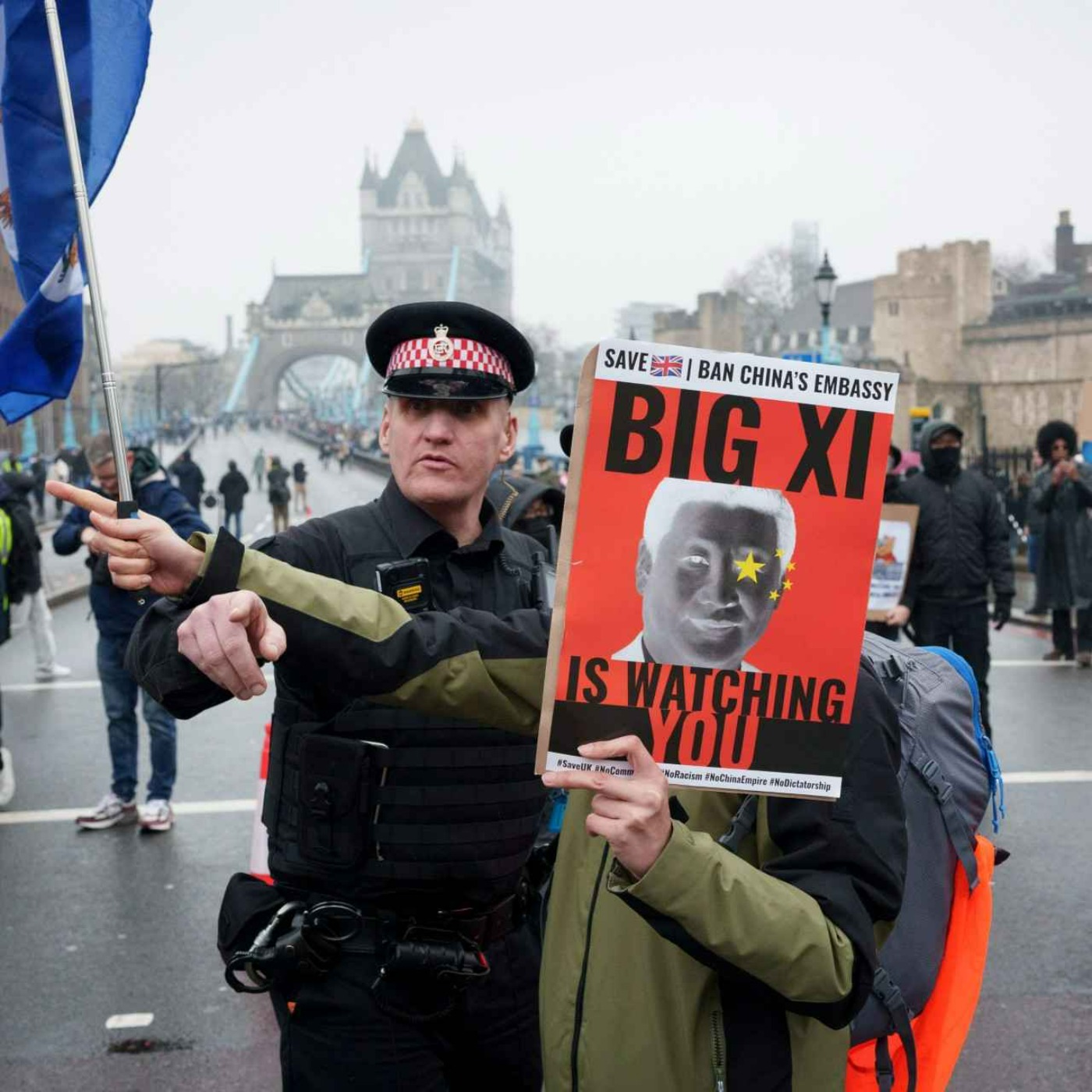
20:28The alternative is that ministers were involved, in which case, you know, not only will the government have lied, but they'll be politicising what was ostensibly a judicial decision. But I think that zooming out, the sort of paradox at the heart of this is self-evidently, if you look at their deeds, possibly not their words, but their deeds, this government would like a rapprochement with China. But also we have a Chinese government that want to build an embassy, a mega embassy in London on the Royal Mint side. Just over the river from this very office. just over the river from this very office.
21:02And they said back in 2022, and I know this because I've spoken to people that were directly involved in these discussions, that they would not bring forward another application for a Chinese mega embassy unless they were given assurances by the UK government that it would get the go ahead this time. And lo and behold, the day after I reported that in the Sunday Times, one of Steve's colleagues, Matt Dathan, reported very clearly that those assurances had been given. So yet again, the picture that we're painting here is a government that wants to do business with the Chinese and is prepared to do some fairly extraordinary things in order to do what they're asking them to do.
21:43Can we just talk briefly about my favourite aspect of the mega embassy story? So this huge embassy, and they've submitted the plans, and in the plans there is a room at the bottom of the embassy, and no-one knows what this room is. The Chinese have redacted it. They won't say. People are jokingly saying it could be a dungeon. Ha ha ha. But literally, we don't know. Steve Reid this morning, the new housing secretary, he's the guy that is charged with giving this permission or not. And he said he's going to see all the plans. So presumably he will find out what the purpose of this weird room is.
22:15But we do not know what a lot of the purpose of this enormous embassy is, for good or bad. We know the security services have concerns about some of its operations. and we know that the police also have severe reservations about it. So look, if you're Steve Reid and you're confronted with this very tricky decision, the deadline for the decision is next Tuesday, what do you do? Well, it's going to be the classic Whitehall fudge. They're going to delay it, long grass it, to November at least. So under normal circumstances, this should be a rubber stamping exercise by this government. But I'm told that officials were spooked by some of the reporting around the dungeon that Steve has just referred to.
22:52Let's call it a dungeon. I'm told that there were also concerns about the fact that apparently little known fact, bit of a history lesson for you all here. Underneath are a load of plague pits, but not only are there a load of plague pits, there is also a lost abbey. It was like Westminster Abbey. There was an Eastminster Abbey. It was called Our Lady of Graces. And apparently this is a site of archaeological and historical importance. and if this embassy gets given the go-ahead then you will have to go through Chinese security in order to be able to see it. So if you're a BNO, for example, someone from Hong Kong who wants to come and visit this site you will have to subject yourself to Chinese security and the fear is you may end up in that dungeon.
23:38I love that detail, Caroline, as you outlined in order for any person to fulfil their God-given right as an English man or woman to inspect this particular piece of history, they will have to technically walk over Chinese sovereign territory. So I do wonder constitutionally, like when you put one leg on, can they drag you into the dungeon? Or do you actually have to have your whole body in the Chinese pathway in order to be dragged down to the secret subterranean layer? I mean, there's a sort of comical dimension to all of this, which is it is officialdom and process. And planning. And planning.
24:11And Beijing. Colliding with politics. Right, I think we're going to go to an interval now. And after the interval, Patrick McGuire is going to come back and tell us about his day out with Nigel Farage. So on Friday, I was sat in a pub beer garden in a town in the Welsh Valleys called Nelson. And I was watching Nigel Farage eat a fish and chips, making very short work of that and a cold and frothy pint of Rimney Export Ale. And then something totally unexpected happened. we had a very detailed and quite rigorous conversation about the economy. Now, if you listen to Kemi Badenock, and if you listen to Rachel Reeves in the coming weeks, as we've recently read in the Times, that's not what we expect from reform.
24:57We know they have been making hay on migration, but on my day trip to Kefili and the surrounding areas with Nigel Farage, as he campaigns for a by-election to the Welsh Parliament there, in just over a week's time, reform expect a win and a big blow to Labour, they are now pushing their tanks onto the bit of lawn that the Tories and Labour both think they would fear to tread on, the economy. And it was really, really interesting. And it comes at a time, Steve, that Labour are preparing to have exactly the same conversation. So Labour is about to have a terrible budget where they are going to announce a huge gap in the public finances and very big tax rises.
25:36And the question they've got, which we touched on last week, is how the hell do you sell that? How do you sell more tax rises on people who are already taxed to the hilt? And the answer they think that they found partly, previously they tried to blame on the Tories, now they want to blame some of it on Nigel Farage. And they want to say, this is the guy that came along, he delivered Brexit with easy sloganeering, and then he walked away and he left it all behind. And as a result, Brexit was far more damaging than we previously thought it was. We've got this new information from the Office for Budget Responsibility, the official forecast, which is downgrading the economic forecast.
26:10And they are basically relitigating to a degree Brexit. They're putting Brexit centre stage again, which I would gently put it is quite a brave move. But clearly they think there is vulnerability in Farage on economic credibility. And that has led to Nigel Farage in coming weeks is going to change his pitch, isn't he, Patrick? Well, exactly. And let me give you two choice reactions I had. when your story on the blame Nigel strategy went live on the Times website on Friday night. I had a screenshot of the headline, you know, blame Farage for the budget, and I sent it to a few people. You know, what do you think?
26:47This is the stuff of our jobs, isn't it? More often than not, using colleagues' work to get a rise out of people, so you can then do different work on it. So I was trying to do the same with your excellent reporting, Steve, and I sent it to somebody in government, and they literally didn't believe it could be true. They thought it was the craziest thing they ever heard. They were so dispirited by it. And like Wes Streeting, by the way, the health secretary, who thinks it's brilliant. You know, you have this generation of Labour politicians who've been longing to say Brexit was a disaster. But the other interesting reaction I had was, of course, from Nigel Farage, who I was sat with in our pub beer garden and he and his team were incredulous.
27:25Farage said, it's curious to say the least, and brave for Keir Starmer to be embracing Europe at a time it's turning to the radical right. And one of his staff pointed out, well, hang on, the EU has just imposed massive steel tariffs on us. So is Keir Starmer really going to campaign on that? We're on the brink of a trade war with these guys. You know, their own strategy doesn't seem to be working, particularly on stuff that matters in Wales. So that was, you know, he didn't seem ruffled by it, and nor did he seem ruffled by, you know, Kemi Bainock claiming the economic mantle as well, which might all be explained by, despite appearances, reform are thinking very, very hard on the economy.
28:03And in a conversation with me, which I reported on in The Times on Monday, they've done something very significant in the past 48 hours or so, which is they have ripped up their economic policy and they're going to start again. So in 2024, their manifesto promised 90 billion quid in tax cuts. I mean, that is a huge number. Stuff like halving inheritance tax, actually hiking up the thresholds for inheritance tax, increasing income tax thresholds, personal allowance of 20 grand. And I got the first inkling that was happening when I was having my conversation with Farage on Friday. And he said, look, 20 grand personal allowance, it's an ambition.
28:40You know, will we get there? Absolutely, if we can. Then I had further conversations with he and his team over the weekend where, you know, we clarified actually, no, we're going to rip that manifesto up. We're going to start again. Credibility is everything. And actually he imposed some quite sharp red lines. One is no tax cuts before spending cuts, no borrowing to fund public spending, and a whole range of things that will mean the programme they do put forward, he's going to give a big speech on the economy on the 3rd of November, unveil a big endorsement, someone he told me would be a household name from the world of business, someone that would make everybody sit up and take notice.
29:19But it does mean they're not going to be in the same territory. And Richard Tice was saying this on Times Radio, Farage's deputy, you know, it's all about proving reform can be trusted with the public finances and that their sums add up. You know, they know there's only so long they can talk about vibes. You know, vibe is the favourite word in Reform HQ. It's all about vibes. But they know on the economy, at least, that they have to prove themselves to be serious, not least because they're talking to businesses all the time. Richard Tyson at Boysdale, you know, Farage's favourite restaurant, having bacon and eggs with business leaders.
29:52they're having lunches they're having dinners and they want to say look we're serious guys not least because Steve you know you spoke to Nick Candy the party treasurer over the weekend and he's looking for money from the same people I mean they need to prove to business they are serious so he's now stumped up a million quid so he was putting his money where his mouth was and there are some senior people in reform who have been briefing against him that he was all all kind of talk and no trousers and he had a message to them he said I know who you are I've spoken to these high profile people within the party that are briefing against me keep it kind of in in the house and we did this interview in the arts club which is this extraordinary club he's a member of in mayfair um so lots of kind of very wealthy people in there but but look he's given money but the problem they've got is they still don't have a lot of money from other big city people and other big donors and that is one of the problems they've got if they want to win big in may, they need more money.
30:45And to get more money, you have to convince business people that you are credible on the economy. I mean, this is exactly what Labour's strategy is about reform. It's neutralised the small boats issue. They don't think they can win on the small boats issue, by the way, but they do think that they can take some of it off the table by doing some of the things that we're going to hear about more of in this autumn. But after they've taken some of this off the table, Labour see that the economy has to be absolutely front and centre of their offer. But what I think is absolutely fascinating, Patrick, about what you have reported and the fact that they are ripping up their kind of pledges on this is that it's just the economic reality that we find ourselves in.
31:23And as political parties get closer to a general election, you tend to see this as a pattern that they become more conscious of their economic offer. And if you think even about Labour before the election, we had that big debate around the 28 billion, around the green finances that they were talking about, because they realised that when they put that in the kind of economic reality that they now found themselves in, that was going to be really difficult. And actually what ended up happening as we got towards an election is that there was less and less of a difference between the parties on the economy because actually they didn't want to get into a sort of competition with each other over tax.
31:59Because I think the person that was going to win was quite frightened about where that left you, that you could end up boxing yourself into a corner, as indeed I think Rachel Reeves has done, over tax and spend. And I think what's fascinating about this is it's clear that this is part of reform waking up to the fact that in three and a half years time or just a bit longer than that, they could end up being the party of government and they are going to be responsible for those economic levers that they've now got to come up with a credible offer to the British public that's not going to fall apart on contact with reality.
32:32Reflecting on Labour's response to it. What is so confounding about Steve's scoop is that we've got a flavour of sort of Starmer's current political strategy of late, which in his conference speech was sort of care being care. Reform racist, progressive politics good. We're the country of the people that cut the halftime orange. We're the country of nice things and we don't like the people that represent the evil bad things. And I was surprised by that. I'm even more surprised. And it is sort of sort of a vintage Starmer to be resurrecting Brexit and holding it up before the public as the thing that Labour is against.
33:10And Farage and populism and Brexit, all that's all that's bad. And I remember speaking a while ago to Morris Glassman. He's a Labour peer, founder of the sort of blue Labour tradition, which, you know, essentially very culturally conservative, economically expansionist. And he's a friend of Farage's, actually defended Farage when Starmer used the R word to characterise the indefinitely to remain policy. but i sort of said to him well you know what is the actual ideological distinction between you and farage your anti-globalization pro-brexit anti-mass migration so what is a cigarette paper i can put between the two of you and you know essentially the answer and this i would have thought would also be labor's answer at the moment is well farage is a thatcherite and yet farage essentially doesn't believe in the NHS, doesn't believe in the notion of redistribution.
34:02And whereas on Brexit, the party's base and parliamentary party is horribly split, one thing they can all agree on is that we like the NHS and Farage doesn't. But, you know, I suppose we've witnessed a handbrake turn now that if they're making it about Brexit, they're essentially, you know, it might be an attempt to reunite that progressive coalition. You can see Starmer already painting the broad brush strokes of that strategy ahead of the next election sort of reform versus everybody else to his left but um i i still don't really get it because i i just don't see how you hang on to the red wall voters that were you know the cornerstone of starmer's strategy last year they are misunderstanding and underestimating nigel farage on absolutely everything particularly economics is what i would say to that on that note we'll bring it to an end for this week next week please join us the juggernaut of the budget is kind of coming into view and no doubt there'll be more to say on that but we should also talk about the we'll be talking about the deputy leadership contest for Labour why that matters who's likely to win and where that will leave us so look please join us next week and I'm sure the world will have kind of changed and moved on by then once again and I'll still be shouting at the television and thank you so much to our amazing producers Molly Guinness and Ewan Daughtry
Is Tony Blair his own nation state? Did the security minister mislead the House? And what's lurking in the basement of the proposed Chinese embassy? We also hear about Patrick's road trip with Nigel Farage and why the Speaker rang Caroline to say "hello, Mrs Angry".
Steven Swinford, political editor, The Times
Caroline Wheeler, political editor, The Sunday Times
Patrick Maguire, chief political commentator, The Times
Gabriel Pogrund, Whitehall editor, The Sunday Times
Producer: Euan Dawtrey
Executive producer: Molly Guinness
Email us: [email protected]
Picture credit: Getty Images
Audio credit: 1942 British Council Film Collection
This podcast was brought to you thanks to subscribers of The Times and The Sunday Times. To enjoy unlimited digital access to all our journalism subscribe here.
Hosted on Acast. See acast.com/privacy for more information.


