 Ask ChatGPT



Kemi Badenoch’s Conservative Party conference speech, focusing on an economy-first pitch, major inheritance tax changes, and a hard line against any “uniting the right” with Reform UK; plus discussion of the conference atmosphere (“most united” Tory conference in years) and political strategy.
Stephen Swinford (Times political editor), Ben Riley-Smith (Sunday Times political editor), Lara Spurrier (Sunday Times deputy political editor), Patrick McGuire (Times chief political commentator).
Inheritance tax reform is designed to win affluent “middle England” and tactically attract voters in southern seats; immigration was notably downplayed to avoid a bidding war with Reform. Badenoch’s message is framed as character-based and inclusive (Englishness/patriotism), while Reform is attacked as “weird” and morally driven. Conservatives are trying to regain relevance and second-place status rather than win outright.
Exempting family homes from inheritance tax (up to any value) and an extra £1m allowance for married couples; John Barnes used to argue inclusive English identity; claims that Tory conference unity contrasts with prior infighting and that there were few/no protesters.
Written by AI. May contain mistakes.
The hosts delve into Kemi Badenoch's emphasis on the economy in her speech.
“And I'm Patrick McGuire, chief political commentator for the Times.”
Discussion on the significance and implications of the inheritance tax exemption announcement.
“Ben, what do you think she's trying to do here?”
Exploration of Kemi Badenoch's stance on not uniting with Reform UK and its implications.
“Yes, you can read the speech at its most cogent, which was its attack, very conventional right on left attack on the Labour Party, as a critique of the government from the main party of parliamentary opposition.”
The hosts analyze the character-driven attacks of Kemi Badenoch versus her policy focus.
“Those are the questions they failed to answer.”
The speakers note the minimal focus on public services or the NHS during the speech.
“I mean, one of the, I think, key emissions as well just in terms of just slightly challenging that perception that it was a kind of, that there was a slightly progressive or I think in that sense there definitely was.”
Insight into the strategic shift towards appealing to progressive voters by the Conservative Party.
“You know, you see, you know, reform, Robert Jemmick in particular, you know, one of the exported drama queens, Ken was talking about.”
Discussion on Kemi Badenoch's reference to John Barnes and its cultural implications.
“Patrick, can I just give you a setup, a gift of a setup?”
Discussion on John Barnes' legacy and its relevance to contemporary politics.
“Collymore closing in but anyway yeah John Barnes Look, he was Jamaican-born, actually born to a Jamaican Air Force colonel, John Barnes.”
Exploration of the atmosphere and feelings at the current political conference.
“And we're also going to talk about the direction.”
Analysis of the unexpected unity among Tories despite electoral challenges.
“So, look, let's talk about what it feels like at this conference.”
Discussion on Kemi Badenoch's leadership style and her impact on the party.
“This year, there was a great quote that she gave, I think to GB News, where she said, I am the captain, the manager, and the owner of the Conservative Party.”
Exploration of potential economic crises and their implications for party politics.
“That gap needs to close even a little bit for us to be having serious conversations about the Tories getting into power.”
A detailed look at the vibe of the Tory conference and its implications.
“So I've been coming to these conferences for years and the Tory conference is very particular.”
Explore the current state of party unity and its implications for the Conservative party's election prospects.
“this is a party now that is once again at ease with itself.”
Discuss the significance of conference speeches in shaping national conversation and party narratives.
“Well, and that question of cut through is an important one.”

Get the gist, explore an idea or ask about something said.
 Claude
On The State of It, what are the key points of this episode?
Searching your listeningAutomatic transcript. May contain errors.
0:00It's the most united I've seen the Tories in the entire time I've been writing about politics. There was a great quote where she said, I am the captain, the manager and the owner of the Conservative Party. Ready to get Britain working again. Welcome to this week's episode of The State of It, the political podcast from The Times and The Sunday Times. We are coming to you live moments after Kemi Badenoch's flagship conference speech. With me today, I'm Stephen Swinford, the political editor for The Times. I'm Ben Riley-Smith, the Sunday Times political editor. I'm Lara Spurrier, deputy political editor of the Sunday Times.
0:36And I'm Patrick McGuire, chief political commentator for the Times. So look, we have, Kemi Bladenock has gone big on the economy. She is betting the house on the economy and she's got another kind of half-rabbit this time. Not a full-fledged rabbit because we knew something was coming. But she has announced that family homes will be exempt from inheritance tax. We're going to talk to you about that. We're going to tell you what it's been like, the atmosphere, which is quite good. generally here at Tory conference, take you into what it's like in the bars, at the parties and how it felt. And then we are going to probably talk about Nigel Farage and Reform UK and Kemi Badenock making very, very clear there will be no pact, no uniting the right.
1:13We will not unite with these people, is how she puts it. Well, let's open by talking about this big offer on inheritance tax that Kemi Badenock has made. Ben, what do you think she's trying to do here? Well, it's really significant. It's often called the most hated tax in the country, even though not that many people pay for it, everybody feels it's like double taxation is unfair. And Kemi may not made a big move. The big one is your family home, however much it costs, 10 million, 100 million, a billion, you can pass on to your family inheritance tax three. That has a chance of really cutting through.
1:48And then the second element was, separate from your home, a married couple can pass on a million pounds additionally free. that is a big pitch to middle England what do you make for Laura yeah I mean I think I agree with Ben and what was interesting about that was that despite there being obviously a lot of speculation that they would abolish it entirely it was interesting that she actually used it to try and say look I don't want to make promises that are uncosted this is I will only bring this to you when I can afford it this policy is an interesting indication of the fact that actually the priority at the moment really let's be honest is Lib Dem and more affluent voters in those southern seats um a number of people that we've seen this week and i'm sure it's the same for for you guys as well have been pretty explicit about that with us have said you know the strategy is let's try and win back those lib dem and some labor voters and crucially people that stayed at home in the last election and then people will see us as the main challenger the main right-wing challenger to labor and reform voters will come back but it's not a first and foremost let's try and win back these reform voters no some shadow cabinet minister told us the red wall is gone we're not getting that it's boris johnson's red ball it's a really interesting so i think inheritance tax is such a perfect policy for that purpose right it is such a good encapsulation of that that particular electoral strategy which now you know as but as we've been saying they are just very open and explicit about yeah i think with all of that in mind it was not a as you say lara it wasn't a um here's why we have the next government it was essentially an elevator pitch for the continued relevance to the Conservative Party as a going concern electorate in at least part of the country.
3:23And I think on that front, they survived. Yes, you can read the speech at its most cogent, which was its attack, very conventional right on left attack on the Labour Party, as a critique of the government from the main party of parliamentary opposition. But what was more interesting, I agree, is the relatively small but very well-defined bit of electoral territory and political territory carved out for the Conservative Party, which is not, as you say, Ben, a big tent party that's capable of winning 40%. It is a very traditional-looking Conservative Party that has its eyes trained primarily on affluent voters in the South and the Southeast, and the aspirational middle classes.
4:14Now, that draws very sharp dividing lines with the Labour Party and reform. And I think the speech was also noticeable for what it didn't say as much as what it did say. You know, I was listening to that. I've been listening to private conversations with Tories here, other speeches, with the exception of Chris Philp, who obviously spoke about this as Shadow Home Secretary, that the word that hasn't really featured at this conference at all is immigration. The last year when Kemi Bainot spoke in Manchester, what was on the lectern? What was on the banners? What was the conference slogan? It was stronger economy, stronger borders, or words to that effect.
4:47This year it is just stronger economy and it's a more focused message, but it's also one that tells us they're approaching this fight in a different way. You know, they are not getting into a public bidding war reform on immigration policy. The speech and the posture and the tone, and I know we'll get on to this shortly, is much more of a party aligning itself against reform and trying to look at the voters who have been tempted over to the left or may have switched to the left, the Liberal Democrats and the Labour Party in lots of those seats in the South and Southeast, rather than thinking, well, how do we keep our deposit in Makerfield or beat Restore in the Greater Manchester mayoral by-election should another one happen?
5:32I think those questions are gone. Those are the questions they failed to answer. And now this is the route back to relevance. This is the route back to a better version of survival, I think they've concluded. Well, I know they've concluded. Well, we should move on to the reform aspect, this clear and categoric dividing line with Reform UK. Now, in a really, the most impassioned part of the speech by far, and she was saying, I am proud to be black, I am proud to be British. And that was a direct report to Suella Braverman, who has said that she does not consider herself to be English, because her parents were born abroad.
6:04And she was rejecting that, and basically saying that, you know, I listen to that, and my mixed race children, I don't want my mixed race children listening to that and growing up hearing messages like that. And that was a really impassioned part of it and the ultimate message was we will not unite with these people and i know it's clear and no one was saying that there's likely to be a coalition but if any you know you still read it occasionally unite the right they've got to come together well i think that is very firmly off the table they they hate each other well yeah and i think no no just i think worth reflecting as well the language was extremely derisive from her as well i mean it was she i she referred to reform with that was that is that yes well we are not uniting with that with that a thing you know yeah rabble well the language was as moralistic as the language keir starmer used in his conference speech last year and indeed you know he too spoke of a battle for the soul of the country which i remember at the time sort of more hard-nosed labor figures on the labor right were saying well this is just sort of joe biden 2.0 and kamala harris 2.0 you know they said let's have a fight for the soul of the nation then they lost it because turn out America's soul had other ideas.
7:10And, you know, it was the attack on Labour was ideological. Yeah, there were bits of, you know, there were bits of moral criticism and personal criticism. You know, there were lots about Andy Burnham's eyelashes and pork scratchings and, oh my God, you served on the Jeremy Corbyn. But it was a straight up and down. These guys love higher taxes. They love higher borrowing. They love higher government spending. And they are wrong. And if you speak to shadow cabinet ministers as well, I'd say there's a begrudging respect for Andy Burnham. They like, and I think Kemi Badenok enjoys too, having a proper ideological debate with someone who welcomes and invites it.
7:41Whereas the language on reform in that speech, even with the sort of obligatory throat-clearing caveat that reform voters, lots of them are our people, was really moralistic. It was very personal. And, you know, talking about reformed people measuring up the curtains, not for government, but for prison cells, etc., etc., it was exactly the sort of attack on reform you'd hear from a Labour politician. You know, if Andy Burnham had spoken about reform last week, he didn't. And that was another big dividing line. Kemi Badenoch spoke about the Greens. She spoke about the Labour Party at some length.
8:14She spoke about reform at some length. And if Andy Burnham or a Labour politician speaks about reform, they'd probably speak about them just as Kemi Badenoch had. And I think that is significant for the electoral landscape going forward. And it was character she was going after, not policy position. So she was essentially trying to paint them as slightly weird in the way that the Democrats tried to paint Trump in advance It was slightly weird at the last election. And actually, her message was one of inclusion. And if you come here as an immigrant, you can be taken into the English-British family.
8:44That's almost, you know, Letton writes a bit of a lazy way of looking at it. But that is a more kind of woke, liberal position than two years ago when a lot of Kemi Badenowicz's brand and a lot of her Tory leadership run was picking out cultural issues, cultural issues and having a proper go of them. So again, I think it paints this picture of her moving into this slightly more centrist position and trying to out forage, forage. And it was interesting. We do these huddles after the speeches where number 10, sorry, Kemi Badenow's team, which number 10 yet, will tell us about the speech. And they explicitly said, look at the standing ovations.
9:23Kemi Badenow got the hall to stand up and cheer, not uniting the right. And that is a rejection to all those columnists who are saying that's what they got to do. and I know her team privately say that you can't just add the reform vote share to the Tory vote share and that's going to be 2 plus 2 equals 4 because there's a huge chunk of Tory voters that would abandon us if we ever embrace Farage. So making it on character lines and making clear she's not going to do a deal was like a big theme of this speech. I mean, one of the, I think, key emissions as well just in terms of just slightly challenging that perception that it was a kind of, that there was a slightly progressive or I think in that sense there definitely was.
9:59but there was barely any mention of public services or the NHS, which I do think is interesting. There was lip service to, what was it, not all public servants are bad, essentially. It seemed kind of interesting he praised public sector workers. Yeah, public sector workers. But there was definitely less on public services in circumstances where I think traditionally you would imagine even a Conservative Party leader to go into that. But I do think when you speak to Conservatives here, they would just say, actually, it's really important for us to focus our message And like the economy is the absolute main central focus here.
10:29And that does mean that you have to not talk about other things as much, which I think is completely fair enough. But it's interesting. There was no debate on economic policy with reform, is the interesting question, in that speech. And there are big dividing lines of reform and reform would welcome that debate. You know, you see, you know, reform, Robert Jemmick in particular, you know, one of the exported drama queens, Ken was talking about. You know, reform think the dividing line is the parties are now the Tory... Reform's dividing line is the Tories are the party for the rich. You know, the inheritance tax thing, they relish that.
11:05They've done that instead of increase the personal allowance as reform we're talking about. And it's interesting. In the past, I feel like we've heard much more from Tory leaders, senior Tory politicians saying reforms, economics is either illiterate or left-wing or indeed both because one begets the other. it was all about character as you say Ben and it's interesting it is not a you know it is it all suggests to me I think it's true from all of our conversations you know they are not getting into a battle of ideas uh with reform or you know there is a there is a there is a sense there is a path back that does not necessarily involve trying to outbid reform on a range of issues and you know if we'd spoken about migration we would have got back into of the territory of, you know, the Tories are actually offering photocopied reform or diet reform on migration on lots of issues.
11:52So it's interesting. It felt like a speech that was aimed more squarely at the, you know, fifth to a quarter of progressive voters who, when asked by pollsters, say, I would vote tactically for the Tories to stop reform in my constituency, rather than it was thinking, okay, beyond the people who switched since 2024 and were never core reform voters in the first place, how can we get back into contention as a party that's capable of winning 30%, 35%, 40 % of the votes? It's really interesting, both main party leaders kind of willing into existence the return of a two-party system. Burnham didn't talk about reform at all.
12:31Kemi didn't talk about reform at all. Her whole message was, look, we're back to the big red lines on tax and spend. And yet, you know, you forget at this conference, reform are polling higher than the Conservative Party in the polls. More people are saying they're attracted to reform than the Conservatives two years into they've not deleted. There was a tacit admission from Kemi, essentially, but shadow cabinet ministers are saying it. So she did this appeal to reform voters. You deserve better. That's fine. Shadow cabinet ministers are saying, they acknowledge, look, there is a core of reform support that we are not going to get back.
13:02These are Farage people. They were UKIP people. They were Brexit people. There are millions of voters now that are not ours. There are some that are floating and that we want back. But that is the kind of tacit underlying of this. Exactly as you said at the beginning, Laura, this is pivoting away from the Red Wall towards those lived-end voters. And it's, again, really, it's too congested because none of it can lead to an outright majority. But that's a problem. Patrick, can I just give you a setup, a gift of a setup? Oh, go on. Because, look, we should talk more about John Barnes, right? So John Barnes was at the heart of this speech.
13:33the most emotional moment of her speech was about growing up watching John Barnes and people were not saying this kind of thing you as a Liverpool fan what does John Barnes represent to you and why did that resonate what was she trying to do that I mean come on he's John Barnes you talk about a beautiful set up I'm reminded of Martin Tyler's commentary in the famous 4-3 against against Newcastle Kevin Keegan's entertainers cut off in the knees Barnes Rush Barnes still John Barnes Collymore closing in but anyway yeah John Barnes Look, he was Jamaican-born, actually born to a Jamaican Air Force colonel, John Barnes.
14:10Absolutely iconic Watford and Liverpool player in the 1980s. Scored a beautiful, mazy dribble at the Macarana against Brazil, worthy of any Brazil player. But he was a trailblazer for black representation in football. Horrendously racially abused, actually, John Barnes. There's a very notorious and poignant picture of him backhealing a banana off the pitch in full Liverpool kit. But, you know, her point was, you know, nobody questioned whether John Barnes, George Smith and Ian Wright, the Arsenal legend. Nobody questioned whether they're English because it was a more inclusive vision of Englishness and patriotism.
14:52And it's worth pointing out that, you know, Kemi arrived in England sometime after John Barnes' heyday. She was here for his disastrous managerial tenure at Celtic, though. Maybe that's what she was talking about. But yeah, no, no. So it's, you know, there were very shrewd references to pick because, you know, it's hard to cut through. Especially, you know, she's effectively the leader of the, you know, the second and a half party. in British politics. And it's moments like that, Barnes, Ian Wright, Clarkson, Jeremy Clarkson, who was on the conference stage as well, which are the things that people might hear on the radio and listen to.
15:32But again, it's something that will spark a big and circular debate. And I'm sure we'll hear from angry reformed people later in the day saying, how dare you call us racist and by extension our voters. Again, that's what happened to Keir Starmer last year. It is striking. That's something I keep thinking about. It's striking, actually. She's hitting lots of the same notes Keir Starmer did last year. last year on what reform are and their views on these things. She did use those references to paint a bigger picture or make a bigger argument, which is, you know, at Labour last week we heard Burnham trying to say, I am optimism and Baden-Ockham-Farajah pessimism.
16:07She in this speak was trying to say, I am the one who's pointing forward to the future. It is Burnham with his bang on about the 1980s and reform with their questioning of English identity are of the past. So she's trying to own that forward-facing, take us into the future theme, which is often very powerful in elections if you can own it. Right, let's head to the interval. When we come back, we're going to talk about what it feels like at this conference, what the vibe is, because vibes are everything in politics nowadays. And we're also going to talk about the direction. Is there a way through for the Tories after this?
16:41Welcome back. So, look, let's talk about what it feels like at this conference. Now, we've done these. I've done these conferences for so long now. I think the past decade, everyone I've been to has been riven with like internecine warfare, bitter briefings, you know, Robert Jenrick on the sidelines slagging off whoever was the prime minister. It's like this is weird. It's been weird. It's the most united I've seen the Tories in the entire time I've been writing about politics. Well, who would have thought the only conference with proper blood on the carpet this year would be the Lib Dems? with a severe case of infighting.
17:19Lib Dems have wept all before them. And the Greens, Patrick, and the Greens. And the Greens, yeah. The nice guys of politics have absolutely blown the doors off of the infighting this time. This and the Labour conference have been pretty chilled. Nest of singing birds. I mean, she said it in her speech, like, what was it? I'm going to let you into a secret. We actually like each other. I've been talking about her shadow cabinet. And it is this quite perplexing mismatch when you talk to people in the shadow cabinet, as you have this week, where they're very open about the fact that they feel positively towards their colleagues, that it is extremely refreshing to come to a Tory party conference where it isn't riven by inviting and they can talk about their breeze.
17:54And yet the party is on 20 % of the polls with no necessarily clear or discernible route to hopping above and ahead of the reform party. So it's very interesting because clearly it's not occupying the same part of their minds anymore. They're not obsessional about reform in the way that they necessarily have been recently. I personally think there's a bit of complacency about reform when you speak to people and also about Burnham actually is something we've been speaking about this week but particularly in the case of reform just the sense of oh well I mean now we're a party of economic competence naturally because of the fact that there are these you know fair enough really scary economic headwinds on the way people will choose us over the reform party the polls don't show that yet it's true that there was that very promising YouGov MRP that you published at the Times which did show the Conservatives ahead of reform on a seat-by-seat basis.
18:43Seven seats. Seven seats. But that Tory party conference last year would have been practically unthinkable. It was 47 last year. I mean, it was abysmal last year. So it is true that they have come quite some way. And to the extent that they're banking on there not being an imminent election, there is room for further recovery. But even so, it has been strange having a party that has been so positive at this conference while the electoral prospects of a party that... And this is not like being at the Lib Dem conference or like being at the Green Party conference where their status as minority parties is well embedded and confirmed the party psyche.
19:17This is a governing party. This is a party that is used to being in government. And so it is strange to watch that kind of psychology. She's dominant. That's the difference. She is dominant, right? Last year, everyone was out to get her. This year, there was a great quote that she gave, I think to GB News, where she said, I am the captain, the manager, and the owner of the Conservative Party. It is all in one, which is an incredible quote. And they're applauding along all the men. They like a dominant leader, the Tories, and she is dominant. Well, partly because of the leadership position. Who were her two main rivals for the leadership?
19:49Robert Jenrick and James Cleverley. Jenrick's now with Reform and Cleverley's off to try and be a mess. There is no internal opposition. If she fell under the bus, the leadership question, who would come next? I mean, I had no idea. Nobody has had that conversation here on the margins because she's so dominant. I think it's weird on the one hand that only one in five people are saying you're going to vote for them and everybody's walking around with smiles on their faces i think to try and understand that it's the first time in half a decade there are signs of the arrow pointing up not down she's relatively popular she's so her approval ratings have soared and every shadow cabinet minister you talk to says look she is dynamite on the doorstep i'm not just saying that when you mention her uh when people talk about pmqs there is a connection there um you know since 2021 boris johnson vaccine bounce they have been on a downward trajectory in popularity in the approval ratings pretty much.
20:40But it'll bounce with Rishi. So there's Kemi, interesting Kemi thing with the electorate. There is the rebuilding trust on the economy. So they've actually managed to cauterize that wound by getting rid of her so quickly and getting Sunak in place and stabilizing things. A number of our conversations we had is a slightly weird thing to be pleased about. Some of the shadow cabinet ministers were saying we're the least disliked main party. So there's a big chunk of the electorate that dislikes reform. and there's now a bigger chunk of the electorate that dislikes Labour than the Tories. So they're seeing that as kind of an opening.
21:15I mean, to me, if you have to map out theoretically the path of the Tories getting back into number 10, sadly, the reality is a big economic or financial crisis is what would open the door for them. Because when that happens, when people get markedly poorer, things incredibly uncertain, they sour naturally on the party of government. So then voters turn to, right, is it Nigel Farage and that rabble to use uh chemist framing or is it the conservative party who okay we kicked out of office but they do have these kind of serious minded plans that's the space they're trying to own and that is the opportunity that it seems suddenly things could change well the two most striking statistics in that vein i've heard here on the fringes one is from luke trill the director of more in common the pollsters who have made the point at a very well attended fringe event earlier in the week which is, okay, loads of voters like Cami Badenot but only a third of them say they're willing to vote Conservative.
22:08That gap needs to close even a little bit for us to be having serious conversations about the Tories getting into power. And you mentioned the party that's most trusted on the economy, Ben. The party that's still most trusted on immigration is reform and even in that scenario, I think, where there's a massive economic crash if we were to walk into a pub in Hartlepool You mentioned the COVID bounce, right? The prime example of Pete Boris in Hartlepool or in Portsmouth and said, hey, guys, what do you think of Kemi Bainnox's proposal to abolish inheritance tax on your family home? Or, you know, have you seen the bond markets lately?
22:44And I imagine the conversation would quite quickly turn up about politics, stopping the boats and immigration and economic grievance and disappointment would probably be expressed through that policy area and understood through that policy area rather than just on economics. So I think, you know, there is a whole... The trust mini budget, that, you know, the weeks after that people weren't talking about small boats as top of the... Well, again, without it, well, you know, we're now into hypotheticals about, you know, is John Healy going to cause a bond market meltdown through his own incompetence, which would be probably the most interesting thing John Healy has ever done.
23:22It could happen without. Labour could do nothing. True, true, true. But I think, you know, there is a lot of... you do get the sense that both main parties are sort of waiting for something to turn up. You know, see the time splash early in the week about, from our colleague Ollie Wright, about delaying the comprehensive spending review to later in the year. You know, what we've just been discussing about the Tories' best chance being an economic disaster. So, like, multi-party politics means everyone is sort of stuck in their own lane. And breaking out will require external intervention. And unless and until that is the case, we are sort of inhabiting a world of wishful thinking to an extent on the part of both main parties, I think.
24:03Can we talk vibes? Because this is the fact. So I've been coming to these conferences for years and the Tory conference is very particular. So in their house juniors, when they had the power, when power was here, they were unbelievably round, largely with lots and lots of young men. That's for some reason the Tories attract young men of a certain ilk and the bars were crammed and there was sweat. And you get elbow room only. It took like half an hour to get a pint if you were lucky. And get like the giants of that day, like Liam Fox or whoever, walking through with a phalanx of, again, usually young male advisors kind of threading through the lobbies and everyone would turn their heads.
24:37And it's a deeply weird thing, but it was a thing. This is not that. You could get a pint at this conference in about two minutes. So the queues were not big, but at least it wasn't like last year when it was funeral. Everyone was so depressed. and this was actually like people were quite positive there were some quite decent parties and the vibe was we have to go to these things as a part of the job to try to speak to the politicians but they seem more positive what was your sense of that i don't know am i alone in that yeah no i mean we we had a moment we were meeting someone from the shadow cabinet yesterday we went to the main conference pub uh and i think there must be about three tables in there and it was prime time it was like 6 p.m or whatever and there was a free table unbelievable unbelievable Shocking scenes.
25:20It was truly shocking. And it is, I think, because Birmingham has played host to Tory party conferences before, it's so easy to directly compare the football and that sense of vibe with party conferences that you've been to before, where you're literally having to wait at the top of stairs for minutes sometimes to be able to walk down. As you say, you're having to elbow your way through to get drinks or to just simply move through rooms. And yeah, it's been nice moving freely through spaces here. You know, what I thought the most damning indictment on their irrelevance was there were no protesters.
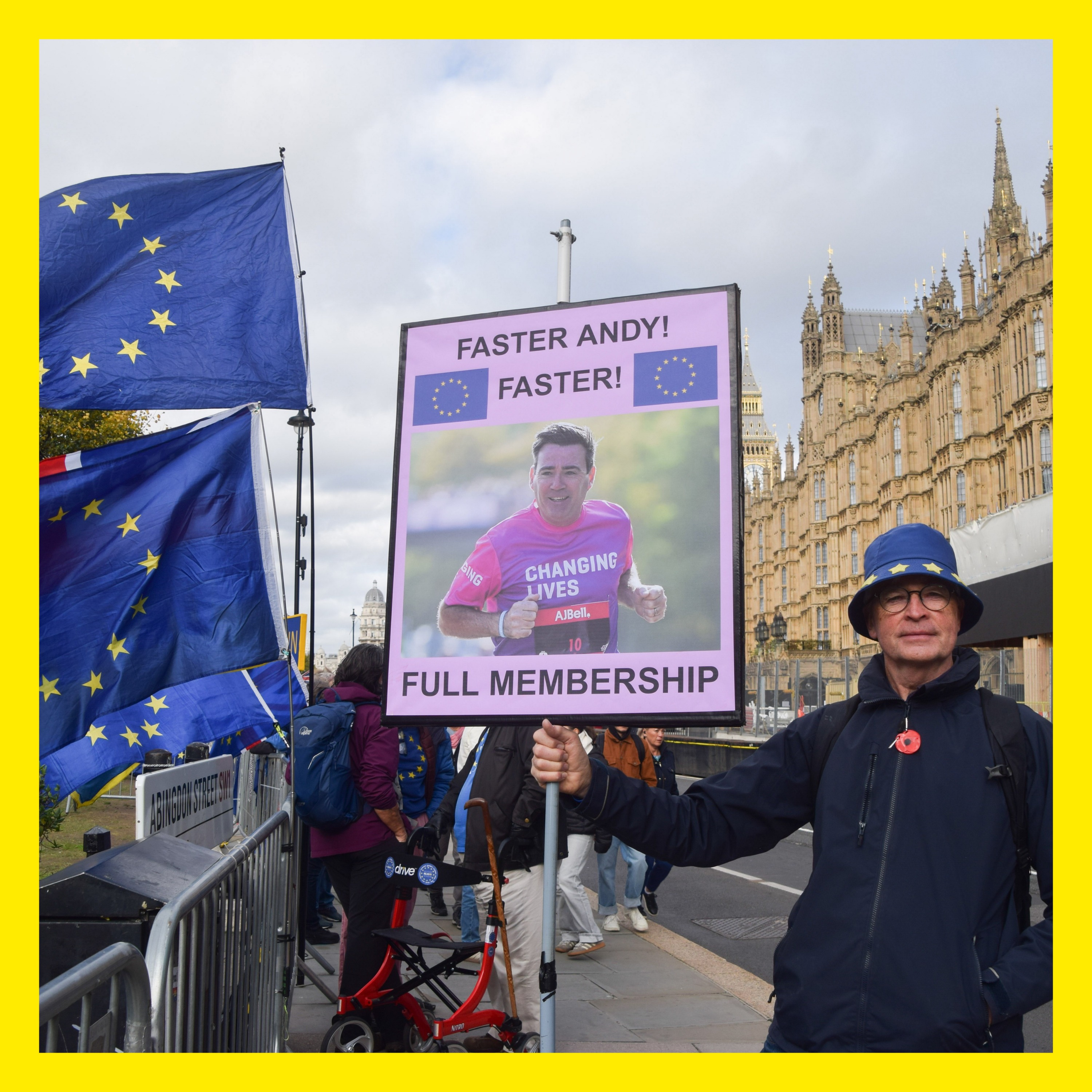
25:50Yeah, Steve Bray wasn't even here with his pro-EU. Steve Bray wasn't here with Labour, wasn't he? Yeah, he was. Normally you have to shuffle past the protesters and hide your conference badge until you get to the door. But there was just, you know, even they can't be bothered to turn up. What would you make for Patrick? Well, look, my ultimate vibe check was shout out to the Shadow Cabinet Minister who came up to me at the Spectator Party to say they're a massive fan of the podcast. So thanks for listening. I won't repeat your critique of my podcasting style or the inferred preference for my favourite political leader, but let's just say lots of people in the YouTube comments agree with you.
26:28But yes, I say, look, there was a sort of slight, and it's sort of slightly church to say this, right? At every party conference, there's an area of unreality because it's a self-selecting audience of political enthusiasts. It's a cult. Enthusiasts, yeah. And it definitely felt, and also I feel like there's a bit of a time lag on, because often people are making judgments six months in advance. So it didn't quite feel that the Tories were the party of business again yet, but that'll be because the head of public affairs at United Biscuits six months ago was like, well, the Tories are done, aren't they?
27:03Whereas I imagine now they're like, let's block book a load of hotel rooms in Manchester for the execs next year, because we've got to get into business day. And there were a lot of them at Reform, actually, business folk. Yeah. Tell us about the business community. You still think it's worth it? Someone told me one of those tents, if you want to do some events, cost like 70 grand for the few days you're here. Well, Labour was six, six and a half grand to get in for the business day. Just for the business day. Yeah. Wow. I mean, there were, especially public affairs and business people that I spoke to this week who were like, I am genuinely questioning whether it was worthwhile coming to this.
27:35I mean, I think... That's really undercutting the vibe, isn't it? We're just slightly undercutting the vibe. But I do think that is a reflection on party conferences more broadly sometimes as well than just simply the Conservative Party conference. When you are mid-cycle, there is just a broader question about how much worth it is sending people and spending lots of money being at these things, especially when it's no longer a two-party system, et cetera, et cetera, et cetera. So I think all those things... Sorry, Ben. Just briefly, I just think this is, like Labour conference, this is a party now that is once again at ease with itself.
28:04Yeah. And that was the overriding feeling. to say nothing. Everybody's pointing the same way. Yes, exactly. And, you know, what is less clear from the vibes here, from the speech, from the reaction to speech, is the extent to which the country is, enough of the country is once again at ease with the idea of voting Conservative in an efficient enough way and a geographically ideally distributed way to return the Tories, not just to power, or indeed power is a bit of a stretch, but to a clear, emphatic second place over reform. Yeah, that unity also papers over differences on policy that would otherwise be seen as really significant.
28:38So just for example, some of the more scratchy elements this week of what is the debate on the triple lock, the fact there are people around coming, they've not previously said that it's perhaps unsustainable and would perhaps be sympathetic towards a position like Andy Burnham's. That is no longer massively significant. The same on the Iron Dome policy, for example, which I think had quite a rocky berth, you might say. Not an Iron Dome, even though they call it an Iron Dome. Not an Iron Dome. Press release. You're splitting the difference to ask whether or not it would cover the entire United Kingdom or just critical urban structure, for example.
29:08Those kinds of questions are just not massively interesting because everybody is behind Kemi Baden-Ock in that moment and therefore they don't take on the same level of political potency where if you were at a conference where there'd be big divisions, they would. On a slightly wider point, I think it's such a fascinating moment in politics because you have two party leaders who the country doesn't really know and are quite fresh in their minds and are therefore open to being defined positively or negatively. I don't I think the country's thought about Andy Burnham for the last 10 years, except for that point when he challenged Boris Johnson during COVID.
29:38Kemi Badenock, when you look at those word clouds, the big one that's in the middle, I still don't know, because most people in the wider country don't yet have a really good sense about who she is. And that means if you did ever have a campaign, a snap election, either one of them could suddenly cut through, you know, when the whole country zooms in on the election debate. So it's kind of very fluid. Well, and that question of cut through is an important one. I mean, we're speaking about an hour after Kemi Badenock. embraced her husband Hamish and rode off into the sunset after a conference that passed off for that incident and went just as well as she liked.
30:10But has she said something that has made the weather? I mean, speaking to a shadow cabinet minister last night, they were saying, you know, whatever you thought about Andy Burnham's policy proposals last week, he had made the weather. All of a sudden, everybody was talking about the triple lock. Labour was leading the national conversation in a way it hasn't led the national conversation in years. I mean, you could also say the same, by the way. The same is true if you mess up your party conference. The Greens have been at the forefront of our national conversation with their Zionism motion. Not that they would have intended to lead the national conversation in that way, but everybody was, not everybody, but it was leading the news agenda.
30:46Ditto, reforms conference excited a lot of national conversation for the wrong reasons, because of unforeseen controversy. privacy and was there anything in that speech that will you know not only lead the news agenda today which obviously will but will get people talking and set the contours of politics for a while i don't know like you know is the inheritance tax big thing big and bold enough in the way it was in 2007 i mean as you were saying kemi may not made a virtue of that is it kemi saying uh oh actually reform are really really bad guys etc etc it's possible but it seems less obvious what the big mic drop floor clearing moment is from her than it was, say, last week.
31:32Right, I think that brings this week's episode to an end. And obviously back next week, all roads point to the budget and we will all be talking, I'm sure, about tax rises. So on that very positive note, we will bring this to a close. And can we just thank the amazing Harry? Harry, thank you very, very much for being our amazing producer and making this happen today.
31:55Thank you.
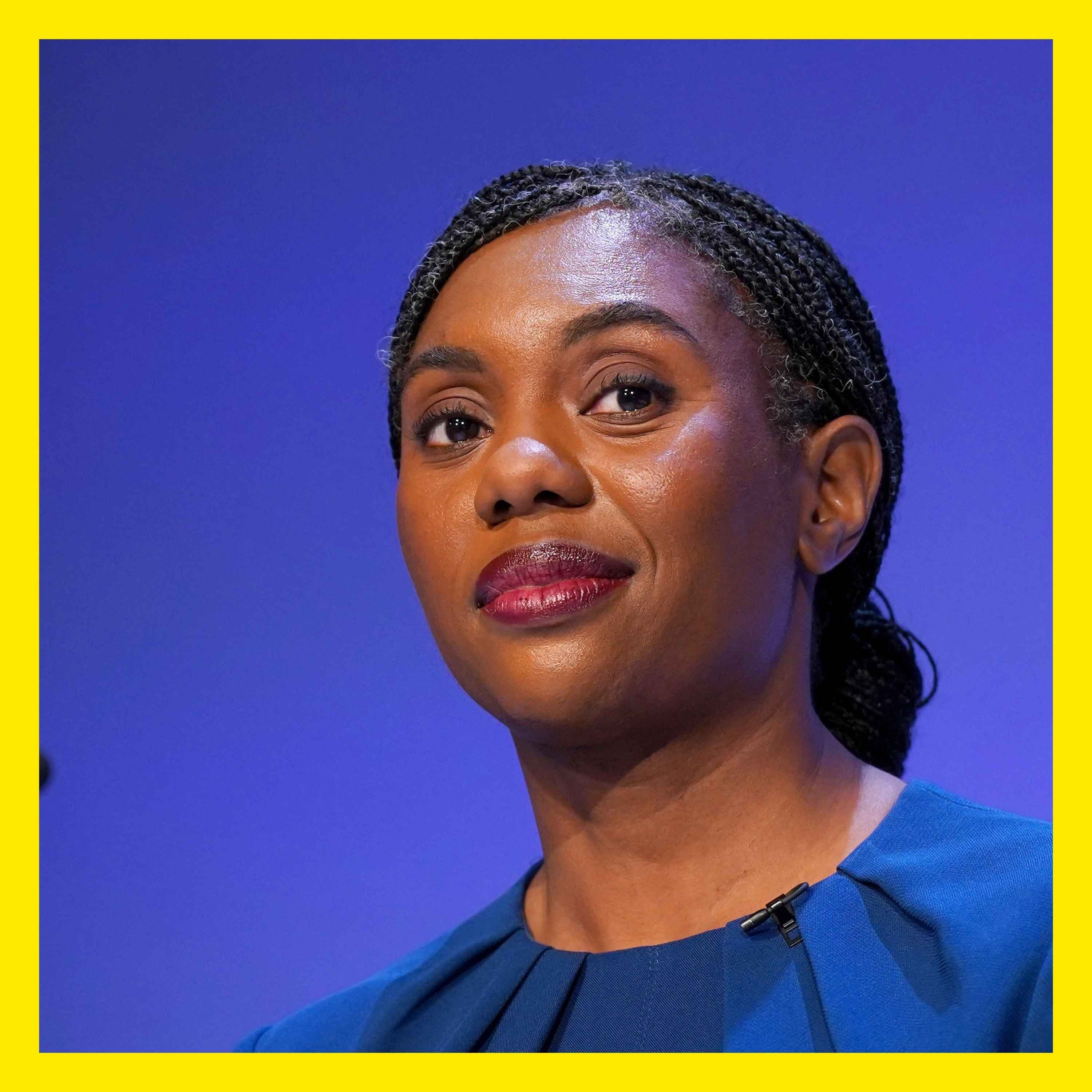
Kemi Badenoch's attack on Reform UK was all about character and her attack on Labour was all about economics. In her speech at the Conservative Party conference in Birmingham, she said she would to scrap inheritance tax on family homes and that under a Conservative government, couples would be able to leave an extra £1m inheritance tax free to their children.
Badenoch was withering about Nigel Farage and Reform UK, saying: "The circus goes on and on and it will never stop because this is who Reform are — so to those who say ‘unite the right’, we are not uniting with that.”
We look at the Conservatives' electoral strategy, their prospects — especially compared with a year ago — and the vibes among their MPs.
Steven Swinford, political editor, The Times
Ben Riley-Smith, political editor, The Sunday Times
Lara Spirit, deputy political editor, The Sunday Times
Patrick Maguire, chief political commentator, The Times
Producers: Euan Dawtrey, Harry Kitson
Executive producer: Molly Guinness
Picture: Getty Images
00:00 - Live from Tory Conference: Badenoch’s Speech Analysis
00:41 - The Inheritance Tax Gamble: Family Homes Exempt
02:01 - Strategic Shift: Winning Back the South & Abandoning the Red Wall
05:14 - Why Immigration Was Dropped From the Main Message
06:33 - "We Will Not Unite": Direct Rejection of Reform UK & Farage
08:03 - Character vs. Policy: The New Strategy Against Reform
10:45 - Key Omissions: Public Services and the NHS
13:17 - Football Legends, Identity, and Patriotism
17:36 - Vibe Check: A Surprisingly United Tory Party
20:19 - Badenoch’s Dominance: "Captain, Manager, and Owner"
22:13 - Path to Power: Rebuilding Economic Trust
25:08 - Behind the Scenes: Bars, Protesters, and Business Access
29:34 - Did Badenoch’s Speech Set the Political Weather?
32:50 - Looking Ahead to the Budget
This podcast was brought to you thanks to subscribers of The Times and The Sunday Times. To enjoy unlimited digital access to all our journalism subscribe here.
Hosted on Acast. See acast.com/privacy for more information.