Ask ChatGPT



In this episode of "The State of It," the political landscape in the UK is examined, focusing on the implications of blocking Andy Burnham from standing in the Gorton and Denton by-election. The discussion includes the potential fallout for Labour leader Keir Starmer, the dynamics within the party, and the ongoing political maneuvering surrounding the upcoming by-election.
Written by AI. May contain mistakes.
Discussion on the significance of the upcoming Gorton and Denton by-election for Keir Starmer.
“Welcome to the latest episode of The State of It, the political podcast from The Times and The Sunday Times.”
Analyzing the political implications of blocking Andy Burnham's run for Parliament.
“And I'll just rewind slightly to the weekend, when Number 10 was feeling very pleased with itself.”
Exploration of the vulnerabilities in Starmer's position and leadership style.
“And it's an essential truth that MPs don't much like.”
The potential fallout from losing the Gorton and Denton by-election for Labour's future.
“when we will have changed the mayoral election system in Greater Manchester.”
Discussion about Ed Miliband's potential influence and ambitions within the party.
“And actually, one of the things that Andy Burnham said in his letter on Saturday was that he would have thrown all his support behind whoever the candidate in that mayoralty had been.”
The challenges facing Starmer and Labour as they navigate internal and electoral pressures.
“And that strikes me as a really interesting moment for what's to come.”
Exploring the influential figures within the Labour Party and their potential impact on government direction.
“Although, incidentally, that's the sort of message, if you're looking to reunite the progressive block of the electorate, that's what you would go for.”
Discussion on Angela Rayner's political standing and her potential ambitions within the Labour Party.
“And that, as you said, Gabriel, is still a powerful thing, no matter the backlash.”
Analyzing Angela Rayner's struggles with public perception and her response to media scrutiny.
“It's really difficult beyond Angela Rayner and potentially Lucy Powell to see who could be the standard bearer for the soft left at the moment.”
Overview of the Prime Minister's imminent visit to China, addressing its significance and implications.
“I think there's also a personal element of this as well, which is, you know, Angela Rayner has become an incredible sort of lightning conductor often for the sort of right wing press to have a go at her.”
Discussing the security measures and precautions taken during official trips, particularly to China.
“So after the interval, we'll come back and we will talk about China and why he's going, especially at a time like this.”
Insights into the unique experience of traveling alongside the Prime Minister during international visits.
“You had to get undressed under your bedclothes, being very careful about where you had showers, assuming that you were being spied on even in your government hotels.”
Discussion on the significance of the PM's trip to China and its framing around the cost of living.
“And obviously there's business to be done on this trip as well.”
Exploration of the shifting political landscape surrounding the Chagos Islands deal.
“And that was going to come to a vote on Monday.”
Analysis of Trump's recent comments regarding the Chagos deal and its implications.
“He did really well in selling this deal to the US and getting it over the line.”

Get the gist, explore an idea or ask about something said.
 Claude
On The State of It, what are the key points of this episode?
Searching your listeningAutomatic transcript. May contain errors.
0:00Having an election for the Mayor of Manchester, when it's not necessary, would divert our resources away from the elections that we must have and fight and win. They've had a sort of self-serving, selfish, useless mayor of Greater Manchester, desperately trying to crawl his way back into Westminster, and he's been shown the door by an equally desperate, self-serving, selfish Prime Minister. There would have been a pro-Burnham, anti-Starma vote. That won't be there anymore, and I think the anti-Starma vote will come to us. Would you please welcome to the stage former Home Secretary, Suella Brabham.
0:47Thank you. Thank you, Nigel. I feel like I've come home. I feel like I've come home. Thank you. Welcome to the latest episode of The State of It, the political podcast from The Times and The Sunday Times. I'm Stephen Swinford, the political editor at The Times. I'm Caroline Wheeler, the political editor at the Sunday Times. I'm Patrick McGuire, chief political commentator for the Times. And I'm Gabriel Pogrand, Whitehall editor at the Sunday Times. This week we have three things for you. We have Keir Starmer's new D-Day, which is February 26th, the date of the Gorton and Denton by-election. We're going to be talking to you about his trip to China.
1:27Myself and Caroline will be on the flight with the Prime Minister tonight, why that matters, what he's trying to do there, and also what it's like to be on one of these trips, give you an insight into that. And we're also going to talk about the Chagos Islands deal, which appears to be rapidly unravelling, and Gabriel will have a scoop for us on that. But let's start with Gorton and Denton, because that is a massive thing on the horizon now for Keir Starmer. And I'll just rewind slightly to the weekend, when Number 10 was feeling very pleased with itself. They managed to block Andy Burnham from standing down as the Mayor of to Manchester and having a run at Parliament.
2:05And they did so with a margin of eight to one. And for number 10, this was a show of strength. It was accompanied with some very aggressive briefings saying that Andy Burnham had tried to break the rules for his own ego, his own vanity, effectively. And they'd used their muscle on the NEC to stop him. But there is a big but. And Patrick, you wrote a pretty ferocious column about this a few days ago, which raised some eyebrows in number 10 and elsewhere, because what is coming is far. Or worse potentially now. Yeah, look, I think the Prime Minister looked weak on Sunday, despite that landslide vote.
2:40He looked weak because he is weak. And in blocking Burnham or letting him run, he had a choice between different expressions of weakness. I think whatever way you slice it, I don't think this leaves the Prime Minister in a stronger position. And yeah, look, Andy Burnham is not going to be in Westminster. There's not going to be what Cabinet Ministers were all told to call psychodrama, because we can never just say drama or tension now. Everything has to be a psychodrama, whatever that actually means. Or an omni something. Yeah, or an omni shambles or, you know, but yeah, psychodrama, very much the word of the week.
3:12Douglas Alexander was using it, Shabana Mahmood used it before the meeting on Sunday. And, you know, there's this idea that this won't mean any more leadership speculation. Keir Starmer can just continue universally beloved by Labour MPs, members and voters. I mean, come on, do me a favour. That is not going to happen. I think it's fermented quite a lot of ill will, even if the people who could really do damage to number 10, people like Lucy Powell, people like Ed Miliband, people like Angela Rayner are quite astutely deciding to keep their powder dry on this. And why is it such an issue of Akir Starmer, because I think it exposes one of the essential truths of his leadership.
3:55And it's an essential truth that MPs don't much like. It's that basically the only thing he is consistently good at, or rather his team are consistently good at, is organising to win votes inside of the Labour Party, of organising within the Labour Party, right? That is the essence of Morgan McSweeney as Chief of Staff. He is an organiser. Now, every politician needs an organiser, but what they lack is a popular leader or a leader capable of stringing a sentence together or a leader with a vision to organise around. Contrast that, by the way, with Andy Burnham, who, as much as he's a figure of fun in Westminster, as much as I can't even be bothered to rehearse the familiar lines about Andy Burnham.
4:40They annoy me so much because they're so trite. And I think divorce from the electoral reality he's created in Greater Manchester over three successive mayoral elections. But the contrast with him is he wasn't organised at all. He went over the top. He took, made a bold gamble. There were, as we were reporting the Times on Monday, some attempts to strike some sort of deal. There were discussions about, Andy, if you don't go for this, we will give you a clear run at a seat in 2027. when we will have changed the mayoral election system in Greater Manchester. So it'll be a two round preferential system.
5:15You won't be throwing this mayoralty to reform. What a mission, by the way. We're too broke and too unpopular to possibly win the mayoralty of Manchester as the Labour Party. But Andy Burnham didn't take that deal, but nor did he do, I'm told, what was necessary to win the vote. He didn't speak to the unions on the NEC officers panel that made this decision. so in the end the result was inevitable right Morgan McSweeney has the unions on lock everybody else in there is a loyalist Shabana Mahmood made sure she didn't vote because she had serious reservations about what's to come and if Shabana Mahmood thinks something isn't a good idea it probably isn't a good idea looking at Labour history and so Andy Burnham was left with Lucy Powell and there in microcosm you have the two problems with the two halves of Labour's leadership struggle right now all of the contenders to succeed him are better than Keir Starmer at basically everything apart from the thing they need to do to engineer a leadership challenge, which is organising.
6:12And that's still the thing the Labour leadership can do. And I think it leaves Keir Starmer diminished. He spent a little bit more of his political capital and it leaves the Labour Party in stasis until the 26th of February when this debate and psychodrama begins again. We should talk about that seat because this seat is amazing. It's divided. is, you know, one half is effectively white working class area that looks likely to back reform, and reform doesn't do very well there. The other side is Muslim, and the Greens are going to play a very strong... The Gaza card, basically. They are going to have a really...
6:46It'll get very ugly. It'll get very contested. And what people probably won't be talking about is Labour, because Labour ends up potentially in third there. And that is almost a microcosm of the weaknesses of Keir Starmer's premiership. He's not appealing to white working class voters. He's not appealing to the Muslim voters. And that therefore leaves Labour potentially in third. And what I would say with Andy Burnham is what he has done is positioned himself as a Cassandra. He is already saying we're going to lose this by-election. When they lose it, he will be able to say, I told you so. And that's a really dangerous position, I think, for Keir Starmer to be in.
7:21And actually, if you spoke to some of the sophologists around this, and I certainly did do that on Saturday as it broke in our time, you know Andy Burnham wanted to position himself as the only person from the Labour Party that could actually win that seat and I spoke to Luke Trill our favourite pollster and said is that true and actually for all the reasons that you said Steve in the way in which that seat is made up he came to the conclusion that actually Andy was probably right that he probably was the only person being sort of left of centre that had a kind of popular mandate in Manchester that could actually win that seat.
7:55So as soon as that by-election is over, if the Labour Party lose it, I think that is going to be a moment of peril again for this Prime Minister. There are already MPs saying to me, if we lose that and we lose that badly, then we're going to come for him. That we think that this is a really, really bad case of judgment, that they should have let him stand and run it because they think actually a by-election would have been a bigger sort of, it will be a bigger boon to Nigel Farage's party than perhaps even the mayoralty of Greater Manchester. And actually, one of the things that Andy Burnham said in his letter on Saturday was that he would have thrown all his support behind whoever the candidate in that mayoralty had been.
8:39But if they lose that by-election, it is going to be catastrophic. And you only have to look at the response to Hartlepool, the response to Cofili, the response to some of those other really big votes that have happened that Starmer has lost. that all hell could break loose. And I've certainly had several people saying to me that that is one of the moments before May that could potentially become a kind of moment for Sakhir Starmer and his leadership. I mean, I think that, you know, Patrick's right that this was a choice of various forms of weakness and every choice magnifies weakness in a certain way.
9:14But I think it is worth saying out loud that Starmer did what I think was the only thing he could do in the circumstances. Andy Burnham's speech included this ridiculous notion that he was going to come in in order to support the government. Come off it. Obviously, he wasn't. He has been laying out his own alternative school of political economy and talking about the importance of unleashing Manchesterism across the British Isles. He's self-evidently not even got a seat and is laying out his vision for when he's prime minister. The notion that Starmer could have had him in Portcullis House, you know, sitting down with journalists over Diet Cokes in Parliament in between votes, briefing his thoughts on each policy, united, you know, physically and politically with the mushy middle of the parliamentary Labour Party with Lucy Powell, I think is for the birds.
10:08You know, of course, Starmer's weak, and it might be that he's so weak in February, in the event that Labour loses his by-election, that people say, well, we've got to go earlier than May. I can't see that I think that actually quite a lot of the dynamics uh you know are pretty similar and to coin a phrase nothing really has changed Andy Burnham's still not an MP there are still a lot of people that would quite like to see Starmer as Prime Minister and yet there is still this massive question mark hovering over the whole party which is who how and when and I still don't see that it serves anybody's interests to go any later than May why would West Streeting respond to of a single by-election by saying, I'd like to be the one to go chin first ahead of these midterms where we're going to get a kicking.
10:55Can we talk about just briefly what happened on Saturday, which is obviously joyously for Sunday journalists within your time. But it was pretty amazing. And the thing that we struck us looking back on that is Ed Miliband coming out and saying that Andy Burnham should be allowed to run. And that strikes me as a really interesting moment for what's to come. We need to talk about Ed. We always need to talk about Ed because he is incredibly popular and he looks at me. In the Labour Party. In the Labour Party, yes, perhaps not out there in the country. But every time there is any polling done amongst the members, Ed Miliband is pretty much always number one.
11:31It was quite surprising, I think, last time that West Street was number two. But Ed Miliband has seen this polling and he's taken it to heart. And he genuinely thinks, or so I'm told, that he could lead the Labour Party again. And if he can't lead the Labour Party again, what he really wants, I'm told, is he wants to be Chancellor. Certainly some of the briefing that we had over the weekend was that he's been in talks or considering or been thinking about whether he would throw his lot in with the Burnham crowd. And people have been suggesting that that might be in exchange for a seat at the table, perhaps in his Treasury.
12:07However, I wouldn't put it beyond Ed Miliband to also be having conversations with Wes Streeting about exactly the same thing, because Wes Streeting knows that if he's going to win amongst the membership, he needs to neutralise Ed Miliband. He knows that the one person he doesn't want to end up in a runoff with at the end when it comes to the membership is Ed Miliband, because he's potentially the one person that could beat him. Now, look, I'm not suggesting for a moment that I think Ed Miliband could necessarily get through MPs. I don't think he's got necessarily that level of support, but it is possible that he could play some kind of kingmaker role.
12:43Yeah, absolutely. And the case against Ed Miliband as a, you know, history's most unlikely schemer. If anyone who worked at the Treasury in the noughties is listening to that now or in number 10 might be laughing at the notion that Ed Miliband's scheming is itself implausible. but the sort of straight-faced Ed Miliband case what he said over the weekend was basically he wanted to save Keir Starmer from himself he didn't quite put it like that but it was very much a sort of I want to think Andy back in Parliament uniting Keir around Labour values that everybody can get behind let's shift, let's Labour values, shift the party back to the centre of gravity and get back to the fundamentals something like that, right?
13:29That was the sort of case Ed Miliband's allies were bringing that this isn't about Andy replacing Keir. This is about number 10, people in number 10. And this isn't the Ed Miliband case. This is my reading of the Ed Miliband case. It's basically, we need to take back control. The soft left needs to take back control of the Labour Party, get it back to Keir's sort of comfort zone. And Andy Burnham can help him do that, help him root him in a politics that can command broad support across the Labour Party in Parliament and also in the country. As in the party in the country, the unions, etc. Not necessarily Labour voters.
14:02Although, incidentally, that's the sort of message, if you're looking to reunite the progressive block of the electorate, that's what you would go for. But yeah, the Ed Miliband operation basically is the Andy Burnham operation insofar as it exists, insofar as that operation is Lucy Powell. And Lucy Powell was the only person who voted to support Andy Burnham. But it does show you that there is a sort of axis of influential people in the Labour Party, to which we can add Angela Rayner, who are looking at the government's direction of travel and unsurprisingly think, this is crazy. What can we do to stop it?
14:31And I think that's a dangerous thing for Number 10. You know, what do people resent about the last week? It's not necessarily Andy Burnham thing. It's a Number 10 thing. It's they don't like the way Number 10 does political management. They don't like the economic direction of the government. So could you beat Andy Burnham or any leadership challenger by, with your final throw of the dice, trying to become them? Could you say the morning after a big electoral defeat, OK, I've listened. I've sat Rachel Reeves. I've sat Morgan McSweeney. Wes Streeting, you're now my chancellor or Shabana's now my chancellor and Wes is my home secretary.
15:01You know, something like that. You know, one of the big lessons of the Burnham scenario is no matter how weak the prime minister is, he is still the prime minister, still the leader of the Labour Party. and he still just about controls its internal machinery. And that, as you said, Gabriel, is still a powerful thing, no matter the backlash. It's quite interesting you mentioned the idea of a reset because certainly there were sort of some rumblings, and I think Steve picked up the same, about whether we could be looking at some sort of reshuffle after the May elections, just to kind of put a bit of a gap or some sort of event between the elections happening and then potentially however the backbenchers are going to respond.
15:40But just your interesting point about Wes Streeting and what he could do with him. Obviously, we'd have to offer him a bigger job. The three jobs that would be potentially available would be Foreign Secretary, Chancellor or Home Secretary. I know that Wes Streeting thought that he was on his way to the Home Office at the last reshuffle. And a curious story his people told me was that he was so determined that he didn't want to go to the Home Office that he claims, or his people claim, that he came up with a whole speech for Sakhir Starmer about how he couldn't possibly become the Home Secretary because he wanted to leave the ECHR and he knew that that wasn't government position.
16:22and he did not want to end up in a position where he was held by collective responsibility on a policy that he with all good conscience couldn't support. Now you can never quite tell with Wes's team whether he's pulling your leg, but it wouldn't be beyond the realms of possibility that he was serious and that he had genuinely prepared this manoeuvre to ensure that he stayed at the Department of Health. We should also talk about Angela Rayner, who has been doing stuff behind the scenes. We've got a story tomorrow in which she's saying that, you know, I'm not dead yet. She's reminding people that she's there.
16:54She's still embroiled in this tax investigation. I'm told that HMRC is still requesting fresh documents and fresh evidence. It's dragging on and that's a problem for her. But she's still a force and she's out there operating. Yeah. And she showed that she was a force again on Saturday. I mean, it was widely reported that she was going to use her appearance at the Northwest Regional Conference to tacitly support Andy Burnham in his bid to become an MP. But look, I'm really confused by Angela Rayner. There's always a lot of briefing around her, what she wants, what her ambitions are. But certainly some of the people I talk to, she is saying very clearly at the moment that she's not sure that she does want to throw her hat into the ring.
17:36The only circumstance where she potentially would is if Wes stood and there wasn't anybody from the soft left to counter Wes. What they don't want to see is a coronation. And obviously now Andy Burnham is for at least now not in the mix. It's really difficult beyond Angela Rayner and potentially Lucy Powell to see who could be the standard bearer for the soft left at the moment. Yeah. And this is the big problem, by the way, with all the fantasy cabinets. We're trying to build in our conversations with MPs and in our copy on a regular basis. The issue is for people on the soft left of the Labour Party.
18:12some of those influential and powerful people on the soft left of the Labour Party cannot take West Streeting in good faith. They have known him for a long time. They think, in my view, unfairly, that he's a straight up and down cartoon Blairite. And when push comes to shove, if West Streeting is knocking on the door of the Department for Net Zero and Energy Security, saying to Ed Miliband, you know, please, Ed, come on, be my chancellor. Does Ed Miliband walk out of that office and go home to north london and say you know what i'm going to be west treating's chancellor i'm not sure he does and angela rayner certainly doesn't you know it was this podcast of course we revealed she'd rather stick pins in her eyes than endorsement such a great phrase and uh i don't think anything has changed yeah i also get the impression from speaking to people closer that there is much more ambivalence than some might think and if you actually reflect on what she's done since leaving government i mean she signed a deal to write a memoir or an autobiography but she's also spent a lot of time litigating issues which she feels starmer has retreated from since she was relieved of her duties on things like leasehold reform speaking to people around her camp she's still very seized with the this conviction that starmer and mitsweeney repeatedly did the dirty on her in whitehall and then after you know telling her one thing then doing the other killing legislation that she was committed to.
19:35I get quite a strong sense that she's actually quite enjoying actually trying to fulfil the letter of what she thought she'd secured from them in government. She's got actual things she wishes to do and I think that might come before the manoeuvring in some respects. I don't know that, you know, as with Andy Burnham in a way, there might be a degree of opportunism but in the meantime... Doesn't mean there's no sincerity. There's some underlying sincerity which, you know, our cynics are reluctant to admit but I sense that she's got a bit of a, if not a programme of government, then a programme that she wants the government to enact before the leadership phase of this story asserts itself.
20:11I think there's also a personal element of this as well, which is, you know, Angela Rayner has become an incredible sort of lightning conductor often for the sort of right wing press to have a go at her. And, you know, if you think about that sort of tax row, she was on the front page of national newspapers every single day for days and days and days. And she hates that. And she hates it. She absolutely hates it. She finds the kind of classist warfare that she seems to elicit where, you know, she's kind of regarded as a kind of, you know, working class woman. And she gets derided for that in a way that perhaps men don't.
20:45She finds that absolutely infuriating. And it's not nice. It's not enjoyable. It's not great having close protection with you all of the time, not being able to do anything without being watched, you know, 24-7 and having that kind of pressure on you. And I just think, you know, she's a character, Angela Rayner. She's got a life. She's got children. She's got a family. You know, she's got other things that she wants to do. And I do just wonder whether there is a sense that if she has to do it, she really has to do it, because it's the only way to stop Wes, she will. But if it came to her as a choice, would she really be choosing this?
21:19I'm not sure that she would. No. Well, you're a prime minister under pressure. You've got, you know, psychodrama, enemies on all sides. What do you do? You go to China. We are about to join the Prime Minister in China. He's flying out for five days, extending his tenure of trips abroad to, I think, over two and a half months of his premiership so far. Never hear Keir is how they describe him. So after the interval, we'll come back and we will talk about China and why he's going, especially at a time like this. OK, welcome back to the State of It. The Prime Minister is about to fly off to China.
21:51As are you in Caroline, Steve. Indeed, we're going to be there and we're going to tell you, we're going to do two things. We're going to talk about the serious business first, which is why is he going to China? And then we're going to try to share with you a bit of what it's like to be on one of these trips, a flavour of what it's like to travel with the prime minister. So, first of all, why is he going? He's not going to do a Mark Carney and basically say China's the future. You know, we are turning away from America to China. Indeed, that's the one thing he's making clear he's not doing. But he is going and the argument is going to basically be China is too big and too powerful to ignore.
22:23It is too big an economic force, a military force. And actually, we can ignore it. We haven't been there for six years since Theresa May in 2018. But that's our expense because everyone else is there. We're going to go there. We're going to leave. Mertz is flying in, I think, within 24 hours or so. So you can't ignore China is going to be the Starmer argument. And that's why he's going. And it's going to be fascinating to see what President Trump reaction is going to be, because when Carney went, there was a complete meltdown. And that was one of the first questions that we asked when we had one of our briefings about this trip is, what do we expect the reaction to be of the United States?
22:58Now, the answer that we're getting back from number 10 is, well, hang on a second. Other people have been to China. There hasn't been a big issue. Donald Trump himself is going to China later in the year. So he can't really complain about us doing the same thing with an economic powerhouse. and given the instability that we find ourselves in the world right now. And everyone will be taking, as is usual on these trips, I imagine, there'll be lots of burner phones, burner laptops, because let's face it, I mean, China is an industrial spying complex. There's been doing huge scale spying against the UK.
23:31They are notorious for cyber attacks. And so anyone connected to government can't take their own phone there because they'll probably be taking all the information on it. Have you got your own burner phones? Not yet. I'm trying to procure one from the News UK system. I haven't quite got it yet. But yeah, the tech bar. We'll see if we get there. But look, it's a serious, for me, I mean, if they want pictures of my kids, good luck, China. But for obviously a prime minister, for advisors, there's a lot of potential compromise on personal devices. So I wouldn't expect any of them to take them. And there's always great stories around the kind of efforts that diplomats go to to try and protect their information.
24:07I remember writing a front page story when Theresa May last went to Beijing because of some of the advice that the diplomats were given, which included not getting undressed. You had to get undressed under your bedclothes, being very careful about where you had showers, assuming that you were being spied on even in your government hotels. And there have been also extraordinary stories in the past about, you know, honey traps happening on some of the earlier trips involving Gordon Brown and his team. So, you know, China is always going to be one of those countries where there is going to be increased vigilance around the kind of security nature of it.
24:39But look, it's going to be an incredible trip. we just want to sort of bring you inside what one of these trips is like because it is a uniquely weird and kind of momentous time that you have you're kind of trapped with the prime minister in a plane often traveling for hours and hours at a time he's at the front of the plane most of the journalists except the ones that get to travel in business class not us are in the back. We're not complaining, we love working here. In the cattle class. And what generally happens after a couple of hours of flying is the Prime Minister comes to the back of the plane and starts talking to the journalists.
25:17And during my time having been working, there's always a kind of different style of all of the Prime Ministers. David Cameron was pretty relaxed. He'd often come back several times during a trip, often on the way back as well, and sit with journalists and have a drink. Boris Johnson, similarly so. Theresa May, not so much. I have to say, on the last trip that she did, which was when we went to Argentina, which was perhaps the most hair raising of all the trips that I did, which was in the midst of the Brexit negotiations. And certainly on the way out, we went to the front of the plane. We were invited to go and speak to the prime minister.
25:52And there was a pilot sitting there charting the route. And he looked very industrious with his pen and paper. And I sort of said, oh, you know, what are you doing? And he said, well, it's a very long way to Argentina. and we've only got a certain amount of fuel and it's going to be pretty touch and go about whether we're going to land. It did feel at the time as a kind of great metaphor for the Brexit negotiations and the very small landing zone that Theresa May had for her deal. But on the way back, it was a much more jolly affair. It was the last trip that Theresa May was going to do or she thought she was going to do as Prime Minister and she cracked open the Aperol spritz and it was a much more kind of relaxed moment.
26:31But, you know, there are moments of great intensity on these trips. There have also been moments of great jollity. There is famously a journalist who got on a drinks trolley and was basically using it as a vehicle to go up and down the aisle. That journalist has never been identified. I did try and finger someone for it the other day and ask if it was them. They deny it vehemently. But, you know, it's an incredible environment that you can't really replicate anywhere else, can you, Steve? You get this access because he is, so Sama will come to the back of the plane and the assembled journalists will kind of gather around him crammed over seats.
27:08There's obviously not much room. It's a plane by definition. And you can ask him anything and it's all on the record. And that is where the importance of it is really. So obviously he will be asked about China. He will ask, will you raise cases like the Jimmy Lai cases? There will be all of that stuff. You know, the Uyghurs, everything around that. But there will also be a lot of questions about domestic politics. and often you end up flying somewhere and the Prime Minister will be answering a question, let's say, about Andy Byrne or something and that suddenly becomes the headline. So you've got the Prime Minister flying to a destination on an official visit, but actually because of the nature of these huddles, anything can come out of it.
27:43And as you say, there's also time for the Prime Minister to relax. So you often... I've seen Keir Starmer actually with a beer and the personality shift from the guy in front of the cameras is really significant. He relaxes. Obviously, he talks about football. He always talks about football, but he enjoys himself and he's interested in what's going on, trying to tell you something or a flavour of where his head's at. So it's a great privilege of the job to go on these trips, but they have a fundamental democratic function in that we get an insight into where the PM's head is at. And that's why they matter.
28:19And obviously there's business to be done on this trip as well. They're going to come at us with a load of press releases about huge investment. And you look at the figures and they're always slightly dizzying. And you wonder for the value for readers of, you know, an X billion deal. What is a billion? And can readers really understand that? So how Starmer does the sell on this trip is going to be a challenge. He needs to make it about the cost of living. Well, exactly. This is the first test of Number 10's new mantra, which is everything we do is about the progress we're making on the cost of living.
28:47and every time the prime minister goes abroad we need to frame it in those terms and they just need to be sure or they will be thinking very hard about how they make every announcement in china because engaging with china is not uncontroversial right you know uh particularly at a time like this and given the ongoing rows about chinese espionage the embassy etc etc all of that is predicated on the idea that China is a threat to Britain. So it's a big, bold thing to go to China to say, OK, we're not going back to the golden age, but the ice age, as Keir Starmer is calling it, that followed David Cameron and George Osborne's golden age.
29:27The ice age is over. We're going to engage with them and it's going to help you with the cost of living. The gamble is, does Keir Starmer have the political vocabulary on authority to explain it? And that is the defining question of this government on any question, let alone one as big as China. Shall we move on to our final item of the podcast which is the chagels islands where the deal appears to be unraveling quite quickly so the tories played something of a blinder on friday in the house of lords and i i personally love this because it's arcane parliamentary chicanery which i always enjoy so they tabled at 3 p.m on friday a motion which was effectively a process motion but it said look we don't think any discussion on this should happen until a treaty between the US and the UK in 1966, which said that Britain must retain sovereignty of the Chagos Islands until that issue is resolved.
30:21And that was going to come to a vote on Monday. And Labour looked at it and they went, oh dear, we don't have the numbers. They realised they were going to lose. They realised the Tories had ambushed them effectively. And so the whole deal is currently in the air and the Tories are going to continue with this parliamentary chicanery for as long as possible to kind of talk it out well as our colleague danny finkelstein should give us correct title baron finkelstein of pinner pointed out to us the other day steve the tories are doing three line whips in the lords yeah and that's something they never ever do i mean one of the times george osborne introduced one over welfare reform andrew lloyd webber had to get back on a plane from broadway to vote vote with the government so that's a big deal it shows you how much energy the tories are investing in killing this thing and they have the numbers to do so in the law.
31:08And that buys them time. And how this is how what is happening with that time? Nigel Farage is going straight to anyone he knows in the Trump administration. And he says the US now wants to kill this deal. They're not going to ratify it. You've got other people in the US administration who Farage actually pointed out when I spoke to him on Sunday, he said that Jonathan Powell, National Security Advisor, has effectively played a blinder. He did really well in selling this deal to the US and getting it over the line. But that has changed now and they feel the shift in the administration. And we obviously saw that very publicly with Trump, Gabriel, which is where I wanted to bring you in just to talk about Trump.
31:43That's right. So last Tuesday, Trump dropped a truth social bomb describing this deal as an act of great stupidity. And from my conversation last week, I think it does herald a subtler and bigger shift in the position of this administration. and it wasn't just Trump being grumpy about the fact that we weren't prepared to back him up on Greenland. One of the first things Starmer did when he got his feet under the table in Downing Street was appoint Powell to get this deal over the line. And after what one diplomatic source described to me as the most rigorous inter-agency approval process ever, you know, the CIA, the Pentagon, the White House, all the different bits of the American deep state were purring with approval.
32:33And then there was one great flourish from Starmer's perspective, which was in February, Trump uttered the words in the Oval Office to the effect of, it seems like this deal's kind of fine. I think we're going to go along with it. Those words now have sort of disintegrated and the policy position is disintegrating too because of what you said, Steve, a massive push from the right within the UK to bend Trump's ear and deter him and undermine US support. It's one of those moments, by the way, where I'd say, you know, the politics of government in the deep state has just been impossibly divorced from electoral reality, but also parliamentary reality they just couldn't see what the implications of it were nor by the way could powell who he shouted out for times radio after this deal was unveiled a couple of octobers ago went on times radio to say quite breezily that there were it was unlikely there'd be any issues with the deal nobody needed to worry because diego garcia is a list lied and that nobody lives on tell that to the chagossians tell that to chagossians but also tell that to the united States now.
33:45I found in some declassified files over the weekend an incredible interview with a former ambassador to the US who said that Diego Garcia, this tiny horseshoe-shaped island, was foundational to the US's strategy of being able to operate militarily anywhere on the planet. But Trump and Starmer had a phone call on Saturday night, so less than a week after this true social post and apparently they talked about a lot on that call um not just the comments about afghanistan but also the wider issue of arctic security greenland ukraine russia one thing they did not discuss was chagos pretty big deal when you think about it for u.s president to opine in those terms on a deal that the british state has arrayed itself behind starmer has sunk so much capital into this.
34:42Trump's just driven a coach and horses through the central idea at the heart of it, which is the US actually likes it. Seems it doesn't. Well, I'm told that Starmann didn't even go there. The words Chagos, Diego and Garcia were conspicuous by their absence. So it's a big deal. And I've got to say it would be a big old U-turn if we abandoned the deal. And I think the chances of it are higher than they might have looked only a fortnight ago. So a good question to be asked in the huddle this evening. So we'll make sure that we reflect that. Gabriel. Well, look, that's I think about it for this week's podcast.
35:14We'll be back obviously next week after Starmer's trip to China, which will fill you in on everything we get out of that trip, all the gossip and what's happened. And until then, we look forward to speaking to you again next week. Over to you, Gabriel. Yeah, thank you to Molly Gillis and you and Daughtry, our wonderful producers.
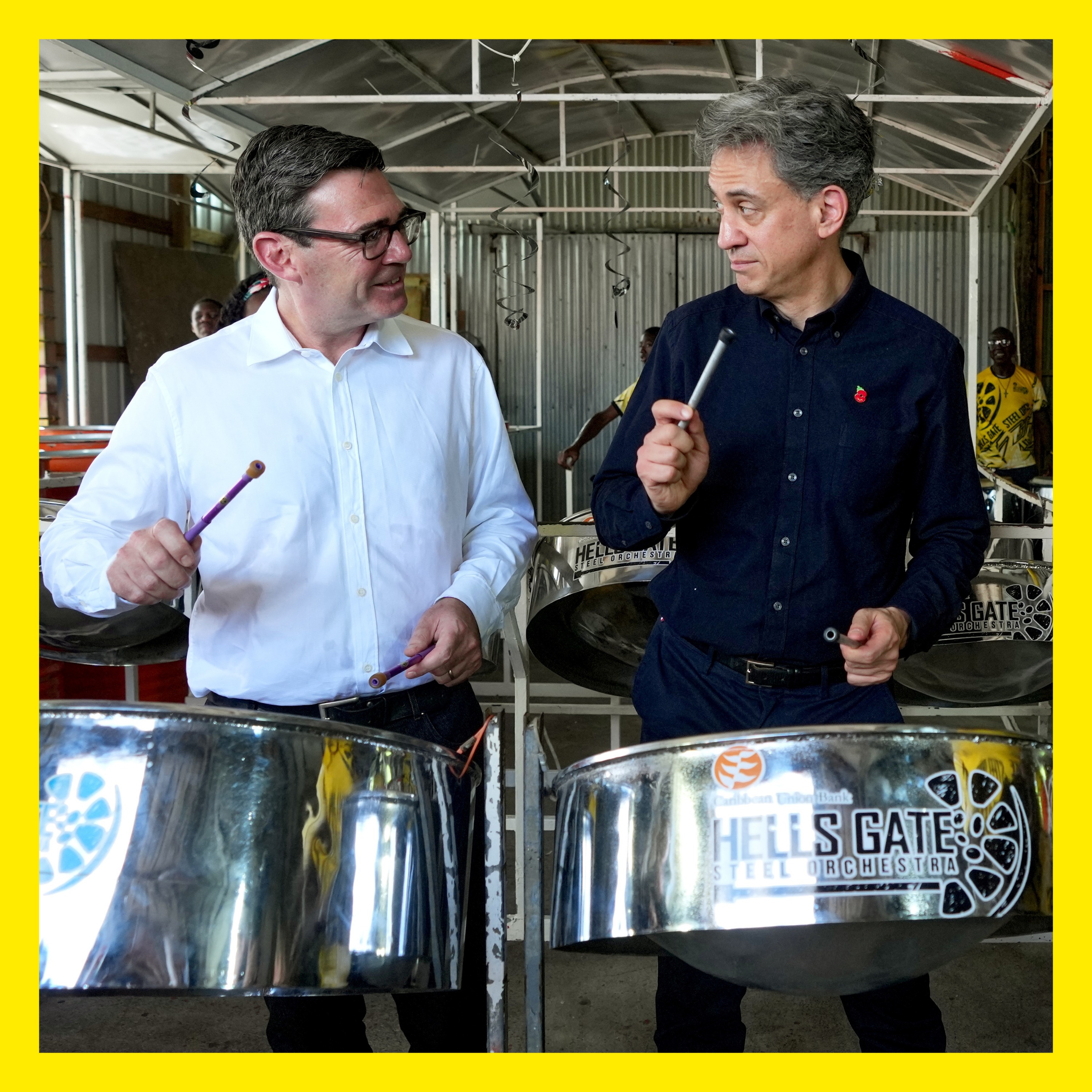
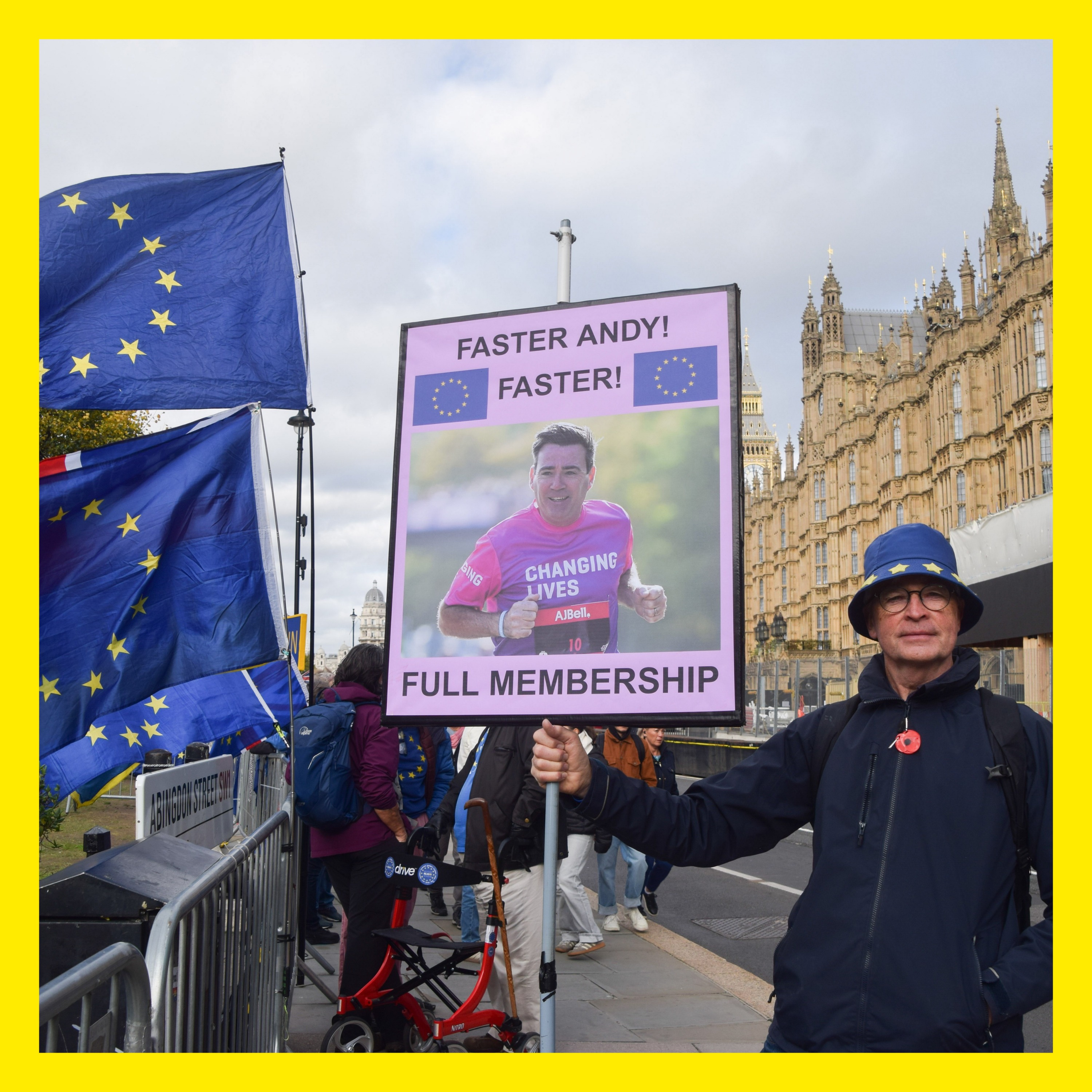
We reveal what MPs are saying about the decision to block Andy Burnham from standing in the Gorton and Denton by-election. It creates a new D-Day for Keir Starmer: 26th February.
On Labour's left wing, it's Operation Stop Streeting.
Meanwhile, the prime minister's off to China but can he make the case to voters that getting closer to China will make everyone feel better off?
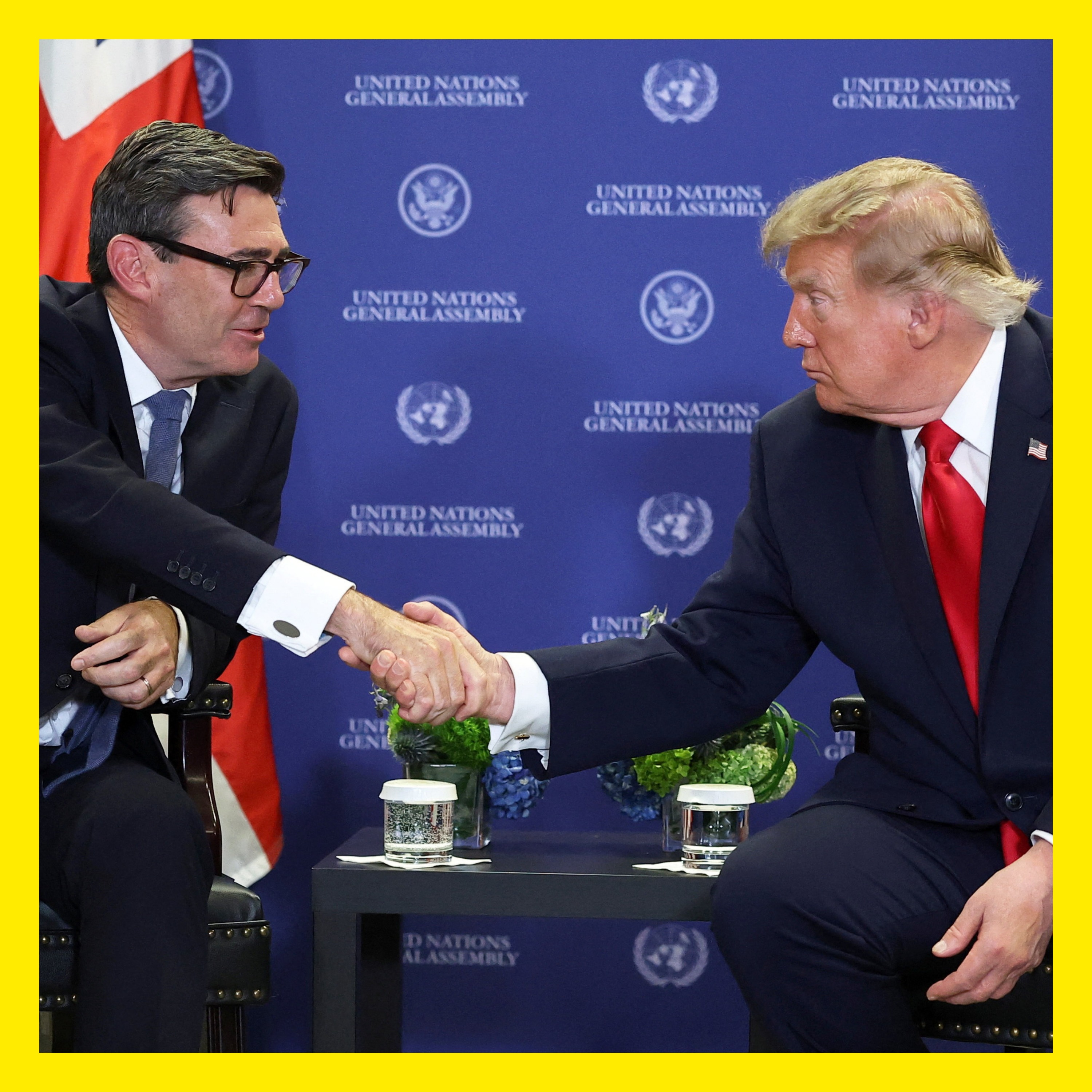
And Gabriel reveals something startling about Starmer's recent phone call with Donald Trump.
Steven Swinford, political editor, The Times
Caroline Wheeler, political editor, The Sunday Times
Patrick Maguire, chief political commentator, The Times
Gabriel Pogrund, Whitehall editor, The Sunday Times
Producer: Euan Dawtrey
Executive producer: Molly Guinness
Picture credit: Getty Images
Email us: [email protected]
This podcast was brought to you thanks to subscribers of The Times and The Sunday Times. To enjoy unlimited digital access to all our journalism subscribe here.
Hosted on Acast. See acast.com/privacy for more information.