Ask ChatGPT
 The State of It
28 Apr 2026 · 35m · 10 chapters
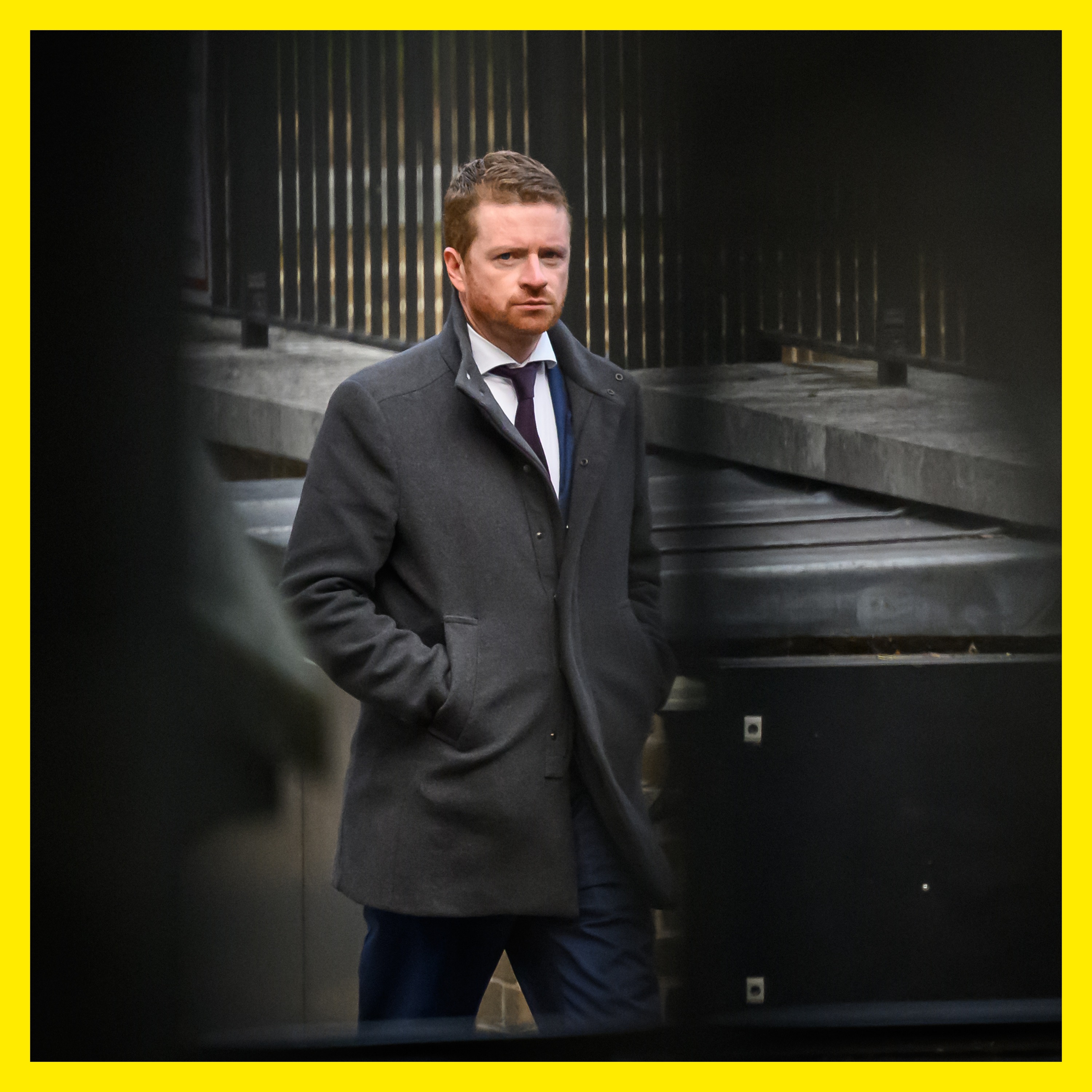
The episode of The State of It argues that Keir Starmer’s decision to appoint Peter Mandelson as UK US ambassador is the “original sin” now driving a Privileges Committee fight in Parliament. It focuses on evidence from Morgan McSweeney, Starmer’s former chief of staff, and Philip Barton, former Foreign Office permanent secretary.
the vetting process had “a sea of red flags,” with Mandelson’s responses adjudicated by Lord Doyle, Mandelson’s friend; Starmer’s team used improper secrecy and possibly “reckless” pressure to get the appointment done quickly for the inauguration; and Starmer avoided accountability because no decision notes or minutes exist.
McSweeney’s testimony about a mid-December meeting where Starmer confirmed the plan; references to a “boys club” dynamic; and claims about notes being written and shredded by security staff.
Stephen Swinford, Patrick McGuire, and Laura Spirit (Times/Sunday Times political editors/commentators).
Written by AI. May contain mistakes.
Overview of the political context surrounding Mandelson's appointment.
“Learn more by visiting acast.com slash advertise.”
Discussion on Morgan McSweeney's testimony and its implications.
“Keir Starmer's original sin, his catastrophic decision to appoint Mandelson in the first place has come back once again to haunt him.”
Analysis of the issues in the appointment process for Mandelson.
“She referred to the boys at one point, didn't she?”
Exploration of the secrecy surrounding Mandelson's appointment and its fallout.
“Yeah, and yeah, he said that that was probably a mistake and probably we should have got propriety and ethics to do that.”
Explore the lack of transparency in decision-making within Number 10 regarding important political moves.
“So part of the problem here, even as we try to kind of do this kind of first version of history, is the documents don't exist.”
Analyzing the repercussions of Keir Starmer's appointment of Mandelson and its ongoing implications.
“But when you look at the evidence today, who are the winners and who are the losers?”
A detailed look at Morgan McSweeney's evidence and its significance in the current political landscape.
“and I'm sure listeners will get in touch if I'm wrong in this he cannot claim for unfair dismissal.”
Discussion on Keir Starmer's ongoing battle for survival within the Labour Party and upcoming challenges.
“Choose the right shows, the right audiences, the right format.”
Explore the potential big offers from Starmer and their implications for his leadership.
“I mean, I just in terms of looking after May, that kind of big offer that Starmer will have to make.”
Discuss the prospects and pressures on Starmer as he navigates his leadership and potential timeline.
“Because we've heard countless briefings before about is the prime minister is going to go big?”

Get the gist, explore an idea or ask about something said.
 Claude
On The State of It, what are the key points of this episode?
Searching your listeningAutomatic transcript. May contain errors.
0:00We have launched Operation Epic Fury. Stop being a proper country. When everyone says they're right. Who do you believe? None of us knew the depth of that relationship. If the lines are blurred. He knew. Can you read between them? The depth of the relationship. When the story breaks. Who brings perspective? The mistake I made. If you want to understand the issues that define our times, it starts with listening. Times Radio. On your smart speaker, on digital radio, or the Times Radio app. While every other channel is fighting for your customer's attention, podcasts are where they've already given it.
0:35No one accidentally listens to a podcast for 45 minutes. They choose to be here. They trust the voice in their ears. And when that voice talks about your brand, it doesn't sound like advertising. It sounds like a recommendation from a friend. Acast gives you that trust at scale. Digital precision, post-read authenticity, and performance data that proves it worked. Don't fight for attention. Buy it with Acast. Learn more by visiting acast.com slash advertise.
1:06Welcome to The State of It, the political podcast from The Times and The Sunday Times. I'm Stephen Swimford, political editor at The Times. I'm Patrick McGuire, chief political commentator for The Times. I'm Laura Spirit, deputy political editor at The Sunday Times. And look, this week we're not coming to you from our studio. We are coming from the most salubrious place in the entire of Westminster on the roof terrace just outside the Times' porter cabin in the middle of the parliamentary estate. The reason that we're doing that is because today is a massive day in Parliament and trekking over to London Bridge to film it where we normally do it was just going to take up too much time because we have a massive day.
1:43We're right in the middle of it of Mandelson today. Keir Starmer's original sin, his catastrophic decision to appoint Mandelson in the first place has come back once again to haunt him. I think we've had four hours of evidence from Morgan McSweeney, his former chief of staff, and Philip Barton, the former permanent secretary at the Foreign Office. And as I speak, we are right now in the middle of a very long parliamentary debate on whether the prime minister should be referred to the Privileges Committee. Parliament sleaze watchdog, effectively. Answer, he probably won't be. But look, let's start with the most interesting bit of the day.
2:19The man has come out of the shadows. Patrick, do you want to kick us off on Morgan McSweeney? Yes, so Morgan McSweeney appeared before the Foreign Affairs Select Committee for two and a half hours. Now, just for context, Morgan McSweeney, a name people are well used to hearing now, even in death. Now, even in political death, now he's out of number 10. He's no longer Keir Starmer's Chief of Staff. But the remarkable thing is, before this week, we had never heard Morgan McSweeney talk at length. He briefly appeared on stage at the Kiev Security Conference last week. But that was his first ever official public appearance.
2:53You know, you had to look in the bowels of Facebook for clips of old Labour Together panels to even find 10 seconds of him speaking. And today, I think everybody thought it was going to be a huge moment. And in a way it was, you know, as a sort of historical curiosity. But we'll get into what was discussed. But my view is that was the most tremendous waste of time and worst possible advertisement for parliamentary scrutiny I've ever seen. That's fair enough. I mean, one of the interesting things about it, Laura, which is worth starting on is there is animus between the two principles here. So what I mean by this is Emily Thornberry versus Morgan McSweeney.
3:31Can you just explain that? Because you could feel it in the room. You could see it. Yeah, I mean, you could see it. And I think one of the tasks that Emily Thornberry had before her today, and we can discuss whether or not she succeeded, was to make the inquiry look of Morgan McSweeney look like it was genuinely in the interest of finding out exactly what happened in the vetting of Peter Maldeson. and only in that rather than the kind of wider slate of political issues that she might have wanted to question him about. And the reason perhaps why people think she's sceptical of Morgan McSweeney is in part because, of course, she was supposed to be the Attorney General in this Labour government.
4:02She was one of the surprise omissions from the Cabinet when that government was put together. And there are various reports that she regards Morgan McSweeney as perhaps not the best advertisement for this Labour government or indeed the Labour movement. And I think, I mean, I would say personally, I think that was pretty visible today. I don't know what you think. She referred to the boys at one point, didn't she? The boys club. The boys club, which is, I think actually you were the first to report on the boys club, Patrick, which caused consternation in number 10 at the time and outrage from Keir Starmer.
4:31Yeah, the divide between Sue Gray and the boys club or the lads arrayed around Morgan McSweeney. One of the most contested characterisations of Labour politics in the past five years. Keir Starmer was very angry from memory. He was. He said it's an insult to all the brilliant women on his teams who actually several of them self-identify as paid up members of the boys club as well, if it even exists. And sadly, the boys club has now been disbanded through various sackings and resignations. But that was the only point in nearly two and a half hours, actually probably more than two and a half hours of pretty circular, repetitive at times, utterly pointless and irrelevant questioning from the committee.
5:12some of it pretty unseemly and personal and spurious I hold no brief for Morgan McSweeney by the way but I do hold a brief for my own finite period of time on this earth and also the sort of reputation of Parliament as a place that can scrutinise this stuff that was the only point when the boys club came up and when he was accused of finding jobs for the boys with a reference to Matthew Doyle's failed ambassadorial push that his sort of temper frayed his unflappable mild manner gave way to something like irritation saying he wasn't looking for jobs for the boys indeed the boy in question was about to lose his job and didn't get a job but other than that morgan mc sweeney did what friends of his were telling me he was going to do yesterday which was play a straight bat try and correct the record he referred repeatedly to his own mythos other greek lagers are available uh he referred repeatedly to his own mythos the idea that Peter Mandelson was a hero or a mentor of his.
6:12He said he started speaking to Peter Mandelson in his 40s in any regular way. And if Emily Thornberry had read the book of mine she was citing, she would know that her line of questioning on Peter Mandelson being Morgan McSweeney's great patron at Labour HQ in 2001 was untrue, given that Peter Mandelson never spoke to or recognised the ginger-haired intern from County Cork at that point. Indeed, as Tony Blair quipped to me and Gabriel when we wrote our book on this period. You know, Peter ignored Morgan then. He certainly doesn't ignore him now. But the point of Morgan, Sweeney's evidence, was to say, I am ignoring this guy now.
6:49I'm distancing myself from this guy now. The revelations about Epstein were a knife to my soul. That will be the headline tomorrow. A knife to my soul. I think, look, I agree with you that there were elements of it that were a waste of time. And as ever in Parliament, you do lose your life and you watch the ticking away sometimes. I think we did learn some new things, particularly what I would point out, and we can talk about this in a bit more depth, is we learned how insane the process for appointing Mandelson was, that Morgan McSweeney asked the question, so they get this due diligence report from the Cabinet Office, and it's got so many red flags.
7:24It's a sea of red flags. And Morgan McSweeney looks at it and asks three questions by email of Lord Mandelson, which are, he can't say what they are, but we do know what they are. It's all about were you still friends with him? Did you stay at his New York apartment? Anyway, so McSweeney is asking those questions. That is an insane process because McSweeney has been advocating Mandelson for the role. He is a friend of Mandelson's and then the responses that Mandelson gives are adjudicated and judged by none other than Lord Doyle, another great friend of Mandelson. And no way on this earth is that a sensible process.
8:01It would be in breach of so many HR violations in any normal company or business, let alone for the appointment of such a senior ambassador. Put it bluntly, Starmer got Mandelson's mates to oversee a crucial part of the process to appoint him as US ambassador. And Morgan McSweetie admitted today that was wrong. Yeah, and yeah, he said that that was probably a mistake and probably we should have got propriety and ethics to do that. Well, obviously that was a mistake. But that does tell you something about the nature of this process. it clearly seems designed almost to get Mandelson imposed. Yeah, and I think, I mean, we'll come to it, but I do think that's at the crux of this discussion about whether or not there was pressure that was placed on those in the Foreign Office to expedite this appointment.
8:43And clearly the distinction that Sir Philip Barton wanted to make keen today in his evidence that came obviously before McSweeney's was there are these different kinds of pressure. I don't think it interfered with the developed vetting per se, but clearly we had a month to make this work and to get Peter Mandelson to Washington in time for the inauguration, that was obviously going to be a really difficult task. And as such, we could be in no doubt of the fact that Number 10 wanted this and thought this was of the utmost importance to them. And that in itself puts pressure on those that are having to make sure that this happens.
9:15We should talk about pressure, OK, because this debate about pressure, it sounds like we're dancing on the head of a semantic pin. But let's just unpack it a little bit. In the Commons last week, Keir Starmer said there was no pressure whatsoever over the appointment of Lord Mandelson. He subsequently clarified that rather hastily when he realised what he'd said. So what I actually meant was not that there was no pressure, but there was no pressure specifically on the vetting process because, of course, pressure exists in all walks of life. And that was the argument that you saw Morgan McSweeney try to prosecute today.
9:47Essentially, the argument is there's good pressure, trying to check that things are happening in time, and there's bad pressure, improper pressure, where you go through red lights. The Foreign Office contention, quite clearly, from Philip Barton, the former permanent secretary that spoke today and Sir Ollie Robbins' last week, was that this was improper, reckless pressure from number 10 to... And they had no interest in the vetting. They just wanted to ram the appointment through. The number 10 argument is that this was proper. And that matters because it's the heart of the debate we're seeing in the Commons today.
10:16Yeah, indeed. And Morgan McSweeney's contention, by the way, was that he was not the one or the only person applying undue pressure or that he was somehow the author of this entire process and the Mandelson plan. I mean, for connoisseurs, you mentioned the Boys Club earlier, Steve, for students and scholars of this... Of Patrick McGuire, sorry. Of my work and Gabriel's work and all the groundbreaking popular history we've written. No, but for students of the sort of high politics of Keir Starmer's team, Morgan McSweeney's very first answer after he gave his sort of slightly lacrimose and very earnest opening statement about the value of public service and Jeffrey Epstein's victims and all of that sort of stuff.
11:00The first question he answered was about when did this all start? And he said there was an access talk between the civil service and Keir Starmer's team that I wasn't in where it was first suggested Peter Mandelson or, more broadly, a political appointment might be the ambassador. Now, who was in that access talk? Could that be? His old nemesis. He didn't mention it by name. only Emily Thornberry did, but Sue Gray was that person, right? So first answer, he says, well, actually, Sue was the one saying this as well, a plan ages ago, and throughout the course of it, very subtly and in quite a sort of deceptively, in a way that looked collegiate, but the effect was not necessarily collegiate, he kept saying, look, the Prime Minister, one, has agency, two, trusts loads of people, Jonathan Powell, the Foreign Secretary, the Cabinet Ministers to whom he's close.
11:53If any one of these people had come to Keir Starmer and said, this being a Mandelson guy doesn't seem like a good idea, he would have listened to them. So it was very subtly, I think, trying to divest himself of all the blame and spread it more evenly across his former colleagues. The other thing that I thought was really interesting about today is just the sheer amount of secrecy around this. So he revealed one pertinent fact, which is that there was a meeting in mid-December, he said, at which Keir Starmer confirmed he wanted to go ahead with Lord Mandelson. Now, we know nothing else about that meeting.
12:30It didn't, we didn't even know of its existence before now. And we've got a small scoop for you here. I can tell you the Cabinet Secretary has written to the Tories after they asked her some questions. So Antonia Romeo has written to the Tories and she has said they can find absolutely no record of any meeting at which Starmer made this decision. They can find no minutes from any such meeting and they can find no decision note. And that kind of matters because this is obviously a big consequential appointment. And it strikes me that very deliberately this has all been done without anything being written down.
13:04almost as if they anticipated that if this all backfires, there could be a paper trail that could cause this damage. Well, Morgan McSweeney did say he worried, even after the appointment was made, that it could go wrong. Yeah, so they clearly knew that this was coming. And we are seeing the consequences of that. We've got this humble address, which is this extraordinary process of the mass disclosure of documents. There is nothing so far, and there will be a little bit, but not very much, from Morgan McSweeney. There is nothing from Keir Starmer himself, and there is no note of the decision that he took.
13:32Look, so we're in this kind of perverse position that the prime minister is publicly taking ownership of it. He is apologising for it. But on the actual nitty gritty of why he took the decision, what were his calculations at the time and what was his assessment of those risks? Because he knew the risks. He read the papers. We know that. But we still don't fully understand how he came to do that process. The whole thing is shrouded in secrecy. We also had evidence from someone at the foreign office's security team, the former head of their security team. And they were talking, he was talking about kind of like writing notes down from the vetting document and then shredding them later, such as the sensitivity surrounding the process.
14:07So part of the problem here, even as we try to kind of do this kind of first version of history, is the documents don't exist. There are no receipts because it was done in secrecy by a tiny group of people in number 10 without even telling the then head of the foreign office, Philip Barton, that they'd reached the decision until it was made. That's quite something. Yeah, massively. I mean, on the humble address point, it is going to run and run. I think, you know, you said last week, you reported, Steve, last week that we won't be expecting that now until after the King's speech. I'm picking up a lot of anger from Labour MPs that it's been allowed to run for that long.
14:40I think, I mean, a number of them making the case that actually, yes, obviously, it would be quite damaging to come out shortly before elections. And we can understand that. But why do we want this to run and run and run, which it now is almost certain to do for a pretty long time, given that when those documents come out, they're going to be pulled over with a huge degree. of attention and care. And no doubt there'll be a number of new revelations that emerge. There was a bit of that. There was a tiny bit that filled me with that kind of fritional joy that you get when you know there's a story to become, where Morgan McSweeney revealed that some helpful messages from Lord Mandelson have been sent to him, which are going to be shared as part of that humble address on Mandelson's suggestions for the Cabinet reshuffle and who should get what job.
15:19Now, McSweeney is very careful to say, look, he may have been in number 10 at the time, but he was not playing a role in the reshuffle. And as you will see, we didn't take heed of his picks. But I can't wait to see those messages. No, indeed. And the evidence that Morgan McSweeney spent the day ghosting Peter Mandelson as from outside of the room. I remember, you know, far from me, far be it from me to make myself the main character of today's parliamentary drama, but I was delighted to be quoted by the chair of the committee because a couple of days after that reshuffle, I included the testimony of a number 10, someone who was in the room for those discussions who noted that, yes, Mandelson had been in number 10 that day, but he wasn't in the room.
15:59And as Emily Thornberry quoted to the committee, was refusing to leave number 10 while the high drama was going on. But you wouldn't want to be one of those cabinet ministers who had Peter Mandelson's seal of approval as everyone is scrambling to distance themselves. One of Morgan Sweeney's critics, sometime allied, now critic of Morgan Sweeney, noted that there was some degree of rewriting history going on. Yes, he has to distance himself, but there were some things, Morgan McSweeney said, that to people who know this period weren't really passing the smell test. And I think the proof will be in the pudding of the nature of his communications, not just with Morgan McSweeney, but with others, when we see them come out of the Hummel address process.
16:41And it's still the question of what Mandelson was doing in Number 10 that day. By Morgan McSweeney's account, he was hanging around in reception and refusing to leave. Well, no, no, let me tell you, let me tell you, let me, because, you know, One of my frustrations with this whole committee process is, you know, people are asking questions seemingly at random, half remembered when actually, if you read this stuff closely, not just my work, the work of the whole lobby, a lot of their questions have already been answered. But he was he was in number 10 that day to talk through a lecture he was going to give on the special relationship the next day, which, by the way, then really irritated people in number 10 because it strayed from the government's line on China.
17:14So, you know, it was a pointless meeting anyway, because whatever was discussed, you know, Peter Mandelson didn't stay on message, according to chagrined number 10 aides. But yeah, it was all, there were those sort of moments of light relief and for journalists, a degree of entertainment and notes for one's diary. So if we look at this in the round, and we'll come on after the interval to the Privileges Committee itself and where we're going on that. But when you look at the evidence today, who are the winners and who are the losers? I'm going to start on the really easy one because I can go first.
17:46Obviously, Starmer is a massive loser here. We have just spent four hours listening to different versions of the same point that he made a catastrophic mistake in appointing Lord Mandelson, one which is still being unpicked all his time on and that shows no time of stopping. Yeah, and he was weirdly peripheral to Morgan McSweeney's evidence. I mean, Morgan McSweeney was duty bound to say the guy has agency, he likes to build consensus, etc., etc., which I think is sort of possibly a diplomatic way of saying he was really in charge and actually he takes ages to make decisions. but the striking thing was when you listen to Morgan McSweeney trying to explain and contextualise the relationship with Peter Mandelton i.e.
18:25I spoke to loads of people with long political experience I had a circle of confidants, that was the word he used to describe Peter Mandelton not his friend, he didn't deny he was his friend but he's not his hero, not his mentor I like to think so Steve, I like to think so when I'm giving evidence of the Swinford inquiry that's how I'll describe it but the striking thing was as he was reeling through these people Labour grandees, political masterminds you didn't really get the sense that Keir Starmer was involved in those discussions at all you know, yes the upshot of it was Morgan Sweeney was really close to Peter Mandelson and a lot of these discussions, a lot of the rationale for stuff the government does even of this consequence was sort of presented to Keir Starmer, Keir Starmer he's not driving, you know you didn't get the sense that Keir Starmer was driving anything from any of Morgan Sweeney's testimony, he basically had a couple of cameos as someone to whom they had to refer things and someone who, don't worry guys is please believe me, I really respect the guy and I'm not his puppeteer.
19:21So I think on McSweeney, Laura, let's talk about McSweeney, I think score draw for me on McSweeney. Yeah, yeah. I mean, I think to your questions of winners and losers, I mean, I think it's been a pretty good day for Sir Ollie Robbins. We're still in the place where it's actually increasingly difficult to see the merit behind his sacking. Why was he sacked? I'm so confused. Clearly today, there was not a suggestion from Morgan McSweeney that, But, you know, Olly Roberts, I mean, he said, I wasn't there for that, but he notably refused to endorse the prime minister's decision to sack him. He did, you know, take the option that was available to him in recusing himself from making any judgment on that.
19:56He very much said, I wasn't there. I don't know about that decision. But clearly, it's quite hard to find people who are defending that specific decision at this point. And I think that probably isn't going away, even though at this point we're talking a lot more about Morgan McSweeney. We're talking a lot more about earlier political decisions than those around the prime minister. I do think this is going to continue to be an issue for them. Yeah, and just to break this down really simply, the Prime Minister sacked Olly Robbins because he accused him of overriding the initial UK security vetting advice that he should not, Madison should not be given developed vetting.
20:28And that was the contention. What actually emerged was Olly Robbins never saw that. He never saw the bit of paper. He didn't know. You can't tell the Prime Minister something you don't know. so he appears to be a bit of a drive-by victim in all of this. I'll tell you something, well it's not amusing but it tickled me slightly. There are all these stories about how Ollie Robbins is going to get an enormous payout to rival Philip Rutman so£340 ,000 payout. There is a problem with that I'm told and it is a problem of Britain's employment law because Ollie Robbins was employed for a period of less than two years and I'm sure listeners will get in touch if I'm wrong in this he cannot claim for unfair dismissal.
21:05Where's Angela Rayner's day one rights when you need them? So it's probably going to be a sum significantly south of that. But on the plus side, I think he merges with his reputation in tax and is the unfortunate victim of the fight for Keir Slommer's battle for survival. So we're going to head to the interval now. I should just say before we do, Steve, we were talking about Morgan Sweeney and how he'll feel after that. I mean, speaking to friends of Morgan Sweeney, and I don't mean that as the journalistic euphemism. I do mean people who are friends with him, people who have spoken to him before and since, you know, say he is, you know, broadly happy.
21:38It wouldn't have been a comfortable experience for him being, you know, before the committee for two and a half hours, having lots of stuff thrown at him. But by all accounts, by all reliable accounts, he is pleased to have the opportunity to set the record straight as he sees it, particularly about himself, you know, and it will be whether his statements can hold up to scrutiny. And I am getting a couple of messages from people saying, come on, that can't, that is, you know, Even if you're trying to distance yourself from the guy, that is not really reliable. And I think one of the problems he's got is, look, MPs have just seen that they can call him before him and question him.
22:11Like, if I'm the MPs on the Home Affairs, so any committee, you're now going to put it, it won't be the last that we see him in this forum. Yeah, you're looking for any pretext to say, how can we get Morgan McSweeney in front of this committee? Yeah, exactly, because it's box office, potentially, is how they'll see it. Well, maybe not after today. And sadly, that is how MPs do work, but yeah. Okay, we'll head to the interval now, and when we come back, we will talk about Sir Keir Starmer's battle for survival in the Privileges Committee. We have launched Operation Epic Fury. Stop being a proper country.
22:38When everyone says they're right. Who do you believe? None of us knew the depth of that relationship. If the lines are blurred. He knew. Can you read between them? The depth of the relationship. When the story breaks. Who brings perspective? The mistake I made. If you want to understand the issues that define our times, it starts with listening. Times Radio, on your smart speaker, on digital radio, or the Times Radio app.
23:28marketplace. Choose the right shows, the right audiences, the right format. Then watch the data tell you it worked. You're not buying impressions, you're buying influence. Learn more by visiting acast.com slash advertise.
23:45Welcome back from our theatrical interlude or interval as we've been weirdly describing it on this podcast. So look, let's talk about the Privileges Committee. and I'm going to advance a contentious argument. Obviously, it's a bad day for Starmer on one set. Yet again, he's talking about his appointment at Mandelson. But by the same token, number 10 is working. They mounted this extraordinary operation to get wavering Labour MPs to back the Prime Minister and vote down the privileges motion and they appear to have succeeded. One MP that we spoke to said, look, I was wavering, but then my whip rang me and then I had a call from two senior ministers, two cabinet ministers, and then I had a call from two senior backbenchers.
24:29And do you know what? I'm not wavering anymore. So something in the machine is still working. When it comes to a fight for survival, they can do it. Yeah, I mean, I think that's pretty true, but I think it's true in the limited sense that it's working until May, after which point I think those cabinet ministers who have been calling up in support of Starmer, a number of them at least, will be making a new assessment on whether or not the losses they've sustained are grave enough that they feel... This is May the 7th. May the 7th, those crucial sets of elections at which Labour is poised to take a very serious beating.
24:57That will be the big reckoning. And after which I think it's kind of, you know, who knows what will happen. But you would expect, I think, people to be rowing in behind Starmer in response to a motion that, you know, even those who are sceptical of Starmer's handling of this affair would say, actually, the key fatal judgment for Starmer was thinking that Mandelson would be a good pick as ambassador. For them, it's not a question of whether or not Starmer might have stumbled a bit with his words. It's a much more serious question about his political judgment. And that's the thing that after May they'll be looking at.
25:24Yeah, we're talking about the number 10 operation to shore this up. I mean, listeners with long memories who haven't buried this memory may remember one of Boris Johnson's many near-death experiences. There was an Operation Save Big Dog run by luminaries such as Nigel Evans and Chris Pinscher and his number 10 team at the time, a similar MP lobbying organisation. I mean, one senior Labour figure did joke to me that this one could be called Operation Rescue Dog or Operation Save Sick Dog. There's life in number 10 yet. They've been lining up, you know, the likes of, you know, Gordon Brown intervened yesterday to say Keir Starmer shouldn't be hauled over the coals for this.
26:03David Blunkett. David Blunkett, Alan Johnson in our paper on Monday when we revealed the whipping operation in a front page story we did, Steve. But it's, as you say, Laura, it's sort of tactical day-to-day survival. Something is shifting in the cabinet and people are worried that the cabinet have actually reached the end of their tether. They're not seeing a positive offer from the prime minister. Yes, he can survive day to day. Yes, his operation is still good and vital enough to get through these tricky, crunchy moments in parliament. But in terms of the big picture offer to the country and his personal reputation, I think that's the thing the cabinet are reckoning with right now.
26:41And I don't think their conclusions are necessarily positive. And I don't, you know, that's why they've sort of started to alight on this idea that, OK, we can't agree on who it should be, necessarily when it should be or what it should be or how we should get rid of him. But we can agree this can't go on and we'd like this to move. So that's why there's this talk of getting the prime minister to agree to a timetable for his departure is now the flavour of the month for discussion among those who want to see him gone. So when I talk to cabinet ministers, I hear exactly that, Patrick, the same as you.
27:12They all tell me this is unsustainable. When you ask them, what are you going to do about it? They all say, well, it's for the backbenchers to kind of come forward and make the prime minister set out a timetable. I heard that from two different cabinet ministers, this idea that for the backbenchers to do it. And what I'm not hearing at the moment is anyone in cabinet really being willing to step up and do it themselves. Now, that could change. Someone could be the Michael Heseltine of 2026, the James Parnell of 2026. But it isn't there yet. It's more somehow the incredibly disunited and fractious backbenchers are going to unite around one common goal, which is removing some of that might happen, but it might not.
27:53Yeah. And I mean, actually, one of the many interesting moments in Josh Grancy, our colleague's interview with Keir Starmer at the weekend, was when he referenced that kind of quiet, loyal part of the parliamentary Labour Party, which I think is a completely fair thing, actually. I think it is some of those in cabinet who have among the gravest misgivings about Starmer and that hope that it should be on the PLP and it should be their responsibility, I think is quite difficult. I mean, I just in terms of looking after May, that kind of big offer that Starmer will have to make. You know, I reported the weekend that he'd been talking to aides on Friday about how that needed to involve accelerating clean energy plans and talking about that and an offer to young people.
28:30that to me sounds like more of an offer to the soft left or to the left of the party in the wake of a big threat from the Green Party than it does necessarily from the much larger number of cabinet ministers, according to our MRP, who are set to lose their seats from the Reform Party. So I think you have to remember that whatever big offer we're going to see from Starmer, if it is a big offer, and I should also say that, you know, there are some closer downing street who say, if you're looking at a big offer, you need to, and MPs, actually, you should think about, what about the triple lock? What about Europe?
28:55You know, what are these actually genuine big issues where you are picking a fight with somebody? and any of the big, if it is going to genuinely be a big offer, I think it is going to also alienate a number of people. And is Starmer strong enough politically at the moment to take an offer like that, which is going to alienate someone of his strongest copy? You are getting soundings that they're looking at some quite radical things. I mean, so things that probably don't cost them anything, I would be, we've talked about this before, but Starmer was asked in an interview with Cathy Newman on Sky News, he was asked, would you commit to rejoining the EU as part of your campaign for the next election?
29:27Didn't respond. Really interesting. Normally he shoots it down and talks about his red line. So that is one. You could see a genuinely radical offer at some point on the EU. And the other story, which was I was very envious of, obviously, you know, lobby, there's a great journalist in it, but this was from Kieran Stacey at The Guardian. He did a story which was Rachel Reeves is looking at freezing private sector rents for a whole year to help deal with the Iran crisis. Now, that is a really big left wing kind of offer to deal with it. Well, it's a million miles away from the political posture of this government under the late Morgan McSweeney.
29:59It's a million miles away from what housing ministers have said for a very long time. And it shows you the sort of stakes at play here. And Keir Stommer's rhetoric, he addressed Labour MPs on Monday night. They're the signs that he was going to get through this week unscathed, were clear because only two people got up and said mildly critical things. But his language that he was talking about, it was sounding a bit like, I don't know, Huey Long or some, you know, peak FDR, saying like we're taking on people who hoard wealth and all of that sort of thing, right? Sounding like basically sort of cod Corbynite.
30:31And it, you know, we're a million miles away from where he was this time last year. It's really striking. Well, was it a certain jaws? We're going to need a bigger boat. Well, it seems to certainly be possibly some things in the offing. They will have a plan. What's quite clear is this Chequers away day that they did. They sat there. They came up with a plan for the Privileges Committee. But obviously they were also talking about the broader plan after the locals. So we are about to enter a fascinating time time of kind of life or death for Starmer. And I think he's probably going to have to go quite big to have a good shot at surviving.
31:01Yeah. But will he be big enough? Because we've heard countless briefings before about is the prime minister is going to go big? The prime minister has got a new lease of life. He's found a politics that's worked for him. It's funny, like you speak to people who are involved in coming up with those briefings, who sort of look back on them and think, well, that was never going to happen or that sort of thing. Is it going to be big or are we going to get a classic Keir Starmer speech where he gets up and says, yeah, all that stuff we're doing, all that incremental stuff we're doing, you should be more grateful for that, guys.
31:33And I'm just coming up with a new slogan to package it all. I think he does need to sort of set out a bold agenda for the next 12 months. That is genuinely bold. That is not something he's doing before that proves that this guy has ideas. It's not just, I am the inhabitant of this office and stuff is ticking along. And if only I could talk to more people about it, if only I can just repeat what West Street team once called the long laundry list of breakfast clubs and all of that sort of stuff. So that is the fundamental problem. And, you know, for the cabinet as well, I think the cabinet have seen this film countless times before they know it.
32:07You know, I wrote this on Friday night. They all know what the problem with this government is. They are all sort of sitting on their hands and hoping against hope and moaning amongst themselves and leaking and briefing. But at some point, and it may not even come after the 8th of May, and I know some of them listen to this podcast, but it's like, guys, you know, and have always known what the problem here is. We got a big reminder of that from the nature of Morgan McSweeney's evidence this morning. We've had it from every person who's given evidence. We have it from the fact of this privileges debate.
32:40Like, when are you going to do something? I mean, that is the variable it's not on the backbench to do it it is on you to do it it is not about your cars and boxes it's about the future labour party and the country i mean and some of them speak like that in private but you don't get the sense there is impetus towards anything milder than maybe we can have a discussion about asking him for a timetable to which as he told josh clancy our colleague he's just going to say no yeah i mean the one other thing that i think is clearly a factor which isn't talked about enough is starmer himself in all of this i bumped into a minister when I was heading down to the canteen the other day.
33:11And they were saying to me that, look, go back to when he talks about playing five-a-side football. He did an interview with Chris Mason, and it was one of those personal ones where he talks about Arsenal and his love of five-a-side. He described himself on the pitch as a hard bastard. I've got to correct you, Steve. Go on. I've had a morning of people citing things incorrectly and not having read my book. That was a quote given to Gabriel and I by a guy called Martin Plout, a long-time friend of summer from Kentish Town, who played five-a-side with him and described him as a hard bastard who played to the edge of the rules.
33:42Well, Starmer took it himself. Really hard. Yeah, he did. Because he used it in the interview. Yeah, and Nick Robinson asked him if he was a hard bastard, and he said, yeah, I'm a hard bastard. He's taken. He is plagiarising from Patrick McGuire. The book he described as bollocks, again in a Josh Glanty interview a long time ago, and yet he quotes it himself. That is the acme of everything that's wrong with this Prime Minister. Good, but the reason we are talking about hard bastards Yes, sorry. Because there is a world in which, let's say the stars align, you know, streeting rises, rain arises and he goes, OK, come and have a go.
34:16And he puts himself automatically on the ballot and he just sees it off because he's got the payroll. He is. What I haven't picked up is that the guy is breaking, that he's like Boris in the last days, kind of seeing Michael Gove's snakehead in the darkness, as his aides described at the time. I'm not getting that. I'm getting the kind of, I'm not Gordon Brown's circle 2010 vibes, but I'm certainly getting someone who is feeling pretty immovable at the moment. No, but you do speak to the circle of people who know him well, and that's a pretty small circle in Labour politics, who do say, look, he's not an idiot, despite the popular portrayal of him.
34:51He's not completely oblivious. He is not totally devoid of political intelligence. He knows there is a pretty big chance he won't lead Labour into the next election. It's just that he now needs to use this next period to say, OK, even if that is true, and maybe at some point we can have a discussion about it, but this is my bold agenda. That's the best way to shut people up to say, I'm going to do something you can all get behind, rather than say, I'm the Prime Minister. Here's the same boring speech I've given a million times before. Here's the same policy platform that's clearly not cutting through on the doorsteps, even though it's good and progressive.
35:24People aren't voting for it. I am going to unite us around something that isn't me, because the Labour Party and Labour voters are not going to unite around Keir Starmer, but he could be the standard bearer for a message that does unite them. I mean, I think, yeah, I think Patrick wrote about that kind of impetus for a timeline, possibly after the May elections from the cabinet. And, you know, I was talking to people about that over the weekend. And you do get a sense from some people that will say along the lines of, well, OK, if you actually care about Keir Starmer, if you are one of the few people that genuinely calls him a friend, a personal friend, a political friend, then you might say, what is in his interest?
35:59Is it in his interest to say, OK, I want an orderly transition. I'm going to come to Labour conference and you're going to celebrate me as one of a tiny handful of Labour leaders that have ever actually won an election. And, you know, we'll send you to Ukraine and Zelensky will hail you as one of the great defenders of his of his nation and the European cause. And it allows you to move out of politics in a dignified way. Is that in your interest? You know, I put that to one friend of the prime minister who said, well, you know, that possibly sounds kind of compelling. But at the end of the day, you know, Tony Blair was under a great deal of pressure to outline a timeline for when he goes.
36:30And as soon as you say you'll go, you can't do anything. It goes. Remember David Cameron, as soon as he did it in his kitchen to James Landisle, it went. Three shredded wheat to too many. That's what he said. Well, I think that brings this week's episode from the heart of the House of Parliament to a close. Thank you all for listening. Look, if you're enjoying this podcast, please subscribe on Spotify, on Apple Podcasts, on YouTube, wherever you get this from. I mean, we are a three-dimensional beast now, both audio and video. So please sign up and subscribe.
37:24price guarantee. You'll always know you got the best deal. Save big today at Mattress Warehouse. We're more than a mattress store. We're Mattress Warehouse. Who won? How did they play? What was wonderful? What was woeful? And why? I'm Tom Clark. And on the Game Football Podcast, we answer all of that, plus provide detailed analysis of the tactical trends on the pitch and the financial situations of it. I'm joined by former footballers as well as reporters and columnists from the Times and Sunday Times. We're here twice a week and for this summer's World Cup we'll bring you daily shows with our team covering every inch of the tournament.
38:00Find the game wherever you get your podcasts.
Morgan McSweeney has told MPs that the revelations about Peter Mandelson's relationship with Jeffrey Epstein were like a knife through his soul. The more we learn about the appointment process, the madder it sounds. And the odd thing is that crucial decisions were not written down: there are no receipts.
There's a mood building in the Labour Party that Keir Starmer will need to go big or go home: come up with a bold agenda, make the case for it and then deliver it. Has he got it in him? And how far to the left will he take the government?
Steven Swinford, political editor, The Times
Patrick Maguire, chief political commentator, The Times
Lara Spirit, deputy political editor, The Sunday Times
Producers: Euan Dawtrey, Harry Kitson
Executive producer: Molly Guinness
Picture credit: Getty Images
This podcast was brought to you thanks to subscribers of The Times and The Sunday Times. To enjoy unlimited digital access to all our journalism subscribe here.
Hosted on Acast. See acast.com/privacy for more information.