
 Ask ChatGPT



Description: Real reporting from the coalface of British politics by The Times and The Sunday Times political experts. The podcast provides insights into the inner workings of British politics, focusing on current events without party loyalty or political spin.
A discussion centered on mixed messages from Keir Starmer to his MPs, the potential resignation of West Midlands Police Chief Constable Craig Guildford, and the political ceiling faced by Reform UK.
Written by AI. May contain mistakes.
Discussion on reports of vigilante groups and police decision-making regarding Israeli football fans.
“Welcome to The State of It, the political podcast from The Times and The Sunday Times.”
Gabriel Pogrand shares insights on the investigation into police and political interplay regarding a football match ban.
“So let's kick off with this big scoop that is coming down the tracks.”
Examining Keir Starmer's position and potential challenges he faces leading up to May.
“We should move to our second topic of the day, which is Keir Starmer's survival.”
Explore the political strategies employed by Number 10 that could impact Labour MPs.
“Actually, now you can see why data like that would be helpful.”
Discuss the effectiveness of Keir Starmer's charm offensive with MPs and its implications.
“Either Angela Rayner is completely bonkers and unconscionable as Prime Minister, or she is the sort of moral guardian of the entire Labour Party, right?”
Analyze the current political dynamics and potential leadership moves within Labour.
“But that doesn't necessarily sort of pivot into the fact that they're not going to want to get rid of him when the proverbial hits the fan in May.”
Examine the latest polling data, its implications for parties, and the political landscape.
“Welcome back to The State of It, the political podcast from the Times and the Sunday Times.”
Discuss the media presence and advantages of different political figures.
“And therefore, particularly in the House of Commons, they're always the ones that get to pose the questions, get the lion's share of the MPs that can bob up and down at Prime Minister's questions.”
Explore the challenges Nigel Farage faces with shifting public interest.
“Yeah, I think there are kind of two interesting dynamics that Farage has to contend with.”
Analyze how the Reform Party is positioning itself as a viable alternative.
“Hugo was talking to him about the allegations of racist bullying at Dulwich College.”
Examine the fluctuating popularity of political leaders amidst changing narratives.
“You've got this growing pool of former Tories who have all presumably come over for jobs.”

Get the gist, explore an idea or ask about something said.
 Claude
On The State of It, what are the key points of this episode?
Searching your listeningAutomatic transcript. May contain errors.
0:15Why is it that a report has come at lunchtime today from the Times newspaper that you had information on 5th September that there were likely to be vigilante groups within the West Midlands community itself who were planning to take action against the Maccabi fans. How is it that this committee is just hearing this? My personal opinion is there wasn't any political interference. I think there would have... You did meet the MP? Sorry, did I? West Midlands Police did meet the local MP? Yeah. At their request? They did, and that was the local MP for the area. Yeah, absolutely, we discussed that last time.
0:52That by its very nature, political pressure. The consensus in Westminster is already that we've seen enough and we know he needs to go. Welcome to The State of It, the political podcast from The Times and The Sunday Times. I'm Stephen Swinford, the political editor at The Times. I'm Caroline Wheeler, the political editor at The Sunday Times. I'm Patricia Maguire, chief political commentator for The Times. I'm Gabriel Pogrand, Whitehall editor at The Sunday Times. Now, as you heard from that, we have coming up today the culmination of a series of massive scoops from Gabriel Pogrand, my colleague at the Sunday Times, which are a collision between the worlds of policing and politics.
1:33And we could be on the cusp potentially of the resignation of a chief constable over the decision to ban Israeli football fans from attending the game in Birmingham. So we're going to talk together in a moment about that, get the kind of inside track on what's happened and where that's going. Secondly, we're going to be talking about Keir Starmer's survival, his hopes of survival. Number 10 thinks he can go through till May. Can he? What are the risks ahead of him? And where does that go? And then lastly, we're going to be talking about some new polling, which suggests that Nigel Farage may have hit something of a ceiling.
2:06And Reform UK could be, and it is just one poll, but could be on the decline. What's Reform going to do about that? And we'll talk about the newest Reform recruit, Nadim Zahawi, the former Tory Chancellor. So let's kick off with this big scoop that is coming down the tracks. We could see a chief constable resign, and that is predominantly down to the work of Gabriel Pogrom, my colleague at Sonic Times. Gabriel, can you walk us through this story, how you ended up writing this and where we're going on it? Absolutely. So, Steve, as you said, this is a story which at its heart is about the entanglement of policing and politics, which traditionally are and ought to be separated.
2:47I think that's a subject of pretty widespread consensus. We don't want ministers directing the activities of law enforcement. But in this instance, Westminster has become involved, owing to the controversy arising from West Midlands Police's decision to ban Maccabi Televiv fans from attending a Europa League away game against Aston Villa last November. Now, the Dutch authorities were at the heart of this matter because the basis of West Mid's decision was that when Maccabi played in the Dutch capital the year before last, the unrest was so extreme, the disorder was so appalling, the Maccabi fans were so disgustingly racist and thuggish that we couldn't countenance that happening in not only Britain's second biggest city, but a city with a Muslim population of more than 300 ,000 people.
3:38That was sort of the underlying thinking that they claimed led to the decision. And I went to Dutch police and said, I've got this leaked document. This is what West Mid say took place in Amsterdam a couple of years ago. What do you have to say to that? And no off the record comment, no kind of one line nothing burger. I just got a call from a chap by the name of Sebastian Meyer, a man to whom I'd like to pay tribute here for doing that thing that so many people in public life refuse to do, which was got on the phone. And we just had a big, long conversation about the intelligence. And I walked him through the claims and he said that loads of things in this central document were, if not made up, then certainly misleading and in other instances news to him.
4:27So there was this notion that the Maccabi fans indiscriminately chucked loads of civilians into the river. Well, actually, there was some footage which emerged on social media, which depicted what appeared to be a Maccabi fan begging to be let out of the water. And he was told he would if he said the words free Palestine. when you sort of started posing questions a lot of the underlying analysis which west midlands alluded to unraveled none more so by the way than another game they cited a game between maccabi and west ham which in actual fact never occurred and seemed to be the product of some sort of ai hallucination so at the end of this call i asked meyer if uh i could use what he said and he said yes so sometimes journalism is the act of just asking straightforward questions but when i went to west mids the third biggest police force in the country i mean you cannot believe the defensiveness and the consistency with which they refuse to answer any questions and i said to them i will give you the leaked document i have i i will literally lay out exactly what i'm going to report and give you an attached document so you can deride what i'm saying and i now know from some mischievous foi-ing that behind the scenes they were accusing me obviously the personification of cool and calm of being quite irate and they were plotting how they would get me off their backs by inviting me to submit a freedom of information request if i wanted any answers to their queries because they literally just wouldn't answer anything.
6:07And the point where the story really entered the Westminster world is when Nick Timothy, West Suffolk MP, but a big Villa fan, sort of took the ball, ran with it, tabled a load of parliamentary questions. The Home Affairs Select Committee summoned the police chief, Craig Guildford, who, this is a bit of journalese, but it was a sort of bungling performance, to put it mildly, And he essentially misled the committee and sort of compounded the original damage of the intelligence seemingly being made up by misleading MPs about the initial misleading information. We asked West Mid's police for their position on the claim that Craig Guildford had misled MPs, to which they did not deem to reply.
6:52And I think, you know, if you were to ask people on the other, on the sort of one side of this debate, what they say is that really the force caved to political pressure from, you know, what they would call Islamists in Birmingham, who generally, in principle, didn't want Israeli football fans coming to Birmingham. And, you know, we do now have the minutes of the big meeting where this decision was made, where two councillors who had called for a ban already on the basis of their principled objection to Israel's actions sort of separately supported it on a kind of technical safety basis. it all looks rather fishy um and it looks like it's coming to a head now because as well as debates in the commons and the laws as well as a home and first select committee inquiry there are parallel investigations by the police constabulary inspector and there's some sort of scoping exercise being done by the independent office of police misconduct but um without getting too waylaid by all the acronyms the first exercise looks like it has been completed it is likely to be on shabana mahmood's desk later today and that will be pretty awkward um reading no doubt for the home secretary who's obviously a birmingham mp herself and as a home secretary you sort of technically can't probably don't really want to sort of ditch a police chief constable you can apply pressure but people are now saying this is really a hot potato which is about to be passed to mahmood i mean what's fascinating about all of this is that um you You know, at the heart of it, there was a situation where there were concerns about the football match taking place, that there could be violence.
8:31They pointed to a report, as you were saying, Gabriel, which had been fabricated at certain levels. But then the other astonishing fact that emerged later was that actually the intelligence that they did have, the real intelligence that they did have, didn't relate to the Israeli fans at all. Well, it actually related to some community activists, some Islamic community activists who were threatening violence against the Israel fans. So there was a problem or a perceived problem with threats of violence from people within the Islamic community. So they decided to ban the Jewish fans instead. And I think for me, in a nutshell, that's where the problem kind of starts and ends.
9:11But I think you're right to say that the Chief Constable at West Midlands Police must be worrying about what is to come next, because there, as I understand it, have been cooperation with this HMIC report by the Amsterdam authorities, who, if they were as candid with you as they've been with HMIC, that's likely to be a very damning report. But I think it also does raise serious questions and I'm sort of intrigued that it hasn't become more of a story about what Shabana Mahmood knew about what was going on because we know she knew well in advance that this was the proposed course of action that the police were going to take.
9:53We know that because that came out in the Home Affairs Select Committee. But also some of, as you were saying, those Labour councillors are very, very close to Shabana Mahmood. So lots of people are questioning whether either tacitly or even more actively she sort of gave the thumbs up or not the thumbs up, but certainly didn't do anything to stop this from taking place. So I wonder whether we'll see more questions about her in the coming days about what she knew. The other point I just wanted to make more broadly is this is personal for Keir Starmer, that when that ban took place, he thought it was effectively surrendering the streets.
10:28He thought it shouldn't have happened. The briefings were really strong from the centre about it. He has obviously kept his counsel because there's been a process that's been followed. I can imagine him coming quite strongly out after this because clearly some very serious things have happened. You've essentially, as you put it, Gabriel, evidence has been fabricated and retrofitted to make a false case. And that is quite an extraordinary situation. So we'll see where we end up with it. I mean, by the time this podcast comes up, by the time you're listening, Craig Guilford may have gone as chief constable of West Midlands Police.
11:04That may have happened. But either way, at least you now know the inside track to how we got here. And it's certainly something we'll be looking at more in future. We should move to our second topic of the day, which is Keir Starmer's survival. and Patrick, I'm going to turn to you on this initially, number 10 is pretty confident that he's now fine until May. And they are making an argument that Keir started to make on Laura Koonsberg the other weekend, where he said, look, if you move against me, there'll be utter chaos. And what he meant by that was chaos in the financial markets. Be careful what you wish for, because they may not like the look of an Angela Rayner or whoever that may be.
11:43Yeah, exactly. If anything, it's the argument that number 10 sources, I think, or Keir Starmer allies, as we called them at the time, first revealed on this podcast, the ship that launched a thousand angry words between West Streeting and Morgan McSweeney. That argument is now being uttered by the prime minister himself. That argument from November, which was, you know, you can have your fun with a leadership challenge, but what will it mean for the markets? What will it mean for Britain's international relationships? And of course, that's an argument that has a lot more salience now. And who are you going to get exactly?
12:20And that is basically now the argument Keir Starmer himself is making, but his proxies, his surrogates, his advisors are making to MPs, which is, yeah, you want to get rid of the prime minister. yeah you might be you know organizing dinners for white streeting or going around telling your colleagues that you know you're going to lose every seat in scotland and we need someone who can string a sentence together on the media but actually what happens if you get ed middleman what happens if you get angela rayner what does that mean when donald trump bombs iran at three in the morning and who's picking up the phone like the famous advert the hillary clinton campaign ran in the to the 2008 primaries when that's who's picking up the phone in the middle of the night, is it Barack Obama or Hillary Clinton?
13:03Now, the problem was actually, Democratic voters decided it was Barack Obama and Labour MPs may yet decide it's, or Labour members may yet decide it's Ed Miliband. But you can see now, number 10 are, as you say, increasingly confident that, I think to be blunt, where streeting doesn't necessarily have the bottle to challenge this month or next, that actually, while there is clearly an appetite for a change of leadership at some point. MPs weren't wanting anything to make, one, Britain's standing in an uncertain world worse, but two, the political position of the Labour Party worse. And by the way, to remind listeners of something odd that happened, the other side of Christmas, when Labour Together, the organisation that made Keir Starmer leader of the Labour Party in the first place, very close links to number 10, did something very odd that we reported on this podcast, which was they went round local Labour parties surveying people on who would you most like to be the next leader of the Labour Party who could beat Keir Starmer in a leadership contest.
13:58And at the time, the argument from Labour Together was, no, we're being helpful. This is to help Number 10. Actually, now you can see why data like that would be helpful. Because if you were part of Number 10's political team, or if you were Morgan McSweeney, or if you were Johnny Reynolds, the chief whip, what would be really helpful in an argument with an MP at this point? It would be able to say, look, we've actually surveyed the membership, or here's a membership survey that says in a... West Streeting versus Darren Jones versus Ed Miliband contest. Ed Miliband wins with 99 % of the vote. And do you, insert member of the 2024 intake, handpicked by Morgan McSweeney, do you want Ed Miliband to be Prime Minister?
14:39And their hope and expectation is that a critical mass of Labour MPs would say, no, actually, let's wait till May. But, you know, it's a high-stakes strategy. I mean, it's a dangerous strategy as well, though, isn't it, Patrick? I mean, I have picked up on similar comments coming from the sort of centre. A government source said to me, you know, actually, number 10, think they're making a good argument that if you, it's better than the devil you know, and that if you twist at this point, you could end up with somebody mad. Or worse than that, you could end up with Miliband. But the problem with that is those briefings are only going to agitate people like Ed Miliband.
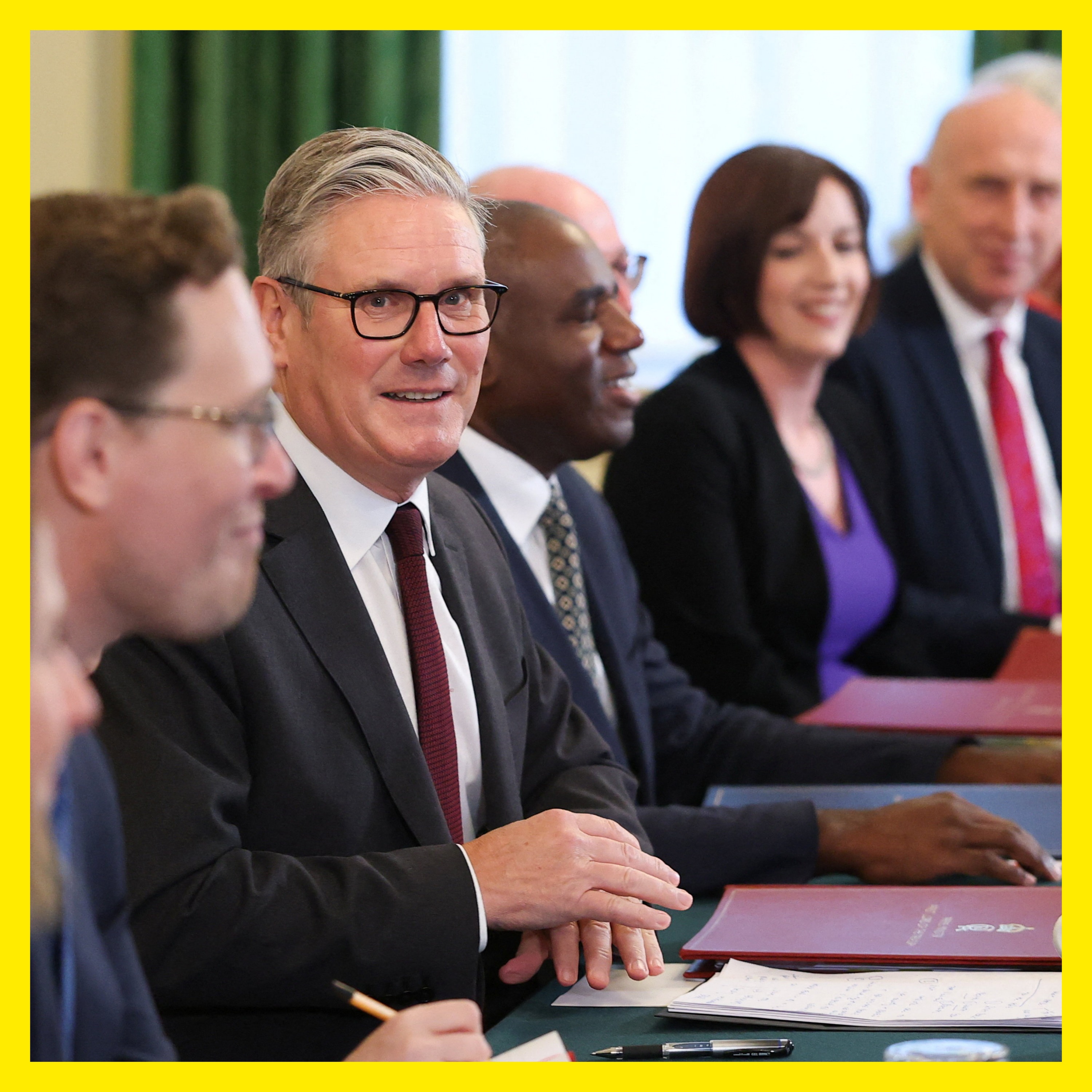
15:16And also, who is the mad person here? You know, I mean, when the story is told to me, that seems to be talking about the likes of Angela Rayner, for example. Now, I wouldn't want to be going around if I were a government source or a member of the government slagging off Angela Rayner without expecting some sort of comeback. And I understand from people close to her that she is definitely putting together some kind of war chest. And the slightly strange thing about all of this, you mentioned Angela Rayner, which reminds me that last night, on Monday evening, Keir Starmer hosted a reception at Number 10 to celebrate their passage of the Employment Rights Bill into law and they released a picture of Keir Starmer and Angela Rayner giggling away as if nothing had ever come between them.
16:01But there is a growing discrepancy between how Downing Street wants to be seen by MPs in some cases, i.e. we're going to have this big jamboree in honour of Angela Rayner, we're going to send you lovely handwritten notes, we really care about MPs, And the return of this strain of quite aggressive sort of Millwall style, no one likes us, but we don't care. There is no alternative briefing. And we've seen in the past that actually MPs present nothing more than that sort of high handedness from Number 10. and indeed Number 10's entire political strategy and engagement since then has been designed to counteract that, to dispel that impression.
16:46And I don't think those two approaches can coexist. Yes, you need the iron fist inside the velvet glove and you need to assert the authority of the office, but there's nothing MPs hate more than seeing what they think to be the unguarded thoughts of Number 10 and senior aides in Number 10 in newspapers when they're being told something different to their face, and particularly on the Angela Rayner thing, right? Either Angela Rayner is completely bonkers and unconscionable as Prime Minister, or she is the sort of moral guardian of the entire Labour Party, right? Which is it? And, you know, judging on what Number 10 is saying privately and doing publicly for the benefit of MPs this week, who knows?
17:28There is one side which does appear to be working. So the charm offensive, as you say, actually seems to be paying some dividends. They had this fabulous trip to Chequers last week on Thursday evening where they bussed 50 MPs and their spouses, or in some cases, parents as well. And Keir Starmer laid on some food. It was chilli and rice. He'd assembled the fire in the main dining hall, this enormous fire, which he was really pleased with. He'd built it, lit it, and then he discovered there was no music. And so he had run away and he found a speaker and he came back in and he put on an Ibiza chill playlist.
18:04But everyone that we spoke to that had been there, actually, they really appreciated it. They liked the patronage. They went down to the pub afterwards. The vibes were better. And I think your point, Patrick, that this whole macho, people see through it because he's not in a strong position and he isn't a macho prime minister anyway like that. But I think actually some of the softer stuff, which you've talked about, Amy Richards, who's one of the advisors she's brought into number 10 to do, that appears to be yielding some dividends. And they are taking everyone to Chequers. There will not be an MP that hasn't been to Chequers soon.
18:36All the advisors are also taking turns. So they're all going to get it. They're going to use the kind of pomp of the state to win over MPs. If you talk to MPs and you talk to members of the government, they will all to a fault tell you that Keir Starmer is a lovely man. They enjoy his company, as any of us do when we speak to him. But that doesn't necessarily sort of pivot into the fact that they're not going to want to get rid of him when the proverbial hits the fan in May. And those moves are still afoot, right? We had a story at the weekend, which is about Angela Rayner and West Street. are both doing the kind of rubber chicken circuit.
19:13They're raising money for local MPs, which is a classic leadership move. You've had Wes Streeting do a speech, which on any reading is pretty extraordinary today, on the subject of leadership. And he is saying that it is not enough to effectively blame the blob, to blame the stakeholder state as a former aide. Takir Starmer put it in an article that Patrick did. You have to actually lead. You have to direct the wonky trolley. And they are adamant that that is not aimed at Keir Starmer. But given that Keir Starmer has on so many occasions blamed the state for failing to deliver, said that he pushes from the levers, nothing's there.
19:50You know, that is his, the tepid bath of managerial decline, whatever else he's described it as. It does feel quite punchy at this point in time for West Streeting, a leadership contender, to be talking about the need for leadership. I do think that the more foreign policy predominates, the more pause will be given to the PLP in going over the top before May and even upon those local elections, not least with the possibility of the Iranian regime falling as well. I would wager that the more Iran and the Trump administration predominates in news and political terms, the harder it will be for 80 people at any point over the next five months to make a compelling case that Starmer ought to go now.
20:33Well, you mentioned the revolution in Iran. Let's talk briefly about the rising against an even more hated and controversial autocracy. And when I say that, I'm talking about Lucy Powell's deputy leadership campaign. One of the interesting things I've noticed and that other cabinet ministers have noticed in the past couple of months is, and Steve mentioned Amy Richards, the number 10 political director, I think she should get a lot of the credit for this, as should Keir Starmer and indeed Lucy Powell, who have their own motivations here. but the Lucy Powell relationship is not panning out as people expected it to when she won the deputy leadership.
21:16It has not become a sort of provisional government. She has come out repeatedly and said, you know, people who are plotting against Keir Starmer should shut up, we need to pull together for May, etc., etc. Now, does that necessarily mean Lucy Powell and the boys in Number 10, as she would call them, are reconciled? No. might it mean as one of her cabinet colleagues put it to me last week that Lucy has remembered the only person she hates more than Keir Starmer is Wes Streeting and would rather Keir Starmer be prime minister than Wes Streeting. I've not spoken to any of the people concerned about that and so I will not pass comment on that conspiracy theory from one of her cabinet colleagues but I think it's interesting that clearly a lot of effort is going into making that relationship work and again a bit like the ibiza chill playlist or inviting mps around or writing notes to mps or being seen to engage with people or listen to them you know we've had two political cabinets in a row one last week one this week as we're recording this podcast there the meetings lucy powell is allowed to attend as deputy leader that was pointed out to me by cabinet ministers last week she was sat next to the prime minister so you know look it may all fall apart the week after May.
22:36You know, I was with a minister last week, watching the football and having a couple of drinks, and a senior Labour figure we were drinking with suggested that this would be the first hands-free coup, or the Apple CarPlay coup, as they were calling it, in the week after the local elections. Basically, they suggested everybody will be driving back. The whole cabinet will be driving back from their patches to London or driving around their patches, trying to agree who would be the one to lead the delegation or trying to work out who was backing who or trying to cobble together 80 MPs. But until then, I think Number 10 are doing a reasonably good job at papering over the cracks and making things work that we didn't think could work, i.e.
23:19Keir Starmer being sociable and personable and showing a modicum of respect to Lucy Powell in her new role. right before we head to the interval we've got a small scoop for you at the end of january there's a new podcast coming the state of it usa we've got the brilliant katie balls in washington and gerard baker in new york who will bring you the best stories and analysis from the times and the sunday times jerry has been writing about politics about us politics since bill clinton was president so he knows it all. And Katie knows absolutely everyone in Washington is frequently in with the MAGA crowd.
23:59Her life there is a whirl of motorcades, MAGA lunches and interviews with thought leaders, power brokers and tech titans. They're going to make podcasts about America great again. Forgive the appalling joke, but it'd be well worth a listen. Welcome back to The State of It, the political podcast from the Times and the Sunday Times. And we want to talk about some really interesting polling right now that's come from a YouGov Times Sky poll. I'll read you out the figures. Reform on 24 % minus 2. Tories on 20 % plus 1. Labour on 19 % plus 2. Lib Dems on 16 % no change. And the Greens on 14 % minus 2.
24:42Now the thing that stands out from that is reform is polling at its lowest rate since April, and that will lead to a gamut of headlines about how has Farage hit the ceiling, and there are questions over that. There's a wider polling trend suggesting that reform is plateauing and possibly on the decline. Now, one of the things we were talking about in advance of the podcast is that when political parties are on the up in the polls, they are very keen to point that out and shout, and they send them all to us. They aren't doing that this morning. Reform are pretty aggressive about this poll. They're clearly not happy with it.
25:18Patrick, you've picked up a bit of griping on that front, I think. Yeah, look, I think the message from Reform HQ, from the top of the Milbank Tower, is that this is an outlier, that YouGov, not to do down our own polling, of course, it's the best in the business as far as our copy is concerned, but they believe that YouGov consistently underestimate them compared to the votes they can command in actual elections. They point to a range of other pollsters that have them either plateauing or down by a point or two on their 30 % peak from late last year. This is always the way, by the way, with political parties and pollsters.
26:01Some pollsters are kinder than others through quirks in their methodology or methodological differences, But you wouldn't necessarily say it's a disaster or, you know, they're in the beginning of a tailspin. But I think the danger, at least in the bubble, and I think Kemi Badenoch's performances at PMQs and the impact that's had on her personal polling tells you the bubble isn't entirely irrelevant, even at a time of great distrust in politics and the media. is if the mood music in Westminster shifts to reformer finished, reformer on the run, etc., etc., that will obviously influence the tone and tenor of the coverage and the way that filters that into the public, to which I'm sure Nigel Farage would say, whatever, don't care, you'll see how people vote in May and maybe that will be the ultimate pudding and the ultimate proof, as it were.
26:58but I think the big impact of this poll will be it will give a big psychological fillip to the Conservative Party. I don't know what others think but I'm sort of still pretty bullish about reforms, chances, poll or no poll. I think the resurgence of the Conservative Party has been really interesting to watch actually. If you think our first ever podcast which we did at a conference which was only in October, we were talking then about the end of Kemi Badenog and the fact that there were WhatsApp groups which were actively suggesting that MPs were ready to get rid of her. That's not the case any longer.
27:35And actually, you know, there's a lot of MPs, even MPs that didn't think much of her when she started, who are now speaking much more favourably about her as a leader. And I think you can actually see the confidence that she has growing. I mean, I was really struck by PMQs last week. She was relaxed. She was very, very bullish in the way she was taking the Prime Minister on. And I think it's really important to remember that the Conservative Party are always going to have a bit of an advantage at this stage in the kind of electoral cycle because they are the second biggest party. And therefore, particularly in the House of Commons, they're always the ones that get to pose the questions, get the lion's share of the MPs that can bob up and down at Prime Minister's questions.
28:19So there is a lot more kind of focus on them. So often they're going to end up on television more than, say, Nigel Farage, who, rather than being in PMQs last week, was actually on Times Radio instead. So, you know, there is an intrinsic advantage for the Conservative Party at this stage. Now, whether that lasts will be really interesting to see, because as we go towards those local elections, there's going to be a much bigger opportunity for Nigel Farage to be on our screens, to be on our radios, to be in the newspapers. And I wonder whether that will be the moment where we see whether this plateau is actually real or whether it's something that at the moment is just because we're seeing a bit more of the Conservatives.
29:02We're seeing a bit more of them in a kind of more positive light. And there hasn't been as much of an opportunity, despite the press conference that we saw yesterday, for Nigel Farage and his party to be selling their wares in the same way that the Conservatives have been recently. Yeah, I think there are kind of two interesting dynamics that Farage has to contend with. One is this kind of core question about the salience of migration. There is some evidence, sort of emerging evidence, that the salience of the issue is falling. And Farage for some time has been trying to convey to the lobby and in turn the public the idea that actually, you know, he's got a whole wheat offer for the electorate, that he's not just about migration.
29:41But, you know, the facts are that immigration has fallen and appears likely to be at its lowest for some years this year. I think for Farage, that kind of poses some interesting, awkward questions. I think the other one is sort of vibes and the extent to which he can sustain his own kind of aesthetic of being an insurgent and being the voice of the populace against the establishment as personified by both Baden-Ock and Starmer. I think it is fair to say that possibly because of these allegations about his time at school and the kind of cantankerous way in which he's responded to them, Farage doesn't seem quite as cocksure and is able to kind of sidestep Scruton as he did a while back.
30:26Now I think the sort of perfect storm from the Tory perspective would be that the public domain moves from migration to the economy and Farage looks more shifty. But I also kind of defer to what Patrick says too which is that the fundamentals on the economy haven't yet shifted and until they do Labour will be at reform's mercy and it's critique which fuses the economy and immigration. It also depends what you think the electoral essay question is. And you mentioned the Times Radio PMQs unpacked session myself and Hugo Rifkin did with Farage last week. And we had an exchange with Farage, Hugo and I.
31:03Hugo was talking to him about the allegations of racist bullying at Dulwich College. And I asked Faraj a question or put a point to him, which not so many words was basically, you know, your electoral objective over the next year is to go from 30 % pretty consistently to 35%, to consolidate yourselves at 35%, which in this crowded electoral market is what gets you a pretty thumping majority or maybe even more. You know, when you speak to reform's key strategists, they say, you know, we want to get to 35, we want to get to 40, which, you know, may sound ambitious. But how do you do that? Now, the way reform do that is by pushing that Tory number down.
31:45And it's pretty clear, even if the number bounces between 25 and 30 percent, as it has in that. You could poll today, right, that had them on 24. Other pollsters have them on 28, 30, low 30s. They've sort of got a core vote now on lock. And Steve, you and I have studied polling that tells you lots of former Tory voters now identify as reform voters, right? So they have a core vote. They have an electoral constituency. But where is their growth potential? It is in people who voted for the Tories in 2024, but have hitherto been unconvinced by Farage. Actually, Farage's incentive now has almost shifted.
32:20It's improving to those sort of lifelong Tories. Listen, we are now the main party on the right. We are the right government in waiting. we are not as scary or insane as you think we are and look here are a stream of Tories who you vaguely remember you know that's the guy who was on question time that's the former chancellor you know here is a here are people who are coming to prove our point that we are the party you need to vote for to get rid of this Labour government that you really really hate so while yes you know welcoming Nadeem Zahawi or whoever might sit on easily with what Faraj has needed to do to get to this point, which is the anti-politics guy, the tear it all down guy.
33:03If you listen to what he says publicly, and indeed what senior reform people say privately, this next phase is all about proving, yes, we are the people with a diagnosis that everything is broken, but we also have the means to fix it. And also we have the means to replace the Conservative Party. And what better way to prove that than by picking up well-known Tories, you know not many of them serving in in the opposition front bench thus far or indeed in parliament but saying look we are the party on the right now Tories you recognize say there is no point in voting for the conservative party and these defections are trying to build that case before the killer evidence of you know a set of elections in May that are terrible for the Tory party and okay for reform there is a clear risk to that so I think I was counting the numbers yesterday you now have 21 former Tory MPs who are wearing reforms colours and actually they all come from one place they are all predominantly Boris Johnson people there's a couple that aren't but most of them are Boris Johnson people so we're talking you could recreate a big rump of the Tory party from circa 2021 and that can be an asset it gives you profile it does and that idea of supplanting the right but the risk is that you're blurring those brand values that reform has that distinctiveness and you face the accusation that you are a retirement home for former Tory MPs and I am old enough to remember when senior people in reform who are still very senior in reform were said they didn't want failed Tories they didn't want retreads they wanted to have their own identities and there are tensions in reform over what is happening here because the other amazing thing that will play out every time on this is the internal competition you've still got every shadow cabinet position up for grabs.
34:47You've got this growing pool of former Tories who have all presumably come over for jobs. Now, Farage says he's offered them nothing and he's offering no one anything, but I'm sure that some tacit deals are being brokered. Who will be the shadow chancellor? Who will be the shadow home secretary? And it will create tensions. I cannot see it saying happy families all the way to the election. I think you're absolutely right about that sort of inherent tension, because, of course, if you have a party that's saying, a bit like Labour did, We are the party of change. We are not like those old Tories that have crashed the economy, that have caused and inflicted all this pain on you.
35:20You know, we are different to them. But then a growing number of those people that were associated with that project then come in to the party. And indeed, they're not only people associated with that project. Lots of them are people that either retired or lost their seats at the election as a consequence of that failing project. I think the arguments around this party being, as Patrick was describing, something that's going to come up and change things and smash it up makes it really difficult for them to make. And actually, I was looking at some other polling at the weekend, which was actually looking at popularity of leaders again.
35:54And what was quite interesting there is that whilst Nigel Farage is still far and away the most popular leader of any political party, it is actually declining there as well now. And in fact, interestingly, I think most leaders have declined in the poll apart from Ed Davey, who actually seems to be increasing his popularity, which is interesting, given that there is continued chatter about him and whether he will take the Liberal Democrats into the next election. But really, really fascinating to see how this all sort of sorts itself out, particularly given that microscope that we're going to see on all those political leaders.
36:32And we're going to see a lot more of these people over the coming course of the next four or five months. So if you're already fed up with them, I'm afraid there's more to come. And the one thing that's amazing about that poll, which we accept as reality now, it's a five way split. It's pretty similar numbers across. and I've never reported on a five-way split like that and it means that everything this year is up for grabs. Things could go anywhere. You know, a good run for Starmer could possibly save him. A bad run for Farage could make a dip. It all goes, it's very, very volatile and that's the fun of this year.
37:09And I think that brings us to an end this week. If you want to get in touch, please do. We are at thestateofit at thetimes.co.uk and we want to hear from you. thank you again for listening and we will be back next week when i'm sure the world will have moved on its axis once again very very firmly and violently
Keir Starmer's sending mixed messages to his MPs: warm words but ice cold briefings about any leadership machinations. Can the two positions co-exist?
Gabriel gives the inside story of the scoop that could lead to the departure of West Midlands Police Chief Constable Craig Guildford.
And has Reform hit a ceiling?
Steven Swinford, political editor, The Times
Caroline Wheeler, political editor, The Sunday Times
Patrick Maguire, chief political commentator, The Times
Gabriel Pogrund, Whitehall editor, The Sunday Times
Producer: Euan Dawtrey
Executive producer: Molly Guinness
Picture credit: Getty Images
Email us: [email protected]
This podcast was brought to you thanks to subscribers of The Times and The Sunday Times. To enjoy unlimited digital access to all our journalism subscribe here.
Hosted on Acast. See acast.com/privacy for more information.


