
 Ask ChatGPT



The State of It episode argues Labour’s reshuffle under Andy Burnham is being seen as factional, despite claims to end factionalism. Hosts describe anger among “Starmites” after a purge: 11 cabinet ministers lose jobs, mostly loyal to Keir Starmer, with bitterness also tied to gender balance (e.g., Rachel Reeves replaced as chancellor by John Healey; Yvette Cooper replaced by Ed Miliband). Key claims include: Burnham’s team may create a new faction; fiscal and defence policy will trigger backlash (Healy’s defence spending push to 3% by 2030 vs Burnham’s 2.7% plan); and every Burnham comment is amplified, affecting borrowing costs.
the team’s Starmer-themed pub gathering at the Grafton in Kentish Town; Darren Jones warning about unfunded VAT-energy bill plans; Thames Water special administration talk; and Healy’s appointment as a “safe pair of hands” with Whitehall competence.
Andy Burnham (Prime Minister), John Healey (Chancellor), Keir Starmer (outgoing PM), Rachel Reeves, Peter Kyle, Nick Thomas-Sims, Bridget Phillipson, Yvette Cooper, Ed Miliband, Darren Jones, Shabana Mahmood, Wes Streeting, Lou Hay, Lord Blunkett, David Blunkett, Donald Trump, and Ed Miliband’s critics/allies (no separate interview guests named).
Written by AI. May contain mistakes.
Discussion about the backlash and anger over the factional reshuffle in Labour.
“I have been inundated with anger about what people regard as an incredibly factional reshuffle.”
Hosts outline the significant reshuffle events and their implications for Labour.
“We have had a momentous purge of the loyal Starmites, and we're going to be talking to you about what that means and how much bad blood there is.”
Details of the gathering at The Grafton pub following Keir Starmer's resignation speech.
“So what we want to do is we want to take listeners first to the Grafton.”
Discussion on the significant demotions in the cabinet and their factional implications.
“Like I have been inundated with anger about what people regard as an incredibly factional reshuffle.”
Analysis of gender representation in the new cabinet and its political ramifications.
“There are 11 cabinet ministers lost their job.”
Exploration of the emerging criticism and dynamics of disloyalty within the Labour Party.
“I'm obviously omitting here mention of Louise Haig, who is, of course, first secretary of state.”
Discussion about Andy Burnham's adjustments and challenges in leadership following the reshuffle.
“And it seems absurd to say this, we're less than 24 hours in on the economy, on fiscal policy.”
Focus on John Healy's unexpected appointment as Chancellor and its implications.
“So as Mayor of Greater Manchester, you could say a lot of things and they might get picked up, they might not.”
Discover insights from an interview with Andy Burnham regarding his views on Westminster culture and the challenges within the Labour Party.
“But it just shows you that this was incredibly tightly held.”
Explore the significance of John Healy's appointment as Chancellor and the challenges he faces related to defense spending.
“So I couldn't really work out what he was talking about because at that point, I think most people thought that Shibana Mahmood was probably going to be chancellor.”
Examine the fiscal challenges Andy Burnham's government may confront regarding defense spending and the wider budgetary context.
“then there is going to be issues over that so at the moment it feels you know i'm sure it feels very good and is a clear symbol of a commitment to defense spending but actually getting there It's going to be really hard.”
Delve into the complexities of public control over utilities, specifically focusing on the future of Thameswater under Andy Burnham's leadership.
“So today we've had energy bills are cut in that.”
Discuss the implications of new energy policies and the balance between development and environmental concerns under the Labour government.
“So, Miata Fambola has gone to be the Desno secretary.”
Discussion on the implications of Ed Miliband's appointment as Foreign Secretary and reactions from various factions.
“They'll want to look like they're making some movement on this, but just how substantive that movement actually is, I think is still up for discussion.”

Get the gist, explore an idea or ask about something said.
 Claude
On The State of It, what are the key points of this episode?
Searching your listeningAutomatic transcript. May contain errors.
0:00I have been inundated with anger about what people regard as an incredibly factional reshuffle. Let us make this the moment when Britain starts to believe again. The moment we bring back hope.
0:19This is spectacularly, spectacularly stupid, says one. I think on his behalf there'll be plenty of people who are still pretty angry. Something someone said to me yesterday was, Keir Starmer never had a faction, but today Andy Burnham's team are at risk of creating one for him. Welcome to this week's episode of The State of It, the political podcast from The Times and The Sunday Times. I'm Stephen Swinford, the political editor of The Times. I'm Patrick Maguire, chief political commentator for The Times, or as I was called on BBC News this week, Patrick Swinford. Outstanding. What a merger of two great human beings.
0:56And I'm Laura Spirit, deputy political editor of The Sunday Times. And look, this week, all change. Andy Burnham is here. We have had a momentous purge of the loyal Starmites, and we're going to be talking to you about what that means and how much bad blood there is. Overnight, the reach-off went on to the small hours. I was getting loads of messages. We all were this morning. There is a lot of anger and bitterness out there in Labour ranks, which Burnham will now need to overcome or ignore as he sees fit. We are going to talk about that surprise pick of Chancellor as John Healy, which no one saw coming, what that means for the Treasury, what that means for Defence, and more broadly, what that means for the Burnham Project.
1:34And then we're going to talk about the future, where Burnham plans to take things this summer, and how all paths lead to the budget. So what we want to do is we want to take listeners first to the Grafton. This is a pub in Kentish Town, and straight after Keir Starmer's quite gracious resignation speech yesterday, the entire of his team decamped there. So they hired the whole pub, and on the wall were pictures from Starmer's premiership. And over the course of the afternoon, as ministers were sacked, it filled up. You had Rachel Reeves there. You had Peter Kyle. You had Nick Thomas Sims. You had Keir Starmer, Victoria, his wife and his children all there.
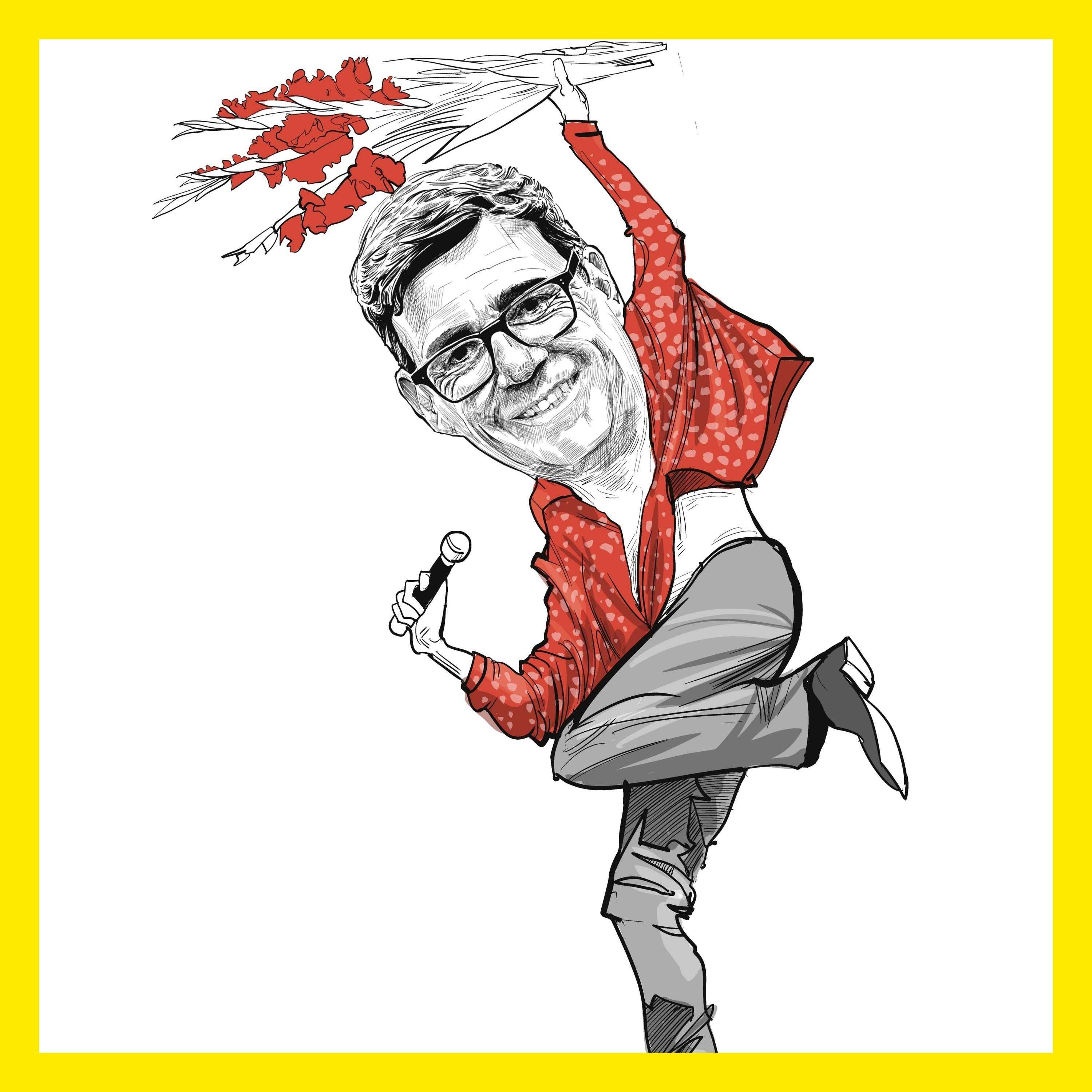
2:09And it was quite a jolly occasion. There are pictures of it on the front of the sun today, I think, of them all enjoying some drinks. And, you know, each minister as they arrived were clapped in. And then on the way out, Keir Starmer was clapped out and given a bouquet of flowers. But it was quite a nice occasion. But this morning, there's a lot of bitterness everywhere you go, isn't there? Like I have been inundated with anger about what people regard as an incredibly factional reshuffle. Yeah. And I have to say, as that party was unfolding last night and yesterday afternoon is more accurate.
2:39It was what you call a day session, wasn't it? the anger was off the charts and there was, to no small extent as well a large measure of vindication let me just give you some sample text we'll all have a million of these this is spectacularly, spectacularly stupid says one how can they say with a straight face that this isn't factional members of the new cabinet would say well hang on, you had your chance you messed it up how are you surprised that you've ended up jobless or demoted but Andy Burnham has made much of an end to factionalism of a broad church etc etc and so the conversations across those two packed floors in the Grafton in Kentish town on Monday afternoon were all about what are they doing you know lots of these people weren't surprised but knowing that they have been dispatched so ruthlessly and so publicly left them all smarting.
3:42And the other topic of conversation at the Grafton was, and I think this might become a running theme, lots of the women at the party were saying, you know, Andy Burnham came to the Women's PLP, gave it the big one about how, yes, you know, a man was replacing a man as always happens in the Labour Party, but he'd have lots of women in his top team. And lots of them took from that, that the great officers of state would once again be balanced, that hasn't happened. John Healy, very much a man, the oldest chancellor since the 1800s to take office for the first time, has replaced the first female chancellor in forever.
4:21Yeah, and that's across the board. I mean, Lara, when we look at this, it is a proper purge, right? There are 11 cabinet ministers lost their job. That's over a third of the cabinet, and all of them, to a fault, were loyal to Keir Starmer. Now, for someone that, as you say, Patrick came in pledging to end factionalism. This feels like a very factional reshuffle. Yeah, I think particularly some of the anger I've been picking up has been, I mean, even among some that stayed but were demoted. I mean, Bridget Phillipson, not that we would necessarily call her a quote unquote starm right or a sort of ideological starm right, but her demotion is something that a number of people in the PLP.
4:54So on Bridget, I think she'd been one of the uncertainties of this reshuffle. She was the education secretary, you know, at times seen as a polarising figure, of course, recently got into something of a scrap with Kemi Baden-Ottt, the Conservative leader, which made some around her feel that perhaps it'd be more safe. She'd be more safe as a result of that, that it would look worse to sack or severely demote her. And I think there was a sense into the day that it was looking like she probably wouldn't stay as Education Secretary, but has been demoted to Women Inequalities Minister, which of course is not nearly as great Office of State in their mind as Education Secretary.
5:27But a number of, you know, backbenchers getting in touch with me to say that they are particularly unhappy with that because they felt that she did engage very minimally with the Parliamentary Labour Party. She hadn't been openly critical of Andy Burnham and she tried to work during this transition in good faith and that they feel very unhappy about that in particular. And I just think on that women question, Patrick is completely right. That is something that I'm getting quite a lot of at the moment, particularly, I mean, it's not, you know, it's not just Rachel Reeves being sacked for John Healy.
5:52It's Yvette Cooper being sacked for Ed Miliband as well. You previously under Starmer had a male prime minister, yes, but then three women in great officers of state. You now have three men and one woman. I mean, I think the broader balance of the cabinet, you would say, I mean, I think there is almost perfect gender balance in the cabinet in the whole numbers, but certainly in those upper echelons, I think it's fair to say that the representation of women is a problem. I'm obviously omitting here mention of Louise Haig, who is, of course, first secretary of state. I think many people would say that actually in that mix of people in quote unquote great offices, you would probably add her in that and actually, you know, be wrong not to.
6:27But even so, I think there are some questions there. And I think that just adds to that sense of bad blood this morning. One of the things, Patrick, that people were saying this morning is effectively you get what you give. That Andy Burnham's allies spent so much time destabilising Keir Starmer's premiership in various different ways to force him out. The genie is out the bottle now. And that can create a problem managing the party going forward as much as he wants to eradicate that faction. Yeah. And let's create a taxonomy of the different kinds of disloyalty we're about to see and criticism we're about to see from allies of Keir Starmer.
7:00And the first thing to say, by the way, is that what was a criticism? You always heard about Keir Starmer and his political management and one of his defining weaknesses as a politician and a Labour politician in particular. It was he didn't have a faction. Starmerites, in the truest sense of the word amounted to about, you know, between five and a dozen people, most of whom believed in him because he was their mate. Something someone said to me yesterday was Keir Starmer never had a faction, but today Andy Burnham's team are at risk of creating one for him. And you put that to people who've lost out of that reshuffle, they say, no, it's actually about loyalty to the Prime Minister.
7:44We were all loyal to the leader of the Labour Party until the point where we couldn't be loyal anymore. And the people who were disloyal, Wes Streeting's name comes up a lot, Lou Hay's name comes up a lot, you know, insert others here. Andy Burnham, obviously, they say wasn't loyal to Keir Starmer either, as much as he denied that. They say it's about loyalty, but clearly what we're getting now is a degree of disloyalty. Some of it is just people lashing out in anger. I think the more dangerous criticism, and there will be quite a lot of this, I expect, or at least some of it, depending on what we hear, and we'll talk about this in a bit, there is clearly an emerging school of criticism.
8:28And it seems absurd to say this, we're less than 24 hours in on the economy, on fiscal policy. Look at what Darren Jones, Rachel Rees's first chief secretary of the treasury, former chief secretary of the prime minister, one of the victims yesterday. Look at what he said this morning about plans to use the money, earmarked for digital ID, apparently, to pay for a cut on VAT for energy bills. He said, you know, this is an unfunded spending commitment. And I am led to understand that there are other people of the same mind who put a lot of stock in what Rachel Reeves did to stabilize the government's fiscal position, to put fiscal probity, fiscal rectitude, fiscal orthodoxy back at the heart of Labour politics, right, that wasn't always popular.
9:17To some extent, it was, you know, I think it was provably, Rachel Reeves' economic strategy was provably a minority proposition in the Parliamentary Labour Party, otherwise we wouldn't get here. Yes, they managed the politics of this badly, but, you know, on the right of the Labour Party, on the broad right of the Labour Party, particularly the Starm, what you now call the Starm right of the Labour Party, there are going to be lots of people, some of them with very familiar names who get up in September, who get up in October and say, basically, you've got to find the money to pay for this. And they will do so with no compunction about destabilizing the government or creating bad headlines for the government because, and this is always the dangerous thing with criticism or outrage that starts from a position of, we've just been sacked, you know, we're under the jackboot of, we're under a Mancunian jackboot or whatever, because you can always rationalise it post hoc and say, actually, no, I am doing this for a higher purpose.
10:13And indeed, lots of people will be. So that is the risk. Obviously, Andy Burnham has said he's got a plan. He's got fully costed plans, both on these interventions and obviously the budget to come has committed to fiscal rules. But that, several people said to me yesterday, is going to be a flank of criticism. And we've already seen an early warning shot from Darren Jones. One of the things that strikes me that Andy Burnham is going to have to adjust to is the power of his words. So as Mayor of Greater Manchester, you could say a lot of things and they might get picked up, they might not. If you're Prime Minister, every word you say matters.
10:43So yesterday morning, so Burnham gets into number 10 and then he did a huddle in the Rose Garden with political editors. So we stood around him and it was a very limited huddle. We had four questions before he was ushered off to something else. So less than seven minutes long. And I can tell you, he made four stories in the space of that time with his comments. First of all, he said that he was going to obviously exploit any flexibility in the fiscal rules for additional borrowing to invest in infrastructure. That was a big story. Secondly, he said that he wanted to make social care free at the point of use, like the NHS effectively, the NHS principle he called it.
11:18Well, that would cost somewhere in the region of£18 billion. Thirdly, he toyed with the idea of rent freezes. He said that they are looking at rent freezes. And there was another story. Was it the thresholds? Yeah, it was the thresholds. So it was two things. He talked about, as he said in his interview with Patrick, he's concerned about the personal allowance, which is the amount you can earn tax-free before the income tax kicks in. But then he refused to rule out increasing the additional rate of income tax to 50p. Now, that isn't the policy. I know for a fact that is not something he's going to do.
11:51They've been clear they will respect the Labour Manifesto, which says you cannot increase the rates of income tax. But nonetheless, that created headlines, and it all had an impact. It had an impact on the cost of government borrowing. I was suddenly inundated with messages from landlords, groups that were concerned about it. Like right now, there is a premium on everything he says and everything he said is newsworthy. And that is an adjustment. Yeah, definitely. I mean, I think they will be getting used to that in time. And certainly, obviously, when we've been dealing with Team Burnham in recent weeks, one of the things they would say to you is that there's not that many of them.
12:25right and i mean they were in a pub on friday night celebrating the end of that journey in some respects because come monday they now have this big number 10 operation behind them they've put he's now appointed a cabinet he'll have all of these different advisors there'll be this whole machine that now kicks into gear in a way that actually during the transition they just didn't necessarily have so it'll be interesting for us to see the way that that changes how they work yeah and we'll start to see some much broader changes to the machinery of government as they call it and everything else that that flows from that so look we're going to head to the interval now.
12:55When we come back, we're going to talk about John Healy, which is the big shock of this reshuffle, the big surprise moment, and what that actually means for Burnham's premiership. Welcome back to the State of It. We want to come for the second half of this podcast onto John Healy, who was Burnham's surprise pick as Chancellor. And I say this surprise, nobody saw it coming. And if you listen to our podcast, we made two predictions, one of which turned out to be correct, the other of which was incorrect. So the first thing we said was that Burnham's allies thought they had seen off Ed Miliband after a campaign that lasted for months.
13:28And that was bang on. But the second thing we picked up from very senior people around Burnham was that Shabana Mahmood, the Home Secretary, was likely to be the Chancellor. She was the front runner. And that wasn't right. Now, we're unclear what happened behind the scenes. But on the day, two things happened. John Healy was first up the Downing Street and Burnham handed him the Chancellor. He is kind of in the middle ground of the Labour Party. He seems a safe pair of hands. You get that. And Shabana Mahmood had actually been fighting something of a rearguard action to stay on as Home Secretary.
13:58So she remains. But it just shows you that this was incredibly tightly held. I'm told John Healy, until he went and see Burnham yesterday, had absolutely no idea what job he was getting. So Healy didn't know. And that's one of the challenges. You had this, Patrick. You sat down with the PM in waiting, as he was then, on Sunday afternoon for an exclusive interview. And that was one of the things you took away from it, wasn't it? Well, yeah, indeed. And I, so we're in the kitchen, the gully kitchen in the flat at the top of Admiralty Arch, which Andy Burnham noted with some bemusement that was once Winston Churchill's pad back in the day when he was first Lord of the Admiralty.
14:37And he was very kindly washing the mugs from which we drank the tea that he made. And he noted, and he returns his team a couple of times. He said he doesn't like the culture of Westminster. He's been away for nine years. He gets back. Everyone's furiously briefing on WhatsApp. The social media algorithm is creating perverse incentives for people to slag each other off with a moment's notice. And he doesn't like that. He doesn't like the speculation. you get the sense that this constant barrage of information and briefing from Burnham allies, Burnham critics, Starmer allies, et cetera, et cetera, just bewilders and to some degree repulses him.
15:18And he said that was the reason why, and he's been criticising this for a lot, and he put it in air quotes, he said, you know, I know they call it the black box, but I think it's really important because otherwise I'd just be feeding that speculation and making it worse. and he said with an air of what I described as cryptic satisfaction in this morning's time. So I couldn't really work out what he was talking about because at that point, I think most people thought that Shibana Mahmood was probably going to be chancellor. He said, you know, the black box has been sealed. You know, I've kept most things in that black box.
15:51And I did ask him who's going to be the chancellor. He said, the black box is still sealed. And I wondered, you know, God, he must have a big surprise for us tomorrow in that case. And the big surprise was indeed the chancellor. But you know, you look at that appointment and you can see what makes sense on its own terms. One, it sends the media signal that he's serious on defense spending, right? And it sort of answers a lot of questions about what he thinks about the world beyond the East Lanks Road and regional inequality and all of that sort of stuff. The second thing is it is not a divisive appointment.
16:25You know, he is respected by soft left has always had as one of his friends said to me yesterday a foot in the soft left and foot of the old right of the Labour Party old school union man was in the treasury under Gordon Brown so knows how a successful treasury operation exercises grip and drives through a very clear political agenda and he's very widely respected as someone said to me yesterday a senior diplomat said that they're the most effective minister they have worked with in this Labour government which I thought was striking because if you ask a lobby journalist say oh John Healy a bit underwhelming, only cares about defence spending, but he has a reputation for competence on Whitehall.
17:02So I think you can see why they picked him, even though it bamboozled lobby journalists. I think there was some degree of quite satisfaction about that in number 10 yesterday. I mean, he looks, Laura, like the cat that got the cream yesterday. It's worth reflecting that John Healy has been at loggerheads with the Treasury. It's been a really bitter row that led to his resignation over defence spending. Now he's in charge of it. He's got the whole thing. And that resignation letter that he wrote to Keir Starmer, which everyone is repeating now, was spectacular on several levels. Yeah. And I think that is one of the reasons why, though, it's not a kind of overtly divisive appointment.
17:41It is for some Starmer loyalists, actually, who are, I think, of a more conspiratorial mind, perhaps, actually quite a worrying appointment insofar as they think that Andy Burnham is surrounded by people who, to some degree or another, they believe had a hand in bringing Keir Starmer down. And of course, you know, those close to John Healy would completely deny that. I mean, I think it's interesting. I remember interviewing John Healy in his final weeks as Defence Secretary when they were still trying to get the defence investment plan over the line. He was pushing really, really hard behind the scenes and, you know, coming up against a number of obstacles to get that money over the line.
18:14And it was just as Andy Burnham was emerging and was standing in that make-a-feel by-election. And he made a real point early on to say, I'll be up in make-a-feel campaigning for Andy Burnham. And I think that speaks more to what Patrick is saying, which is essentially that, you know, he's a party man. He's served multiple different Labour leaders continuously and sees himself as somebody who acts, you know, in the service of the party. And I think that's what they will have been hoping for when they appointed him. Essentially, he has an almost identical line on that to Andy Burnham himself, right?
18:43Who was on the Labour opposition front bench continuously from 2010 to 2024? It was John Healy, right? He He was a mainstay of Jeremy Corbyn's shadow cabinets. That's the argument Andy Burden always makes, which is, I serve the leader of the Labour Party. I'm not into factionism. So in some respects, in that key political respect, John Healy is appointed in his own image. One of the challenges it presents is it effectively puts a defence-shaped fiscal bomb under this premiership in the same way that Starmer had to deal with. And what do I mean by that? I mean two things. First of all, just to kind of keep up with Keir Starmer's limited defence spending plans.
19:19He's got to find£4.7 billion in cuts or tax rises in the budget. That is doable. I imagine they will find that, right? But there is a much bigger problem, which is in that resignation letter, he explicitly said that defence spending should rise to 3 % by 2030. It is there in black and white. And that was one of the main reasons that he resigned. Now, Andy Burnham has not signed up to that. Andy Burnham has signed up to the Defence Investment Plan, which gets them to 2.7 % by 2030. And that is a huge fiscal gap. Just to give you some idea, there is an overall commitment to hit 3.5 % by 2035, right?
19:57And what does that mean in pounds and pence? That is an extra£25 billion a year, equivalent to a 3p rise in income tax. so there is a risk here that you have put someone who is so on the front foot over defense spending has put that so much at the center of their political identity and they are now in charge of the treasury coffers so if he doesn't do that then there is going to be blowback and there's going to potentially be criticism if he just sticks with the current profile of 2.7 percent then there is going to be issues over that so at the moment it feels you know i'm sure it feels very good and is a clear symbol of a commitment to defense spending but actually getting there It's going to be really hard.
20:37And it was so hard, it actually was a key factor in ending Keir Starmer's premiership. It means disregarding other spending priorities, other political priorities. It means putting defence at the centre of everything. And the US wants us to do that. We had a letter from an opinion piece from Warren Stevens, the US ambassador, saying you should do that, deprioritise other things. But that is going to be hard for Andy Burnham to do. Yeah, it will be. And it also means what he said to you in the Rose Garden yesterday, Steve, about flexibility within the existing fiscal rules is even more significant because there is more flexibility in the fiscal rules.
21:12People forget this about Rachel Reeves' fiscal rules. They say, ah, they were so restrictive, you know, day-to-day spending, we're having to make these cuts. Actually, they were really expansionary on the question of capital investment. Another thing Darren Jones would be able to tell us about, actually, because as Chief Secretary of Treasury, he was responsible for a massive expansion in infrastructure investment under those rules. But there's also capacity to use sort of new government-backed financial institutions, National Wealth Fund and others to ramp up government borrowing. And John Healy was also an advocate.
21:40And this idea was very, very quickly shot down by Rachel Reeves and Starmer of war bonds as well, to which economists would say, you know, if Paul Johnson, later the IFS was on this podcast, whether he'd say, that's just new borrowing under a different name. But do we see that idea come back? Who knows? Yeah, I mean, a big fan as well of the DSRB as it's known, which is that kind of Canada-backed multilateral defence bank. They're trying desperately to get off the ground. It was always behind the scenes. The MOD were really keen to push that being an option. So I think they'll be looking at other creative ways like that as well.
22:14But let's see if that comes to mind. The prize of your John Healy is to solve the problem, the political problem and the fiscal problem the Treasury never let you do when you're Defence Secretary, which is how do we move a chunk of defence? If we're going to have to increase defence spending, can we do it off the books somehow? Can we join with the International Partners and do that? And will the markets buy that? Yeah, exactly. But by the way, if he can do that, then that is a complete game changer for the rest of the government's fiscal picture. But let's see. The proof will be in the pudding of this one.
22:39So we should turn to what comes next. So today we've had energy bills are cut in that. We think bus fares is coming later this week. return to the£2 cap. It'd be interesting to see how that's funded and what the plans are for that. And then you had a really good scoop, Lara, on Sunday about Thameswater. Yeah. So obviously we know Andy Burnham has made no secret of the fact that greater public control of utilities will be at the heart of his government. There have been different models that have been under consideration. One of those, and this is the one that I'm told they will be choosing for Thameswater particularly, is a special administration regime, which I think commonly is understood as a kind of bankruptcy waiting room, so to speak, but does sort of - Public control.
23:18Yeah, it doesn't need to be permanent, does indicate that they don't currently feel that a deal with the creditors is necessarily viable at this point. And so I think you can definitely expect something very early on on Thameswater in that space. It does, of course, beg the question about what they'll do with regards to other utilities. So let's see how that pans out. It's also one of those things that actually is hugely complex and hugely challenging. So your piece pointed out that I think you had the head of Thameswater pointing out, well, if you do this, the taxpayer is on the line for 2.5 billion just to keep Thameswater operating this year.
23:50It's expensive, right? Yeah. And I mean, you know, Team Burnham would say, you know, that 2.5 billion, it doesn't currently exist. It's, you know, it's not like we're saying we're just going to take that from the taxpayer. They would say, actually, we don't believe that there's any viable way in which we can trust this company and they're going to be able to deliver that. And so actually, either way, the taxpayer is on the hook for something here. And we believe that actually the government having a form of control over this is a much better model than otherwise. Now, obviously, you know, the creditors and the quote that you read in that piece disputes that.
24:20And that's why I think this is going to be a really interesting fight over the coming months as to what exactly happens with that particular money. And then you speak to people, you know, who've been working on this area for some time, particularly in the Starmer government, who will say this is just all so complicated. Where does that money sit on the books though, Laura? right because that's 2.5 billion that is going to sit on the books and therefore is a government debt and therefore narrows your choices another way that's the problem the consequences flow and flow don't they of course i mean as with all of these things they'll be making decisions and i think this speaks to why the budget in particular as you've mentioned is going to be just so critically important for them to lay the mega budget as we're going to call it to lay these things out because we are going to have these pledges this week these kind of flurry of these announcements that we're already seen are underway from Andy Burnham.
25:05We've got that summer tour that's coming further down the line. But then I thought it was very interesting, both in Patrick's interview with Lord Blunkett, a key mentor to Andy Burnham, and also in those words that David Blunkett gave to The Guardian as well about what he'd been kind of urging Burnham, which was essentially, as I understand it, to kind of come out fighting at the beginning and then take a period to kind of step back and really think about what it is that you want to do and kind of come back fighting again, perhaps in the autumn. And I think that will be the big question is just how much are they going to announce this summer and how much they're going to wait for to come in the autumn basically it's slightly surreal actually because we're going to have quite a very busy week this week obviously the new ministerial appointments today then we're going to have a you know more cost of living stuff and then we get the summer tour which is kind of i don't know a lot about you've written more about it lauren you've done a bit about it patrick as well but he's just going to go everywhere isn't he this is the plan well one of the key objectives is to go to places that labour hasn't done well in under starmer but i think it's also to counter this perception that they are wary of that he is a prime minister for the northwest in particular and perhaps not for the rest of the country so that's why you'll see key visits in places like scotland but also on the south coast i mean look at some of the stops that we know about on that tour aberdeen is one of them for example which is fascinating you know obviously a key hub for north sea oil and gas jobs at which many are at risk and we know we know that they want to do something in the space of being more flexible what do they want to do well yeah so so this is It's a great story, this.
26:28So, Miata Fambola has gone to be the Desno secretary. We know she is with Ed Miliband on these issues. There are two big decisions on the books, Rosebank and Jack Dorr. Will she approve them? Question mark. There is the suggestion, though, that Sir Johnny Reynolds, of course, returning, finally, much to his relief, from the Whip's office to the business department. There has been some suggestion that bits of energy policy, i.e. the bit where you get to sign the piece of paper saying, I approve this, and you're oil and gas. Fascinating. that this new oil and gas development would go in his hand, right?
26:59He'll be responsible for industrial energy policy. We'll see. I mean, that's quite a technical point, but it does spare everyone quite a lot of blushes. Yeah, I mean, there was this question over the course of the weekend, wasn't there, about whether or not they would be keeping to the manifesto on North Sea oil and gas. It was clarified that they will be keeping to the manifesto on North Sea oil and gas. Not to Donald Trump, though. That's the ban, right? Yeah, in other words, there's a ban on new licences. Of course, there's a big discussion about what actually constitutes a new license, given in particular Jackdaw and Rosebank were granted licenses, I think, in 2022 and 23.
27:31That's obviously before the election. So you can make a case that those don't count as new licenses and you could go ahead with them. But then there's all these other, I mean, what would be interesting, if you speak to allies of Rachel Reeves, they will say that, particularly on tiebacks, which is this idea of more drilling in existing areas, crudely put, that's something that she'd been pushing for for a long time and would be working towards. I mean, there was, the Times wrote this many months ago, our colleague Oliver Wright wrote wrote this that Ed Miliband was open to Jackdaw. I mean, a very, very long time ago.
27:59It never happened. It never happened, but we knew that they could be in that space. So I think it's an interesting question. They'll want to look like they're making some movement on this, but just how substantive that movement actually is, I think is still up for discussion. The Donald thinks it's done. So Patrick on Sunday came back from his interview. I was like, forget that. Look at this. Look at this. It's this amazing true social post from Donald Trump. Yeah, in which Donald Trump said, Andy Burnham's finally given me what I want. All the way. He's going to open up all the way. And wasn't that funny?
28:26Dancing on the streets of Aberdeen. And that's the first thing you wanted to talk to Ani Burr about, predictably, when they spoke on the phone on Monday afternoon. It was like, drill, baby, drill. Like, you know, as long as there's more drilling, I think, you know, he'll get another... He gets to have that conversation with Ed Miliband, the new Foreign Secretary now. By the way, obviously, and this is clearly a story, but the White House is very opposed to Ed Miliband as Foreign Secretary. They are making it known in no uncertain terms. I think allies of Ed Miliband were pretty opposed to Ed Miliband as Foreign Secretary.
28:53I mean, the case that they were making to me even over the weekend on that suggestion that Edmund Obama be foreign secretary, obviously that's come to pass, is just, you know, I'm sure he'll be brilliant at that job, but that this has never been one of his longstanding interests or passions in comparison to being in any of the kind of key domestic roles. and that perhaps, you know, that would be the wrong choice, particularly if the alternative was Chancellor for which he had a plan. So I think it's worth not discounting the anger of the Starmites. It's also worth not discounting the anger of some of those on the soft left who genuinely believe that Ed Miliband would have been a really bold choice for that role and who, even though Ed Miliband is gamely going into the Foreign Office, will make as much of that role as he possibly can.
29:35I think on his behalf, there'll be plenty of people who are still pretty angry about that. And, you know, having these conversations yesterday, you know, I think I sort of made the case to a few people on the soft left. Well, you know, you might get a kind of military Keynesianism now with John Healy. And it emerged that actually the soft left would just prefer a straightforward Keynesianism. So, alas. There you go. It's quite something when the role of Foreign Secretary is a consolation prize. Anyway, right. That brings us to the end of this week's episode, I think. And we'll probably be back later this week because there's tons going on and tons to talk about.
30:06We were all working till gone midnight last night. So hopefully not quite as late on the night for the rest of this week. But who wants to do the big red button? I feel like it's my turn. I think it is. Thank you so much to Molly Guinness and Ewan Dorchy. Hear, hear. Thank you. Until later this week.
Steven Swinford, political editor, The Times
Lara Spirit, deputy political editor, The Sunday Times
Patrick Maguire, chief political commentator, The Times
Producers: Euan Dawtrey, George Clare
Executive producer: Molly Guinness
Picture: Russel Herneman
This podcast was brought to you thanks to subscribers of The Times and The Sunday Times. To enjoy unlimited digital access to all our journalism subscribe here.
Hosted on Acast. See acast.com/privacy for more information.


