 Ask ChatGPT


Real reporting from the coalface of British politics with insights from The Times and The Sunday Times’s political heavyweights. The podcast takes listeners into the real business of politics without party loyalty or spin.
The episode discusses the ramifications of the Iran war on the British economy, particularly the rising cost of living, Keir Starmer's political positioning, and the power dynamics in Number 10.
Written by AI. May contain mistakes.
Learn about the potential global economic impact of the Middle East conflict.
“Qatar's energy minister has warned that this conflict in the Middle East could bring down economies of the world.”
Discuss the economic impacts of the Iran war and rising inflation.
“And then we're going to talk about the special relationship.”
Explore how Keir Starmer navigates the political landscape amidst economic challenges.
“But it's not a bad thing to be seen as not being Donald Trump's best friend.”
Examine the ongoing debate about energy policies and the role of Ed Miliband.
“look back at the great petrochemical, oil-related shock that everybody remembers?”
Discuss emerging distinctions in political strategies regarding energy and economics.
“I mean, it does get very political very quickly, and you know what the critique is going to be of the government's energy strategy as a whole.”
A discussion on the recent fuel duty cuts, its costs, and the implications for Britain's political economy.
“You can see actually quite clear distinctions for the first time in a while.”
An analysis of the current state of the special relationship between the UK and the US, with specific focus on Keir Starmer's position.
“And when we come back, we're going to talk about the special relationship.”

Get the gist, explore an idea or ask about something said.
 Claude
On The State of It, what are the key points of this episode?
Searching your listeningAutomatic transcript. May contain errors.
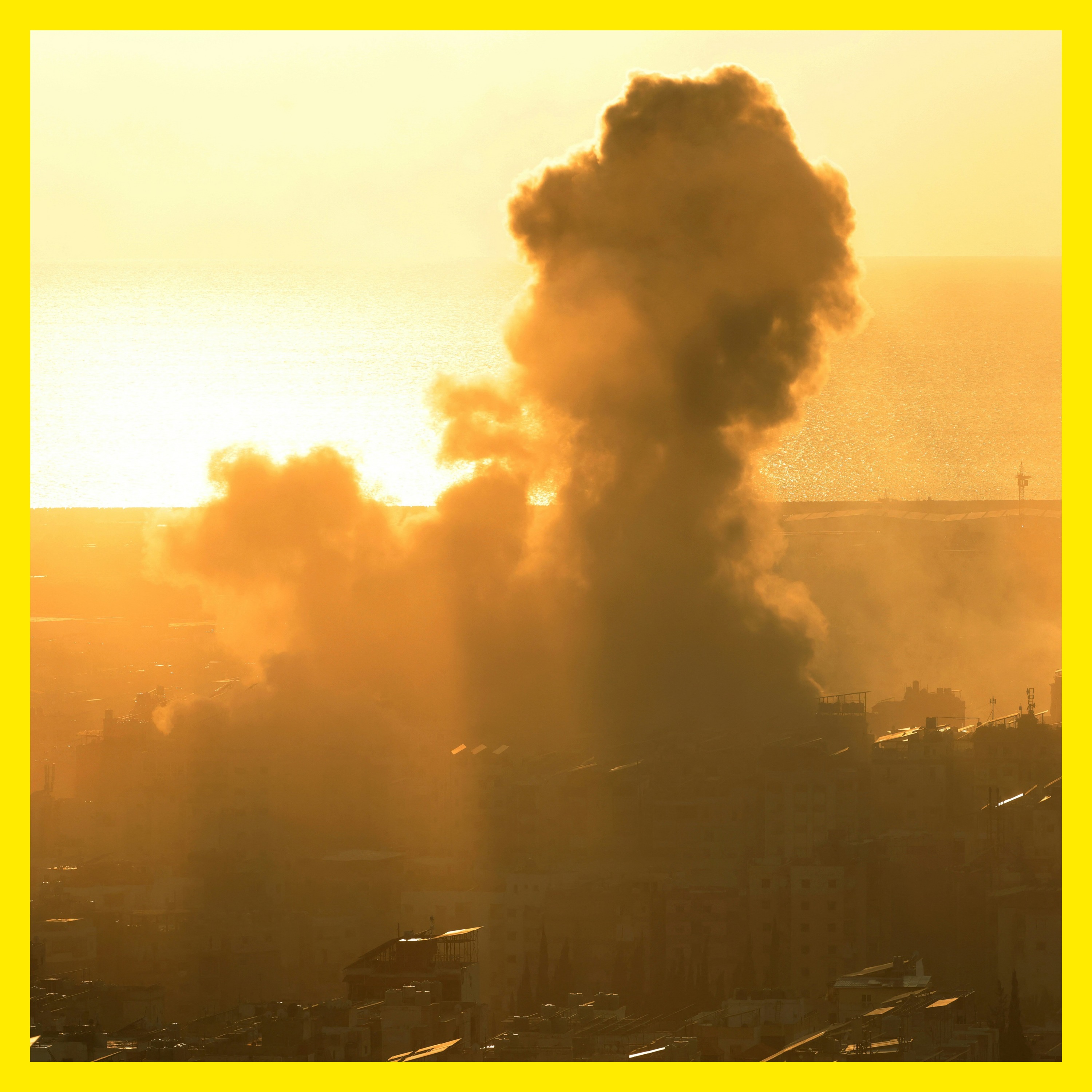
0:01Patrick Maguire: Qatar's energy minister has warned that this conflict in the Middle East could bring down economies of the world.
0:07Gabriel Pogrund: If you talk to economists or people in geopolitics and ask if they had a list of the scariest kind of scenarios that could happen with the global economy, the closure of the Straits of Hormuz would always be up there in the top five. Oil prices rising quite considerably just in the last 24 hours.
0:26Patrick Maguire: What we're doing is monitoring the risk, working with others to mitigate the risk. The Chancellor is talking to the Bank of England every day to make sure that we're ahead of that. The movements that we have already seen are likely to put upward pressure on inflation in the coming months. It's just been a pretty wild time, but it's going very well.
0:50Gabriel Pogrund: Welcome to The State of It, the political podcast from The Times and The Sunday Times that promises to take you inside the corridors of power, where the decisions are made, and tell you what is actually going on in government. I'm Stephen Swinford, Politicator of The Times.
1:03Steven Swinford: I'm Patrick Maguire, Chief Political Commentator for The Times. And I'm Gabriel Pogrand, Whitehall Editor at The Sunday Times.
1:10Gabriel Pogrund: And this week we are obviously going to be talking about Iran, its ramifications and the economy. It is the economy stupid, as we often say in these moments, which is this juggernaut coming down the tracks in terms of the impact. And then we're going to talk about the special relationship. Starmer has spoken to Trump, a slightly more convivial call than some of the previous very aggressive calls from what we've heard. We're giving you what we know about that and where this is going, particularly with some scoops from Gabriel and Patrick on the king and how he perceives things. So let's just start off by talking about the economic repercussions of the Iran war.
1:44Gabriel Pogrund: Now, as we sit here at this moment, we are effectively at a kind of between moment. We are between either Trump saying war is over, our job is complete, it's done, or Trump equally in the next sentence promising fire, brimstone and death in Tehran and striking back even harder. So it's not clear where we're going. But what I can tell you is that in number 10, the dominant conversation at the National Security Council, at the cabinet everywhere has been about the cost of living and they are worried about prices going up in shops they are worried about prices going up at the pumps they're worried about energy bills going up and given that this was starmer's guiding light to cut the cost of living he's now in a situation where whatever happens it looks like there's going to be a significant inflationary
2:30Steven Swinford: impact from this conflict i think it's um one of the interesting details of politics over the month or two preceding this that number 10 whenever you could speak to its remaining operation about their political strategy they say we know we have to put the cost of living front and center and they talked about it like it was a choice and this is one of those funny weeks where reality punches uh down the street in the face you know the idea that they have the luxury of deciding to turn the cost of living tap on or off in terms of public narrative opinion now seems faintly laughable the only issue in town is the duration of this war the effect that it has on cost of living in particular Steve but I think that there's a big question mark as to what if anything the government is going to do and how Starmer wishes to fashion the government's response to this I spoke to a advisor in Downing Street earlier who forgive me for the visual metaphor listeners he said that whenever Starmer spoke in public now he was naked they said you know he is just he's just exposed politically philosophically he's attempting to survive he's managing this crisis as best he can but it's more obvious than it's ever been especially when you're exposed by events that you know starmer doesn't have a authentically starmerish plan to get through this he's going to plod along as best he can but the plp and cabinet have made up their minds whether that's true or whether this ends up casting him in a different light putting him on the right side of the public opinion remains to be seen, but they are in shark-infested waters, it's fair to say, politically.
4:06Patrick Maguire: Well, that's a crucial point, that Keir Starmer has ended up on the right side of public opinion for once, and pretty decisively, you know, we had polling last week by YouGov that showed, you know, this war is unpopular among every set of voters, with the exception of reform voters who are very much on board with it, and Tories are more finely split. But it's not a bad thing to be seen as not being Donald Trump's best friend. So maybe actually the high diplomacy and the blame game may buy Keir Starmer some goodwill. But you're right, I think, Gabriel, that the big political question, the only domestic political question that matters is the cost of living question.
4:46Patrick Maguire: And let's not forget the extent to which, as you said, this was completely central to number 10 strategy. There was a speech Morgan McSweeney gave to government special advisors just before Christmas, which he said straightforwardly, unambiguously, 2026 will be the year of proof. It will be the year people feel the difference in their bills. It will be the year people feel just a little bit richer. And I paraphrase, but only very lightly because it was very, very starkly and unambiguously put. But everything Keir Starmer has said and done on domestic politics has been about emphasising that. The energy price cap, you know, the maximum price people can pay for their energy bills came down, bumped into a Labour MP just last night who said, you know, that and the government's childcare plans have proven very popular in their London constituency, despite the unpopularity of the government.
5:39Patrick Maguire: And the other thing to remember, what was Rachel Reeves' big narrative for the first half of the year? It was the plan is working. It has been painful. But two years ago, I stood up and said, fiscal stability is the bedrock of everything. And eventually you'll see the difference. And about three weeks ago, Rachel Reeves was incredibly optimistic that by the autumn, people would have seen at least one and possibly two cuts their interest rates. She was optimistic that inflation was getting closer and closer to the Bank of England's 2 % target. That's definitely not going to happen. So it is all about how bad are things not just in Iran but in the oil and gas producing nations around it?
6:20Patrick Maguire: How long is this going to last for? Are we talking about weeks? Are we talking about months? What happens afterwards? These are the questions that yes, Keir Starmer might be getting credit for not being seen as culpable for the fact that they're being asked but the answers he's going to have to grapple with. I wrote in my column in the Times on Friday, look back at the great petrochemical, oil-related shock that everybody remembers? The 1973 OPEC embargo and the subsequent shock that inflicted on the global economy and particularly Western economies. Not a single incumbent government in the West, no matter where it was, was re-elected after that kicked in and the big inflationary impact kicked in.
7:03Patrick Maguire: And are we now living through the same moment in history?
7:08Gabriel Pogrund: I think one of the challenges is this is about mitigating increases in the cost of living. and you've got a prime minister who has pledged to cut the cost of living. They took£150, as he called it, off energy bills by moving some green levies onto general taxation. That, it looks increasingly likely, is going to be wiped out come June. And the problem is there's quite a long tail here. So with petrol prices, we tend to see that filter through in 12 to 14 days. So a couple of weeks' time from now, we should start to see more of the impact at the pumps. And then we've got this price cap moment in June when that kicks in and presumably will now be higher than it was.
7:41Gabriel Pogrund: So by that stage, the Iran war may have receded as an issue in the eyes of many voters. But what won't have done is their household bills going into the rest of the year. And that's the kind of challenge for the government here. There is no magic money tree. There is no free money to mitigate the impact on people's bills. And for a government whose mission statement is to cut the cost of living, it's just trying to struggling and it's going to find it difficult to stop it from going up as much. The other challenge that they've got talking to people in number 10 is that they know as much about what Trump will do next as we do.
8:15Gabriel Pogrund: It's incredibly unpredictable. So which signal do you take from Trump that this is over? Or do we take his word at his word that he's prepared to do heavier and harder things in Iran? And it's really difficult to read that. And if you're a government that is trying to contingency plan on the one hand against a potential 300 pound increase in energy bills, you know drawing up some kind of massive package for June and on the other hand this could be over quite quickly it's really hard to calibrate so Starmer did the only thing he could do this week which was to say this is going to hit every household and every person in this country if this goes on and I think that is the only strategy you can play here but it is a completely movable feast as to the scale of the shock the economy is facing.
8:57Steven Swinford: I think the other factor that could militate in Starmer's favour is something you briefly have referred to there Steve the extent to which Trump himself is exposed in quite an immediate way to the political consequences of this. Trump has actual midterms later this year. And I think that it's never a good scenario where your strategy comes down to optimism and hope. But there is naturally going to be a lot of that in Downing Street that because Trump is known to train his eyes on stock market movements, because he is aware that he likes Starmer, in actual fact, was re-elected partially on a basis of cost of living, saying you would reduce the price of eggs among other household goods, that there will be a hope that Trump's own political self-interest ends up giving him and the rest of the West an offer and as soon as possible.
9:44Steven Swinford: I mean, if that isn't the case, and this does end up being a weeks or months long war, we are then in a completely different situation. But I suppose, as you said, Steve, I mean, it does come down to very straightforward question which is what is in the government's gift to do if this does post state tune um whether the government will be moved to engage in some sort of big stimulus big offer on energy um i mean they've been pretty bullish as well by the way on the political dimension to this i mean literally like in the minutes after edmund aband's team or the government was dismissing any return to north sea oil talking about you know defending their green decisions as being the right decisions I mean, it does get very political very quickly, and you know what the critique is going to be of the government's energy strategy as a whole.
10:34Patrick Maguire: Well, it's interesting you mentioned the North Sea Oil thing. What has been striking, as you said, Gabriel, is there is not even a peep of serious debate at the very top of government. Or we're hearing nothing about there are people in number 10 who think it's time to look again at North Sea Oil. It's time to rip up net zero policy, even as both reform and the Tories are banging the drum on that. You're getting Keir Starmer himself coming out and saying we are still committed to decarbonisation. That is the route to insulating Britain from global shocks on the energy market and fluctuations in the price of gas and oil.
11:11Patrick Maguire: And the fact that there is not a single person briefing any one of us saying, you know, I think this, I've sent a memo to the prime minister. These are the ministers who are pushing for a change on this. It's really, really striking. I think it shows you, one, the nature of the people you'd expect to think that have now left government. But I think it's another reminder. And Tim Shipman, late of this parish, now at The Spectator, had a lot of this in their magazine this week. It tells you that Ed Miliband is the power in the land inside of government. Ed Miliband is the prime minister. Well, this is maybe chaos with Ed Miliband.
11:49Patrick Maguire: door.
11:49Gabriel Pogrund: And he was leading the discussion on the energy stuff as well at that same National Security Committee. He was warning oil prices are going to spike. I was talking to someone in number 10, are you going to do a big kind of bailout energy package? They were kind of equivocating. And then I was like, oh, look, Ed Miliband has just spoken in the Commons. And he said on the record that you are willing, you've done it before and you will do it again type thing. He was out there confirming they were going to do it. So Ed Miliband is playing quite a leading role in this. I'm not sure how comfortable for Keir Starman that is at the moment given the potential for possibly Ed Miliband to lead the Labour Party one day but it's certainly he's a political force.
12:24Patrick Maguire: Yeah indeed and it's interesting that the insofar as there is a debate about Britain's energy policy it's not happening inside the Labour Party I think that's the ultimate sign the ultimate sign of the death of McSweeneyism and this being a new phase of Keir Starmer's premiership is that nobody inside number 10 is briefing against Ed Miliband at least not openly at least not attributing its number 10 um but the debate insofar as it's happening about britain's energy policy is obviously happening between primarily labor and reform although the tories are also banging that drum as well that's the political fight nigel fraz wants to have which is you know having spoken to him a lot certainly last week about his view on the conflict i think you know the reform view the farage view the argument farage wants to making the run-up to the locals, and we can get on to the extent to which Iran makes reforms, domestic campaigning more difficult or not, is that, you know, Labour and Tory governments have taken choices on energy and environmentalism and a range of other things, welfare, that have, they would deliberate policy choices, Farage would say, Robert Jemrick is saying, that have hurt your wallet.
13:36Patrick Maguire: They've sort of sacrificed your personal household prosperity on the altar of net zero on rising welfare bills on this and that and only reform is going to take the big crunchy politically toxic decisions to end government grants for electric cars or stop subsidizing heat pumps or uh you know do more aggressive cuts to welfare than anybody else that allow a reform treasury a generic treasury to reallocate that money to tax cuts you know the big reform announcement we had in this morning's paper and that we're seeing play out at a petrol station in Derbyshire is a 5p cut to fuel duty you know cost two billion quid not cheap but it's we are taking the policy decisions to one you know cut your cost of living but two also you know remake Britain's economy so that you know we drill oil and you know frack and all of these things but that debate sort of seems like it's unfolding in the background but I think it will become a crucial debate over the nature of Britain's political economy.
14:40Patrick Maguire: You can see actually quite clear distinctions for the first time in a while. You've got Starmer doing Milibandism and Farage and Jemmerick doing the polar opposite.
14:49Gabriel Pogrund: Can we talk about reform just briefly? So they're clear where they are on fuel duty. They want to scrap green. That policy they're clear on. Iran, they have been absolutely all over the place. And that speaks to me, the bigger question of when you get reform, who is actually speaking for reform? So you've had various senior reform figures, Richard Tice and others, advocating, supporting the military operation against Iran. And on the other hand, you've had Farage and Robert Jenrick playing down it. And they've been in all sorts of different directions on this. And that strikes me as a problem.
15:20Gabriel Pogrund: I thought Andrea Ledsom was last night on the telly and she was again. Andrea Jenkins. Ledsom's not defected yet, Steve. Right. Andrea Jenkins was on the telly last night, again, suggesting that she could back. and military action. And this is one of the big questions of today. And reform's position is not really and has not been that clear on it. And this is one of the problems they've got. There's a message discipline issue in that party. I think it was unclear on what its policy was going to be. And then when it arrived at it, it arrived at it late. Now they seem to be opposed to US military intervention.
15:54Gabriel Pogrund: It's a bit all over the place, Gabriel.
15:56Steven Swinford: It's one of the great questions. I mean, it's always the relationship with Farage, relationship with Trump rather there's often been a perception that it's haunted Farage I mean let's be straightforward in saying at the outset that it has hardly hindered his political progress over the last year but there is often this question as to could there be circumstances in which it seems to pose a dramatic problem there's also a very simple question too which is does their reflexive support for the trump white house does that impede their ability to make the argument they want to make on cost of living now so you know they're out and they're in derbyshire today there's a great stunt it's it's visual it's televisual um filling up the point they're filling up people's cars filling up people's 25p discount in the lead to yeah they've taken over a petrol station for today they're paying for discounted fuel for people yeah that's it is it sustainable for him to make argument having supported the action that led to the cost of living crisis which is among other
16:59Patrick Maguire: things compounding these existing issues with the cost of fuel and and that is why uh the the debate over energy policy is important right because what reform we're going to try and do in the next two months right they only want to talk about the cost of living um over the next two months between now and the locals. And can they successfully turn the cost of living, Rao, into a bigger debate about energy policy or be thinking this is Trump's fault, you're Trump's mate. And you said after the first bombs fell on Tehran that we should do all we could to help. And as you said, Steve, you had Nadeem Zahawi mooted to the horror of some in Reform HQ as a potential shadow foreign secretary for reform saying much the same.
17:42Patrick Maguire: Richard Tice on Saudi TV saying the same. Just hours after Robert Jemrick comes out and says, we're not about faraway wars. We don't want British boots on the ground. We haven't been asked to join offensive campaigns against Iran. Can we all calm down? We're focused on rising prices. Now, the other interesting thing is I think we've learned something significant in the past couple of days about the relationship between who speaks for reform. You see Andrea Jenkins on Sky News on a weekday evening and she says, who knows, maybe we'll conscript every man under 50 to do regime change in Iran after Robert Jemmerich says something the day before and Richard Tice says something the day before.
18:23Patrick Maguire: What is clear is that the economic policy on these questions and the people who actually speak for reform are, it's basically Nigel Farage and Robert Jemmerich. If it's not coming from either of them on a matter of this import, then who knows what it is? You know, even Richard Tice, the deputy leader, I was speaking to someone in Reform yesterday saying, you know, I assume that's not the line. And they said, no, that is definitely not the line. But yeah, it's whether they can maintain that, you know, whether the Trump thing is too much of an albatross. You know, the reason Farage came out so quickly wasn't necessarily, you know, people will laugh at this.
18:57Patrick Maguire: It wasn't necessarily, you know, please, Donald, pay me attention thing. Can I have a pat on the head? It was, came from a place of concern that Starmer has left the UK high and dry in terms of the transatlantic alliance and what does that mean for the UK? Because you might not like Donald Trump, but so much of our political insecurity and military apparatus is built on a good working relationship with the US. So that is the reason Farage came out so quickly. Can they finesse the rest of the politics? I don't know, but it will require discipline. And the only people exhibiting discipline and coordination on this are Nigel Farage and Robert Jemmerich.
19:33Patrick Maguire: But we've learned, I think, that they are working closely together. That is the real leadership of reform.
19:39Gabriel Pogrund: Right. Let's head to the interval. And when we come back, we're going to talk about the special relationship. Can it be salvaged? How bad is it? And is it actually that bad for Starmer in the long run? Welcome back to the State of the Political Podcast from The Times and The Sunday Times. Let's talk about the special relationship. Is it that special anymore? I mean, overtly, when you look at it, it's not great. And that's slightly underplaying it. So Donald Trump has variously said that Keir Starmer has ruined the special relationship. He has said that he is no Winston Churchill. He's done a whole barrage of quite personal insults aimed at Keir Starmer, accusing him of being weak.
20:14Gabriel Pogrund: You name it, he said it. Privately, their phone calls have been just as difficult. He is furious with Starmer for refusing to cooperate over the military offensive in Iran. He made that clear in a series of calls. And most recently, on the weekend, they had a 20-minute phone call, which was more civil. It was slightly less aggressive. But nonetheless, Trump made very clear his frustration with Starmer's position. So all of that is, you know, on one side of the ledger saying the special relationship has issues. On the other side, what Starmer would say and what people around him would say is actually it's functioning pretty well.
20:51Gabriel Pogrund: If you take that guy in the White House out the picture, we're sharing intelligence. We're still in regular talks. a special relationship is more than one man. And I guess that's the question. Is it or is this going to be a massive problem down the line for Starmer or whoever succeeds him? In practical terms, it is more than one man.
21:11Patrick Maguire: And there's a lot of, you know, this debate sort of unfolds intermittently in the Labour Party and elsewhere about, you know, should we pursue a different foreign policy? Should we do this? Should we do that? It's a bit like, well, the point at which we should have been having this conversation, particularly about the stuff we actually are hand in glove with America on in the way we don't appreciate, you know, the security stuff, the military stuff, the nukes. It's like, guys, the point at which we should have had this conversation was probably somewhere around like the late 1950s. Sort of, you know, we didn't build our own nukes like de Gaulle or, you know, kick the US out of our bases.
21:44Patrick Maguire: Like, you know... We're embedded. Yeah, you're paying... Storm should have done this at Suez. Yeah, exactly. You pay your money and we've taken our choice. That's the thing. but you know it's not just the americans we have to worry about you know britain has been surrounded on all sides and you can say look trump is capricious trump is crass trump is aggressive you know trump is in a fit of peak because we didn't help him you know didn't let him take off from uh diego garcia and bombed around and the planes had to you know take ages to fly from somewhere else but uh it is the cypriots the cypriot high commissioner coming out in public and saying you know what the what the hell is britain doing it's the french uh it's macron on a golf countries yeah yeah exactly it's macron on a aircraft carrier off cyprus saying you know i'm here to protect uh you know former british colony in the place where the rf have two sovereign base areas as you say it's the it's the golf countries so if trump is annoyed with us and if trump is looking at us and saying what's the deal with those guys what's the point of them the the sort of slightly depressing thing for us as a country is he's not alone steve i think you're
22:50Steven Swinford: opening the essay question was is it a special relationship there are dimensions of the relationship that are possibly unique and do transcend you know the plain transactionalism of whether or not the u.s can use deago garcia and whether or not we can get concessions from the u.s on trump's tariffs and that is in particular in the trump era the royal family and patrick and i as it happens have our paperback of our book get in out this week I hope that was not too violent an attempt to crowbar into the conversation. But one of the themes we examined in it was the pretty unique hold that the prospect of a state visit had for Trump shortly after his election.
23:34Steven Swinford: This was coming to the second state visit to the UK.
23:37Gabriel Pogrund: Yeah.
23:37Steven Swinford: So people may recall that last year, Keir Starmer in a rare thespian flourish bestowed Trump with a handwritten invitation from the king for a full-fledged state visit.
23:50Patrick Maguire: And his second state visit, which is very rare historically, that, you know, you get two state visits in such quick succession. That's right.
23:57Steven Swinford: And this was all sort of shielded from public view at the time, but it transpired that there was much resistance from the palace. Clive Alderton, the king's private secretary, was seen by a number of people in number 10 as being exceptionally difficult and interceding and objecting and then not replying at moments that it seemed to suit the institutional interests of the palace. and there's one of those moments where you know you really feel the way the deep state operates in this country um we were told that doubt number 10 in the end so it has to advise the palace to do things in certain instances even when it is you know the subject of consensus or it may even have come from the palace as an idea you know the number 10 the prime minister has advised the king to go on an official visit to Saudi Arabia.
24:51Steven Swinford: In his instance, Number 10 had advised the palace to extend an invitation to Trump. That advice had been met with ambivalence. And in the end, the advice was upgraded from lowercase A to capital A advice. And Charles, possibly quite sagaciously, he did have a lot of concerns about Trump's unpredictability. At the time, Canada was a big issue of concern.
25:17Gabriel Pogrund: He was threatening to annex Canada, wasn't he?
25:19Steven Swinford: Trump was actually threatening to annex Canada. Annex another one of his kingdoms. Another one of his kingdoms, which wouldn't have been wholly great for the realm over which HRH presides. But in the end, Number 10 effectively ramrodded the visit through.
25:32Patrick Maguire: And Peter Mandelson, obviously ambassador at the time, had to go to Susie Wiles, who was Donald Trump's chief of staff, and basically say, listen, this Canada thing, very funny, but can we all just, you know, stop talking about invading Canada? And then after a few interventions like that, Donald Trump stopped threatening to invade Canada. because I think he quite wanted to go to Winter Castle.
25:51Gabriel Pogrund: And we've obviously, this is particularly relevant because the king is due to go visit the US, right? He's due to go late April. That is happening despite suggestions that's been called off. It is happening. He is going.
26:01Patrick Maguire: You're saying that Davy isn't writing British for our policy, Steve?
26:04Gabriel Pogrund: No, but so the king is going and it has the potential to be, okay, I know these things are very choreographed and very carefully done, but knowing because of your book and what you're saying that there are tensions underlying that relationship, significant tensions, It might not be entirely smooth, this one.
26:20Patrick Maguire: No, that's, I mean, that and you've also got Prince William going over for the World Cup in the summer. So you've got the king and his heir heading over to, I don't know which ring is being kissed here, but like, you know, to bestow the power and imprimatur of the crown on the presidency and sort of, you know, pay loyal obeisance to Donald Trump. It's sort of like, you know, if you are in either palace right now, if you're in Buckingham Palace or Kensington Palace, you're probably, you're surely thinking, hmm, there are various reasons why this isn't necessarily a great look. And it's, you know, but clearly the, as you say, Gabriel, the capital A advice from ministers isn't changing.
27:02Gabriel Pogrund: And look, it's on the eve of the locals as well, Patrick. The politics of it are amazing. So you have the king out there. God knows what Trump's going to say about Starmer during that trip. Voters are on the cusp of going to the polls in the local elections that could end Starmer's premiership. I mean, the timing is...
27:17Patrick Maguire: Well, but, you know, the best thing that's happened, and admittedly, if you look at any graph of leader approval polling, Keir Starmer is like, you know, somewhere in the basement of this building. But, you know, you look at the graph and he's just ticked up just a little bit. Admittedly, it's from like, you know, minus 50 to minus 49, but still it's on an upward trajectory. you know if Donald Trump on the eve of the local election says I don't know re-elect Andrea Jenkins as mayor of Greater Lincolnshire I mean she's not for another three years but you know something like that I think um you know would there be people in Downing Street who think that's not it's not the worst thing that could happen to us at this point who knows right I think that brings
27:57Gabriel Pogrund: this week's episode of the state of it to a close and Gabriel can you do the massive thank you to
28:02Steven Swinford: our amazing producers yes thank you so much Molly Guinness and you and Daughtry and we will see you next week.
While Keir Starmer may get some credit with the public for his response to the war in Iran, he's still stuck with its consequences: rising prices just when he'd said he was going to cut the cost of living. Meanwhile has Reform UK's response compromised its ability to campaign on the cost of living? Also, who is now wielding the power in Number 10?
Steven Swinford, political editor, The Times
Patrick Maguire, chief political commentator, The Times
Gabriel Pogrund, Whitehall editor, The Sunday Times
Producer: Euan Dawtrey
Executive producer: Molly Guinness
Picture credit: Getty Images
Email us: [email protected]
This podcast was brought to you thanks to subscribers of The Times and The Sunday Times. To enjoy unlimited digital access to all our journalism subscribe here.
Hosted on Acast. See acast.com/privacy for more information.