 Ask ChatGPT



Labour Party conference and Andy Burnham’s “hope/vibes” pitch versus economic reality ahead of the Oct 28 budget. The episode focuses on likely tax rises, welfare reform pressures, and whether Burnham can sell “raise taxes, fix welfare later.” It also examines Burnham’s refusal to rule out rejoining the EU and the EU’s hardball on youth mobility and “made in Europe” protectionism.
Stephen Swinford (The Times political editor) and Patrick Maguire (The Times chief political commentator). No other guests are interviewed.
Borrowing is £18.3bn for August (about a fifth higher than last year), implying more tax rises. Multiple welfare reviews are coming (Mayfield on ill-health worklessness; Fonagy on ADHD-related diagnoses; Milburn on NEETs), but the budget may not tackle welfare directly. Labour’s opponents converge on “cut welfare to fund defence.”
YouGov MRP/“megapole” shows Labour 23%, Reform 21%, Tories 21%, Greens 13–14%. Burnham’s New York plane question about EU rejoining; EU reset talks delayed over youth mobility and car-part sourcing rules.
Written by AI. May contain mistakes.
Discussion on the upcoming Labour Party conference and its implications.
“Welcome to this week's episode of The State of It.”
Analysis of Andy Burnham's role and public perception ahead of the conference.
“as important as personality is proving to be for the Labour Party.”
Examination of the political landscape and party standings prior to the conference.
“It's bad news for the right of British politics in general.”
Overview of Keir Starmer's recent engagements and political strategy.
“So, you know, multi-party politics is not dead.”
Explore the internal dynamics of Labour's leadership and the challenges it faces with welfare and taxation.
“I wrote about that in the Times last week.”
Delve into Andy Burnham's nuanced stance on rejoining the EU amidst political challenges.
“So look, we need to talk about Brexit, we need to talk about the EU.”
Explore the complexities of Labour's position on Brexit and the internal party dynamics influenced by Andy Burnham's leadership.
“a lot of willful effort on the part of any Labour politician not to lurch towards them.”

Get the gist, explore an idea or ask about something said.
 Claude
On The State of It, what are the key points of this episode?
Searching your listeningAutomatic transcript. May contain errors.
0:00Hi, I'm Danny Fortson from the Times Tech Podcast, which is currently sponsored by ServiceNow. ServiceNow describes itself as an AI control tower for business reinvention, connecting systems, data, and AI so workflows more smoothly across organizations. The platform integrates with different clouds, models, and data sources, bringing them together in one place. To learn more about how ServiceNow puts AI to work for people, visit servicenow.com. Therapy's biggest impact doesn't show up in some dramatic breakthrough. It shows up in the smallest moments. You bite your tongue instead of escalating.
0:37You put your phone down instead of firing off that text. You say what you actually mean instead of what would hurt someone else the most. Nobody applauds those moments, but they quietly change your life. That's what growing feels like, and that's exactly what Grow Therapy is here for. Grow is therapy that works, covered by insurance. Sessions average$21 with insurance, and some pay as little as$0 depending on their plan. There are no subscriptions, no long-term commitments. You just pay per session. Grow connects you with thousands of high-quality, licensed therapists across the U.S., offering both virtual and in-person sessions, nights and weekends.
1:17You can search by what matters, like insurance, specialty, identity, or availability. And you can book a therapy session in minutes and begin in as little as two days, not the national 48-day average. See if you could pay as little as$0 for therapy in seconds at growtherapy.com slash ACAST. That's growtherapy.com slash ACAST. growtherapy.com slash ACAST. Availability and coverage vary by state and insurance plan. We've had some really dire borrowing figures that have come in this morning. We've got borrowing at$18.3 billion for August. That is a fifth higher than this time last year and it's much higher than the markets expected, all of which points to one direction, more potential for tax rises.
2:08Welcome to this week's episode of The State of It. There is now so much political news we are going to be coming to you twice a week on Tuesday and also on Friday, so please tune in. I'm Stephen Swinford, the political editor of The Times, and I'm Patrick Maguire, chief political commentator for the times. This week we are days away from Andy Burnham and the entire of Westminster decamping to Liverpool for the Labour Party conference and we know what to broadly expect. We're going to get a message of hope, we're going to get a message of hope again particularly, renewal, all those kind of things, vibes.
2:40There's going to be a lot of vibes. So the big question is can Andy Burnham's optimism, positivity, all of that message survive contact with economic reality. And there's a couple of things we've got this week. There's a lot on welfare this week, and we'll talk through some of that. But also, there's some pretty dire figures for the economy that say that the budget on October the 28th is going to be very difficult. But let's just start with, what do you expect, Patrick? Because a year is a long time. Last time we were at conference, Andy Burnham was a fringe player talking about rejoining the EU from memory.
3:14It was a different world. Just think about the position Andy Burnham was in this time last year. So the week before conference, he did a big interview with the New Statesman in which he basically said, come and get me. And Britain is in hot to the bomb markets. We've got to get past this thing of being in hot to the bomb markets, he said. That sparked a flurry of outrage from Number 10 and the Treasury. Then he gave another interview to The Telegraph a couple of days later in which he basically said, look, I'm here. Give me a call if you need me. Turned up to conference. We expected it to be the Andy Burnham show.
3:47That really wasn't the mood. And he didn't really march on Liverpool in the way it was expected to. And indeed, when we were recording one of the first episodes of this podcast, Andy Burnham made a lonely exit with his man Friday, Kevin Lee, over the Albert Dock and back into obscurity, we thought. And what a difference a year makes. But as you say, hope again, that is the slogan. And that was the word he lent on very heavily in his Make-A-Feel campaign. It was Vote Andy for us, Vote Andy for Hope. It is, people have compared it to Obama, but really it's the Bill Clinton thing. And when you speak to people who know Andy Byrne and well, Bill Clinton is the comparison that's made.
4:29Now, I should, for the interests of our legal department, say, talking about his easy facility with voters and not his dedication or otherwise to marry France Van Heel, is his wife of longstanding, to whom he's very dedicated. But it is that, well, the hope be changey thing, the vision thing, all of the things Labour MPs, Labour voters didn't think the party was doing under Keir Starmer, i.e. warmth, optimism, a sense of wearing one's values on one's sleeve, being very good at the small P politics of managing a parliamentary party, dealing with people. It's no surprise that when you look at the word clouds that pollsters put out intermittently of leaders, what's the big thing in the middle of Andy Burnham?
5:16Is it some variation on likeable? And it is that vision of Andy Burnham we'll see presented to the public again, that sort of easy charm, folksy charm, that sort of thing. But the question obviously is how far can that take the Labour Party? Indeed, has it taken the Labour Party as far as it's ever going to go with a change of that cursed word, but the word that's on everyone's lips in Westminster, vibes, a change of vibes is one thing. How's he going to deal with the substance? And actually have all the voters who may have been susceptible to that charm already been charmed? That's the big question.
5:56And I think conference may be the last hurrah of that personality-led strategy, as important as personality is proving to be for the Labour Party. Let's talk initially just about the positive side of the ledger, of the change of tone and the change of leader and what that means for Labour. So on Thursday, and this is a moment worth earmarking, YouGov is doing its first MRP for a year. And as we call them in the trade, that is a megapole. It goes deep down into every constituency in the UK. And they are a nightmare for political leaders and politicians more broadly, because they show the fate of your seat potentially.
6:30And they have got increasingly accurate over the years. And that fuelled a lot of Starmer's pain because it was writ large. And the last time this was done was September of last year, just before conference again. At that point, reform was riding high and the outcome expected from that, the forecast at the time, was 311 seats for Reform UK. Labour was minus 267 on 144 seats. The Lib Dems about where they were and the Tories dropping down to 45 seats. So a very different world and a very different landscape. But since then, reform support has declined. It's gone from, you know, I think they were topping kind of 30 points in the polls at various points then.
7:12We've got a poll today, Patrick, a YouGov poll, which now has reform and the Tories level pegging. I think that's right. Yeah, both on 21 percent. I think our colleague Olly Wright has crunched the numbers and worked out that is the first time reform and the Tories have been levelling a Yugov poll for 18 months. It's worth pointing out, you know, in interest of fairness, everyone's within the margin of error, right? It's not. And this comes back to the point about the Burnham bounce, hope and change and optimism and the prime minister being likeable. It is not that Andy Burnham has crushed everyone before him and has got a 10 point lead in the polls.
7:48You have Labour on 23 and Reform and the Tories both on 21. The Greens, surprisingly, are still there, still hanging on at 14%. But nonetheless, psychologically, that's a big deal because you compare it to all the other polls that have maybe Labour with slightly bigger leads. Reform, yes, in second, but the Tories very much not what they were in that poll from last year, which is the Tories on 45 seats or a maximum in the most optimistic reading of that YouGov MRP from last September on 86 seats. That was the Tories dead, right? The Tories were finished. They had shriveled to a complete irrelevance.
8:25Now, it would be wrong to say that a poll, as we've seen this morning, where the Tories and reform are both on 21 % is fantastic news for the Tories. Of course it's not. It's bad news for the right of British politics in general. And it does not show that either of those parties is a national force that's about to sweep the entire country and form a government, as it looked like reform were definitely going to do last year. The Tories are very much looking like a resilient regional party rather than a party that's in contention across all of the country. But it's a big deal. It will show us politics in flux, right?
9:02It will show us exactly as you said, they're all within the margin of error. And that means inevitably I'd be very surprised if Burnham has an outright majority come the MRP on Thursday. So you'll get this situation where all worlds are possible. And that is the kind of extraordinary situation that we are in. There is no dominant political force now. If you've got Tories, reform and Labour all level pegging, there is everything to play for. And that is what Burnham is relying on at this point. Yeah, indeed. And when you talk to Labour MPs, you know, I've been struck by the conversation I've been having over the past fortnight about the political outlook.
9:36You know, you don't, and I wrote about this in the Times last week, you have a conversation with your sort of median Labour MP. You say, how do you think things are going? And they'll say some variation on, oh, you know, things haven't been going too well for reform. Kemi's doing well, isn't she? But they're really split. Great news for us. What they're not saying is, and we'll get onto a lot of this stuff. They're not saying, God, look at how difficult things are. Look at the price of petrol. Look at the bond markets. Look at our borrowing costs. Look at just how hard all these policy questions are for John Healy to square.
10:06So there is a lot of hope being invested in the idea of the right being split, perhaps terminally split, and Labour coming through the middle. It's worth looking at the other side of the ledger for that. A couple of weeks ago, I was struck that politics seemed a bit stuck, particularly with the protests of the massed masses in Portsmouth, for instance. You had politics that seemed completely stuck, six-party politics that seemed stuck. You had Labour and the Tories not really knowing what to say, not really knowing how hard to condemn. You had Reform, who was somehow being outflanked on questions of immigration.
10:44And, you know, there was some sense that they too didn't quite know how to draw the line. You had Restore, who are obviously the big change in all of this from this time last year. You know, we have Restored Britain polling at somewhere between 3 % and 7%, depending on what pollster you look at. And then you have the Greens. And there was an expectation, I think, when Andy Burnham came in that the Greens were done, the Greens were finished. And different pollsters rank them differently. But that's the striking thing about this morning's poll, that the Greens are on 13%. 14, just. Yeah, yeah, 13, 14%.
11:17Yeah, exactly. So, you know, multi-party politics is not dead. Then you look at real world election results, right? Every Thursday, council by-elections happen, and reform are still winning most of those. Since Andy Burnham became prime minister, they have, I think, quite comfortably won more than the other parties. Labour are doing better. The Tories are doing a little bit better. But it's still, if you call a council by-election on a Thursday night in parts of the country, reform are probably going to win it. So politics is pretty, it's really vociferous. It's multipolar. And there is a sense that everything is up for grabs.
11:55And I think from the past year, we probably should have realized, and as a weekly columnist, I have at times been guilty of this in the past, conclusive sweeping judgments at this stage in the cycle, beyond saying there is a big demographic in the country, whether it's 20 % or 30 % on a really good day, that will vote for Nigel Farage come what may. The Tories, again, have pockets of the country where they are the predominant force, and they're very much not dead. and the Labour Party doing better under Andy Byrne than they were under Keir Starmer, markedly so. Beyond that, it's quite hard to make really conclusive, sweeping judgments.
12:33And I think anybody who does on the basis of the last year is wrong. But all of that is to say that if you're any party leader looking at the poll this morning, as much as it will feed into prevailing narratives, i.e. Tories up, reform down, Labour were up, flatlining. You know, there is enough evidence for every party's leader to look at that and say, you know, it ain't over yet. And the person who has agency in this is Andy Burnham. You know, which direction all of those numbers go in will depend on the decisions he takes going forward. But look, it's not straightforward. So he's got huge challenges piling up.
13:10And as we say, it's this clash of does the rhetoric of conference, the hopes. And I think he is going to reference explicitly some of those challenges in his conference speech. But you had, look, we want to take listeners and viewers inside the room where it happened. And you had a great microcosm of that from a leaving dude the other night. Yeah. So a couple of weeks ago, Holly Ridley, who was Keir Starmer's general secretary, he was Labour's top official, she stood down because of the change of leadership and she had a leaving dude. And it was a couple of weeks after Keir Starmer, well, a couple of months after Keir Starmer last stepped out among his old friends.
13:45He turned up in a very fetching cream shacket and a trendy T-shirt underneath. And one of the things, by the way, that struck me about all the conversations I've been having about Keir Starmer and what he's up to recently, is, you know, you ring someone up and say, I'm just wondering what you think about what Keir might do next. I wrote about that in the Times last week. You know, what's he thinking about XYZ? There have been several people who said, yeah, I was having a drink with him last night or I had a drink with him the other week. I thought, fair play to him. He never necessarily took the Nigel Farage view that you can go to the pub in the middle of the working day or indeed the Andy Burnham view, right?
14:18There are some political leaders who weave the pub into everything they do, like Burnham and Farage. Starman never did that as PM, but it sounds like, you know, he is absolutely caning it lately and good luck to him. So one of his nights out was at Holly Ridley's leaving do. And, you know, all of Labour's great and good are there. Labour HQ, the cabinet, because Holly Ridley is the woman who, with Morgan McSweeney, masterminded the 2024 election campaign, made sure everyone would get elected. And she's very well regarded, particularly in that bit of the government. So Keir Starmer is there pressing the flesh, catching up with people.
14:49And who makes a beeline for him, I'm told, by a couple of witnesses than John Healy. And once upon a time, that would have been a very amiable conversation. But I think Keir Starmer can be forgiven for thinking, that guy, you know, I was down, I was very nearly out. And then he steamed into a random weekday and said, I was putting the country at risk. You know, Buster got trying to find more defence spending. We couldn't quite make the sums that up. And then John Healy resigns and the whole thing, the whole thing basically falls apart from that. Yeah, it was the moment he goes from it being likely to it being certain that Keir Starmer was going to go after local elections.
15:26And to the surprise of some people there, on look at the stage, John Healy made a, you know, didn't make a beeline for Keir Starmer necessarily, but went to speak to Keir Starmer, you know, exchanging pleasantries. and by all accounts Keir Starmer was a bit surprised by this and said words to the effect of you know you may want to take another look at your resignation letter mate and that resignation letter of course said like we need to find the money for defence and we need to find it now otherwise we're putting the country at risk and the subtext of that Keir Starmer comment to John Healy is you know now in the treasury it's not so easy is it you know everybody was looking at me saying and this is what you hear often from the starm rights you know oh god you know you were it was the politics of Khan.
16:05It was the politics of learned helplessness. You know, you never had an optimistic solution. You always just sort of agreed with what officials put in front of you. But the implicit view from Keir Starmer there was, well, you know, sometimes it was really, really hard and maybe there weren't better answers. And so that struck people who were there. And I think, as you say, it's a microcosm of all the other issues that this government is about to face, that this prime minister and this chancellor are about to face. because Andy Burnham's big strategic bet, and you hear this from the Treasury as well, is that they believe in the power of politics to be presented with a problem.
16:41And you saw this in early release when Andy Burnham say, actually, no, we don't accept the terms of that. We'll try and do as much as we can to make it even a little bit better. And that's something I had from the Treasury last week. You know, we don't believe that politicians are helpless. That's our starting position. But, you know, that exchange is the two visions of Labour politics. You have Keir Starmer saying, We're going to have to grin and bear it and grit our teeth and get through this, take really hard decisions. We won't be thanked for them, but in the end, it'll pay dividends. With the Burnham-Healey approach, particularly the Burnham approach, which is hope again.
17:16Actually, people are sick of politicians having no agency. That's why people look at Nigel Farage. In the words of one cabinet minister, a high agency politician who breaks the scroll. He never says, oh, the state can't do this. The state has to do this, or I'll make the state do this. The Burnham approach is similar, but we're about to see on all of these issues, defence is one of them, any big fiscal decision conference, the budget, we're about to see the limits of that approach and just how far it can take you in this very messy political context. I think they've got an optics problem. And I think the problem is this.
17:49It's simply this. It looks likely they're going to have to raise taxes. We've had some really dire borrowing figures that have come in this morning. We've got borrowing at 18.3 billion for August. That is a fifth higher than this time last year. And it's much higher than the markets expected. But number two, there are a load of big juggernaut reviews into welfare, all happening in the run up to the budget. So we've got one from Charlie Mayfield, which is coming tomorrow, which is all about the kind of scale of people leaving the workforce and what you do about that. Like 300 ,000 people falling out of work a year through ill health.
18:23So that kind of stuff. Later this week, we've got a review from an eminent clinical psychologist called Peter Fonagy at UCL. And he's going to be talking about the kind of surge in ADHD diagnoses, particularly among young people, again, leading to worklessness. And then the biggie, the big one on the horizon, the Milburn Review is coming back. And that is looking at NEAT. So 16 to 24-year-olds that are not in education, employment or training. Again, the huge increase in those numbers. So you're going to have a whole series of reports that are saying, flashing red, the welfare state is a problem.
18:58Spending is out of control. Here are some things you could do about it, Prime Minister. And then you've got the prime minister doing a budget, which I'm told is not actually going to be addressing the welfare issue. So you're going to have, and political opponents will jump on this, they will make the point to Andy Burnham, you are making tax rises, you are making life more expensive for people at a time when you are refusing and failing to cut the welfare budget, when this thing is swallowing more and more of the state's money and you're doing nothing about it. And that is a politically very difficult sell for Andy Burnham.
19:34And I am surprised that they're doing all of this in the run-up to the budget, because obviously once you start diagnosing the scale of the problem with the welfare state, the question immediately switches to, well, what are you going to do about that? Well, no, exactly. And I remember having this conversation with Andy Burnham recently, and he said something quite pointed to me. Again, another implicit contrast with Starmer. Well, barely implicit. It was basically explicit without saying the name. Mine isn't a style of reviews, consultations, inquiries. People want a politician that just does things.
20:04And if you are a bond trader listening to that on welfare, your interpretation of that would be, yeah, we do need to do something, which is a massive numerical cut. Now, obviously, that's really politically difficult for the Labour Party. To be fair to the prime minister, those reviews and consultations were commissioned under the last government. but there is a growing sense and speaking to people in the city last week that this government needs to do something on welfare and it needs to do it quickly it needs a sort of blood sacrifice on defense spending on welfare and particularly as you say the message from Labour's opponents on this is very very clear um particularly their opponents on the right both the Tories and reform are saying versions of cut welfare to fund defence.
20:51They've converged, both of them, strikingly. Tories ended up in a reforms position, which is about welfare for immigrants and non-British citizens. Robert Jemrick was on Times Radio this morning making that point. It is a very clear message of opposition from Labour's opponents on the right. And the danger for the Labour Party, and this is a product of its own politics, is that you have lots of reviews, lots of big questions. You have Alan Milber musing aloud about the youth minimum wage, but we get through a budget, as you say, tax rises. The welfare bill hasn't been addressed. In the words of one Labour person who was speaking to me last week, there's lots of buses being parked at the Comprehensive Spending Review, which is this time next year.
21:35Enormous buses, huge. Yeah, huge buses on defence, welfare. Defence spending, social care reform, welfare. Exactly, and it's really, really hard. So your point about tax and welfare is the key one, right? Why does Morgan McSweeney, also Rachel Reeves, also others, why did they take a pretty hardline cap on the two-child, a pretty hardline position on the two-child benefit cap going into the last election? And for ages after the last election, there was a fiscal implication, but it was quite small in terms of the money that needed spending on it. But it was also the optics, as you say. It was the political narrative.
22:13It was, does Labour necessarily want to raise tax to fund a bigger welfare bill? And their view was actually that's a really unsustainable position for the Labour Party's sake. Now, maybe, you know, I've been talking about Labour's opponents on the right. Look at the Greens, right? The Greens are not dead yet. Labour are fighting a by-election against the Greens in Hovland and St Pancras. Maybe in this new era of uniting the left, that's not the battle. Morgan McSweeney's battle was with reform. Maybe the battle now is to consolidate support on the left and take on reform in a different way. And now the Tories as well, who are taking a very traditional right-wing economic position on all of these questions.
22:53But there was a reason Labour didn't want to touch this stuff going into government last time. I mean, obviously, backfired on them. The Parliamentary Labour Party hate the suggestion of cutting welfare in a crude way. So it's going to test a lot of preconceptions of pretty firm assumptions and challenge people's politics. But, you know, a debate on tax and spend on welfare that's a conventional left-right one is one the Labour Party tends to lose quite spectacularly. And I think we're about to see whether that's still the case. Right, we're going to head to the interval. And when we come back from the interval, we're going to talk about Andy Burnham, the possibility of rejoining the EU.
23:36I will put it that gently. And where we go from here, basically.
23:47Hi, I'm Danny Fortson from the Times Tech Podcast, which is currently sponsored by ServiceNow. ServiceNow describes itself as an AI control tower for business reinvention, connecting systems, data, and AI so workflows more smoothly across organizations. The platform integrates with different clouds, models, and data sources, bringing them together in one place. To learn more about how ServiceNow puts AI to work for people, visit servicenow.com. Therapy's biggest impact doesn't show up in some dramatic breakthrough. It shows up in the smallest moments. You bite your tongue instead of escalating.
24:25You put your phone down instead of firing off that text. You say what you actually mean instead of what would hurt someone else the most. Nobody applauds those moments, but they quietly change your life. That's what growing feels like. And that's exactly what Grow Therapy is here for. Grow is therapy that works, covered by insurance. Sessions average$21 with insurance, and some pay as little as$0 depending on their plan. There are no subscriptions, no long-term commitments. You just pay per session. Grow connects you with thousands of high-quality, licensed therapists across the U.S., offering both virtual and in-person sessions, nights and weekends.
25:04You can search by what matters, like insurance, specialty, identity, or availability. And you can book a therapy session in minutes and begin in as little as two days, not the national 48-day average. See if you could pay as little as$0 for therapy in seconds at growtherapy.com slash ACAST. That's growtherapy.com slash ACAST. growtherapy.com slash ACAST. Availability and coverage vary by state and insurance plan. Hey y 'all, Kelly Clarkson here with Wayfair. You know my favorite compliment during the holidays? Your house feels so cozy. That's when I know everyone's comfortable enough to kick off their shoes, grab more dessert and stay a little longer.
25:47Wayfair makes it easy, with everything from dining furniture to festive guest room essentials, all in one place. So whether you're hosting for an afternoon or all weekend, everyone feels right at home. Get holiday guests ready at wayfair.com or on the Wayfair app today. Wayfair, every style, every home. Welcome back to The State Fit, the political podcast from The Times and The Sunday Times. So look, we need to talk about Brexit, we need to talk about the EU. I want to take listeners on the flight to New York that Andy Burnham did last night. And on the plane, he was asked about, are you open to rejoining the EU?
26:23Now, traditionally, when asked that question, politicians run a mile from it. But Andy Burnham says, look, that's a question for another day. And that refusal to rule it out, refusal to properly engage with the question, inevitably has led to lots of stories about he's reopening the door to potentially rejoining the EU. Now, why that story has legs and is of interest is because of what Andy has said in the past. So at the last conference, Patrick, he was pretty forthright on this subject. Yeah, he was. So this was part of his tour of the fringe of conference last year. And what did he say when he was asked at an event last year whether he wanted to see the UK rejoin the EU?
27:03He said, I'm going to be honest. I'm going to say I want to rejoin. I hope in my lifetime I see this country rejoining the European Union. Now, obviously, that's a different, slightly more abstract answer to if I am prime minister, I will take Britain back into the EU. But given we've been speaking, Steve, about big fiscal challenges, about the economy, all of that stuff. And we've also been talking about how Labour insulates itself or unites the big block of progressive voters against a right that's divided, particularly if the SA question at the next election is, do you want Nigel Farage to be prime minister?
27:41You can understand why. And Rachel Reeve's hand was twitching towards this lever at the end of her chancellorship, as was Keir Starmer's. There are two big levers. One is much closer alignment with the EU. And then there's another one that says, put rejoin in the next manifesto. And you can see it takes a lot of effort, a lot of willful effort on the part of any Labour politician not to lurch towards them. And given Andy Burnham's stated position, I mean, who's with him on that plane to New York? His Dutch wife, you know, they've had lots of conversations in the past about what would have happened if Andy Burnham was the Labour leader in 2016, instead of the old Benite Eurosceptic, Jeremy Corbyn.
28:20If Andy Burnham's there talking about his Dutch wife and his kids having Dutch passports and, you know, generally being a bit more fluent than Jeremy Corbyn, is that the great counterfactual of British politics? But, you know, It's a huge temptation for the Labour Party to get back to that sort of politics. And it's clear that Andy Burnham is, you know, it's interesting he's not ruling it out. The thought of a Labour leader, you know, two or three years ago, flirting with rejoin so openly and then going to make a speech at the UN, as Andy Burnham is going to do, talking about how Brexit is one of the harbingers and one of the symptoms.
28:59or indeed one of the causes of global turbulence would have been completely unthinkable, probably even only two years ago. Yeah, so that has changed. So that is the theory, if you like, is so lots of people are jumping on that, saying he could go into the next election on the basis of rejoining the EU. The problem is the problem that Keir Starmer found, but it's actually got worse under Andy Burnham. Things are not going brilliantly with the EU, and people aren't really writing about this as much at the moment, but they will start to. There was a big EU reset that was proposed. We may have a date by the end of the day on it because Burnham is meeting Ursula von der Leyen, but it has been repeatedly delayed.
29:34And that is because of big issues over a couple of areas. One is youth mobility. So this is the idea that young people from the EU would be able to come and live and work in the UK for a time limited period and vice versa. That has not gone well. The EU has played hardball. It wants home tuition fees for EU students in exchange for such a scheme, even though it's mutually beneficial. So that's not gone brilliantly. And then the other one is there is a new thing which is made in Europe, which is a protectionist measure by the EU, which means that it will source things like car parts from within the EU, i.e.
30:07not from Britain. And that is going to damage actually France quite a lot as well, all of the ties in the car industry between the UK and the continent. But nonetheless, there is this thwonking protectionist policy that they're introducing. And we are trying to get a carve out, but again, doesn't augur particularly well. the EU is playing hardball. Yeah, and then we're back onto the collision of Brexit politics with domestic politics. So, you know, the EU put a lot of stock in the youth mobility deal, of course. And, you know, a prime minister that tries to unpick that or is less enthusiastic about that.
30:41And Andy Burnham, of course, talks about subjecting every piece of foreign policy to the Makerfield test, i.e. if he goes into the Sir Thomas Gerrard Weatherspoons in Ashton in Makerfield, where I've sucked a cheap pat Again, it's many a time. And he says, all right, everybody, who wants 200 ,000 more EU migrants? How is that going to go down? And there is definitely a feeling, there's been discussion, there's been noise out of government that this administration is less keen on youth mobility for that reason. But if you're the EU, they then say, well, hang on, we're not letting you back into our party, our protectionist party, as you say, then we're back into a place where it's sort of like, you know, let's call the whole thing off.
31:21You have two sides playing hardball on two issues that are incredibly important for them. There was meant to be a summit crossing these T's and dotting these I's in July. Now there's the question of, will there be a summit at all? And all the while you have the slightly surreal scene of sort of Canada moving closer to the EU than the UK is. So again, it's really interesting, the gap between Andy Byrne and big picture political rhetoric, i.e. sure, you know, maybe we'll rejoin the EU one day. You know, we all love Brexit was a mistake, wasn't it, lad? That sort of thing. And then the nitty gritty of domestic politics not being that simple, of the economic picture being really complicated.
32:00And let's not forget, by the way, the EU not existing as a mere supporting cast member in Britain's political drama. I mean, look at what's happening in Europe. You know, the AFD sweeping all before them in Germany. Right. They're 10 points ahead in the national polls. We've got, you know, it's looking like not a racing certainty, but you wouldn't bet against the national rally taking the presidency in France. Maloney, the great survivor of Italian politics, is now being outflanked on our right by a former general. So the politics of the EU are really, really, really, really messy and turbulent as well.
32:33And you've got the Labour Party having its own classic psychodrama, trying to find the EU as a panacea for their own economic woes at home, competing incentives in terms of domestic politics. It's all a complete mess. And it's quite hard to see how we put this back together, certainly to where it was looking in the summer. Because I think the politics then were less strained. And I think there was more of an acceptance of the quite narrow parameters that had been set under Keir Starmer. But as the appetite increases for a sort of economic cure-all, the questions Britain is having to confront and the concessions it may have to make to the EU are bigger.
33:14They're more politically sensitive. They're more politically controversial. And, you know, something is going to have to give. as an issue, it's a strange debate to be having again, because obviously, and we're having it because it has been discussed on the plane, Andy Burnham's showing a degree of support for it. But the cost of living is surely everything, right? And if you do not crack the cost of living, if people see their bills go up by 24 % in January, as we're expecting to over£2 ,000, we know where petrol and diesel are, if the Iran conflict doesn't de-escalate, and we currently think that there is no chance or likelihood of that at all.
33:46That's the issue, And this also feeds into this question that people love talking about in Westminster. Lots of MPs talk about, will he go for an early election? It will never be as good for him now as this is it. This is as good as it gets. Well, I still think it would be complete suicide to go for an early election. We'll see with the MRP on Thursday. But if it's going the way we think it is, you'll end up still with a huge number of reform MPs. The challenges we've talked about, it would be for what? It's interesting, isn't it? because the proposition may well be, okay, you don't want Nigel Farage to be prime minister, but I'm going to make him leader of the opposition and sacrifice 100 Labour seats.
34:22It's not the most, because you look at the polls now and that's basically the proposition. And who knows which direction the polls are moving in all respects. And also there's the question of, and a lot of the conversations I have with, let's say more strategic Labour people end up in this space. What's in the manifesto? Is Andy Burnham literally just going to go to the country and say, you know what? The last Labour manifesto said I wasn't going to raise your taxes. That's what I want to do now. So give me a thumping mandate to do that. The worst sell ever. Yeah, exactly. Or is it literally, I'm calling this election because I want to subject reform 72 million to stringent spending limits.
35:05I mean, you can't go out and say that. You can say some Keir Starmer in 2025-esque hope versus division. But, you know, again, that's not really a mandate because part of the reason reform have risen in the polls is real issues of substance that large parts of the country care about. And either, you know, migration, economic decline, et cetera, et cetera. Right. So you can't just say, like, you know, I'm calling an election because reform are bad. What's the other half of the manifesto? Let's rejoin the EU. Let's have another EU referendum and let's put up your taxes. I mean, once you get into thinking about what calling an election means and looks like and what Andy Burnham is going to say for six weeks, I think you get to a place where more thinking is required on this.
35:52And you don't necessarily get the sense that this is what's happening. It's easy to say, are there parking buses until the comprehensive spending review? Oh, maybe that's because they want to call an early election. I mean, no, because you're still going to be asked in every election debate what you're going to do about defence, what you're going to do about welfare. Calling an election is not a magical act, which means he or another prime minister doesn't have to confront those questions. If anything, it just means he has to debate the answers or come up with answers in the harsh glare of an election campaign.
36:19So, you know, maybe, look, maybe as ever. Maybe we'll be wildly wrong. Yeah, maybe we will step out of this studio and Andy Burnham, hot lectern guy, is, you know, called Andy Burnham out. He's come back from New York early. He's calling an election. Maybe that's what his speech at the UN is about, calling an election. I don't know. I doubt it. Let's see. Okay. I think that brings this week's episode to a close. Thank you so much for listening to us. Our amazing producers, Patrick, can you do the honors? Well, thank you as ever to Molly Guinness and Harry Kitson for making us look good, sound good, sound better, and making the trains of this podcast run on time.
36:55So thank you very much.
37:07currently sponsored by ServiceNow. ServiceNow describes itself as an AI control tower for business reinvention, connecting systems, data, and AI so workflows more smoothly across organizations. The platform integrates with different clouds, models, and data sources, bringing them together in one place. To learn more about how ServiceNow puts AI to work for people, visit servicenow.com. So you're not worried about hosting the whole family for the holidays? Why would I be? Wayfair had everything I needed to get the house holiday ready. What if Mike brings his cheerful dogs? My tree has tons of five-star reviews telling me how sturdy it is.
37:44But what if everyone's plus one brings a plus one? We'll see how extendable this extendable table really is. And extra chairs are on the way. Okay, what if there's a blizzard and everyone has to sleep over? Ready to go with extra bedding and towels. From guest-ready essentials to holiday decor you can trust, Wayfair delivers.
What a difference a year makes
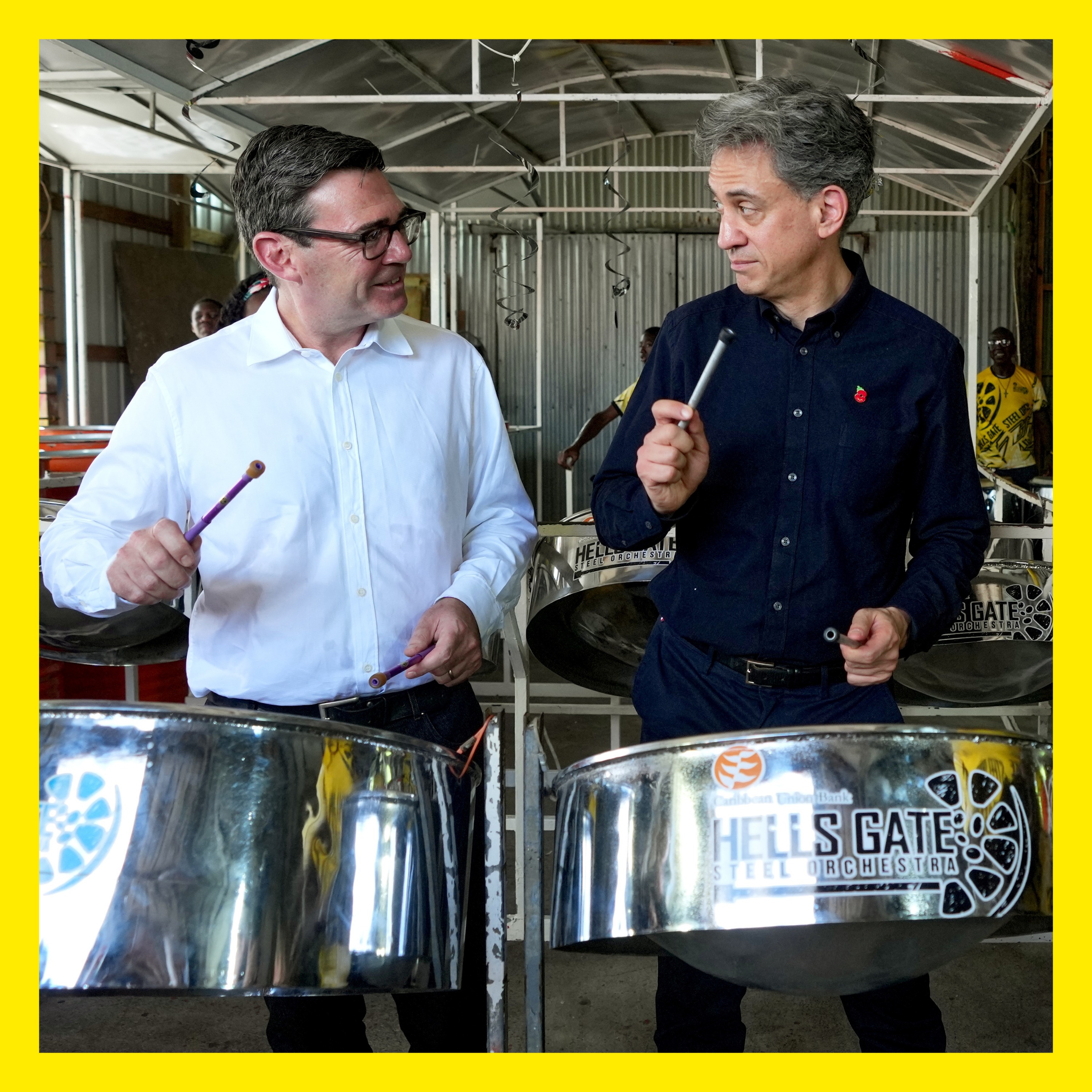
The Labour Party conference awaits. Has Andy Burnham's folksy charm and optimism taken the party as far as it can, or can he consolidate power and popularity?
Six-party politics
A YouGov poll for The Times and Sky News puts Reform UK and the Conservative Party on level pegging for the first time in 18 months. Thursday's mega poll, the first MRP from YouGov in a year, will be a fascinating snapshot of the shifting electoral tectonic plates. Labour MPs are pinning their hopes on a split on the right, but will Burnham's government be able to build enough support from potential Green and Liberal Democrat voters?
What will Andy Burnham's government do about welfare?
Three reports into work and benefits are imminent: Charlie Mayfield's recommendations about how to keep people in work, Alan Milburn's report into Neets (young people not in education, employment or training) and a government review of mental health conditions. All of them put the welfare system into the spotlight. The timing creates a political problem for the government because next month's budget will not address the welfare bill. Raising taxes without fixing welfare is difficult for a prime minister who has talked about the power of politics to change things. Meanwhile his chancellor, John Healey, is buffeted by rising borrowing costs, which hit £18.3 billion in August, up nearly a fifth on August last year.
Brexit re-litigated?
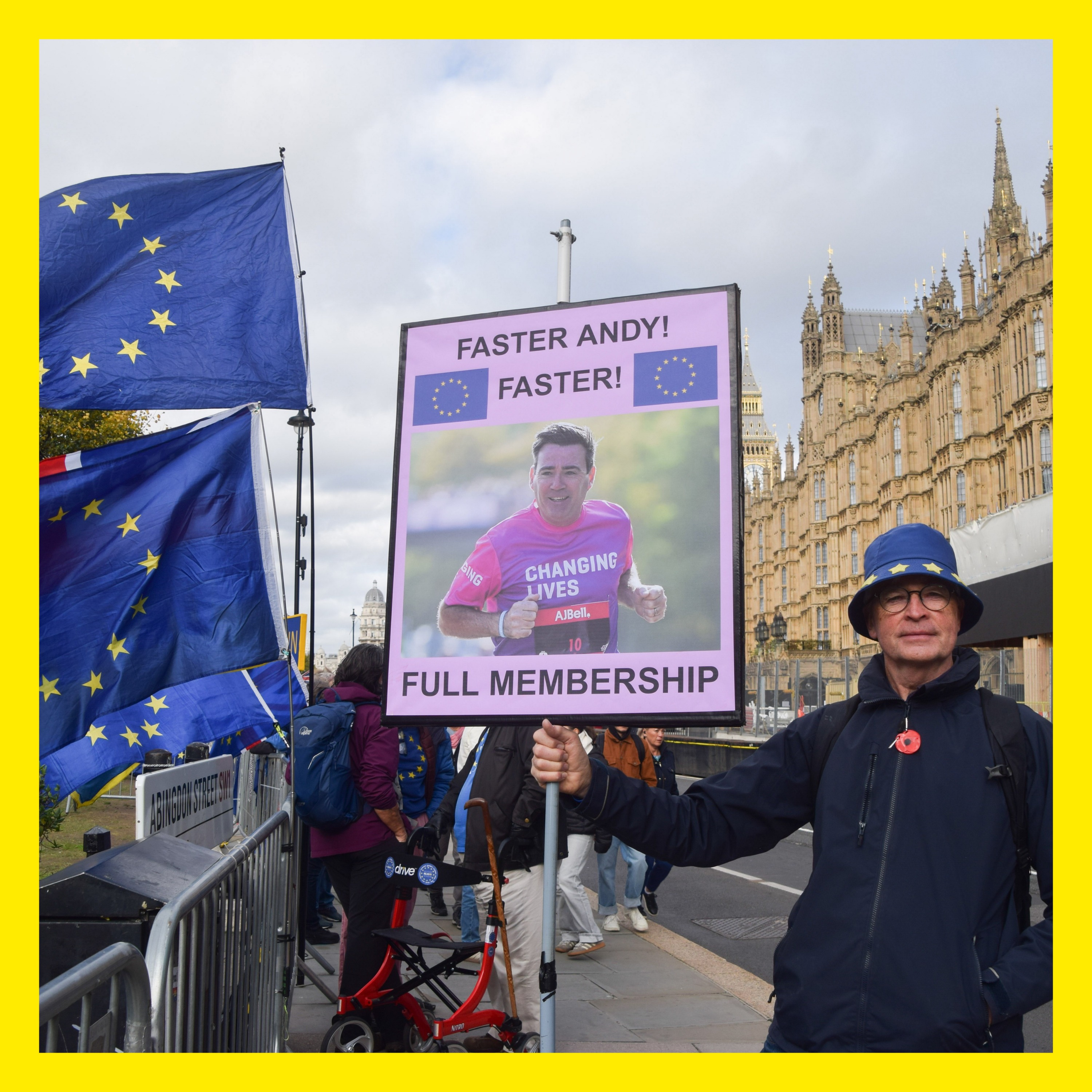
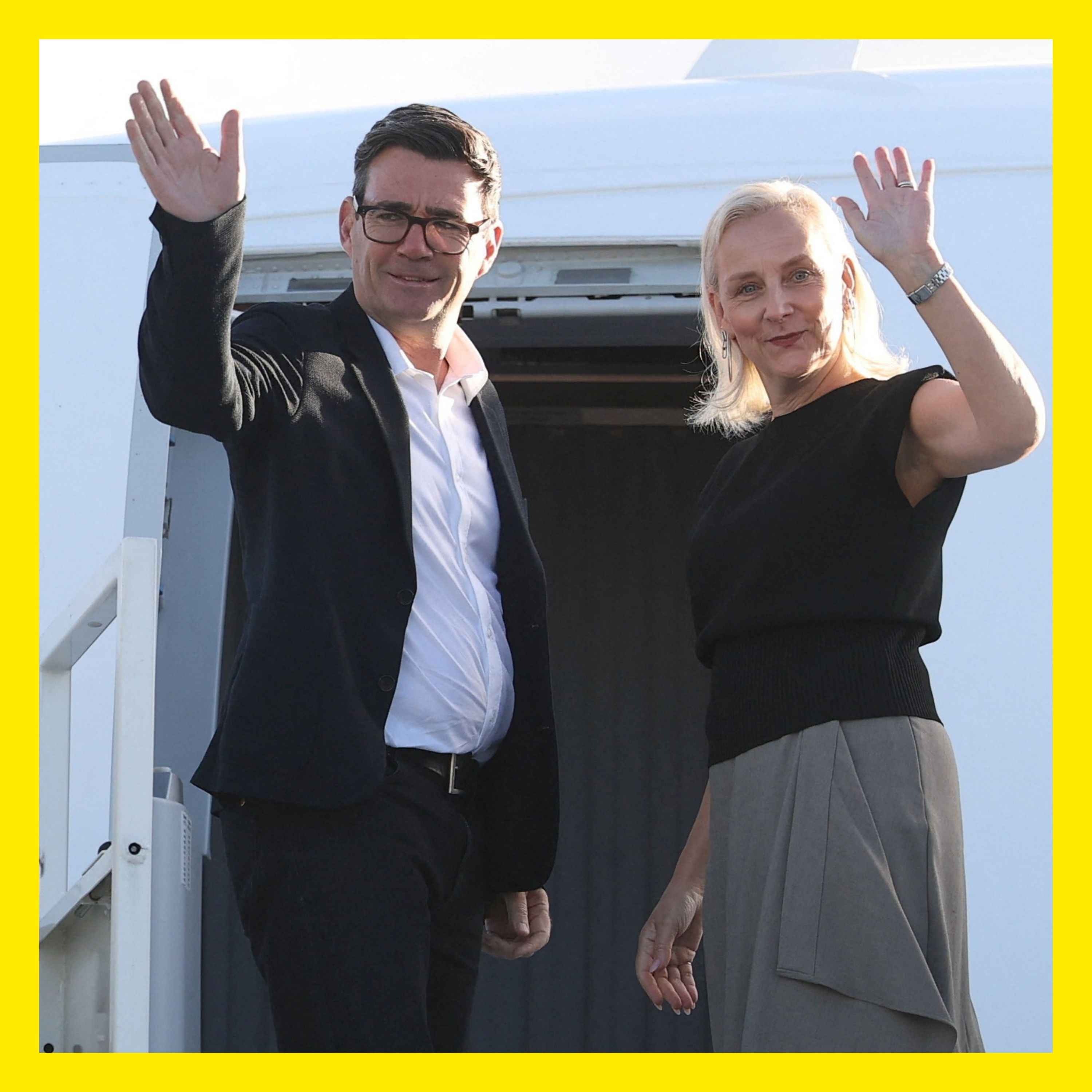
On the plane to New York, Andy Burnham refused to rule out rejoining the European Union. A year ago he said he hoped the UK would rejoin the EU in his lifetime. Could he really be tempted to try to boost economic growth by aligning more closely with the EU or putting rejoining the EU in the next manifesto?
Steven Swinford, political editor, The Times
Patrick Maguire, chief political commentator, The Times
Producer: Harry Kitson
Executive producer: Molly Guinness
Picture: Getty Images
This podcast was brought to you thanks to subscribers of The Times and The Sunday Times. To enjoy unlimited digital access to all our journalism subscribe here.
Hosted on Acast. See acast.com/privacy for more information.