Ask ChatGPT



The episode focuses on Westminster infighting during Andy Burnham’s transition and the fight over who becomes Chancellor. It claims Burnham’s delayed cabinet announcement (until Monday) has created a “vacuum” and “bitter briefing campaigns,” especially against Ed Miliband. Key claim: Burnham is unlikely to pick Ed Miliband because of policy and personality clashes—Ed opposes new North Sea oil and gas licenses, and Burnham allies see him as a “lightning rod” and a different worldview (described as a North Londoner/urban London values gap). The episode argues Shabana Mahmood is the likely Chancellor because she’s seen as a delivery-focused “hardline” Home Secretary who can “tackle Treasury brain,” push through change, and is aligned with welfare reform and tough immigration.
her migration stance, brief chemical castration idea, and her reported ability to deliver against “obstinate forces.”
none named; it’s a live panel with two Times/Sunday Times hosts (Steve and Laura mentioned).
Written by AI. May contain mistakes.
Discussion of the tense atmosphere in Westminster and infighting among politicians.
“But look, we'll just kick off by describing how febrile it is in Westminster right now.”
Analysis of why Ed Miliband is unlikely to be chosen as Chancellor by Andy Burnham.
“it is not Ed Miliband at the Treasury, it's probably Ed Miliband at the Foreign Office.”
Exploration of why Shabana Mahmood is viewed as a likely candidate for Chancellor.
“many of whom after we recorded our podcast saying that those, you know, in Burnham's team who did not want him in that position felt they'd won, simply did not believe our reporting.”
Insights into Shabana Mahmood's political style and her appeal as a candidate.
“old right i think you say on the on the okay she's on the old right of the party if we look at what she's done in the home office.”
Speculation about the impact of Mahmood's appointment on immigration and economic policy.
“is a politician of high standards and, you know, ruthless ability to pursue her agenda.”
Discussion on Shabana Mahmood's commitment to immigration reform and the influence of the Treasury.
“It's probably taking on Treasury orthodoxy.”
Analysis of Keir Starmer's leadership and the anticipated approaches of Andy Burnham.
“Yeah, and there are limits to our knowledge.”
Examining Andy Burnham's effective communication strategy compared to his predecessor.
“I was having this conversation with ministers the other night and they noted as well that Andy Burnham gave a speech in the Hillsborough debate on Monday, basically entirely extemporised, right?”
Discussion on the Labour party's stance on welfare reform and upcoming challenges for the new government.
“They say they've done a lot of good things, but nobody seems to know about it.”
Insight into how David Blunkett's political legacy may shape current Labour leaders.
“Now, that ratio is obviously insane and it incentivises people to stay in a life on benefits.”
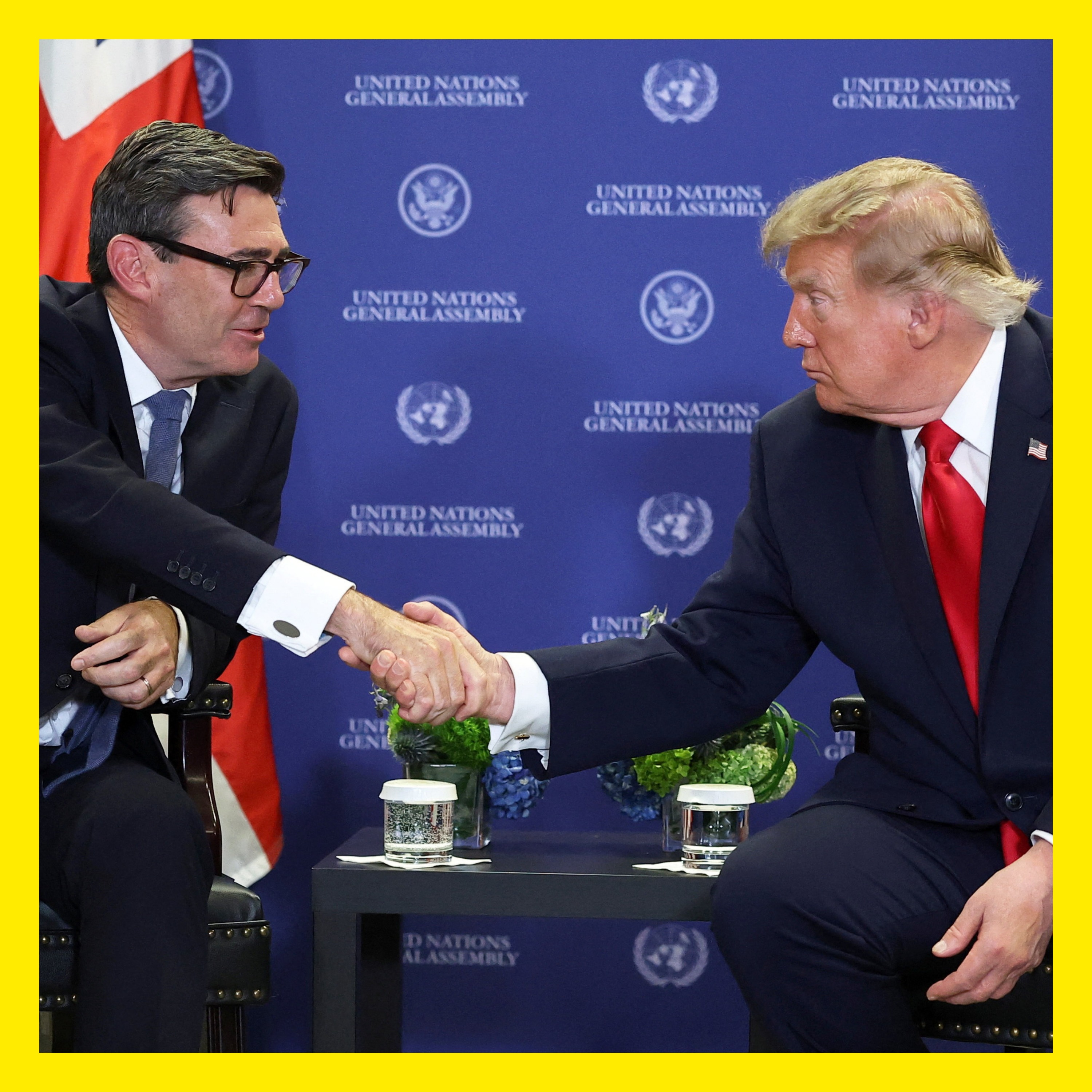
Exploration of how Andy Burnham plans to handle relations with Donald Trump and the US administration.
“And we've probably got time for one more question, which is looking a bit further afield than Westminster.”
Discussion on the implications of UK energy policy and differing views within the Labour party.
“which are a blight on the Atlantic, and the birds are dying and the coyotes are feeding on their carcasses and they're getting so fat they need a Zempick.”
Discussion on the recent oil field developments and differing political values.
“one of the new oil fields, and actually being more pragmatic.”

Get the gist, explore an idea or ask about something said.
 Claude
On The State of It, what are the key points of this episode?
Searching your listeningAutomatic transcript. May contain errors.
0:01Good morning, everyone. Welcome to this live edition of our political podcast, The State of It, from The Times and The Sunday Times. We're going to talk about the state of Westminster for about 20 minutes and then take questions at the end. So anything you want to know about politics, please ask us anything. We won't be offended and we will answer it as best we can. We want to talk to you about three things this morning broadly. The first is we want to talk about what it is like to work in Westminster at the moment and give you an insight into the kind of genuine febrile atmosphere it is really uh difficult there and as much as Andy Burnham wanted to be really peaceful and everyone to be friends they really aren't there's a lot of infighting going on so that was number one then we want to talk to you about uh what is wrong with Ed Miliband no that's a cruel way of putting it why will Andy Burnham why is he unlikely to pick Ed Miliband as his chancellor what are the issues there the third thing we want to get into is why it looks likely he's going to go for Shabana Mahmood, the Home Secretary, as his Chancellor, and what that means for the country.
1:02But look, we'll just kick off by describing how febrile it is in Westminster right now. So Andy Burnham says he wants to do things differently, and he is contemptuous of the Westminster way of politics, the infighting that we normally get. But actually, his entire approach so far has led to an extraordinary bout of infighting because there is a vacuum. There is an absence of information. And we see cabinet ministers regularly. We see senior advisors, a lot of government people. And they are asking us, what do you know? Is my job safe? What job could I get? Who's up? Who's down? Who's in? Who's out?
1:36There's a lot of people playing fantasy cabinet. And there are a lot of people that are genuinely worried for their political futures. Andy Burnham is going to stick with his approach. He won't announce his cabinet until Monday, when he will become the seventh prime minister in the space for a decade. That is extraordinary, but that is what we're about to see. But it has led to a really, some very bitter briefing campaigns, particularly against Ed Miliband. But you guys have picked up very similar, I think, haven't you? It's fair to say. Yeah, I think as soon as Ed Miliband's name was mentioned in connection with the Treasury, you knew there were a group of people who would do everything they could to stop it.
2:13And I think they've got their way. But it has been Westminster's favourite topic of conversation for the best part of six weeks. Since the moment Ed Miliband, since we revealed you and I, Steve, on the night of the local elections that Ed Miliband had gone into, tell Keir Starmer his time was up, the question was, what does Ed Miliband want from this transition? And there's only one answer to that, the Treasury. But this week in particular, the people who have been telling us for weeks that Ed shouldn't be Chancellor, the word the verb in the sentence uh has changed uh to ed will not be chancellor and they are saying that with the utmost certainty uh at this point uh andy burnham is saying in bane via his spokespeople that you know no decision has been made allies of ed milliband saying it's all in andy's head but those who um those who know what's in know what's inside it are increasingly confident that it is not Ed Miliband at the Treasury, it's probably Ed Miliband at the Foreign Office.
3:11So, Laura, let's get into why not, because some of the reasons are obvious, right? So, Ed Miliband is opposed to new oil and gas licenses in the North Sea, Andy Burnham's open to them, and also, you know, Ed Miliband would be a lightning rod for criticism, but we were talking earlier this morning, and you were flagging something out, that there is a values issue with Ed Miliband, that, you know, a lot of Team Andy are from the North, they're from areas outside of London and quite simply Ed Miliband is a North Londoner right he's got a different worldview. Yeah I think that I think that sort of urban London question has definitely been relevant to some of those people around Burnham for quite a long time.
3:47I also think an underappreciated part of this is just a personality question which is there were genuinely people around Andy Burnham who felt that Ed Miliband believed that he had this kind of right to be in number 11 from the very beginning that he'd overestimated his role in in getting Andy Burnham into Parliament and that they were quite contemptuous of that openly in some cases in conversations with us in recent weeks and months, particularly since the by-election. And I do think that has partly contributed to this. Now, obviously, allies of Ed Miliband are really frustrated with that presentation.
4:19They would say, we've never thought that we had a divine right to that position. But actually, Ed Miliband is one of the few people who set out an economic plan, has been hugely constructive with the transition process, and for that reason would have been very good in this job. But I mean, And just on the broader process question that you started with, I think it's quite interesting because all of us have been approached by MPs and ministers in recent weeks asking us what we've heard and whether or not they might be in with the job. I think there's been merits and problems for Team Burnham on this.
4:47They are genuinely elated by the fact that this has not been massively leaky and that they compare the transition process that they have had with what we've seen with previous conservative transitions, which they think have been defined by chaos. and by keeping a really small circle in the kind of circle of trust, that therefore this hasn't been a particularly horrible process. But actually, I think Ed Miliband is a really good example of this. We've been picking up on a huge amount of frustration from people close to him in recent days, many of whom after we recorded our podcast saying that those, you know, in Burnham's team who did not want him in that position felt they'd won, simply did not believe our reporting.
5:22I mean, genuinely felt that actually Ed Miliband would have had to have been told for that to have been the case. and the fact that this has been something that ministers have not been let into as a process actually has not necessarily worked to their advantage in some instances because some of these people who will be entering the cabinet in Monday in different positions have been kept in a really dark space and haven't been, for example, attending access talks with the civil service. So really we'll be starting from, I think, more of a kind of less experienced place than we would have expected in previous changeovers.
5:50So I think that there have been pros and cons to this that I think Team Burnham are quite open about in terms of the way that they've handled this particular transition. I think it also probably says something about the way Andy Burnham is wielding power. So he is all-powerful at the moment because everyone is guessing what they're going to do. But that creates a kind of inherent tension. He is Mr. Devolution. He is Mr. Power should be away from the centre. But at the same time, I was talking to a very senior ally of his the other day, and they were saying, do you know what? It doesn't matter who is Chancellor, because the Chancellor is there to implement Andy Burnham's will.
6:20And this number 10 will be much more powerful than number 10s in the past. It will have his own economic unit and it will therefore implement what he wants. And look, it's very early days, but he is one man and the Treasury is a huge institutional issue. And yes, he might want to break with Treasury orthodoxy, but that's easier said than done, I think. Yeah. And that was the misreading of the Number 10 North announcement he made a couple of weeks ago, which sounded a bit like, you know, I'm going to open up a branch of Number 10 on Coronation Street so I can get home a bit earlier on, you know, on a Thursday morning, when actually if you read between the lines of that speech and speaking to the people who drew up that plan with him, it is about, as you say, tackling the power of the Treasury.
7:02And the really telling line in Andy Burnham's speech with all the sort of happy, clappy hymns to devolution was the political direction I set will not be up for negotiation. So the intent clearly, and this is if you speak to people around Andy Burnham, One of the reasons, yes, there's a cultural issue. It's a sort of old industrial left versus the new liberal left. If you go back to the sort of divides of the 60s and 70s sort of thing going on, all of that is true. But more recent, you know, if you go back to more recent Labour history is how do you avoid baking in quite profound tension between two very powerful politicians at the top of government?
7:41You know, if you had Ed Miliband in the Treasury, someone who had such, obviously has such well-defined ideas about economic policy, etc., etc., in the Treasury, you know, clearly that's going to be a really powerful department. And would Ed Miliband ever be content to implement Andy's agenda? if you speak to his team they say well yeah absolutely but uh you know he would be uh what he'd be expecting and indeed has been one of the authors of that policy so if you want number 10 to be exercising power if you are andy burnham and louise haig who will be helping him run number 10 and the cabinet office and cross government policy you're thinking how do we make sure the chain of command from number 10 be that just off whitehall on downing street or uh in industrial estate in Manchester, how can it impose its authority on the Treasury?
8:35And do we have a Chancellor who is willing to grab the Treasury by the scruff of the neck and drive Number 10's agenda through it, or someone who will use the clout of that department to pursue their own agenda? And I think that brief, that conception of the job of Chancellor has led them towards, has led some people certainly towards Shabana Mahmood rather than Ed Miliband. so we should talk about more about why shabana mood and who shabana mood is so she is um a centrist she is you know i think i think i think she i think she'd be offended if you called her in internal in internal labor politics yeah maybe but uh yeah she's um if you if we're talking about sort of old labor new labor she is uh she's she is slap bang in the middle of that she's on labor's old right i think you say on the on the okay she's on the old right of the party if we look at what she's done in the home office.
9:28She's been really hardline on migration policy. She briefly floated the idea of the chemical castration of sex offenders. She is a, you know, a different politician to most Labour MPs that you meet. And that's part of her appeal. If when we talk to people about how she does business in the home office, she is very focused on delivery and grip. She doesn't suffer fools. She pushes things through and she's got one hell of a political brain she can see around the corners all of these things I think are attractive to team Burnham yeah so speaking this morning some of them I think the key thing they wanted to focus on with regards to why they are drawn to Siobhan Mahmood as a politician and why they've been particularly impressed with her in recent months is the fact that they feel that she has really delivered in the home office against some quite obstinate forces and that they feel that they she can sort of bring that to bear on what you know one ally Burnham described as treasury brain to me this morning the sense that she actually can just get things done and they said you know you can get lost in the weeds of what she believes on different economic issues.
10:25And I think it's fair to say that we don't know the sum total of her economic philosophy yet. But actually, when it comes to somebody who is genuinely capable of doing this, they would say there are two kinds of cabinet ministers. You have cabinet ministers who think that because they're signing off their memos in the mornings and the evening, work is getting done. And you have cabinet ministers like Shabana Mahmood, for whom actually genuinely driving radical change is very important. And there was a piece in the Financial Times this morning that was profiling Shabana Mahmood as the likely next Chancellor, which included, I think, quite a revealing quote from Lucy Powell on the record, obviously a very senior ally of Burnham, expected to take a senior role in his Cabinet, possibly Deputy Prime Minister, saying that she's capable of radical transformation and radical change, and that that's the direction that she would be able to take.
11:06So I think a genuinely fascinating appointment. And I would also just say something that we on the podcast have been mooting for quite some time now, to, you know, just say some slightly insulting reactions to some in Westminster who have told us it would be impossible. And yet we are here. And I think that speaks to not just how much some people around Burnham really love Shabana Mahmoud. And genuinely, I cannot tell you how effusive they are in private about her, but also the opposite, which is a kind of vague antipathy for Ed Miliband in certain circumstances. Together, that has meant that somebody who initially, in the case of Ed Miliband, looked like he would be an inevitable appointment, has actually ended up losing out on something that many people thought was very likely.
11:45the surreal thing is we don't know much about what her economic vision is we spent the last kind of day and today trying to go through the cuts in hansard what she's actually said about the economy very little she didn't join jeremy corbyn's government because she didn't agree with his economic policies that was quite a lot of people were in that position um we think that she is pro-welfare reform and wants to get to grips with that particularly but at this stage we don't know much but i guess my point would be that if some around burnham think she might be a cipher for his wishes and desires they're going to be sorely mistaken because she is as tough a politician as you will get and as forceful as you will get and if she thinks that there is a different way of doing things it's not necessarily going to be a nest of singing birds we'll see when we get there but um that's the kind of you know she is a forceful personality yeah exactly and if as keir starmer has literally just learned over the past two months if you have shabana mood bulldozing through your agenda or an agenda with which you would agree against vested interests in a department that's great but if she's pulled turn the bulldozer back towards number 10 and is about to run you over as happened to Keir Starmer in the end she will eventually win as she did win in terms of getting Keir Starmer out so it is you know it's not without risk because Siobhan Mahmood you know as Jeremy Corbyn learned as Keir Starmer learned as Andy Burnham may yet learn is a politician of high standards and, you know, ruthless ability to pursue her agenda.
13:16But if she's fully signed up to, and comes back to the point about values, about culture, right? She's from Birmingham. What we do know broadly about her economics is that she was one of the people who, you know, believed, along with Morgan McSweeney, in the Corbyn years, whether the new Labour guys, the Blairites were getting it wrong, that politics had changed and they had to find a new sort of political vision and identity for the Labour Party that acknowledged you couldn't just rerun 1997 all over again. So I think she's in a sort of space that is not sort of kamikaze, Blairism 2.0, not rerunning the old songs, acknowledging we're in a sort of post-globalisation moment.
13:58The other thing, of course, is she really, really cares about her immigration agenda and speaking to people close to her over the past month the thing that occurred was you know she really wants to see through immigration reform but something i think she's been persuaded by is the idea that what is the thing that stands in the way of any home secretary who wants to cut immigration it's the chancellor or the chief secretary of the treasury or senior treasury officials saying if you do this this will be the effect on economic growth or it's the obr so i think she's probably been persuaded by the argument that where's the most effective place to wield influence over immigration policy in this country?
14:36It's probably the Treasury. It's probably taking on Treasury orthodoxy. Yeah, and this was a case that was literally made to her during the Makerfield by-election. I mean, these advisors to Andy Burnham have been pressing her on this point for quite some time. But I do think it raises an interesting question, which is who is going to be the Home Secretary? Because she cares about these reforms so much and so deeply. And it is really hard to imagine her agreeing to move to the Treasury, or even having given an indication that she would be happy to if she was called upon on Monday without really having assurances, not just that Andy Burnham is committed to that agenda, which I think she is persuaded by, but also that the person that is in the Home Office is going to be both committed to it in principle, but also not incompetent and able to drive it through.
15:11And you can imagine, given that she is such a forceful deliverer in her view and in the view of someone around Burnham, that she would have quite strong views on that. So I just wonder what that's meant for discussions on who's in that Home Office job. Yeah, and there are limits to our knowledge. What we are trying to do, I'm going to be very candid, we have to try to separate the speculation of which there is a huge amount with things that are more certain. So we don't know where streeting is being mooted for the Home Secretary, but our approach is generally to write and say what we think we are confident on.
15:39And that's one of the problems. I mean, I can't imagine what it's like for readers and listeners out there looking more broadly at Westminster at the moment where everything is possible. And that's one of the challenges. Well, also, these decisions that they've been making have changed over time. So I think it's fair to say that they didn't necessarily think they would be capable of getting Shabana Mahmood in the Treasury, some of them, and that was an open question. And the fact that you have this massive puzzle at which the person in number 11, which is number two in the government, had not yet been determined, meant that all of these other various puzzle pieces, they haven't figured them out yet.
16:09So I do think that's why there's been some movement on some of these other questions. I just want to take you forward in time briefly to next week, to Monday, where you get this kind of bizarre theatre that we get in British politics all too regularly now. So on Monday morning, we're going to get Keir Starmer and he will be outside number 10 and he will give a speech listing his achievements. He's probably emotional. His wife will be there. His kids will be there. And there may be tears again, which he choked up last time when he was outside number 10. And then, you know, within the space of an hour, you get the new man, Andy Burnham, coming in and delivering a message, which is all hope, vibes and optimism.
16:45And they say they are determined to learn from the lessons of Starmer. And they are going to have this kind of total focus on a positive message, on turning Britain around and helping put money in people's pockets. That is the phrase you're going to hear again and again. It's the cost of living, stupid. He's not going to call the electorate stupid, just to be clear. My word's not his. But they want to help people on multiple fronts, on bus fares, on student loans, you name it. I think there's a whole agenda that we're going to see, possibly even some tax cuts for low earners, although we are going to get some tax rises when it comes to the budget.
17:17But they feel the biggest original sin of Keir Starmer's government was he came in offering hope offering positivity only to turn around and warn of pain and tell everyone life was going to get worse and do you know what it did get harder they did raise those taxes so they are trying to learn the lesson from that yeah and it's that word uh that word optimism and hope um you know that was one of the rhetorical keystones of burnham's campaign in makefield it was you know vote andy for us vote andy for hope and that is as you say that is their diagnosis that the messaging as much as anything else was really, really wrong.
17:55I was having this conversation with ministers the other night and they noted as well that Andy Burnham gave a speech in the Hillsborough debate on Monday, basically entirely extemporised, right? He had a small page of A5 on which he scribbled a few notes and he gave a speech off the top of his head or indeed from the heart. And yeah, it wasn't flawless. It wasn't, you know, it wasn't, it wasn't the best work of oratory ever, but it was immediately Labour MPs came out of that. Even ones who were skeptical about Andy Burnham said, actually, you know, having a prime minister who can give a speech without looking down every other word.
18:35As Keir Starmer does, if you watch him give a speech, they thought, God, actually presentationally, there'll be an immediate difference in this government. And the other thing is it puts people who are still supportive of Keir Starmer, the Starmer loyalists who were weeping in cabinet the other day, I was told, when he gratefully accepted his gift of a carriage clock. These people, it puts them in a difficult position in a way because they would tell you, this is a great government. It's doing lots of good social democratic things. It's actually working really well. And they're sort of caught between wanting Burnham to succeed but also wanting him to fail.
19:12so it vindicates them actually perversely the best vindication of them is for that sort of that speech factor that notes factor to be the big difference because maybe actually all this government needed was someone capable of stringing a sentence together in public um to sell a social democratic agenda for what it is and reuniting the labor voters with the green votes and some live den voters in quite an unimaginative way but we'll see i mean it's pretty it's a savage business politics exactly what you said in cabinet they're all there teary-eyed nice tributes the carriage clock in the commons at prime minister's questions they all stood up on the labor benches applauded starmer emotional scenes these people killed him they derailed his entire premiership they they those cabinet ministers turned on him and that that is the nature of politics and obviously labor needed to change and needed to move but it is a savage business and the kia starmer can now literally put a price on the the value of his cabinet because i was told that I think the whip round was for£1 ,500 for the carriage clock, roughly.
20:14So they go£50 a head. That's the price of loyalty to Keir Starmer. OK, we're going to have a look at some questions now. Yeah, I can read them out. One of the really interesting questions that's come in here is how Labour solved that comms issue. They say they've done a lot of good things, but nobody seems to know about it. So how do they solve that? I think most of it is solved by the person who is doing most of the communications, not being Keir Starmer. That's the sum of my analysis. And it's been the sum of my analysis for about three years. One of the things that I think Burnham is going to have to adjust to is that as mayor, he's got a very conversational, chatty style.
20:47And he popped up yesterday and did a podcast with Gary Lineker, which was predominantly about England. He was downplaying England's likelihood of winning the semifinal, probably, and obviously accurately in hindsight. But he dropped in a question about wealth tax, and he just started flirting with the idea of a wealth tax. And that is the kind of thing that commands a market response. And I think he was being genuine. That is where his head is. he may do it he's not ruling it out but either way he's going to have to adapt to his words are really valuable now and things he says casually could have huge consequences for markets for people's jobs etc so that discipline is going to be something that we're going to have to watch over time.
21:22Thank you you talked a bit about Mahmoud becoming Chancellor so a couple of questions in here around her appetite for welfare change and how that would align with with Burnham so So do you know much about her appetite for cutting the welfare bill and how that would sit with Burnham? So speaking to people this morning, I think they are pretty confident on her positions on that and would point to some other changes in recent days. So we've seen that Graham Cook is going to be leading policy unit. The New Statesman reported that yesterday. He is, of course, a key welfare thinker, had been a welfare thinker in the last government.
21:58But also James Pennell, who is going to be the chief of staff to Andy Burnham, also very keen on welfare reform. And also Louise Hague and others around Andy Burnham himself, who have often been presented as being opponents to welfare reform, particularly because of the decisions that they made during the famous welfare rebellion under Keir Starmer that was so damaging for his premiership. Some of these leading lights in the Burnham camp were intimately involved with that. But they would say this was not us being opposed to welfare reform. This was us being opposed to arbitrary cuts to the welfare budget to pay for something else that actually didn't signal wider reform.
22:32And they absolutely loathe this presentation of the Parliamentary Labour Party as incapable of dealing with or comprehending with the need to reform welfare. So it will be a massive, massive early test of the government whether or not they can grip that issue. And we've obviously got these two reviews. We've seen interim indications. But how Andy Burnham responds to those, I think, will be really important. One of the challenges is there is a conflict in when Andy Burnham talks about benefits. So he at once says he wants to reduce the bill, but he doesn't want to do crude cuts. And politics is about trade-offs.
23:02And if you look at the Alan Milburn interim report, his review, he had an amazing stat in it. And it was for every£25 that is spent on benefits,£1 is spent on employment support. Now, that ratio is obviously insane and it incentivises people to stay in a life on benefits. And there will need to be movement on that. But obviously, that requires trade-offs because if you're doing a pound less on benefits, that is a cut. And that will then need to be spent on employment support. So the question, and we don't know the answer to this, is will they actually have the stomach for... for some people will lose out they will lose their benefits if you want to do welfare reform in a genuine way and i think to link all of that together to sort of try and make this government a bit more intelligible to the outsider i think what who is the one person or what's the one worldview that links all of those issues some of the knotty issues we've been discussing particularly immigration particularly welfare and where does shibana move fit in um the one person who is going to reward closer study and reflection from Labour's past is David Blunkett.
24:02Indeed, you know, former host, did basically every difficult job under Tony Blair, particularly Home Secretary. And James Pennell, New Downing Street Chief of Staff, has described himself and Andy Burnham as Blunkettites. And Shibana Mumuji definitely put in that box. Louise Haig, also a Sheffield MP like David Blunkett. And what were David Blunkett's politics? They were unsentimental and tough on borders and crime and welfare because he believed that fostered the common good and made the lives of working class and low middle class people richer and more fulfilling. And he is the low star Andy Burnham, Shibala Mood, James Purnell and probably Louise Hague as well to a certain extent will have in mind.
24:46So he is the person who can help decode all of this, I think. Thank you. And we've probably got time for one more question, which is looking a bit further afield than Westminster. But how do you think Andy Burnham is going to get on with Donald Trump? Well, he actually talked about this with Gary Lineker and he said he was going to be much more upfront with him. Donald Trump described Andy Burnham as, you know, the former mayor of some town is how he referred to it. And Andy Burnham defended Manchester on behalf of that. He wants to be more upfront, but a lot of it depends on who he makes his foreign secretary.
25:25So if the rumours are correct, the speculation is correct, Ed Miliband may be the foreign secretary. And I don't think I am portraying any secrets here to say that the US administration takes a very dim view of Ed Miliband. We did a splash the other week, which was when Ed was still in the running for chancellor at that point. And they were saying they did not want him to be chancellor. They oppose his position on particularly net zero. And they are, from what I'm told, very concerned about the idea that he could be foreign secretary. That's true, but I guess the 4G chess point on that is that in not having Ed Miliband in the Treasury and having him as foreign secretary, it's much easier to make movements on North Sea oil and gas, the issue that Trump cares almost more than anything about when it comes to Britain, than it would be if he chancellor.
26:08So actually, I do think, and some around Burnham are really strongly off this view, that actually besides any of the personality of how you sort of deal with Trump and how you charm him and what it's like to go and visit him, they actually think that making some moves on oil and gas and we know that he's going to Aberdeen and his tour for example that's been reported will do much more to curry favour with the US administration and to pave the way for good relations than it would if they got the gift right or they had a politician in that place who hadn't previously said disobliging things about him about which in the Labour Party there are relatively few anyway so I think that they actually feel that in kind of squeezing Ed Miliband out of that position that paves the way for better relationships with the Trump administration.
26:46We should just briefly talk about how obsessed Trump is with windmills, as he calls them. There was this fabulous number 10 call, which we got leaked, where he said that the birds keep flying into the windmills, which are a blight on the Atlantic, and the birds are dying and the coyotes are feeding on their carcasses and they're getting so fat they need a Zempick. But his opposition to windmills is very, very visceral, as he calls them. So he definitely wants to see a shift towards drilling in North Sea. And you're right, that could go a long way. Yeah, I mean, also, having been in D.C., when you watch Trump for hours a day, you do realise that if you're not reporting on him, you see only a fraction of the comments that he makes on windmills.
27:24I mean, really, when the UK is brought up to him in press conferences, naughty oil and gas in the UK's energy policy is the thing that he mentions. It really is like the main thing that he knows. You know, we had, I think at the CEO summit recently, the US ambassador here who was speaking much to that point, actually, about, I think he called it insanity. I might be getting that word wrong, but he basically said that the UK energy policy was wrong. Yeah, and what's interesting is Ed Miliband is sort of trying to preempt this criticism in public. There have been so many stories. I mean, we wrote our first story on this several months ago about Ed Miliband actually being willing to approve Jackdaw in the North Sea, one of the new oil fields, and actually being more pragmatic.
28:06You know, he's allowed further exploration, further drilling under existing licences too. So he's actually really pragmatic on oil and gas. That's the message they've been trying to get across. But it comes back to the point about the difference in values between Andy Burnham's camp. We often talk about the soft left and Andy Burnham's team, Louise Haig, Ed Miliband. They're all from the same party, but they're not because of these quite profound differences in culture and worldview. And one of them is, you know, the Louise Haig left is, in many respects, you know, the old Labour industrial left.
28:34And if you have union leaders in your ear saying, Ed Miliband's a lunatic, Ed Miliband, in the words of Sharon Graham, the United leader, has put a noose around the neck of job creation. If you've got Gary Smith, the leader of the GMB, saying Ed is killing jobs, you know, the key people in Andy Burnham's team, that is the sort of thing that moves them much, much more than any terrifying graph about, you know, losing the Hackney Merrill to the Greens or, you know, slightly utopian stuff about net zero and green tech. It's that kind of labourism that I think is winning the day among Andy Burnham's team.
29:11all right that i think brings this live episode to a close thank you so much for listening everyone and please keep listening and there's plenty more to come in westminster
Who is Shabana Mahmood, the 'ruthless' politician set to enter Downing Street as Andy Burnham’s Chancellor? After a fierce cabinet debate effectively ended Ed Miliband's hopes for the Treasury, all eyes are on her. And what does her potential appointment means for the future of UK politics, from welfare reform to the economy.
Meanwhile, Westminser has descended into a surreal waiting game as the incoming Prime Minister prepares to take power. No one knows if their job is safe, and desperate insiders have resorted to asking our very own Steven Swinford if he knows anything they don't. Will Ed Miliband, Wes Streeting or Yvette Cooper feature? And how exactly will Number 10 North work?
Steven Swinford, political editor, The Times
Lara Spirit, deputy political editor, The Sunday Times
Patrick Maguire, chief political commentator, The Times
Producers: Euan Dawtrey, Harry Kitson
Executive producer: Molly Guinness
Picture: Getty Images
This podcast was brought to you thanks to subscribers of The Times and The Sunday Times. To enjoy unlimited digital access to all our journalism subscribe here.
Hosted on Acast. See acast.com/privacy for more information.