
 Ask ChatGPT



The episode argues that UK Prime Minister Keir Starmer’s office pressured civil service security vetting to approve Lord Peter Mandelson as US ambassador despite UK security vetting (UKSV) concerns, and that Starmer then blamed civil servant Sir Oliver Robbins for not telling him Mandelson failed vetting.
Stephen Swinford (Times political editor), Gabriel Pogrand (Whitehall editor, Sunday Times), Lara Spirit (deputy political editor, Sunday Times).
Robbins says Number 10 wanted Mandelson “done” quickly, even discussed skipping vetting, and that UKSV’s role is advisory and the case was “borderline” with risks deemed manageable. The episode links later scandal to the appointment, including Mandelson’s messages with Jeffrey Epstein.
Starmer allegedly tried to appoint Matthew Doyle (former communications director) as ambassador and to place him under Mandelson; Doyle had championed a councillor charged with viewing indecent images and had ties to paedophile Sean Morton. The episode also previews further “Mandelson files” disclosures via parliamentary processes.
Written by AI. May contain mistakes.
Discussion on Olly Robbins' crucial appearance and its implications for Keir Starmer.
“Welcome to The State of It, the political podcast from The Times and The Sunday Times.”
Analysis of the pressures faced by Robbins regarding the appointment of Mandelson.
“I think, Steve, up until now, the non-political, non-Cabinet office end of the vetting process has been a bit of a riddle wrapped in an enigma from our vantage point.”
Exploration of the political implications of Robbins' statements and Starmer's decisions.
“He walks into the Foreign Office, he becomes the Permanent Secretary, and he says, I didn't walk into a vacuum.”
Debate on the shifting blame between Starmer and his cabinet regarding the crisis.
“There was a lot of heat and energy in the day after the Guardian story last week, and it seemed for a moment to favour the government.”
A deep dive into the UK security vetting process and its implications.
“So the first is Keir Starmer said, well, look, obviously if I'd have known he'd failed his security vetting, I wouldn't have appointed him.”
Robbins discusses managing risks in the vetting process and its broader consequences.
“It does seem extraordinary to me that you wouldn't, given the sensitivity of the case.”
Learn about the intricacies and limitations of the vetting process in politics.
“And it might come out in the process of your interviews with them that they've had, say, 250 sexual partners.”
Discuss predictions regarding Keir Starmer's leadership and potential challenges.
“But I think it's an important reflection of the thing.”
Explore how upcoming local elections might affect Labour's internal dynamics.
“And I don't know, Laura, do you have a do you have a contrarian opinion?”
Examine the controversies surrounding Matthew Doyle's political appointments.
“We're now going to talk to you about a man you probably don't know too much about.”
Discuss the implications of political appointments on civil service trust.
“He was, at the time that he had this job, which he says he's desperately sad to have lost.”
Understanding the potential impact of the Mandelson files on Labour's future.
“And what she would have been taking is, these are the documents I need to get out of the government and these are the people that I need to interview.”
Discussion about the current political situation involving Keir Starmer and Number 10.
“Yeah, I think one of the things you mentioned earlier is Number 10 will want to say that there's a war and let's not talk about this.”
Analysis of Starmer's strategic errors and their impact on his leadership.
“I mean, I do, that's my two important contributions to say, not good and unreal.”
Exploration of the challenges the government faces in redefining its agenda.
“And you've outlined now, you know, there's going to be a new parliamentary session, the King's speech.”

Get the gist, explore an idea or ask about something said.
 Claude
On The State of It, what are the key points of this episode?
Searching your listeningAutomatic transcript. May contain errors.
0:01His reputation is at stake. Everyone is watching. It is finally time for the truth. That I wasn't told that it failed security vetting when I was telling Parliament that due process had been followed is unforgivable. He had taken the risk. He had chosen his man. Whitehall had to follow. I walked into a situation in which there was already a very, very strong expectation coming from number 10 that he needed to be in post and in America as quickly as humanly possible. I simply do not accept that foreign office officials could not have informed me of UKSV's recommendations. I'm afraid I don't think at the point of his appointment and four days thereafter it was actually a given that he would be vetted.
0:54Many members across the House will find these facts to be incredible. It beggars belief. Welcome to The State of It, the political podcast from The Times and The Sunday Times. I'm Stephen Swinford, the political editor of The Times. I'm Gabriel Pogrand, Whitehall editor at The Sunday Times. And I'm Lara Spirit, deputy political editor at The Sunday Times. We come to you this week hot on the heels of Olly Robbins' extraordinary appearance at the Foreign Affairs Select Committee, where he has dropped bombshell after bombshell about Sir Keir Starmer's decision to appoint Lord Mandelson, with a wilter of new revelations, including the fact that he tried to get an ambassadorship for a guy called Matthew Doyle, his former director of communications, who Gabriel subsequently revealed had in fact supported another sex offender publicly.
1:45So real problems for Keir Starmer as we join you today. let's start in the obvious place which is his central allegation so what ollie robbins has said today is that there was constant pressure from number 10 to get the mandelson appointment through and that to such an extent that there was even a discussion involving the cabinet office where they said we don't need to do the vetting like let's just not do the vetting uh to which the foreign office said no no we do need to do the vetting and they went uh went ahead with it But the central allegation that Robbins has made is that the view of number 10 and therefore Starmer was get it done.
2:24I think, Steve, up until now, the non-political, non-Cabinet office end of the vetting process has been a bit of a riddle wrapped in an enigma from our vantage point. We've had to familiarise ourselves with the highways and byways of UK security vetting. one of these white hall quangos which uh if you look online uh you know conspicuous by its absence from the public record most of the time but one of the documents that has surfaced is a template of the vetting forms that they complete having had access to a person's information and other official records connected to them and the position as it related to mandelton it seems was that they ticked the red boxes.
3:12They appeared to express misgivings about it. But Robbins has added some very important nuance today by saying, yes, but notwithstanding that, it was a marginal case insofar as we at the Foreign Office felt that we could use our tools, use our processes to give effect to an arrangement which mitigated the risk posed by Manderson, whatever those were. what robbins was saying was despite the fact there are risks we felt they could be managed and i think that what he has said today which is so significant is that it confirms in the most but brutal terms keir starmer made a political decision and his political decision was to defer to the political aid to whom he outsourced all of his political judgment that was morgan mcsweeney who wanted him to appoint peter mandelson starmer said yes let's do it it was a political decision he got the outcome he wanted um and now for reasons that we might come into he's trying to make it about the process when the process was subordinate to the stated goal of the political masters um who of course uh are there to instruct the civil service right so let's start at the beginning, Laura.
4:29He walks into the Foreign Office, he becomes the Permanent Secretary, and he says, I didn't walk into a vacuum. There had been a series of public announcements about Mandelson that meant there was immense pressure already to get this appointment done. Yeah, so at this point, he made very clear there'd already been the agreement with Washington that had been agreed or reached basically, seemingly on the final day of the Biden administration. So had they wanted to do anything, had they wanted to revisit that or get that later on, it would have had to meant going to a different administration. He was already having access to IT, to some confidential information.
5:03Basically, Robbins there was painting a picture of somebody who has, in effect, already taken on. The king had been informed. Yeah, and crucially also the king had been informed. In effect, this is the intention, the strongly held intention of Number 10. And not only that by public pronouncements and some of the effective practicalities of that role being taken up already, but also he was coming under constant pressure from the number 10 private office. When is this going to be done? When is this going to be done? And I think what you say is the most important point that Robin said. It was not a question of if, it was very much a question of when from number 10's perspective.
5:35And he was trying to do, this was the picture he painted today, the best of his ability to avoid any further political difficulty for the government and to get this done. And in doing so, he also tried to make it look like and present a picture in which he was the one that was actually more intent on getting this vetting and this due diligence done, insisting as you as you say to some questions from the cabinet obviously actually it must be done and I think I mean speaking to friends of Ollie Robbins over the weekend utterly calm and confident about how his performance would be today I think it'd be very hard to say they had any reason not to be I mean clearly he came with the receipts and he was strikingly well prepared for today he chose his words very deliberately and it does pose I think a really important question about number 10, which is what exactly did they think was going to happen?
6:23Did they think that Ollie Robbins was going to remain silent in the face of this? And yeah, just back to that original point about the fact that at the very, very beginning, clearly he felt that he arrived in the job and there was the express intention that it was his job to get this appointment through. And this should be a kind of David against Goliath situation. So Keir Starmer has brought all of the apparatus of the state and the Labour Party to bear against one man, Ollie Robbins, I was told that Ollie Robbins did his preparations round the kitchen table. There's a kind of loose network of former cabinet secretaries and other people that have helped him.
6:57But broadly, he's pretty much on his own. And it is all vaguely reminiscent of when Boris Johnson thought it would be a great idea to take down Dominic Cummings. But Dominic Cummings had all the receipts, had all the information, and in another time, another select committee appearance, eviscerated Boris Johnson in a public way. I think this is comparable to that. That is what we've seen today, Gabriel. That's right. There was a lot of heat and energy in the day after the Guardian story last week, and it seemed for a moment to favour the government. I mean, the government did nothing to disabuse us of this idea.
7:37We forget nothing to disabuse. it actively perpetuated the idea that there was one big fact one big adjudication which robbins had exercised his discretion not to pass on to downing street they have picked this fight with him by well before the public and internal debate has played out jumping the gun and removing him from post and so you know it might have been i don't know what you call it optimism desperation the notion that Robbins was not going to offer some kind of rejoinder of his own. Today, I just think that he has codified in words what we have all believed to be the case. And I think Number 10 thought maybe, just maybe, our off-ramp is that it is his fault.
8:25And I think they've picked a fight that it's increasingly looking like they simply cannot win because the facts are so damning. I think they have precedent for being able to get rid of senior mandarins and not pay political consequences for it. And so in this case, you can see why they took the gamble of saying, actually, perhaps this won't be a massive problem for us. But, you know, we wrote over the weekend that Sue Gray, a friend of Ollie Robbins, had literally been texting Labour MPs in support of him. I mean, his support does run quite wide. And I think there are quite a lot of people in the senior echelons of government who are really worried about the precedent that this sets, which is basically you're now much more exposed if you're a senior civil servant than you necessarily used to but it used to be particularly uh under this government and i think for that reason it's it's pretty unsurprising that they fought back over this can i just say as well i think that what this is the effect of this as well has it's returned the debate to the question of culpability i feel like there was this time where you know starmer sort of had done a fairly spirited job of saying I hold myself responsible but this is upended that it looks it's become a blame game again but essentially even the cabinet now they're all saying well no to be fair Keir does accept it is his fault like the number 10 launched a blame game but now its own cabinet ministers saying well actually it is Keir's fault but we're saying that though that is the case there are bigger issues at hand that mean he deserves to go on it's not a clean hit he has contradicted Keir Starmer on two really important fundamentals.
9:54So the first is Keir Starmer said, well, look, obviously if I'd have known he'd failed his security vetting, I wouldn't have appointed him. And Robin said, that wasn't the scenario at the time, that it would have been very difficult to have done that because they'd already confirmed the appointment. It would have created a diplomatic incident with the US. It would have been damaging to that relationship. And he said, given the constant pressure that we were under and the fact that there was even a suggestion we shouldn't do the vetting in the first place, he doesn't see that as viable. So that was number one.
10:22And then number two is a more fundamental point. So Keir Starmer, his central case is, I've sacked this guy because he didn't tell me that Mandelson had failed the UK security vetting, which is a body in the Cabinet office that vets public appointments. And that failure to tell me is shocking and unforgivable, is what Keir Starmer has said. Well, there is an answer to that. And it's a really simple answer. Ollie Robbins says he didn't know. He did not know that UK security vetting had very blankly said, don't give Mandelson the vetting. What he was told by his own officials was that it's a borderline case.
11:00They are leaning against it, but it is a borderline case. And in essence, the case is he couldn't tell the prime minister something that he didn't know. And this is one of the problems that number 10 have got. They are not and were not in full possession of the facts before Ollie Robbins' appearance. And that means that there are two versions of events here that are now directly competing for space. And that's a problem for the Prime Minister. So look, we should just zoom into the vetting process a little bit and what actually happened. So this tiny body called UK Vetting Security produced a report on Mandelson.
11:35Now, these reports are about as sensitive as it gets, talking to people that have been through them. you speak to at least two vetting officers and they ask you everything about your private life. They ask you about your sexual predilections, the kind of pornography you like, have you had any extramarital affairs, in for your friends as well, they go through your bank accounts, your finances, so the works. It's often said that the vetting officers know more about people that are vetted than their spouses do. They have a 360 view and the whole point of that is to avoid compromise, So it's to avoid them being compromised with, let's all blackmailed by foreign states or anything like that.
12:14But as a result, that process is highly confidential. And Robin said that to preserve that confidentiality, he doesn't ever read the vetting reports himself. He gets a broad readout of the risks and then takes a view on whether those risks are manageable. And the other point he says is that essentially Keir Starmer has misunderstood the role of the UKSV. It is an advisory body. It gives him input into what the risks are. And as he said, it was a borderline case. But it is for him to determine whether that is a security risk. He holds the pen and judges whether someone should be appointed to a role or not.
12:51And so that is a totally different account to the prime minister's account. I think it's valid. There are obvious questions about why he didn't ask to see the report at the time. It does seem extraordinary to me that you wouldn't, given the sensitivity of the case. But for Robbins, who says he's done many of these, both in this role and formerly as Deputy National Security Advisor, he says it's normal. And the problem is you've got a prime minister who is fighting for survival and doing stuff for clear political gain. He wants to survive. He wants to be prime minister up against the ultimate securocrat.
13:21As Ollie Robbins told the committee, he has been immersed in national security for 25 years. He is the securocrat's securocrat. I think at one point there was an amazing moment where he said that he knows the civil service code better than the book of prayer or something, which is the only other thing he can recite by heart. But, you know, he is immersed in this. And that, again, suggests that the prime minister has picked the wrong fight here. So Robbins takes a view. He thinks the risk can be managed and Mandelson gets the job and it goes through. But obviously that all explodes in spectacular fashion next September when a series of very intimate messages emerge between Mandelson and Jeffrey Epstein.
14:03And just going back to the vetting, I mean, someone who's very well acquainted with how this works this weekend was explaining to me just on this point of whether or not there were things that Robbins didn't know in detail was, you know, you might go through develop vetting with somebody. And it might come out in the process of your interviews with them that they've had, say, 250 sexual partners. Right. And it might also come out that they are a problem gambler. And when you do these interviews, you go away and you'll speak to many of these sexual partners and you ascertain that actually everything was fine.
14:29Everything was consensual. That is not a risk for blackmail. On the gambling question, you might say, OK, this could be fine. You need to delete your Paddy Power account and we need to put in place checks where every three months you're going to prove to us that you have no longer got this. Whatever. The fact that you had 250 sexual partners and that may have initially been considered somewhat of a risk never feeds its way up the food chain necessarily. No. So there are there are these things that are just like just very effectively buried in ways that, you know, Robbins did kind of attest to today.
14:59The reasons why that is so fundamentally important to the way that this system works and which you've said, which is why on earth would you undertake a process like this in many circumstances? If you're going through developed vetting, if you think there's any risk whatsoever of some of that most sensitive information about you coming out. And one of the most abiding lessons I think came out today is that Ollie Robbins believes as just an absolute article of faith embedded in the civil code, et cetera, et cetera. But he just believes it to his core that protecting the integrity of that process and the confidential process is absolutely essential.
15:30And that, I think, is one of the reasons why there are obviously significant limitations in what we actually know and what we may ever know about this. But I think it's an important reflection of the thing. I mean, he really does just think that Keir Starmer has fundamentally misunderstood how vetting works. So let's do what we did last week. What does it mean? Does this change the price of fish? Does this make it more likely or less likely that Keir Starmer is going to go? I will kick off and make a bold and probably stupid prediction. I think Starmer's terrible misjudgment in appointing Mandelson is already priced in.
16:00And I think this doesn't help, but he's already on borrowed time and it just possibly accelerates that exit slightly more. I'm not sure at this stage that it changes the calculus on will someone come against him and go for him but he is on borrowed time not to sound too much like a cabinet minister put on the broadcast round but it is separately a matter of fact that there are some big geopolitical matters at hand right now I think it's just it's just too difficult what would it mean like we knew that the manderson decision was a mistake months ago it didn't stop being a mistake last week it's not started to be a mistake over the last 24 hours.
16:36If you had contempt for Starmer, this deepens your contempt. If you had concerns about Starmer's ability to get out of this while thinking he's a wonderful guy, this will redouble that as well. But I think that the central question for everybody, for everybody who wants to whatever the equivalent of Operation Save Big Dog is for Keir Starmer anybody involved in that and anybody who wants to depose him The question remains what happens at the local elections and what happens in the immediate days thereafter. And I don't know, Laura, do you have a do you have a contrarian opinion? I mean, I think we've said it on the podcast before.
17:15I do think that Labour MPs might not be psychologically prepared for just how horrible it could feel if the losses that have been projected are realised for them in May. I still I think that could put them in a really difficult place. But I think you're right. I mean, if a Labour MP reads the news, they know that Kisama is historically unpopular. Every single week you're reading about his approval ratings. Nobody, not even those who admire him and would like to see him pull through this, are at this point deluded enough to think that actually he is personally a significant asset in popularity terms for this government currently.
17:49I mean, just they don't think that. And so I just think that you're right, that is kind of baked in. I think the bigger question is like, what does it mean in the semi-immediate slash medium term for the way that Kistama is able to run this government? I mean, it does damage his authority massively, I think. It does make him look significantly weaker. And he is massively blessed by the fact that there is, as Gabriel says, an absence of consensus over who might be a possible successor. That does help him. But I do think, you know, the war aside, there are going to be difficult domestic issues that come in the next months.
18:20and he is going to find it significantly more difficult to weather them and to have the authority to weather them than he otherwise would. And I think it is just that sapping away of authority and political power that will feel work bad for him rather than necessarily the sense of like, immediately he is in a position where he may or be deposed. But can I just also, because you had all the healthy caveats, can I also say that I just don't know and who knows? Yeah, yeah. Right, we're going to head to the interval. When we come back, we're going to talk about a man called Matthew Doyle and why he poses a huge problem for the prime minister now.
18:49and we are also going to be talking, we've got a scoop for you on the next Mandelson Files and what's going on with them. So back with you shortly. Welcome back to The State of It, the political podcast from The Times and The Sunday Times. We're now going to talk to you about a man you probably don't know too much about. He's a guy called Matthew Doyle. Now I've got, luckily with us, who's Gabriel Pogren, who knows an awful lot about Matthew Doyle and I will hand over to him in a second. But there was a revelation today from Sir Ollie Robbins that Sir Keir Starmer attempted to appoint Matthew Doyle, who was then his Director of Communications, someone we have all dealt with, he attempted to make him an ambassador.
19:26He told Ollie Robbins, basically do this, but don't tell David Lammy. And Robbins said he was deeply uncomfortable because it was kind of, he's obviously not qualified to be an ambassador. And so that is one issue. There's a cronyism issue there. But there was also a much more explosive issue, which he then attempted to get him a job under Mandelson in the US once Mandelson was there as US ambassador. And that is a problem because Matthew Doyle is really good friends with Mandelson and was pivotal in his appointment. He helped oversee the due diligence process and asked him questions about Epstein and declared that he was satisfied.
20:02So he green lit that appointment. And this new revelation about what Starmer did with Matthew Doyle, I'll put it to you, Gabriel, is a big problem for him. So, yeah, this is about Doyle's relationship with a paedophile called Sean Morton. Herein lies part of the danger. There's just a horrible symmetry in the stories of Mandelson and Doyle because Doyle, also an alumnus of the new Labour era, and also a figure who was given this appointment despite the fact that it was within the knowledge of Downing Street that he had championed this man. He'd actually advocated for him to receive a public office and a position of trust as a Labour councillor, or more accurately a councillor, because he'd been suspended from the party, having been charged with offences, including viewing indecent images of girls as young as 10.
20:56So Doyle made that error of judgment, maintained contact with morton after morton's conviction this was it seems partially or mostly known to downing street but starmer again when challenged about this at the dispatch box by kemi badenock said well i sort of did know but i didn't quite know and um it's very difficult territory now that uh doyle not least in terms of what then later did come out was being considered not on the basis of his qualifications not on the basis of any vetting instead robbins has come out and said the foreign secretary to whom i report was circumvented and i was told can we just get this guy a job because basically at that time as we know starmer was looking for a replacement and found one in short order we're in a weird world now where actually you know he's dispensed with the services of cabinet secretary dispensed with the services of a permanent undersecretary to the foreign office and now he's facing this dynamic where he you know relations with the civil service which were not particularly good under the conservatives i'm not sure i can put it in better terms than that that's generous um you know is now providing over a crisis of confidence in him from from the system so it's a problem and also it makes it very difficult starmer was asked about this in the chamber i saw a couple of eagle-eyed observers noticed that yesterday he was asked were there any other political appointments that you sought to ramrod through and he said i'd have to check that well ollie robbins very helpfully right on time has done the checking for him and presented it to the public today and said no there was another example i mean there was a delicious sort of sir humphrey glint in his eye as he said uh you know come to think of it there was somebody else but it's very difficult because it looks like a pattern rather than a single error of judgment even if of course unlike mandelton this never came to pass and lauren can i just put it to you it's not a great look to have made one friend of a sex offender your u.s ambassador and to have attempted to make another friend of another sex offender also an ambassador that the politics of that aren't great one labour mp referred to it memorably as it looks like we're the paedophile protectors party yeah it doesn't look great i think and also for the reasons that Gabriel has explained very well.
23:18I think a separate part of that, this is also what it says about Starmer's relationship with the civil service, which is Robbins attested today that he felt very uncomfortable about being asked to do this and said that he did so in the context of the fact that he's been asked to make these quite steep cuts to the foreign office that he's going through. He was, at the time that he had this job, which he says he's desperately sad to have lost. He was going through the process of big reforms in the foreign office, which involved big cuts. And so the optics of that, I mean, his implication is number 10 didn't really understand the optics of this just how bad it would look to put a friend who as you say you know has literally you know it was friends with a convicted pedophile but to put a friend uh in a really senior job in a position in a time when you're you're making very significant cuts elsewhere and i think it does kind it does speak to the discomfort that you do have at the top of government in the mandarin class about this idea of political appointments and the increasing numbers of political appointments and i just i would say just looking down the line very interesting in light of the fact that reform UK, for example, have said that if they win government, they want to sack permanent secretaries and put loads of political appointments in.
24:18This question of political appointments in senior diplomatic roles is not going away. It's going to be a massive, massive question over the next few years. It's one of the reasons why we wrote a report a few weeks ago about a new organisation, the Centre for Government Reform, that wants to train these outsiders who may have done senior roles in other places to be permanent secretaries or to take on these senior roles. It is going to be a really big question and the kind of massive conflict they're going to have with these senior mandarin's i think is going to be a really interesting part of politics in the coming years totally and i mean i think in in some ways like you know i we shouldn't be too po-faced about it there are plenty of people who advocate for people from outside of civil service to come into british public life i it's just a very unhappy coincidence that those who starmer has sought to install in this instance were as steve outlined the friends of paedophiles and also it's unfortunate as well that starmer is not he's not given to making the argument to making that case i mean maybe he can't given the facts at his disposal these aren't two good people on whose behalf to make that case but yeah as well like you know yesterday it was all you know the the diffidence the pursed lips the sanctumity it was like all the things that starmer deployed to great effect when boris johnson was the man representing the government but now the shoes on the other foot he's not good at making the big arguments and he does look quite righteous and defensive in these moments and you could see that yesterday in the chamber when he used that word uh incredible he was laughed at he was yeah he was a laughingstock in that moment so it's a it's a tough one um should we just end by talking about the fact that this is not going to be over soon so first of all we saw it in real time emily thornbury uh the labor chair of the foreign affairs select committee was obviously taking a lot of notes during that process as Ollie Robbins was giving evidence.
26:02And what she would have been taking is, these are the documents I need to get out of the government and these are the people that I need to interview. So clearly she's got unfinished business. She wants to get to the bottom of what's happened. There'll be more evidence by officials, by ministers. It's going to have a long tail on the parliamentary side. But what we're also told, and this is a scoop for you listeners, is that there's a long tail on the humble address side. So this is the parliamentary mechanism by which we got this mass disclosure of Mandelson files. And at the moment, there is a group of MPs and peers called the Intelligence and Security Committee, which this week is going through the latest tranche of these files.
26:38Hundreds of files in which cabinet ministers have said probably some quite embarrassing things about Trump, Starmer, God knows what's in there. They are doing that this week and they're trying to work out what can be released and what should be held back because of national security grounds or grounds that it jeopardises international affairs. There's a process that then the Cabinet Office says, well, actually, we would quite like you to take that out. That's going to take time. The problem is it comes up against a hard stop. So Parliament prorogues, next week it rises, and they all go off for these elections, which are going to be absolute carnage.
27:09And that means that these files are unlikely to come out before May the 13th. So at the very point that in the wake of the elections, Sir Keir Starmer is attempting to reset. He'll have a King's speech with his legislative agenda. Instead, there's going to be this volley of Mandelson files, all of which are likely to be pretty damaging for the government. And he is going to face even more questions in the wake of what Ollie Robbins has done today. So the Mandelson scandal, it is so damaging because it takes all the bandwidth. We are in the middle of a war. There is juggernaut Costa living crisis coming down the line that the government will need to respond to.
27:50And instead, Starmer is finding himself time and time again having to defend his decision to appoint the Friends of Paedophiles to high office. And that is really challenging. Yeah, I think one of the things you mentioned earlier is Number 10 will want to say that there's a war and let's not talk about this. Or you'd think they would. But actually, for the last three days, we've seen them trying to really actively prosecute this case. I mean, this is not something that Keir Starmer and Number 10 have been leaning away from, this issue. this is actually an argument that they really want to have and I think it'll be really interesting to see over the next few days whether or not they try and pivot back to actually this is all slightly menial there's a big war we've I want to play this grand convening role in reopening the Strait of Hormuz etc etc and as you say there's all these massive concerns about people's cost of livings that we want to attend to at the moment they're they're massively caught up in this and they're trying to play an active role so I think it'll be really interesting to see if they they do that and on the timing I think it's really fascinating because you know a lot of people were expecting we're told to expect that this could be the week that we would see those files uh in which cases like we may have seen a situation where they might have been able to reach some sort of resolution or wrap it up in some meaningful way but it is now going to hang like a dark cloud over those local elections and any mp who wants to meaningfully defend kisama is still facing the fact that actually there's a huge number of things that they still don't know about this case and they might be minded to pause before they do that yeah top it all off the king is going to see Donald Trump next week.
29:11It's unreal. I mean, I do, that's my two important contributions to say, not good and unreal. But I do think that when you sort of reflect on the trajectory of the government, I think for the moment there will always be, you know, the pivot point in the history of this administration will be the winter fuel U-turn. That was the moment when Starmer forfeited his authority with his parliamentary Labour Party and showed that everything was up for grabs to the then reasonably quiescent, or until then quiescent, soft left tendency, who have always had little love for him. I think when people reflect on, that's the great strategic misstep that he conceded to the PLP.
30:01He acknowledged that he was not the master of the strategy. He wasn't the author of this story. But I think, Steve, what you just said is possibly the thing that could in time, in time, not just yet, but it could do for him the fact that he is trapped. You know, that humble address, the latitude that he gave the opposition to define its terms, the breadth, the depth, the voluminousness of the material, it's very difficult for him to get out of that. And you've outlined now, you know, there's going to be a new parliamentary session, the King's speech. he'll be attempting to make an intellectual argument to and and a policy argument to his mps and in turn the public saying this government has began we know we've we press port you know forget pause we've we press stop we're starting afresh it's very difficult to do that when you have more releases uh you know imminent and i think for that reason um yeah the question is less whether he goes now because of man and more can there be a time when he transcends it full stop right i think on that cheery note that brings this week's episode of the state of it to an end and look we'll be doing a live recording of the state of it at the fleet street quarters festival of words on tuesday the 12th of may there are still some tickets available and you can book online that's the fleet streets festival of words on tuesday the 12th of may um gabriel could you do the honours with our enormous red button to thank our great producers yes thank you so much to uh our producers molly and ewan and our uh video editor harry and we'll be back with you next week
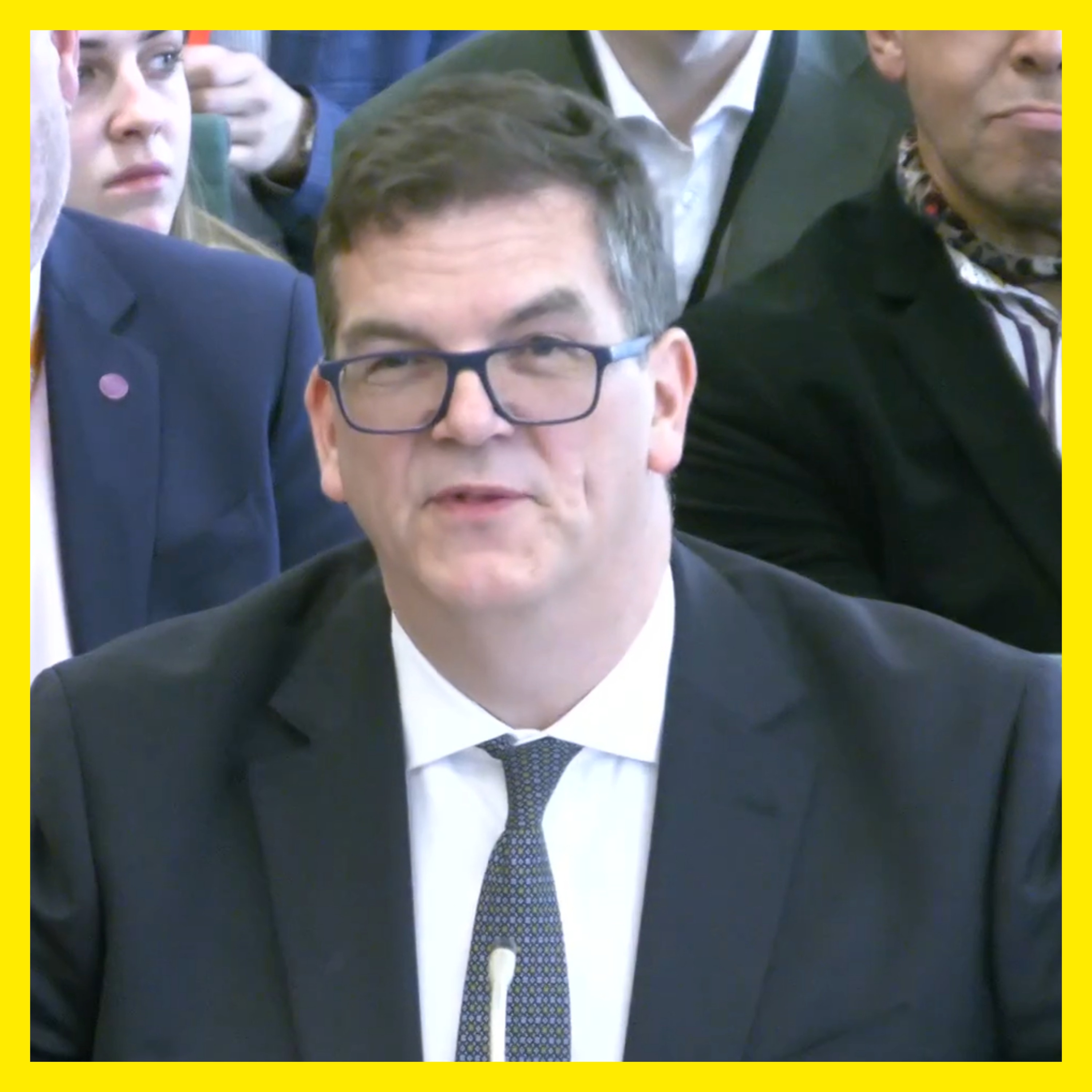
Sir Olly Robbins dropped bombshell after bombshell when he spoke to MPs. Robbins, who was sacked as the Foreign Office’s chief civil servant, has accused Downing Street of placing the department under constant pressure to get Lord Mandelson through vetting. He also said the prime minister had tried to find an ambassadorial job for Matthew Doyle, another Labour peer who's been in trouble for a friendship with a paedophile. Where does it all leave Sir Keir Starmer?
Plus, we reveal when the next tranche of Mandelson files will be published.
Steven Swinford, political editor, The Times
Gabriel Pogrund, Whitehall editor, The Sunday Times
Lara Spirit, deputy political editor, The Sunday Times
Producers: Euan Dawtrey, Harry Kitson
Executive producer: Molly Guinness
Picture credit: Parliament TV
Audio credit: Parliament TV
This podcast was brought to you thanks to subscribers of The Times and The Sunday Times. To enjoy unlimited digital access to all our journalism subscribe here.
Hosted on Acast. See acast.com/privacy for more information.


