
 Ask ChatGPT



Return of Parliament and the Labour government’s “vibes vs reality” problem—especially defence spending (3% by 2030), “public control” for Thames Water, and deferred economic decisions—plus Kemi Badenoch’s aggressive Conservative shadow-cabinet reshuffle and Reform UK’s conference plans for a “first 100 days” delivery pitch.
No named guests appear in the transcript. Hosts are Stephen Swinford (Times political editor), Patrick McGuire (Times chief political commentator), and Laura Spirit (deputy political editor, Sunday Times).
Labour’s new leader Andy Burnham offers hope but faces worsening fundamentals; John Healy’s “continuity” message conflicts with earlier defence-spending promises. “Public control” is framed as regulatory levers (not necessarily nationalisation). Badenoch signals authority by sacking senior shadow figures and promoting Katie Lam. Reform must move from vibes to deliverables.
Early release keeping 1,400 serious criminals jailed; Gaza sanctions on Israeli settlements; Jackdaw offshore gas drilling (Sept 15) alongside green pledges; Thames Water administration/public-control debate; Badenoch appoints Andrew Griffith (ex-Truss mini-budget figure) as shadow chancellor and Tom Tugendhat as foreign affairs lead; Reform conference “first 100 days” migration/welfare delivery.
Written by AI. May contain mistakes.
Discussion on the return of Parliament and Andy Burnham's hopeful messages.
“I've lost 75 pounds in 20 months with GLP-1s, plus diet and exercise.”
Discussion on the return of Parliament and Andy Burnham's hopeful messages.
“Andy Burnham is back in Parliament, addressing it for the first time.”
The government’s fluctuating stance on defense spending and economic issues.
“And John Healy's interview with our colleague Katie Balls in this morning's time is an interesting start of a 10 because I think it shows you that your word vibes, Steve, is the key one here.”
Exploration of conflicting messages within the Labour Party regarding leadership and strategy.
“Because you've had the Andy Burnham and Makerfield who made massive promises.”
Analysis of John Healy's political positioning and implications for Labour's future.
“You've got a government that is trying to ride two horses simultaneously.”
Discussion on the complexities of public control in government policy, especially concerning water.
“That is less money for other things or thwunking tax rises one way or the other.”
Investigation into Andy Burnham's proposals for public control and his past actions as mayor.
“And look the other thing Laura is a lot of things are being deferred as part of this.”
Looking at upcoming energy policies and their implications for the Labour Party.
“We should talk about some of the tangibles, things he's actually going to do.”
Discussion on Andy Burnham's pragmatic approach to politics and the implications of Starmerism.
“So why that matters is because it's all part of Andy Burnham's attempts to take a more pragmatic approach to the North Sea, to oil and gas, than what went before.”
Analysis of Kemi Badenoch's recent reshuffle and its implications for Conservative politics.
“Welcome back to The State of It, the political podcast from The Times and The Sunday Times.”
Discussion on the upcoming Reform Conference and Nigel Farage's position in the current political landscape.
“Now, older listeners to this podcast will remember that we kicked off this podcast around this time last year at Tory conference.”
Explore the implications of leadership dynamics within the Reform party and their strategies for the upcoming conference.
“So they need they do need to do something big at conference to make sure that they present not just Farage, again, as a kind of confident, happy politician.”

Get the gist, explore an idea or ask about something said.
 Claude
On The State of It, what are the key points of this episode?
Searching your listeningAutomatic transcript. May contain errors.
0:00I'm Hannah. I've lost 75 pounds in 20 months with GLP-1s, plus diet and exercise. On Rho, I've gone from struggling to run a mile to running farther every day. You can access FDA-approved GLP-1s online. Get the support you need to reach your weight loss goals. Go to Rho.co slash weight to see if you qualify. I'm a paid Roe partner. 20 % average weight loss in one year in non-diabetics with obesity or overweight with a weight-related medical condition versus 3.1 % in placebo arm. Rx only. To stay informed about serious side effects, go to roe.co.safety.
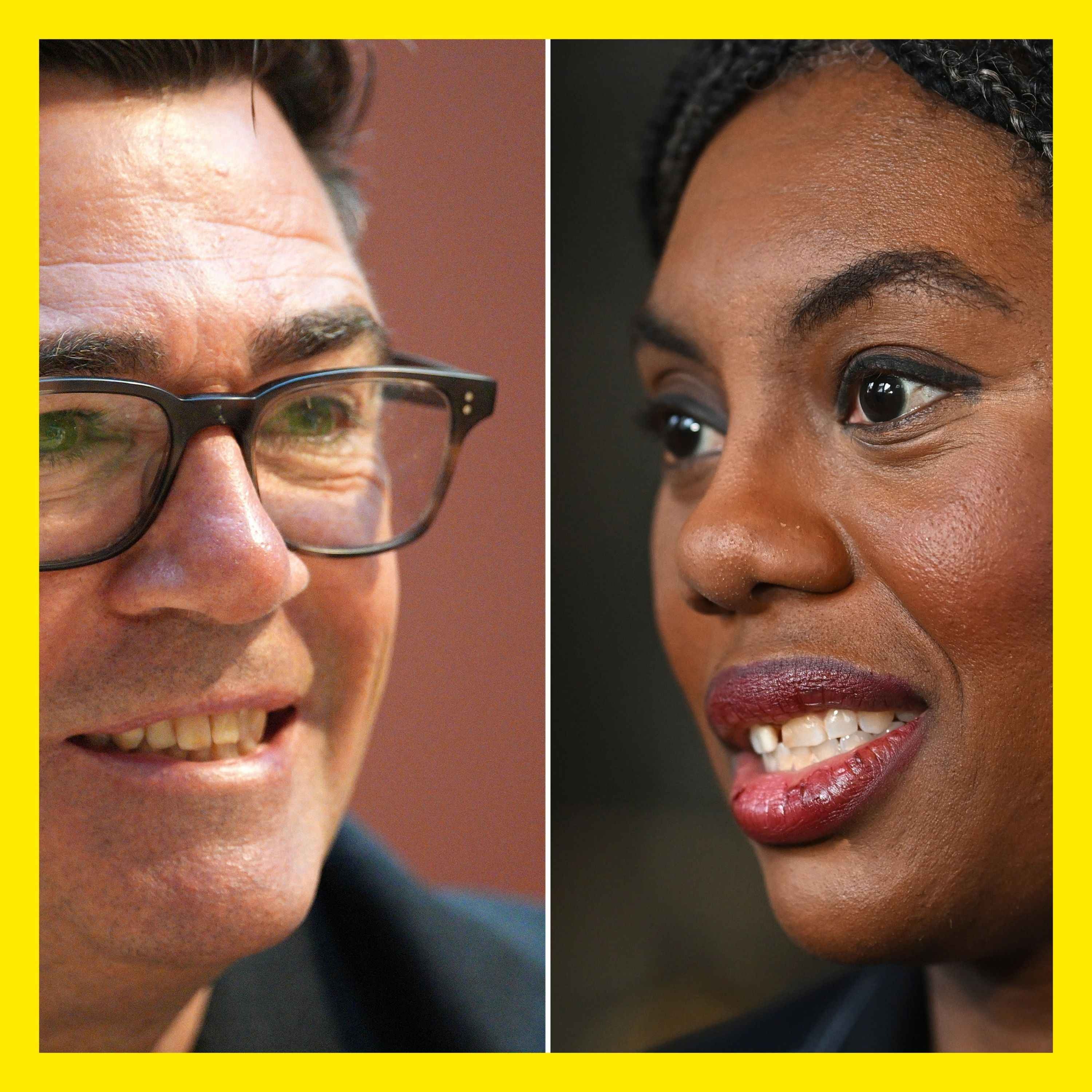
0:33Welcome to The State of It, the political podcast from The Times and The Sunday Times. I'm Stephen Swinford, the political editor of The Times. I'm Patrick McGuire, chief political commentator for The Times. I'm Laura Spirit, deputy political editor of The Sunday Times. So in this week's episode, we are going to be talking to you about the return of Parliament. It's back. Andy Burnham is back in Parliament, addressing it for the first time. And he's going to be giving his big message of hope. And we're going to be looking at that message of hope, how it will fare against the reality of the many charges that are piling up.
1:03We are going to be talking about a scoop that we've got for you on North Sea oil and gas and new drilling. We're going to be talking about the Tories. We're going to be talking about Kemi Badenock's savage bank holiday Monday reshuffle. And of course, we're going to be talking about the Reform UK conference on Friday. And look, we're back and it's back. Parliament is back today. I think it's fair to say Andy Burnham had a pretty good summer. Like he kept to his messages. It was all very positive. But now you're going to get over the autumn a series of very big challenges, not least the economy.
1:35Yeah, exactly. And John Healy's interview with our colleague Katie Balls in this morning's time is an interesting start of a 10 because I think it shows you that your word vibes, Steve, is the key one here. And it's the thing the government has arguably been most sensitive to. So what is John Healy's big message on the front page of this morning's Times? It's basically a rebuttal to something that's taken hold in the past week. Last week, the Chancellor gave a big interview to the Financial Times and other outlets in which he said, hey, listen, guys, I'm actually the archetypal Chancellor. You know, if I'm not going to spend 3 % of GDP on defence by 2030, so be it.
2:15This is a continuity government. And then a week later, he's in the Times saying, whoa, whoa, whoa, I'm going to spend more money on defence. I've told Scott Besant that. He's my new best friend and I'm all about fiscal probity, but the impossible isn't impossible. And I think that is symptomatic of where the government has got itself to, right? Because you've had the Andy Burnham and Makerfield who made massive promises. But you're seeing, actually, the first occasion on which a chancellor has said, actually, you know, this is all very tricky. The politics of this, and we've seen this on other issues as well.
2:50This is a government that thinks aloud. We saw it on early release, too. The government says one thing, right? It sort of creeps up to reality and then doesn't like the reaction. and then says, oh, actually, maybe we can come to an accommodation with that reality or meet it halfway. But the facts haven't changed. I've lost count the number of Labour MPs who've said things like rude awakening, vibes versus reality, that sort of thing. The idea that we're on a collision course with all the nasty stuff Andy Burnham has tried to talk out of existence or at least talk up his own agency to deal with when the fundamentals haven't changed and indeed on some metrics are getting worse.
3:29So we'll have to see. So look, that's the point, Laura. There is a form of cognitive dissonance here. You've got Andy Burnham standing on the steps of Downing Street promising the biggest, greatest change for 40 years. And then you've got John Healy doing an interview with Sky in which he says that this is a continuity Labour government with a change of leader. Now, his message is obviously intended to calm the markets, but the economy matters, right? And that is where change presumably has to come from. So that's one of the challenges here. You've got a government that is trying to ride two horses simultaneously.
4:01Yeah, and I think it's also important not to lose sight of the fact that Andy Burnham is a relatively new Labour leader and there was a transition of power. And much of the justification for the transition of power was not just a style of leadership. It was also have a genuinely different vision for running the country and in doing so, being able to build Labour up into a much more popular force in politics and one which has a clear pathway to winning the next general election. and I was getting calls from people around Starmer who were absolutely livid about those comments from Healy. I mean, I've literally, I've never heard them so angry.
4:33I took call from one of them and I was like, oh yeah, no, I've seen this morning, I've seen the continuity line kind of thing. And they're like, no, no, no, that's not what I'm talking about. I'm talking about the 3%. Like this was literally a resigning matter for John Healy. Just explain it, spell out why that is. So they're saying, look at that resignation letter, look at John Healy, who was hailed at the time as being a principled politician. The Defence Secretary at the time. The Defence Secretary of the time resigned and said explicitly in the letter, you're unable, you're unwilling to reach 3 % by 2030.
5:01That was kind of one of the key core parts of that resignation was the idea that Keir Starmer was not able to spend 3%. And it killed Starmer. Yeah, and it was absolutely crucial. One of the reasons why it was so politically potent was because nobody could say, oh, this is a political point. Everybody said, this is John Healy. He's a principled politician and he believes fundamentally that 3 % by 2030 is a matter of huge and important and unavoidable urgency. And they say, OK, fast forward a few months later and suddenly that's just not so clear anymore. And that's one of the reasons why I think Patrick is right.
5:33That interview that John Healy does with Katie Balls this morning is so significant because clearly he is aware of the anger. And I mean, just the number of former cabinet ministers under Starmer who are absolutely furious about this, I think, cannot be understated. Patrick, they want to delay it. So Healy's message to Katie today is, this is for the spending review of next year. And I think there's a world in which actually this budget is quite a limited fiscal event that does as little as possible so they don't have to do big tax rises. But the spending review next year suddenly becomes a juggernaut for 2027.
6:02And you can defer this to a degree, but at some point you've got to set out, one, your plans and two, how you're going to pay for them. Because this is a 10 billion quid a year question going up from the current level of defence spending of 2.6 % of GDP to 3 % by 2030 is 10 billion a year. That is less money for other things or thwunking tax rises one way or the other. Well, yes, exactly. And the politics of this really matter, as Laura was saying, not just the criticism from disenchanted storm rise. And I don't think it's necessarily cynical equivocation, although John Healy's critics would say so.
6:40I do think it's a government more sort of thinking aloud and trying to feel its way pretty clumsily through the obstacle course of public and elite opinion and economic reality. But the, as you say, it's going to lead them to a place where the budget, they'll try and make as much of a non-event as possible. But there are fiscal circles to square, to put it lightly and euphemistically. it's likely to annoy everyone it won't be radical enough for people on the the broad left the plp who wanted a not just a change of culture and a person at the top but of policy people who are inclined to be critical of andy burnham such as the people we've mentioned will likely say you know what was the point of this it's either the continuity thing which is well why did we get rid of care to do this hasn't had the desired effect or you're doing things we thought were politically stupid, like raising capital gains tax, et cetera, et cetera.
7:39But the problem, and I think this is something people are looking at John Healy and asking is, there's that wonderful, I'll say wonderful, it's sort of slightly pre-decimal now, but when people used to say he's a barmaid's idea of a gentleman or something, the risk for John Healy is that he's giving some colleagues the impression that he's sort of playing at being a lobby journalist's idea of an archetypal chancellor or a bond trader's idea of an archetypal chancellor. And politically, that's really difficult for the Labour Party because it sets an impossible standard for critics on the right of the party and it really really disappoints and creates a massive dissonance as you were saying earlier before Steve with Andy Pernas hope you change the lofty rhetoric and the sort of thin gruel from the Treasury and there are people who suspect it's Treasury officials again who are running this particular show.
8:28And look the other thing Laura is a lot of things are being deferred as part of this. So we've talked about defence spending. That is now a matter for next year. Welfare and the big decisions on that are now coming next year. One that it looks like it is also being delayed and it's interesting, this one, is Thames Water where it now looks like they're going to come back to that after the budget in terms of whether they put that into administration. And that's interesting because there were, everyone in the government gave the impression this was a kind of very early plan. And what they've discovered on looking at it is actually it's complicated and that matters because today we're going to hear a lot from Andy Burnham, all about public control.
9:05We're not sure what public control of life's essentials actually looks like. It doesn't look like nationalisation. Does it look like administration of Thames Water? We're not sure. So that's one of the questions today, I think, isn't it? Yeah, and I think what Patrick was saying about squaring these circles is so interesting in light of this question around public control and particularly water where, I mean, it was, I think on the eve of Andy Burnham taking power, oh, we did that front page story about Thames Water. And I was told in no uncertain terms, this is something that we want to do. But, you know, speaking to people in this policy space in the days subsequent to this, they were saying this is going to be unbelievably complicated for them.
9:43And sure enough, after, you know, some weeks in government, you reported that that has been shelved and they're thinking about it. But it's interesting, isn't it, that this is the public control is the message that Andy Burnham wants to land today in circumstances where one of the big accusations this summer has been that that has been a key U-turn on Thameswater. It was denied a U-turn because they'd say, we're going to come to it just a bit later. Of course. Either way. Yeah, no, of course. Fair enough. But even so, it's interesting that he's speaking about this today because perhaps he will have some light on this.
10:12And I think, you know, Patrick, you've spoken to him before about what he actually means by public control, which I think is one of the kind of key essay questions of Burnhamism. And maybe we'll hear more about that. Yeah, we had a, Andy Burnham and I had a 40-minute conversation on an Avanti train from Wolverhampton to London a fortnight ago about this subject. And he said a series of striking things. I'm lightly paraphrasing, but he basically said, I feel like I've nailed the critique, the diagnosis. What he was less clear on, and he admitted this quite candidly, quite a striking thing for the Prime Minister to say, there are lots of questions I don't necessarily know the fully worked out answer to.
10:50The striking thing we were talking about, he'd just been at the Prime Minister on the day we spoke. I went with him to a bus station in Wolverhampton talking about public control. Over the course of our conversation, he was saying, you know, it's a key word, right, public control. It is not saying to the markets, you know, please, can I borrow 50 billion quid to buy this, this, this and this? It was what are the levers, what the legislative levers I have, the regulatory levers I have to take control, to make these services, these effective monopolies, these privatised providers more accountable.
11:25And his view, in Manchester, he didn't nationalise the buses. He took the buses under public control. He regulated them. And that's obviously, it was a cheaper solution than, you know, buying the buses and all the yellow paint himself. But there are lots of questions. One, is it enough? Two, as we're talking about with Thames Water, it still involves a lot of literal capital as well as political capital. And three, can you sell it in the way you can sell what the Attlee government sold in the first weeks of its administration in 1945, which is, you know, if you were in Derbyshire and North Nottinghamshire or County Durham and you walk past the pit head on the gates of the colliery was a sign saying this colliery is now managed by the National Coal Board on behalf of the people.
12:13And what is Andy Burnham's equivalent? Can you do that if you're saying, actually, I've done a series of finickety changes to the way we regulate water in this country or the way your local bus works or et cetera, et cetera. And maybe actually the answer is, yay, can. And this is the cheat code, as it were, control over ownership. But lots of these sectors are quite heavily regulated anyway. What's the difference it can make? And that is something he himself admits is not fully worked out yet. Right. We should talk about some of the tangibles, things he's actually going to do. And I'm going to run through the list relatively quickly because for expediency, but they are big.
12:49So early release is being announced today and he has announced plans that will keep 1 ,400 more very serious criminals in jail. There is a problem with that, from what I'm told. The effect of that, they have got some measures to kind of free up some prison space, but internal forecasts show that basically the system will be taken to the brink and prison capacity could get too much. We will come to that as we get close to the release scheme in October. The second issue is Gaza. We think that's coming next week. So this is trade sanctions on Israeli settlements. Again, hugely contentious. The US will be watching very closely.
13:24We'll probably come to that in more detail later. And then the third one, which I wanted to just a light on, because we've got a small, modest scoop on it. But from what we are told, on September the 15th, they are going to approve new gas drilling at Jackdaw, which is off the coast of Aberdeen. So the Rosebank decision, which is a more contentious one, has been deferred, kind of put off into the distance. I'm told Ed Miliband hates it, so that's unlikely to happen. But Jackdaw is happening and Burnham's going to travel to Aberdeen at some point, it was suggested to me, and they will make an announcement with this alongside a load of new green pledges.
14:01So why that matters is because it's all part of Andy Burnham's attempts to take a more pragmatic approach to the North Sea, to oil and gas, than what went before. It's also worth saying that, you know, our colleague Ollie Wright wrote a very, very long time ago that Keir Starmer and Ed Miliband were minded to approve Jackdaw. So just how much of a win they can get from this and to signal that it marks a kind of more pragmatic or different approach to net zero questions will be quite interesting in circumstances where actually it's arguable that Starmer and Starmer rights were moving in that direction pretty much anyway.
14:32And Rosebank has always been the much more controversial of these. Your mention of the story we did in The Times a long time ago about how this was likely to happen anyway, I think gets to the heart of it. Because coming back to what John Healy said about continuity, I always thought it was always likely that this government would end up as starmerism with a human face. Now, what was Starmerism? In terms of political management and Morgan McSweeney taking ice picks to people's heads, etc., etc., put that to one side and look at the policy platform of the government. This was a straight up and down social democratic government that increased tax on high earners and wealth.
15:13It recognised the state of Palestine. All Andy Burnham really needed to do was pick that agenda up, run with it, acknowledge it for what it was, which was, you know, this is a pretty left wing government. Be charismatic, be able to string a sentence together in front of camera. The prospect was you reunite the left bit of the coalition, the right still split, bish bash boss, you know, Labour winner, another majority. that the sort of slight problem now is, is there a world in which Andy Burnham narrating his thinking, being demonstrative, taking the public with him, and Andy Compton Keir Starmer's solutions is a case of ramping up expectations and then disappointing people, right?
15:55Because we've used words repeatedly, Steve, the word you've used most in this podcast is deferred. Is there a world in which, and this is what people around Nigel Farage are starting to think this just annoys people. It disappoints people. To start with, it's refreshing because the prime minister's out here saying, hi, I'm a normal guy and, you know, I understand your frustrations. And, you know, unlike that last guy, I'm going to really empathise with you and deliver. And on some cases, early release, right, they have delivered something substantially different to what the government was willing to do, to what Keir Starman was willing to do for Andy Burnham the week before.
16:28You know, he would have just said, you know, I'll take the hit. You know, you can say it's a fait accompli, right? But on these big economic issues we're talking about, how different is it realistically going to be? And will he get the credit for it? And I think there's a striking metaphor for this. When I spoke to Andy Burnham the day before he became Prime Minister, in the kitchen of the flat in Admiralty House overlooking Whitehall on that Sunday afternoon, he said to me, I've got an assurance that I can, first Premier League game of the season, I can try sitting in my own seat at Everton, at the Hill Dickinson Stadium.
17:04And he was really chuffed by this, right? Because for him, it was symbolic. He said every game was going to be a mega focus group. I'll be in and among my people. Where does Andy Burnham end up sitting when Everton played Crystal Palace at home last week? He is in the director's box in a very nice suit. And why was that? It's because, well, actually the police say, look, you're going to have to dislodge 20 season ticket holders around you. It's all so difficult. but you know that's where he ends up he ends up in the place he didn't want to be in the first place he's ended up in exactly the same place Keir Starmer has after making a big show and putting a lot of hope and a lot of store in doing in wanting to do the opposite right let's head to the interval and when we come back we're going to talk about the right of british politics we're going to talk about kemi badenock's reshuffle how that changes it and it's more aggressive front bench that she's gone for and obviously we need to talk about the reform conference which is coming this week Nigel Farge's big moment back in the sun.
17:58So we'll talk about both those things.
18:02I'm Hannah. I've lost 75 pounds in 20 months with GLP-1s, plus diet and exercise. On Rho, I've gone from struggling to run a mile to running farther every day. You can access FDA-approved GLP-1s online. Get the support you need to reach your weight loss goals. Go to roe.co slash weight to see if you qualify. I'm a paid Rho partner. 20 % average weight loss in one year and non-diabetics with obesity or overweight with a weight-related medical condition versus 3.1 % in placebo arm. Rx only. To stay informed about serious side effects, go to roe.co.safety.
18:36Welcome back to The State of It, the political podcast from The Times and The Sunday Times. First of all, we want to talk about Kemi Badenok's reshuffle. So in the end, she went ruthless. It was a bank holiday Monday, lots of families having lovely times. And Kemi was sacking people. Not Mel Stride, not Priti Patel. And look, the thing I just wanted to flag, two things really. But if you look at who she's gone for, she's gone for a guy called Andrew Griffith as her shadow chancellor, a kind of economic purist, a markets based guy, long career in business. One of the key figures behind Liz Truss's disastrous mini budget.
19:11That is going to become an attack from the rival parties. But nonetheless, he's going to be pretty radical on the economy. Then you've got Tom Tugendhat, who is a China hawk, who's going to make a series of very strong interventions, you imagine, on foreign policy. And Katie Lam, who's a kind of rising star, has been promoted to go toe to toe with Angela Rayner on the housing department. So, look, when you look at all of that together in the round, she's gone for a more aggressive front bench here. She wants to start scoring some blows, I think. And that is taking the party beyond just being about her.
19:44Yeah, but it also is a big symbol of her own personal authority that she was able to do this. She was able to, on a bank holiday Monday, as you say, dislodge the two of the most senior people in her shadow cabinet, felt that she could do that, that she had the political authority to do that. And as you say, promote a rising star in Katie Lam. And that follows on what I think there is a consensus, although people that we speak to in Reform, all of us laugh in our faces when we say this, but that she has had a very successful run of recent months and that her personal popularity is in a really strong place.
20:15And they have made her hyper-visible, her advisors. I mean, she's constantly out. She's constantly doing interviews, doing events. She's trying to talk about issues that perhaps conservatives don't want to talk about or that she feels that she is comfortable kind of taking an open mind on certain sticky issues. So I think they feel that as a result of her being personally very popular that they could pull something like this off. But as you say, it will inevitably mean that there are some people who are now very, very unhappy on the Conservative benches. I mean, that's just part of the course.
20:45And the extent to which singles are kind of, as we're told, you know, a big kind of revamp on the economy and the issue of the economy. I think let's see. I mean, we've just spoken about all the potential vulnerabilities that Andy Burnham and John Healy have on the economy. There's clearly an opportunity for them to do that. But the choice of Griffith, as you say, given the mini budget question, I think let's see. And I wondered just how much that involvement was factored in by Conservative advisers when they were talking about this appointment. Did they know that that was something that uniformly the opposition parties would be talking about in the wake of that appointment?
21:15Will that stick? I think it's quite early to say. But as my kind of overarching impression of that reshuffle was just, yeah, my goodness, can we be not has total authority over the party? Yeah, exactly. I mean, she sat two of her most seen, arguably the two most senior people in the shadow cabinet who weren't her. and they both issued quotes effectively saying, thank you so much for the honour of being sat by you, Kemi. That's not normally what happens. The other thing that I came away thinking as I watched this unfold yesterday, and obviously it's manna from heaven for lobby journalists, and particularly on the Liz Trust point, I was sort of looking at people trying to whip that up and I could well be wrong, but there is a part of me, I know pollsters like Luke Trill say this.
22:06Actually, you know, is Liz Truss still salient for people? You know, if you're listening to this and your mortgage interest is much higher than otherwise would have been because of her decisions and Andrew Griffith's decisions and, you know, Quasi's decisions and Chris Phillips decisions, you know, apologies. But ultimately, she was prime minister for 49 days at the thick end of five years ago. You have to be pretty engaged in politics. And listeners to this podcast, people watching this on YouTube, may be able to think, how could you not know who Liz Truss is? I mean, just go and speak to some normal people.
22:40People have a dim recollection of who Liz Truss was. Obviously, they'll blame her for mortgage going up. But ultimately, we've had an extended period now, the Labour government not fixing things in the economy. So maybe, look, this attack will fall flat. Maybe it will remind people of how awful that was. You know, who knows? I think it is important to live in the world as it actually exists. But that isn't, you know, saying to the Tories, hey, everything's great, guys. You know, the brand is back, et cetera, et cetera. Ultimately, I was struck by Reform's response in this respect. They said this is a shadow cabinet designed to retains 60 seats in Hampshire and Sussex, etc, etc.
23:21And I think ultimately that is the risk for the Tories. I'm not saying Westminster opinion doesn't matter. I'm not saying gushing profiles in newspapers and commentary saying the Tories are back and Kemi's personal polling. I'm not saying none of it matters. I'm not saying what happens in Westminster doesn't matter. But ultimately, there are swathes of the country where the Tories have no presence at all. And I'm not saying the Tories are having a bad time. I'm not saying Kemi is leading the party incompetently. The fact this reshuffle proves it. But I think there is a bit of wish fulfilment going on in terms of people saying, actually, we are going back to a world in which it's Labour versus the Tories on a very conventional left-right on the economy axis.
24:06But you also have several unknown quantities on this, challenges, insurgents on the left and the right. We've got to live in the world as it actually exists. And it's a much more complicated one than I think some of the reaction to this reshuffle would imply. And it's hyper-competitive on the right. Let's make no bones about this. Kemi Begnaut needs a massive conference. Now, older listeners to this podcast will remember that we kicked off this podcast around this time last year at Tory conference. We had Patrick singing at that Tory conference. I remember it so well because at that point, Kemi Begnaut was nearly dead.
24:39Everyone we saw was briefing against her saying she had a good conference speech. They announced plans to scrap stamp duty and it started to turn the dial. But if you look where they are in the polls, they are still in big trouble. They're still trailing reform. They need to start cutting through. And this is the moment. It's kind of so obviously these changes are part of that. And the big question here is, can they actually score some points on the board or are reform still going to eat their breakfast, lunch and dinner? Well, and there is a big, big question as well about how many people want Kemi-Baden-Oxmedicine on the economy.
25:15The British state is screwed on so many metrics. And I have sympathy with people who say we are approaching a 79 moment where all of the pent up dysfunction needs a radical solution. The question is, how many people out there in the country think the answer is, well, actually, if you say to people in the country, shall we cut taxes and benefits? I think you'll get several tens of millions of thumbs up. But as we've been discussing, things are more complicated than that. But how popular is that prescription actually is the big question. On other issues, a lot of the policy prescription is very similar to reform.
25:57That structural issue of the split we've been talking about on the right, Tories and reform, I think it's deeper. And the big question is, actually, can it be resolved through policy prescriptions? Or are they just, is that split insoluble? Are we now at a point where people have retreated to their core votes? I know we'll go on to reflect on reform, but their polling numbers have been remarkably stable all summer. You know, the plateau they've been on for a while is basically, it's pretty stable after a pretty brutal summer of coverage and establishment mockery for Clampton, etc, etc. So, look, we'll see.
26:36Well, let's, which segues very neatly to the reform conference. So let's just, Nigel Farge is back. He's doing an interview, I think, with the BBC Today, which will be the first time we've seen him since he went on holiday himself. And then we've got the conference kicking off Thursday evening, Friday, and over the weekend. And what they want to do with this conference, from what we're being told, is they want to take delegates inside the first hundred days of a reform UK government. And the logic is very similar to what Patrick was saying there. The right is unbelievably competitive. Actually, the policy platforms are remarkably similar between the Tories and reform.
27:12So if you can't delineate in terms of policy, then you have to try to delineate in terms of delivery. So this is going to be a, this is how we're going to deliver our migration policy, that kind of thing. Each member of the shadow team is expected to come up with tangibles they're going to deliver in that first hundred days. So they are trying to take people into the future and take Nigel Farage seriously as a prime minister. Yeah, I mean, I think that's the key thing that there's been frustration about over the summer, is that within this whole Clacton slash wider funding for a there's been a sense of that kind of inevitability of Farage as prime minister slipping slightly and that people have sort of forgotten that question of what he would look like as a prime minister what reform would look like as a government they will sort of be asking people to face up to what they believe is the political reality which is that as you say this is an extremely likely prospect and this is what they're going to actually do and look like in government and that this is a really big opportunity for them to do that and I think you know there's a risk and an opportunity in being the first conference of conference season, because, you know, by the time you get to Labour, people might well have forgotten about it.
28:12So they need they do need to do something big at conference to make sure that they present not just Farage, again, as a kind of confident, happy politician. I mean, we've been speaking in recent days and weeks about just how important it is for him to kind of look like he's enjoying that job again. I think that is a key thing that pollsters say they need to see in him. But also, crucially, as you say, the sense that there is a wider reform that isn't just Nigel Farage. I mean, they are ultimately a one-man band still. I know they want to expand beyond it, but he is such a dominant figure. And the question with Nigel, you've interviewed the guy, you sat with him.
28:48It's always the question of, does he actually, how much does he actually want it? How much does he want to be prime minister? Because he always, whenever I've asked him that, he's always said, talks about it in quite reluctant terms. It's not a, someone once said that to want to be prime minister, you basically got to be a bit of a psychopath. You've got to just want it so relentlessly with all your heart and soul and, you know, as much as Andy Burnham. Yeah, someone said that about Rishi Sunat, didn't they? You know, ultimately, I think it was Dominic Cummings said that about Rishi Sunat. Ultimately, he's not a psychopath or a sociopath.
29:16And that was his problem, right? You ultimately have to have a little bit of a screw loose to want to be prime minister. No offence to any of the esteemed and august holders of that office. Does he want it? I mean, look, he's told me on many occasions he does, or at least that he's reconciled to the reality that he may well have to be. I think he'd want to do it in a different way, certainly, to prime ministers. And I think that'll be, by the way, that'll be the big thing about this reform conference, doing things in a different way. They have spent the summer basically sticking two fingers up again and again and again to the expectations of the political mainstream.
29:52Now, ha, ha, ha, count bin face. We had a great laugh, yada, yada, yada. Clearly, it's working for the 25 % of the country who want to vote for reform. that's still legitimate, even if it's not to Westminster's tastes. The big dividing line I think that I've identified for this conference, by the way, is, and it's interesting to hear this from Reform, who dominated the marketplace of Vibes for a long time and still have the power to do that. I mean, look at some of the announcements they did over summer on migration and welfare, right? They drive the conversation still. But what they've diagnosed, what Nigel Farage's inner circle have diagnosed, is that thing I was talking earlier about, Andy Burnham.
30:29You know, vibes are all right, but actually people, if you raise people's expectations, they want to deliver and their wants no reform can deliver. That's the point of focusing on the first 100 days, the point of showing a broader team. It is not necessarily an answer to Westminster's thing of like, well, you don't have a spokesman for paperclips and it's National Paperclip Day. You're not a serious political party. It is so people can look at these people, particularly after what they anticipate will be three years of an exhausted and exhausting, pretty clapped out Labour government. People can look at it and go, you know what?
31:06Actually, we do need a sea change. And behind Nigel Farage are, yes, you know, is that Robert Jemnick there? But there's a team of serious people here who can go in and grab this by the scruff of the neck. They're not necessarily from politics. They are people I know can deliver in the first 100 days and deliver the change I'm yearning for. I think this will be a reset moment for reform and we will see them reposition themselves in that vein as a party, not of cultural critics. and I think the slight danger for Andy Burnham is that he becomes the most fluent cultural critic of the condition of England, of anyone since George Orwell or something.
31:47But people look at the government and say, what are you delivering? Reform are anticipating that and they want to build a team. People look at and say, you know what? Actually, shake it up, they're serious, etc, etc. Maybe we're past the point where they can do that with this brand, but that is what they're going for. I think that brings us to the end of this week's episode. We'll be back on Friday from Reforms Conference in the wake of Nigel Farage's big speech. And we will kind of let you know the ins and outs of how that's going, which is always Reforms Conference always threatens to be, as Nigel Farage tells it, fun.
32:20So we just want to say a huge thank you to our producers who would like to do the big red button. I'm happy to do it. Go. Thank you so much to you and Daughtry and Harry Kitson. Hear, hear. And thank you for listening. The GLP-1 pill you've been waiting for is now on Rho. Yep, it's finally here. With the same clinically proven ingredient. Now in a pill. And now on Rho. It's the first FDA-approved GLP-1 pill for weight loss. At the lowest price available, that's one daily GLP-1 pill for big results. Now on Rho. Go to Rho.co slash listen to see if you qualify. Rx only. Go to road.co slash safety for serious side effects and boxed warning associated with GLP-1s.
What is Labour's policy on North Sea oil and gas drilling?
What did we learn from Kemi Badenoch's reshuffle?
Reform UK Conference: what to expect
Steven Swinford, political editor, The Times
Lara Spirit, deputy political editor, The Sunday Times
Patrick Maguire, chief political commentator, The Times
Producers: Euan Dawtrey, Harry Kitson
Executive producer: Molly Guinness
Picture: Getty Images
This podcast was brought to you thanks to subscribers of The Times and The Sunday Times. To enjoy unlimited digital access to all our journalism subscribe here.
Hosted on Acast. See acast.com/privacy for more information.


